 Pretty Tough with Maria Sharapova
11 Nov 2026 · 1h 5m

 Add vo to ChatGPT or Claude to ask about everything you hear
vo listened to this episode to put together the overview and transcript, so there may be the odd mistake.
Melody Hobson (Ariel Investments co-CEO) discusses how preparation builds confidence, how to lead yourself first, when to stay vs. quit, and how money anxiety and self-awareness shape decision-making. She also explains why women’s sports are a major investment inflection point.
Hobson is co-CEO of Ariel, the first Black-owned mutual fund firm in the U.S. She joined Ariel as a college intern at Princeton in the early 1990s and has stayed for decades. She has served on boards including Starbucks and JPMorgan Chase. She later became a major investor in women’s sports (including League One Volleyball and Angel City ownership ties mentioned).
Don’t make life harder; don’t rationalize mistakes—admit “I blew it.” Confidence comes from preparation, not improvisation. Leaders must be self-aware and intellectually honest. Avoid big money decisions under emotional stress. Co-CEO success requires clear “rules of engagement” and boundaries.
She “crouches to conquer” by whispering in a high-status meeting to avoid overwhelming someone. During the 2008 crisis, Ariel’s assets reportedly fell from $21B to $3B; she describes extreme personal stress after an acquisition idea. She teaches money to kids by having them handle payments and understand costs (e.g., calculating Erewhon smoothie pricing). She argues women’s sports will become “just sports,” citing rising viewership/sponsorship and new fan growth.
0:00I married Yoda's dad. He's really wise. I was talking to George about this the other day and I said, life is hard. And he looked at me and he said, I'm writing a t-shirt for the museum that says life is hard. Don't make it harder. I want to be truthful to myself in my own head. When I do something well, I want to acknowledge it. When I don't do something well, I want to acknowledge it. And I don't want to have any excuses. We don't make good money decisions during times of great emotional stress.
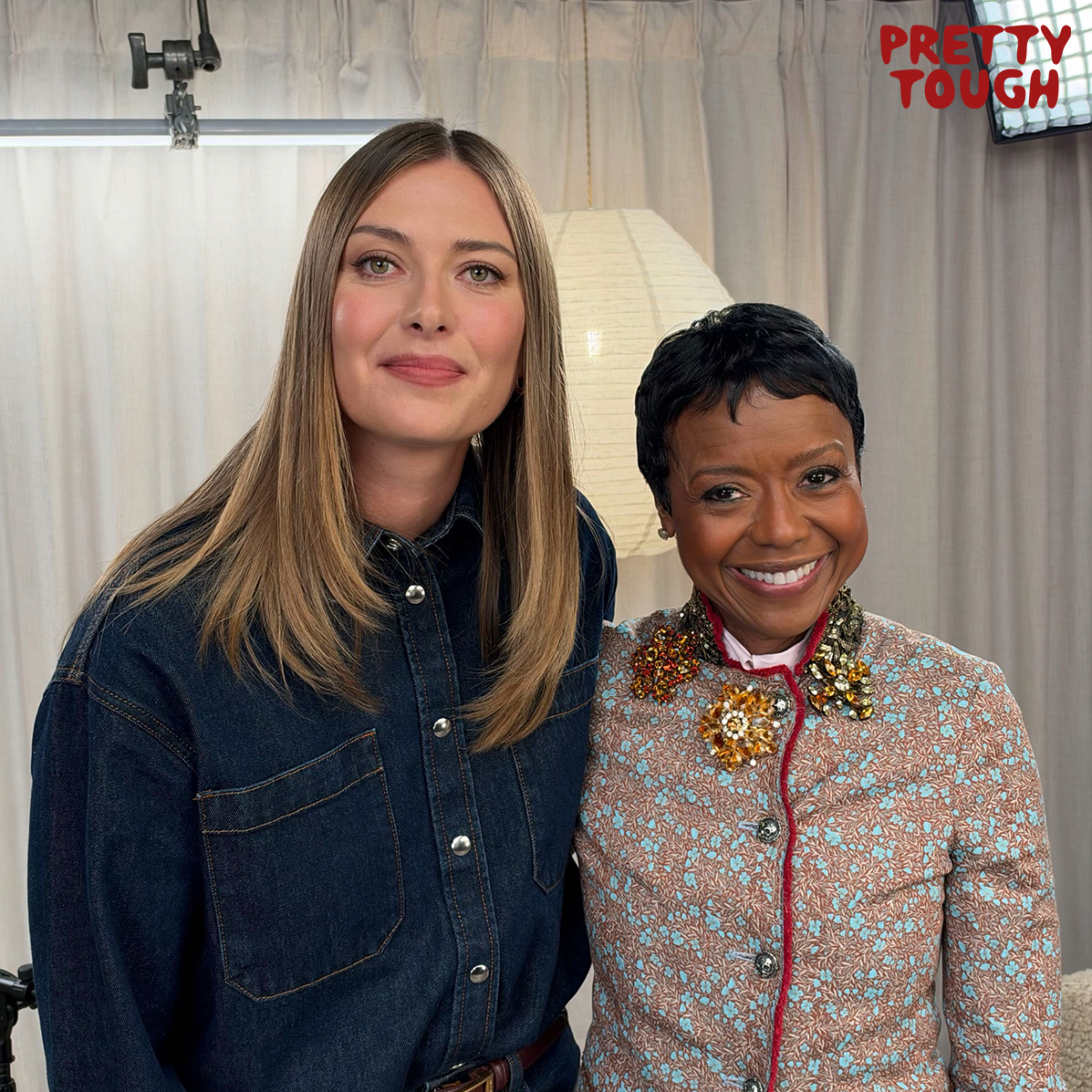
0:30My guest today walked into Ariel Investments as a college intern in the early 90s and never left. Today, she runs the place. Melody Hobson is the co-CEO of Ariel, the first black-owned mutual fund firm in the country. She sat on the boards of Starbucks and JPMorgan Chase, and now she's making big bets on women's sports. Today, we get into what it really takes to share the top job with your former mentor, why she believes that sometimes you have to crouch to conquer, and she breaks down money in a way that changes how you think about your own. I'm Maria Sharapova, and this is Pretty Tough.
1:16Growing teams need a corporate card built for more. Something that doesn't sacrifice speed for control. Introducing the American Express Corporate Cashback Card. Get 1.5 % cash back on eligible business purchases, advanced spending controls, and real-time visibility, plus intelligent expense management. Get started at go.amex.com. Terms and cap apply.
1:45When is the end of the day and you're settled into the couch looking for your evening watch? you're not looking for homework the movie you're looking for comfort excitement or something in between whether you're craving something familiar or in the mood to discover something new amazon prime has what you need from screen to doorstep because it's not just about genres or endless content it's about finding the thing that matches how you're feeling whatever the mood from streaming to fast shipping it's on prime
2:20Good news for anyone who's bad at waiting. Black Friday deals at Lowe's are already on. Get up to three free select DeWalt, Craftsman, or Cobalt power tools with the purchase of a select battery kit. Three for free? You better believe it. Plus, select ladders are up to 50 % off. So go ahead, get in there early. Shop Black Friday deals in-store or online now at Lowe's. Valid through 1118, while supplies last. Free tools vary based on battery kit purchase and location. Melody, welcome to Pretty Tough. I begin these segments with a quote by the guest, and the one I found from you is actually one that you pulled from the art of war.
3:03And you said, sometimes you have to crouch to conquer. What exactly resonated with you on that quote? I'm very aware of my own personality. I think self-awareness is extremely important. And I know sometimes my personality is very big, and the bigness of it can overwhelm. And so in order to get what I want, sometimes I realize I have to rein it in a bit and get smaller in order for others to receive me in the manner that will allow them to take me in and to engage in a way that they don't feel I'm dominating. And so sometimes I'm very cognizant of the fact that I need to be smaller, quieter. My tone needs to be more hushed in order to accomplish what I want to accomplish.
3:53How did you learn that? Observation. I have a great story that I tell about this where I had a situation where I would engage with someone that was extremely successful when I mean like top of the food chain and business. and when I found myself in a room talking to him we were standing up at a buffet station and I would talk to him and he would back up and he would just back up and back up and I noticed that I'm talking he's walking he's backing up I'm walking forward and by the end we're at the other side of the room and I said he's afraid of me like I'm too big and so it was very clear it was like He wasn't turning to walk away, but he was trying to get away.
4:39And I thought to myself, that's interesting. Now, there was nothing about me that was overly aggressive or anything, but I was literally just being me. So I ran into the same person in New York in a hotel lobby. And I said, I remembered the whole backing up story. And I said, I'm going to take a totally different approach. So I walked up to him in a completely hushed tone. I said, hi, how are you doing? And I was like, what are you doing in New York? And he responded. I said, oh, I'm here for business. I was literally whispering. And he said, sit with me. And you entered the room. But it was super interesting that you would say, well, why would you make yourself small?
5:17Because I wanted to learn and get something out of that. And so I had the opportunity to engage with someone who was extremely, you know, had a lot to teach. And so I couldn't get it any other way. I love that because it takes, one, it takes experience. Two, it takes a level of self-awareness. It's kind of like the elevator story. It's like, can you notice the person that's about to leave the elevator before you enter it? And it's knowing when to hush, knowing when to bring up the pace. And I guess that's come with experience. I think experience, of course. But I also think sometimes you can have a lot of experience and not be self-aware.
5:58I think it's self-awareness more than experience. You know, I think especially when you're a high achiever, you're a type A personality, you're not always great. And sometimes you have to tell yourself that. Now, it wasn't that I wasn't great in that situation. I clearly overwhelmed him and I was losing. I couldn't change him. So how could I win in that moment is what I asked myself. I love the competitor in you. You're like, how can I win? The competitor is always there. You started working at Ariel Investments when you were an undergrad at Princeton in the early 90s, and now you're the co-CEO with the firm's founder, John Rogers.
6:38And across so many of the conversations that I have on the show, there's a theme that keeps coming up, and it is about when to stay, whether it's at a company, in a relationship or a role, and when to leave. Walk me through the thought process of building your career over decades in a single organization. Well, I'll start off with the fact that there's a book on this now by Annie Duke called Quit, which I think is so interesting about when do you actually quit? So it speaks to that theme because most people think quitting is a bad thing. It isn't always. Sometimes you should walk away, and she talks about that.
7:17We know that's true of investing. Sometimes you need to sell when something isn't working out and you can't beat yourself up over it. I would say in my situation, I knew from the very beginning I had found a home. And I remember early in my career, I mean early, like beginning, saying to myself, how many times will I take this elevator? How many times will I walk in this door? I knew. But it's a, for every action, there's an equal and opposite reaction. So my quest for stability and for longevity was born of my instability as a child and moving around. And a lot of my life in those early years, which was just very unpredictable, where I didn't know what was going to happen.
8:05So I was committed to developing relationships and opportunities for myself that would be long term. and I also never believed the grass was greener on the other side of the fence. I saw people leave jobs for reasons that did not make sense to me. I just think it's ridiculous to quit a job over a few thousand dollars when you like the people you work with or over a title and I saw that over and over and over again and for me it was always about the work and the people what could I learned from them. And it never stopped being gratifying and fulfilling to me. And so as long as it was, I said, I will play this till the very end.
8:49And then it became mine, meaning I was so invested in it. Literally yours. But also in the beginning, it wasn't, but I was just, it felt like mine. You know, I had an owner mentality almost from day one. And so if you feel like something is yours and you become very attached to it, you don't walk away very easily. It was never a job, ever. I mean, was there ever a moment where you thought about moving on? It's been over three decades. There was a moment of truth where I had a friend say to me, okay, I was 40 years old and they said, you can do one more really hard thing, maybe two, but you have to get very clear about what's going to happen to your path at this point.
9:37So are you staying or going? And if you're staying, then go and figure out how it's going to totally make sense to you and that this is going to be something you do till the end. It was such great advice. It actually was David Geffen. And he really put the screws to me. And it wasn't out of a place of anything that wasn't going well. it was just a really great moment to give me some sound advice about thinking about my life in a very proactive way, as opposed to just going along because I had to be there. And not just sort of waking up one day in a job. He wanted me to totally commit to it. And his commitment that he was saying to me was, okay, if you're going to be CEO, if you're going to be one of these things, you are not going to get three shots at this.
10:29So you're doing it here or you're moving on. So this is before you were CEO? Yeah, I was president at that point. And I remember having that conversation with John Rogers and it was very uncomfortable. It was very uncomfortable. It was a really good idea. It was a moment of truth. I mean, I've never even told this story ever. And I remember going to him and I say, I said, there's nowhere I want to be else I want to be. but I want to make sure we're clear about my own ambition and yours and how we're going to do this. And it was a series of conversations and we got to a really great place and it was awkward.
11:09And sometimes I probably didn't say it appropriately and probably, you know, got his back up a little bit. Are you quite blunt? There was no threat or anything like that. It wasn't one of those things. It was just, are we, it was. Are we in this? I mean, it was sort of like this recommitment ceremony to each other and to the work that we were going to do for a long time. It was really me saying, this is it. And it wasn't that he didn't think that or I didn't think that, but I spoke the words. And then I said, OK, do you agree? And then if we agree, you know, let's talk about how we're going to do it.
11:50Now, I didn't become co-CEO until years later. So it wasn't as if there was something on the table. It was just directionally, do we both feel like we're doing the right thing? It's interesting that you say was around your 40s because I'm about to near that age. And it's such a pivotal age for any woman in any different profession. And I had a profession for over 20 years that created so much of my identity. and in my early 30s when you step away from something that you've known so well and have to create an entirely new identity you hope that you don't lose your roots but you also have to shape a new beginning and you hope that you do it with that same resilience and that same fearless mindset that you had as a little girl even though you have so many years behind you but it is a very pivotal age for a lot of women so just as you said you know you're talking about this moment.
12:47I'm like, wow, it's an important when you think of your future, the forties is when you still have a chance to make a big move as a next act in your life. It's interesting because also that timing coincided with the financial crisis. So it was a time of great pain in our firm. 2009 was my 40th birthday. And it was where a lot of this was happening. And it was a moment of truth for me as well, in terms of having an identity so closely linked to my work in a way that I ultimately decided was unhealthy. Now, I don't work any less hard. I'm not any less committed, but I am not measure myself in the success of every basis point of Ariel because it's just not a good way to live.
13:30From very early on, John Rogers would bring you into these high stake meetings with incredibly powerful people. At first, you would just be listening, then you'd have some contribution. And eventually you learned the lesson of leading yourself. How did you navigate that progression? It was really bumpy. I think, you know, when people talk about your greatest successes and greatest failures, I mean, some of mine were people failures. And I'm really, really clear about that. I left some bodies behind. and that is not something that I say with pride. I say it with, you know, I'm sad about that, but I'm also glad I learned to be better over time.
14:19Leadership is, you know, it's a real-time teacher and there's no book that you can read that actually tells you how to deal with all the scenarios you're going to deal with. You want to have some values that you're anchored to and how those values really get you through moments. And so I think my leadership developed slowly and it developed through hard lessons, hard. And it also developed through, I talked about the self-awareness. I decided I wanted to be intellectually honest with myself. I remember waking up one day and saying, I don't want to rationalize anything. I want to be truthful to myself in my own head.
15:01When I do something well, I want to acknowledge it. When I don't do something well, I want to acknowledge it. And I don't want to have any excuses. I don't want to start explaining why I did something which wasn't good. I just want to say I blew it. And that really helped me be a better leader. I love how honest you are about it. And often we think of leaders as people guiding others, right, and managing. But oftentimes leaders learn by making mistakes and recognizing that we make mistakes and living with those mistakes and growing from them and listening to you standing up to the fact that I've made mistakes along the way.
15:48It's been over three decades and great wins, but I've learned from my errors. Success comes from errors, first of all. You know that in sport. The other thing is when I think of leadership, I have not really thought about this as clearly as I'm thinking about in this moment, which shows an interview can bring out a new idea and constant learning. I really think leadership is about first leading yourself. Before you can lead anyone else, you have to decide who you want to be as a person. and you have to anchor yourself in your own truth and then hope that that truth can be contagious to others and that they will agree with you and believe.
16:24And so much of followership is also you following other people. It's a reciprocal act. So the leadership for me is first being very well grounded in who I am and all the fragility, all of the humanity, all the vulnerability is really, really important. The people who live in some kind of very rigid very perfect, very managed person is not anyone anyone wants to follow. They're less likely to pivot when you need to. Yeah. And in the early days when people underestimated you in the room. Still do. How do you keep making an impression? I think my confidence comes from preparation and my impression comes from you're going to walk away saying, wow, she really studied that issue or she really knows what she's talking about, I tried very hard not to wing it.
17:19Now, I have a lot of accumulated knowledge at this point. So my knowledge runs deep on lots of subjects. But I would say that so much, I mean, I still have it. I was in Europe last week and I did this, I had this meeting and there was a group of us together and we were presenting and the individual said at the end he's like I am so much more impressed than I thought I would be were you like is that a compliment and it was so funny it happens all the time and he didn't realize like on the one hand he was totally offending me but on the other hand I was like yeah it happens a lot he was like I am so much more impressed than I thought I would be and then he said a note to someone and it was really you know on the one hand I was like nailed it so that was good on the other hand you're like going in with low expectations is not a bad way to go through life you know because then you could like step right over that bar i hope he's watching this interview no i'm not you know the thing is i'm not upset or mad or anything it's like that can be a part of the secret sauce especially i think for women and people of color i'm in the room and i'm like wow they just realized i'm smart I love that so much you know it's like I can see the person like they sit up differently and I'm like they just realize well that's me being you know with humility but I'll be smart on my subject yeah trust me I mean look you even came prepared to this interview yeah well I always have a pencil you have a pencil and a piece of paper sometimes two pens so that in case one runs out of me that has happened to me now I'm worried and in case I don't want to lose my thought on something I might write down a word always every interview with a piece of paper a pen every time.
19:09Everyone, it's time to wake up. Five more minutes. We've been sleeping long enough and hitting snooze on the fact that we're still stuck with the old way to phone plan. Is that a... Yes, it's old and cuckoo. Just like that phone plan you have. Okay. I know, it makes no sense. So rise and shine. It's time for a whole new way to phone plan. T-Mix from T-Mobile, where you pick what's in your plan, like streaming, travel, or gaming, and then change those picks too, because there's been a change in plans. Okay, we're awake. And T-Mix sounds great. Good, because I'm all out of alarm sounds. There's been a change in plans.
19:51Introducing T-Mix from T-Mobile. Pick what you want. Change what you want. Include it in your plan on America's best network. Number of picks varies by plan and lines on account. Account or pick changes may impact existing device and other promotions. Best mobile network in the U.S. based on analysis by Ookla of Speed Test Intelligence Data 1H2026. Visit T-Mobile.com slash picks. You know you don't have to wait to shop Black Friday at Lowe's, right? Save up to$150 now and select power tools, equipment, and accessories. Got gifts to get? We've got plenty under$50. Plus, Milo's rewards members get same-day delivery for free.
20:25Shop Black Friday deals before the rush at Lowe's. Valor through 1118. $25 minimum and loyalty membership acquired. Order eligible items by 2 p.m. Subject to weight and size restrictions and availability. Terms at lowes.com slash shipping terms. Are you tired of hearing about business, tech, and finance from the bros? We are the Tiger Sisters, a top business podcast with the Vox Media Podcast Network. Tiger Sisters releases every Monday and we decode money, power, and love. And who doesn't love all those things? We are the Internet's Wall Street and Silicon Valley Big Sisters. Tune in every Monday for late night sister talk meets boardroom strategy.
21:02Check out Tiger Sisters on YouTube, Spotify, or wherever you get your podcasts. Welcome to the Tiger Fam. I wanted to talk to you about the co-CEO because it's a fascinating subject. A lot of people often say it can be done, and yet here you are doing it for several years. How did the two of you arrive to the conclusion of running a company together with John Rogers? First of all, we negotiated a bit. I was asked to be co-CEO before I took the job. And the first time the board said, how about you and John being co-CEOs, I turned it down. And I had told this story. And I turned it down because I said, you all have known me since I was 19 years old, the board.
21:45and I said, I'm not sure you totally would, in a tie, see us as equal. And if I have the title and I can't be seen as truly equal, I'll leave. And I think that's too big a risk for the company. So why don't I stay president where there is a clear hierarchy? I report to John, John reports to the board, and then we don't have to risk that. And the way I describe it is I say that I don't mean this literally. I'm just giving it to you as a figurative example. You know, you have a friend and you go to visit them and you take Legos and you say, oh, I brought Legos from Timmy. And they're like, Timmy is 18.
22:27I feel that's what happened to my board. Like I grew up in front of them. I was 19 years old. And then you're talking about, you know, years later and I'm being asked to be co-CEO. And I'm like, are you guys able to really see me not as the person who carried John's stuff and was there at his disposal because I've jumped and you don't work with me in that way every single day? And I'm not sure it's really landed. No one pushed back. And a couple of years later, then when they came back, they said, we see it and we understand and we, you know, we're good. You know, I wasn't saying it to be argumentative.
23:05I just said, I think we should all be really sure because co is co. Did you really believe that the board wouldn't treat you as equal? I think at that point, I don't think I'd come into my full self for them to see in that way in a boardroom four times a year where they could see how I was showing up inside the company, etc. This is not a negative. It was just it was a progression. And I did not want to risk anything as it related to the company. And to everyone's credit, we all waited a little bit. And then they came back and they said, OK, let's do this now. And I said, I think everyone's good.
23:42So then we also negotiate, we had rules of engagement. And we brought in a third party, one of our board members, and we wrote down who was responsible for what. And then we said, and John was so great about this. At first, I didn't think it was possible, but he exceeded every expectation. And he's just very special in lots of ways. He started the company, remember? So he said, when it comes to all the things you work on, I'm going to treat myself like a really good board member. And I'm going to ask you questions the way a board member would ask you, not a boss or someone telling you what to do.
24:17And so I will come in as a board member. And then because I am a board member. And so that's how we will engage. And so we decided, you know, who has what, who has decision rights. We were very clear about it so that we would never have to wonder. There was no gray. And that just laid out a very you do this, I do this, and we could divide and conquer. And therefore, one plus one would equal five. And it's really worked out that way. I have to say there are very few times where we are in each other's space in a way where someone has overshot. I don't do anything as related to investing. I'm not the investor.
24:52I run the firm on a day to day basis. I've never second guessed one stock pick that has ever been made in our company. And I will defend us to the death with our clients and because I believe in my heart we have the best people doing what we do. So the lesson there is setting boundaries from the very beginning. I called it rules of engagement. Boundaries sounds as if it's turf and that I didn't feel like it was turf. It was just how will we engage with each other? How will we solve problems together? I speak to John multiple times a day. And so our narrative is one that is constantly, It's a running narrative.
25:30There are no surprises. There's no, I didn't speak to you for the last five days and you don't know what I'm working on and vice versa. We are engaging with each other all day long about how to run our business. It also, the thing is, he's often said, I wish I had you in the beginning. In the beginning, I would have been in high school. He said, I wish I had you in the beginning because it's very nice to have someone to lean on. You know, running companies is very lonely and scary at times. And, you know, there are times you want to just kind of shed a tear. And it's good to have another person to call.
26:02Someone that you're comfortable in shedding a tear with. Yeah. That's something that I thought of a lot when hiring is when you're hiring a team member, whether it's your coach, your physio, anyone, we can all raise a glass of champagne when we win a big match. but when we lose a match, when we lose a tough moment and we're walking back through the tunnel and the first person you see is that team member, are you comfortable enough being vulnerable in front of them? Can you tell them like it is? Can you tell them that we lost as a team? We had a plan. We were comfortable, confident. We were ready for this and it didn't pan out and it's all of our faults, what can we do better?
26:44Also, and have them not think any less of you. That's a very important part because some people hold that vulnerability against you. And so the good thing about in working with John over all these years, decades, we know each other extremely well. I think we're complimentary in so many ways. We share the same values, which is very, very helpful. So we're anchored in the same basic truths. And when we have failed, we don't hold it against each other. And so therefore we're very comfortable being very honest and direct as opposed to failing and having someone think less of you. That's really important.
27:21The other thing I joke about, just like the same is true in a marriage, we are never hysterical at the same time. One person can be hysterical and the other person must be calm. And somehow it's not like you have a role that you have to serve, but somehow we offset each other in those moments. And that's really helpful. I mean, the trajectory of your partnership started as John being a mentor to you. And I was a little pipsqueak who didn't know anything. Is there a particular hard stretch that you can think of? Oh, there were so many. Yeah. You know, it's all hard. It's hard now. So it's hard.
28:01You know, I was talking to George about this the other day and I said, life is hard. And he looked at me and he said, I'm writing a t-shirt for the museum that says life is hard. Don't make it harder. Why is he? He's brilliant. He has the best ideas. I know the best ideas. He said, don't make it harder. And I looked at him and I said, that's right. I said, so many times we make it harder. He said, life is hard. Don't make it harder. It's hard. You know, the environment changes. Do you think you've got clean air and then you get hit by COVID. How about when companies have no revenues and you're trying to figure out what the future is for them?
28:36None. You still have to pay their rent. Well, just we own the stock. You know, you owe them and you're trying to figure out, you know, how does a cruise line make it in a pandemic? The 08 period, the financial crisis was brutal. We went from 21 billion in assets to three. I mean, every day someone fired us, every single day. And it was like every day I would walk into work with needing armor. There was a stretch when we bought out our mutual fund partner and we lost a lot of assets over the summer. It had been my idea. I literally could not eat. I was 25 years old. I had presented this idea to our board and they went for it.
29:24And then we went from$400 million in assets in our mutual funds to$300 million over a summer, with it being my idea. Now, we have multibillion-dollar mutual funds today, so it all worked out. But at the time, I was terrified. And I said, oh, my gosh, these people listen to me, and I don't know anything. And I maybe have just bet the ranch of the firm. I ate one Mrs. Fields muffin a day because I could not eat food. I couldn't eat food and I weighed 90 pounds I was so physically um and that's hard I was so I it wasn't I just literally that's how that's how on edge I was about this decision and me feeling like I had to make it work for the company and it's how invested that was a really hard time And then there were other times that were really hard.
30:21There were times that were personally very hard. And this is what I learned. Life goes on. George always tells me that, back to his wisdom. I married Yoda's dad. He's really wise. And he says, Melody, here's the thing. You will wake up tomorrow and life will go on. Bad, bad, bad things happen. People die. They get sick. Bad things happen in business. And you know what? Life goes on. And he's like, you have to accept that. And he says, the thing about tragedy, everyone has it. It's just a question of when you get yours. But you have to expect it at some point. And it doesn't, sometimes it doesn't, it'll hit you multiple times.
31:04And so he's like, but the truth is life goes on. And the question is, can you pull yourself together to keep going? But it's hard. There are there. Hard is not a time of life. Growing up, you come from humble beginnings. There wasn't a lot of money in your family. And you've said the financial insecurity you experienced as a child was traumatic, but it also was enlightening. How so? It was enlightening. It was very formative. So all of my trauma became my purpose. literally so the trauma of not knowing where we live getting evicted getting our lights disconnected our phone turned off cars repossessed not sometimes having decent meals my mom bought cans of soup at the beginning of the month so that we could have soup the whole month and they were those dented cans that I would say to my mom we're gonna have botulism and she'd buy giant bags of rice.
32:05And so when we ran out of food, I'd have rice for breakfast. And that was just normal. And it gave me so much resilience, grit, ambition, drive, and purpose because I decided that I wanted to understand money desperately. And it was not about how much I had. It was about being smart with it so that I wouldn't find myself in this situation. And so I became a student of money out of need more than what. When you mention rice, I think of my own childhood. And rice was actually a dish that my dad would make for breakfast before I'd go to training because he had an early morning job and he'd make me rice.
32:51That's probably the only thing he knew how to make. And he'd put it under the pillow to keep it warm so that when I'd wake up, I would have it. It's very sweet. And every time I eat rice, I think about those moments, like with my father. Oh, my God. My eyes are welling up. Oh, please don't. No. It is. It's very sweet. But when you said it, I was like, it's those little things that keep us going, that keep our family alive, that, you know, give us, you know, give us those little momentum moments. It's like momentum is everything and it doesn't have to be the biggest thing, but it keeps us alive.
33:30Well, it's interesting because I think it's actually the small things that add up. It's not the big things. It's not big moments in life ever. It's we remember little things. And it's interesting. Little things in my life were actually quite big. So they became foundational to me about how I thought about myself and my life and my world. And I just wanted a better life. I really did. I had such simple goals. I just wanted to wake up somewhere every single day where I knew I was going to live. When I got my first job at Ariel, I made$35 ,000 a year and it was like a million. I was so happy. I had this tiny little 850 square foot apartment that when I was 25 years old, I bought for$155 ,000.
34:16I had no furniture for years, years. I bought a couch in 1996 for the first time. I got it in college in 1991. No, because I made it my slogan, couch in 96. It was an election year. So I made it, I was like couch in 96. I was like, I'm getting a sofa in 1996. I swear on my eyes. I got a couch in 99, like a nice sofa, like a really nice one. And I remember I got the sofa, but it had nothing else in my living room. I lived in this, it was a one bedroom apartment at 850 square feet. And so my office was not that far away. I would go and visit it at lunchtime. Okay. So you, you talk about the couch and I think about the first big purchase I made after I got my really big check after winning my first Grand Slam, I went to a mattress shop and I spent so much money.
35:11I am so embarrassed to say it, but it's close to$10 ,000. and I came home and my mom approved this I was with my mom buying it but I came home and my dad asked so where were you girls I was like we went shopping he's like what bag did you buy no we didn't buy a bag a mattress he's like okay great I was like dad it cost us ten thousand dollars the look on his face was priceless but guess what I still have the mattress to this day Can I tell you a very quick, so before I got a couch, I got a mattress. Okay, this is a true story. So I called my mom. I needed a bed. And I said, Mom, do you know how much beds cost?
35:52They're so expensive. And I said, I think I have to get a bed on layaway. Literally, I couldn't afford a bed. So I told her how expensive it was. I said, I went to a store. There's one on sale. It's$2 ,500 for a bed. My mom then said to me, no, this was wise. She said, you know the per diem on that bed? do you know how long you're going to have it exactly she's like that's a good purchase did it come with a mattress yes but your your per diem on that ten thousand dollar bed you still have it how many years later it's been over 20 years yeah i think it's in a guest bedroom now heads are expensive they're so expensive i mean fabrics are so expensive when you're talking about drapery i was like shit's expensive what is your relationship with money now You know, it's interesting.
36:43I have abundance. I'm very clear about that. I have more than I ever want or need. I'm so grateful for the life I have. I wake up first with tremendous gratitude every day. Literally, my eyes open and I think, wow, I am so fortunate. Literally, there's not a day goes by that I don't have those thoughts. So the good thing is I don't take anything for granted and granted and people say gratitude sustains you in life and it gets you through a lot. Even a bad day is good. My relationship with money is one where I feel I understand money very well, but I also feel like I am anchored to being nine or ten years old and feeling like I didn't have any.
37:27That's my recurring nightmare dream. So I really have asked myself, I said, what is that about? you know can you ever just sort of relax into a state of calm and security when you've grown up the way I have and I think it takes a lot I've asked some of my friends who've had similar experiences and we all resonate at the same frequency there's a den of anxiety underneath the surface that comes from that experience that it's just you know George always says and back to George, he's like, you know, when you're a child, you don't have any advanced reasoning skills. So you can't understand what is happening to you.
38:10And you have no real concept of time. You don't know when something will end and you have no control. So he says, you know, it does make sense that that would be a foundational form of trauma for you because it was rooted in things you literally couldn't do anything about. Very different than when you're an adult. You know, you decide everything, even the bad. You know, every outcome is really our own decision. That's so wise. One of your greatest skills is this exceptional ability to distill complex financial concepts and make them accessible. And I read that one of the ways you learned to do that was when you were a financial expert on Good Morning America and you would be driving on your way to work and you would frame your idea that you were going to share on TV with the driver.
39:07In the black town cars that GMA would have picked me up and I'd say, can I sit in the front seat? And I would say, can I do my segment with you? And can you tell me anything that I say that you don't understand? Stop me. And I did it every single time. every, every single, because I always knew Diane was incredible. Diane Sawyer. Yes, Diane Sawyer. And she, if she didn't understand something, she caught me in the middle of the night. She said, Melody, I'm reading this and I don't understand it. And I always wanted to make sure that whatever I did was really, really clear. And you only have minutes to explain things are really hard.
39:46So I needed to figure out how do I make this, no acronyms. I hate acronyms. no um words that intimidate and so I always use the example it's I said think if you had a child and you went to the doctor and the doctor said your child broke their tibula in three places and you didn't know what a tibula was if it was your child's house you would say what does that mean but when people talk to you about money and they throw around all these terms that are as important to the financial well-being of your family as any health issue we don't we don't we're too embarrassed to ask so I was always like I have to break it down as if someone won't ask and so I can't assume anything and so it was a really really great way of distilling information and the other trick I always had was no matter what I talked about I smiled because money was very intimidating and made people very afraid and so I thought well if I have a smile on my face they'll think it's like not a scary thing I thought maybe you're saying about smiling because you were going on TV.
40:51No, I smiled because, you know, even if I was talking about something like interest rates are going up, but people didn't have their chest tighten up in those moments because sometimes with money, they get so scared. And then when they're scared, they get paralyzed in fear because you're dealing with headlines as well. And so how do I make this headline layoffs? Think of the AI headlines right now. You know, if I were doing this on television, I'd be thinking long and hard about how not to scare people because when they have that fear, they don't make good decisions. We don't make good money decisions during times of great emotional stress.
41:30We know this. We know this very clearly with women because we should not make big decisions during times of things like death and divorce, but we do. And so it's better just to wait. And in speaking of money decisions, in 2024, for, you published a book, Priceless Facts About Money, and you wrote it to demystify money for kids and their families. And you've said, and I'm quoting you, most parents would rather talk about a condom than a credit card. Why do you think that is? Because they didn't learn about money themselves. So they have their own money fears. And the thing about money is we inherit our money habits.
42:09And so whatever you are doing, especially if you're doing it wrong, I assure you, you're teaching your child even it's unspoken. If you overspend, they're going to overspend. I tell people a lot, parents will tell me, they'll tell their kids, we can't afford it. And the kid will say, put it on a credit card. That's coming from you. They didn't learn that on their own. And so there are a lot of aspects of money that create anxiety in adults. And therefore, they fear the conversation because they don't know what to say. And so as a result of that, I've been trying to, I tried to use kids as my gateway.
42:43So I said, if the parent has to read to the kid, they're learning on their own at the same time. And so therefore by demystifying money for children, I'm actually doing it for parents. I wrote the book for eight year olds, eight to 12. My daughter was seven when I started writing. Um, but it really was to write it for their parents. And lots of adults have told me how much they love it. Lots. And what is something that you recommend that a parent discusses with their kids when it comes to finances? One of the things I do is even though we didn't have a lot of money at all, my mom did something that was really, really great.
43:21She engaged me in the conversation of money from a very young age. Now, she did it in ways that probably were a little too aggressive for a child. I mean, I knew our rent, our lights. She would show me a light bill. Oh, no, I knew what everything costs, everything. And I push parents on that because I can tell you, teenagers don't even know what their parents spend on a cell phone. They don't know how much cable costs. They don't know anything. I knew everything, what it costs. I was 10 years old and knew. I knew. And one of the things my mom did, which I also thought was great, was I handled the money when we were handling money.
43:58So if we went to a restaurant, I paid. She would hand it to me to pay when I was very little. We'd be at McDonald's. She'd give me the money, put it on the counter. You know, I'm like reaching up to the counter to give it. She would hand it to me first. We get to a restaurant. Again, it would change as I became better with math, but it would start with me paying, counting the change, calculating the tip. So I knew what things cost. I would look at what they cost on the menu. Now, I don't know. My daughter is so funny. She came home a couple of years ago. She was like, mom I won't name the restaurant it was a fast food place she was like it is so expensive there were three of us and it was 48 and you're like that's my girl and it was so well she was very upset we went to Erewhon here in LA I think you can't get in juice for 48 OMG she told me we could not get two smoothies because they were 25 each and first of all I was like I want to know what a$25 smoothie is.
44:57Now, I'm not going to make a habit of it. She's like, well, we have to share. She's like, you take a sip. I take a sip. You take a sip. Well, they're American sizes, so it's okay. It was still. So she was like, we can't make a habit of this. That's how she was talking to me. I said, of course. I said, I just want to see it. So then we go in and I said, let's count. I was chairman of Starbucks at the time. So I said, let's count how many smoothies they make while we're standing here. No, first of all, it took forever. It took over 20 minutes. And I think they made over 50 smoothies. And I said, Everest, they're making so much money.
45:34So we were sitting there calculating how much Erewhon made in smoothies because I couldn't believe that they get charged$25 for a smoothie. And there were so many people there. Now, it is delicious. Yes, I have to admit. I'm not sure it's$25 delicious, but it is delicious. I mean, I still remember it. I'd like another.
45:58Do you think your mom was trying to teach you a lesson in that moment? Yes. She was trying to put me in charge. My mom would go to the bank. She would make a deposit and she said, now check the account number against my account number. She was always teaching me things. She was like, don't just walk away with your receipt. Double check the account number and make sure it went into the right account. So even though we didn't make, she didn't make a lot of good financial decisions, like she bought Easter dresses instead of paying the light bill, she was very good about leading me to understand these things.
46:31And understanding what things cost was a real gift to me, I have to tell you. Because I think, again, you get handed all of this when you're 18 or 19 years old to figure out on your own, and you haven't paid attention and no one has really told you. So that I think can be replicated by anyone. And I think it's a really, I even have my daughter to this day, fill out the tip on the receipt before I'm going to sign it, all sorts of things so that she understands what they cost. What a wise young girl. And then a couple of days ago, she was upset because we had commercials in our streaming. And she's like, clearly we've let the premium package go.
47:10because we couldn't fast forward I said I didn't do it I don't know what happened she says we have to pay to get rid of the commercials she was really she gets a little hot I love that I was watching but I'm glad she noticed yes I was watching YouTube the other day and a commercial comes on and I was like oh but then I was like no no I'm gonna pay way too much money for that to go off so I'm keeping oh it's so George was so funny one day he looks at me and He goes, you know what they call this? I said, what? He says, television.
47:42He's like, it's called television. Speaking of television, let's talk about sports. Because you're, you've been making - Sports crazy. You're sports crazy. And you've been making - Women's sports. Incredible investments in sports, especially in women's sports. Yeah. But you got into sports later on in your life, right? I did. I totally did. And it is insane now because my husband literally looks at me and he says, who are you? I watched just on Saturday, Austin Grand Prix Formula One, then USC. Then we watched another football game. And I literally I'm looking at him and he's like, what happened?
48:25I have become sports obsessed. And then I watch. I literally on Saturday sit and watch NWSL soccer games. I sent a text to Willow Bay, who owns Angel City, and I said, oh, I'm watching your game and this, that, and the other. And she's like, you're in the stadium? I said, no, I'm watching it on television. She was one of our first guests. Yeah. And then obviously I watched my own team, which is the Denver Summit. And it's our inaugural season. And so that's been very exciting. So I just want to watch all of the women's sports that I can. I've been watching all of the finals in terms of the WNBA, which is fun.
49:05Went to the Valkyries-Dallas game before Dallas went out. And that interest has turned into serious investment. Correct. Talk to me about project level. The future of sports is women. This is a once-in-a-generation inflection point in sports right now. All the leagues know it, and they want women. They want women and they want international as growth markets. And so we're sitting here watching what is happening in women's sports, which is not about one player. You have known this forever because you have been great. Serena was great. Althea Grimson was great. Billie Jean King was great. I can go through all the great tennis players, but I can go through all of the great women athletes in so many fields for so many decades who didn't get their due.
49:53The time has come. It is now. And we're seeing it play out in fandom. We're seeing it in every stat you look at, every single one. Viewership, sponsorship, media rights, girls playing sports, attendance at games, merchandise sales. Every arrow is straight up and to the right, every single one. And so we're at this moment right now where we're seeing valuations catch up with this total change in the zeitgeist. And I keep telling people at some point it's not going to be women's sports. It's just going to be sports. My daughter is 13 years old, and when she sees two men or two women married, it's just marriage.
50:37We are anchored in Supreme Court and gay marriage and all of that. She's not. It's just marriage. It's just going to be sports. We see it in terms of these fans. They are boys and girls. They are men and women. 52 % of Americans right now say they're interested in women's sports. 52 percent and it is a new fan so we looked at the the crossover between the Valkyries and the Warriors only eight percent of the season ticket holders are the same sorry that number is five percent not eight percent excuse me the Valkyries fan is a new fan and that is exciting you've created this appetite for less established sports volleyball well we think those are emerging leagues and major league sports.
51:22They are the major league sports of the future. So the major league sports today, clearly basketball with the W. Clearly, we're seeing major league sports in soccer with the NWSL, National Women's Soccer League. In the emerging league, emerging sports area that we think are the next major leagues, one of them we think is volleyball. More women, 507 ,000 women in high school today play volleyball. that is more than boys play soccer or baseball today. So more girls play volleyball in high school, 507 ,000. Girls are playing volleyball. We think that will become, and pro leagues have formed, and our business that we've bought, League One Volleyball, has a pro league.
52:09They have teams now in Los Angeles and Texas and in Nebraska, all sorts of places. They started around college towns that have big volleyball communities. But they also have a junior sports business that we love. 28 ,000 girls playing in their clubs around the U.S. Is this Love Bee? Love Bee. I'm also an investor in Love Bee. Yeah, League One Volleyball. So we love that business. Love it. We love the junior sports aspect of it. Even in a bad economy, just as an example, the last thing parrots want to do is take their kids out of sports. So they may not go out to dinner. They may do a whole bunch of other things, but they want to leave their kids in their sports and they'll keep paying for it.
53:14Black Friday deals before the rush at Lowe's. Valor through 1118. $25 minimum and loyalty membership acquired. Order eligible items by 2 p.m. Subject to weight and size restrictions and availability. Terms at lowes.com slash shipping terms. Hi, Chicago. It's Phoebe Judge, host of the podcast Criminal. And this month, I'm going on tour with a brand new live show about me and my family. I went to prison. I for sure did. How was it? Oh, you know, awesome. I did not like the meal plan they offered. Get your tickets at thisiscriminal.com slash live. I'm Bridget Reed. And I'm James Walsh. The Alexander brothers moved in a world of multimillion dollar homes, exclusive parties and powerful people.
54:06Behind that glamorous lifestyle were years of rumors and allegations that they were committing sexual assault. In our reporting for New York Magazine, we investigated what people knew and heard from women who came forward to tell their stories. Now, that reporting is the basis for a new three-part docuseries, The Wolves of Real Estate, The Alexander Brothers. You'll see exactly how privilege protected them and how they were finally stopped. Stream all three episodes now, only on Peacock.
54:41there's another area where you made a massive impact and that's what the lucas museum for narrative art the museum that you and your husband george lucas just launched in los angeles the building is being called an instant landmark tell me about the vision that both of you have well i would say with total awe and wonder it's george's vision i'm in the sidecar helping make could happen. He saw it from the very beginning. He dreamed it while it awake. He's been working on it for the last 17 years. I've been engaged in over the last few years, shoulder to shoulder with him. We have different skill sets, co-leadership, we're co-chairs.
55:22But the creative genius of it is George. And I'm glad I got to see this because it was, it was, it was awe-inspiring. I've never seen anything like this. I've never seen someone create in this way. I've never seen this level of commitment and a total unwillingness to compromise on his vision at all. And he's, from the very beginning, he said, Melody, it has to be the most beautiful building. It has to be a building that either you're eight or 80, you would say, I want to go inside because the building will give the art its due. These are the artists who have been misunderstood, ignored, underfollowed, who have not been given the respect, the illustrators who have illustrated humanity, going back to caves and Michelangelo and going back a long, long way.
56:17These are the illustrators who have illustrated the myths that we believe in, the values that our societies are anchored to. And I want them to be seen in a light that shows they are as important as any great master. And he made the building with Ma Young Sung, our architect, into a, just, it's a phenomenal place to visit. I say when you go in, it's like walking inside of George's brain. The collection has been collected over 50 years. The inaugural collection is 1 ,200 pieces. The actual collection is 40 ,000. And he curated every picture on every wall. And there are a lot of touches. And then there are a lot of aspects of it I cared about, the$2 grilled cheese sandwich is me.
57:03I felt it was very important that I was that kid on the field trip who couldn't buy anything. There's a pencil in the store that's 25 cents. because I said, George, think of something that no matter how much money you have, you can walk out with something. And it says first draft, second draft, third draft, finals draft as you're shaving it down. So there's the 25 cents pencil, the$2 grilled cheese, which by the way is our number one selling item. I was like, the grilled cheese was for the kids, people. It's a loss leader. Buy the hamburger. It is. Well, you know, when I talked to the provider, the purveyor about the grilled cheese, They said, well, we're going to do something with Gruyere on sourdough with pesto.
57:47And I was like, no, no. I said, we're going to do Kraft Singles on white bread with butter. And it's delicious. Do you have a soft serve with sprinkles? They're soft serve. Of course they're soft serve. I don't know if they're sprinkles, but I think there are. There's definitely soft serve. We got to get on the case. There's definitely soft. There's churros. I get all the things that kids go crazy for. I always think about the churros on a Disney World trip. Yeah. PB &J. When's the last time you had a peanut butter and jelly sandwich? Probably at Disneyland when I packed it myself. Delicious, right?
58:19Yes. Delicious. It's the memory of sitting with my best friend on this green little— You can't even get a peanut butter and jelly sandwich because of that dollar. That's probably—yes, you're right. We have a$3 peanut butter and jelly sandwich. So these things that, you know, that kids like but adults like too, I'm very gratified to see how much people like it, mostly for George. I'm, it makes me weepy. It really does. I really, I see, he bled for this. I can't wait to see, I know we spoke about it before the interview, but I, I cannot wait to, to go there and spend hours immersing myself in something that took years to put together.
58:58Years, years. A work we've been commuting to Los Angeles and for a long time. And on the weekends, We work there every weekend. And I'm really proud of him. And I'm honored that I got to see it. I'm just, I can't believe I witnessed this. You know, it's like, but also don't build a museum. It's really stupid. George and I look at each other and I'm like, seriously? We can't shake this thing. Well, they say that building a house really tests a relationship, but building a museum is a whole other level of testing a relationship. But here you are. Here we are. Still very much in love. But it's like having a baby and then afterwards you have the baby.
59:41It's like, we own this thing. Yes, yes, you do. And speaking of that, you know, yourself and George are such prominent, successful figures in your field. And I, you know, ahead of this interview, I was just thinking of how you both navigate these levels of success and how you both support each other along the way. And just, you know, watching a few interviews that you did together ahead of the museum reveal. And it was really special to see, you know, two individuals in very different walks of life come together and be collaborative and engaging and loving and kind. How has it been to be by his side?
1:00:27A gift. Yeah. I mean, we really respect each other. We love each other, but we respect each other. Such a great point. We really respect each other. You know, it's like I genuinely respect George. Like it's a very, I'm, I'm, I learned so much from him and I am so grateful for him, but I respect him. You know, even when he's like getting on my nerves, I'm always like, there's a kernel in there. I have to like, like admit it. There's a kernel of truth in there of something that I have to, you know, reckon with. And he respects me. You know, he, we honor each other's gifts and they are very different gifts.
1:01:20But we are not regular in how we show up in the world. And so to have people who can really withstand, you know, we can withstand each other. I love that you said respect. It's respect. It's genuine respect. Genuine. And, you know, when you respect someone, it's, you know, I'm loyal. Someone said to me, loyal, you're more loyal. Loyalty ranks higher than love for you. And it does. I'm loyal. But respect also is up there. No, the love is forever, like deep. But I know people who love each other and don't respect each other. They don't treat each other well. Before the pretty tough questions, I wanted to ask you about your style.
1:02:05Because your style is impeccable. I mean, your suit collection is... I was poor. My clothes came from the Goodwill when I was a kid. I mean, I shopped at TJ Maxx. That was... You had tags. No, not always. TJ Maxx had tags. I used to say to my mom, I want clothes with tags. My dad was searching for Calvin Klein's on sale at TJ Maxx. Oh, yeah. Wow. I remember I got one pair once. Yeah. But in an industry that is most of the time conservative and male-dominated, as a female going into a boardroom, do you feel how your clothes, how that suit makes an impact? You know, I dress for me. I don't dress for anyone else.
1:02:52I dress for me. I don't dress for George. I'm like, don't even bother. You know, it's like, I don't care what you think. No, I dress for me. I don't even think about it. Everything's appropriate. I'm not wearing anything that's inappropriate ever. You know, they are for the, they're right, but they don't make sense on anyone else but me. I think it's very hard to be original. But my clothes are very much me. You know, the collars, the whole thing. It's like they're my, all the pins, all the collections. You know, there's, I have messages in my clothes. I'm talking through them. All right, we're down to the pretty tough questions.
1:03:36What is something that you've had to unlearn? Sometimes how to, I don't always have to be so aggressive. I had to be aggressive to win. in some of those early years. And sometimes it's that crutch to conquer comment. What is a routine that's helped shape your success? Working out. I need it for mental clarity, everything. My new thing is jumping rope. I'm obsessed with jump rope now. Like how long do you jump rope for? Okay. Well, this weekend I made my milestone. I started in July. The goal was 10 minutes. oh my god no 10 8 6 4 2 30 minutes on sun on saturday with so 10 minutes straight yeah then a one to two minute rest then eight minutes then six minutes and four then is someone guiding you through this or is this the melody yeah jump rope has been jump rope is so hard but i want to jump like rocky i'm not there yet did he jump for 10 minutes i don't think so that skipping jump rope is it just looked good i don't think you did it for 10 minutes i'm gonna do it i'm gonna jump like rocky but i made it to my 10 minute goal i i have you know that i can i can check um but i spin i swim you really do it all versus climber oh that's my least favorite yeah What is a common misconception about you?
1:05:08Some people don't think this. Well, let me say it this way. I meet a lot of people who say you're so much nicer than I thought. I think they think women who are successful have a certain edge to them. I do. I have to be careful about it. But I'm actually nice. I care about being nice and kind. What is your relationship to perfection? I strive to be excellent, not perfect. And I think you can sort of hit some perfect moments along the way. Perhaps one of my favorite answers. I love that. What makes you feel tough? The gym. And what makes you feel pretty? The gym. This girl is strong. Yeah, and sometimes you're like, you put on the outfit and you're like, my arms look good.
1:05:56Yeah, I feel pretty. Melody, thank you so much. This is so inspiring to sit across from you. Thank you so much.
Ariel Investments Co-CEO and former Starbucks Chair Mellody Hobson joins Maria Sharapova on Pretty Tough to share the lessons behind her successful career in business and investing. From joining Ariel as a college student to becoming co-CEO more than three decades later, Mellody opens up about the power of long-term commitment, leading with confidence, and what it takes to succeed in rooms where you’re underestimated.
Mellody shares how she built a successful co-CEO partnership with Ariel founder John Rogers, the importance of self-awareness in leadership, and why preparation has been key to her success. She also reflects on how growing up with financial insecurity inspired her passion for financial literacy, the money lessons she’s passing on to her daughter, and why she believes women’s sports are one of the biggest investment opportunities of our time.
00:00 — Introduction: Meet Mellody Hobson, Co-CEO of Ariel Investments and Boardroom Trailblazer
01:15 — The Art of War in Business: Why Sometimes You Have to "Crouch to Conquer"
04:30 — Building a 30-Year Career at a Single Firm: Knowing When to Stay vs. When to Leave
07:45 — David Geffen’s Brutal Advice: The 40-Year-Old Moment of Truth and Recommitment
12:00 — Leadership Lessons: Owning Your Mistakes and Choosing Intellectual Honesty Over Excuses
15:00 — Surviving Underestimation: Why Preparation and Deep Knowledge Beat Low Expectations Every Time
17:30 — Negotiating Co-CEO Life: Setting Rules of Engagement and Treating Your Co-Founder Like a Board Member
24:00 — "Life Is Don't Make It Harder": Managing Crisis, Financial Meltdowns, and Unpredictable Eras
27:30 — From Childhood Evictions to Financial Mastery: Turning Trauma Into Purpose
33:00 — Managing Abundance: Overcoming the Underlying Anxiety of Growing Up with Insecurity
35:00 — Demystifying Money on Good Morning America: The Power of Clear Language and No Acronyms
38:00 — Breaking the Money Taboo: Why Parents Struggle to Talk Credit Cards and Financial Habits with Kids
44:00 — Sports Obsession and the Massive Economic Wave of Women’s Sports Investments
48:45 — Inside the Lucas Museum of Narrative Art: George Lucas’s 17-Year Vision and the $2 Grilled Cheese
54:30 — Co-Leadership in Marriage: The Power of Genuine Respect, Loyalty, and Not Being Hysterical at the Same Time
58:00 — The "Pretty Tough" Rapid-Fire Questionnaire: Unlearning Aggression, Jump Rope Milestones, and Finding Strength in the Gym
SUBSCRIBE►Subscribe to Pretty Tough: https://www.youtube.com/@mariasharapova?sub_confirmation=1
LISTEN:►Listen to every episode on your favorite podcast platform: https://pod.link/1893437254CHAPTERS[INSERT
FOLLOW THE SHOW
►Maria on Instagram: https://www.instagram.com/mariasharapova/
►Maria on X: https://x.com/MariaSharapova
►Pretty Tough on Instagram: https://www.instagram.com/prettytough/?hl=en
About Pretty Tough
Pretty Tough is the weekly interview podcast hosted by five-time Grand Slam champion, entrepreneur, and bestselling author Maria Sharapova. Each week, Maria sits down with founders, CEOs, athletes, creatives, investors, and other high achievers for candid conversations about leadership, ambition, decision-making, performance, entrepreneurship, wellness, and building exceptional careers.Drawing from her own experience at the highest levels of sport and business, Maria explores what it really takes to succeed—from navigating failure and reinvention to scaling companies, leading teams, and pursuing excellence over the long term.
About Maria Sharapova
Maria Sharapova is a five-time Grand Slam champion, former World No. 1 tennis player, entrepreneur, investor, bestselling author, and one of the most recognizable athletes of her generation. Since retiring from professional tennis, she has built businesses, invested in consumer, technology, and lifestyle companies, and become a respected voice on leadership, performance, and entrepreneurship.
Learn more about your ad choices. Visit podcastchoices.com/adchoices
Scan the code with your iPhone camera
Listen in the app.