
In short
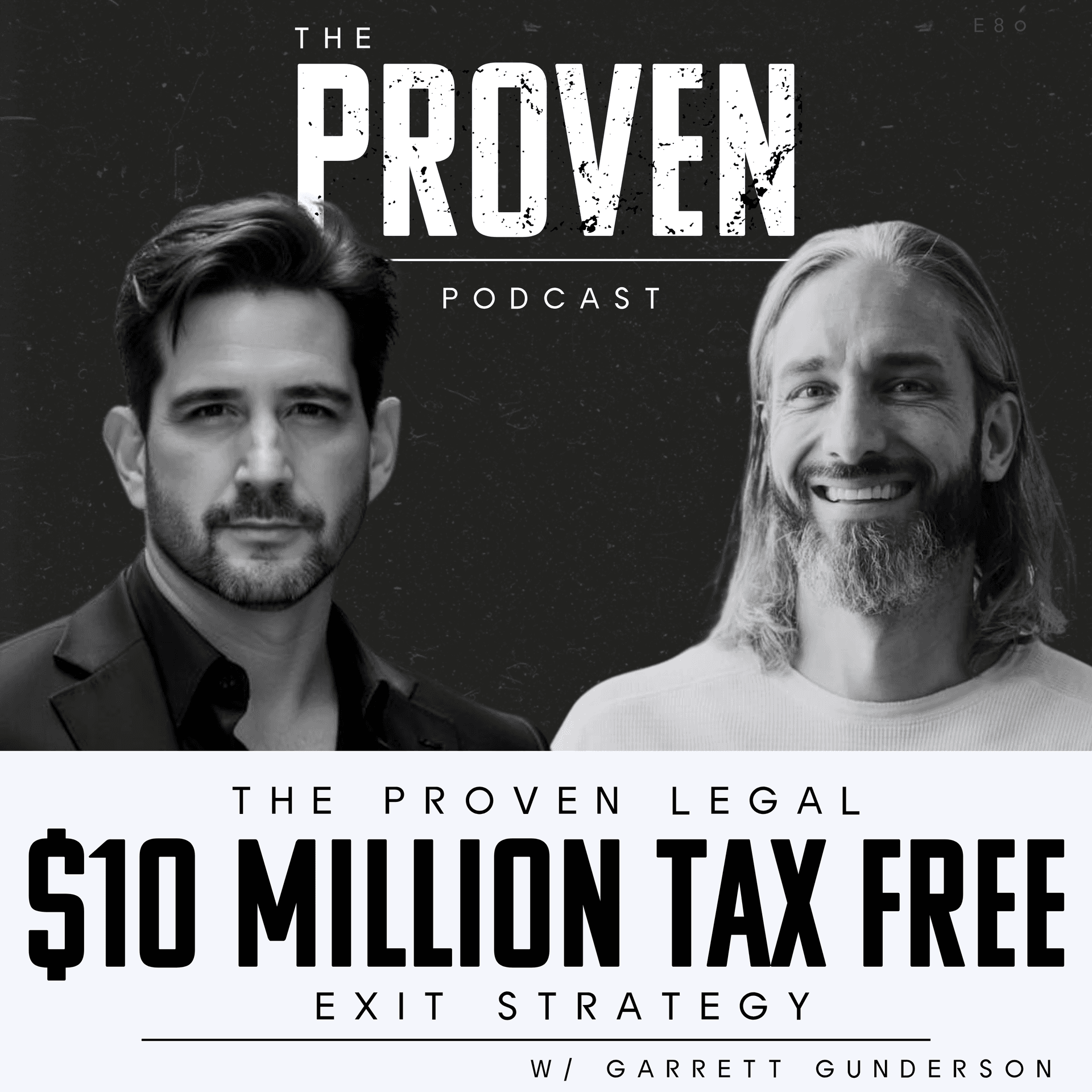
Garrett Gunderson explains a “proven” tax and exit-planning framework for entrepreneurs, emphasizing coordinated tax strategy, entity selection, and cash-flow-focused investing to maximize after-tax wealth and protect assets.
Guest background
Garrett Gunderson is a financial entrepreneur, author (10 books), and wealth strategist who says he’s helped thousands of business owners build prosperity through cash flow, efficiency, and economic independence. He runs an IP-driven media/education model and a program called “Multiplier.”
Key claims
- CPAs are often “reactive”; proactive tax strategy requires a coordinated team including an attorney.
- Entity choice matters for exit tax benefits; C-corps can qualify for Section 1202 (up to $7.5M tax-free after 3 years; $15M per partner after 5 years, with exclusions).
- “Delaying tax” isn’t the same as “saving tax.”
- Frequent deduction strategies include 199A (20% deduction), 280G (rent home to business for up to 14 days), home office write-offs, and paying kids (over $15,000/year).
- Mistakes include overpaying salaries vs distributions, using retirement plans for capital-gain assets, and letting tax drive bad purchases.
Notable examples
- A client avoided a dream-home move-in by delaying until January to trigger cost segregation deductions, saving “hundreds of thousands.”
- A client called after selling a business for $9M; Gunderson says most strategies are too late once the sale happens.
- He cites a client with 41 practices where fee/expense analysis led to ~$39,000/month savings.
Written by AI. May contain mistakes. Listen to the episode to check what was said.
Chapters
Tap a time to open that second in VOSetting the Stage for Financial Wisdom
0:27 to 0:59
Discussion on the importance of financial knowledge for entrepreneurs.
“So the first episode, it was really kind of felt like you and I were just sitting around having a coffee, talking back and forth about life, liberty, and what it's like to be an entrepreneur.”
Understanding Tax Strategies
0:59 to 2:15
Garrett Gunderson explains common misconceptions about tax strategies among entrepreneurs.
“Man, I feel like entrepreneurs don't know so much about tax.”
Building the Right Financial Team
2:15 to 3:36
Key insights on assembling a team to maximize tax efficiency.
“Number one, you got to have the right team.”
Maximizing Deductions for Business Owners
3:36 to 4:59
Tips on how business owners can maximize their tax deductions.
“And man, Charles, I feel like the best tax strategists are actually financial people, not CPAs.”
Advanced Tax Strategies for Business Owners
4:59 to 6:12
Exploration of advanced tax strategies that business owners may overlook.
“I have employees called my kids in one of my companies, so I make it available to them.”
Choosing the Right Business Structure
6:12 to 7:46
Discussion on the implications of choosing C-Corp versus S-Corp.
“because that family company doesn't have value in the marketplace or the existing business does.”
Navigating Corporate Structure and Tax Implications
7:46 to 8:51
How to navigate corporate structure changes and their tax implications.
“So there's a lot of tax benefit through that.”
Asset Protection and Trusts
8:51 to 10:50
Insights on asset protection strategies and the use of trusts.
“The people get scared because like, well, you have to pay corporate tax and personal tax, but you know, there's these other advantages that kind of help you out.”
The Role of State Laws in Business Formation
10:50 to 12:37
How state laws affect business formation and asset protection.
“We'll give you a provision that says you can choose your distribution trustee.”
Common Mistakes Business Owners Make
12:37 to 13:42
Discussion on frequent mistakes made by business owners regarding taxes.
“So who has better protections, who supports you or has easier setup and has, you know, things like that.”
Show all 27 chapters
Tax Classifications and Their Importance
13:42 to 14:00
Explaining the importance of understanding tax classifications.
“It's just, you have to, you have to deal with that and embrace that.”
Tax Strategies for Business Owners
14:00 to 17:44
Learn four critical tax strategies that can save business owners significant money.
“Number one, you want more passive income for tax purpose than active income, active income, like W2 as the highest tax against it.”
Common Financial Mistakes Entrepreneurs Make
17:44 to 19:31
Explore common financial missteps that entrepreneurs often fall into and how to avoid them.
“We still got six more mistakes that are non-tax related, but you know, I think the fifth mistake would be a lot of entrepreneurs just try to do too much on their own.”
Creating Passive Income Through Intellectual Property
19:31 to 23:46
Discover how intellectual property can generate passive income and wealth.
“And then finally, I think we're probably close to the 10th mistake, is they invest for accumulation instead of cash flow.”
Understanding Wealth and Investment Strategies
23:46 to 28:05
Gain insights into effective wealth management and investment strategies for entrepreneurs.
“And I was like, I didn't know it was for sale.”
Building Wealth Through Business Growth
28:05 to 30:26
Discover strategies for entrepreneurs to effectively manage their business as a wealth generator while exploring safe asset classes.
“We've got this there that we can count on.”
The Importance of Exit Planning
30:27 to 31:56
Learn why having an exit strategy is crucial for entrepreneurs and how it can shape their business decisions.
“are in that upper echelon that have been around for 50, 60 years that have handled different economic cycles.”
Avoiding Common Investment Pitfalls
31:57 to 34:09
Understand the risks of diversifying into unfamiliar investments and the consequences of poor financial decisions.
“My brother-in-law needed some cash for an investment deal.”
The Allure of the High Roller
34:10 to 34:46
Explore the dangers of the high roller mentality in entrepreneurship and investment.
“So they're kind of like ride the highs and lows.”
Loneliness in Entrepreneurship
34:47 to 36:13
Discuss the challenges entrepreneurs face with isolation and the importance of having a trusted network.
“All the time nationally about people that raised a bunch of funds, lost it all.”
Hiring the Right Legal Support
36:14 to 37:58
Learn the significance of hiring competent legal professionals and the value they bring to your business.
“They've got 10 different small investments, you know, that add up to one large investment and they can't be in all the meetings and they don't know what's going on in those boardrooms.”
Preparing for Business Sale
37:59 to 42:00
Gain insights on the importance of planning ahead when considering selling your business and the common mistakes to avoid.
“looking for shortcuts instead of the exact way to do it long-term that you just have to dig in.”
Understanding Financial Strategies and Client Engagement
42:00 to 43:59
Learn about the process of client engagement for financial assessments and strategies.
“Are they paying too much in tax or how much are they paying?”
Business Growth and Financial Health Insights
44:00 to 46:21
Explore how to analyze business growth issues and improve financial health.
“But you have multifamily offices where they take on 100 clients and it's all the same team working for all those clients.”
Hiring the Right Team for Business Success
46:22 to 48:06
Discover strategies for hiring A players and improving team dynamics in business.
“that we go is people the second place is the processes and and a lot of you know like a lot of these small service businesses just have employees that are negative employees that they hired out of convenience.”
Building a Professional Network for Growth
48:07 to 50:52
Learn effective methods for building a valuable professional network.
“A players and really hunt those individuals down and create that?”
Connecting with Garrett Gunderson and Resources
50:53 to 52:19
Find out how to connect with Garrett Gunderson and access valuable resources.
“that I've had has fundamentally changed my financial wellbeing every single time.”
Transcript
Automatic transcript. May contain errors.0:00Welcome to The Proven Podcast, where it doesn't matter what you think, only what you can prove. Our guest today is Garrett Gunderson, a financial entrepreneur, author, and wealth strategist who has helped thousands of business owners create lasting prosperity by focusing on cash flow, efficiency, and economic independence. Garrett has proven that true wealth isn't built by sacrificing your life. It's built by maximizing your value and keeping more of what you earn. The show starts now. Hey, everybody. Welcome back to the show. I'm excited that you came on back, man. Thank you. Thanks for having me back, man.
0:34Appreciate it. So the first episode, it was really kind of felt like you and I were just sitting around having a coffee, talking back and forth about life, liberty, and what it's like to be an entrepreneur. There's so much more to you in what you do. You're one of the leading individuals that I know on financial advice and financial expertise. I really wanted to kind of unlock that open on this episode and talk about what are some of the things that people come to you and are like, well, I can't believe they don't know this. and what are the most frequent things that you talk about when it comes to financial advice?
1:00Man, I feel like entrepreneurs don't know so much about tax. It's amazing, right? Because they get a CPA or an enrolled agent and they're like, oh, I got a tax strategist. No, you got yourself a historian. They're going to tell you what you owe after the fact. And there's going to be so many things directly in the tax code that they're going to make you feel like, well, I don't know if I should do that. That sounds risky. That's completely down the fairway, black and white and easy. And even further than that, the reason why most people know is because if you don't have an attorney that's coordinated in the strategy with the accountants, you're missing out because the type of corporation you choose is massive.
1:37For example, if someone's a C corporation that's been in operation for at least three years, when they sell, they could sell for up to seven and a half million dollars tax free using section 1202. And if they've been in business for five years, that's$15 million tax free per partner. And yet, if you didn't select the right entity, you might not have that tax advantage, right? And maybe a CPA is not looking at that. They're just going, hey, I need to file these taxes. And worst case, you talk to them at the next year for the previous year, and they're only strategies usually to delay tax. And delaying tax and saving tax are completely different things.
2:15So really, there's this easy framework. Number one, you got to have the right team. So just timely data. You know, I don't care if it's a CFO because you're an established company, a controller or a bookkeeper. You just got to have the timely data because if you're talking too late, you're missing opportunities. Second is you need the strategist that helps you maximize tax deductions. So deductions is kind of the second category. The third category is you have to have an attorney. Now, if you're under a million dollars revenue, a corporate attorney is fine. But when you get above that mark, you want a tax attorney.
2:44And they're responsible for how you classify your income, which is a game changer. And then finally, if you own real estate, you want an engineer, specifically a cost segregation engineer, because there's all this bonus depreciation people could take if they're in real estate now that gives them major windfalls of like deductions now. Now, to a degree, that could be a deferral because if you just sell it outright, you have to recapture it. but I could have you borrow against real estate, not pay tax, roll it over to another piece of real estate, not pay tax, or do a charitable trust where you donate the real estate to a charity, then sell it tax-free and you get a lifetime income while you're alive off of that trust.
3:17The charity just keeps at least 10 % of what's left over rather pay the charity 10 % than the government 20 % personally. So, so that, you know, that's the team. The second thing is how do you maximize deductions? Well, every time you spend money, say, does this relate to my business? And if you're not sure meet with your tax team, right? And that's either a tax attorney or a tax strategist. And man, Charles, I feel like the best tax strategists are actually financial people, not CPAs. CPAs are trained to file taxes. You want them. They're essential. They keep you compliant. But to expect them to be proactive when they're mostly reactive, they're filing 800 to 1 ,000 filings a year.
3:55It almost becomes a commodity. You need someone that sees the big picture and sees how everything works together and helps you navigate it. Now, the better tax deductions or the better category here is things like section 199A. That's a 20 % deduction off the top. Then you only pay tax on what's left over as a business owner. That's one thing that a lot of business owners miss. It's been out for several years now. 280G, which is you can rent your home out for 14 days to your business, write it off in the business because you're using it for business purpose and then not claim it as personal income.
4:29So that's just 14 days of tax deduction. most people miss. Maybe they had a team retreat. Maybe they were filming. There's a number of things. I know you don't just let anyone over to your house, but you might decide, hey, you want to film in other rooms and just what you're in now. Another tax strategy everyone should know, but I don't know why everyone doesn't take advantage of it. Just having a home office. You get to write that off. It's a percentage of utilities, all that kind of stuff. That's another piece that if you have kids, you could pay your kids just over$15 ,000 now per year, tax deductible to business tax free to the kid and you still control that money there's so many strategies like that that people just aren't doing that i would consider extraordinarily basic but one that like i've had argument against is this thing called 132j we happen to have an indoor pool we have a sauna as you know you know i have a cold plunge you know i have a i have all i have a gym so all the maintenance towards that if i make it available to my employees becomes a write-off if the maintenance does.
5:23Well, guess what? I have employees called my kids in one of my companies, so I make it available to them. And all of a sudden the maintenance is a write-off. Some people might feel like that's aggressive. It's just within the law. Now I know some people that might say, oh, I'm going to make it available to my employees. They don't make it available to all their employees. That's the problem. It's a specific company that's only got my family inside of it that make that available. So like these aren't the game changing things in tax deductions, but there's a lot that's missed there. The better strategy is if you're a business owner and you do have a wife or kids is you set up a family company that takes your write-offs instead of taking too many write-ups from the business.
6:00That way, if you have partnerships or that way, you know, if you have other people involved like employees, you're not just stripping that business to pay for everything that you want. You're taking money into your family company and then taking your write-offs there because that family company doesn't have value in the marketplace or the existing business does. And a lot of wealthy families do that. So I'll pause here for a second before I get to the big ones, which is how to classify income, which the tax attorney helps with. And there's four major ways to do that. So I want to reverse all the way back on there.
6:28One of the first things you said was a different C company versus an S corp and all of that. When you're running into this and you have someone who doesn't have this experience and has been working with a CPA instead of someone who's a strategist and really understands this is a true financial guy. How do you pivot out of that? How do you switch your company from like, Hey, I'm an S corp. I probably should be a C corp because I'm going to sell and it's going to be this exit and it's going to be the C-Biton. I know it's going to be this multiplier, blah, blah, blah. Is there a way you could do that after you've got the, you know, the car down the road a little bit, or you like you're screwed and then you have to switch it around?
6:57How do you survive that? Well, the clock won't start ticking until it's a C corp. So you're just, you know, if you, if you just start a new C corp, if you convert your S corp, if you're an LLC, it's very easy because an LLC can do an S election or a C election. So you just change the election of how you, how you tax that and become a C corporation. Right. So that would be suffice. If you're an S-Corp, you're going to have to convert it to a C-Corp or make that change or start something new and then maybe have that relationship with the business. There's a number of things we'd have to consider to figure out what to do.
7:33And I'd bring an attorney in to do that. It's not that it's an impossible thing. It's just that's when the clock starts ticking. You can't reverse the clock. It's not like, hey, I've had this company for 30 years and I just made it a C-Corp. They're like, we don't care. This is now going to be treated as a new entity and we're going to rock and roll from there. right and you know the new rules that just came out with the big beautiful bill it used to take five years for that to happen you now start getting benefits after three so they have shortened it you know it limits it to seven and a half million total benefit after three years where it's 15 million after five and there are some there are some exclusions certain companies wouldn't it wouldn't exist so you have to make sure you're in the category and the type of company that would work for we've had you know we've had companies sell and 70 million tax-free because spouse is an owner, kids have small ownership, trust is an owner, and the main individual is an owner.
8:24So there's a lot of tax benefit through that. And an LLC or an S-Corp passes through. So one of the worst things I see is I see a lot of partnerships in an S-Corp. S-Corps are very frigid. They're very inflexible. And so I've seen businesses do huge numbers with an S-Corp, but I'm like, wow, you're definitely, first off, overpaying tax and undervaluing the value of the business because the C-Corp gives you different share classes. If you're ever raising capital, it lets you retain earnings so you don't have to pay tax. The people get scared because like, well, you have to pay corporate tax and personal tax, but you know, there's these other advantages that kind of help you out.
9:00And by the way, interestingly, if you have a C-Corp and an LLC or an S-Corp do a small amount of revenue, the C-Corp is going to pay less tax on a smaller amount of revenue than an LLC or an S-Corp because those pass through to someone individually. So S-Corp, too inflexible. LLC, much more flexible. C-Corp, you know, it's just there's a little bit more onerous in managing it, but there is a lot more opportunity in managing it. So a lot of businesses are LLCs. That's the most popular one. But they may just want to consider like holding intellectual property in a C-Corp or holding a piece of that business in a C-Corp.
9:34So there is an option that they can have an exit and get some tax benefit and also retain earnings and maybe even have a medical reimbursement account, which you can't have in an LLC or an S corp from a tax advantage standpoint. There's a lot of stuff right now about the virality of where you form your organization, either the Cook Islands or Delaware or Wyoming or all these different things. When you're going down this bout and you're having professional financial advice, not just someone who talks about the past, but it's solely focused on the future of your finances. Where do you tell people to kind of form their corp?
10:06so there's the formation of the corporation which if you're going to do offshore like cook islands or nevis that's because you're moving probably towards an asset protection trust internationally and then what happens with that is yes you will protect your assets for sure and you'll also make it a little bit harder to access that money at the same time and i think it was like 2013 the u.s was like, hey, we're seeing too much money go overseas. We'd like to keep some of that money here. So they set up a domestic asset protection trust. Doesn't have the same precedent where we could see for decades that, you know, they're nearly impossible to penetrate and people haven't got into them.
10:45They just don't have as much, you know, data because they're newer. But they were essentially like, well, Charles, why don't you set up here domestically? We'll give you a provision that says you can choose your distribution trustee. So you still own those assets, the trust does, but you can have access to that if the distribution trustee says yes. Now, you might have a distribution trustee that you go sideways with. You can fire them and hire someone new. So it's still arm's length. Own nothing, control everything. Those types of things, like a domestic asset protection trust, the state matters heavily because some states, it takes six months before now it's irrevocable and nobody can get to it, including creditors.
11:23And some states take three years, right? So it might just take a lot longer if you're incorporated in certain states. Alaska was a big one early on, but they take longer than Nevada. You know, it seems like Nevada and Wyoming are really popular, but they're still taking longer than Utah. The problem with Utah is you now have to make a, you have to make a public declaration that you've set this up in some type of trade publication so your creditors have a chance to come and look at it. And it's a little bit more inflexible of changing trustees and stuff like that than Wyoming and Nevada. Wyoming and Nevada decided, we want to make this easy because we want more coming to us.
11:57You know, they got registered agents, they've got, you know, entities set up where you have addresses and all that kind of stuff. So those are what I see as kind of the two most popular. Although back in the day, as you know, Delaware was the king of C-corps way back in the day. It's not quite as much because we've just seen, you know, we know where people aren't going to go is California, right? People aren't going to incorporate in California and deal with those kind of laws and the kind of issues that might be, you know, might happen there. um so yeah it's more like your asset protection than your corporation although the corporation where it's set up in you just got to look at like some states have pretty unfavorable laws to businesses and that's why you want to be careful about that and just because you're in a certain state and you set up a corporation somewhere else you're still paying the state tax from the state you're in you're just abiding by the legal structure where you set up the legal structure and the rules that they have, right?
12:50So who has better protections, who supports you or has easier setup and has, you know, things like that. But then even if we get to the third dimension here, which is trust, right? So we have an asset protection trust, which is what we're talking about and corporations, but there's also perpetual trust. People go to South Dakota because it's perpetual. You can keep that going forever where Nevada eventually, after a certain number of generations, dissolves the trust. So, you know, that's another layer is like, what if you want this to go from generation to generation versus just what's best now?
13:22So it sounds a little bit complicated, but that's why you want to have a good attorney. They just kind of know what's going on. And, you know, then you, you can definitely use AI to figure some of this out, but we know that AI likes to make some stuff up. So, you know, well, I think it's in the name of AI, AI by itself is an artificial intelligence. It's always incorrect. It's just always incorrect. That's just the reality. It's just, you have to, you have to deal with that and embrace that. Speaking about being always incorrect, What are some of the things that people just blatant mistakes that you hear all the time?
13:50That guys, just please stop doing this. Here's the top 10 things. Stop doing these 10 things. Well, so let me, I'll finish the tax thing. Cause there's a lot of mistakes in this third category, which is reclassification. These are the four things. Number one, you want more passive income for tax purpose than active income, active income, like W2 as the highest tax against it. So one of the mistakes I see business owners doing is taking huge salaries instead of salary plus distributions. When you're operating as a business owner, you can take distributions. When you're operating as a business runner, you take a salary.
14:23When you differentiate those two, you can avoid self-employment tax, which is at least 15.3 % on the top dollars and on some of the dollars at least 3.2 % once you've maxed it out. But that's a perpetual savings of 3.2 % just because you took two paychecks instead of one. The second thing is when you can have a capital gain asset instead of, you know, ordinary income asset, a lot of people put their assets in retirement plans. That means it's permanently now going to be an ordinary income asset. I've seen people be like, well, I'm going to buy this real estate inside of my IRA. I'm like, real estate's a capital gain asset.
14:59Capital gain is 20%. Ordinary income is 37%. Why would you penalize yourself and you can't depreciate it anymore? So you lose that advantage. so I just see a lot of people lock their money away capital gain means we could borrow against it tax-free we can pass it on the next generation with a step up in basis meaning it goes to them as if to the full value is what was paid no tax on that gain and then also if we do decide to sell we've got strategies to offset that capital gain which we wouldn't have an ordinary income or we pay 20 % to the 37 % so I like seeing more capital gain based assets we know you know there's tons of people that talk about buy, borrow, die, where you're borrowing against those assets.
15:38And then, you know, when you die, it steps up in the basis so you get passed on tax-free. You know, that's, that's a, that's a big strategy. And then the third thing is that people just aren't maximizing tax-free strategies. Like there's a lot, there's not a lot of them, but the ones that are awesome are you get to be charitable and you actually get a benefit from being charitable, charitable lead trust, charitable remainder trust. So it's whether or not you want to fund something towards a charity now, which gives you tax benefits later, or whether you want to donate something now, which gives you income now and a little bit of a tax advantage up front.
16:08Like there's things like that or donor advised funds or section 1202. Like a lot of people make the mistake in business that they think they're going to sell their business and they wait until they get a letter of intent or they get a broker and then they try to do the tax strategy and they've just negated over half of the tax strategies. So that's the problem. And then finally, I think the biggest mistake in taxes will be the fourth one is people let the tax tell wag the dog. they spent a dollar to save 37 cents and they wouldn't have spent the dollar otherwise right so they're buying something like a vehicle that they didn't really want that appreciates in value because they can do a section 179 which allows them to write the whole off the whole thing off in that year but now they have a depreciated asset that wasn't that useful so i want to use tax arbitrage spend a dollar get more than a dollar back right there's not a ton of these strategies you know uh they've and they tinker with them all the time like there's equipment leasing strategies that you can, I don't love those because you're, you're financing equipment for that could that equipment, I don't know the value of it in the future, but it gives you this bonus depreciation, short-term rentals where you're buying a rental, you're getting huge depreciation on it right away, which is benefiting you.
17:15Historic easements, you're buying something that's in a historical area, you're preserving the facade. They give you a major benefit that you still get to rent it out and use it because you preserve that facade, buying art and donating art. If you know how to buy art properly, it's a donation game here in the United States. So people could buy and donate and get more than what in the tax benefit and what they spent. Again, if they know how to buy it properly, which usually comes from buying a collection of art at a discount, holding it for three years and then donating it afterwards. So that's kind of tax arbitrage.
17:42So those are just four tax mistakes. We still got six more mistakes that are non-tax related, but you know, I think the fifth mistake would be a lot of entrepreneurs just try to do too much on their own. So it lands on their plate and now they're like, Oh, you got to handle my finances. And now they've got to describe to the attorney what they heard from the accountant, it becomes confusing. So they just kind of like let it go. And then what happens is they overpay tax or they don't automate things. Like I think they automate investing. I'm about automating savings and deliberately investing. If you automate your investing, that'd be like automating your marketing.
18:15It's not working. You still put money into it. We wouldn't do that as business owners, but we do that with as investors. So you automate the savings off the top, live off the rest. Don't overly budget, just be able to be productive with it because it's so much mental space of budgeting. You've already saved it off the top and then invest in what you know. I believe in investor DNA. Investor DNA says, who am I? What kind of investor am I? Some people are great at real estate. Other people aren't. Some people are good at buying businesses. Other people aren't. Some people are good at intellectual property.
18:44Other people aren't. You've got to figure out what you're willing to pay attention to, what you're willing to dive in and create an ability towards, and then only invest in alignment with that. diversification is when we want to preserve, not when we want to grow. Too many people prematurely diversify and spread themselves thin. It stunts the growth. And then what they do is they get frustrated when it's not performing as well as their business. Next issue or mistake is they, they, I think it's really important to grow your business, but some people don't have a way to turn business wealth into personal wealth.
19:14So they grow their business. The business has an insatiable appetite and then they are one dimensional. They don't have an asset class outside of that. So if you can start pulling some money off the table with an asset class that's non-correlated to preserve and protect that so you have a baseline and a foundation, that's key. And then finally, I think we're probably close to the 10th mistake, is they invest for accumulation instead of cash flow. Create cash flow so you have financial independence, recurring revenue from assets that cover your expenses. Then you can reinvest all your active dollars and exponentially grow versus save 10%, chase 10 % and wait for 30 years.
19:49That's a really slow, bad process that people mistakenly fall for. The sheer volume of things that you just did was an absolute masterclass. There's so much there that I'm going to have to go back and watch. Because there's things that you're doing that I'm not even doing. So I love what you talk about with investor DNA and respecting that. There's people who have come to me like, do you invest in crypto? Do you do NFTs? Do you do real estate? Do you do, what are your things? I've learned from Melvin Simon, who 64th richest person on the planet at the time. He told me, he goes, don't invest in shit you don't understand.
20:18period, full stop. If you do not understand it, do not put money in it. You got to stay where you're comfortable and stay in your lane and outsourcing that. And when you talk about investing, because again, you're one of the more financial literate individuals I know, what do you focus on for cashflow? What are you doing? Because I know, I know what you're scaling and I know what you're doing. And again, because we have our dynamic, I know your backend here a little bit better than most people. Can you share with what you do for your passive income and your cashflow and your kind of your generational protection downrange for your kids and so on and so forth?
20:49so i've written 10 books and i look at each book as a piece of real estate and then those books continue to produce even though they've been written in the past so i'm an intellectual property to create recurring revenue kind of guy so that creates you know right now my focus is media how can i create reach and reputation because it's not just what i know it's who knows me and so how can i reach those people so we can sift sort and screen the people we can help the best and that we can give away to the people that we can't help our very best, whether they pay us or not. So that's kind of like brand and reputation.
21:23And then that intellectual property is evolving now because that's including certain tools that make something very easy and efficient to get done instead of big, long workbooks of the past, right? Like just, we could help someone build a family crest like this with a tool. And so when I talk about it, it's like, here, go ahead and do it, that engages them with us. So with that, I then have a program called multiplier and multiplier. It is active because I do teach once a week, but I like teaching, but people are paying every month and they get coaches and they get, you know, an app where they can communicate with each other and they get a financial network.
21:56So I'm actively building that. But the way that I'm building that is with all the intellectual property that informs them to like who I am and what I do, which is active up front becomes more passive as time goes on, because I've got books that have been producing since 2008 and still selling and it's still in the top 20 in certain categories. And I think I have four books right now in the top 100 of Amazon categories and some in the top five. Those are because, you know, it's something I developed the skill for. And even though it's active up front, it becomes more passive over time. And I think that's the myth of passive income.
22:29People think, oh, I just hand it off and I get passive income. No, the more active you are up front, the more passive it becomes because of selection, because of strategy, because like, why would someone give someone 15 % a year just because they handed them money? There's got to be something more than that to get that kind of return. And so it's usually about like unique viewpoints and it's about like specific types of deals and quick timing or stuff like that. I don't want to be in that game of real estate because it just hijacks my life. And I don't want to be tied down to a property that has property taxes and maintenance and that kind of stuff.
23:01I had a hundred plus real estate properties. I'm divesting. I'm only going to have two by the end of this year. You know, it's like, that's what I want to manage. I, I think it was just like part of my early ambition. I was like, I must, I just want to own a lot of real estate because that's where people store wealth. That's where some people store wealth. Other people store it with like, you know, they go and acquire businesses and that's cool. Or they do intellectual property. But I think that's the big three real estate business and intellectual property are the big three kind of asset generators.
Read the full transcript
23:31Now there's a thousand ways to do real estate. There's a thousand ways to do intellectual property. There's a thousand ways to thousand, 10 ,000 different types of businesses. So it's about narrowing the focus and figuring out what to do from there. Yeah. The red heart chili peppers just sold their entire book of all of their stuff. And I was like, I didn't know it was for sale. Cause those are some of those things that just produce and produce and produce. But I agree with what you said, passive income is actually a little active. And we talk about this all the time. The money is made before you sign on the deal, not when you're actually in the deal.
24:00It has to make sense before you make money on the buy. Right. Yeah. Make money on the buyer. Right. Isn't complicated in any way, shape or form. So when people reach out and they want to do that and they want to get educated, what are some of the normal problems they run to right off the bat when they come to you? I think you were talking about how you've got the books and you have all that. And again, author as well. What are some of the ones you're just like, guys, before you buy any of the books, please just do this for the love of, you know, what is the thing that you just wish there? Just do this.
24:25Or they brought to you before they started working with you. I just like, I think it's hard for people to be honest about their finances because no matter how successful they are, they always feel like they should be further ahead. Yeah. And so they always like there's this weird thing that when it's not going well, they're like, I just need to get to the other side of this. I just need to figure this out first. Right. And so just delays everything because the thinking that got him in a situation isn't going to be the thinking that gets him out of it. And if they'll just get rid of the guilt, the shame or the embarrassment and be open, they can accelerate the results because all progress begins when honesty exists.
24:59And so we've just created a firm that There's no judgment zone. I mean, if someone wants to read the books or watch the videos to get there, it's just going to require more time. And that's fine. We'll keep putting that out. We'll make it extraordinarily affordable. So no matter where you're at, you can have access to that. But a lot of people have more that we work with. They just have more money than they have time. So they just buy the result because we can help with the sequencing and the implementation of it. But it's just a matter of being open and honest and not delaying because there's never a good time.
25:27You're never like, oh, you know, in two months, I'm just going to have all the time to finally get my finances handled. And then two months goes by, you pay more tax than you need to. You had more interest that went out the door. Your insurance isn't designed properly. So you're one accident away from having a money that comes out of your account that didn't need to. You're overpaying those insurance companies. And there's a ton of fees in the investments that are creating drag. I remember I met this guy and I told him it was gonna be 20 grand to work with us. Yeah, I just, I do a day and a half workshop.
25:53He came to it and he's like, 20 grand. That's crazy. I'm like, well, we're gonna guarantee that we save you that or we cover the difference, including the full 20 grand. He's like, okay, that's cool. I said, did you feel like you paid a lot of fees in your investments last year? He goes, not really. I'm like, well, we did the analysis. It was$19 ,130. Did you make or lose money last year? He goes, we lost money. I'm like, and you paid$19 ,000. So we're just barely more than that. By the way, he had 41 businesses, 38 physical therapy practices, and then three chiropractic practices and we saved him$39 ,000 a month.
26:29But see the way finance works is they just love to basically say, we'll just automatically take the money out so you don't feel or see it. You know, instead of like, if you pay, it's a little bit like we'd have a revolution overnight if all the fees that went to finance had to be transferred manually or sent by check or put on a credit card. People would lose their mind, but they just don't see it. So it's a matter of like that visibility and seeing what's going on for you instead of learning a tactic and chasing some tool, like seeing and assessing where you're at and then finding 10 % or more of that income that you can put back in your pocket.
27:06That's our specialty. And when you get this and people like, Hey, I've got this extra 10 % and you're reversing this and you're reversing the expenses and people go, okay, I'm completely oblivious of what vehicles I need to use. And listen, you saved me the money. that's great but i really want to talk about earning that income and look at those different things and maybe they're not book people maybe they're not intellectual property people do you have an environment where you bring them in and say okay here's what you're going to want to do here's the best thing you do go buy a bunch of parking lots or let's go flip businesses or whatever it is how do you help them get to that next part because most of the people and i run this all the time if you're great at being i don't know a lawn care guy and you're phenomenal and you own 700 different locations you probably suck at certain other things you're probably not that great over here and thinking if you're a great pitcher doesn't mean you're going to be a great hitter it's it just you need to understand that letting get out of that and there's a lot of ego that involves with entrepreneurs and i think one of the proven most proven thing is hey i'm intelligent here therefore i'm intelligent here and it's not the case so when people come to you and they're like listen i'm gonna run my business and i'm gonna scale it and i'm really good at my business but i suck at the passive income play what do you do with those guys yeah and in those that's my favorite situation because i'm going to encourage them to grow the business i'm gonna say that is your wealth generator is the business let's pick one asset class that we can take money off the table as you're growing that business so that the business is insatiable appetite doesn't eat up all the profit you'll you know and so we just pick that one asset class and it like for some it's what's the least risky thing that we could do that it'll it won't even earn close to what the business earns, but now it's stable, it's secure, usually makes their spouse feel amazing because they're like, oh, cool.
28:46We've got this there that we can count on. Maybe it's only getting 5%, but it's keeping up with inflation and plus it's 5 % without taxes. But what we look at is this. We've done the research. The average 401k, if people could double their rate of return versus just save the tax that we help people save and just save the interest by either restructuring loans, renegotiating interest rates or reallocating funds, they're 400 % better off with efficiency than doubling their return with the average account balance. So we go there first because now we've got this extra fuel. We've got this extra money.
29:20So maybe they don't even have to take any money out of the business. We've just found it through tax savings, through interest savings, through investment fees that they didn't know they had or insurance that was, it doesn't design properly. And then we build that asset class so they could just keep growing that business, growing that business. Cause if they start going, I want to get good at passive income, I'm gonna start buying real estate, I can tell you what's going to happen. They're now going to have to spend a bunch of time in real estate, or they're going to go to a syndication. And the syndication, they have no control over, there is no liquidity, they hope it works out, they hope the economy doesn't change.
29:48And if it does, they just took a loss, which means now they feel bad. And now they're upset because they're not as productive in their business, because they're fighting with their spouse, because the money that was lost in this real estate syndication, they knew nothing about, they had zero control over. So I'm all about simplification and focus, business and asset class. We'll find the money to help finance that asset class. If we can't get all the way there, we'll do it through some business growth. But I'm just going to discourage a lot of the other investing that's out there unless they're worth tens of millions of dollars.
30:17And at that point, I'm going to refer them to other firms that this is all they do full time, private capital, venture capital. I'm not going to touch that with them because I'm here to help the people that are on the way up get to that place where they have access to the people that are in that upper echelon that have been around for 50, 60 years that have handled different economic cycles. That's their whole thing is due diligence on that all day long. I just couldn't, if I try to do it, I'm serving too many things and I wouldn't be an expert at these other pieces. Yeah. I think it talks about, you know, what you're saying before, stay in your lane, kind of inch wide, mile deep.
30:48If this is what you're doing and this is what you generate your income stream for you, let's, let's protect that. Let's scale that. Let's reduce the taxes. Let's reduce your exposure and let's put you in the best vehicles that when you do want to exit it, that you're already lined up for that. And most entrepreneurs just aren't having that conversation. When they form the business, they're just like, hey, I had this idea. I'm like, I don't really care about your idea. I want to know what your exit plan is before you start your business. And if you don't do that, we're going to run into massive issues.
31:13So I think coming in also on top of that, saying, okay, this is my exit plan. Yeah, sure, I have this idea of the business, but I now know my exit plan. But on top of that, I know how to protect my assets. And I know how to protect myself from taxes and any of the liabilities that are going to come into. I think that's where you come in, where most people just don't have that. They've got someone talking about the past, which is kind of like driving forward by looking in the rear view mirror. It just doesn't work very well in any way, shape or form. Yep. From there, when you go into it and your students are talking to you, what are some of the questions that, you know, you mentioned this before we started recording, there's people that you work with.
31:44They're like, Hey, I didn't even know that, that that was a thing. And you're like, Oh, well, Hey, I'll give you this. No problem. What are some of the things like, wait, you don't know this. What are some of those that you run into yeah what's interesting you mentioned it earlier just because someone's really smart at one thing people almost assume they're smart at a bunch of other things right and so like the thing i here's what people don't know they don't know how to sense when something's a scam that's the shocking thing now look that's what happened to me in my 20s i thought everybody like because i made the mistake of i was 19 i bought my first home right before i turned 20 and rented it out to other college roommates and, you know, sold it for, bought it for less than a hundred, sold it for 170.
32:27I'm thinking, dude, I'm so good. My brother-in-law needed some cash for an investment deal. I gave him 25 grand. I put it in escrow. He got the deal. He gave me back 50 grand three months later. I'm like, dude, I'm a badass. And my buddy, Joel's like, Hey, I got a friend going to lose his house. You could buy it. You could rent it to him. Cause I just got him a job. There's a ton of equity in it. He said, when he refinances, he'll split it with you. We know how to improve his credit. I'm like, great. So no money down, you know, sells for 190 grand more and then I bought it for, we split that 50-50.
32:52So my first three deals, I'm in my early 20s being like, dude, I'm so good at this. I'm so good at this. And so if that's good, I might as well do 100 properties and I might as well start a hard money lending fund. And all of a sudden, in all these things that I'm not the expert in, but people trust me because I'm articulate and I've got other expertise. And what I had to learn the hard way was I bought a 45 ,000 square foot building that I was 45 % owner in. When that person got into trouble, That meant I got in trouble because I didn't have the way to buy it out. And then we lost the building.
33:24Like I just got had my fingers on so many things, starting new businesses, complimentary things. But then what happened was my health starts to suffer. I don't have. And it's like this is what's fascinating to me, because social media is trying to paint a life for people that if you just grind life away, you'll have all the great things, but you'll be alone to ever enjoy them. And that's the thing that's hard to understand is why people are so motivated by crappy stories around money because they think there's a shortcut or there's a secret. And if they get that, they'll get ahead. I mean, I know that's probably different than what you expected me to say, but I just see so many entrepreneurs that lose so much money putting it in things that don't make any sense because the story was so compelling.
34:02I wrote a book called Money Unmasked. And in that book, I talk about this category of person called the high roller. The high roller plays a game called opportunity, but they make, they cut corners, they take shortcuts. So they're kind of like ride the highs and lows. They're likely to go bankrupt more than once. And they bring people with them because they're great at fundraising. They're awesome at parties. They're great at complimenting you. They're so good to be around, but they're not good at any details. And so if they don't have the right people behind them, it is so dangerous. And they're just so compelling because they're like, Hey, why don't you take my, uh, ridiculous luxury car for a drive?
34:36And you're like, dude, that's so nice of you. And then, Hey, why don't you want to fly private with this? Oh, this is amazing. And then you find out that that was all raised capital that was supposed to go into investment deals and it wasn't real. And how many stories do we hear? All the time nationally about people that raised a bunch of funds, lost it all. And these were people that couldn't afford to be in those deals. And now they're desolate and they're hopeless and all that kind of stuff. That's the thing. Why is it that every rapper wants to be a baller and every baller wants to be a rapper?
35:05It's the same thing. Why does every entrepreneur want to be an investor to the point that they orfeit everything they know about their entrepreneurship? membership because that's the thing they most intimately understand is their business. But now they're investing in things they know very little about with no influence or control. And it's like taking that good money from the business, siphoning it off and putting into things that are broken promises. And those broken promises destroy marriages. They destroy families. And it's like, I'm, I just want to be an advocate for that. Uh, not doing that because, you know, part of why I want to be ridiculously successful is because I want my kids to have a great network.
35:36I didn't have a great network. I came from a coal mining town. So I learned from people that sounded good, but weren't real and sold me stuff that they couldn't fulfill on and all that kind of stuff. I learned that during, you know, my early years, cause I didn't have great attorneys to protect me in my early years. Now, if I bring it to my attorney, he's going to tell me all the things that I can't see and the things I need to look for and ways to navigate the deal, because I've got a network of people. I've got people that I can go to and say, what do you think about this? that might sniff it out.
36:05And so many people are missing that, but that there's that belonging that the entrepreneur wants because sometimes it's a lonely road. So they invest just to be in the kill kids club and that investment just goes away. They've got 10 different small investments, you know, that add up to one large investment and they can't be in all the meetings and they don't know what's going on in those boardrooms. And then they find out, man, I could really hire right now, but I got all my money tied up in things I don't understand. Yeah. There's so much there that you talked about regarding entrepreneurs being such a lonely road it's an exceptionally lonely road it just it is what it is and you're going to run into that environment where you're like hey i want to go do a b c d and e but i'm so alone maybe there's an easier way to do this because most entrepreneurs are burnt out because they're trying to do everything and by that they're doing absolutely nothing and you talked about your health failing as well as you go into this environment of locking in on what's proven and surrounding yourself with people that'll get in your face and don't want to be your friend has been really interesting for me get hiring people that are not there to be nice to me has been really, really valuable.
37:01When I hired my first lawyer, I was sitting down, I was like, how do I, how do I pick my lawyer? What do I do? They're like, pick the person you're terrified of. I was like, okay. And that's how I hired my first lawyer. I picked the guy that I was absolutely scared of. And everyone that I've employed for me that are on my law team, I'm terrified of them because I'm like, good, at least you're on my team. Because like, go for it, go get that and stay out of my way. And I just give them everything and have that transparency because I'm smart enough to get out of my own way. Not because it was some gift that I got, but because the first time I lost a million dollars, I was sitting down with my mentor at the time.
37:31And he sat with me, he goes, what's going on? I was like, I just lost a million dollars. He's like, aw, wait, you lose 10. I'm like, what? He goes, dude, we all lose a million. He goes, and you'll get to the point where you lose 10. And I'm like, wait, what? Because that's the cost of the game. And it goes against what social media talks about where there's this, when you call this hustle porn, where you get up at four o 'clock in the morning and have 17 meetings, work out 17 more times and wait, oh wait, at six o 'clock, you got to do it all over. It just, it doesn't work. And it's not effective long-term because people are looking for shortcuts instead of strategies.
37:59They're looking for shortcuts instead of the exact way to do it long-term that you just have to dig in. And I like what you said before, like, Hey, you've written, you know, 10 plus books. That's great. And as a, as an author, we both know that we put our best in there because there's just this, you know, imposter complex that we have, or the inferiority complex that we have put it in there, but that's going to take time. And if you want to shortcut it, you need to be able to sit down and talk to actually to the person. So when you're doing this and you're sitting down can you tell me a story with some of your clients that they sat down and they just were completely blindsided by something that they didn't even know because again maybe they were great accountants or great peptide guys or whatever it is but they were just absolutely blindsided over here but it's like jeez i just completely lost yeah like i'll tell you one that we caught in time last year okay we just had a client that bought a dream home and they're about to move in and i was like and our our tax driver's like whoa wait like could you wait till january he's like yeah why he's like because if we make this a short-term rental between now and january you're gonna get hundreds of thousands of dollars through cost segregation and he was about to move in canceled the movers decided great i'll stay in my house and you know That was a huge deal.
39:15I've had people where it was too late, where they called me, hey, I'm selling my business. Like, how can we save tax? And I had someone that just sold their business for$9 million. And they're like, how do we save tax? And I was like, well, we can. I wouldn't recommend most of the ways to do it because you've already sold it. It's capital gains. And here's what we had done beforehand. And that's so common where people call us when it's really late in the game. Like, I want to talk to someone two years before they think about selling to prepare that. And I just think that 75 % of people that sell their business regret selling it.
39:48You know, 75 % because it's what they know. It's their relationships that they have. It's their skill sets, but it's a seductive story. Sell your business and then what? You sell it, then what? Like, you now become an investor. Where are you going to invest? And the phone's not going to ring for you to be doing things because the business is sold. And you might not like how they run that business, especially if you sell it to private equity. You might really hate how it goes. so you know i kind of believe in like retire into business not from it like so i just create the right so i've i've sold quite a few businesses and i'm of the mindset of there are certain reasons to sell and there's certain reasons not to sell if you have no other tangible skills and you don't know where the next lilly pad is that you're going to jump to don't sell the business just don't sell it if you're at the point where you'd rather you know take an early exit from life than stay in that business, sell it, walk out, you're done.
40:45You've hit it. And most of the time people who run into it and we're selling businesses, it's not because you don't like the business. It's that because the business itself has eaten you alive because the employees, the first business I ever sold, I sold because I just couldn't send the employees anymore. I was like, I'm done. I'm like, I just can't. I've rebuilt this infrastructure. I wasn't a good leader at the time. I had no idea about decentralized command. I had no idea how to to build a culture. I was like, I can't. And it was absolutely killing me. And the day after I sold it, my phone didn't ring.
41:13No one reached out. None of my employees, because it was built into the contract. I was just an abandoned Island and I love it. Now I gave the exact panel what to do to the guy who sold it for five times more, nine years later and mazel tough to him. I just couldn't do it, but be, so, you know, there are times to sell a business just like there. I think there's times to sit down and plan this stuff out. But not just for a romantic story, but because it wasn't the right business for you anymore, or isn't the right business for you. Right. And you have a plan, you know, you're doing next. Well, I think that's the difference.
41:46So when people hire you, it's because they want that plan two years from now. It's kind of like saying, Hey, I just got in a car accident. Should I put my seatbelt on? Yeah, that would have been a great idea a mile back down the road. but now let's talk about your hospital bills because it's just that's where you are so when people come into that and they want to do that what do they bring to you do they just bring transparency do they bring their account do they bring their team what are the things they need to have do they you know is it an in-person thing how do they do that so this is our steps we do a discovery session first we don't ask them to send anything in we're just asking them questions where how are they on financial confidence what kind of entity have they set up where what keeps them up at night.
42:29What's their loan structure like? Are they paying too much in tax or how much are they paying? And, you know, who's on the financial team? So we just get a good landscape. Then we do a report of findings. The report of findings with general advice gives ranges of here's the tax savings, here's the asset protection, here's the holes. And then they could join our program at that point at the baseline. Okay. And then when they're in the baseline, we can do the full analysis because they've now paid us. We've now got all their documents and we can say, if you want it done for you program, it'll be this much more per month.
43:00If you just want us to coach you to tell you what to do and bring in the network, they just stay where they are, which is really inexpensive. But, you know, basically if they want us to file the taxes, do the tax strategy for them, they want us to set up the corporations and, you know, all the asset protection. There's ones we've got all the documents, we can quote what that is. And then we just keep moving forward. They get two calls a month with their results facilitator, which means they're not paying$600 an hour for an attorney or$500 an hour for a CPA. We're gathering, we're analyzing, and then we're making it as efficient as possible for those things to get implemented.
43:33Because a lot of CPAs could be good if they weren't meeting with clients all the time. A lot of attorneys could do better if they weren't constantly explaining the same thing over and over. We keep them in their expertise, and then we handle the navigation. And that's what really transforms having a coordinated effort and a comprehensive team. And yeah, because if you're a billionaire, you just hire your own team. Yeah. But you know, that's a very expensive venture to have your own team, like to have your own financial team that only works for you. So there's not many true family offices, which are just for one family working nowhere else.
44:05That's become billionaire's playground. But you have multifamily offices where they take on 100 clients and it's all the same team working for all those clients. So we've been more like, how do we have a virtual family office where not everybody's in the same building, not such a high price point to help these people out. And when they get to that point where they need the private capital help, we can refer them to a multifamily office that we partnered with to get that extra analysis. Even our investment advisor gives people access to deals they normally wouldn't have the capital to get into because of kind of having the number of clients that we bring in.
44:38But my goal is to get them to grow their business and improve their lifestyle before investing in things they know nothing about. Like, let's do the priorities. Let's save the money. Let's improve, you know, let's, let's have a better life because just investing in things to hope that they go up doesn't always end up that well for people. That's called gambling. That's not called investing. They call it investing, but we know it's gambling. It's gambling. So when you're talking about, you know, scaling someone's business, because you're like, Hey, we want your business to get bigger and better and stronger and faster.
45:05What is your firm doing to that one? Or what have you seen that have actually created those results, both either with your clients or yourself? so first we want to analyze is it a marketing issue is a sales issue is a retention issue is it a team issue that they just are either missing piece of the team or they have the wrong person on the team that's starting to create a lot of turmoil how good is the feedback that the feedback loop how much data do they have what's the you know where they least consistent in and then once we identify that then we're like is it a hire and is it having the right hire like i just worked with my group last week on key hiring process and how they can find a teamers and how they might spend more for them, but it's worth the extra money.
45:48And the way to, you know, where do you find them at? How do you interview to, to figure that out, um, on the business side, you know? And then, I mean, it's, it's interesting because even some of the time we're just helping them with their health. Like we have tons of longevity people because that's what it is, is the mindset and the health of the founder is part of the problem, or they're just not sure on certain pieces so now we're looking at is like how can we use a better data which ai is a little bit more efficient at gathering that internal data so they can make better decisions and know what to address next and you know a lot a lot of this really comes down to the very first place that we go is people the second place is the processes and and a lot of you know like a lot of these small service businesses just have employees that are negative employees that they hired out of convenience.
46:34They're inexpensive to pay, but expensive to keep. Right. Uh, and then that's where really game changing results start to happen. And then again, then second would be marketing sales fulfillment and how long is the fulfillment from there? And then just starting to get more visibility on what's the numbers say, you know, because a lot of the businesses we work with just don't know their numbers very well. They just, they're, they're just working. They're just, they're just working harder. They're just, you know, doing their best, but they're not looking at actually before it hits the bottom line.
47:03We want to see the trends. Um, and yeah, I've got great people on that category. We're, we're helping our clients all the time, just integrate basic AI. They're just not integrating certain efficiencies that are very easy to tap into because it's intimidating for them. The nice thing is my team's pretty young on the coaching side, but you know, a lot of my coaches have owned and sold businesses, you know, so they, even though they might be in their 30s, they've already exited, they've already bought, they've already been through that process. And a lot of them have been with me since my first company.
47:36And so they've got 20 years of experience doing this kind of stuff. But we're still in the recruitment of like, how do we help people on the business side? Because we really start with personal financials. First, it's the low hanging fruit, it's easy. Business financials are a little bit more subjective at times, right? Certain margins, certain industries, that kind of stuff. So, uh, you know, we, we, we go where we know we can create the momentum. So when it comes to hiring the A players, cause this is just a problem across the board. We were talking about this before you even started recording.
48:04Um, where do you recommend people go to go track these people down and find more of the A players and really hunt those individuals down and create that? There's just grand slams.
48:19um i tell him first go to your key relationships and ask the key relationships who do you know that's amazing at x y and z you don't say i'm hiring you go who do you know that's like the best at ai who do you know that's best at technology who do you know it's like a rock star assistant i want to get to know them i understand how they operate because they probably have other people that are like them or most a team is already hired you have to recruit them away. Right. It was funny because we were talking about a very specific thing that you're hiring for right now and you're scaling. I was like, Oh, I've got a guy.
48:49I'll connect you to this guy. And then I'll connect to this resource. So you can have this. You're like, Oh yeah, I'm already talking to that resource. So you'll find it's a very small world. We live dates apart and we, we know and look how small that world is. Good. Yeah. We got exactly to the same person, but the same room, like this is the best in the world. If you're going to go do this, if you're going to spend the money, hire these people and you'll know that you're in the right room with the right people. when you hit that, when you're like, oh, we're referring to the same thing. We're checking out the same thing.
49:16These are the same people. And again, we're states and states apart. So I think you talk about your network being your net worth. You talk about digging in on that. When someone's looking into building their network and having that environment where they can come in, how do you build that network? How do you bring those individuals together that think like you think and connect like you do? Look, in my 20s, I didn't have a network other than my college buddies. and I definitely brought them into the business naively because I just you know didn't know any better it was kind of fun but it wasn't the most effective thing to do so I just started joining masterminds I joined you know uh wizard academy and in Austin Texas uh Maverick uh with Yannick Silver strategic coach with Dan Sullivan mastermind talks with Jason I just started getting in these curated rooms because now all of a sudden you have all these great people and you know you're even in like WhatsApp groups with them, or you get like a, a Rolodex of like everybody's contact information.
50:11So you could reach out to them when you're looking for something. So, um, that's, that's kind of the key is you could kind of buy your way in. That's the best shortcut, you know? Yeah. I wish there was another shortcut around that. It's the only one that I've ever found that worked is just getting in the room. It's a pay to play environment. And then once you get in there and I found that the money isn't so much for the mastermind, it became a filter to separate jet pop. Yes. That's all it was. And then you're in those rooms and there's, I wish there was a better way to do it. And the mastermind that you're paying 5k for will have very different quality people than the one that you're paying 50 to 150k for.
50:47I'm just sorry. It's a filter. There's a reason I fly first class. It's not just for the comfort. The amount of business that I've got coming out of a first class flight and the connections that I've had has fundamentally changed my financial wellbeing every single time. So you got to pay to get in that room. If people want to get in the room with you, if people want to connect with you, and spend more time with you because I could literally sit down and talk to you for days. I love talking to you. There are other people who want access to you and the knowledge that you have and the expertise, because not only are you helping people scale, you're giving them their lives back.
51:18And it's something that I love about you. Like here, I'm going to give you the answer so I can help you out. And I'm authentically going to help you out. Here's the proven way that I've done it for a very long time. If someone wants to track you down and get ahold of you, what's the best way to reach you and connect with you? uh they can go to garrettgunderson.com jump into the newsletter i mean that's like five minutes a week to transform your finances in life um you know if you if you're on social media garrett b gunderson is dm me name me one of the my books if it's if you put on mass for money on mass we'll hook you up or rockfeller for rockfeller we'll hook you up or you know cows for killing secret cows like we'll just we'll just give you the audiobook that's a great way to really get to know me and get to know the work and you know just listen to it while you're walking around or you know, just look at YouTube, Garrett Gunderson TV, youtube.com forward slash Garrett Gunderson TV.
52:04So websites or socials are kind of the best ways in today's world. And then, you know, any of my books, I think are really helpful to get a good understanding of what we do, who we are and how we can help. And then there's applications into our multiplier program at my website, Garrett Gunderson, you know, as we've talked about a lot of the, they're going, man, I want to implement those tax strategies. Well, that's your multiplier. If you want to get into a discovery session, you apply through multiplier and that's the best way to do it. Man, thanks for coming on and giving so freely the stuff that you give away on it.
52:29It's just ridiculous how much value it is. And I hope people got a lot of value out of this one. Thanks, man. It was a lot of fun. Innovation rewards the curious and punishes the complacent. Stop waiting for the future. Start building for it. While your competition is protecting the past, you could be creating what's next. Remember, if your ideas never leave the drawing board, they might just be imagination, pretending to be innovation.
From the publisher
In this eye opening episode, Charles sits down with Garrett Gunderson, entrepreneur, bestselling author, and financial educator to challenge the conventional wisdom surrounding money, taxes, and wealth creation. Growing up in a coal mining town and learning painful lessons from his first bad investment at just 18, Garrett spent the next two decades uncovering why so many of the beliefs people hold about money are fundamentally flawed. What he discovered changed not only his own financial future, but the way thousands of entrepreneurs approach wealth.
From debunking common myths about investing and retirement to exposing the hidden opportunities buried inside the tax code, Garrett shares why financial success isn't about working harder, it's about thinking differently. He explains how entrepreneurs can build the right financial team, maximize deductions, and create strategies that preserve wealth instead of simply deferring taxes. Along the way, he reveals why most traditional financial advice is reactive rather than proactive, and why understanding the rules of money is one of the greatest competitive advantages an entrepreneur can possess.
Together, they dive into the mindset of true wealth-building, why cash flow matters more than accumulation, why financial freedom starts with education, and how aligning money with purpose creates lasting abundance. This isn't just a conversation about taxes or investments. It's a blueprint for breaking free from outdated financial beliefs and building wealth that serves your life, your business, and your legacy.
KEY TAKEAWAYS:
- How Garrett Gunderson turned early financial mistakes into a lifelong mission to challenge conventional wisdom about money
- Why many traditional beliefs about investing, retirement, and taxes are keeping entrepreneurs from building real wealth
- The difference between accumulating assets and creating true financial freedom through cash flow
- How understanding the tax code can become one of an entrepreneur's greatest competitive advantages
- Why proactive financial planning beats reactive money management
KEY POINTS:
01:08 – Growing up with the wrong money lessons:
Garrett reflects on his upbringing in a coal mining town and the painful lessons from his first investment, while Charles explores how early beliefs often shape our financial destiny.
05:14 – Why conventional financial advice falls short:
Garrett explains why much of what people are taught about money is outdated, while Charles highlights the importance of questioning accepted wisdom.
09:38 – Cash flow versus accumulation:
Garrett challenges the obsession with net worth and retirement accounts, while Charles reframes wealth as freedom, not just numbers on a statement.
14:27 – Understanding the hidden opportunities in the tax code:
Garrett shares how entrepreneurs can legally keep more of what they earn, while Charles emphasizes that financial literacy creates leverage.
19:11 – Building the right financial team:
Garrett explains why advisors should serve as strategic partners rather than product salespeople, while Charles reflects on the power of surrounding yourself with experts.
24:43 – Proactive versus reactive wealth strategies:
Garrett reveals why waiting until tax season is too late, while Charles discusses how intentional planning compounds over time.