
In short
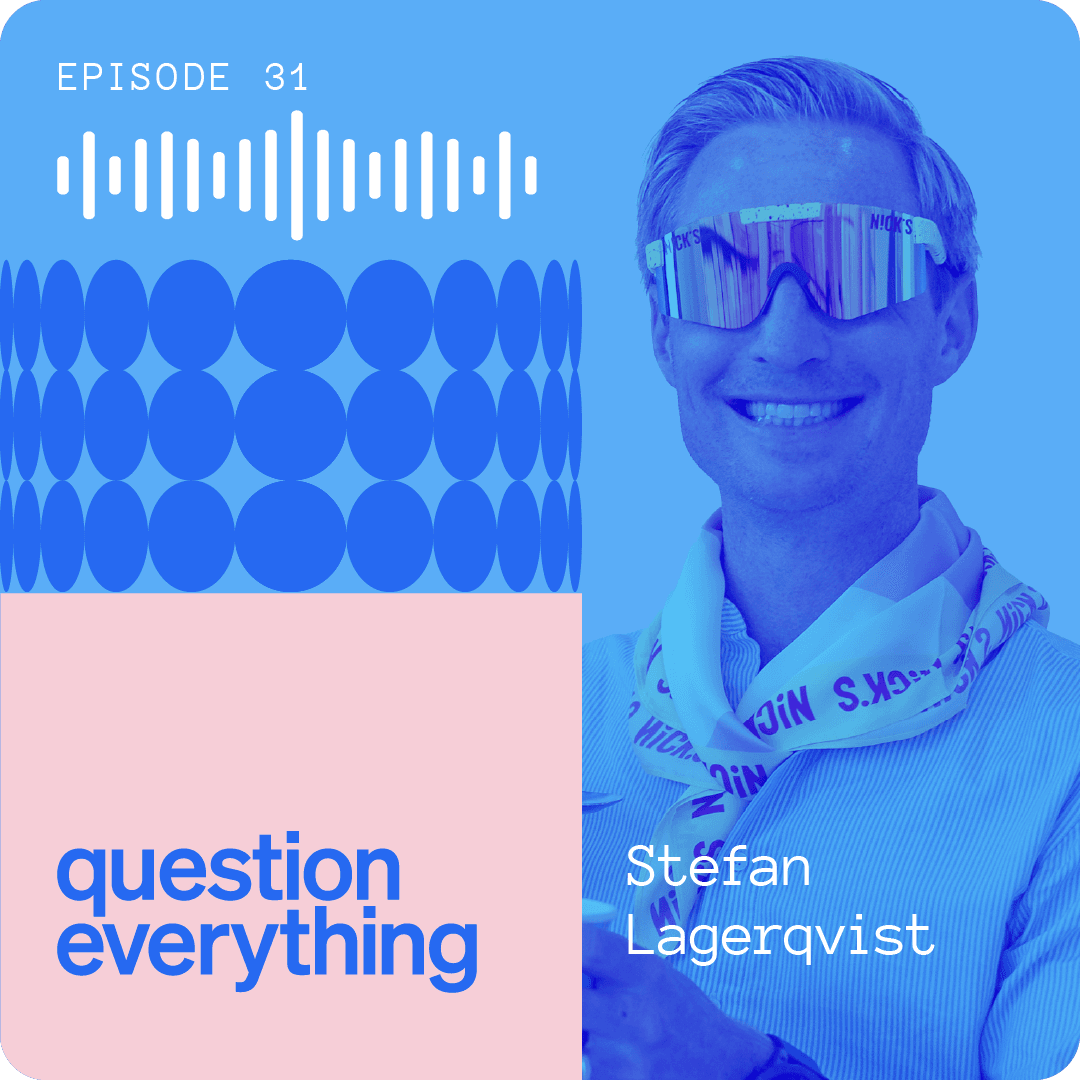
Stefan Lagerqvist, Group CEO of NYX (better-for-you snack brand), discusses how NYX built a challenger brand in ice cream and protein bars, using data, “a little cynicism,” and especially in-person sampling to win against larger incumbents like Halo Top.
Guest backgrounds
Stefan is Group CEO of NYX since 2020; previously worked at P&G and Unilever (including detergent marketing). He’s based in Sweden and leads a global team across time zones.
Key claims
Growth requires tough lessons and cautious hiring (use agencies/AI/offshoring before full-time hires). Data should override gut instinct (they changed target assumptions after research). Challenger brands can stay edgier and move faster than big companies. Competitors copying is good for the market, but big brands lack “trust/authenticity” for “super healthy” claims.
Notable examples
VC-funded scaling led to layoffs when team growth outpaced investment. A “urban active family” hypothesis failed (low awareness/consideration). Sweden launch of peanuts & caramel ice cream bar hit #2 SKU in 8 weeks and matched Snickers-sized sales in 3 months. Bethany Frankel posted an unbranded NYX video after receiving gift boxes. Sampling logistics (cold chain, weather) and staff behavior are critical. Billboards: “Eat me / lick me / spoon me” and “Lick me till ice cream.”
Written by AI. May contain mistakes. Listen to the episode to check what was said.
Chapters
Tap a time to open that second in VOLessons from Early Growth at NYX
1:09 to 4:36
Stefan shares tough lessons learned during NYX's rapid growth phase.
“Joining us all the way from Sweden is Stefan Lagerfist, the group CEO at Nix, a global snacking brand, and our newest client.”
Evolving Marketing Strategies Based on Data
4:36 to 7:11
Discussion on adapting marketing strategies based on consumer insights and data.
“which nowadays when someone says, should we hire someone to do this?”
Successful Product Launch and Market Positioning
7:11 to 9:32
Stefan recounts the successful launch of a new ice cream product and its market impact.
“All right, so Nix has experienced rapid growth.”
Navigating Competition and Brand Authenticity
9:32 to 10:28
Conversation on competition with major brands and maintaining authenticity.
“Are you ever worried that like Mars or the big guys are going to try and just copy what you're doing?”
Evaluating Creative Work in Marketing
10:28 to 13:08
Stefan discusses his philosophy on evaluating creative marketing strategies.
“But having worked at Unilever, for example, so in Sweden, I worked on the biggest detergent brand.”
Cynicism in Business Management
13:08 to 17:04
Exploring the role of cynicism in business strategy and leadership.
“So I think it starts with sort of just my personal traits for good and bad.”
Strategies for Effective Sampling Events
17:04 to 21:44
Understand the critical logistics and staffing for successful in-person marketing events.
“So I think there are two key parts to it.”
The Benefits of Being a Challenger Brand
21:44 to 24:25
Discover the advantages of flexibility and risk-taking in challenger brands versus big corporations.
“You're in one corner, Halo Tops in the other corner.”
Adapting to American Market Preferences
24:25 to 27:29
Learn how cultural adaptations and market research are essential for brand success in new regions.
“Jerry's and the Magnums and the really indulgence brands.”
Exploring Brand Heritage
27:29 to 28:00
Delve into the challenges of honoring brand heritage while appealing to a global audience.
“that went live into the market this year.”
Show all 16 chapters
Exploring Brand Resonance
28:00 to 28:30
Understanding how brand messaging resonates across cultures.
“We had a conversation today with the team, Like, could it be something we should feature more?”
The Influence of Bethany Frankel
28:30 to 29:25
Discussing the unexpected impact of influencer marketing through Bethany Frankel.
“So it'll be cool to explore that together.”
Lessons from Influencer Collaboration
29:25 to 33:00
Gleaning insights on successful influencer partnerships and authenticity.
“So people would write in the comments like which brand is there's so many people.”
Balancing Function and Emotion in Messaging
33:00 to 35:35
How to effectively communicate brand values while maintaining emotional appeal.
“You can track what you've done in the past and say, based on what we have done, this should work.”
Unique Brand Messaging Strategies
35:35 to 37:55
Examining creative advertising tactics and the importance of tone in branding.
“Then of course, when you are in store at point of purchase in some of these categories, You just have to know what the key drivers are and you need to claim them on pack because that's how the category works.”
Rapid Fire Questions: This or That
37:55 to 40:30
Engaging in a fun segment of rapid-fire questions related to personal preferences.
“So we like to end these episodes with a little this or that.”
Transcript
Automatic transcript. May contain errors.0:04Hello, everyone. Welcome to Question Everything, a podcast all about learning from the successes and the failures of those who dared to, well, question everything. This podcast is part interview, part therapy, and part Price is Right. We have our own game board stacked with questions that'll make even the most successful CMOs sweat. I'm your host, Ashley Wolter, CMO and partner at curiosity. On today's episode, I sit down with Stefan Lagerkiewicz, group CEO at NYX, a better for you snack brand that's redefining the ice cream and protein bar categories. Between global wins and tough lessons, today you'll learn how NYX took a bite out of Halo Top's market share and why they're open to imitators.
0:45Stefan's best advice for CMOs going all out on in-person events and how Nix uses a lot of data and a little cynicism to fuel their insane growth. So grab a pint and prepare to spoon a sweet. This episode is equal parts chill and insightful.
1:08This episode's guest is making ice cream history. Joining us all the way from Sweden is Stefan Lagerfist, the group CEO at Nix, a global snacking brand, and our newest client. Since taking the reins in 2020, he has transformed the brand into a major player in the Better For You snacking space, and most recently received some unexpected fanfare from a Real Housewife. With stents also at P &G and Unilever, Stefan knows a thing or two about CPG marketing at its finest. Stefan, welcome to the show, and thanks for playing your part in making Question Everything a transatlantic phenomenon.
1:48Stefan Lagerqvist:Thank you so much. I'm so excited to be here. I mean, is this your first time to Cincinnati? Yes, it is. Oh my gosh. Which is a bit of a shame being a P &G person. I mean, I had to leave the company and see two other companies before coming here. And you were telling me a story today. You went on a run by P &G headquarters and it was your first time. I had to take a selfie. So there might be a LinkedIn post about that or something. I love it. I'll make sure I like it. Well, thanks for coming on the show. I'm super excited. Our team is actually upstairs right now doing our first onboarding for some cool work that will come out in 2026.
2:24And so you know a little bit about this podcast, right? So I've got 12 super spicy questions on a game board. Control is all in your hands. You get to decide where we go first. I don't know what's behind those numbers. You don't know what's behind those numbers and we'll see where the conversation takes us.
2:41Stefan Lagerqvist:Yep. All right. So why don't we start with number 10? Number 10. Okay. Any reason why 10? I think it's a favorite number, but I don't know why and where it came from, but it has always been with me. Okay. I like that. All right. So I've read that you're a believer that growth can often come from tough lessons. What is one of the toughest lessons you've learned in marketing? So when in the earlier days of my time with Nick's, we raised quite a lot of money. A lot of VC money went into food tech. And coming from a background with a company where we turned every dollar and money was so scarce. And suddenly you have money and it's easy to believe that you can solve every problem by throwing money at it.
3:40Stefan Lagerqvist:And in our case, as we scaled up in the US, we did that by also hiring a lot of people and building a big, big team. And we grew a lot, but not in line with how much we invested in the team. And then, of course, the challenges start coming when the investors expect results or you have promised results potentially. And you start seeing that just adding more people or investing more in if it's brand or brand activities where you're not confident in doing the right thing. That's challenging. And ultimately, in our case, it led to us laying off a lot of people. And I mean, our company starts and ends with its people.
4:28Stefan Lagerqvist:Well, that's why we are who we are and why we have been successful. So that led to a lot of tough conversations and a lot of self-reflection, which nowadays when someone says, should we hire someone to do this? And you're like, are we really certain we've tried everything so that we don't just create the person who we might not be able to give a proper role, give proper onboarding and have them being meaningful for the team. So what would you do differently today? or do you guys do anything differently today because of that? Yeah, so today we are a lot more cautious, especially in bringing in full-time people for, I mean, new problems, new opportunities, challenges, whatever it might be.
5:10Stefan Lagerqvist:So we might try to start with working with agencies or, I mean, these days you can always check if there's something you can solve through AI or other choices. We're doing more, what do you call that, offshoring. We have a team in the Philippines that helps us with some administrational tasks. So it's really about figuring out, can we solve this internally? Can we have someone doing it for us where we don't need to hire them full time? Because it takes a lot to onboard and to make sure you develop your team. And if you don't develop them, they will not be happy either. So it's not the win for anyone.
5:46Yeah. And you've got teams in Europe and in the US too. So are you treating those teams similarly, differently in terms of growing them?
5:55Stefan Lagerqvist:No, I mean, similarly in trying to build one global company. So the way we are structured now is with a global leadership team where the different functions have managers that look after them. And some of them are based in the US and some are based in Sweden. And actually one is based in Bangladesh at the time due to his wife getting a great job with H &M. awesome so we're in all time zones so we can work 24 7 okay so i gotta ask anything from like a marketing or a campaign perspective any hard lessons like one that we just talked about upstairs was an influencer program that you did i don't know if you want to expand on that or if or if there's something that comes to mind we've done a couple i think the biggest and toughest learning we had was as we started the company um we built the entire brand based on hypothesis about the target group, urban active family, we call them, with the idea that they would buy candy for their kids.
6:57Stefan Lagerqvist:And if it was a healthy alternative, they would buy that instead. So with everything from design, messaging, product development, everything was catered to this target group. And then when we actually invested in consumer research, we realized that this target group, they had the lowest awareness, the lowest consideration and zero preference for the brand so that was a tough lesson in like know what you're doing before you press the scale button that's interesting because your target now is completely different yes and you had i mean i i love that you like sought the information but then you were willing to change because of it you didn't dig your heels in and try to go you know against the data?
7:39Stefan Lagerqvist:No, I mean, if there's one thing you learn from, I mean, the likes of P &G or Unilever and any similar companies, I mean, data wins or it's, you need to have a lot on your feet to be able to go against what the data will tell you. Oh, that's good advice. All right, let's go back to the board. Three. All right, so Nix has experienced rapid growth. Was there a moment where you sat back and said, okay, we're on to something really special here.
8:13Stefan Lagerqvist:I think one of the more exciting times very recently now is in Sweden where we launched a peanuts and caramel ice cream bar. Not very different from a Snickers bar. And we worked on the project for a very long time. It was difficult to find an ice cream factory that could actually make that type of product. And at the time of launch, it was almost like, yeah, this product that never hits the market, will it even be good? We did a big effort to drive distribution with it. And within the first eight weeks of launch, it was our second biggest ice cream SKU. within three months of launch in the biggest retailer of sweden it was the same size as sneakers so that was a real like explosion that just i mean everyone believed in the concept but it had taken a while to get it to the market but just seeing that sellout was very very impressive and also obviously the anecdotal feedback you get from friends and family because you will know when you put the product in the market you give it to your friends everyone will be nice to you and say yeah i like it but so good there are a couple of products where people go like i i bought it again i really bought it several times it's so good um so that was so why do you think that happened was it just like the right time or i think in this with this particular product we really find white spot in the market um because there is no product like it i mean a better view proposition that is an ice cream bar with a fantastic taste wasn't available at all.
9:59Are you ever worried that like Mars or the big guys are going to try and just copy what you're doing?
10:07Stefan Lagerqvist:I mean, it would be fantastic if they did because I think that would grow the market immensely. I also think it would be fantastic for the consumers around the world to get healthier snacking products. So it would be good. It would be difficult for them to compete head on, even if, of course, they would do good. But having worked at Unilever, for example, so in Sweden, I worked on the biggest detergent brand. We had 50 % market share. And we saw environmental friendly brands coming in or environmental friendly propositions. And we were equally environmental friendly with our products. So we tried to start claiming it, tried to develop ranges for it.
10:48Stefan Lagerqvist:But we didn't represent that. So we could never beat them on the greenest part of the spectrum of consumers. And I think it would be a similar case here, like a Mars or a Snickers. At least short term, they don't have the trust or authenticity to come in with a super healthy product and be believable. That's right. That's right. All right. Let's go back to the board. We take seven. All right. Number seven. And OK, I'm super curious, especially being a new client of ours. How do you evaluate creative? I mean, I've seen some of the work you put out there and it's great headlines, bold, catchy. So what's kind of your philosophy?
11:32Stefan Lagerqvist:For us, we are fortunate enough to have Johanna on the team who is head of brand. and she embodies the target group so a lot of the work she puts out there is good and I put a lot of trust in that I know I cannot judge it by my own feelings because a lot of the stuff we do is definitely not built for myself so it's really about finding the right people who you trust and in our case because we can be quite edgy in our marketing it's sometimes quite scary when we show the board and our investors what we do not to speak of the latest glow job we did for the brand when you sit in a board room that can be pretty awkward they're presenting it of course bringing in someone like Johanna she can present that in style and it's just it sounds brilliant but sometimes when i bring those things it's it's difficult um but again it's back to creatives are more difficult to evaluate um objectively if you don't have the data and we typically don't spend money evaluating a lot of the creatives um so then it's more about finding the right people who you trust and then let them make the decisions and don't believe you know best yourself and unless you are a rock star in this and really do know yourself what about creative testing or do you buy into all of that or do you just like to put it in market and let the market test it um given we do a lot on social um it's so fast so i mean it live becomes the testing um if we go like with outdoor media of course we go to some of the things we know works and maybe stuff that has been resonating really well on social but we rarely test stuff it's more like if we talk claims hierarchies for example yes we will test that or if we want to talk about protein like how how does consumer want to how do they want to have it talked about should we talk about the grams of protein should we talk about the percentage of protein or something else yeah that we test but then once we have that we go okay all right let's go back to the board um five all right so i heard that you nerd out on cynical business management so i gotta know what started your cynicism and has it helped you or has it hurt you with uh you know launching Nix and really revitalizing and bringing this brand to life?
14:27Stefan Lagerqvist:So I think it starts with sort of just my personal traits for good and bad. I'm very, very rational. The finance background? Yeah, that probably plays into it. That was the second part. So coming into P &G, which is data-driven and then starting in the finance team. Yeah, it's the most both data and numbers-driven part. And I've seen a lot of good leaders that I've been impressed with in my career that dare to make decisions. And typically that comes across as cynical because you will have 10 people who say, yeah, but what about this? What about that? And when you line up all those individual choices, they're all good ideas, but you can only choose one or two.
15:16Stefan Lagerqvist:and then you need to be cynical. And sometimes almost to the point where you're rude to prove a point or like you drive the data all the way to the end. So an example we had was we got an idea from our team and the idea was, okay, why don't we print a QR code inside the lid of our pints? And if people scan it, they can get the coupon for a protein bar. so we can drive cross-category conversion. Great idea. Now, the execution of it was sort of developing this whole thing, changing the printer setup so that we could print the QR code and everything. And it was really expensive. And then I was lukewarm to the idea and the team pushed really hard.
16:07Stefan Lagerqvist:And then I just started with like, okay. And that year, I think we sold maybe 5 million pints in a year. I said, okay, so if we sell 5 million pints, let's say I'm super generous. So 10 % will actually scan this code. That's 500 ,000 consumers. They will get the coupon. And if I'm generous again, maybe 5 % will actually buy something. That's 25 ,000. And it has cost us, I don't know what it was,$100 ,000. Make it up. Yeah. Like it would be cheaper to just give away the bars for free. Like, why are we doing this? And I think that's the way of it. Or it comes across as being cynical, like driving the data to the point of like, do you realize this is a really bad idea?
16:53Stefan Lagerqvist:Even if on paper and when you just look at it, it might look exciting. But again, it's rooted in data. So did you do it? No. No. and of course sometimes people then come to go and say yeah you don't believe in my ideas i think you're you're evil and but again show you have a good business case and then we'll do it i like that all right note to self all right back to the board um eight okay so i know sampling events are a huge part of your strategy for nyx what advice would you give to other cmos marketing leaders to help stand out with these in-person type of events? So I think there are two key parts to it.
17:43Stefan Lagerqvist:And we are right now out sampling in New York City and Philly. The first thing is to really, really understand your logistics. And people go, yeah, we do. We understand our logistics, but do you really? And just as examples for an ice cream brand, that will be anything from how much ice cream can you store in your freezer truck when that ice cream runs out where are you going to refill from where are those warehouses how many warehouses do do you need and how do you make that happen if you break the cold chain for too long the product will start melting that becomes a problem or if you sample directly from an ice cream van if you open the door too many times you will not be able to keep the cold inside the van and you start running into all these problems.
18:33Stefan Lagerqvist:And when you sit in an office and discuss it, it might sound ridiculous and people are like, yeah, yeah, we will take care of it. But when you're out there and your ice cream starts melting, it's a big problem. Or when someone will come with a great idea to, I don't know, sample chocolate bars in Texas in the summer. They will melt in 10 seconds. You will give people a melted thing they put in their pocket. Worst case, the package breaks and they will hate the product and it won't be a good exercise or experience even if they open it and it's just melted. So it's really about thinking about that.
19:06Stefan Lagerqvist:Okay, when you get the brand in your hand, it needs to be a good experience. Can I deliver on that? Another example was when we launched detergent like Tide Pods, but for Unilever's equivalent in Sweden. And we wanted to go out and sample. We sampled on a rainy day. when you sample a caption and it starts dissolving people put it in their pocket it was terrible experience for so many people so it's really thinking through does it really make sense will it work will the consumer be able to if they are going to consume the product straight away or use it are the conditions the right one because it's so easy to get overexcited about yeah we just give them product it will sort itself out and the second part is again people and the staff who will sample um it's the most difficult thing and it's the most painful thing again being cynical and feeling like a bad person when you go like that person is not doing his or her job they're on the phone too much or they are not showing up looking well and rested and just they are not behaving nicely to consumers because you have this one chance with someone representing your brand to someone who might never have experienced it um so really putting a lot of effort both in terms of what is the brief how do i ensure i get the right people but then also if they are not the right people you need to be on it like every day and say okay if this person can't shape up we need to have someone else yeah it's casting yeah absolutely yeah so does the math math on sampling can you take it that far down is it paying off um we have a very big we have a big difficulty in tracking it data-wise.
20:55Stefan Lagerqvist:Obviously, we try to make all of our marketing activities come together as one if it's a campaign, and then at the same time, go big on social, you do some influencer marketing and which is driving which. Difficult to say for us. The business have been doing well over the years, so we do believe in our marketing mix where sampling is a crucial part. But it's also part of, I mean, our key benefit that we beat everyone on is taste. But if you have a better for you proposition, people will not believe that you taste as good because they expect the tradeoff. So for us, it's crucial to have people try it because I can tell you 20 times that our ice cream is fantastic.
21:38Stefan Lagerqvist:You might still not believe it. So how do I put the spoon in your mouth and you will experience it? Okay. All right. Let's go back to the board. 12. All right. So you're in a boxing ring right now. You're in one corner, Halo Tops in the other corner. Why does being a challenger brand excite you so much when you're going up against these big behemoths in the category? So having sat on the other side, I think what a lot of big brands do, not intentional but that's what they end up doing is you play defense all the time because you have such a big market share that it's almost difficult to grow beyond your brand proposition won't carry out in more niches whereas as a challenger brand you can pretty much do anything and of course with less to lose you can risk more and typically there's some risk reward benefit it um so I think that's one one exciting part and um then all the the path to decisions I think is what excites me a lot in being in a challenger brand um compared to being with the big ones I mean by the time you've signed off for concepts you're six months behind the time you had planned to launch it in a bigger company and um you water down concept so much that the brilliant idea at the end of the day just becomes that plain vanilla um so the ability to keep the edginess and if if that wasn't the best decision you're gonna survive and it will not be that big of a challenge for us if you're a super super big brand it might be a bit more painful if you take a step in the wrong direction yeah i mean as an agency i can tell you a lot of that is what excites us too you know like being able to approve big bold ideas quickly you know and not having that slow pace because by the time you act you know like the moments past us so I appreciate that is there anything that you admire I mean other than their budget but anything you admire about a halo top or other big ones in the category halo top in particular they invented the category, I think that was massively impressive.
24:06Stefan Lagerqvist:I mean, being able to, um, being at Unilever at the time and just saw how this one startup brand just shook the entire industry. It made Unilever try so many different initiatives on better for your ice cream that weren't very successful. And because, I mean, Unilever's right to win was just, I mean, with Ben and Jerry's and the Magnums and the really indulgence brands. and suddenly Unilever tried to start fighting on the better for you space with those brand propositions that couldn't carry it. And seeing a challenger brand really shake up the industry, that was very, very impressive. I think there aren't that many brands that could, or that stand as standalone brands before, I mean now Halotop got purchased by Wells, but they got really big on their own before that happened and I think that's super inspiring instead of having someone who gets acquired or fed into a bigger machinery so much earlier on in the journey yeah yeah all right let's see what's next number one so we noticed that OG flavors like cookies and crumb and triple chocolate were replaced by more traditional flavor names.
25:27Why was this shift important for you and for the business to win with the American audience?
25:34Stefan Lagerqvist:When we launched in the US back in 2019, we piloted a bit and then launched Meaningful in 2020. We did not have a concept we fully liked in Sweden because of what I shared before. we had those insights that, okay, our target audience is wrong. So we gave the team in the U.S. free hands to just try whatever you want to so we get something that you feel you can stand behind and sell. So then they came up with the concept of Swedish-style light ice cream. And of course, as a Swede, you sort of wonder, okay, what is Swedish-style ice cream? I've never had it, but it sounds cool. and as part of that concept the product names were made in swinglish so chocolate everywhere as we say instead of chocolate everywhere which is fun of course but when a big portion of both product research and purchases are done online when you have a product name that people can't spell to or we have our three letters in our alphabet that's not even available here when you start using those and people can't even write them um a lot of challenges comes across and people don't really understand what you mean and um so that that was like part of the challenge we experienced along the way and then in um now for 2025 um we decided that as we had two different brands then so one in the us and one in in europe still nyx was the brand name and the logo itself looked the same so that was very good that we kept that but then we said we have to develop one global brand we cannot sit and develop assets for two brands and campaign ideas and everything so we did a lot of consumer work um in 2023 um to build an entirely new global brand during 24 and that went live into the market this year.
27:39Stefan Lagerqvist:So we're super excited about that. That's awesome. And it's doing really well, right? Yes, we have got so much positive feedback and then sales is looking good as well. So are you honoring your heritage, your location, like the Swedish lifestyle at all? Or no, is that going to go away? Right now we are not at all. We had a conversation today with the team, Like, could it be something we should feature more? I think it's always difficult. I mean, at least as a Swede to say, okay, how well will that resonate outside? Of course, we think about ourselves as great people and everything we do is fantastic.
28:20Stefan Lagerqvist:But is that the same elsewhere? So it's definitely something to explore, but not something that we're pushing for today. More to come. I see it a little bit in the humor and your boldness and little acts like that. So it'll be cool to explore that together. All right. Let's go back to the board. Number six. OK, so I'm just scrolling online the other day and all of a sudden I get one of my many Bethany Frankel videos that I get all the time. I've tried her bagels. I try her chicken salad, like anything she recommends. I'm usually adding to cart. and all of a sudden she's holding a pint of Nick's ice cream and it's kind of backward that you know I saw a little bit of the logo but it's not in full view and I send you a note and I'm like did you pay for this this is incredible she loves your ice cream and your response was no she just did that on her own so tell me a little bit about this video and what's happened since yeah so um we obviously identified her a long time ago as a potentially interesting person to work with but i mean you always have a ton of priorities so we we never went forward with it um and as part of the brand relaunch now this spring we have sent out a lot of gift boxes to influencers um and that has generated a lot of ripple effects so i mean consumer reach just as a reach media is one thing but all the person we identify are to some extent that bigger or smaller influencers and a lot of them has shared stuff so that has generated excitement for other people to wanting to work with us and more are reaching out and in the case of bethany frankel we we actually played hard to get because her team reached out to us and said we love your ice cream and we would like to do something so please contact my team and again could you send some ice cream um and for i mean both we said okay let's see what happens we we can't pursue this right now um and then just a few couple of days later she posted this video and it um it went really big for us uh the engagement has been super high and we got so much help from her audience as well and when people started going because like you said, I mean, of course, intentionally didn't share the brand name that clearly and didn't write anything about which brand it was.
30:51Stefan Lagerqvist:So people would write in the comments like which brand is there's so many people. It's Nix, it's Nix. You have to try it. So it's been super exciting. A lot of people afterwards doing the same type of testing and commenting and sharing what they thought about it. So, yeah, it was a really fortunate and exciting happening. um well it was very authentic which i think is probably part of the reason why it was so successful so have you reached out to her since any can we like in are we going to like manifest a bethany frankel activation in 26 so the honest answer is i don't know um because i was on vacation last week um and haven't sort of followed up on these things and then first thing when i go back for vacation i jumped on a flight here and now i'm here so um um let's let's find out i think maybe we collectively will find out uh today that's awesome to be continued um influencers are just a big part of your strategy i know you guys have worked with the kardashians in the past you work with small influencers big influencers like any lessons or learnings um from an influencer marketing standpoint so i think what what you just say is so important with the authenticity that if it whatever you do regardless if it's big or small if it comes across as to just paid for and you have someone who just produces some content they post it and no one cares and it's very difficult to get any engagement through that yeah um whereas finding the people who regardless if you pay for it or if it's people you partner with otherwise um the ones who really like your product and what you are doing i mean they will by far do the best job yeah and i think there's a lot of test and learn in that because you will never know someone who might seem like a perfect influencer for you the right audience you love their content then you hand them your products and it just doesn't work.
32:55Stefan Lagerqvist:So again, getting back to being data driven, I think influencer marketing is such a challenging part of it because you can, of course, have hypotheses. You can track what you've done in the past and say, based on what we have done, this should work. Yeah, there's no certainty. Yeah, that's right. All right, let's go back to the board. I think we have time for one more. Okay, then we go for number nine. Love it. All right. So I want to talk about messaging a little bit. And I also want to talk about your tone of voice because I think it's really unique. And there's a lesson there, I'm sure. So one thing that we know to be true about NYX is that it is better for you.
33:35But the list of better for you is pretty long. Like it is keto friendly. It's low calorie. It's sugar free. And that's just like the tip of the iceberg here. But it's also ice cream. And you guys balance this like function and emotion really well. So I'm just curious if there's a secret here or some insights that you can share on how you're really balancing that functional and emotional or fun, playful messaging. And why? Was there data to support this?
34:02Stefan Lagerqvist:I think this is the biggest challenge we have in terms of brand and finding both right tone of voice, but also like claims or messaging hierarchies. The biggest data insight we had was the time we launched a brand we were a very activist brand we were very angry so the payoff was join our fight on sugar so dear sugar industry eat this or don't sugar coat your message your products are bad for everyone really angry and then screaming no added sugar, join our fight on sugar then we realized that every consumer on this planet knows that sugar tastes great so if you're kind of saying I'm taking it out then they will assume you taste like crap yeah um and even in a functional category like protein bars like taste and texture are still the key preference drivers yeah um so that led us to understand okay we cannot only go with the functional claims we have to be something more and we have to lean in towards the key category drivers and for our preference drivers and the good thing for us is we develop all our products ourselves.
35:13Stefan Lagerqvist:We have our own factory. So we can, I mean, we have reached a level where our products taste really, really good. So we can really stand behind such a messaging. So that's why we have been able to and chosen to lean a bit more heavy on the taste and texture experience side to tone down the better for you claims a little bit. Then of course, when you are in store at point of purchase in some of these categories, You just have to know what the key drivers are and you need to claim them on pack because that's how the category works. But higher up in the classic marketing funnel, we have chosen to dial that down.
35:56And your tone of voice. Talk a little bit about the out of home campaign that you did, the headline there. Just what goes into some of this copy and the brand tone that you guys have created?
36:08Stefan Lagerqvist:Yeah, so one part of what the brand sales force is, we want to be flirtatious. Definitely not sexy tacky, so it's a fine balance. That's why I'm grateful that Johanna is good at this, and it's not me who make the decisions or calls on what we put in there. but obviously with the with ice cream it's easy to talk about ice cream instead of ice cream and how do you eat an ice cream you might lick the ice cream so we had one campaign which was we bought three huge billboards on the highway between philly and new york where the first said eat me then lick me then spoon me um and that was complimented with um have you ever spooned a swede um and right now our big um payoff is lick me till ice cream um written as ice cream of course um so that is but that's something that stops people something that's that makes them oh did I just read that or what does it mean?
37:19Stefan Lagerqvist:Is this advertising? So yeah, really trying to break through and again, not being plain vanilla because some people will be offended. We had a retailer whose name we wrote on the billboards like available at. They had some consumers reacting. So fortunately, Clear Channel could help us kind of paint over that retailer at that time. it was a bit of heated conversations internally. But again, I'd rather have people reacting to it than no one caring about it. So that's part of what we try to do. That's good advice. All right. So we like to end these episodes with a little this or that. Rapid fire questions.
Read the full transcript
38:05But before we do, we're going to do a quick costume change. All right. Here we are all decked out in our Nick swag. All right, so another thing that we do here at Curiosity every now and then for only for special guests is something we call Dot Fun Hot Ones, and it is a hot wing eating conversation. And so I thought, what better thing to do with your first trip to Cincinnati than give you one of the hottest hot sauces at our beloved restaurant? So we are going to each down a hot wing, and then i'm gonna try and get through the this or that what do you think are you down i'm flattered
38:47Stefan Lagerqvist:of course you can do it and of course all right let's go let's go cue the wing okay yeah get we need some nyx ice cream and do we kill the whole thing um i'm probably not gonna kill the whole thing cheers okay oh i'm scared oh yeah it's already hot Mmm. Yes. Really?
39:17Okay. Yeah. Mmm. That was really hot. Yeah, that was. Is that good? Are you?
39:27Stefan Lagerqvist:I was thinking about licking my fingers, but I'm more like, can I have a knock? There's this. Alright. Are you ready? This or that? Midsummer or 4th of July? Midsummer. Midsummer, knew you were going to say that. Bethany Frankel or the Kardashians? Bethany Frankel. Love that. A dinner party or a dinner reservation? Dinner party. Dinner party, I need ice cream. Ikea or Target? Target. Target, okay. I'm a little surprised. A dad joke or ad jokes? Dad jokes. I'm going to need one tonight. Ice cream or protein bars? Ice cream. PNG or Unilever? PNG. That's it, my friend. Thank you so much for coming on the show.
40:20What's the best way for people to reach out to you if they want to learn more? Thank you.
40:24Stefan Lagerqvist:LinkedIn always works. Awesome. And do not bring hot food. Cheers. Yeah, cheers. Woo! I'm sweating. Yeah, that was so... It's still all over my neck.
From the publisher
Stefan Lagerqvist is a proven business leader best known for his unique blend of elevated financial expertise, strategic insight, and world-class brand-building experience, honed at P&G and Unilever. Currently, Stefan serves as the Group CEO at NICK'S, a Swedish better-for-you ice cream and protein bar brand that's made a name for itself in snack aisles across Europe and the US.
In this episode, we cover the unexpected difficulties Stefan and Nick's faced during their high-growth era, the keys to pulling off the best experiential marketing, and how Nick's crafted their flirtatiously bold brand voice.
What you'll learn in this episode:
-
The unexpected business challenges of extreme growth
-
How to uncover your true target consumer
-
The Nick's product that outperformed Snickers
-
Why having legacy brands copy you is great for business
-
How to evaluate creative without paid testing
-
Why cynicism is necessary for business growth
-
The keys to pulling off the best experiential marketing
-
When challenger brands truly challenge legacy brands
-
How Nick's retooled their marketing approach for the US
-
How Bethenny Frankel became Nick's #1 fan
-
What to remember in influencer marketing
-
How Nick's balances their messaging to be both fun and functional
Resources:
-
Connect with Stefan on LinkedIn
-
Learn more about Nick's on their website
-
Follow Nick's on Instagram
-
See Bethenny Frankel show Nick's love


