
In short
How CMOs can win in the “never normal” era of AI and constant uncertainty—by embracing uncertainty, running cheap experiments, investing 10% of time in the “day after tomorrow,” and shaping the future with urgency without scaring teams.
Key claims
Uncertainty should be treated as an ally; certainty is “absurd.” CMOs should spend ~10% weekly on game-changing experiments (not “the shit of yesterday”). Cost of doing is near zero, while cost of waiting rises as options deplete—so timing and speed matter. Agencies should shift from doing experimentation for brands to enabling scalable learning and execution. Marketing orgs must rebuild for scalable learning, not just scalable execution.
Notable examples
“Lego” AI creativity tool; Voltaire quote; Hans Rosling’s “Factfulness”; Cory Doctorow’s “InShittification”; newspaper company shifting from paper to digital; Ayrton Senna “overtake in rain” metaphor; Steve Jobs “bicycles for the brain” story.
Guests
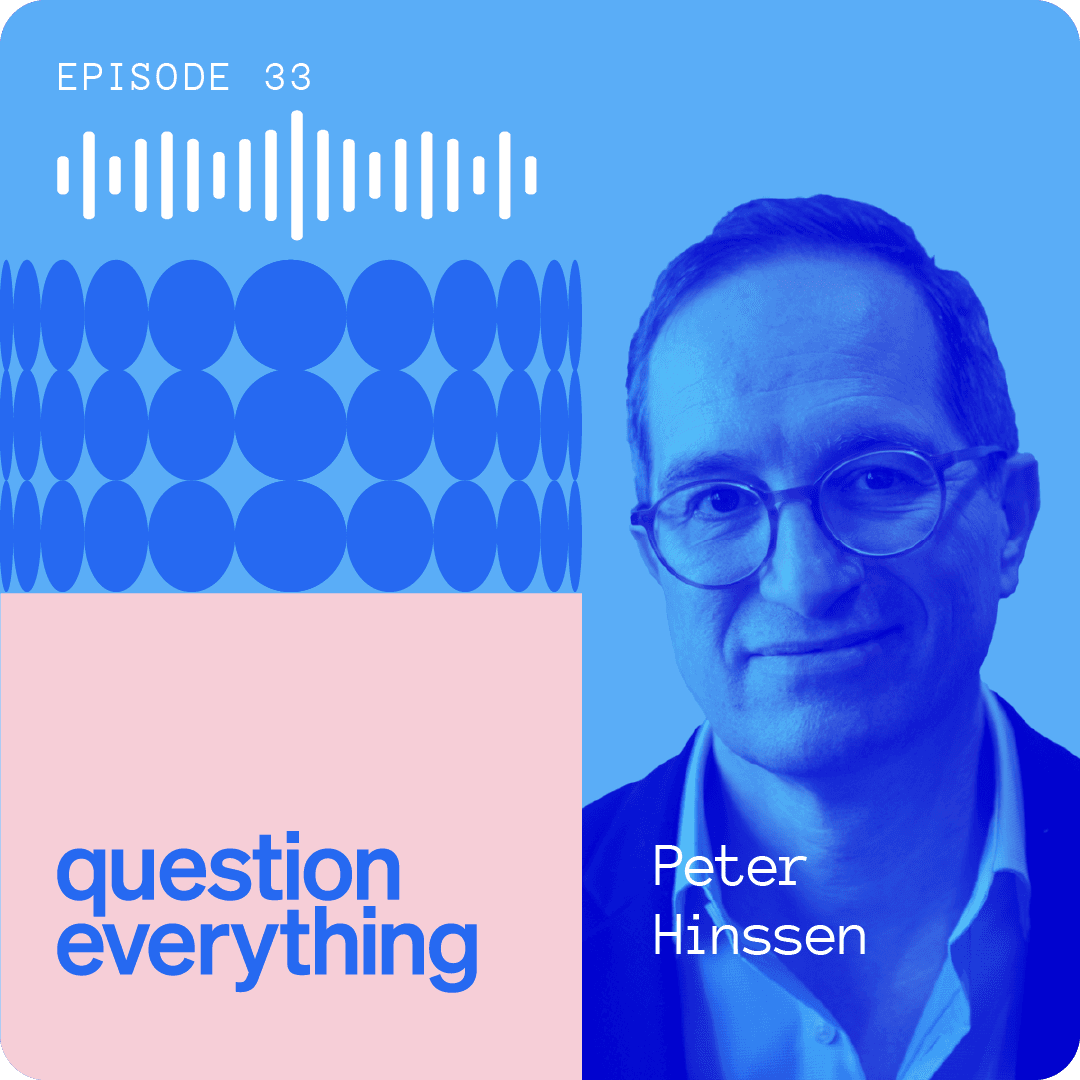
Peter Hinssen—global keynote speaker, best-selling author (The Uncertainty Principle), serial entrepreneur/technologist; has delivered keynotes for Google, Apple, Facebook, Amazon; engineering background; “pathological optimist.”
Written by AI. May contain mistakes. Listen to the episode to check what was said.
Chapters
Tap a time to open that second in VOReflecting on a Keynote Experience
2:08 to 3:00
Discussion about Peter's recent keynote presentation and its impact on the host.
“Well, very, very happy to be here, and thank you very much for inviting me.”
Presentation Style and Visuals
3:00 to 4:04
Peter discusses his rapid-fire presentation style and use of visuals.
“I have so many photos in my camera roll of you.”
The Uncertainty Principle Explained
4:04 to 5:46
Peter explains the core ideas of his book, focusing on change and adaptability.
“But I think in the TikTok generation, I think we're used to that rich dynamics of visuals and images.”
Game Board Introduction
5:46 to 6:15
Introduction to the podcast's game board of questions for Peter.
“Okay, well, we will link to the book in the show notes as well.”
Optimism and Career Impact
6:15 to 7:20
Peter shares how his optimistic mindset influences his career and the importance of positive thinking.
“there has to be some like psychology behind the numbers that we pick too.”
Embracing AI's Potential
7:20 to 7:58
Discussion on the need for a positive narrative about AI and its advancements.
“And I think this is something that has served me well.”
The Future of Advertising Agencies
7:58 to 10:51
Peter discusses the future of advertising agencies in the context of technology and storytelling.
“And I think for me, that is something which has become almost my...”
Day After Tomorrow Framework
10:51 to 13:52
Peter explains his model of dedicating time to future innovations as a discipline for leaders.
“Why should CMOs carve out 10 % of their week to focus on the day after tomorrow?”
Balancing Time Perspectives in Leadership
14:01 to 16:01
Explore how leaders can balance their focus between past, present, and future to drive organizational success.
“And it creates some tension even amongst us.”
Embracing Uncertainty as a Strategic Advantage
16:02 to 18:46
Learn why embracing uncertainty is crucial for leaders and how it can be leveraged for organizational growth.
“Uncertainty is an uncomfortable position, but certainty is an absurd one.”
Show all 17 chapters
The Evolving Client-Agency Dynamic
18:47 to 23:57
Discuss how the cost of doing versus waiting impacts client-agency relationships and experimentation in marketing.
“And I think that is so relevant across kind of the entire organization, even new employees coming into the marketplace right now, just embracing uncertainty at the jump all the way through the organization.”
Courageous Leadership for CMOs
23:58 to 28:00
Discover the importance of courage in marketing leadership and how to foster a culture of learning and experimentation.
“What's one thing that you would you would change or start doing right now as it relates to this topic?”
The Courage to Experiment in Marketing
28:00 to 29:00
Learn why CMOs need courage to embrace experimentation and learning.
“And I don't agree with everything that Cory Doctorow says, but this is the reality.”
Understanding the Post-Pandemic Climate
29:00 to 30:44
Explore how the pandemic has shifted perceptions of stability in marketing.
“I think we have time for one more question.”
Embracing Continuous Change
30:44 to 32:44
Discover how to thrive in a world of constant change and uncertainty.
“I don't believe that this is a liminal period anymore.”
Fun This or That with Peter Hinssen
32:44 to 35:00
Enjoy a light-hearted segment where Peter shares personal preferences.
“So on this podcast, we love to end with a little this or that.”
AI and Humanity: A Symbiotic Relationship
35:00 to 37:10
Learn how AI serves as a tool for human enhancement, not replacement.
“I think this is an easy one, but an Apple chapel or a PC palace?”
Transcript
Automatic transcript. May contain errors.0:04Hello, everyone. Welcome to Question Everything, a podcast all about learning from the successes and the failures of those who dared to, well, question everything. This podcast is part interview, part therapy, and part price is right. We have our own game board stacked with questions that'll make even the most successful CMOs sweat. I'm your host, Ashley Walter, CMO and partner at curiosity. On today's episode, I sit down with Peter Hinson, global keynote speaker and best selling author of The Uncertainty Principle, to give CMOs a little pep talk about the future of AI. Between tips for tackling the day after tomorrow and getting your team excited instead of scared about the future, you'll learn why 10 % of your time should be spent experimenting, not with the shit of yesterday, how agencies can be extra valuable to brands in the post-AI boom, and why a positive outlook on uncertainty is the secret to outperforming your competitors.
1:07If this convo doesn't get you excited about the future of AI, nothing will. Let's get started.
1:20Peter Henson is a globally recognized keynote speaker, best-selling author, serial entrepreneur, and expert in innovation, leadership, and technology. As a self-described pathological optimist, Henson champions the idea that organizations must embrace the day after tomorrow, a future shaped by uncertainty and exponential change. He's delivered high-impact keynote presentations around the world for companies such as Google, Apple, Facebook, and Amazon. With six books under his belt, including The Uncertainty Principle, Out Now, Peter uses a splash of wit to challenge leaders to think about transformation and resilience in the AI never normal era.
2:05Peter, welcome to Question Everything.
2:08Peter Hinssen:Well, very, very happy to be here, and thank you very much for inviting me. It's a pleasure, absolutely. Awesome. I mean, we met at ANA just recently. You were the keynote for Masters of Marketing, and I was sitting in my little seat just taking notes as fast as my fingers could type. I was blown away by your presentation. The way I described it back here at the office, I said, it was the best optimistic view of AI I have ever heard. I learned more in that 45 minutes or so than I had in all of the articles I had read up until this point. So thank you for that. No, no, thank you for that. That's really kind.
2:48Peter Hinssen:And I mean, I have a special style of doing keynotes. It's rapid fire. There's a lot of information. I think what I love is that people in the audience take out their phone and then I'm just too late. That's exactly what I'm going for. That was me. I have so many photos in my camera roll of you. And so I have to ask, how many slides were actually in that presentation? So it's a good question. So I have an alarming rate now of 100 visuals per 10 minutes. So in a 45 minute presentation, I will go through 450 slides. And I think I remember one of my first trainings I ever had a long time ago was a PowerPoint training.
3:31Peter Hinssen:And I remember that the instructor said, it's very simple. One slide, three minutes. That doesn't work anymore. So yeah, it's 450 slides in 45 minutes. That's incredible. I was going to guess about 220. So we also, my team and I were talking about how you were also a master of the clicker. Like you have just claimed that. You could do a whole presentation on that, I think. I want the right image with the right words to really, the timing has to be perfect. So I'm pretty particular about the tools that I use. And I think we live in a society now where we're all visual animals. But I think in the TikTok generation, I think we're used to that rich dynamics of visuals and images.
4:16Peter Hinssen:And I want it to be just right. So I think the timing is crucial. It is. And the impact is incredible. Okay, so you just launched a new book. You just wrote a book. It's out now. You previewed a little bit of it with us. Tell the listeners a little bit about what you just wrote. No, I'm happy. I mean, the book is called The Uncertainty Principle. It's a reference to the world of quantum physics, where about 100 years ago, the whole world of physics all of a sudden changed, where we had the classic physics that gave us the Industrial Revolution. Amazing. But if you would go really quickly or very, very small, it just didn't work anymore.
4:55Peter Hinssen:And I think I've used that as a metaphor to say we now live in a world that changes so quickly. We see such velocity in every single day. I mean, we turn on our phone in the morning, we think, really, what just happened? And we probably need a different style of thinking about leadership and strategy in this crazy world. I call it the never normal, a world of constant change and volatility. And the basic idea of the uncertainty principle is three things. We need to be better at anticipating. We got to pick up the signals. We need to be much faster at adapting and being agile to turn that into execution.
5:33Peter Hinssen:And we're not going to get everything right. We need the resilience to actually figure out what to do in case we make a mistake. But that idea of anticipation, that adaptability and the resilience is the very heart of the idea of the uncertainty principle. Oh, brilliant. Okay, well, we will link to the book in the show notes as well. And we're going to dig into that today and more. So as you know, this podcast, we have a game board stacked with 12 spicy questions. Really cool. Really cool. I'm excited. We're going to put your improv skills to the test here a little bit. You don't know what's behind any of these numbers.
6:08And the power is all in your hands, my friend. So where do you want to go first? Let's take the last one, number 12. Okay, number 12. there has to be some like psychology behind the numbers that we pick too. Okay, well, I said this in my opening, but you describe yourself as a pathological optimist. How has this impacted your career? And how can others adopt a similar mindset?
6:31Peter Hinssen:So great question. And I think I'm, I'm, my training is I'm an engineer. So I'm a technologist by training. I did startups when I was younger. I love that world. And I think the interesting thing about having an engineering background is you kind of just fall into a sea of innovation and excitement about technology. I mean, I don't think you can survive as an engineer if you don't feel that excitement. And then it was really funny when I started with the startups and then later the strategy work that not always that excitement came across. I mean, I would do a presentation to a board on new ideas and I'd be super excited.
7:14Peter Hinssen:And then I could see they were staring back at me and they had no idea why I was so excited. And I think this is something that has served me well. I really believe in the power of positive thinking, but it's also been confrontational sometimes when I'm not getting that message across or I can't get people excited. So I think a big part of what I do now is to try and maintain that positive narrative. That is super important for me. I think in the world of technology and innovation, certainly AI, there's a lot of doom stories. There's a lot of negativity. And I'm really glad you picked up on that in the intro as well, that you said, wow, this is a positive story about what this could actually mean.
7:58Peter Hinssen:And I think for me, that is something which has become almost my... You know, my leitmotif, almost my the way I look at the world, I want to understand how we can use this to build a better world, to, you know, to advance as society, as humans, as individuals, as leaders, as organizations. And that enthusiasm is something that I try to get across in many of my messages. And it's not that I'm naive, that I don't know that there are darker edges to this, but I'm really, really, really careful about building a positive narrative because I think we need that more than ever in this world of the never normal.
8:37I couldn't agree more. I feel like, especially in the world of AI, there's so much fear and anxiety. And I think it's preventing some people from even starting or dipping their toe in it and being curious about it. And so I know for me, at least, I really appreciated your perspective. And you shared on both sides of the coin some of those darker edges, but then also some of the amazing advances that have happened because of AI. The Lego example that you gave was so interesting to me. I have three kids. and the technology that now you can just take a picture of your mess of Legos and it will develop creative projects that you can do.
9:17Peter Hinssen:Yeah, exactly. And I think I've been really influenced by a number of people. And one of the people that really had a great influence on me was Hans Rosling. And he was a famous, you know, statistician sociologist. And he wrote that book factfulness. And he was actually, you know, always giving examples of how over the last 200 years, technology has made our lives so much better, how innovation has really improved, you know, what we have as society at large. And he passed away, unfortunately, a couple of years ago, I had the chance to work with him on a few occasions. But that optimism, and that fundamental belief that technology could make our lives better, that is deeply rooted in my beliefs.
10:02Do you believe that advertising agencies will exist in five years? I've even heard that. There will be no more ad agencies in five years.
10:11Peter Hinssen:I don't think so. I think this idea of getting your message across about building a story and engaging people with that, I think that is as all this time. And I think that's going to pass the test of time. I'm not sure if the advertising agency of today will be the same, if we're going to have the same skills or the same competencies, the same format or the same dynamics, probably not. I mean, every industry is changing and advertising is no different, but the fundamental nature of what advertising does, building a story and engaging people, I think that is something that is here to stay. Absolutely.
10:51Agreed. All right. Let's go back to the game board. Cool. What about number seven? Okay. Number seven. Why should CMOs carve out 10 % of their week to focus on the day after tomorrow?
11:07Peter Hinssen:That's a nice question. So I have this model, which I call the day after tomorrow, which is a very simple idea. I wrote a book on that a couple of years ago called the day after tomorrow. And it's very simple. How much time you spend on today, tomorrow, and the day after tomorrow. And today is just the hectic of everyone's lives. It's the hundreds of emails that you all get. And it's not just the emails. It's the text messages, the WhatsApps. It's the Slack channels. It's the Zoom calls at the TM. And I always make the joke, you know, how many people, you know, drive to work on Monday morning naively thinking today is going to be a productive day.
11:48Peter Hinssen:And then you get that email at 9.07 and you think, well, there goes my day. And that's a problem. But the biggest problem I often find is tomorrow. Because many people, many organizations suffer from tomorrow thinking. It's where they extrapolate their comfort zone and hope that next year is about the same. And I always make a joke. You know, budgets is a great example of that. Budgets is a yearly sarcastic corporate ritual where people put fake news in Excel that's consolidate in something which rarely works now these days. And that's why I urge people to spend 10 % of their time on what I call the day after tomorrow.
12:25Peter Hinssen:And these are the new ideas. These are the innovations, things that are absolute game changers. And what I love about that is it's really stupid, right? 10%. The reality is most people don't do that. I always say it's not 70, 2010, it's 93, seven and zero because 93 % of our time goes up in these day-to-day hectics. We spend 7 % of our time, you know, making up budgets that really don't work anymore. And we rarely have the time. And I think certainly as CMOs nowadays days, I mean, there's so much going on. There is so much day-to-day activity, but carving out 10%, I think it's almost like a discipline.
13:07Peter Hinssen:And I urge people to say, okay, how many hours a week do you work? You know, 40, 45, 50, whatever. Can you spend four hours, four and a half hours, five hours every week on things that are not today, not tomorrow, not, you know, the shit of yesterday, but really things that are capable of really being complete game changers, learning new things, experimenting with things. And I think we're in a situation that if you don't do that, you're probably going to be, you know, bypassed by reality very, very soon. So that's why I think that 10 % is super important. I mean, I think it's such a good challenge for all of us.
13:45And when you put it into the context of four hours, five hours, it doesn't feel like that much. Yet as leaders, we're not doing it. It's funny, but that was one graph that I actually got a photo of. And I was texting it to my partners, my two business partners. And we were joking, saying like, we actually need to talk about this because there is a problem here. and when you put up the red box of the shit of yesterday like that just really brought it home for me because at least you know our president I mean he's very much kind of stuck in the grind of yesterday fixing the problems day in and day out and and you know our chief creative officer he's very much in the today the projects and getting the work through the house and I'm from a business development marketing standpoint I'm way more in the future and you know kind of six months ahead, a year ahead, where we're going.
14:34And it creates some tension even amongst us. And so I love that as a challenge for a leadership group too, to sit down and really think about where am I spending my time and where is it best used?
14:45Peter Hinssen:I agree. And I think, you know, even if it's just a jargon or a vocabulary or just a way of addressing things. And I mean, I've been using, I wrote that book the day after tomorrow, I think seven, eight years ago, and I've been teaching at London Business School and using that model and, you know, doing a lot of keynotes around the world. And I think it's probably what many people will remember. I think I probably have a shit of yesterday legacy. I mean, a couple of months ago, I was in Singapore in the airport and I was washing my hands in the bathroom. And next to me was a guy who said, I know you.
15:21Peter Hinssen:You're the guy from the shit of yesterday because he was in my class at London Business School years ago. So I'm OK with that. But even if you just address that in an organization, are we spending too much time in the past? Are we really addressing enough time in the day after tomorrow? In the discussion with your clients, in how you think about how you want to take the organization forward, even at a board level, right? I mean, I see boards where you spend so much time on the numbers and it's all about today and tomorrow. But are you really spending enough time on that longer term horizon? And I think it's crucial in a world which is now changing so incredibly rapidly in this never-known.
16:01That's great. All right, let's go back to the board.
16:04Peter Hinssen:Okay, I've had the last one. Let's go for number one. Number one. Uncertainty is an uncomfortable position, but certainty is an absurd one. So why do you know this to be true? This is a quote that you included in your presentation. Well, I think it's a wonderful quote by Voltaire. And Voltaire is a famous French philosopher. Hundreds of years ago, he wrote that. And I think it's probably more true today than ever before. And we see this, I mean, uncertainty has become the norm now. And I wrote the book, The Uncertainty Principle in 2024, because it takes about a year to write the book. And while 2024 was unfolding, I was super miserable writing the book.
16:55Peter Hinssen:I thought, oh, I missed the window to bring out a book on uncertainty. I'm now happier than ever that I brought out the book in 2025 because if you look at, there's this thing called the World Uncertainty Index and that has just spiked this year and it's, let's be honest, it's also the political, geopolitical situation look at the impact that tariffs have had on the world economy and the interesting thing about this is that when you are confronted with that much uncertainty and instability and a lot of people say, oh, this is really scary. And what we need to do is protect ourselves. We need to mitigate the risks and hedge our bets and we need to find a way to protect and isolate that.
17:42Peter Hinssen:And I think this is fundamentally wrong. I think what we need to do is embrace that. I think uncertainty has to become your friend, your ally. I think you need to find ways to use that as a leverage mechanism. How can you actually use uncertainty to your advantage? And that is the complexity that we have in the world of today. I meet a lot of business leaders who say it's never been crazier. I mean, our entire strategic plan, our entire budget of 2025 that we built in November 2024, we could just flush it down the toilet in March. And certainly in April, when the Liberation Day was announced, I mean, it doesn't make sense anymore.
18:25Peter Hinssen:And I think we're now seeing leaders that are trying to, or beginning to see that uncertainty is not going to disappear. It's not going to go away. It's probably going to maybe even intensify. The speed is going to increase. So let's find ways to use that, to leverage that. And the main message there is make uncertainty your friend. It's not your enemy. And I think that is so relevant across kind of the entire organization, even new employees coming into the marketplace right now, just embracing uncertainty at the jump all the way through the organization. Any advice to organizational leaders how to get their culture, their people more comfortable with uncertainty?
19:08Peter Hinssen:Well, I think it's a crucial thing because when you look at it, does leadership change as a result of that world of the never normal? And I think it does. And I think one of the crucial things is I think leaders have to build a sense of urgency without scaring people. And that is a very tricky thing to do because it's really easy to scare people. I mean, you can just open up the media and read everything that's been happening and you just, you know, you can easily spook somebody nowadays. But how can you build a sense of urgency without scaring people? How can you get them excited about this never normal?
19:48Peter Hinssen:How can you basically foster their curiosity in a world that is becoming more and more weird in a way? And I think that is something which, I go back to the narrative, that is the crucial thing. And building a positive narrative for your employees as a leader, you have people who want to hear that positive message. And I think the worst story to tell is, you know what, it's going to get better. I don't think that is the reality. You can't just wait for the world to become more stable and calm. But I think leading people into a positive message, into a sense of urgency, and where they get excited and even curious about that never normal, that narrative has never been more important.
20:39Yeah, that's really good advice. I love that curiosity plays into that. That's definitely at the root of our culture as well. Transparency, curiosity, and the optimism, I think, together is a great combination for leaders right now. All right, let's go back to the board.
20:54Peter Hinssen:Wonderful. Wow. So, okay, I'm trying to be, let's take number six, then we have a pretty symmetric pattern on the board. Okay. So the cost of doing has plummeted and the cost of waiting has skyrocketed. What does this mean, in your opinion, for client agency relationships? So I think the fundamental idea is that we're in that world where the cost of doing is basically going to zero. And it means that we have all these means and tools and technologies at our disposal where we can try things and experiment. And I think that is, I think, a challenging one. Even more challenging is that at the same time, the cost of waiting goes up.
21:42Peter Hinssen:because the longer that you have the complexity that you hesitate, the world is changing and you're going to lose opportunities. So it's really about how do you find the signals early enough that you're confident enough to make a decision. And we all know that the longer you wait, then your basically portfolio of options gets depleted. So timing is crucial. Speed is important. And I think when you look at the client's agency relationship, the fact that the experimentation has become so cheap, I think we're going to have to acknowledge that we're typically in the past, brands would farm out a lot of that experimentation to the agencies.
22:28Peter Hinssen:that's going to be effective. I mean, I think personally, I think it's a good thing that a lot of brand owners are capable of testing and trying things and finding out ways. And I think nurturing that experimentation is more important than ever before. But at the same time, I think when people say, yeah, that's it, that's what we need to do. Then putting that into execution at scale I think this is where that professionalism of the agencies is going to play into their favor. Because I think a lot of these tools are great for trying stuff and experimenting and having a feel of what works and what doesn't work.
23:13Peter Hinssen:But it's still an art to turn that into really scalable execution. And I think this is where the expertise of the agency lies. This is where they understand how to move the needle, how to do this at scale, how to do this in a safe way, how to do this with all the opportunities we have from an innovation point of view. So I think the dynamics there are going to be interesting because the dynamics could be affected. The traditional relationship between client and agency, we're not going to hope that that is going to remain. But I think it's an exciting new field. And I think agencies who understand that and who acknowledge that, I think, are going to thrive in this never normal.
23:57If you were an agency owner, you've owned a lot of businesses, started a lot of businesses. What's one thing that you would you would change or start doing right now as it relates to this topic?
Read the full transcript
24:08Peter Hinssen:Well, I think so. My first company that I started a long time ago was one of the first web agencies in Europe. So we scaled that and really rode that wave of the first web, the first internet bubble, basically. And what was fascinating there is that we were super excited about the technology because it was radically new technology and we could do things that had never been done before. But I think the biggest lesson I learned there is that you have to really focus on what makes strategic sense for those customers. And I think this is where introducing new ideas and technologies, you know, help them open up their mind.
24:54Peter Hinssen:Now, even more. So if I would have an agency today, I think I would probably spend a lot of time with my brands, with my customers to really help them in that experimentation phase. instead of fearing that this could impact my revenues or my bottom line, I would just reach out to them and say, listen, there's a lot of stuff you guys can do now. There's a lot of things that you can play around with and experiment, and I'm willing to help you do that because I think it is important that you understand the potential of what these new things can actually do. So I would say be more proactive than ever before because if you can help your customers get excited, as excited as we all are, then I think it's only gonna benefit the relationship.
25:41That's great advice. I think one of the reasons why agencies get fired, you'll hear oftentimes, they weren't proactive enough. They didn't bring me enough original thinking. And I think using this technology in that way could really help that relationship.
25:55Peter Hinssen:Great advice. All right, let's go back to the board. Great, what about number four? Number four. You call on CMOs to be courageous and lead their teams by not reacting to change, but shaping the future before it arrives. How do they do that? Well, that's the, you know, now the$5 trillion question. And I think, you know, we're in a world that, you know, it's, it's, I think it's really fascinating to see how, you know, consumers are changing as a result of all this innovation. and I think I mentioned in the keynote as well I'm just really fortunate that we have two children and and there are an amazing lens onto the future and that's of course anecdotal evidence but we all have that where we look at a next gen and try to understand what makes them tick and I've been on the board of a newspaper company in Europe for the last you know 10 years and I mean when I joined that it was a paper-based business.
26:59Peter Hinssen:Now it's a completely digital business. And now AI is redefining that entire spectrum again because a media company is now massively affected by this. And it's not about what technology could do. It's about how consumers react to that. And I think there's a number of interesting things happening there. I think as a CMO nowadays days, I think you need courage. And I think you need a lot of courage to understand that new proposition that your customers are going through. Reaching them has never been harder. I think it's more complex than ever before. We also see a backlash of some of these technologies, which I find really interesting.
27:41Peter Hinssen:I just finished reading the book by Cory Doctorow. I don't know if you've read it. It's a terrible title, but it's called InShittification. And he basically says, digital platforms are always going through a phase where you are good to users, like Facebook was in the beginning, and then you're good to business users, where you give them opportunities to tailor your ads to perfection. And then it just all goes south. It goes pear-shaped. And it's fascinating. And I don't agree with everything that Cory Doctorow says, but this is the reality. We have a lot of potential, a lot of new things. At the same time, there are some things that are going to have a negative connotation and a backlash.
28:24Peter Hinssen:And I think as a CMO, you need to be courageous. You need to be courageous to be out there and to be vulnerable and to try and experiment and learn from those failures. I think in the past, a lot of marketing departments were built for scalable execution. I think we're now going to have to rebuild marketing departments for scalable learning, because I think that is the most crucial thing in this world of the never normal. Constant experimentation, a relentless focus on curiosity and courage, but putting that into a learning leverage opportunity. I think that's the most important thing. That's great.
29:02Okay. Let's go back to the board. I think we have time for one more question.
29:05Peter Hinssen:Okay. Well, then I'm going to do, I have a union jack there, so let's go for number nine. I've built a union jack. I appreciate that. So you mentioned that CMOs who embrace the post-pandemic era as the climate instead of a storm will be more successful. Why? So, I mean, it goes back to this idea of what happened during the pandemic, where I think during the pandemic, we saw tremendous change in a really short period of time. And it was the first time that I heard the word liminal so often. And liminal was one of those words that I kind of knew what it was, but I didn't really, it was not a common word, but liminal was like, it's a, it's a transition period.
29:50Peter Hinssen:And liminal meant you can't go back to the way it was. I mean, that's not going to happen. We're also not really sure where we're going. And you saw a lot of these images, you know, of, you have like this suspension bridge and there's fog and you, you can't see where you've been. You can't, you don't really know where you're going. Liminal, That was like the absolute label of the pandemic. And I think post-pandemic, we didn't go back to a world of stability. We didn't go back to a world where everything was normal again. It just got, you know, in multifaceted. It was technological. It was ecological.
30:25Peter Hinssen:It was societal. It was political, geopolitical. The world has never been more unstable. And I think many people saw this as it's a storm. You know, this is just going to pass. And we just wait until the storm clears up and then we're going to go back to the way it was. And I think this is fundamentally wrong. I don't believe that this is a liminal period anymore. This is, I think, maybe the new climate. This is the new climate where we're going to see continuous change. Honestly, when I see the rate of change in the world of AI, that is just amazing. I mean, I've been in technology for 30 years.
31:00Peter Hinssen:It's never been more challenging just to keep up. I mean, I literally mean that. I really wake up every morning. I turn on my phone and I think, really? That just happened? I mean, when we're recording this, we just had the announcement that the final divorce settlement between OpenAI and Microsoft is now, basically, it's done. And look at this. I mean, last year, Microsoft and OpenAI were the best partnership ever. And now they basically said, we've agreed to see other people and we'll still be connected and we still have kids, but we're going to go forward each our own way. That alone, to see these players continuously are in a dance.
31:47Peter Hinssen:And I think the dance will never stop. That is the main idea. We are in a new climate. And I think the sooner that we acknowledge that, the sooner that we understand that, I think that we can start to understand how to use that, how to leverage that, and how to really build that to our advantage. And I go back. one of my favorite quotes is Ayrton Senna, the famous Formula One driver. And I don't know if you're a Formula One fan, but Formula One is, if it's a sunny day, Formula One is really boring because it's basically the guy who starts number one ends number one. That's basically Formula One.
32:24Peter Hinssen:And Ayrton Senna says, you know, you cannot overtake 15 cars in sunny weather, but you can when it is raining. And I think this is where we have to understand that this is an opportunity. This is where we have to embrace that. And I think the sooner that we understand that this is the new climate, I think the more chances we have to thrive in this never normal. That's great. That's a great advice to end on. I love that quote as well. Thank you for sharing. Okay. So on this podcast, we love to end with a little this or that. It's just a way for our audience to get to know you even more. So if you're game, you will just pick whichever one comes to mind first.
33:02Sound good?
33:03Peter Hinssen:Absolutely. Fantastic. All right, let's go. Okay, a Belgian waffle or an American flapjack? I have to say Belgian waffle. I mean, I have a Belgian passport. I grew up in the U.S., but there is nothing better than a Belgian waffle, so apologies for that. No, no, that's great. All right, speaking or writing? I hate writing. I mean, writing is terrible it's such a lonely time and and the interesting thing is this is the first time i've written a book with ai the last five books were you know without ai this is the first time i've actually didn't feel so alone because i had chad tpt and claude as my you know co-authors really uh but speaking is so much more fun because then you can talk to an audience you have a connection with the audience you get feedback writing is super lonely so speaking absolutely Oh, that's great.
33:54All right. Certainty or uncertainty?
33:57Peter Hinssen:Well, I have to go for uncertainty. I think there is so much excitement in a world that is uncertain. I mean, imagine, and this is something which, I mean, even individuals, right? You have, I have friends who, when they go on vacation, they know exactly where they're going to be on the third day. They know where they're going to dine on Thursday evening. And I think, yeah, but there is so much joy in discovering things and letting the moment surprise you. And this is where I think uncertainty wins, hands down. That's good. Okay, farm work or yester work? Well, I mean, I love that. I mean, I live on a farm.
34:39Peter Hinssen:My wife is a veterinarian. She runs a nonprofit that does equine therapy with horses. in July and August, I don't work. I don't travel. I don't do any keynotes. I don't write. I don't know any emails. I just, I'm in my overalls on the tractor on the farm. And that is the best time of the year. So farm work. Absolutely. I think that's actually really good advice for folks as well. You got to take some time off. All right. I think this is an easy one, but an Apple chapel or a PC palace? I mean, no disrespect. I mean, yeah, The PC is a wonderful evolution, but I think Apple is, I learned how to program on an Apple 2 when I was a young boy.
35:19Peter Hinssen:The love for technology never went away. I became one of the largest collectors of Apple computers in the world, and my church is a shrine to that. And I think what is fascinating is that Apple is a company that has gone through such ups and downs. I mean, it's now one of the most valuable companies in the world, but it was completely bankrupt in 1997. and to see that company resurrect itself is I think inspirational. Tech is the new religion so Apple Chapel wins absolutely. All right AI or human? Oh I think we're in a golden age for humans and I think we have to see AI really as wheels for the mind and it goes back to a wonderful story about Apple.
36:05Peter Hinssen:So when Steve Jobs, three years before he founded Apple, he read an article, a Scientific American article on bicycles. And this is the March 1973 issue of Scientific American. It was on bicycles. Really boring. But he read this. And there was a graph there that shows all the different species on the planet and how much food they can ingest and how far they can travel with that. and the king is the condor because the condor is an amazing creature with very little food. They can travel huge distances. Humans were terrible, terrible. But if you gave them a bicycle, they outperformed the condor. And that just blew Steve Jobs' mind.
36:51Peter Hinssen:When he started Apple, he said, we're not building computers. We're building bicycles for the brain, wheels for the mind. And I think this is how we have to see this. Humans are the essence, but we have to see these tools as ways to give us, you know, wheels to expand our mind. And I think if we see it that way, I think we're just fine. And what a beautiful depiction of your optimism. I love it. Peter, this has been an absolute blast. Thank you so much for coming on. Absolute pleasure. Really nice to be with you. And thanks for inviting me. And what's the best way if people want to reach out to you?
37:26What's the best way to get ahold of you?
37:28Peter Hinssen:Oh, just my website, www.peterhinson.com.
37:34Peter Hinssen:That's the easiest way to get in touch. Awesome. Thank you so much. I can't wait to continue to follow your journey. A pleasure and good luck with the podcast. Thank you.
From the publisher
Peter Hinssen has spent his career helping leaders make sense of a world that refuses to slow down. A technologist, bestselling author, and keynote speaker, Peter has advised companies like Apple, Amazon, and Google on how to thrive in what he calls the "never normal" a new era defined by nonstop disruption and exponential change.
In this episode, Peter shares what CMOs must do to successfully lead in a world of constant acceleration, the power of "day after tomorrow" thinking for your business, and why failing fast has quietly become one of the biggest competitive advantages in modern marketing.
What you'll learn in this episode:
-
Peter's three keys for leaders facing uncertainty
-
Why Peter is a pathological optimist as a technologist
-
Why AI isn't a real threat to ad agencies
-
The harm "tomorrow thinking" is causing business leaders
-
How to exercise "day-after-tomorrow" thinking
-
How you can use uncertainty to your advantage
-
Why organizations should shift from a scalable execution model to a scalable learning one
-
How leaders can give their teams courage facing the never-normal climate
Resources:
-
Connect with Peter on LinkedIn
-
Learn more about Peter on his website
-
Find more on his latest book, The Uncertainty Principle
-
Get your hands on his survival guide for the never-normal, The Day After Tomorrow
-
Why you should be an optimist in the face of massive technological change from one of Peter's biggest influences, Hans Rosling and his book Factfulness
-
See a less optimistic view on the digital world by Cory Doctorow with his book Enshittification


