Ask ChatGPT



Reuters Morning Bid episode (Nov 5). Topic: crude oil plunging nearly 20% weekly after US midterm results, driven by expectations Democrats will curb military spending and push for an earlier end to the Iran war; risk premium around possible Strait of Hormuz re-escalation is dissipating.
oil’s drop started Monday and could be biggest weekly fall since the pandemic; markets also rallied (S&P best day in three months) and bonds improved, while tech stayed nervous.
Dow jumped ~1,500 points; CoreWeave shares fell sharply; South Korea’s KOSPI fell ~6% and major chipmakers dropped. UK segment: Bank of England expected to raise rates first time in three years; sterling rising, energy-price relief aiding UK inflation outlook.
none; hosts are Mike Dolan (London) and Peter Devlin.
Written by AI. May contain mistakes.
Discussion on how midterm elections are affecting oil prices and market sentiment.
“So Mike, from the ballot box to the barrel market, the results from the midterms, have set oil markets plunging.”
Analyzing the implications of Democratic control in Congress for military spending and the Iran war.
“when he said that it was very clearly the Iran war was responsible for the heavy Republican defeat.”
Exploring how the election results are influencing tech stocks and market dynamics.
“And before the midterms, a blue wave was supposed to be a red flag.”
Discussion on the Bank of England's potential interest rate hike and economic forecasts.
“We'll have to watch and see over the next few days.”

Get the gist, explore an idea or ask about something said.
 Claude
On Reuters Morning Bid, what are the key points of this episode?
Searching your listeningAutomatic transcript. May contain errors.
0:01Today, plunging crude oil prices are clocking a weekly loss of almost 20 % as US election results shift thinking on the Iran war. Plus, the energy price plunge lifts broader markets and bonds, even as tech stocks remain nervous following the Democrat sweep. And Britain's sterling is on the rise, as the Bank of England is set to raise interest rates today. This is Reuters Morning Bid, bringing you unfiltered market news and analysis straight from the Reuters newsroom. I'm Mike Dolan in London. And I'm Peter Devlin. It's Thursday, November 5th. So Mike, from the ballot box to the barrel market, the results from the midterms, have set oil markets plunging.
0:40So with Democrats taking control of Congress, now the hope is that they're going to rein in military spending and bring about an end to the Iran war sooner. Now, is this really the fog of war being lifted? Have markets jumped the gun as so often they do? So often this year, the oil market has drowned out all other financial market movements. And again, since the election on Tuesday, that's what's happened. That move in crude prices started on Monday. We thought it was a bit technical. at the start of the week, possibly setting up for the poll. But it fell 10 % on Monday, almost 10%, and almost 10 % again yesterday.
1:16Now, if that's sustained for the rest of the week, that would be the biggest weekly drop, a drop of almost 20%. It would be the biggest weekly drop since the pandemic. So it's a significant retreat in energy prices, and it's all about what the implications of this significant Democrat sweep of Congress means for the Iran war in particular. For that, we look back to the administration. Does the administration take the message from American voters and rethink its strategy? Well, J.D. Vance, the vice president, was very clear last night, and that was one very obvious trigger for the oil drop, when he said that it was very clearly the Iran war was responsible for the heavy Republican defeat.
1:58Did that distance himself from the president? That was a question in everyone's mind. Maybe he has one eye on the 2028 presidential run. But Trump himself said that the Iran war was the reason for the big losses, even though he said it was worth it. So whether J.D. Vance thinks it was worth it, of course, is still an open question. But we look at possibly the administration now holding back for a period, at least that's what the energy market thinks, seeing if there is negotiations and other mediation efforts to see whether they bring any fruit. And you can see from the energy price, that risk premium, at least, that was in the energy market, is now beginning to dissipate.
2:40And I think that's one very interesting thing about how people viewed it. Because oil, through the Straits of Hormuz, very dangerous still, but was moving again back to pre-war levels, there was a puzzle in the market as to why was oil still above$100 a barrel. And of course, people then said, well, it was simply a risk premium that it would re-escalate. So what we're seeing this week is that fear re-escalation is dissipating as the administration rethinks whether it was a good idea in the first place. Well, let's look in Wall Street. And before the midterms, a blue wave was supposed to be a red flag.
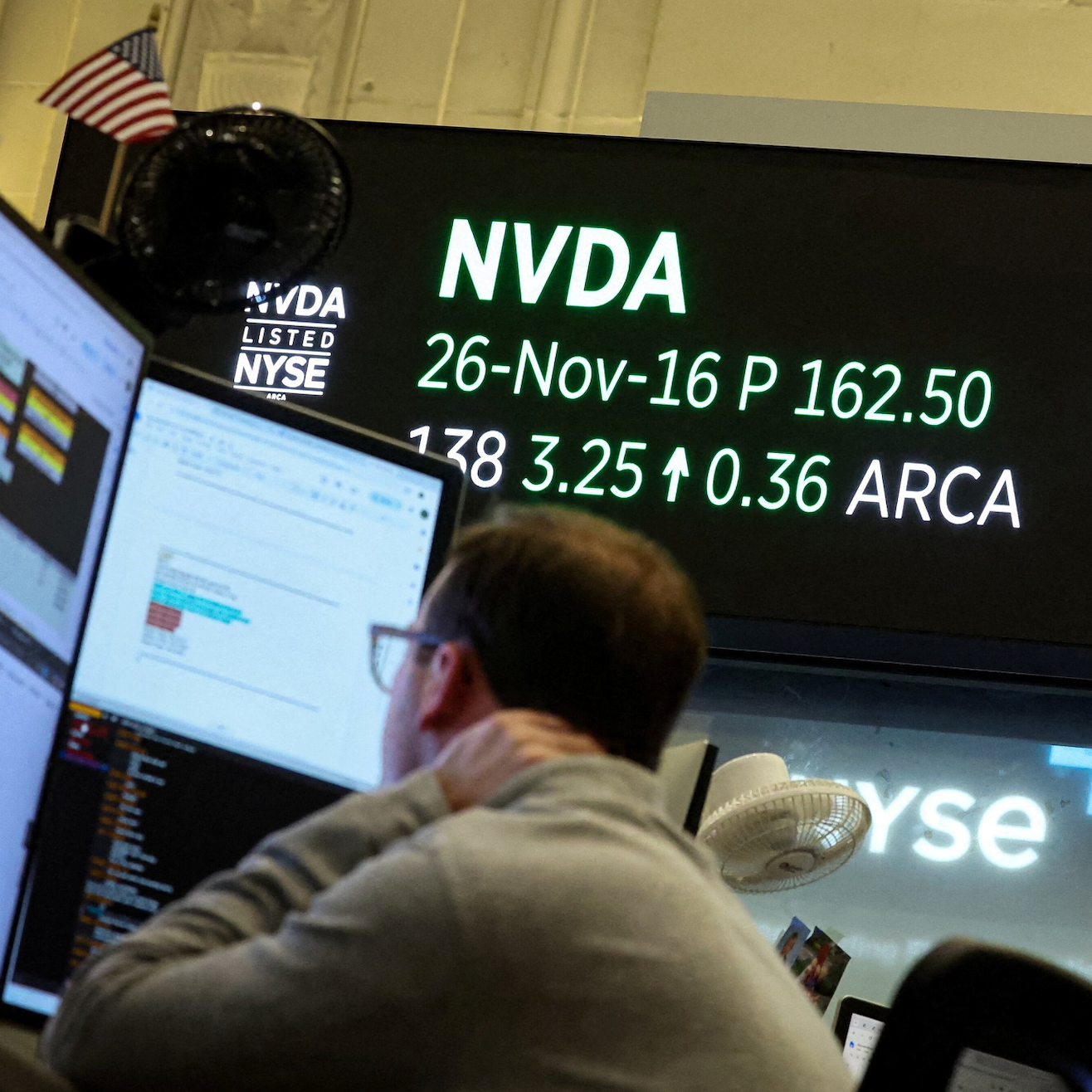
3:15But I mean, if you look at the major indexes yesterday, all soaring, the Dow jumped 1 ,500 points. I mean, one analyst I spoke to yesterday said that the Democrats taking in and taking power off Congress is maybe what investors have been hoping for, reining in of spending for big tech and stopping the cash burn. So does this mean that the AI boom is intact? Well, I think we've got to look to things on the stock side. We did get an initial shakeout in tech stocks overnight yesterday as the results came through. But the broader market, helped by the oil price, did rally significantly. It was the best day in three months for the S &P 500.
3:51There is clearly, as you point to, an issue around if AI build-out is slowed down, then the big hyperscalers are doing all the spending that has been worrying markets all year about their stock and their cash burn. Perhaps that slowdown is a good thing, because then it's a more measured view of their earnings trajectory and their cash generation over the next two or three years. Perhaps that's a thinking. The two together certainly infuse that part of the stock market. But CoreWeave, the chip makers were still down very sharply. So you can see that that worry about data center building, about AI oversight and scrutiny and possible regulation is starting to hit the very core of the AI firms that were benefiting most.
4:41And we can see that again in South Korea today, where the chip makers, the two big Korean chip makers, fell very sharply. and the KOSPI index in Seoul was down almost 6 % this morning. So you can have a situation, I think that's the interesting bit, where the broader market does reasonably okay, but the tech sector doesn't. So does one barrel into the other? We'll have to watch and see over the next few days. More generally, people point to the idea that in the year after a midterm election, there tends to be an upsweep for stocks at large. So maybe that's a simple calculation that people are happy to buy back stocks.
5:22Now the uncertainty is over and you're thinking into two years before the next big election. But I think that thinking is already underway. You could see yesterday in betting markets that the Democrat, possible Democrat candidate, John Ossoff from Georgia, was, for briefly at least, the favorite to win the 28th presidential election. That's the first time in two years that J.D. Vance has not been the favorite to succeed Donald Trump in the White House in 2028. And that's a really interesting thing, because if you think it's gridlock for the next two years, then you also have to take into the idea that the Democrats could well take the White House in 2028.
6:03And that changes your picture of how durable their agenda will be and how impactful it should be in investors' minds. Well, enough about America. Let's race across the Atlantic now to the UK, where the Bank of England looks set to finish its rate hiking drought. I mean, we see, look, headline inflation, not yet at that key 4 % level, but it's expected to hit it maybe early next year. As well, we do get the updated economic forecast from the Bank of England. But that sets the stage for a rate hike today, the first in three years. But the good question is, as always, is this one and done? Is there more to come?
6:36Because the markets see three more hikes next year. Well, the Bank of England has been really late to this game. I think everyone can agree. There are lots of reasons for that, because there are delayed regulatory prices in the UK that tend to hit inflation rates later than maybe other countries. So it is the first one in three years, as you say. It's the last of the G7 banks to start raising interest rates, so it's late to the game. But it may be lucky, because if it raises today, which I think is the best guess for markets, is the reason sterling has been rising disproportionately this week against a weaker dollar generally.
7:15But if it does raise today, does that oil price drop in the backdrop and possibly natural gas prices, which are very impactful for the UK, maybe as much as crude prices? Do the two together give it some relief about what happens next? So that projection and that thinking from the bank, which is expected to raise economic growth forecasts as well, it has to be said, would be really important for today's reaction, whether sterling will sustain that rise. But Andy Burnham, the new prime minister, may be very lucky. Things may move in his direction, certainly for the Chancellor of the Exchequer, the UK Finance Minister John Healy.
7:52A drop in energy prices is a major relief, as we saw last week in the annual budget.
8:03Hey, y 'all. Kelly Clarkson here with Wayfair. You know my favorite compliment during the holidays? Your house feels so cozy. That's when I know everyone's comfortable enough to kick off their shoes, grab more dessert, and stay a little longer. Wayfair makes it easy, with everything from dining furniture to festive guest room essentials all in one place. So whether you're hosting for an afternoon or all weekend, everyone feels right at home. Get holiday guests ready at Wayfair.com or on the Wayfair app today. Wayfair, every style, every home.
8:59Thank you.
Oil prices are heading for their biggest weekly drop since the pandemic as a Democratic sweep of Congress fuels hopes for a de-escalation of the Iran war. Markets rally as falling energy prices lift sentiment, even as AI stocks remain under pressure from worries over spending and regulation. And the Bank of England is expected to deliver its first rate hike in three years as sterling climbs and inflation pressures persist.
📲 Podcasts, breaking news, and video analysis from the source. Download the Reuters app here.
Today's recommended read: Surge in 2028 US presidential bets reframes markets after midterms by Mike Dolan
Subscribe to Mike Dolan's Morning Bid newsletter and check out his columns on Reuters Open Interest.
Produced by Abisoye Osundairo.
Sound engineering and music by Sebastian and Josh Sommer.
Visit the Thomson Reuters Privacy Statement for information on our privacy and data protection practices.
You may also visit megaphone.fm/adchoices to opt out of targeted advertising.
Learn more about your ad choices. Visit megaphone.fm/adchoices