In short
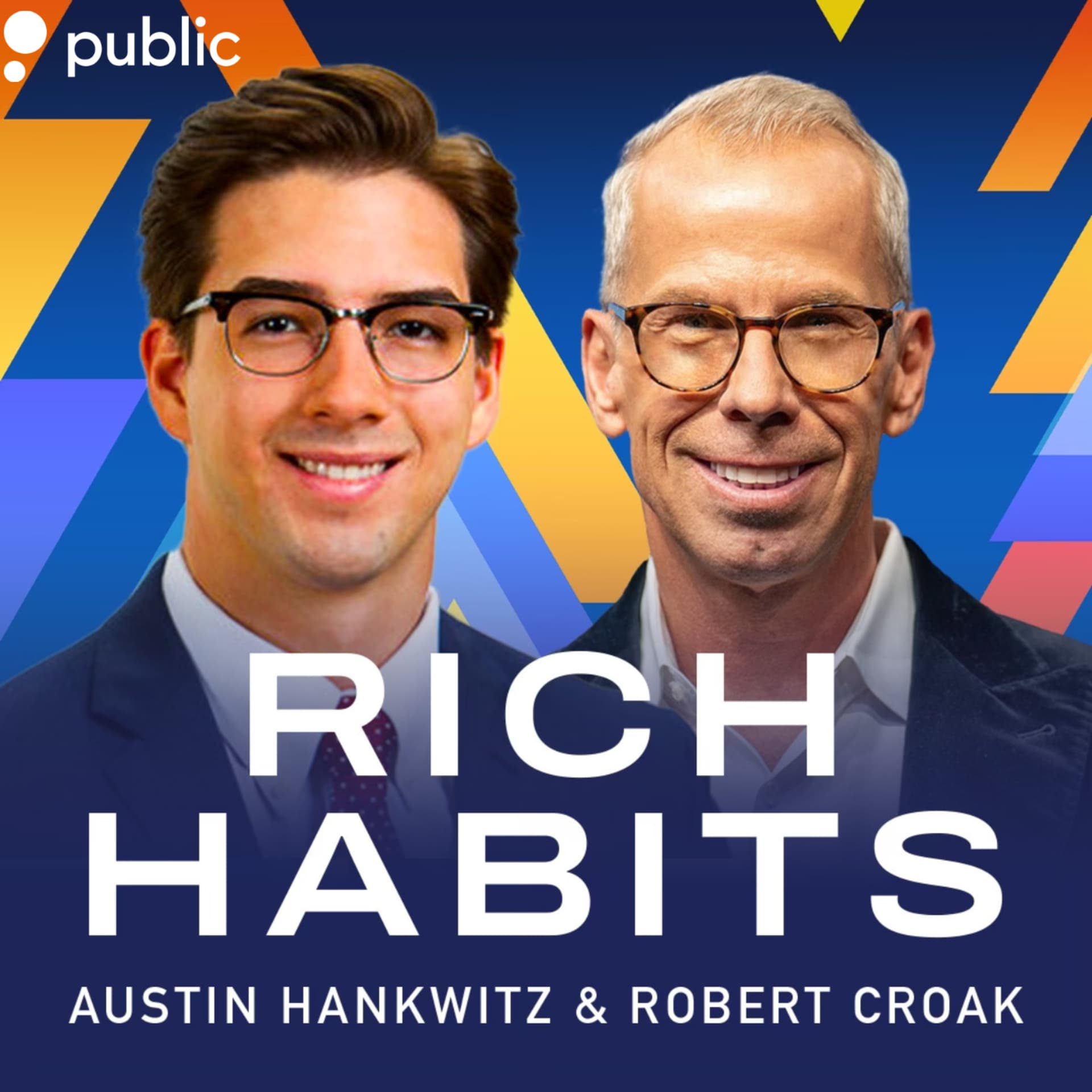
Rich Habits Podcast Episode 160: Why Prediction Markets Matter To You
Episode Overview In this episode of the Rich Habits Podcast, hosts Robert Croak and Austin Hankwitz delve into the significance and utility of prediction markets, particularly platforms like Polymarket and Kalshi. They explain how these markets can serve as valuable tools for investors seeking insights into future events and trends.
Key Hosts
- Robert Croak: A seasoned entrepreneur with over 30 years of business experience and significant company exits.
- Austin Hankwitz: A young entrepreneur focused on learning and sharing financial literacy, with a background in finance and economics.
Episode Structure
- Introduction to Prediction Markets
- Definition and basic principles of prediction markets.
- Comparison to traditional stock markets and polling methods.
- Importance of real money backing predictions.
- Why Prediction Markets Are More Accurate
- Real-time adjustments based on new information.
- Financial incentives lead to more reliable probabilities compared to polls or analyst opinions.
- Historical examples illustrating accuracy in political predictions.
- Practical Applications for Investors
- How to leverage prediction markets for personal investment decisions.
- Understanding market probabilities and utilizing them to inform portfolio strategies.
- Stress-testing investment assumptions using prediction market odds.
- Conclusion
- Recap of the advantages of using prediction markets.
- Encouragement to adopt probabilistic thinking in investing.
- Call to action for listeners to explore prediction markets and related platforms.
Key Concepts Discussed
What Are Prediction Markets?
- Definition: Platforms where individuals can buy and sell contracts based on the outcome of future events (e.g., elections, economic events).
- Mechanism: Prices of contracts reflect the crowd’s estimation of the probabilities of various outcomes.
Advantages Over Traditional Methods
- Incentives: Unlike polls, participants in prediction markets have financial stakes, leading to more thoughtful and researched predictions.
- Self-Correcting Nature: Markets react in real-time to new information, providing up-to-date probabilities.
Applications for Investors
- Portfolio Management: Using market probabilities to inform risk management and investment strategies.
- Example: Assessing the probability of interest rate changes by the Federal Reserve to guide investment in rate-sensitive stocks.
Key Takeaways
- Real-World Signals: Prediction markets provide clearer indicators of probable outcomes than headlines and traditional polls.
- Probabilistic Framework: Investors should think in terms of probabilities rather than absolute certainties, assessing their risk exposure effectively.
- Access to Insights: Tools like Polymarket give everyday investors access to analysis that was once exclusive to hedge funds and financial analysts.
Final Thoughts
- Research Tool, Not a Crystal Ball: While valuable, prediction markets should be used in conjunction with other research methods.
- Encouragement to Engage: Listeners are urged to explore platforms like WallStreetFavorites.com for further insights and tools.
Call to Action Listeners are encouraged to check out prediction market platforms and consider joining the Rich Habits Network for ongoing discussions and Q&A sessions.
---
This episode serves as a resource for individuals looking to enhance their understanding of prediction markets and apply this knowledge to improve their investment strategies. By emphasizing the importance of financial literacy and sound investment practices, the Rich Habits Podcast continues to empower its audience.
Written by AI. May contain mistakes. Listen to the episode to check what was said.
Chapters
Tap a time to open that second in VOUnderstanding Prediction Markets
0:45 to 2:05
Explaining what prediction markets are and their significance for investors.
“what are we talking about in today's episode?”
How Prediction Markets Function
2:05 to 4:50
Discussion on how prediction markets operate and their value in forecasting outcomes.
“this was a very small, weird part of the internet, but now it's becoming more prevalent and we've not yet talked about it on the show.”
The Value of Prediction Markets vs. Traditional Polls
4:50 to 8:31
Analyzing why prediction markets provide better insights than regular polls and headlines.
“And it's the one that blew my mind when I first started paying attention to prediction markets.”
Understanding Prediction Markets and Their Impact
14:04 to 17:54
Learn how prediction markets are utilized by investors to make informed decisions based on probabilities.
“This is where I think the rubber really begins to meet the road as it relates to your own investments.”
Key Takeaways from Prediction Markets
17:54 to 19:54
Discover the main insights from prediction markets and how to leverage them for investment strategies.
“Here's what we want our listeners to walk away from this episode with.”
Listener Q&A: Portfolio Strategies and Advice
22:08 to 27:00
Listen to financial advice regarding specific listener portfolios and investment strategies.
“Again, if you have a question for us, DM us on Instagram at richhabitspodcast.”
Navigating Flexible Spending Accounts
27:00 to 28:00
Understand how to optimize your flexible spending account during life events such as childbirth.
“So our next question comes from Jason on Instagram.”
Maximizing FSA Contributions for New Parents
28:00 to 31:04
Learn how to navigate FSA changes after a qualifying life event.
“as possible with that sweet, sweet pre-tax money.”
Investing Strategies for Young Adults
32:42 to 37:04
Get practical advice for investing $50,000 as a 24-year-old.
“Maurice says, hey, guys, I love the podcast and I'm so interested to learn more.”
Transcript
Automatic transcript. May contain errors.0:00Robert Croak:Hey everyone and welcome back to the Rich Habits Podcast, a top 10 business podcast on Spotify brought to you by public.com. By the end of this episode, you'll understand exactly how prediction markets work, why they're better than polls, pundits, and headlines at telling you what's actually going to happen, and how you can use them to make smarter investment decisions starting right now. My name is Austin Hankwitz and I'm joined by my co-host Robert Croak. Robert is a seasoned entrepreneur with lifetime revenues of over 300 million, and I'm a multimillionaire in my late 20s with a background in finance and economics.
0:36Robert Croak:As the show name might suggest every episode, we talk about rich habits as they relate to business, finance, and mindset. So Robert, what are we talking about in today's episode?
0:47Austin Hankwitz:In today's episode of the Rich Habits podcast, we're talking about one of the most powerful and most underused tools available for everyday investors, and that is prediction markets. We're going to break down number one, what they actually are. Number two, why they're more accurate than almost any other source of information out there. And number three, explain how you can use them to actually get an edge with your own portfolio.
1:11Robert Croak:And this isn't some obscure corner of the internet anymore like it was during 2021 or 2022. to. Polymarket, a very famous prediction market website, did$21.5 billion in trading volume last year in 2025. And in February of this year, pioneered by the Super Bowl, prediction markets did a combined$18 billion between Polymarket, Calci, Robinhood, whatever, $18 billion just in that one month. And just last week, the Iran conflict prediction market contracts on Polymarket topped half a billion dollars in volume, one of the largest single day markets they have ever hosted. This stuff is going mainstream and it's going mainstream fast.
1:58Robert Croak:And most retail investors have no idea it exists or how to even use it. So this episode, we are going to fix that. I am so, so, so excited to dig in because I feel like, again, Robert, this was a very small, weird part of the internet, but now it's becoming more prevalent and we've not yet talked about it on the show. So Robert, why don't you kick us off by sort of setting the table of answering the question, what even is a prediction market?
2:24Austin Hankwitz:Yeah, I'm so glad we're doing this episode because we've been talking about prediction markets as an edge for months and months and months for people to use it as a tool for their own portfolios. So think of it like a stock market, but instead of buying shares of a company, you're buying shares of an outcome. So So for example, will the Fed cut rates in June? Will SpaceX IPO this year? Will there be a recession in Q4? Each of those questions becomes a contract, and the price of that contract tells you the probability that the crowd, aka the people, putting real money on the line think things will happen.
3:03Austin Hankwitz:Will they happen? What is the percentage? And if a contract is traded at$0.72, the market is saying there's roughly a 72 % chance that that outcome occurs. We love these tools because they're just so helpful in understanding what the rest of the world is thinking about each of those questions and outcomes.
3:23Robert Croak:Yeah. So let's like make it super simple for people to understand when it comes to purchasing an event contract on one of these prediction markets, let's say, for example, is the Fed going to cut rates in June? I don't know what the real percentage is here, but let's call it 30%. That contract is at right now will cost you 30 cents to buy one contract. That one contract, if the Fed does cut rates in June, will turn into$1. So you spent 30 cents to make$1. And then of course you pay your platform fees and trading fees and stuff like that. But that's how to think about it. Robert did a great job of a contract is trading at like 72 cents, right?
4:01Robert Croak:There's about a 72 % chance that that's going to come true because 100 % chance is that$1 outcome. So$0.72, 72 % chance turns into a$1 outcome. Now, what makes these prediction markets so different from just reading a poll or listening to an analyst is that people are putting their own money behind these predictions. It's not a survey where you can say whatever you want and there's zero consequences. is if you are wrong with how you play these markets, you will lose money, full stop. And if you're right, you will make money. So that financial incentive is what makes the signal from these prediction markets so much cleaner than anything else out there.
4:44Robert Croak:So Robert, let's walk into our first big idea as it relates to the prediction markets.
4:49Austin Hankwitz:So here's the first big idea when it comes to prediction markets. And it's the one that blew my mind when I first started paying attention to prediction markets. These platforms like Polymarket and Calci, they're essentially showing you in real time what the smart money thinks is going to happen. And this is the information that used to be locked behind Bloomberg terminals and hedge fund research desks. So let me give you some real examples. Right now on Polymarket, the odds of SpaceX going public through an IPO in 2026 are sitting at around 86%. But here's where it gets interesting. The odds that SpaceX would be valued above$1 trillion at IPO, that's been hovering around 91%.
5:29Austin Hankwitz:So the market is telling you it's fairly certain SpaceX will IPO in 2026 at a valuation well above$1 trillion on day one. That's an incredibly useful signal if you're thinking about investing in space-adjacent companies on the broader tech ecosystem. And like Austin alluded to earlier, this is real money, real people betting on an outcome, not like the old days where you'd bet on free stocks and you had free money stock portfolios that you didn't suffer if you were wrong. So that's why I love it so much.
6:02Robert Croak:No, I think it's a great example, Robert. And something I love most about this is it sort of gives you a framework because when we talk to entrepreneurs and investors, we do this all the time and they're trying to make decisions based on a gut feeling or based on what their buddy told them over at dinner. And don't get us wrong, gut instincts and you know what your friend tells you around discounting that but what is most important is when you can see the real probability with the real dollars behind it of an event taking place because that begins to change the conversation you're not guessing anymore about what an outcome can be you can actually read the room and what's awesome about these prediction markets is it's not just about the ipos you can also see the probability of the fed cutting interest rates at every single FOMC meeting for the rest of the year.
6:50Robert Croak:So as of right now, Calci has the odds of at least one rate cut by July, 2026, hovering around 70%. The odds of three or more rate cuts by the end of the year is only 15%. So if you're out there saying, hey, you know, we just saw this inflation print, it was cooler than expected, the Fed's gonna cut rates three times in 2026, well, you can have that idea, but by looking at where real people are putting real money, that is only a 15 % chance probability. So it allows you to have a different perspective on your own assumptions when it comes to your investing style.
7:24Austin Hankwitz:And that matters a ton for your own portfolio because if you've loaded up on high growth, rate-sensitive tech stocks expecting four or five rate cuts and the market is only pricing in maybe two, you might be positioned wrong and this is actionable information that you can use to rebalance and calculate where you should be invested. And you can even go deeper. There are contracts on tariff policy. There are contracts on whether the U.S. will enter a technical recession. There are contracts on geopolitical events, even. All of this used to be kind of the scenario analysis that Goldman Sachs would do internally and charge institutional clients a fortune for.
8:02Austin Hankwitz:Now you can pull it up on your phone for free and know exactly what they know and have this edge on the rest of the markets. And this is what really gets me excited because I remember early in my career, the information asymmetry between Wall Street and Main Street was massive. I mean, really massive. And prediction markets are the one tool that's actually closing the gap and making it fair for the everyday investor like you and I to be able to have the same information that the big guys have.
8:30Robert Croak:I love that breakdown, Robert. Let's now jump to our second big idea as it relates to these prediction markets. Why prediction markets are so much better than other sources of information most people rely on. And I know you've got a lot of strong feelings about this one.
8:44Austin Hankwitz:Yeah, I really do because I see so many people, smart people, making financial decisions based on headlines. They see recession fears mount on CNN and they panic sell. They see markets set to boom on Fox Business and they go all in. And both of those headlines are designed to get clicks. They're not designed to help you, the investor, make more money.
9:05Robert Croak:Prediction markets allow you to see through the noise better than the polls, the pundits, and all the headlines you might see online. And this is where the data really speaks for itself. Because in 2024, we had, of course, the presidential election and traditional polls had the race essentially a coin flip. For example, RealClearPolitics polling average had it within one or two points right up until election day. But on Polymarket, a prediction market platform, it was very different. Polymarket had Trump winning this at a 67 % chance for weeks leading into the election. And as we saw, Donald Trump won the election.
9:43Robert Croak:The prediction market was right and the polls were wrong. And it wasn't just on this top line result. Poly market was actually much more accurate in swing states and how they were going to vote as well. Pennsylvania, the market had it leaning Trump while most polls said it was a toss up. Georgia, Arizona, poly market and prediction markets saw it coming a mile away. The prediction market nailed the direction on nearly every single battleground state. And this is, of course, not a political episode. It just goes to show with something as important as a presidential election or politics or anything going on like that, like these prediction markets really allow you to better understand and see the difference between signal and noise, talking heads, pundits, headlines, and is this actually happening?
10:31Robert Croak:Polymarket, Kalshi, they help you figure things out. Is this actually happening versus a Fox News business or a CNN article saying recession, be careful, right?
10:41Austin Hankwitz:You have to ask yourself, why is that? Why are prediction markets better than polls? And it comes down to one word, incentives. When a pollster calls you and asks you who you're voting for, there's no cost to lying. There's no cost to saying undecided when you've already made up your mind. There's no cost to telling you what you think sounds good rather than what you actually believe. But when you put$500 on an outcome on Polymarket, you better believe you've done your homework and you're putting your money where your mouth is. And I also think that it's because you're getting the information from the people and not from someone or some organization that actually has a stake in the game to persuade the outcomes.
11:24Austin Hankwitz:That's why we love this as a tool. And that's kind of one of the key insights. Polls tell you what people say. Markets tell you what people believe. And when there's a gap between those two things, the market is almost always closer to the truth.
11:38Robert Croak:That's all correct, Robert. And there's another layer to this, which I think is just as important. The fact that prediction markets are self-correcting in real time. So as new information comes out about a jobs report, a Federal Reserve speech, an earnings surprise, something with validity to it, the odds shift within minutes. You don't have to wait for the next poll to be conducted in two weeks from now. The market is repricing itself constantly, incorporating every piece of new data as it comes in in real time. It's like having a living, breathing probability engine.
12:14Austin Hankwitz:So if you're someone listening to this and you're still relying on cable news and X threads to form your investment thesis, I'm not saying stop reading the news and stop following along on all these platforms. But what I am saying is check the prediction markets first, because like I alluded to, they're reactive, they're fast, and they change within minutes. And you can see what the actual money is really saying. Then read the headlines and decide if the narrative matches the probability. Nine times out of 10, you'll find the headline is more extreme than the actual reality. Now, Austin, before we jump into our next point, I want to give a shout out to our sponsor.
12:50Austin Hankwitz:This episode of the Rich Habits Podcast is brought to you by Public, the investing platform for those who take it seriously. On Public, you can build a multi-asset portfolio of stocks, bonds, options, crypto, and now-generated assets, which allow you to turn any idea into an investable index using AI.
13:09Robert Croak:And it all starts with your prompt. From renewable energy companies with high free cash flow to semiconductor suppliers growing revenue over 20 % year over year, you can literally type in any prompt and put the AI to work. It screens thousands of stocks, builds a one-of-a-kind index, and lets you backtest it against the S &P 500. And then you can invest in that index in just a few clicks.
13:36Austin Hankwitz:Generated assets are like ETFs with infinite possibilities. Completely customizable and based on your thesis and not someone else's. So go to public.com slash rich habits and earn an uncapped 1 % bonus when you transfer your portfolio. That's public.com slash rich habits.
13:53Robert Croak:Paid for by public investing. Full disclosure in the podcast description. Now, Robert, let's go over our third and final segment of this episode as it relates to prediction markets. This is where I think the rubber really begins to meet the road as it relates to your own investments. Robert, walk our listeners through how the big players now are using this information, the probabilistic thinking around prediction markets to inform their investment decisions.
14:24Austin Hankwitz:So every serious hedge fund, every macro fund, every family office, they all do some version of scenario analysis. They say, okay, what's the probability the Fed cuts rates? What's the probability of a recession? What's the probability that this trade deal falls apart? Then they assign probabilities to each scenario and position their portfolio accordingly. It's not about predicting the future with certainty. It's about weighing your bets based on the most likely outcomes. And they pay teams of analysts millions and millions of dollars to do this throughout the year.
15:00Robert Croak:And that's what prediction markets give you for free today. So let's walk through a real example. Let's say you're worried about a recession. Maybe you're thinking about switching jobs, or you're sitting on a bunch of cash because you're scared to invest in the stock market ahead of a looming recession you might be worried about. If you go to Polymarket right now, the probability of a US recession in 2026 is trading around 30%. That's not nothing. It's definitely worth paying attention to, but it means there's a 70 % chance we don't have a recession.
15:33Austin Hankwitz:So if you've pulled all your money out of the market because you read one scary headline, you're betting on the 30 % scenario and ignoring the 70 % base case. And that's useful information whether you're making career decisions, investing decisions, or just trying to figure out how cautious you should actually be right now given the market conditions. and you can apply this same logic across your whole portfolio.
15:57Robert Croak:Yeah, we see this all the time with people inside the Rich Habits Network messaging us and the DMs and of course here on Instagram as well. They read one scary article, one headline, and they say, I got to get out of the markets. I can't believe this. What am I doing? I'm an idiot to have my money in the stock market. But we ask them, what's the probability you're assigning to that scenario, right? This headline of inflation or Fed or war or recession. or like what's the probability? What's the real probability that you as an investor are assigning to that? Because that's the framework sophisticated investors use.
16:32Robert Croak:They don't just think in certainties, I must pull my money out because this is gonna happen. They think in probabilities. And now each and every one of you listening can go to PolyMarket's website, CalShe's website, or any other prediction market with enough liquidity where it makes a lot of sense and use them as tools to show you what the crowd thinks the probabilities on these outcomes actually is. The point is you are making an informed decision instead of an emotional decision.
17:01Austin Hankwitz:Yeah, it always reminds me of an old saying in the business of investing that the best accounts that perform well over time are those of dead people and people that forgot their passwords because they can't and don't have these knee-jerk reactions that we talk about all the time. And that really brings me to this is crowdsourced macro research. You used to need a$50 ,000 a year Bloomberg terminal and a team of analysts to get this kind of probabilistic framework. Now you can pull up Polymarket on your phone and get a better read on geopolitical risk than most financial advisors are giving their clients.
17:37Austin Hankwitz:And that's a massive shift. And most people are sleeping on this. Let me say that again. go right to your phone. It's free and you can get all of this information right before your eyes in seconds to help you better decide what is your move for your money.
17:52Robert Croak:So Robert, let's wrap all this up. Here's what we want our listeners to walk away from this episode with. Number one, prediction markets like Polymarket and Calci show you real probabilities backed by real dollar bills. This is the signal. This is not noise. This is not headlines. These are not tweets. It's not your uncle's opinion at the Thanksgiving dinner. If you want to know what's likely to happen, right, whether the Fed's going to cut interest rates, if we're going to have a recession, if SpaceX is going to IPO at a whatever trillion dollar valuation, check the prediction markets first. It will take 30 seconds.
18:26Austin Hankwitz:And number two, these markets are more accurate than polls and pundits because the people participating actually have skin in the game. Real money filters out the noise, the bias, and the spin. The 2024 election proved this on a massive scale. Polls tell you what people say. Markets tell you what people believe. So start paying attention to the gap in those two things. And I'm going to roll right into number three now, Austin. You now have access to the same kind of probabilistic thinking that hedge funds use to manage billions of dollars for free and right in your hand. Use prediction market odds to stress test your investment assumptions.
19:03Austin Hankwitz:If you think rate cuts are a sure thing, check the market. If you think a recession is inevitable, check the market. Position your portfolio based on probabilities, not emotions or headlines.
19:16Robert Croak:And Robert, I'll throw you guys a little bonus one here. Number four, which we didn't really talk about, but I think this is just as important. Don't be reckless with this type of stuff, right? Prediction markets are a research tool. They are not a crystal ball, and they are certainly not a casino. Use them alongside your other research tools like WallStreetFavorites.com. As you guys might remember, Robert and I have built WallStreetFavorites.com. We're really excited to unveil this new awesome platform to the world. So go check out WallStreetFavorites.com. More on that in the show notes below.
Read the full transcript
19:48Robert Croak:But remember, most importantly, probability is not certainty. Always leave room for the other outcome to take place.
19:57Austin Hankwitz:What a cool episode, Austin, and great shout out for Wall Street Favorites. Make sure you guys check it out. We are so proud of this tool. And again, this is a great way to level the playing field for everyday investors like us. And I am so excited for everyone to check it out. Let's get into the Q &A.
20:14Robert Croak:Yeah, if they are subscribed to the newsletter, they will have heard of WallStreetFavorites.com last week. But we're now unveiling it right here to you guys. We'll share more details over time. And if you're inside the Rich Habits Network, you would have heard about this weeks ago. We shared this tool inside the Rich Habits Network with our biggest fans of the show mid-February. So WallStreetFavorites.com, go check it out. More information coming soon. But Robert, while we're talking about tools here and things that we like using, got to give a shout out to BlossomSocial.com. If you're not already using Blossom, this platform, this tool is genuinely different.
20:49Robert Croak:At its core, it's a wonderful portfolio tracker. You just link your brokerage account. Everything syncs automatically. You get those clean visuals, performance, dividends tracked automatically, all the fun stuff you care about. But oh my gosh, Blossom is such a cool platform to be on.
21:04Austin Hankwitz:Yeah, the UI alone is worth it. It's one of the few investing apps that actually makes you want to check your portfolio. and not in a stressful way, but in a wow, this is clean kind of way.
21:14Robert Croak:Yeah, 100%. And here's another part that sold us on it. It's not just your portfolio. You can follow other investors, see the real-time holdings inside of it. It's none of these trust-me-bro portfolios with screenshots. You are actually looking at other people's real portfolios, including myself and Robert's. And the best part, it's a community of those long-term investors just like us, not those get-rich-quick traders.
21:38Austin Hankwitz:And we're both on there. Our portfolios are on there and people can follow along in real time. It's transparency done right. So if you want a clean portfolio tracker, a genuinely great user experience and a way to learn from real investors with real money, make sure to check out Blossom. It's free, easy to use, and honestly, one of the best investing apps we use. Search Blossom in the app store and there's a link in the show notes below or visit blossomsocial.com on your computer.
22:07Robert Croak:So our first question comes from Instagram. Again, if you have a question for us, DM us on Instagram at richhabitspodcast. We're coming up on 40 ,000 followers, Robert. That's pretty exciting. Let's go. You can also email us your questions at richhabitspodcast at gmail.com, or you can join the Rich Habits Network and ask it face-to-face over a Zoom call. We host a two-hour live stream every Tuesday night on Zoom with our Rich Habits Network participants. Several hundred of y 'all pop in there and ask questions. It's a good time. So our first question on Instagram is coming from Marky. Marky says, Hi Austin and Robert.
22:41Robert Croak:I'm Marky. I'm 30 years old and I'm a long time listener of the show. Thank you both for all the value you put out. It's genuinely helped me take control of my investing. Marky says, I've maxed out my Roth IRA for 2025 and I currently have VGT, VOO, VTI, QQQ, SPYI, and IBIT. Given the overlap between some of these ETFs, would you consider consolidating? I'm also debating trimming some of my Bitcoin. I'm comfortable staying aggressive at my age, but I want to be strategic. After a recent episode, I've also wondered about adding AIQ or a small allocation to some precious metals. I know Robert's talked about GLD and SLV for diversification.
23:24Robert Croak:Would love your perspective as I think about my 2026 contributions. This is a cool one, Robert. Well, you were mentioned by name here, so maybe you want to kick this one off.
23:31Austin Hankwitz:Yeah, I will. Thank you, Marky. I love what you're doing. I think you have a really good portfolio started. I do like the idea of adding some AIQ, GLD, and SLV, and I would maybe take some of that from VGT and take maybe 10 % to VGT and get that down to 22 % and then do kind of a mix between AIQ and GLD and SLV with that 10%. But other than that, I like it. And I don't think I would trim back the 15 % in IBIT. But if you were, you could trim that back to 10 % and use that additional 5%. So you'd have 15 % to split between GLD, SLV, and AIQ. That's probably the move I would make. And I really think that's a smart play to give you more diversification and less overlap between the S &P, the NASDAQ, and some of the big tech companies.
24:26Robert Croak:Yeah. And so for everyone listening, that's like, where did all these percentages come from? So in our question from Marky, Marky shared their percentage weightings. I did not share it in the question, but Robert was referencing them. So I'll share them now so everyone's on the same page. Marky's got 32 % in VGT, 22 % in VOO, 17 % in QQQ, 15 % in IBIT, 7 % in SPYI, and 7 % in VTI.
24:52Austin Hankwitz:Percentages get really confusing though, so I didn't mention it. But Robert, I appreciate that breakdown.
24:56Robert Croak:If I were in your shoes, Marky, I would consider consolidating. At the end of the day, you probably don't need VOO and VTI. I would choose one or the other. I enjoy your SPYI allocation specifically because it allows you to dollar cost average every single month with those monthly distributions back into your overall portfolio. You can argue tax efficiency or not, whatever, inside of an already tax advantaged account. But I still think the dollar cost average component is really important. I'm all here for having 32 % into VGT. I think it's great. You've got a bunch of VOO. I think it's great.
25:34Robert Croak:You got some QQQ. In my humble opinion, I think QQQ and VGT overlap a ton. I would probably just pick one or the other. Perhaps you just roll, you roll your VTI into VOO. You've got your VGT. You perhaps roll your QQQ into VGT or vice versa. and to robert's point yeah if you want to add some gold or some aiq that's cool having 15 percent into bitcoin is a little rich for me i've got closer to five myself in my own roth you know maybe you do begin to to pull back that without waiting away from 15 closer to 10 or 5 but at the end of the day if you're over here thinking about your 2026 allocation like you need to sell anything i love all this stuff just don't that's the thing when people think about active management and building their own portfolio from scratch, especially when it comes to you're 30 years old.
26:26Robert Croak:You got 35 more years of investing ahead of you, Marky. You don't need to be selling and buying and flipping and trading and just add more to what you want to add more to. You can add all of 2026 contributions to QQQ or VTI or VOO or any of these, and you're gonna be just fine. So like my biggest takeaway for you here, Marky, is to not overthink it because you are doing all the right things right now automatically. Literally just by buying whatever this is, how you've built it out so far, you will be a multimillionaire by just maxing this out every single year regardless. So our next question comes from Jason on Instagram.
27:03Robert Croak:Jason says, Hi, Robert and Austin. I'm a big fan of what you guys do and how you think. I wanted to throw this one at you. My wife and I are expecting in September. Congratulations. That's awesome. That's amazing. Babies are miracles. That is so cool, Jason. Jason says we have a general flexible spending account through her employer, but it only has$800 in it from open enrollment, not nearly enough to cover labor and delivery. Is it a plausible thing to use the qualifying event of our child's birth in September to elect more money into the FSA at that time than use that newly elected pre-tax money to pay for immediate medical bills that get charged under our child's name like vaccine and delivery care on their birthday.
27:47Robert Croak:If it's even possible, my main concern is losing the extra FSA money elected at the qualifying life event of the birth over some rule I'm not aware of or planned timing. This seems like the kind of optimization you guys are great at, so I wanted your thoughts on paying for as much as possible with that sweet, sweet pre-tax money. Thanks for all you do, Jason. All right, Jason, And again, congrats on the baby in September. That is incredible. Let's walk through this together, Robert. So just we're on the same page. A qualifying life event, QLE is a good acronym for that, like the birth of your child, does allow you to make a mid-year FSA change.
28:31Robert Croak:But there's a very important catch. You can only change your FSA election to cover expenses going forward. And the change typically needs to be made within 30 days of the event. Also, the funds you elect after the birth can't retroactively cover the labor and delivery costs from that same day in most plan designs. Another thing to consider is that FSA elections at a qualifying life event are what's considered perspective, meaning your employer will divide your new annual election across the remaining pay periods of the plan year. So if you elect a extra$2 ,000 in September with only four months in the plan year left, you'd receive only about$667 per month added to your FSA, not the full$2 ,000 immediately.
29:28Robert Croak:Now here's what is FSA eligible, right? Baby expenses like vaccines, pediatric visits, things of that nature that are incurred after the birth would absolutely be FSA eligible, but those are smaller dollar amounts, of course, than the actual deliver of the baby. The bigger win for labor and delivery is actually what you already have elected. The FSA use it now rule means your full annual election is available on day one of the plan year, even if you haven't contributed that much yet. So if your wife elected$800 for the year. That full$800 is available right now to use toward any eligible expenses.
30:07Robert Croak:But you guys already know that. You're trying to figure out how do we get more. So Robert, what should they consider?
30:13Austin Hankwitz:Yeah, I think the better play is if you want to maximize pre-tax dollars for the birth, the most reliable path would be to increase your wife's FSA election at the next open enrollment, which would likely be for the 2026 plan year. And the max contribution for 2025 is$3 ,300 per person. Also something to look into is does your employer offer an HSA paired with a high deductible health plan? HSAs have a higher contribution limit, normally$4 ,300 for an individual and$8 ,550 for a family in 2025. And you can roll those over forever and the funds are yours permanently. That's the gold standard for medical expense optimization.
30:57Austin Hankwitz:And as far as I I know that would be the hack you should implement.
31:01Robert Croak:Again, congratulations, Jason. I think this is awesome. And hopefully some of our perspective and advice here can help you sort of mold your strategy going forward in 2026. Now, Robert, our final question comes from Maurice on Instagram. But before we give Maurice his flowers, we've got to give a shout out to Neos Investments because Neos offers ETFs that seek high levels of monthly income with a keen focus on tax efficiency while providing core portfolio exposure across equities, fixed income, real estate, cryptocurrency, and cash alternatives like T-bills. Neos ETFs may be especially interesting for investors looking to generate tax-efficient monthly income inside their investment portfolios.
31:43Robert Croak:NEOS ETFs may serve as a compelling income-focused alternative or complement to many of the investments already inside of your portfolio.
31:52Austin Hankwitz:So if you're looking to add passive income-focused ETFs to your portfolio, consider learning more about NEOS ETFs at neosfunds.com. And as with all investments, investors should carefully consider their investment objectives, risks, charges, and expenses of NEOS exchange-traded funds before investing. To obtain a prospectus containing this and other important information, please visit neosfunds.com. Please read the prospectus carefully before you invest. An investment in NEOS ETFs involves risk and possible loss of principle. There's no guarantee that NEOS ETFs will make monthly distributions and the amounts may fluctuate from month to month.
32:32Austin Hankwitz:Cryptocurrency is relatively new to the market and has its own specific risks. NEOS ETFs are distributed by Foresight Fund Services, LLC.
32:40Robert Croak:So our final question, as I mentioned before, comes from Maurice on Instagram. Maurice says, hey, guys, I love the podcast and I'm so interested to learn more. I'm 24 years old. I've got 50 grand saved in my bank account. And I know it's bad to just have it sit there in cash. So can you please tell me what do I do with this$50 ,000? Oh, Robert, what a blank canvas. I love it. What would you do at 24 with$50 ,000 in cash in your bank account?
33:11Austin Hankwitz:Well, first and foremost, I would get rid of it. I would open an account at public.com, get the Roth IRA set up. I would max out the Roth IRA at 24 years old. You can get up to$7 ,500 in there right away. I would split that up between three or four of these ETFs we talk about, like VOO, QQQ, AIQ, and maybe some VTI. so you're maxed out there, I would get two to three months of my bills set aside in that emergency fund, also at public in a high-yield cash account. And then I would have the traditional brokerage account set up, and I would get moving on that one similar to the Roth IRA, but get the rest of the money put into those funds in a traditional brokerage account.
33:59Austin Hankwitz:So you've got your high-yield cash account, which is your emergency account. You've got your Roth maxed out year one and the rest in your traditional brokerage account, which we call the bridge account. And if you wanted to spice it up a little bit, I'd probably put three, four or five grand of that into Bitcoin, which you can also do through public.com. That's the playbook I would use at 24 years old to get my money working as hard for me as I work to get it.
34:23Robert Croak:Yeah, I like that. So in order, right? Number one, emergency fund, because there's no reason to invest if you don't have that rainy day fund, that cushion between you and life. you've got a ton of money. I would like to see$10 ,000 into that high yield cash account emergency fund. That's probably three or four months for you there. So go take$10 ,000 there. Now what I want you to do is retroactively max out your 2025 Roth IRA. That's$7 ,000. Then I want you to max out your 2026 Roth IRA. That's$7 ,500. So now this$50 ,000 quickly turns into$40 ,000 after the emergency fund. And then$25 ,500 after you've maxed out 2025 and 2026 Roth IRA.
35:07Robert Croak:If you want to do some VOO, QQQ, and BTCI in that Roth IRA, call it 60-30-10, rock and roll. I think that's a great breakdown. Super simple, super easy. If you want to do 100 % VOO, 100 % VTI, like whatever, It doesn't matter what it's invested into as long as it's invested into low-cost index funds that track the S &P, the NASDAQ, the Dow Jones over a long period of time. So now we've got$25 ,000 to play with. If I were you, I would absolutely begin to now dollar cost average. I would not put all$25 ,000 right now straight into this account. You could deposit it in the cash, but do not just go, boom, put it all in VOO tomorrow.
35:50Robert Croak:Or boom, put it all into QQQ tomorrow. A rule Robert and I talk about, when it comes to investing a large sum of money, specifically a large portion of your net worth at one period of time, you should break it up between a couple weeks or a couple months. So yeah, you're young. You're going to go up and to the right over a long period of time. I get that. But I'd much rather see you take this$25 ,000 and buy, I don't know, Robert,$5 ,000 of VOO with it every single month or$10 ,000 of VOO with it every single month. Give yourself the opportunity to see what it's like to dollar cost average, get in that routine.
36:28Robert Croak:You can do the investment plans on public. They got the generated assets. They got a lot of tools over there for you to ensure you're doing this correctly. But I would give yourself a little bit of a head start here with this dollar cost averaging. It's going to help you build that investing muscle. So you say, oh, it's Friday. I got to go buy$500 of VOO. Or, oh, it's the first day of the month. I got to go put$10 ,000 into the NASDAQ or whatever it might be for you. Maurice, that's my advice. That's what I do. And I'd keep stacking this cash. I don't know how you got your hands on$50 ,000 at 24.
37:00Robert Croak:I didn't have$50 ,000 at 24. So congratulations. That is incredible.
37:06Austin Hankwitz:And the only thing I'll add to that wonderful breakdown, Austin, is Maurice, join the Rich Habits Network. It is an awesome place for someone like you that's getting started to keep learning, keep stacking, and really understand the playbook and the changes that occur over time when investing.
37:24Robert Croak:Hi, everybody. Thanks so much for joining us on this week's episode of the Rich Habits Podcast, where we talk about prediction markets and why they actually matter to you. please if you like the episode consider sharing it with a friend leaving us a five-star review on spotify voting in the poll on spotify leaving us a comment on spotify and please do us a favor go to wallstreetfavorites.com there's going to be a link in the show notes below poke around a little bit explore a little bit and give us some feedback send us an email that says hey i love this about Wall Street favorites, but I want this feature too.
38:01Robert Croak:Or hey, I didn't like this about it. I don't understand it. So we can make it a better product for you guys in the future. Again, that's wallstreetfavorites.com. Cannot wait about this one. It's going to be so much fun, Robert, building Wall Street favorites for every listener of the show. And as always, please consider joining us inside the Rich Habits Network. Thanks, everyone. And we'll see you on Thursday.
38:28Thank you.
From the publisher
In this week's episode of the Rich Habits Podcast, Robert Croak and Austin Hankwitz explain how to use prediction markets like Polymarket and Kalshi to their fullest potential.
---
🤑 Want to know what Wall Street thinks about your portfolio? Wall Street Favorites can tell you, click here!
---
💸 Use Public to build your own investable index with Generated Assets! You'll also receive an uncapped 1% on all IRA and 401(k) transfers and rollovers!
Click here!
---
💰 Ready to start earning passive income inside your portfolio? Considering learning more about NEOS ETFs!
---
🌸 Join 500,000+ investors using Blossom to track portfolios, dividends, and see what real investors are buying!
---
🚀 Join 900+ other podcast listeners inside of the Rich Habits Network and invest alongside Robert and Austin?
Click here!
---
⭐ Download our FREE Financial Planner – click here
⭐ Download our FREE Budgeting Template – click here
⭐ Download the 2026 Wealth-Building Workbook -- click here!
---
👤 Explore everything Austin does – click here
👤 Explore everything Robert does – click here
❓ Ask us questions for our Q&A episodes – @richhabitspodcast on Instagram
📬 Inquire about working together – christian@witz.vc
---
Disclosure: Paid endorsement. Brokerage services provided by Open to the Public Investing Inc, member FINRA & SIPC. Investing involves risk. Not investment advice. Generated Assets is an interactive analysis tool by Public Advisors. Output is for informational purposes only and is not an investment recommendation or advice. See disclosures at public.com/disclosures/ga. Past performance does not guarantee future results, and investment values may rise or fall. See terms of match program at https://public.com/disclosures/matchprogram. Matched funds must remain in your account for at least 5 years. Match rate and other terms are subject to change at any time.
This content is sponsored by NEOS Investments. The creator is compensated by NEOS to discuss NEOS ETFs. This content is for informational purposes only, and is not personalized investment, tax, or legal advice, and does not constitute an offer to buy or sell any security. Investing involves risk, including possible loss of principal. Before investing, carefully review the NEOS ETFs prospectus at neosfunds.com.
Content creator (the “Endorser”) receives cash compensation from Masterworks, LLC (“Masterworks”). Endorser is not a client of Masterworks. This communication is not endorsed by or affiliated with State Street and the referenced report is not intended to be regarded as investment advice, an offer, or solicitation of an offer to enter into any Masterworks offering.
Invest in shares in great masterpieces from artists like Pablo Picasso, Banksy, Warhol, and more.
For further disclosure on Regulation A Offerings, Risks of Investing, Performance Metrics, Art Market Data, and more visit the offering documents filed with the SEC and Important Disclosures at masterworks.com/cd.
As with any investment; past performance is not indicative of future returns. Investing involves risk. Sale returns are not inclusive of unsold works. Important Regulation A disclosures can be found at masterworks.com/cd.