In short
Rich Habits Podcast Episode Notes
Episode Overview
- Title: 40: "What Even is a Target Date Fund?" w/ Rachel Aguirre (iShares)
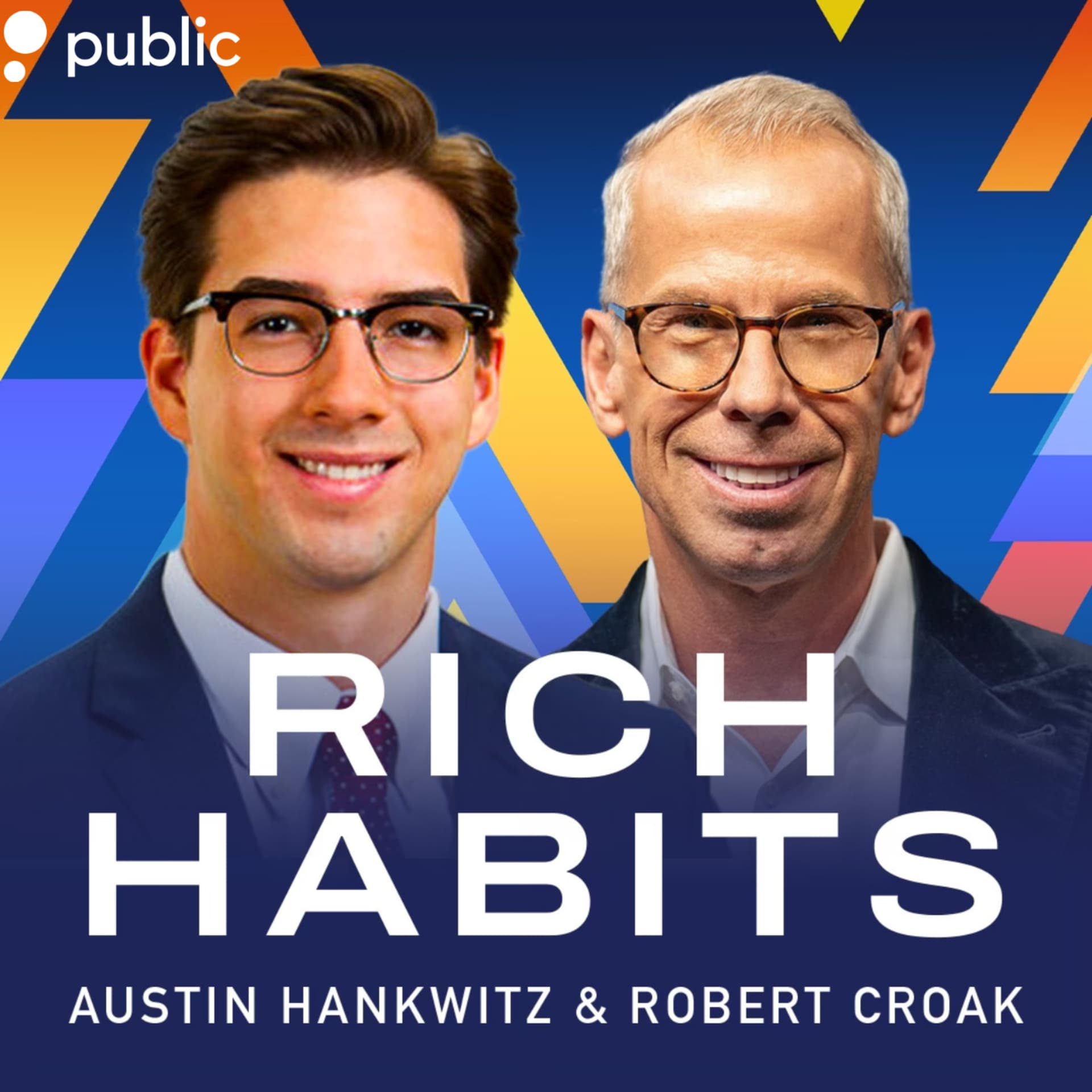
- Hosts: Robert Croak and Austin Hankwitz
- Guest: Rachel Aguirre, Head of Product at iShares
- Recording Location: BlackRock Headquarters, New York City
- Purpose: To demystify target date funds and provide listeners with actionable financial knowledge.
Key Themes and Discussions
Introduction to the Episode
- Austin and Robert introduce themselves, emphasizing their respective backgrounds in business and finance.
- Discussion highlights skepticism around target date funds due to their past underperformance compared to the S&P 500.
- The episode aims to educate listeners on the mechanics and benefits of target date funds, particularly the new suite of ETFs from iShares.
Understanding Target Date Funds
- Definition: Investment funds aimed at providing an age-appropriate asset allocation for retirement savings.
- Investment Phases:
- Grow: Early career focus on building wealth through a high allocation in equities.
- Protect: Middle career shift to preserving assets, decreasing equity exposure and increasing bonds.
- Spend: Retirement phase where funds are drawn down, typically with more stable asset allocations.
Insights from Rachel Aguirre
- Rachel explains iShares' role in creating the first target date fund 30 years ago.
- Market Needs Addressed:
- 57 million Americans lack access to 401(k) plans, often resulting in reliance on cash or low-growth saving methods.
- Target date ETFs aim to provide a low-cost, accessible investment alternative for these individuals.
Mechanics of Target Date Funds
- Investment Strategy:
- Funds start with a high equity allocation (e.g., 99% for a target date of 2065) to maximize growth potential.
- Dynamic rebalancing occurs quarterly to adapt to changing market conditions and investor profiles.
- Risk Management:
- Emphasis on reducing risk as retirement approaches to avoid significant losses from market downturns.
- Maintains a portion of equities even in retirement to account for longevity and inflation.
Comparison with Traditional Funds
- Target date ETFs offer lower fees (8-11 basis points) and no minimum investment barriers, allowing for greater accessibility.
- Unlike mutual funds, which may have high minimum investments, ETFs allow individuals to start investing with small amounts.
- Flexibility to purchase ETFs across various platforms (e.g., Fidelity, Public.com), making them available for self-employed and gig economy workers.
Benefits of Target Date Funds
- Simplified investment process for individuals unsure of their risk tolerance or investment strategy.
- Encourages diversification, acting as a core component of a broader investment portfolio.
- Provides an easy entry point for novice investors to participate in the market without overwhelming complexity.
Conclusion
- Hosts encourage listeners to share the podcast and promote financial literacy.
- Episode reinforces the importance of understanding investment vehicles like target date funds for personal financial growth.
Key Takeaways
- Accessibility: Target date ETFs democratize investment opportunities for those without traditional retirement accounts.
- Dynamic Management: Continuous rebalancing helps adapt to market changes and individual needs as they age.
- Diversification: Incorporating target date funds can enhance an individual's overall portfolio strategy, particularly for those new to investing.
- Education Focus: The episode emphasizes the importance of financial education in making informed investment decisions.
Additional Resources
- Links to iShares' target date ETFs
- Budget template download
- Contact information for further questions: richhabitspodcast@gmail.com
Closing Remarks
- Hosts express gratitude to Rachel Aguirre for her insights and encourage listeners to take actionable steps towards their financial goals.
Written by AI. May contain mistakes. Listen to the episode to check what was said.
Transcript
Automatic transcript. May contain errors.0:28Shopping is hard, right? and welcome back to the Rich Habits Podcast, a top three business podcast on Spotify. My name is Austin Hankwitz, and as always, I'm joined by my co-host, Robert Kroak. Robert is a seasoned entrepreneur in his 50s with more than 200 million in company exits under his belt, and I'm an entrepreneur in my late 20s with a background in finance and economics. Since quitting my full-time job in corporate finance a few years ago, I've built a seven-figure media business and actively advise some of the most well-known fintech companies around the world. As the show name might suggest, every episode we talk about rich habits as they relate to business, finance, and mindset.
1:07However, we try and bring you two unique perspectives. One from the industry veteran, which is Robert, and the other myself, someone who's still in the process of building wealth and figuring it all out. So, Robert, what are we going to be talking about in today's episode? In today's episode of the Rich Habits podcast, we're going to be diving deep into and demystifying all things target date funds. As you all might know, Austin and myself have been skeptical of target date funds for some time now, and mainly because of their underperformance in relation to the S &P 500. However, we have an expert joining us today to help break things down, answer our hard-hitting questions, as well as provide some interesting feedback to your questions later in the episode.
1:48And today's episode of the Rich Habits podcast is a very special one because it's the first episode Austin and I have filmed in a studio together. We are here today, currently filming at the BlackRock headquarters in New York City. That's right, New York City, baby. This episode isn't sponsored. We came here to interview them to learn more about their new ETFs so we can break it down for all of you in our audience. This is not a paid sponsorship, and we're not being compensated in any form or fashion, and it's just we want to provide you, the audience, the best information we can on all things investing.
2:26100%, right? So target date funds. Exactly what are they? How do they work? Who are they for? Who are they not for? And what innovation might be around the corner? So, Robert, let's jump into things. Today joining us is Rachel Laguerre, head of product at iShares for the U.S. Rachel, do you mind introducing yourself? Well, first of all, thank you so much for having me today. I'm just so excited to be here with you both. And as you mentioned, I lead product for iShares in the U.S., and I just feel incredibly grateful because on a daily basis, I get to work towards a purpose and mission that I care deeply about, and that is to help everyday people experience financial wellness.
3:07So whether that's designing new products for them or whether that's financial education, I know that the work that we're doing here at iShares is really helping people achieve their financial goals by helping to empower and equip them as investors. That's what's really important about the Rich Habits podcast, right? Demystifying the crazy headlines that the financial gurus might throw out there, make it all seem scary and not be able to understand. We flip that on its head. We have the digestible, approachable nuggets, and I'm eager to get into things. So kick us off, Robert. Yeah, I'm ready. So the easy, let's get started.
3:42Let's dig in right away. What exactly is a target date fund and how do they work? Great. So a target date fund, which in fact, you know, we invented the target date fund here at BlackRock 30 years ago, almost to the day. And what these funds were really intended to do was to give an age-appropriate investment tailored to where you are on the journey to retirement. And you can really think about it in three phases, grow, protect, spend. So when you're early on in your career, it's all about building your wealth and growing your assets. So target date funds begin with a large proportion invested in equities.
4:24And then as you get towards that middle part of your career, it becomes more about protecting those assets that you've built. And so it begins to shift into bonds. And then finally, when you reach retirement, it's all about spending. You begin to actually draw from those savings that you've invested over decades. And that's where you're in your most conservative mix, again, in order to enable you to spend from there. I have a follow-up question just so I understand what's going on here. What inspired you, BlackRock, to launch these funds? Like, what was the inspiration behind it? You know, I'm going to give you a number,$57 million.
5:01That's a number you're going to want to remember. There are 57 million Americans today that don't have access to a 401k plan. And these are people that we all know. They're people who are part of the gig economy. They're people who are self-employed. They work at small businesses. Maybe they're small business owners or entrepreneurs themselves. And so we recently took a survey of these independent savers. And what we found is that 40 % of them feel like they're not on track for retirement. And it's not surprising why, because 47 % of the same group of individuals are leaning on cash to build their retirement nest egg.
5:44So they're missing out on critical investment growth that you and I both know is necessary to achieve their financial goals. And so we see this as one of the most pressing retirement challenges that we face today and that needs to be addressed. And so we really believe that this is where target date ETFs come into play. And this is where they were born. We invented the target date fund 30 years ago, as I mentioned. And so what we wanted to do was package that same IP in a simple, low cost and tax efficient product to help everyday people save and invest for retirement. And that's really what it's all about.
6:25OK, so you said grow, protect and spend, right? I'm someone in my mid-20s. I'm 27 years old. So I'm definitely in that growth mindset, right? So can you walk me through how the mechanics of that work? Like what makes it go from grow? What does grow mean? What does protect mean? And what does spend mean from an actual like maybe allocation perspective or even like maybe risk tolerance? Like walk me through sort of that perspective. Yeah, absolutely. And maybe I will also just start with, I know you even mentioned up at the top how there's been some questions around target date funds and their - We're going to get to those questions.
6:59Oh, yeah. Yeah. And, you know, I actually really enjoyed listening to your show. And I agree with a lot of what it is that you've, you know, been saying on this topic. And I'm getting to your question here because at the heart of it, owning stocks early on is really important for growth. And, you know, an S &P 500 fund can be a great way to get started and get that diversified exposure. So starting there matters. But while that can be a good place to begin if you're in your 20s or maybe in your 30s, it probably isn't the best place to be when you're in your 50s and 60s. So one of the pitfalls that we've observed with a lot of investors is that they take undue risk as they get closer to retirement.
7:48And this is one of the things that we are expressly addressing with target date funds. And this is important to know because this can actually have irreversible damage. One deep market decline can undo decades of growth built up. So you really want to think about where you are in the investing journey. Early on, it's all about growing your assets. But as you begin to approach retirement, the focus has to begin to shift towards preserving the wealth that you've built. So that's exactly what our target date funds are designed to do. They shift the portfolio as the individual moves through their investing journey.
8:28So early on, they hold a lot of equities because the focus is on growth, right? And not to interrupt here, but when I hear equities, I think of S &P 500. Is that what you also think? Or are we thinking like crazy SPACs or like crazy IPOs? Such a good question. We're talking about broad, diversified exposure to the market as a whole. So that's S &P 500. But hey, it's actually even broader than that. It's international markets. It's emerging markets. It's small caps. It's large caps. You want to access as broad of a diversified exposure to the market as possible, clearly with a large percentage of that being U.S.
9:08large cap equities. But we don't want to ignore other parts of the equity universe as well. So there's a few key distinguishing factors. When we talk about our products, the iShares LifePath ETFs, a couple of key things that's really important that we've done differently. First is that we pack more of that growth potential for those that are furthest away from retirement. So addressing kind of some of what you had said up at the top. So if you take, for example, our 2065 target date ETF, that has 99 % of the portfolio in equity. So that's generally higher than similar target date funds across the industry.
9:50Second key feature is that we start to de-risk faster than most. And that is really intended to reduce the impact if someone experiences a bear market leading up to their retirement years. And then third, and this too is really important, when we get to that spend portion of the life cycle, our funds expressly maintain access to growth in retirement. We think about longevity and how people are living longer and longer lives, which is incredible. We want to address that by ensuring that they still have access to growth in their portfolio. So we shift down to about 40 % in equity and we stay there rather than moving to entirely bonds or cash.
10:36I want to jump in there for a minute. You talk about the de-risk. So someone starts out with this new fund and let's say they're 25 or 30 years old. When does the de-risk portion and the rebalancing start to occur? What age category and range are they in? And are there multiple portfolios of exposure and risk tolerance that you have within these funds? Or are they all one size fits all with this type of fund? Yeah. So what's incredible about these products is that they truly do dynamically move with you as you move through the investing journey. And so, again, if you start, you know, you're in your 20s or 30s, you're going to have a target retirement date, let's say of 2065.
11:212065, perfect. So we start with that 99 % virtually all exposure to growth. But here's the thing, the portfolio changes almost immediately from there, but it makes just these micro shifts over time, little by little. In fact, it's on a quarterly basis. So four times a year, that's how dynamic they are. And what that allows are these just micro shifts in the portfolio to capture as you get from your 20s and 30s to your 40s and 50s and then into retirement. So it's really a smooth journey, what we like to call the glide path, which is just a fancy term for how the portfolio moves and rebalances over time.
12:05So what I love to say is that it's really easy to get started as an investor. All you have to do is pick the fund that aligns to your target retirement date, we handle the rest for you. That dynamic rebalancing is done for you within the portfolio itself. And all you have to do is make regular contributions. And you know, at any point in time, that 2065 vintage that you bought 10 years ago is still going to be appropriate for you today because it's moved along with you. So, you know, you talk about the spend in retirement and how it has 40 % in sort of the equities, are those equities the same equities when it was the growth equities or are they more like the dividend aristocrats paying you out some income type equities?
12:51Yeah, for the most part, they're the same equities, but just in different allocations. So we're still looking to get exposure to the broad market. And why is that? You know, the reason for that is it's actually really hard to beat the market. People try to do that all the time. Right. What's your thing? Time in the market. Time in the market, not timing the market. I couldn't agree more. We say it a thousand times a week if people could just write it down and take action and just follow that. It's just that simple. Yes. And I like to say diversification truly is the only free lunch that exists.
13:27So we want to give investors that really diverse exposure to what is the market and the whole market at that. So I want to touch on this. Target date funds sometimes get a bad name. Okay. They're set it and forget it. They underperform the market. You know, they don't make adjustments for wars or COVID or for all these different market conditions. But it seems like the way you've built these funds is that they're more actively managed. You mentioned you have this quarterly adjustment, which is amazing because then it feels like you have more activity, whereas then these funds could adjust to the market conditions more than others.
14:03Let's talk on that for a minute because I think that's huge for me at least. Absolutely. I mean, that's another really key difference. We know that markets are changing constantly. And so it's really easy for allocations to get stale pretty quickly. And so that is a key feature of these products is that we are regularly rebalancing them to ensure that they're up to date, that they reflect current conditions, and that those allocations are on target for what we would want. It also allows that shift to happen really seamlessly with, like I said, kind of micro shifts over time. There's also just some really key differences when it comes to the additional flexibility that exists in the ETF structure itself.
14:44And I'd like to point that out, too, while this may seem kind of more practical in nature. But it's important to know that these funds are available everywhere and that you can start with however much you're comfortable with. And that's because with ETFs, there's no minimum investment required other than the price of the ETF itself. So with$25, you can get started with these ETFs. And we've expressly priced these products as low as we possibly could between 8 and 11 basis points. And that's because we want to remove any type of barrier that might exist from getting started. And sometimes those minimum investments can be an issue, particularly when you talk about mutual funds.
15:33And I know a lot of investors sort of have a habit, if you will, of turning to mutual funds. But something that's important to know is that many times investors aren't eligible for those low cost share classes. You can see them. They seem to have a low price. But is the investor actually eligible for it? Because oftentimes they come with these really high investment minimums. So we launched the ETF to address all of that. We want to help the investors have this freedom and flexibility to get started, get started with whatever amount that they can and be able to access that low cost, low fee price point.
16:11Let's touch on this for a minute. And this is a very key thing that I'm loving about this conversation today for my followers, our followers, listeners, whatever, is the fact that you say you can buy this anywhere. I feel that a lot of people have their 401k and they're kind of just pigeonholed into here's the target date fund of the month that we offer, etc, etc. In this situation with you saying people can buy this anywhere. So if I'm somebody that's a solo entrepreneur, I have a side hustle or whatever, and I'm locked out of kind of these traditional mechanisms for investing, this seems like a really great product for that.
16:45And so touch on when you say everywhere, what does that mean to our listeners? Can they go to any of the brokerage houses they want and be able to get these funds? Yeah, absolutely. So Fidelity, I mean, you name it, whatever platforms. Public.com. Public.com. Whatever your favorite platform is, it's available. You know, that's really a key point for us. We want these to be accessible for anyone. And I go back to the 57 million Americans who today don't have access at all to a 401k. And so whether they're saving in an IRA or even a taxable account. And I'll say, for those who are investing in taxable accounts, the beauty of ETFs is how they create tax efficiency.
17:35So you can save in a tax-efficient manner, whether in a IRA or otherwise, through the ETF. So that's also a really key feature here. So something I've heard a lot about when talking and doing research about these target date funds, target date funds in general, right, is risk adjusted returns, right? We think or we see that our friends, including myself, who's fully invested, full transparency in the S &P 500, right? I'm 27. To your point of the target date, it would be pretty much the same thing, 99%. So I want the ups and the downs. I'm here for that. That's cool. But as I get older, I understand too, right, like what that risk adjusted kind of perspective is.
18:14Can you kind of share what risk-adjusted returns really means? Sure, absolutely. So that is the return that's experienced in light of the amount of risk that you're taking at any given point in time. And so we can talk about - And the risk is the up and the downs, right? And that is the up and the downs. Okay. That, you know, as is the case with any type of investing, investing involves risk. And so when you think about how you invest, that's why diversification is so incredibly important, is that when you think about investing in a single stock, there's a lot of idiosyncratic risk that's involved in that, right?
18:52And so you can broaden that out and look at something like the S &P 500, and that's great. That gives you a lot more diversification. But even broader than that, when you include bonds, when you include international equities and U.S. equities, that's going to be the best bang for your buck when it comes to risk-adjusted returns. So can you get really high-flying returns by holding a single stock? Or heck, if you hold cryptocurrency, sure. But you're also going to experience potentially significant drawdowns. And that matters. Again, if you've invested time, sweat, and energy into building your wealth over years, over the decades, the last thing you want to do is see it destroyed by a single market drawdown.
19:42And that is the critical, important thing to remember as you approach retirement is to make sure that you have the right risk at the right time. And that goes back to the grow, protect, and spend. You just said diversification. And I love that, how it relates to what we're discussing. Because when I think of the people I talk to, the hundreds and hundreds of people I talk to a month about what should I do? How do I get there? How do I become financially free? Diversification is so important. But it feels like these funds, because they're available anywhere, They're not force fed into your 401k.
20:19You're a solo entrepreneur. You own a small business or whatever. And you want access to these. It sounds like it really plays into a diversified portfolio. Because when I ask someone, when we're trying to put together what's the best strategy, they never know what their risk tolerance is. They just don't know. They've never been questioned or tested of what it looks like. But if they have some analysis paralysis or they're not sure what their risk tolerance is, it feels like we could tie these funds in with an also broader diversified portfolio that could include some of the traditional ETFs and funds, cryptocurrency and other diversified asset classes.
20:57So that's what I like about this. It feels like it could blend right in. So they would have kind of their safety net over here, but then they could still have their other asset. As a core. It's kind of like an auto diversification little button you can just press. Rather than in a 401k where that's what you get, you can't have anything else. Now it feels like these funds, because they're for the open market and the retail investor, you could really make it part of a diversified portfolio and really crush it. That's spot on. Okay. Spot on. And that's exactly why we've designed it the way we have in an ETF is for that flexibility.
21:33You know, investing is emotional in many ways, right? There's a lot of emotions attached to it. A lot of people don't get started because they're afraid or they're intimidated or they don't know where to start. And so exactly like you said, this is a great place to start. This is a great place to build that core of your portfolio and just jump in and get invested. And then from there, like you say, you can add to it. You can add to, you know, whatever your interests are. Or maybe it's tilting into growth a bit more. Or crypto. Or tilting into crypto. I mean, whatever the case may be. But this gives you a time-tested approach that really can certainly be a single solution for an entire portfolio.
22:24Or like you say, can be that foundation. And that's why this interview is so important today about this group of funds. because we set out each and every day for our audience and followers and listeners to try to really provide them the best possible strategies and information that's out there because we have nothing to sell. You know, we're not sponsored here today. You're not paying us. We are just here to learn from you and really provide them with more alternatives, whether it's a bull market or a bear market, to make sure they reach their financial goals as fast as possible. So that's why this is so incredible.
22:59Thank you so much. Thank you so much for having me. Yeah. Thanks, Rachel, for joining us on this episode of the Rich Habits Podcast. We'll be sure to take all the fun information and put it in the show notes below for everyone listening or watching right now. Don't forget to share the Rich Habits Podcast to all your friends, your barber, the person who checks you out at the gas station, everyone you can think of. Be sure to share the podcast with them. And as always, don't forget to... That's right. Rate the podcast. If you love it, enjoy it, share it with your friends and family. Please give us a five-star review.
23:28and we thank you each and every week for following along on our journey with the Rich Habits podcast. Have a great start to your week.
From the publisher
In this episode of the Rich Habits Podcast, Robert Croak and Austin Hankwitz travel to New York City to ask Rachel Aguirre of iShares "What even is a target date fund?"
Robert and Austin have been long-time skeptics of target date funds for various reasons. But when they heard iShares launched a new suite of target date fund ETFs -- they had to investigate.
Providing the best information possible to our listeners has always been and continues to be the primary goal of the Rich Habits Podcast.
We hope the information shared in this episode allows you all to make more educated decisions with your money. We want everyone to have full information, even if we don't necessarily participate ourselves.
Thanks for listening :)
---
To learn more about iShares' new target date ETFs, click here!
Earn 5.6% with T-Bills on Public, click here!
Download our FREE Budget Template, click here!
To learn more about Robert: https://stan.store/RobertCroak
To learn more about Austin: https://stan.store/austinhankwitz
Contact: richhabitspodcast@gmail.com
---
Disclaimer: We invest in iShares ETFs and while we were not paid for this podcast, we have an incentive to endorse BlackRock because we were invited to attend iShares influencer events and received their branded swag.