In short
Rich Habits Podcast Episode Notes
Episode Title
47: Exactly How Robert Buys Cash Flowing Businesses
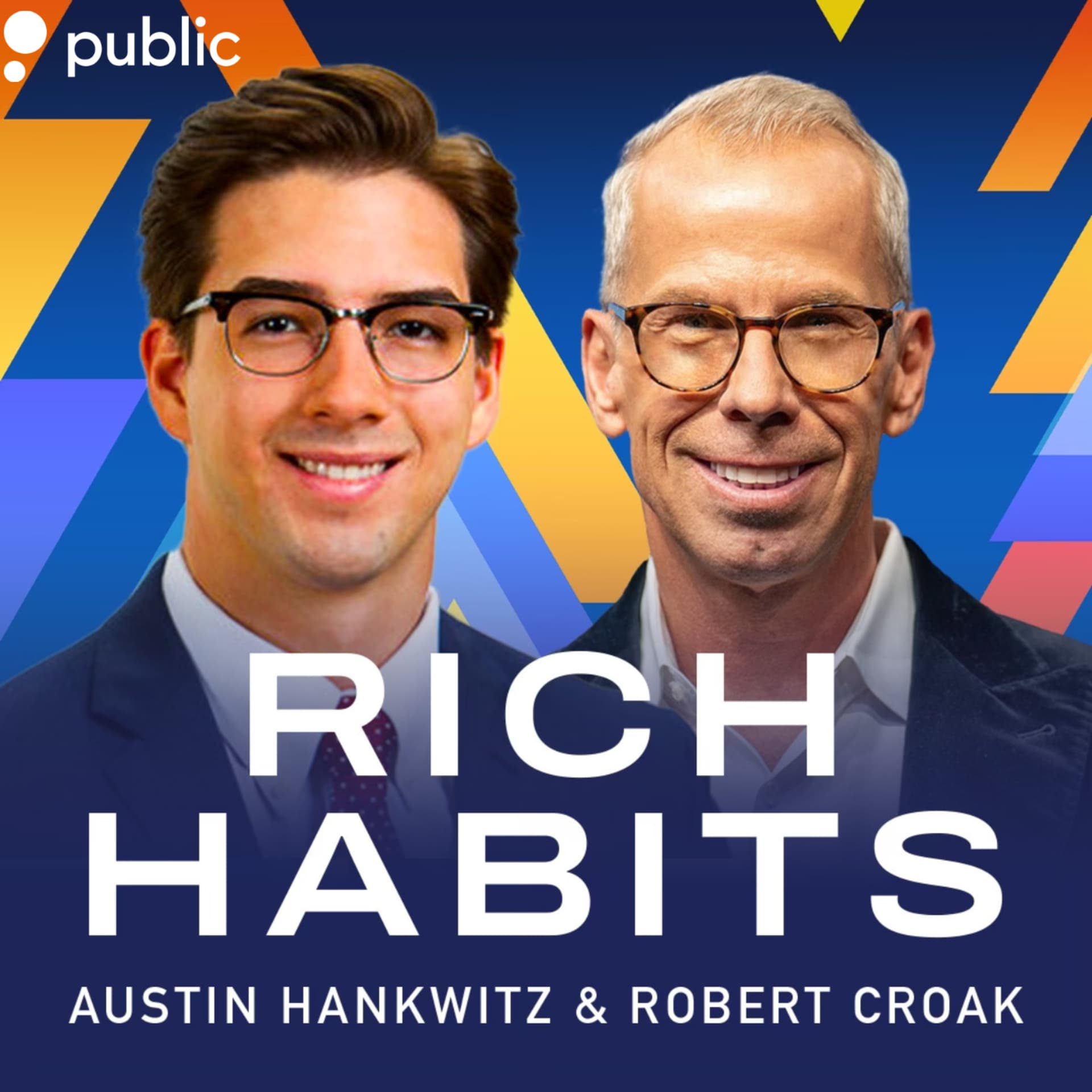
Podcast Overview The Rich Habits Podcast features Robert Croak and Austin Hankwitz as they explore financial literacy aimed at helping listeners take control of their finances through effective habits. This episode delves into the process of acquiring cash-flowing businesses, focusing on Croak's recent experience purchasing a pizza shop.
Key Points Discussed
Introduction
- Hosts: Robert Croak (decamillionaire with 30+ years of business experience) and Austin Hankwitz (entrepreneur in his 20s).
- Objective: To share insights into the process of finding, negotiating, and purchasing cash-flowing businesses.
The Acquisition Process
- Robert recently acquired a pizza shop outside St. Petersburg, FL, emphasizing the excitement around new ownership.
- Importance of assessing the existing business: Robert noted that many businesses are underperforming due to the owners' lack of marketing and operational knowledge.
Q&A Format
- The episode is structured around a Q&A format where Austin interviews Robert about his business acquisition process.
Key Takeaways
Identifying Readiness to Buy a Business
- Self-Assessment:
- Key skills include understanding processes, numbers, and marketing.
- Tenacity and resilience are essential when facing business challenges.
- Market Awareness:
- The current market presents opportunities due to many baby boomers retiring without succession plans.
Finding and Negotiating Deals
- Research Locations:
- Use resources like Biz Buy Sell and LoopNet to find smaller local businesses.
- Focus on manageable price points (e.g., $100,000 - $300,000) to avoid overwhelming investments.
- Building Relationships:
- Networking within local entrepreneurial communities can yield valuable leads on businesses for sale.
- Due Diligence:
- Always verify financials through credible sources (e.g., QuickBooks, accounting firms).
Negotiation Strategies
- Pricing:
- Robert provides an example of negotiating the price of the pizza shop from $199,000 to $145,000, highlighting the importance of understanding multiples based on net earnings.
- Understanding Multiples:
- Aim for low multiples (e.g., 1 to 2 times net earnings) to ensure profitability when re-selling.
Growing the Business
- Immediate Changes:
- Initial steps included improving the physical appearance of the shop and enhancing the ambiance (lighting and music) to attract customers.
- Financial Goals:
- Projecting significant revenue growth from $480,000 to $600,000 with a net profit margin of around 20% in the upcoming years.
Financial Insights
- Robert asserts that acquiring small businesses can yield faster financial returns compared to real estate investments.
- Emphasizes building a portfolio of cash-flowing businesses for wealth creation.
Audience Engagement
- The hosts encourage listeners to share the podcast and leave positive feedback.
- Q&A segment with audience questions on various financial topics, including cryptocurrency storage and retirement investing strategies.
Conclusion
- The episode provides an in-depth look into the world of small business acquisitions, combining practical strategies, personal experiences, and financial wisdom to guide aspiring entrepreneurs and investors toward building wealth.
---
Additional Resources Mentioned
- Credit Building: Information on the First Card for college students to build credit.
- Investment Accounts: Recommendations for opening traditional IRAs and Roth IRAs for young investors.
Contact Information
- Email: richhabitspodcast@gmail.com
- Follow on social media for more financial insights and updates.
Written by AI. May contain mistakes. Listen to the episode to check what was said.
Transcript
Automatic transcript. May contain errors.0:00Hey everyone, and welcome back to the Rich Habits Podcast, a top 10 business podcast on Spotify. My name is Austin Hankwitz and I'm joined by my co-host Robert Croak. Robert is a seasoned entrepreneur in his 50s with more than 200 million in company exits under his belt, and I'm an entrepreneur in my late 20s with a background in finance and economics. Since quitting my full-time job in corporate finance a few years ago, I've built a seven-figure media business and actively advise some of the most well-known fintech companies around the world. As the show name might suggest, every episode we talk about rich habits as they relate to business, finance, and mindset, but we try and bring you two unique perspectives.
0:38One from an industry veteran, which is Robert, and the other myself, someone who's still in the process of building wealth and figuring it all out. Robert, what are we going to be talking about in today's episode? In today's episode of the Rich Habits Podcast, we're going to be talking about how I go about acquiring cash flow businesses. So many of you have been reaching out, hearing about some of the various investments I'm making, some that I'm making with Austin, and just what does that process look like and where do you start? So as you know, I just acquired a cash flowing business the other week.
1:09So I'm going to share kind of the intricacies and the process so all of you can do this for yourselves. In October, I found a really nice little pizza shop in a small town in Florida. We've been researching small businesses to acquire and it just went up for sale. We thought the food was great, but there was a lot of value and upside potential in this particular business just because the owners did a really good job with the food and keeping the place clean. But they didn't really have processes in place. They didn't really know how to market the business and they didn't know what they were doing.
1:41And I thought it was a great, great business to acquire. So we just closed on December 27th and we're having a blast getting started, making all the necessary changes with processes and the renovations and the new branding, new menus, all of the stuff that I really love being in the weeds on when acquiring a business. because that value add in the beginning, let's call it that first 30 to 45 days, is so huge when you're in a small town like that, especially because you can really open the eyeballs of everyone around to this new ownership and just really the excitement that goes around with the business changing hands.
2:20So we're very excited about moving forward. So this episode, we're gonna have a little bit of a Q &A style. We're still gonna hit our three points, but I want this to be very much a, I mean, listen, I'm Austin Hankwitz. I've never bought a business before. I've ran businesses, right? I started my own. I'm an entrepreneur, but I've never gone out and bought a business. Robert has done that dozens of times. So this is me and hopefully the listeners as well, learning from Robert in real time as to what goes on behind the scenes and how to do this. So the first question or sort of point here I have for you, Robert, is how does someone listening right now know they're ready to buy a business, right?
2:55How did you know that this was something you wanted to do in 2024? So I've been doing business acquisitions for, let's call it 35 years, 30 years. And for me, it was always about understanding that I wasn't really suited to work a job for someone else. And so for me, it's always been that entrepreneur mindset of going out on my own. And I just feel that I have a great eye of how to value add a business because Because so many businesses out there, they can be profitable and successful despite the founders or despite the owners of that time period, their level of understanding of how to operate the business.
3:34And so right now we're entering into this era where I think the next three to five years are going to be one of the greatest opportunities of our lifetimes to be able to acquire small cash flowing businesses because so many baby boomers by the millions are retiring and most of them simply do not have a succession plan in place. And what that means is they always thought they were going to pass along that business to a child or one of the workers or something else. And they just never really planned for the day they were too tired to come in and wanted to retire. So that is going to happen in record numbers over the next.
4:13It's happening right now, but over the next three to five years with so many boomers retiring. And it's just going to open the door for so many people to buy existing businesses that are already cash flowing and profitable without starting from scratch. And so how do you know if you're right to buy that first small business of your own? That's a tricky question. But the way I look at it is, what are you good at? Are you good at processes and numbers? Are you good at marketing? Are you good at understanding and fixing problems? If any of these skill sets are something you're very good at, then you probably make a great candidate for owning your own small business or multiples of small businesses, because you're going to understand how to create that value add, that value proposition when purchasing a business.
4:58So that's one of them. Number two is understanding yourself and understanding your tenacity and your ability to overcome strife. And knowing that and understanding that when buying a small business, don't listen to the fake gurus that tell you it's passive. You never even have to see the small business. You can own it and make all this money and it's all rainbows and unicorns without ever stepping foot in the place. That's just all bull. So please don't listen to that. You really want to understand the business, understand the market that you're in. Like with the pizza store we just acquired, We went and really dug deep into what's happening in the market because it's a small town.
5:36Where is all the growth coming from and why? What are the other opportunities? What are the competitors to the pizza store in the area? How far out concentrically are they from this particular pizza store? So all of that comes into question. So there's hundreds of micro decisions you need to understand just before you start researching on if buying and acquiring an existing business is right for you. And I think what's also really important to your point, Robert, is before people make that purchase, think of this as just as important of purchasing maybe a house or a big investment, right? You need to make sure you have your ducks in a row.
6:13No high interest credit card debt. Don't want to be in high interest debt at all. You want to make sure you have that savings account, right? You want to make sure you're doing the normal things that we preach every single episode. because once you have that base laid and you're ready to start building upon it with a cash flowing business or with real estate or with investing, you still have that base laid. So you're good. And Robert, obviously you're a deck of millionaires. So you have the base laid and has been laid now for quite some time. So let's jump into number two now, right? How did you find contact and eventually negotiate the deal to purchase this pizza shop?
6:43So that's a great question and it's different for everyone. I'm very well connected and everyone knows that I acquire businesses and create businesses almost monthly. So for me, the deal flow is there. I have brokers that reach out to me. Random people will say, Hey, there's this awesome business down the street from me that I've been going to for a long time. It just came up for sale. Can I share it with you? But for the average Joe out there or the average Jill out there, it's really quite simple. Get yourself involved, spend a little bit of time every day. If you're really ready and you want to acquire that first small business and get those at bats in.
7:19And what I mean by that is you're just practicing. You go to biz, buy, sell, you go to loopnet.com and you start looking in your area, figure out a criteria of something you want to look at. So you can really dive in on that because if you're just starting out, you don't want to look at businesses that are 10 and$20 million to acquire. You want to find those small businesses in your area that could be purchased for maybe a hundred, 200,$300 ,000. You want to stay away from seasonal if you can help it, unless it's in a tourist area. You want to look at businesses that are going to benefit from future technology and you adding modern practices into that business.
7:56Because like I said, many, many businesses out there have terrible websites. They have no search engine optimization. They don't do social media marketing. They just exist and sometimes thrive even despite themselves and not having all of these modern tools working for them. So I think that's the important part is learning biz by sell, learning LoopNet, getting involved in some of the localized events where there might be other entrepreneurs there, there might be meetups with real estate investors, and really get yourself immersed in the scene so you can see that deal flow and be able to understand it because you want to be able to get in the mix, get those at bats.
8:36You might look at 10 small businesses and you might not buy any of them. You might not be qualified. You might not be able to get the funding or it might not be the right deal for you. But for every at bat you take, every time you look one up, every time you submit paperwork, every time you go view that business, once you're approved to see where it's at, because remember on these websites like LoopNet and BizBuySell, all you see is a generalized informational page about that business, but you're not going to be able to get the numbers and the books and all of the inside scoop until you go through some due diligence.
9:10They're going to ask you to show that you're cash worthy and that you can get the financing, just like kind of being pre-qualified for a mortgage. They're going to want to see that you have the experience and the know-how. So there is going to be some legwork each time to qualify, to be able to really do a deep dive on that business. But all of this comes with getting into practice and learning the processes of actually going through and acquiring a business. So that's where I would start is through these websites, through really understanding. Like one of the keys is, you know, you see the fake gurus talking about, oh, I bought a laundromat in Wisconsin and I've never been to Wisconsin and it's going to do great.
9:48Don't listen to those tactics. When you're first starting out, you really want to buy a business that's either localized to you or maybe within a one hour drive. Because always remember, as you're first getting started, when someone forgets to lock a door or something breaks or a water line bursts or something, guess what? You're going to get the call and you don't want something that's 12 hours away. And then you've got to go hire some unknown contractor to fix a problem without you being able to have eyes on it. So those are kind of the generalized things in the beginning of understanding the process of acquiring a cash flowing small business.
10:24So the person listening right now, they're on Biz Buy Sell and they find a residential fencing company, right? Company that puts up fences around houses around Nashville, let's say. And they find the company and they think it's going to be a great idea. How do they reach out to that person that's selling the company and how do they begin to negotiate an offer? Yeah, it starts. So if let's say you're using biz by sell, they're going to say request a tour or, you know, you want to get further information. You're going to email a broker is going to get back to you. They're going to say, we'd love to share the address because you don't get the address in the beginning without filling out paperwork because they don't want 100 people flooding into this business's office poking around and then employees find out it's for sale or whatever.
11:07So they're going to require you to do some paperwork. So you do the paperwork. Then the broker gets back to you and says, great. The address is 1234 Main Street. When would you like to do a tour? Okay, you want to see it Tuesday at 1 p.m. Great, let's set up a time. I'll meet you there. So you go, you view the place. By then you're going to have some of the paperwork. You're going to have the P &Ls. You're going to be able to see what really is going on. And then you can go walk the grounds, touch and feel the place, and make sure that the vibe and everything is as described. Because just like every property and home that's going to be on a website, The pictures are going to be this glorious picture where it looks like it's this great oasis, but it might not really be that way because pictures and Photoshop can be deceiving, but it's going to get you to that first step.
11:50Do I like the location? How does the neighborhood look? Are the current owners friendly to me? Do the books look legit? Because one of the number one things and one of the most important things when inquiring a business is making sure that you have real books and real numbers to go off of. So you want to make sure you don't get any third party numbers that are just some Excel file that they printed out on a sheet for you because then the numbers can be fully fabricated. So I always require that the P &Ls that I get are either out of QuickBooks, they're out of the POS, or they're from an accounting firm that are verifiable.
12:26This is very important because everyone's going to paint a picture of rainbows and unicorns on these numbers that look really, really great to you. But you need to get into the woods and look at what is real so you make sure you don't get scammed in the deal. So with your pizza shop, how much did they ask for it? How much were you able to negotiate that number down to? And why did you pick that number, right? Like why was it that number versus a different number? Like what's the valuations sort of perspective there? Yeah, generally what you want to do. So in the pizza store instance, I wanted to get to a place where I could be as close to a one-to-one, 1.5-to-one, or a two multiple because of the fact that that's the easiest way for me to really kind of understand the numbers and lock in.
13:13So what does that mean? So they were asking$199 ,000 for the business. We ended getting that business number down to$145 ,000. and then we got partial owner financing. And it was crazy during the negotiations and towards the end where I knew we were gonna get a deal, it was quite interesting. The broker for the owners said to one of the partners in the deal, he's like, man, that Robert guy just doesn't quit. Like he just keeps negotiating, negotiating and negotiating. You'd think as wealthy as he is, he'd be happy with the deal already. And I was literally negotiating down, what is the broker fee?
13:51who's paying the closing costs on the fees for that, which most people aren't sophisticated to know. You can keep asking for more and more and more because at the end of the day, the worst thing that can happen is they say no and they say, well, we're gonna put it back on the market and then you can backtrack a little bit and make a deal that you're still happy with. So for me, I always want to negotiate to the best possible place I can for myself and my partners because at the end of the day, I wanna give myself as much room to be able to be as profitable as possible for everyone. So in this particular instance with a pizza store, I've been in the pizza business for 35 years.
14:28Some people say, oh, I would never invest in a restaurant. And that's just people that either invested in a bad restaurant or they just don't know what they're doing. Because when you look at restaurants in general, the average McDonald's is generally around a 6 % net net return. And then when you look at a Subway, it might be like a 14 % return. But we've had pizza stores in the past that we're at a 22 % net return, which is huge because then you're crushing all expected gains for investors and yourself. So this particular pizza store, I believe we can operate at a 20 to 22 % net return for myself and investors based on the numbers and the negotiations we made.
15:08So it's really important to know your numbers. And if you don't know your numbers and you're buying a business, then it's really important to either have a consultant to work with or a partner that is the numbers person that can help you really get to the bottom of the numbers. Because in general terms, when you're buying a small business, if you can buy that business for, let's say, a two to three times multiple of the net ownership earnings, then you're going to be in really good shape. And in this particular instance, we were able to beat that because my goal is in 18 months, 24 months, if we build it up to where I believe we can from a gross sales and a net profit margin, I believe then we'll be able to get a three to four times multiple on this business.
15:53Got it. Okay. And that's a good segue, I guess, into the next question here, which is like, what are you doing now to hopefully build it up in the next 18 to 24 months to these higher net margins, higher gross revenue? What are some things immediately that you jumped in and you said, okay, here's what we're doing. Here's why it's efficient. Here's how it's helping and stuff like that. Well, here's the funniest story about this acquisition. when we went there the first two times, one time during the day, and we noticed that the parking lot had weeds two foot tall. There was garbage everywhere in the outlying parts of the parking lot.
16:24And the number one thing that blew my mind is when I went there on a Friday night, I pulled up and one of my partners was meeting me there and the lights were all off outside and it was dark out. So I called him while I was at the stoplight. I go, are they closed on a Friday night? He goes, I don't know. I'm pulling in from the other way and it looks like it. I turn the corner, pull into the parking lot. The parking lot is absolutely jam-packed, nowhere to park, yet none of the lights were on outside. So I was like, this is interesting. This doesn't make any sense at all. So ironically, we take over the week we're talking back and forth and doing the training with the handoff from the former owners.
17:00I asked them, I said, just out of curiosity, please explain to me why the three times I've been here since we've been negotiating this purchase. The outside lights have never been on during business hours. They absolutely looked at me and kind of chuckled and said, Robert, we don't turn them on anymore because the restaurant is already busy enough and we're tired and we didn't want it to be any busier. Yes, it's laughable. Oh, the other part of it too, on the inside of the restaurant, they kept it clean. It's nice enough. It's a small town restaurant, but I noticed they had one TV that was in use and plugged in and turned on, but nothing was on the TV.
17:38The other TV that they had up was a brand new smart TV, wasn't plugged in, and there was no music. So when I walked in the door on that Friday night, you have a packed restaurant. The to-go line for all the delivery drivers was packed, yet there was no music, nothing on the TVs, and all of the overhead fluorescent lights were on as bright as they could be. It was like being in a dentist office. It was so bright. So there was zero atmosphere, yet the place was packed. So last week we had a record day for that restaurant on Friday night. And all these people were DMing me and people were calling me because they saw my Instagram story and they're like, why is the restaurant so packed?
18:15What did you do? And I chuckled and I was like, I turned the lights on and put speakers inside. So there's music and actually turned on the TVs. That is all we've done so far. So it really comes down to when I look at a business, I look at everything. What is the cleanliness? Does that matter? What is the competition in the area? What's their website like? Are they optimizing their marketing strategies through SEO or email marketing or social media marketing? What are they currently doing to create this successful business? And if there's a lot of value add that I know we can do immediately and the numbers make sense, then to me, it's a very exciting opportunity to acquire.
18:53And so just to put some numbers around this, right? Like let's say you guys do 300 ,000 in revenue in 24 and 25, like annually. Like I feel like that's generally a good guess. Yeah, no, they're at 480 ,000 in revenue for 2023. We believe for 2024, we should easily be able to get to 600 ,000 in revenue. Okay. So 600 ,000 in revenue, and then you guys are hoping for a 20 % net margin. So let's call that$120 ,000 in profit. Let's say you do that in 24 and in 25, you then slap a four times multiple on that. Now you're up to a$480 ,000 value on this business that you bought for 150 ,000 or so. Let's just round numbers, call it 180 you bought it for.
19:37That's a$300 ,000 profit that you would make in two years time on buying this small cash flowing pizza shop. So that could be a three or even four X on your money and that call it three or four years. So we talk about investing in these different asset classes. I just want to remind everyone buying a small business is very much an asset class to invest into as well. Yeah. And the one way to look at it, and this is coming from my 35 years of experience, right now, almost all of the influencers and educators out there in business and finance talk about how real estate is the best way to get rich.
20:11And I strongly disagree. I think real estate is a necessity to build wealth, but I don't think it is the best strategy, especially starting out. Because if you look at the average real estate deal, let's say you're buying single family homes as investments, you're going to make three to$400 net per door. So to even be able to think about quitting your nine to five job, you're going to have to own 10, 15, 20 doors to have the cashflow to be able to get rid of that nine to five job. And that's just not the case in small businesses because real estate is a great investment strategy and thesis and should be part of everyone's portfolio, but it is a very long game.
20:51Very, very long because you need to be able to buy and renovate and rent those properties over time to build up that cash flow and capital appreciation. So I love real estate, but small businesses to me are the sure cure way to be able to build wealth much faster because you could take a small business. Think Think about if you were a single person or a husband and wife team buying this pizza store and you knew how to properly operate it and you could turn it from an$80 ,000 a year to$120 ,000,$140 ,000 a year profitable business. That is a really great income that can happen within weeks and months versus years to be able to create that kind of income in real estate.
21:33That's why I always tell people, once you get your base built in investing, I would rather see people then start to really look at either building or acquiring small businesses because is there risk? Absolutely. But is the reward much, much greater than buying a couple single family properties? Absolutely. So in my opinion, get your base built, then go into some small business operations and acquiring or investing in small business with other operators and then start bridging into real estate to have a very well-rounded portfolio. That's my opinion of the best possible strategy for people looking to build financial freedom.
22:12And I think something people don't really understand is the exit multiple, right? Like you mentioned that you want to sell this and call it two or three years. And right now you bought it for like one and a half times profits and you want to sell it for closer to three to four times profits because the margins and the efficiency that you have there. I just want people to know that$10 ,000 or$20 ,000,$30 ,000 extra in profit that you make in 2024, when it comes to sell the business, if you put a four times multiple on that, which is what a buyer might do, that$30 ,000 of efficiency is actually worth$120 ,000 of profit for the investors into this business, right?
22:49This is not just a, yep, made 30 more grand, look at me. It's no, we built and optimized this business and the market puts a 4X value on that efficiency that we made. Therefore, we were able to add that much more at the end of this deal. Yeah, and you have to look at it this way too with a small business like this pizza store. If you're getting a quarterly distribution as one of those investors, you're making money along the way as well. So that money that you're getting every quarter is chipping away at your initial investment. And then upon that exit with that three to four times multiple, then that's really where it accelerates your return as an investor in that business.
23:25And my goal here in this example, in this podcast episode of the Rich Habits podcast, isn't to really harp on owning this one small business and the value of it. It's really to get everyone to understand that once you start buying and acquiring more and more and you get to maybe five, 10, 20 small businesses, Then you're just really creating this massive cashflow machine of profitability. And then you can exit any one of these businesses whenever you feel the business is optimized and there could be the right buyer to get the multiple you want. And that's my goal. Through my community and all of the people that follow Austin and I through the Rich Habits, through the Money Mindset, through his community, there's just so many people that want to invest alongside me and Austin.
24:10And that's why I love this concept of just building up these portfolio of businesses to be able to buy cash flowing businesses, optimize them, and at some point exit them because it's just such a great way to build wealth and a high return, not only for myself and my team, but everyone that invests alongside of us. Couldn't have said it better myself, Robert. What a great breakdown and congrats on the first of many small businesses that I'm sure you're going to acquire over the coming couple of years. This episode of the Rich Habits Podcast is brought to you by Neos Investments. Neos currently offers three unique exchange-traded funds, SPYI, BNDI, and CSHI.
24:50All three aim to offer their investors monthly passive income with tax efficiency in mind. Their management team are pioneers in the option-based ETF space with decades of combined experience creating and managing ETFs that pursue income as the outcome. and during uncertain economic times can also be thought of as a way to turn market volatility into opportunity. While giving exposure to the S &P 500, U.S. aggregate bond ETFs, or T-bills, the NEOS team uses unique option strategies with the goal of increasing monthly income for their investors. So if you're looking to add tax-efficient passive income to your portfolio, you can learn more about NEOS ETFs by visiting neosfunds.com.
Read the full transcript
25:33As with all investments, investors should carefully consider their investment objectives, risks, charges, and expenses of NEOs exchange-traded funds before investing. To obtain a prospectus or summary prospectus containing this and other important information, please visit neosfunds.com. Please read the prospectus carefully before you invest. NEOs ETFs are distributed by Foreside Fund Services LLC. An investment in NEOs ETFs involves risk and possible loss of principle. The equity securities purchased by the funds may involve large price swings and potential for loss. A fund's income may decline when yields fall.
26:10Fixed income securities will decline in value because of an increase in interest rates. The funds may use derivative instruments to seek income, which involves risk different from or possibly greater than the risks associated with investing directly into securities and other traditional investments. All that said, we really love SPYI. It is the largest dividend-focused holding in my personal portfolio. I get paid every single month because of it, and so does Robert. He is a massive fan of it as well. BNDI is also an incredible ETF as it relates to bonds. We talked with Troy Cates on a recent episode of the Rich Habits podcast about why that will do well in 2024.
26:48So if you're not yet researching these ETFs, what the heck are you waiting on? So our first question comes from Hannah T. She says, love the podcast. and over the last couple of years, I've been learning about cryptocurrency. Thanks to you all, I've learned a lot, but I still have a couple of questions. I've heard about hot wallets and cold wallets, but I don't really know the difference. Can one of you explain to me the difference in which wallet you personally use and why? Hannah, that is a great question. We actually just had a conversation about this last night on the Public Live. So basically the way to look at it is a hot wallet is a wallet where you're keeping your cryptocurrency online and on the internet.
27:25So think Coinbase. your wallet on Coinbase would be considered a hot wallet. A cold storage wallet would be a wallet like a Ledger Nano X or an Arculus wallet where you take your keys, you have your seed phrases, and you're storing your cryptocurrency on that cold storage wallet off of the internet. That is basically the difference. They're both very effective depending on what you're trying to accomplish within your crypto portfolios. Cold storage is stuff that you're not gonna be buying and selling. You wanna keep it safe. You want to know where it is. You want to make sure, you know, you've heard the phrase, you know, no keys, no crypto.
28:01Cold storage gives you the keys and make sure you own it and you have it in cold storage. Hot wallet and hot storage is when you're still keeping it on a wallet on a platform like Coinbase. And the reason you want to keep a part of your crypto portfolio in a hot wallet is to be able to make those exchanges, make those purchases. Maybe you're going to go across another platform and you need to take money from Coinbase wallet to say a MetaMask wallet to be able to buy a coin that isn't on Coinbase yet. That is basically the difference. They're both very effective. It just depends on what you need them for and what your thesis is for your crypto investing.
28:38So for me personally, I've got about 70 to 75 % of my total cryptocurrency sitting in a cold wallet. The other 25, 30 % is sitting in a hot wallet. And the reason for that is because one, I like to buy more of it and just deposit it into this hot wallet, knowing that in the next 18 to 24 months, I plan to sell it all and take that money and maybe pay off my mortgage, right? Who knows? But I like to have the flexibility on a week to week or month to month basis of in an instant, If I need to sell this or if I need to do something or trade with it, I can do that without having to go into my cold storage, get out my little USB drive as my key, do my this and that.
29:15That's going to take me a long time. And I want to have the instant kind of reflexes to buy and sell and trade with that. Call it 20 to 25 percent of my portfolio of cryptocurrency. Love it. Great question, Hannah. Our next question comes from Paul M. Paul says, I have a 20 year old son graduating from college this May. While he was in college, he was working for a large paint supply company. He qualified for their 401k and they offered a match up to 6 % of the salary. There's a few options though. The company automatically matches the 401k with company stock, not normal cash, but they have a good history of returns.
29:50They also offer a Roth 401k, but if you do the Roth, you have to put it in a target date fund. Should he just invest up to the match and then do the Roth separately? Should he do the Roth with the target date fund? What are your thoughts on this? He has no debt coming out of college and has about$30 ,000 in a Fidelity account right now. Congrats to him. Great question. And thank you for the specificity. It helps us a lot in these questions, the more that the providers of the questions detail things out. So in this instance, yes, I agree with you. I think I would just do the company match and then the rest I would go into the self-directed Roth IRA rather than the target date fund that's provided by the company.
30:30Because if you have that autonomy to make your own selections, you're likely going to have a better performing portfolio in the Roth IRA. So that's what I would do. But I'd love to hear your take on this, Austin, because you are the one-all be-all of knowledge when it comes to these 401ks and these company savings plans and investing plans. So I'd like to hear your take. I love this question because I was in this person's son's shoes about three, four, five years ago when I worked at Emeticis. They matched their 401k with company stock. The company stock was doing great. So I was getting that match.
31:04Now, here's what I would do if I was in Paul's son's shoes. I would get the free money from the match. I would be mindful as to how much of my total 401k portfolio is invested into company stock, right? I mean, if you have, after so much match, you're going to get 7, 10, 15, 20 % of this portfolio, especially if the stock price keeps going up, invested into this one asset, into this one stock, that's not very good for diversification, right? Maybe something happens with the company, who knows? So just kind of be mindful of that. If it gets over, call it 7%, 10%, begin to divest out of that and just buy S &P 500 or mutual funds, whatever you have in the normal 401k.
31:43And to the idea of the Roth IRA, I would absolutely do that, right? Don't worry about the Roth 401k, stay away from the target date funds, buy the index funds we talk about, VOO, QQQ, VTI, all the fun stuff there. And then as it relates to the Roth IRA, go open that up on Betterment, Fidelity. He already has a Fidelity account. Go open that up on Fidelity as well. So he has two accounts, a taxable and a Roth IRA. And then in the Fidelity account, max it out. $7 ,000 for the year, put it in VOO, QQQ, VTI, whatever you want to do there. And then just continually repeat that process. This guy is going to be a millionaire before he knows it.
32:15I love it. And these questions, when there's this much detail and people are really starting to advance their game. So I feel so proud and so happy that so many of the listeners and so many of the followers are really taking action over the last year since we started the Rich Habits brand. It's so exciting to see people really understanding the complexities, but also how simple it is to be able to put all this together, create these rich habits and build wealth and financial freedom. It makes me so happy. I'm right there with you, man. Our last question comes from Nikki. Nikki says, first of all, I love your podcast.
32:49It's been the real motivator for me to get better with my finances. My question's this. I have a 20-year-old who's a full-time college student. I want them to get started with retirement investing. However, he doesn't have a job and he doesn't plan on earning actual money in 2024. He's focused on school, so that's what he's going to be doing here. How do I figure out the IRA stuff without earning money? Really good question, Nikki, and it's super simple. And this goes for anyone, right? If you have a child who's 18 years old, maybe they don't have a job, they're not earning income, that's totally fine.
33:20They can always open up a traditional IRA, not the Roth. The Roth is for people who earn money and earn income. You have to earn at least$7 ,000 in 2024 to be able to contribute that money to a Roth IRA. But if you don't earn anything, that's fine. The traditional is the way to go. So for Nikki, your son, if he's not earning any income, maybe he's got some birthday money, maybe you're gifting him$1 ,000 or something to start him off right with, that's totally fine. Just make sure you open up the traditional IRA so he's not surprising Uncle Sam with some weird money in a retirement account out of nowhere.
33:52Yeah, this is a great strategy. Very, very simple. You can go to Schwab, Fidelity, Wealthfront, any one of those and open a simple traditional account and get that money in, whether you're putting in$1 ,000,$100 a month, whatever it is, you can contribute whatever you want into that account. Get it invested into a basket of the funds we talk about like VOO, QQQ, VGT, VTI, and he's up and running and ready to go. And then as he starts to earn money, then he can open that Roth IRA that we always talk about. But for now, this is the best, easiest strategy to get him going and get him started on the right track.
34:29I would also, Nikki, encourage you to help him learn about building credit. Building credit is not something I took seriously until after I graduated college. Unfortunately, I was 22 at the time. And I had to go and open a secured credit card because I couldn't qualify for the Amazon card, the Discover It card, or any of these cards that my friends were getting because I had no credit history. There's going to be a link in the show notes below to a little bit more information about our favorite credit building card called First Card. It is an awesome card. They make it super simple to not only build your credit, but make sure you don't overspend and go into debt as a college student.
35:08This is literally my favorite card. I wish I had it when I was in college. It is such a no-brainer right now for college kids to be using this card to build their credit. So when they do graduate, they can get that apartment without having a co-signer. They can buy that first car without a co-signer. They can do these things that people like Robert, myself, and probably you as well, Nikki, take for granted because we have 700, 800 credit scores. When you don't have credit or even a bad credit score, this first card is an incredible solution. So definitely check that out in the show notes below.
35:36What a great takeaway. And this was an amazing, amazing episode. I just really love us exploring all the different parts of the investment business and wealth building journeys that we create here at the Rich Habits Podcast. We thank each and every one of you each week for following along, sharing the podcast, giving us all these five-star reviews. And we are so excited for 2024 and beyond and all the great things that we have coming up for each and every one of you that has supported us on this journey. Thanks everyone for tuning in to this week's episode of the Rich Habits Podcast. Don't forget to leave us a five-star review.
36:10If you've learned something, share the podcast with a friend, your barber, your sister, your cousin, your mom, whoever, share it with someone. They're going to love it. It's 2024. Let's make sure we're getting right with our money and we are implementing rich habits to build wealth throughout our lives. Have a great start to your week.
From the publisher
In this episode of the Rich Habits Podcast, Robert Croak and Austin Hankwitz dive deep into the intricacies of finding, negotiating, and purchasing a cash flowing business.
In case you're unfamiliar, Robert recently purchased a pizza shop in a small town outside of St. Petersburg, FL. In this episode, Austin interviews Robert about the entire process.
---
Learn more about FirstCard and build your credit, click here!
Earn 5.1% APY using a Public HYCA, click here!
Opt-in and share your email, click here!
Learn more about our 4-module video course!
Download our FREE Budget Template, click here!
To learn more about Robert: https://stan.store/RobertJCroak
To learn more about Austin: https://stan.store/austinhankwitz
Contact: richhabitspodcast@gmail.com
---
Hankwitz Group LLC has an existing business relationship with NEOS Investment Management LLC. The opinions expressed are those of the author, and the author owns several NEOS ETFs.