In short
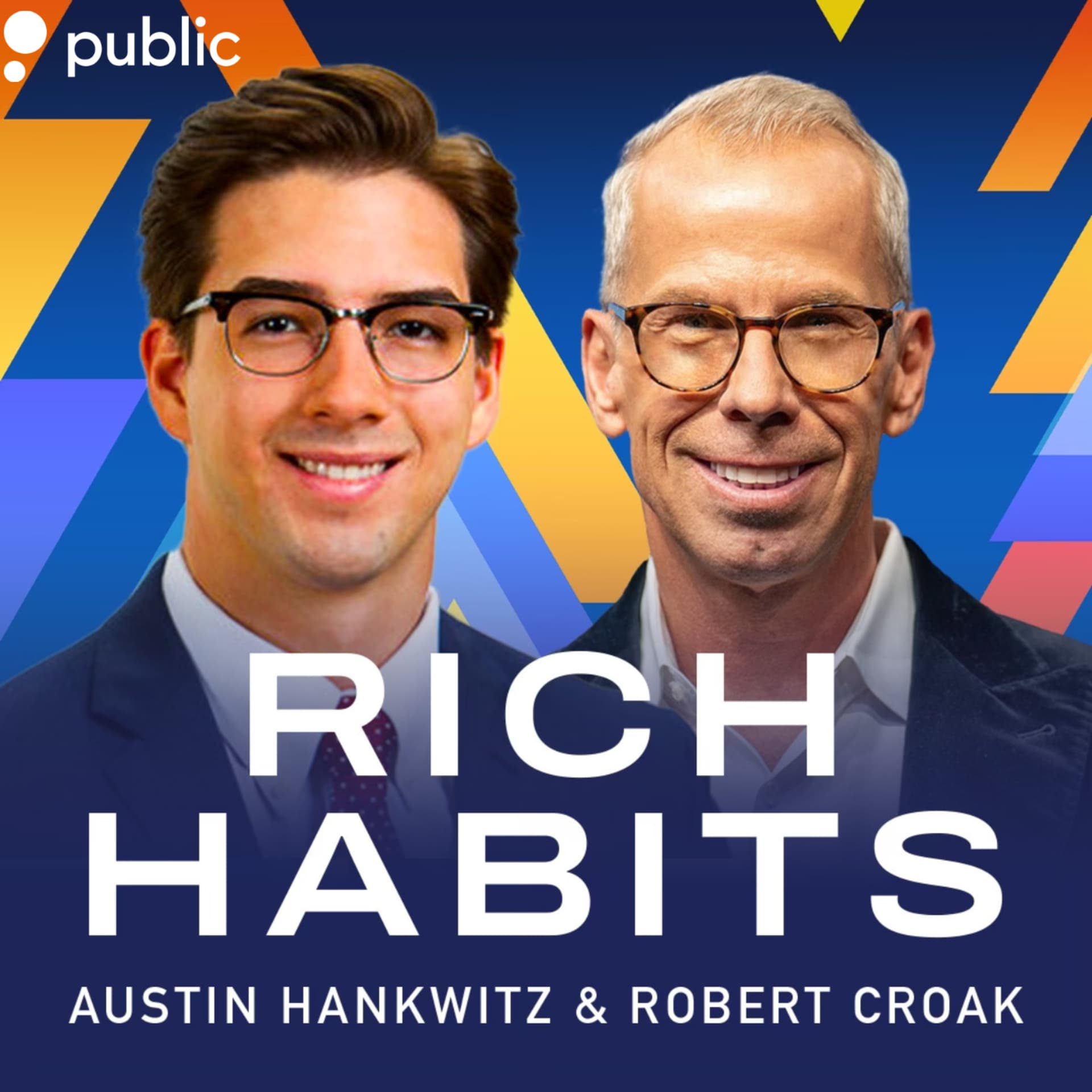
Rich Habits Podcast Episode 81: The Business of Pro Sports w/ Paul Rabil
Overview In this episode, hosts Robert Croak and Austin Hankwitz welcome Paul Rabil, a prominent lacrosse athlete and entrepreneur, to discuss his journey in professional sports and business. The conversation focuses on the creation of the Premier Lacrosse League (PLL) and explores the intersection of sports, entertainment, and business.
Key Guests
- Paul Rabil: Professional lacrosse player, co-founder of the PLL, and entrepreneur.
Episode Highlights
Introduction to Paul Rabil
- Considered the "Michael Jordan of lacrosse."
- Accomplishments include winning national titles and being an All-American.
- Co-founded the PLL, likened to the NFL for lacrosse.
- Currently serves as Chief Strategy Officer of the PLL.
Creating the Premier Lacrosse League (PLL)
- Business Model: Transitioned from a traditional sports league model to a touring league akin to the UFC or PGA Tour.
- Funding: Discussed the process of private equity funding for the PLL, including initial seed rounds and subsequent investments.
- Revenue Streams: Emphasized the importance of media rights, corporate partnerships, ticket sales, and merchandise.
Investment Opportunities in Sports
- Consumer Demand: Sports have a long-lasting consumer base, often discussed at family gatherings.
- Valuations: Notable increase in sports franchise valuations over the past decades.
- NIL Impact: The changing landscape for athletes due to new Name, Image, and Likeness (NIL) regulations allowing younger athletes to monetize their visibility.
Entrepreneurial Insights
- Learning from Failure: Paul encourages embracing mistakes for personal growth and learning.
- Networking: Importance of building relationships in business and investment.
- Support for Athletes: The PLL offers equity to players, aiming to create wealth opportunities for athletes.
Personal Finance and Investment Philosophy
- Long-term Mindset: The importance of patience in investments, exemplified by Warren Buffett's success.
- Advice for Young Athletes: Invest in learning and surround yourself with knowledgeable mentors.
Final Thoughts
- Paul expresses that the journey of creating the PLL was driven by a passion for lacrosse and the belief in its market potential.
- The episode emphasizes the vast opportunities within the sports business and the potential for athletes to transition into successful entrepreneurs.
Key Takeaways
- Market Potential: The sports industry is evolving, with significant investment opportunities thanks to tech integration and private equity.
- Entrepreneurial Spirit: Rabil's story serves as an inspiration for aspiring entrepreneurs within any field.
- Long-term Investments: Emphasizing patience and the right strategies can lead to substantial financial growth over time.
Conclusion This episode of the Rich Habits Podcast illustrates the dynamic relationship between sports and business through the lens of Paul Rabil’s experiences. It encourages listeners to consider the broader implications of sports as a business and the opportunities available for personal and financial growth within this arena.
Written by AI. May contain mistakes. Listen to the episode to check what was said.
Transcript
Automatic transcript. May contain errors.0:00Rinse takes your laundry and hand delivers it to your door. expertly cleaned and folded so you could take the time once spent folding and sorting and waiting to finally pursue a whole new version of you like tea time you or this tea time you or even this tea time you said you hear about Dave or even tea time tea time tea time you so update on Dave it's up to you we'll take the laundry rinse it's time to be great the Burlington Coat event is back. Buy a coat now through November 29th and get$5 off your merchandise purchase of 25 or more from December 6th through December 24th. Plus, Burlington is donating 50 ,000 new coats to help those in need nationwide through our partnership with Delivering Good.
0:47We've been keeping you warm for over 50 years. We'll see you at our coat event. Burlington. Deals. Brands. Wow. Visit burlington.com slash coats for details. Hey, everyone, and welcome back to the Rich Habits Podcast, where we talk about rich habits as they relate to business, finance, and mindset. In this episode of the show, we are joined by Paul Rabel. If you're into lacrosse, you might consider this guy the Michael Jordan of the sport. However, as we'll explore in this episode, he is much more than an athlete. He and his brother created the PLL, which is to lacrosse as the NFL is to football.
1:22We talk about their business journey from idea to private equity funding, as well as how entrepreneurs listening can take action no matter where they are in their own journeys. This episode is full of gems, and we hope you all love listening to it as much as we loved recording it. So let's jump into the episode. In today's episode of the Rich Habits podcast, we're diving into something we've never talked about before, the intersection of sports, entertainment, and business. And we're excited to welcome Paul Rabel, who is both a rising star in the business world and also widely considered the Michael Jordan of lacrosse.
1:57So Paul has won two national titles at John Hopkins, was an All-American every year in college, and then went on to have one of the most decorated careers of the sport from 2008 to 2021, and we're excited to have it. Toward the end of his playing career, Paul co-founded the Premier Lacrosse League or the PLL, which is now the primary professional league for the sport of lacrosse. He served as the chief strategy officer of the PLL while still being one of the best players in the league itself. You can think of the PLL to lacrosse as the NFL is to football. Now fast forward to 2024 and the PLL has a media rights partnership with ESPN.
2:38He made an ESPN documentary that's now on Hulu called The Fate of a Sport. He helped get lacrosse back into the Olympics, which is going to be something we're going to talk about. He wrote a book called The Way of the Champion, and he has a growing venture capital firm called Rabel Ventures. His firm actually was an early investor in public.com, which is a sponsor of the Rich Habits podcast. So that's kind of a cool loop around there. Paul, welcome to the Rich Habits podcast. I appreciate you guys. As they say, records are meant to be broken. And I anticipate, at least if we're doing our job at the PLL, many, many, many world-class players to come that are going to take the game to all new Heights.
3:12Thanks for having me. I'm excited to take a step back for a moment because I want our listeners to know why we're doing this episode. I want them to know that this is going to be sort of that look under the hood as it relates to sports, entertainment, and business. Our listeners know that Robert and I are always talking about venture capital, angel investing, and sort of diversifying our portfolios into asset classes that aren't as well known. We're not talking about the single stocks in this episode. We're talking about what is a business of a sport. So We want people to know like, that's what the episode's about here.
3:44And so I want to start the conversation off like this. How did you go about creating a professional sports league from scratch? If someone said, hey, Austin, I need you to go make the NFL 2.0, I wouldn't know what to do. So how did you go about creating the PLL completely from scratch? Talk about the fundraising process. Talk about the business plan. Talk about the length of time it took. I mean, give us the whole breakdown. Well, I love and am very humbled by the fact that I'm your first guest on the intersection of sports and business, sports and investing, sports media. It is a booming industry that was once reserved for the ultra-rich, many call it vanity play, now with private equity coming into the space and, frankly, the sophisticated operators and additional capital.
4:26It is far more data-based. There's tech integration. We could talk about sort of why sports have carried such huge enterprise valuations. But when I think about folks that I'm close with, try to learn from, in some cases, share a board with the likes of Joe Tai and Mark Cuban and Steve Ballmer and the Kraft family, Bob and Willow Iger just invested in the NWSL's Angel City FC. So it's just amazing people that have essentially taken an art form into more science. So quickly, what makes sports a good investment? Eye consumer demand. We often say the LTV, as some of your listeners might know, the lifetime value of a customer in sports is 30 to 60 years.
5:11It's a household investment because they're having conversations about the NFL and the NBA and the PLL at the dinner table. That's part one, sort of more psychological. But if you look at the revenue side of the business, you have media rights, you have corporate partnerships and ad business that's approaching across not only live programming, but the creator economy. $1 trillion for the first time in 2025. You have a merchandise business, you have a ticketing business, and then you're in the community in a lot of cases, these leagues and teams are building real estate. So it's massive, massive, massive opportunity.
5:43Later on, global reach, especially with the streamers. Netflix signed up the WWE and they signed up the NFL because they can turn on international viewership, which all of a sudden adds another multiple on your fan base. I mentioned tech integration, and then what I'll wrap with is what Warren Buffett calls sports were our monopolies. And you have an element of scarcity, which is a tracker to investors. Well, one of the cool things that I like to see, and that's why I'm excited about this interview in this episode is even 10 years ago, it was really the top 3 % of athletes, both active and retired, made all the money.
6:16You didn't have all the social media and the big followings. And now with the advent of NIL, it is just a wide open marketplace to be able to be, you know, high school level, college level, and be making millions of dollars because of the eyeballs you bring to the table, not just your athletic prowess. So it is a wide open market and a lot of things happening. It's a really exciting space and it finally is growing to this who knows maturation level because there's so much opportunity. I'll give you a little bit more evidence on the valuation front. In the 20 year period of 2001 to 2022, the NBA on average team valuations have gone up by 1000%.
6:58That's greater than any MLB or NHL average. And then my personal two favorite teams growing up now, the Washington Commanders that are owned by Josh Harris and David Blitzer, who's an investor in the PLL, but Chelsea Football Club, who Tom Boley is from my neighborhood, essentially grew up in Maryland, both of those teams traded for north of$6 billion. So it's an extraordinary time to be in pro sports. And when you think about the athletes who are investing, to your point that's unlocked is athletes have two things really going for them. So if you're on the board of a company looking to lead a fundraiser, if your founder is looking to raise capital, why athletes?
7:32Well, they have a passive income. Steph Curry and co with the new NBA rights deal, they're going to be signing 50 plus million dollar a year contracts just on the floor, not touching their sponsorship. So passive income to spend, they have great networks. Many of them are close friends with Andreessen Orwins as a fund. And that's why, you know, Kevin Durant went out to SF for a little bit and played for the Golden State Warriors. But number three, which I think is really important, is for the right industry, if you're looking to acquire customers, they have access to disproportionately sized audiences through their social media.
8:08And so then all of a sudden you can unlock a lower CAC because you're accessing investors who can reach on a tweak 20 million people. So those are reasons why you're seeing athletes get involved in more deals than perhaps in the past, which used to be t-shirt businesses, bars, restaurants, and hotels. So I often describe myself as an entrepreneur by necessity. I played professionally for 10 years before turning around and seeing the rise of Major League Soccer and the rise of the UFC and the rise of F1 all throughout the age of digital and social media and say, why not us? Why not lacrosse? And the reason why those three were able to take off is because new communication forums like social technology, call it the internet, and then enhanced programming, also kind of like wraparound programming offering like apps and sports betting and such.
8:55But there used to be one of the biggest moats in any industry surrounding the big four sports leagues in America. And that moat was primarily around a fixed level of inventory across broadcast, right? And if you weren't on broadcast, then you were going to build a business around attention and revenue. So now all of a sudden, cut to streaming, limitless inventory. New entrants can come in and access audiences at any point. And that was critical. So we start scratching our heads. We look at lacrosse. Look, it's not slam ball. It's not CrossFit. By the way, both leagues have worked to varying degrees.
9:29This is a sport that is the first team sport of North America. It's been around thousands of years. And as product market fit at the collegiate level, it was one of the first NCAA sports. It played pre-NCAA era. It was once in the Olympics in 1904 and 1908, which by the way, we're back in the Olympics, Austin, for your call out. And so why not at the pro level? And if you study the history of the NBA, which at one point in the 70s and 80s was really bleak. If you study the history of the NFL, which couldn't figure it out until they hired a 33-year-old marketing commissioner by the name of Pete Rozelle, and the age of television in the 60s.
10:02And by the way, the NFL is so big now, but we forget 30 years ago, Major League Baseball was bigger. You have to have operators. I find that the skill set that I developed in sports, going for it against all odds is one that I try to harness now as an operator. I'm not classically trained. I didn't go to business school. Neither did my brother, who's my co-founder. But we have a good grasp of math and art. And we have a great board. We have a compelling story. And we have the work ethic to try to go out there and stand the thing up. And I'm talking about 2018. So just to linger on that a little bit longer, did you with the PLL begin to think like, okay, here's how, to your point, the UFC, F1, all these other different sort of professional sports and leagues, here's how they make money.
10:49How do we directly translate that into what we're building? Did you sort of, you know, get inspiration from existing business models? Or did you kind of go about saying maybe there's something different with lacrosse, from a monetization theme. How did you begin to build out that business case that you can then go to investors and say, if we do ABC correctly, and then we pour on a couple hundred million dollars, we can now build this into a couple billion dollar company? It's no surprise you've done this before, Austin. So the short answer is yes to all. So I would encourage any entrepreneur or operator out there to be able to look at the entire spectrum of possibilities.
11:23It's something I do on small tasks and large tasks. And in this case, one of the ends of the spectrum is how big our total addressable market was. What's the TAM of lacrosse? All right. Now, where do we think it can go? How do we think we can get it there? And that was the exercise just around our audience. Part two is studying like hell the industry. And I recommend that to any newcomer into sports is be a subject matter expert. So read all of the trades, meet as many people as you can, study the history of professional sports, as I had alluded to. And those who understand history can better predict future, in my opinion.
12:01And then the last thing is don't be scared to innovate. So when we looked at lacrosse and, you know, sort of ate the humble pie of, wow, this audience, despite my sort of inside favors of lacrosse and how much I love it, this audience isn't as big as basketball, soccer, or baseball in America. It's not. We can't stand up in the short amount of time of 12 to 18 months, individual owners that own venues and do a classic home and away schedule as you look at team sports. But to your call out, what's the UFC, the WWE, the PGA Tour have in common? They're single entities. They're individual sports, but the wholly owned model allows what creates this sort of supply demand curve where the show is only coming into town once a summer in our case.
12:42And we believe that if we change, this is at the time, the team sports model into one that reflected more of the individual sports and went tour-based. We would be able to ramp up faster in our first five years of existence than otherwise. And we were right. And so while we still function as a touring league, we have done things like expand from six to eight teams, put our eight teams into home cities, tour those cities, and plan for the future where it's very likely with our audience growing and interests growing around the league that we will be in a traditional home and away model. And the data will support that in that when we launched the league, there were 15 million lacrosse fans.
13:20Now there are 46 million. And that's according to an MRI sentence report. All right. So Paul, our audience is really interested in owning businesses and investing in privately held businesses whenever possible. And it seems like the PLL has really attracted a lot of private equity investments. And so let's talk about that. Walk our listeners through where did you start with the private equity? How did you do it? And how did it all go down? Did you do a friends and family round at first and say, hey, I want to start this thing? Walk our listeners through it. And then on the tail end, where did Rabel Ventures fall into this picture?
13:57It's actually a really great question and an interesting one for those that are hearing me or hearing about professional lacrosse for the first time. And I scratched their heads and be like, wait, so you played professionally and then you started a league while you were playing professionally. What happened to the old one? So the first league that I played in was called major league lacrosse and calling back to my earlier notes, there were some problems. So my brother and I got together and he's a serial entrepreneur as well. And we had an operating experience on the fitness side and then with Sintech.
14:27And we said, why don't we approach those league owners and put together an OM to where we are essentially investing and running the league that evolved to outright buying them all out. So with that case, we were traditionally with private equity overhead capital. And we went down the path of putting an offer in front of them and they rejected it. But throughout that diligence process, we learned even more around what our original conviction had told us, which is pro lacrosse has real upside and it just hasn't been tapped yet. So that led us to going, okay, if not together, then we're going to do it separately.
15:03That shifted the profile to a venture investment. And we explored all different types of fundraising vehicles and it's high risk. I mean, starting a pro league, there have been 200 attempts at it, not lacrosse, in pro sports at launching leagues since 1990 with a 1 % success rate, which is determined by your ability to sustain beyond the three seasons. To answer your question, we actually did a pre-seed round, which was enough to continue to carry our research and investment into a fast turn of a new league ahead of the following summer. And the notes around that pre-seed round was that we secured a media rights deal, we courted sponsors, and we signed up the players.
15:46So players like myself and others that were playing in NLL, we were all under one-year deals. That was their Achilles heel. So we were able to sort of take the players, get the network deal, get sponsors all in stealth mode. And then we did a proper seed round, which pushed us through the first season. We then began raising our Series A toward the end of our first season. So this is now August, September of 2019. And we've done a few rounds since. The early term sheet was drawn up by Rain Ventures, who we still work with today. And Colin Neville sits on our board and Blair Ford, and they're a fantastic group.
16:20Our second round was led by Joe Tai, who's the vice chair of Alibaba and co-founder of Alibaba, a learner of the Brooklyn Nets, and grew up playing lacrosse. And he's also on our board. We then fast forward to the latest rounds of investing. We had Arctos, Leadaround, who's a major sports private equity co. And then the churning group. So Peter Churnin, Jesse Jacobs, and Mike Kearns. Depending on the stage, you structure different financing docs. So on the early side, and this is how we view our own IA. So we have an investment advisory fund called Rable Ventures you guys alluded to. If you're going to take on more risk and write a check in an early stage round, expect higher returns if it works.
17:00but most of the time it doesn't. And then if you come in later stages when the company has built a foundation and sustained itself and has recurring revenue, like churning group did, like Arctos did, then you can not only forecast a different shape of return, or a lot of later stage investors are looking for two and Apple three, three X and be great. And then what they'll try to do is take a prep or a really full of the capital on a waterfall of an exit. So it varies. I do feel humble and proud to say that each of our major investors take their pro rata with every subsequent round, which means they love their investment.
17:33They want to continue putting dollars toward it and they want to maintain their share of the company. But I think it's very important for our listeners to understand that you don't want to be go out there YOLOing your money to random businesses and random startup founders until you really understand some of the things we're talking about here today. And that is why Austin and I enjoy covering these topics. And Paul, you're doing a great job of really breaking it down. Yeah. You guys do a much better job of this than either of your professionals. But I would also add that the check size is usually larger in the later stage because it's no different than playing blackjack.
18:07If you're only going to get a three times return, then you got to put more money in to see a better return. And oftentimes, whether it's Tim Ferriss, a guy that I studied 10 years ago when I was building my sort of multimedia verse and investment strategy, there's this misconception that angel investors are writing$100 ,000 checks, he'll write$10 ,000 and$20 ,000 checks. So it's access to the rounds at an early stage and getting into the large core funds would consider great bets. And so I think that that's really critical to get right. And if you're drawing up docs, by the way, too, I'd recommend getting great outside counsel that can protect you, especially as you start getting in a later stage fundraising rounds where there's going to be more bells and whistles negotiated by private equity.
18:50But winged to private equity, which is an interesting one, is that now all All of the major leagues allow private equity to come in. The NFL was the latest to just announce a couple of weeks ago. Now they cap their ownership level, but that new money coming in can help subsidize a lot of big ideas like building new venues or rolling up youth sports. And it's added, I think, a lot of momentum to an already accelerating business in pro sports. And something I want to touch back on, Austin, and I know you have a great next question, but something I want to touch back on that I think is very important, Paul, that you mentioned is check size.
19:24When I first got started in this business, maybe 15 years ago, of venture investing and startup investing, I wrote too many large checks. And I've learned along the way, it's better to write 10$25 ,000 checks than it is to write, you know, two or three or four larger checks, because you're giving yourself more shots at success. And how I break it for people is you want to look at it that you're investing in a portfolio of companies that you believe have a chance of winning, but also having the understanding that it's not going to be liquid and a lot of them are going to go to zero. And you have to understand that when going into this type of investing.
20:04So I'm really glad you covered that. Go ahead, Austin. Do you have any regrets that you wish you didn't make along the way related to your personal finances and sort of building wealth as an individual? Now, before you answer that question, Paul, I want to remind our listeners that investing is more fun when you're doing it alongside like-minded people. From dividends to growth stocks, there's a community for everyone on Blossom. And remember, Blossom is not an online broker, but instead a social investing app built around transparency. Transparency is key when it comes to investing. You all know how important that is because you listen to the Rich Habits podcast.
20:38I've already connected my personal accounts to Blossom, and I enjoy seeing how everything is divided up and performing on a daily basis. Additionally, they offer duolingual style educational video content for those of you just learning. So if you've not yet joined Blossom, we really encourage you to do so. It's an easy way to find both your own community of like-minded investors, but also manage and analyze your portfolio in a really clean way, no matter what brokerage you use. They also have new features for custom stock charts and sharing daily performance with your friends. Click the link in the show notes below to sign up for Blossom or simply type in Blossom in the App Store.
21:13All right, Paul, back to you. I'm a believer that mistakes are meant to be made. I'm often asked the question now, especially from parents and young athletes, is what would you tell your 12-year-old self? And my thought, having done a lot of sports psychology and a lot of personal therapy and have been through a lot of major challenges and failures is absolutely nothing. I think the learned experience of having to put everything you have into it, that doesn't mean don't be informed. That doesn't mean don't do everything you can to protect your money, but we're going to make mistakes for humans.
21:45The most important thing is learning from the mistakes. And I would say I've had great mentors and great teachers. I've made investments that have gone to zero and I've made investments that have exited quite well. And so when I think about advice, it starts more with relationships. Who are you surrounding yourself with? Who are you choosing to be your partner? Who are you listening to from a podcast standpoint? What books are you reading? Are you taking a masterclass on your own personal finances? that type of interest that comes from within called the intrinsic fire. That's my eye test when I even compare business or finances to sports and athletes is there's a difference between kids who practice because they're told to practice by their parents and their coaches and kids who are going out there because they love it.
22:26And if you want to invest your money, I hope that there's a fire within you to learn and be as curious as possible and then go unlock podcasts like these and learn from others on the relationship side. I believe in network. Network has opened up our investment opportunities in a way that's indescribable. Most of our best investments came from great people who we've met over time in our respective fields, who we've bought a coffee for, who we've gone out of our way with to learn from. And then it comes around. I think that the support we try to do if we get to a place of reasonable success in our careers is we can try to change the system for our younger selves.
23:05So an example of that is all of our players in the PLL have equity, and we approached building the PLL in that wholly owned single entity model, as we said, and the way that we've looked at every startup that we've invested in is P &O and their ESOP pool, which is your employee stock option pool. And it's very common in Silicon Valley in the startup world, if you're going to take a lower on the scale paying wage job for a technology company that's in its series A or series B, you're going to take stock options. So how did we devise that? Well, we carved out a portion of our ESOP pool and we dedicated it to players.
23:40So every game that they play in, they get stock options and it's subject to dilution as we raise additional capital, just like every common shareholder and primary shareholder doesn't prorate. That to me is an example of being able to give back and support my younger self in cases of, hey, those NFL players of the 60s, they were badass. They weren't paid nearly what the guys are paid today and they don't see the upside. And I love that program for you and what you're doing for all the players. Earlier on in your career, when you started making money, you realized you were going to start to do bigger and bigger things.
24:11Who did you look to for guidance and who helped you along the way? I shoot my shot. And by that is you guys know what I've done as a player and know what I'm working on as a businessman. I've reached out to just about every talented individual in the field of finance and thought leadership. So I'll give you two of my mentors, one of which is sort of a writing partner and thought leading partner in Ryan Holiday. And then the other, which many of your listeners probably know now, is Scott Galloway, who just wrote The Algebra of Wealth and is a heralded podcaster, but a nine-time entrepreneur. My mindset, I will share with you another person who I've never met, but studied quite a bit in Nick Saban.
Read the full transcript
24:51He says in life, we have five choices. It's to be bad, average, good, excellent, or elite. and none of us really want to be the first three, do we? But a lot of people go, I was like, excellent. That's pretty great. I was sitting down with one of my agents for breakfast this morning. He was talking to me about the field of entertainment, whether you're a talent for a major news network or you're an actor or you're a host. You have to be A plus at what you do. Otherwise you're gone. A plus. And that's what Nick Sabler's referring to, elite. And that means you're committing your life to it. You're sacrificing.
25:23You are disciplined. You're constantly learning. A way that I've coined it in my book that's available everywhere now and on Audible, it's called The Way of the Champion, is you can't miss a day committing every single day to the work. And in my case with lacrosse, it was 100 shots a day. Anyone can come up with, depending on the field, their version of their 100 shots, it can sometimes only take 30 minutes. And then the last one is really patience. And it comes from Scott Galloway on long-term investing, especially if you have the ability to passively invest, call it$300 to$500 a month. Since 2008, the S &P has been up 11 % a year.
26:01So if you're investing small, like a portion of your paycheck over that 21-year period, what would have been in the range of 100 to 150K is now north of the million. So patience tied to the work ethic, not missing a day, all part of my mindset. I love that last one about patience because I think people forget the most successful investor of our generation is Warren Buffett and he's in his mid-90s and he started investing when he was a teenager. and people are like, oh, he's got all these billions of dollars. Like he got so lucky. It's like, well, I don't know, man. I think he's just got 80 years behind him of patience and consistency and showing up every single day as an investor.
26:37So Paul, thank you so much for joining us on this episode of the Rich Habits Podcast. I learned a lot and hopefully we'll have you back. Yeah, I would love to be back. I'll say this about Warren Buffett too. And whether that is focal or not, I've never met him, but he would block his calendar nine to five and try to read 500 pages a day. At the time, it was editorial newspapers. and now you can span the web. But coming back to subject matter expert, right? To make great investments, you have to be the expert in those respective spaces. And it's very possible with all the information symmetry that's out there.
27:07And that's what I've challenged myself to do as a former athlete, now entrepreneur, is be the expert or one of the experts in professional sports that'll help guide our business. Just like you guys are doing in podcasts, I appreciate you guys having me on. And if you haven't watched the PLL, like we said earlier, it's on ESPN. You can follow us on Instagram at PLL on Twitter after we have a cross. I love it, Paul. Thanks so much, man, for hanging out with us. And thanks for coming, Paul. We appreciate it. Thanks, fellas. Robert, I don't think we've had someone on the show yet that was so gritty, that was so focused on building something that didn't exist.
27:39They saw an opportunity in the marketplace and they built it from scratch. I just round of applause for Paul Rabel, what he's accomplished, not just as an athlete, but as an entrepreneur and a businessman. And I think it is just so inspiring for a lot of our listeners, including myself. I'm now a 46 million and one lacrosse fan. Definitely, definitely align with Paul and his story. Paul's story was great. Something else I want to call out about Paul. We asked him these questions about mindset, about his business, about, you know, just in general, what's going on with sports. And back to what he was alluding to, he very much was a subject matter expert.
28:16We asked him a question about mindset and he quoted Nick Saban. A lot of people that are excellent, these people that are striving for greatness, they have all of these quotes, understandings, they've read the dozens of books, they've already put in the work to become the better version of themselves. And I'm not going to pretend that I am that person yet. Certainly, I wasn't when I was in college or even after college, but it's something I strive to be. And so if you are someone listening right now who's really trying to figure out how to be better with their money, how to be more entrepreneurial, how to be more successful, the best version of yourself, maybe from a health perspective, right?
28:47Put in the work, show up every single day to learn, grow, and move in the right direction, whatever that means to you. I think that's really, really important. That's the first observation I made about Paul was that this guy was a subject matter expert about things that he was really passionate about. Yes. Yesterday, I posted a story on Instagram, and it was based around the quote that your personal income will never outpace your personal development. And I love that quote and speaks very much to what you're talking about right now. Now, Robert, before we move on to the question and answer segment of this episode, I want to give a quick shout out to today's sponsor, Mobi.
29:24The Mobi app provides busy professionals a filtered view on the most important financial news of the day and latest research on profitable trends in the stock market, all with notifications straight to your phone that only take three to five minutes to read. That's right, Austin. Moby's insights are driven by the team's experience at Morgan Stanley, Bank of America, and Goldman Sachs, making what used to be complex financial information into easy, profitable, and concise stock recommendations for all of you. I'm right there with you. I really enjoy reading their daily email updates, and the Moby stock picks that they've shared over the last couple years have been ridiculous.
29:582023 picks had an average return of 30%. 2022 picks had an average return of 35%. And 2021 now have an average return of 28%. Who knows what 2024 is going to bring, but I'm not sitting on the sidelines. Well, you know that the ultimate goal of the Rich Habits community is to help you take back control of your money. And Mobi is one of those tools that we believe will help you do just that. So check out the link for Mobi Premium in the show notes below or in our stand stores. And as always, let us know if you have any questions. All right, Robert, let's jump into our first question from Paul C.
30:32Paul says, I've listened to every episode and I want to hear your opinion on my perspective regarding the employer-sponsored 401k. You've advocated in the past for investing only up to the employer's match than using a Roth IRA. But how do you account for the pre-tax advantage of investing into a 401k while you max it out? especially if my tax bracket is over 30%, wouldn't it benefit me to invest as much as I possibly can into this 401k to be able to save money on my taxes, even if my options are slightly limited? This is a really good question, Paul. I'll kick this one up, Robert. So here's my perspective.
31:09Let's pretend that you only have the opportunity to invest into a pre-tax 401k, a traditional 401k. What you're doing is you're deferring the tax hit to later. You are assuming that your effective tax rate on your income will be lower in retirement, call it 20, 30, 40 years into the future than it is today. And if that's the case and you think that's the case, then yeah, I guess you're doing the right thing here. I just believe and Robert believes, especially now that we've seen what's happened with Kamala Harris's proposal of a 44 % capital gains tax and this unrealized wealth gains tax and all these other things.
31:45I do not believe taxes will be lower in 40 years, 30 years, 20 years. I believe that the federal government is hungry and they want to raise taxes anywhere they can. And your stock portfolio is easy pickings. And so if I can pay taxes now via a Roth 401k or a Roth IRA, and then make sure that I don't have to pay any taxes on my profits in the future, I'm going to pick that every time. Now, let's also assume that you go up to the match, you max out the Roth, and you're like, what do I do with all this extra money now? If you want to go back to the 401k and have that as a way for you to lower your taxable income, and then maybe you take some of your tax savings because you get a tax refund, assuming you max it out at$23 ,000 a year, and you want to maybe invest that money into the ETFs and index funds we talked about, that could be cool.
32:34The big worry here, Paul, is that you max out this 401k every year,$23 ,000, and it's invested into some really bad funds that underperform the S &P dramatically. And you would have been better off even paying taxes, more taxes on that money. But because it was invested properly, it grew and outperformed your 401k 2345x over the next 20 years because it was invested properly. And even after you pay higher taxes, you're still getting away with more money. So that's our perspective. We just want to make sure that you have as much money working for you as you properly can without kind of over allocating into underperforming funds, even though it might be a tax hit here and there, right?
33:16And, you know, Robert, we always say personal finance is personal, and I don't think it gets any more personal than trying to balance, you know, your pre-tax money and the 401k here and the Roth. We get it. It's very sticky, but that's just our perspective. Yeah, Paul, Austin, great response. And I want to touch on two points. I never want to kick the tax can down the road just because we don't know what's going to happen, depending like with Kamala Harris and who the future president is, what they're going to do with these tax structures. So I like to get it out of the way as fast as possible.
33:45And if that means maxing out the Roths in every way I can, guess what? Roths are your friend. So that's number one. And number two, Austin alluded to, the 401k is generally gonna underperform because they're gonna stick you in these mutual funds and these target date funds that underperform and have high fees. So you're losing in two different ways. So for me, I think Austin's breakdown was amazing. And that is the route to go because you always want to make sure to take care of your taxes as soon as possible rather than waiting later. Jane M is asking our next question. Jane says, hi guys. I love your podcast so much.
34:20You helped me become an investor for the first time and I'm in my late forties, but I always say better late than never. Well, we agree with you, Jane. Congrats on becoming an investor. We can't wait for you to start making money while you sleep. So here's the question Jane says. Jane says I own a condo in New Jersey that's worth$330 ,000. I have$172 ,000 of equity in that condo. I've been renting it for two years now while I've rented and lived in Florida. My tenants are leaving and I'm relocating to Boston where I will have a project for the next four years. The rent in Boston is high at about$4 ,000 per month, but the real estate is even higher.
34:58I'm a producer and make about$300 ,000 a year, so the cash flow is good, but I'm not sure I want to spend$4 ,000 a month on rent. So here are my three predicaments. Option number one is that I sell my condo and I buy a studio in Boston for the$500 ,000 to$600 ,000 range. Option number two is I rent in Boston for the next year, I re-rent my condo to someone else, and then I decide if I want to sell. Option number three is I sell my condo, I invest the$120 ,000 in profit in the markets, and I rent again in Boston. Robert, I know you have a lot of thoughts here, but the first place my head goes, and I want to make sure I mention this really quick, especially for Jane, is that if you don't plan to live in the house that you bought for at least five or six years, it's usually not a good idea to buy because of the fees you'll pay when you sell it and the unpredictability as it relates in the one or two, three-year capital appreciation or depreciation in that market depending on real estate.
35:55So I just want to jump in with that, but Robert, I'll let you answer this question. So great question, Jane. And yes, definitely appreciate that outlook, Austin. Definitely rent in Boston. I don't think you should be going into an expensive market that you're only going to be there for four years and buying at what could be the top of the market, because we don't know what the housing markets are going to do in the next couple of years. So I would be very fearful of buying right now. And I would rather see that money go into the markets in a diversified portfolio, because I think long-term that would be the better play.
36:25Robert, I'm right there with you. I think renting in Boston for the next year, re-rent your condo out and then decide if you want to sell. I don't think you would want to sell. It seems because you added some more color here, you said by re-renting it out, you would cover the HOA, the mortgage, and you'd cashflow$200. So I mean, I think that's a great situation to be in. And again, nothing against Boston, but it's like, you know, you make$300 ,000 a year, you can afford to pay$48 ,000 a year in living costs by renting something. And again, I think a lot of people make the mistake of believing that renting for the short term is a bad idea.
37:02No, a bad idea here would be putting a 20 % down payment on this Boston studio for$100 ,000 cash, right, right out of your pocket there. Now you've got a mortgage and then Boston, I don't know, right, all these crazy things. Plus, Boston's cold. You live in Florida, which is warm. I'm gonna argue that you don't like Boston. and then fast forward three or four years after the project wraps up and you're like, I hate it here, why did I buy a studio? Well, and a lot of people don't look at the total ownership cost, especially when it's a shorter time window of ownership. You have the cost of buying it, then you have the cost of selling it, and then you have to extrapolate that out of your capital appreciation that you would achieve in that three or four years in the Boston market.
37:44So that's my opinion. Austin, thanks for the assist and great question. Our last question comes from Joseph. Joseph says, hi, Robert and Austin. I want to thank you guys for the excellent podcast. I listen while walking my dog and nearly every episode I come with two or three things that I realize I should be doing or at least investigating more of. I'm 56 years old and I'm in solid financial shape, but I know I have some room for improvement. My net worth is just over$15 million and my assets are roughly spread across$3 million of equity in my home,$3 million in 401ks, mostly invested into broad market index funds,$1 million in angel investments,$1 million in angel investments,$1 million in sitting in cash in a high yield savings account and$6 million in individual stocks, which are all tech stocks.
38:28Unfortunately,$5 million of the individual stocks are just two holdings. Both are large tech companies where I worked at for most of my career and both these stocks have done well for me as they've averaged over 20 % annual return since I've owned them. My cost basis though on these two stocks are about$450 ,000, so I have a$5.5 million capital gain. For a long time, I've been concerned about the lack of diversification in my net worth, but now I'm even more afraid of the tax hit that I will endure if I want to liquidate and diversify. I live in California, which means if I sell this, I'll be paying about a 38 % effective tax rate on these capital gains, and I just can't stomach this.
39:08How do I sell the stocks, pay the least amount in taxes and diversify my money into more broad market index funds. Oh my goodness. So we did the math for you here, Joseph. You're right. If you sold the 5 million and you have to pay that 38%, you're looking at$2.1 million of capital gains taxes that'll be paid, which is frightening. Very, very scary. So Robert, I'll let you kick this one off. You definitely have options. Number one, you can counter the gain with other passive losses from prior years where you can carry it over and offset some of those gains. You could sell some of these assets this year and next year to break it down over two years worth of earnings.
39:48So you're not eating it all at once. You could give the gains to charity and offset the capital gains there, but you could also look at other plans like putting some of the profits into oil joint ventures, because then you can have those write-offs to offset and counter your stock gains. So you do have options. You have to get a little bit creative because at the end of the day, you're right. You do not want to just lay down for the tax man and pay that big tax bill. There are plenty of ways to do it. You can look at investing into opportunity zones. There's some great structures there where you can pay very little capital gains tax by doing some of these types of investments.
40:27So that's my take on it, the quick take. If it were me and I had a$2 million, which hopefully I have a$2 million tax bill one day, right? It means I'm making a lot of money. And I had a million dollars sitting in a high yield savings account. I would probably use several hundred thousand of that to begin purchasing short-term rental properties. Think Airbnb, VRBO, vacation rentals, things like that. There's a ton of these different sort of like turnkey agencies that are out there that can help walk you through this. And the whole reason I'd be buying these properties is to conduct a cost segregation analysis that'll allow me to bonus depreciate about 35 to 40 % of the purchase price of the property.
41:06Now, the bad part about this is you're going into much more debt, which I don't know your financial sort of risk tolerance. Obviously, it seems like it's pretty high, but again, you work for these companies your whole life. I don't know if you want three, four, five Airbnbs and going into debt with them, then they might negative cashflow or like whatever per month. I really don't know what that looks like for you, but that is just where my head goes immediately. Something else that I lean toward too, if you want to diversify away from these, let's call it$6 million of tech stocks, I know inside of M1 Finance, you're allowed to do margin loans.
41:43And essentially what that allows you to do is borrow up to 50 % of the specific portfolio value. And so with these individual stocks, it might be a lower loan to value ratio, I think 25%. But even if it was 25%, you would now have the ability to borrow a million and a half, maybe$2 million against the$6 million, not pay taxes on it because it's debt. Use that million and a half to$2 million. Use that to buy index funds with. You never had to sell the stock. You now have more exposure to broad-based index funds. And as the index fund perhaps begins to trade higher over the coming decade, you can begin to now sell off portions of that to pay back on the interest and the debt of maybe borrowing the money in the first place.
42:26I mean, it's really just you're trying to rob Peter to pay Paul in that scenario. But it's tough, man. It's really tough because at the end of the day, 38 % sucks. 20 % is, I mean, I can stomach 20%. It's like, cool, man, you made$5 million, like just pay your taxes. But 38 % is really, really frustrating. Is there a world where you can maybe move to a state like Tennessee or Florida or Texas that doesn't have income tax of this nature. And maybe that could be a way. I mean, I would 100 % buy a property, live there for a year or two, say, sorry, kids, go have fun in California. I'm living here for two years so I can save myself$2 million, right?
43:01Maybe there's a world where you can do something like that. I really don't know. Yeah. I just look at it that there are a lot of options here. You just have to think outside the box. And real estate is your friend, like Austin alluded to. There are a lot of options where you may be gaining assets that you don't necessarily want, but guess what? It's like getting them for free because of the fact that this is how the tax structures are set up, and it is your goal to optimize those strategies. So I hope that helps. Great question and a great situation to be in. Yeah, what a great situation to be in, Joseph.
43:32Best of luck to you, man. Don't forget, the Rich Habits Network is live. We have 430 plus members inside of it. We have six hours worth of video coursework. We have a bunch of tools and resources. I did the math, Robert. 218 questions have been asked and answered inside of the Rich Habits Network since its inception. I have sent over 300 DMs. You've sent dozens and dozens of DMs. People are getting the value that they deserve by joining the Rich Habits Network. And here's the cool part, Robert. We got a lot of people that said, hey, Austin. hey, Robert, we were really excited about that$77 a month price point, but we missed it.
44:08I didn't jump in soon enough. Is there a way that I could still pay that? And so Robert and I are like, okay, well, if they buy an annual membership, then let's just make it$77 a month, what it was beforehand, right? So if you want to subscribe annually, it's still at that$77 a month. But if you do choose to pay month to month, it's 97. So yeah, can't wait to see you guys in there. Shoot us a DM and join our live streams. We have a lot of fun in them. Yes, I'm so excited. The community is growing so quickly. I think the information we're providing is top notch. And it's not just about stocks or index funds, it's crypto, it's real estate, it's mindset, business structure.
44:41So we're covering a lot of bases here, whether you're a beginning investor, an intermediate, or even someone advanced that has a 10 or$15 million portfolio. Like our last question, we have a lot to offer. And those nuggets that we provide each and every week are so exciting and fun for us to provide as well, because our goal is to provide you speed and give you all of the tools you need to create great personal wealth. Thanks everyone. Next up is a little song from CarMax about selling a car your way.
45:31So, want to drive? CarMax. Pickup not available everywhere. Restrictions and fee may apply. The holidays mean more travel, more shopping, more time online, and more personal info in more places that could expose you more to identity theft. But LifeLock monitors millions of data points per second. If your identity is stolen, our U.S.-based restoration specialists will fix it, guaranteed, or your money back. Don't face drained accounts, fraudulent loans, or financial losses alone. Get more holiday fun and less holiday worry with LifeLock. Save up to 40 % your first year. Visit lifelock.com slash podcast.
46:05Terms apply. Great start to your week.
From the publisher
In this episode of the Rich Habits Podcast, Robert Croak and Austin Hankwitz interview Paul Rabil about his journey as both an accomplished athlete and entrepreneur.
⭐️ Visit Paul's website: https://paulrabil.com/
---
⭐️ Join 443 other podcast listeners who've already subscribed to the Rich Habits Network!
https://www.skool.com/richhabitsnetwork/about
---
⭐️ Subscribe (for free) to the Rich Habits Newsletter. New commentary and analysis on the markets and the economy every Thursday morning!
https://richhabits.beehiiv.com/
---
⭐️ Sign up for Blossom, a new social investing app with over 150,000+ investors! Be sure to follow Robert's portfolio :)
https://www.blossomsocial.ca/
---
⭐️ Subscribe to Moby for monthly stock ideas and timely market analysis!
---
⭐ Download our FREE Budgeting Template – click here
⭐ Earn 5.1% on your savings with a High-Yield Cash Account – click here
⭐ Trade stocks, options, music royalties and crypto on Public – click here
⭐ Get a $35 bonus when you start saving & investing with Acorns – click here
⭐ Automatically buy stock where you shop with Grifin – click here
⭐ Protect your family with term life insurance from Suriance – click here
⭐ Use code “Spotify” for 15% off our 4-module video course – click here
⭐ Optimize your portfolio with Seeking Alpha – click here
---
👤 Explore everything Austin does – click here
👤 Explore everything Robert does – click here
❓ Ask us questions for our Q&A episodes – @richhabitspodcast on Instagram
📬 Inquire about working together – christian@witz.vc
---
Hankwitz Group LLC has an existing business relationship with NEOS Investment Management LLC. The opinions expressed are those of the author, and the author owns several NEOS ETFs.