In short
Rich Habits Podcast Episode Summary
Episode Overview
- Title: A Special Guest from Joby Aviation, OpenAI's $110B Fundraise, & the "K-Shaped" Economy
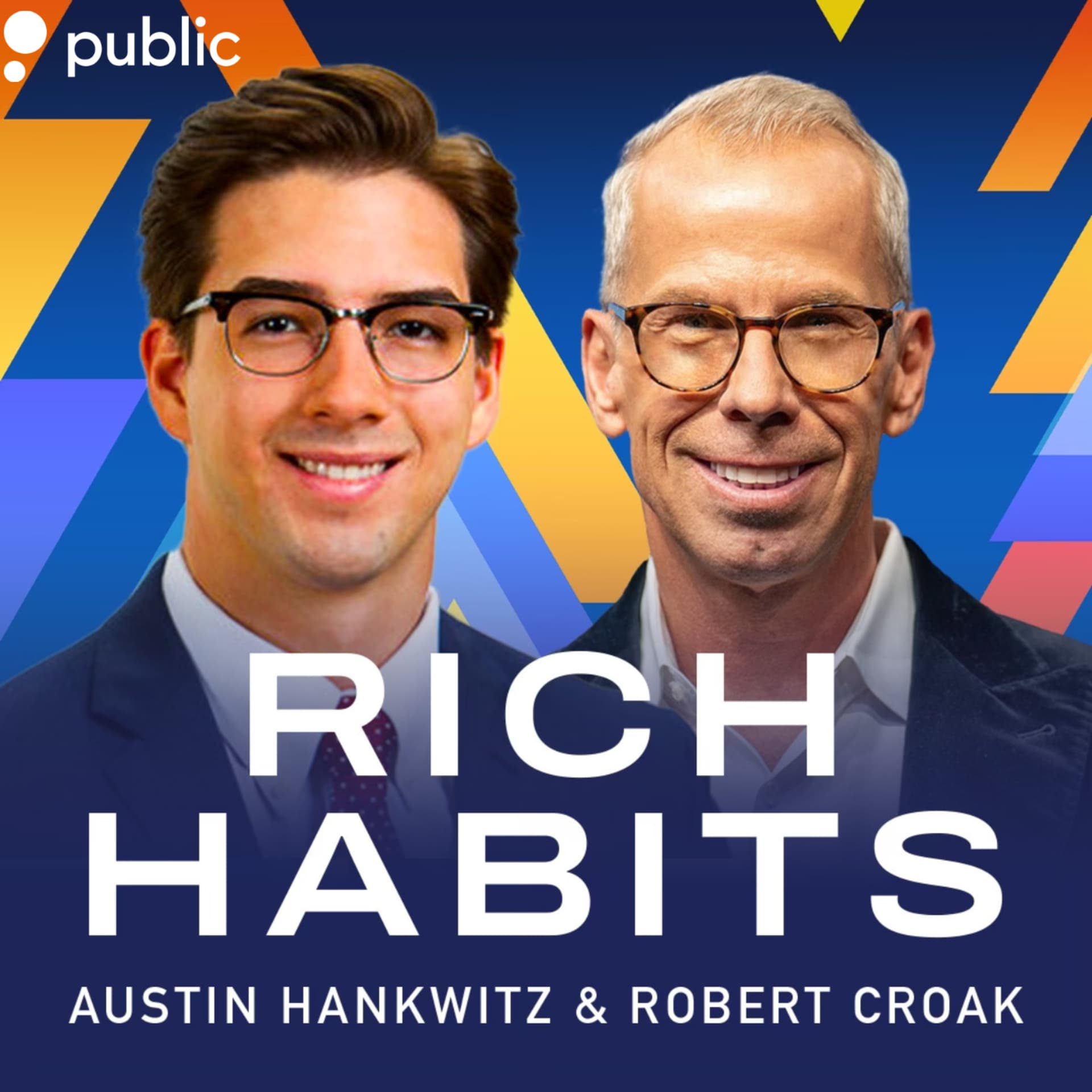
- Hosts: Robert Croak and Austin Hankwitz
- Guest: Ryan Naru from Joby Aviation
- Focus: Financial literacy, key financial events, and insights into emerging technologies with special attention to the evolving economy.
Key Highlights
- OpenAI’s $110B Fundraise
- Funding Details:
- OpenAI raised a staggering $110 billion from three major investors:
- Amazon: $50 billion
- NVIDIA: $30 billion
- SoftBank: $30 billion
- This event marks the largest private fundraising round in history.
- Economic Context:
- OpenAI's revenue exceeds $25 billion with 910 million users.
- Expected to target a $1 trillion IPO valuation, which could reshape the tech investment landscape.
- Implications:
- Strong evidence that companies are not overspending on AI; rather, it highlights the urgency for businesses to invest in AI technologies for survival.
- The era of NVIDIA funding its own ecosystem is nearing an end, as both OpenAI and Anthropic prepare for their IPOs.
- The "K-Shaped" Economy
- Fed’s Beige Book Report:
- Indicates a K-shaped recovery: higher income earners are thriving, while lower-income groups struggle.
- Luxury spending is up, but lower-income consumers are cutting back on essentials.
- Market Reaction:
- The Fed faces challenges in adjusting interest rates due to the economic split.
- Companies serving affluent consumers may continue to prosper, while those catering to lower-income demographics face difficulties.
- Blackstone's Private Credit Fund Redemptions
- Redemption Requests:
- Blackstone’s flagship private credit fund faced nearly $4 billion in redemptions, the highest in its history.
- The company reassured investors by committing to honor 100% of redemption requests.
- Lessons Learned:
- Highlights the importance of understanding the liquidity of investments.
- Encourages investors to be cautious with semi-liquid investments, emphasizing the need for preparedness regarding withdrawal policies.
- Guest Interview with Ryan Naru from Joby Aviation
- Joby’s Progress:
- Discussed the company’s advancements in electric vertical takeoff and landing (eVTOL) aircraft and the ongoing pilot program.
- The Trump administration's executive order aims to expedite regulations for integrating eVTOLs into U.S. airspace.
- Future Outlook:
- Joby is expected to have operational aircraft in U.S. cities around the end of 2026.
- Safety and operational transparency are key focuses in bringing this innovative mode of transportation to the public.
- Other Notable Mentions
- Cultural Events: A discussion regarding McDonald’s viral "Big Arch" video backlash, which led to a notable decline in the company’s market cap.
- Investment Opportunities: Encouragement to consider new tech investments and understand the implications of economic shifts on personal finance.
Conclusion The Rich Habits Podcast episode provides compelling insights into significant financial events and trends. With a focus on the implications of OpenAI’s monumental funding, the dynamics of a K-shaped economy, and innovative transportation solutions from Joby Aviation, listeners gain valuable knowledge for navigating the financial landscape. The episode emphasizes the importance of adapting investment strategies in response to current economic realities and technological advancements.
Call to Action
- Follow the Rich Habits Network for more insights.
- Engage with the podcast by providing feedback and sharing thoughts on the episode.
- Consider exploring investment opportunities as discussed in the episode.
Written by AI. May contain mistakes. Listen to the episode to check what was said.
Chapters
Tap a time to open that second in VOOpenAI's Historic Fundraise
1:30 to 2:06
Discussion on OpenAI's $110 billion funding round and its implications.
“And be sure to stick around to the end where we talk about McDonald's recent blunder on social media with the Big Arch video.”
Impacts on AI and Investment
2:06 to 4:23
Analysis of NVIDIA's investment strategy and OpenAI's revenue.
“On Monday, OpenAI closed$110 billion funding round.”
K-Shaped Economy Explained
4:23 to 6:50
Understanding the K-shaped economic recovery and its effects.
“The other thing it means for our money, Robert, is that Jensen Wang's last investment comment is a signal worth paying attention to.”
Economic Implications for Investment
6:50 to 9:56
The impact of the K-shaped economy on consumer spending and investments.
“So Austin, bring us into point number two.”
Blackstone's Redemption Challenge
9:56 to 14:13
Blackstone's private credit fund issues record redemptions and its causes.
“We started to see this, I think it was even last earnings season with Delta Airlines.”
Understanding Blackstone's Redemption Requests
14:13 to 17:48
Learn about the dynamics of private credit and the implications of redemption requests.
“And to shore up confidence in the fund's investments, senior Blackstone's staff invested their own money into the fund after these redemptions were requested.”
Introduction to Joby Aviation and Guest
17:48 to 18:52
Get acquainted with Ryan Nayru from Joby Aviation and his role in aviation policy.
“Now, Robert, two weeks ago, we chatted about the electric vertical takeoff and landing integration pilot program wrapping up with names like Joby and Archer Aviation as prime beneficiaries.”
Air Taxi Developments and Executive Orders
18:52 to 21:10
Dive into the executive order facilitating air taxi operations and Joby's role in it.
“audience a more educated breakdown of what's going on with this executive order and the timeline and when are we going to start seeing these air taxis in U.S.”
Joby's Operational Readiness and Timeline
21:10 to 22:30
Discover the timeline for air taxi operations in Florida and Joby's advancements.
“intention of building improved regulations, improved policy, improved guidance.”
Safety Measures for EVTOLs Explained
22:30 to 25:08
Understand the safety protocols and advancements of electric vertical takeoff and landing aircraft.
“We've been thinking about this aircraft, not just as the vehicle, but the entire operating system, right?”
Show all 16 chapters
Future of Joby Aviation and Urban Mobility
25:08 to 28:00
Explore the potential of Joby Aviation's service in urban transportation and commuting.
“And so because of that, you know, for the air traffic controller, this is going to be very essentially familiar, very transparent on what they're going to be expected to do.”
Future of Urban Transportation
28:00 to 29:17
Explore the potential of new transportation options connecting urban commuters.
“Because Uber has been thinking about this for seven years.”
Welcoming Ryan from Joby Aviation
29:17 to 30:26
Ryan discusses the exciting developments at Joby Aviation and future plans.
“Thank you so much, my friend, for joining us on this episode of the Rich Habits Radar.”
Weekly Radar Points - Market Insights
31:40 to 36:34
Robert shares key market headlines and insights for the week.
“That's why we think VCX by Fundrise is really, really powerful and it's an awesome tool.”
Headlines Discussed - Business Trends
38:20 to 42:02
Austin and Robert discuss current headlines affecting the business landscape.
“So let's go jump back to the trade courts ordering Trump to issue these tariff refunds.”
The Importance of Affordable Computers in a K-Shaped Economy
42:02 to 43:10
Learn about the role of affordable computers in education and the current economy.
“I do a lot of stuff on the computer that would tear through this processor chip in a minute.”
Transcript
Automatic transcript. May contain errors.0:00Rich Habits:When you want your spring break to feel like... And your kid's pool day to feel like...
0:08Ryan Naru:And your hotel bed to feel like... Ooh, and room service to feel like... Because at Hilton, hospitality feels like... Your cabana's ready. Would you like fresh towels? It matters where you stay. Book now at Hilton.com. Hilton.
0:27Rich Habits:For this day. This episode is brought to you by Nespresso. Introducing Virtuo Up, the latest in a long line of innovation from Nespresso. It's innovation you can touch, sense, and taste in every single cup.
0:44Ryan Naru:With a three-second start, easy open lever, and dedicated brew over ice button, it's even easier to enjoy your coffee your way. Sip for yourself. Shop Virtuo Up exclusively at Nespresso.com.
0:56Rich Habits:Welcome back to the Rich Habits Radar, our Friday episode of the Rich Habits Podcast, where every Friday morning, we're coming at you with the biggest headlines impacting you and your money. And this episode is brought to you by VCX, the public ticker for private tech. I'm currently sick. Robert, he's also going through it right now, but that's no excuse. We're coming at you every Friday. Like the tagline says, no excuses. I'm so pumped for these episodes. As you guys know, my name is Austin Hankwitz. I'm joined by my co-host Robert Croak. And the three things sitting at the top of our rich habits radar this week include OpenAI raising$110 billion in the largest private funding round in history, the Fed's Beige Book painting a picture of a K-shaped economy, and Blackstone's flagship private credit fund getting hit with nearly$4 billion in redemptions.
1:54Rich Habits:Interesting. And be sure to stick around to the end where we talk about McDonald's recent blunder on social media with the Big Arch video. All right, Robert, let's dig into our first story.
2:05Ryan Naru:Sounds good. On Monday, OpenAI closed$110 billion funding round. And that is not a typo. that is billion with a B,$110 billion from three investors. Amazon put in$50 billion, NVIDIA committed$30 billion, and SoftBank added another$30 billion. And it is the single largest private fundraising event in the history of business. It's crazy times we live in. And to put that into context, the entire venture capital industry deployed about$170 billion globally in 2025. and OpenAI just raised 65 % of that in one round.
2:45Rich Habits:NVIDIA's CEO Jensen Wang said publicly that this investment will likely be the last major AI startup investment NVIDIA makes. Think about that for a second. We've all seen the circular fundraising. Oh, you're a customer? Here, let's give you some money, right? So keep that one in the back pocket, Robert. Now, once OpenAI and Anthropic go public and both are expected to IPO later this year, NVIDIA would face regulatory constraints on investing into its own customers. So NVIDIA, they're essentially saying, listen, we're going to close the door on the era of funding the companies that buy our chips.
3:21Ryan Naru:Open AI's annualized revenue now exceeds$25 billion. They have 910 million users, and they're reportedly in talks with the trade desk to start selling ads inside of ChatGPT. Open AI is targeting a$1 trillion IPO valuation later this year, which would make it the largest IPO in history. We'll see what happens with SpaceX, though. Austin, break it down. What does this mean for you and your money?
3:49Rich Habits:Well, first, it means the AI buildout is not slowing down. If you've been wondering whether companies are overspending on AI, the answer is from the C-suite executives. Obviously, with the$50 billion from Amazon and the$30 billion here and$30 billion there and everything else, the answer is no. They can't be spending enough. When Amazon's writing a$50 billion check and we see headlines of Meta right after their earnings spending over$100 billion in a single year here in 2026, these are not speculative bets. These are existential for the companies over the long term to build out this AI and take advantage of this technology.
4:24Rich Habits:The other thing it means for our money, Robert, is that Jensen Wang's last investment comment is a signal worth paying attention to. The era of NVIDIA funding its own ecosystem is coming to an end. As OpenAI and Anthropic prepare for their own IPOs, they'll need public market investors. Myself, you guys, Robert, we're all these public market participants. That's where their future funding is going to come from. OpenAI's$1 trillion target valuation right now represents about a 40 times revenue multiple on next year's revenue. For comparison, NVIDIA's trading at about 20 to 30 times. So we'll see if they can command that valuation that they're looking for, Robert.
5:02Rich Habits:but it's going to be a good thing to keep an eye on, right? I mean, at the end of the day, if we see OpenAI hit the public markets and everyday retail investors like ourselves are just running to try and invest in this company, that could be a big green light for other AI companies that want to IPO. But something else we've seen is Anthropics partnership with the Department of War, right? Coming to an end, OpenAI, Sam Altman jumping on X to say, hey, we're going to take that contract. And now in response, Robert, OpenAI's ChatGPT is no longer the number one app on the US App Store. It's now been flipped by Anthropik's clod because the US consumer is saying, wait a second, I don't know if I trust ChatGPT with my information anymore.
5:48Rich Habits:Anthropik turned down the Department of War because the Department of War wanted to do some spying on me. They wanted to have autonomy over my information. I appreciate them turning that down. and ChatGPT gives it to them. I don't want ChatGPT. So we'll see what this IPO shakes up as. But regardless, OpenAI, they successfully raised$110 billion and it's definitely a headline we're talking about.
6:08Ryan Naru:Yeah, it's crazy to me to think two-part that we're seeing this trillion dollar target valuation being thrown around with SpaceX and OpenAI and all that because these are just crazy, crazy numbers to think about for an IPO. And then secondarily, and I don't remember when we talked about it, is we were letting our followers and our audience know that, remember, when you're using these chat GPTs of the world, that information can be used against you in the court of law. So make sure you're careful of what you're researching. If you're talking about divorce or legal matters or financial issues, be careful because right now that could be up for grabs and even worse with this contract.
6:50Ryan Naru:So Austin, bring us into point number two. The Fed's beige book says America is becoming a K-shaped economy. Break that down for us.
6:58Rich Habits:No, this is a good one, Robert. So the Fed released its March beige book on Wednesday of this week. And for those who aren't familiar with the beige book, the beige book is a collection of economic observations from each of the Fed's 12 regional districts. It's essentially the Fed's on the ground report card for the economy. Now, seven of the 12 districts reported slight to moderate growth. And that sounds fine on the surface, but the number of districts reporting flat or declining activity rose from the previous report. The economy is becoming increasingly more K-shaped.
7:34Ryan Naru:So what does this mean for all of you? Picture the letter K. The top half goes up. The bottom half goes down. That's what's happening in America right now. Higher income consumers are doing great. Luxury spending is strong. Travel is booming. High-end restaurants are packed. But lower-income consumers are pulling back hard. They're trading down at grocery stores, cutting discretionary spending, and increasingly relying on their credit cards and buy-now-pay-later services just to cover basic expenses.
8:05Rich Habits:Three out of four Fed districts reported tariff-driven price increases are also beginning to show up. Companies aren't absorbing those costs. They're passing them straight to their consumers. And it's hitting lower income households the hardest because, well, a higher percentage of their monthly income goes to essentials like food, gas and housing.
8:25Ryan Naru:And the labor market data this week reinforced the split. ADP's private payroll report showed 63 ,000 jobs added in February, a rebound from January's dismal 11 ,000 jobs. But if you dig into the details, you'll see that the hiring is concentrated in services and health care, while manufacturing and small businesses continue to shed jobs. Friday's official report is expected to show somewhere between 50 and 59 ,000 non-farm payrolls, well below the levels we saw throughout most of the year.
8:58Rich Habits:So, Robert, walk our listeners through what the beige book, the Fed's beige book and the K-shaped economy means for them and their money.
9:05Ryan Naru:Yeah, this K-shaped dynamic has real implications for your portfolio. First, it makes the Fed's job nearly impossible. They can't cut rates to help struggling consumers because the services economy is running hot and inflation isn't cooperating. They can't raise rates because the bottom half of the economy is already under pressure. The result? The Fed stays on hold for longer than the market wants. And second, it matters for what you own. Companies that serve affluent consumers, luxury goods, premium services, high-end travel are likely to keep performing well. And companies that depend on lower income spending like dollar stores, fast food chains, mass market retail could face further earnings pressure.
9:49Ryan Naru:That's already showing up. Dollar General's been struggling and McDonald's same store sales have been soft as well.
9:55Rich Habits:Appreciate that breakdown, Robert. Yeah, K-shaped economy is very real. We started to see this, I think it was even last earnings season with Delta Airlines. You know, Delta essentially said, hey, guys, listen, our profits are up while our normal main cabin sales of these seats, these main cabin seats, the normal seats are down. And so like they essentially said in their earnings call, all of their profits now, or profit growth rather, is coming from the first class and the upgraded seats versus the people that are in the back of the plane, the main cabin. And I think this was sort of the first kind of light bulb moment that a lot of investors had, including ourselves, where we were like, wait, this K-shaped economy stuff is pretty real.
10:38Rich Habits:And we even talked about it. It was a big stat that really opened my eyes to how impactful the K-shaped economy has become since, let's call it 2023, 2024. We've really begun to see that divergence, right, where the upper middle class has and will spend just fine, where the middle to lower middle class is not doing great. and their hypothesis which i think is an interesting one to keep an eye on here we should see this shake out here's something that i saw from downtown josh brown shout out to him i think the stat was something like the top 10 percent of consumer spending made up for 50 percent of all spending which is just bonkers now here's downtown josh brown's uh hypothesis which is when you think about where the s p 500 is when you think about the stock market and where it is right now around hovering around those all-time highs but it's starting to creep down a little bit down two three four five percent off all-time highs some of these analysts and other people you know talking heads online are saying well a lot of these top 10 percent of spenders are actually kind of uh getting a little bit of an ego about them because their stocks are so high but as we begin to see if we begin to see the stock market have a pullback if it's down you know a healthy 5%, 10%, 15 % pullback in the markets, that a lot of that ego around the spending, oh, I can afford to buy that first class ticket.
12:03Rich Habits:I can afford to go on this vacation. I can afford to go pay for this hotel. That begins to come back a little bit. And you now begin to see the top half of that K, right, the part that's going up, pull back their spending as well. And it's not because they lost their jobs. It's not because of anything like that. It's because of their perceived wealth, given where the stock market might be. Now, it's hard to say if that hypothesis is going to come true, but it's definitely something that I'm personally keeping an eye on.
12:30Ryan Naru:I think you're spot on and great shout out for Josh's take on that because I think the top half in the K-shaped economy moves slower to react than the bottom half. And like right now in downtown St. Pete, if you go out on a Thursday, Friday, Saturday, Sunday night, all of the high-end restaurants are on a two-hour wait, which is just crazy to me. because these are the most expensive restaurants in town. But then if you drive out into the neighborhoods more and you look at the local restaurants and all that, they are not in the same situation. And that really spells out where we're at in this K-shaped economy more so than anything that's easy to just see right in front of your eyes.
13:09Ryan Naru:So I agree with that because we will start to see it as the markets have been slower because right now we've been on a great run with the S &P 500 for the last three years. And now all of a sudden it's starting to inch down and down and down and not giving us those 15 or 25 % returns, you will start to see the people at the top end cut back like you said. And it'll just be interesting to see when we start to notice it publicly because I haven't seen it yet.
13:35Rich Habits:Now, Robert, this brings us to our final headline radar point, which is Blackstone's flagship private credit fund just got hit with nearly$4 billion in redemptions. So Blackstone's flagship private credit fund, known as BCRED, or BCRED, is the largest fund of its kind in the world at over$82 billion of assets. But earlier this week, investors went to withdraw a record 8 % of the fund's total assets, which total about$4 billion, the highest redemption request in the fund's history. Blackstone said, of course, that they plan to honor 100 % of the redemption requests. And to shore up confidence in the fund's investments, senior Blackstone's staff invested their own money into the fund after these redemptions were requested.
14:27Ryan Naru:And John Gray, Blackstone's president, went on CNBC and attributed the withdrawals to Market Noise, specifically citing the collapse of two private credit borrowers, Tricolor and First Brands, which spooked financial advisors late last year. Private credit has been the hottest trade in alternative investments over the past three years. Pension funds, endowments, and increasingly retail investors through semi-liquid funds like B-Cred have piled in, attracted by yields north of 10%, and the promise of low volatility. What many didn't fully appreciate is that semi-liquid does not mean liquid. These funds hold loans to private companies that can't easily be sold, as the semi-liquid would allude to.
15:11Ryan Naru:When too many investors want their money back at the same time, it definitely creates real stress.
15:16Rich Habits:Yes, CNBC reported this week that it's not just Blackstone. Blue Owl, KKR, and Carlyle are all seeing elevated redemption requests across their own private credit platforms. Investors poured billions of dollars into private credit over the last few years, and now many of them want their money back, and they're learning what illiquid actually means in practice, right? You can't just go to a broker and say, sell my shares. You've got to kindly request your shares back and then have to wait three to six months. It's a whole process, Robert. Now, despite these redemption requests, the fund itself still posted a 11.5 % annualized return, which means that those underlying loans are performing.
15:57Rich Habits:So as investors, I'd be pretty happy about that.
15:59Ryan Naru:Yeah, it just really shows that at all levels of investing, people have knee-jerk reactions and get scared and then all of a sudden want out and want to sit in cash and try to figure it all out. So, Austin, what does this mean for you and your money? Break it down for us.
16:13Rich Habits:Yeah, well, let's be super clear. Blackstone is not going under. Blackstone is good. They're fine. Everything's cool, right? The largest alternative asset manager in the world. They're going to honor those redemptions. Everything's fine. But this is a good lesson in understanding what you own, as well as understanding how liquid that investment is. If you're invested into any private credit fund, any semi-liquid real estate investment trust, a REIT, or maybe even an interval fund, you need to take a hard look at those redemption terms. How often can you withdraw? Can the fund limit how much you take out at once?
16:49Rich Habits:What happens if everyone tries to withdraw their money at once? These are the questions you should be asking before you need the money, not after.
16:58Ryan Naru:This also highlights the difference between quoted returns and realized returns. B-Cred's 11.2 % return looks great on paper, but if you can't access your capital when you need it, that return is theoretical, not real. So compared to a high-yield bond ETF or even treasury bills where you can sell at any day when the market is open, Private credit, real estate, and other investment alternatives can absolutely have a place in a diversified portfolio, but they should be money you don't need for years, not months. Remember that because so many people we talk about on the Rich Habits Network all the time to understand your risk tolerance, your buy box, but also the illiquid nature of some of these investments.
17:40Ryan Naru:The rule of thumb, never put your money in an illiquid investment that you might need to access in the next three to five years.
17:46Rich Habits:There we go. Top three stories this week on our Rich Habits radar. Heard it here first. Now, Robert, two weeks ago, we chatted about the electric vertical takeoff and landing integration pilot program wrapping up with names like Joby and Archer Aviation as prime beneficiaries. The episode actually caught the attention of Joby, so today we are joined by Ryan Nayru, the Aviation Policy and Regulatory Affairs Lead at Joby Aviation. His work spans aviation safety, operational integration, and rulemaking with a specific focus on ensuring that emerging aircraft categories such as electric, power lift, and remotely supervised aircrafts are supported by clear, scalable, and internationally aligned regulatory frameworks.
18:38Rich Habits:Ryan, thank you so much for joining us on this show with the Rich Habits Radar. Such quick notice as well. Can't believe you guys were so flexible to just jump on the show and talk about this. So thanks so much for joining us.
18:47Ryan Naru:Austin Robert good to be with you thanks for having me definitely well like we said at the onset we gave a quick intro into the pilot program a few weeks ago but can you sort of give our audience a more educated breakdown of what's going on with this executive order and the timeline and when are we going to start seeing these air taxis in U.S. cities like St. Pete and Tampa that's awesome guys well you know it's a really interesting moment I think in aviation right we're seeing for the first time since the jet age, a new type of propulsion technology suddenly become available to manufacturers of aircraft around the world.
Read the full transcript
19:24Ryan Naru:And here in the United States, Joby was one of the earliest to try and take advantage of that and incorporate it into a small electric vertical takeoff and landing aircraft or an eVTOL. And that electric propulsion enables us to do a lot of things, right? It allows us to be quiet. It allows us to be very, very, very manageable from a maintenance perspective, right? Remove and replace those motors in three and a half hours instead of two weeks, like for a typical helicopter, right? So the price point comes down. And I think that the Trump administration realized that there is a global competitive nature to aerospace, right?
19:58Ryan Naru:It is a significant portion of our GDP. And these are some of the most important exports that we have at our disposal, right? They are part of what brings people together, right? And those technologies also accelerate economies, right? When we're able to get on the plane and be with someone and do that business that's so important or see family that's so key to us, spend holidays together. And so we're seeing a lot of aircraft that are being produced potentially in competitive countries around the world. Trump administration said, hey, we're going to fast forward what it takes to get these aircraft into American skies.
20:32Ryan Naru:They issued the executive order and it called on states and local governments to raise their hand and say, yes, I want to be the first. I want to set the global standard for how these aircraft are operationalized. With those communities now having submitted applications, and we understand that there were over 40 applications, so representation from across the 50 states, some of the applications are actually multiple states getting together and saying, yes, we want to do this across our borders. We have all these communities that have put their applications in. Secretary Duffy is about to make a decision and say, hey, these are the five places that we're going to commit administration resources to operationalizing this first.
21:09Ryan Naru:And the objective really being to, number one, operate with the intention of building improved regulations, improved policy, improved guidance. And then number two, to ensure that as soon as these aircraft are type certified, they're able to be added to operating certificates and be at full tilt right away. So what does that mean for when we're going to see it over Tampa? That's really exciting. So what's going to happen is we're going to see some awards be announced here real soon. Hopefully Florida is right on the top of the list. And what that will mean is within 90 days of the agreement being signed between the state of Florida and the federal government, the supporters of the application, in this case, Joby, will be required to show that they're up and running within 90 days.
21:52Ryan Naru:So we think that that means that the first contracts will be signed in early summer. So before the end of September, maybe October. We're talking about regular operations of some of these aircraft in the state of Florida, right? If that was one of the states that won.
22:07Rich Habits:That's awesome. So what I'm hearing here is that once that's figured out, you got a 90 day shot clock and then these things are in the air. Sounds to me like by the end of 2026, we're going to be seeing some of these Joby Evatols rolling around and I'm going to be looking around like, what's that in the sky? Like, that's awesome.
22:24Ryan Naru:No doubt. I mean, and I think that for everyone inside Joby, it's a pretty amazing moment too, right? We've been thinking about this aircraft, not just as the vehicle, but the entire operating system, right? The airline, the pilot training, the software that's in the hands of the user who wants to go fly on this aircraft. And so to be able to now bring that complete operational perspective and all the operational readiness that we've built into our organization, into this incredible co-learning opportunity with the federal government and these communities that have raised their hands and said, yes, I want to be a part of this.
22:57Ryan Naru:It's amazing. It's really inspiring. Recently, we flew one of our aircraft from Marina Municipal Airport near Monterey, California, and we flew it all the way up north of Santa Cruz into one of our earliest production facilities. And it was very much like a coming home moment for this aircraft. But for Joby, it was also a moment of being able to show the world we're ready. Like we're able to pick up, fly this aircraft, had a time and place of our choosing, a vertical takeoff and landing, fully piloted. I think we're the only aircraft manufacturer doing this in the country, in this way. And so that makes the applications that we're supporting, we believe, to be those that are probably going to be the most compelling to the administration, right?
23:35Ryan Naru:We're the furthest along in terms of our operational readiness. And so the opportunity for regulatory learnings for the FAA are greatest in those places that we're supporting.
23:44Rich Habits:I appreciate that breakdown, Ryan. And as someone who is a member of the public, right, the first thing I think about here is safety. I mean, when it comes to Ubers and Lyfts and things like, yeah, they got their safety things as it relates to something scary happening in the car, but we all know how cars work and stuff. But like, this is a new mode of transportation sort of. And so how does this pilot program demonstrate that these Evatols are safe for the everyday person?
24:11Ryan Naru:That's a great point, right? So I think a lot of the early flying that you're going to see are going to be without passengers, right? We're going to be doing those kinds of missions that inspire the confidence of the public, inspire the confidence of the regulator, and will be essentially coupled to the ongoing type certification efforts that we're doing at home to make sure that all of the data that supports the novelty, right, of this design so that we can bring it into everyday service is delivered. For Joby in particular, right, the other thing that makes us a little bit different than others is while the aircraft looks different, as it flies in the airspace, it is very much similar to a helicopter, right?
24:48Ryan Naru:So today's air traffic controller guidance has actually already been updated to support our aircraft. So they say for airplanes, do this. For helicopters, do this. We're very neatly and already in the helicopter bucket of the guidance. We're a piloted aircraft. There's no remote supervision. It's not a drone, right? There's always a commercial pilot on board. And so because of that, you know, for the air traffic controller, this is going to be very essentially familiar, very transparent on what they're going to be expected to do. And we're already doing that today. Actually, we're flying into controlled airports.
25:21Ryan Naru:We've got a number of missions that we're already planning to fly into controlled airports across the country. So we're excited to see that play out for the rest of the year. And, you know, I think when it comes to safety, I'm also really excited about what electric propulsion brings to the picture, right? So it used to be that with helicopters, you only often have a single engine, a lot of critical parts. Everyone knows, like, if you lose your tail rotor, that's a really bad day, right? And with a distributed propulsion aircraft, you can actually build in enormous amounts of redundancy into the aircraft such that if a propulsion station failed, if a critical component failed for whatever reason, you're already always going to be in a powered, controlled, continued safe flight and landing situation.
26:02Ryan Naru:And that's really exciting, right? It's exciting to have the tools as an engineer to actually think about these problems in new ways, right? Instead of investing all of this energy into making that one part not fail, well, now we can give that one part four or five different backups. And that's really, really, really exciting as an engineer. So my next question is, and I could do this for hours with you, Ryan, so we appreciate you stopping by on short notice, is what's next for Joby? And explain to our audience, how are you thinking about announcing this progress in this pilot program? And what's the roadmap for this countrywide use, let's say down the road, two, three, four years, whenever you're fully at scale?
26:45Ryan Naru:Walk our audience through who's going to be using these. How do you become a pilot? Who do you see as the best use case? Kind of give us the lay of the land there because this is really interesting to think about what this can do, not just for aviation, but also people that work in major cities for affordability if they want to live outside of the city, etc., etc. Is it going to be like an Uber situation where you can call for a ride and it comes and grabs you every morning at 8, 10 in the morning? Walk us through all of that for what you know so far. No, that's awesome. And, you know, this is a question I really love because I joined this project, this team through Uber Elevate seven years ago.
27:25Ryan Naru:And so I did two years with Uber and then five years now with Joby once Joby brought the Uber Elevate team in-house. And what you probably saw just last week in Dubai was that Uber Air provided by Joby is now an official thing. Like this is getting engineered into the Uber app. And, you know, one of the things that comes with designing an eVTOL as a service is you have to think about the user, the passenger, right? That guest who's going to be with you for that time. How do you make this seamless and magical? How do you make that addition of that transfer and that mode feel like nothing at all?
27:58Ryan Naru:And that's why having Uber as a partner, it's really one of our other superpowers, really. Because Uber has been thinking about this for seven years. We did it with helicopters in New York City, right, where we're able to seamlessly connect the first mile to the helicopter service to the last mile. And it all be one trip, one booking. And so when I think about what this service is going to mean to, let's say, folks in New York City, I used to live in Newburgh, New York. So this is near West Point. It's about 60 miles north of the city. And my dad would take the commuter train every day. It's an hour and a half down, an hour and a half back.
28:33Ryan Naru:and all of that, you know, first and last mile energy in between. When you have a five o 'clock meeting in Manhattan, right, you're going to miss out on a lot of things at home. It's just a reality when you're a commuter. And so there's going to be people I foresee in the future who will have this new option accessible to them where they can do both, right? They can stay, be there for that important client discussion, but also make it home in time for those moments that matter. And it may not be their everyday use of transportation, but it's going to be such a critical option that connects our communities in ways that we had never had quite as accessible before.
29:07Ryan Naru:And that's really, really exciting. Like, that's a future I want. I think that's a future that like a lot of my friends and family want. And that's the future that we're trying to build here at Joby.
29:15Rich Habits:That is super exciting. I love that answer, Ryan. Thank you so much, my friend, for joining us on this episode of the Rich Habits Radar. Such short notice. It's so cool. We're just talking about this and you guys are like, yeah, we're doing it. Let's talk about it to your listeners. We're like, yes, please come hang. So, Ryan, can't wait to have you back. Let us know. Obviously, after those 90 days are up, you guys are in the skies. We'll love to have you back. Let us know what's going on with the progress and put us in a couple of these EV tolls. I'd love to be moving around wherever they are in the country.
29:44Rich Habits:Count me in.
29:45Ryan Naru:Robert, we'll have you right on top of the list when we're in Florida. Can't wait to see you come out and see the aircraft in the sky. Yeah, we definitely will have to do an event right at the little airport next door to me here. And we can rock and roll and have some fun here. A lot of great people. and I'm super excited. We've loved the company. We've been talking about it for a long time. So thanks for stopping by.
30:06Rich Habits:Austin, Robert, thank you so much. Cheers. Massive shout out to Ryan and Joby for joining us here on such short notice. It is awesome that we're able to take and just welcome incredibly smart people that are doing real big things in this world on this show and just giving you guys the inside scoop. And I hope you guys appreciate it as much as we enjoy hosting them. And before we jump to our own radar points, Gotta give a shout out to VCX, the public ticker for private tech.
30:33Ryan Naru:For generations, American companies have moved the world forward through their ingenuity and determination. And for generations, everyday Americans could be a part of that journey through perhaps the greatest innovation of all, and that is the U.S. stock market.
30:46Rich Habits:It didn't matter whether you were a factory worker in Detroit or a farmer in Omaha, anyone could own a piece of the great American companies. But now, that unfortunately has changed. Today, our most innovative companies are staying private rather than going public. The result is that everyday Americans are excluded from investing and getting left further and further behind, while a select few reap all the benefits until now.
31:12Ryan Naru:And that's why we're excited to introduce to all of you VCX, the public ticker for private tech. VCX by Fundrise gives everyone the opportunity to invest in the next generation of innovation, including the companies leading the AI revolution, space exploration, defense tech, and much more.
31:31Rich Habits:So visit getvcx.com for more information. That is getvcx.com for more information. carefully consider the investment material before investing including objectives risks charges and expenses this and other information can be found in the funds prospectus at getvcx.com this is a paid sponsorship you know this get vcx stuff robert you know talking about how these companies are waiting longer and longer before they go public leaving the everyday investor behind reminds me a lot of what we've seen with open ai right the retail everyday investor now won't be able to invest in open ai until it's already a trillion dollar valuation now to put that in perspective like let me really help you guys understand this um and why i think it's so important and you can go look this up for any company i'd encourage you to look it up for nvidia and tesla these other names and amazon stuff like that tesla right now elon musk company electric vehicles 400 a share 1.5 trillion dollar valuation they ipo'd at 2 billion dollars which means if you somehow some way were smart enough to jump on that wagon back at the two billion dollar valuation you would have 750 x your money you know who's 750 xing their money today the venture capital firms the select few the mark andresens the ben horowitz these people who are running these big vc firms who are investing in the next generation companies before they're even on the stock market and they're staying private for longer.
33:03Rich Habits:That's why we think VCX by Fundrise is really, really powerful and it's an awesome tool. It's going to allow people to unlock an asset class. So go to getvcx.com and check them out. So Robert, this is my favorite segment of the show where we find our favorite headlines, our own little show and tell, and we come every week and we share with everyone listening what we think is important, what they should have at the top of their list of things to understand for what took place that week. So why don't you kick us off? What are your three big headlines of Robert Croak's universe that got you excited this week?
33:38Ryan Naru:Yeah, you know how I think about markets and how I'm always digging deep on things. And my favorite one this week that I'm going to lead with is McDonald's Big Arch Taste Test video backlash. We all saw the video. It went super viral. And I couldn't wait to see how bad this video was and how viral went, what would that do to affect McDonald's market cap? And based on the data that I could find over the last three, four days, McDonald's stock is down around 5%, which is around$12 billion in market cap lost because of this taste test video gone wrong. And I just think it's crazy to think that that volatility all came from them trying to do a cool video for McDonald's with this new launch of the sandwich.
34:24Ryan Naru:And then we of course saw the Burger King CEO come on and take a big bite, get it all over his face. So I really couldn't wait to check that out. Unfortunately, I was moving so I didn't get to short the stock and take advantage of this video fail, but I was definitely excited to watch it. And I saw that all the meme channels were calling it McPhail, which was pretty funny. So that's number one for me. Number two is the U.S. Copper Index Fund, the CPER, is up 28 % over the past year, outpacing the S &P 500's 15.5 % gain in the past year. So I thought that was really cool. We were obviously very early on copper, even one of our big call-outs earlier this year in one of our episodes.
35:09Ryan Naru:And copper currently, I'm going to read this to get it right, has a structural deficit exceeding 10 million metric tons needed by 2040 as energy transition demand rises 50 % while global mine production peaks by 2030. So I thought this was a really good headline. We were ahead of this. We really love this category and think it's going to do well for years to come. So I wanted to talk about that headline. And last for me, you guys know I have to throw in a mortgage rate. What's happening in the real estate market? Because I love the real estate market. And I always want to keep you guys informed.
35:45Ryan Naru:And mortgage rates just fell to 2022 lows. And so I thought that was interesting. Mortgage rates have begun to slide downward since mid-November. And now sources are reporting loan rates under 6%. We'll see if it stays that way. But Yahoo Finance's weekly survey of lender rates showed 30-year fixed rates as low as 5.5%, and rates were topping out at around 7%. So we'll see where that goes in the coming weeks as the Fed rate has gone up as well. So we'll go from there and keep an eye on this, but I thought everyone should see that rates are still pretty stable. It's still a buyer's market, so keep an eye on that.
36:24Ryan Naru:And always remember to get pre-approved and get ahead of things because you want to try and take advantage of the rates when they are down and lock in a good rate.
36:34Rich Habits:Yeah, speaking of good rates, it reminds me earlier this week, the CEO of Open Door came out saying that if you buy a house from Open Door, they will lend to you at a 4.99 % interest rate. No points, no extra fees, no nothing on a 30-year fixed mortgage. They are going to buy down your rate to 4.99%. Pretty crazy. So yeah, real estate's cooking right now. Real estate's definitely cooking. Before I jump into my own radar points, got to give a shout out to Blossom. As you guys know, Blossom is this beautiful portfolio tracker. You link your brokerage, everything sinks in automatically. They got the clean visuals, clear performance.
37:11Rich Habits:Those dividends get tracked automatically. Their UI is just so, so worth it. And the part that really sold us was the fact that it's not just your portfolios, but you can follow other investors like myself and Robert and look at their verified holdings.
37:27Ryan Naru:Exactly. These aren't screenshots or trust me, bro, portfolios. They're brokerage linked and verified. You can literally see when someone adds a position, trims or holds, including myself and Austin. The best part, it's a community of long-term investors just like us, not these get-rich-quick traders. You start to understand how long-term investors actually behave, what they buy, what they ignore. The transparency is something you don't see on any other platforms. We're both on there. Our portfolios are on there and people can follow along in real time. It's transparency done right.
38:00Rich Habits:So if you want a clean portfolio tracker, genuinely great user experience and a way to learn from other real investors with real money, go check out Blossom. It's free. It's easy to use. And honestly, one of the best investing apps out there. Go search Blossom on the app store, link in the show notes below, or visit blossomsocial.com on your computer. All right, Robert, so the three radar points that I'm bringing to the show and tell this week include the trade courts ordering Trump to issue these tariff refunds, Texas Instruments partnering with NVIDIA to deploy humanoid robots, and Apple's new low-cost Neo MacBook, which I think is actually pretty sweet and a pretty good deal for a lot of you guys listening right now.
38:40Rich Habits:So let's go jump back to the trade courts ordering Trump to issue these tariff refunds. A federal trade court judge has ordered the Trump administration to start issuing refunds for the tariffs that were struck down by the Supreme Court last month. Thousands of lawsuits, as you guys might remember from a couple weeks ago, we talked about this on a Radar episode. Thousands of lawsuits seeking tariff refunds have been brought by companies, including Costco and FedEx, and many of which were filed before the Supreme Court ruling, which means they're going to be first in line to get and collect, here we go, ready, over$130 billion in tariffs.
39:16Rich Habits:I mean, depending on how much and whatever study you look at, I got the Wharton budget model. It's over here saying that it could be up to$175 billion in tariffs. So all I'm saying, Robert, is where is my tariff refund? Because I guarantee you Costco just took that money and pushed it on over to me. So the next headline, of course, is Texas Instruments partnering with NVIDIA to deploy humanoid robots. This one's interesting. So Texas Instruments, ticker TXN, famous for making mathematical calculators that you probably had in college, is combining their real-time control, sensing, and power portfolios with NVIDIA's advanced robotics computing, Ethernet-based sensing, and simulation technologies to help developers build and deploy humanoid robots.
40:01Rich Habits:So as part of this collaborative partnership, Texas Instruments designed a sensor fusion solution by integrating their MM wave radar technology with NVIDIA's Jetson Thor using the NVIDIA Holoscan sensor bridge to enable low latency, 3D perception, and safety awareness for humanoid robots. Sounds technical. Sounds crazy. Doesn't matter to me. Cool. Glad y 'all figured it out. I certainly couldn't. Texas Instruments plans to showcase the development during the upcoming NVIDIA GTC event, which is going to take place later this month in California. By fusing the camera and radar data, the solution improves object detection, localization.
40:45Rich Habits:By fusing together camera and radar technology, the solution improves object detection, localization, and tracking while reducing false positives for confident real-time decision-making with humanoid robots. So that'd be cool to keep an eye on as well. I love it when NVIDIA comes out with new tech and I get to say, whoa, how cool. I'm so glad I'm an investor. Speaking of being an investor, I'm also an investor in Apple and I got to get excited as they unveiled all of these cool new products, including their newest low-cost Neo MacBook. Apple unveiled this highly anticipated new low-cost MacBook Neo earlier this week on Wednesday.
41:22Rich Habits:It's a 13-inch, 2.7-pound MacBook. It's powered by the A18 Pro processor, which actually is an iPhone 16 chip. So they took an iPhone 16 chip and they put it in a laptop. It's going to come in four colors, silver, indigo, blush, and citrus, and sports a side-firing speaker system. It's got 16 hours of battery life and two USB-C ports. The new addition to the MacBook lineup also contains a 1080p webcam, headphone jack and some higher end models will have the touch id as well coming in at a whopping four hundred and ninety nine dollars when you're a student and you take advantage of that hundred dollar discount so five ninety nine for everyone else this computer in my opinion is a perfect perfect computer for an everyday student who's trying to do some web browsing trying to take those tests trying to go to class take some notes a lot of you listening right now probably need to go out and buy this computer for yourself for your kids or something going on there i think it's great For me, it's not my thing.
42:21Rich Habits:I do a lot of video editing. I do a lot of stuff on the computer that would tear through this processor chip in a minute. But if you're browsing the web, getting back to emails, taking some notes in class, this is your computer.
42:32Ryan Naru:Great breakdown, Austin. I would say the highlight for me is definitely Texas Instrument and the NVIDIA partnership. We've been very early and very outspoken about how much we believe in the humanoid robotics category as an investing sector. Also, I want to add, though, I think it's a great move by Apple to introduce this Neo MacBook, this low-cost version, because times are tough. We talked about the K-shaped economy. People still need laptops. People need computers. Students need computers. And this is a great entry-level way for Apple to gain some market share back. So I think that's a good idea as well.
43:10Ryan Naru:So I think those are really strong call-outs.
43:12Rich Habits:Amazing. Well, as a quick reminder, go to WallStreetFavorites.com. Go see what Wall Street thinks about your own portfolio. feel free to share this episode with a friend. If you learned something, vote in the poll below, leave us a comment on Spotify, what you liked about the episode, what you didn't like. All feedback is warranted and welcome because these episodes are new. We're always trying to make our episodes better for each and every one of you. Thanks everyone. And we'll see you on Monday.
44:18Rich Habits:We'll be right back. every second. If your identity is stolen, we'll fix it guaranteed. One last big number, save up to 40 % your first year. Visit lifelock.com slash podcast for the threats you can't control. Terms apply.
From the publisher
In this week's episode of the Rich Habits Podcast, we're joined by Ryan Naru from Joby Aviation. Major shoutout to Joby for joining us on this week's episode of the show to talk about their progress with the pilot program.
---
🤑 Want to know what Wall Street thinks about your portfolio? Wall Street Favorites can tell you, click here!
---
🤖 VCX: the public ticker for private tech -- click here or visit https://getvcx.com/ to learn more!
---
🌸 Join 500,000+ investors using Blossom to track portfolios, dividends, and see what real investors are buying -- all in one social investing app.
---
🤝 Interested in learning more about ETFs?
Check out our friends at ETF Central! Click here!
---
✅ Ready to start investing?
Open a brokerage account on Public.com/richhabits and get a FREE 1% match on all IRA deposits, transfers, and rollovers!
---
‼️ Have feedback to share? Please let us a comment on Spotify! We're excited to mold these new weekly episodes to be exactly what our listeners want.
---
🚀 Join 900+ fellow podcast listeners inside the Rich Habits Network!
Unlock 8 hours of video course work, ask us questions directly, participating in exclusive weekly livestreams, and invest alongside us in pre-IPO deals. Click here!
---
⚡️ Sign up for the Rich Habits Newsletter and never miss a market-moving headline again, click here!
---
⭐ Download our FREE Financial Planner – click here
⭐ Download our FREE Budgeting Template – click here
⭐ Earn 3.8% on your savings with a High-Yield Cash Account – click here
⭐ Trade stocks, options, music royalties and crypto on Public – click here
⭐ Automatically buy stock where you shop with Grifin – click here
⭐ Protect your family with term life insurance from Suriance – click here
⭐ Use code “Spotify” for 15% off our 4-module video course – click here
⭐ Optimize your portfolio with Seeking Alpha – click here
---
📬 Inquire about working together – christian@witz.vc
---
This content is sponsored by NEOS Investments. The creator is compensated by NEOS to discuss NEOS ETFs. This content is for informational purposes only, and is not personalized investment, tax, or legal advice, and does not constitute an offer to buy or sell any security. Investing involves risk, including possible loss of principal. Before investing, carefully review the NEOS ETFs prospectus at neosfunds.com.