In short
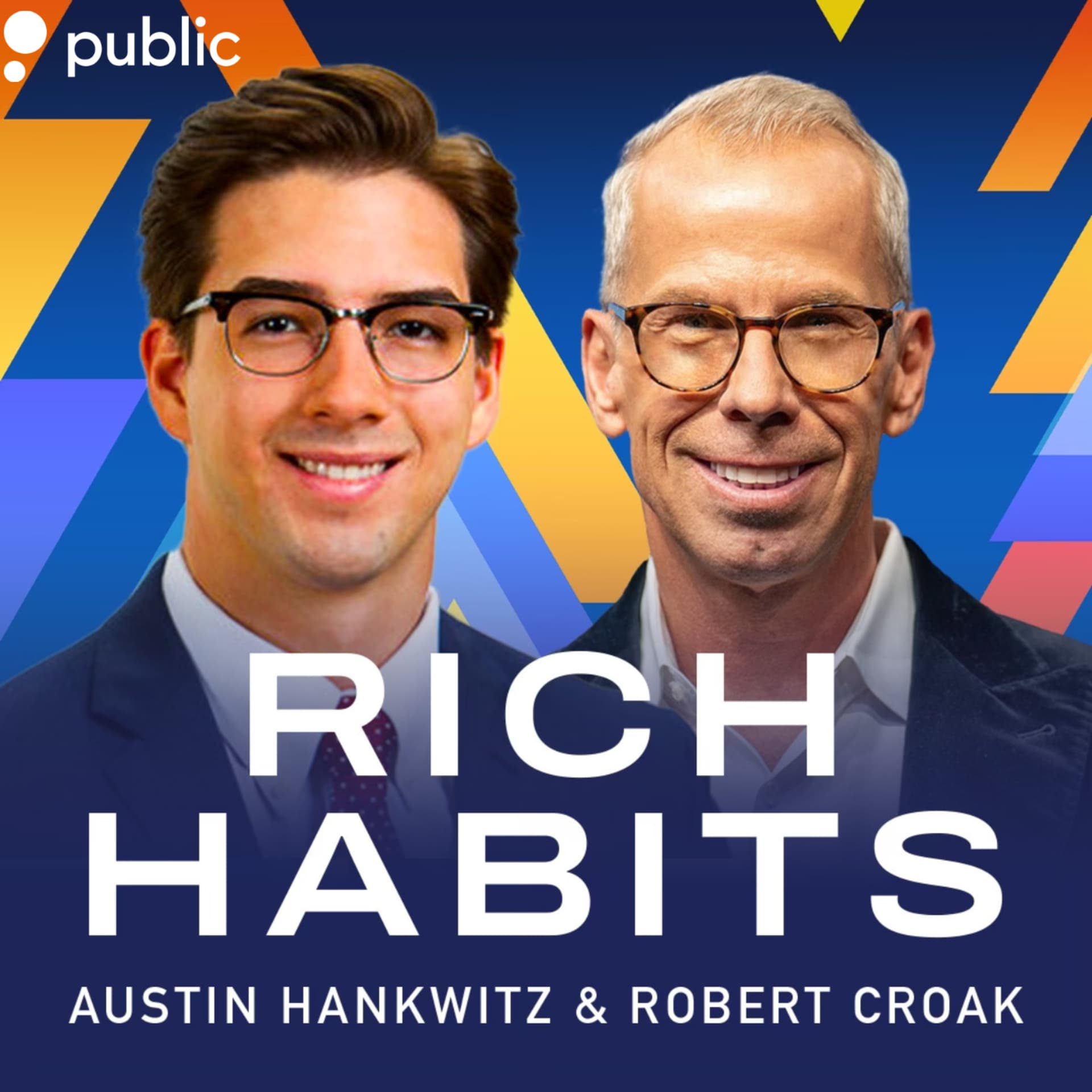
Rich Habits Radar covers Allbirds’ AI rebrand to “NewBird AI” (server/AI-chip rental pivot funded by convertible debt), Trump’s threat to fire Fed Chair Jerome Powell amid an active DOJ probe, and Novo Nordisk partnering with OpenAI to integrate ChatGPT models for full-scale drug discovery acceleration. It also discusses market rally durability (10-day bounce), portfolio implications (hedging/alternatives), plus personal radar headlines on Meta vs Google ad spend, Coachella BNPL usage, Live Nation/Ticketmaster antitrust, housing affordability, peptide regulation impacts on Hims & Hers, and American Eagle’s Sidney Sweeney campaign.
Guests
Ron Santella, CEO and managing partner of Equible Shares; Wall Street veteran portfolio manager. (No other named guests.)
Written by AI. May contain mistakes. Listen to the episode to check what was said.
Chapters
Tap a time to open that second in VOThis Week's Headlines
1:02 to 1:35
Overview of key financial headlines including Allbirds' pivot.
“Trump threatening to fire Jerome Powell, and Ozempic owner Novo Nordisk partnering with OpenAI for drug discovery.”
Allbirds' Radical Business Shift
1:35 to 5:00
Discussion on Allbirds rebranding and pivoting to AI services.
“Well, the first story should keep everyone's attention because we're going to talk about Allbirds.”
Market Reactions and Implications
5:00 to 7:05
Analysis of market reactions to Allbirds' name change and implications for investors.
“Robert, what does this mean for you and your money?”
Trump's Threat to Jerome Powell
7:05 to 9:14
Examination of Trump's comments regarding the Federal Reserve Chair.
“In a Fox Business interview that aired on Wednesday morning, President Trump confirmed that he's not dropping the Justice Department's criminal investigation of Fed Chair Jerome Powell.”
Market Scenarios under Political Pressure
9:14 to 11:20
Potential outcomes for the markets based on Trump's Fed comments.
“Scenario one is Trump actually tries to fire Jerome Powell.”
Novo Nordisk and OpenAI Partnership
12:45 to 14:00
Details on Novo Nordisk's collaboration with OpenAI for drug discovery.
“And when it listed at$18,$19,$20 a share, it was assuming that Anthropic was a$300-ish billion company.”
AI Integration in Pharma: The Future of Drug Discovery
14:00 to 15:12
Learn how AI is revolutionizing drug discovery and healthcare with major partnerships.
“OpenAI is well on its way to be a trillion dollar company.”
Implications for Big Pharma and AI
15:12 to 17:44
Explore the implications of AI for major pharmaceutical companies and healthcare outcomes.
“And Moderna is using ChatGPT Enterprise across its business and advancing its MRNA work with OpenAI as well.”
Weekly ETF Performance Review
18:13 to 18:50
Analyze the best and worst performing ETF sectors this week.
“So I'm looking at their homepage right now under the segment section, movers and shakers, best performing this week, top three, fintech up 11%, AI and big data up 11.5%, and blockchain up 14.5 % this week.”
Interview Introduction: Ron Santella
18:50 to 19:09
Meet Ron Santella, a market expert providing insights on stock market trends.
“Now that we've heard from ETF Central, let's jump to our interview with Ron Santella.”
Show all 23 chapters
Market Rally Insights with Ron Santella
19:09 to 21:11
Understand the dynamics behind the recent stock market recovery from an expert's perspective.
“So you're in these meetings every single day with the biggest investors on Wall Street and around the world, frankly.”
Expectations for the Fed's Monetary Policy
21:11 to 22:22
Discuss the potential future actions of the Fed and their implications for investors.
“And so if you were asking me, why was this only a 10 % pullback versus perhaps, you know, we think back to the Trump tariff tantrum, April of 2025, which was 18%, 20%, 22 % pullback.”
Adapting Investment Strategies in Today's Market
22:22 to 26:01
Learn how to adjust investment strategies beyond the traditional 60-40 portfolio model.
“And also, second part of the question, what do you think about Kevin Warsh?”
Exploring HEDG: A New Investment Approach
26:01 to 28:00
Discover how HEDG offers a beta play in the market while reducing risk.
“As that 60-40 portfolio strategy effectiveness continues to erode given the instability of the bond market.”
Market Volatility and Hedge Strategies
28:00 to 29:46
Learn about managing market volatility through hedging strategies like HEDG.
“We're buying a put spread and we're lowering that volatility by more than 50%.”
Importance of Staying Invested
29:46 to 31:08
Discover why staying invested during market downturns is crucial for long-term gains.
“so our audience understands what an options overlay strategy is as it relates to HEDG.”
Calming Investors in Volatile Markets
31:08 to 33:44
Understand how to calm investors and manage reactions to market volatility.
“So one of our core principles in designing hedge was to give people a vehicle that could smooth out the volatility in their portfolio in these volatile times so they can stay invested.”
Digital Advertising Trends and Their Impact
34:05 to 36:55
Explore trends in digital advertising and the market dynamics affecting companies like Meta.
“Cannot wait to have him back on the show.”
Pay Later Trends and Economic Implications
36:55 to 39:26
Examine the rise of buy now, pay later services and their implications on consumer spending.
“Live Nation's been in this hot seat for a very long time, and we will keep you posted.”
Housing Market Insights and Trends
40:11 to 42:01
Gain insights into the current housing market trends and the challenges facing buyers.
“So, Robert, let's now jump into my three radar points to round off the episode.”
HIMSS and the Peptide Market Shift
42:01 to 42:40
Learn about HIMSS's strategic position in the emerging peptide market.
“potentially completely reversing a Biden-era decision that limited their broader manufacturing and sale.”
Sidney Sweeney's Impact on American Eagle
42:41 to 44:00
Explore how celebrity marketing can significantly boost a brand's revenue and stock price.
“Now, finally, let's talk about American Eagle's Sidney Sweeney sequel.”
Investing Insights: HIMSS and Eli Lilly
44:01 to 44:50
Get insights on why HIMSS and Eli Lilly are promising investments in the current market.
“And if it happens, and you've been a big, big bull of HIMSS for years now.”
Transcript
Automatic transcript. May contain errors.0:00This episode is brought to you by Indeed. Stop waiting around for the perfect candidate. Instead, use Indeed Sponsored Jobs to find the right people with the right skills fast. It's a simple way to make sure your listing is the first candidate C. According to Indeed data, Sponsored Jobs have four times more applicants than non-sponsored jobs. So go build your dream team today with Indeed. Get a$75 sponsored job credit at Indeed.com slash podcast. Terms and conditions apply. We're the Hartford, with decades of experience insuring millions of unique small businesses. When it comes to your small business insurance, one size absolutely does not fit all.
0:39Get a quote or find an agent today at thehartford.com slash small business. Welcome back to the Rich Habits Radar, a Friday episode of the Rich Habits Podcast, where every Friday morning, we're coming at you with the biggest headlines impacting you and your money. This episode is brought to you by VCX, the public ticker for private tech. My name is Austin Hinquitz, and I'm joined by my co-host, Robert Croak. The three things sitting at the top of our rich habits radar this week include Allbirds' AI rebrand, Trump threatening to fire Jerome Powell, and Ozempic owner Novo Nordisk partnering with OpenAI for drug discovery.
1:17And be sure to stick around to the end where we're joined again by the legend himself, Ron Santella, the CEO and managing partner of Equable Shares, to get his veteran perspective on this recent 10-day market rally and see if it's legit or if it's just a bunch of pixie dust. All right, Robert, let's dig into our first story. Well, the first story should keep everyone's attention because we're going to talk about Allbirds. We all know them as the eco-friendly wool sneaker brand that once dressed almost all of Silicon Valley. And they announced on Wednesday that they're just changing its name to New Bird AI and pivoting its entire business to buying high-end servers equipped with AI chips and renting out access on those chips and servers.
2:03This is crazy. And the news sent shares up 582 % in a single day from Tuesday's close of$249 to$16.99. Austin, this is a crazy one. It's definitely crazy because this is the same company that went public in 2021 at a$4 billion valuation, became the unofficial shoe, to what Robert was alluding to, of the tech industry. And then they just lost it all. Their stock price, I think, was down like, I don't know, 95%, 98 % since all-time highs back when they first IPO'd. Their market cap heading into this week before this pivot was only$40 million. and the reason they now need a new name in the first place is because they had to sell their old one just to make some money.
2:53Yeah, they struck a deal last month and Allbirds sold all of its IP, including the brand name and the shoe designs, to brand licensor American Exchange Group for$39 million. So from billions and everyone rushing in to buy their stock all the way down to$39 million. And American Exchange Group's other brands include Ed Hardy, Aerosols, which tells you exactly which kind of bargain bin acquisition this really was. Yeah, so to fund this AI pivot, we've seen the stock go up like crazy. So what really happened here? The company went out and they raised$50 million in convertible debt from an institutional investor, which for context, like$50 million, that doesn't sound like a lot.
3:33It's not. $50 million in the AI infrastructure world is like peanuts. Corweave is spending$35 billion this year. Nebius is spending$20 billion this year. Allbirds is trying to show up to the arms race with a pocket knife. Analyst Dylan Cardin at William Blair put it perfectly in this note that he published to his clients. And I quote, a$50 million investment is a drop in the bucket. This is, by any measure, a Hail Mary by Allbirds. Yeah, it's crazy. You go from shoe company to AI company. I guess I might pivot from finance to becoming a piano consultant on piano lessons. I don't know, but it's just crazy.
4:15And this is the same playbook we saw during the crypto frenzy when an electric bike maker, a nail salon chain, a Japanese hotel operator, and even a Florida toy maker all raised tens of billions of dollars by rebranding as crypto treasury companies. most of which now have collapsed alongside with the obscure tokens that they bought during the hype and pivot that they did. Yeah, even after this massive pop that Allbirds experienced, the shares of stock are down 90 % from that 2021 IPO. Shareholders still have to approve the asset sale to American Exchange Group, the financing, the name change, all that stuff.
4:51The meeting's taking place on May 18th. That's the big day for Allbirds, Newbird, Whobird, What the Heck Bird, This is Crazy Bird. Get me a big bird, right? Get me out of here. Some Sesame Street type stuff. Robert, what does this mean for you and your money? It means I can't stop laughing because it's so true. I watched yesterday. Everybody pile into the stock. And there's going to be some winners that are like, all right, we're going to play this meme rally all of a sudden. But this really is the clearest bubble signal of the year so far. When struggling companies can 6X their stock in a single day just by slapping AI in front of their name and raising a rounding error's worth of capital relative to what actual players are spending, you are watching peak bubble froth in real time.
5:36So be very careful with small cap AI names right now. The Russell 2000 has a lot of companies that are one press release away from pulling an Allbirds type situation. Bubbles don't end because of one hype story pops. they end when the flood of hype stories stop working. An eco-friendly brand is still 6X-ing on a name change. It just doesn't make sense. When these pivots stop rallying, that's the signal the rotation out of speculative AI names is starting. And most importantly, stick with the picks and shovels trade. NVIDIA, the hyperscalers, utilities powering the data centers, power generation companies, the actual infrastructure layer.
6:16These are the companies that benefit regardless of which headline-chasing zombie retailer pivots next. Yeah, Robert, I think we were talking about some of those in the Rich Habits Network, and I even think we mentioned them on our recent podcast episode. But anyway, if you're confused, DTCR is the GlobalX Data Center Digital Infrastructure ETF. That's up 25 % year to date. POW is the, let's see here, this is the VistaShares Electrification Supercycle ETF, ETF 33.6 % year to date. That's the picks and shovels that we're talking about. I'm putting money in these ETFs every day of the week instead of a new bird, AI, whatever, right?
6:58So when a wool sneaker company can add half a billion dollars in market cap by changing the name, market's telling you something. You should listen. Next story is Trump doubling down on the DOJ probe of Jerome Powell saying, and I quote, I'll have to fire him. In a Fox Business interview that aired on Wednesday morning, President Trump confirmed that he's not dropping the Justice Department's criminal investigation of Fed Chair Jerome Powell. And instead, he threatened to fire Powell if he doesn't resign when his term as chair ends next month. His exact words were, well, then I'll have to fire him, OK?
7:31But here's the problem with that, Austin. Fed officials are protected by a federal law that narrowly limits the reasons a president can remove them. And the Supreme Court is literally weighing the bounds of that law right now in a separate case involving Trump's attempt to fire a different Fed official. And while Powell's term as chair ends in May, he has the option to stay on as a voting board member until 2028, which is exactly what he has already signaled he's going to do. Powell said last month that he has, in a quote, no intention of leaving the Fed until the investigation is well and truly over with transparency and finality.
8:10The DOJ probe itself is examining whether Powell lied to Congress about a Fed building renovation. Prosecutors visited the construction site on Tuesday. So this thing is active and happening right now. Powell has called it a pretext, part of Trump's long-running campaign to influence how the Fed sets interest rates. Now here, Robert, is the political twist that matters most for the markets. Republican Senator Tham Tillis has said he won't support Kevin Warsh, Trump's pick to replace Powell, until the Powell probe is resolved. And so Trump's response to that in the interview was, he might not, but that's why Tillis is no longer a senator.
8:48Tillis is retiring but is still sitting in his seat. Senate Banking Chair Tim Scott went on Fox Business on Tuesday and predicted the probe would wrap up within weeks. But when pressed on what he was basing that on, he admitted that he had nothing. I mean, we have probe this, war that, tariff this, and we wonder why the markets are all over the place. So, Austin, tell our listeners, what does this mean for you and your money? Yeah, so there's, I guess, you know, two scenarios. Scenario one is Trump actually tries to fire Jerome Powell. This triggers a Supreme Court fight, crisis of the thought of Fed independence, potentially a rapid spike in the long end yields as foreign buyers begin to reconsider what risk-free rate actually means.
9:33Maybe gold rips, the dollar weakens, equities get completely repriced lower. That is scenario one. Scenario two is Jerome Powell stays like he's signaling he wants to. Warsh doesn't get confirmed, and we end up with a lame duck Fed chair inside a deeply divided FOMC going into the back half of the year. This policy paralysis right when tariffs and war-driven inflation pass-through is hitting the hardest. It's a really weird thing, really hard pill to swallow right now. And I looked on Polymarket, 41 % chance, zero rate cuts in 2026, which is the exact opposite of what we were pricing in in December of last year.
10:14It was like a 3 % chance, right? We had like two or three rate cuts that were being priced in, which makes me think that's so weird. The stock market's back to all-time highs. So like what's going on? So I don't know. This is very interesting to me as an outsider looking in, just trying to decipher and demystify what's really going on behind the scenes. Like I think, I don't think the markets yet are really pricing in the turbulence and the uncertainty of what could happen here with Jerome Powell and Kevin Warsh. Yeah, I think it's part of why the Rich Habits podcast and the Rich Habits Network are so important.
10:44We talk about it all the time as preparing people and trying to read through all the tea leaves and help people understand what's really going on. So for your portfolio, I feel like there's two moves here. First, own some gold. Because if Fed independence gets questioned by the bond market even just once, gold gets repriced higher very quickly. Second, quality duration. If this whole thing sparks yield volatility, high quality bonds and dividend aristocrat equities are going to outperform speculative growth names that are priced for perfection because of speculated rate cuts. Bottom line, the markets have been trained to ignore the Trump-Paul drama, and this week should end all of that.
11:25Austin, before we jump into our third story, support from the show comes from VCX, the public ticker for private tech. For generations, American companies have moved the world forward through their ingenuity and determination. And for generations, everyday Americans could be part of that journey through perhaps the greatest innovation of all, the U.S. stock market. It did not matter whether you were a factory worker in Detroit or a farmer in Omaha, anyone can own a piece of the great American companies. But now that's changed. Today, our most innovative companies are staying private rather than going public on the stock markets.
12:00The result is that everyday Americans are excluded from investing and getting left further behind, while a select few venture capitalists reap all the benefits. Until now. That's why we've been excited to introduce VCX, the public ticker for private tech. VCX by Fundrise gives everyone the opportunity to invest in the next generation of innovation, including the companies leading the AI revolution, space exploration, defense tech, and so much more. So visit GetVCX.com for more information. That is GetVCX.com and carefully consider the investment materials before investing, including objectives, risks, charges, and expenses.
12:40this another information can be found in the fund's prospectus at getvcx.com this is a paid sponsorship robert we talked about vcx in the most recent live stream we hosted inside the rich habits network and the interesting part about it is you think about the market net asset value that vcx listed on the new york stock exchange at about 18 19 20 or so at the time but the interesting part about that and we all know anthropic makes up about 21 percent of vcx market net asset value. And when it listed at$18,$19,$20 a share, it was assuming that Anthropic was a$300-ish billion company. As you guys might have seen just this week in the headlines, Anthropic shareholders and Anthropic, like the company, they are turning down money at an$800-plus billion valuation, which means that I, and I'm not going to really get into the details here, but I highly encourage all of you, now that VCX is around$80 a share, hopefully none of you guys chased it up to$500 something with these day traders that were trading it and bidding it up.
13:44But now that it's come back down to reality, or starting to rather, here at$80 a share,$79 a share, I would really encourage you to think about what is the updated MNAV of VCX, knowing that Anthropic is well on their way to become a trillion dollar company. OpenAI is well on its way to be a trillion dollar company. Databricks, all of these names inside of VCX has been dramatically repriced in the secondary markets just over the last two or three months since VCX got on the scene and listed with the NYSE. So do your own research, use Claude, ChatGPT, Gemini, whatever you want to do, ask it questions about repricing of the MNAV with VCX with these secondaries and you might be surprised.
14:23So our third story here is Nova Nordisk partnering with OpenAI to accelerate their drug discovery. Novo Nordis, which you guys know as the Danish pharma giant behind Ozempic and Wegovi, announced earlier this week that they're partnering with OpenAI to integrate ChatGPT's models across their entire operation. The goal of the partnership is to use artificial intelligence to analyze massive data sets, speed up drug discovery, and cut the time between research and delivering treatments to the patients. And the key here is this isn't a pilot in one department. It's a full company integration. Pilot programs are launching an R &D manufacturing and commercial operations right now with full AI integration across the business by the end of this year.
15:12The company's CEO framed it like this, and I quote, integrating AI in our everyday work gives us the ability to analyze data sets at a scale that was previously impossible, identifying patterns we could not see and test hypotheses faster than ever. And Moderna is using ChatGPT Enterprise across its business and advancing its MRNA work with OpenAI as well. Sanify and Formation Bio are also partnered with OpenAI to accelerate drug development. Novo also teamed up with NVIDIA last year on an AI-powered drug discovery, and the pattern is clear. Big Pharma is racing to bolt AI into every single stage of the drug pipeline.
15:54And I think it is great, great news for the future of healthcare, but also for these companies that we're watching. Well, Robert, why don't you break down for everyone, what does this mean for the future of healthcare? Yeah, for me, it's two takeaways. First, this is bullish for big pharma broadly, not just Novo. If drug discovery timelines compress the companies with the biggest R &D budgets benefit most because they get more shots on goal. Eli Lilly, Novo Nordisk, Pfizer, Merck, the ones spending 10 billion plus per year on R &D are going to be the winners. Second, keep watching the picks and shovels.
16:30Austin and I talk about picks and shovels all the time. Every one of these partnerships, Novo with OpenAI, Moderna with OpenAI, Novo with NVIDIA runs on GPUs. So drug discovery workloads are enormous. NVIDIA's healthcare AI business is quietly one of their fastest growing verticals and no one is talking about it. So if you own NVIDIA for AI, you're indirectly owning the pharma AI thesis as well. Yeah, Robert, as I think about it, Nova Nordisk, they make the world's most valuable drugs for obesity and diabetes. So when a company that's already winning decides to put AI at the center of their operation, I think that's a signal about where the entire industry now is headed and the compounding benefits are going to finally start.
17:12I love this. I'm so excited. Maybe if I'm lucky, I'll get to live to 100. Who knows? Me too. Man, I'm excited as well because with AI, all of this technology, there are a lot of claims out there in the medical field and in the pharma field that if we stay healthy for another five to 10 years, AI is going to help solve all of the problems that cause aging and heart disease and all these things. So I'm excited as the elder statesman in the Rich Habits podcast that I could also live 30, 40 more healthy years, which is just incredible. Now, Robert, as I alluded to at the beginning of this episode, we are joined by Ron Santella, CEO and managing partner of Equible Shares.
17:51He is a Wall Street veteran, going to give us his perspective on the market rally. But before we jump to that, let's go to ETF Central for a second. ETF Central, great website, great platform to learn all things ETFs, fund flows, expense ratios, total performance, because we'd like to give you guys a little bit of a highlight as to what are the best performing ETF themes and segments and the worst performing every week. So let's jump to this one real quick. So I'm looking at their homepage right now under the segment section, movers and shakers, best performing this week, top three, fintech up 11%, AI and big data up 11.5%, and blockchain up 14.5 % this week.
18:29And the worst performing ETF sectors of the week include volatility down 6.8%, U.S. energy down 7%, and energy as a whole down 10%. But the interesting part, Robert, is the energy segment as a whole is up 65 % year to date, despite that 10 % pullback. Now that we've heard from ETF Central, let's jump to our interview with Ron Santella. And joining us today to share their perspective about all things going on in the stock market. Welcome back to the podcast, Ron Santella, CEO and Portfolio Manager of Equible Shares. Happy to be here, guys. It's been about two weeks, and I appreciate coming back today.
19:08We are thrilled. It's been a crazy two weeks, right? The markets have experienced a record 10-day bounce back, with the S &P now closing over 7 ,000 for the first time in history just earlier this week, a very different environment from when you were on the show just a couple weeks ago. So you're in these meetings every single day with the biggest investors on Wall Street and around the world, frankly. What's everyone thinking about this V-shaped recovery, bounce back rally? And in your opinion, is this a durable, something to get excited about for 2026? Or maybe we have some cautiously optimistic?
19:43Sure. So I talk to 20 or 30 people a week, and I think the consensus is we've seen this movie before. If you just circle back to 2025 and we had that precipitous drop in the stock market, D-shaped recovery, obviously a different set of circumstances this year, but over a 21-day period, we saw about a 10 % drop in the market. It took 15 days to make it back. So I think people are kind of getting used to it, Austin, is the answer to the question. But I think what underlies it is that for the veteran Wall Street investors, they know ultimately the market is about fundamentals. and they say the market is already looking beyond the war.
20:24They're looking at the earnings, looking at the economy. And I think that's the bet that they're making. I agree. Actually, to that point, Ron, I saw a chart that was shared on X. And essentially, as we think about earnings seasons that happen throughout every three months here, when all these publicly traded companies report their profits and their earnings to their investors, we see earnings revisions, expectation revisions, which is Wall Street analysts saying, we're seeing the writing on the wall. We think profits are going to be higher or we think profits are going to be lower. And I saw this chart on X.
20:58I'll pull it here and put it on screen right now so everyone can see here in post-production what I'm looking at. But essentially what the chart shows is on a 10-year average, the earning revisions we've seen so far year to date are way higher than normal. And so if you were asking me, why was this only a 10 % pullback versus perhaps, you know, we think back to the Trump tariff tantrum, April of 2025, which was 18%, 20%, 22 % pullback. I think it's because of what you were just talking about, the fundamentals kind of holding the bottom there and saying, okay, sure, we can overreact, but let's look at these profits.
21:32Let's look at these earnings per share revisions and get excited about that. Yeah, I agree with that. I think, as we discussed on the last show, this will be six consecutive quarters of double-digit S &P earnings growth. That's a strong market. If I look back to last year, Austin, I feel like there was maybe a bit more uncertainty because it was really just day to day coming up with numbers, whether it was 30, 40, 50, 100 percent tariffs, possibly. By the specter of war is not desirable. I do feel like early on investors did know that there would be an end to the war, to the conflict, and we would probably come out a winner in one way or another.
22:08But, yeah, I agree with your statement for sure. We were just talking about how Trump is threatening to fire Jerome Powell if he doesn't step aside in May. So what do you think investors should be thinking about right now as it relates to Fed cutting, Fed maintaining, or God forbid, an interest rate hike in 2026? And also, second part of the question, what do you think about Kevin Warsh? So I'll start with your second question, Robert. A, he has experience. As you know, he's a governor. He certainly has the pedigree. If you just look at his education, Stanford, Harvard, he's a smart guy and he's done some real things.
22:44He also has Wall Street's ear. He's worked with some of the biggest investors on Wall Street. I think the question about Kevin Worsh is going to be, will this be the hawk that we had in 08, or are you going to see a dove? And so he's going to have a line to walk when he is confirmed, and he will get confirmed. In terms of expectations for the Fed, Kevin Worsh will most likely follow what the Fed dot plot was at the end of 25. The Fed was looking at two, possibly three rate cuts. So I don't see anything right now that would derail that. I think the open question with Kevin Warsh is going to be really two things.
23:18First one's going to be his view of shrinking the balance sheet, because as you know, I'm sure many of our listeners know, he's been on record many times not favoring a large balance sheet at the Fed. But he's also aware of what happened in 2019 when the Fed didn't just let positions roll off, they actually sold positions. And it really reminded us that there's two sides to the Fed's balance sheet. There's the asset side, which we talk about, but there's also the liability side, which are bank reserves primarily, right? And so I think he's aware of what happened at that time in the repo market.
23:52But for me, the larger open question about the new Fed chair, as he's getting confirmed, is will the Fed maintain that level of independence that gives the market confidence? Because it's obviously been well communicated that this administration was very involved in picking this chair. They made their feelings well known about the path of interest rates. And so I think people will be viewing him and saying, is he going to be his own man when he runs the Fed? And I think that's really important. I completely agree. You know, when we were talking about this story, Robert and I sort of laid out two scenarios.
24:24Scenario one is Trump actually tries to fire Jerome Powell, triggers a Supreme Court fight, crisis of the Fed independence of what you're just talking about, potentially a rapid spike in long end yields. Foreign buyers begin to reconsider what is risk-free. What does that actually mean in this environment? Gold probably rips, right? Things like that. Or scenario two, which is Jerome Powell stays, Warsh doesn't get confirmed, and we end up with this lame duck-fed chair inside a deeply divided FOMC going into the back half of the year. Speaking of the back half of the year, I'm up on Polymarket right now, and I'm looking at the odds of how many rate cuts could come in 2026.
25:06And the number one highest odd outcome is zero at a 41 % chance right now being priced in to buy the bettors on Polymarket. Does that surprise you? It actually doesn't surprise me when you look at the labor markets are still fairly strong. I know when I was here two weeks ago, we looked at February number. That wasn't great. The March number came in, as you know, very strong. So the two months combination was fine. Economic growth is still running at over 2 % on a real rate. I would have a hard time making a case for a rate cut myself at this point. I think a lot of people look at the economy.
25:41And so it doesn't surprise me you're seeing about 40 % of people say no rate cuts this year. So now let's kind of keep going on this conversation. How do you think investors should be evolving from the traditional 60-40 portfolio strategy as its effectiveness, as we sort of saw here with the volatility we just experienced in the stock market, the bond market, things like that. As that 60-40 portfolio strategy effectiveness continues to erode given the instability of the bond market. Sure. I think one of the biggest differences, Austin, from 15, 20, 25 years ago is investors now have many more choices of how to direct their capital.
Read the full transcript
26:21Whether you're chosen or whether you're choosing rather a liquid wrapper like an ETF like we have with HEDG, with hedge, whether you're going into the private markets, which have become more and more accessible to retail investors, you're not forced to make that 60-40 choice today. You can make more choices. I think it's wise to make that because I think we've seen the breakdown of that model over certain periods. I think 2022 is the highlight for that, right? Some 60-40 portfolios were down 20%, 25 % that year. So for me, I advise clients, and with my own money is to put half or so in the stock market, have some liquidity and fixed income, would have a healthy portion, 20%, 25 % in alternatives or liquid alternatives.
27:08I think that's a great breakdown, Ron. And as I think about the 60-40 portfolio, 60 % equities, 40 % bonds, it's sort of this portfolio structure that a lot of people in retirement find themselves in. It's a way to stay in the markets a little bit with that 60 % equities, but also have what is to be believed as a safe haven with these bonds. And then I think even when you were back on two or three weeks ago, we talked about how the bond market's been in the 65, 68-month bear market, just going down, down, down from the tops of 2022, which doesn't sound like a safe haven to me. So maybe let's kind of dissect a little bit more about what HEDG does and who it's built for specifically.
27:48Two great questions. I'll start with the first one, what it does. So HEDG is a beta player in the market. We're long the S &P 500, but we reduce the risk. And so we have an option overlay. We're selling call options. We're buying a put spread and we're lowering that volatility by more than 50%. So it's really designed for those who want to stay in the market, stay invested, but want to lower that volatility and be a little bit more risk averse. There's upside participation. We've annualized at double digits over the last three years. But we also look at the downside and we're there for people who want to protect the downside when market volatility increases.
28:25Yeah, I'm looking over here right now at Morningstar. You guys are about 1.7, 1.8 year to date with HEDG. So to your point, you're experiencing that upside appreciation as the markets now do a little V-shape recovery thing. And then maybe if you have, I'm curious, do you know how HEDG, how the strategy held up during this craziness that we experienced in the markets? Sure. Let's start with this year. If you look at Q1 of this year, the market was down slightly more than 4%, the S &P 500. HEDG hedge was down about 70 basis points, so a little more than a half a percent. So we were down less than 20 % of the market drop over that period.
29:04The market has obviously had a great run up. It's rallied more than 10 % from its March 30th bottom. And here we are with the market up a little bit less than 3 % through yesterday, and we're up 1.617. So we're still getting over 50 % of the market rise. And so you'll get that upside participation. But when the market has those drawdowns, we're there to protect you in those periods also. That's awesome. I want to click back just for a second on this option overlay strategy, just so our audience understands. Because how I understand it is you're basically actively hedging against the downside. So it kind of smooths out the returns during this volatility we've been seeing a lot right now.
29:42So can you click back on that just for a second and tell me if that's the correct assumption so our audience understands what an options overlay strategy is as it relates to HEDG. Certainly. So you said two things that are important there, Robert. One, or market play. So in a sense, it's a beta play, but it's an actively managed risk overlay around that beta play. And that's what I think dampens that volatility and provides that smoothness. You know, the second part, you know, the answer to your question is, you know, we have three pillars that we think are important when investors look at hedge.
30:19And the first one is we believe investors should stay invested in the market. And I could borrow one of your expressions, that time in the market beats timing the market. And that's something I carried my whole career. I could share anecdotes going back 40 years about the importance, but I'm going to share something that's breaking news. It was actually in Barron's today. which is if you look at an article and it talks about recent market activity and it goes back over 20 years, they talk about how the strongest periods of recovery, not surprisingly, become after the weakest periods. So those strongest 10 day moves in the market are after the weakest 10 days.
30:58But it also talks about and they quote some BlackRock data on this, that if you're just not invested for only five days of those periods over the last 20 years, you'll miss 40 % of their performance. So one of our core principles in designing hedge was to give people a vehicle that could smooth out the volatility in their portfolio in these volatile times so they can stay invested. Because unless you have a crystal ball, there's no way to time something like that. So I want to kind of click back on that because I have a feeling that this rally that we have experienced over the last couple of weeks really took a lot of institutions and definitely retail investors by surprise.
31:37So I want to talk about that from your perspective, what you're seeing and how people can protect their portfolios through this volatility while simultaneously being exposed to the potential upsides that could come out of all this volatility. And I think you just touched on it, but I want to go a little deeper on that because, of course, time in the market is so important, but it's different right now because people have all these knee-jerk reactions all the time to these headlines. So talk about how you calm down your investors and all the people that trust you guys in how to react to these types of markets.
32:13Sure. So I think the first thing is investors need to be informed about what's driving the market rally or pullback. So we look at the current rally, this 10 percent plus lift in the market from the bottom. Forty percent of that move is coming from five stocks. So we're back to a theme that we've seen over the last couple of years where those large cap stocks have driven the rally. Put another way, the equal weight index, RSP, has lagged by 400 base points over the same period. So when you talk about the market, one has to find what part of the market they're invested in during these periods. In terms of how you deal with these environments, Robert, one can't time when they have protection in their portfolio.
32:52Protection should always be in the portfolio. And that leads to the second pillar of our investing philosophy, which is protect your downside and the upside will take care of itself. I'm going to quote famous investor Will Rogers, the old cowboy philosopher, who said, I'm not as concerned about the return on my capital as much as the return of my capital. And I would say that we have that philosophy in our DNA to degree because we want to be in that stay rich business for people who want to preserve their capital. Hedge is a vehicle designed for that. And if you look at any downside period over the last three years, whether it's monthly, quarterly, or even annually in 2022, we provide that cushion in those volatile periods.
33:33Ron, what a great conversation. I love that. And I love that you say we're in the stay rich business. I love that so much. That's awesome. I'm stealing that for sure. Ron, thanks so much for joining us on this episode of the Rich Habits Radar. And hopefully we'll have you back in a couple of weeks too. We love getting your perspective here. You are the veteran on Wall Street. It's cool to have you in sort of our back pocket as someone to lean on when we've got these big headlines, these big market moves. And we can come to Ron and say, Ron, you've been doing this for 40 years. What do you think about what's going on?
33:58So again, man, thanks so much for joining us. And I'm sure we'll see you here very soon. Gentlemen, thanks for having me. Great seeing you and look forward to coming back. Awesome conversation with Ron Santella. Cannot wait to have him back on the show. Robert, I think it's time we jump to our personal radar points. So why don't you kick us off with your first one? Absolutely, Austin. a Reuters article stated this week that Meta Platforms is projected to surpass Alphabet's Google in digital advertising revenue globally by the end of 2026 and dethrone the search engine giant in the lucrative business, according to eMarketer.
34:33Meta, who you know owns Instagram, expects global net ad revenues to reach$243.5 billion in 2026, ahead of Google's projected$239 billion. The market research firm said Meta's Advantage Plus automated ad suite has been gaining strong advertiser adoption due to its ability to streamline campaign setup and enhance return on ad spend. I know that was a mouthful, but as someone who's in the digital ad space, who's got consumer products and everything else, it definitely is Instagram and Meta crushing it right now. So that was an interesting headline for me because I don't know anyone that spends as much on Google AdWords now as they do on Facebook and Instagram ads.
35:18My second one today is over 60 % of Coachella attendees use buy now, pay later firms for installment plans to purchase their tickets. This is crazy because fans could get tickets with as little as$49.99 down and spread the remaining cost of the$600 plus passes over several months, which is a huge trend by these younger audiences trying to manage these rising prices. Coachella, I did some research for 2026, initially launched with general admission passes between$549 and$649 and VIP passes starting at$1 ,199. But here's the takeaway. The average person spent over$2 ,500 for the weekend, including their food, travel, and everything else.
36:06And this definitely goes against everything Austin and I talk about and educate when it comes to building systems and budgeting correctly for your financial future. Please, people, if you can't afford to go, don't put it on installment and don't put it on credit cards. This is not going to fare well for your future. And Live Nation is my third one today, which goes hand in hand, considering they've been doing this for many years. and they are monopolizing the ticket market, and they're in the middle of a jury trial because of it. A jury in the high-stakes antitrust trial found Wednesday that Live Nation and its subsidiary, Ticketmaster, illegally maintained monopoly power in the ticketing market.
36:47This probably comes to no surprise for all of you that are going to concerts and festivals, and I did some digging because I didn't have an update on it, But right now, fees are at all-time highs, causing a roughly 30 % increase over the overall ticket price, which I think is crazy. Live Nation's been in this hot seat for a very long time, and we will keep you posted. I will definitely keep you posted on what is happening with the trial and the results, because I just think it's crazy that they make billions of dollars. Meanwhile, people are just trying to enjoy entertainment. So 30 % fees on top of the already high ticket price is crazy to me.
37:24That is absolutely insane. Jeez Louise. But I want to go back to the meta and Google story you shared. So you said that you don't know people spending more on Google search words versus meta. So you're saying people are buying meta ads via Instagram, Facebook, and maybe WhatsApp. I don't know. Do they have ads on WhatsApp? But so that's what you're seeing right now in the markets? Yeah, it's been happening for quite some time. I never thought we would see a world where Meta would leapfrog Google in ad spend. But I definitely feel like at least in my travels right now for smaller brands and people that may only have a couple thousand dollar a month budget, I feel like Facebook and Instagram are definitely the move.
38:06But it's just something that I wasn't aware of that they were even coming close to surpassing Google, and they're already doing it in 2026. So definitely an interesting headline for me and for anyone that follows me that's got a small brand. They're probably not surprised by this headline. Yeah. No, that's great. And I'm looking at Meta's stock price right now,$671. After hearing that, I'm like, geez, maybe I should buy some stock. Who knows where it's headed? That's really interesting. Well, Robert, appreciate you hyping up Meta there. I think I should go buy some shares now. Well, speaking of the stock market, we are officially entering the second quarter of 2026 and uncertainty has never felt so high.
38:44We saw this pullback in the markets and now we're back to all time highs and now we're back off them again. Like major indices have not experienced durable uptrends. I think since even September or October, the Fed has completely flip-flopped on their rate cut assumptions. Inflation is becoming stickier and stickier. A lot of uncertainty, Robert. Which is why it has never been more important to have a plan and stick to it. And if you're a long-term investor like us, the plan has never been easier to come up with and implement. Dollar cost average, ride the wave, and don't have any knee-jerk reactions.
39:15We've been talking about the importance of dollar cost averaging for years now. I dollar cost average, I kid you not, 100 bucks every Friday in the VTI no matter what. I show this to Robert. He loves it. It's so fun. And so if you are someone who feels like the markets are shaky, you're not seeing your progress, this is why it's important to be a part of the social platform, Blossom Social. On Blossom, you're able to see your entire portfolio in a very clean and simple way. You've got your holdings, performance, dividends, everything all together. You're also able to follow other long-term investors on the platform, helping you stay motivated during uncertain times.
39:52Not to mention the portfolios on Blossom are all verified. So if you're seeing someone buy or sell a name, it's because they actually did it in their own brokerage account. We're both on there. Portfolio is over there as well. So if you want to join us, search Blossom Social in the App Store or head to BlossomSocial.com on your phone or desktop. There's a link in the show notes below. So, Robert, let's now jump into my three radar points to round off the episode. So the three headlines I've got to share include the spring housing market already becoming broken, hims and hers ripping on RFK Jr.'s peptide changes, and American Eagle's sequel with Sidney Sweeney.
40:30So let's start off here with the housing market callout. Existing home sales fell 3.6 % in March to the lowest level since June of 2025, nearly four times worse than the 1 % decline economists had expected. Mortgage rates dipped briefly below 6 % in late February, but the Iran war sent them back up to 6.5 % by the end of last week, killing any momentum. The NAR just slashed their 2026 sales forecast from 14 % increase in sales to only a 4 % increase in sales. And when mortgage rates moved from only 6 % to 6.25%, so just that small little move right there. The National Association of Home Builders estimate 1.4 million Americans get priced out of a new home entirely just on that 25 basis point move.
41:22The median existing home price still rose 1.4 % to$408 ,000. So affordability is still getting worse even as sales collapse. Housing market, it's not thawing, it is refreezing. And that is the real consequences of consumer spending, home builder stocks, and the banks underwriting all of it. Now, let's go to a more interesting topic, which is RFK Jr.'s peptide changes and what that could mean for HIMS and HERS. So HIMS, is the ticker of HIMS and HERS Health, jumped like, it's up like 30 % or something this week, after RFK Jr. announced the FDA is trying to remove 12 peptides from Category 2 restrictions, potentially completely reversing a Biden-era decision that limited their broader manufacturing and sale.
42:07Now, the FDA plans to convene an independent advisory committee in July to review the evidence, which is a typical precursor to a formal regulatory shift. Massive unlock for HIMSS right now because they acquired a peptide manufacturing facility in California last year specifically because they saw the writing on the wall. Most peptides today are sold in the gray market, so legalization moves an entire shadow industry into the regulated channel. And HIMSS is positioned to be one of the best public companies to capture this new demand. Now, finally, let's talk about American Eagle's Sidney Sweeney sequel.
42:46Say that four times fast. Now, the retailer launched their second Sidney Sweeney campaign, Sid for Short, featuring her in American Eagle jean shorts for the summer push. The first campaign, Sidney Sweeney Has Great Jeans, was a masterclass. class from any which way you want to think about it. It drove total revenue up 6 % just on that specific campaign, more than doubled their stock price in six months, and generated what their chief marketing officer called unprecedented new customer acquisition in just six weeks. I think the company badly needs a repeat at this point. Celebrity-anchored brand campaigns are back as a real stock catalyst.
43:25And what's cool is we talked about this on the Rich Habits Radar last year when they did this. And shares of American Eagle are up 85 % since that episode. That's just crazy takeaway. I love the Sidney Sweeney campaign because it shows what good marketing can do to a company. It can change the entire dynamic and stock price of a company just by nailing it. But I like this ad, Sid for short, for the shorts. Very cool. Let's see what happens and if it really moves the stock a lot. But also, I want to talk about HIMSS for a minute. I didn't realize they're one of the biggest winners in this with this RFK Jr.
44:03announcement. And if it happens, and you've been a big, big bull of HIMSS for years now. So I definitely feel like I'm left out in the cold and I should probably own more HIMSS and up my holdings in HIMSS after seeing this. Yeah, I think HIMSS and Eli Lilly both are positioned really well. I mean, for literally a month, Hymn stock was trading from February 11 all the way through essentially March 6. So call it three weeks there. It was trading at 15 bucks a share. Now it's at 28. Pretty exciting. So if you've been dollar cost averaging into some names that we've liked, like Hymns over the years and several weeks and months, like you're probably doing pretty well like I am.
44:41But yeah, Robert, I think peptides are here to stay. I think it's something that Hymns and Eli Lilly both will benefit a lot from. And maybe Novo Nordisk gets in the game now with their OpenAI partnerships. You never know. Everybody, thanks so much for joining us on this week's episode of the Rich Habits Radar, Friday episode of the Rich Habits Podcast, where every Friday morning, coming at you with the biggest headlines impacting you and your money. Don't forget, seven-day free trial happening right now inside the Rich Habits Network, wallstreetfavorites.com to find out what Wall Street thinks about your portfolio.
45:11Please subscribe to the Rich Habits newsletter. It's completely free, and we have tons of free analysis over there. And we can't wait to hang out with so many of you in Austin, Texas at the Rich Habits Retreat. So grateful for all of you that bought tickets. It's going to be so much fun. And to the 10 of you that bought tickets that got randomly selected to join us on the floor of the New York Stock Exchange that following Monday on May 4th for a closing bell ceremony, that's going to be just as fun. So if you're not yet entrenched in the Rich Habits Podcast Network newsletter, the entire ecosystem, What are you waiting for?
45:47You've got to get in there. So much cool stuff is happening. That's just a quick glimpse of everything that's happening. So make sure to share this with a friend, share with a family member, and get them involved. And we'll see you next time. Thanks, everyone. And we'll see you on Monday.
46:42We'll see you next time. for three-month plan equivalent to$15 per month required. Intro rate first three months only, then full price plan options available. Taxes and fees extra. See full terms at mintmobile.com. Success isn't just about what you achieve. It's about how you achieve it. In the Notre Dame MBA program, you'll learn to look beyond quarterly results and build organizations that grow the good in the world through disciplined leadership, strong judgment, and a community that expects more from business. That's how Notre Dame graduates launch impactful careers at top companies across industries.
47:18Lead with purpose. Lead with a Notre Dame MBA. Tap now to learn more.
From the publisher
In this week's episode of the Rich Habits Radar, Robert and Austin walk through Allbrids' pivot to NewBird AI, Trump's claim that he'll fire Jerome Powell, and Novo Nordisk's partnership with OpenAI.
---
📊 Click here to learn more about HEDG, the Equable Shares Hedged Equity ETF.
---
🤖 VCX: the public ticker for private tech -- click here or visit https://getvcx.com/ to learn more!
---
🌸 Join 500,000+ investors using Blossom to track portfolios, dividends, and see what real investors are buying -- all in one social investing app.
---
🤑 Want to know what Wall Street thinks about your portfolio? Wall Street Favorites can tell you, click here!
---
🤝 Interested in learning more about ETFs?
Check out our friends at ETF Central! Click here!
---
✅ Ready to start investing?
Open a brokerage account on Public.com/richhabits and get a FREE 1% match on all IRA deposits, transfers, and rollovers!
---
‼️ Have feedback to share? Please let us a comment on Spotify! We're excited to mold these new weekly episodes to be exactly what our listeners want.
---
🚀 Join 900+ fellow podcast listeners inside the Rich Habits Network!
Unlock 8 hours of video course work, ask us questions directly, participating in exclusive weekly livestreams, and invest alongside us in pre-IPO deals. Click here!
---
⚡️ Sign up for the Rich Habits Newsletter and never miss a market-moving headline again, click here!
---
⭐ Download our FREE Financial Planner – click here
⭐ Download our FREE Budgeting Template – click here
⭐ Earn 3.8% on your savings with a High-Yield Cash Account – click here
⭐ Trade stocks, options, music royalties and crypto on Public – click here
⭐ Automatically buy stock where you shop with Grifin – click here
⭐ Protect your family with term life insurance from Suriance – click here
⭐ Use code “Spotify” for 15% off our 4-module video course – click here
---
📬 Inquire about working together – christian@witz.vc
---
This content is sponsored by NEOS Investments. The creator is compensated by NEOS to discuss NEOS ETFs. This content is for informational purposes only, and is not personalized investment, tax, or legal advice, and does not constitute an offer to buy or sell any security. Investing involves risk, including possible loss of principal. Before investing, carefully review the NEOS ETFs prospectus at neosfunds.com.