
In short
Rich Habits Podcast Episode Summary
Episode Title
Amazon’s Robot Plans, Trump’s Stock Picks, & Tesla’s Inflection Point
Hosts
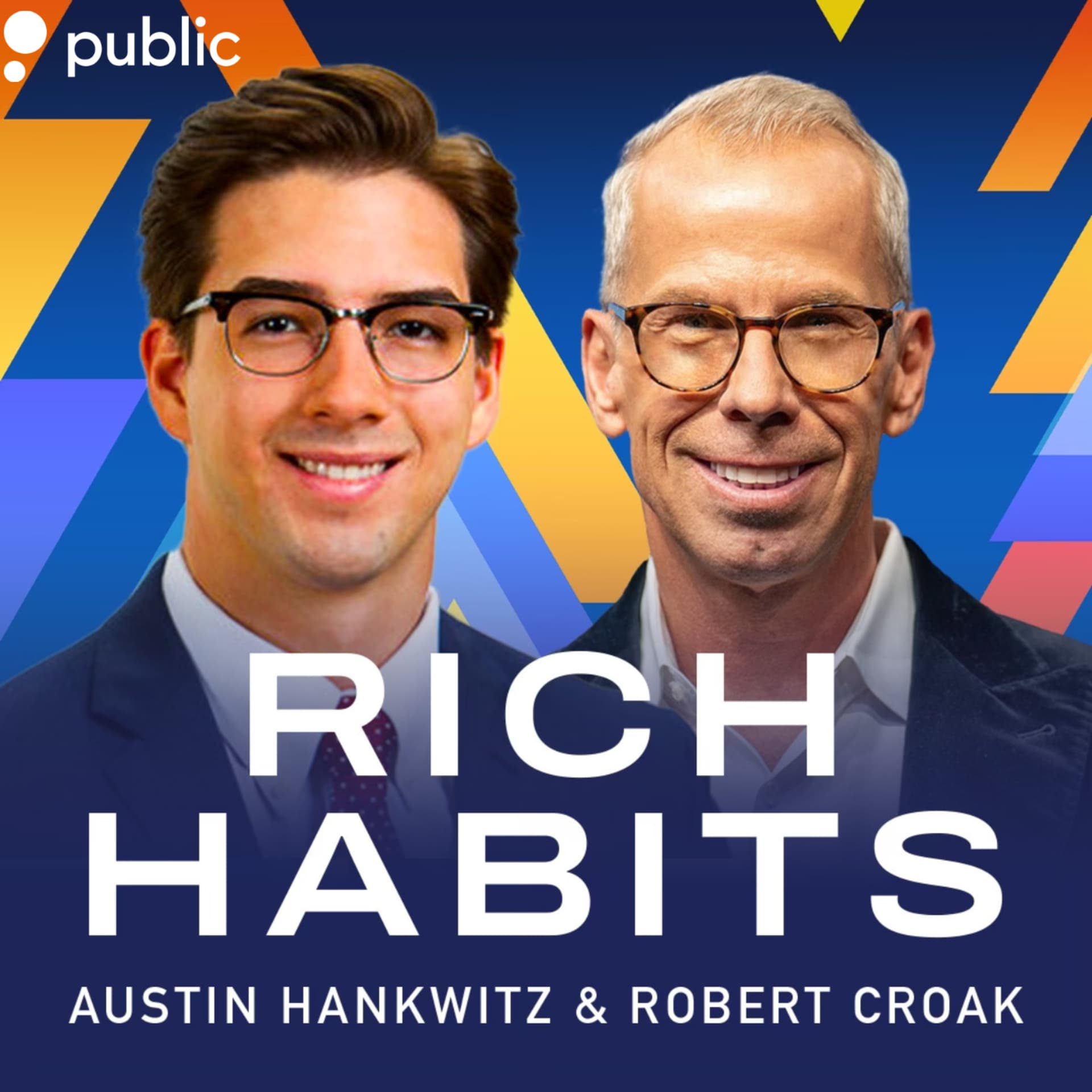
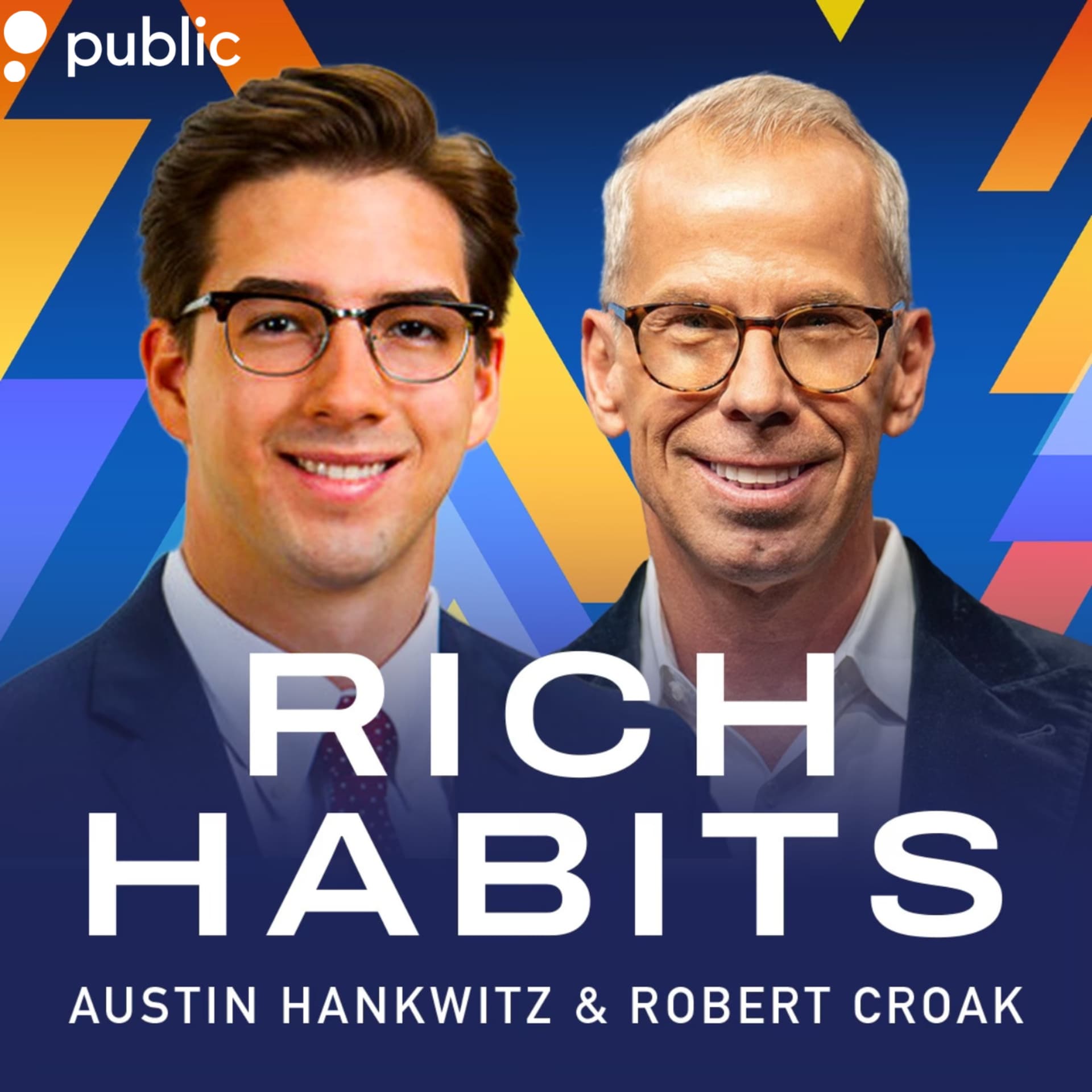
- Robert Croak: A decamillionaire with over 30 years of business experience.
- Austin Hankwitz: A young entrepreneur eager to learn.
Episode Description
In this episode, the hosts discuss
- Amazon's plan to replace a substantial workforce with robots.
- Stock picks from the Trump Administration.
- Tesla's advancements in autonomous driving technology.
---
Key Topics Discussed
- Amazon's Automation Strategy
- Job Replacement: Amazon plans to replace 600,000 warehouse jobs with robots.
- Average warehouse wage increases to $20/hour, but automation is prioritized.
- 750,000 robots are currently in use, representing a 30% year-over-year increase.
- The cost-efficiency of robots versus human workers is highlighted.
- Economic Impact:
- The shift could save Amazon over $4 billion annually in labor costs.
- Other companies like Walmart and FedEx are also adopting similar automation strategies.
- Investment Insight:
- The hosts suggest that the automation wave presents investment opportunities, particularly in companies supplying automation technology.
- Tesla's Inflection Point
- Autonomous Vehicles: Tesla is at a critical juncture with its full self-driving technology and plans for robo-taxis.
- Targeting an annual production rate of 3 million vehicles within 24 months.
- Transitioning from a traditional car sales model to a software-driven recurring revenue model.
- Market Implications:
- If successful, Tesla could obtain higher earnings multiples similar to software companies.
- Elon Musk's statements regarding the Optimus humanoid robot suggest ambitious future potentials.
- Trump Administration's Stock Picks
- Equity in Quantum Computing: The administration is exploring equity stakes in quantum computing companies.
- Potential firms include IonQ, Rigetti Computing, and D-Wave Quantum.
- Quantum computing is seen as a transformative technology with vast implications across various sectors.
- Google's Quantum Breakthrough: A new algorithm, Quantum Echoes, has been developed, capable of executing tasks significantly faster than current supercomputers.
- Acknowledgment that commercial viability is still years away.
---
Key Takeaways
- Automation and Investment: The discussion emphasizes the importance of recognizing technological shifts, particularly automation, as a significant investment opportunity.
- Future of Work: The hosts express concerns about job displacement due to automation but also highlight the potential for new opportunities and job creation in tech support roles for robots.
- Long-Term Perspective: The conversation around the advancement of technologies like AI and quantum computing suggests massive changes in business and work environments over the next decade.
---
Audience Engagement
- Listeners are encouraged to provide feedback on the podcast.
- The hosts promote joining the Rich Habits Network for exclusive investment opportunities.
---
Conclusion In this episode, Robert and Austin share insights into major technological advancements and their implications for future investments and the job market. They encourage listeners to think critically about where to allocate their resources in light of these changes, maintaining an optimistic perspective on the future of work and technology.
Written by AI. May contain mistakes. Listen to the episode to check what was said.
Transcript
Automatic transcript. May contain errors.0:00When it comes to what your family eats and drinks, you know your choices matter. You're the expert because you know what fits your life. And getting it right starts with good information. That's why America's beverage companies are sharing more information about our ingredients at GoodToKnowFacts.org. No spin, no judgments, just the facts straight from the experts for more than 140 beverage ingredients. Visit GoodToKnowFacts.org. You're about to make a trade. Which you do you listen to? Is it get optioning those options? Or let's do a little research. Learn more at finra.org slash trade smart.
0:45Public.com presents the Rich Habits Radar, a new Friday episode of the Rich Habits podcast, where every Friday morning we're coming at you with the biggest headlines impacting you and your money. My name is Austin Hankwitz, and I'm joined by my co-host, Robert Croke, And the three things sitting at the top of our Rich Habits radar this week include Amazon replacing 600 ,000 jobs with robots, Tesla hitting an inflection point with their self-driving technology and really ramping up their robo-taxi production, and the Trump administration taking an equity stake in quantum computing stocks. That'll be fun to talk about.
1:20And be sure to stick around to the end to learn more about OpenAI's new web browser that reportedly isn't competing with Google Chrome. We'll see about that. Now, Robert, before we kick off with the first story, we have a pretty cool announcement to make. Definitely, I would say that is an understatement. We finally did it, Austin. We're officially partnered with Republic and the Cashmere Fund and are excited to announce the launch of a first-of-its-kind investment opportunity that includes stock in SpaceX, Perplexity, and XAI. After months of work behind the scenes, we've finally been able to get this opportunity across the finish line.
1:56So, Austin, tell everyone what we've done. Right. So there are publicly traded companies on the stock exchange and there are privately held companies that are not traded on the stock exchange. Anyone can go buy and sell stock of the publicly traded ones, but only those with deep connections and specific networks are able to be invited to invest into the private ones. For example, Robert, you were invited a couple years ago to invest in Elon Musk's company XAI at a$5 billion valuation because of your deep connections and relationships. And now they're rumored to be a$200 billion company, which was a 40x return in just two years.
2:32So after months of hard work behind the scenes, we are thrilled to announce that you all are now invited to invest alongside of us in SpaceX, Perplexity, XAI, And honestly, a lot of other cool companies inside the Cashmere Fund that includes Mr. Beast's Beast Industries. You guys have heard of Feastables. Katy Perry's DeSoy, Graza, the olive oil company, Acorns, the fintech company. They're all part of this investment. You nailed it, Austin. A$7 ,500 commitment gets you invested into SpaceX, Perplexity, and XAI, as well as 38 other companies inside of the Cashmere Fund. This has been something we've been working on behind the scenes now since August, and we're thrilled to be able to unlock this asset class of pre-seed to pre-IPO privately held companies to the world.
3:20So if you want to invest alongside of us, I've already committed my$7 ,500. Robert has done the same. The whole team is excited about this. If you want to invest alongside of us, as little as$7 ,500 gets you in the door. So be sure to click the link in the show notes below or the description of this YouTube episode or literally go to our link in bios. It'll be in there, too. We are making sure everyone knows about this awesome new opportunity that we've been able to unlock for our listeners. Think about that. For$7 ,500 minimum investment, people can own a piece of SpaceX, Perplexity, and XAI plus all these other companies.
3:56Graza is incredible. We love Acorns. So this is one of the coolest things we've ever built and ever done. And I'm so excited for everyone that follows us, all of our listeners, to take a look at this investment and see if it's a good fit for them. Because I'm super excited for myself, that's for sure. All right, Robert, with that being said, let's dig into our first story. Yes, Amazon just quietly admitted what we all knew was coming. They're raising wages for warehouse workers and doubling down on robots, which means about 600 ,000 jobs could be shifted to machines over the next few years. This isn't fear mongering.
4:32It's the biggest workforce transformation in modern business. Now, Amazon's average warehouse wage just jumped to about$20 an hour, up from$18 last year, which on the surface sounds great. But at the same time, Amazon Robotics now runs over 750 ,000 active robots in these fulfillment centers, which is up 30 % year over year. These are real machines that move shelves, scan inventory, and can pack orders faster than any humans ever could. And the math is simple. A$30 ,000 robot that lasts five years is cheaper than paying$40 ,000 a year to a human worker, and it never calls in sick. And Amazon isn't alone.
5:12Walmart, Target, and even FedEx are building robot-first logistics networks. The U.S. economy has 9 million open jobs, and most of them are physical labor, and robots fill the gap not just because they're cheaper, but because there just aren't enough humans to fulfill these jobs. So what does it mean for you and your money? It means that the automation boom isn't just a headline story here that's catching attention. It could also be an investment story, right? So according to Morgan Stanley, the switch to robots, right, these 600 ,000 jobs replaced could save Amazon over$4 billion a year in direct labor costs that goes straight to their operating income straight to their bottom line.
5:52Now, this bet on robotics is not about trying to cut costs this specific quarter or even this year, but over the coming years and decades. Companies like Symbotic, NVIDIA, Rockwell Automation, and UiPath are the ones that are reportedly selling picks and shovels in this gold rush. So we'll have to see what happens. So if you're in the Rich Habits Network, you know we've been investing in humanoids for over a year now via our private investments into Aptronic and Figure. And if you understand where the world is heading, fewer humans, more machines, you can position your portfolio to ride the automation wave and not get run over by it.
6:27I know for sure for me, having a warehouse and having all these workers, it will be nice to not have to deal with sick days and vacations and all these things and be able to really just be more profitable and more organized and streamlined. So this is a good time to maybe consider owning Amazon stock. Now let's talk about Tesla's inflection point when it comes to full self-driving and rolling out these robo-taxis. So Tesla's management says that they're at a critical inflection point thanks to AI, full self-driving, and robo-taxis. They're targeting an annual production rate of 3 million vehicles a year within the next 24 months and doubling down on their robo-taxi expansion and that full self-driving that we've been talking about.
7:12Tesla's playbook is no longer selling a hunk of metal for a one-time fee. According to their earnings call that took place earlier this week, Elon wants to generate recurring high margin revenue for the business through software. And he stated we're just at the beginning of scaling quite massively to full self-driving and robo-taxi and fundamentally changing the nature of transport. Take this all with a grain of salt as Elon loves to give unrealistic timelines on his ideas, scaling to 3 million cars in production in the next 24 months seems very aggressive to me, but we'll have to wait and see.
7:47Having legislature passed by lawmakers giving the thumbs up on robo-taxis all around the country is also an aggressive prediction. Yeah, I think Elon's very well known at this point for giving some lofty predictions that don't come true in the timelines that he likes to say. So yes, take this all with a grain of salt. But what does it mean for you and your money, Robert, it means that Tesla isn't just going to sell you another car. They're trying to sell you mobility as a service with their robo taxis, right? If Elon actually can hit 3 million vehicles and roll out full self-driving and this robo taxi service, Tesla now shifts from a car company, quote unquote, trading at six times revenue and maybe into a software company, which could justify 10, 15, 20 times earnings multiples like an AI or a cloud stock.
8:37Every Tesla on the road becomes a cash flowing robo taxi node. Every software update increases margins and every full self-driving subscription adds recurring revenue. Despite the lofty expectations and timelines, though, we own the stock. We've been bullish for a long time. So not to mention during their earnings call this week, Elon called their Optimus humanoid robot and infinite money glitch. I'm sure that's going to get turned into a lot of memes in the coming months. Elon was also quoted saying, that's why I call Optimus the path to true sustainable abundance where work becomes optional.
9:13Where work becomes optional. How crazy is that to think of, right? I mean, we all saw, I think it was the figure three robot. They had a hype video that came out recently. And I think it's Optimus. They're having an event here just in the next couple of weeks in November. It's insane, dude. It is absolutely insane. There's going to be a time in the next five to 10 years where millions of these robots are working jobs. And I don't know what the answer is from when it comes to like turning their labor into, you know, distributed. Because it's going to displace so many people, right? We have to tax the labor somehow.
9:45Something's going to have to happen here. So who knows? But we're not as far away as you might think. We are, I would say, single digit years away. Yeah, our dystopian future is right in front of us. There's going to be just a ton of disruption in the next five to 10 years, and I am here for it and ready to be ahead of it all so all of our listeners and followers and Rich Habits Network members know what to do with their money and how to invest in this new future. And that leads us to our next point today. The Trump administration is in talks to take equity stakes in quantum computing firms. Companies including IonQ, Rigetti Computing, and D-Wave Quantum are in discussions to have the government become a shareholder as part of agreements to get future funding earmarked.
10:30Quantum computers are seen as a critical next generation technology because they can quickly perform computations that would take today's computers billions of years, literally. Experts say that this type of cutting edge technology can make it easier to create new drugs, discover new materials, create new chemicals while making every segment of the economy even more efficient. Allison Schwartz, the head of government relations for D-Wave Quantum, said the company wants to sell systems that can solve the government's hardest problems and get a return on their investment. Yeah, I think this is a really smart play.
11:03We've seen it recently in the AI space with the government taking a position in Intel and other companies. So I think it's a really smart move if we're going to really bolster the future of technology and manufacturing in the United States. And Google revealed a new algorithm called Quantum Echoes, which runs on its quantum chip codenamed Willow and reportedly executes tasks around 13 ,000 times faster than the best classical supercomputers. Now, the kicker is, according to Google, the algorithm is claimed to be verifiable, meaning other quantum or classical systems can check its results. That's important because quantum results often have trust verification issues.
11:44Now, despite this breakthrough, Google does cautions that they're not yet at some large-scale commercial quantum machine type business yet. The achievement is still narrow and highly specialized. So, Robert, what does this mean for you and your money? Yeah, I think the rise of quantum computing was one of the three major predictions we made for this year, and it's certainly coming true. It's obvious that unlike the Oakhlos of the world, quantum computing could become a very successful business sooner than we think. With that being said, we're still years away from quantum computing being useful in a traditional business environment.
12:18We have some exposure in our portfolios, but certainly not betting the farm on them just yet, because as we stated earlier in the year, it's still a long ways off. I think that's a great takeaway, right? So it's so fun, though, because we've talked about Amazon replacing all these jobs and Tesla doing some. What's like the big underlying theme of the three things kind of we just talked about? well one it's AI but also two it's just like the future of work the future of business the future of where all of this is going and it's it's so funny because I think it's a quote from Bill Gates that that is you overestimate what you can achieve in one year but you underestimate what you can achieve in 10 and I feel like we're beginning to really conceptualize now as chat GPT and open AI and all of this AI stuff has really become so important over the last handful of years just how much we can achieve in the next 10 years, right?
13:09You asked me three years ago, were people building humanoid robots? I mean, I'm sure they were like some places, but I'd never heard of it. No one ever was really, I mean, sci-fi movies, I guess, you know, was full self-driving a thing three years ago? Yeah, kind of, but like, not like it is now. You've got the Waymos, you got the, you know, Uber's doing stuff. Now Tesla's doing the robotaxis. Was quantum computing a thing that Google was working on three years ago? Maybe it was, but I guess I'm saying is like, we're making some crazy strides, Robert, in the last couple of years when it comes to the future of business, the future of work.
13:39And it's never been more important to have equity stakes in this technology, right? If it's directly by investing into the stocks and the companies like the Amazons and the Teslas and the Googles of the world, or if it's just being a net buyer of assets and having exposure to American capitalism through the NASDAQ and the S &P 500. Well, and I think it's important for everyone watching and following along on this episode to understand that there There are going to be pivots. There's going to be a ton of displacement of jobs, but there's also going to be a ton of new jobs. There's going to need to be massive workforces of people that work on the robots because in the beginning, the robots aren't going to be able to service and fix themselves.
14:16I'm sure down the road, there'll be a world where they do, but there's just going to be other things to do. And we really have to beg this dystopian question. Is quality of life going to get better down the road, as Elon says, when work is optional? And these are the things where we could go really, we could spend hours talking about universal basic income is probably going to have to happen. What are all these people going to do? Is obesity rates going to go way down because people are going to have more time to eat better and work out and have more free time? So who knows what the future holds?
14:49I just want to be ahead of it and guide our listeners as good as we can to make sure we get them on the right path financially and in their business and workforce. With that being said, Robert, let's now jump to our rapid fire section of the episode. Every episode, I bring three headlines that caught my attention. Robert brings three of his own and we unpack them. So I'll kick it off. The three things that are at the top of my rapid fire list include OpenAI's new AI browser, ChatGPT Atlas, getting released this week. Elon's recent comments about his potential$1 trillion compensation package. in an AI-first movie studio, raising$12 million in funding.
15:29So that'll be fun to talk about too. All right, Robert, let me break this down for you. So OpenAI just unveiled their AI browser ChatGPT Atlas. Now the launch is super notable because ChatGPT itself has 800 million weekly active users. So if they can just immediately plug this browser into their user base, it's lights out for Google. For the company, the browser is much more of a way of keeping ChatGPT central than it is making a web browser better. Sam Altman is quoted saying, We think AI represents a once-in-a-decade opportunity to rethink what a browser can be, how to use one, and how to most productively use the web.
16:04Tabs were great, but they haven't had a lot of innovation since they were invented. We've seen the CEOs of Google and Microsoft talk about AI as a platform shift. However, for consumers, phones and desktop operating systems are still the primary way that we use AI tools. But now OpenAI wants to own the entire distribution of ChatGPT. Now let's talk about Elon's recent comments of this$1 trillion compensation plan. So Tesla's board of directors proposed a compensation plan for the co-founder and leader of the company, Elon, that would add an additional 12 % to his already substantial stake in the company, carrying a value of a little more than$1 trillion, assuming the company hits specific milestones outlined in the plan.
16:47One of those milestones is for the stock to go up by 5x from here, creating a market cap of$8.5 trillion or twice the current value of NVIDIA, which seems insane to me. Very much an ambitious goal. Now, what a lot of people are saying is transferring that kind of wealth to a man who's already worth half a trillion dollars does seem like overkill. But Elon insisted on Wednesday during his earnings call that it's not about the money. I think I even saw him tweet, I can't even spend that kind of money. What am I going to do with it, right? He says, quite literally, there's a quote. He goes, I don't feel comfortable building a robot army, talking about Optimus, if I don't at least have a strong influence over those robots.
17:30He said, he added later that he worries about building one of these robot armies than getting ousted because of some asinine recommendations from ISS or Glass Lewis, which are two of those, I think they're like lawyer firms or whatever that got him screwed up last time with this compensation, right? It's just, they're always trying to go after him apparently. But I don't blame them, right? I feel like at that point, it's not even about the money. It's like, hey, this is my company. I just spent the last however many decades of my life building this. If it's robo-taxis, if it's Optimus, if it's whatever.
18:00And now I don't even have a say into like what happened to them. So I don't know. It's interesting. I understand both sides of the equation. I mean, it's like, why don't just give them voting power of 12 % more versus like the actual like stock? Like, does he need another trillion? No, right? But to give him the voting power of it, that could be cool. Could be a nice little something there. Now, the last thing I want to talk about is this AI-first movie studio raising$12 million. It's called Wonder Studios. They're an artificial intelligence creative studio backed by OpenAI and Google DeepMind.
18:30And they raised a$12 million seed round to expand their production amid a growing trend toward the use of AI in the entertainment industry. Now, the funding will be used to double the company's engineering team and accelerate a push into intellectual property ownership and original content production. The investment in Wonder Studios is the latest move toward the use of AI in entertainment. Last year, we saw Andreessen Horowitz make some big investments into Promise, which was another gen AI movie studio. Seeing Wonder was founded by Collins and Justin Hackney, and they use AI across three strands of their business, commercial work, IP partnerships, and production of original entertainment content.
19:10The studio plans to release a number of commercials and original productions next year. Robert, if the AI slop video commercial that Coca-Cola made last year taught us anything, I don't think anyone wants AI-generated movies yet. I don't think anyone's ready for that. I think it's going to be tough luck because we're going to be stuck with it. It's going to keep getting bigger and bigger and more realistic. You know, I think we see every day there's a new AI technology that we have to have. So it's getting to be a little cumbersome to figure out what actually works the best and what is the most cost effective for all of us.
19:46But more to come on that. But that was an incredible rapid fire section. Just so many great things happening, but it is a little bit scary. So it's fun to follow along and really understand where the world and where technology is going. So I want to get into my three rapid fire selections today. Number one, SpaceX executed an internal transfer of approximately 2 ,495 Bitcoin, valued at around$288 million, and it was interpreted as a strategic reorganization rather than a sale, reinforcing institutional confidence in Bitcoin as a treasury asset. BlackRock also purchased a reported$200 million worth of Bitcoin for their iBit ETF this week as well.
20:29Number two for me is mortgage giant Fannie Mae has issued new projections, forecasting that their mortgage rates will finally fall below 6 % by the end of 2026, a level that has not been reached in three years. Fannie Mae's latest monthly economic and housing outlook predicts mortgage rates will average 6.4 % at the end of the year and 5.9 % at the end of 2026. And number three for me today are gold and silver are seeing a long overdue correction, but they are still under-owned in portfolios and the structural drivers behind the rally remaining intact. Saxo Bank's head of commodity strategy, Ol Hansen, said in a note.
21:10And you know, everyone was kind of having that panic moment. There were a lot of crazy headlines this week around gold and silver. I remain bullish. I think gold and silver have a long way to go in the coming years. And I do believe that silver will outperform gold coming up, but I am steadfast and going to keep dollar costs averaging along the way. Man, I hope mortgage rates come down. That'd be great. I want to buy a house and not have a mortgage rate of like 7 % on it. Definitely. All right, Robert, let's jump into our Q &A section of this episode. As a reminder for everyone tuning in right now, these sections of the episode, these questions are specifically focused on small business owners, entrepreneurs, side hustlers, anyone out here making money, right?
21:52You can ask any question as it relates to trying to generate money, anything to do with entrepreneurship, because Robert and I are entrepreneurs and we're happy to give you our advice. Now, our first question comes from Alan S. Remember, if you have a question to ask, you can DM us on Instagram at richhabitspodcast or email us at richhabitspodcast at gmail.com. Alan S. says, my small lawn care company doubled this year, but I'm the bottleneck. Every quote, schedule, and payment runs through me. I want to grow, but I am burning out. How do you actually step back and delegate when you're afraid quality will drop?
22:25What's the first role most small business owners should hire for to reclaim their time? Robert, I'll let you kick this one off. For me, it is always important to hire to your weaknesses. So if you're really good at the work and you're really good with the customers, hire someone that's really good with the quotes and the books and the back end, the administrative stuff. If you're really good with the administrative stuff, then hire a front end manager that can go meet with the clients, do the quotes, make sure that the crews are doing the work and getting things done. But you are struggling with what every small business owner struggles with in the beginning, and that is growth without having a plan.
23:03So I would first and foremost figure out what you're weak at. I would look at how you can fix that bottleneck with either technology. We have a ton of really great technology out there to help small business owners. Or I would look at hiring that front of house person that's going to take over that role for you. Because I think that is the number one most important thing is allowing yourself a real opportunity to succeed through growth by making that first important hire. So choose wisely. My favorite piece of advice that I got as it relates to being a small business owner and hiring and things of that nature is you can choose time or you can choose profit, right?
23:43You've been choosing profit for the last however long now and you're getting burnt out. You want your time back, which means you need to take some of your profit and use it to go hire somebody. Now, I'm not saying go jump on LinkedIn or go text your buddies or whatever real quick and say, hey, come work for me. Be very slow and methodical about it. And to Robert's point, yeah, get out a yellow pad and write down a very clear description of what you're hiring for. Things that you enjoy doing. Maybe you love going out and giving the quotes. Maybe you love building the schedule or maybe you love talking with clients and collecting payments.
24:15I don't love that, but I don't think anyone does either. But maybe you love specific parts of your business. Make sure you identify those parts so you keep doing those parts. The things you don't love and the things you're not good at, that's what you write down on the piece of paper that Robert's alluding to and say, okay, I want someone that is going to build the schedule. I want someone that's going to reach out and collect payments. I just want to be, you know, I'm Alan. All I want to do is be out there on the grass or be out there with the lawn care and just get it done. And it's all I care about.
24:42I want everyone else to do something else, right? So that to me is the first step, understanding what you want to do, understanding what you want to delegate. and then figure out how much you can afford as it relates to that delegation. Say, okay, if I'm able to hire somebody that is gonna be able to take, let's call it, I don't know, 15 to 20 hours a week off my schedule, that's 15 to 20 hours a week. I can go out and cut grass. I can go out and do the lawn care stuff. How much more revenue can I generate now knowing that I've got an extra 15, 20 hours a week? So nine times out of 10, if you play your cards right, Yes, you are going to have to pay somebody, of course, to work for you.
Read the full transcript
25:21But if you're able to do this the right way, you're going to make more money on the back end. So it could even offset what you're paying them and you're still making what you were making before. It all comes down to making sure that you're doing an analysis on the front end so you're not reacting to decisions on the back end. That is a great take. I really, really enjoyed that. So our next question comes from Louis K. Louis says, hey, guys, just wanted to say I love the podcast. I've been gaining so much knowledge and I wish I were taught this in school. I'm a recent mechanical engineer graduate specializing in designs.
25:51I recently started working and now I have more time on my hands without the need to study all the time. And I'm trying to brainstorm more lucrative ways I can use my skills in my free time. Your opinions would be greatly appreciated. All right, Robert. So we got Lewis here. Lewis is a mechanical engineer graduate specializing in design. how can he spend his time designing things for people that's going to allow him to make more money in his spare time love this question and congrats on the engineering degree i think first and foremost and this might sound a little off for mechanical engineering i would build up your social media i would get a website about your services you can do all of this for a hundred dollars or less right now get the social media up and running maybe get a youtube channel up and running so you can show people how you do things and get the website up and running.
26:40Here's why. Because once you build this audience, even if it's a small audience of a few hundred followers or a few thousand followers, you will have endless access to people like me that always need work done. You might be a specialist in CAD. You might be really good with product design. There are so many small businesses out there that need an individual with your skillset that would love to hire you. They just have to be able to find you. And then also you can look at some of these sites like Fiverr and other sites that hire people, these gig economy people, and that would be another way for you to get business.
27:17But I would focus first and foremost on the structure and getting the eyeballs and all of that laid out so you can build your business around it. I had a friend years ago that just had such a great reputation online through Facebook back then and everything else. He was so busy. He went on to build a really big engineering and product design firm all because he was known and trusted. So get out there, get the eyeballs, get the website, and hopefully that helps. I think it's a great breakdown, Robert. Like tactically speaking, go get on Instagram, TikTok, and all these other like different types of social media platforms.
27:51And here's your strategy. You go and you start making videos saying, I just bought this product and I think it sucks. Here's what I would have done instead if I was designing it, right? And now it's like, you know, here's this thing, right? It's new, new look, see, I bought on Amazon, I use it to hold my phone, right? That's all it's like 10 bucks. Okay, you can go buy something on Amazon that looks cool and say, hey, I bought this. And here's why it sucks. Here's what I would have done instead, and then redesign something like that, make a video, and then be like, cool, that's what I would have done.
28:22Like I've seen people do that, like designers that are they do logo design, right? So I've seen logo designers be like, if I was the CMO of Coca-Cola, here's what I would do instead. Or if I was remaking the McDonald's logo, here's what I would do. And like, they're actually cool looking logos. And like, that's how they market their business is redesigning existing businesses. Yeah. So if I was in your shoes, I would absolutely just start making content about redesigning things that already exist. One video is going to pop off like crazy. I know there's a guy, I forget his name. Robert, he's so funny though.
28:52He's like, hey here's a problem i had and so what i've done is i made this to solve it like 3d prints it and it's like it's a whole thing so maybe you can do stuff like that but but lewis that's what it's all about is like getting your name out there becoming the guy that can really you know be known for making cool designs and it's it's it's gonna be a passion project in the beginning right you're not gonna make any money off these videos but it's it's part of the game it's a long-term game and it's something that seems like you really enjoy doing so our last question comes from an anonymous listener our anonymous listener says good morning gentlemen thank you for all you do, I look up to you both, and I am really happy that I found your podcast.
29:26I'm 22 years old, I've recently been married, and I work for my dad's construction company. I'll keep it short and say this, the company is not doing well at all. There are five employees, including myself, and we've all been paid late continuously this entire year. What started as getting paid late with bi-weekly pay turned into once a month, turned into once a month in two weeks, turns into I now haven't been paid over the last two months. He always pays eventually and I trust my dad, again, because it's my dad, but it's starting to eat into my desire to even work there anymore. My problem is not only getting paid late, but also I don't really enjoy the industry.
30:02I also have a bad case of analysis paralysis and I really want to start a business of my own, but I feel terrible leaving my dad and his failing business behind. I would love to be able to help him and his business get back on its feet while also accomplishing my own goals and dreams. I've tried to help him with some marketing and business strategies, but he always shoots him down and wants to remain in his old ways. I'm really struggling on how to handle this. Any advice would be appreciated. Well, anonymous listener, thank you so much for the kind words. I'm so sorry to hear that you're going through this.
30:30The nicest way I think I can put this is your dad is living his life and you are living your life. And you can love your dad from the bottom of your heart and you can be his biggest cheerleader and you can always offer to help him if he needs it. But I I don't think that you need to sacrifice on your own career and your dreams to make your dad's ego of having a business that is successful versus failing, like stay intact, right? I'd much rather see you say, hey, dad, I love you very much. I'm so proud of the business you've built. I'm so glad I was able to work here for the last several years.
31:03This has been time that I'll really cherish. But my reality is I don't enjoy the work anymore. I mean, blame it on yourself, right? Don't blame it on him for not paying. You'd be like, listen, and you just said that, right? I don't enjoy this industry. I don't enjoy this work. My dream is to go be a magician. My dream is to go do, you know, chef culinary school. My dream is to go whatever this thing is that's not construction. And I'm going to go pursue my dream. And I hope you love me enough as your son to be proud of me and excited for me to go do that. That's how I'd approach it. I don't think it's you leaving your dad's failing business behind or giving him like that.
31:37That's not what I'm thinking here at all. And I don't think he would see that either, especially if you sort of broach the conversation in a way that's like we're two men having a conversation about my dreams and my reality. My reality is I don't want to work construction anymore. I want to go be a chef. I want to go own a restaurant. I want to go do NASCAR. I don't know what you want to do, but something cool. Whatever your dreams are is always cool, right? So that's how I'd approach it. And when it comes to your dad's situation, it seems to me like he needs to be a little bit more stern as it relates to his receivables.
32:05Something I learned very early on is the whole like net 30, 60, 90, whatever, when it comes to sending out a invoice, if it's more than net 45 and they don't pay, like I do the work and I don't get paid for a month and a half. Like I'm very clear with that customer and saying, I'm not your bank, right? This isn't you trying to loan against services that are trying to like, I'm not your bank, dude. So if you want a bank, I can introduce you to my bank, but I'm not your bank. You are my customer. Here is the services. I need my money. And we are doing that net 30 or that net 45, like whatever that thing is, but we're not doing 60 or 90 or whatever the heck else people are trying to do these days.
32:42And oh, that's the only way we do it. That's fine. We're just not, we're just not compatible. I don't need the business. That's okay. So that's what I would encourage you to do. Follow your dreams, double down on you. You're 22 years old. This is the time to be the craziest, riskiest ideas that could possibly come about. Go do it. So I want to click back on that. I really like that answer and I agree with it wholeheartedly. You can't delay your dreams and put off your financial future because your father can't get it together and run this business in a profitable manner. So I think Austin's breakdown is fantastic.
33:18There is one other option. You go have the real hard conversation with your father, maybe put it in writing in advance and say, dad, love you. This isn't working. I can't live without getting paid regularly and not being able to count on this money. And it's really bad for Billy, Tommy and everybody else that works for you. They're struggling as well. There has to be a solution. And I would go to him with a hard line and say, how about this? You've shot everything down I've offered before. Obviously it's not working how you're doing it. How about you give me a shot and give me a chance to earn some sweat equity in the business since you're not able to pay me regularly and be able to then integrate your ideas, whether it's how to build better, how to quote better, how to collect better, or how to market better.
34:06But you could also take the approach of the hard line with him. And if he says, no, you're too young, you don't know what you're doing, then you say, dad, it's been wonderful. Appreciate everything you do for me. I love you, but I've got to go do my own thing because I need to build my own financial future and I can't do it if I can't get consistently paid. Two options. Both are good and you can blend both of them. But I love Austin's takeaway, but it might be time to have the hard conversation with him and see if that works as well. And if at the end of that conversation, he goes, fine, you're going to leave me?
34:38Like, wow, what a son you are. It's like, well, now you just learned a lot about your dad. That's right. So I'm sorry that you're going through this anonymous listener. At the end of the day, you have to look out for yourself. Love family. Love my family. Love everything about that. and I love that you love your dad, but your dad's dreams are not your dreams. Your dad's ego is not your ego. Your dad's business is not your business. I love that he's been able to take you under his wing and teach you all about this, but it seems like it hasn't been working. And if he's genuinely not interested at all in any change, you know, doing the same thing and expecting a different result is the definition of insanity.
35:12If he's just going to do the same thing and expect his business to turn around, then that's not going to work either. So you have to go figure some stuff out for yourself. Everybody, thanks so much for tuning in to this week's episode of the Rich Habits Radar, a new Friday episode of the Rich Habits Podcast where we talk about the biggest headlines and happenings impacting you and your money. Be sure to follow us on Instagram. Hit the subscribe button here on Spotify. Leave us a comment about this episode. We're like, I think, what, Robert, two months in, something like that, two and a half months in.
35:41We're still learning, right? You guys like we talk about things. You guys don't like something. Leave us feedback. We're always trying to improve these shows, deliver as much value as we possibly can to you all in these new Friday episodes. And we're thrilled that you're along for the ride. Yeah, these Friday episodes are a blast because we get to keep you guys abreast of everything that's happening in real time or as close to it as possible. So I really enjoy it because I feel like it keeps all of our listeners ahead of the curve from what is happening in the markets, but also from our perspective of how we release information to everyone that follows along in our ecosystem.
36:16So I'm really, really proud of these new episodes and excited about everything we're working on. Thanks, everyone. Have a wonderful weekend, and we will see you on Monday.
36:48Next up is a little song from CarMax about selling a car your way. You want to sell those wheels. You want to get a CarMax instant offer. So fast. Want to take a sec to think about it. Or like a month. Want to keep tabs on that instant offer. With OfferWatch. Want to have CarMax pick it up from your driveway. You want to get it done to it. You want to do it. So, want to drive? CarMax. Pickup not available everywhere. Restrictions and fee may apply. Rinse takes your laundry and hand delivers it to your door. Expertly cleaned and folded. So you could take the time once spent folding and sorting and waiting to finally pursue a whole new version of you.
37:29Like tea time you. Mmm. Or this tea time you. Or even this tea time you. So did you hear about Dave? Or even tea time, tea time, tea time you. Mmm. So update on Dave. It's up to you. We'll take the laundry. Rinse. It's time to be great.
From the publisher
In this week's episode of the Rich Habits Radar, Robert Croak and Austin Hankwitz talk about Amazon's plan to replace 600,000 employees with robots, the Trump Administration's newest stock picks, and Tesla's inflection point for Optimus.
---
💸 Want to invest into SpaceX, Perplexity, xAI, MrBeast, Graza, Acorns, and other category-defining companies alongside Robert and Austin?
---
✅ Ready to start investing? Open a brokerage account on Public.com/richhabits and get a FREE 1% match on all IRA deposits, transfers, and rollovers!
---
‼️ Have feedback to share? Please let us a comment on Spotify! We're excited to mold these new weekly episodes to be exactly what our listeners want.
---
🚀 Join 700+ fellow podcast listeners inside the Rich Habits Network! Unlock 8 hours of video course work, ask us questions directly, participating in exclusive weekly livestreams, and invest alongside us in pre-IPO deals. Click here!
---
⚡️ Sign up for the Rich Habits Newsletter and never miss a market-moving headline again, click here!
---
⭐ Download our FREE Financial Planner – click here
⭐ Download our FREE Budgeting Template – click here
⭐ Earn 3.8% on your savings with a High-Yield Cash Account – click here
⭐ Trade stocks, options, music royalties and crypto on Public – click here
⭐ Automatically buy stock where you shop with Grifin – click here
⭐ Protect your family with term life insurance from Suriance – click here
⭐ Use code “Spotify” for 15% off our 4-module video course – click here
⭐ Optimize your portfolio with Seeking Alpha – click here
---
📬 Inquire about working together – christian@witz.vc