In short
Rich Habits Podcast Episode Summary
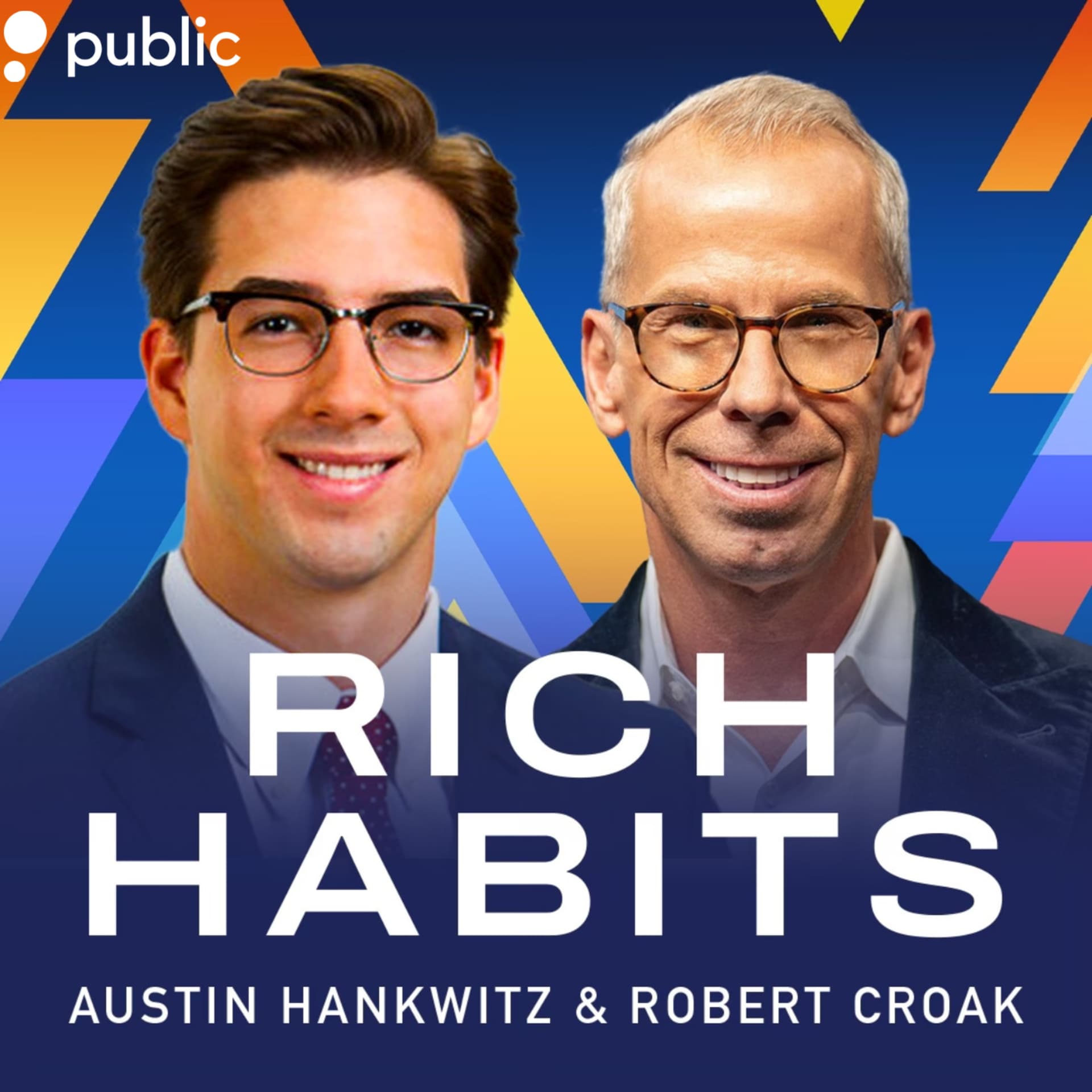
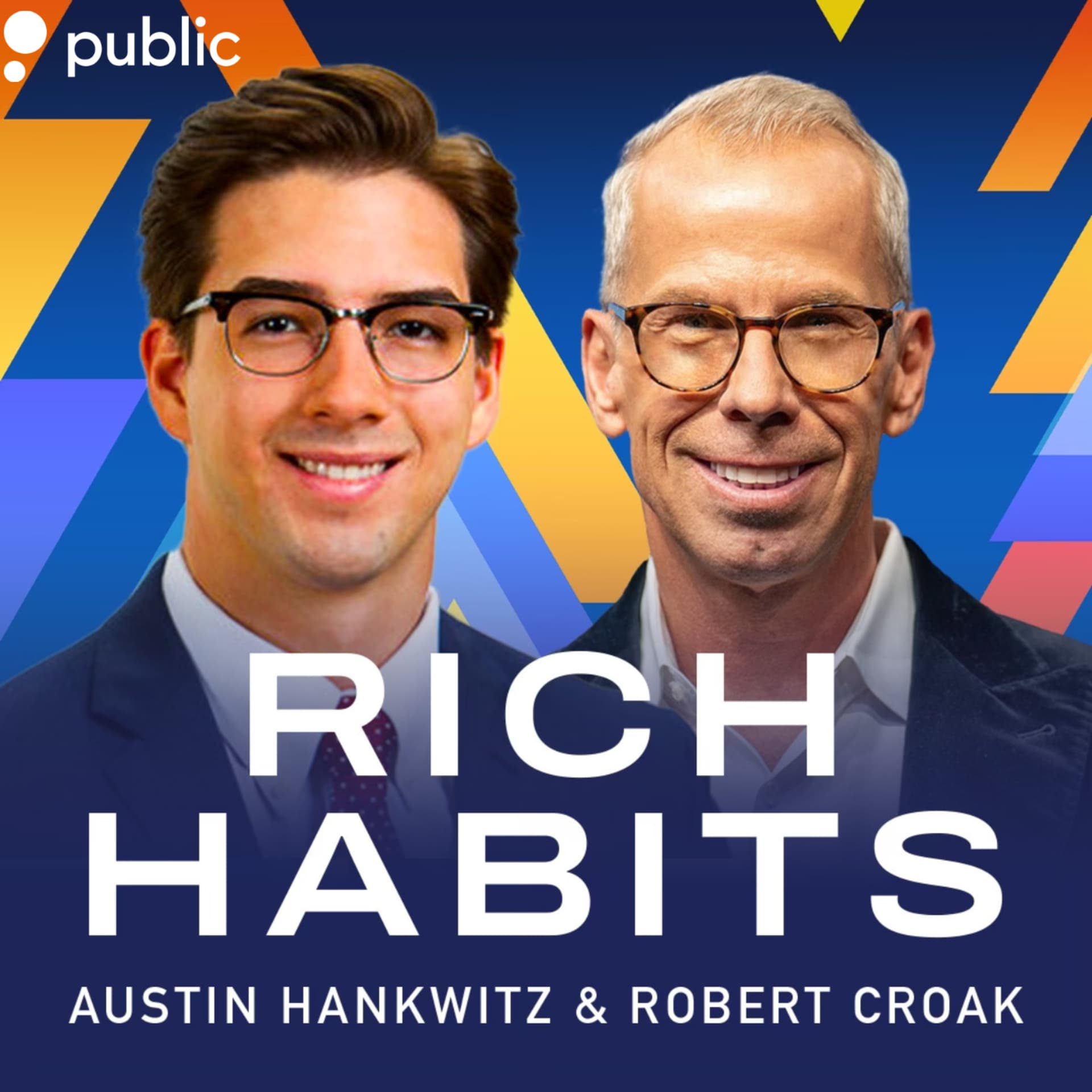
Episode Details Podcast Title: Rich Habits Podcast Episode Title: Apple's Smart Glasses, OpenAI Is Worth $500B, & The Government Shutdown Hosts: Robert Croak and Austin Hankwitz Release Frequency: Mondays, Thursdays, Fridays
---
Episode Overview In this episode, the hosts discuss three major headlines impacting the financial landscape:
- OpenAI's Valuation Reaches $500 Billion
- Government Shutdown Impacts
- Apple Pauses Vision Pro for Smart Glasses Development
The discussion includes insights on investment strategies, economic implications, and technology trends.
Key Topics and Discussions
- OpenAI's Valuation Reaches $500 Billion
- Milestone: OpenAI is now the world's most valuable privately-held company with a valuation of $500 billion, surpassing SpaceX.
- Revenue vs. Valuation: Despite the high valuation, OpenAI projects only $13 billion in revenue for the current year, alongside significant losses.
- Investments and Partnerships:
- Major investments from NVIDIA and agreements with Oracle and Broadcom for computing power.
- Implications for the AI industry showing it is transitioning into a trillion-dollar sector.
- Investor Insights:
- AI is reshaping markets and is viewed as a long-term investment opportunity.
- Potential concerns regarding whether this valuation represents a solid investment or a speculative bubble.
- Government Shutdown Impacts
- Economic Consequences: The U.S. government shutdown began on October 1, affecting federal employees and delaying economic indicators.
- Labor Market Insights:
- Private payrolls decreased by 32,000 jobs in September, with revisions indicating previous gains were negative.
- Market Reactions:
- Historically, government shutdowns have mixed effects on the stock market; however, over the long term, the S&P 500 tends to perform well post-shutdown.
- Advice for Investors:
- Stay informed about the shutdown's effects but do not panic as it is usually short-lived and manageable in the long run.
- Apple Pauses Vision Pro for Smart Glasses
- Shift in Focus: Apple has decided to halt the Vision Pro project to develop smart glasses to compete with Meta's offerings.
- Product Development:
- Two types of smart glasses are in development, one without a display and another with a display for enhanced user interaction.
- Market Positioning:
- Apple faces competition from Meta, which is currently leading in AI-powered hardware.
- Concerns over Apple's ability to innovate and compete effectively in the AI and smart devices market.
- Investor Perspective:
- Potential hesitance to invest in Apple stock given the current market dynamics and performance compared to competitors.
Additional Insights
- Rapid Fire Segment: The hosts briefly discuss several headlines related to:
- The Buffett Indicator and its implications for market valuation.
- Anticipated interest rate cuts and their possible effects on the economy.
- The upcoming Sora app by OpenAI, aimed at competing with TikTok and other video platforms.
- Entrepreneurship Q&A:
- Listeners submit questions about starting businesses, financing options, and affiliate marketing strategies.
---
Key Takeaways
- OpenAI's rise to a $500 billion valuation reflects the growing importance and potential of AI, despite financial concerns.
- The government shutdown will have immediate, albeit mixed effects on the economy, but historically, markets tend to recover.
- Apple's pivot from the Vision Pro to smart glasses indicates a strategic response to market competition but raises questions about its future direction.
- Investors are encouraged to remain calm amidst market fluctuations and focus on long-term strategies rather than reacting to short-term events.
---
Conclusion The episode encapsulates critical financial insights and technology trends, urging listeners to stay informed and proactive in their investment strategies amidst changing market conditions.
For more tips on financial literacy and habit formation, consider joining the [Rich Habits Network](https://www.skool.com/richhabitsnetwork/about).
Written by AI. May contain mistakes. Listen to the episode to check what was said.
Transcript
Automatic transcript. May contain errors.0:00When it comes to what your family eats and drinks, you know your choices matter. You're the expert because you know what fits your life. And getting it right starts with good information. That's why America's beverage companies are sharing more information about our ingredients at GoodToKnowFacts.org. No spin, no judgments, just the facts straight from the experts for more than 140 beverage ingredients. Visit GoodToKnowFacts.org. This episode is brought to you by Marshalls, where you never have to compromise between quality and price. The buyers of Marshalls hustle hard, working to bring you great deals on brand name and designer pieces, because Marshalls believes everyone deserves access to the good stuff.
0:46Visit a Marshalls store near you or shop online at marshalls.com. Public.com presents the Rich Habits Radar, a new Friday episode of the Rich Habits Podcast, where every Friday morning we're coming at you with the biggest headlines impacting you and your money. My name is Austin Hankwitz and I'm joined by my co-host Robert Croak. The three things sitting at the top of our rich habits radar this week include OpenAI, becoming the world's most valuable privately held company, the economic impact of the government shutdown that we're currently experiencing, and Apple pausing their Vision Pro development to now instead focus on smart glasses to rival Meta's new Ray-Ban AI spectacles.
1:32And be sure to stick around for a little bit to hear more about the Buffett indicator, how it's predicting a stock market crash. Or is it? We don't think it is, but we'll get into that later. So Robert, let's dig into our first story. That's right. OpenAI's valuation reaches$500 billion, topping Elon Musk's SpaceX. OpenAI just hit a massive milestone, becoming the world's most valuable privately held company. The company's valuation now stands at$500 billion just three years after it launched its flagship product, ChatGPT, surpassing SpaceX, which clocks in currently at around$400 billion. So that's crazy.
2:11In three years, they could get to that massive of a valuation. Well, what's weird is the AI company is only expecting to generate$13 billion of revenue this year and a net loss in the billions of dollars, according to the Wall Street Journal. So while OpenAI has had the explosive growth when it comes to consumers, right, 700 million weekly active users with ChatGPT and Sora and things like that, they've also taken on some insane financial commitments. We all saw what happened with their Oracle sort of agreement there, agreeing to purchase$300 billion of computing power over five years. And then also they signed a$10 billion chip building plan with Broadcom.
2:51So to help pay for all this infrastructure, you know, they're looking around saying, hey, how do we get more money, which is where NVIDIA comes in. I think it was last week's episode. We talked about NVIDIA investing up to$100 billion into OpenAI, an arrangement that some people on the Internet, including myself sometimes, essentially say just like recycles money. Hey, we'll give you this and then you sell it back to us and we'll give it back to you. It's a little something here. But, Robert, why don't you break down what this means for our listeners and their money? For investors, this is a clear signal.
3:22AI is no longer just an in-the-future fad like everyone was talking about two, three years ago. It's truly becoming a trillion-dollar industry that's reshaping markets, enterprise strategy, and even government policy. Watching OpenAI's partnerships, product launches like ChatGPT5, and its ongoing negotiations with Microsoft give you a front-row seat to where the AI sector is really heading next. Now, here's what's funny, right? While the company has not yet turned a profit, it is fueling this global AI infrastructure boom, locking in these major deals with Oracle, SK Henix, and others, and keeping top talent from jumping ship.
4:01Robert, we all remember, what was it there, a$300-something million signing bonus that Mark Zuckerberg was trying to pay to have someone come over from OpenAI to their meta labs. This is really, really interesting for investors at the moment, hitting a$500 billion valuation. Yeah. And like you mentioned, is it a shell game? Is it a Ponzi scheme? Hey, I'm going to sell you all these chips, but I'm going to give you the money to buy them and then you're going to buy them from me. It's a little crazy out there, but I am still super bullish on where AI is going. all of the sectors that it's disrupting.
4:35And just overall, what we've been talking about for a couple of years now is how it's going to make everything better, faster, and more profitable because efficiencies will come with all of this in the AI sector. Well, we will be talking about efficiencies a little bit later, so y 'all stay tuned. But our next headline that we just need to cover is this government shutdown happening right now. So the U.S. government officially shut down at midnight on October 1st, marking the third shutdown under President Trump and the first in almost seven years. And this happened after Democrats and Republicans failed to reach a deal on a short-term spending plan.
5:13Shutdowns can squeeze the economy in different ways, from missed paychecks for hundreds of thousands of federal employees to the delayed release of crucial economic indicators. So shutting down the government comes at a delicate time for the U.S. labor market right now, which spent the summer stuck in a stall pattern because of slow hiring. Now, without government data personnel on hand, economists and investors are not expected to get the next big indicator, which is taking place today, the September jobs report, right? Today is Friday, October 3rd. September jobs report's supposed to come out.
5:48And we're filming this on Thursday, but I don't think it's actually coming out. So interesting to say the least. Speaking of job reports, though, Robert, the ADP private payroll report came out earlier this week. I think it was Wednesday when that one came out. And the U.S. labor market is not doing too hot. September private payrolls shrank by 32 ,000 net jobs. So net-net, 32 ,000 jobs went away in September. And they revised August from a net gain of 54 ,000 jobs down to a net loss of 3 ,000 jobs. I don't know the specific stat, Robert. I could be wrong on this one, but I'm pretty sure this is the first back-to-back months of job loss in these private payrolls in like three or four years.
6:33Well, there are definitely cracks that we're seeing in all of these indicators, like the jobs report, CPI, and all these other indicators. But I don't think anyone needs to stress out, freak out just yet. You know, because these shutdowns reduce government spending and programs, and it depresses activity as a result. And Goldman Sachs estimates that the shutdown would shave about 15 basis points off the gross GDP of the United States per week. And Deutsche Bank puts this figure at more like 20 basis points. But if you read the Rich Habits newsletter yesterday, you'll know that the government shutdowns really tend to be nothing burgers for the stock market.
7:12During the government shutdown, it's a coin flip as to what the S &P 500 will do. Green or red, we don't know. It's green right now, which is great. However, over the subsequent year, the S &P 500 is in the green 86 % of the time with an average return of 12.7%. So here's why it matters for you and your money. About 750 ,000 federal employees are expected to be furloughed at a cost of about$400 million per day in lost pay. Services like passport processing, drug approvals, consensus data collection, and certain economic reporting, like we mentioned, the jobs report, right? That's all going to be paused.
7:50But that means investors and businesses are also going to face delays in economic data, regulatory approvals, government contracts, Things that are driving stocks up and down, which is why Robert said it's a coin flip. Depending on how long things are shut down for, the markets could be up, could be down, whatever. So like Robert said, in the short term, it's a coin flip. Depending on how long we're shut down for, the headline news around it, the markets could go up, down, left, right, and in circles. It's hard to have a sort of prediction as to where things are going to go. Yeah, and if you look back at the last long shutdown, I think it was 36 days, and that was under Trump in 2018, I believe.
8:28But most of these shutdowns, we don't know how long they're going to be. They could be five days, six days, eight days, 12 days. Who knows? But the bottom line is this. Government shutdowns are more than political theater. They can have real measurable effects on the economy, markets, and anyone who interacts with federal services. For investors, staying aware of these disruptions is a key to navigating short-term volatility, but they ultimately are usually nothing burgers for investors. So please don't have knee-jerk reactions. Sit tight. This is all part of the market cycle that's happening right now, and we will keep you aware of what we think and what's really going on.
9:07Now, Robert, let's round off with our third headline that is here on our Rich Habits Radar episode. Apple is pausing their Vision Pro to pursue smart glasses. Y 'all remember those crazy gadgets people were wearing on their heads in the big battery pack with the Vision Pro and it's going to be this thing? Now they're putting the pause button on it. So Apple has hit pause on the planned overhaul to their Vision Pro headset to redirect resources toward a more urgent effort, developing smart glasses that can rival metas. So the company has been preparing a cheaper, lighter variant of this massive headset that they came out with.
9:45I think it was in 23 or 24. The codename was N100, and that was going to be released in 2027. But Apple announced internally just last week that they're moving staff away from this N100 product. And now they're going to say, no, no, no. Y 'all need to focus on working on glasses instead. Apple, Apple, Apple. I don't get it. the company is working on at least two types of smart glasses. The first one is dubbed the N50, which will pair with an iPhone and lack its own display. Apple aims to unveil this model as soon as next year, ahead of a release in 2027. Apple is also working on a version with a display, something that could challenge the just released Meta Ray-Ban display.
10:31The Apple version has been planned for 2028, but the company is now looking to accelerate development. Apple's glasses will rely heavily on voice interaction and artificial intelligence, two areas where it hasn't excelled yet. Amazon and Google are also racing to launch a range of AI-powered hardware. We saw ChatGPT's OpenAI partnered with a former designer from Apple, John Ive. He designed the MacBook, the iPhone, the iPod, right? He's a wonderful hardware designer. They had a cool partnership announced I think it was during the summertime. So a lot of big tech right now is racing to figure out what we can do between AI, hardware, and how can we combine the two of them.
11:13So what does this mean for your money? It seems like AI software was only the beginning. Now the race is embodied AI, the hardware. So think glasses, watches, pins, and other devices that allow us all to interact with AI in a seamless way. In my opinion, Meta has knocked this one out of the park. Their glasses with the new screen, they're insanely cool. And if you ask me, Meta is eating Apple's AI lunch right now. So in my opinion, Apple is still in this AI funk where they've fallen behind. They don't know where to go next. You know, they spent all this money on the EV sector over a billion dollars a year.
11:54Then they scrapped it. now they're scrapping the Vision Pro glasses and starting over from the goggles going to the glasses. I just think they're really struggling. And I'm glad we're covering it because I just don't think it's a good place to put my money right now. And they really need to figure out the direction of the company. Yeah, they are in a tricky situation. I couldn't agree more. And I agree with what you said earlier. I really do think that Meta is eating Apple's AI lunch. emphasis on AI lunch, right? You know, they've got their new, I think it was the edits app or something where you can like, you know, do videos on your AI stuff with Meta and then they got Llama and they've got the Meta Smart Glasses.
12:34Now they also just, I just saw too, Robert, Meta is doing some stuff with advertising. And so they figured out that if you want to create better ads for your company and you want to run ads better, you just like prompt it and it will create the ad for you. kind of like what Icon did. So now I guess Icon's out of business. But I guess what I'm saying is I totally agree. Meta is eating the AI lunch of Apple right now. And Apple's sort of in this situation where they got to just figure it out. They're trying to do the hardware stuff. They thought the Vision Pro. They thought the Apple Intelligence.
13:04I haven't used Apple Intelligence once on my phone. I got this little widget where I just swipe over on my phone and chat GPT pops up. I talk to it instead of Siri. It's night and day. And they're even getting a lot of pushback on the new phone release. If you think about that, I have seen nothing positive about it. All of these problems and people complaining about the quality of the phone case, the issues with everything. So I don't know. My opinion is like yours, Austin. I think Apple is not a good one for me right now, and that's why I'm staying away. And if you look at MetaStock from the start here of 2023, the stock price is up 503%.
13:40You look at Apple stock from the start of 2023, which is really, again, when this AI stuff came out. They're up only 98%. So that's a 6x on your money with Meta and only a 2x on your money with Apple. So that's what's so cool about the stock market, Robert. You can have these opinions. Oh, I don't think Apple's doing well. Oh, I think Meta's doing great or whatever. And you can put your money where your mouth is. That's what's so cool about being able to invest and find these nuggets and really try and build our portfolios around theses that we care about. So Robert, let's now jump into our rapid fire.
14:14I've got three headlines that I brought to the table here. And as a quick reminder for y 'all hanging out at home every week, Robert and I find three headlines that we think are interesting to us. We just come at like a little show and tell action and we let you guys know what's going on. So the headlines that I'm bringing, the first one is the Buffett indicator and how it thinks that we're going to be in this market bubble or whatever. The second one are rate cuts. Talk about that. And the third one is the new Sora app that is going to come for TikTok and Instagram Reels and YouTube Shorts. It's this new thing that OpenAI is doing.
14:47So let's walk through some of these, Robert. So Warren Buffett's indicator says that the markets are ready to pop. Here's why I think it's wrong. And I'm not over here trying to say I'm smarter than Buffett. But I do say that the Buffett indicator has not really been adjusted for globalization and what's happened over the last, let's call it like two or three decades with the S &P 500. So the Buffett indicator for y 'all that don't know what I'm talking about is simply dividing the total U.S. stock market capitalization by U.S. GDP. So if it sits around 100%, right, a one-to-one division there, the stock market, in the eyes of Warren Buffett, is fairly valued.
15:23Right now, we sit at 200%, which is sounding alarm bells for a lot of these value investors. Now, the reason why I think this is not that big of a deal is because 40 % of the S &P 500 revenue every year comes from abroad, right? That is trillions of dollars in revenue that's not being accounted for in the U.S. GDP measurements and are instead going to China, Europe, and other emerging markets. So the Buffett indicator is cool. Keep an eye on it, right? But I'm not going to be running for the hills because it's sitting at 200 % right now. The next thing on my radar is rate cuts. Robert, you know, we just got a rate cut in September and now markets are pricing in up to two, maybe three more rate cuts this year.
16:02So according to the CME FedWatch tool, investors are now pricing in between three and four rate cuts to take place in 2025. Federal Reserve is now laser focused on keeping unemployment as low as possible and not focused on this rising inflation narrative anymore, which means by cutting interest rates, they're going to encourage borrowing and spending, hopefully catalyzing businesses to invest and hire, ultimately cushioning the job market. We saw that the ADP private payrolls was in the negative in September and got revised down in August. So yeah, I think rate cuts are a good idea. Now the last thing on my radar is the Sora 2 coming out from OpenAI.
16:40It's their next generation video audio generation model. It's been rolled out with a companion social app, new social media app called Sora, S-O-R-A. Go download it. I don't have an invite code. If you have one, DM me on Instagram so I can get invited. But it's explicitly designed to compete with short form video platforms like TikTok, Reels, and YouTube Shorts. So you don't need a camera, you don't need editing skills, or even you have to show your face. The barrier now is you just prompt it, right? So before you had to shoot a video and upload it, right? Maybe You had to figure it out. But now with Sora, you generate and remix using AI as that primary tool.
17:21You type in, let me see Robert Croak chug a Red Bull while standing on the side of a cliff in Malibu. And Sora is going to pull it up together. And then Robert can post that in this new social media app. It's going to be fun, man. It's going to be really fun. It is going to be incredibly fun to watch the next two years of advancement with AI. So I love your coverage of Sora. just because things are changing so quickly and companies that we use right now today will likely be gone in two years if they don't adapt quickly because all of this AI and software and everything is moving so quickly. So I want to get into my rapid fire.
17:58I've got a couple that I think are really interesting and good for everyone to keep an eye on. And my number one is FICO stock surged 20 % in yesterday's trading session after it announced Wednesday that they were integrating a direct licensing program that gives resellers the option to calculate and redistribute FICO scores directly to the customers. So what does this mean? This shift will drive transparency and lower costs tremendously for mortgage lenders and brokers and anyone in need of these customer FICO scores in the real estate industry. And it's not great news for the other reporting agencies like Equifax, Experian, and TransUnion.
18:39So keep an eye because their stocks are way down. FICO stock is way up and this is going to be really great to make things easier on people in the real estate industry Because they won't have to pay as much to get these FICO scores My second radar point is the u.s. Government is taking a five percent stake in lithium america's corp This will help the u.s. Have less dependency on china for lithium resources for ev batteries renewable energy iPhones, cell phones, all of the above. And I think this is a really smart play, another really smart play, for the U.S. manufacturing in the coming years to get that dominance back because we just have too much dependency on some of these precious metals and things like lithium to China, and we're trying to beat them in this big, big race in AI and future technology.
19:31I think this is really smart for the U.S. government because Lithium Americas Corp has some really big mines across the country, and I think it's a really good move. And my last point today, we've been talking about Robinhood a lot, and Robinhood's CEO says that tokenization is a freight train and will eat the financial system. We've been talking about this for quite some time, how tokenization is happening right before our eyes, And Robinhood currently has over 200 digital offerings for U.S. company shares and is also dabbling in the tokenization world with private companies like SpaceX and OpenAI.
20:10So keep your eye on Robinhood's stock and the tokenization sector as a whole. It is definitely changing the future of investing fields like real estate, fine art, and even collectibles. You hear the term RWAs. That just means tokenization in real world assets, which I think is important for everyone that's investing in crypto and some of these sectors to keep an eye on. Yeah, so I want to go back to the FICO one real quick, because essentially what that means to how I understand it is FICO was selling these scores to the trans unions, the Equifax, the Experian, and then the mortgage lenders would have to go through those three major bureaus to get the FICO scores.
20:52But now FICO is selling their scores directly to those resellers, the mortgage, the credit, like all that, like the people that are trying to sell debt. Essentially, they need to know a FICO score. Now they're going to get it straight from FICO and no longer from the three credit bureaus. Yeah. And adding transparency, I think, is even more important than cost, which the cost will go down. But I love this from a mortgage space because you'll have more transparency on what your FICO score really is and what affects it. So I think this is huge news that I've not seen anyone mentioned up to date.
21:26All right. Well, speaking of businesses, we've got a cool Q &A section here in these episodes where we get questions from you all as it relates to small business ownership, side hustles, earning more money. If you are someone out there who has a question about entrepreneurship or any sort of variant of earning more money, ask us a question. These episodes are dedicated to answering questions like that. someone like Robert who's had hundreds of millions of entrepreneurial revenue generated with his business. I'm an entrepreneur as well. So we're over here just trying to give you guys as much value as we can with these entrepreneur Q &A episodes.
22:01So first question comes from Cheyenne L. She says, Hi, Robert in Austin. Thank you so much for the valuable content you provide every week. Thanks to you. I'm a 29 year old debt free and just recently finished building my base. Let's go Cheyenne. Cheyenne says, I'd like to ask about raising funds for a small business slash side hustle. I want to start a small business that requires$25 ,000 in equipment to get going. Right now, I have a four-month emergency fund in my$100 ,000 base, but no other liquid funds. My question is, how should I get the$25 ,000 that I need to launch the business? Should I take the next year to save up, or should I take out a loan?
22:39If I go the savings route, is it wise to pause retirement investments in order to save up for 12 months? I can't get the equipment I need on a payment plan, but the credit score is hovering around 800. So if I took out a loan, it would be at the best interest rates out there. Once I get the equipment, I'm planning to operate the business primarily on weekends, keeping my nine to five and project being able to make a thousand per month in the slow season and 7 ,000 in the summer and fall. What the heck is this business? I love that. If you can make 7 ,000 off of a 25 ,000 investment, I love that.
23:10It's probably a food truck. Yeah, that's probably true. Okay. So my take is you've got$100 ,000 invested. You are saving and investing already here. If you wanted to go borrow the$25 ,000 from a local credit union at our call it 5 % or 6 % interest rate, maybe 7%, but hopefully not anything more than that, go for it. Go get that equipment. Go start the side hustle. Get your$1 ,000 per month slow season up to 7 ,000 per month in the fall. Tactically speaking, there's a couple ways you could do this. One is to go to a local credit union and get a business loan, a personal loan, line of credit, something of that nature at the 5%, 6%, 7 % range.
23:50You probably also could, and I wouldn't suggest this, but depending on how much you have invested, you could also take a loan out against your portfolio. Those are at very low interest rates right now, close to about 4%. But again, if your portfolio goes down, you get a margin call and they sell, it's a lot of headaches. So I probably would not go down that road. I'd go to a credit union that you know and trust and are a customer of and get the best interest rate possible. Robert, what's your take? Yeah, I like those. Those are really good options. And there are so many different grant programs.
24:19You should look up in your area, in your zip code, what type of community grants are out there, what kind of localized grants are out there. There are so many programs you'd be shocked for small business owners on top of just SBA loans. You might even be able to go to like Chase and open a new business account. And as long as you have the right coding, you have your proper operating agreement, you have everything in order. You have your EIN number. There's a lot of times you can go get a no doc loan from Chase for twenty five to fifty thousand dollars. So those are some other options you can get as well because you have a good credit score.
24:57That helps everything in being able to get funding, especially because you only need twenty five thousand dollars. Yeah, I like how this is only$25 ,000. And if you stretch that out over like four or five, six years, the monthly payment is super manageable. And the only reason why I'm like actually encouraging that, because I normally don't tell people to start businesses with debt, I just think it's a bad idea, is because you have your base built and you are investing and you're doing everything right, right? This business blows up and you are, you know, bad news bears. Well, one, you could sell the equipment, hopefully for close to what you bought it for.
Read the full transcript
25:29But even if you can't, you can just liquidate some stocks, you could pay off this debt and then you can sell the equipment back and then redeploy that capital back into the markets. It's not like you're going to, if this business goes bad, I got to sell my house and I got to cause bankruptcy. You are in a really cool situation, Cheyenne. I respect that you're ready to go do this and we're rooting for you. We think you're going to do great. And for anyone out there getting ready or thinking about launching a brand or buying a small business or launching a small business, really listen to Austin's take because I think it's very critical to understand you don't want to go open this new business and take everything you've saved for years and everything you've built and risk it on one project.
26:08It's okay to risk a portion of it, but just understand that that base is meant for your future and you can find other ways to open this brand or this business without putting yourself in harm's way because the last thing you want to do is go all in on one project. I know a lot of the fake gurus tell you to do that. They're wrong because if you're wrong one time with this business and it wipes you out, you start over, you have years of building and saving again. So I really like your take there, Austin. And this is a great situation for her to be in. That's the last thing I'll say before we go to the next question.
26:40People make the mistake of saying, oh, I want to earn more money. Let me go start a business. No. Sometimes starting a business is a good idea to earn more money if you have a unique skill set like graphic design or something. thing, right? You can make more money. You have a high value skill that you can depend on to earn more. Nine times out of 10, oh, I need to go make more money. Let me just go get a second job. Like, let me just go work more hours with Uber or DoorDash or like deliver pizzas. Like, do not take on the risk of debt and all the time and energy and focus to try and start something or starting a business, like whatever, because you want to earn more money.
27:15Like earning more money doesn't always mean I need to go be an entrepreneur. Earning more money can just mean I'm going to go take on a second job. I'm going to moonlight. I'm going to bartend. I'm going to serve tables. Earning more money is a lot more than just getting tricked into thinking you have to go be a billionaire entrepreneur. Our next question comes from our anonymous listener. It says, hello, Austin and Robert. I wish to stay anonymous, so please do not share my name. No problem. We got you. Our podcast listener here says, my current situation is as follows. I'm 28 years old. I'm a chiropractor in the Midwest, and I've been presented with a life changing in all caps, opportunity that can change the course of my life and my family tree for generations to come.
27:55Whoa. Okay, let's dig in. They said that I'm 28 years old, I'm single, and I make a salary of$85 ,000 a year at the moment, and I'm completely debt free. I have rent around$1 ,600 a month. I've been maxing out my Roth IRA up to the company match with my Roth 401k, as well as having a fully funded emergency fund as you guys speak of, so my personal bases are all covered. Here's my predicament. I've been presented with the offer, the takeover, the clinic that I work in. We are a medical facility, bring in between 1.8 and 2 million a year, and the way in which I'd be able to do this is through owner financing.
28:29The price of the clinic is$3 million, which has been estimated using an EBITDA multiple, as well as 6 % to 8 % yearly interest with a loan of 15 years. After branding fees, debt loan repayment, and all overhead is paid, I will be bringing home$400 ,000 a year and will increase substantially once the loan has been fulfilled. Do you guys think that this is wise to take this endeavor if you were in my shoes? Being so young and being presented with this opportunity is amazing. And I want the two brightest minds in business and finance to give me their perspectives. You guys have changed my life. I'm beyond thankful for all you do.
29:07Thank you, thank you, thank you. Well, I'd love to address you by name and say shout out you and thank you for listening. So just know that we appreciate you, our anonymous listener, and we're pumped for you. So Robert, you are the owner finance guy. Walk our anonymous listener through how they should be thinking about this loan here of$3 million. And I'll give you some numbers here, actually, while we do this together, because it's gonna be fun. So$3 million over 15 years is a$200 ,000 repayment just for the principal every year. But now you're charging an extra, Let's call it 7 % blended interest.
29:43So that makes it$214 per year. So now you have$214 ,000 that you're paying back on an annualized basis, which is about$18 ,000 a month. And remember, this is after-tax profits and things of that nature. So knowing that now, Robert, this$18 ,000 a month repayment is what it's going to cost him. What's your perspective? And how is our anonymous listener going to change his family tree by doing the right things here? Well, we don't have the facts. I don't believe if that comes with the building or if you're just buying the clinic. So I'm going to assume it doesn't come with the building. It's just the clinic.
30:19So with that said, I don't know if the numbers work and here's why. The general rule of thumb, if you're going to lease a space for your business, you want your all-in lease, your rent overhead, to be at around 8 % of sales. So if we were to take even 10 % of sales at$2 million, that would mean we would have to be at$200 ,000 a year in rent all-in. So if you take$200 ,000 divided by 12 months and then add that to the$18 ,000 it's going to cost a month to be able to buy this business, I don't think you're going to get to that$400 ,000 profit because you're not looking at the total ownership cost.
31:02You're looking at the fact, which it makes sense. If you're going to do 1.8 to 2 million a year in sales, and let's say you have a net net owner discretionary income of 20%, it would be okay. But you have to realize you have to put all in rent on top of that to be able to get to where you're at total numbers and see if it's still going to be profitable. And in this instance, I don't think it would be. And I think you'd have to really increase sales to make it super profitable. That would be my take. So let's walk through that with some numbers here for our friends. So$1.9 million is between$1.8 and$2.
31:40And then you subtract out the$416 ,000, which is the rent at 10%, as well as these loan payments back, which is about$1 ,485 ,000. And so that's like the money that they're making after the loan's paid every month and after their rent is paid. They still have to pay, obviously, employees and supplies and things like that. So you're saying that on average, you think that the cost of doing business is going to be more than this$1.4 million? because he's saying that it's only going to cost about$1 million,$1.1 million, somewhere that$1 to$1.1, leaving him$350 ,000,$400 ,000. Well, let's walk through it and help me on your end.
32:28If let's say we are at that 10 % amount on$1.8 million, that's$180 ,000 a year for let's call it rent. And if it's triple net, triple net, that doesn't include utilities and everything. So even at 10%, which is high, you want to be at eight, That would be$15 ,000 a month. So you have$15 ,000 a month there, plus you have$18 ,000 a month in the total payment, correct? So that is$23 ,000 a month in the main overhead there, not including marketing equipment, payroll, and everything else. So I would just make sure I don't know the numbers because I don't know what their total net-net is on everything.
33:09I don't know what their labor cost is. I assume labor costs in a business like this is 35%. So if you took 1.8 million times 35%, you're at 630 ,000 for the year in labor. So it's really tough to tell. And I just wanna make sure that they understand the total numbers here because it could be a great buy or it might be a very tight margin. And it's tough to tell without really breaking down the P &Ls and seeing the last couple of years of expenses. So is that the advice you get of him? Obviously, we don't have full information. So if you were in his shoes, what would you look for? What would you do?
33:48I would get the last two or three years of financials and make sure you get the real ones, not the ones that come out of the actual POS. If they have a POS system, you want the real numbers that are produced by the accountant for the business so you can see exactly where they're at. Because remember, their profits are going to look different than yours because they own the business. So they don't have this big monthly payment to pay for the purchase of the business. So you need to be able to make sure that that works within the, and it could work perfectly. I'm not saying it might not because you might have a situation here where what you're paying a month of$18 ,000 would just be going against other money you'd be making from a profit perspective as the owner.
34:33So there's just a lot to consider, but I would start with three years of books. Make sure you break it all down and understand what are the net margins to me if I do this deal based on the current numbers. And it might be fantastic, but it's just hard for me to tell without knowing. So I hope some of these numbers and insights will help you figure it out. Yeah. So here's the deal. How I understand it is on that$1.8 million of revenue with all the numbers we had run here, right? So you're looking at about$33 ,000 when you include the rent plus the loan repayment there on a monthly basis. And then if you've got the, let's call it,$600 ,000,$650 ,000 on top of that per year in labor costs, now you're coming around$1 ,000 ,000,$1 ,000 ,000.
35:17So I guess what I'm trying to say here is when you take the labor cost, you take the monthly payment back to the owner financing and the monthly rent. You're looking at about$1 ,000 ,000 out the door. and if you're making a million eight it's like okay cool i've got 800 000 to play with you just have to understand where has that 800 000 margin of gross profit essentially gone to every single year actually not gross profit would be operating income but like where has that gone every single year right so it's like if that goes to silly stuff and you can maybe pocket more of that or increase those margins like great like you probably could end up with 400 000 but if 700 of that 800 thousand every year goes to, you know, maybe more labor costs than we understand or different types of marketing or different promotion or products or things like that.
36:00It's like, that's how this 400 turns into 200 turns into 100 turns into, you're not making the same thing you're making before, but now you're working 80 hours a week to do it. Yeah. And you have to take into consideration to our anonymous listener here from what I understand has never owned a business. If this is your first business, you need to be as right as you can about what you're buying, because what seems like a life-changing opportunity might not be the case. And that's why you really need to understand the numbers, the total ownership cost, and then really understand like even all of the equipment.
36:32Are there equipment payments? Does the equipment come with this? Are they paying off any loans against the equipment in the sale? Or are they leaving you with this debt as well? There's a lot to consider here. Personally, I do it. I just make sure I'm doing it right. Our last question comes from Juan Diego E. Juan Diego E says, good morning, gentlemen. Been listening to your podcast for just under a year. And I get very excited when you talk about investing in the future and how anyone can start. All caps, anyone. It's so true. Anyone can start investing. Robert, I wish people knew that. The sooner the better, best time to plant a tree is 20 years ago.
37:04The second best time to plant a tree is right now. You cannot be more correct. Okay. Juan Diego says, I did have a few questions when it comes to affiliate marketing with Amazon or any selling platforms. Mainly, if I were to get started into something like this, where could I go to get a more in-depth step-by-step on how to get started? Do you know anyone on YouTube that has easy-to-follow content on this type of business, what websites to use, what kind of hurdles I might run into, or any friction points that I would need to be aware of? As always, I think you two are doing great work for the average American who is interested in trying to learn more about finance.
37:38Well, Juan Diego, thank you so much. I'm going to do you a really cool little favor here. I'm going to copy and paste your question into chat GPT. And I think that's what you're going to use. And then we've got to determine if he wants to do affiliate marketing as if he is the talent, or if he wants to sell affiliate marketing to other people that want to use affiliate marketing, because he didn't determine that in the question from what I understood. I think he wants to do affiliate marketing for Amazon. So like affiliate products, like TikTok shop. Well, if he wants to sell Amazon products through affiliate marketing, how does he do it?
38:15Go for it. So Juan Diego, I literally took your question. I copy and pasted it into chat GPT and I am looking at a crazy result here of just week one, week two, week three, week four, your content plan, the analytics, the applications. Like, so I love your question and I love that you're trying to find, you know, an in-depth step-by-step guide on how to get started. Turns out AI can do it for us, right? Go to chat GPT, copy and paste the exact email you just put and put it in here. If you want, I'll reply to your email with a link to this answer with chat GPT so you can see it for yourself. But I think this is just a lesson around being resourceful, right?
38:54There's so many ways to gather information online right now. If it's between YouTube content creators, if it's with AI, if it's with searching TikTok content, if it's with searching on meta or searching on, you know, perplexity or grok or Twitter, whatever you want to do to find the information, information is free and abundant right now. We are in the information era of our lives. It's never been easier to learn something new. The hard part, and this goes back to our conversation with Sahil Bloom, the most successful people in the world have a razor thin gap between learning information and executing upon what they just learned.
39:30And so what Juan Diego needs to do is go learn all this information and then actually go do it. Go make that TikTok shop affiliate account. Go do that Amazon account. Go start your, you know, get the camera ready. Use your iPhone. Go buy a$20 microphone on Amazon and use that. Like, do the steps that are being laid out here. I'm looking at, it's got step one. We got a week's going up to the first four weeks. Creators with easy step-by-step teaching. Authority hacker. Income school. Niche pursuits. Mac Diggity. Miles Beckler. Jillian Perkins. Think media, sites and tools to use, WordPress, GeneratePress, blocks.
40:05I mean, it's out there. The information is there. You just have to now go read it and act upon it. So I'm going to start my answer with a story. And I hope this gives all of you listening that are considering doing affiliate marketing, whether you buy really cool stuff on Amazon for your house decorations, or maybe it's car related, or maybe it's who knows what, There's a million categories, beauty and skincare products, but I'm going to start with this story. Last year, we had an influencer that did affiliate marketing for Silly Bands on TikTok. She had two videos go viral and she averaged making$20 ,000 a month just with Silly Bands by doing affiliate marketing.
40:46So it is real. You can make a lot of money from it, but make sure you understand. Don't give up quickly because you're not going to produce two, three videos and print money. You have to be willing to build your audience, do the work, do the videos, and understand it's a slow build at times unless you go very viral. So that's my story. And we have a lot of experience at this. We do this with all of our consumer brands. And there are people that make a great living. I know a woman right now. All she does is put her affiliate links for Amazon products that she features in her Instagram and TikTok.
41:23and she makes a wonderful living off of the commissions from those links. So I love where your head's at. Do the research like Austin said. All of the information is out there and do this. Test, test, test. Iterate. Continually try things. Get a good microphone to go along with your iPhone. Get a small tripod stand. I use this one. Super simple. It's really easy. You don't need fancy tools. I built millions of followers on TikTok with$150 worth of equipment on top of my iPhone. So you can do it too in the affiliate field. Just make sure you have patience and you put out good quality content. Everyone, thank you so much for tuning into this week's episode of the Rich Habits Radar, a new Friday episode of the Rich Habits Podcast, where we come at you every Friday morning to give you the biggest updates impacting you and your money.
42:15We talked about a ton of interesting things to give you a quick little recap on some of our favorites. Apple hitting pause on their Apple Vision Pro to go make some sunglasses that maybe have a screen in them. Government shutdowns are here, but just know that everything's going to be fine. And of course, OpenAI now becoming the world's most valuable privately held company. If you like stuff like this, if you're a money nerd like us and you want to stay up to date on headlines, consider joining the Rich Habits Network. every Tuesday night. Robert and I sit right where we're sitting right now for two hours on a Zoom call, sharing information, sharing our portfolios, offering cool investments to invest alongside us.
42:53We have two deals happening right now inside the Rich Habits Network that are really exciting if you ask us. And these are deals that are presented to Robert and myself and we get to say, hey, can we invite some of our friends? And those friends are you guys. So if you wanna join the Rich Habits Network, we're running a seven-day free trial right now. We open up the playbook. We've got eight hours of video coursework covering how to buy a business, how to analyze a stock, how to do your retirement accounts, how to make a budget, how to build your credit, how to do all the fun things that you need to know to succeed with money over time.
43:23Yeah, it's a blast that we get to do this every week and just understand something. Could you guys find these headlines? Could you guys read up on everything we talk about? Absolutely. All the information is out there. The key here is getting our insights to people that have vast knowledge in the world of mindset, business, finance, stocks, crypto, all of that. So that's what you're here for. And we appreciate all of you each and every week is that you find value in the resources we provide, whether it's in the podcast, the free newsletter, or the Rich Habits Network. So we appreciate each and every one of you stopping by week after week and sharing the podcast with a friend that might need a little help in their financial journey as well.
44:04Lemu, Lemu! And Doug. Here we have the Lemu Emu in its natural habitat, helping people customize their car insurance and save hundreds with Liberty Mutual. Fascinating. It's accompanied by his natural ally, Doug. Uh, Lemu? Is that guy with the binoculars watching us? Cut the camera. They see us. Only pay for what you need at libertymutual.com. Liberty, Liberty, Liberty, Liberty. Savings vary. Underwritten by Liberty Mutual Insurance Company and affiliates excludes Massachusetts. Rinse takes your laundry and hand delivers it to your door, expertly cleaned and folded, so you could take the time once spent folding and sorting and waiting to finally pursue a whole new version of you, like tea time you.
44:47Mmm. Or this tea time you. Or even this tea time you. So did you hear about Dave? Or even tea time, tea time, tea time you. Mmm. Hmm. So update on Dave. It's up to you. We'll take the laundry. Rinse. It's time to be great. So thank you so much.
From the publisher
In this week's episode of the Rich Habits Radar, Robert Croak and Austin Hankwitz talk Apple's new smart glasses, OpenAI becoming the world's most valuable privately-held company, and the government shutdown.
---
✅ Ready to start investing? Open a brokerage account on Public.com/richhabits and get a FREE 1% match on all IRA deposits, transfers, and rollovers!
---
‼️ Have feedback to share? Please let us a comment on Spotify! We're excited to mold these new weekly episodes to be exactly what our listeners want.
---
🚀 Join 700+ fellow podcast listeners inside the Rich Habits Network! Unlock 8 hours of video course work, ask us questions directly, participating in exclusive weekly livestreams, and invest alongside us in pre-IPO deals. Click here!
---
⚡️ Sign up for the Rich Habits Newsletter and never miss a market-moving headline again, click here!
---
⭐ Download our FREE Financial Planner – click here
⭐ Download our FREE Budgeting Template – click here
⭐ Earn 3.8% on your savings with a High-Yield Cash Account – click here
⭐ Trade stocks, options, music royalties and crypto on Public – click here
⭐ Automatically buy stock where you shop with Grifin – click here
⭐ Protect your family with term life insurance from Suriance – click here
⭐ Use code “Spotify” for 15% off our 4-module video course – click here
⭐ Optimize your portfolio with Seeking Alpha – click here
---
📬 Inquire about working together – christian@witz.vc