In short
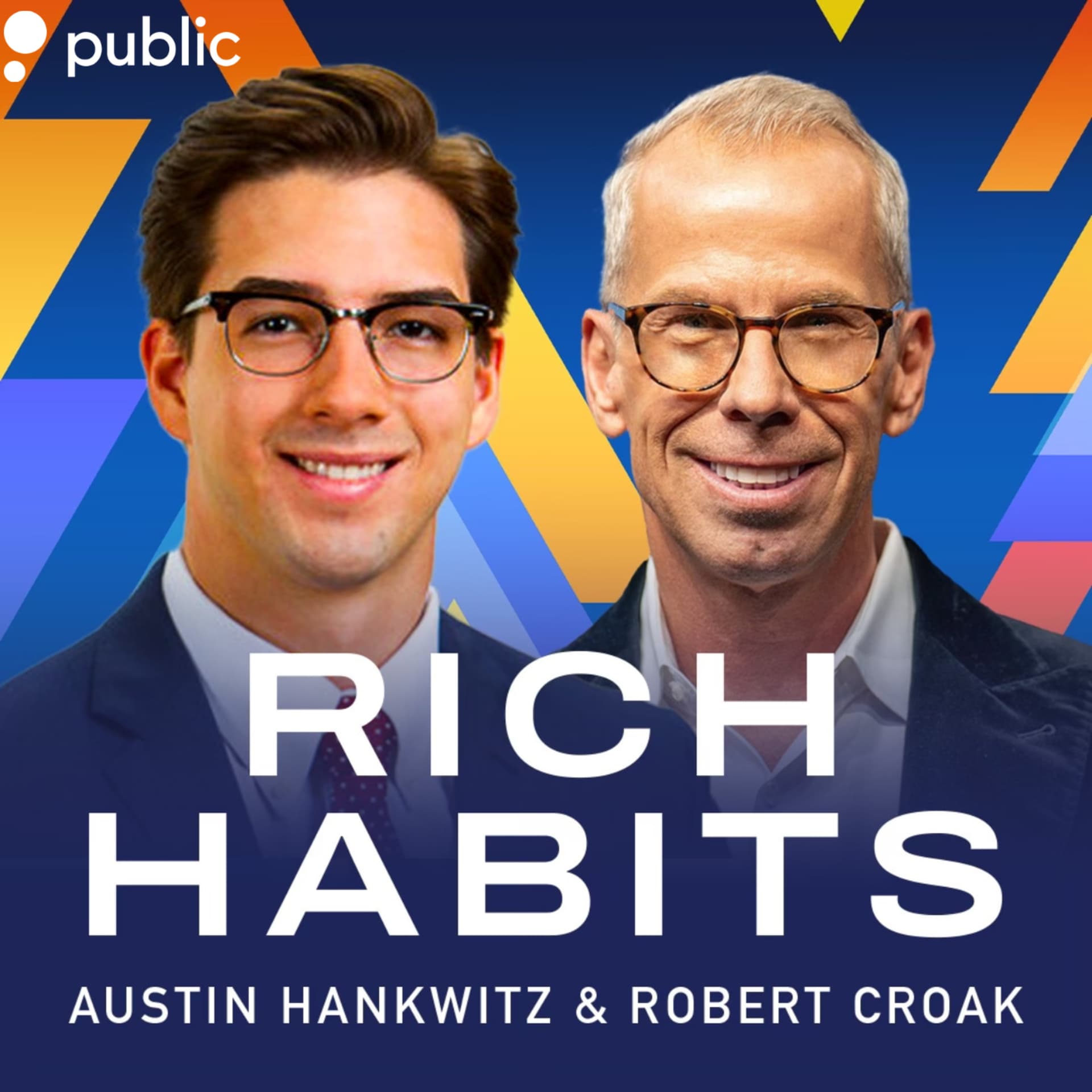
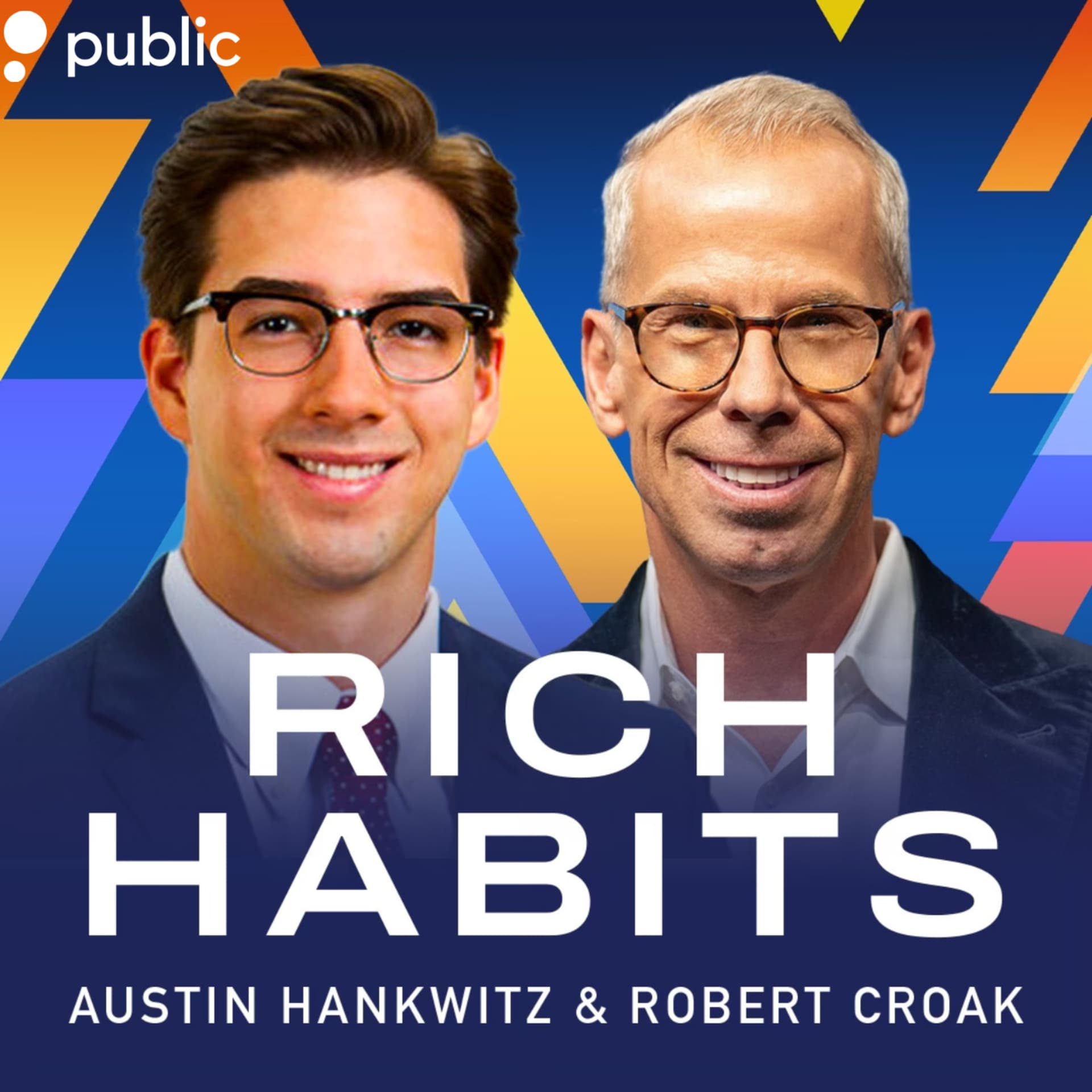
Rich Habits Podcast - Episode Summary
Podcast Title Rich Habits Podcast
Episode Title Labubu Dolls, Record-High Corporate Bankruptcies, & Chamath's $250M SPAC
Hosts
- Robert Croak: Decamillionaire with over 30 years of business experience.
- Austin Hankwitz: Entrepreneur in his 20s eager to learn.
Episode Overview In this episode, Robert and Austin tackle significant financial news and trends, discussing:
- The remarkable rise in profits for Pop Mart due to Labubu dolls.
- A concerning trend of corporate bankruptcies reaching a five-year high.
- Chamath Palihapitiya's filing for a $250 million SPAC (Special Purpose Acquisition Company) focused on "American Exceptionalism."
---
Segment Breakdown
- Pop Mart's 400% Profit Surge
- Overview: Pop Mart, a Chinese company, saw a 400% increase in profits attributed to its popular Labubu dolls.
- Financial Stats:
- Revenue tripled to nearly $2 billion.
- Shares up 240% year-to-date.
- Consumer vs. Investor Insight:
- Robert and Austin emphasize the importance of being an owner (investor) in companies you consume products from.
- Encourages listeners to identify trends and consider owning stock in trending companies.
Key Takeaway
- Recognize investment opportunities in consumer trends and prioritize owning assets over mere consumption.
---
- Record-High Corporate Bankruptcies
- Current Situation: July 2025 saw corporate bankruptcy filings hit a five-year high, with 446 large filings (up 12% since 2020).
- Notable Bankruptcies: Brands like Forever 21, Joann's, Rite Aid, Party City, and Claire's.
- Industry Impact:
- Majority of bankruptcies in industrials and consumer discretionary sectors.
- Small businesses cite poor sales as a significant concern, indicating a potential rise in unemployment.
Economic Implications
- Rising bankruptcies and inflation pose challenges for the Federal Reserve, which struggles to balance unemployment and inflation rates.
---
- Chamath's $250M SPAC
- SPAC Overview: Chamath Palihapitiya's new SPAC seeks $250 million and will focus on sectors like energy, AI, and defense.
- SPAC Mechanics:
- SPACs are shell companies that raise funds to merge with a private company, allowing quick access to public markets.
- Investor Caution:
- While SPACs can offer opportunities, many have failed post-merger. Emphasis is placed on thorough research before investment.
Important Note
- Caution against investing in SPACs without understanding the underlying business and market conditions.
---
Rapid Fire Headlines
- Meta's AI Hiring Freeze: Meta pauses hiring in its AI division amidst mixed results from AI investments.
- FanDuel and CME Group Partnership: Collaborative platform for betting on financial market events, expanding revenue potential despite legal restrictions in some regions.
- Walmart's Tariff Pressure: Increased costs due to tariffs will be passed on to consumers, affecting middle and lower-income shoppers.
---
Listener Q&A Segment
Question
Should I open a Mexican restaurant in Christianburg, Virginia?
- Advice:
- Focus on a specific menu to simplify management.
- Caution against quitting a stable job; consider piloting the restaurant with an operating partner instead.
- Suggest acquiring an existing restaurant to minimize startup costs and risks.
Final Thoughts
- Highlighting the importance of community, mentorship, and strategic planning when venturing into entrepreneurship.
---
Conclusion
- The episode emphasizes financial awareness, investment strategies, and the current economic landscape.
- Listeners are encouraged to subscribe to the Rich Habits Network and explore further resources provided by the hosts.
---
Additional Resources
- Rich Habits Newsletter: Stay updated on market trends and insights.
- Rich Habits Network: Join for exclusive content, live streams, and investment opportunities.
---
Thank you for tuning in to this week's episode of the Rich Habits Podcast!
Written by AI. May contain mistakes. Listen to the episode to check what was said.
Transcript
Automatic transcript. May contain errors.0:00Xena.com presents the Rich Habits Radar. A new Friday episode of the Rich Habits Podcast, where every Friday morning, we're coming at you with the biggest headlines impacting you and your money. My name is Austin Hinkwitz, and I'm joined by my co-host, Robert Croke. The three things sitting at the top of our Rich Habits radar this week are, one, Pop Mark's profits soaring by 400 % thanks to Labubus. Two, corporate bankruptcies hitting a five-year high. And three, Chamath Palahapitiya filing for a$250 million SPAC. And be sure to stick around to the end of the episode where we help a listener figure out if they should open a Mexican restaurant or not.
0:40That'll be a fun conversation. So, Robert, why don't we dig into our first story? PopMart profits soared 400 % during the first six months of 2025. Pop Mart is a Chinese company that has taken the world by storm because of their LeBouBou plush dolls. Pop Mart sells all sorts of trending collectibles from keychains to figurines and all other accessories for kids. And the company is publicly traded on the Hong Kong Stock Exchange. And it's crazy because their shares are up 240 % year to date, all because of the LeBouBou craze. Their revenue tripled to almost$2 billion during the quarter, with the majority of that being these Lububu plush doll sales.
1:22It's crazy to think that people are buying these plush dolls hand over fist for$30 to$200 each, while the average American in credit card debt carries a balance of over$7 ,000. Now, here's why it matters, right? Robert and I, we always talk about how important it is to own stock in the companies that you're a customer of. to not just be a consumer, but to also be an owner, right? So if you shop at Amazon, you also have stock in Amazon. If you ride in Ubers, you have Uber stock. If you're watching this right now on Spotify, you have Spotify stock. The only way you'll ever be able to retire is if you are an owner and not just a consumer.
2:00As you look around and you see people get excited about these Lububu dolls or anything else, if it's Lululemon leggings, if it's, you know, Hoka shoes, whatever's going on, on running, whatever you see going on around you, Go ask yourself, wait a second, are they a publicly traded company? Can I own a part of this trend? Can I profit from this beyond just maybe investing in the broad-based index funds, right? How do I look at a trend and get excited about it as an investor? That is what's important. I think that's the biggest takeaway from this crazy LaBubu doll craze that we've seen so far in 2025.
2:35And that takes us into the next story, which is a little more serious. July corporate bankruptcies hit a five-year high. July U.S. corporate bankruptcies filings hit the highest monthly total in five years. So the U.S. has now seen 446 large bankruptcy filings in 2025, officially up 12 % above pandemic levels in 2020. Several once popular brands from the 1990s and 2000s are included in this list of bankruptcies. Forever 21, Joann's, Rite Aid, Party City, and most recently, and I'm surprised by this one, Claire's have all filed for bankruptcy in 2025. Now, bankruptcies have been heavily skewed toward industrials and consumer discretionary at 70 and 61 year-to-date, respectively.
3:26This is well above that third-place industry of healthcare sitting at just 32 bankruptcies. And last place, actually, is energy. Only four energy bankruptcies have taken place so far in 2025. Now, tariffs, in our opinion, are what's pressuring these key industries. It's reasonable now as we look around and say, hold on, look at all these bankruptcies that are happening. It's reasonable to expect that unemployment could possibly surge because of it. In July, 11 % of small businesses said that poor sales were their most important problem. The highest percentage since 2020, right? is a prominent leading indicator for U.S.
4:03unemployment. Small businesses, Robert, employ 62 million workers, making up 46 % of all American employees. They are the backbone of this country. In late 2024, the percentage of unprofitable Russell 2000 companies rose to 43%, the most since 2020. This even exceeds the 41 % seen in 2008. Interest expense as a percent of total debt of Russell 2000 companies hits 7.1 percent, and this is the most since 2003. Meanwhile, inflation is back on the rise. Wholesale inflation just rose 0.9 percent month over month, its largest monthly jump since 2022. And core CPI inflation is officially back over the 3 percent level.
4:50This makes cutting rates even more difficult for the Fed, even as Trump calls for cuts. Yes, let's walk through this and talk about a little bit why it matters. You know, the Federal Reserve is in a very tough spot right now, right? The Fed's only job is to balance unemployment and inflation, keep unemployment as low as possible while keeping inflation as low as possible. And over the last couple weeks, maybe a month or two now, we've been flirting with the idea of rate cuts starting in September because we saw the 250 ,000 job revision that was for May and June. And, you know, inflation hadn't yet reinvigorated, but it is now.
5:28I mean, we saw just last week core and wholesale inflation, right? PPI is up to your point, Robert, almost 1 % month over month. That's crazy. It's going to be really interesting, Robert, to see what way the Fed decides to go here. Well, now we see jobs contracting, inflation's rising, and nothing is going the way Jerome Powell wants. Just one week ago, the Fed CME watch tool priced in a 95 % chance of a rate cut in September. But now after inflation is back on the rise, we're only seeing a 64 % chance. So that's a huge drop just in one week. And all I can say, people, is buckle up. The stock market is going to have some wild swings as the Fed navigates all of this information and what to do coming in September.
6:12Most definitely. We're already seeing some volatility that took place this week. That was from an MIT report saying that AI is just some heebie-jeebie stuff. And then even Sam Altman, right, the CEO of OpenAI, said in an interview that the AI bubble could be among us. So that's what's caused a little bit of the jitters this week. But let's talk about our last story here, which is Chamath Palahapitiya filing for a$250 million special purpose acquisition company. So you all might remember from 2020 and 2021, SPACs were all the rage. If you're unfamiliar, SPAC, S-P-A-C, is an acronym for Special Purpose Acquisition Company.
6:51Essentially what happens is investors pool together hundreds of millions of dollars, park that money on the balance sheet of a company, and then they IPO that company. So now the company doesn't do anything. They're essentially a shell company, but they have hundreds of millions of dollars on their balance sheet. Then that now publicly traded company merges with a privately held company, making the privately held company now a publicly traded company. Austin, why did they do this? Why didn't they just IPO? Because if you are a privately held company and you want to go down the IPO process, it normally takes 12 to 18 months.
7:26It's a long process, lots of meetings, lots of, you know, got to get investors excited. It's a lot of money. That's right. It's a very, very, you know, long, strenuous process here where a SPAC, you can do that in three months, six months. And so if you are a company that needs money, you need funding, you need to rock and roll, SPACs could make sense. And this is how countless unprofitable, privately held companies, especially during 2020 and 2021, began trading on the stock market. And literally 95 % of them either went bankrupt or their stock price went down 90 % or more after trading on the stock market.
8:02Some examples of this, and you guys are all going to remember these, Tattooed Chef, Money Lion, Nikola, Clover Health, Lucid, and even open door technologies, just go look at some of these companies' stock prices today and you'll see what we mean. But on the flip side, there have been some really successful SPACs as well. Hims and Hers Health obviously has done really, really well. DraftKings, Rocket Labs, and SoFi all went through the SPAC process and go look at their stock prices because they're all up like crazy. So it's not that SPACs themselves are bad, but it's what company they're merging with that matters the most.
8:40Now, speaking of SPAC, what did Chamath do? Chamath has a SPAC now. He just filed for it. It's called the American Exceptionalism Acquisition Corp. A, and it's seeking to raise$250 million via an IPO by selling 25 million shares at$10 each. According to the filing on Monday, the SPAC will mainly focus on energy, artificial intelligence, decentralized finance, and defense. Now, in a letter accompanying the filing, Chamath wrote, and this is a quote, I believe the biggest gains in the future will come from companies that are involved in fixing the fundamental risks that come from our interconnected global order while reinforcing American exceptionalism.
9:24Here's our short take. Be careful, please. In the moment, it might feel fun and smart to own stock in a random private company, but just know that if the company was really trying to succeed over the long term, why would they not just do the IPO process on their own rather than getting rolled up in a SPAC? So just keep that in mind. All right, Robert, now that we've talked through the biggest headlines at the top of our Rich Habits radar this week, I got to give my rapid fire, my top three little headlines I'm over here seeing on the side. My top three headlines personally is Meta's AI hiring freeze, the FanDuel and CME group partnership, and then Walmart now starting to feel some pressure from these tariffs.
10:06So let's kick it off with this Meta AI hiring freeze. Meta has implemented a hiring freeze within their AI division, ending a period of significant recruitment for AI researchers and engineers. Meta has reorganized their AI operations into four distinct teams, now under this Meta Super Intelligence Labs business segment. The restructuring also follows Meta's substantial investment in AI talent. I think we all saw those headlines where they were paying$100 million as a signing bonus to some of their new employees, including Alexander Wang, the founder of Scale AI. However, Meta's hiring freeze emerges while the broader concerns about the rapid pace of AI investments are maybe not paying off.
10:51We saw this MIT study come out. It's caused the markets to jitter a little bit. And even Sam Altman, the CEO of OpenAI, recently commented in an interview that he believes AI is in a bubble. So it's interesting to see how quickly Mark Zuckerberg is flipping the switch on their hiring. The next callout I want to share is FanDuel and CME Group's partnership. So FanDuel, which I think we all know what FanDuel is, it's one of these online sports betting apps, they've entered into a strategic partnership with the CME Group to create a platform that allows retail investors to bet on the outcomes of financial market events.
11:25Think about this as to what Robinhood and Calci did recently themselves. And now that we've got Robinhood and Calci together, we now see FanDuel and CME Group. Maybe we'll see BetNGM and DraftKings maybe come together on some of this stuff, right? It's a lot to unpack when it comes to that. But the reason for the partnership, as I understand it, why they're really doing this is it allows them to generate revenue from customers in places like California, Texas, and Florida where sports betting is not yet legal. So I'm definitely going to keep an eye on this one. And again, FanDuel stock, I think it's FLUT is the ticker on that one.
12:01Now let's wrap up my top three here, Robert, with Walmart. Walmart just came out with earnings and we've got some quotes from their CEO and their CFO. CEO says tariff costs are continuing to rise. We're managing this on an item by item and category by category basis. There's certainly areas where we have fully absorbed the impact of these higher tariff costs, while other areas we've had to pass some of those costs along. Now, their CFO says that these tariff related cost pressures will persist into Q3 and in Q4 with per week cost increases as inventory is replenished at higher price levels and noticeable unit level moderation across discretionary categories among those middle and lower income shoppers.
12:44So it's crazy to see here, you know, I think it was in Q1, they talked about how they're not yet passing on anything yet. They're still trying to figure it out. Well, now we see here in Q2, Walmart will be passing on some of these tariff related costs to their consumers. And unfortunately, it will hit the middle and lower income shoppers. Well, we are definitely seeing some cracks in the markets and some information that's surfacing now that really sheds light on where are things going with AI, where are things going with the economy, how is it going to affect consumer spending, all of the above.
13:15That's why these Friday episodes are so fun to film and so important for our listeners. So I want to jump into my three rapid fire headlines for today's episode. Number one for me is Intel and the fact that SoftBank invested$2.5 billion this past week into the company. But more importantly was the interview that I watched with the CEO of Intel, where he clearly in the interview point blank said, we missed the boat. We were late to the party in AI. So we are going to focus on edge AI. So what does this mean for all of us? We're keeping an eye on Intel. It's a big chip maker in the United States and why is all of this important?
13:57To me, it really revolves around the fact that Edge AI is still a huge part of AI and the chip business. When you think Edge AI, think of offline really quick processing power. So if you were thinking about autonomous driving cars, you would think using Edge AI type products because it has to be millisecond decision making that can be done. But Edge AI is going to be a big sector. Many of the companies we talk about all the time are in this sector like NVIDIA, Palantir, Micron, but also Intel. So I want to make sure everyone's keeping an eye on that because I do think Intel benefits a lot by being a US chip manufacturer.
14:38They've had their bumps for the last couple of years, but things are looking really good, especially with Trump announcing the 100 % tariff on all imported chips. So that's an important takeaway for the future of Intel, and we'll be keeping an eye on that. Number two, and this is kind of important to me and special in a headline that I wanted to share. You know, I've been in the restaurant and bar business for many, many decades, is Americans stop drinking alcohol. According to a Gallup poll, only 54 % of Americans say they're still drinking alcohol. And this is the lowest percentage in over 90 years, 9-0.
15:17That is a very, very long time. And it's just crazy to think that people are getting away from alcohol after hundreds of years of drinking it. The findings in the poll, which was conducted in July, indicate that after years of many believing that moderate drinking was harmless or even beneficial, worries about alcohol consumption are finally taking hold. According to Gallup's data, even those who consume alcohol are drinking less. In response, names like Constellation Brands and other alcohol-related publicly traded companies are seeing their stock prices trend lower. This is the opposite of a secular growth trend, maybe a secular growth demise.
15:57During COVID, after COVID, people started drinking less. They're doing run clubs. They're doing social meetups. There's a lot of seltzers out there that are non-alcohol. just a big trend going away from alcohol. So as we're always sharing with you guys, picks and shovels, make sure you know where markets are going so you don't get caught up in hype and understand these secular growth demises in different parts of the stock market. And my last headline today is U.S. manufacturing is rebounding. However, we saw last week from the producer price index that tariffs are fueling inflation in wholesale prices.
16:35The manufacturing sector as a whole recovered to a 39-month high in activity coming close to the threshold that divides contraction from expansion. Fingers crossed we're able to cross the threshold and definitely continue to grow U.S. manufacturing again. I know that's everything that the Trump campaign is pushing, and I would love to see it as well because we need to take control of manufacturing in the U.S. and become the powerhouse we once were. Yeah, I mean, Robert, back to the alcohol thing. I find myself drinking less. Maybe it's because I'm getting older, but I know like a ton of my friends like just don't drink at all.
17:09I've even seen like a lot of these different types of beverages that are more focused on CBD or even THC. And it's like it's a completely different way to think about drinking or enjoying yourself. I find myself now, if I do drink, I like to drink something that has I don't like to drink too much beer. I feel really bloated after I drink a lot of beer. So I'm finding myself drinking the seltzers, the surf sides. I'll even drink, you know, red wine more. I feel like that is like how I'll drink. But I agree. Like I'm not doing the cocktails like I used to. I'm not doing any of that stuff. It's different.
17:41It's weird. All my friends are in run clubs, like you were saying. A lot of my friends have got these. They're outside more. I see the Strava runs posted to their Instagram stories. It's been pretty interesting to observe that trend. Yeah, I definitely see. And it's really cool to watch it unfold in front of us is that the younger generations are really getting outside, being more active and caring about their health and wellness. You see it in the supplement category where more and more people, you know, when I grew up and I was in my 20s and 30s, we didn't take supplements. We didn't even know what those were.
18:12And now there are people that have full on regimens of what they have to do and take every day. So I think it's great for longevity and health and wellness in our society for sure. So let's now jump into of the Q &A section of this episode. As you guys know, the Q &A section of our Friday episodes are exclusive for small business owners. We know a lot of you out there. I've got the side hustle, the small business. Maybe you're trying to figure out how to make your first dollar on the internet. Whatever you have a question about as it relates to being an entrepreneur, ask it to us. Go email us at richhabitspodcast at gmail.com.
18:46Put like Friday episode or business question or something in the subject line so we know to identify it or DM us on Instagram at richhabitspodcast. So our first question was actually asked to us on Spotify. Go leave us a comment on this episode if you got a little question to ask. But it's coming from Hector Yu. Hector says, Austin, Robert, what are your thoughts on opening a Mexican restaurant in Christianburg, Virginia? I have a W-2 job that pays me six figures, and the restaurant I'm thinking about is more of a specific menu. Others offer a plentiful menu that complicates the management. What is your advice and how do you think I should do my due diligence on this kind of a business?
19:23Robert, you are the restaurant guy. I'd love to get your perspective on Mexican restaurants as a whole if you have any perspective on them. And then also, what's your take on a more specific menu in a restaurant versus a more, you know, cheesecake factory type menu? This is a fantastic question how you posed it. I have a huge issue with going into restaurants where the menu is a book, where there's four or five pages. Think of Cheesecake Factory, TGI Fridays, those kind of restaurants. Because you have to know that if there's that many items on the menu, like Hector alluded to, it's really hard to manage.
19:58But also they must have a massive freezer because you know they're not making anything homemade because the menu is so extensive. So I love the fact and the concept of restaurants being more farm to table, having lesser items and really focusing on quality and not quantity. So in Hector's instance, I love this concept, but I do fear, Hector, if you've never had restaurant experience, you've never opened a business on your own and you just really want to do this, be careful. So many first-time restaurateurs fail in the first year to 18 months. It's very expensive to get up and running. And I would strongly suggest for anyone that's thinking about getting in the restaurant business, try to buy an existing failing restaurant that was poorly managed that you can retrofit your concept in and do the research.
20:51Because building out a restaurant from scratch can take two years, and it's going to cost hundreds and hundreds of thousands, if not millions of dollars. buying an existing restaurant for pennies on the dollar or taking over a lease of an existing restaurant can get you in the door for a lot less money and investment capital up front. Now, let's talk about specificity of the menu. Hector, I think you're spot on. I love Mexican food. Everyone loves tacos. I'm glad to see there are more and more places that are focusing on this farm-to-table concept for their menu rather than the same stuff over and over.
21:28because in Toledo, Ohio, where I'm from, there are probably 15 large Mexican restaurants that all use the same beans, the same chicken, the same pre-cut tomatoes. Nothing is made fresh. To me, that's not real food and not how I'd want to own a restaurant. So I love the concept. Be careful and just make sure you really do the research on the location, how much money it's going to take. And just please, please find an operating partner if you don't have the restaurant own experience because we don't want to see you lose money. I think this is a great response here from Robert. I don't really have too much to share.
22:03The only thing I would share as it relates to this is to make sure that you are finding that operating partner, right? Like make sure that there's that person there that loves hospitality. They love serving people. They love to create that environment where people want to keep coming back, right? There's a Mexican place here right down the I read from my house that, oh my gosh, it is literally lying out the door every Thursday, Friday, and Saturday night. Like people, I've had their Mexican food plenty of times. It's amazing, right? Just the vibes are great. The food is fresh. It's reasonably priced, right?
22:36But like it is a place people want to be. And I don't know the secret sauce to that. I've never ran a restaurant myself. But, you know, reach out to people who are already doing this. Maybe you have some mentors in your life that can help guide you. Obviously, take Robert's advice as well. But not bad. Obviously. Oh, wait. Actually now, Robert, let's take a step back. He has a six-figure W-2 job. Should he quit that job to go do this restaurant stuff? I wouldn't quit my job until I have hundreds of thousands of dollars invested. I've got a clear, I'm going to try this. I'm going to make sure that it either fails or doesn't fail.
23:11And then if it fails or doesn't, like there's a date, there's a clear goal in mind. If I don't hit that goal, I'm back to my job. Do not find yourself in a situation where you're having to consistently come back and say, okay, well, if I just got$10 ,000 more to put into this, or I'll just have another 50K that I can go borrow from this bank or just another 100 grand to go, oh man, if I just get another 15 ,000 to renovate the bar, another 10 ,000, do not do that. Say, my name's Hector. I got this awesome opportunity over here with my job. I want to go start a Mexican restaurant. I understand what it takes.
23:40And if I do not hit these goals, I gave it my best try. It failed. I'm going back to my job. Do not fall for that cycle of just always trying and trying and trying and trying and trying. Exactly what I did when I took over our family's restaurant out of probate court because my grandmother passed away. It needed a full renovation, but I did not quit my finance job at the car dealership. I went to the owner of the car dealership. I said, hey, I bought this building out of probate. I'm going to open our keep our family's restaurant open, hopefully for decades to come. It's still open today. I was 23 years old when I took it over, but I did exactly that.
24:16I repositioned my job. I took a demotion from finance manager back to a salesperson. I got special hours so I could do both. So Hector Austin nailed it. Do not quit the six-figure job to go do this. Do both if you can. Get an operations manager. Align yourself with a good team. And then when your income in the restaurant maybe surpasses the income in the W-2 job, then you can consider quitting. But do not fall in that cycle of which Austin alluded to. You don't want to be there. So our next question comes from Sam I. Sam says, hi, Austin and Robert. My name is Sam, and I love your podcast. Three years ago, my wife and I started a healthcare practice from the ground up.
24:58Today, it generates$250 ,000 annually and is run entirely by the two of us. We've implemented systems that utilize AI, allowing us to operate a four - or five-person company, managing everything from administrative to patient care without needing extra staff. However, since it is a healthcare service, it's naturally limited by the location and available time. That's why we've decided to move into building an online education business where we can share our expertise globally and not be bound by geography or time. The system that you've built with the Rich Habits podcast is incredible. You have your podcast, you have your community, you've got your video coursework and everything in between, and it all works so seamlessly.
Read the full transcript
25:36Would love for you to explain what platforms you use, what has worked best for you, what pitfalls to avoid, and any advice that you have for us. If possible, please cover this in a Q &A Friday segment or even better, maybe a whole dedicated episode. I know many small business owners like us who are either starting or transitioning from all offline to some online and would find it hugely valuable. Thank you so much, Sam. Yeah, I'll kick this off. So yeah, Robert and I, we sort of built this like ecosystem with the Rich Habits podcast. our whole goal is to share as much information as possible for free via this podcast and if it's information with investing or small business ownership or anything like that like the podcast is completely free for anyone to listen to on so many different platforms and it's been listened to by tens of millions of people which is incredible and we're so grateful for that what we've done is we've got the podcast we have a newsletter called the rich habits newsletter People want some more market insights or weekly updates, like they go subscribe to that.
26:33Those email addresses, we have them inside of Beehive. That's how we publish our newsletter. It's a super simple platform. They do not charge, I think, for the first like 20 something thousand emails. So it's really affordable for people that are just getting started. We also have our community, the Rich Habits Network. And these are for more of those people that want like that extra time with Robert and I. We host a two hour weekly live stream on a Zoom call every Tuesday night. We have like eight hours of video coursework for like our biggest fans that want more of Rich Habits. Like they meet us over there.
27:03That's awesome. And you know, all this stuff is like, to your point, they're all like communicating with each other. So we talk about the Rich Habits Network, obviously on the show. We talk about the Rich Habits newsletter on the show. We talk about the Rich Habits Network on the newsletter. Like it's all just, they're all kind of like a flywheel where you just, you create these online properties, these online sort of ecosystems that you can tell people to go look at and review. And if you provide value at scale, which is what we're trying to do with the show, they keep coming back because you have a desire to want to learn more.
27:36And then if people want to learn more beyond what is deemed to be free information and they want more personalized access, then yeah, create a way for them to do that at a reasonable price. I think people make the mistake of charging a whole lot of money for courses,$3 ,000,$4 ,000,$10 ,000, when in actuality, that just feels weird to us. Our Rich Habits Network subscription is less than a monthly subscription to YouTube TV, right? Like that's how we think about it. And so we're not over here trying to explain to people why they should go spend$5 ,000 on something. So Sam, if I were you, I would one, think a lot about pricing to build sort of this ecosystem where provide value at scale.
28:16If people are interested to find out more about what you're doing, you do have a place to send them and then make sure once they go there, they have a really good experience. We take pride in how incredible the community is inside the Rich Habits Network and all the value we're able to provide to these people inside of there. If it's in the DMs, like every question gets answered like 100%. And so if you have that place to go, make sure that you're actually doing a good job hosting it. So my main takeaway, and that was incredible, Austin. It really makes me proud of what we've built. My main takeaway is ecosystem.
28:49But before you build the ecosystem and Austin just laid it all out for you, you have to understand, start small and provide value and do it well. I see so many people that start out and they're like, all right, I'm going to do Instagram. I'm going to do TikTok. I'm going to do LinkedIn. I'm going to do threads. I'm going to do this. I'm going to do a podcast. You can't build it all in a day. It takes a long time to build out the ecosystem. So start with the low hanging fruit. If you want to build this up, get your community built, but really start building up the platform that works best for you.
29:23Whether it's TikTok or Instagram, start building that up. Go to your audience that you already have. Go to your current customers. Hey, we're going to start offering online services. You are going to be in the driver's seat over most people that try to do this and make this transition because you already have your firm. You have your place where you can do all of this content. So you don't have to do it in a rented space or anywhere else. You already have the business setup to film inside of. But the number one thing is bring value and make sure you take it seriously. I deal with small business owners every day of my life.
29:58And so many of them think that social media marketing is having the girl that sits at the front desk, answering the phones, doing the Instagram and TikTok. And that is enough. It is not enough. Eyeballs are the biggest commodity you can have. And the more you build from that, the better off you'll be. So start small, build out the ecosystem, and grow over time because you can't do it all at once. Now, our final question comes from Sam. Sam says, I prefer to keep my name anonymous, so you'll just be Sam. That's cool. Austin and Robert, I'm 24, married, and I have two young kids. I have a five-year-old and a one-year-old.
30:33I'm a mechanical engineer, and I'm in the HVAC consulting industry, making$85 ,000 a year. I have a strong desire to separate from my current job to create or buy a business. This business would not be directly related to engineering. We currently have an emergency fund of 20 ,000. We have 20 ,000 in our checking account, 32 ,000 in crypto, and 50 ,000 across several retirement accounts. We just purchased a home last year. Mortgage is 260 ,000 at 7%. How do you suggest brainstorming or pursuing business opportunities as a young husband and father? I appreciate any feedback you can provide. Go follow StartupConnor on Instagram.
31:11Connor is actually in the Rich Habits Network and he has done about a hundred thousand dollars of like side hustle revenue over the last 12 to 18 months. He does like website design. He's doing AI automations. Like we've talked about a hundred times on the show and he's documenting the journey. So startup Connor on Instagram, he does like these daily vlogs of how he balances being, I think he's 29 or 30 years old. He's married. He's like, he has his nine to five job. He's treating their day to day. And then when it comes to like actual brainstorming and pursuing business opportunities, if you want to separate from your current job, not related to engineering, I would just spend a couple of weeks, like really thinking about what makes you happy.
31:54Is it a service related job? Is it a hardware job? Are you working with your hands? Are you communicating a lot with people? Do you have a partner? Is this something that you can do online? Or is this something you want to do with people in person? Like what makes you really excited as it relates to being an entrepreneur or a solopreneur or a side hustler or whatever else? And how can you begin to provide value and solve problems for people that are in that ecosystem, that are operating in that space? And something for me is I really enjoy talking about personal finance and investing. I'm a super nerd when it comes to it.
32:26And I also enjoy communicating and teaching people and talking about things as it relates to finance. And so I've been able alongside Christian and Robert and other incredible people I've met along the way to have a newsletter, a podcast, several podcasts, all these different things that allow me to do this now as my full-time job. And so it aligns well because I love doing this stuff and it doesn't feel like work every day, which is amazing. And we've been able to provide value to millions of people through it. And so I guess you have to ask yourself those questions, Sam, is like, what really doesn't feel like work to you?
33:00What gets you really excited? And how can you provide value at scale? How can you solve people's problems that align with what you are really good at or really enjoy doing. I love that takeaway, Austin, and I'm just going to add a few things to it. Right now, with baby boomers retiring at record numbers and not having succession plans, I think it'd be really smart if you did the research. Go to BizBuySell. Go to LoopNet.com. Go to these websites and just dig around inside of them and see what types of businesses are for sale because here's why. Rather than starting a business from scratch, you work in engineering, you consult in HVAC.
33:37So you already know some of this side of the services industry, which is a very, very good place to be. I would find a business relative to your skill set that works because so many of these businesses, the owners are retiring. You can get owner financing. You can get payment plans. So you don't have to come out of pocket and spend all the money that you've set aside already to be able to make this transition. That's where I would start because so many millions of businesses are going to go unsold every year for the next five or 10 years because of boomers are retiring. So that's where I would start.
34:12Do the research. Maybe look around and just really see what's growing in your area, where there is a niche that is needed, and find a business that you can buy and take over that already exists. Thank you so much for tuning in to this week's episode of the Rich Habits Radar. Be sure to come back on Monday, and we've got another banger episode for you right around the corner. If you've not yet subscribed to the Rich Habits newsletter, please consider doing so. And if you want more of Robert and myself, you want to join those weekly live streams, you want to have that eight hours of video coursework, and even invest alongside of us in some of these pre-IPO and privately held companies, consider joining the Rich Habits Network.
34:51Like we said, it's cheaper than your YouTube TV subscription, so seems like a good tradeoff to me. And thank you all for always supporting us, giving us those five-star reviews, sharing the episodes with friends. That's been a huge thing we've seen lately because we are here to provide a ton of value because life gets in the way and personal finance is personal. So we really appreciate you stopping by every week and supporting the show. Thanks, everyone. And we'll see you on Monday.
35:42We'll see you next time.
From the publisher
In this week's episode of the Rich Habits Radar, Robert Croak and Austin Hankwitz talk about Pop Mart's profits soaring +400% thanks to Labubu dolls, corporate bankruptcies hitting a 5-year high, and Chamath's new $250M SPAC focused on "American Exceptionalism."
---
✅ Ready to start investing? Open a brokerage account on Public.com/richhabits and get a FREE 1% match on all IRA deposits, transfers, and rollovers!
---
‼️ Have feedback to share? Please let us a comment on Spotify! We're excited to mold these new weekly episodes to be exactly what our listeners want.
---
🚀 Join 680+ fellow podcast listeners inside the Rich Habits Network! Unlock 8 hours of video course work, ask us questions directly, participating in exclusive weekly livestreams, and invest alongside us in pre-IPO deals. Click here!
---
⚡️ Sign up for the Rich Habits Newsletter and never miss a market-moving headline again, click here!
---
⭐ Download our FREE Financial Planner – click here
⭐ Download our FREE Budgeting Template – click here
⭐ Earn 4.1% on your savings with a High-Yield Cash Account – click here
⭐ Trade stocks, options, music royalties and crypto on Public – click here
⭐ Automatically buy stock where you shop with Grifin – click here
⭐ Protect your family with term life insurance from Suriance – click here
⭐ Use code “Spotify” for 15% off our 4-module video course – click here
⭐ Optimize your portfolio with Seeking Alpha – click here
---
📬 Inquire about working together – christian@witz.vc
---
Hankwitz Group LLC has an existing business relationship with NEOS Investment Management LLC. The opinions expressed are those of the author, and the author owns several NEOS ETFs.