In short
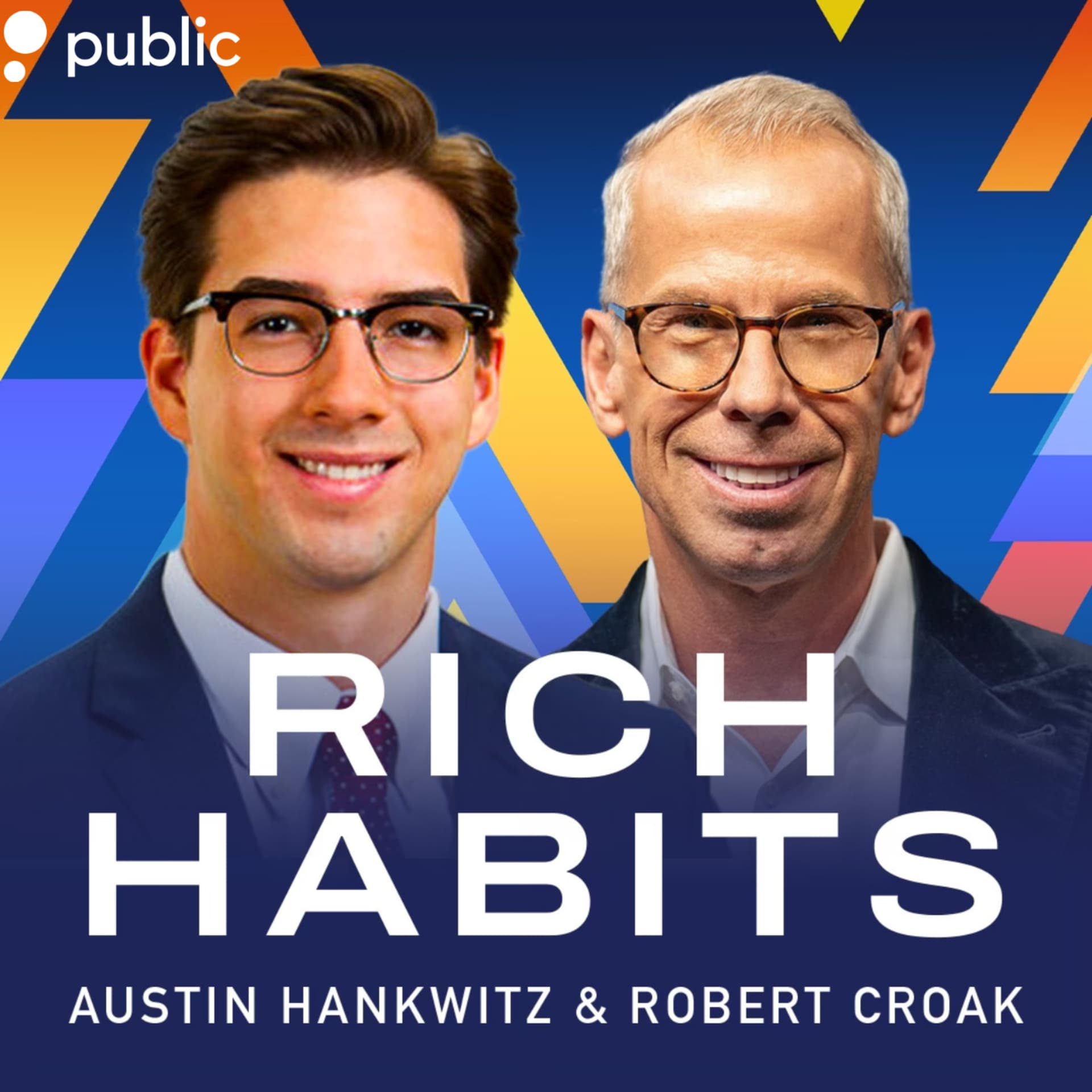
Rich Habits Podcast - Episode Notes
Episode Title
Nvidia's $1 Trillion Revenue Announcement, the Fed's New Inflation Forecast, & Kraken's IPO
Hosts
- Robert Croak
- Austin Hankwitz
---
Episode Summary
In this episode of the Rich Habits Podcast, hosts Robert Croak and Austin Hankwitz discuss significant financial updates, including the Federal Reserve's new inflation forecasts, Nvidia's remarkable revenue projections, and changes in the American economy's structure with the rise of service-based businesses. The conversation emphasizes the implications of these developments for individual investors and financial strategies.
---
Key Topics Covered
- Federal Reserve's Inflation Update
- The Fed decided to hold interest rates steady between 3.5% and 3.75%.
- Fed Chair Jerome Powell indicated inflation is not decreasing as anticipated.
- Significant changes in inflation projections:
- Core PCE inflation forecast raised from 2.5% to 2.7% for 2026.
- Majority of Fed members now expect either one or no rate cuts in 2026.
- Impact on Portfolios:
- Rate-sensitive investments (REITs, growth stocks) are under pressure.
- Suggestion for investors to focus on sectors that thrive in inflationary environments (energy, consumer staples, utilities).
- Nvidia's Revenue Projections
- Nvidia's CEO, Jensen Wang, announced a $1 trillion projection for AI chip orders through 2027.
- Nvidia reported a revenue of $68.1 billion, a 73% increase year-over-year.
- The potential reopening of the Chinese market for Nvidia's products could lead to significant revenue increases.
- Investment Insight:
- Nvidia is considered a strong investment, bolstered by its unique position in the AI sector.
- Change in American Economy Structure
- For the first time, spas and gyms now occupy more retail space than stores selling physical goods.
- Shift in consumer spending from physical goods to health and wellness experiences.
- The wellness economy is estimated to be valued at $2.1 trillion.
- Market Implications:
- Investors holding commercial real estate or REITs should adapt to these changes in tenant mix.
- Consumers are prioritizing wellness spending over traditional retail.
- Kraken's IPO Freeze
- Kraken, a prominent cryptocurrency exchange, has paused its IPO plans due to unfavorable market conditions.
- This reflects broader challenges within the IPO market and the crypto sector.
---
Key Takeaways
- Market Adaptation: Investors should actively manage their portfolios based on current economic conditions rather than reactively selling off assets during downturns.
- Focus on Growth Sectors: In the face of inflation, sectors such as energy and consumer staples are expected to perform well.
- Nvidia as a Long-Term Investment: Nvidia's growth trajectory in the AI sector presents strong investment opportunities.
- Changing Consumer Behavior: The trend towards wellness and experiences signifies a long-term shift in consumer spending habits.
---
Radar Points
Robert Croak's Radar Points
- Meta's AI Integration: Transitioning to AI for content moderation while reducing the human workforce.
- Nebius and Meta Partnership: A significant $27 billion deal indicating growth in AI infrastructure.
- MasterCard's Acquisition: A $1.8 billion buyout of BVNK to enhance stablecoin infrastructure.
Austin Hankwitz's Radar Points
- OpenAI's Shift: Moving focus to coding tools, indicating a strategic pivot away from consumer-facing projects.
- Kraken's IPO Delay: Highlights the difficulties in the current IPO market despite favorable regulatory conditions.
- Uber's Investment in Rivian: A $1.25 billion investment to develop a fleet of autonomous electric vehicles, signaling advancements in the ride-hailing industry.
---
Conclusion
This episode provides listeners with critical insights into current financial trends and encourages proactive strategies for investing in a rapidly changing economic landscape. The hosts emphasize the importance of staying informed and adapting to market conditions to achieve financial success.
Written by AI. May contain mistakes. Listen to the episode to check what was said.
Chapters
Tap a time to open that second in VOFederal Reserve's Inflation Forecast Update
1:30 to 2:14
Discussion on the Federal Reserve's recent inflation forecast and interest rates.
“and signaling that rate cuts might not happen at all this year.”
Implications of the Fed's Decision on Investments
2:14 to 4:59
Analyzing how the Fed's interest rate decisions affect investment strategies.
“There's just so much really kind of big news out there around our money.”
NVIDIA's Trillion Dollar Chip Orders
4:59 to 9:50
Exploring NVIDIA's CEO's projection of $1 trillion in AI chip orders.
“And the assumption is that inflation was a solved problem and that rate cuts were a question of when, not if.”
NVIDIA's Market Position and Future Prospects
9:50 to 14:01
Discussing NVIDIA's competitive edge and future growth amidst market changes.
“Next point is NVIDIA's CEO, Jensen Wang, just projected$1 trillion in AI chip orders and China is back.”
NVIDIA's Stock Analysis and Investment Strategy
14:01 to 17:08
Learn why now might be a good time to invest in NVIDIA despite market fluctuations.
“What does this mean for the everyday person watching this episode and you and your money?”
The Shift in American Retail: Wellness Over Goods
17:09 to 20:42
Discover how American consumer preferences are shifting from goods to wellness services.
“America now has more spas and gyms than stores selling actual stuff.”
Radar Points: Meta's AI Strategy and Blockchain Adoption
22:55 to 26:51
Understand how major companies are adapting AI and blockchain technologies for growth.
“So, Robert, let's jump to our radar points.”
OpenAI's Strategic Shift to Coding Tools
29:51 to 30:12
Explore OpenAI's pivot towards enterprise coding tools and its implications.
“All right, Robert, let's now jump into my radar points.”
Kraken's IPO Freeze Due to Market Conditions
30:12 to 31:39
Discuss Kraken's decision to halt its IPO amid unfavorable market conditions.
“The Wall Street Journal reported earlier this week that OpenAI's top executives are finalizing plans to refocus the entire company around coding tools in enterprises, cutting back on those consumer-facing side projects.”
Uber's Investment in Rivian and the Robo-Taxi Race
31:39 to 32:57
Examine Uber's massive investment in Rivian and its plans for autonomous vehicles.
“So Uber is putting up $1.25 billion into Rivian to build a fleet of 50 ,000 autonomous electric vehicles for their ride-hailing network.”
Transcript
Automatic transcript. May contain errors.0:00Robert Croak:Score more with the college branded Venmo debit card and earn up to 5 % cash back with Venmo Stash. Got paid back? With the Venmo debit card you can instantly access your balance and spend on what you want. Like game day snacks, gear, tickets and more. The more you do, the more cash back you can earn. Plus there's no monthly fee or minimum balance. Sign up now at Venmo.com slash college card. The Venmo MasterCard is issued by the Bancorp Bank N.A. Select schools available. Venmo Stash terms and exclusions apply at Venmo.me slash Stash terms. Max$100 cash back per month. This episode is brought to you by Indeed.
0:33Robert Croak:Stop waiting around for the perfect candidate. Instead, use Indeed Sponsored Jobs to find the right people with the right skills fast. It's a simple way to make sure your listing is the first candidate C. According to Indeed data, Sponsored Jobs have four times more applicants than non-sponsored jobs. So go build your dream team today with Indeed. Get a$75 Sponsored Job Credit at Indeed.com slash podcast. Terms and conditions apply. Welcome back to the Rich Habits Radar, our Friday episode of the Rich Habits Podcast, where every Friday morning, we're coming at you with the biggest headlines impacting you and your money.
1:09Robert Croak:This episode of the Rich Habits Radar is brought to you by VCX, the public ticker for private tech, which is now listed on the New York Stock Exchange. Go check it out. My name is Austin Hankwitz, and I'm joined by my co-host, Robert Croak, and the three things sitting at the top of our rich habits radar this week include the Federal Reserve raising their inflation forecast and signaling that rate cuts might not happen at all this year. NVIDIA's CEO projecting$1 trillion in AI chip orders over the next two years and also confirming that China is ordering chips again. And we're also going to be talking about a weird structural shift in the American economy.
1:51Robert Croak:The United States now officially has more spas and gyms than stores selling physical products. Robert, you're a physical product guy. I'm sure you've got a lot to talk about with that. And be sure to stick around to the end where we talk about Kraken, the crypto exchange, freezing their IPO given the Bitcoin bear market. All right, Robert, let's dig into our first story.
2:13Austin Hankwitz:Yeah, this is going to be a really good episode. There's just so much really kind of big news out there around our money. And on Wednesday, the Federal Reserve voted 11 to 1 to hold interest rates steady at 3.5 % to 3.75%. That part was expected. What wasn't expected was everything else that came out of the meeting.
2:34Robert Croak:Yeah, Robert, a lot came out of that meeting. Fed Chair Jerome Powell said inflation's not coming down as much as they had hoped. He said the implications of the Iran war on the U.S. economy are uncertain, and it's too soon to know the full impact on the economy. The updated summary of economic projections told the rest of the story. The Fed raised their core PCE inflation forecast from 2.5 % to 2.7 % for 2026. Headline PCE also moved up to 2.7 % in 2026. And GDP expectations slightly were bumped higher from 2.3 % to 2.4%.
3:11Austin Hankwitz:But the dot plot is where everything gets really interesting. And for those that aren't familiar, the dot plot is a chart where each of the 19 Fed members place a dot showing where they think interest rates should be at the end of the year. The median still shows one quarter point cut in 2026, bringing the target rate to 3.4%. But here's the shift. Seven members now expect zero rate cuts this year. That's up from six in December. And of the remaining 12, only five see more than one cut. In December, remember, 12 members saw more than one cut coming.
3:47Robert Croak:So let me break that down for you all. In three months, the committee went from a majority expecting multiple rate cuts in 2026 to now a super majority expecting only one or even zero cuts at all. Back in September 2025, the market consensus was three and a half rate cuts on average, right? That's the half in 2026. So everyone's like, cool, we're going to cut rates three, maybe four times in 2026. December's dot plot, they said two. And now after January's meeting, it was one. And now here in March, it's technically still one. But nearly 40 percent of the committee is saying, no, let's just make it zero.
4:27Robert Croak:Every single meeting, the market gets less relief that they were hoping for.
4:32Austin Hankwitz:This is Powell's second to last meeting as Fed chair. His term expires in May, and Trump has tapped Kevin Walsh as his successor. Walsh has indicated he prefers lower rates, but hasn't said anything publicly about where his thinking is given the current inflation picture.
4:48Robert Croak:So, Robert, we've kind of talked a little bit about inflation, the Fed, what happened this week. But, like, walk everyone through, because this is very important for everyone and their money. Walk everyone through how this impacts their portfolio.
4:59Austin Hankwitz:Yeah, it is super important. And the assumption is that inflation was a solved problem and that rate cuts were a question of when, not if. That assumption is breaking down right now in real time. And that's where the problem lies. The Dow dropped 750 points after Powell's press conference. And all three major indexes hit fresh 2026 lows on Wednesday. And major indices are down again on Thursday morning as we film this episode. So for your portfolio, that means a few things. Rate-sensitive investments like REITs, growth tax, small caps are all going to stay under pressure until the inflation picture clears.
5:37Austin Hankwitz:And if you're overweight in names that need rate cuts to work, you're fighting the Fed. And there's an old saying on Wall Street, don't fight the Fed. So when 14 of 19 committee members are telling you rates are staying at 3.5 % or higher through the end of the year, you better believe them.
5:53Robert Croak:Yeah, and the sectors that are actually working right now, think energy, consumer staples, utilities, a little bit of healthcare, they're working because they perform well in inflationary environments. The great sector rotation that we've been talking about on this podcast for the last maybe seven or eight weeks now is taking place. I mean, I'm looking at my VDE, XLE, XOM, DOW, what's another one? Oxypetroleum, OXY. All of these names in my portfolio, I've got like 50 or 60 ,000 invested in them back at the beginning of February. Because we talked about doing that inside the Rich Habits Network.
6:30Robert Croak:They're all up double digits now. And it is awesome. Where on the contrary, the MAGS ETF, which tracks the Magnificent Seven, is down 6 % year to date. Energy up double digits, sexy AI down 7%.
6:47Austin Hankwitz:Powell said near-term inflation expectations have risen, likely reflecting the substantial rise in oil prices caused by the supply disruptions in the Middle East. We're all seeing it on the news. We can't get away from it. And that's the Fed explicitly telling you that as long as the Iran conflict continues and oil stays elevated, inflation is going to go higher, not lower. The war started less than three weeks ago, and there's no ceasefire in sight. So plan accordingly with your money and stay on top of these things. We always talk about active management, and right now is when you need to be doing that.
7:22Robert Croak:Yeah, let's just like double click, though, because I think a lot of people are going to make the mistake of watching this episode and say, holy crap, I need to sell my Mag7 and go all in on energy, or I need to get out of the S &P and the Dow because they're down. I need to go buy other stuff. Don't do that. That's not what we're saying. That's not active management. Active management, in our mind, says, okay, cool, we're starting to see the writing on the wall. It's October, November, December. You know, we're inside the Rich Habits Network hosting live streams talking about these high beta names going crazy like Robinhood and Palantir.
7:52Robert Croak:And they're all having these climax tops and they're coming down 20, 30, 40, 50 percent. Bitcoin's now in a bear market, right? These things could be foreshadowing what's around the corner for the indices, S &P, NASDAQ, Dow Jones. Now we look at that, the S &P, the NASDAQ and the Dow Jones are all now today trading below their 200 day moving averages. that's not indicative of a bullish uptrend in the markets that is bearish to be honest with you but now is not the time to get reactive if you wanted to have active management you should have done stuff two months ago when we talked about it in the rich habits network now you're just reacting and remember wealthy people forecast broke people react do not react here's what you need to do here's your playbook if you're realizing all this at the same time right now like everyone else's continue to dollar cost average and the major indices like the S &P, the NASDAQ, the Dow Jones, VGT, VUG, all these big index funds and ETFs that we like and love because the mistake people make is they see that the MAG's ETF is down 10%.
8:59Robert Croak:They see that VOO year to date is down 4 % and just 4.5 % in the last three weeks, right? They see these numbers and they get scared and they stop investing. That's not you. You dollar cost average, you continue to invest all the time. You are not someone who says, whoa, I'm scared to sell everything, run for the hills and stop. Now is when people get wealthy. You don't make money when the stock market's at all time highs. You make money when the Dow is 8 % or 10 % off those highs and you can buy it. I bought shares of the DIA, the Dow Jones Industrial Average ETF, in my retirement account two days ago.
9:37Robert Croak:I did, right? Because I know when I retire in 30 years, it's going to be much higher than where it is today. That's the mentality you need to have.
9:45Austin Hankwitz:What a great outtake on the first point. Take us into the next point of this episode.
9:50Robert Croak:Next point is NVIDIA's CEO, Jensen Wang, just projected$1 trillion in AI chip orders and China is back. So at NVIDIA's annual GTC developer conference on Monday in San Jose, California, NVIDIA CEO Jensen Wang took the stage to a packed house of people and made a projection that pretty much stopped the room and everyone's jaws were on the floor. One trillion in cumulative purchase orders for NVIDIA's Blackwell and Vera Rubin AI chip systems through 2027. A trillion dollars, like with a T, a thousand billion. That is double the$500 billion estimate that he gave at last year's GTC. Unbelievable, Robert.
10:36Austin Hankwitz:Yeah, I don't think there's a world where we're in an AI bubble just yet. Yes, there will be some names that might go down and might not scale as planned, but I don't think NVIDIA is one of them. And NVIDIA's most recent quarter was$68.1 billion in revenue, up 73 % year over year. I'm still a buyer of NVIDIA. I know you are as well. We are still bullish long-term on that. And that marked the company's 11th consecutive quarter of revenue growth above 55 % per quarter. And Wong is guiding for 77 % growth this quarter, which is roughly$78 billion. Remember, this is a$4.5 trillion company, the most valuable public company in the world, growing at a rate that defies everything we thought we knew about scale in these AI super growth companies.
11:28Robert Croak:NVIDIA's CEO is saying that this new demand is being driven by a fundamental shift in how AI is actually being used. The industry has now moved away from training large language models, which was kind of the first phase of this, to inference at a massive scale. So think agentic AI applications that spawn other agents to accomplish tasks that are generating exponentially more tokens than a simple chatbot interaction. Jensen Wong put it simply. If they could just get more capacity, they could generate more tokens and their revenues would go up. Talking about these companies like the Open Clause and the perplexities of the world that have got these AI agents.
12:08Robert Croak:If they could just get more capacity because the demand's there. People like Robert and I, we're using this stuff, right? If they could get the capacity, their revenue will go up. And that's why a trillion dollars is on the table.
12:20Austin Hankwitz:On Tuesday, Wang told reporters that NVIDIA has received purchase orders from China and is restarting manufacturing for the Chinese market. His exact words, that's new news for all of you, and it's different than it was two weeks ago or even three weeks ago. But that's our condition today, and our supply chain is getting fired up.
12:41Robert Croak:Now, here's a fun fact for you, Robert. China once accounted for a fifth of NVIDIA's data center revenue. And the company has been effectively shut out now of this Chinese market since the Trump administration required export licenses last April. NVIDIA took a$5.5 billion charge because of it. And as recently as their February earnings call, their CFO told Wall Street analysts that while a small number of H200 products had been approved for sale by the Trump administration, we've yet to generate any revenue from China. So this news is major.
13:15Austin Hankwitz:And Wong told CNBC the company now has clearance from both sides, the U.S. and China. And this deal allows NVIDIA to ship its H200 chips to China, provided the U.S. government gets a 25 % cut of sales. There are still caps on shipments, mandatory third-party testing, and significant licensing requirements. But the door is now open, And NVIDIA's current quarter guidance of 77 % growth assumes zero data center revenue from China, which is just crazy to think where this is going to go as they provide chips to China again. So if Chinese sales actually materialize this quarter, it's an upside that nobody is pricing in.
13:56Austin Hankwitz:So, Austin, this is really great news for NVIDIA holders like ourselves. What does this mean for the everyday person watching this episode and you and your money?
14:06Robert Croak:Well, I think what's really cool, just like before we jump in, is I'm looking at the stock price here. And since August of 2025, right, so almost, I don't know, what is that, eight months ago, the stock has been trading sideways. It hasn't done anything, which I think is just a wonderful opportunity for everyone listening right now to go back and think to themselves, this is when you're supposed to accumulate shares. not when it's going up and vertical like it did back in you know let's call it 2023 and then again here uh early 2025 it went from 100 a share to 180 a share you don't want to buy it when it's going up you want to buy it when it's trading sideways so me personally i'm excited about this news i think it's great and i'm buying more nvidia nvidia is now in a category of one right they're not competing anymore with the mag 7 they are it no other company in the world is executing at this level at this scale with this kind of revenue growth.
15:02Robert Croak:And it's important, but you guys got to keep this in mind, a$1 trillion order pipeline over two years doesn't automatically mean the stock is just going to go vertical from here, right? No one can predict what the stock is going to do. And at$4.5 trillion in market cap, the market is already pricing in extraordinary growth. So the question isn't whether NVIDIA is a great company. We all know it clearly is. The question is whether now is a good time to buy the stock. And if you're like me, you just want to own equity in NVIDIA. I've been dollar cost averaging, and I'm sure Robert's been doing the same.
15:35Austin Hankwitz:Yeah, it's crazy to think how it seems like for the last three years, people have been crying to the mountaintop saying that NVIDIA is overpriced and the stock is too overblown and it's going to retract. Yet when you look back five years, the stock price is up 1 ,287%. And the China development is genuinely new to all of this, and the street is not modeling Chinese revenue in the current quarter. If orders materialize at scale and Yuan's language suggests they will, that's a meaningful catalyst. But there's a geopolitical risk baked into every Chinese shipment. Export controls could tighten at any time, and the 25 % government cut eats into margins.
16:17Austin Hankwitz:So just keep that in mind along the way. And the licensing requirements create operational friction. and this is incremental revenue, not a return to the pre-restriction era. So make sure you guys weigh that in when you're considering the pricing of NVIDIA and if you should buy more.
16:33Robert Croak:And again, I want to emphasize, no one can time the market. NVIDIA could be trading down 50 % in six months from now. I have no idea what's going to happen. I will dollar cost average. I'm telling myself, I want to own equity in this business. I think it's the future. I think the earth is being completely rebuilt with AI in mind and NVIDIA is powering it. So you can come for us in 12 months when NVIDIA is at whatever price it is. I don't care. I'll be buying more. I think NVIDIA is great.
16:58Austin Hankwitz:I agree with you 100%. I always want to be diversified. That's the message I share, you share. But I also want to own the leaders in every sector. And NVIDIA is definitely that. So let's get on to our last point. And this one is really, really fun. America now has more spas and gyms than stores selling actual stuff. The Wall Street Journal published a piece this week with a headline that literally stopped me in my tracks. America now has more spas and gyms than stores actually selling real goods. Crazy stat, but let's get into it.
17:32Robert Croak:Yeah, for the first time in history, service-based tenants like salons and spas and fitness studios and things like that leased more than 50 % of total retail square footage in the United States in 2025. And according to data from CoStar, the commercial real estate analytics firm, service tenants now account for just over half of all retail leasing. Whereas 15 years ago, the number was 40%. Think about that. 15 years ago, it was 40%. Now it's 50%, and it's tipping over into the majority.
18:05Austin Hankwitz:Yeah, I feel like in downtown St. Petersburg, there is a med spa or some sort of one of these wellness centers on every corner. and the National Director of U.S. Retail Analytics for CoStar said something that perfectly captures the shift. He said, a handbag used to be a luxury symbol. Today, a more common sign of status is spending money on things like yoga classes or facials. So think about that for a second. The status symbol in America has shifted from what you carry to how you look and feel, and I agree with it 100%. And I'd rather feel good and look good than have something that's a depreciating asset that I'm spending my money on.
18:43Robert Croak:There you go. That's why the U.S. wellness market hit$2.1 trillion just the other year, according to a Global Wellness Institute survey. That includes spending on spas and beauty, nutrition, mental, fitness, and public health, and all that stuff, but literally over$2 trillion.
19:00Austin Hankwitz:On the supply side, e-commerce has permanently reduced the amount of physical space retailers need to sell goods. Online sales accounted for 16.4 % of total retail last year, up from 8 % in 2016. So physical retail space is being vacated, not because demand for spaces drop, but because the kind of tenant filling that space has changed.
19:23Robert Croak:And on the demand side, Americans are spending on experiences, self-care, and wellness at a rate we've never seen before. There are now dedicated shops for those laser facials, IV hydration, vitamin infusions, Botox, red light. therapy, cryotherapy, all that stuff, right? So, and it is, it's nuts. Fitness center openings have surged as well. The fitness sector now makes up nearly 30 % of all service-based leases. Planet Fitness, a publicly traded company, added over 1 million net new members last year, and they announced they're opening nearly 200 locations. So, Robert, what does this mean for you and your money?
Read the full transcript
20:00Austin Hankwitz:The wellness economy is at$2.1 trillion with a team market that's still growing. with the global fitness market projected to reach$135 billion by 2030 at a 7.5 % compound annual growth rate. So if you own commercial real estate or REITs, the tenant mix is shifting underneath you. And that's actually a good thing if the landlord is adapting to these changes.
20:26Robert Croak:And this also tells you, Robert, something that's important about the American consumer. You know, they're despite the headlines of the inflation and gas prices and sentiment and all this stuff. They will cut back on purchasing physical goods before they cut back on self-care. So Lululemon, they just had their earnings this last week and they guided down closing stores. I think even like Bad News Bears for Lululemon while Planet Fitness during the same period of time added a million new members. Right. So people stop spending one hundred thirty dollars on leggings, but they're not canceling that fifteen dollar a month gym subscription.
20:59Austin Hankwitz:Yeah, that's crazy. Planet Fitness adding a million members. Yet when we looked at the stock, still down 30 % for the last year. So you never know how it's going to affect the stock price. So before we get into our radar points, let's give a shout out to VCX. They are the support for this show coming from VCX, the public ticker for private tech. For generations, American companies have moved the world forward through their ingenuity and determination. And for generations, everyday Americans could be a part of that journey through perhaps the greatest innovation of all, and that is the U.S. stock market.
21:35Robert Croak:It didn't matter whether you were a factory worker in Detroit or a farmer in Omaha. Anyone can own a piece of the great American companies. But now that has changed. Today, our most innovative companies are staying private rather than going public. And the result is that everyday Americans are excluded from investing and getting left further behind while a select few reap all of the benefits. That's been the case until now.
21:59Austin Hankwitz:Yes, we are so excited to introduce VCX, the public ticker for private tech. VCX by Fundrise gives everyone the opportunity to invest in the next generation of innovation, including the companies leading the AI revolution, space exploration, defense tech, and many more.
22:17Robert Croak:So be sure to visit GetVCX.com for more information. That is GetVCX.com. Carefully consider the investment material before investing, including objectives, risks, charges, and expenses. This and other information can be found in the fund's prospectus at GetVCX.com. This is a paid sponsorship. And be sure to come back on Monday where we have an awesome interview with Ben Miller, the CEO of Fundrise, who gives us the behind the scenes look into how they built VCX and how they got it listed on the New York Stock Exchange and why you should care about it. So that's Monday's interview. You guys are going to love it.
22:53Robert Croak:I cannot wait for that one to come out. So, Robert, let's jump to our radar points. As you guys might remember, these are sort of our favorite headlines that we personally resonate with, something we kind of want to bring to the class, a little show and tell. So, Robert, walk me through your three radar points this week.
23:12Austin Hankwitz:Definitely number one for me is Meta announced it's beginning a multi-year rollout to replace third-party content moderation vendors with advanced AI systems that handle enforcement tasks like catching scams and illegal media. Meta's official blog post said they'll reduce reliance on third-party vendors as the AI systems consistently perform better than the current methods they use. This comes on top of the reported 20 % workforce reduction, which for Meta is around 15 ,000 jobs, to offset$135 billion in AI spending. And Meta is the clearest example of a company simultaneously spending more on AI and using AI to cut costs everywhere else.
23:55Austin Hankwitz:So they're not just building AI products. They're using AI to shrink the human workforce that runs the platform altogether. The stock went up on the layoff news, and it'll probably go up on this news as well. That's the new playbook. Spend billions on AI, fire humans, and Wall Street cheers. And that's not funny by any means, but we're always here to tell you guys, make sure to stay ahead on AI. Make sure to research and figure out how it can make your life, your business, and your money better. My number two point today is Nebius signed a$27 billion AI infrastructure with Meta. Analysts believe Nebius revenue to grow 531 % in 2026 to$3.35 billion.
24:41Austin Hankwitz:And the stock is up 200 % in 2025 and another 35 % already in 2026. And the big four cloud providers, AWS, Google Cloud, Azure, and Meta are spending nearly$700 billion on AI CapEx in 2026. And their data centers are capacity constrained at the moment. And Nebius is a Neo cloud operator filling that gap. We've been talking about Nebius for a long time, and it looks like it's going to have more upward momentum. At 57 times sales with massive operating losses, it's definitely not cheap. But a$27 billion deal with Meta is the kind of validation that puts this company on the map. So if you're looking for an AI infrastructure play that isn't NVIDIA, this is one you might want to watch.
25:30Austin Hankwitz:And the third point today on my radar is MasterCard announced a$1.8 billion acquisition of BVNK, a stablecoin infrastructure company that most people have never heard of. Visa made similar moves last year. And MasterCard isn't just speculating on crypto. They're buying the plumbing because they've seen the data. Stablecoin transaction volume is rivaling traditional payment rails. And when the two largest payment networks on Earth are both building stablecoin infrastructure, the debate over whether crypto has real utility and payments is over. It's happening right before our eyes. And this is the institutional adoption moment crypto has been waiting for.
26:10Austin Hankwitz:And it doesn't look like a Bitcoin price pump. This is real. These are the two biggest companies, and they are getting involved because crypto, payment rails, blockchain, and stablecoins in particular are definitely the future of how money moves.
26:24Robert Croak:I wish there was a way to profit from stablecoin transactions. I mean, if you think about it, Tether is the only real way, right? And they're making billions of dollars a year in profit, but you can't like, huh. Makes you wonder, was that all it? Was that just the biggest way that everyone makes money is with stablecoins? And that's the end game with crypto is the stablecoin stuff. And we were all left out because there's no way to real profit from stablecoins, I guess, than maybe buying MasterCard. But I don't know. It's so interesting to think about that stuff.
26:53Austin Hankwitz:Yeah, it is because there is not a direct way that I know of to profit from it other than the convenience, the less of friction and saving money on transactions for multinational companies. But for the everyday person like you and I, we can't just go in and do much with it to make a bunch of profits. So I agree.
27:10Robert Croak:And what's wild to think about, talking about stablecoins here, Robert, is Stripe, for example, in 2025 process, total processing volume, TPV, was$2 trillion. And they took a 3 % processing fee on that$2 trillion. And so by flipping to stablecoins, that 3 % processing fee goes away dramatically. So one, you're mentioning these multinational companies that could profit from not having to pay a 3 % fee. Yeah, that's potentially tens of billions of dollars of savings that are passed on to consumers if stablecoins ever actually disrupted Stripe. But yeah, I don't know. It's weird.
27:50Austin Hankwitz:Yeah, it's frustrating to me because the everyday investor like us and the people that watch this podcast, they could say, well, wait a minute, you could profit with stablecoins by staking it. But the problem is you're going to make more money in a high-yield savings account than you are staking stablecoins without the risk. And so there just isn't a good way right now for us to win from stablecoins. But I'm happy that we're finding a way for stablecoins to help make transferring money more seamless and less expensive.
28:19Robert Croak:So, Robert, before I jump to my radar points, I got to give a shout out to Blossom. Blossom Social, it's this awesome, awesome platform that allows people to, one, sync up their portfolio that they got on whatever broker to have a nice clean view, bird's eye view of their portfolio's performance, the dividends, all the holdings, things like that. But then to also see what other investors have in their portfolio. So they've got like, I want to say half a million members now on Blossom Social. And you can see what all of those people are investing into. They've got all the long-term investors over there like Robert and myself.
28:54Robert Croak:We're not day traders. We're not swing traders. We're not doing any of that stuff. We are investing for the long term, and our portfolios are on Blossom as well. We love the platform. We think everyone should be on Blossom. It is incredible.
29:07Austin Hankwitz:Yeah, I love it just because it's simple. The UI is great, and we can see other people's portfolios. And really, it's just a cool way to just be able to see real people's portfolios, not the trust me, bro, people that take fake screenshots. And that is why we've been members and we've been on with our portfolios on Blossom for a few years now. So make sure you guys check it out.
29:30Robert Croak:This isn't an ad. We didn't read this. This is our true testament of how cool Blossom is. Go check out Blossom. They're awesome. So be sure to head over to BlossomSocial.com on your desktop, on your computer, on your phone. Download the Blossom Social app in the App Store, wherever App Store you use, whatever phone you got. Link in the show notes below as well. Go check out Blossom. All right, Robert, let's now jump into my radar points. My three include OpenAI pivoting to coding, getting rid of some of their consumer stuff, Kraken freezing their multi-billion dollar IPO, and Uber investing over a billion dollars into Rivian to launch 50 ,000 robo-taxis, which I think are all pretty cool headlines here.
30:09Robert Croak:So let's talk about the OpenAI pivoting to coding. The Wall Street Journal reported earlier this week that OpenAI's top executives are finalizing plans to refocus the entire company around coding tools in enterprises, cutting back on those consumer-facing side projects. The CEO of OpenAI's Applications Division previewed the shift at an all-hands meeting, and I guess it went well. OpenAI is admitting the consumer chatbot war is a commodity race to the bottom. The real money is in becoming the default operating system for software engineers. If OpenAI goes all in on these development tools, every startup that raised at peak valuations in the space like Cursor, Replit, and others just got a big competition smack in the face.
30:54Robert Croak:So keep an eye on OpenAI and what they're doing with coding. Up next is Kraken freezing their multi-billion dollar IPO and blaming it on the Bitcoin bear market. So the crypto exchange Kraken, valued at about 11 billion dollars, put their IPO plans on ice this week after confidentially filing with the SEC back in November And the reason, per sources, is difficult market conditions, which just means Bitcoin is down and we don't think people are going to want to buy this. The company said they may revisit a listing when conditions improve. But this is a major crypto exchange with a completed S1 filing in the most pro-crypto regulatory environment we've ever had.
31:32Robert Croak:Right? And they still can't find a good window to go public. That tells you just how broken the IPO market really is right now. It's not a crypto problem. It's a market problem. If Kraken can't IPO, who can? VCX. There you go.
31:44Austin Hankwitz:There we go. Yes.
31:45Robert Croak:Finally, let's talk about Uber. So Uber is putting up $1.25 billion into Rivian to build a fleet of 50 ,000 autonomous electric vehicles for their ride-hailing network. This comes just days after Uber and NVIDIA announced a partnership to deploy level four robotaxis across 28 cities and four continents by 2028, starting in Los Angeles and San Francisco later next year. Uber stock jumped on the announcement of the deal with NVIDIA and Travis, the original founder of Uber, went on record saying that Waymo is obviously ahead of Tesla in the robo-taxi race and that Elon Musk's company needs a chat GPT moment for its vision based self-driving to actually catch up.
32:30Robert Croak:We'll see how that goes but Uber is betting 1.25 billion on Rivian, putting that money into Rivian, plus this NVIDIA software partnership. We've got a lot of good news around this autonomous ride hailing. And I think it's pretty exciting, not just building the cars or the AIs themselves and not doing what Uber has always done, which is be the platform. So that robo-taxi race we've been talking about for about a year now, it's getting more interesting and Rivian stock is up on the news as well. So Rivian, cool stuff. Love me some robo-taxis. And Who knows what's going to happen with this Kraken IPO, Robert?
33:04Robert Croak:Who knows?
33:04Austin Hankwitz:Yeah, a lot of good information here. I really like this Uber news. And if you look at it, you know, for the last six months, Uber's stock is still down, I think, 25 or 30%. So we'll see if this news will boost them back up, getting them in the race of this, you know, robo-taxi. Who's going to win the race? I don't care who wins the race. I believe Waymo's going to crush. I think Tesla's going to crush. And we'll see what happens. Rivian has had just a ton of good announcements lately as well. So we'll keep that on the radar. But I love those radar points.
33:36Robert Croak:Everybody, thanks so much for joining us on this week's episode of the Rich Habits Radar, a new Friday episode of the Rich Habits Podcast, where every Friday morning we're coming at you with the biggest headlines impacting you and your money. Be sure to come back on Monday where we have this awesome conversation with Ben Miller, the CEO of Fundrise, talking about VCX and their listing on the New York Stock Exchange, which is super exciting. And don't forget, go to wallstreetfavorites.com to see what Wall Street thinks about your portfolio, upside price targets, what institutions are buying, what's going on with the valuations.
34:07Robert Croak:It's a really cool platform that the Rich Habits podcast team has built so you all can have a better understanding of what Wall Street thinks about your own portfolio.
34:15Austin Hankwitz:100 percent. You've got to check out wallstreetfavorites.com. It is, in my opinion, and I might be a little biased, the coolest tool out there to help you figure out what stocks are a yay or a nay and help you do the research. We have built something that aggregates all the best software together to help you make sound decisions of where to put your money. WallStreetFavorites.com.
34:38Robert Croak:Thanks, everyone. And we'll see you on Monday where we interview Ben Miller, the CEO of Fundrise.
34:59We'll be right back.
From the publisher
In this week's episode of the Rich Habits Radar, Robert Croak and Austin Hankwitz walk their listeners through the Fed's new inflation assumptions, Nvidia's $1 trillion revenue announcement, and the new "med spa" trend.
---
🤑 Want to know what Wall Street thinks about your portfolio? Wall Street Favorites can tell you, click here!
---
🤖 VCX: the public ticker for private tech -- click here or visit https://getvcx.com/ to learn more!
---
🌸 Join 500,000+ investors using Blossom to track portfolios, dividends, and see what real investors are buying -- all in one social investing app.
---
🤝 Interested in learning more about ETFs?
Check out our friends at ETF Central! Click here!
---
✅ Ready to start investing?
Open a brokerage account on Public.com/richhabits and get a FREE 1% match on all IRA deposits, transfers, and rollovers!
---
‼️ Have feedback to share? Please let us a comment on Spotify! We're excited to mold these new weekly episodes to be exactly what our listeners want.
---
🚀 Join 900+ fellow podcast listeners inside the Rich Habits Network!
Unlock 8 hours of video course work, ask us questions directly, participating in exclusive weekly livestreams, and invest alongside us in pre-IPO deals. Click here!
---
⚡️ Sign up for the Rich Habits Newsletter and never miss a market-moving headline again, click here!
---
⭐ Download our FREE Financial Planner – click here
⭐ Download our FREE Budgeting Template – click here
⭐ Earn 3.8% on your savings with a High-Yield Cash Account – click here
⭐ Trade stocks, options, music royalties and crypto on Public – click here
⭐ Automatically buy stock where you shop with Grifin – click here
⭐ Protect your family with term life insurance from Suriance – click here
⭐ Use code “Spotify” for 15% off our 4-module video course – click here
⭐ Optimize your portfolio with Seeking Alpha – click here
---
📬 Inquire about working together – christian@witz.vc
---
This content is sponsored by NEOS Investments. The creator is compensated by NEOS to discuss NEOS ETFs. This content is for informational purposes only, and is not personalized investment, tax, or legal advice, and does not constitute an offer to buy or sell any security. Investing involves risk, including possible loss of principal. Before investing, carefully review the NEOS ETFs prospectus at neosfunds.com.