In short
Rich Habits Podcast Episode Notes
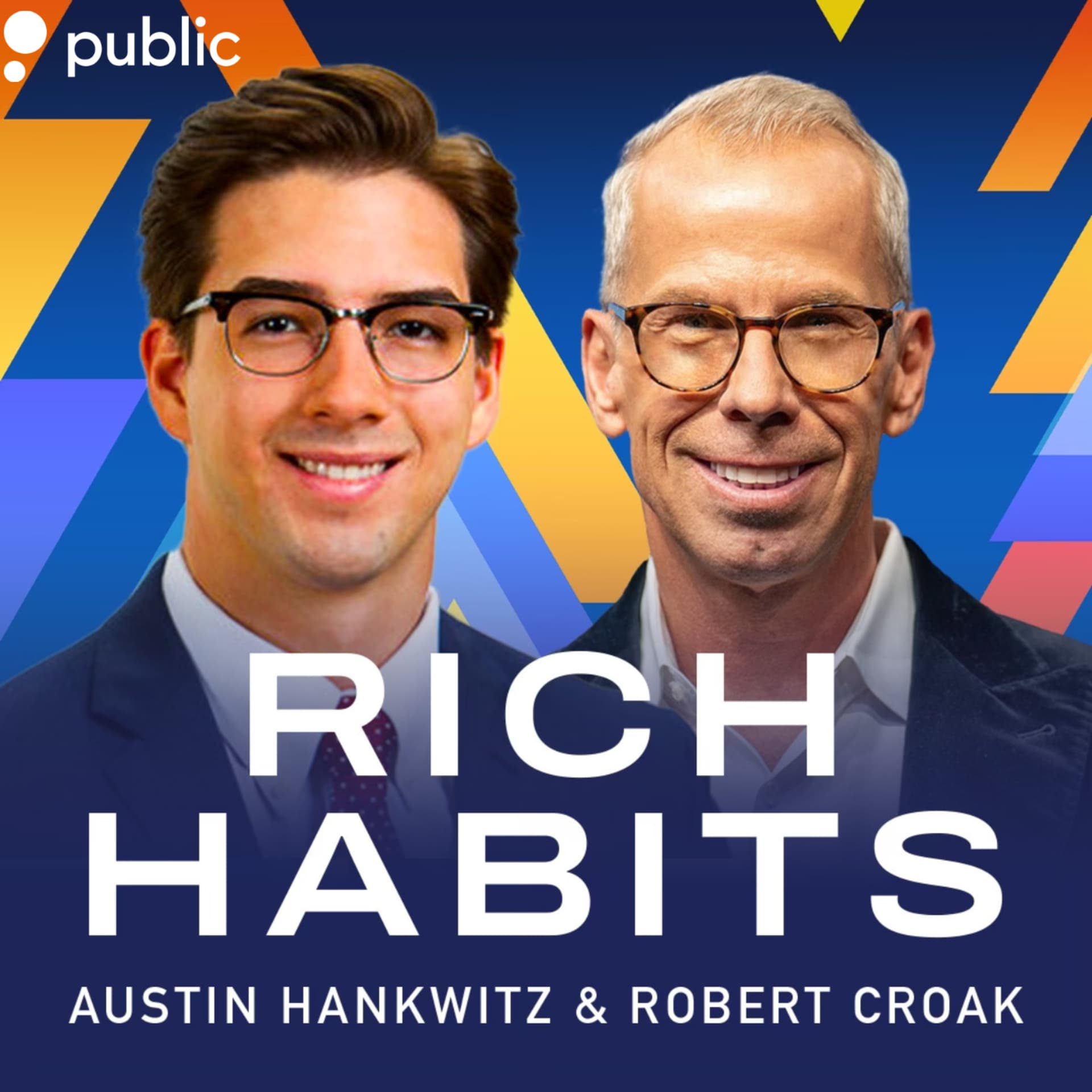
Episode Overview Title: Q&A: Opening a Franchise, Selling a New Product, and Income-Producing Assets Hosts: Robert Croak and Austin Hankwitz Description: In this episode, the hosts answer listener questions related to financial literacy and investment strategies, covering topics such as retirement accounts, college expenses, real estate decisions, and entrepreneurship.
Key Questions Addressed
- Roth IRA Adjustments
- Listener: Rachel D.
- Question: Should I sell current underperforming holdings in my Roth IRA?
- Answer: Robert and Austin recommend selling the underperforming assets to reinvest in high-performing ETFs: VOO, QQQ, VGT, VTI, and MOAT. This allows for immediate improvement in investment performance without tax implications since it’s within a Roth IRA.
- Funding College Expenses
- Listener: Charles S.
- Question: Should I withdraw principal from my Roth IRA to pay for my child's college?
- Answer: While it’s possible to withdraw contributions without penalties, Robert advises against it, emphasizing the long-term cost of borrowing from retirement savings. Emphasis on financial independence includes allowing children to manage some of their educational expenses.
- San Francisco Condo Depreciation
- Listener: Mercy
- Question: Should I sell my depreciated condo or keep it?
- Answer: The hosts advise selling the condo due to slow capital appreciation. They suggest reinvesting the equity into higher-yielding assets, especially considering the potential significant growth of $500,000 over 20 years if invested wisely.
- Investing in Income-Producing Assets
- Listener: Nicholas M.
- Question: Am I ready to diversify my investments beyond real estate?
- Answer: With his current equity and cash flow from condos, the hosts encourage Nicholas to explore diversification into stocks and possibly other income-producing assets like cryptocurrency or small business investments, cautioning the need for a balance between real estate and more liquid investments.
- Launching a Card Game Business
- Listener: Ildi
- Question: How can I pre-sell my card game idea before bulk buying?
- Answer: Robert suggests bootstrapping by borrowing from friends or family and conducting a pre-sale to gauge market interest. He advises against crowdfunding due to the risk of competitors jumping in and emphasizes transparency regarding the pre-sale to manage customer expectations.
- Considering a Franchise
- Listener: Courtney H.
- Question: What should I know about buying a franchise versus starting my own business?
- Answer: Robert highlights the advantages of franchises, including established business models and support systems. However, he warns potential franchisees to research success rates, fees, and the level of control they will have over operations.
Key Takeaways
- Investment Strategy:
- It is crucial to periodically review and adjust investment holdings, especially within retirement accounts.
- Diversifying investments can lead to greater financial security and potential growth.
- Financial Discipline:
- Teaching financial responsibility through student loans can be beneficial long-term.
- Avoiding the temptation to withdraw from retirement funds for immediate expenses is important for preserving future wealth.
- Entrepreneurial Guidance:
- Conduct thorough market research before launching any product to ensure product-market fit.
- Transparency with customers during pre-sales can help manage expectations and build trust.
- Franchising Considerations:
- Research is key to understanding the risks and rewards associated with franchise ownership.
- Franchises can be lucrative but require ongoing management and oversight.
Action Items
- Webinar Registration:
- Listeners are encouraged to register for the upcoming free webinar on direct indexing scheduled for May 8th.
- Engagement with the Podcast:
- Audience is invited to submit questions via email or Instagram for future Q&A episodes.
Additional Resources
- Budgeting Template: Downloadable budgeting tool available for listeners.
- Investment Platforms:
- Public.com for options trading with no commissions.
- Support Networks:
- Engage with the community on social media for tips and updates.
---
This episode of the Rich Habits Podcast provides insights into effective wealth-building strategies and addresses common financial concerns with practical advice.
Written by AI. May contain mistakes. Listen to the episode to check what was said.
Transcript
Automatic transcript. May contain errors.0:00Hey, everyone, and welcome back to the Rich Habits Podcast question and answer edition. If you have a question to ask us, you can send us an email at richhabitspodcast at gmail.com or you can ask us a question via Instagram DMs at richhabitspodcast. And as a quick reminder, if you don't yet follow us on Instagram, we have over 15 ,000 followers on Instagram because we post awesome podcast clips. We post some of our favorite hot takes, some of our favorite question answers. We post some of our favorite tips and tricks, strategies. It's all shared on Instagram. and Robert and I do a pretty good job of staying connected, I think you can say, via Instagram stories with you all, a little behind the scenes here and there.
0:43So if you're not yet following our Instagram, what are you doing? Yes, we love our Instagram community and building it alongside Rich Habits Podcast. And don't forget all of you listening, we have our next webinar coming up on May 8th at 4 p.m. Eastern Standard Time and we're gonna be covering direct indexing. So look forward to that one, get signed up now because you don't wanna miss it. There's a link to that in the description below. Save your seat. It's completely free. But again, we only have 1 ,000 seats available. So be sure to do that because we're running out of seats quickly. Now, before we jump into the episode, I want our options traders to listen up.
1:19Because I want to tell you a little bit about public.com. But first, have you ever actually thought about all the fees you're paying to trade options? I mean, aside from the regulatory fees, there's commissions. And most platforms charge per contract fees as well. That's what makes today's sponsor, public.com, so interesting. Public doesn't charge commissions or per contract fees. And in an industry first, they offer a rebate of up to 18 cents per option contract traded. So check it out. If you trade 1 ,000 option contracts on public, you'll get up to$180 in rebates. And if you trade 10 ,000 contracts, you could earn almost 2 ,000 bucks.
1:58And more importantly, the rebate means you can maximize your profits and minimize your losses. So to recap, there's no commissions, there's no per-contract fees, and up to$0.18 on every contract traded in a rebate. CY NerdWallet recently awarded Public five stars for their options trading. And to start earning up to$0.18 per contract traded, do that at public.com. That's what Robert and I do to trade our options, and we're having a blast doing it. As a reminder, this was paid for by Public Investing. Options are not suitable for all investors because they carry significant risk. There is a full disclosure in the podcast description below.
2:35Definitely go check that out. And this is for US members only. Robert, let's jump into our first question here coming from Rachel D. Rachel says, good morning, fellas. I want to first thank you for this podcast. It's broken down investing in a way that's digestible and not at all intimidating. Rachel, we appreciate the kind words. My question is about correcting my Roth IRA. I've got 23 ,000 currently saved in my Roth IRA, which was just switched from a plan where the company chooses my investments for me. I made this choice after reviewing the performance of all of the holdings, and I found them pretty disappointing.
3:09I know I want to start with the five ETFs you guys always mention, but here's my question. Do I cash out the existing holdings, or do I keep them and just use new money to buy the ETFs you recommend? Robert, I'll let you answer this question first, but I definitely think we're going to be on the same page about it. But we always want to see you get to the better spot sooner and not try to wait it out and improve later on because compound interest is your friend. Couldn't agree more, Robert. I think that Rachel should definitely sell the existing underperforming holdings in this Roth IRA. There will not be any tax implications from that as long as it stays in the Roth IRA and you don't take that money out or anything.
3:49keep the trades going in the account, sell the underperforming investments, and use the existing $23 ,000, even if you're in the red on those investments, to buy the ETFs we talk about. VOO, QQQ, VGT, VTI, and MOAT. That's all you need in your Roth IRA, in my humble opinion. And it's hopefully going to propel you much further toward our$100 ,000 goal that we encourage everyone to have for retirement investing. Really good question, Rachel. Now our next question comes from Charles S. Charles says, I'm 46 years old, I'm married, and I have three kids. My oldest is in college and was able to pay for his first year on his own.
4:31He should have enough to pay for year two as well, but then my wife and I do plan to pay for his last two years, which will cost about $30 ,000. Here's the question. We have over$250 ,000 in our Roth IRAs, and we're planning to take out some of the principal to help pay for his college? We have roughly$94 ,000 in principal. Should we do this? And are there any tax hits if we do so? Robert, I'll kick this one off. So of course, just as a quick reminder here, and I think people forget about this, not only is the Roth IRA a retirement investment vehicle, but people can also think about it a little bit, kind of like a piggy bank.
5:10And that's because the money you contribute, right, the deposits, the principal that's invested through this account can be withdrawn at any time with no penalties and no tax hits. So of this$250 ,000 that Charles has in his Roth IRA,$94 ,000 of that was principal, right? That's what he deposited into the account and it's grown now to$250 ,000. So Charles, if you wanted to, you could take out all$94 ,000 of that even before 59 and a half and you won't have to pay any taxes or penalties on the money. So here's the deal. If you want to take out$30 ,000 of your Roth IRA to pay for your kid's college, that's your choice.
5:48If it were me, I would not do that, and here's why. I never wanna be borrowing from my future to pay for today. And Charles, just to put this$30 ,000 into perspective as to why we don't wanna borrow from our future to pay for today, that$30 ,000 in 20 years when you're 66 and ready to retire is gonna be worth$326 ,000, 10 times what it's worth today. So do you want to give your child$326 ,000 to pay for their college? Probably not, right? Probably not. And Robert, I want you to talk a little bit about how important this is to one, not borrow from your future, but two, I think a lot of parents make the mistake of really setting themselves up for financial despair, trying to help the kids out when in actuality, when they're retired and broke and they don't have any money, there's still a burden to their children.
6:39Yeah, this is a really great question in a very difficult situation. You know, I appreciate it that Charles and wife, I'm assuming, really want to take care of their kids. But let's look at the math. We don't know what's in the 401k, but let's assume it's a decent amount. But even if you were to have 220 ,000 left over in the IRA, the Roth, and then let's say the 401k is 300 ,000 and you have 500k all in right now at 46, you have to look that in 20 years when you're ready to retire, maybe you want to retire sooner, 15 years, you're going to need$3 million more than likely to be living the lifestyle you're living now at the rate that it's going to cost 20 years down the road.
7:21And by giving this 30K and maybe other loans to the kids, you're setting yourself up for duress and retirement because you might not actually get to the$3 million yourself. So that's just something to consider is try to project out 20 years, what your lifestyle cost is going to be per month. Try to project out with your current money, income, savings, and investing, are you going to get to the number you need to be able to live off that 4 % rule? And that to me is the important thing because so many people are worried about taking care of everyone else, but then who's there to take care of you when you're in retirement.
7:54And just so we're on the same page, Robert, I graduated college with about$20 ,000 of student loan debt. That student loan debt taught me how to budget, how to set money aside, how to think about paying off debt, right? Like it's okay to graduate college with student loan debt. It's okay, Charles, for your oldest to graduate college with student loan debt, because it's probably going to teach them some financial discipline at an earlier age than their peers, which is a really, really good thing. So I'm not mad at having student loan debt. This is what Robert and I classify as good debt, right?
8:27Especially if your oldest is studying something that is going to earn them a lot of money out of college. So really good question. I hope we cleared some things up here, but no, don't spend$326 ,000 on college. Our next question comes from Mercy. Mercy says, hello, Robert and Austin. First and foremost, thank you so much for such a wonderful podcast. I absolutely love it and I listen to it all the time. It's taught me so much and I've slowly been getting my finances order and feeling very empowered because of the two of you. Well, thank you so much, Mercy. So Mercy says this, I bought a condo in San Francisco in 2010 as my primary residence.
9:01It was above my means at the time, and I was mostly house poor for many of the first years of the mortgage without much left to invest. Today, I'm 47 years old, and I only started to financially educate myself seriously over the last five years, and I'm playing catch up. I don't have any other debt besides my mortgage, and I have a three-month emergency fund in place. 10 % of my income goes to a mandatory pension through my employer and 20 % to a mixture of a maxed out Roth IRA, an unmatched 401k, an HSA, a robo-advisor account, a Fundrise account, and some cryptocurrency. All of this amounts to$560 ,000 in investments when you do not include my property.
9:42The condo I own, however, has dropped significantly in value during the pandemic and the recovery of the condo market in San Francisco is really slow. I have about$500 ,000 in equity inside of this condo, and my mortgage is$250 ,000 at a 4 % interest rate. Would I be better off selling the condo and investing the equity, or should I stay in the condo and keep on doing what I've been doing? Robert, this is a hard one, but I'm going to let you kick us off. Yes, I love the question. Thanks for all of the details, because the more details everyone provides us in the question, the better off we can answer it.
10:18So here's my take. It might not be the best news or what you're looking for, but here, let me give it a go. You've got a good interest rate on the mortgage. You've got great equity, but unfortunately you probably have really slow capital appreciation in the condo based on what you've stated and the market that you're in. So in my opinion, I'd rather see you sell it right now or in the next year, depending on what is better in that market. If we see interest rates come down in a year or so, you might be able to get a little more money for it. But you have to look at the opportunity cost of having that much equity tied up in a property that's growing slowly.
10:52So I would look at selling it, taking that money, getting it invested, and then renting for a couple of years until we see the interest rates come down and the market cool off a little bit, and then maybe look to either house hack or buy another property. But I think having that money, that 500K in the market would just be a better long-term financial decision for you than having it tied up in an underperforming condo? I like that answer, Robert. And I did some quick math. $500 ,000 invested for 20 years because she's 47. So from 47 to 67 out of 10 % return is about 3.7 million in retirement. So that's really what we're talking about here, right?
11:33Do you think your condo is gonna be worth 3.7 million in 20 years that you would have obviously paid off? Or would you rather rent and have that$500 ,000 invested in the markets? I really like your answer, Robert. You know, it's a tough one, right? Because I think everyone deserves to own a piece of property, right? Everyone deserves to own real estate if it's a condo, if it's a townhouse, if it's a single family home, if it's a duplex, right? We should own things that appreciate in value for sure. But having$500 ,000 tied up in what Mercy's described as a slow recovering investment in San Francisco, which I don't even know if that's a great place to have a real estate investment right now.
12:11I think I've heard a lot of bad things about the area. I could be wrong, though, from the real estate perspective. But what I'm saying is having that$500 ,000 invested to what you sort of alluded to here, Mercy, at a 10 % sort of gain over the next 20 years doesn't sound like a bad idea,$3.7 million. The only thing I would encourage you to do is take another look at that 401k, you mentioned that it's unmatched. Not sure why you're investing toward an unmatched 401k, especially if, I don't know if it is, but if it's underperforming the benchmarks, right? The S &P and the NASDAQ. That's the only big piece of advice I have from you from your current situation.
12:46But as it relates to this 500 ,000 in equity in a condo that you're not really happy about in San Francisco, I'm not mad if you want to sell it and take that 500 grand and invest it, then maybe you move somewhere that you like a little bit more. Maybe you move somewhere that is a little bit lower cost of living, right? Maybe somewhere where the rent is, call it$1 ,500 to$2 ,200 a month. Heck, Nashville, Tennessee, downtown, you can get a pretty decent spot here for about two grand. So whatever you do, make sure it makes you happy. But don't forget that you should want to own some real estate as we head into retirement, right?
13:19Because the biggest, I think, unpredictable expense that hits people that they forget about is rising rent. right? Rents go up. That's just our sad reality sometimes. And if your rent's going up every single year and you're trying to retire off of a fixed income, that's a problem. So maybe house hack, hang out for a couple of years, but I definitely agree with Robert. Sell the condo, take the equity and deploy it. And one other point that I want to make, and you and I actually touched on this this weekend at the Money Mindset Mastermind, is that the average 401k performance over the last 10 years is 4.9%.
13:54So everyone listening, keep that in mind. You don't want to max out your 401ks and sound proud of it. You just want to get the match because at the end of the day, you want to maximize your gains in any way you can. And it doesn't necessarily have to come from a 401k because they simply underperform the VOOs and the QQQs that we talk about all the time. Really good question, Mercy. Our next question comes from Nicholas M. Nicholas says, I love the podcast. I listen to every episode and I've learned a lot from just tuning in. Thanks for all you two do. I'm almost 40 years old and I'm ready to really start investing into income producing assets.
14:32I own two condos with$450 ,000 in combined equity and they cash flow$1 ,600 a month. I'm getting the 4 % match through my 401k at work and I started maxing out my Roth IRA this year. You all mentioned getting$100 ,000 invested and I have$90 ,000 so far. I also have$36 ,000 invested into Fundrise. I have no debt except for my mortgages on the condos, but I don't pay for those. My renters do. Haha. I am renting an apartment because it's cheaper to rent and I have both condos cash flowing. I'm trying to build out a 10K safety net that I should have set up later this year. Are all these baseline assets, however, solid enough to start investing into other things?
15:12When I hear this question, Robert, I think maybe he's alluding to cryptocurrency maybe, maybe he's alluding to some other more maybe aggressive investments. What do you think about his situation? I think it's great. And even at almost 40 years old, I think you're ahead of the curve in most instances. And being at that 100K marker almost there is a great start. So I think what you're asking us is, is it time to start diversifying? And I think the answer is yes. You're right on the doorstep of that 100K saved and invested. You've got these cash flowing properties. So now I think it's time to look at maybe doing some angel investing, investing in small businesses, getting a crypto portfolio up and running, building out a traditional portfolio of some individual stocks that we talk about to be able to have a little more high risk there.
15:59So I think you're definitely there. You're definitely ready. And that will help accelerate your growth somewhat by having more diversification. Now, the only perspective I have to add here, Robert, is I don't know how I feel about having $450 ,000 in equity, only cash flowing$1 ,600 a month for you. You know, this$450 ,000 when we think about cash flow and income producing assets, like what Nicholas is alluding to here, if you park that instead into an SPYI or a QQQI, you'd receive much closer to$5 ,000 per month in cash flow on that, on those monthly distributions that are paid out. And that's very tax efficient, right?
16:37I'm pretty sure that your$1 ,600 in cash flow is actually taxed as ordinary income. So I would be even weary, Nicholas, to think a little bit about that. I mean,$450 ,000 is a lot. You already have sort of your base built here of this, call it$90 ,000 in investments, but you have a lot of money tied up in these condos that aren't really cash flowing that much. So I would just be really, really cognizant of that. Run some numbers. Maybe you sell one condo and you take, call it$225 ,000 or$200 ,000 and you put it into SPYI and go make$2 ,000 or$2 ,200 a month from that. But I'm just so weary about having 450 tied up into sort of this like dead money idea when you're really focused on income producing assets.
17:18Yeah. And another way to look at this, you do have a W-2 job, I assume, based on having the 401k at work. So you might have some tax implications that are in your benefit with having these properties. But I would also really consider in this math equation that Austin laid out of looking at what your capital appreciation is each year on these properties. Because depending on what that is, it might be okay to keep both of them if the capital appreciation in that market is high enough to offset the fact that you have this money kind of parked in these properties. But there's a lot of variables here to look at, and I think we've covered them all just so you can understand what is the best move for you because it's just going to be owner dependent.
17:58Everyone has a different opinion on the best strategy. I think we've laid it all out, and then it's just up to you to decide what works best for you. Really good question, Nicholas. Earlier in the show, you heard us talk about the investing platform public.com, and that's where you can trade options with no commissions or per contract fees, and you get a rebate of up to$0.18 per contract traded. NerdWallet recently gave public five out of five stars for options trading. If you want to see why, go to public.com and start getting a rebate of up to$0.18 per contract traded. Paid for by public investing, options not suitable for all investors and carry significant risk.
18:34Full disclosure and podcast description, and this is for US members only. Our next question comes from Ildi. Ildi says, hey everyone, I'm 18 years old and I'm a huge fan of the podcast and I've learned so much. My question is, what would you do in my scenario? I have a business partner and we are ready to start our own card game business. We've created the original blueprint for our first game and have a graphic designer creating the cards and the packaging. We're not yet in a spot to bulk buy, but we were wondering how you would go about possibly pre-saling or crowdfunding the idea. We're trying to market this organically on TikTok, Facebook, Instagram, and YouTube.
19:12Do you think that we should have a month period of pre-sales and then after we collect all the money, go out and buy the inventory and ship it out to our customers? Or do you have something else in mind? Thank you all so much for your time. I've learned so much and I can't wait to get started on my entrepreneurial journey. Keep up the great work. Robert, this is all you, my friend. Ildi, great question in my wheelhouse. I've been doing this for 30 years. I'm gonna tell you quite a few different things. So please take notes and anyone that's building a brand right now, getting ready to launch a product, take notes as well.
19:44First and foremost, I would not crowdfund it because if the idea is really good and everyone sees it, it does well. My fear is always that someone else that has deeper pockets is gonna see the idea and beat you to the market. I like to have first mover advantage by having my idea in the market with full marketing and everything before others can start the process of knocking me off. So that's number one. It's okay not to bulk buy in the beginning. You can bootstrap this. Go do a friends and family round, borrow five, 10,$20 ,000, whatever you need. I'm sure you have people that believe in you and will help you get this started.
20:19Or go to a bank, get a credit card that you can get to use for some of the inventory. Get a personal loan if you have to. you're just much better to bootstrap this. And that's why I like the pre-sale method as well. We've done that in the past because the other good thing about the pre-sale method is you can gauge the response. You might put it up, crush the advertising, but see a very low response rate in which then you know that either A, the product isn't suitable, it doesn't have a product market fit, or B, you need to rework your marketing before you go buy thousands of units. And then just always remember when you're doing bulk buying and you're ready for that, talk to the factory and use this line.
21:00Dear factory, we would like to do a small run to test the product first for product market fit. Is there any way we can do a smaller run than your MOQs to help us get started? And a lot of times factories will find a way to do a smaller run for you so you're not investing in a ton of product. So keep that in mind as well. And then I think you'll be up and running because if you nail the marketing, you nail the branding, And I would avoid sharing with the public before you're ready to go live. I think you'll be in great shape. I like the pre-sale idea too, Robert. Just thinking like, you know, you can go get a Shopify website for like 30 bucks a month.
21:38You can design it. You can have the whole description there. Maybe you even have a prototype you figured out. You can have some cool designs that are, you know, figured out. And you can just have as much information there as possible published for the public. And then what you can also do is go to the public and say, hey, you know, if we get 500 people to purchase this card game, we're going to bring it to life and we're going to ship the product by this specific date. So coming up with this idea of pre-sale is really smart. I think the only feedback I would have if you go through that method is to be as transparent as possible that this is a pre-sale.
22:10There is no inventory. And what that's going to do is make sure that you don't have any disgruntled customers, right? Oh, I bought this and I thought it was real and I thought I was going to get it four days later, but in actuality, I'm getting it two months later, right? Just be super transparent. Say, hey, listen, this is a great idea we've got. Here's all the packaging. Here's all the designs, the product, everything you're going to get. And if we get 400 people or 200 people, whatever that number is that you need to sell to pre-sell before we can go to the factory and get it made and then actually shipped out and delivered to your customers, hey, if we can get these things, you're going to get your products.
22:42And if we can't get these things, then we're all SOL and this just didn't turn out to be what we thought it was going to be. Or you can take Robert's advice too and go to the bank, get a loan. Maybe you raise a little round from some friends and family, who knows. But Ildi, I love the idea and we're wishing you the best of luck. Our last question comes from Courtney H. Courtney says, hello, thank you all so much for the information. It has helped me tremendously change allocating my money habits. I've listened to all the episodes thus far and I don't remember you all mentioning anything about buying a franchise.
23:13I'm a nurse and they have home care franchises and other franchises for only $30 ,000 to get started. That's a lot of money with potentially extreme growth, but how is that versus starting your own business? Courtney, what a great question. I know Robert actually has done a bunch of franchises over his career, so I'm going to let him answer this one. Courtney, great question, and I'm going to give you kind of the good, the bad, and the ugly. I love franchises because they've done all the work up front, so they've figured out the processes, figured out the marketing, and it's really a solid model, but you have to understand one thing.
23:45You own the franchise, but you don't necessarily control how it's run in a lot of ways. And remember, you have to check the franchise fees. Are they average or are they high? What is the success rate of these franchisees that open this franchise? Because you have to look a lot of franchises out there tell you all the great numbers, but they don't tell you how many people actually succeed with their franchise and what the profits are because you don't want to buy yourself a job and end up working 60 hours a week and not being able to make really any money. So that's important. And then number three, just really, really do your research or work with a franchise consultant.
24:24Franchises can be great, but just remember these things and also look at it that it's not going to be passive. It's not going to be hands-off. Everyone thinks if you buy a franchise and hire a manager, you can just collect the mailbox money and walk away. You're still going to have to keep your eyes on it and you should, and it could be a great financial situation for you as long as you do your homework. What a good question, Courtney. Everyone, thanks so much for tuning into this episode of the Rich Habits Podcast. And thanks again for coming through and attending the Money Mindset Wealth Building Summit.
Read the full transcript
24:55We got to meet a lot of you in person, which was really, really exciting, and a ton of you virtually tuned in, which was also really cool. And don't forget, we have our direct indexing webinar, May 8th at 4 p.m. Eastern time. You're not going to want to miss it. It It is the thing no one's talking about right now as it relates to saving a lot on tax loss harvesting. So whenever you're ready to cash in your profits, you've got some tax loss harvesting strategies to help you do that. I love it. And I can't wait to talk more about it tonight on my TikTok live. Austin will be there with me and we're going to break it down and give you guys some little hints of what you're going to learn on this direct indexing webinar.
25:35So we'll see you there. And again, I thank all of you each and every week for following along at the Rich Habits Podcast. And we are so excited for so many things we have coming up in the next few months for all of you that have been going along on this journey with us now for over a year. We can't wait to continue to lay out the blueprint to build wealth, give you the step-by-step playbook, what to buy, what not to buy, how to do it, what platforms to use. I mean, we are going to just open up everything consistently, give you as much access as you all deserve. It's going to be so much fun. So stay tuned for that and have a great rest of your week.
From the publisher
In this episode of the Rich Habits Podcast, Robert Croak and Austin Hankwitz answer your questions!
- Should I sell my 401k holdings?
- How do I avoid paying $300K for college?
- My San Francisco condo seems to be depreciating in value, what do I do?
- How should I produce income inside of my portfolio?
- How do I launch a card game product with no money?
- What should I know about franchising a business?
---
Save your seat at our FREE webinar all about Direct Indexing, click here!
---
⭐ Download our FREE Budgeting Template – click here
⭐ Earn 5.1% on your savings with a High-Yield Cash Account – click here
⭐ Trade stocks, options, music royalties and crypto on Public – click here
⭐ Listen to Public's new daily podcast, The Rundown – click here
⭐ Automatically buy stock where you shop with Grifin – click here
⭐ Protect your family with term life insurance from Suriance – click here
⭐ Use code “Spotify” for 15% off our 4-module video course – click here
⭐ Optimize your portfolio with Seeking Alpha – click here
⭐ Explore debt consolidation loans on LendingTree – click here
---
👤 Explore everything Austin does – click here
👤 Explore everything Robert does – click here
❓ Ask us questions for our Q&A episodes – @richhabitspodcast on Instagram
📬 Inquire about working together – christian@witz.vc
---
Disclosures:
Options are not suitable for all investors and carry significant risk. Certain complex options strategies carry additional risk. Options can be risky and are not suitable for all investors. See the Characteristics and Risks of Standardized Options to learn more.
For each options transaction, Public Investing shares 50% of their order flow revenue as a rebate to help reduce your trading costs. This rebate will be displayed as a negative number in the “Additional Fees” column of your Trade Confirmation Statement and will be immediately reflected in the total dollars paid or received for the transaction. Order flow rebates are only issued for options trades and not for transactions involving other assets, including equities. For more information, refer to the Fee Schedule.
All investing involves the risk of loss, including loss of principal. Brokerage services for US-listed, registered securities, options and bonds in a self-directed account are offered by Open to the Public Investing, Inc., member FINRA & SIPC. See public.com/#disclosures-main for more information.
Hankwitz Group LLC has an existing business relationship with NEOS Investment Management LLC. The opinions expressed are those of the author, and the author owns several NEOS ETFs.