In short
Rich Habits Podcast - Episode Summary
Episode Title
Q&A: Should I Buy an Investment Property, YieldMax ETFs, & Investing in My 70s
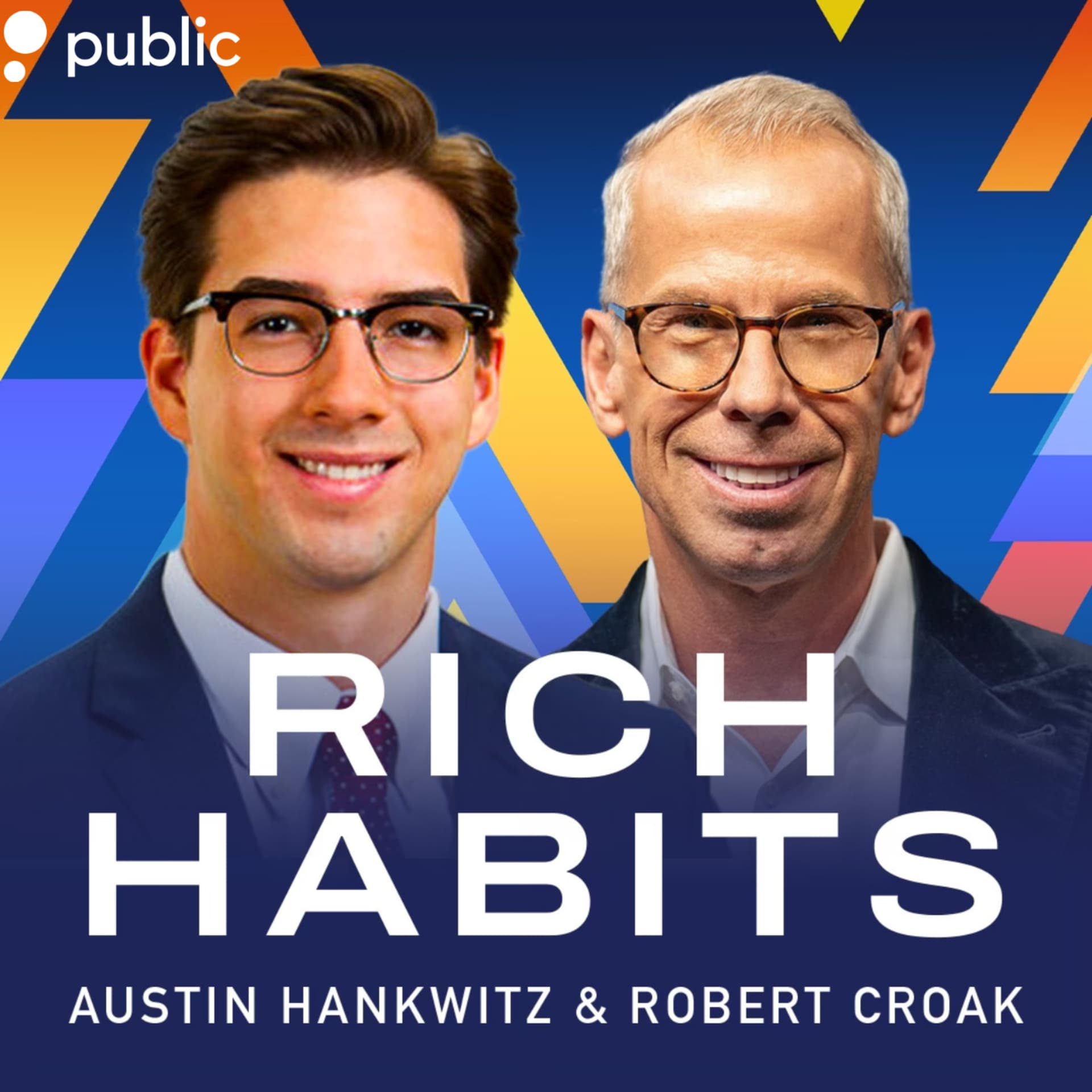
Overview In this episode of the Rich Habits Podcast, hosts Robert Croak and Austin Hankwitz answer a variety of listener questions related to personal finance, investment strategies, and financial planning. The hosts, leveraging their experience in the financial world, provide actionable insights and recommendations tailored to the diverse needs of their audience.
---
Key Discussion Points
- Investment Strategies for Savings
- Emergency Fund vs. Investment Fund:
- Discussed the optimal allocation of a $10,000 savings meant for a car purchase.
- Recommended investing it in the market (e.g., VTI or VOO) rather than keeping it in T-bills for better growth potential over 3-5 years.
- Understanding ETFs
- SPY vs. SPYI:
- SPY is a traditional S&P 500 ETF focused on price appreciation.
- SPYI invests in the S&P 500 while utilizing covered calls to generate income, yielding a more stable return but with less price appreciation potential.
- Recommended as an income-focused investment for those desiring regular payouts.
- Investing in Real Estate
- Advice for Young Investors:
- For a 20-year-old considering rental properties, the hosts advised against it until a financial base (ideally $100,000) is established.
- Importance of building a strong financial foundation before venturing into real estate was emphasized.
- YieldMax ETFs
- Caution Against High-Yield Products:
- Discussed the pitfalls of YieldMax ETFs, which sacrifice stock price appreciation for yield.
- Emphasized the risks involved and suggested focusing on more stable investment options instead.
- Retirement Planning for Seniors
- Investment Recommendations for Individuals in Their 70s:
- Advocated for a balanced portfolio with a traditional 60-40 split between equities and fixed income.
- Suggested specific ETFs (e.g., BNDI, VTI) that provide a mix of stability and growth.
- Bridge Accounts for Early Retirement
- Strategies for Early Retirement:
- Explained the concept of a "bridge account" to help individuals plan for retirement before the age of 59.5, allowing for access to funds without penalties.
- General Financial Wellness
- Key Takeaways for Investors:
- Importance of consistent investing, avoiding high-interest debt, and planning strategically for major purchases and retirement needs.
- Encouragement for listeners to maximize their contributions to retirement accounts while also investing in taxable accounts for flexibility.
---
Conclusion The episode concluded with an emphasis on the importance of financial literacy and proactive planning for investments. The hosts encouraged listeners to reach out with questions and to engage with the Rich Habits community for ongoing support and education in personal finance.
Additional Resources
- Public.com: Recommended platform for managing investment portfolios and high-yield cash accounts.
- Rich Habits Newsletter: Available for subscription for ongoing financial insights.
- Pre-IPO and Angel Investing Webinar: Promoted as an opportunity for listeners to learn about investment opportunities alongside the hosts.
Call to Action Listeners were encouraged to leave five-star reviews and to engage with the podcast on social media for a chance to have their questions featured in future episodes.
---
This summary addresses key concepts, discussions, and actionable insights from the episode, providing a comprehensive guide for listeners looking to enhance their financial literacy and investment strategies.
Written by AI. May contain mistakes. Listen to the episode to check what was said.
Transcript
Automatic transcript. May contain errors.0:00In America, half of every dollar spent on brand medicines goes to entities who don't make them. While middlemen like PBMs and 340B hospitals drive up costs, Biopharma is investing$500 billion in new infrastructure and manufacturing here at home and helping patients buy medicines directly at lower prices. Tell Washington to end middlemen markups and put American patients first. Visit phrma.org slash middlemen. Rinse takes your laundry and hand delivers it to your door. Expertly cleaned and folded. So you could take the time once spent folding and sorting and waiting to finally pursue a whole new version of you.
0:40Like tea time you. Or this tea time you. Or even this tea time you. So did you hear about Dave? Or even tea time, tea time, tea time you. So update on Dave. It's up to you. We'll take the laundry. Rinse. It's time to be great. Hey, everyone, and welcome back to the Rich Habits Podcast, a top 10 business podcast on Spotify. This episode is our Q &A edition, which means we take your questions on Instagram and via email at richhabitspodcast.gmail.com, and we answer them as if we were in your shoes. Before we jump into the episode, in one week, Robert, we are hosting our pre-IPO in Angel Investing Livestream.
1:24We have over 600 people already signed up. We can only hold 1000 people during the stream because that's just how big you can do it. So if you have not yet signed up, you need to do it because there are hundreds of people I'm talking hundreds of people that come out of the woodwork in the last 20-30 minutes before the stream and people get booted off and they can't join and they get all upset. So save your seat. There's a link in the show notes below. You guys are going to love it. We're going to be talking about investing into these pre-IPO companies, namely these massive multi-billion dollar businesses all across the different types of secular growth trends and how Robert and I have done that over the years, as well as the angel investments, right?
2:04The smaller companies, the small privately held companies like XAI, which was one that Robert had the opportunity to invest into recently. I think we all might have heard of that one. There's also been Apptronic, a really cool robotics company we both invested into. There's a ton of companies that come across our desk. And at the end of the day, we want to begin sharing those opportunities with our listeners, the ones that can afford to invest in these opportunities. So we'll show you how to do that. We'll show you how to invest alongside of us. Join us at this webinar. It's going to be a lot of fun.
2:30We are definitely pulling back the curtain. We are opening up the veils. We are doing whatever analogy you can think of to let you guys in on our deal flow. So many people out there think that the rich get richer because they have all the advantages and you're right. And that's why the Rich Habits Network is so important moving forward for all of you is because we don't hold back. We don't gatekeep. Austin and I share everything we're doing with each and every one of you every week. And now you're actually gonna have a vehicle to be able to get all that great information and be able to invest right alongside us, see all the deal flow that we see.
3:08And it is going to be game-changing, not only for us, but for everyone that belongs to the Rich Habits Network. I couldn't be more excited about it. It's just going to be a lot of fun and you guys are going to get a lot of opportunities in the coming months. So I'm going to take a moment here to talk about our sponsor, public.com. If you're looking for a simple yet sophisticated investing experience, you have to check out public. From stocks to options, bonds to crypto, it's all there. You don't have to juggle or switch between different accounts, different apps. Public lets you manage your entire portfolio in one place.
3:42You can even earn 5.1 % APY on your cash with their high-yield cash account. That's not just a good rate. It's literally an industry-leading rate. The fact is millions of investors trust Public, and for good reason. You hear us talk about it all the time. We love Public, and we think you should check it out. And not only do we love Public, but NerdWallet just gave Public 4.6 stars and calls it an impressive experience. And Public is a U.S.-based company. They've got award-winning customer support, and they take the safety and security of their customers seriously. So go try it out. It takes two minutes to sign up, and we think you guys are going to love it.
4:20Public.com, all of your investing in one place. This was a paid endorsement for public investing, 5.1 % APY as of June 17, 2024, and is subject to change. NerdWallet overall rating of 4.6 out of 5 as of May 2024. Full disclosure is in the podcast description below. All right, Robert, let's jump into the episode. Our first question is coming from Carson O. Carson says, hey Austin and Robert, I love the podcast and I've listened to every episode on the day it came out since episode 12. I also really enjoy the newsletter every Thursday. My wife and I are 23 and I have$15 ,000 in our T-bill account as an emergency fund.
4:57We also have around$10 ,000 saved for a new car. Both of the cars are working just fine, but we will want to upgrade once we start to have kids the next three or four years. Should we keep the$10 ,000 in the T-bills or put it somewhere that might pay better? Carson, thank you so much for listening to the podcast. In our opinion, and we've talked about this not just for saving for a new car, but also saving for a down payment on a house, saving for any big, big purchase,$10,$20,$30,$50,$100 ,000, and that purchase is three, four, five years away, it's always a good idea to park that money in the markets.
5:31And we're not saying throw it into single stocks and buy Tesla with it. what we're saying is put half of it in maybe VTI, which is a total stock market index fund from Vanguard, or maybe put half of it in VOO, which is the S &P 500, or put a little bit of it into NASDAQ, or put a little bit of it in SPYI. But put this money in the markets so that over the next three, four, five years, it can grow at that 8%, 10%, 12%, maybe 15%, depending on what the markets are going to do. But just be weary that if you do know that you want to buy this large purchase in the next three, six, nine months to begin scaling some of that money out of the markets, anticipating this big purchase coming up so that, you know, we don't have a crazy seven or 10 % crash over a three week period that might wipe out your 10, 20, 30 in savings and, you know, pull it down by two, three,$4 ,000 in a quick period of time.
6:22Yeah. I couldn't agree more, Carson. I think you have too much sitting on the sidelines. I like that you have the T-bills as an emergency fund, but then I feel like the extra 10 ,000 is like having two emergency funds and you don't need it. So I agree with Austin. I would get it in the markets, get it making money, because if you can make 10, 12, 14 % a year over year in the next two, three years while you're waiting to do so, then that is just extra money you're going to have later on rather than kind of sitting on the sidelines a little bit and waiting. So Austin, I think you covered it great.
6:53And I think that is the best strategy to get that money working while you're waiting to make that next move. And tactically speaking, right, do not put this 10 ,000 savings in your Roth IRA. Do not put it into some sort of retirement account that's got one of these sort of penalty restrictions around it. You should just open an account on public, put it inside of public's platform, and then deploy 5 ,000 of it into VTI and 5 ,000 in VOO, and see you guys later in four years, right? That's how you should be thinking about this, because it's a normal brokerage account. You will pay taxes on the profits, but congrats, you've made a profit, you know?
7:28I love it. So our next question comes from Braulio P. Braulio says, is the SPY and SPYI ETFs the same? If not, what's the difference and where should I invest either of them in retirement? Okay, Braulio, good question. SPY is the ticker of the S &P 500 ETF, right? That is a very popular S &P 500 ETF. As you guys know, there's more than one. The most popular are SPY, VOO, and IVV. Those are the three most popular ETFs by assets under management. Robert and I like VOO. It's a very cheap ETF to track the index of the S &P 500, and it is just super simple, right? But SPY is the exact same thing. SPYI is completely different.
8:19SPYI invests in the S &P 500, right? But what they do is their managers sell covered calls against their investment, allowing them to generate income for their investors instead of price appreciation. So you might see some price appreciation with SPYI, but you're not going to see nearly the same amount of price appreciation that you would see with SPY, right? Or let's just say IVV or VOO, right? As we know, back in 2023, the S &P 500 index from a price appreciation standpoint went up by 18%. So SPY or VOO or IVV's price went up 18%. SPYI, the I stands for income, is different in the sense that it focuses on income and delivered over 12.5 % yield of income to its investors in 2023.
9:12And so if you're looking to invest into an income-focused S &P 500 index fund, SPYI is the way to go. And if you want that income to be paid to you every single month, that's the ETF for you. If you do not want income and you instead prefer price appreciation or at the actual price of the ETF going up versus the income paid to you, then SPY or VOO or IVV would be the way to do it. Now, I do both. I like the income with SPYI. I like the income of QQQI and IWMI. I do like this income because I can redeploy it and spend it or do whatever I want with it. Now, the question is the retirement accounts.
9:51If you are getting paid SPYI monthly income, the whole purpose of getting this income paid to you is so you can do stuff with it. But if it's in a Roth IRA, an account that you can't take money out of until you're in retirement, then it's not a good use of funds, right? So if you do invest in SPYI, I recommend to invest into it through just a normal brokerage account like public.com. And if you do put it in a retirement account, it's because you want to redeploy that income back into some of these other funds we talk about. I love it. And that was the best breakdown I've ever heard of the difference between these income focused SPYIs and the SPY version of it.
10:32So that was a great breakdown and a great question. I love that. Yeah, really great question. And I hope that cleared up a little bit, not just for Braulio, but for everyone else listening. Our next question comes from Alex J. Alex says, I just turned 20 and I'm going into my junior year of college at Central Michigan. I'm majoring in personal finance planning. I have a core portfolio on E-Trade with about$17 ,500, as well as a high yield savings on E-Trade with$14 ,300. I have$250 recurring transfer from my high-yield savings to my core portfolio every week, which comes out to$1 ,000 a month.
11:09The only debt I have right now is$2 ,500 in student loans. I currently do not have a Roth IRA, but I plan on opening one soon. Now, here's the deal. I've been looking for a property to purchase to rent out, but I don't know if that's the best idea for me right now at this moment. Do you guys have any suggestions or advice for what I should do next for investing? Robert, I'm gonna let you take this one. Yeah, Alex, I'm gonna rip a little bit on you. It's awesome that you're 20 years old and you're thinking in such complex manners for your investment strategies. I love it. Kudos to you. It's amazing.
11:44I wish more people under 25 would think like you are and really get into the game like you are, but you're not gonna invest in real estate yet, and here's why. We always talk about building your base. You don't have your base built. You do not have a strong foundation and it's too risky to go out and take everything that you've already done and put it towards one property. Because if you're wrong or it's problematic or you find trouble finding a tenant or whatever can go wrong in real estate, then you are back in this zero base again. And I think it is just really smart of you to stay on the track.
12:20Open the Roth IRA the minute you're done listening to this episode. Get as much money in there as you can. Get it maxed out this year if you can. and build that base to the 100K. Because once you get the 100K built and making you money while you sleep, then you can start diversifying and thinking about real estate. But for now, you don't have the base, and I don't wanna see you ruin it by starting over and not getting there first. I couldn't have said it better myself. And just kind of tactically speaking here, Alex, right? So you've got 17.5 in this E-Trade account. I would open the Roth IRA.
12:54I would take part of that 17.5. I have no idea what it's invested into, but let's assume it's invested into the ETFs and index funds we talk about. I'd sell them, turn it to cash, and then use that cash as my initial deposit into my Roth IRA,$7 ,000. I'd drop it in on day one, and then I'd redeploy it back into these index funds and ETFs we talk about, VOO, VGT, QQQ, VTI, RSP, or even moat. And then you're talking about moving$1 ,000 a month out of your high yield savings into this investment account? Why? Is it because you have too much in savings? Is it because you're trying to dollar cost average?
13:30I don't know what your sort of ideology is going on here. If you do think you have too much in savings, then just figure out what that number is. Maybe it's 10 ,000, maybe it's 8 ,000, maybe it's 12 ,000. I don't know what it is for you, but make sure it's three to six months of expenses. Of course, you're in college, I get that, so maybe it's a little bit less. But I would do all I can to definitely max out the Roth IRA in 2024, make sure it's invested in the right funds. And then, yeah, dude, there's no way that I would buy a rental property at 20 years old with interest rates at 7.5%, 8%. You probably have little to no credit.
14:05You've never been a landlord before and you have no base built. This is a recipe for disaster. Don't get me wrong. We think everyone should have and own real estate in a well-diversified portfolio, but only after, especially rental real estate. If you're trying to buy an investment property. Do that after you've built your base. Because what Robert was saying, I mean, what if you took all$17 ,500 of this as a down payment on a duplex? And then three weeks later, what happened to our executive producer might happen to you and you realize the pipes underneath your front yard need to be replaced and you now are out$10 ,000.
14:36But you don't have that money. He did because he's financially fit, but maybe you don't. So you have to go into credit card debt, right? And so all these bad things can happen that could be unforeseen when it comes to real estate and you're in no shape or form to afford them until you have that$100 ,000 base built. Yeah, I agree. And Alex, trust me, I've seen friend after friend after friend in their 20s and 30s, save, save, save for three, four years, get everything together to buy the house. They buy the house, then they forget about all the upkeep and the dishwashers that go bad and the roofs that need replaced.
15:09And it's a vicious cycle because they spent three years saving to buy the house, to buy that initial property. Then they're what's called house broke. They're in the house. It feels good. You own a home, but the problem is then you have to spend three or four more years building back up the money to be able to start investing. That's why we want you to have the base built first, because if you get that$100 ,000 base built, you're making 10, 12,$14 ,000 a year off of that while you sleep, then you start diversifying. It's so, so important. Great question, Alex, and great response from Austin. So the dishwasher broke.
15:44I feel attacked. You remember my dishwasher broke a couple months ago? It was definitely your dishwasher that I was talking about. Yeah, I think it was like six or 700 bucks. That was so annoying. Yeah. Home ownership, y 'all. That's it. Okay. Next question's from Cody W. Cody says, do you guys know anything about these YieldMax ETFs and their dividend products? In my case, specifically, I'm trying to better understand TSLY, but I think they use covered call option strategies on NVIDIA, Amazon, Tesla, and a bunch of these other single stocks. What's y 'all's take on this? Good question, Cody. So you're right.
16:18There is a company out there called, oh yeah, Robert's got it pulled up here on his phone. So there's a company out there called Yield Max, and they do what their name is. They maximize yield, but at what cost, right? So you all need to look and see what the price of these ETFs have done since inception. You can look at Tesla, you can look at NVIDIA, you could look at Amazon, you could look at Coinbase. I think they probably have an Apple one, maybe a Google one. They got a bunch of them. But essentially what you're doing, what these YieldMax ETFs do is they sacrifice price for yield. So let's say the shares of the Tesla ones are trading at$100 a share.
16:59And six months later, they're trading at$50 a share. So a 50 % drawdown in price. So as an investor, the only way in the world that that would make sense is to get paid a 50 % yield on your investment because then you'd be like net zero, right? But sometimes that doesn't happen. And so despite getting paid a lot of yield, it still doesn't make up for the price depreciation that these ETFs might incur. So do I have the ETFs in my portfolio? No. If you're a yield person and you want the price depreciation and trading that for yield, I don't know why you wouldn't just sell the stock and use that for yield, but more power to you.
17:39And if you're into that, do you. Whatever you want to do, it's your money. But for 99.9 % of you listening, you can completely ignore these ETFs. I think it's one of those things, Robert, It goes back to our episode that came out on Monday, which are like, ignore the CNBC, Yahoo Finance, Schwab Network chatter. I'm sure someone from YieldMax probably went on one of these websites and was talking about all the yield you can get. And then some people on Reddit and Twitter started talking about it. And now Cody's like, wait, what's going on? Do I need this? I feel FOMO, right? So I appreciate the question.
18:12And we're the experts here to answer your questions. But the expert answer is probably a good idea to stay away. I love income, and it's not in my portfolio. Yeah, I agree. When I look at TSLY and I get asked about it every day, all I see is that negative 55 % for the year. And there's plenty of better places to put my money. So I don't touch yield max. I tell everybody that'll listen not to touch yield max. And it all comes down to keep it simple, stupid. You don't have to have all these crazy cockamamie schemes of how to get the most yield for your money. It's much easier than that to build wealth and a lot less risky in my opinion.
18:48So I would stay away from TSLY. Plenty of better places that we talk about on every episode to put your money and just keep it simple. Yeah, there's just a lot of hidden dangers when it comes to kind of chasing yield like this. And I think one of the big dangers that people forget about are the taxes, right? They see that, you know,$1 ,000 deposit in their brokerage account because they own this. Like, wait, that was kind of cool. Like, this is great. And then they like go spend it or go invest it or do something later. But like your tax is ordinary income on that money. So Cody, if you do end up using any of their funds, just make sure you're putting 20, 25 % of that aside for taxes because it's like ordinary income.
19:24It's like getting paid from a job or something. Our next question comes from Mike W. Mike says, hello, Robert and Austin. I've got parents in their 70s and they're rolling an annuity into an IRA. I'm wondering what would be some good index funds or ETFs that are not too risky but also not too conservative either for them to invest in considering their age? It's a good question. So if you're in your 70s, you're sort of in this wealth preservation side of your investing career, right? I feel like at their age, I would probably go with the traditional 60-40 portfolio, which goes back to the idea of having 40 % of your portfolio invested into fixed income bonds, a lot of the stability they might be looking for, as well as 60 % invested into equities, right?
20:12The stock market, the ETFs, the index funds we talk about. So maybe, Mike, there's a world where 40 % gets put into a CSHI, a BNDI, a TLT, some of these very popular bond, high income, fixed income ETFs that do not go up or down in value. They just spit out money to the portfolio. And then the other 60 % could be invested into VTI, maybe RSP, Moat. I'm thinking of awesome ETFs that people should want in their portfolios, but don't have the overweightingness of the big tech mega caps that we're seeing right now. I agree. I think that's a good blend and a good weighting. I like Moat just because over the past five years, it's returned 83.5 % over five years.
20:57I like that. And so I think Austin really broke it down well. And those are great vehicles that I would use because again, And being in their 70s, you want the preservation, but you still want to see growth. And I think that's a good balance to achieve that. Best of luck, Mike. And as always, this is not financial advice. These are just our opinions. We're two guys on the internet sharing our perspectives. Now, before we jump into Brett's question, I got to let y 'all know that at public.com, you can earn 5.1 % APY with a high yield cash account. There are no fees, no minimums, just an industry leading 5.1 % APY on your cash.
21:33And with up to$5 million of FDIC insurance, your money is secure. Go to public.com and start earning 5.1 % APY straight up with no strings attached. It's an industry-leading interest rate with no fees, period. Public.com. This is a paid endorsement for public investing. 5.1 % APY as of June 17, 2024 and is subject to change. Full disclosures in the podcast description. And Robert, the reason they have to say in that disclosure subject to change goes back to the idea of the Fed cutting rates. We know from last week's episode that the Fed cutting rates is gonna impact the bond yields and the high yield savings.
22:09So just be careful about that, guys. I know we've answered a couple questions about it so far, but if you are someone with 30, 40, 50, 60 ,000 in a high yield savings and you are used to that money coming in every month, it's gonna start to dwindle down just a little bit over time. So just be prepared. And that's why it's so important for everyone that follows along, that's in our newsletter, that's in the Rich Habits Network. It's just so important to have that active information and that active management. So many people that have financial advisors, it's a set it and forget it mentality. And that's why we really discourage you from having those target date funds and only talking to your advisor once a year.
22:49A good advisor is going to want to check in with you quarterly and make sure you're on top of things, making sure they're making adjustments for the Fed, for COVID, for changes in the economic conditions or the political landscape. All of these things are important, and that's why it's important for all of you to share this podcast and share the newsletter with your friends, your family, and other people that are looking to create financial freedom because they will be on top of everything, really kind of in a live manner to get all this information first and foremost to make sure you stay on top of things.
23:22Couldn't have said it better myself. So our next question comes from Brett S. Brett says, hey, I got a question for you both. I'm married with two kids, I'm 30 years old, and I got a couple dreams. I want to retire early, I want to own a home, and I want to travel with my family. I have a 401k and an IRA for retirement. For something like buying a home, where would you recommend I do this type of investing? Thinking of safer ETFs like SPYI, but is a taxable account best or do I do this in my IRA and withdraw it? I don't know what's going on here. So Brett, let me lay the foundation, right? You've got a couple dreams.
23:55I will be your illustrator and showing you the navigation on how to reach those dreams. Starting with the down payment, it comes back to Carson's question about if you have a large purchase you're saving for, it's always a good idea, especially if it's over two, three, four, five years, to have that money work for you in the market. You just park it in a VOO and a VTI and let it roll. It's going to make that 8%, 10%, 12 % per year, and it's going to help you reach that savings goal just a little bit faster. And you do this inside of a normal taxable account like public.com. Now coming back to the idea of retiring early, you mentioned you have the 401k and the IRA for your retirement.
24:35That's awesome. You're off to a great start. The problem with that is it's not going to let you retire early. You can only touch the money in these accounts after you're 59 and a half years old, which means there's no early retirement here. You're already 60, 65 years old. So if you want to retire early, call it 52, 45, 48, I don't know, whatever you want to do, whatever that goal is for you, I don't know how much money you're earning. You need to open a bridge account. A bridge account is just an umbrella term for another taxable brokerage account like on public. And you start putting money into that taxable brokerage account.
Read the full transcript
25:10You let it grow, grow, grow. And once it's grown to two, four,$600 ,000, you can now put all of that money into income producing investments like SPYI and QQQI and have it pay you now four, five, six,$7 ,000 a month of tax efficient income. And that's going to help bridge you between 52 years old and 59 and a half years old, that seven year gap allowing you to retire early where you couldn't touch your retirement funds at all during that seven years, right? We talked about this with our disagreements in Dave Ramsey episode where all these people that he talks to are like, yeah, I'm doing my investments.
25:46I'm doing the things, but like, I'm a net worth millionaire. I'm 47. I want to retire, but I can't touch the money. And Dave's like, oh, you're shit out of luck. Sorry. Right. But it's like, we want to make sure you're prepared for that. Therefore you open a bridge account. Again, it's not a specific account. It's just a taxable brokerage account. It's just an umbrella term that we use. Yeah. I love this explanation. And that was a great episode because it really helps people realize the strategies you implement early can define the difference between not only being a multimillionaire in retirement, but being able to enjoy it without the constraints that some of these retirement accounts put on you if you want to retire early.
26:24So I love that message and just really helping people understand, you know, the macro part of all of the pieces of the puzzle that need to fit together to give you that comfort in retirement with the right structure. Yeah, I think, Brett, what's really important and you need to listen to our episode, Calculating Your Freedom Number. It is a very simple equation that you're trying to solve for, Brett. You're 30 years old, got a couple kids, you're married, right? You have a very clear reality in front of you today. And if you can say, okay, every single month it costs me$5 ,500 to live between my rent, soon to be mortgage one day, right?
27:01My groceries, the daycare, the car paint, whatever, right? If you know what you're paying to live and survive every single month. That means if there was an investment vehicle out there that could pay you that same amount of money, theoretically speaking, you're financially free. So that's what it means to retire early is how do I make money somewhere else that can offset my living expenses, allowing me to be financially free. Once you figure all that math out and you know what that number is that you're working toward and what the yield can look like on that and how it all comes together, I promise you're going to get so motivated and so excited, Brett.
27:34So we're rooting for you, man, and best of luck on achieving your dreams. Now, our last question comes from Ashmondaka. I hope I pronounced that correctly. They said, I started listening to your podcast and I've been encouraged enough to start my investing journey. I'm in my 30s and so is my partner. We purchased a house in Texas with a 6.5 % interest rate and the loan amount is$510 ,000. My salary is$115 ,000 and my partner's salary is$135 ,000. We're trying to invest in a 401k as well as our Roth IRAs into the ETFs you guys talk about. I've also started investing into a normal brokerage account through Fidelity.
28:10So can you please give us some suggestions on how we can maximize our investments and plan for retirement? We were not able to invest before now because we were in school and we had some visa constraints. But it's all been resolved and we're really excited to get started. Robert, I'll let you kick this one off. Congratulations. You guys are in a great place. you have solved the number one issue in creating wealth, and that is being high earners. So you're definitely on the right track. You've resolved the issue with the earnings. You guys are crushing it. And we always say that you wanna do up to the match with the 401k and then max out the Roth IRA.
28:47That is so important for you guys to understand because we want you to have some autonomy, but get free money from the 401k, but then also get the tax haven from the Roth. This is so, so important. So I think you're on the right track and you just need to have a little bit more understanding and a few tweaks on this and I think you guys will keep crushing. Yeah, if you guys are invested in the index funds and ETFs we talk about, it's just a waiting game at this point. I mean, they're at the point where they're taking home about 200, maybe 180 to$200 ,000 a year, combined income of about 250, call it a 20, 22 % effective tax rate there.
29:20So they're taking about 180 a year. It's call it$15 ,000 a month. Between$15 ,000 a month and a mortgage on a nice house in Texas, as well as a couple other contributions in retirement accounts. I mean, you all are setting yourselves up for crazy success. The first and biggest piece of advice I could give you beyond what Robert said, you said you want to maximize your investments, plan for retirement, things like this. I don't know what country you came from. You mentioned you had a visa, things like that. I'm not sure what opportunities you had with credit or debt or anything like that. But I think something that a lot of immigrants fall for is this idea of, you know, I can go into debt and start a business or I can go into debt and use it to go, you know, the rental properties or whatever else.
30:03Please stay away from high interest debt. I don't care if it's a personal loan. I don't care if it's a credit card. I don't care if it's because Costco wants to give you 5 % cash back with their car. I don't care what it is. If you can stay out of high interest debt, if you can invest consistently, if you can have a clear plan and know where you're going at such a young age making so much money, you are going to retire in 15, 20 years easily, easily. I mean, oh my goodness, your incomes are insane. So again, we're here to root for you. You guys have a lot of hope in front of you. There's a lot of things to be excited about.
30:38But again, the biggest thing to be weary about here just in general is to stay away from this high interest debt. I'm not sure how you're marketed to or what's going on, but just be weary that it's not your friend. And despite people saying, oh, you got to build your credit score, do this or do that. You can do those things, but you do not do those things by going into high interest debt. Definitely. Well, I love this episode. The Q &A just always crushes it. And I just love engaging with our audience and really just helping them figure it all out. And it's just so much fun for me each and every day.
31:08And we appreciate all of you coming back every week, giving us those five-star reviews and just really helping us grow this thing. It means the world to us and we enjoy it each and every week. Yeah, Robert, it's pretty cool. We have a average rating of 4.9 stars across over 5 ,200 reviews on Spotify. That is unbelievable. With first off, whoever didn't give us a five star to get us down to 4.9, what are you doing? We don't like that. If you can't say anything nice, don't say it at all. But we do appreciate all the five stars. And as always, if you have a question for the podcast, Rich Habits Podcast on Instagram, we're verified.
31:43We have a little blue checkmark. Don't fall for scammers. Or email us at richhabitspodcast at gmail.com. And if you want to be a part of the Rich Habits Network and get early access and learn more about what's going on behind the scenes there, email us network in the subject line at richhabitspodcast at gmail.com. And we'll share some more info with you guys and get you guys all set up. Thanks everyone for joining us and have a good one.
32:16built into Word, Excel, PowerPoint, and other Microsoft 365 apps you use, helping you quickly write, analyze, create, and summarize so you can cut through clutter and clear a path to your best work. Learn more at Microsoft.com slash M365 Copilot. This next one's for all you CarMax shoppers who just want to buy a car your way. Want to check some cars out in person? Uh-huh. Wanna look some more from your house? Okay. Wanna pretend you know about engines? Nah, I'll just chat with CarMax online instead. Wanna get pre-qualified from your couch? Woo! Wanna get that car? Hey, that's a beat! You wanna do it your way?
33:02Wanna drive? CarMax. A great rest of your week.
From the publisher
In this episode of the Rich Habits Podcast, Robert Croak and Austin Hankwitz answer your questions!
- Should I invest my sinking fund?
- What's the difference between SPY and SPYI?
- Am I ready to buy an investment property?
- What do you think about YieldMax ETFs?
- How do I invest as someone in their 70s?
- What should I invest toward for an early retirement?
- We make $250K / year, what now?
---
👉 Public is your one-stop-shop for all things investing! Crypto, bonds, T-bills, stocks, and more. Be sure to sign up at Public.com/richhabits
---
👉 Join 45,000+ other investors and subscribe to the Rich Habits Newsletter! New editions published every Thursday.
---
Register for our pre-IPO / angel investing webinar! Click here!
---
⭐ Download our FREE Budgeting Template – click here
⭐ Earn 5.1% on your savings with a High-Yield Cash Account – click here
⭐ Trade stocks, options, music royalties and crypto on Public – click here
⭐ Automatically buy stock where you shop with Grifin – click here
⭐ Protect your family with term life insurance from Suriance – click here
---
👤 Explore everything Austin does – click here
👤 Explore everything Robert does – click here
❓ Ask us questions for our Q&A episodes – @richhabitspodcast on Instagram
📬 Inquire about working together – christian@witz.vc
---
Disclosures:
Options are not suitable for all investors and carry significant risk. Certain complex options strategies carry additional risk. Options can be risky and are not suitable for all investors. See the Characteristics and Risks of Standardized Options to learn more.
For each options transaction, Public Investing shares 50% of their order flow revenue as a rebate to help reduce your trading costs. This rebate will be displayed as a negative number in the “Additional Fees” column of your Trade Confirmation Statement and will be immediately reflected in the total dollars paid or received for the transaction.
Order flow rebates are only issued for options trades and not for transactions involving other assets, including equities. For more information, refer to the Fee Schedule.
All investing involves the risk of loss, including loss of principal. Brokerage services for US-listed, registered securities, options and bonds in a self-directed account are offered by Open to the Public Investing, Inc., member FINRA & SIPC. See public.com/#disclosures-main for more information.
Public Investing offers a High-Yield Cash Account where funds from this account are automatically deposited into partner banks where they earn interest and are eligible for FDIC insurance; Public Investing is not a bank. See public.com/#disclosures-main for more information.
Alpha is an experiment brought to you by Public Holdings, Inc. (“Public”). Alpha is an artificial intelligence investment exploration tool powered by GPT-4, a generative large language model offered by OpenAI. Given that Alpha is an experimental technology, it may sometimes give inaccurate or inappropriate information. Any output generated by Alpha is not and should not be construed as investment research, investment advice, or a recommendation to buy or sell a security, nor should any output serve as the basis for any investment decisions.
We strongly recommend that you independently evaluate and verify the accuracy of any Alpha output for your use case. Additional information and disclosures at https://public.com/alpha.
Hankwitz Group LLC has an existing business relationship with NEOS Investment Management LLC. The opinions expressed are those of the author, and the author owns several NEOS ETFs.