In short
Rich Habits Podcast: Q&A Episode Summary
Podcast Overview
- Title: Rich Habits Podcast
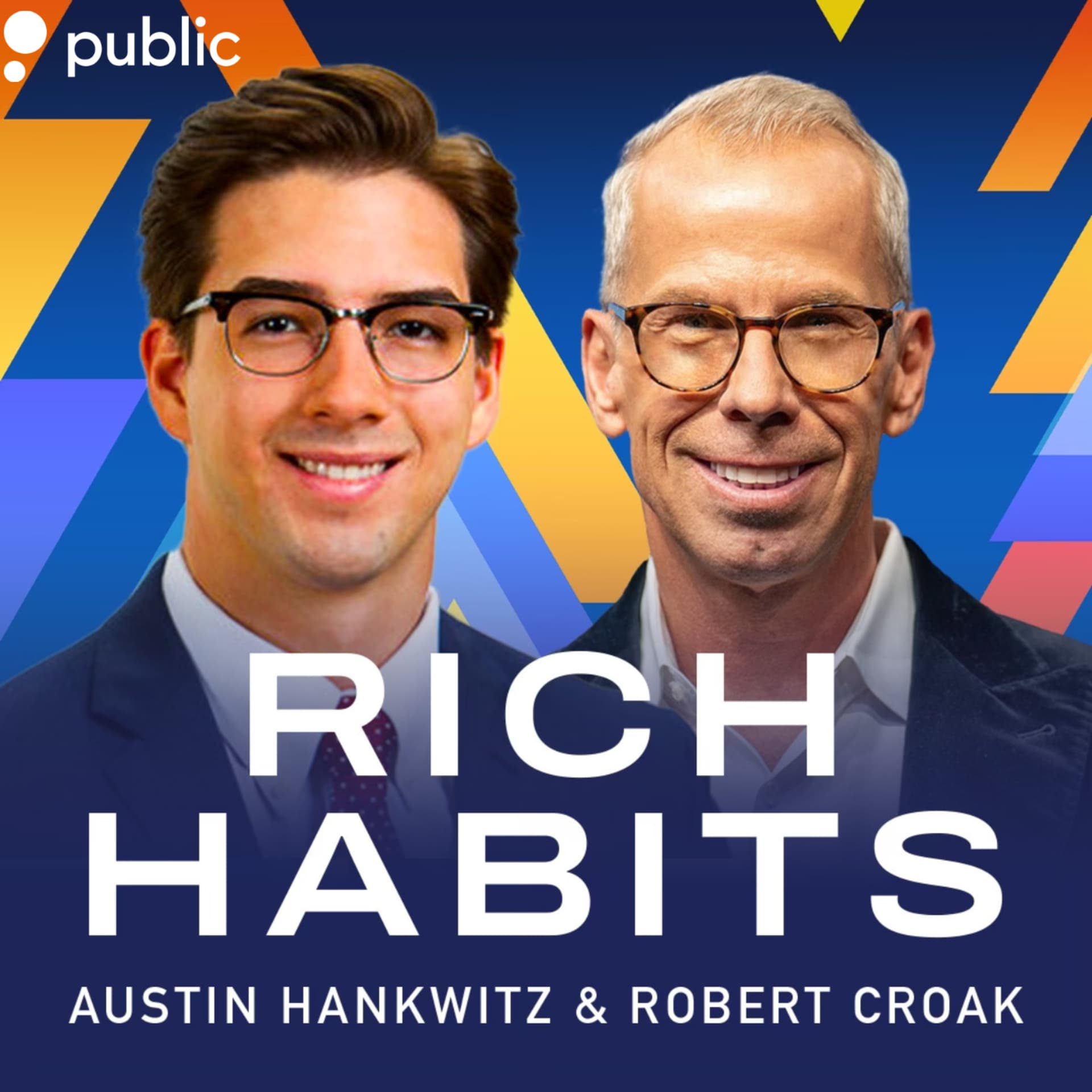
- Hosts: Robert Croak and Austin Hankwitz
- Description: A financial literacy podcast aimed at helping listeners take control of their finances through new habits. The hosts share their experiences, mistakes, and a blueprint for financial success.
Episode Title
Q&A: VFIAX, Dividend Investing, and $200K in Savings
- Description: In this episode, the hosts address questions about VOO and VFIAX, dividend ETFs, investment strategies for $200K in savings, and financial guidance for young adults.
---
Key Discussions
- Investment Options: VOO vs. VFIAX
- VOO: An ETF that tracks the S&P 500.
- Investment Entry: Minimum investment is as low as $10 through shares or fractional shares.
- Trading: Can be traded throughout the day in real-time.
- Expense Ratio: 0.03%.
- VFIAX: An index fund that also tracks the S&P 500.
- Investment Entry: Requires a minimum investment of $3,000.
- Trading: Trades once per day.
- Expense Ratio: 0.04%.
- Conclusion: VOO is recommended for beginners due to lower entry costs and ease of trading.
- Bitcoin in IRAs
- Bitcoin Investment: Suggested to allocate 5-15% of one's portfolio to Bitcoin.
- IRA Strategy:
- Austin holds Bitcoin in a Roth IRA through an ETF.
- Robert prefers buying Bitcoin outright and believes in its long-term potential.
- Understanding Zero-Interest Credit Cards
- Function: Allows users to transfer high-interest credit card balances to a zero-interest card for 12-18 months.
- Cost-saving Strategy:
- Helps avoid paying high interest (e.g., 30% APR) on existing debt.
- Balance transfer fees may apply (typically around 10%).
- Key Advice: Use zero-interest cards to pay down debt without accruing high interest.
- Making Money with Dividend ETFs
- How They Work:
- ETFs contain a basket of dividend-paying stocks.
- The yield (e.g., 2%) represents the expected annual dividend based on investment amount.
- Examples of Dividend ETFs:
- SPYI: Specializes in S&P 500 with a yield of about 12%.
- SCHD: Growth dividend ETF with a yield around 3.5-4%.
- NOBL: Focuses on companies with a track record of increasing dividends for 25+ years.
- Allocating $200K in Savings
- Step 1: Pay off high-interest debt (above 5-6%).
- Step 2: Maintain 3-6 months of expenses in a high-yield savings account.
- Step 3: Invest in retirement accounts (e.g., Roth IRA).
- Step 4: Consider investments in diverse ETFs (e.g., VOO, VGT, MOAT) and platforms like Fundrise for real estate exposure.
- Investment Strategy: Recommend dollar-cost averaging to mitigate market timing risks.
- Setting Up Children for Financial Success
- Teaching Financial Literacy:
- Credit Cards: Introduce at 18 to build credit history.
- Investing: Use relatable companies to teach investing concepts.
- Custodial Roth IRA: Open for younger children to start investing early.
- Career Guidance: Stress the importance of selecting practical and financially beneficial career paths to avoid overwhelming student debt.
---
Conclusion
- The episode emphasizes the importance of understanding investment options, managing debt, and introducing financial habits to children. The hosts encourage listeners to engage actively with their financial education and planning for both themselves and their families.
---
Additional Resources
- Public's High Yield Cash Account: Offers 5.1% APY.
- Free Budget Template: Available for download.
- Contact Information: [richhabitspodcast@gmail.com](mailto:richhabitspodcast@gmail.com)
Listeners are encouraged to connect with the hosts on social media, Discord, or via email with future questions and feedback.
Written by AI. May contain mistakes. Listen to the episode to check what was said.
Transcript
Automatic transcript. May contain errors.0:28Shopping is hard, right? And welcome back to this week's episode of the Rich Habits Podcast, question and answer edition. We love these episodes because we get to hear from you all, not just on Instagram, but also Discord and our email address. You guys are everywhere. Let's be real. So in this episode, we're going to take some questions. We've got, I think, seven or eight picked out, and we're going to answer them. So if you have a question for us, be sure to shoot us a DM on Instagram. Hit us up in the Discord. Send us an email at richhabitspodcast at gmail.com. Whatever you can do to get in touch with us because we're going to answer you.
1:03And before we jump in real quick, I just want to give a major shout out to a newsletter that I read this morning called Grit Capital. Robert and I love reading their newsletter. They're doing their best to always summarize the bite-sized pieces of the economy. They're grabbing the earnings updates. They're grabbing the headlines from Wall Street Journal, making this crazy mumbo-jumbo easy to understand. So major shout out to Genevieve and all those awesome people writing that newsletter. Now, with that being said, Robert, are you ready for question number one? I am. Let's go. So our first question comes from Stuart M.
1:32Stuart says, can you explain the difference between VOO and VFIAX? One, I think, is an ETF. The other is longer letters. What's going on here, Robert? Well, I just covered this the other day, so this is very good timing. So, Stuart, the difference is VOO is the ETF for the S &P 500 and VFIAX is the index fund. Both S &P 500, very, very much the same investments. There's slight differences in how they work. Number one, VFIAX, the index fund, you are buying in dollars, whereas VOO, you are buying in shares. So the difference there generally is when you're buying the index fund, you have a minimum requirement to invest in it.
2:21So for VFIAX, it's$3 ,000. dollars. Whereas with VOO, the ETF version, you can get in for as little as$10 because you're buying it in shares or fractional shares. So that's one of the differences. One of the other differences is that VFIAX is traded once a day, whereas VOO is traded in real time. So you can buy it anytime you want during the course of operations when the markets are open. And then And the last thing, and one of the things that is important as well, is the expense ratio. VFIAX is 0.04 basis points expense ratio, and VOO is 0.03. So the reason you hear Austin and I talk for eternity about VOO and our love of the ETF is because you can get in for less money, lower cost basis for you to own it, And then also, it's just great for the everyday person who might not have$3 ,000 to get started, but wants to invest in the S &P 500.
3:22So that is the difference of each sector and each style of investment and the costs associated with it. Now, speaking from personal experience, I own VOO. I don't own any of the VFIAX. Maybe you have to buy it through Vanguard specifically. I really don't know. It's not something I ever explored as a retail investor here. I just bought the ETF. It's cheaper. It's easy. I buy little fractional shares of it. So if anyone is intimidated by investing in the stock market and seeing this$3 ,000 minimum investment, don't be, right? Because there's an alternative, which is the ETF that's treated as this basket of stocks that you can go buy on your Robinhood, your public, your Fidelity, your Schwab, anything you want to do there.
4:03So VOO is what I'm doing. It's probably what most of our viewers are going to be doing, right, Robert? Yes, definitely. Because so many people that are just beginning in their wealth journeys may not have the$3 ,000 to plunk down right away. So you can buy the VOO, pretty much the same investment, just a different way of doing it, different strategy, lower cost to get in. Cool. Really good question, Stuart. Yes, definitely love it. Now, funny enough, Stuart actually asked us two questions and the second one was so good I had to pair it with this first one. He says, same Stuart M, should I be investing into Bitcoin at all inside of my IRA?
4:36Now, Stuart, this is the first time Robert is hearing this question. So it's funny to see him like processing this. I bet he's really excited because he loves Bitcoin as much as I do here. I have Bitcoin in my Roth IRA. Call me crazy. Call me stupid. Call me whatever you want to call me. I believe Bitcoin should be, you know, call it 5 to 15 % of everyone's investable net worth, net assets here in their sort of portfolio. And being in my Roth IRA, it makes up that 5 to 15%. I'm here for it. We all have seen Bitcoin trend higher over the years and decade plus now. it's just been rocking up until the right now, sure.
5:11It's got the big ups and the big downs, but if you can stomach that, math tells us if something zigs and another thing zags, then you want to have a little bit of both and you get that sort of long-term kind of sharp ratio is what they call it, right? So what I'm thinking about here is I'm keeping a little bit of Bitcoin in my Roth IRA. I've got that through actually a ETF that I own. It's super simple to purchase just like you would VOO. And I think it's fine. I'm not trying to bet the farm. I'm not doing that. I'm not, you know, putting my Roth IRA into the hands of the Bitcoin, but I am having a little bit of exposure.
5:44And to me, I think it's a good idea. Well, everyone that listens and follows along knows that I'm kind of a Bitcoin maximalist. And so far over the last 11 years of owning Bitcoin, I've been right. I don't own any Bitcoin through my Roth IRA, but I do have Bitcoin in cold storage. I have it on Coinbase. I have it under rocks in the yard. I've got, you know, I've got it everywhere. So for me, I love the strategy of having it through the Roth IRA. The ETFs are great as well if you want to have that extra layer of security. But for me, I just buy Bitcoin straight out. I love it. And I think that everyone should have a portion of their portfolio in Bitcoin.
6:22Obviously, there's many other cryptos that we like as well, but that's for another question. But definitely, I like the 5 % to 15 % of your net investable income being in cryptocurrency as a sector. And you know, I've got some pretty bold predictions out there for the price of Bitcoin coming up in 2024. So we'll see how right I am. And if Austin owes me a jet ski. The holidays mean more travel, more shopping, more time online, and more personal info in more places that could expose you more to identity theft. But LifeLock monitors millions of data points per second. If your identity is stolen, our US based restoration specialists will fix it guaranteed or your money back.
7:00Don't face drained accounts, fraudulent loans, or financial losses alone. Get more holiday fun and less holiday worry with LifeLock. Save up to 40 % your first year. Visit lifelock.com slash podcast. Terms apply. BJ's Wholesale Club makes holiday hosting so easy, we called in the ultimate host to talk about it. Mrs. Claus here. You think Santa has it tough delivering all over the world? Try cooking for hundreds of elves. Good thing BJ's offers low prices on all the menu must-haves, plus free same-day delivery on your first order of$100 or more. No more squeezing in trips to the store. The only squeezing here is the big guy into a suit after dinner.
7:38For terms, visit bjs.com slash holiday and get the same great prices online as in-club. Good question, Stuart. Our next question comes from Craig S. Craig says, how the heck does a zero-interest credit card work? How do you roll over one balance to another card? Yeah, that's a great question and a very good one for those of you facing high credit card debt and you're trying to get out of it quickly. One of the ways to do that is to get a zero interest credit card with as long of a lead time as you can. 12 to 18 months would be preferable. And then take and migrate your balances from the other cards to the zero interest credit card.
8:14So then that way you can have that window, that 12 to 18 months of not paying those high interest debts on the other credit cards. And that's all you're doing is migrating the balances over to give you some time to be able to pay it down and pay it off without having that 25 or 30 percent interest on the old cards. So let's put some real parameters around this. Let's say Austin has$10 ,000 of credit card debt on a Discover card. And Discover card, let's say, has a 30 % APR interest rate on that card. And let's say that Austin wants to roll that$10 ,000 off the 30 % and onto a Capital One 0 % intro credit card for, call it, 12 months, right?
8:55So what would happen here is that same 12-month period, assuming that same 30%, Austin would pay$3 ,000 in interest on his$10 ,000 of credit card debt. So by rolling it from that 30 % interest on the Discover card over to a 0 % interest on this new Capital One card, Austin would not pay 30 % interest. Austin would pay zero interest. However, what Austin would pay is he would pay, I think it's like a balance transfer fee. It's maybe 10 % or so of the total balance. So sure, I'm still paying a little bit of money, call it this$1 ,000, but I'm paying$1 ,000 and I'm not paying$3 ,000 over that same 12 month period.
9:31So I'm saving money all as well from the interest perspective, right? We're doing something a little bit better here. But what's not happening is I'm not getting bombarded with letters in the mail and notifications from my new Capital One card saying, hey, pay us, pay us, pay us. They gave me 12 months of breathing room to say, okay, go pay off this debt, go figure it out. No interest is accruing, like go do your thing. And that is what's so important about these zero interest credit cards is because as people who have 10, 50,$80 ,000 of credit card debt, if you're staring a 30 % interest rate in the face, that's 15, 20,$30 ,000 a year in interest, right?
10:06That is almost an impossible hill to climb, especially as you're trying to pay off the debt, more interest is coming down. It just feels like an endless cycle. By moving that credit card balance to a new one, it gives you that 12 to 18 month lead time where you can say, okay, I'm going to tackle this, pay it off as aggressively as possible without that crazy interest hitting me in the face. You nailed it. Wow. That was incredible. Always remember, just to cap this off, is that you can't out-invest high interest debt. And that's why the 0 % credit card balance transfer is such a great strategy.
10:36If you're in a pickle and you need to get out from underneath that heavy debt load, that's a great way to do it. Good question, Craig. Our next question comes from Ramon W. Ramon says, how the heck do I make money through dividend ETFs? I know how I make money through dividend paying stocks, right? You have a share of Apple stock. They pay you a specific cash dividend per share you own. But how do ETFs work? Okay, so think about it like this. We all know that an ETF is a basket of stocks. And so if that ETF is, let's say,$100 per share, and we know that underlying basket of stocks averages out their dividend payment of, call it 2%, then you will likely have about that 2 % yield on your$100 per share here of the ETF, right?
11:18So$2 per share, 100 shares, you get a 2 % yield. Now that changes depending if it's an actively managed or a passively managed ETF. For example, some of these actively managed ETFs like JEPI, they sometimes buy more companies inside of the ETF that are defensive, right? Value focused. Where more passively managed ETFs like SPYI, they just follow the S &P 500. So we can kind of predict what the yield is there. It totally depends on the underlying holdings, but here's what you can do. Whenever you are looking at an ETF and you're trying to figure out what's that dividend yield, how do I make passive income from buying this ETF?
11:54You're going to look for the word dividend yield. And all that is, is as a percent of the money you've invested into the ETF, that percentage, let's call it a dividend yield of 2%, you could expect to get 2 % back in dividend payments, cash dividend payments to you every year. So if it's $100 you've invested, you'll get$2 back. If it's$100 ,000 you've invested, you'll get$2 ,000 back, It all depends on that dividend yield, and you'll see that on Yahoo Finance, Seeking Alpha. You'll see it on any website you use to analyze your ETFs. That's a great way to break it down, and that's probably one of the reasons why we love SPYI so much is because you just have multiple ways to really make money here, and it's always about finding the best return for you.
12:40That's why you want to have dividend-producing stocks and ETFs in your portfolio because yes, we love stocks as well, but you also want to add that passive amount, that passive section of your portfolios that helps you build wealth and pays you passively quarterly or yearly. So I think it's a great way to explain it and why we like having those types of products in our portfolio as well. Yeah, and Ramon, I'm sure you're like, well, what dividend ETFs do I buy? So dividend ETFs that Austin Hankwitz here personally owns. One, we just mentioned it, SPYI. They are essentially tracking the performance of the S &P 500 while writing covered call options strategies on top of that.
13:17Long story short, they generate about 12 % of an annual distribution yield is what they call it, but it's a dividend yield. So for let's say you invest$100 ,000, you could expect to receive about$12 ,000 back in passive income dividends, about a thousand a month, right? Paid to you. Now that's way on the upper echelon there of dividend yields. Now the other side, you've got the super normal dividend paying ETFs that don't have these crazy option strategies. Think SCHD. This is a growth dividend ETF by Charles Schwab. They do a really good job. I think the yield there is about three and a half or four percent right now.
13:51Another one is NOBL. These are only investing in companies, I believe, who've been paying and growing their dividends for 25 years now, right? So a lot of these dividend ETFs have different strategies around them. Are they growing their dividends? Is it a growth payment ETF? Or is it one of those long-term steady stream type ETFs like NOBL? So those are a couple of my favorites. I have equity in all of them and I like passive income. What can I say? I'm going to tell you what I can say. I love these Q &A episodes because we just get to rip and it's just so awesome the depth of these questions.
14:25So I just am so thankful for our audience. This is incredible. 100%, man. These are definitely my favorite way to spend about an hour and a half throughout the week is just going through the DMs and the Discord and the emails, getting back to the people and letting them know that we care. We want to provide value. And if you have questions of your own, send us a question just like Ramon and just like Stuart, right? We're hitting them all. Let's keep going. Our next question comes from Sissy G. She says, how do I allocate$200 ,000 of savings into investments? Here's what we're going to do, right?
14:56The first thing we're going to do is we're going to get rid of that high interest credit card debt or any high interest, bad consumer debt. Robert said it earlier, and I just want to reiterate and echo what he said. You cannot out-invest high interest debt. Now, if you have any personal loans, credit card debt, maybe high interest student loans or a high interest auto loan, think anything above like that 5 % or 6 % range. If you have debt that has an interest rate above 5 % or 6%, let's pay it off. Let's get rid of that, right? Let's put some money back in your pocket on a monthly basis. The next thing I'm doing is I'm going to make sure now that I have no high interest consumer debt is that I also have a saving, right?
15:31My savings account, not$200 ,000 of savings, but a savings account. So why not have$200 ,000 in savings? Good question. Because compound interest doesn't do its thing if it's sitting in cash. $200 ,000 in the market goes up by on average, call it 10 % a year. $200 ,000 sitting in cash goes down by about two or 3 % a year, depending on inflation, right? We want to make sure our money is working for us. Robert says all the time, the velocity of money is really important. So the first thing I'm doing here, paying off the debt. Second thing I'm doing is making sure I have three to six months of my expenses.
16:04Maybe, you know, you seem like you like to save big, lean toward that six month. Maybe that's 30 or 40 or$50 ,000 for you sitting in a high yield savings account on Wealthfront or in T-bills on public.com, paying you 5.5%. So you're beating out inflation there. Now that you've got your savings, now that you've paid off the debt, you've got money. I'm assuming you still have about 100K left, right? Now you have this big pile of cash. What to do? Well, the first thing I'm doing is I'm thinking about retirement, my Roth IRA. Open up that Roth IRA. You can do this on Vanguard, Fidelity, Wealthfront, Betterment, whatever brokerage account, it doesn't matter.
16:36Just Google Roth IRA, open it up and deposit$6 ,500 and invest that now. Don't just deposit it, but invest it into the S &P 500 or the index funds we talk about, VOO, VGT, QQQ, things like that. So we've paid off our debt, we have our six months of expenses, and we have the retirement figured out for the year, and you still have money left over. Now it's time to think about actually investing and putting this money to work. We just talked about the passive income ETFs like SPYI. Maybe you want to put some money toward that so you have some passive income coming in on a monthly basis. Maybe you want to invest more into technology, so VGT or undervalued names like MOAT.
17:15It's an ETF that invests into those undervalued names over the last 10 or 15 years. So there's a bunch of different ETFs to think about. If it were me, I would do VOO, VGT, MOAT, right? Those are the three that will always get you going. You put your money 33, 33, 33, or even 50 % VOO in the 25, 25, and you're good. Set it and forget it and don't even think about it. But that would be all of it. Robert, I know you have some diversification tactics here, so let me hear them. Yeah, I think what I would do is a little bit different. I would max out the Roth IRA, just like you said, with that basket of funds that we like.
17:51Then I would look to public.com. There's a link in the show notes. And I would get into public.com with maybe$10 ,000 or$20 ,000 of the leftover money. And I would split that between treasury bills, making that 5.5 % right now. And remember, with treasury bills, they're really high and a really safe place to put money right now because you're basically lending money to the federal government. And what's nice about it is you pay no taxes on your gains from a state and local level, which is really, really nice. Then I would also take a portion of those funds again in public and I would buy some Bitcoin.
18:24Everyone should own some Bitcoin. I think it's going to be one of the best investments of the next 10 years. So I would do that. Then for further diversification, I would look at Fundrise. You know, Austin and I, everyone that follows along knows we love Fundrise. I would get a few thousand dollars in Fundrise and I would split that between the real estate and the new innovation fund because I think they're both going to do really well in the coming years. And the innovation fund is really making some great investments. So I think those are a few of the things I would do to further diversify. And don't ever sleep on having an Acorns account and having the Roundup feature set because I think that's a great way to have that little side hustle of that feels like free money kind of investing.
19:07So those are the things I would do right out of the gate. Now, here is how to do that. It's a strategy called dollar cost averaging. What you don't want to do is take all of this$6 ,500 and put it all into the stock market in one day with your Roth IRA. What you don't want to do is take this$10 ,000,$20 ,000 on public and put it all into Bitcoin on one day or all into T-bills on one day, right? What you don't want to do is buy these assets in one day because maybe the day you buy it, the market's down and you'll be fine, but maybe you buy the top, right? I can't time the market. Robert can't and sissy.
19:42I don't think you can either. So what you want to do is say, all right, I'm going to set aside X amount of dollars every week to begin dollar cost averaging. I'm going to start buying$2 ,000 worth every Monday morning until I've invested all of my 10 or$20 ,000 or 4 ,000 or 5 ,000, whatever you want to do, right? Be as aggressive as you want. But what you should not do is just drop it in and walk away because sure, maybe you timed it perfectly, but maybe you didn't. And I am not good at timing stuff. I've never done that well. So dollar cost averaging is your friend here. Well, the good thing, Austin, you and I know the ropes and we don't have to try and time the market.
20:18We don't have to be like the fake gurus that say they can tell you where the bottom is. We just dollar cost average and win, win, win over time. And that's always the goal. Compound interest, baby. So our next question comes from Edward W. Edward says, I'm 37 and I'm retired. I live off of my investment income of about$65 ,000 a year. That's awesome. This is exactly what the end goal is, right? Make money and live off the income. So shout out to you, Edward. But here's his question. Edward says he wants to learn how to increase his income in a meaningful way. He's got some side hustles. Give him, call it$400,$500,$600 a month.
20:53but he's willing to invest$10 ,000,$20 ,000,$30 ,000 to learn a new skill or invest in a business or do something. So knowing that context, Robert, any ideas on side hustles that are really going to move the needle for Edward? I love this question and I love this strategy. So for me, I would start with investing in education in a new sector. I think one of the biggest things someone could do with very little to no money would be to learn and create a SaaS business just around understanding two different categories. One is helping small business owners and creators set up their TikTok shop and optimize it.
21:34And two is helping entrepreneurs, creators, and small business owners on how to develop their tech stack accordingly. Because as people like myself and Austin grow, there's always issues of what tech stack is best. How do we optimize it? How do we tie them all together? I think those two categories for someone that was very computer literate and diligent and wanted to learn, those are the two things I think you could do and make a ton of money as a side hustle because you could literally get it up and running. And then you could just start a DM strategy where you hire a virtual assistant to DM people with like me or Austin and say, here's what we're offering.
22:15Give us a shot. Make it very, very, you know, really good pitch. And you'd be shocked at how many people would say yes and let you give them a shot to help them with the problems we have with growth and also integrating and getting TikTok shops set up. Yeah. So I think, Edward, the game plan here is digital, right? We're not saying, I mean, sure, go get a hose or a pressure washer, knock on doors and go make money pressure washing, that is a dirty job and you can make a lot of money doing it. But if you want to really move the needle, I think something in the digital side, the digital realm is going to help you do that.
22:50To Robert's point, there are countless small businesses in your town right now that sell physical goods that have never heard of TikTok or TikTok shop. There are millions of dollars being made right now by people who have figured out how to sell and leverage TikTok shop to go viral, help other people sell their product for them and earn a commission, right? There's a whole way to think about this. Nothing that I'm an expert in. I'm not selling anything right now. So I have no, I don't know how to do it. So I'm not going to pretend I am. But if you can figure that out, Edward, like you might have a solid six figure business on your hands, right?
23:23Imagine going out to a local candle and soap company in your town and say, hey, I can set you up a TikTok shop. We'll figure out the commissions, the affiliates, we'll get videos made. I got a content team that can help. Maybe it's a person that you found that's in college and is trying to earn a film degree and they're going to help you out with this, right? There's little things you can do here to keep the cost low and start charging five, six, seven,$10 ,000 a month and maybe even a percentage of sales that go through this TikTok shop. There are tons of different ways to think about this, Edward.
23:51So think digital, think entrepreneur, think how you can help solve problems for other people knowing the knowledge you know today. Maybe you're really good on Pinterest and that's your thing. Maybe you're good on TikTok, maybe you're good on Twitter, who knows what you're good at. But think about what do you have specific knowledge in and what do you have a unique perspective of and how can you take advantage of that to help solve problems for other people? Yeah, the bigger the problem, the bigger the payday. Really good question, Edward. Our last question comes from Lena S. Lena says, I have three kids.
24:19I have two 18-year-old twins and a 16-year-old. How do I best set them up for financial success in the future? All right, Lena, I'm going to take my first step at this and then Robert's going to rally around behind me here. First thing I'm doing with the 18 year olds is I'm teaching them what a credit card is. I'm teaching them what a credit score is, what goes into the credit score, why it's important, what you can get and what it costs you to have a bad credit score in the future. Teach them about credit and I'm going to open up a secure credit card for them or alongside them here and all they're going to do is put a tank of gas on it every month or maybe put that Netflix subscription.
Read the full transcript
24:55They're not even having it in their wallet. They're not spending money. They're not going into credit card debt. We're not advocating for that. But to start building credit at 18 years old is something I did not do. And I think it was one of the biggest mistakes for me because I had such a high interest rate for my student loans. I had a higher interest rate for the first car I got. It was silly. And that's because my parents didn't teach me. I didn't know, right? So be the parent to teach your kids about credit. You know, Lena, how important it is to have a good credit score. So set them up for success.
25:21Second thing I'm doing is I'm teaching them. I'm not telling them, but I'm teaching them about investing. Now, I'm not saying the S &P 500. I'm not using these big buzzwords, but I'm using the names and the brands that they know. Maybe they love to wear that Abercrombie & Fitch jeans, or they love their Nike tennis shoes, or they love their Apple iPhone, or they, you know, whatever. If it's a company like that, let's call it Abercrombie & Fitch, who's publicly traded, show them, hey, you like to wear those Abercrombie & Fitch jeans. Did you know that you can invest in the company that you're a customer of?
25:51You can own equity and profit from the company that you love so much, here's how you can do that in the stock market. And oh, you love your Apple iPhone, here's how you can do that. You're on Snapchat all the time, here's how you can do that, right? Don't make it a big headline mumbo jumbo, what's the S &P 500 and the NASDAQ, I don't know what's going on here. Make it easy, make it approachable, make it fun for them, right? Help them track the price on a daily basis or help them understand what an earnings call is perhaps. And then when they're ready and you're really starting to invest, then say, hey, if you wanna just simplify this and buy the 500 biggest and most profitable companies, then pop them into the S &P 500.
26:25And you can do that inside of the Roth IRA for the 18-year-olds. So those are my quick two hacks here. Robert, what are you thinking? I love it. And I think those are great ones. And the only difference I would have is let's talk about the 16-year-old. I would immediately make the 16-year-old a signer on a couple of credit cards because then when they turn 18, they will already have established credit as long as you're taking care of the bill and making sure you pay it on time and keep a low balance or no balance. And then secondly, for the 16-year-old, I would open a custodial Roth IRA for them while they're 16.
26:56I would seed a couple hundred dollars in there through the custodial Roth IRA and get them started. So when they turn 18, you've got this account already built. It's already making money. All three of the kids have the Roth IRA and they're up and running and understanding that investing early and often is very important. So those are the things I would add to Austin's takeaway and really just getting them up and running right away. And if you happen to own a business, you could also take your 16-year-old, put them on payroll. You don't have to actually put them on the payroll, but you could pay them and you could use that as a write-off against your profits.
27:34And you could take that money and funnel that through the Roth IRA, the custodial Roth IRA. And that would be another way to save you some money and get them started on their wealth building journey. And I think the last kind of point here I want to make that's probably the most important, like full stop, please, God, have these kids know what they want to study in college. Don't allow them, seriously, be the mean mom. Do not allow them to study underwater puppetry or left-handed circus juggling, right? these crazy degrees that people go into$200 ,000 in debt to study, and they are crippled with this debt for 40 years.
28:13Be the mean mom and say, no, I don't approve this. This is not what you should be studying. You should go study marketing or engineering or nursing or something that has an end goal. Talk to your kids about that. I didn't have those conversations with my parents, unfortunately. I was still able to study economics and finance, which is good and fun. But at the end of the day, I have a ton of friends that didn't have those conversations and they studied those things that were fun to them and they liked it, which is great, good for them. But now they're crippled with 100, 200, even$250 ,000 of student loan debt.
28:46That is a$1 ,800 to$2 ,500 a month payment. That's rent. And they've got to pay that now for the next 40 years. It's so debilitating. It's so negatively impactful for a kid's positive financial journey after college. And I really would encourage you, Lena S., to have that conversation with your kids. It's okay to be mean about it because they need to know that you are looking out for them for the long term. I love this, Austin, and this is probably one of the best answers and kind of mindset items you've ever touched on. Just because so many people don't give their kids guidance because they didn't have guidance.
29:22And, you know, the old adage that if you love what you do, you'll never work a day in your life, that's horse crap. Because at the end of the day, if you have$200 ,000 in debt and you can't afford to live a good life because you got into left-handed juggling or stamp collecting or ukulele lessons for your main job, you're just never going to get where you need to get financially. So you have to, of course, try to enjoy what you do, but don't look at it as passion when you're first starting out. Look for how can I optimize my time and my value and make the most money early in my career so then I can retire comfortably.
30:01So many people don't look into the future and they spend 10 years on something where they're getting nowhere and it's just not a good strategy. So have that tough conversation early. And just to wrap this up, by the way, learning a trade is totally cool, right? There's a very clear, oh, you're an electrician? Cool. go make$80 ,000 a year at 19 or 20 years old or 21 in that cool town that you live in. Or like, oh, you know how to install roofing? Go do it, right? Learning a trade is totally cool because it's very, I know what to do. I know how much money I'm going to make, right? So we're not saying don't learn a trade.
30:32We're saying don't learn how to juggle with your left hand and pay someone$200 ,000 for that, right? Good question, Lena. We appreciate it. Everyone, thanks so much for hanging out with us on this episode of the Rich Habits Podcast. We are still number one. We're rocking and rolling at the top of the Spotify business charts. All thanks to you all. 70 ,000 of you come back every single week to hear what we have to say. We are eternally grateful and we cannot wait to continue this journey alongside you all. So if you have a question to ask us, hop on Instagram at richhabitspodcast. Hop in the Discord in the show notes below.
31:04Go send us an email at richhabitspodcast at Gmail. Do whatever you want to do to get in touch with us because we're going to do our best to get back to you. And for those of you who have been sending us messages and we haven't gotten back, we know we get literally 100, 200 messages a week. It's hard to keep up. Like, it's a lot, but we're trying. We're only two guys here, and we're really, really thankful and appreciative. So thanks, everyone. Yes, thank you all so much for following along on this awesome journey. Please take a look at the show notes. We've got a course out there available now.
31:33We have a Discord up and running we'd love for you to join and lots of great things happening. So again, thank you for following along every single week with the Rich Habits podcast. Have a great rest of your week.
From the publisher
In this episode of the Q&A version of the Rich Habits Podcast, Robert Croak and Austin Hankwitz discuss the difference between VOO and VFIAX, how dividend ETFs actually work, allocating $200K in savings, as well as how to start your 18-year-old kids off on the right path financially.
---
Be sure to check out Public's new High Yield Cash Account paying 5.1% APY. This is higher than anything else on the market and is FDIC insured up to $5M.
---
Earn 5.1% APY using a Public HYCA, click here!
Opt-in and share your email, click here!
Learn more about our 4-module video course!
Download our FREE Budget Template, click here!
To learn more about Robert: https://stan.store/RobertJCroak
To learn more about Austin: https://stan.store/austinhankwitz
Contact: richhabitspodcast@gmail.com