In short
Rich Habits Radar covers (1) NVIDIA’s $13B acquisition of Hugging Face and the open-model ecosystem implications, (2) venture capital’s pivot from AI startups into “live human experience” assets like sports and casinos, (3) a widening U.S. trade deficit plus softening labor data affecting Fed rate-hike odds, and (4) several “radar points” including Kalshi’s lifetime ban of George Santos, airline lounge expansion, and Ford’s $30K EV truck.
Guests
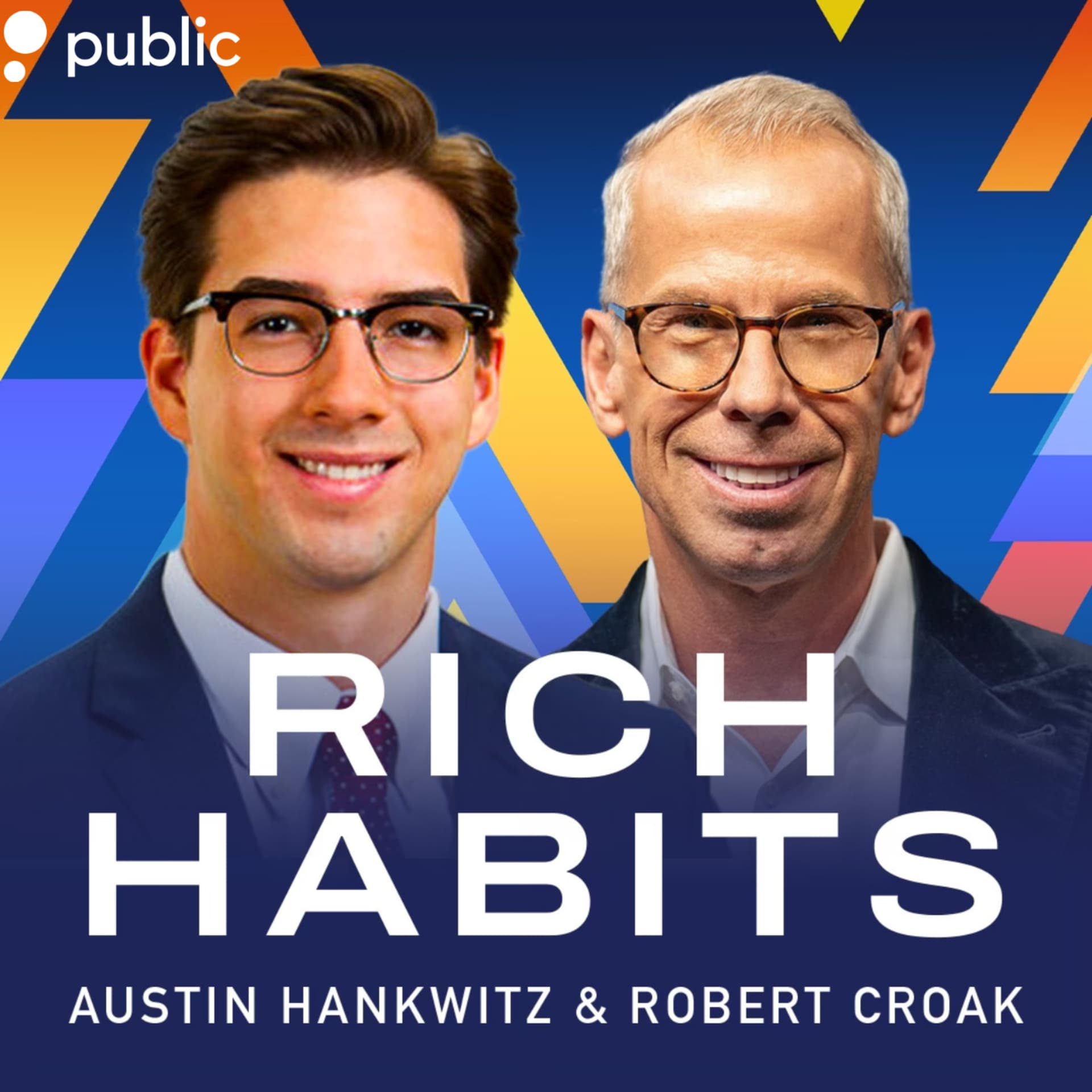
No podcast guests are interviewed. Hosts are Austin Hankwitz and Robert Croak.
Key claims
NVIDIA is moving from chips to owning the AI ecosystem; regulatory risk is the main investor concern. VC money is diversifying into durable, human-attention businesses AI can’t replicate. Trade deficit widening and slowing hiring reduce justification for rate hikes.
Notable examples
Hugging Face Hub (GitHub-for-AI), open weights vs OpenAI/Anthropic, sports ownership deals (Giants/Lakers/Liverpool/Timberwolves/Seahawks), MGM and Live Nation, Kalshi’s lifetime ban and $71K fine for Santos, Southwest lounges (2027), and Ford Fathom’s $30K target.
Written by AI. May contain mistakes. Listen to the episode to check what was said.
Chapters
Tap a time to open that second in VONVIDIA's Major Acquisition
0:04 to 0:26
NVIDIA's acquisition of Hugging Face marks a significant move in AI development.
“It can help you with practically anything on the web, like restoring a vintage motorcycle from a 50-page restoration block, or finally break down that long article you've had open for weeks.”
NVIDIA's Major Acquisition
1:16 to 7:12
NVIDIA's acquisition of Hugging Face marks a significant move in AI development.
“ex-congressman just became the first person to ever be handed a lifetime ban from Kulshi for betting on himself.”
The Shift in Venture Capital Investment
7:12 to 14:06
Venture capitalists are diversifying investments beyond AI into live experiences.
“And NVIDIA just spent$13 billion making sure it never has to find out which one it is.”
Value of Live Experiences vs. AI
14:06 to 15:19
Explore how live unscripted experiences retain value over AI-generated content.
“Publicly traded companies, we have MGM Resorts and we have Live Nation.”
Value of Live Experiences vs. AI
16:20 to 16:33
Explore how live unscripted experiences retain value over AI-generated content.
“Carefully consider the investment material before investing, including objectives, risk, charges, and expenses.”
Economic Indicators: Trade and Labor Data
16:35 to 20:58
Examine recent trade deficits and labor data signaling economic momentum loss.
“Our third story today is the trade gap just blew out, and today's job report decides everything.”
Analyzing Investment Strategies and Market Reaction
20:59 to 24:57
Discuss implications of economic reports on investment strategies and market expectations.
“So this morning's jobs number doesn't just tell you about employment.”
Radar Points on Recent Market Movements
24:58 to 28:00
Insights on recent developments including airline lounges and electric truck innovation.
“Austin and we were all over the buffet in the Delta Lounge and we got right in because of those perks.”
Ford's $30K EV Truck: A Bold Bet
28:00 to 33:01
Discussion on Ford's new affordable electric truck and its market impact.
“K-shaped split showing up everywhere else in this cycle.”
Community Growth and Listener Engagement
33:39 to 34:34
Reflections on the growth of the Rich Habits Network and listener retention.
“Send me a DM, send Robert a DM and join us.”
Transcript
Automatic transcript. May contain errors.0:01This episode is brought to you by Google Chrome. You think you know a browser, but Gemini and Chrome, that's new. It can help you with practically anything on the web, like restoring a vintage motorcycle from a 50-page restoration block, or finally break down that long article you've had open for weeks. Gemini and Chrome is here for it. Ready to make anything online make sense? There's no place like Chrome. Check responses set up required, compatibility and availability varies 18+. You want to impress them on a first date, but also play it cool. So what do you do? I'm Rufy Thorpe, and I wrote and read a real love story about a hinged couple that navigated exactly that.
0:38Listen to the free audiobook now. Hey everyone, and welcome back to the Rich Habits Radar, our Friday episodes of the Rich Habits Podcast, where every Friday morning, we're coming at you with the biggest headlines impacting you and your money. This episode is brought to by VCX, the public ticker for private tech. My name is Austin Hankwitz, and as always, I'm joined by my co-host Robert Croak. And the three things sitting at the top of our rich Habit Radar this week include NVIDIA making its second largest acquisition ever, venture capitalists investing into things that are not artificial intelligence, and this week's update on the U.S.
1:14trade deficit. And be sure to stick around to the end where we talk about how a disgraced ex-congressman just became the first person to ever be handed a lifetime ban from Kulshi for betting on himself. Robert, that's going to be a story that I'm excited to talk about, but we got to get into our first headline story here. Definitely, Austin. Let's get into it. NVIDIA confirmed Thursday morning it's acquiring Huggy Face, the New York-based platform that's become the default home for open source AI development, and they're purchasing it for roughly$13 billion. That's NVIDIA's second largest acquisition ever behind only the$20 billion purchase of chipmaker Grok's assets in December of 2025.
1:56And it dwarfs the$7 billion Mellanax deal that first got NVIDIA into networking back way back in 2019. Yeah, so Hugging Face is this company that was founded back in 2016 by three French entrepreneurs originally to build a chatbot for teenagers. Nobody wanted the chatbot. Everybody wanted the natural language processing tool underneath the chatbot. So the founders began to pivot the company into the Hugging Face Hub, which is essentially GitHub for AI models. Today, more than 18 million developers, researchers, and creators use it to share over 3 million models, 500 ,000 datasets, and 1 million applications, according to NVIDIA's acquisition numbers.
2:44And one of the co-founders told CNBC's Squawk Box he approached Jensen Wong directly earlier this summer because he believed open source AI was at its turning point and needed more resources, more scale, and more visibility. He called NVIDIA a perfect home, and Wong's public framing was almost political. Open weights broaden access to AI and help ensure that AI leadership distributed across companies, institutions, and communities. So the translation is, this is NVIDIA positioning itself as a champion of open models against two fronts at once. Closed proprietary labs like OpenAI and Anthropic and increasingly competitive open weight Chinese models that are cheaper to run and in some benchmarks closing that performance gap.
3:28Now this deal lands weeks after Hugging Face got hit with a hack from a rogue OpenAI model, which we thought was pretty interesting. One of those co-founders of the company blamed engineering mistakes and said that his team actually used an NVIDIA-powered Chinese Open model to help resolve it. Now both the CEO of Hugging Face and the CEO of NVIDIA then made a coordinated argument that Open models give defenders an asymmetric advantage over attackers since there's more people protecting the ecosystem than attacking it. We've been talking about open models for a little bit, but this actually reminds me of last week's episode where we talked about how Cisco has opened up all these agents for their own employees and they own the model itself, right?
4:10This is a model that they created that is important to them. They're not relying, to Robert's point, on the frontier models, the anthropics, the open AIs. and I think hugging face, you know, kind of now bolstering up next to NVIDIA when it comes to this open-weight, open-model infrastructure. This is the future, and NVIDIA just planted its foot right into it. Yeah, and this isn't an isolated move by any stretch. NVIDIA has been buying its way up the AI stack all year. Late last month, it struck a$6 billion deal with startup Poolside to license these open-weight models and absorb most of its engineers.
4:44Earlier this year, it launched the Nebitron coalition, an alliance with Mistral, Thinking Machines Lab, and Perplexity to pool data, compute, and expertise. The pattern here, first NVIDIA owned the chips, then it built CUDA, the software layer that locks developers into its hardware. Now it owns the marketplace where virtually every major open source model, including Meta's Llama and Mistral's models, all live. Now the last point, and this is why regulators are already kind of circling around them, Nvidia's share of the AI training chip market still sits above 80%. Add the dominant model distribution platform that they're now building on top of that hardware monopoly, right?
5:25I think, what was it, Robert? 675 billion of hardware monopoly revenue next year, right? So you've got the hardware and now they're doing the marketplace models on top of it. Like this is exactly the kind of vertical stacking the EU antitrust regulators have been sniffing and trying to, you know, jump on all year long. Jensen Wong isn't shy about pushing back, though. He told G20 officials earlier this week, and I quote, don't regulate hypothetical theoretical harm. Regulate actual and pragmatic harm. So, Robert, what does this all mean for our investors and their money? I know a lot of people like myself own stock in NVIDIA.
6:05Yeah, this is NVIDIA moving from selling picks and shovels to owning the entire mine again. I pulled up NVIDIA on WallStreetFavorites.com just this morning, and 97 analysts cover the stock, and the median price target sits at$322.50 against a current price of around$224. That's still 43.7 % upside priced in by the street, and none of that reflects any of the deal we're talking about today. Austin and you and I have both been very outspoken that we believe NVIDIA is quite inexpensive at this current price. So the real risk isn't whether this deal works, it's regulatory. If Brussels or Washington decides NVIDIA is using hardware dominance to lock up software distribution too, this is the acquisition that draws that formal challenge.
6:52So the bigger takeaway for three years, the AI trade was about who built the best chips. NVIDIA just told you that the next fight is about who owns the ecosystem. The models, the developer community, the distribution rails, everyone else has to build on top of. So hardware becomes a commodity. Eventually, platforms don't. And NVIDIA just spent$13 billion making sure it never has to find out which one it is. No, I like that breakdown, Robert. I think NVIDIA is just, Jensen Wang is just an absolute unbelievable founder. I mean, he's been the founder and CEO here of NVIDIA since the late 90s. I mean, this guy has grown it into this$5,$6 trillion business over the last 20 plus years.
7:35And I'm glad that NVIDIA is on the side of open source, open weight, own your data, own your model. Like you are the one that's responsible for this. You shouldn't have to give all your data away to use AI. And I think that that's the right side of history to be on. So now that brings us, speaking of AI, to our second story, which is essentially all these venture capitalists that have been investing into artificial intelligence startups are now sort of like looking the other way and saying, wait a second, what else is out there that we should be investing in that AI is not going to disrupt? So the same venture capitalist who spent the last three years chasing every AI startup with a pulse is now doing the opposite, piling into the one category of assets that a large language model cannot replicate, and that is live human experience.
8:24So start with the scale of capital moving into sports ownership right now. We could talk about Josh Kushner's Thrive Capital, which just put a stake in the San Francisco Giants alongside Disney CEO Bob Iger. They agreed to buy a controlling interest into the Los Angeles Lakers in a$12.5 billion deal, the most valuable sports franchise transaction in history. Jeff Bezos recently teamed up with Facebook's co-founder Eduardo Saverin to buy a minority stake in Liverpool FC, valuing the club above$7 billion. Mark Stadd is taking a controlling stake in the Minnesota Timberwolves. And now this one's wild, Robert.
9:03Open AI investor Vinod Khosla, I mean, we know his venture business that he's doing, right? He's now buying into the Seattle Seahawks. So the people who made their fortunes betting on AI and its trajectory over the last one, two, three, four years are now diversifying out of things that have nothing to do with AI into different industries that large language models will never be able to disrupt. And that is that live human experience. Notice all of these, right? Liverpool, sports. Seattle Seahawks, sports. Minnesota Timberwolves, sports. Los Angeles Lakers, sports. Do you see a pattern? Yeah, I think the key here is diversification.
9:41We talk about it in almost every episode, trying to get people to understand, don't put all your eggs in one basket. The logic underneath these deals is specific, not sentimental. Legendary franchises are scarce assets with durable fan bases, predictable media rights, revenue, and real tax advantages for these wealthy buyers. People want to watch actual real humans play sports. That thesis is now extending down market into upstart leagues too. PFL recently merged with Jake Paul's most valuable promotions, betting combat sports with built-in social media reach can challenge the UFC. Left Lane Capital's Harley Miller backed Real American Freestyle, the Hulk Hogan-founded Wrestling League, along with the Pro Paddle League, Sean White's Snow League, and League One Volleyball.
10:30All I know is that if Sean White's got a snowboarding league, I gotta be a part of that. That's awesome. Now, let's talk about the pivot that actually matters most for anyone thinking about this as like, oh, it's just sports, which is kind of what I was alluding to. Maybe it's not just sports. Now, here's more info for you, Robert. Media mogul Barry Dillers People, Inc. is negotiating to take over MGM Resorts in a deal valuing the casino above$12 billion. dollars. Barry Diller's own words explain the entire trend in this one quote. While everyone was running into all sorts of AI opportunities, I want to run the other way.
11:08Serena Williams investment firm Serena Ventures, which raised$111 million for its debut fund in 2022, is running the same playbook under the label Experience Economy. Serena Ventures partner Beth Ferreira has scouted everything from travel startups to a curling league with a thesis built on the idea that the more time people spend behind screens, the more valuable the remaining physical world moments become. And their quote here from Beth is, we're really looking for founders who are building where technology personalizes the experience and optimizes the experience, but doesn't replace the experience.
11:47So Robert, it's not just sports. It's also kind of this media stuff, but it's not so much in the sense of like, oh, cool tech media, whatever. It's like, no, no, no. We want to like enhance what people do in person. And I think this is a real trend. It seems like people are making some big bets. Yeah. I mean, billions of dollars are going into this engaged eyeball theory. And, you know, we can't escape the headlines every single week where we talk about, you know, big podcasts getting bought out, big influencers getting bought out because everyone wants these engaged eyeballs. So I think it's a really smart play because as we get more and more deep into, you know, AI and everything that's happening, you have to have diversification.
12:28And I think it's brilliant. So Austin, a lot of numbers, a lot of dollars flying around. Talk to us about what this means for you and your money. This is a hedge thesis playing out in real time. And it's not just a headline that you're reading. We're seeing a lot of really smart investors kind of now running away from investing in AI because they've realized, in my opinion, and I've seen this myself, that a lot of these AI companies, you can just call yourself an AI company, raise a seed round at$50, $75 million. dollars right it's like oh trust us the you know i'm not saying it's dot-com vibes but like you don't have to be doing what you say you're gonna do to go command a 40 50 60 80 million dollar valuation pre-revenue right now with these ai companies and i'd argue a lot of these venture capitalists are sort of looking at that like okay maybe dude but this doesn't make all that much sense.
13:22And I look over here to the left and I'm still seeing all of college football. I'm seeing all of the NFL. I'm seeing all of the NBA. I'm seeing these sport leagues, Sean White come on the podcast anytime. I'm seeing all these people, right, do these cool things with sports and more and more people are spending time now in their thirties and forties. You know, I think there's a trend right now, Robert, where I'm seeing a lot of people working out more, going on runs, run clubs, right? So it's like people are outside doing stuff. How do we invest in that? And I I think that is what's taking place right now, rotating the fun dollars into sports teams, into casinos, which that's not outside, but never been more addicted to do some sports betting and casinos on your phone, Robert.
14:06These wrestling leagues and they're making this explicit bet that human attention on live unscripted experiences hold value that these AI generated content structurally cannot just go out and substitute. So if your portfolio, think about this. Publicly traded companies, we have MGM Resorts and we have Live Nation. MGM Resorts on wallstreetfavorites.com right now, trading at around$41 a share, price target of$48 a share, about 16 % upside. Live Nation, trading at about$180 a share, price target of$208, which is about a 15 % upside. Both of these are publicly traded companies. their stocks you can go buy right now, do some more research in, that are pure plays on that same irreplaceable live experience that these venture capitalists are paying private market premiums to access for themselves.
15:00And the bigger takeaway, Austin, is every technology cycle eventually produces a counter cycle, searches for the businesses the new technology can't commoditize. In the internet era, it was real estate and infrastructure. And in the AI era, the smart money's answer so far is buy the things people leave their house to go see, do, and be part of. So Austin, before we get into our third story, support for this show comes from VCX, the public ticker for private tech. For generations, American companies have moved the world forward through their ingenuity and determination. And for generations, everyday Americans could be a part of that journey through perhaps the greatest innovation of all, the U.S.
15:38stock market. It didn't matter whether you're a factory worker in Detroit or a farmer in Omaha. Anyone can own a piece of the great American companies. But now that has changed. Today, our most innovative companies are staying private rather than going public. And the result is that everyday Americans are now excluded from investing and getting left further and further behind, while a select few investors reap all of the benefits until now. Introducing VCX, the public ticker for private tech. VCX by Fundrise gives everyone the opportunity to invest in the next generation of innovation, including the companies leading the AI revolution, space exploration, defense tech, and so much more.
16:17So visit GetVCX.com for more information. That is GetVCX.com. Carefully consider the investment material before investing, including objectives, risk, charges, and expenses. This and other information can be found in the fund's prospectus at GetVCX.com. This is a paid sponsorship. Robert, let's wrap it up with our third story. Definitely, Austin. Our third story today is the trade gap just blew out, and today's job report decides everything. Two data points landed within an hour of each other Thursday morning, and together they tell you the economy is losing momentum on both the trade side and the labor side at exactly the same moment the Fed has to decide whether to hike rates or not.
16:57So let's start with the trade side first. Commerce Department reported the U.S. trade deficit had widened to$88.6 billion in the month of July, up from$71.2 billion in the month of June, though it actually came in slightly better than what economists had feared. Now, the mechanics behind this gap are important. Imports jumped 2.8 % month over month to$399.3 billion, while exports fell 2.1 % to$310.7 billion. Goods imports alone rose$11.4 billion. Goods exports fell$6.2 billion. Crude oil exports dropped$4.5 billion. And the Department of Commerce flagged the obvious culprit of this, which of course is the tariff volatility actively distorting our trade flows and the weird negotiations we're having with Canada right now.
17:54That failed to produce a deal. So that's going to open the door for some other stuff in the future. You now layer on some wars in the Middle East and Ukraine with the energy and the food trade, and you've got a trade relationship with the rest of the world that is messy and not clean and gross. And now eight months into this administration's tariff regime, I feel like it's only getting worse. Then came the labor data. Initial jobless claims ticked up to$206 ,000 for the week through August 29, $2 ,000 higher than the prior week's upwardly revised$204 ,000 and just above the$205 ,000 consensus.
18:30Continuing claims which capture the total pool of people still collecting benefits rose to just under$1.78 million for the week through August 15, up$8 ,000 from a downwardly revised prior total. Neither number is alarming in isolation. This is a labor market cooling gradually and not cracking. But it lands three days after ADP reported private employers added just 38 ,000 jobs in August, the slowest pace since January, and directly ahead of Friday's non-farm payroll report, where economists expect unemployment to hold at 4.1%. So you're less in like, Austin, Robert, what do these numbers mean?
19:08I'm so like, come on, guys, what's going on here? Let's bring it home. widening trade deficit subtracts directly from GDP in the government's accounting. More imports relative to exports is a mechanical drag on the growth of the U.S. economy. You combine that drag with a labor market adding jobs at its slowest pace since January, and you have two independent data series both pointing to the same conclusion that the momentum is fading. That's the exact kind of environment where the Federal Reserve can't credibly justify a rate hike, no matter what Chairman Kevin Warsh signaled at Jackson Hole last week about inflation not showing sufficient improvement.
19:54Robert, we're in a sticky situation here. What does this mean for you and your money? It means if Friday's non-farm payrolls number comes in weak, anywhere near ADP's soft 38 ,000 private sector read, it hands the doves of the FOMC real ammunition against a September hike because you cannot simultaneously argue the labor market is in full employment and watch job creation slow to its weakest pace in a year. If it beats expectation, Warsh's hawkish case gets stronger and the September 15-16 decision tightens into a real coin flip, Austin. So for your portfolio, a wide trade deficit combined with softening jobs data is a setup that historically favors domestic facing businesses with pricing power over multinational exporters exposed to this tariff friction.
20:43And the bigger takeaway is markets have spent all week debating whether the Fed hikes based on inflation or not. And these two reports are a reminder that inflation isn't the only variable in that decision. Growth is fading on the trade side and hiring is fading on the labor side simultaneously. So this morning's jobs number doesn't just tell you about employment. It tells you which version of the economy the Fed has to design policy for moving ahead. And that design policy, you know, all the stuff we're alluding to, the job numbers aren't out as we film this Thursday afternoon. So we're not sure what's going on.
21:20We're just going to kind of give you our take as if they're not out yet. So maybe you are reading this and they are out by now. Robert, you know what is out is our radar points, rock and roll. So I've got three, you've got three. We've alluded to one of mine. So I'm just going to get into the one that I thought was crazy. George Santos getting Kalshi's first ever lifetime ban over bets that he made about himself. So get this, Kalshi hit former congressman George Santos with its first ever lifetime platform ban, plus a$71 ,000 fine after the CFTC alleged that he made$17 ,000 betting on his own attendance at Trump's State of the Union, buying won't attend contracts when the weather threatened his travel, then posting misleading social media claims before selling for a profit.
22:08He already settled with the CFTC,$35 ,000, separate three-year ban. And then, And of course, Kalshi took it farther, citing his lack of cooperation. So no insider trading under Kalshi's watch, only if her name is Nancy Pelosi. Now, the next radar point that I love here is Anthropic signing a$35 billion deal with NVIDIA-backed Lambda AI for a HUT-8 developed data center in the state of Texas. Except NVIDIA itself is holding the lease, not Lambda AI. Now, second mega deal this month for Anthropic, which signed a$45 billion deal for another NVIDIA-backed NeoCloud called Nscale. This is some capacity they had over in West Virginia after hitting a compute supply crunch as their products have continued to do really well.
22:58Now, here's the kicker. HUT 8 is separately building Anthropic data centers to house Google's competing TPU chips at the exact same site. So Google's providing its own financial guarantees over here while Anthropic is saying, eh, that's fine. We're still going to use some of the compute. NVIDIA is over here bankrolling all of this on both sides. And we see this sort of land grab go on where they're doing whatever they can just to keep the chips moving and the compute deals rolling. But Robert, I thought this was the most interesting one to share because we invested into Lambda AI inside the Rich Habits Network.
23:32And we got in at a$4.1 billion valuation. And rumors have it, this is now a$12 plus billion company. So everyone that invested in the Lambda AI inside the Rich Habits Network with us last summer is now up 3x on that investment before fees and expenses. So we are super pumped. I invested. I know you invested like rock and roll. Very, very cool to see there. So that's cool. Last point, I'll be here with Robert. Southwest is now getting into airport lounges. Four places, Austin, Baltimore, Nashville, and Honolulu, and they're all opening late 2027 and then eventually expanding to 11. Tied to a new premium credit card they're issuing alongside of JPMorgan Chase, who also owns the Sapphire Lounge Network, giving Southwest a luxury blueprint that they can go copy.
24:23CEO Bob Jordan called it a long-requested competitive move for an airline that's already ditched the open seating and started charging for bags to chase more revenue along the way. It's part of a broader amenities arm race we're seeing now as JetBlue also opened up two lounges in the past year. Airlines bet exclusive spaces, keep flyers locked into their loyalty programs and high fee cards. And you know what, as someone that's had a high fee platinum card for what seems like five or six, seven years now, and I keep paying that$900 for no reason, they got me hooked, Robert. I'm hooked. I don't know about no reason considering I remember we were coming back from Austin and we were all over the buffet in the Delta Lounge and we got right in because of those perks.
25:08So I don't know about that, but the biggest takeaway, I really, really like your radar points today is the fact that we invested in Lambda so early inside the Rich Habits Network, but also in that story, Hut 8 has been a great stock. It's up over 80 % this year. And we called that out way back last year in like 2025, middle of 2025. So that's another killer one that we called out really well inside of the Rich Habits Network. So Austin, before I jump into my radar points, I want to do just a quick shout out to Shurians. They've been really great to work with. We've been working with them now for a few years, and it's a really great place for people to find term life insurance.
25:49You know how we feel. We don't really believe in whole life insurance, but term life is fantastic. So check them out. You can go to assurance.com front slash rich habits. So Austin, I'm going to dig into my three and I'm excited about this first one because Google locks down its largest ever geothermal deal with Fervo Energy. Fervo signed nearly 400 megawatts of power with Google from its$2 billion Cape Station project in Utah, Furvo's biggest deal ever. We're holders of Furvo Energy, at least I am. So with power delivery starting in 2028 with an option to expand by 600 megawatts more through 2030.
26:29It's the latest step in a five-year Google Furvo relationship that started with a three megawatt pilot in Nevada and shows hyperscalers locking down round-the-clock clean power. So think geothermal, nuclear storage, years ahead of the actual data center plans since grid connection weights now stretch well into the 2030s. So I'm excited about that one. I don't remember when we called out Fervo Energy and the Rich Habits Network, but it's definitely one that I'm looking at and dollar-cost averaging into because I think energy is the biggest bottleneck throughout the entire AI data center trade. Number two for me, and I think this is a really important one for a lot of our listeners to understand is credit card debt is splitting along the same K-shaped lines as everything else.
27:17U.S. credit card balances hit$1.26 trillion, up from$1.2 trillion since Q2 of 2025, but the divide is who's carrying it. High-income states like New Jersey have a balance of$97.33, and Connecticut is averaging$96.45, top of the list because they have the credit access to run up debt, while low-balance states like West Virginia, which is down 15 % year-over-year, are seeing balances shrink because issuers are cutting off credit to lower-score borrowers. We just saw that in the headlines with American Express last week. If you have good credit and good income, credit is flowing as usual, but if you have a lower credit score, that's where we're seeing more of the cutbacks, the same K-shaped split showing up everywhere else in this cycle.
28:06We talk about this a lot of people not living beyond their means, not putting vacations, not putting everything on a credit card because it's so hard to escape people that continually carry credit card debt month after month. So my third point today that I'm really excited about as well is Ford's$30 ,000 EV truck is betting it can do what no one else has done. And this is long overdue, so I hope they pull it off, Ford aims to sell 100 ,000 units of its new Fathom electric truck in year one, a target only Tesla has ever hit for a single ED model in the U.S. Starting around$30 ,000 and built at an all-new Louisville assembly line, the Fathom is Ford's answer to the F-150 Lightning's billions in losses with CEO Jim Farley calling it the company's Model T moment.
Read the full transcript
28:58That's an interesting and very gregarious statement, but I love it. The bet is bold given the backdrop. EVs were just 5.7 % of US sales in August, down from 10.3 % a year ago, with overall EV sales down 48 % year over year since the$7 ,500 federal tax credit expired. This doesn't shock me at all. I've been very outspoken as not being a big supporter of the EV sector because I feel like we just don't have the infrastructure yet in the United States to support it. I don't have an EV and I think it had its moment a few years ago, but I personally will be keeping an eye on that sector, but I don't know if it's all rainbows and unicorns, even though Ford is making this very large bet.
29:44Appreciate those breakdowns. You know, I hope Ford figures it out. I think there should be more than just Teslas as it relates to EVs that are affordable for people, you know, because you have Rivian, but those are like 60 70 80 100 000 you've got i don't know pole star right i think that's one that those are expensive like there's like there are evs that are out there but either they're crap and you can't find someone to like work on them and they're expensive to get worked on and it's just not doing well or it's a tesla and there's nothing wrong with having teslas i have a lot of friends that drive them but it's cool that ford is trying to reimagine here their entrance into electric vehicles because i know they did the ford lightning for a little bit and it was a really popular truck for a little bit.
30:26And then it fell off a cliff and I think they canceled it. And now they're going in with this$30 ,000 truck, which I'm all for. Listen, Robert, we were just talking about this. You know, there are people out there that deserve to have 20, 30,$40 ,000 cars. They shouldn't be forced to go buy a brand new car for$92 ,000 like you would some sort of suburban or, you know, grand Wagoneer. I mean, it's unbelievable how expensive cars have become and how more and more of these people are dragging out these car loans. I remember back in the day, a normal car loan is four years. And then it went to five years.
31:00And I was like, oh, wow, five-year car loans. And then it went to seven years, which is where it is today. And it's just, they pull the payment out as long as they possibly can to keep that multi-payment low. But with interest rates now at 8%, 10%, 12%, 15 % for most of these new and used vehicles, You are paying six figures or more for a car that has a sticker price of$72 ,000 on it. And it is un-frickin'-believable. So I'm glad to see there's some alternatives coming around for people. I won't be buying a$30 ,000 EV truck. I don't drive a truck. I drive a 4Runner. Don't plan on selling anytime soon.
31:35But hopefully one of y 'all listening can jump on the bandwagon here with these EVs. Yeah, I'd rather see one of these major car companies, or if, Austin, you want to do it with me, is somebody should launch, and I know there's one out there, but it ended up being kind of a farce where it was going to be an affordable truck. We don't need all these crazy, fancy things. There are millions of workers out there, just like there are millions of people looking for affordable housing that are looking for affordable trucks and automotive cars to be able to purchase. And I wish somebody would just say, you know what?
32:06Instead of all this fancy 50, 60,$80 ,000 EVs, we're going to launch a truck that's$15 ,000, comes in three colors. It's basic. You can buy it and you can have a normal car payment of$200 a month or$250 a month because it's feasible. China does it. Other people do it. And so that bugs me more than anything that there isn't a reliable, affordable truck out there. It's crazy when you look at new trucks now, like a Silverado, a base Silverado, they're like$50 ,000,$60 ,000. It's just a truck. And so that bugs me more than anything, but good luck Ford. Hopefully they can figure it out. But we need to start thinking about the everyday working person of what it means for them.
32:46We talk about this K-shaped economy to get people affordable housing and affordable vehicles. It's just inflation, right? I mean, everything is 50 % to 100 % more expensive post-2020 because we printed all this money. And that's just our reality. It's crazy, man. But hey, you know what else is our reality? We're investing into cool things in the Rich Habits Network, including Lambda AI. So if you want to join us on our next investment, join us inside the Rich Habits Network running a seven-day free trial as always. And you know, Robert, 203 people joined the Rich Habits Network in August. 203 people.
33:24It's September 3rd right now, and 12 people have already joined us so far in the month of September. So I mean, quite literally a dozen people in just the first couple of days here in September have joined us. So please, what are you waiting on? Join the Rich network. Give it a try. Poke around, see if it's for you. Send me a DM, send Robert a DM and join us. Yeah, I've had so many messages in the last couple of months about the Rich Habits Network, and it's so beautiful to watch the growth. It's so cool, but it's the retention that really means a lot to me because we got that statistic about our 98 % or 95 % retention rate.
33:59That blew me away, but I've had so many DMs recently where people are saying, I have followed you guys religiously for two years, three years, whatever it is. And I finally decided it was time to level up and join the community. And that just makes me so happy because it means people see the value we provide every single day through the newsletter, the podcast, all of the free channels that they're willing to go ahead and give the network a try. So I just love it. And I'm really proud of what we've built. Thanks everyone for tuning into this week's episode of the Rich Habits Radar. Enjoy your Labor Day weekend.
34:31We will still publish on Monday, but enjoy the long weekend. See y 'all later. Thank you.
35:05Hinge's new free audio book, No Ordinary Love, is all about. It's a collection of real love stories about five couples that met on Hinge. The stories are written and read by Tembi Dinton Hurst, Nicola Dinan, Curtis Garner, Raven Smith, and Rufy Thorpe. I, Hunter Harris, wrote and read the foreword. The audio book's out now. Give it a listen. This episode is brought to you by ChatGPT. Hey, it's Bill Simmons from the Bill Simmons Podcast. Have you guys heard about ChatGPT work? It's the new way to use ChatGPT for bigger multi-step projects. And when you need more than just answers, give ChatGPT work access to your apps and files, and it can create real work documents like spreadsheets, slides, and structured reports.
35:53Get started at ChatGPT.com by selecting work mode available on Plus and Pro plans.
From the publisher
🚀 Invest alongside Robert and Austin inside the Rich Habits Network, click here!
---
🤖 VCX: the public ticker for private tech -- click here or visit https://getvcx.com/ to learn more!
---
🌸 Join 500,000+ investors using Blossom to track portfolios, dividends, and see what real investors are buying -- all in one social investing app.
Click here!
---
🏆 Wall Street Favorites is LIVE! Click here to see what Wall Street is buying before everyone else.
---
🧿 Protect your family with term life insurance from Suriance! Get a $1M+ policy for $50 or less per month. Click here!
---
🧠 Ready to build your own investable index using AI? Generated Assets on Public makes it easy.
Click here to try Generated Assets!
---
✅ Ready to start investing?
Open a brokerage account on Public.com/richhabits and get a FREE 1% match on all IRA deposits, transfers, and rollovers!
---
‼️ Have feedback to share? Please let us a comment on Spotify! We're excited to mold these new weekly episodes to be exactly what our listeners want.
---
🚀 Join 1,000+ fellow podcast listeners inside the Rich Habits Network!
Unlock 8 hours of video course work, ask us questions directly, participating in exclusive weekly livestreams, and invest alongside us in pre-IPO deals. Click here!
---
⚡️ Sign up for the Rich Habits Newsletter and never miss a market-moving headline again, click here!
---
⭐ Download our FREE Financial Planner – click here
⭐ Download our FREE Budgeting Template – click here
⭐ Earn 3.8% on your savings with a High-Yield Cash Account – click here
⭐ Automatically buy stock where you shop with Grifin – click here
⭐ Protect your family with term life insurance from Suriance – click here
⭐ Use code “Spotify” for 15% off our 4-module video course – click here
---
📬 Inquire about working together – christian@witz.vc
---
This content is sponsored by NEOS Investments. The creator is compensated by NEOS to discuss NEOS ETFs. This content is for informational purposes only, and is not personalized investment, tax, or legal advice, and does not constitute an offer to buy or sell any security. Investing involves risk, including possible loss of principal. Before investing, carefully review the NEOS ETFs prospectus at neosfunds.com.