
In short
Rich Habits Podcast - Episode Summary
Episode Title Special Guest: Bob Pisani, Market Meltdown, & Walmart's New $100K Customers
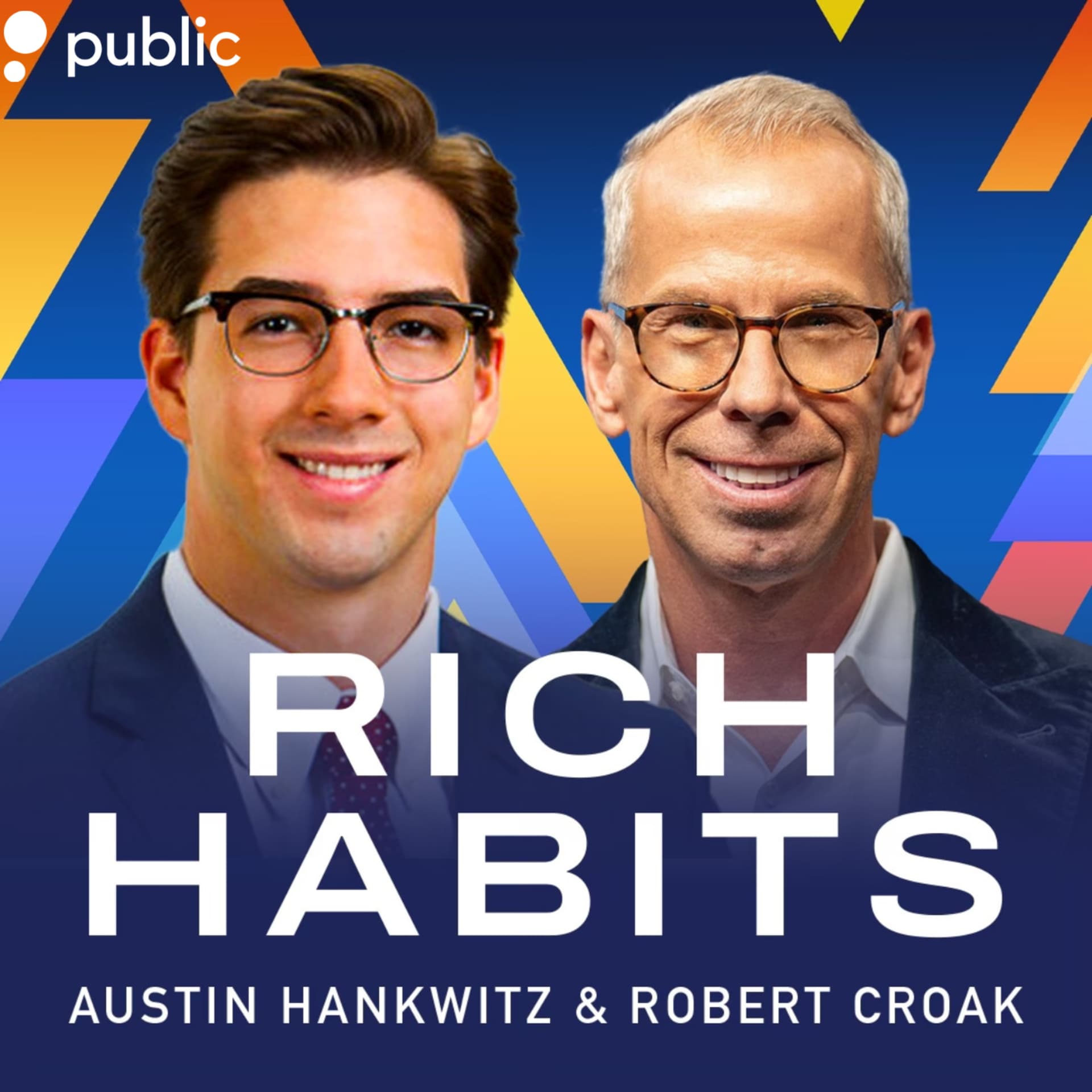
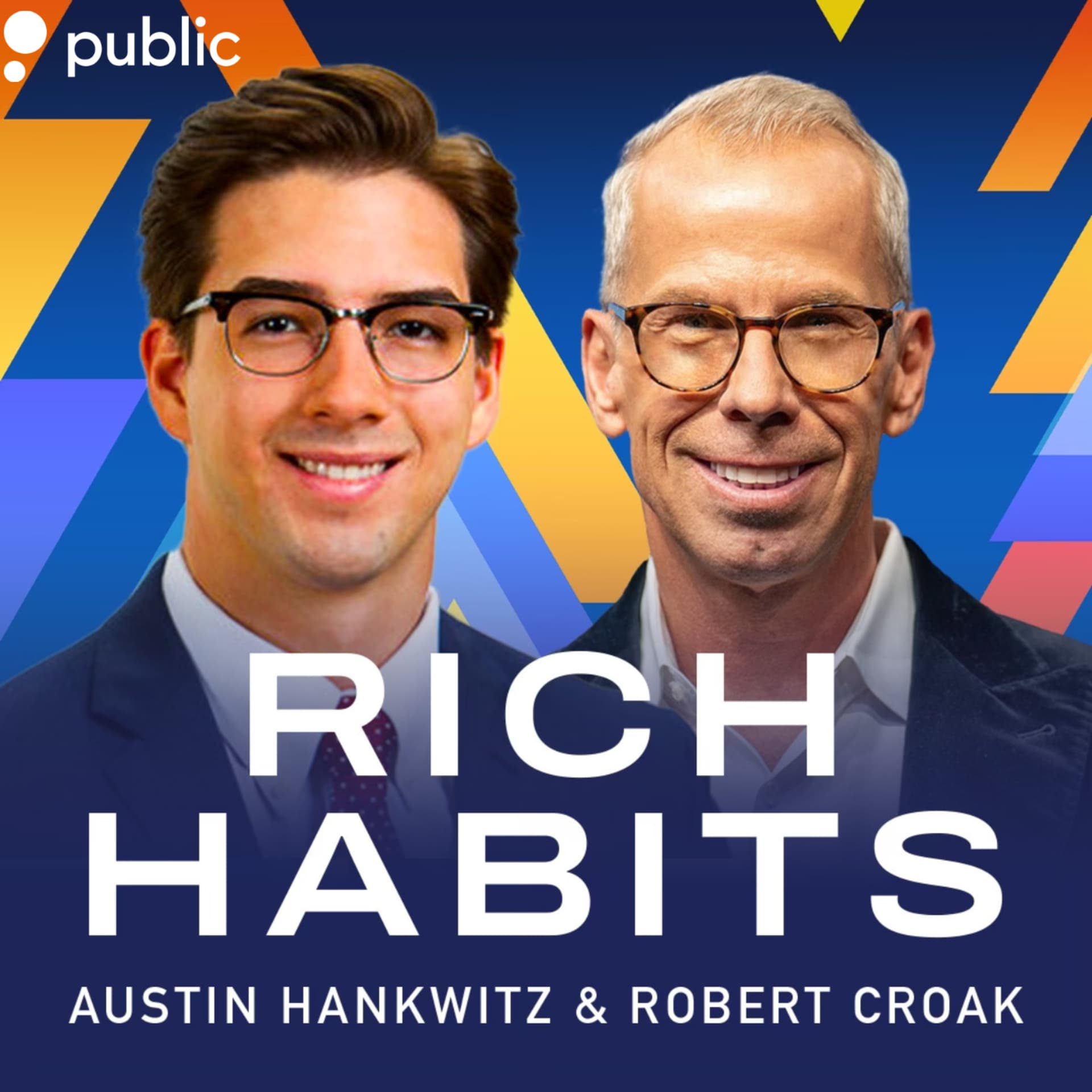
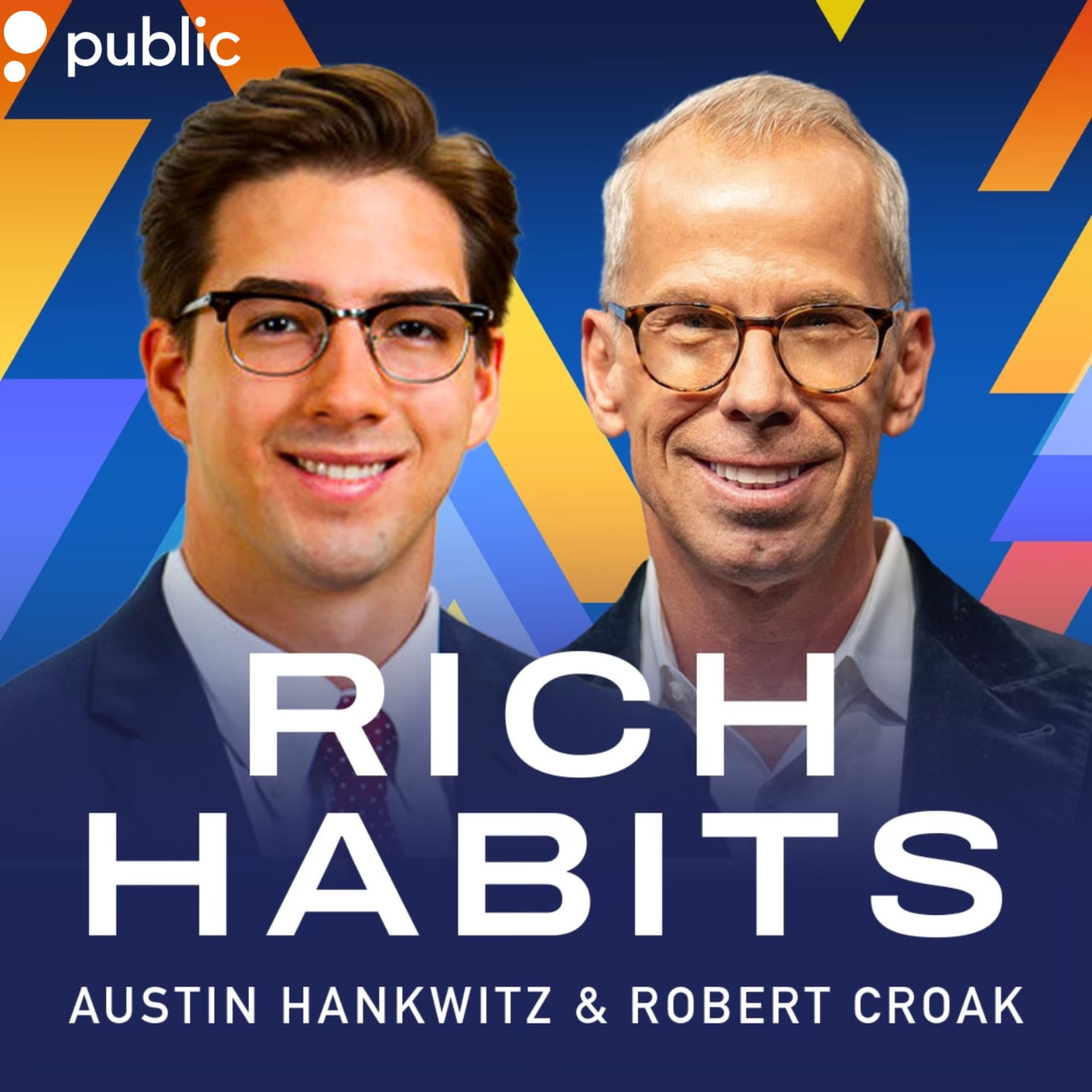
Episode Description In this episode of the Rich Habits Radar, hosts Robert Croak and Austin Hankwitz welcome CNBC legend Bob Pisani as they explore current financial news and insights from the investment world.
---
Key Topics Discussed
- Market Updates
- NVIDIA Earnings Report
- NVIDIA's third-quarter earnings exceeded expectations, showcasing strong demand for AI-related products.
- Revenue of $51.5 billion, a significant increase year-over-year, with a projected $65 billion for the next quarter.
- Despite initial stock gains post-announcement, broader market uncertainty led to a decline.
- Walmart's Earnings and Consumer Trends
- Walmart reported a 4.5% increase in comparable sales and raised their sales outlook.
- Notably, they are attracting higher-income customers, signaling a shift in shopping behaviors amidst economic pressures.
- CEO Doug McMillan highlighted that upper-income households are increasingly shopping at Walmart for value.
- September Jobs Report
- Non-farm payrolls increased by 119,000, exceeding Wall Street's expectations.
- Unemployment rose to 4.4%, indicating challenges in the job market despite job growth.
- The report revisions for the previous months point to potential overestimations in job creation.
- Interview with Bob Pisani
- Bob Pisani shares his extensive experience on the trading floor of the New York Stock Exchange and discusses the evolution of financial markets.
- Emphasizes the importance of long-term investing and the pitfalls of attempting to time the market.
- Shares insights from his new book, Shut Up and Keep Talking, detailing lessons learned from historical market events.
---
Key Takeaways
- Investment Strategies
- The long-term trend of the S&P 500 is upward, and market corrections are common yet temporary.
- Investors should focus on high-quality companies and technological advancements like AI that will shape the future economy.
- Maintaining a consistent investment strategy and avoiding market timing are crucial for success.
- Consumer Behavior Analysis
- The shift of higher-income households shopping at discount retailers like Walmart reflects widespread economic pressure across all income levels.
- Understanding consumption trends can provide insights into broader economic health and investor sentiment.
- Market Predictions and Analysis
- Market forecasts are inherently uncertain; even seasoned analysts and institutions struggle with accuracy.
- The discussion emphasizes having realistic expectations about market performance and the importance of sticking to a planned investment approach.
---
Final Thoughts The episode concludes with a call to action for listeners to focus on long-term wealth-building strategies through consistent investment habits. The hosts encourage engagement with their audience through feedback and community involvement in the Rich Habits Network.
---
Additional Resources
- Bob Pisani's Book: [Shut Up and Keep Talking](https://www.amazon.com/Shut-Up-Keep-Talking-Investing/dp/0857199218)
- Rich Habits Newsletter: Subscribe for market insights and updates.
- Community Engagement: Join the Rich Habits Network for exclusive content and discussions.
---
This episode provides valuable insights into current market trends while reinforcing the importance of long-term investment strategies and understanding consumer behaviors in times of economic uncertainty.
Written by AI. May contain mistakes. Listen to the episode to check what was said.
Transcript
Automatic transcript. May contain errors.0:28The Burlington Coat Event is back. you do listen to? Is it get optioning those options? Or let's do a little research. Learn more at finra.org slash trade smart. Public.com presents the Rich Habits Radar, a new Friday episode of the Rich Habits podcast, where every Friday morning, we're coming at you with the biggest headlines impacting you and your money. My name is Austin Hankwitz. I'm joined by my co-host Robert Croak in the three things sitting at the top of our rich habits radar this week include NVIDIA's earnings report that seemingly saved the markets, or maybe not, Walmart's CEO's comments surrounding some high-income shoppers this quarter, and finally, the September jobs report that well exceeded Wall Street's expectations.
1:19Now, be sure to stick around because we are welcoming an incredibly special guest as a little halftime show for the episode, former senior markets correspondent at CNBC, the man, the myth, the legend, Bob Pisani. Really excited to be chatting with him later. So before we do that, though, we got to walk through our three headlines. Robert, kick us off. Yes. Number one today is NVIDIA's earnings caused the markets to rebound. And now I guess sell off as of this recording. NVIDIA reported their third quarter earnings on Wednesday after the market closed and anxious investors waited to hear if the company would keep this AI bubble momentum trending higher.
2:01Jensen Wong delivered upon those high expectations, quoted saying Blackwell sales are off the charts and cloud GPUs are sold out. I was actually shocked in the interview that he did say off the charts. He also said compute demand keeps accelerating and compounding across training and inference, each growing exponentially. So we've entered this virtuous cycle of AI, and AI is going everywhere, doing everything all at once. Now, I don't know about you, but that sure does sound exciting to me. The company's data center business segment, which is the backbone of this AI trade, reported$51.5 billion of revenue, up 25 % quarter over quarter and 66 % year over year.
2:45The company guided to$65 billion in quarterly revenue for Q4, while exceeding Wall Street's expectations of about$60 or$61 billion, I think is what I read. Now, this caused their stock price to pop by about 5 % after hours. However, they've since given back all of those gains as the markets are currently well in the red as we record this Thursday afternoon. So, Robert, what does this mean for you and your money? It seems like macro uncertainty in the economy is overshadowing the micro strength of earnings. We'll talk more about that in our third headline, but long story short, the lack of economic reports shared over the last six weeks, given the government shutdown, Jerome Powell's no-change mindset, and the just terribly bearish news cycles around Michael Burry's short and Sam Altman's misguided interview comments are really pulling the markets down.
3:37You need to understand that AI is the most transformative technology of our lifetimes, and there will be ups and downs like there always have been. But you should also be investing into the companies that are building the infrastructure for the next industrial revolution, regardless of what's going on today. Couldn't agree more, right? Give me more of that Amazon, that Google, that Microsoft, right? Give me those companies at a discount, baby. Speaking of discounts, let's talk about the king of discounts, which is Walmart. So Walmart reported earnings today, and their CEO shared some very interesting comments about their shoppers and the trends they're seeing behind the scenes.
4:13So not only did their comparable sales increase by about 4.5 % during the quarter, but they also raised their full year sales outlook by$300 million and their profit expectations by about 3%. Now for a company whose profit margins are very thin, this is a pretty big deal, which is why their stock is up 6 % while the broader market is still deep in the red today. Now here's the interesting part. CEO Doug McMillan stated the company is seeing shrinking budgets for many, but steady spending patterns across all income groups. They're seeing increased traffic from higher income households defined as customers earning more than$100 ,000 per year who find themselves shopping at Walmart for value, convenience, and broad assortment.
4:58And the quote is upper income households accounted for the majority of share gains in the quarter. So what does this mean for your money? It means, Robert, that high-income earners are looking for a deal and are even willing to change the shopping habits to create savings and keep more money in their pockets. It's a sign that the U.S. consumer is stretched at all income levels, a stark reminder that the U.S. stock market is not the U.S. economy. As we saw this earnings season, the largest companies in the U.S. who are doubling down on AI have experienced that double-digit profit growth and are guiding toward that to continue next year, while the S &P 490, if you want to call it, they've lagged, right?
5:38Because their customers are not data centers and AI chips, right? Their customers are the average American. Definitely. And that takes us into number three today. And that is non-farm payrolls grew by 119 ,000 jobs in September. As polled by the Wall Street Journal, economists believe that the United States would add 50 ,000 net new jobs in September. However, as reported this morning, we actually added 119 ,000. However, take this with a grain of salt considering July and August payroll reports were revised lower by a combined 33 ,000 jobs after the fact. Yeah, I think that's the funny part, right, is like we have these headlines of like, whoa, all these jobs came, like amazing, fun.
6:21And then like three months later, they get revised lower by literally tens of thousands of jobs and no one talks about it. So yeah, take that 119 ,000 number, headline number with a grain of salt. Now, the unemployment rate did rise slightly from 4.3 to 4.4%, reaching the highest level in four years as nearly half a million more people joined the labor force over that period of time. Now, the report also showed that the number of continuing unemployment claims rose by 28 ,000, which reflects a low hire environment. So essentially, once workers are laid off, they're having an increasingly more difficult time finding their next opportunity.
7:00And if you've been following Polymarket like we do, or even more importantly, the CME FedWatch tool, you'll notice that the odds of a December rate cut have fallen from 90 % chance in late October to now only a 30 % chance. That means the markets were pricing in a 25 basis point rate cut just three weeks ago, and they're pretty much now just taking that off the table. This is important because lower interest rates are generally a good thing for the economy and investors, but makes increasingly more sense, especially after we see the labor report for October getting completely deleted by the BLS, forcing Jerome Powell to make a decision without up-to-date information.
7:40So, Austin, everyone watching, what does it mean for their money? Well, I mean, kind of extrapolating upon what we're just talking about with that Walmart story, right? The U.S. consumers not only stretch, but they're increasingly now having a difficult time finding that next job, that next opportunity. And when you pair that with a record long government shutdown, you have a recipe for lower GDP growth, a blind Federal Reserve chairman who literally is like, I don't have the information needed to make this decision. and then the Bureau of Labor Statistics is like, nah, we're just not gonna publish anything for October.
8:13And we're over here looking like, what do you mean you're not gonna publish anything for October? So now you've got lower GDP, a blind Jerome Powell essentially, and now this volatile stock market, recipe for disaster. Now, with all that said, this too shall pass as we continue to believe in the productivity boom, the deregulation, like all this stuff, right? An easing monetary policy. Everything will continue to trend up into the right. AI is the most transformative technology of our lifetimes. Just take a deep breath, have conviction, and stay focused. Definitely. We talk about long-term investing and conviction all the time.
8:48And I would say right now is one of those moments where everyone needs to just take a breath, understand markets have volatility. This too shall pass, just like you said. and just oo-sa and we will be fine and we will try to prepare you as best that we can and give you all the information so you can make educated decisions on what to do next with your money. Now, before we jump to our interview with Bob Pisani to learn all things about the 35 years he's had at the New York Stock Exchange, Robert, we got to talk about the biggest movers and shakers in the ETF space this week. As you all know, ETFcentral.com is where we get all this information.
9:26They are an incredible resource as we believe people should own not just these index funds, but also the thematic ETFs inside of their portfolios. So I'm just going to share my screen and we're going to walk through the best performers, the top three best performers and the top three worst performers. So I'll kick us off. The number three spot for the best performer this week came in as niche commodities of about three and a half percent. Number two was healthcare tech at four and a half percent. And the number one best performing theme of the ETF markets this week was volatility, of course. Of course.
9:59Okay, I'm going to do the same thing here, but only the worst performers. Number three, blockchain down 12.5%. Cryptocurrency right in hand with blockchain down 12.75%. And cannabis and psychedelics down 27%. That's crazy. We love ETF Central for all this incredible information to share with you guys. but those are some wild, wild numbers. They very much are. So if you are someone who's in cannabis and psychedelics, that's crazy. Now, my journal take, Robert, I'll kick us off here, is healthcare technology having a good week right now, up four and a half percent. You know, as you guys think about times of volatility in the markets, you kind of think back to the recent bear market of 2022.
10:40You think about the Trump tariff tantrum, right? During times of volatility, investors like to flock toward more resilient sectors in the market. And healthcare is absolutely part of that resiliency, right? You think about consumer staples, healthcare, things where people buy and spend money regardless of what the economy is doing. Now, we just saw, and we'll talk about this here in a little bit, Robert, Eli Lilly may be getting introduced to the trillion dollar market cap club. So healthcare tech right now is pretty interesting, especially as we see continued volatility in the markets. What's your major takeaway, Robert?
11:14These numbers don't surprise me at all. We have so much uncertainty in the markets. You see blockchain, crypto, Bitcoin is down for the lowest point in seven months. So for me, I think it's a really good time for people to seriously look at diversification, maybe away from these big tech stocks and AI stocks and the cryptos of the world and look into other sectors. We saw that healthcare is really doing well. Niche commodities, I think, is also somewhere people could look and find ways to be a little more risk off in these uncertain times. And that could start with finding more consumer staple companies like we just talked about with Walmart could be a good play right now.
11:57And other ways to not be caught up in this really volatile era of this AI bubble that everyone's talking about. Appreciate that call out, Robert. Now, the fun part, our conversation with Bob Pisani. Let's jump straight into that. So today we're joined by a true icon of financial journalism, Bob Pisani, former senior markets correspondent at CNBC and one of the most recognizable voices on Wall Street. Bob has spent more than 35 years covering the stock market from the floor of the New York Stock Exchange, witnessing firsthand everything from the Asian financial crisis and the dot-com boom to 9-11, the global financial crisis, and the pandemic-induced sell-off.
12:38If something historic happened in the markets over the last quarter century, Bob Pisani wasn't just reporting on it, he was standing right in the middle of it. He's also the author of Shut Up and Keep Talking, Lessons on Life and Investing from the Floor of the New York Stock Exchange, a book that blends remarkable behind-the-scenes stories with practical investing wisdom. Over the years, Bob has spoken with and learned from some of the most influential investors, founders, entertainers, and leaders to ever walk through the floors of the New York Stock Exchange. The book captures what he's learned from those conversations, what's working in investing, what absolutely doesn't work, and why predicting the future is so notoriously difficult for even the smartest people in the room.
13:23And beyond the personalities, we wanted to talk to Bob today because he's had a front row seat to the evolution of modern markets, from shouting brokers to fully electronic trading, from stock price picking legends to the rise of index funds. His perspective blends history, human behavior, and deep market experience in a way that very few people on the planet can match. We're thrilled to have Bob Pisani to the Rich Habits podcast for the very first time. I'm super excited as the elder statesman here because I was watching you through the boom and the bust of the dot-com era, which was a crazy time.
14:00And here we are again today, so it's great to have you. Thank you, Bob and Austin. Pleasure to be here. Absolutely. So you've seen more than 10 ,000 bell ringings. What were some of your favorites and which do you feel have had the most impact to America when looking back at them? Impactful is an interesting word. There's been a lot that have been a lot of fun, not necessarily impactful. The bell ringings are my favorite part of the whole job. I spent 35 years at CNBC and just left a few months ago. And it was, I can't tell you how wonderful it was to work for CNBC. Just a great company, great organization.
14:34But most of the time I was stationed on the floor of the New York Stock Exchange. And although I don't work for the NYSE, obviously you spend 30 years. My office was underneath the floor of the New York Stock Exchange, literally underneath the floor. You get very close to the place. So it was a wonderful experience. And the best part of it was the bell ringings every day, opening, closing bell. And I always say to people, if you want to know what it's like, what would you give to meet all of your heroes? What would you give to meet every rock star and king and queen? But you ever wanted to meet?
15:01Well, you stay there 28 years like I did on the floor to almost 14000 bell ringings. Most of the time you're not doing a formal interview. Most of the time you just go and say hello. sometimes you get three or four or five minutes, but what would you give to spend four or five minutes with Aretha Franklin or Robert Downey Jr. or the CEO of Chevron? You'd give a lot. It's really amazing what it does for your reporting if you're talking to an important CEO, but just to meet people. Well, one day Barry Manilow came on the floor. Now I'm not a Manilow fan. I'm a Led Zeppelin guy. I'm an old 60s rock guy, but he came, this is 12, 13 years ago, to promote an album.
15:38And that's what a lot of these people do, these show business people. He did a brief interview with my colleague and he came off and just staring at the NYSE. He was by himself looking at the ceiling. It's a beautiful building on the floor. And I walked over and I said, hello, I'm Bob Bassani from CNBC. And I was sort of just interested if he had anything interesting to say about the business he had been in. And I said, you know, I understand that you used to be a jingle writer. He said, oh, yeah, I was in the 70s and I loved being a jingle writer. And I said, you know, you just sold out Nassau Coliseum, which is in New York, 20 ,000 seats.
16:10Tell me, that's amazing. Now, you haven't had a lot of big hits in a long time, but you've got this huge fan base. And he said, you know, I'll tell you what happens there. In the 70s and 80s, I had a lot of big hits. You knew all of them, Mandy and all those things that were out there in a long time. And I had a lot of big hits, but I kept going. I kept putting out albums in the 80s and 90s that did very well. I had a very strong fan base. And I know you say I didn't have a lot of big hits, but I decided to keep doing what I love to do, which was stay in the music business. And I did a lot of different genres, including show tunes.
16:43And you know what happens, Bob? After you do it long enough, you keep staying at it because I love doing it. And I had a good fan base. After a while, people notice and say, look, he's still here. And people start writing articles about you being a legend. And he said, then you have a whole other new fan base. And that's how you get the 20 ,000 people at the Nassau Coliseum. The discussion was a little long with that, but you get the point. The point that he was trying to make was, okay, so I didn't have as many hits, but I had a fan base. I kept doing what I loved and stayed with it. This meant a lot to me because I'd been already by then, this was 12 or 13 years ago, 25 years at CNBC, and you go through these middle parts of your career where you think, maybe I should go do some other things, but I really like what I'm doing.
17:23I don't want to move. And Barry Manilow said the same thing. He basically affirmed what I was thinking in his own way. So I still didn't go out and buy a Barry Manilow album, but I came away pretty impressed with the guy and enjoyed him. The justictuitiveness, right? Robert uses that term a lot. And I would argue it's not just in our careers, but it's also as investors, right? I feel like as I continue to learn about the capital markets and kind of build up my investing muscle, just sticking to it, dollar cost averaging, doing the things longer than what feels right sometimes yields more harvest in the end.
17:58This gets into sort of basic investing advice. What did I learn after 35 years of being the stocks corresponding, you know, high level investing advice? What principles would rise to the very top of the advice? I would say first is keep a very long view. You know, I always like to say I'm a big investor in the S &P 500 because I think that's the core portfolio of any holding. Three out of four years, the S &P has gone up. It's been around for 100 years. Three out of four years, it goes up. And declines of 20 % or more in the S &P in any given year are very uncommon. It's happened 15, 16 times since 1926.
18:32Two-thirds of the time, there was a decline of 20 % or more. You were made whole within a year of the drop. So the long-term trend is up. The short-term downtrends usually reverse within a few years. Keep a long view. Don't try to trade in and out of the market. The second thing I would say is you're going to live a lot longer than you think. People have a hard time getting around the fact that people are living into their 90s. So a 35-year-old, he says, what should I do? What's going to happen to the S &P this year? I said, why would you be that concerned about this year? If you're 35, you're going to live 60 more years.
19:07Think about that. You're going to be alive 60 more years of investing from 25 or from 35 to 95. Most people make it to 65 today are going to live close to 90. Keep a long view. You're going to live a lot longer than you think. Don't try to time the markets. Don't try to think you know when to go in and out. I met Jack Bogle in 1997, the founder of Vanguard, and it changed my life. I became officially the stocks correspondent. I was the real estate correspondent for CNBC from 90 to 96. And in 97, I became stocks correspondent. I asked for a meeting with Jack Bogle and got it. And first thing Jack Bogle said to me is, well, Mr.
19:44Pisani, I'd be happy to talk to you, but I'm not happy about your television station. He called it a television station, which was kind of quaint. And he said, I would like to see more long-term investing. Now, I hear a lot about this, these superstar investors that you have, this Bill Miller friend, a fellow at Lake Mason. He was very hot right now. And I know that you want to have him on all the time and turn him into some superstar, but you understand, Mr. Prasani, it's not going to last, don't you? These people, they're needles in a haystack and they come and go, but they don't have any persistence.
20:16Do you know what the word persistence means, Mr. Prasani? And I said, now I'm being interviewed by Jack Bogle. And I said, well, I think it means they can't keep outperforming. That's right. So the fellows that are the small number of people that have been outperforming the market in the last five years, they're not the same people that are going to outperform the market in the next five years. That's what persistence is. And these people can't do that. Now, I want to hear more about long-term investing like the S &P 500. We have a fund that invests in the entire stock market. But I'll have people talking about that more, Mr.
20:45Pisani. So basically, it went on like that. I I hung up the phone. I called my wife. I said, this guy Bogle is really actually right. I've been already seven years at CNBC. I think he's right. It's crazy to try to trade the market in and out every day. You want to be long-term. And we opened a Vanguard account for my wife that year. And my wife still owns that Vanguard account and now is doing required minimum withdrawals on that account based on what Bogle talked to me about. And of course, I read his books and became very influential. I read one right up there. That's John Bogle's book. The common sense on mutual funds was the one that came out in 99.
21:18That was the big one that kind of summarized a lot of his thinking. And, you know, we talk about, you know, index investing today, you know, like it's like a common, obvious thing. And it sort of have won index investing and investing in ETFs. But back in the 90s, this was not obvious. Wall Street was furious about indexing. They thought this was a betrayal. They said, who wants to just own the market? You're supposed to beat the market. Well, it turns out you don't beat the market. It turns out with all the fees and everything you add in, you can't beat the market. Almost nobody does. And this bit of wisdom was known at the time, but it wasn't widespread.
21:55And Wall Street didn't like the idea. I mean, they certainly didn't want to pay lower fees for index ETFs. They wanted to pay active management fees. So there was a lot of institutional resistance to the idea of investing using passive indexes. You mentioned, and it's really important because Austin and I talk about this pretty much daily, of how so many people try to time the markets and it's just impossible to do. And, you know, and in basic investing, it says buy low, sell high. You see that all the time. But why does so many investors do the exact opposite? it. What should we as investors be supporting in general, like specific principles to prevent people and get them to understand it is a long term game and stop trying to jump in and out and time the markets?
22:44Touch on that for a minute. What I call the biggest mistake I see investors make, believing that they know how to pick stocks, number one, and they know how to time the markets, that they know when to go in and out. And they don't. They don't know either one. They think that they do because they have biases that infect their brain, that make them think that because Microsoft is up this year and they own Microsoft, that they know how to pick stocks. They don't. What happens here is almost when you look at active fund managers over long periods of time, like a 10-year time horizon, almost all of them, 90 % of these active fund managers do not outperform their benchmarks over time.
23:23I mean, think about this. Over a 10-year period, 90 % of the fund managers don't outperform the S &P 500. Do not. 90%. So most investors are better off in low-cost index funds. So whenever I do this, I do this story every year at CNBC, and they would message me, the viewers, and say, okay, just tell us the 10 % that do outperform. And this goes back to this thing with Bogle. Bogle about persistence. The 10 % that outperformed in the last 10 years are not the same people that outperformed in the next 10 years. And that goes to persistence question. And what that tells you is that much of that outperformance, that 10 % of beat, it's luck, not skill.
24:00Because if it was skill, the 10 % that outperformed would continue to outperform, but they don't, you see. So this kind of blows apart this whole idea that there is some golden person that consistently outperforms generally. So market timing does not work because, by the way, you got to be right going in and going out. Or you got to be right selling and then going back in. And nobody can do that consistently on a regular basis. There are several chapters in my book about this. One of the obsessions I had 25 years ago is, why the hell doesn't anybody know how to predict the future? By 1997 or 98, I had been seven years at CNBC, and it was shocking how bad everybody was.
24:39Not just weather people, I mean stock people. Retail investors are notoriously bad at picking stocks and figuring out what they're doing. You know, there's a phrase on Wall Street, dumb money, which I find offensive because it's the viewers they're talking about here. It's offensive, but not necessarily inaccurate, given what investors do, how bad they time the markets. But professional investors, I just talk about professional fund managers, they have terrible track records as well. Wall Street analysts and strategists have terrible track records. And here's the final one. The Federal Reserve itself has a terrible track record of predicting the GDP of the United States and the inflation trend one year out.
25:20So bad that the head of the Federal Reserve, Jay Powell, has said we have a lot to be humble about. He specifically said that. So how is this possible? How can it be? We have an army of brilliant people. The Federal Reserve has got an army of brilliant people, and they can't figure out the future. And what happens here is that there's two basic problems. And this is in the book. It's complicated, but there's two basic problems here. The first are that predictions are riddled with bias and noise that literally limit the quality of the predictions. They infect your brain. Investors have, for example, overconfidence.
Read the full transcript
25:55There is a classic bias. They think they're a better investor than they really are. Studies show that investors consistently rate themselves higher than an average investor. Well, you can't do that, obviously. 90 % of the people can't be better than everybody else, better than average. It's not possible. So these biases and so overconfidence that you have. The second problem is investors don't have complete information because there's events occurring that are unpredictable that can affect the outcome. So I'll give you a 30 second example. Take something simple. How about an analyst for Caterpillar?
26:28OK, here's a guy like how hard could this be? His job is to predict the cash flow and the earnings for Caterpillar one year out and make a guess on the stock price. How hard could this be? it's just one stock for crying out loud. It turns out it's really hard to do that. These people are wrong, consistently wrong. It turns out that the number of data points that goes into making up Caterpillar stock is actually enormous. It could be in the hundreds of thousands of data points. There are ways to improve economic forecasting. And there's been a lot. There's a chapter in my book on this. And there's been a lot thrown at this.
27:03But for the simple investor, the lesson here is don't think that you could predict the future. You want to stay with the market long term. You want to understand your risk tolerance. How old are you? How much, how long do you think you're going to live? How comfortable you are with having stocks and then stay with that plan. Don't go changing the plan. That's another classic behavioral bias. Something that we like to say all the time is when you're intentional with your money and you connect that intentionality with consistency, building wealth is inevitable. So if you're someone who is intentionally investing into the things you're talking about, right?
27:42The S &P 500, these index funds, you have this intentionality as to, you know, you're not picking stocks, you're not jumping in, you're not doing all these different things, but instead you're saying, I know for the long term, I want to own this American capitalism, right? The S &P 500. So you're intentional with that, but you're not just intentional, you're consistent. So dollar cost averaging every other week with your paychecks once a month or even once a year into your Roth IRA or your retirement accounts, whatever it is. Intentionality plus consistency equals inevitable wealth building. And I love how you laid that out.
28:15And I want to say also just is what a great ramble. And here's why. Exactly what Austin said. But on top of that, we are constantly telling our audience, and it's massive, guys, if someone is telling you what a stock price is going to be in six months or a year, or telling you exactly what Bitcoin's price is going to be in six months or a year, run. Because nobody has a crystal ball. Nobody knows. You use the Caterpillar stock. And it's a great reference right now because a couple months ago, everyone was like, Caterpillar's going to crush. because all of the data centers and we have this big fight with China and now we need to unearth all of these rare earth minerals and Caterpillar is going to be a great play.
28:57And then Trump works out a deal with China and then all of a sudden, well, wait a minute, maybe there's not going to be as much need for more and more of their tractors and all of their backhoes and stuff. So I love the reference. You did a great job. And to lastly, I want to say, we always tell everyone we're not in the crystal ball business. We are in the education and the preparation business and you covered that so perfectly. And I thank you. I really appreciate you walking us through all this. And you're a pretty funny dude, Bob. I give you some credit, man. You're funnier than I thought you were going to be.
29:27Just again, man, thank you so much for joining us on this episode of the show. And your foundational principles are so powerful. I 100 % agree. American capitalism is what we should be investing in and believing in for the long term. It has its pros and cons. Having and introducing as many people as possible to the investor class is the only way we're ever going to shrink the wealth gap in this country. And that's what we try and do with the show, right? Convince people to not just be consumers of the Amazons, the Microsofts, the Apples, the Walmarts, but to also be owners of the companies they consume from as well.
30:01We're very much aligned in that mission and we'll continue to fight the good fight, Bob. Thank you, Austin. Thank you, Bob. Thanks for having me. Really enjoyed it. Thank you for coming. It's a pleasure. What an incredible interview. He is much funnier than I thought he would be but he is such a legend i've watched him for decades now and just such a cool honor for us to have these incredible guests on the show and this is a really good one couldn't agree more shout out to bob pasani what a legend what a guy like oh my goodness he did a really good job too of sort of walking us through that over the last 35 years that he's been on the floor of the new york stock exchange these tried and true strategies hold true right it's like invest for the long term, American capitalism, innovation, right?
30:46All these things that we kind of have always taught ourselves like, yeah, we should do that. But like literally this guy has watched to take place over decades and is pretty much coming back and saying, yep, that's that's that's the way to do it. Well, it's so cool because it embraces our message, the Rich Habits podcast and you and I's message to everyone that follows us that these are not just our ideas. These are tried and true things that have worked for decades and decades in many of the wealthy institute in their own portfolios. And that's why I love having a guest like him to just reinforce everything we talk about on a daily basis.
31:22All right, Robert, let's now wrap up the episode with our rapid fire. This is where I bring three headlines, you bring three headlines, and it's kind of a show and tell, right? We go out, we go find some stuff that we think is interesting, and we come back to the class with the poster board and say, here's why you should care about it. So I'll kick us off. My three show and tell items are Google's new Gemini 3, Eli Lilly, soon to be welcomed to that trillion dollar market cap club, and Coco Robotics, partnering with some of the largest food delivery companies. So let's kick it off with Google's introduction of Gemini 3.
31:53So CEO of Google, Sundar, pretty much just said it's the best model in the world for multimodal understanding. and he also said it's our most powerful agentic and vibe coding model yet, which I thought was pretty interesting that he'd actually call out vibe coding like this. Google AI Plus Pro and Ultra subscribers will continue to have higher limits on Gemini 3. Google is also giving a free year of AI Pro to U.S. college students, which, hey, listen, as someone who remembers the college days, I am here for that. Now, here's the interesting part, in my opinion, Robert. Google's Gemini 3 Nano Banana Pro product is now inside of Adobe's suite of creative tools.
32:33And with Adobe's Nano Banana Pro now in Firefly and Photoshop, creators and creative professionals have another best-in-class image model that they can tap into alongside of Adobe's powerful editing tools. Adobe has seen a crazy ride during this AI boom and potentially bust cycle, But now with this partnership with Google, I think it's something to keep at the top of your own rich habits radar. Now, my second story is Eli Lilly, soon to be welcome to the Trillion Dollar Club. Thanks to the weight loss craze we've seen with GLP-1s, its staying power above the$1 trillion market cap will come down to two questions, in my opinion.
33:13How quickly they can expand the obesity drug market and how completely they can dominate it. The key thing to remember is that, much like the AI boom we've been experiencing, the GLP-1 surge is still in its infancy. Eli Lilly only began selling its weight loss drug in late 2023, and the FDA only declared an end to the supply shortage of obesity drugs last year. So, as production has scaled up and new clinical data has emerged, Eli Lilly's GLP-1 product has pulled ahead of Novo Nordisk's GLP product, Wegovi. So despite ZepBound, which is Eli Lilly's later launch, Eli Lilly now captures the majority of the new obesity drug prescriptions.
33:52So good for them. Now my last call out is the Coco Robotics partnership with DoorDash, Uber Eats, and Shake Shack. Now this is a company that you might have recognized. It's like those little microwaves like on wheels that are going up and down sidewalks and bike paths and things. Essentially trying to deliver your Uber Eats order to you faster. So the cool part about this is Coco Robotics now aims to deploy over 10 ,000 of these little robots all over the place by the end of 2026, targeting expansion in both the U.S. and in Europe. If you are watching right now and you go to college, you've probably seen these things on your campus.
34:28The company is developing higher capacity robots with multi-temperature compartments to serve groceries, pharmaceuticals, and some small e-commerce parcels. Now, the fun part here, Robert, Cocoa Robotics has raised over$120 million in funding, including$80 million in a recent strategic round earlier this year from investors like Sam Altman, his brother Max Altman, and other execs at Uber. So how interesting is that? I definitely want to keep an eye on Cocoa Robotics. I think it's a great call out for your radar today because automatically, and I have seen them already around town, is the thought that we're going to be able to get food delivered by a robot just cruising down the street on its own.
35:12And when are people going to start trying to break into them, steal them, throw them in the trunk of their car, all of those things. but I think it's a tremendous idea and definitely where robotics that are non-related to humanoid robotics are going to be going. So let's get into my three radar points today. Number one, top of mind for everyone. Bitcoin plunged to its lowest price point in seven months and more than$1 trillion with a T dollars have been wiped out of the crypto markets. And I know that's top of mind for everyone. In my opinion, this is caused by rate cut uncertainty, aggressive profit taking, and just the overall fear in the markets regarding the AI bubble talks.
35:52Number two for me today is a call out that I've had for a while, a company I really enjoy. Constellation Energy received a$1 billion loan from the Department of Energy to help them reopen the once negatively famous Three Mile Island nuclear plant. And this loan covers 63 % of the project's anticipated cost and will help supply Microsoft energy for all of their data centers. And for reference, Constellation Energy currently runs one-fifth of the U.S. nuclear capacity. And with more adoption, I think we could see that percentage grow. And then number three for me is Berkshire Hathaway invests$4.3 billion in Alphabet.
36:32and although that might seem like a small amount given their total market cap, this likely has the blessing of Warren Buffett, but is definitely a start in a new direction for Berkshire Hathaway and this will likely continue to prop up Alphabet and parent company Google as I am bullish on them for the future. That's so interesting about Constellation Energy. I did not know that a fifth of the U.S. nuclear capacity went through them. I got to do a little bit more research as it relates to nuclear energy. That's a good one, Robert. Yeah, I'd definitely like to have your take on it because, you know, I called it out and bought it a while ago.
37:04And I've been adding slowly to my position because I do think there's still going to be volatility in the acceptance and adoption of nuclear. But I think it's a must for our energy infrastructure to include solar and nuclear in it to be able to keep up with all this data center growth. So I'd love to hear your takeaway maybe on the live this week in the Rich Habits Network. Here we go. Everybody, thank you so much for joining this week's episode of the Rich Habits Radar. As a reminder, if you enjoy these sort of breakdown episodes, walking you through the biggest headlines impacting you and your money this week, consider sharing it with a friend, leaving us a five-star review, subscribing to the Rich Habits newsletter, or even joining the Rich Habits Network with a seven-day free trial taking place right now.
37:50And be sure to come back on Monday because we have an awesome episode coming out all about how to find the best deals this Black Friday in Cyber Monday. You're not going to want to miss it. Definitely. And we appreciate all of you supporting the new Friday episodes. So make sure you share them with a friend. These are very topical, up to date, and all about giving you guys the latest, greatest news of what we think is important to help you with your money. And finally, if you'd like to learn more about Bob Pisani or read his book, there's going to be a link in the show notes below. Thanks everyone and we'll see you on Monday.
38:51We'll be right back. helping people customize their car insurance and save hundreds with Liberty Mutual. Fascinating. It's accompanied by his natural ally, Doug. Uh, Lemu? Is that guy with the binoculars watching us? Cut the camera. They see us. Only pay for what you need at LibertyMutual.com. Liberty, Liberty, Liberty, Liberty. Savings vary. Underwritten by Liberty Mutual Insurance Company and affiliates. Excludes Massachusetts. Hello there. You can't tell because you can't see me, but I'm a felt polar bear who lives in an animated winter wonderland inside the Instacart app. My neighbors are fox elves that whistle.
39:27It sounds magical, because it is. Almost as magical as getting a$10 credit with your first Instacart order of$75 or more. Perfect for the holidays. Also, I have a body that just won't quit. Download the Instacart app to get a little magic delivered today. Must order within seven days of sign-up. Credit is good for 14 days. Terms apply.
From the publisher
In this week's episode of the Rich Habits Radar, Robert Croak and Austin Hankwitz are joined by CNBC legend Bob Pisani!
Purchase Bob's new book, Shut Up and Keep Talking: Lessons on Life and Investing From the Floor of the New York Stock Exchange, on Amazon -- click here!
---
🤝 Interested in learning more about ETFs?
Check out our friends at ETF Central! Click here!
---
✅ Ready to start investing? Open a brokerage account on Public.com/richhabits and get a FREE 1% match on all IRA deposits, transfers, and rollovers!
---
‼️ Have feedback to share? Please let us a comment on Spotify! We're excited to mold these new weekly episodes to be exactly what our listeners want.
---
🚀 Join 800+ fellow podcast listeners inside the Rich Habits Network!
Unlock 8 hours of video course work, ask us questions directly, participating in exclusive weekly livestreams, and invest alongside us in pre-IPO deals. Click here!
---
⚡️ Sign up for the Rich Habits Newsletter and never miss a market-moving headline again, click here!
---
⭐ Download our FREE Financial Planner – click here
⭐ Download our FREE Budgeting Template – click here
⭐ Earn 3.8% on your savings with a High-Yield Cash Account – click here
⭐ Trade stocks, options, music royalties and crypto on Public – click here
⭐ Automatically buy stock where you shop with Grifin – click here
⭐ Protect your family with term life insurance from Suriance – click here
⭐ Use code “Spotify” for 15% off our 4-module video course – click here
⭐ Optimize your portfolio with Seeking Alpha – click here
---
📬 Inquire about working together – christian@witz.vc
---
Hankwitz Group LLC has an existing business relationship with NEOS Investment Management LLC. The opinions expressed are those of the author, and the author owns several NEOS ETFs.