
In short
Rich Habits Podcast Episode Summary
Episode Title
Talking Money w/ The Einstein of Wall Street (Peter Tuchman)
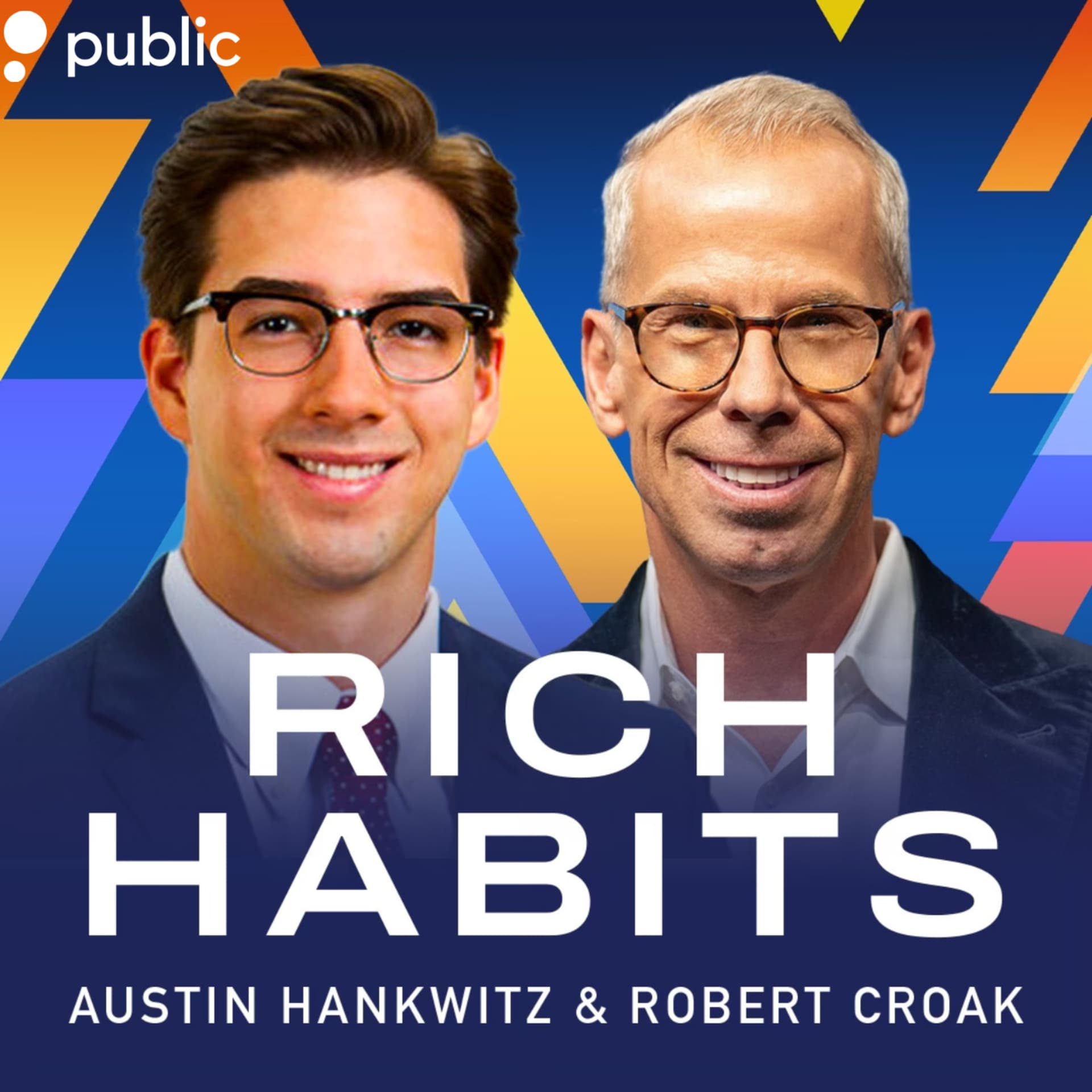
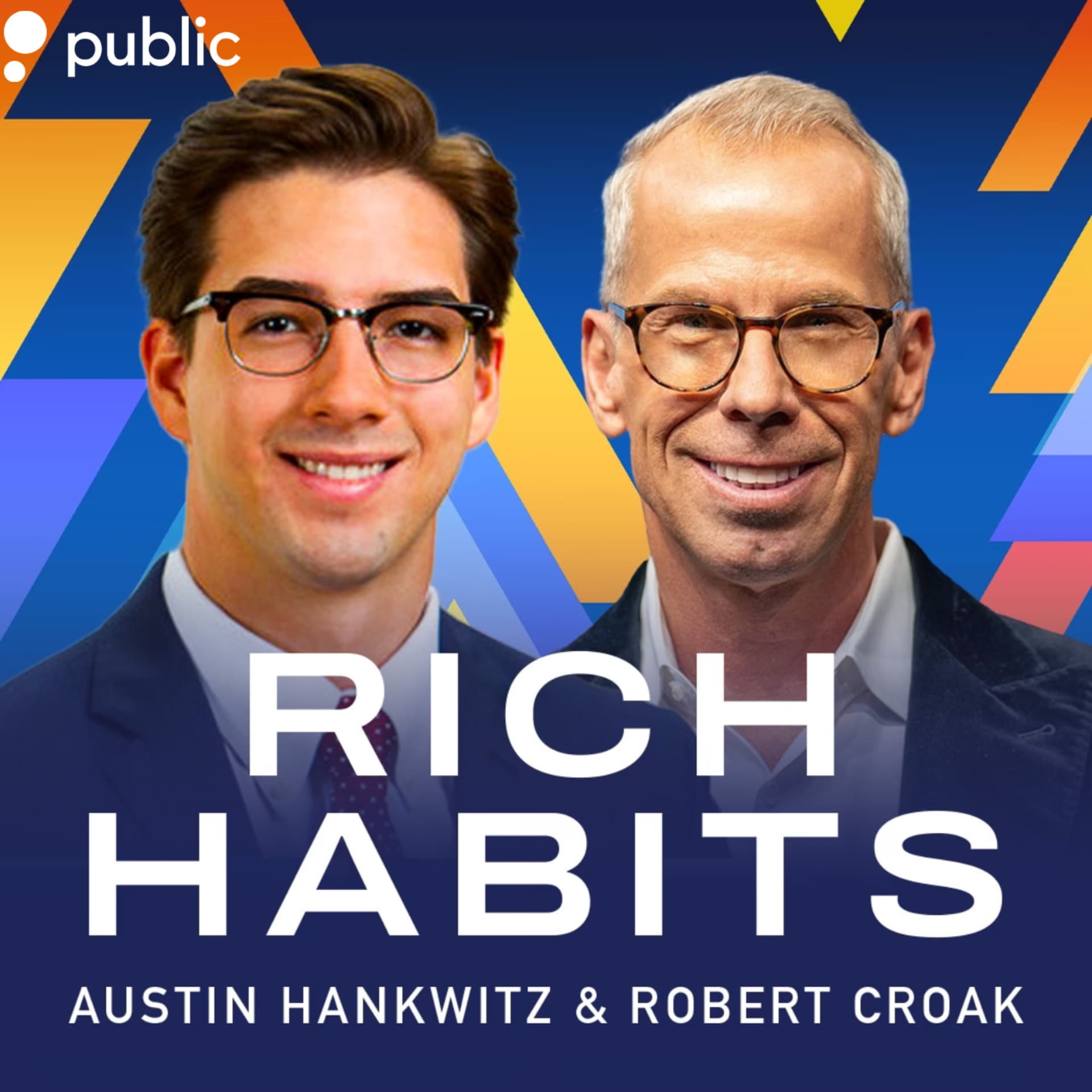
Overview In this episode, hosts Robert Croak and Austin Hankwitz welcome Peter Tuchman, a seasoned trader on the New York Stock Exchange (NYSE), to discuss his extensive experience and insights into the stock market, particularly during volatile times. Peter, known as the "Einstein of Wall Street," shares valuable lessons about trading, the psychology of the market, and how to cultivate investing habits that lead to success.
---
Key Themes
- Market Resilience
- Peter emphasizes that there's "no bad time to buy the market," arguing that historically, the S&P 500 has shown resilience despite various economic challenges.
- He highlights the significant increase in market participation during the COVID-19 pandemic, which democratized access to trading.
- Psychology of Trading
- The discussion touches on the impact of fear and greed on market movements.
- Peter notes that retail investors, many of whom were inexperienced during the pandemic, have become savvier and are now making informed trading decisions.
- Advice for Investors
- Dollar-cost averaging is suggested as a sound strategy for investing during market volatility.
- Staying the course and avoiding emotional reactions to market headlines is crucial for long-term success.
- Evolution of Trading
- Peter reflects on the transition from traditional trading floors to electronic trading systems.
- Despite technological advancements, he argues for the continued relevance of human traders in navigating market complexities.
- Current Market Sentiments
- The conversation touches on various market sectors, including the role of AI in the future of trading and the importance of energy solutions for data centers.
---
Key Takeaways
- Invest Regularly: Regardless of market conditions, invest consistently rather than trying to time the market.
- Educate Yourself: Knowledge is crucial; new traders should seek education to navigate the complexities of the market.
- Emotional Control: Avoid making impulsive decisions based on headlines; focus on long-term goals and fundamentals.
- Market Dynamics: Be aware of the human element in trading, especially during significant market movements or crises.
- Future Opportunities: Explore emerging markets and sectors, especially those related to technology and sustainability.
---
Discussion Points
Peter's Trading Philosophy
- He believes in understanding market dynamics rather than merely reacting to news.
- He compares investing to a long game, where patience and strategy are more important than quick gains.
The Role of Market Makers
- Peter explains the function of market makers and their importance in maintaining market liquidity and stability.
The Impact of Technology
- While technology has transformed trading, the need for human oversight remains critical, particularly during turbulent times.
---
Conclusion This episode of the Rich Habits Podcast provides listeners with a wealth of knowledge regarding stock market trading, the psychology behind investing, and practical advice on how to navigate market volatility. Peter Tuchman's wealth of experience offers valuable insights for both novice and seasoned investors looking to strengthen their financial habits.
---
Further Resources
- Follow Peter Tuchman on social media for insights and updates.
- Join the Rich Habits Network for educational resources and community support.
- Access provided links for financial tools, newsletters, and investment platforms mentioned in the episode.
---
Note: The insights shared in this episode are for informational purposes only and do not constitute personalized investment advice.
Written by AI. May contain mistakes. Listen to the episode to check what was said.
Chapters
Tap a time to open that second in VOIntroducing Peter Tuchman: The Einstein of Wall Street
1:31 to 4:10
An introduction to Peter Tuchman and his impressive career on the NYSE.
“So Robert, what are we talking about in today's episode?”
Market Resilience and Investing Habits
4:10 to 7:40
Peter shares insights on market volatility and investment strategies.
“And I think we need to, you know, really understand who's in the market.”
The Evolution of Retail Trading
7:40 to 9:36
Discussing the changes in retail trading since COVID and the rise of young investors.
“smarter than they were in the beginning.”
Understanding Market Pullbacks
9:36 to 10:44
Peter explains how to approach market pullbacks as buying opportunities.
“Everyone should go back and watch the first Wall Street movie with Michael Douglas and Charlie Sheen.”
The Role of Human Traders in a Digital Market
10:44 to 14:01
Peter discusses the importance of human traders amidst increasing automation.
“Somebody said something about quantitative computing or whatever it was, and the stock comes down$30,$40.”
The Evolution of Market Reactions
14:01 to 15:08
Explore how market dynamics have changed, especially with human involvement.
“and it was the first time he mentioned China and tariffs.”
A Day in the Life of Peter Tuchman
15:09 to 16:47
Learn about Peter Tuchman's daily activities on the trading floor and the significance of human traders.
“I know people think it's just a backdrop for a bunch of media and stuff.”
Understanding Market Makers
16:48 to 19:21
Gain insight into the role and importance of market makers in trading.
“So as I said, the stock, obviously it's a lot of the stock exchanges made a major effort to give those who are still working on the floor a bit of an edge.”
Trading Strategies and Customer Relationships
19:22 to 23:11
Discover Peter's trading strategies and the importance of relationships with customers.
“I avail myself of as much information as I can, what's been happening pre-market.”
The Rise of Retail Traders
23:12 to 24:12
Discuss the increase in retail traders and the growing need for education in trading.
“I've found another side of this business, which is social media.”
Show all 16 chapters
Navigating the New Trading Landscape
24:13 to 26:30
Explore the changes in trading and the importance of education amidst new technologies.
“back when I had two monitors on my desk, day trading, swing trading.”
Identifying Real Market Trends
26:31 to 28:01
Learn about Peter's framework for identifying genuine market regime changes.
“embrace their community and is now it's like, I don't need to be standing on the mountaintop all by myself with a bunch of cash sitting on the back of a Bugatti.”
Personal Investment Philosophy
28:01 to 28:42
Learn about Peter Tuchman's unique approach to investing and personal priorities.
“So first of all, everyone needs to know that up until very recently, I never owned a share of stock in my life.”
Understanding Market Dynamics
28:42 to 29:49
Explore Peter's insights on market trends, including AI and crypto's impact.
“And so I found a way that I could open up a, you know, a managed account that I don't have any involvement with.”
The Evolution of Trading and Blockchain
29:49 to 31:00
Discover the historical context of trading and the blockchain's role in modern finance.
“And it kind of was fun for me because, you know, today I was at this crypto conference and we were talking about the blockchain and ledgers.”
Current Market Observations and Predictions
31:00 to 35:15
Hear Peter's thoughts on emerging markets, energy challenges, and future investment opportunities.
“So then once I understood that, well, that's what that's all about, that you actually now it's about ownership.”
Transcript
Automatic transcript. May contain errors.0:00Robert Croak:When you want your spring break to feel like... And your kid's pool day to feel like... And your hotel bed to feel like... Ooh, and room service to feel like... Because at Hilton, hospitality feels like... Your cabana's ready. Would you like fresh towels? It matters where you stay. Book now at Hilton.com. Hilton. For this day. This episode is brought to you by Nespresso. Introducing Virtuo Up, the latest in a long line of innovation from Nespresso. It's innovation you can touch, sense, and taste in every single cup. With a three-second start, easy open lever, and dedicated brew over ice button, it's even easier to enjoy your coffee your way.
0:52Robert Croak:Sip for yourself. Shop Virtuo Up exclusively at Nespresso.com. Hey, everyone, and welcome back to the Rich Habits Podcast, a top 10 business podcast on Spotify brought to you by Public.com. By the end of this episode, you'll understand what real market volatility looks like up close and personal, how human psychology still drives price action, and how to build investing habits that don't fall apart when markets get chaotic. My name is Austin Hankwitz, and I'm joined by my co-host, Robert Kroak. Robert is a seasoned entrepreneur with over 300 million in lifetime revenue. I'm a multimillionaire in my late 20s with a background in finance and economics.
1:30Robert Croak:As the show name might suggest, every episode we talk about rich habits as they relate to business, finance, and mindset. So Robert, what are we talking about in today's episode?
1:39Austin Hankwitz:Well, like you said, I feel like this has been years in the making. And today we're joined by Peter Tuckman, better known as the Einstein of Wall Street. Peter's a legendary New York Stock Exchange floor trader who's been on the New York Stock Exchange floor since 1985. I think that's probably when I started watching you, which means he's lived through nearly four decades of market cycles, crashes, bubbles, Fed pivots, flash crashes and everything in between from the most intense seat in the building. If you've ever seen a market headline with a trader clutching his head, arms raised or staring in the abyss, chances are it was Peter.
2:13Austin Hankwitz:He's widely considered the most photographed trader in the world, and his expressions have become a visual shorthand for market emotion on days when things go off the rails, and we've seen a lot of that lately. But behind the scenes, the photos is something far more interesting. Peter has watched markets evolve from loud, entirely human-driven, screaming-filled trading floors to today's electronics, headline-driven, algorithm-dominated environment, and he's seen firsthand how fear, greed, and crowd psychology will still move prices no matter how advanced the technology gets. Peter, long overdue.
2:48Austin Hankwitz:I feel like there should be a drum roll.
2:49Peter Tuchman:Welcome to the Rich Habits Podcast. Thank you. Thank you. My God. I'm honored. I'm humbled by the introduction by you both. Thank you.
2:58Robert Croak:Absolutely. We're really glad you're here. So let's just dive into it. If someone wants to build rich habits as an investor today, what is your simplest rule or framework for decision making when the market is screaming with volatility.
3:13Peter Tuchman:So, look, I'm a firm believer that there's really no bad time to buy the market. You know, everybody's trying to game the market. Well, you know, no one is ever going to get the bottom tick or the uptick, you know, based on buying or shorting stock or selling stock. Right. Historically, obviously, we've seen the S &P 500. I mean, I can just look at the sort of microcosm of it. Let's think back for a moment just till since COVID. Right. Which we can say is a five year period of time where every possible thing has been thrown at this market, right? From, you know, from -
3:42Robert Croak:That's a great hike in history, right? It's crazy.
3:45Peter Tuchman:Exactly. I mean, all of that, plus COVID, plus flash crashes, plus - Tariffs. You know, plus tariffs, plus a new administration twice, you know, and obviously a battle between Fed chairmen's and administrations, you know, and yet the market still trades at record highs, Right. And so, you know, the market is I'm humbled by the market's resilience and the ability for this market to continue to go higher. And I think we need to, you know, really understand who's in the market. Right. You know, you're talking about rich habits. You know, the market is not being fueled. Although, I mean, I have to say I track a lot of retail investors.
4:23Peter Tuchman:What happened during COVID was obviously what I call the democrat, me and others called the democratization of the trading and investment community. right before COVID, you know, you needed to be an accredited investor to be trading and investing in this market. And suddenly you have Webull and Robinhood and all these free trading apps. Everybody sheltered in place at home during COVID, a couple of shekels in the bank because of their stimulus check. And all eyes were on the market, right? The internet was blowing up with it and 50 million new traders. That's just a number that TD Ameritrade come out with at the beginning of COVID had new eyes on this market who were investing, who were trading at the market.
4:58Peter Tuchman:And, you know, I would say for the most part, most of them got their butts kicked, excuse my language, you know, by the meme phenomenon and the volatility in the marketplace. But we're up over 125 percent since then. Right. You know, that's why whether one likes Jay Powell or not, I'm a I'm a fan and I have no problem saying that he's navigated us through some of the hardest times in history. And yet, even with all that, this market is still we are just about at record highs. So I say all that to say that there is no bad time to buy the market. historically the S &P 500 has gone from the bottom left to the upper right.
5:31Peter Tuchman:Has it had a couple of bumps in the road, pebbles in our shoe as we got there? Yes. You know, are there some sectors that have fueled it a little bit more than not over time? Absolutely. But, you know, it's like if we talk about AI, has, you know, has that AI trade left the station? I don't believe so. You know, yesterday Palantir came out with record earnings up 12 bucks. You know, last quarter, Palantir had earnings that were beyond spectacular. And the market, you know, if you think back to November, it was a very curious time because, you know, leading into Palantir's earnings last quarter, it was up seven days in a row till November 3rd when they announced the earnings that were blow out earnings.
6:08Peter Tuchman:And the stock sold off 8 % that day. And that gave mainstream media the gall to suddenly say, wait a minute, AI is a bubble, right? Think you remember that narrative that we went through from November through December that made actually, you know, the probability of an interest rate cut go down to 15 % and up to 88%. I remember that. The fact, and that all came off of that, that thing that suddenly, well, if, if, if Palantir had record earnings and it sold off 8%, this must mean it's either the top or that this whole AI thing is just a bunch of smoke and mirrors. That's madness, right? You know, the bottom line was two weeks later, NVIDIA had sold off three weeks into the earnings and it went up 8%.
6:48Peter Tuchman:So I think, you know, I think investors, the new community, who I guess is a big part of the audience, new, I mean, we're hoping that this new revolution of young retail traders who I think have become smart money, right? If you go back and I analyze retail investors, I sort of have my ear to the grindstone because I run this with my partner David Green in Academy teaching young people to trade the market. The people who got beat up pretty bad during COVID came back. Those who didn't walk away and say, I'll never go there again. That party is not a place I want to be. The ones who came back, they were buying the market in February, March, and April during that mini crash, the sort of self-inflicted tariff.
7:31Peter Tuchman:Right. They were the ones buying it. It was institutions that were selling that. November's sell-off. Retail was buying it. So that community has come back strong. They've come back much smarter than they were in the beginning. They realized this is not a get rich quick scheme. This is not about listening to Uncle Herbie on the internet or FOMO or hype or hope. They're learning the game, right? And they're the ones who are now making money. I just came from a conference in Miami on Saturday. 2000 young traders. I would say the oldest was 25 years old trading futures. These young people are making millions of dollars.
8:04Peter Tuchman:You're talking about rich habits. These guys were driving, they were driving around in Rolls Royce SUVs to this event, 22 years old, drawing down a million dollars a month trading the futures market. That's incredible. Those are people who got hurt originally in 2020, who came back. They came, they came through the gamification of the markets. You know, those are the people who are really good at video games when they were kids, right? They got beat up. You know, they got here when the doors opened and everyone got invited to the party. They got beat up, but they came back and said, you know what?
8:36Peter Tuchman:You're not going to get me. I'm going to get you. And now they're, they're rich.
8:39Robert Croak:So, Peter, it sounds to me like your decision-making process and framework that you use when the markets are volatile, no matter what the reason is, is by the market anyway. Dollar cost average. It's never a bad time to invest into American capitalism if you have a long enough time horizon.
8:54Peter Tuchman:Exactly. You put it perfectly.
8:57Austin Hankwitz:I love that because we talk about it on the Rich Habits podcast and in the network every single day to try and really get our audience educated, but also get them away from the emotion of the markets because you guys both covered it really well. So many people react to the headlines instead of just staying true to the course and their conviction of where they're at in the markets, what they're doing, and making sure that they don't have these knee-jerk reactions, which happens every day. So I'm glad you clicked back on that. And we covered that because for everyone listening, don't react to the headlines.
9:30Austin Hankwitz:Don't react to the manipulation. Stay the course and keep your conviction and you will make money because like you said, the markets go up into the right over time.
9:37Peter Tuchman:Can I just interrupt you for a second? Everyone should go back and watch the first Wall Street movie with Michael Douglas and Charlie Sheen. It was the story of Ivan Boski. Okay. And he says to him in Central Park, Gordon, never get emotional about money. It was the greatest line ever. And at the end of the day, if you think back to 2025, there were about seven pullbacks in the market, 2024 even, maybe five pullbacks in the market for any number of reasons. If nothing has significantly and fundamentally changed in a stock, when the market sells off and a lot of stocks get sort of, what do you say, with the baby, with the bathwater thrown out with the bathwater.
10:14Peter Tuchman:every pullback that we've seen, including the sell-off in February of this past year, and the November one, and the ones we had on August 6th of 2024, the carry trade in Japan and that 256.7 has been a buying opportunity, right? If I see a leather jacket in the window at Macy's and it's 700 bucks and I don't want to spend that kind of money and it goes on sale at Christmas for 50 % off, do I run away and go, that must not really be a good jacket? No, I go in and buy it. Same thing. If NVIDIA is trading at$1.90 and it gets thrown out with the bathwater because something else happened. Somebody said something about quantitative computing or whatever it was, and the stock comes down$30,$40.
10:56Peter Tuchman:Do I run for the hills? No. I buy it.
10:58Austin Hankwitz:Yeah, it's a great story around Palantir as well. I tell it all the time. Palantir is a great example. I think they've had four drawdowns over 25 % in the last five years. But if you stayed the course on Palantir, you'd be up hundreds and hundreds of croissants. So let's get into my first question. And that is, you've been on the New York Stock Exchange floor since 1985. For people who only know the markets through apps and CNBC clips, what is the biggest thing they misunderstand about what actually happens on the floor today in 2026?
11:29Peter Tuchman:I appreciate the question because, you know, there are a lot of floor haters. There are people who say, why is it? It's just a monolith and it's, you know, that's where the dinosaurs go hang out and all that kind of stuff. And I, you know, I beg to differ. There was an article written a number of years ago by Jeremy Olshan. I guess he's there. He was the editor of Market Watch. And he posted a picture of me. And he said, this is the last time we're ever going to see that I'm ever going to post a picture of this clown because the floor of the stock exchange are nothing but a bunch of computers and and people playing fantasy football.
12:02Peter Tuchman:And I took offense to the comment and I didn't appreciate any of it. And I take criticism pretty well. And I said, you know, I don't know who hooped in your Cheerios this morning, but none of that is particularly true. You know, why don't you give me the opportunity to rebuff all your comments? Because it was a long, lengthy decimation of what the floor of the exchange he thought had become. And he gave me his website and I wrote for that. It was the first time I'd ever written anything. It was very emotional, but it was it was very serious. And he ended up printing it. It got 10 million views.
12:33Peter Tuchman:He apologized. It turned out that he had gotten really upset because he had not been let into the Alibaba IPO or something. And so he did. Somebody had pooped in his serious. But at the end of the day, the floor of the exchange. Yes, of course. Look, any business you look at now with technology, with AI, with just what's been happening in the future. This is not 1985. OK. And even though it's only a few years ago, things are happening at such an exponential rate that advancements happen very quickly. And we went from open outcry, right? 7 ,000 people on the floor of the New York Stock Exchange to where we are now with 700 plus people, not nothing, but surely not what it was because it was a massive support staff that ran this building.
13:14Peter Tuchman:We were just talking on the way down here. This building had a hospital. It had a tailor shop. It had a barber shop. It had squads, reporters, not media reporters, but reporters who were putting on all the trades. I mean, this was a city in its own right. And so, you know, I think now the Stock Exchange has fortunately done a really good job to give us a new edge. Those of us who have survived, I've had to reinvent myself multiple times and have given us a bit of an edge so that we, first of all, we are more relevant than ever before. Okay. The bottom line is when you, you know, I use this analogy this morning.
13:47Peter Tuchman:If I get on a plane and they put it on automatic pilot and everything's fine, we're flying across the ocean. You know, I don't really care if there's somebody in the cockpit or not. But if we run into turbulence, right, and we hit a storm, I surely want to know that if I open the door of the car, there's a pilot there. Same thing here. If the market's just doing nothing and it's just trading sideways and everything's fine and calm, well, look, I still think we're necessary, but we're not as necessary as we've been over the last five years when literally the first time that President Trump went to Davos, it was 11 o 'clock on a Tuesday.
14:17Peter Tuchman:I have a photographic memory. and it was the first time he mentioned China and tariffs. The market sold off 1 ,400 points at 11 in the morning. By day's end, we had reversed 2 ,800 points and closed up 1 ,400 points. We went from, by definition, a bear market, which used to take decades to happen, to a bull market in one day over lunch, okay? When you can have that happen in a day, then you need to reevaluate everything and realize that you need a human being, boots on the ground, no disrespect to the military, watching your money. trading your money, advising you about what's really going on.
14:52Peter Tuchman:And so the fact is, any business you look at, if you look at advertising or newspapers, I mean, our lives have changed, right? We're in a new world here. We're not like the Flintstones anymore. We're like the Jetsons, right? We're going to be flying around with robots any moment now, not 10 years out, three years out. So the Stock Exchange has done a really good job of maintaining the human element. I'm still here, right? I'll be the last guy standing. You know, they've done an amazing job. I know people think it's just a backdrop for a bunch of media and stuff. It's not. I've had my best year ever.
15:22Peter Tuchman:My son is my partner with the last father and son team on the floor. There's lots of people with viable businesses. You know, we are trading the market every day and we are experienced. You know, we are not dinosaurs. We may be legends in a way because we've traded from the time of 1985 when they had open outcry to today when we are still trading the market. Yes. Are we using algos and computers? Absolutely. But the bottom line is we're more relevant than ever before.
15:48Robert Croak:So I'm curious, you mentioned you and your son and what you guys do today. What does a normal day in the life for Peter Tuckman today, right? When I, to your point, the open outcry, I'm sure you were a part of that. I'm sure you remember that very well. And I've been to the floor of the stock exchange and you hear a lot of beeps and boops and computers and things. And so I agree. I would imagine having someone boots on the ground there to see what's going on what people are saying. I'll never forget. I think it was the second time I came to the stock exchange. I was hanging out with you and it was the day that Bank of America put out a$1 price target on Carvana because they thought they were going to go out of business.
16:24Robert Croak:Carvana was at$4 a share and it was down like crazy for the day. And I was chatting with him and he runs past me and he's yelling these terms. I have no idea what you're talking about to go do something with Carvana stock. And so like, I'm curious, like, can you maybe shed some light as to what you're really doing on a day-to-day basis on the floor and how sort of what you're able to accomplish because you're on the floor versus, you know, me on public.com and my phone. Sure.
16:48Peter Tuchman:A hundred percent. So as I said, the stock, obviously it's a lot of the stock exchanges made a major effort to give those who are still working on the floor a bit of an edge. I mean, it's not like we have insider information or anything. We just have information, you know, and I don't want the retail community because they seem to think that market makers are bad people and that those on the inside.
17:06Robert Croak:Can you take a second to explain what a market maker is?
17:08Peter Tuchman:A market maker, we used to be called a specialist. Now they're called, they were then called designated market makers. They are the people who are flying the plane. They basically work for independent companies. They have been allocated stocks during the IPL process. They are there to create a smooth and active market. They inject liquidity into the market. They tighten the spread. That is the space between the bid and the offer. That's a differentiator between us and NASDAQ. They are the guidelines. It's like when you go to a bowling alley and you're a kid and they put up the guardrails. They're the guardrails for everyone, right?
Read the full transcript
17:42Peter Tuchman:Because when in the and also their other job is in the absence of the public buying during the crash of 87, during the financial crisis, when the public walks away, they have to buy. When people are buying a stock that's short and it's running up from two to 483 and we know what stock that was, they're the ones who are having to sell it, right? And so their job is there. They're flying that plane for us. And they're there when the stock dislocates 7%, we go into slow mode to identify what's happening. Is it news? Is it a fat finger? What's happening? If it dislocates 10%, we stop trading. It's called limit up, limit down.
18:17Peter Tuchman:And then we identify the situation so that the investor is never compromised. If you go to NASDAQ, and no disrespect to NASDAQ, there are no market makers. The stock can go from 2 to 30 and back to 7 strictly because it's just trading electronically without any guardrails, circuit breakers or whatnot. You will all remember that during COVID, we actually, our circuit breakers are 7 % and 10%. Was that four in one day? Exactly. And GameStop stopped trading 29 times that day that it went from two to 483. But the market itself, circuit breakers that we have on the NYC, we remember, if you'll remember, we opened the market and closed it instantly because it was already trading down more than 10 % pre-market.
18:59Peter Tuchman:And the screens went black and we went, oh my God, the market's down. and then we all sort of recouped. We got ourselves together. We started identifying what's going on. We reopened, but then we closed once more. So those are incredibly necessary guidelines to protect the investor, right? They do not disadvantage the investor in any respect. You ask me what I do on a daily basis. I wake up in the morning on my way to work. I avail myself of as much information as I can, what's been happening pre-market. I look at the futures market, I see what's happening globally. I get down to the floor. The opening bell is a very important thing for those who are still on the floor.
19:35Peter Tuchman:We're able to, I built a trade that is, it trades the dislocation between, we know that the futures market trades 23 and a half hours a day. It's basically when we're not open, when the NYSE is not open, it trades on opinion, right? It's people are buying and selling because Microsoft earnings were light or Mr. Trump had said something about this or whatever. When we come in in the morning, the S &P 500 may be down 30 or 40 handles, points, based on something that happened overnight or the night before. Our order flow that comes in for the opening bell at the NYSE is a number that you can quantify, qualify and quantify.
20:09Peter Tuchman:It's a real number that Bloomberg puts out that says there's$300 million to buy on the opening bell. That's notional dollar value for all the stocks that come in for the auction market. Our biggest auction is the open and the close on the NYSE. We do a lot of stuff during the day, but those are the largest auctions. That's where a lot of people put their order flow. They embed it there because they don't necessarily want everybody to see what they're doing. So I have created, I have figured out a trade that I'm able to trade a bit of a dislocation based on, let's say, the market is down 40 handles, as I said, based on something happened overnight.
20:42Peter Tuchman:But the New York Stock Exchange has$300 million to buy for the opening bell. Well, then there's an arbitrage there.
20:49Robert Croak:Sure.
20:49Peter Tuchman:Right? I happen to know. And there are other people on the floor who get the same info. It's just a matter of what you do with the info. That's why I said it's not inside info, it's info. A lot of people have access to it. Then what I would do is I would buy the S &P knowing that there's not enough downside to take the market to where that is and the market would open and there'd be a little lift.
21:07Robert Croak:Got it.
21:07Peter Tuchman:That's just one of the trades. So that's my opening bell. Then basically a lot of people sort of go into algo mode, right? If I have a million shares to buy for a customer, I buy a couple hundred thousand on the opening.
21:16Robert Croak:When you say customer, who are your customers?
21:18Peter Tuchman:My customers are hedge funds and some institutional and some high wealth individuals who are broker dealers. And I've been, I've had the same three customers for 25 years. And that's a good business. It's a good business. It shows that, you know, we're all about customer service and we're all about transparency and we've become friends. And if they work with the strategy that I built and now my son has adopted it and they, they, he has the same relationship with them over the years. And so there's that trust. It's all about trust, right? We know this business is all about customer and, and your relationship.
21:47Peter Tuchman:It's a relation game, really, is what it is. Because, look, they can choose to just use a machine, hit a button upstairs, and never have to deal with a broker. In the old days, they have to use us. Now they don't. So we need to give them a reason to use the NYSE. And I'm, you know, screaming from mountaintops that we have so much added value quickly. I can say that a number of things that we do offer that the NYSE gives us is what's called parity priority model. If you enter an order from upstairs, as you said, through Publix on your iPhone, nothing against Publix, then you're going to get in the back of a queue.
22:16Peter Tuchman:If you put in a limit order, you'll get into a back of a queue based on when you entered your order. If you're at the front, it's like going to the movies and getting your ticket. If you give me your order, the minute 100 shares ticks at that limit, you're on parity with the book that you get a sliver of every trade that happens after that. Well, that's a big difference. If you're a trader, you don't want to buy it when everyone else is done buying it. You want to buy it when there's still a whole line behind you. So that's one of the big reasons. And then there are things you can enter an order through a human on the floor now all the way to 359.50.
22:48Peter Tuchman:If you enter an order through your phone, you can't enter an order for the close after 350. That leaves nine minutes for a trader to make money off of what's happening in the marketplaces. You have probably noticed a lot happens between 350 and 4 o 'clock. That's a lot of the volatility of a day. And the volume is happening in those 10 minutes. So those are the advantages. And so during the day, people usually put their orders in an hour ago to try to sort of track the consolidated volume all over the place. I've found another side of this business, which is social media. And I do. I run an academy called Wall Street Global Trading Academy with a former market maker who started on Wall Street with me in 85 named David Green.
23:29Peter Tuchman:We built this when COVID came along and all these apps gave access to the market to everybody. We realized that not one of them had an educational component to it. Weeble, Robinhood, all these people are just here, take the keys to my plane, and I hope it works out for you. So we built an academy to teach people technical analysis. We're now working with a company called Apex to access the market for people wanting to trade the futures. So I do a lot of that. I have a couple of podcasts. We do a lot of TV to educate. It's all about education and motivating and inspiring those 50 million plus new retail traders who now are pretty savvy, who have now access to the market.
24:07Peter Tuchman:Everybody's been invited to this party, but now you need to tell them what the rules are, right?
24:11Austin Hankwitz:I want to click back on that for a second because I've been around since 1985, back when I had two monitors on my desk, day trading, swing trading. Yeah, it was crazy. And so when I think of now, similar to how I bet you feel, I feel blessed to be educating people with Austin in real time of what's going on now because I feel like finally building wealth in personal finance, the playing field is leveled. And I love that because even the events that you guys are having here, this new studio, all the things you guys are doing here at the NYSE is so cool to see because I feel it's all based on the future and education for our younger investors.
24:51Austin Hankwitz:And I'm so glad you touched on it because I feel that is one of the reasons the markets have been so strong is because we have these tens of millions of new investors that feel confident enough because of the public dot coms, the Robin Hoods of the world that have allowed them entry. because back in the 80s, 90s, like people would come into my desk back then and be like, what are you doing? And I'm like, I'm just trading my stocks. And they're like, well, I thought that was only for like crazy people that were in these firms. And now it's just a couple clicks of the button and you're in and you're up and running.
25:23Austin Hankwitz:And that can hurt some people. But because there's so much education out there, like the Rich Habits podcast, like what you're doing, I just think it's incredible because it helps everyone get in the game. And that's the most meaningful thing for what I do every day with Austin.
25:37Peter Tuchman:I agree with you. And I love that. The accessibility. Look, you can now, you can learn to trade. You can trade. You can get paid to trade. You have accessibility and funding to trade. Just, I beg everyone to vet whoever they're getting their info from because there are a lot of bad actors on all the social media platforms. There are people who are signal services and the Uncle Herbie's on the internet who are telling you what to do and all that kind of thing. Just be watchful who you take your information from because there are bad actors in the space. But for me, it's so exciting to have seen that time that you and I have seen, be here still for this time, have this new, I mean, the doors are open.
26:13Peter Tuchman:It's amazing. And I've found it necessary to take advantage of our platforms, to be able to educate. A lot of people took their money and ran, right? And what I'm embracing are, there are so many young people who are inspired by me and probably by you, okay? Who are now trading the market, who immediately, the minute they made some money, embrace their community and is now it's like, I don't need to be standing on the mountaintop all by myself with a bunch of cash sitting on the back of a Bugatti. It does nothing for me. Right. But if I then embrace all these new young people to all be successful in this and develop rich habits, which is amazing to see.
26:48Peter Tuchman:Look, some of them, you know, they'll learn their lesson. They may be thinking that it's all about the cash and prizes. It's not right. At the end of the day, you don't trade for money. You trade for money is the end result of what you do. And if that's the case, then you become like what we're doing here, which is inspiring and motivating the next generation. 100%.
27:07Robert Croak:So I don't only have like eight more minutes. So this can't be asked this question. And I really like this question a lot. Respectfully, you and Robert are both much older than me. I'm turning 30 this year. You guys have gray hair. I'm not going to say how old you guys are. But anyway, you guys are a little bit older than me. You, Peter, have seen a lot of cycles. You've seen the great financial crisis. You've seen COVID. You've seen the AI bubble. You've seen the dot-com bubble. You've seen the nifty 50. You've seen so many things throughout your life. Can you please, for everyone listening right now, break down your decision making process or your framework as to how you say and identify this is a real regime change, right?
27:48Robert Croak:AI is real or beanie babies are not real. I don't want to invest in that. Like, how do you black and white figure out this is going to be a thing or this isn't something I'm not paying attention to?
28:00Peter Tuchman:Wow. That's a great, great question. That's a long one. So first of all, everyone needs to know that up until very recently, I never owned a share of stock in my life. Okay. Because I'm a registered broker, I'm not allowed to buy stock within a 30-day period of my customer buying stock. And since I built this strategy 23 years ago, trading the S &P, I'm in every stock every day. So I kind of made a decision many, many years ago that I would invest in my children. They graduated college without a penny of debt and I wish them the best. And and so I didn't invest in the market. Right. I just I you know, I spent as I said, I spent most of my money on my family and my children.
28:38Peter Tuchman:Unfortunately, my wife passed away a year and a half ago. And so she left a little money. And so I found a way that I could open up a, you know, a managed account that I don't have any involvement with. And so I am invested in the market, but it's not my decision making. However, that doesn't keep me from answering the question and being able to identify what you're talking about. You know, look, it's fascinating. I love, I feel like I'm an investigative reporter. I call myself a forensic broker. I'm not a financial advisor, disclaimer across the board. I love to analyze market movement on a day-to-day basis.
29:08Peter Tuchman:And so what I do is I surround myself with really smart people like you guys, like Dan Ives, right? Who, you know, when I thought AI was going to be the thing that was going to be really a bad thing, I found out it's actually a really great thing, that it's going to benefit our lives in an amazing way. You know, the fact that you, you know, in the old days, We used to go to like an Oscar party and now they're going to an NVIDIA earnings release party. The world has changed. How amazing is that? You know what? Sometimes you never really know if something is really hot or it's not. You know, I mean, like crypto for a while.
29:39Peter Tuchman:I like to understand something. And so there are things I don't understand. And I think Bitcoin and crypto is one of those things that I didn't understand. I kind of stayed away from. And then I realized I better at least know something about that. And it kind of was fun for me because, you know, today I was at this crypto conference and we were talking about the blockchain and ledgers. I mean, the blockchain, which for me, the way I understand it, it's like the ultimate ledger. If you go back to the New York Stock Exchange in 1985, there was a guy in the open outcry crowd that was putting on all the trades.
30:10Peter Tuchman:He had to, you know, because we used to trade T plus seven. So the trades were never cleared for seven days. So you needed to be able to go back. and they were called reporters. And they had a little hard metal thing where they, like a lottery, a lotto ticket thing on it. And when a trade happened, whether it was a hundred shares or a million shares, he put on who bought, who sold, what company they represented, what badge number they were, what time, all of the things necessary, right? And then it went into a little machine and went up and created the ticker tape. That was the original blockchain.
30:43Peter Tuchman:That was a way for us to go back seven days later and identify because there were errors. There were problems you needed. You know, I bought I bought 15 ,000 at a quarter. You thought you sold me 18 ,000 at an eighth in an open outcry screaming, yelling, I'm trading over there with him and over there with him. Things like that happen. So I had to go back to do that. So then once I understood that, well, that's what that's all about, that you actually now it's about ownership. Back then it was about identification, right? But, you know, the first thing is headlines can be very confusing. You know, I know that we're living in a world where there's no— Why did I—that thing happened in November over Palantir.
31:25Peter Tuchman:It was like suddenly—there was no headline in the fact that they would have said, back in the old days, this would have been called, buy the rumor, sell the news, right? Everyone was long Palantir. There was something going on. The government was shut down. You know, people were on margin call from crypto. They needed to raise some money. So they sold Palantir. It was up as high as it could go for now. It had nothing to do with why do I need to look at they catastrophized everything. Right. So my gut is that, you know, when sometimes the most quiet story is some of the most significant story, the things that they catastrophize tend to be things that need to be given, you know, need to gasoline to be poured on it to become a headline.
32:00Peter Tuchman:And so that's kind of how I identify things. But you also know, last thing I'll say is, you know, when the guy outside the exchange selling hot dogs is talking about it. Your Uber driver is talking about it. And this 14-year-old kid who stops me on his way to a lacrosse practice asks me a question about it. It's probably something good.
32:18Robert Croak:Do you think right now there's, not to put you on the spot, anything interesting to you right now in the markets? Is it emerging markets? Is it international developed markets? Is metals mania is happening right now? What's interesting to you right now?
32:32Peter Tuchman:You know what? One of the most interesting things for me right now is this Mr. Jensen, right? Jensen Wong of NVIDIA started talking in December about the only impediment or catalyst that is going to draw us towards or keep us away from the data centers being built and becoming viable forms. for anyone who doesn't know, that's where the GPUs are made that fuel the AI revolution that's going on is energy. And, you know, how are we going to be able to get that energy? We know that, you know, a few winters ago, Texas shut down because of a bad winter. What can you imagine if there are five data centers that is fueling AI from around the world in your backyard?
33:11Peter Tuchman:Does it mean that your air conditioner is not going to be cool and that you're not going to have heat in things. And so obviously we don't know yet what's going to happen, whether it'll be solar or nuclear gas or whatever. I interviewed a gentleman the other day. His name is Tom Healy. He was the youngest man ever to be a CEO of a listed company on the floor. He is the inventor of the electric 18-wheel truck. If you'll remember, the stock exchange did a commercial called Connecting People to Opportunity. It was on CNBC. I was on it and a bunch of other sort of influencers. He was one of the people on it.
33:43Peter Tuchman:That company rode the wave from 10 to 60. It's called H-Y-L-N. It's the stock. Disclaimer, I'm not recommending it.
33:49Robert Croak:They rode the wave from 10 to 60 when electric
33:53Peter Tuchman:cars were a thing. And then we all know that kind of turned on everybody with Rivian and all that other stuff. The stock went to 50 cents. I just interviewed him the other day. He pivoted when he saw that, you know what, he's not going to make it in that industry and sector he was in. He bought a company from GE that makes a generator. That's one of the only generators that has enough, I guess, GBZs or something. I'd sell a lot of my comfort zone that is strong enough to fuel data centers. And that's going to be his business. So that's fascinating to me. I interviewed this kid on who has this magazine that talks about space and SpaceX.
34:26Peter Tuchman:They just partnered with the stock exchange. He was telling me about data centers in space, that that's actually now going to be considering one of the possibilities because solar in space is like a direct, it's a lot more efficient than solar on the ground. Makes sense. So things that intrigue me that are curious, that are interesting. And especially like everyone is at a quandary now, what is going to be, what's the next thing? Look, maybe the, you know, you're never going to get a chance to buy, probably not NVIDIA at$36 again, and you don't want to pay$180. But you may want to get, Dan Ives always talks about, there's a secondary and tertiary derivative trade around the AI phenomenon and around the AI revolution.
35:04Peter Tuchman:That could be quantitative computing. I find that thing a little fascinating. And this energy space thing. We don't know what's going to be the solution. So I love problems. I love to try and solve them. And then I love finding a solution. So that's kind of where I think that's sort of exciting for the future. And then I think, you know, obviously, we're going to have to figure out the interest rate story. You know, I think we got just rug pulled yesterday by El Presidente when he hired a guy who was the farthest choice. I think we were going to hire somebody who was dovish and we got the biggest hawk and then everything got thrown into a flux and silver went down 30 percent.
35:37Peter Tuchman:And what's happening now. So I think, you know, I think that the big players are sort of in very interest rate sensitive positions. And I think that we're going to have to figure that one out.
35:46Robert Croak:Peter, thank you so much for joining us on the show.
35:48Peter Tuchman:My pleasure. I would love to come back anytime. This is great.
35:51Austin Hankwitz:We love it. Yeah, we are big believers in everything you're doing and agree with you a lot on the energy play because we need a lot of help there to make all the data centers work. So we appreciate you coming. You've been here for four decades now doing your thing. And we just love to have your insights on the show to share with our audience. So we really appreciate it.
36:12Peter Tuchman:Thank you for look for me doing what I do is like being in the Superbowl every day. So, you know, then I I'm here and I'm at your disposal.
36:18Robert Croak:Thank you, Peter.
36:19Peter Tuchman:Thank you. Love it. Thank you. Thank you guys.
36:21Robert Croak:Everyone. There's going to be a ton of information in the show notes to find Peter on Instagram, on X, on the internet to figure out everything he's doing. What's all going to be in the show notes below. So please consider checking them out.
36:31Austin Hankwitz:And again, always thank you guys for joining us each and every week. We are here bringing guests like Peter to help you guys figure it all out and stay ahead of the markets and build your own personal wealth.
37:07Robert Croak:It's tax season, and at LifeLock, we know you're tired of numbers. But here's a big one you need to hear. Billions. That's the amount of money and refunds the IRS has flagged for possible identity fraud. Now here's another big number. 100 million. That's how many data points LifeLock monitors every second. If your identity is stolen, we'll fix it guaranteed. One last big number. Save up to 40 % your first year. Visit LifeLock.com slash podcast. for the threats you can't control. Terms apply.
From the publisher
In this week's episode of the Rich Habits Radar, Robert Croak and Austin Hankwitz are joined by Peter Tuchman in the Vault of the NYSE to talk about Peter's 40years of trading the stock market.
---
👉 To learn more about Peter, click here!
---
🤝 Interested in learning more about ETFs?
Check out our friends at ETF Central! Click here!
---
🥇 NEOS' Gold High Income ETF (IAUI) was nominated by ETF dot com for "Best New Options Income ETF for 2026," woohoo!
Please vote for them by clicking here!
---
✅ Ready to start investing? Open a brokerage account on Public.com/richhabits and get a FREE 1% match on all IRA deposits, transfers, and rollovers!
---
‼️ Have feedback to share? Please let us a comment on Spotify! We're excited to mold these new weekly episodes to be exactly what our listeners want.
---
🚀 Join 890+ fellow podcast listeners inside the Rich Habits Network!
Unlock 8 hours of video course work, ask us questions directly, participating in exclusive weekly livestreams, and invest alongside us in pre-IPO deals. Click here!
---
⚡️ Sign up for the Rich Habits Newsletter and never miss a market-moving headline again, click here!
---
⭐ Download our FREE Financial Planner – click here
⭐ Download our FREE Budgeting Template – click here
⭐ Earn 3.8% on your savings with a High-Yield Cash Account – click here
⭐ Trade stocks, options, music royalties and crypto on Public – click here
⭐ Automatically buy stock where you shop with Grifin – click here
⭐ Protect your family with term life insurance from Suriance – click here
⭐ Use code “Spotify” for 15% off our 4-module video course – click here
⭐ Optimize your portfolio with Seeking Alpha – click here
---
📬 Inquire about working together – christian@witz.vc
---
This content is sponsored by NEOS Investments. The creator is compensated by NEOS to discuss NEOS ETFs. This content is for informational purposes only, and is not personalized investment, tax, or legal advice, and does not constitute an offer to buy or sell any security. Investing involves risk, including possible loss of principal. Before investing, carefully review the NEOS ETFs prospectus at neosfunds.com.