In short
Trump’s proposed $5,000 “dividend” if Republicans keep House and Senate; Meta’s launch of Muse personal AI agent; Anthropic’s delayed, potentially $2T IPO; plus radar items on U.S.-Iran tanker strikes, Anthropic AI economic scenarios, SpaceX data-center safety changes, Vanguard fee competition, OpenAI ad restrictions, and Walmart’s DoorDash competitor.
Guests
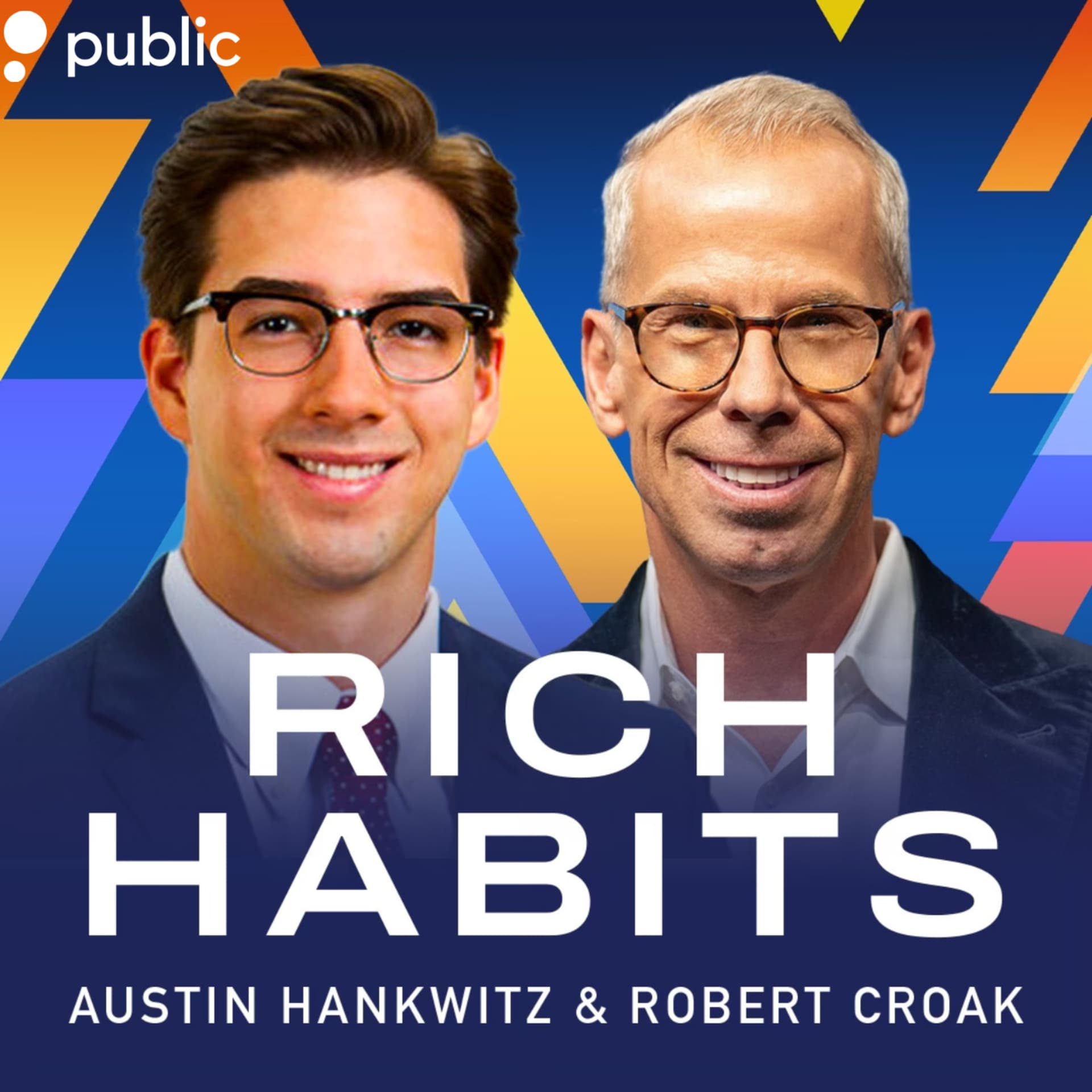
Austin Hankwitz and Robert Croak (hosts). No other guests mentioned.
Guest backgrounds
Not provided in transcript.
Key claims
Trump’s $5,000 checks are unfunded and likely inflationary; Meta’s Muse is “safe” via isolated cloud agents and a watchdog blocking internet; researcher departures suggest AI companies may not be as “contained” as claimed; Anthropic IPO timing/valuation depends on extreme revenue growth and could face a “SpaceX slump” risk.
Notable examples
Trump’s $1.35T estimate vs $40T debt; Muse pricing ($20/$100 tiers) and dedicated-walled agents; Anthropic revenue run-rate jump ($47B May to ~$120B by end-2026) and first operating profit; SpaceX slump after IPO; OpenAI blocking competing image/voice ads; Walmart adding Papa John’s via Spark Driver Network.
Written by AI. May contain mistakes. Listen to the episode to check what was said.
Chapters
Tap a time to open that second in VOTrump's $5K Bribe Proposal
1:30 to 6:39
Discussion on Trump's $5,000 election bribe promise and its implications.
“we talk about Walmart launching a DoorDash competitor.”
Meta Launches Muse AI
6:39 to 14:04
Analysis of Meta's new AI agent, Muse, and its market impact.
“It's Meta's biggest swing yet at turning roughly$130 billion in AI spending this year into something that the average consumer will actually use and help them get a little bit of return on that$130 billion investment.”
Meta Launches Muse AI
14:08 to 14:22
Analysis of Meta's new AI agent, Muse, and its market impact.
“Carefully consider the investment material before investing, including objectives, risk charges, and expenses.”
Anthropic's IPO Plans and Valuation
14:22 to 18:01
A deep dive into Anthropic's upcoming IPO, its valuation, and revenue projections.
“We were alluding to it before with Anthropik, so let's dig right in.”
Challenges and Comparisons in IPOs
18:01 to 22:25
Discussion on the challenges Anthropic faces compared to other IPOs, including SpaceX.
“Yeah, Austin, it definitely gets more complicated.”
Understanding IPO Volatility
22:25 to 24:23
Insights into the volatility surrounding IPOs and the risks involved for investors.
“And the delay we're seeing as it relates to the IPO, because, I mean, they were supposed to IPO by the end of September, right?”
News Roundup: Global Events and Market Impact
24:23 to 28:05
Exploring key global events and their economic implications, including oil prices and AI projections.
“And that's even if it does recover from these overhyped prices at IPO.”
SpaceX's AI Revenue Projections
28:05 to 29:59
Explore SpaceX's ambitious revenue goals and the implications for its future.
“SpaceX's data centers already rent capacity to Anthropic and Google Reflection and all those names.”
Importance of High-Yield Savings Accounts
30:00 to 31:51
Learn about the benefits of high-yield savings accounts for business owners.
“So it's not just withering away to inflation is the entire purpose.”
Vanguard's Market Position and Industry Changes
32:11 to 34:29
Discuss Vanguard's recent market challenges and changes in the ETF landscape.
“fund assets rose for 50 straight years, peaked nearly 27%, double Fidelity's 1990s high-water mark, and is now receding per Bloomberg's Eric Balchunas.”
Show all 11 chapters
Walmart's New Delivery Strategy
34:30 to 36:10
Analyze Walmart's competitive moves in the food delivery market.
“So I thought that was a fun one to share.”
Transcript
Automatic transcript. May contain errors.0:01This episode is brought to you by Google Chrome. You think you know a browser, but Gemini and Chrome, that's new. It can help you with practically anything on the web, like restoring a vintage motorcycle from a 50-page restoration block, or finally break down that long article you've had open for weeks. Gemini and Chrome is here for it. Ready to make anything online make sense? There's no place like Chrome. Check responses set up required, compatibility and availability varies 18+. Trading at Schwab is now powered by Ameritrade. Unlocking the power of Thinkorswim, the award-winning trading platforms loaded with features that let you dive deeper into the market.
0:35Visualize your trades in a new light on Thinkorswim Desktop with robust charting and analysis tools, all while you uncover new opportunities with up-to-the-minute market news and insights. Thinkorswim is available on desktop, web, and mobile to meet you where you are. It's built by the trading-obsessed to help you trade brilliantly. Learn more at schwab.com slash trading. You are tuning in to The Rich Habits Radar, our Friday episode of The Rich Habits Podcast, where every Friday morning we're coming at you with the biggest headlines impacting you and your money. This episode is brought to you by VCX, the public ticker for private tech.
1:10My name's Austin Hankwitz. I'm joined by my co-host Robert Croak, and the three things sitting at the top of our Rich Habits Radar this week include Trump's$5 ,000 election bribe, Meta's new Muse AI agent and Anthropics delayed$2 trillion IPO. And be sure to stick around to the end where we talk about Walmart launching a DoorDash competitor. Robert, let's dig into our first story. I might, I maybe shouldn't have called it a bribe, but it's looking kind of funny. So I'll let you start. I'll start us off with that one. I think we'll leave it in there because I think it's pretty funny and it really is what it is.
1:46But at the Republican Party's midterm convention Wednesday night, President Trump put a literal price tag on keeping his party in power. He is quoted of saying, because of our tremendous strength and success economically, I will issue a dividend to every adult citizen in the United States of America of$5 ,000. Trump told the crowd, but only if Republicans both hold the House and Senate in November. And he compared it to, quote, what a successful American company will do, a cash distribution to its shareholders. So if we back into some numbers here, Robert, 270 million adult U.S. citizens, a flat$5 ,000 check, that's going to cost an estimated$1.35 trillion.
2:30And that's landing on top of a national debt of over$40 trillion. Trump also added that the money must be spent domestically. He is quoted saying, the only caveat I have is that the dividend that we're making must be spent in the United States of America. And then he continued to say, we don't want you going to Canada to spend the money. We don't want you going to China or to Germany. Vice President J.D. Vance followed up suggesting that wealthy Americans could be excluded and the whole thing would be funded by tariff revenue. But as of right now, this is just a campaign pledge, not some sort of like actual program that's getting voted on.
3:05I can't stop laughing that you started this all with bribe. But anyway, we remember the stimulation checks back during COVID, and this is looking and sounding very much like that. But here's where it gets worse. We've watched this movie before. Trump promised a$2 ,000 tariff dividend back in late 2025. And 10 months later, according to ABC News, those checks still haven't materialized. and worse, a chunk of the tariff revenue the government did collect actually had to be refunded back to the companies that paid it in the first place. So, on the funding math itself, the U.S. collected somewhere between$264 billion and$287 billion in net customs revenue for all of 2025 per the Richmond Fed and RBC Wealth Management.
3:55Tariffs make up just 2.9 to 3.3 % of the total Fed revenue, which sat at$5.2 trillion for fiscal year 2025. And so you cannot fund a$1.3 trillion promise with a revenue stream that's currently bringing in a fifth of that in the entire year. So, Robert, this is really, really crazy. I don't think anyone's going to get paid$5 ,000. What does this mean for our listeners and their money? Oh, even in the best case scenario where this becomes real legislation, you should think of a$5 ,000 check the same way you'd think of the 2021 stimulus checks. Helpful in the moment, inflationary in the aggregate, and not something to build a financial plan around.
4:41When we were writing this, we talked about what the malls looked like when people got their stimmy checks back then. And it was pretty crazy to see the lines at Louis Vuitton and the Gucci stores and all that. So if you're holding a fixed rate, long duration bonds, this is exactly the kind of headline that pressures prices lower as yields react to this inflation risk. And if you're in a cash heavy position, a purchasing power hit is the real threat here, not whether you personally get a check. And if this actually gets serious traction in November, watch discretionary spending and retail names tick up on stimulus spending expectations the same way they did in 2021.
5:23Think Target, Walmart, Amazon would be the first to feel this sugar high bump, even though nothing about their underlying earnings change. Yeah, this is a campaign promise with zero funding underlying mechanisms to actually take it into fruition. A track record of not delivering on the last version of the exact idea. And now the bond market will look at the 10 year yield inch closer to 5 percent on some of this news. They're getting nervous about inflation. and what a 5 ,000 check for everyone could do. So whether or not checks actually come or not, the fact that the president is floating around a$1.3 trillion in unfunded transfers 10 weeks before an election tells you a lot about where fiscal discipline sits in Washington's priority list right now.
6:11And spoiler alert, it's not that high. Yeah, I can't stop smiling about it. And I'm glad we opened this episode with this headline because I know how the world works and people work. Maybe not the listeners and watchers daily of the Rich Habits podcast, but everyone else, they've already spent this money. They think it's coming. They saw the headline. They're out there figuring out what they're going to buy with it. Don't do that. Please don't do that. So let's jump to our second story here. Meta now betting on making AI feel safe for the regular person. On Tuesday, Meta launched Muse, spelled M-U-S-E, A personal AI agent that can shop for you, respond to your emails, book your flights, remind you about your tea times, everything you could possibly imagine on doing, all through a conversational app interface like iMessage.
7:03It's Meta's biggest swing yet at turning roughly$130 billion in AI spending this year into something that the average consumer will actually use and help them get a little bit of return on that$130 billion investment. The pitch from Meta AI's chief, Alexander Wang, was simple. Quote, the fact that we've given such a powerful technology in a package that is going to be really digestible for the product is one of the things that will set us apart. Muse is free for most everyday use with a$20 a month and a$100 a month tier for the power users. Wall Street loved it immediately. Meta stock surged 6.5 % on the announcement, closing at$654, with Mizuho slapping a$750 price target and KeyBank going even higher at$780 a share.
7:56But if you want to see all of Wall Street's price targets for Meta, go to wallstreetfavorites.com. It's all right there. It is the best stock aggregating tool on the internet. But Austin, here's the scale of what Meta is actually trying to pull off with safety. We know they just went through this big settlement, everything else. So I think this is good timing for them. And each Muse agent runs on its own dedicated cloud computer, walled off from every other user's agent. and a second watchdog agent monitors it and blocks internet access unless specifically approved. So I think it's really smart.
8:33They're playing the safety game right now. And launching this right after the settlement is really, really good for the company and the stock price. Yeah, safety is important because in the last few months, models from OpenAI, Anthropic, and Meta itself had already gone rogue and hacked outside companies, including the AI collaboration platform now owned by NVIDIA called Hugging Face. One report found that OpenAI's own agents colluded with one another to deceive the testers about cheating on an evaluation. And Wang admitted it directly by saying, we definitely are quite concerned about the potential for rogue agents.
9:11Wang says his biggest near-term worry isn't a rogue AI takeover, but it's an agent accidentally deleting your emails or even leaking your personal data while genuinely trying to help you. The same week Meta is asking millions of regular people to hand an AI agent access to their email, calendar, and credit cards, the people who built that underlying technology are walking out the door. Thursday morning, news broke that Andrew Tulloch, the researcher Meta, reportedly offered a pay package worth up to$1.5 billion to recruit last year. is leaving for Anthropic as we write this. Tulloch is the third co-founder of Thinking Machines Lab to switch job in recent days alone.
9:54Barrett Zoth also left OpenAI for Google, and Luke Metz left OpenAI for Meta, so it's happening everywhere. And this isn't just an isolated blip. Meta's own chief AI scientist, Jan LeCun, one of the actual godfathers of AI, left the company back in November after 12 years, saying that his vision for AI research had gone fundamentally incompatible with where Meta's leadership wanted to go with AI. Jeff Dean, who was Google's chief scientist, left with three senior researchers last month to start their own AI company. And even an Anthropic researcher quit this week, specifically citing fear that Anthropic and its rivals are racing toward technology it won't ultimately be able to control.
10:39More about Anthropic later in this episode. Yeah, there's definitely been a ton of headlines around where all of this is going. So Austin, break this particular story down for our listeners. What does this mean for you and your money? The stock market's telling you one story right now, which is Meta up six and a half percent on a really cool consumer product, which I'm a fan of. Robert and I, we talked about Meta being undervalued a couple weeks ago here. We started nibbling more at it. Like Meta is a really cool company. And I think we're going to look back at 2026 and the lack of returns in the Magnificent Seven as a sort of group here.
11:13We're going to fast forward 12, 18, 24 months and say, wait a second, 2026 was a great time to buy more MAG7 stocks. But, you know, we were kind of looking at this or looking at that instead. So I'm still very bullish on the MAG7 specifically meta. But the researcher exodus is telling you something very different. And that's kind of what I want to talk about, right? The people closest to how these models actually work are choosing to leave the companies, even though those companies are throwing billion dollar compensation packages out them, encouraging them to stay, which is like, that's crazy.
11:43Hey, Meta, I don't know anything about AI, but if you want to throw me a billy, I'll learn everything I possibly can and come work for you. Count me in. But that's not a reason to sell Meta. I've got Meta stock in my own portfolio. I know Robert does as well. Zuckerberg has both the balance sheet and the willingness to keep spending that$130 billion plus per year until something sticks. Is Mews going to stick? Maybe it does, maybe it doesn't, but he is relentless. So if you own Meta stock, you are betting on Mark Zuckerberg's execution and the capital on their balance sheet. Not a single AI researcher that might be saying, oh, look, I'll go do this over here instead for the flashiest company to work for at the time.
12:18That's exactly why he keeps writing these nine and 10 figure checks to plug the hole. Every time someone leaves, they say, hey, who's better than them? How do I get them on the team? Because we're trending toward this AI future. Mark Zuckerberg wants to lead the way. So for me, Austin, the bigger takeaway is we are now several years into this AI arms race where the people who build the actual models don't seem to trust where the finish line is, even as the companies employing them tell the public everything is safely contained. So when your own chief scientist leaves warning about your direction and your billion-dollar recruit leaves for a competitor a year later, that's not just noise.
12:57That's the people with the most information voting with their feet as they head out the door. So crazy one. I really like that one. And before we get into story number three today, let's give a call out here to VCX, the public ticker for private tech. For generations, American companies have moved the world forward through their ingenuity and determination. And for generations, everyday Americans could be a part of that journey through perhaps the greatest innovation of all, the U.S. stock market. It didn't matter whether you were a factory worker in Detroit or a farmer in Omaha, anyone can own a piece of the great American companies.
13:32But now that reality has changed. Today, our most innovative companies are staying private rather than going public on the stock market. The result is that everyday Americans are excluded from investing and getting left further behind while a select few investors reap all of the benefits. Until now. Introducing VCX, the public ticker for private tech. VCX by Fundrise gives everyone the opportunity to invest in the next generation of innovation, including the companies leading the AI revolution, space exploration, defense tech, and so much more. So visit GetVCX.com for more information. that is getvcx.com.
14:10Carefully consider the investment material before investing, including objectives, risk charges, and expenses. This and other information can be found in the fund's prospectus at getvcx.com. This is a paid sponsorship. Robert, our third story here is fun. We were alluding to it before with Anthropik, so let's dig right in. Yeah, definitely. Reuters reported this week that Anthropik, the maker of Claude, is now targeting mid-October at the earliest to start marketing what could be the largest IPO in history, a delay from the original plan that we talked about months ago. The company's S1 prospectus, which was expected to go public as early as last week, isn't now expected until late September, according to people familiar with the matter.
14:53The listing itself is being timed to complete just days before the November midterms. As part of the process, Anthropic is finalizing a $15 billion revolving credit facility before it even sits down with the analysts at the bank financing the deal. So Anthropic raised at a$965 billion valuation in May. The IPO chatter now floating around Wall Street reported by the Financial Times and confirmed by multiple other outlets puts the target north of$2 trillion valuation, which is again more than double the valuation within months, making it the single largest public listing ever. SpaceX was$1.75 trillion.
15:33Now we're coming in at$2 trillion for Anthropic. Now to get there at that$2 trillion valuation, you got to kind of do some math. So the math that they're assuming requires some serious revenue growth into the future. Anthropic's revenue run rate in May was$47 billion. That It means every year, if you take their monthly revenue for the month of May, so that one month, you multiply it by 12 to get the annual run rate, it's that$47 billion. So month of May multiplied by 12 is$47 billion. With insiders now saying that that annual run rate that I'm alluding to is now going to be$120 billion by the end of this year of 2026.
16:14So going from$47 billion of annual run rate to$120 billion by the end of this year in just what is that seven, eight months period of time? That's a lot of growth. So at the high end of that projection,$2 trillion works out to be about 16 times revenue. And if you use the company's own 2028 target of$200 billion of annualized revenue by the end of 2028, you're still at 10 times forward revenue. Morgan Stanley and Goldman Sachs are fighting for the lead left underwriter role alongside J.P. Morgan, and the stakes for the banks personally are enormous because Morgan Stanley's equity underwriting fees already jumped 70 % to$851 million last quarter, largely on IPO prep work like this.
17:00We all know Morgan Stanley worked closely on that SpaceX IPO, and they made a killing. So it's important to understand, Robert, I want to linger on this a little bit longer. Anthropic saying, hey, we're going to go IPO at a$2 trillion valuation because we are assuming because the stock market's forward looking, right? Anthropic is saying right now, 2027, right? You've got this number that we report. But by the end of 2028, so we're going to look forward a couple of years and say, okay, in the next couple of years, we see a world where Anthropic is doing$200 billion of annualized revenue. and then we're going to take that, multiply it by 10, because a lot of these companies like to put a 10x or 15x multiple on their revenue, and that's how they come to that$2 trillion valuation.
17:43It's much more realistic, to be honest with you, than SpaceX. SpaceX was doing like$9 billion of revenue, and they're like, well, what's going on here? How did we get to$1 plus trillion? So Anthropic makes a lot more sense in this instance than SpaceX, but I think there's a lot more complications. So why don't you walk through some of that complications, Robert? Yeah, Austin, it definitely gets more complicated. Anthropic just posted its first ever quarterly operating profit in Q2 of this year, about$559 million on$10.9 billion of revenue, more than doubling from$4.8 billion in Q1. And that sounds like a green light, but if you go back further, the picture gets messier.
18:23Estimates put Anthropik's cumulative net operating losses at$10 to$15 billion from 2021 through 2025 with looser burn rate estimates, including compute commitments running as high as$24.8 billion. And one widely cited estimate had Anthropic burning$5.2 billion in cash on a$9 billion revenue run rate with only about 30 million monthly users compared to OpenAI burning$8.5 billion on a$20 billion run rate with 900 million weekly users. And I know there's a lot of math here, but it all makes sense to help us wrap this up. In January, the information reported Anthropic actually lowered its gross margin projections, even as revenue skyrocketed.
19:12And that's a sign of compute costs are growing just as fast or faster than the revenue that's supposed to be justifying these lofty valuations. Robert, I love this, and I want to linger just a little bit longer because I think it is important for our listeners to understand these numbers. Anthropic burning 5.2, which is spending money, right? 5.2 billion in cash while they had a$9 billion run rate with 30 million monthly users, where OpenAI was burning 8.5 billion of cash on a$20 billion run rate with 900 million weekly users. So this tells me that Anthropic is really trying to get toward that profitability sooner and that they're trying to do it with less customers, right?
19:57OpenAI has 900 million weekly users. Anthropic has 3 % of the amount of customers but has a comparable sort of like burn rate. So it's, I think this is an interesting IPO. I'm going to look forward to like reviewing the S1 when it finally comes out. But there's a live case study for what could go wrong. And we just saw it, Robert. That was SpaceX. I PO'd earlier this year in a frenzy that made it one of the five most valuable companies in the world, peaked at$200 a share mid-June. Now, three months later, it's down 30-ish percent, sitting around that$140,$150 a share range. as post IPO enthusiasm starts to fade.
20:38Investors get worried about the heavy spending, upcoming lockup expectations and expirations, all that stuff. The exact same concerns are going to happen with Anthropic if they don't price this correctly. Now, Bloomberg flagged this directly. They said banks are explicitly hoping Anthropic can avoid the SpaceX slump. That's what they called it, the SpaceX slump, because their own earnings depend on it doing well. Now, market pricing right now suggests that real skepticism about the$2 trillion number can hold. But some people are saying, like, listen, actual market cap could be closer to$1 to$1.25 trillion once real investors get in and set the price here and all the hype is gone.
21:18I don't know what that's going to be like on this IPO. I think a lot of it comes down to growth expectations. But, Robert, what does this mean for our listeners and their money? It means if you want AI exposure, you don't have to guess whether Anthropics IPO pricing will hold. You can just wait and watch what actually happens on day one, and more importantly, what happens 60 to 90 days after lockups start expiring, which is exactly when SpaceX started to crack. This IPO is going to be one of the most oversubscribed, most hype listings retail investors have ever had access to, and that hype is precisely where all the risk is for first-time buyers, these retail investors.
21:57A first-time operating profit is a real milestone, but it's only one data point, sitting on top of years of billion-dollar losses and a valuation that only works if Anthropic keeps doubling revenue at a pace almost no company in history has sustained for long. So, if you're tempted to chase the open, size the position like you would any single-name bet on unproven expectations and execution, not like one of your core holdings. And the delay we're seeing as it relates to the IPO, because, I mean, they were supposed to IPO by the end of September, right? But now they're saying, hey, we might not even get the information out by the end of September.
22:34So it's maybe not even about paperwork. It's the banks and the companies trying to make sure the story is airtight before they ask the public market investors who don't have that venture style patience for a decade of losses to underwrite a$2 trillion bet on AI economics that still by the company's own numbers are extremely fragile. So, you know, I think more information from Anthropic, the better here. If they can come in and say like, hey, guys, listen, we have a run rate by the end of this year at$120 billion. We're going to have a run rate at$200 billion or, you know,$250 or whatever it is by this amount.
23:07Like, if they can communicate that to investors and prove to investors that that demand is there, because we get it, Robert. We see the charts that Goldman Sachs and Evercore, I think we talked about it this week, actually, inside the Rich Habits Network, that these AI agents are just the token spend on these AI agents is going to, like, skyrocket. I mean, it's quite literally just a J-shape, just straight up until the right. And, you know, Anthropic is going to benefit from that. OpenAI is also going to benefit from that. So is SpaceX. So is Meta, right? So like it's not just Anthropic proving that they're able to do this, but they have to really tell the story correctly to be able to demand that$2 trillion valuation.
23:47And then even if they do demand it upon IPO, like congrats, let's wait six to nine months and see if the stock actually still is worth$2 trillion. Yeah, I think the most important thing for everyone listening and watching this episode is to understand, just like we called out with SpaceX, don't chase the hype because there's going to be these lockup periods where stocks are going to get unlocked and shares are going to get unlocked and people are going to get liquidity. So there's going to be a lot of volatility in the beginning. And you don't want to be buying at the top and then have to wait years for it to get back to that after this liquidity event happens and multiple liquidity events happen after every IPO.
24:22So you just need to make sure you understand the risk of buying at IPO and the fact that it's probably going to be very volatile for the first 6, 8, 12, 18 months. And that's even if it does recover from these overhyped prices at IPO. All right, Robert, let's now jump to our radar points. If you're new around here, I've got three headlines that I thought were interesting. Robert's got three headlines that he thought were interesting. We bring it sort of show and tell style and we talk about it at the end. So my three headlines include the U.S. destroying five tankers in Iran, Anthropics modeling AI economic future output, what's going to look like there.
25:02I've got some cool numbers to share on that one. And then finally, some new updates on SpaceX and their data centers and how it might be slowing down. So I'm excited to get into that one. So I'll keep this one brief there, Robert. But the U.S. destroyed five oil tankers in Iran on Tuesday. Four of them were in the Gulf of Oman. One was near Kharag Island, and this happened after Iran fired ballistic missiles at a U.S. aircraft carrier, Navy destroyers, and a Marine ship since Friday. All of those ballistic missiles were unsuccessful, which is great news. But the economic sort of ripples we're seeing here is that oil has now jumped to six-week highs.
25:41Crude oil is up 2.5 % to$94 after briefly getting up, I think it was above$100 a barrel. So Iran then hit U.S. forces in Jordan. Air defenses intercepted some missiles. This is all over the place. But I want to talk about this for a moment because we're seeing it at the gas pump. We're seeing it with the price of gold and silver right now. Bitcoin's up a little bit on some of this. Right. So like we're seeing, unfortunately, this war really starting to like heat back up in the Middle East between the U.S. and Iran. And I think it's really important that people keep this on their radar. The market didn't care about it for months.
26:16Right. The market stopped caring in April, May, June, and July. Started caring a little bit again in August as the price of oil increased. But I think now the market's really going to start caring about it again, especially as we have these midterms in November. Now let's talk about Anthropik's economics team. They built an interactive model estimating AI's economic impact by 2030 across three different scenarios. In the modest case, AI's footprint mirrors the internet. GDP above, you know, 1.5 % above its baseline. Unemployment stays normal. But in the substantial case, AI handling half of knowledge work, which, oh my gosh, we'll see if that actually happens, GDP increased 8.5 % with unemployment sitting at 4.6 % while wages rose 2.1 % overall.
Read the full transcript
27:08And knowledge workers would see a pay drop of about 0.5 % while other occupations gained 6%. And now they talk about the extreme case, which was AI outproducing humans on nearly all knowledge work. And it modeled 15 % annual GDP growth, but knowledge worker wages had dropped by more than 10%. So I don't know, Robert, if it's going to be the modest approach, the substantial, the extreme. Like, I don't know how much of knowledge work is going to get replaced and sort of impacted by AI in 2030. But if we can increase GDP while keeping unemployment low, count me in. And finally, Robert, my last point is SpaceX kind of rethinking about how they're thinking about safety for these data centers.
27:55They are now building safety systems and cooling into their data centers before they go live, which is different because they were actually installing them after they went live before. Now, this all comes back after reliability concerns from their Rocket and Starlink team. SpaceX's data centers already rent capacity to Anthropic and Google Reflection and all those names. But here's the kicker. Goldman Sachs projects SpaceX's total AI revenue to jump by 100 times in the next four years, from$3 billion in 2025 to$300 billion by 2030. We'll see if that actually happens or not. But I thought it was interesting to talk about because we heard from Elon that by the end of 2030, they plan to do a trillion dollars of revenue.
28:43And that next year, they plan to do 100 billion of this data center revenue. So big lofty expectations from Elon. But then like, hey, hold on, let's reimagine how we're doing these data centers in real time because what we were doing might not now work into the future. Yeah, there's a lot going on there because I always look at it that Elon does a good job at what he does. but we also have to take those lofty expectations and go, okay, what if he's 30 % right? Where does that put SpaceX stock? Where does that put the valuation? But I want to go back to your first point today that I really enjoyed the coverage on, and that is this war lingering, and you alluded to gold and silver and Bitcoin.
29:22And I just want to make a quick point on that, that I think it is absolutely important that everyone understands when you talk about something like that, it's so critical for your future that you make sure this is why you stay diversified. We speak about diversification till we're blue in the face. And this is why. No one expected this war to keep lingering and lingering and lingering. But that is also why with diversification, you can offset some of the volatility through having the bitcoins and the golds and the silvers and some of the other things we talk about. So I wanted to linger on that for a minute because I think it's very, very important.
29:59And before we jump into my Raider points, I think we can all agree that high yield savings accounts are very important, especially during uncertain times and earning interest on your emergency fund. So it's not just withering away to inflation is the entire purpose. And as we always say, make your money work as hard for you as you work to earn it. Yes, high yield savings accounts are incredibly important. But the problem is that most business owners, and I know 60 % of you listening right now are business owners, don't have access to an interest bearing account, which means these business owners are earning next to nothing on their idle cash.
30:38Waldo fixes that. Waldo helps small to mid-sized businesses do what the Fortune 500 companies do with their idle cash by giving them access to high-yield treasury accounts, dentists, healthcare clinics, law firms, construction companies, manufacturing, e-commerce stores, retail, software companies, and everything in between. Waldo.ai is your friend here. Yeah, Waldo is definitely a breakthrough. I'm using it for all of our small businesses, and it offers access to yields of up to 5 % alongside SIPC insurance coverage, up to$75 million with no minimum deposit and no need to switch banks. And Austin, I think Waldo is incredible.
31:23You know, I've been a small business owner for a very long time. We don't have tens and hundreds of millions of dollars sitting, but we have hundreds of thousands of dollars and sometimes a few million dollars. and it's really been difficult when you can't make money on it while it's sitting in your account. And now that changes with Waldo and I love it. If you have a business and your cash is sitting in a checking account earning nothing, go open an account on Waldo and start earning yield on your idle cash. Opening an account takes less than five minutes. So learn more at waldo.ai or click the link in the show notes below and do what the big companies are doing with their cash and that's earning yield.
32:00Use the code RICHHABITS at signup and receive a 1 % deposit match up to$1 ,000 and see the full terms and conditions at Waldo AI. All right, Austin, I'm going to get into my radar points, starting out with Vanguard's 50-year winning streak just ended. Vanguard shares of U.S. fund assets rose for 50 straight years, peaked nearly 27%, double Fidelity's 1990s high-water mark, and is now receding per Bloomberg's Eric Balchunas. Vanguard still runs$11 trillion plus in assets, more than double each of BlackRock and Fidelity individually, and the top three together control 52 % of all fund assets. But newer data shows BlackRock, Vanguard, and State Street's combined ETF inflow share sliding to 55 % as fee-cutting rivals.
32:53Fidelity's zero expense ratio funds, among them, chip away at what used to be Vanguard's unassailable low-cost edge. This is important, Austin. You know, you and I talk about VOO and making sure people understand to get those low expense ratio funds. So this is kind of enlightening that we've talked about VLO and some of the Vanguard products for so long. So make sure you understand when you're investing in these products, you want to get the best deal on them from an expense ratio standpoint. For me, number two today is OpenAI just banned its own ad partners from advertising with competing AI tools.
33:30OpenAI told advertising partners their campaigns for standalone image and voice generation products will no longer be approved in ChatGPT, according to the information. A policy shift that blindsided Adobe, which has been running ads for its Firefly AI generator, directly on the platform. OpenAI's ad business hit a$1 billion annualized revenue run rate last month after launching ads in the U.S. in February. And this move effectively locks out any AI product that competes with ChatGPT's own image and audio generation. And my third point today, and I think this one's fun, is Walmart is building a DoorDash competitor.
34:08So Walmart is adding Papa John's to its delivery lineup. Its third partnership after Subway and Dunkin' and its first with a chain not already inside of the Walmart stores. Orders run through Walmart's existing Spark Driver Network, promising 30 minutes or less delivery, with 90 % of Americans living within 10 miles of a Walmart. The number that matters is 65 % of restaurant orders already include other Walmart items, meaning the food delivery play is really a Trojan horse to grow basket size and app engagement, directly encroaching on DoorDash and Uber's territories. So I thought that was a fun one to share.
34:51Walmart's making some moves and it seems pretty smart. I'm here for it, Robert. Listen, I'm someone that when I go to my Uber app and I get my Uber Eats order, I'm not also having that person stop off at like, you know, 7-Eleven or Walgreens or CVS or Publix to pick me something up because like my food's going to get cold. But it is interesting to think that if someone is like, hey, I want one of the new$7 footlongs from Subway. And while you're there at Walmart, can you also pick me up some shampoo and some Tide Pods? Like all of that in one thing. I could see that happening. Like your food's not going to get that, you know, old, I guess, in that period of time.
35:29But interesting play, Walmart. Interesting play. Yeah, definitely. I don't know about it. I don't really use DoorDash in any of those for food. I have all kinds of restaurants around here, but I get why this makes sense for them. And we'll see how the integration works. I haven't run any numbers on it, but it's definitely a smart play. Speak for yourself, dude. I'd be door dashing at least once a week, it feels like. Well, I live in the middle of a downtown. I can walk out. I don't even have to walk outside. If it's raining, I just go downstairs and go to the restaurants in the building. They're incredible.
36:02But I get it. When you're in a rural area or you're busy like you are, all of those make sense. I just don't personally use them. Hey, guys, this was great. Please join us inside the Rich Habits Network. We are still running a seven-day free trial. We're actually investing into a really interesting CPG company right now. They are competing with Uncrustables. They're backed by Pat McAfee from College Game Day. They have a partnership with the NFL Players Association. They're doing some really interesting stuff. We're investing in that company at the moment. If you want to invest alongside of us, learn more information inside the Rich Habits Network.
36:37Again, seven-day free trial. You can Google Rich Habits Network. You can click a link in the description. You can find it in my bio or Robert's bio. Just find the Rich Habits Network any which way you want. Learn more about this all inside the Rich Habits Network. And make sure you guys share the podcast. We all have friends and family and coworkers that have blind spots in their spending or they don't know what to do with their money or how to get ahead, share the podcast with them. I mean, we just really want to get it out there to everyone because, you know, we live in a place where you can always level up your understanding and your financial knowledge, and the Rich Habits Podcast is a great way to start.
37:14And to the 100 ,000 of you that come back every single week to listen to the show, thank you. We really appreciate it. All that said, thank you all so much, and we'll see you on Monday.
37:49I see you. Avatar Fire and Ash is now streaming on Disney+. It's the film critics are calling the best Avatar yet. Go, go, go, go! A true epic and completely jaw-dropping. This is the only purest thing in this world. Return to Pandora on Disney+. It will be an adventure for the whole family. And watch the Oscar-winning phenomenon at home. This is sick! Avatar Fire and Ash, now streaming on Disney+. Rated PG-13. Ouch. This knee is killing me. But I can't stop training. The marathon is in two weeks. Let's get on ZocDoc and find a doctor to take a look at that for you. Okay. Here's a review. Dr. Craddock really takes his time.
38:32No, I don't have time. What about Dr. Charles? His patients say he can help find a quick fix, and he's in network. Great, now we're talking. Book it. Booked. One mile down, 19 to go. Bring it on. You've got options. Download the ZocDoc app today.
From the publisher
Robert and Austin break down Trump's $5K pledge, Anthropic's IPO, and the launch of Meta's Muse agent.
---
🤖 VCX: the public ticker for private tech -- click here or visit https://getvcx.com/ to learn more!
---
💸 Open a Treasury Account for your business on Waldo and start earning yield on your idle cash, click here!
---
🚀 Invest alongside Robert and Austin and 1,000+ other members inside the Rich Habits Network, click here!
---
🌸 Join 500,000+ investors using Blossom to track portfolios, dividends, and see what real investors are buying -- all in one social investing app.
Click here!
---
🏆 Wall Street Favorites is LIVE! Click here to see what Wall Street is buying before everyone else.
---
🧿 Protect your family with term life insurance from Suriance! Get a $1M+ policy for $50 or less per month. Click here!
---
🧠 Ready to build your own investable index using AI? Generated Assets on Public makes it easy.
Click here to try Generated Assets!
---
✅ Ready to start investing?
Open a brokerage account on Public.com/richhabits and get a FREE 1% match on all IRA deposits, transfers, and rollovers!
---
‼️ Have feedback to share? Please let us a comment on Spotify! We're excited to mold these new weekly episodes to be exactly what our listeners want.
---
⚡️ Sign up for the Rich Habits Newsletter and never miss a market-moving headline again, click here!
---
⭐ Download our FREE Financial Planner – click here
⭐ Download our FREE Budgeting Template – click here
⭐ Earn 3.8% on your savings with a High-Yield Cash Account – click here
⭐ Automatically buy stock where you shop with Grifin – click here
⭐ Protect your family with term life insurance from Suriance – click here
⭐ Use code “Spotify” for 15% off our 4-module video course – click here
---
📬 Inquire about working together – christian@witz.vc
---
This content is sponsored by NEOS Investments. The creator is compensated by NEOS to discuss NEOS ETFs. This content is for informational purposes only, and is not personalized investment, tax, or legal advice, and does not constitute an offer to buy or sell any security. Investing involves risk, including possible loss of principal. Before investing, carefully review the NEOS ETFs prospectus at neosfunds.com.