
 Ask ChatGPT



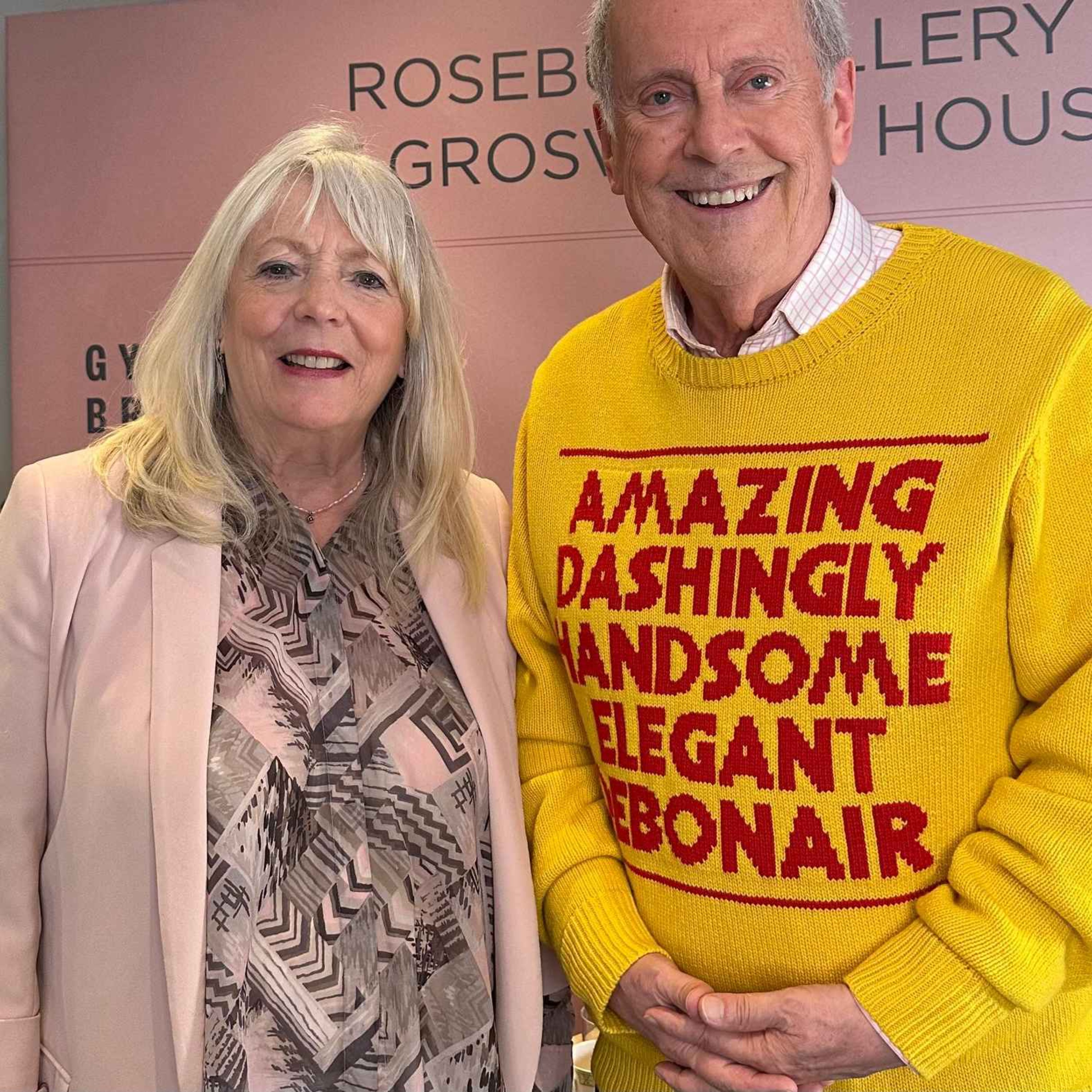
In this episode, host Gyles Brandreth converses with the acclaimed British actress Alison Steadman. The dialogue unfolds as they explore Steadman's childhood memories, which are rich with anecdotes about her upbringing in Liverpool, her parents, her early passion for performance, and her illustrious career.
Written by AI. May contain mistakes.

Get the gist, explore an idea or ask about something said.
 Claude
On Rosebud with Gyles Brandreth, what are the key points of this episode?
Searching your listeningAutomatic transcript. May contain errors.
0:00Whether you're wide awake and setting out for your run, or curled up in bed and trying to get to sleep, Welcome to Rosebud.
0:29Welcome to another episode of Rosebud. and when I say it's a very special episode you may think oh he says that every week this one for me is a particularly wonderful episode because the actress that I'm talking to today Alison Stedman is one of my favourites of all the roles she's played my goodness so many stand out for me from Abigail's party when she was working with her then husband Mike Lee she did lots of films with him through to Gavin and Stacey she has been in hits galore and she's had a most extraordinary life. She's one of many of our Rosebud guests who begins their life in Liverpool.
1:09There must be something special about Liverpool that so many remarkable people started out there. From tales of meeting the Beatles, of course she met the Beatles, right through to working with the great Michael Gambon in The Singing Detective. She's known them all and she's been them all because the treat for me in this conversation is that not only does Alison Stedman tell a great story, but she gives an amazing impression. She is a great actress, but also a great impressionist. I think this is an episode of Rosebud that will make a great impression on you. I hope so. Enjoy it. Cue the music.
2:02Let's begin at the beginning, Alison Stedman. What is your very first memory? my very first memory I think was when my grandfather was ill in bed he'd had a heart attack and this was in the 40s and so he was resting in bed and sadly he he died my grandma was giving him a cup of tea and he just died. But I can remember visiting him with my mum and I don't know, I was maybe two and a half or three or something, but I just remember being in the bedroom and him holding my hand. I've just got this memory of holding his hand and then, because when he died, no one could explain to me what had happened and we used to visit my grandma and I can remember every time we went in the house I would try and run up the stairs to go and see him and was always being pulled down and told not to go up there and I could never understand why because I was so desperate to see him.
3:19So how old were you think when you've discovered the concept of death it's a funny thing to have to introduce to children. I know. My grandmother died, I think I was 11, I think. And when she died, I remember I found it very strange. And then about a week after her funeral, I was going to bed and I suddenly realized I'd never see her again and completely broke down. And I remember going to bed and just sobbing for hours because it's suddenly I realized how final it is she was your mother's my mother's mother yes so who were your parents who were your mother and father i was very lucky because i did have lovely parents and they were very encouraging parents my mother was marjorie marjorie evans and then she married my father percival george oh great name percival george stedman my gosh and um sounds like some old school baronet ah sir percival steadman to see you mom i well i did he called percy for short he was by his family he was called percy but when he was working he was known as george and yeah my parents married they were married how did they meet well the story my mother always used to tell was that my father would walk past her house on his way to work and she would see him out the window every day and she was completely besotted with it so she knitted him a scarf and I can remember seeing this scarf and it was a sort of dark blue beautifully knitted plain scarf and one day she went outside and she stopped him on his way to work and said oh I hope you don't mind but I've knitted you this scarf and he thanked her for the scarf and then their friendship sort of started and grew and then they ended up husband and wife.
5:18Can I say so much more attractive than Tinder. This is the way to meet people, get people knitting again. I've got a lovely story about my dad that I think just really kind of sums him up. He played the violin and when he was, I think he was in his teens, he joined an amateur orchestra and he told me this story himself and he said there was this particular piece and the violin section had a really difficult bit he said and he practiced and practiced all week and he just couldn't seem to get it right anyway when it came to the rehearsals he said they were all playing and my dad heard this screech and he played the wrong note he put his bow up and everybody stopped and he said to the conductor I'm sorry sir I just I didn't get it right and the conductor said please don't apologize George George, you were the only one that attempted it.
6:13Everybody else in mind, hoping the guy next to them would. And, you know, I think that's his honesty, my dad, and his commitment. And, you know. It says it all. Yeah. He gave it a go, even if it didn't quite work. Exactly. He tried. Well done him. What did he do? How did he earn his living? He worked for an electrical company in the office where they order stuff in. So he was the sort of boss of. Very good. of that you know and I can remember not long before his retirement and he came home and he said to my mother oh well that's it that's my job gone so my mother said what do you mean oh he said they've sent all this lot from Oxford they've got this great big machine I've got to tell them how I do my job and everything about it then they put it in the machine and I'll get made redundant.
7:06And of course it was one of the early computers. The beginning of the computer image. Yes, exactly. They would have met in the 1930s, your parents, because your two sisters, your two older sisters, were born just before the Second World War. Yes, they were. And you, like me, were born a little bit after. I have older sisters who were born just before. Right. And then my father went away during the war. Did your father go away in the war? No, he didn't. He couldn't because his health wasn't good enough. when he was a child um it was very sad because he was a healthy little boy but he was very small and he got the flu and then he got an infection in his lung and it got worse and he got an abscess on his lung and in order to cure there was no antibiotics then they operated and they cut two-thirds of his lung out and he had the most terrible scars i mean he had a scar from the nape of his neck right down to his waist and here under his arm he had a scar that was so deep you could almost put your hand inside it was awful and he was ill for a long long time when he he wanted to join the RAF but his health wasn't good enough they couldn't risk it so he used to do fire warden fire watch um on the factories in Liverpool you know and he used to be on at night duty looking out for fires yeah and your mother was a housewife yes yes yes and did they get on well to the end of their days they did indeed and when my father died my mother was absolutely devastated she just said i'll never be the same again and not long after my father died she developed pancreatic cancer and she died and she said to me one day i know why i've got this it's because I've lost your dad.
8:56Yeah, it was very sad, yes. But they had a happy life together. And as I say, they were so encouraging to me when I wanted to go to drama school. They just did everything to encourage me. It was wonderful. My dad would come and see me in every play. Bless him. Yeah. And what sort of home did you, Liverpool? And where in Liverpool and what sort of home did you have? Well, it was a 1930s small semi-detached house in a nice little road. There was three roads that were all built by Welsh, because Liverpool is so close to North Wales. And I later learned that the Welsh built most of Liverpool. You know, they'd come in, the workers would come in.
9:42So the roads were called Corwin, Berwyn and Sherwin, the three roads. as I say it was a small three bedroom semi-detached house and we had a nice little garden and I loved it growing up we had a recreation field which was five minutes away and I would play there for hours and you know I'd find bits of I think the hat where um the house was built it was somewhere where they dump rubbish you know and I was constantly digging digging digging and finding in little Victorian pots. Oh, how marvellous. And I once found a clay pipe and things like that. And I'd get these things and I'd take them to the recreation field and I'd dig a hole and put them in and bury them, my treasure.
10:26And then I'd count the number of paces to the end of the edge of the recreation field and exactly where it was and I'd make a note of it. And then two days later, I'd go and dig it up because I couldn't stand it. I used to love burying things. I love these treasures. Treasures, yeah. but I couldn't leave them for long. That was my problem. No, well, you were a sort of natural Labrador, really, burying your bone and then retrieving it. Yes, absolutely. And were your sisters how much, well, they were 8 to 10 years older than you? They were 10 and nearly 13 years older than me. So did you look up to them, or were you a nuisance to them?
10:56What was your relationship? Oh, no, it was great. They were other mums to me. I mean, it was great because my middle sister would constantly, she was very good at sewing and knitting, so my dolls that I had, she would knit them jumpers and hats and make them little dresses. And they were lovely sisters to have. I can remember them rocking me to sleep at night. And the only thing was that they got married quite young and they left home. And I was devastated because suddenly, age 12, I was on my own in the house. And I still now have this sense of I don't like being alone. And I always have a worry about loneliness, you know.
11:38and I think it comes from that time. Who was your first friend outside of the family? My friend Hilary, who was a neighbour's daughter, who was just a year younger than me, and her father and my mother had been at school together, and we lived in the same road. We lived four houses apart. Yes, we're still friends now. She went to live in America, what, 50 years ago, but we always keep in touch, and I've been to America to see her, And she's been over here a few times. What did you have as little girls together? What were you like, the pair of you? Well, again, we were always in the garden, looking at caterpillars and butterflies.
12:21And I had a rabbit as a pet. Yeah, I had a cat. What was the rabbit called? I had a tortoise. Oh, my God, names, please. What was the rabbit, tortoise and cat? Rabbit was called Skipper. Skipper, the rabbit, very good. Tortoise was called Cocky, after the cockle shell here rose. Oh, very good. I remember going to see that film with my parents. What else? Oh, the cat. My cat was called Whiskey. And I loved all these animals, but sadly we had to get rid of the rabbit. And that was very upsetting to me. Why did you have to get rid of the rabbit? Well, most of the neighbours would grow vegetables.
12:54And our next door neighbour was the loveliest lady, Scottish lady, who I used to find fascinating her accent. She used to grow lettuces, and of course she'd grow rows of lettuces. and she once said to my mother, Skipper's been in and she said, if he just sat in one whole lettuce, I wouldn't mind, but he nibbles the top off every one. He goes along the road and then he was going up the road and finding any, you know, vegetables and lettuces and nibbling them all. As much as we tried to keep him in, we wanted him to have room to run around in the garden. We could not stop him and my mother said, I'm sorry, he's got to go back to the pet shop, that's it.
13:35She had a leather bag with a zip on the top and she put him in and I carried him and we walked up to the pet shop and we got to an area where there was a square of grass and I thought, I don't want him to go back to the pet shop so I unzipped the bag and I said, run Skipper, run for your life, run. And my mother grabbed the bag and zipped it over. She said, he is not running for his life. but then for years later my mother would find that story so upsetting and she'd say it brings a tear to my eye she said to see you going run skipper run anyway we got to the pet shop and the pet shop guy took him back and he said to me you can have a present so I got a brush for my cat because it was a Persian cat so I got a brush so I could brush my cat but it was no consolation really and at school were you good at school did you do well no I was hopeless absolutely I went to an all girls grammar school and I loved it you've gone to a grammar school it means you passed 11 plus I did so you can tell you quite bright yeah but I just was I wasn't good at I was good at several letters I loved art I loved English I loved doing Shakespeare and reading poems and you know and we had a wonderful teacher and you know Keats has been one of my favourite poets all my life because of those those years you know and I made good friends in my class and we had a wonderful headmistress who was a lovely lady the motto of the school was whatsoever things are lovely whatsoever things are of good report think on these things and she used to make us say that at the end of term you know she was lovely and when abigail's party was on television she wrote to me she'd then retired you know she was in her 80s but she wrote to me and she said um you were really wonderful how you remembered all those lines i will never know but um but she said i wish you well and i know that you've just had a baby so please don't feel you've got to reply i understand how busy you'll be how lovely yeah um she was a lovely lady she called miss brown did boys come along to you meet any boys you have remember your first crush or maybe it was one of the other girls one of the teachers no it wasn't that the teachers were too scary for that well i i was friends with boys in my road where i grew up one of my best friends was roger thompson who lived a couple of doors away and he was my age and we were so fond of each other and he was an only child and I was an only child you know in my early teens and into my teens and so he would come down so many nights and knock on the door and say Alison do you want to come down we'd play rock and roll music together we'd have laughs you know we had tried our first cigarettes together you know it was all drank my first sherry and nearly choked with him um and I can remember when I was a child I was taken to hospital I had um scarlet fever which was quite serious in those days and I was only I think I was eight or nine years old and I was in hospital for three weeks and eventually was sent home it was winter time and of course we had no telephone in the house we had nothing no way of communicating and I can remember going up to my mother and father's bedroom and the windows were steamed up and I remember thinking I want to see my friends so I wrote on the window Alison's home in the biggest letters I could hoping somebody'd look up and see it and knock on the door I mean it was just so funny in those days things we did to communicate
17:29This is the early 1960s. You're a teenager. So this is Liverpool in the 1960s. So were you aware this is Liverpool in the 1960s? Did the Beatles cross your path? Oh, gosh, yes. Absolutely. Very much so. Because I had older sisters. They had all these records. So because constantly I was hearing them, you know, playing them and that. And we heard that this place called the Cavern had opened and that rock and roll bands were playing there. And so I remember my mother saying to me, if I find out you've been to that cavern, you'll be in trouble. You are not to go to that cavern. I was 15. And this was, she'd heard it was an underground, one entrance, one exit, cavern, you know, in the middle of town.
18:21and so she was really worried about understandably and I said um we're not we're not going there you know and we used to go into town and say we were going shopping well we did go shopping but we also went to the cavern for lunchtime sessions yeah so we saw the Beatles and what were they like were they any good amazing I'm not just saying but honestly we used to sit on wooden chairs in a row it was like school chair from you know that I think they got them probably from some old school just these wooden chairs and they were on stage and I can remember it was one two three four red sails in the sunset you know because they hadn't written any songs then they hadn't recorded anything and this red sails in the sunset the rhythm of it and that and it was just such fun and exciting and yes I did have a bowl of tomato soup and a bread roll included in the price of entry which was like next to nothing and it was just brilliant and we were there the day that Paul said um oh hi everyone um say hello to Ringo Starr um sorry but Pete can't be with us today so Ringo's uh standing in and poor old Pete had been given the elbow elbow you were there for Ringo's first performance.
19:42Yeah. You were there. Yeah. And did you have a close encounter with Paul? Well, what happened was, I'd taken my autograph book, and there was three of us, and we said, right, we're going to get their autograph. So we stood outside the cavern for at least an hour in the rain, and they didn't come out, they didn't come out. This is the only way they can come out, so they must be going to come out. So we stood there, and eventually Paul came out with John, and they just walked past and Paul had a big black umbrella and they walked down the street so we started chasing them and I remember we were sort of shouting Paul John you know and Paul looked round he had this umbrella and he just went hi girls like that with the umbrella and carried on and they went into the Liverpool main post office in town which was a big old Victorian post office had huge oak desks with inkwells in it was you know really ancient we followed them in we sort of hid in the corner and paul filled in this form and handed it in and then was hanging about and john was sitting there filling in this form with ink with a nib pen and i my friend said go over go over to paul so i went over with my um autograph book and i said excuse me paul can i have your autograph please and he said oh yeah love what's your name so i said um alison so we put to Alison love Paul and a couple of kisses and handed it me back and then he said he didn't put McCartney he just put Paul he said he said hey give us that back a minute so he took it back and he put Beatles in brackets underneath his name and as he handed it back he said I thought I better put the Beatles because in the future someone's going to look at that and say who the else Paul and with that I said Paul could could I have his autograph please and pointed at John and he said yeah sure and he said hey sign this for the girl gave it to John and John without looking up without looking at me just took this nib pen and went John Lennon just handed it back and carried on filling in his fork so I've got this autograph of John's with a with a nib pen But this may be your most precious possession.
21:59It might be. Never mind your Olivier Awards and BAFTAs. Exactly. This is the thing that counts for something. And it means a lot, I tell you. It was such a moment. Of course. Now, as this girl here, 15, in Liverpool, enjoying family life, did you have ambitions in your head at the school, the grammar school for girls? Did you take O-Levels? They were then called, weren't they? O-Levels, yeah. I got a couple, but I failed most of them. and my father was absolutely devastated. But yeah, I joined Liverpool Youth Theatre. And that was... And why was that? I mean, why did you think, oh, I just thought it was fun?
22:37Because I'd been impersonating and acting since I was a child. And you say impersonating, you did impressions of people. Yeah. And men, women, who did you do? Well, I used to do mainly Beryl Reid and Hilda Baker. Hilda Baker. Because they were on television. Of course. We got a television when I was seven for the coronation. Yeah, of course, 1953. Yeah, and most of our road where we lived all came in to watch, so we were all packed into this tiny room watching the coronation, but it was so exciting. I was seven. So can you just still remind people what Hilda... What was that catchphrase, Hilda Baker?
23:15I said, be soon, didn't I? Be soon. What did I say to you? I said, be soon. I mean, she had a stooge. I mean, he was a man that was always dressed as a woman, very tall. Oh, yes. And when she used to turn up, she was always late. And so Hilda Baker would say, what did I say to you? I said, be soon, Gentile, be soon. And Beryl Reid, of course, I think of as an actress. Well, she had a radio show that I used to love. And it was all Bromai, you know, her characters, Monica. with all that sort of thing, you know. So I just loved it. I mean, I still do. I mean, all my life I've been impersonating people and doing silly voices.
24:05I mean, I drive my partner mad, you know, giving him cups of tea and pretending he's in a care home and all this, you know. Did you meet the late Queen? I'm sure you did. I did, I did, yes. Because, you know, she was an Impressionist and she became keen on it in the 1940s during the war and she would do people like Mae West. Really? And Vera Lynn. But her favourite, she could do, when I'm cleaning windows, she could do George Formby. Oh, I love George Formby. Can you do a bit of George Formby? Because that's Lancashire. Yes, yes. And I often see what goes inside when I'm cleaning windows. You're Elizabeth II.
24:45She'll do a tea. It's brilliant. It's fun to do. And so people like this. So people thought you were fun and funny. Oh, yes. My mum would often say, we'd be watching television. She'd say, oh, there's nothing on this television. Oh, turn it off. Alison, do Hilda Baker. And I'd run upstairs and grab her big old coat and put the hat on. She used to have a fox fur scarf. Yes. And I said, I'll put that on and then I'd come down. As Hilda Baker. I'd just be doing Hilda Baker. And my mum would be falling about, so would my dad. And, of course, I used to love it. I used to think, I can make people love.
25:22I can entertain people. And did they put you to talent shows? Are you any of that now? No, well, there weren't any talent shows then. There was nothing like that. I just would do these impressions at home, especially at Christmas when the family were around. You know, I'd do it. I think our headmistress announced that there was this Liverpool Youth Theatre was starting, and I went to that. And then I was part of the gang, and I was in it till I went to drama school. And you suddenly came alive, didn't you? this was oh yes because we would improvise all the time um we did one or two plays but our main thing was improvisation which i loved and i've loved all my career and i've done some of my best work you know nuts in may and abigail's party all based on building characters and improvisation so which then was quite a new phenomenon yes oh it certainly was yes so that's made you think I'm going to be an actress yeah I mean you decided that 15 16 the drama group yes this is for me yeah Jim Wiggins who was one of the it was all run by teachers they taught in all the local schools and they would come on a Friday night and one of the guys was Jim Wiggins who's a lovely guy and he was so encouraging and my parents came to see a little show that we did and he went over to them and he said I think Alison should go to drama school and train to be a professional actress and then he said I can't bear the idea of in 20 years time she's stirring a pan of stew and saying oh if only if only I'd done it he said she should give it a go and so I did and where did you apply how I mean how do you know what to do well exactly there was no internet then there was no you know I'd only ever heard of RADA so what he did he phoned the Liverpool Playhouse and he said to the director there could Alison Stedman come and have a chat with you and maybe talk to some of your actors because they've been to drama school and they can give us some advice that's jolly good of him and they said come along yeah they said come along and the director said I'd advise that you go to East 15 acting school because it's based on joan littlewood's work and stanislavsky he said and you say you love improvising he said and my daughter's actually got a place there and so i got in touch with the school and got an audition you say your eyes go up was it not a good audition what did you do it was terrifying i mean because i mean i'd hardly been out of liverpool but my audition was terrible and I think Margaret Berry the principal of the school was auditioning me there was no panel then it was just her in the drawing room of this big house that she set the school up in the school had only been going for three years and after a bit she said to me okay thank you and she obviously thought this there's something more here and I want to see it but this This is not coming through with this stupid poem and this thing.
28:29So she said to me, she's kind of clapped her hands and she said, right, you are Cassius Clay, i.e. Muhammad Ali, and you have just won the World Heavyweight Championship. You've got all the press around you, all the microphones in your face, all the cameras are there. Go. And I'm standing there, I thought, oh my God, I've got to be Muhammad Ali. and I just launched into it threw myself in you know and I just went I am the greatest nobody can be my M &L E and I was just waffling along and doing it I was stinging like a bee and so she said ok stop this is a stately home and you're the guide you've got a group of people with you including some children come in the door and take them round the room off you go right so I went to the door came in the door open the door and I became this guide again improvising which I was happy doing and I said come along come along do no sit there I'm sorry the children cannot sit in the furniture right so look at this beautiful room let's just take a minute to look at the beauty look at the ceiling look at the ceiling and look over there that you I was just going on like this.
29:48So we did all that. And at the end of it, she said to me, thank you very much. We'll be writing to let you know. Thank you. And I remember walking down the drive of the school on the way to the tube to get the train home to Liverpool. And the lady who showed me in, she was in the office and she opened the window. You know, you can keep these memories. And I can just see her now on the third floor of the house. and she just shouted, how did it go? And I just went, I think it was okay, I don't know. And she went, hope so, hope it was, you know, and I said, thanks. And I walked on and the next week I was on my way to work because I worked in a probation office as a short-time typist and the postman stopped me and he said, oh, Alison, there's a letter for you and handed me this long brown envelope, which I thought, this must be it and I opened it and it said we are pleased to inform you I ran back home ran in the house my parents were in bed I remember and I ran upstairs and I said I've got a place I've got a place and we were all crying and hugging each other you know it was just so lovely and how was it funded well I was extremely lucky because it was in the days when gosh the local authority paid for local authority paid for my fees my subsistence how fantastic it i mean wonderful it was wonderful well done then well done you yeah and you know i had to have all these books to go to drama school and they're quite they were quite expensive hardback books things like stanislavski stanislavski great russian an actor prepares yes the complete works of shakespeare And the probation office all clubbed together and bought me them.
31:43Oh. Yeah. It was so kind of them. Well, they must have thought you were quite good. And were your parents excited for you? Oh, gosh, yes. But there was a lovely thing because when they took me to the station the day I was, you know, setting off and I got on the train, the train pulled out. And apparently my mum told me this not long before she died. she said I turned to your father and I said oh dad I hope she doesn't grow away from us and that really it still brings a tear to my eye um and you think well you did inevitably in some ways because you do of course I mean yes but I always went back home and the lovely thing was when I was at drama school I'd go home in the holidays and we'd sit up till two in the morning I'd be telling them all these stories about what we'd done, the lessons we'd done, and the experiences I'd had, you know.
32:37When you were there, you thought, this is for me, this is going to be my life. Absolutely. I knew it, I knew it. Nothing else would do. I was in the right place. I loved it there. And Philip Headley, who had been... He was a director, wasn't he? He was a director. He had been a student at East 15. And he had started to work at Lincoln Theatre Royal. So he came to drama school and he auditioned my year. And he gave me and one of my colleagues, Howard Lloyd Lewis, both acting ASMs. So we were working backstage and acting. But it was the best thing. You needed in those days because you had to get an equity card.
33:20Had to get an equity card. And you couldn't get one unless you had a job. It was sort of a vicious circle. But you got good accommodation in Lincoln. Where were you living? Well, we were lucky because there was this couple who had a fairly big house not far from the theatre. And they let us have the top floor. So there was four of us had rooms and then we shared a bathroom. But this woman, they were a retired couple. And she was, when I say fussy, she was unbelievable. And of course, I had a boyfriend then. He was coming to stay. And she'd say, I'm afraid you can't come here unless you're married.
33:58and I say well we are married and I put a curtain ring on my because she knew I wasn't married but she was really fussing we had um we each had a little rent book a small little book and we had to go every Saturday morning hand her this rent book and then she'd fill it in take the money then give it back I mean it was you know anyway I remember going down with my rent book this particular morning Saturday morning and I knocked on the door and she came to the door and she took my rent book. She said, oh, thank you. And she went, walked across the room to go to her desk because she had to have a desk and a pen and all this.
34:34And her husband, who was absolutely deaf, stone deaf, he couldn't hear a thing, was sitting in an armchair with his back to the door. So he didn't know, he hadn't heard me knock, he didn't know I was there. And as she walked past, she had one of those big sticky out 50 skirts on and he put his hand up her skirt. So she went, get off and she went to the desk she was very flushing slightly very flustered and she came back and as she handed it to me she said you'll have to excuse him he's just had a bath
35:12so here you are life is good for you before we move on to your breakout moment and your extraordinary career looking back at your younger days if I say the word joy to you what comes into your head? joy from the first 20, 25 years of your life? Oh gosh, I think I did a play at East 15 and for the first time I knew that I'd cracked it, I'd got it, I'd got it right. When I came out into the bar afterwards, all the students were coming up to me and the people who'd seen the show saying, that was amazing, oh you were brilliant, you were so good and it was the first time I thought, I've done it. I did it, you know.
35:59And I was so thrilled. That for me brought so much happiness. I thought, I can do this. And if I say to you, sadness, a moment of sadness from those early years, what springs into your head? Oh, gosh. What springs into my head? Well, the fact that Howard Lloyd Lewis, who was a fellow student, he died in his early 30s. And it was very sad because he was, you know, healthy, youthful, handsome guy, you know, and he seemed to have everything in life. And then suddenly we heard that he died.
36:43How did you first meet Mike Lee? because he's central to the early successes, isn't he? Well, Mike directed a show at East 15 at my drama school and I knew when I was talking to him, he was on my wavelength about acting and developing characters. I could just tell. I just love that way of working, you know, developing a character. And so we clicked. And what came first, falling for him or doing the work? Because you eventually get married and have children. Or it happened coincidentally. When we were chatting, I just knew he understood my way of thinking. And I loved the way he spoke about work.
37:26And, you know, then when we were together, sometimes I would come home and I'd be kind of upset about the work that was going on. And it wasn't quite right. And he would always understand. You know, he'd never say, well, you've just got to get on with it. He was never like that. he would actually sit down with me and say, well, look, let's think of it like this, and maybe you could say this. And, you know, so... And we had two lovely sons together. And how long were you married? 20 years. Very good. And we're still friends. Good, that's great. And we meet up for birthdays and things, and, you know, so it's nice.
38:03Yeah, well done. So the public, when I say your name, they still say Abigail's party. You're used to that, aren't you? Yes. Do you mind that, that it looms so large? Because that is going back to the 70s, isn't it? Yeah. We did it at Hampstead Theatre, and Margaret Matheson from the BBC came to see it, and she just said to Mike straight away, I want to record that. That's got to be recorded. And it was so lovely when we recorded it. I can remember being in the studio. I think we had four days to record it, and there was four cameras, these great big cameras. you know they're quite scary they come you know lumbering around and um we got to 10 o 'clock and we still hadn't finished there was still a bit to do and normally those guys I mean you know fair enough they don't go on they don't go over they just put their tools down and walk out and they all agreed to shoot for another two hours so we could finish it and we really appreciated that and I remember the the you know the head cameraman coming over to me and saying it's been an absolute privilege and an honour to film this.
39:10Thank you. I was so thrilled. So thrilled. And here we are 50 years later and people are feeling the same love about you and Gavin and Stacey. Over a 50 year span you've played these roles and people warm to you. You're clearly doing something right. I mean I was in a store, a shop a couple of years ago and this young woman came over to me and she said excuse me Alison I hope you don't mind but my little brother is such a fan of yours would you mind just saying hello to him and perhaps signing his book and I said of course where is he and she took me over this like a 10 year old boy standing there looking really shy kind of eyes like that and I said oh hello and he went hello and I said are you a Gavin and Stacey fan and he went no and his sister said no he loves nuts in May no really are you a nuts in may fan and he went yeah i am you know so i signed this thing for him we had a picture taken it i mean it was just so touching this 10 year old boy and somehow he'd seen it you know because it's on iplayer and you can get copies of it obviously and there he was a nuts in may fan of your all the things you've done is there one that for you is the standout in terms of a happy experience over the years?
40:36Is there one that you feel? One that I've really enjoyed was The Singing Detective. With Michael Gambon. Yeah, with Michael Gambon. Dennis Potter. Yeah. Dennis Potter, his talent, his writing, his ideas, just his courage to do something different, to take it away from the norm, I just thought was brilliant. And I can always remember doing that scene where my character, she's leaving her husband, she's leaving her home. She's on the train with her son. She's sitting on the train, looking out the window. And the soldiers get on and the four of them sit there opposite. And as the train starts to move off, they start to sing Paper Doll.
41:25and I know I had to cry in that scene and it was not difficult because hearing that recording of Paper Doll and just seeing their faces sitting opposite I was just completely weeping and it was a wonderful experience and I was so sad when we lost Dennis Potter far too early he had so many more wonderful things to write. But anyway, he left us with some absolutely stunning work. And I loved that. What do you think your parents gave you that you have still? They died a while ago now, didn't they? Oh, yes. My mother died 30 years ago. My father died 32 years ago. Oh, my mother always gave me courage.
42:14She'd never been on stage. She knew nothing about the business at all. But I would ring her when I was really nervous about a first night or I was doing something. And even when I was at drama school, I was doing a play and I'd ring and I'd say, Mom, I'm really scared. I'm really nervous, you know, like this. And she would always say to me, now, come on, you can do it. You've got the talent. Never say you can't. Always say you can and you will. and she'd just give me the courage to you know to move on and and your dad well I wouldn't speak like that to my dad but my dad was always there he'd he'd come to shows you know even if my mom didn't feel like traveling sometimes you know my dad would be there he'd watch me on television he'd ring me up and say well done you know and there were things like in the singing detective I had a sex scene in the woods and the son, her son, who's supposed to be 11 or 12 or something, he's in a tree and he's watching.
43:23He's seeing what's happening. And that, for the time, caused such a stir. Obviously, when we filmed, the boy wasn't there. They were filmed separately, of course. But, oh, Mary Whitehouse went berserk. It was in all the papers. The press were on to me. And, you know, my parents just cope with that. I mean, you think they were in suburban Liverpool. they had all their neighbours going did you see that last night and the sex scene in the woods and the lesbian kiss on television this first lesbian kiss. It was the first ever lesbian kiss wasn't it? And so my mum and dad you know had to cope with all that.
44:03How did you cope never mind because you weren't in the habit of that were you? No I wasn't and I was very nervous and so was Myra Francis who was playing the other soldier but honestly it was just made so easy for us because the director instead of making it a big moment like okay now they're going to kiss so you know he didn't you know he he just went um as we we know we did the read through and then we were put it on its feet and we were hurting and we were standing there with our scripts and he just he just said um okay so now they kiss so it's a quick kiss right okay carry on and as we got more used to it and more relaxed we began to do the kiss and then ended up doing a proper kiss and we didn't worry about it it was so good because initially i think myra was the same you know we were both thinking oh god you know um and of course it did cause a bit of a stir because it was never been seen on television before now i mean it's happening all the time fellas are kissing you know girls are happy to do it exactly indeed oh yes anything can happen it's fantastic we so we know what your parents gave you what do you think you have given to Toby and Leo what do you try to give them well what I've tried to give them is encouragement and support and um you know there have been times when they've done something in life and I always message them and say, clever son, proud mum, which I am proud of them.
45:38I'm very proud of both of them because they're lovely, honest people, you know, who do their best in life. And they've got lots of friends and they're happy, you know, and that's what matters. What have you learnt in your life? This is the last question. What have you learnt? This extraordinary career you've had, loved by people for over 50 years, even when the character isn't a pleasant one, Totally loved. Brilliant. Award winning. What's life taught you? Well, I just think we have to be kind to each other and be tolerant. Occasionally, not very often, but occasionally I have been working with the odd actor or, you know, and they're a bit above themselves.
46:27and they think, you know, they're the star. And, you know, I even hear about actors that won't be looked at. You can't look at them in the eye and things. And I just think this is so sad. We're all the same. We come in the same way and one day we'll all go out the same way. And in the middle, let's try and be kind to each other and enjoy life. And if you're not kind to somebody, then what's the point and you know and if you're kind you usually get kindness back it becomes a two-way thing and let's have a bit of fun Alison Stable thank you so much you're the best eee you're the best eee eee well is that Liverpool I mean can you do a proper Liverpool no I can't oh don't start asking me that because you'll get Get me all modelled.
47:22No, I'm not going to do it. Look at his face. Shut up. Perfect. Perfect. We sometimes ask great actors if they've got a poem that they like to recite in their head as a party piece. I'll do you a poem I wrote in lockdown. Oh, lovely. It's very short. Lovely, that's what we love. Two weeks I've been locked in my flat. I'm fine, but I've got really fat. But it's the comfort of food when I'm in a dark mood. So I'm blaming that Wuhan old bat.
47:58Thank you very much indeed. That was wonderful. Well, I love Alison Stedman. I'm sure you do too. And I love that poem she ended up with. She's so clever. I like writing short poems as well. I actually featured in the Guinness Book of Records for writing the shortest poem ever written. It goes like this. It was a poem I wrote in memory of one of the goldfish that was eaten by our cat, Oscar, who was wild. He had a brother called Thornton, who was worse. Anyway, that's by the way. Anyway, Oscar the cat ate, spot the goldfish, and at the memorial meeting, because there were no mortal remains to bury, we just had like a Quaker gathering, we all stood around, I recited this poem.
48:45It's an ode to a late lamented goldfish. It rhymes and is, according to the Guinness Book of Records, the shortest poem ever written. Oh, wet pet. Before we... Oh, actually, if you've got shorter poems, do feel free to send them in. I like this poem. "'Twas in a restaurant they met, Romeo and Juliet. He had no money to pay the debt, so Romeo'd, what, Juliet? Ah, thank you. And now there's time, just time, for an email. Please keep in touch. Oh, and by the way, if you want to meet Harriet, my producer, and me, you can do so, because we're going to be in Broadstairs. We're taking Rosebud to the seaside in July.
49:25Look up the Sarah Thorne Theatre in Broadstairs. Sarah Thorne, she was an actress herself, theatre manager, and there's a theatre named after her in Broadstairs. And in July, we're having a special Rosebud by the seaside, with, from Heidi High, Geoffrey Holland. That's on a Saturday afternoon towards the end of July this year. So check out the Sarah Thorne Theatre on your website, or their website, and find out more about it. But now, enough of this nonsense, let's get on with an email. It's from Ellen Goldfinch from Quebec, Canada. I love the way that Rosebud is a global community. We have people literally all over the world listening to Rosebud.
50:05This one comes from Ellen Goldfinch, Quebec. My very first memory is of standing in my crib with my older sister holding my hands and encouraging me to jump up and down while she sang this Yiddish song, Totsi Totsi Medley. I must have been under two years of age if I was still in a crib. I also remember sitting in my father's lap while my chain smoker father had an after-supper cigarette. I remember very clearly being fascinated by the smoke curling upward. my delight when he blew smoke rings and the unpleasant sensation of my father's stubbly chin when he nuzzled his face against mine my father was a committed smoker too one of the reasons he probably died at 71 he smoked so much my father i can see him sitting at the kitchen table late in the evening going through the family accounts late into the night cup of tea in front of him cigarette in his right hand and he'd be holding his forehead and he had a yellow streak running through his gray hair because of where the sort of nicotine from the smoke in the same line went up his hair and he would sit in his office all day at the desk with his hand on his forehead like that and all evening too yep reeked the whole house reeked of smoke and he blew smoke rings too Anyway, thank you, Ellen, for getting in touch.
51:29Please do share your first memories, your early memories with us here at Rosebud. It's simply hello at rosebudpodcast.com.
52:23Rosebud is a Plain Jane production produced by Harriet Jane, hosted by me, Giles Brandreth, with music by Phil Leppard, and recorded this week at the JW Marriott Grosvenor House in London's Park Lane. Room service.
Hosted on Acast. See acast.com/privacy for more information.


