Ask ChatGPT



Bill Bailey’s life story, from childhood in Kainsham to music, comedy, and early London performances, framed through themes of family, faith, and “modern-day vaudeville.”
Bill Bailey (real name Mark Robert Bailey), born 13 January 1965. Giles Brandreth hosts “Rosebud” from Grosvenor House, London. Bailey grew up in an Elizabethan house attached to a pub in Kainsham near Bath, with a GP father and a nurse/entertainer mother; he was an only child. He studied piano from age 7, later A-level music at King Edward’s (Bath) with tutor Linda Phipps, and performed in French theatre after winning an Institut Français competition.
Bailey’s nickname “Bill” was imposed by a geography teacher. His mother’s Christmas-centered hospitality and his father’s calm, nurturing GP style shaped him. He developed perfect pitch as a child and later used music to fuel comedy. He left Westfield College after getting piano work in London; Ozzy Osbourne and Black Sabbath visited his wine-bar gig.
Christmas games (“Blind Man’s Bar,” “squeak piggy squeak”); grandfather’s DIY TV remote; Bailey’s first guitar solo playing “You Really Got Me”; improvising a Mozart concerto cadenza; performing Brecht’s “Arturo Ui”; forming the double act “The Rubber Bishops.”
Written by AI. May contain mistakes.
Gyles Brandreth introduces his guest, Bill Bailey, and their connection.
“coming to you from Grosvenor House in London's Park Lane.”
Bill Bailey shares his first memory of growing up in Cainsham.
“I imagine those are parents, grandparents, uncles, aunts.”
Bill discusses his family's traditions and his upbringing.
“You know, she was, what was my, I think she was called, she had another nickname, the little mother, when she was a little girl because she looked after everyone.”
Bill describes the dynamics of living in a house attached to a pub.
“And so they spent most of their time in the annex, or were they in the main house a lot of the time?”
Bill reflects on experiences as the son of a GP and the unique household environment.
“So, and is this in the middle of Keynesham?”
Explore the traditional practices of a family doctor through personal anecdotes.
“So this is a traditional, old-school GP.”
Discuss the qualities that made Dr. Bailey a beloved doctor in his community.
“Oh, and then Doctor, this terrible, this boil, this boil, absolutely...”
Delve into the roles of Gyles' parents and their teamwork in family life.
“and then they would tell him about their ailments.”
Reflect on the joyful moments of family Christmas celebrations during childhood.
“I think, though, you know, I think some of those Christmases, I think, are some of my fondest memories of growing up in that house.”
Examine the challenges faced during teenage years amidst family expectations.
“Give me then your worst memory as a child of being with your mother or your father, your worst time with them.”
Discuss the role of faith in Gyles' life and its changes over time.
“I went along to Sunday school and that was part of my day.”
Discover Gyles' early experiences with music and its influence on his life.
“Now tell us about music in your life and when it first began.”
Recount Gyles' piano lessons with a strict but encouraging teacher.
“And he said, he said, he said, I was put on the spot.”
Bill Bailey shares memories of his family's musical influences.
“What were the family playing at the piano?”
Bill Bailey reflects on his influential music teacher, Linda Phipps.
“Because you put on a spread as well as going out to be a nurse all day.”
Bill discusses his rebellious streak during his teenage years in the '70s.
“there's certain moments in my life that...”
Bill recounts his experience forming a band and the excitement of performing.
“Oh, well, I mean, you know, various disastrous hair dyeing.”
Bill shares stories of his first kiss and relationships during school.
“yeah I had several girlfriends and and they yeah over some of them well But the girls I met through, there was another school in Bath.”
Bill Bailey recalls his experiences with school plays and the thrill of performance.
Bill discusses his affinity for languages and cultural exchanges during school.
“You loved doing it, you loved the reaction.”
Bill shares his experience performing in France and discusses a unique play he was part of.
“And the prize was to go and take part in the Festival d 'Abignon.”
A conversation about Bill's aspirations and the influence of his family on his career choice.
“And what would happen is that any frustrations, they would meet out on this bandaged figure.”
Bill explains his transition from studying to pursuing a career in comedy and his early gigs.
“And also the perfect pitch also gave you an ability to pick up the language, so you listened, you heard, you reproduced it.”
A discussion about the comedy scene in the late 80s and Bill's experiences performing.
“And so did you go to another place of learning?”
Bill shares about forming a musical comedy duo, The Rubber Bishops, and their journey.
“Hey, it's Hannah Burner from Giggly Squad, and the holidays are around the corner, which means I'm officially entering my hostess Hannah era with Arm & Hammer Hardball Cat Litter.”
Bill recounts the story of meeting his wife in Edinburgh and the beginning of their relationship.
“And he and I formed this double act, The Rubber Bishops.”
Bill discusses how his relationship developed through correspondence after their initial meeting.
“so I said you like the gig and yeah, it was great and reminded me of my own sort of humour and we were chatting away.”
Learn about the romantic development through letters and the significance of personal connection.
“I didn't, I'd stay, I'd got sort of separated from where I was going to stay.”
Explore Bill Bailey's thoughts on being an only child and the impact of losing his mother.
“So that sort of size, maybe the audience who would perhaps maybe not have come before, come along a bit curiously, oh, we've seen him on the dancing, we'll go and see what he does.”
Discover Bill Bailey's insights on maintaining a strong work ethic and staying present in life.
“A moment of joy in the life of Bill Bailey.”
Hear Bill discuss the importance of having purpose and how it shapes his daily life.
“I mean, I think that you've identified something about me, which is very true.”

Get the gist, explore an idea or ask about something said.
 Claude
On Rosebud with Gyles Brandreth, what are the key points of this episode?
Searching your listeningAutomatic transcript. May contain errors.
0:00Hey, we're Nick and Jack, hosts of The Best One Yet. Behind every episode, there's research, email, spreadsheets, and our shared Google Doc, the Headline Hammer. With Google Workspace with Gemini, Google's AI is built right into the premium versions of tools we already use, like Gmail, Docs, and Sheets. No new tools or extra logins, just personalized AI for the way we work. That means less time on the work around the work and more time finding the stories worth talking about. Get AI tools for work. Upgrade to Google Workspace with Gemini at goo.gle slash workspace with Gemini. That's G-O-O dot G-L-E slash workspace with Gemini.
0:34Whoever said good things come to those who wait, never shop Black Friday early at Lowe's. Right now, get up to 50 % off select major appliances. Plus, get free delivery, free haul away, and free basic installation and parts when you spend$896 or more on select major appliances. Shop Black Friday early in-store and online now at Lowe's. Valid through 12-2 while supplies last. Selection varies by location. See associate at lowes.com for details.
1:05Hello again. I'm so glad you found us because we think of this as our own enchanted place, somewhere very special. It's the world of Rosebud and it's wonderful that you're here. Welcome. Let's cue the music.
1:40Hello, I'm Giles Brandreth, and this is Rosebud. And I'm about to say cue the music, but I'm thinking I've missed a trick here because I've got a guest who could give us our theme tune on the piano, on the guitar, on the trumpet, on the spoons? Am I giving you a clue? I think I am. Discover who it is, after you've played the music, the traditional music. This is Rosebud. Cue that music.
2:19Hello, I'm Giles Brandre. This is the Rosebud Podcast. coming to you from Grosvenor House in London's Park Lane. And I've got somebody who is one of my favourite human beings with me. It's Bill Bailey. I've prepared an introduction, Bill. Yes. In which I'm going to say to you how I admire you so much because you epitomise one of my favourite turns of phrase because you are as modern as tomorrow with a lot of time for yesterday. Ah, well, that's a very lovely and apt description. I think it is. Yes. Because you are cutting edge when it comes to the comedy. But also, you actually, your current show is called Vaudevillian.
2:56Yes. And you are into something I'm very much into, that tradition of musical vaudeville variety. Yes. So that's why you are. If I was going to introduce you, how would I introduce you? What would you like me to say as the opening introduction? What I would like to say? Well, I think that you've covered, really, what I would say, and that is very much the reason why I named this show Vaudevillian was that the last theatre show I did, the last residency, one of the comments was, Bill Bailey, he's like a modern-day vaudevillian. And that sort of lodged in my mind as a kind of a description which I hadn't really thought of before.
3:34But that sums it up very much. OK. And also what people ought to know is, like a vaudeville show, there have been so many different acts in your life. Yes. There have been so many different things across the years which we are going to discover. OK. And we're going to discover why you're called Bill Bailey in a moment too. Absolutely. Because your real name is Mark Robert Bailey. Yes, indeed. I imagine those are parents, grandparents, uncles, aunts. They were. They were very much so. Who was Mark? Who was Robert? Well, Mark was actually my mother and father hit upon the name because both my mother and father had nicknames.
4:10So when it came to me, they thought, well, we don't want a name that can be shortened. They didn't want an abbreviation, a Richard for a dick, You know, a William for a Bill. They didn't want a Robert for a Bob. They wanted a name that was adamantine, that was unbreakable. Mark. And then, of course, I ended up being called Bill. So it didn't work out. So Mark Robert Bailey, have I got this bit right? Born on the 13th of January 1965? Yes. Excellent. I've got the right person in the right place on the right day. That's right. This is a good start, isn't it? That's it. That's the basics. That is the basics.
4:49and we know you are a renaissance man as a modernist tomorrow with all time for yesterday we know what your real name is I think that will do anyway I hope you've enjoyed this special episode it's been an absolute delight thank you Charles what I want to begin with Bill does everyone call you Bill now yes they do apart from my father who refers to me in private as Mark and he's still I think even now after all this time when he refers to me, to my wife, he'll say, yes, I was just saying to Bill, and he corrects himself because I think he still sees me as Mark because that was the name they gave me.
5:29Bill was imposed upon me by my geography teacher. Yeah, well, we're going to come to the geography teacher in a moment. I want to take you right back, Bill, Mark, to your very first memory. What in your head, not from a photograph, No. What comes into your head when I say, Bill Bailey, your very first memory? First memory. Well, that would have been when I was growing up in a town called Cainsham. What do I say, people of my generation, when you say Cainsham? Bonzo Dog, Doodah Band, and we say Horace Batchelor. Very good. So it's somewhere near Bath, isn't it? It is. It's between Bath and Bristol.
6:04Yeah. And in fact, the Bonzo's had a song called Cainsham, And they very kindly invited me onto the stage to perform Caincham with them. Very good. Which was a sort of full circle moment. But, yeah. Your first memory. I'd say it was in the garden. I'd say it was one Christmas. And I said we had a snowy Christmas. And there was piles of snow around the house. and I just remember being bundled up in some sort of huge, I suppose, what would it have been then? It would have been some sort of padded anorak and taken down to the hill below the house and there was a river which ran through the town and sledging down to the river and I just remember the, just the cold and the blackness of the water and the general sort of conviviality of Christmas.
7:09And would you have been with your parents? I would have been, yes. Because you were an only child. I was, yes. Your parents are there. Tell me who your mum was and then who your dad was and what they were like at that time. My mum, well, this is the thing, her name was, she was christened Maisie Doreen but because I think partly because her mum and dad were both Welsh they were from South Wales she ended up with a nickname Madryn which means my dear which is a lovely pet name and that was the name that she was called Madryn and so she was an extremely sort of vivacious ball of energy, life and soul she was someone who would, she loved people She loved giving parties.
7:58She loved entertaining people. She loved feeding people. You know, she was, what was my, I think she was called, she had another nickname, the little mother, when she was a little girl because she looked after everyone. She loved to look after people. And she invented, I mean, that nurturing kind of sort of character. She carried her through her adult life. She was a nurse, and she just loved looking after people. And she was never happier than at Christmas. Christmas was, she came into her own. You know, she loved to entertain, to provide, and she loved to sing. She would sing along to songs, and she loved games.
8:43We played endless, you know, games. Give me an example of one of the favourite games of us. We would play Blind Man's Bar. and we don't seem to be playing these games these days you know there was another one called squeak piggy squeak i love squeak piggy squeak you love squeak i love it's a gotta work out who's doing the squeak yes and so i i just think about this the other day i had this amazing image of one of my elderly aunts and then my grandfather sitting on her lap and squeak, piggy squeak and she would make this kind of tortured noise. Because it's an old fashioned Victorian parlor game but there is a slight erotic charge to it.
9:23Well there is. Let's face it Yes there is. So your auntie's sitting on grandpa's lap. I mean this wasn't totally as innocent No, absolutely. I imagine well the long winter nights would have passed much faster but it was a fun game. As a kid I remember thinking this is This is fantastic fun. Because you are, on Christmas Day, are you the only kid in the room? No, no. So I had, there would be, sometimes I was, but very often the Boxing Day was a big event because my mother's brother, my uncle, he would come with his family and he had three children. And so my cousins were, one was younger, the two were older.
10:04So we would sort of hang out. And your mother's parents, they lived in an annex of your house. They did, that's right. So they were part and parcel of family. They were part of it. They were there, part of the gang. My grandfather was a stonemason and he built part of the house. And my grandmother worked in a florist. And so Evelyn and Orton his name was. And he loved to sing. He sang in a male voice choir when he was growing up in Wales. And so it was a merry throng. And so they spent most of their time in the annex, or were they in the main house a lot of the time? Well, the idea that that was the theory, you know, then my grandfather had his, you know, he was very, very delighted.
10:47He got a coloured television. Oh, that was his great pride and joy. And he didn't have a remote control, of course. But my grandfather was quite a practical person, and he fashioned one out of a bit of bamboo and a bit of cork he glued onto the end so he could reach the switches from the TV from his sofa so he didn't have to get up out of the sofa. So he would just sort of poke this pole at the TV switch, change the channel with this bit of bamboo. Oh, brilliant. So before the remote, he invented the remote. He invented the remote, yes. The analogue remote. And he was delighted, delighted with that.
11:24And yes, that was the theory, that they would stay there. And of course, you know, they love to come through and talk to us and be part of the family. Fit your dad into this picture now. We've got the parents-in-law. His parents-in-law. So my mum and my grandparents. And then my dad. Well, my dad was a GP. And he practiced out of the front of the house. So we had an old... We lived in one end of an old house, an Elizabethan house. And it was attached to a pub. And so the pub was part of the same building, an E, an Elizabethan E. And so it used to be a shop. The front of the house was a grocery shop.
12:07In fact, in certain days, the light would shine on the light and you could see that old Cadbury's sign in the window. And that was the waiting room. And then my dad's surgery was the front room. And he was there for many years. And I was growing up in a house where there were strangers coming. The patients would come to the house and, you know, occasionally wander around. And was the pub still an open pub? Oh, yeah. So it was quite lively and noisy at night, was it? It could be, yes, absolutely, yeah. So, and is this in the middle of Keynesham? Yes, pretty much. I mean, it was at the top of the hill, sort of, as you come into Keynesham from Bath, and then you go down the hill, across the river, and into the main street.
12:48So we were not far from the centre. So this is a very busy place where you are, this house of yours. Yes. Elizabethan in origin. Yeah. Pub next door, what was the pub called? The pub was, let me see, was it the New Inn? I think it was called the New Inn. And then there was another pub across the road called the Talbot, where I worked when I was a kid. And then there was a restaurant, a Chinese restaurant, the other side of the road. So you're right in the middle of town. Right in the middle of town. And Dr Bailey's surgery is there. Yes. And did you use the same front door as the patients? No, no.
13:20They came in through the side door, which I guess would have been the old front door of the house. and then there was a sort of room with a bay window and then a little door through to my father's surgery and with a lot of, I remember it had a lot of padding, a lot of extra felt to kind of just insulate it for sound, I guess, so that the conversations would remain private. Do you remember his receptionist? I do. What was she like? Her name was Mrs Kerridge and she was quite an indomitable woman, as you can imagine. And she had a desk, which was her domain. So this is a traditional, old-school GP.
14:03Yeah. And you go in, you speak to Mrs Gerridge, I'd like to see Dr Bailey. Yes. He can't see you, I'm afraid he can't see you until next Tuesday. Can't see you next Tuesday. And you were here on Monday, are you sure it's urgent? Yes, that's right. Take a seat, take a seat, madam. And then occasionally my dad, when he was off doing a call or whatever, the phone would be routed through to our house. And when my voice, I sound very much like my father. When I was, of course, a little kid, when my voice broke, I would sometimes answer the phone. And patients would mistake me for my father and then just start kind of just unloading these terrible symptoms.
14:46Were you able to help? I was not at all. I was just... Oh, and then Doctor, this terrible, this boil, this boil, absolutely... Can I just... And then they'd say, so what do you think, Doctor? And I'd go, well, I'll just tell the Doctor when he gets, well, who's this? Slammed the phone down and ran out of the... That was always a bit... What sort of a Doctor was he? Did he look after you? Were you one of his patients? No, well, actually, no. So he was in a practice with a couple of other doctors. So I was actually the patient of his partner. Who also came into the same surgery. Yeah, we practiced there.
15:24Oh, so it was a really busy house. It was. It was a busy house. But he was... My dad has... I mean, he still does, obviously. He's 94 now. He's still going strong and sharp as a tack. But what his patients... And what I could see in him was that he had a very gentle manner. He had a very calm manner. He was very caring, very nurturing. And so people always wanted to see my dad, Dr. Bailey. He was the one that people wanted to see because he had a very reassuring, sort of calm manner, as indeed, I suppose, many doctors do. But doctoring then was quite different to being a GP now, say, for example.
16:03He had to do lots of home visits. And the phone, he was on call. And so the phone would ring in the middle of the night. And I remember that. I remember clearly hearing the phone ring in the middle of the night. And I think what differentiated between my dad and some of his partners was my dad would answer the phone as if he'd just woken up. Hello, good morning, Dr Bailey. And some doctors would go, what? What are these? You better be at death's door. What do you want? and my father would go hello good morning Dr. Benny and they'd be like oh thank you doctor and he would always you know he'd have a suit he'd have a jacket and a tie waiting to go out and a proper doctor's bag and he'd go out and deliver the baby or administer the last rights or you know calm someone down and he we had a he had a lot of very very loyal patients who when he retired They would meet him in the street and then they would tell him about their ailments.
17:16And did he and your mother get on well together? They did, yeah. They were a very good team. And my father was probably the less sort of, in terms of being sociable, he was less gregarious, maybe less... My mother was a vivacious woman and so she would tend to kind of hold court at sort of family occasions. My dad was quite happy with that. Picture them together for me, a specific moment, maybe driving in the car, to give us a flavour of how they interreacted. Yes, I think that my mother would sort of, she would say, well, now come on, Christopher, now we're going here, now stop here, now we want to look at this, and my dad would just sort of nod quietly and acquiesce.
18:03And so his very much was like, he knew, everyone knew their role, you know. So my dad was very much, he was in charge of various things. We used to go on caravanning holidays, and so he would organise all of the thing, the caravan and the thing and the tow bar, and the mother would be, and then she would have to check all the lights were working, and the two of them would work together, and they had this sort of routine worked out, where he would go, right, pressing the brake, brake noses, and she would go, yeah, it's working, brake's working. Right, then he'd go, left indicator, yeah, that's working.
18:37It was like a sort of pre-flight checks. Well, they were clearly a very good team. Yes. And they worked out their roles. They had. If you wanted to give me the best moment of your childhood with them, what would it be? I think, though, you know, I think some of those Christmases, I think, are some of my fondest memories of growing up in that house. Because, you know, my dad was away a lot of the time. Of course, you know, he was working, he was on call. And my mum was sort of running the whole show. And at Christmas, of course, everyone was there. Everyone was, you know, sort of part of the gang.
19:17And my dad was joining in with the games. And my mum would make fun of him and put a sort of silly hat on him. You know, she loved everything about Christmas. And she would insist that he put the paper hat on. Come on, Christopher, put the paper hat on. No, no, no, I don't want to put that paper hat on. Just put the paper hat on. Stop complaining. Put the paper hat on. and we all had the paper hats, we'd all sing in, and some of those old photographs just made me laugh. This is a happy childhood. It is, it was. Give me then your worst memory as a child of being with your mother or your father, your worst time with them.
19:52Worst time? Do you know, it's hard to me to think of one, really. Did they tell you off? Did you tell a lie of her? I think the times where there was tension, perhaps, in the house was when I, in my teenage years, which I think is pretty standard really, common. And that was that there was a kind of, I think the sort of three generations in the one house worked very well when I was a young child. And I would come home from school and my mum would be busying herself in the kitchen doing all kinds of things. And my grandfather, who was a thinker, a lot he was a great thinker and he loved talking about all kinds of subjects he would sort of interrogate me about the school and I would do the whole sort of download from school to him or now what did you do what subjects and how did you get on and my grandmother was in it worked very well as a teenager it was tension was because what would happen is I would come home late and then then my grandparents would then they would record the fact that I was late and And then they would bring that up.
21:02Oh, that boy was late. He came home late the other night. And then my mother's like, yes, yes. And then so then probably there was conversations had about it. And it was like, what's going to happen? And, oh, and, you know, you should have come back and all the rest of it. And I guess being an only child as well, I sort of had a kind of sense of a little bit of rebelliousness, which brought out, I mean, a couple of times and there was a bit of a row, a bit of tension, you know, like coming home late. and I think I woke everyone up because, you know, I came in through the front door and they were moving a, what do you call them, a wardrobe and I didn't know that the wardrobe was in the front corridor and I walked straight into it and knocked it over virtually and then a whole house of the lights come on.
21:47Is there a burglar and all that? So I guess those were the times where there was a little bit of tension. They had traditional values. Yes. The best of the traditional values. Were they church-going people? Yes. And did you follow in their example? Well, for many years I did. I went along to Sunday school and that was part of my day. And you quite enjoyed it. I did. Because also maybe music came in. There was a lot of music came in, yeah, a lot of performances and singing in Sunday school, singing in church, and I used to love that, I used to love singing hymns. But you don't go to church now?
22:22No, not so much. Faith has... It has not played as much of a role in my life, certainly as an adult but you know what um i in recent times it has started to reappear we go every christmas on every christmas day we go if i'm around and my father is very still you know he still was a churchgoer he goes he within a week of him turning up in london he'd already joined the local church and now he's kind of a fixture at the local church which is just wonderful And I love the fact that they have this wonderful community and that, you know, he was a bit poorly recently and they all rallied round and sent him cards.
23:02And, you know, it was, I felt, I'm very grateful to them because I'm not always around to be there. You know, sometimes I'm away working or I'm touring and I'm aware that, you know, he has this support group. Well, it's the line I often use about being a leaf on a tree. you need to be attached to something that is alive and still growing. If you're off the tree, well, freedom is nice, but you float to the ground and die. You're attached to something like that, which your dad now is to his church. It's wonderful that these things go on. You mentioned music. Now tell us about music in your life and when it first began.
23:36When you first became aware of music as a phenomenon, how old do you think you were? Well, I think we had a piano in our front room, an upright piano. This is a separate front room to the... Yes, this is the lounge. The lounge. The lounge, you know, where the record player was and the television eventually. And I used to go in there and play tunes that I picked out from the radio. And my mum would come in and listen to me playing. And she would... And how old are you now? How small? I was three or four. Three or four, and you've heard things on the radio. Yes. And you're just... And I listened to the tune, and I was able to recreate the tune.
24:13With one finger. With one finger. Like... It was... And then I realised that, what I realised was perfect pitch, where you were able to sort of, you were able to pick a note without reference to a keyboard. So I'd hear a note, and I could say, oh, I know what that note is, that's a B flat or a C. My gosh. And this was, and it's annoying, actually. Because you start hearing it in the Hoover, the Hoover. You hear the vacuum bling, oh, it's an A, I think it's an A. And it's just, you have to sort of try and zone it out, tune it out because it becomes quite intrusive. But yes, I played the piano a lot.
24:50Obviously we had a piano because somebody else in the family played it. Yes. Who played it? My mother played. My grandmother. Also, my dad used to play the guitar. But also we had her brother sang in a barbershop quintet. My cousin played. All my cousins played instruments, brass instruments. In fact, my cousin went on to be a professional trumpet player in the Teatro Sancaoloche in Lisbon. And so we were like the Von Trapps. We'd all sort of sit around and sing and play. Wonderful. So your mother decided you must have lessons. She did. And so what age did you start the lessons? Well, probably it was when I started school when I was seven.
25:41and we had a very small and yet, shall we say, fiery woman called Mrs. Cryer and she was my first piano teacher and she lived up the road and I had lessons with her and she was very strict and she would tell you if you hadn't been practicing and she would make it perfectly clear that you hadn't practiced. And was she right? She was right, yes. and she was very good, actually. She was quite a taskmaster. And she recognised that I had some ability and I went all through the exams with her. And then when I went to school, junior school, then I continued there with a teacher who was the music teacher.
26:27And she was not only a brilliant music teacher, she was a big influence on my life, Linda Phipps. But my dad said, he told me this story, he said he met Mrs Cryer who I fear is no longer with us but he met her in town and many many many years later like we're talking sort of decades later and she said she goes Christopher, she said what's Mark, of course she'd call me Mark what's Mark doing these days but dad, he's never really known what to say to people you know He's a vaudevillian now. And he said, he said, he said, I was put on the spot. He said, I didn't know what to say. And he says, he's in showbiz.
27:20Which is just a lovely old way of describing it. What does he do? What's Mark doing? He's in showbiz. And she said, oh, what a shame. Well, possibly how right she was. How right she was. Because she had you playing Schubert and Mozart and all of that.
28:05Just personalized AI for the way we work. That means less time on the work around the work and more time finding the stories worth talking about. Get AI tools for work. Upgrade to Google Workspace with Gemini at goo.gle slash workspace with Gemini. That's goo.gle slash workspace with Gemini. You know you don't have to wait to shop Black Friday at Lowe's, right? Save up to$150 now and select power tools, equipment, and accessories. Got gifts to get? We've got plenty under$50. Plus, Milo's Rewards members get same-day delivery for free. Shop Black Friday deals before the rush at Lowe's. Valid through 1118,$25 minimum, and loyalty membership acquired.
28:46Order eligible items by 2 p.m. Subject to weight and size restrictions and availability. Terms at Lowe's.com slash shipping terms. Hi, this is Robert Mayes from The Athletic Football Show. In the market to buy a new car, you're not alone. Navy Federal Credit Union members have a helping hand. Technically, a helping globe. A mission assistant whose mission is guiding you through your car buying journey, offering low rates that can save you more. Your mission assistant helps you budget, estimate your payment and understand your terms. So you roll into dealership ready to negotiate on your terms.
29:16Mission assist. Everything you need to buy a car all rolled into one. Navy Federal Credit Union. Our members are the mission. Navy Federal is insured by NCUA. Credit and collateral subject to approval.
29:32What were the family playing at the piano? What kind of music was it? Oh, all sorts of things. Well, my uncle Sid loved music. My auntie Dora was an opera singer. Oh. And she was a semi-professional singer. Oh. And she would sing, she taught me things like cherry ripe. Oh. You know, and so which I would learn. How does that guy wrote that song? Cherry ripe, cherry ripe, ripe I cry. Full and fair ones, the car who will buy. It's a lovely old song. Lovely, yes. It's a beautiful old song. And she would come and sing this. It's a touch of Hindram Brackett here. It is a little bit. I can picture the scene in this lounge of yours.
30:11Yes. With the various aunties. With the cherry flowing. Yes. So we would sing all sorts of classic songs, contemporary songs. My mum loved Perry Como. She would sing magic moments around the house. And we would sing all sorts of things. Classical songs, some Schubert songs. some of the leader, all sorts of things. Who was your first friend outside of the home, this very happy home? Well, I would say that I was very lucky. There was friends who I was at school with and who used to come round the house. And there was a friend of mine, Tony, who lived up the road, and he lived close to us. And so we used to go and hang out and play football.
30:59and then when I went to junior school there was a friend called Toby who like me loved comedy and we would sit around and record conversations on an old... This is a primary school? No, this is a junior school. Say eight, nine. Recording comedy. This was a bit later when we went up to big school. But at that time Yeah, people would come round, and they'd always love coming around the house because they'd say, we get great food at your house. Great grub. My mum would put on a spread. Well done. Because you put on a spread as well as going out to be a nurse all day. Yeah. This is obviously where your work ethic comes from, having these parents who are working all the time, delivering all the time, and that's why you practised when you learnt your instrument.
31:52Yeah, absolutely. Take us to this secondary school. Linda Phipps was her name? Linda Phipps, yeah. Tell us why she's such an influence. Describe her to us. Okay, Linda was, her and her husband Ian, they ran the music department in the school. So Ian would take lessons. He would teach music, so he would teach, I guess what it would be, O-level music then. So there would be a bunch of kids playing a recorder, which is, as we know, it's a classic of school music. Then there was a guy who played a guitar. he taught me guitar I taught myself the guitar after that but Linda was my music tutor I was the only pupil who was studying A level music What school was this?
32:39King Edwards in Bath It's a day school you went every day Yeah every day and so she taught me music every day and so it was just me and so we it was sort of one on one tuition she was she had a rigorous work ethic She was a bundle of energy. She sort of crackled with energy the whole time. And she would say, well, why don't you try this? And then I would say, okay, well, what are we doing now? Well, we're doing a Mozart piano concerto. Okay, so we'd learn that. And then she'd say, well, you know that pianists at the time would sometimes improvise their own sort of cadenza to kind of showcase their skills.
33:24and that was something which you would improvise. And I would say, what, you mean there's no music for this? And she goes, no, I mean, there's one here, that's a version of it. And I would say, well, what do I do here? She goes, well, you do it. You just improvise one. And so I, oh, OK, I'll give it a go. And on her encouragement, on her sort of insistence, then I practised this thing. and I performed it with a chamber orchestra at the Holborn Museum in Bath at the end of Paltney Street. Really, I guess, my first major performance in front of an audience and it was the most nerve-wracking thing I'd done at the time.
34:04But it was also exhilarating, you know, it was exciting. And I improvised this cadenza and then she's there sort of beaming, giving the thumbs up. And when you got your A for A-level music, which I assume you did? Yes. can you remember when she told you or when you shared the news with her can you remember that moment of being with her at the moment of your triumph she I think I don't know I'm starting to think that she actually telephoned to tell me because she was so excited and she was absolutely delighted because this was the result of all of this work, this hard work and also she was she took enormous pride in what she did she was an organist she played in one of the churches in Bath and she also took lessons she had young children at one stage the child was on her she had the baby on her lap while she was playing and this child is bouncing around she was brilliant she was a great inspiration what I remember from her is when she would say things like you're capable of this you're capable of more than you imagine and that became almost like a mantra I hear her voice all the time even now, she died many years ago tragically not tragically but I mean she died I'd say young and when I I remember when I started to become more successful and tours started the audience numbers started to go up and then eventually I found myself about to step on stage at Wembley Arena.
35:54And, you know, like, there's certain moments in my life that... And this is thousands in the audience. 13 ,000. 13 ,000 people. 13 ,000 people. And I was just walking up the steps to be on the stage and I would hear her voice, you know, you are capable of doing this. that if you have any doubts, no, you just push yourself. And I remember that very clearly. You're capable of more than you can imagine. Yes. It's a wonderful mantra for life. It is. You're a teenage boy now. There's a rebellious streak to you. Tell me about this rebellious streak. Yes. How did it manifest itself? Oh, well, I mean, you know, various disastrous hair dyeing.
36:40Oh. Well, when I had hair, obviously. Because this is the 70s, isn't it? Late 70s? Yes, that's right. And, yeah, peroxide, you know, blonde. I was a blonde kid. I had spiky blonde hair. And, you know, and they said, oh, yeah, eventually your hair will fall out. What do they know? Did you go in for smoking? I smoked very briefly. And then I realised I had asthma. So that sort of put the kibosh on that. And so I didn't... Was there drinking? There was a bit of drinking, yes, there was. And there was a few parties. And it was very much like, you know, I guess pretty normal, really. I mean, it was nothing out of the ordinary.
37:25I formed a band at school. We had a five-piece band. What was that called? It was called Behind Closed Doors. Great name for a band. It's not a bad name. It's a very good name for a band. It's not a bad name. Because it was just a boys' school, was it? Yeah. Yeah. And where did you perform? Well, mainly behind closed eyes. It sort of became a self-fulfilling prophecy. We didn't really get many gigs. But we played a few school halls. We played a few gigs in the local venues, pubs and such like. And did you get groupers? Were there girls coming along and saying? Yeah, suddenly you realise this is why people go into bands.
38:03You know, why some people go into bands. There was a lot of interest. and I remember that one of the first gigs we did was in Bridgewater at the community centre in Bridgewater. It was a big gig then. It was prestigious. And my first ever guitar solo and I was so nervous. And it was, I remember the song, it was the Kinks song, You Really Got Me. How'd it go? You Really Got Me. It's a real, it's a brilliant song. Girl, you really got me now. You got me so I can't sleep at night. Oh, girl, you really got me now. You got me so I don't know what I'm doing. Oh, girl, you really got me now. You got me so I don't know what I'm doing.
38:48You really got me. I mean, it's good stuff. Can I tell you, the Rosebud crowd, you're going to be getting a lot of groupies now. It may be a few years too late, but my God. So who then, could you see them moving towards the stage? Yeah, you could see them. And you could see them like, oh, okay. Beginning to froth up the mouth. This is it. This is a guitar solo. This is the big moment. Here we go. Don't mess it up. Oh, it was excitement. Excitement. And as a result of this, do you recall your first kiss, your first squeezing of a hand? My first kiss, yes, I do, actually. And I remember it was in a school in a disco.
39:34and unfortunately or not perhaps I mean I just remember the wrong word but there was there was I don't know I can't remember what the song was but all I remember was it was kind of a slow song it was a kind of a smoocher and and then I I only got the kiss at the end of the song and then the Wurzels came on and rather kill the moment it sort of killed the moment I love the Wurzels you know but you know that's for later in the relationship it is it's like not on the first day I drove my tractor so you erased that last night ooh ah ooh ah oh no that's kind of it's killed the vibe somewhat oh dear oh did you have proper girlfriends at school?
40:22yeah I had several girlfriends and and they yeah over some of them well But the girls I met through, there was another school in Bath. It was the Bath High School, which was a girls' school. And so we'd occasionally meet through a love of the stage. So when we put on plays, some of them, as you know, they contain women. And so we'd need some girls to come in. We rehearsed and we sort of put on. So you were doing drama and comedy as well as the music. Tell us a little bit about the comedy and the drama. So the comedy was like there was a club in Bath called Moles Club and we persuaded the owner to let us have a comedy night and so we went on and put this comedy night on.
41:14And it's you and a few friends from school? Me and a friend of mine, Toby. We just did sketches and bits of stand-up. And did you call yourself an act then? We didn't really have an act there, no. But it was something exhilarating about it, exciting. And was it sort of, I was going to say, poor man's Monty Python. I didn't mean that. No, you know that would be a fair point. What kind of humour were you giving us? Sketches. We did sketches. We did a sketch where a bloke was a lion tamer and he said, yeah, I can put my head in the lion's mouth. And we go, oh, have you got a lion? Yes, you've got one right here.
41:53Here's the lion. And he goes, and then the other bloke would go, well, this is the yellow pages. and he would go no no that's a line that's a line and he'd go open it up and he'd put his head in the yellow that was that's quite a funny gag it's not a bad gag it would work today it would it would that's a good point she'd write it down make a note of it make a note of that and that was the kind of thing sort of daft stuff yeah python-esque really sort of good-esque and then the bits of you know music with lots of music lots of songs so that was the comedy side and you were liking the reaction I mean I loved the reaction yeah Yeah, it was thrilling.
42:30You loved doing it, you loved the reaction. And were you actually appearing in plays as well, proper plays written by other people? We would do, we put on plays, co-productions with the girls' school, and so there would be, say, and then towards the end of my time at school, we'd put on, probably the most ambitious of the lot, was Arturo Uy. Oh, my goodness. The resistable rhyme. Bertolt Brecht. Brecht, yes. You didn't play Arturo. I played Arturo Uy. The big part. The big part, yeah. almost defeated Leonard Rossiter. I mean, the greats have tried this and not necessarily succeeded. It's a, yes.
43:02He's a crazy manned character. He's sort of... Completely deranged, yeah. Hitler meets some... I mean, it's very bizarre, isn't it? It is a bizarre play, but I mean, it was... And you could tell that, you know, that this was not the sort of play that school normally put on. The parents would likely sort of have a bit non-plus-boy. It was great. Great, great experience. So what in your head were you going to do? You were getting good A-levels. Yeah. I mean, what were the other subjects you were doing at A-levels? English, probably English, and some of the languages, probably French. How come you can speak good French?
43:32I just had an affinity for the language at an early age. We had a brilliant French teacher who encouraged us to speak French, and then I went on an exchange visit with a French family and a French kid in Marseille, in a place called Pélissane, and it was a funny little town. as in some of those French towns that people talk about France as this beautiful country it's a wonderful architecture and there's great swathes of it which are extremely a little bit featureless and post-war modernist kind of places which are a little bit soulless this is one of those places but so they went out the whole time we went to a corridor we went to see the bull fights we went to all kinds of things and I just loved the language And then when I left school, I actually won a competition at the Institut Francais in South Kensington.
44:35And the prize was to go and take part in the Festival d 'Abignon. Oh, wonderful. I went and performed shows. Oh, fantastic. And I did a show there called Les Baptisseurs d 'Empire by Boris Villon, which is an extraordinary play. I don't know if you're familiar with it. It's absolutely bonkers. I mean, it's a family that live in an apartment, and it's the perfect sort of family, the mother, the father, and the daughter, and they live in this perfect harmony, except that there is a mummified figure sort of writhing on the half, which nobody talks about. Not the elephant in the room, but the mummified body in the room.
45:17It's this bandaged figure just writhing on the hearth, and they just carry on. Good morning, good morning, everything fine? Yes, fine. Nobody notices. But it's a brilliant metaphor for so much of life, isn't it? Exactly, exactly, that's right. And it's a brilliant play in many ways. And what would happen is that any frustrations, they would meet out on this bandaged figure. And so there would be, instead of an argument, somebody would kick this figure. and then so then they were in this apartment and then what would happen is there would be a noise le bruit terrifying sort of disembodied voices blah blah blah blah like that the blackout and then the next act the same apartment everything's exactly as it was except one person's missing so the mother has gone been consumed by this noise and the figure is still writhing there and then And then the next act, and then the daughter is gone.
46:17So then it's just Dupont-Léon, age 49, dentition bien entretenue, vaccin élégamment reporté sur les membres. So just him. He's just on his own. Wonderful. And then he has a kind of breakdown. And this is your part, I assume, of course. He's sort of, having ignored this figure for so long, and the fact that his family had been consumed by this sort of dark force, he finally confronts his own, this sort of loneliness and madness. Well, I get a very good picture of you as a young man from this lovely family. You are brilliant, bursting with energy and ideas and fun, and it's a happy childhood where you're working hard and getting the rewards of working hard because you're doing well at the exams.
47:01You've got some teachers who really admire you, love you, want you to do well. What in your head do you want to do at this stage? At this stage, I thought I would perform in some way. Didn't think of being a doctor? I didn't, no. Because many doctors are the children of doctors. Yes, they are, absolutely. And did your parents have an ambition for you in their heads? I think they did, and I thought that that might have been the case. But I showed so much affinity for languages and for performing. And also the perfect pitch also gave you an ability to pick up the language, so you listened, you heard, you reproduced it.
47:35Exactly. That's it. So you're going to be a performer, but you go to Westfield College London, which is part of London University, to read English, probably? English and drama. English and drama. English and drama. And then during that time, I realised it wasn't for me. I wanted to work. It felt like, you know, I want to get on. And by then you'd been to Avignon. Yes. You'd actually performed in another language. Yeah. And you were still doing this. Playing the guitar. And you were doing that. And I immediately, my first week in London, I walked into a wine bar on the Finchley Road and they had a piano in it.
48:09And with the sort of, I don't know, recklessness or just... Insouciance. Insouciance de la jeunesse. I went in there and I just said, do you need a pianist? And he said, yeah, all right. So I got a job playing the piano in this wine bar of an evening. And, Charles, this is the God's honest truth. I went in for my second night playing there and Ozzy Osbourne and the entire crew of Black Sabbath walk in. It seemed to be his local. And I just thought, this is normal for London. This is what happens in London. You get a job and then a rock band turn up. And Ozzy Osbourne's drummer introduced me to a drink which was called a depth charge, which was a pint of lager with a schooner of Tia Maria in it.
49:03And it did the job. And he said, I remember that was my first review. It was Ozzy Osbourne. He can play, can't he? Fantastic. So that's why you decided Westfield College is not for me. Not for me. I want the bright lights. And so did you go to another place of learning? I left. I stuck it out for the first year. but I'd already got a job working in the bar, playing the piano, trying to do gigs in local clubs and then I joined a French-speaking theatre company which was set up by one of the tutors and we performed French theatre texts for the A-level students. Can I say how skilful you are at moving from being somebody from Bath to being a French person?
49:51As you spoke, your body changed. It does. It does. Very, very interesting. It does. You were able to do that. So you, I'm also getting the impression you're somebody who was content in himself. Yeah. At that stage, you didn't have a regular girlfriend, a permanent girlfriend. No, not at all. Exactly. No, it was... Because it's all happening inside you and there's so much happening, we don't need anything else. No, I just wanted to get on. I saw that there was opportunities there. I wanted to perform. I love performing these plays, Moliere, Racine, Cornet, and then after that, the sort of comedy scene in London started to sort of take off.
50:29And so I ended up going along to open mic nights and trying things out.
50:54Google's AI is built right into the premium versions of tools we already use, like Gmail, Docs, and Sheets. No new tools or extra logins, just personalized AI for the way we work. That means less time on the work around the work and more time finding the stories worth talking about. Get AI tools for work. Upgrade to Google Workspace with Gemini at goo.gle slash workspace with Gemini. That's goo.gle slash workspace with Gemini. Whoever said good things come to those who wait? Never shop Black Friday early at Lowe's. Right now, get up to 50 % off select major appliances. Plus, get free delivery, free haul-away, and free basic installation and parts when you spend$896 or more on select major appliances.
51:37Shop Black Friday early in-store and online now at Lowe's. Valid through 12-2 while supplies last. Selection varies by location. See associate at lowes.com for details. Hey, it's Hannah Burner from Giggly Squad, and the holidays are around the corner, which means I'm officially entering my hostess Hannah era with Arm & Hammer Hardball Cat Litter. You guys know I love cats and fostering, but when I'm hosting, I do not want my house smelling like cats. I want people focusing on my hosting skills. That's why I love Arm & Hammer Hardball Cat Litter. It delivers long-lasting odor control and forms compact clumps that make cleanup easy, so that's one less thing I need to worry about when people come over.
52:14Be guest ready with Arm & Hammer Cat Litter. Find it now at Walmart or Amazon.
52:22So what was your first comedy moment? Oh. First comedy shtick in London? Comedy shtick, yeah. What did you do and where was it? I think it was, well, there was... This is late 80s now. That's right. There weren't that many dedicated comedy clubs then, but there were certainly, there were student bars that you could perform in, there was, you know, little basements, and I think I probably, it was one of those places that I played. And do you remember what you were paid? I probably... Share of the take or something? Share of the take, yes. a door split. That was the kind of common thing there. And then I remember doing the you know playing we played the comedy store Jonglers that was in the other clubs.
53:03You say we? There was me and a friend from college. Another friend. Yes. So along the way you picked up these guys. Yes. But you're the leader. Yeah. Toby. He wanted to do something else. Yeah of course. I'm not saying you're dismissive of that. No I don't. He just went his own way. Yeah absolutely. And now we have Martin. Martin yes. And he and I formed this double act, The Rubber Bishops. The Rubber Bishops. The Rubber Bishops. Yes. And we performed in lots of different places. And we became, we were a music act, and it was sort of pretty fast-paced, kind of back-and-forth songs, little sketches, gags, and we got a lot of work, you know, and got learned a lot along the way.
53:46And you've kept going. Yeah. And so in a sense, your story has been that story repeated. You've done other things, of course. Yeah. You've done sitcoms. You've been a proper actor. You've done all of that. But essentially, what you were doing then, you kept on doing. Kept on doing it. When did you meet your wife? We met in Edinburgh in probably 1987. Is that year you were nominated? Because I think I was there and you were nominated for a period around that time. That was around about, that was a bit later. Oh, fine. Yeah, it was a bit later, yeah. I was just doing this is when I was still gigging with Toby and we had a gig in Negotions which is still there it's now a part of, it's a venue and it was a venue then but it's now been sort of done up a bit we recently recreated the moment we met we met on the stairs of this comedy club and she was going up the stairs having seen the, and I was going back down what's her name?
54:40Kristen so Kristen's going up the stairs and I'm going down and she stops me and she goes that was a great gig because you were really funny and I was like oh thanks and that was the moment and we went we went back there last year to recreate this moment so what happened as a result of that moment there was just a look in the eye yeah and you registered it both of you did you follow it through immediately I did because there was something I don't know there was you know what it's like there's something about someone there's something there's some kind of connection and you think I don't want this to be the only time we speak I don't want it to be oh great gig, bye I wanted another conversation and so I went up to her and we chatted about the show Did you follow her down the stairs?
55:36She went upstairs and then she came back downstairs and then I went over and I said so I said you like the gig and yeah, it was great and reminded me of my own sort of humour and we were chatting away. And then she was with a big group of friends and they were out celebrating a party, someone's party. And then it was one of those moments where we're going on to this other pub, do you want to come with us? And I said, sure. And so I tagged along and then we ended up, I didn't, I'd stay, I'd got sort of separated from where I was going to stay. She invited me out to be a flat and I slept on the sofa.
56:12and then that next morning she made me a bit of toast and I sent her some flowers, which was a great decision on my part. Because there's this, I've always been saying all along, you are as modern as tomorrow, but there's a lot of time for yesterday. Yes. And flowers after the toast is a very good move. It was. And then you corresponded. We did. Because the romance developed in correspondence. It did. In the old-fashioned way. In the old-fashioned way. It seems impossibly quaint, really, when you look at it, but I wrote her a letter to say, oh, you know, it was lovely to meet you, and I was living on her houseboat on the Thames at the time, and then she wrote to me, and we communicated via letter for about a year without meeting.
56:55And she's a very good artist, Chris, and she's a brilliant sort of animator, so she would animate her letters with little sort of cartoons of what she was up to, and I would write back to her what I was up to. And we got to know each other via letter, which it's a good way I think so because you really get to know someone and you also putting pen to paper requires a bit more effort and thought certainly with writing there's a commitment as well in writing you're actually saying something, it's part of me, it's down so eventually you get married and you've got just one child? one son, yeah has it been a disadvantage to you being an only child?
57:35I think so a disadvantage? I think it's an advantage So that's why we're quite happy to have. Yes. And your son has an unusual name? Dax. Yeah. It's an old French name. It's a French equivalent of Jack. And we came across it, I don't know, we were travelling and we met someone who had a son called Dax and we thought if ever we have a child... It'll be Dax. That'll be Dax. Have you ever had a Dax hunt? No. Because you love dogs and cats and animals, don't you? Yes, we do. You do. We do. we love them we did have a very extensive menagerie for many years which we've now sort of wound down a little bit it's getting a bit out of hand well we're getting to the end we haven't really talked about your career or indeed because people know it people have enjoyed it and then people enjoyed that strange iteration of it that was Strictly Come Dancing which was you again saying well why not do it I know surprise yourself throw yourself into it and you're capable of doing something you're capable of more than you think and that was Linda Phipps no truer word was spoken by Linda well done that triumph you were fantastic you were sensational people loved you and did it bring you a newer audience has business grown as a consequence I don't know I certainly think what it did tell me was that lots more people than I would imagine are fans of the show and so But there is quite a lot of crossover between strictly fans and people who go and see comedy.
59:14So that sort of size, maybe the audience who would perhaps maybe not have come before, come along a bit curiously, oh, we've seen him on the dancing, we'll go and see what he does. Before I ask you the last questions, or maybe this could be one of the last questions, I'm going to ask about a moment of sadness in your life. Yep. And I'm going to guess what it might be, but I may get it wrong, so you tell me. What comes into your head when I say a moment of sadness? I mean, there probably have been all manner of things. I would say losing my mother as well. That was a moment of sadness. Because you were 40 that year.
59:48I wasn't very old, no. And that is young. It's young. And she was quite young. She was quite young. She was in her early 70s. And did that throw you when you lost your mum? Sometimes people are thrown by. But if you're an only child. Yes, it did. Definitely did. Because she was very much, she was the life and soul. And she was, Because my only, what I think is, what was, I'm so grateful that this happened, was that Dax came along while she was still alive. So she got to see him and spend time with him, even though he was a little toddler. But that was enough. She wanted more than anything else to be a grandmother, and then that happened.
1:00:26But yes, my great regret is that she never saw Strictly. She loved dancing. she absolutely loved ballroom dancing she watched cum dancing when that was on she loved that she absolutely adored it and I think more than anything that would have been her proudest moment
1:00:51not performing in these big shows not doing the proms the last night of the proms which my dad came to see which was a great moment but none of those things performing with an orchestra her, she, you know, getting awards, whatever, all of those things that she loved. That would have been the thing that would have, she had her proudest moment. So I guess that was quite a sad moment. But you carried on. I carried on. Though you were thrown by it, by having Dax and by having Christian, you kept going. And by having this work ethic that has driven you on. Yes. A moment of joy. Of course it comes into your head.
1:01:27A moment of joy in the life of Bill Bailey. Named Bill Bailey because of your geography teacher? Because of my geography teacher. who said, won't you come home? Won't you come home, Bill Bailey? Won't you come home? And everyone went, what? Who's this Bill Bailey? And then that was it. And it stuck. Stuck. Yeah. Okay, Mark. Go on. Mark, yes. A moment of joy. A moment of joy. Can be from the Mark years, the Bill Bailey years. I mean, I think, yeah, probably holidays with my mum and dad. Yeah. In the caravan? In the caravan, when we'd get caught in the rain. you know coming back from the from uh from a walk and it tipped down and we didn't have any we had no waterproofs no umbrella nothing and i had a little instamatic camera and i turned the camera on my on my parents and took a picture and my mother is just her head is just thrown back laughing and my father is laughing because he's saying don't take a she's saying what are you taking a picture we're soaked and I'm laughing taking the picture those and you can see that moment is beautifully captured laughing in the rain yeah what Bill Bailey and I'm going to come and see your show because I love everything you do you are a true vaudevillian I can't wait to see it and it's on until February or something like that that's right one of my favourite theatres this again epitomises you because you're a very contemporary figure and yet you're going to appear in this lovely theatre role Haymarket, which is the oldest theatre almost in London.
1:03:01It's in Drury Lane. And there have been different buildings in the same spot, but it's a perfect venue for you. Anyway, that's by the by. It's still to come. What I want to ask you is, what has life taught you? What have you learnt? What have I learnt? Do you know what? I think that I don't tend to dwell too much on the past. I don't really worry too much about the future. I just tend to focus on the now, what's happening, what's in front of me. And just take something from every day. I mean, I think that you've identified something about me, which is very true. That is, I have a strong work ethic.
1:03:43I feel that, you know, I need to keep working. I need to keep, you know, figuring things out. But working is a great way to do that. You know, it occupies you, stops you getting distracted, stops you from sort of, you know, being too kind of self-reflective. It stops you from, you know, perhaps, you know, falling into a bit of, I don't know, sometimes a despond, a slower despond. When life does throw these things at you, if you keep going, just keep working, keep focusing, keep your thoughts, you know, positive. and that is, I think that's what I've learned more than anything is that from that lots of good things will flow.
1:04:29You know, you sort of, you feel like you have a purpose. Having a purpose I think is probably one of the greatest things. When I became a father that became, it's almost like, ah, I realised that's what I need to do now and I will focus on that and now I see it as my role is in another way, you know, of, you know, I'm there as part of the family, looking after the family, looking after my dad, making sure everyone's fine, but also focusing on what I do. And I think that, I think you have to have a purpose. You have to be able to get up in the morning and think, right, okay, I have a plan and I'm going to see it through.
1:05:10I'm so glad that your plan today included coming to see me here at Rosebud. Well, I'm very glad to be here. You're absolutely the best. Thank you very much. Charles, thank you. Thank you, Bill. Cheers.
1:05:26Wasn't that wonderful? Isn't Bill Bailey just amazing? What a man. What a role model. I mean, really, my kind of guy. I'm definitely going to go and see Vaudevillian. As I mentioned, it's at the Theatre Royal Haymarket. That's in London's West End. It's on, I think, until the 6th of February. but I note evening shows 8 o 'clock, Wednesday and Saturday matinees 3pm and look, no shows on Mondays, Christmas Eve, Christmas Day, Boxing Day, New Year's Day. I thought the man had a work ethic. The very days I was hoping to go, he's not going to be there. Never mind. He is amazing and you will enjoy it.
1:06:03Oh, quite soon, speaking of shows, Harriet and I, We are taking our show up Memory Lane, out and about, on tour, in 2027. I think our first date's going to be at one of my favourite theatres, the Yvonne Arno Theatre in Guildford. That's in February. But we're going off and on around the land up until September. More details of that in due course. You can always try going to our website, rosebudpodcast.co.uk. rosebudpodcast.co.uk. and navigate your way around it because within the website you can find all the old episodes, all the past interviews, all the diary episodes, everything. And if you dig about a bit, you'll find a picture gallery with fun photos from our archive and then you'll find a link to where Up Memory Lane is going to be going in 2027.
1:06:57Oh, and if you want to meet us, do please, if you're a family member, hooray, we'll be seeing you, I hope, on the 5th of December here at Grosvenor House in Park Lane for our Christmas party. It's that Saturday afternoon, late afternoon. Mince pies, mulled wine, crackers, and music. Not Bill Bailey, music, but music from Harriet and some of her friends from her choir. So there'll be some Christmas singing and I hope some fun. Anyway, be a chance to meet members of the family. That's why we're doing it. That's why we want to do it. If you're not a member of the family yet and would like to join, it's very simple.
1:07:33You go to patreon.com p-a-t-r-e-o-n dot com forward slash rosebud patreon forward slash rosebud you find all the details there join the club be a family member you get ad free listening an extra episode every Sunday and little extras like this party which of course is you'll be coming as our guests to the party on the 5th of December if you're free if you're a family member and if you'd like to join us I know we've had emails from people somebody came in from Carlisle today saying oh I can't get there it's too far so I'm sorry about that we just happen to be doing it in London this year who knows where we will be next year but I do know we'll be in Guildford sometime in February that's by the by I really enjoyed Bill Bailey I hope you did too if you did please feel free to leave a comment on YouTube you can leave a comment and they're always so generous they're lovely so do leave a comment if you watch on YouTube or leave a comment here whenever you're listening it helps spread the word and it was a generous comment.
1:08:36Well, it boosts morale. And I think actually, having heard Bill Bailey, my morale does feel boosted. I generally feel better about life. You know, you can do more than you believe you can. That's what Bill taught us. Good. Let's all raise our game. My thanks to Bill Bailey and to Alec Cadell, who's edited this episode, and to everybody in the team, most particularly my friend and producer Harriet Jane. we will be back on Sunday if you're a family member and oh next Tuesday is there going to be another interview or is there going to be diaries well one way or the other Harriet and I will be there then till next time thanks for being part of Rosebud cue the music
1:09:32Thank you.
1:10:32We'll see you next time. Upgrade to Google Workspace with Gemini at goo.gle slash workspace with Gemini. That's goo.gle slash workspace with Gemini. Good news for anyone who's bad at waiting. Black Friday deals at Lowe's are already on. Get up to three free select DeWalt, Craftsman, or Cobalt power tools with the purchase of a select battery kit. Three for free? You better believe it. Plus, select ladders are up to 50 % off. So go ahead, get in there early. Shop Black Friday deals in-store or online now at Lowe's. Valid through 1118, while supplies last. Free tools vary based on battery kit purchase and location.
1:11:10Hi, this is Robert Mayes from The Athletic Football Show. In the market to buy a new car, you're not alone. Navy Federal Credit Union members have a helping hand. Technically, a helping globe. A mission assistant whose mission is guiding you through your car buying journey. Offering low rates that can save you more. Your mission assistant helps you budget, estimate your payment, and understand your terms so you roll into dealership ready to negotiate on your terms. Mission Assist. Everything you need to buy a car all rolled into one. Navy Federal Credit Union. Our members are the mission. Navy Federal is insured by NCUA.
1:11:44Credit and collateral subject to approval.
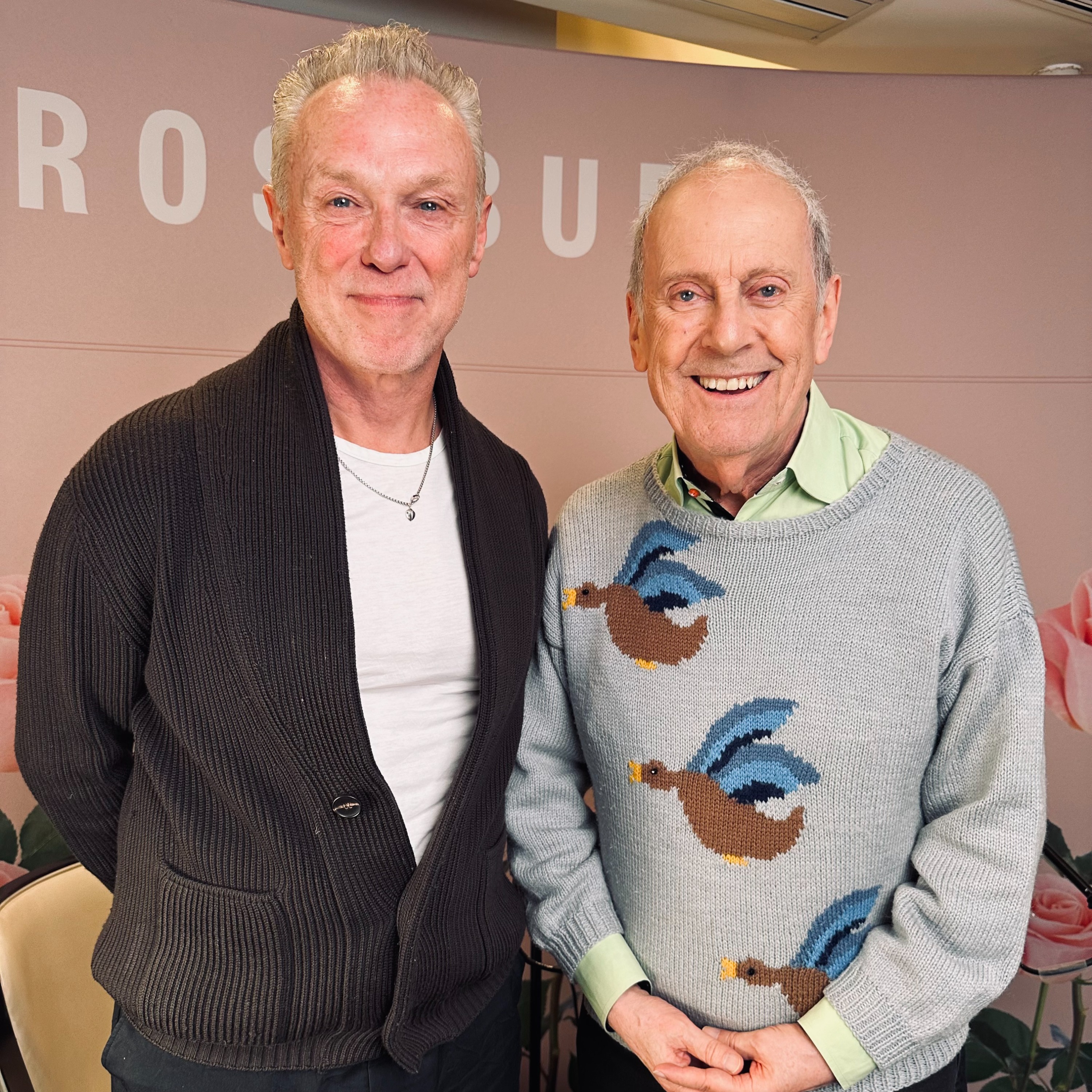
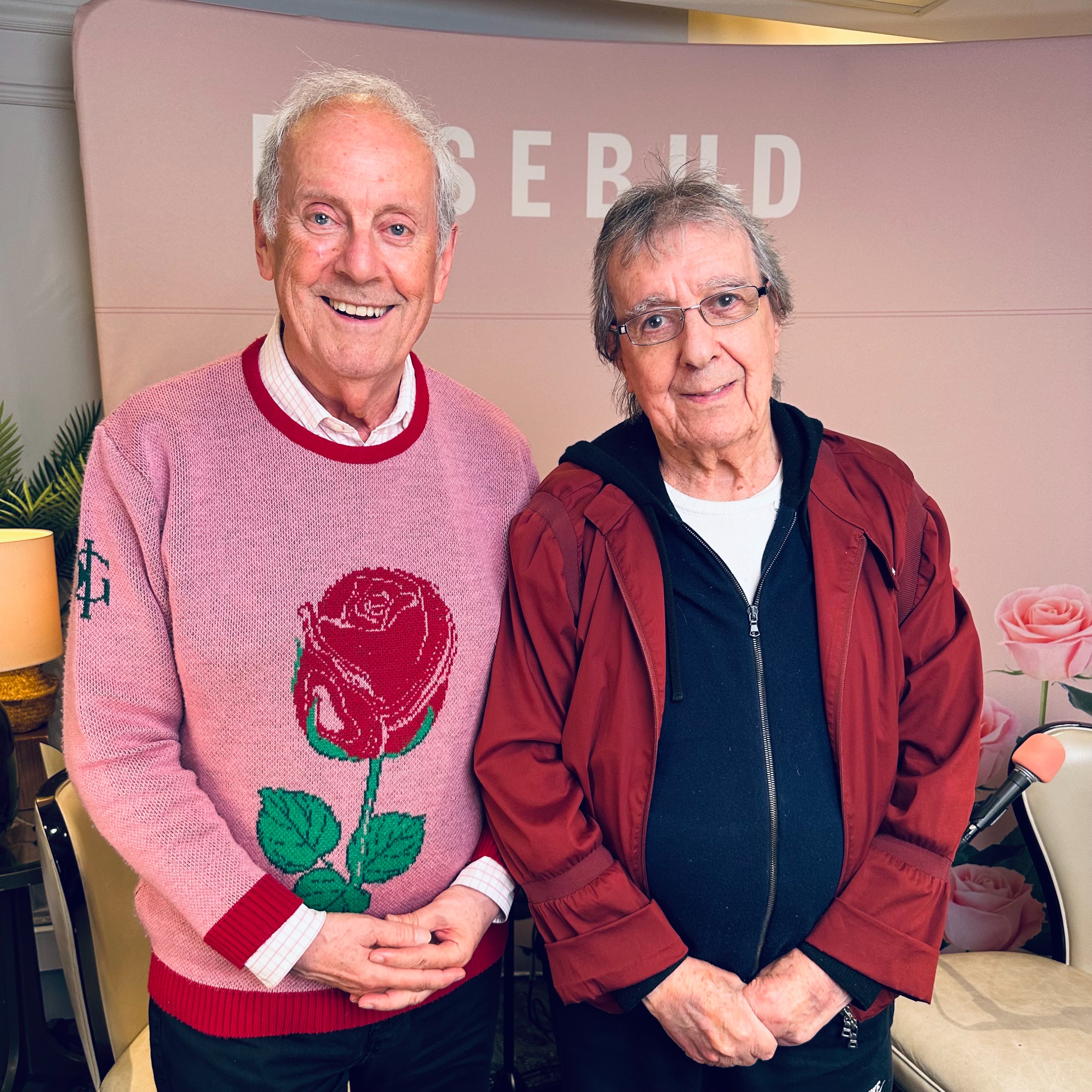
We're in luck and so are you, Rosebud Family: because the brilliant Bill Bailey is our guest today. And this is a entertaining and enlightening episode which will surprise and delight you. Bill talks to Gyles about his childhood in Keynesham, where he grew up in a busy house which was also a doctor's surgery; he talks about being musically gifted and how annoying it can be to be able to work out the note your hoover is playing, and he talks about how he came to be called Bill - rather than Mark, his actual name. Bill talks about being in a band at school, how he got fluent in French, and how he met his wife on a flight of stairs. He talks about the joys of caravan holidays, the fun of parlour games, and the sadness of losing his mum.
Bill is touring his new show, "Vaudevillean" nationwide until December 2026, and then is at the Theatre Royal, Haymarket in London from December until February. There are further dates Europe in the spring of 2027. Tickets are available from his website, here.
Huge thanks to Bill for his brilliant conversation, company and conviviality.
Hosted on Acast. See acast.com/privacy for more information.