
 Ask ChatGPT



Bill Wyman’s life story, from childhood in wartime London/Nottingham to becoming the Rolling Stones’ bassist, including how early poverty, family losses, and music influences shaped his path.
Bill Wyman (born William George Perks, 24 Oct 1936) was a long-time Rolling Stones member and later describes himself as the oldest living rocker. Giles Brandreth hosts.
Wyman’s earliest memories include his sister’s birth and a wind-up biplane Christmas gift. He credits his grandmother, Granny Florence (Florence French), with teaching him diaries/scrapbooks, music, maths, and classics, and says her influence helped him pass the 11+ exam. He says his father pulled him from school three months before exams, partly out of working-class resentment. He claims his name became “Wyman” via a military friend (Gordon Lee Wyman) and that he officially changed it in 1964. He portrays the early Stones as “united” and “against the world,” playing blues rather than chart pop, and says they were rejected by record companies after an early IBC Studios session.
wartime evacuation to Nottingham; being sent alone at age five to live with his grandmother; seeing V1 “doodlebugs” and surviving bombings; the “squander bug” propaganda; meeting the Stones in Chelsea in Dec 1962; Charlie Watts joining in Jan 1963; the Station Hotel Richmond discovery that drove rapid audience growth.
Written by AI. May contain mistakes.
Gyles shares background on Bill Wyman and his significance.
“I'm about to meet, and you are too, a birthday boy.”
Bill Wyman recalls his first memory from childhood.
“I think I'm right in saying that you were born on the 24th of October, 1936.”
Bill shares details about his parents and their meeting.
“What were you called when you were born?”
Bill discusses his siblings and family dynamics during childhood.
“And then two weeks later, I remember having my first Christmas gift.”
Bill reflects on family gatherings and musical traditions.
Bill recounts the tragic loss of a sibling and its effects.
“I had to do any argument with any sport or anything I always called Tails.”
Bill talks about his responsibilities as the eldest sibling.
“and I remember the, I might get emotional here, I'm afraid.”
Bill shares memories of toys and cherished stories from his youth.
“The three boys shared one bed in one room and my two sisters shared a bed in the back room.”
Bill describes his evacuation during the war and its impact.
“Which we were in after four years, yeah.”
Explore early childhood experiences, including school challenges and playing truant.
“And so it was, and there were birds' nests, you know, and we saw frogs and we saw lizards and, you know.”
Discuss the emotional journey of being sent to live with his grandmother during wartime.
“and do you remember Were you aware of it at the time?”
Recount frightening experiences of air raids, bombings, and their impacts on daily life.
“And we were looking at these monkeys, you know.”
Describe the support and lessons learned while living with his grandmother during the war.
“So you saw the war up close and personal.”
Reflect on the grandmother's influence on his life and her cooking skills and recipes.
“and what has she meant to you in your life?”
Bill shares fond memories of his grandmother and her influence on his life.
“I mean, obviously you called her Nan, did you, or Gran, or what did you call her?”
Bill discusses his challenging school experience and social class dynamics.
“So this good woman looked after her husband and looked after you.”
Bill reflects on his father's strict expectations and the impact on his education.
“And then when I came home, I got told off by my parents and my friends and kids in the street about being posh, you know.”
Bill recalls the music that influenced him during his military service.
“So you're playing the piano, which is great.”
Bill describes his early jobs and the challenges he faced in the workforce.
“in the summer of 55 through the American military radio.”
Bill shares stories of his first romantic experiences and dance competitions.
“Ah, because had you discovered girls by then?”
Bill discusses his marriage, lack of money, and a short honeymoon trip.
“How did you meet your wife and who was she and what happened?”
Listen to a humorous story about a newlywed couple's unexpected adventure.
“We had no money to go on honeymoon or anything.”
Explore the challenges and beginnings of a music career after marriage.
“I'm working at a diesel engineer, so I'm getting like£13 a week, which is a bit better.”
Discover how the guest joined the iconic band and the dynamics within.
“Yeah, they were called the Rolling Stones, but Rollin, I-N apostrophe.”
Hear about the hardships and camaraderie within the band during their rise.
“There are five of you who are now the Rolling Stones and your life is beginning to change.”
Exploring the transition from obscurity to fame for the Rolling Stones.
“And Mick was in the London School of Economics.”
Bill Wyman recounts the pivotal moment that changed their career.
“And suddenly I'm looking up and I see four black figures standing right in front of the stage in black leather.”
Discussing personal struggles during the rise to fame, including marriage and custody.
“and imprisoned and then taken out, the judge actually gave me custody of my child.”
Bill shares the story of meeting his wife and his journey through relationships.
“And I never, apart from her, I never really had any love from anyone when I was growing up.”
Bill Wyman shares the story of how he met his wife and their enduring friendship.
“One's called Susan and one's called Kelly.”
Wyman reminisces about the iconic Hyde Park concert in 1967 and its significance.
“Before I want to ask you why you eventually leave the Rolling Stones, because you do eventually after a long time, what for you, again in your head, comes as the most glorious memory of the Stones' years?”
Wyman discusses how Brian Jones' death affected The Rolling Stones and their dynamics.
“Yeah, because when we toured, Brian shared rooms with me all the time.”
Wyman expresses his longing for artistic freedom and the challenges he faced in the band.
“I mean, this is an impossible question but 19 studio albums you're on Is that all?”
Wyman talks about his life after leaving the band, including marriage and new musical projects.
“ended up playing music like the band they're in.”
Bill Wyman shares highlights and friendships from his extraordinary life.
“Your story, we're coming to an end now, your story is a good story.”
Wyman discusses his relationships with former bandmates and friends.
“They all had sour thoughts about it when I left, actually.”
Wyman reflects on significant moments of joy and loss in his life.
“What comes into your head when I say a moment of joy in the long life of Bill Wyman?”
Wyman shares insights and lessons learned as he approaches 90.
“That was the worst, maybe one of the worst.”

Get the gist, explore an idea or ask about something said.
 Claude
On Rosebud with Gyles Brandreth, what are the key points of this episode?
Searching your listeningAutomatic transcript. May contain errors.
0:00Wherever you are in the world, whatever you're doing, whoever you are, I really hope you enjoy this episode of Rosebud. I'm Giles Brandreth, and here we are. Cue the music.
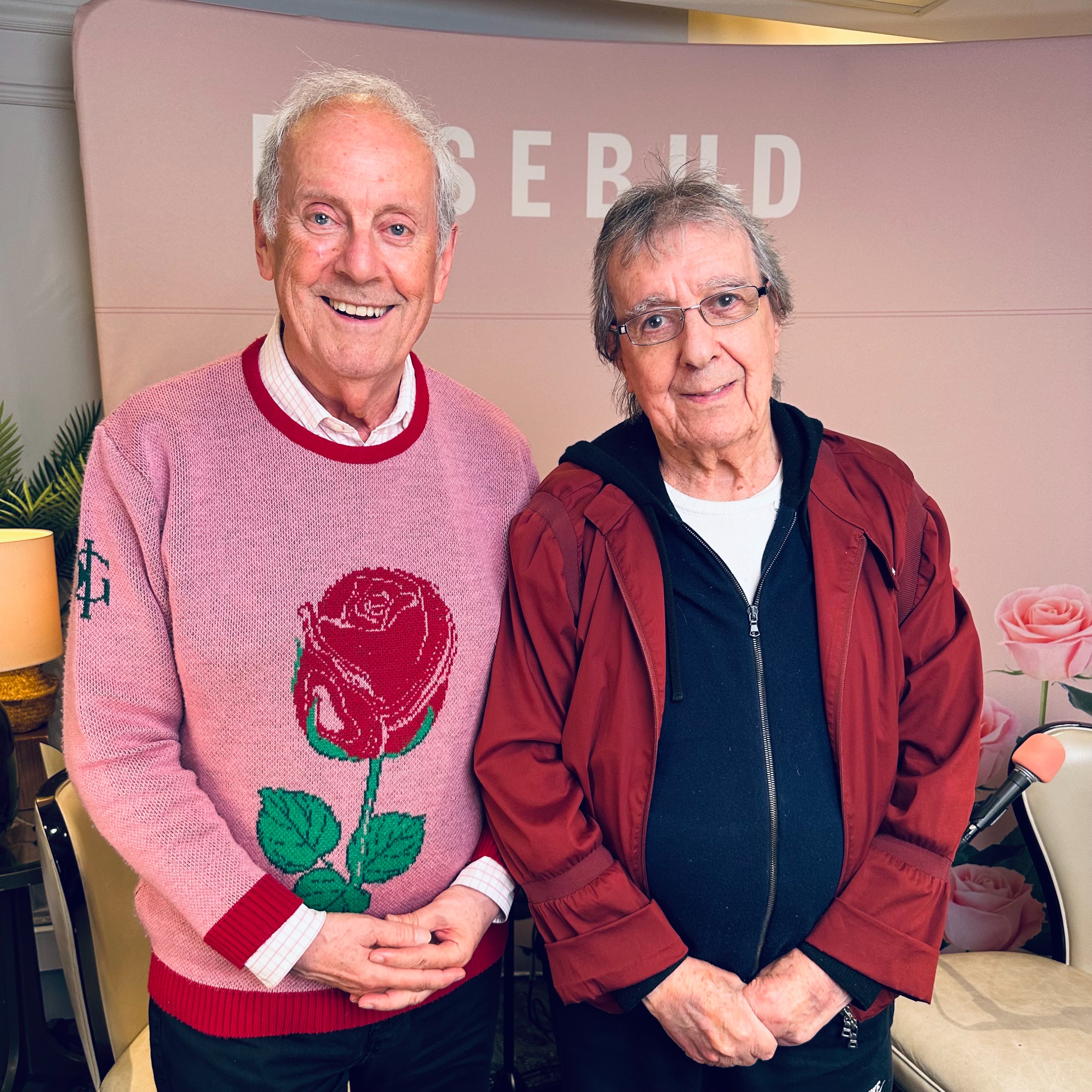
0:35Hello, this is Giles Brandreth, and yes, this is Rosebud. I'm wearing one of my favourite jumpers today. It's the one that has a birthday cake on it. And the reason I'm wearing it is because I feel I'm at a birthday party. I'm about to meet, and you are too, a birthday boy. Born on the 24th of October 1936, his name is William George Perks. Or that was his name then. Eventually, he changed it to Bill Wyman. Yes, that Bill Wyman, one of the Rolling Stones for many years. I think now he would describe himself as the oldest living rocker in the world. He certainly does rock still, and he tells an extraordinary story.
1:18It's completely fascinating. I always feel privileged when we have people of his vintage, 90 tomorrow, coming on, because they can tell us what the Second World War was like, what growing up in the 1940s and 50s was like, and in this person's case, what it was like meeting the Beatles in the 60s. Actually, the Beatles changed the life of the Rolling Stones, as Bill Wyman will reveal to us. The early days of the Rolling Stones, his friendship with Charlie Watts, his view of Mick Jagger, his, well, his love life, that comes into it. I first met him when he was going out with a young girl called Mandy Smith, who I think he married.
1:58I don't think he'll be talking necessarily much about that. All I want him to do, actually, is tell the story he wants to tell. This is his life. This is his story told his way. I have to tell you, you are in for a treat with this conversation with the birthday boy, the oldest rocker on the planet. Please welcome Bill Wyman.
2:34This is Bill Wyman. This is a birthday special. I'm very excited to be with you, Bill. I think I'm right in saying that you were born on the 24th of October, 1936. Yes. Which is 90 years ago. Yeah, well, it will be. In five days, five weeks. When we get to it. When we get to it, it will be. What were you called when you were born? What was your name? William George. William George? Perks. William George Perks. Yeah, that was the name of my father, because you were always named after your father if you were the first son. Well, we'll come on to how it changes as the years go by in a moment. But you are William George Perks, born 24th October 1936.
3:19I have to ask you, Bill, what is your very first memory? When the doctor came with his black bag, when I was three years and two months old, on the 11th of December, because my mum was ill in bed in the other room, I wasn't aware of her being big or anything. But when the doctor came out, we had a baby i had a baby sister and um i said to my dad where did the baby come from dad and he said well the doctor brought it him in his big bag you know in his big black bag he brought the girl in his big black bag and that was the first first memory of that now what year would that have been in fact 1939 1939 three years and two months your first memory is the bag that brought your sister into the world.
4:16And then two weeks later, I remember having my first Christmas gift. Which was? A little biplane, wind-up biplane, which went along the ground and flipped, did a flip, you know. Backward flip. Over the hill thing and then just carried on again. And I don't know whatever happened to it, but I used to love it, you know. So where is this happening? Where are you living when you're? In Lower Sydney. Lois Sydenham. Yeah. And who are your parents? Who is this mother? Who is the father? My dad is William George Burks, of course. My mother is Kathleen May Jeffery. And she came from Penge, Beckenham, where the Jefferies had a little, something to do with a farm out there in the countryside.
5:06And how did they meet your parents? My dad went on his 21st birthday. He went with a friend who took him for his birthday from Lower Sydenham to walk to Penge, because they didn't have transport in those days, to go to the theatre, which was the Penge Empire, to watch the musical. And they ran up into the gods and sat in the cheap seats at the top, which was just sixpence each I think he said and they sat next to two quite attractive girls and then in the interval they got chatting and asked the girls if they could walk them home afterwards because nobody had any transport and the girls said yes we just live around the corner but yes so my dad turned to my friend his friend and said so which one do you fancy and he said well they're both cute aren't they and my dad said well let's toss for it they tossed a coin and my dad called tails and took my mother home and I've often wondered what would have happened if that came up heads well you'd have looked slightly different well I wouldn't be here would I no you might have gone off with the other one you'd still have the same dad so it's from those moments when you know just the flip of a coin so whenever I ever tossed a coin I had to do any argument with any sport or anything I always called Tails.
6:37Oh. Obviously. A lifetime's rule, because it's give birth to you, Tails. So these two go off together. He is called Bill or William? Yeah, Bill. Bill. And your mum was called what, day to day? Kate, oh, Molly. Molly. For some reason. Even though her name was Catherine, she was called Molly. Yeah. So it's Bill and Molly. And what do each of them, what age are they then, and what do they do for a living? Dad was 21 and she was 17. and they went down to, I think it was Clactona somewhere for the day and I've got a photo of them sitting in a little photo studio with sort of decorated background of the sea and all that, dressed with the funny hats on but then dressed in their normal clothes.
7:24My mum in little bowed shoes, you know, and a short skirt, long skirt, and looking really quite nice, actually. Oh, lovely. It's one of the rare things I've got. So these pictures, the pictures you've got of them on Clacton when they had the photographs taken, this is before they got married, during their courting days. Yes, exactly. But they were young when they got married. Yes. And were they happy in the early days? They must have been, they had five children. Five children? Well done. Six, actually, but they lost one. Oh, well we'll come on to that in a moment. When she was 17, your mum, what did she do for a living?
8:00Did she have a job? No, but my dad was a bricklayer. Yeah. I started at 14 years old. Yeah. And they just struggled, you know, with very little money in the early days, as was the case right the way through my childhood actually. Yeah. They were quite poor. What's your best memory of seeing them together when you were a little boy? Your sweetest memory of your mum and dad together? I don't really have one. Meals together? Christmas Day together? No, I don't. I remember after the war, when I would be 11, probably 10 or 11, when we had a Christmas party, when my dad played the piano, of course. And he played accordion as well.
8:50So he used to play piano and my mum used to sing. Oh, so that's a happy memory. And my dad's mum used to pull her skirts up and dance everybody to the floor. And my grandfather, his father, used to sing all these songs from, you know, the... The musical type songs. Musical, yeah. My old man. George Robey and all that. Right. So they were quite nice parties, actually. I remember them. Going back earlier, you're the eldest. Your sister comes along. You remember that vividly. I got a brother, John, who was two years younger. Then Anne, three years younger. And then later in the war, in 1942, my sister Judy was born, Judith.
9:35And then my brother, Paul, at the end of the war. And then David, who died in hospital. And how did that affect the family? Because by then you were old enough to notice it happening. Did that affect your mother badly? It was devastating, actually. I was 11. and I remember the, I might get emotional here, I'm afraid. I remember the car coming and them bringing out the tiny, they were going to bring out the tiny little thing with him in it. Oh, the coffin. And so I went round to the market round the back and I had a penny and I bought a little bunch of filets. Oh. and I went back quickly and they were just bringing the the thing out with my mum on the other side and my dad crying and people around and I reached over and put the flowers on top of the you know, on top of it and my mother without thinking at all picked them up and threw them in the street Oh no and it devastated me and it stayed with me for years and years Well, it stayed with you until you were 90.
10:46I mean, it's all your life. Still with me. She did it without thinking because they're probably less tidy than the other. Yes, she just thought, what's this? Yes, because she would have been in a terrible state herself. Yeah, she was thinking elsewhere, you know. But, yeah, I would later reflect on it. It came back years later when I was having talks with Stephen Fry. we had like a two hour thing together and so it was embedded in there and it was good to get it out finally because now I can deal with it now I can understand why it happened and with your other brothers and sisters have you always had good were you good with them when you were young and have you kept in touch with them when I had to look after them being the eldest I was responsible so if they misbehaved Bill got the blame you know but that's normal did you share a room with your brothers and sisters?
11:44The three boys shared one bed in one room and my two sisters shared a bed in the back room. My mother and dad were in the front room. It was just a three up, three down. Did you have any toys that you remember? Not really, no. We used to get a Rupert book every year. The Rupert Annual. Which we shared. Lovely. And so that became a treasure. So in the years I've collected the entire, set. The illustrations are wonderful. Which started on the year of my birthday, 1936. So you've got a complete... I've got a complete set. Oh, well there was something now. Oh yes, but I've you know, fostered that over the years.
12:24Oh lovely. Because it meant a lot to me, because when my children, my three daughters started to grow up I used to read them Rupert's stories, which they loved, you know. And was the world of Rupert for you the escape from... Oh, it was amazing, wasn't it? That nut wood, you know A little village with all the thatch cottages and all his animal friends, you know, Bill Badger and Algie Pug and all that like, and the fox twins, you know, Freddie and Ferdy. I know them all. And the mother figure was a bear, wasn't she? Yeah, mother bear and father bear. Yeah, they were cute. I loved those. Did you read the verses underneath or did you just look at the pictures?
13:01I read the verses and the stories. Because it was done. There were writing verses underneath. And then the story told in prose. Yeah, yeah. And we wanted to be in Nutwood rather than in Sydenham. Or in Penge, yeah. Or in Penge. Which we were in after four years, yeah. So you moved from... Well, we were moved about during the war, obviously. Were you evacuated during the war? We were evacuated to Nottingham. Mansfield Woodhouse, actually. And with the whole family, or just the kids? Mother, me, and my brother and sister. What was that like? Father was in the military. Ah. and it was wonderful going on that first train from Euston up there, you know, for two hours and then enjoying the countryside because I started to go to school there and I used to have to walk about a third of a mile through the country lanes where there were horses and cows and sheep and all that so I hadn't seen anything like that.
14:00And so it was, and there were birds' nests, you know, and we saw frogs and we saw lizards and, you know. It was almost like being in Nutwood. Yeah, it really was. And then I'd get to the school and then, unfortunately, I had bad times in the school because we had a lady teacher. Looking back, she must have been late teens or early 20s, I would think. and she always tried to change my accent because I had a bit of a Cockney accent coming from South London and she kept trying to make me speak in the Nottingham accent and when I didn't she used to smack me all the time and so eventually I played truant and I joined two or three other boys who didn't like her either we used to sit around the campfire in an old church ruin and spend our times there You created your own fire in the graveyard.
14:58Yeah, I think I got matches. I stopped matches. Not a graveyard, in a church ruin. Oh, actually, a ruined church within the church. Yeah. And then my mother found out. And she decided, she called my grandmother, or got in touch with my grandmother in South London, Penge, and asked her if she could look after me, because there was too much going on. She had the other two children. She was pregnant now with my other sister. And she couldn't deal with anything more, especially me being a naughty boy playing truant and not being at school and all that. And so my grandmother agreed, and my mother took me, I remember it vaguely, I mean, I remember it precisely.
15:49She took me on the bus to Nottingham, and she took me to the railway station, and she gave me a little, I had a little sort of sandwich of jam, I think it was, and a little bag with a few bits in it, and she put me on a train and sent me to London. On your own? I was five. Wow. At least you had a jam sandwich with you. And I remember, yeah, I remember. And your grandmother was going to meet you the other end. Yeah, I remember that she cried when she said goodbye to me. the first time I ever saw her cry I think and there was a lady in the carriage an old lady and she said to the old lady can you keep your eye on him you know when you get to London and the lady was very nice I used to sit there and she used to talk to me and then she gave me little drinks from a flask and then when I got to Euston my grandmother met me and I lived with her through the war with all the bombing and all that and do you remember Were you aware of it at the time?
16:53Do you remember the book? Oh, yeah, because we were going to school with gas masks and we had to always carry gas masks. We were being shown propaganda films and having posters of things called the squander bug, like this bug with all swastikas all over it, you know, save things, save all kinds of rags, paper, everything, don't throw anything away. Don't squander anything because that helps the enemy. And it was called the squander bug. And there was all this, and then we were shown films of things that Germans were dropping anti-personnel weapons. And they were dropping something called a butterfly bomb, which was a little thing, a bit like a little aeroplane.
17:45And we were shown, I was like six then, I think. We were shown this film of a boy going out into his garden and seeing one of these things on the ground and going down to pick it up and being blown up. And then we were told, don't ever touch anything. Don't ever, if you see anything, report it to the ARP men, you know, the air raid precautions, or anybody around, but don't touch anything if you don't know what it is and all that. And then we were told, you know, if you're caught out with an air raid, lay in the gutter. That was what you had to do, just lay down right in the gutter. Don't stand against a building or anything like that.
18:26And we've got all these sort of things told to us. And did that frighten you, the idea of the war? Were you frightened or excited? What was your reaction to it? Do you remember? I didn't really think of the ultimate
18:45problems until we were caught once in bed at a later date because my mum came they came back briefly when the worst of the bombing had happened briefly but then it started again and she threw herself over us in the bed your mum did? yeah with the bombs coming down and then I kind of realised that she loved us and and then Then there was quite a horrific thing happened. I left school at lunchtime to go back to my gran's for lunch. And round the corner from where the school was in Maple Road, Pange, there was a big pub and round the back of the pub there was a fence which had knotholes in it. We used to go there and look through the knotholes and on the other wall of the back of the house in the garden was a cage with monkeys in it.
19:41Goodness. We'd never seen monkeys before. Oh. And we were looking at these monkeys, you know. We used to see them every day. And this day we were looking through and the monkeys and the sirens went off. And me and this guy who lived down my road, his name was Dennis Stutley. See, I remember everything. We ran to our run down Maple Road, round the corner, and then went to go down the top of our road. And there was a German fighter plane coming up the street, shooting. literally no level yeah coming from the top of the houses coming straight up the street just above the the roofs and it was we could see fire and we had houses with little coping walls outside where people kept kept their bikes yeah and bits and pieces yeah the dustbins might be yeah and we just ran behind the very first one and as it roared past machine gunning and then we just ran home.
20:41My gran was waiting for me, and I ran up to her. She was on a flat above, you know, grabbed me. We went to go down the back stairs, and we heard it coming back, and there was a big window on the back stairs, and she stopped, and we saw the plane go straight past, and I imagined this horrible face of this person, you know, obviously didn't see anything, and then we ran to the shelter, and it was all right, But then later that day we heard that that plane was involved with other planes dropping a bomb on the school in Catford. God. Where it took down half the school at lunchtime, killed like five teachers and about 20-odd children who were between the ages of about five and seven.
21:33And they were machine gunning apparently. It's in the news. I saw it and I've seen it on the internet. They were machine gunning the people running on the playgrounds, you know. And it was that event which was just two miles away where the plane obviously was going around just using up its ammunition before it flew away. So you saw the war up close and personal. Well, I also saw doodlebugs. What was a doodlebug? Was it the noise and it went silent? It was a rocket plane with a flame on the back. and when it ran out of fuel it just fell and exploded. Whenever it ran out of fuel. It was the V1, it was the V1 bomber.
22:16And I was taken out of the shelter once to see one of those flying over at a distance and then of course we were bombed out with one. Just missed us and landed in the next street and took down about 12 houses. That was in Penge and... You say bombed out, did you have to move? Oh, yeah. We were all in a shelter with three families because it was on the three floors where we lived. So this is an Anderson shelter in the garden? Yeah. And you just waited with sandwiches that the ladies made and you just waited for the planes to go over. And as they got louder and louder and louder, all the ladies were all praying and then they'd go past, you know, and then silence, explosions.
23:00But then one got louder and louder and louder and then just stopped right above us. And all the ladies jumped across all the kids on the bed, big bed. And there was just silence. And then suddenly it was just like, whoomph! And the whole ground moved. And all this stuff flew into the shelter. Bits of tree branches and leaves and dirt and all that and covered us all in this muck. luckily we had a shelter with a side entrance and the bomb had gone that way if we'd have been facing it would have all come in anyway we had to wait till the all clear and then we went out and the whole garden was smashed trees and then we looked round and all the backs of all our houses all the windows were in the gardens we had these big French windows they were all lying in the gardens when we went in the house all the furniture was all slung against the wall nearest to the explosion and I thought it should have been the other one but it was all sucked and it was all smashed against the wall facing the thing we learned later that it landed in the next street and took down about 12 houses so my dad was given military leave and my mother and my brothers and sisters went back to Nottingham again because they'd come back when the worst of the bombing had stopped, when Hitler had gone to Russia and given up on attacking England because Goring couldn't defeat the English planes.
24:51We had won the Battle of Britain and therefore the war over London wasn't as severe. It is. You still had, you know, bombing happening, but it was occasional. And you stayed with your gran? I was still with my gran, but my parents then came, my mother and the children came back to Musley Road in Penj, which my gran found, and then I joined them briefly for six months. And then they had to go back after that happened. And then I went back to my gran again and lived the rest of the war. And this gran is your mother's mother? Yes. And tell us about her. What sort of a woman was she? and what has she meant to you in your life?
25:27She was the greatest person in my life, basically. She taught me everything. She taught me to keep a diary, keep a scrapbook,
25:46collect all kinds of things like cigarette cards, which were popular then in the cigarette packets, and stamps, a few coins.
26:02And then she read me all the classics. Oh, wonderful. You know, over the years. Then she taught me all the nursery rhymes and all the little nonsense rhymes. Can you remember a favourite? This is the house that Jack built, you know. Yeah, all those. There was a crooked man who found a crooked style, found a crooked sixpence against a crooked style. They were called a crooked cat that killed a crooked mouse, and they all lived together in a little crooked house. All those little things, you know. What did she look like? Was she tall, short, dark, fair? She was short, plumpish, rosy-faced. She also taught me all my maths tables and improved my writing and everything.
26:43And you were lucky because you were like an only child with her. She just had you to focus on. Exactly. Did she cook nice food? She was brilliant. Because there was wartime austerity, but rationing and all the rest. Yeah, but we just had... Well, we didn't have electricity, of course, so we had gas lighting. But gas lighting as well, gas lighting and gas heating and gas... Well, I never had electricity in my life until I was 16. It was all gas. So we never had the amenities that electricity provides. What's the favourite food she did? What can you remember? bread pudding big things of bread pudding which were about that thick and so juicy with sultanas I don't know where she got them from in those days sultanas and raisins and a crispy top you know it was the best thing I ever tasted and then she made all the basic foods from stuff that was available that filled you up you know all the milk puddings and and all the, what do they call it, plum duff, and all those, you know, all those kind of fatty things.
27:55Yeah, but rather comforting. That filled you up, but they were cheap to make. What was her name? I mean, obviously you called her Nan, did you, or Gran, or what did you call her? Just Granny Florence. And was she a widow? Her maiden name was Florence French. Oh, rather classy name. And when she was a child, this is extraordinary, When she was a child, she worked for a family in Upper Sydenham, next door to a very retired W.G. Grace. Goodness, the great cricketer, the great Victorian cricketer. Yes, who lived next door, and you used to see him in the garden and you used to say hello to her. So at one remove, you've shaken the hand of W.G.
28:39Grace. That's something. Well, I don't know whether she shook hands with him. Well, over the garden wall, I'm sure. I was always a bit afraid of him, she said, because he had big whiskers. Oh, he had this famous beard, didn't he? But he was always very polite to her. And it turned her into being a great cricket fan, which she turned on me. And so in later years, I played charity cricket for eight years with all the greats, you know. And so that was something really special, just out of the blue. How wonderful. Yeah. And was she a widow? Was she living alone? No, no, she lived with my grandfather.
29:11but he was disabled. So this good woman looked after her husband and looked after you. And my mother's younger sister. Who also lived there. Yes, her younger brother was in the military. He was in the 8th Army. So this Florence French is a very good woman. I owe her everything, yeah. So when I was doing my military service in Germany years later, and I must go there, I came home on leave and my mum said you don't have to sleep with your two brothers anymore in the big bed. We've got to pull you up sofa in the front room now. You can sleep there on your own. So I said great, so where's all my stuff?
29:56You know, all my diaries and my crap books and all my school reports and everything. She said oh I threw them off. She said that would be just kids stuff, weren't they? This is your mum doing this again? Yeah. The same lady as, I'm afraid, threw the violets off the... And that really upset me. I'm not surprised. Because I'd lost... Even all my school reports from the grammar school, because I went to grammar school, and everything was gone. So the best of you educationally is because of your grandmother, because she was teaching you at home. Yeah. You go to a primary school, and then you get into the grammar school.
30:32Yeah. So this is the era of the 11 plus. You took an exam and you were bright enough. Well, there were two of us passed out of a class of 52. Well done. Two boys and one girl. Well done. So, yeah, because she advanced me, you know, so well. And did you enjoy school? How was school for you? It was tough because I was from a slum street. And when I went there, I was mixing with boys from Petswood, Orpington, Bromley, all usually middle and upper class kids who spoke very poshly. So I had to try to change my accent to sort of match them. And then when I came home, I got told off by my parents and my friends and kids in the street about being posh, you know.
31:17And so I was sort of stuck between the two problems. In your head, what did you want to be? Did you aspire to being the grammar school boy? Well, my grandma, when I was 10, she started me with piano lessons. So she had aspirations for you? So I did piano lessons and then she took me twice to the Royal College of Music, opposite behind the Albert Hall where I passed my first two exams. She took me both times. And I was in the choir, the church, local church. So I was singing, you know, all the hallelujah stuff. And also doing weddings and things where you got a little payment, which was kind of nice.
31:58So she taught me music as well. Did your parents resent this? Did your dad feel... They did. They did, ah. My dad did. Explain that to me, please. Well, he just always said to me, you know, stop trying to be posh, you know. You're not posh. You're a working class and you should stay. You should know where you should be. You're a working class. You're nothing else. And so three months before I took my exams at 15. Yeah, what have been the O-levels of the day? he pulled me out of school. My gosh. Three months before. Wow. And my headmaster wrote to him especially. I've got the letter still. I kept the letter.
32:48I was begging him not to do it because I was just three months away. But he completely ignored it. And he put me into a job in Duke Street, London, which is opposite Selfridges. working in an office for a bookmaker. And so when I looked for another job and they said, what was your previous job? And I said, oh, I used to work for this bookmaker. I didn't get a job. Of course. It blocked me again, you know. It was really difficult. And thinking about it years later, why do you think he did this? Why did he deny you the opportunity of education? I think he resented. Maybe he resented it because he didn't have the opportunities I had.
33:37It's been good enough for me. Maybe. 14, 15, get out to work like I did. Exactly. And at the time, did you resent it at the time? Yes. Did you argue with him? Did you say, no, Dad? No, he's too bossy, too tough. But he wouldn't have beaten you. Oh, he would? He had hands like rocks. Well, he was a bricklayer. Yeah. He worked with his hands. and where we sat around the table, I was always next to him and if anybody misbehaved, I would bop at the back of my head, you know. So were you frightened of him? Well, very respectful, I must say. I mean, do you love him now, in retrospect? Yeah, we united later because I was able to retire him in his 40s.
34:24And then he lived on my estate in Suffolk. Oh, so eventually he became proud of the boy, he tried to... Well, I think he did, although he never said it to me, but my mum always said he said it to other people, how proud he was, but he never, ever congratulated me. But I suppose it was difficult for him. He'd had quite a tough life. I understand it. Yeah. He never had anything decent.
34:58So you're playing the piano, which is great. Are you listening to the radio, the wireless? Are you listening to... What's the popular music of the late 40s, early 50s? What do you listen to? What's the first music that makes a difference to you? Well, there wasn't very much, actually, until I first heard Les Paul and Mary Ford. Tell me about that. The first guitar performances. Otherwise, it was just English singers doing copies of American ballads, really. You had Dickie Valentine, all that lot, you know. Lisa Rosa, Alma Cogan, all those copying Moon in June things, you know. And there was nothing more until Lonnie Donaghan appeared, playing skiffle.
35:47And when you joined the Army, you had to do... Air Force. You joined the Air Force. Had he been in the Air Force too? Is that why you did the Air Force? No, I was in the military, in the Army. And why did you choose the Air Force? Because when you do national service, you gave a choice to you. Because I was talented with maths. Gosh. So I got immediately into the Air Force because I was able to do charts, graphs, and mean averages and things. So that's where I got in the RAF, I think. And then I got sent straight to Germany. I spent my career out there. Was it a good time? Bloody freezing. So North Germany in the winter, Oldenburg it was, right next to Bremen, Hamburg, was so cold in the winter so you wouldn't believe it.
36:38But it taught me to be independent, taught me to have strength in myself and confidence, which I didn't have before, and enjoy the companionship of other people which were in the same boat. and also I was able to hear the beginnings of rock and roll in the summer of 55 through the American military radio. Of course, this is Elvis Presley's heyday, isn't it? Well, Bill Haley. Bill Haley, of course. Yeah, the American Forces AFN radio, which we could hear. BFN wasn't very good, British forces, because they were playing all that mundane stuff. but then we heard the beginnings of Elvis, Bill Haley, Fats Domino, you know, and Platters and so on.
37:27And I immediately went down to the town and bought an acoustic Spanish guitar. And then I formed a skiffle group and I built myself a T-chess bass, you know, one of those horrible ones with the broom handle and the string and every time you played it, that size of a string, you know, I cut my fingers. And when you came home from your two years in the RAF, did you expect to go and live with your parents again? Was that the plan? Well, I had no option. Yeah, that's what you did. And what did you go back to earning your living doing? Well, I tried to get a job. Every time I said where I'd played before, you know, I'd worked before, they just weren't interested.
38:11And I eventually got a job with the meat importers in the Royal Victoria Docks. near West Ham. And I used to cycle there from Beckenham just to save a pound a week. There and back, which was bloody miles, actually. In the winter, it was horrible. But it did save me a bit of money. Well, I was only getting like six or seven pounds a week then. And I was there for about six months. And then I got a job in Streatham Hill working for diesel engineers. and that's where I started to earn a decent bit of money and get married. Ah, because had you discovered girls by then? When you were in the RAF, did you discover girls?
38:55When did you discover girls? What's your first... Four lines. Well, tell me. What was your first experience with a girl? The first time you locked eyes? Your first kiss, your first cuddle, your first encounter? Well, it was first with a girl I used to write to. are pen pals yeah because we all had pen pals i had probably five and the other guys in the room had three or four each this is in the RAF yeah in germany yeah and i wrote to this girl called sue carlill in um in hull and who set this pen pal idea up how did that work it was everybody everyone just had pen pals yeah they all had pen people hadn't necessarily met but they got in touch with our boys in the in the forces yeah everybody morale you wrote back and you just formed a friendship.
39:43Yeah. And anyway, we wrote to each other and it got very romantic. You hadn't met? No, of course not. You sent photographs of each other? Yeah. Yeah. And then we... What was her name again? Sue. Sue. Carlisle. Mm-hmm. And she came from Hull, Brough, near Hull in Yorkshire. And she invited me to come on my next leave to stay with them. Her mother and her... that her mother was divorced. It was her, her mother, and her little son, little brother. And so I went there and stayed a week with her. Why should I say this? I shouldn't say. Sure, it's a long time ago, and it's a charming story. Well, she crept into my bedroom the second night, and we spent lovely evenings, nights together, and I think her mother knew, because there's no way she wouldn't know.
40:40and it was a bit special actually I imagine it was very special it was the first time but then I started to go out with a few German fruleins so learned all the wrong words in German but the good times you remember them well of course and were you a nice boyfriend I always treated him as well as I could I mean no no I mean it's being serious I still I still am in touch with girls that I was friends with in the 60s. Lovely. One lives in Australia. She's a grandmother and there's two or three others, you know, that we're still in touch with. How did you meet your wife and who was she and what happened?
41:23Her name was Diane Corey. She lived in Upper Sydenham. And we just became friends, hit it off. And then we used to win the Jive competitions every week. Ah, you danced together. Because we used to jive, which I never did later years, you know. And we all used to win the prize and then get free tickets for the next week. It was in the ballroom of Frank and Peggy Spencer, who were very famous. Of course, they were a famous dance couple, yes. They had this little ballroom, and that's where we used to go. And so we eventually got married. We had no money to go on honeymoon or anything. but I said to my wife, my new wife, what we could do is, because we both had to be working on the Monday, and I think we got married on the Friday, and I said we could spend the weekend going in my dad's old car, because he had an old Morris 10 from the 1930s, up to Birmingham, where my best friend from the military lives.
42:38It's nothing special, but it's at least somewhere to go. And we can go on the new motorway, the M1, which had just been created. So I borrowed my dad's car and got enough money for petrol, and off we went. We got halfway up. It's another crazy story. We get halfway up the motorway, and I says to my wife, Diane, I said, give me his address because he moved last week and he gave us the new address and all that and she said well I gave it to you at breakfast on the breakfast table I said no, no you didn't I thought you had it I said well I haven't got it and she said well I haven't got it so she said well we better turn around and go home it's just a waste of time and I thought I will use every bit of logic I can get out of my brain and go for it.
43:34And she says, you're mad. And I got bad ear rape, you know, for the next hour. Why are we doing this? And I drove into Birmingham. This is gospel true. It's like a miracle. And I thought, well, I know he lives in Smethwick. So I saw signs for Smethwick and I followed them. And she's going, now what do we do? Turn around and go home. and I thought, well, I know he lived in a house with three figures. It was like 100 and something or 200 and something, so it's a long, long street. And we came out of traffic light. I swear this is all gospel truth. And there was this big road up on the left. I said, well, let's try this.
44:23He said, you're mad. And I thought, if he lives in this street, it's impossible to stop at the beginning. I should go to the middle because there's more possibility of being where. So I drove up the sort of rise of this big long street and parked. And she said, what do we do now? I said, I've got no idea. And I looked across the road and there was a lady cleaning her step with that stuff they used to do. And I said, I'm going to ask her. And she said, you're mad. So I went over and I said to this lady, excuse me, sorry to bother you, but do you know a couple called Jim Bottrell
45:10who moved about a week ago? They got a little baby. And she said, well, there's a couple, two doors down that just moved in with the baby. You can check there. And I went two doors and knocked on the door and it was him. And I swear that's gospel truth. But it was the first row as well. Oh, no, but it was a miracle. It was a miracle. It was a miracle. It was a complete miracle. You were led. She never, never, ever after that argued when I said I was going to do something. Oh, well done. Oh, that was a triumph. And we had our two little days there, and then we went back and just carried on with normal work.
45:45But normal work changed quite quickly, because soon after your marriage, your music career begins. No, it wasn't. It was five years later. Oh, I've got that wrong. Well, tell me what happened then. So you've got married, you carry on. What are you working at now? You've got quite a good job. I'm working at a diesel engineer, so I'm getting like£13 a week, which is a bit better. And you've got your own home with Diane? We had this horrible flat in Beckenham, which was, I had peeling, wallpaper peeling off the wall. It was all damp and horrible. And there was a hole in the wall in the front room behind the sofa.
46:22a hole in the wall went to the outside of the front garden which we just pushed the finger against and I stayed there until I formed a band a little band in South London with a workmate called Steve Carroll who played guitar really nicely and we put a little band together and called it The Clifton's. There was this guy with Cliff drummer was Tony so we called it Cliff Tones Very good. And we did very well, actually, but a lot of the promoters didn't pay you afterwards. You know, they cheated on you, which was common in those days. Especially a guy called Roy Tempest was the worst one. He never paid us.
47:04Good. Dozens of gigs. It's good to name him. I know. I agree. We used to go and sit in his office all day and he'd ignore us. Oh, God. Anyway, then my drummer, Tony Chapman, started to do some gigs with these guys in Chelsea who were trying to put a blues band together. And he said, so why did you come up with me for the next rehearsal? So I went up there on the 6th of December 1962 to Weatherby Arms Pub in the Wells End, Chelsea, where I met Mick, Keith and Brian, all in long hair, scruffy, dirty, hungry, they had no food. and started to rehearse with them. Just like that? Yeah. I mean, literally, they're there in the pub.
47:52But I had to make my own bass guitar by then. I'd made a bass guitar because I couldn't afford to buy one. But their background as people was quite different from yours. Did you get on with them immediately? Well, me and Brian were coming from middle class families. Keith was working class. Did that affect you or not? I mean, or you just got on with the music straight away? Well, I knew music, you know, because I played for two years. And I knew the formation of music because of my piano lessons. So I knew when you played a piece of music, I knew where it was going to change. And where it was almost certainly going to change too, the five, four chord or wherever it was.
48:33So I was always able to pick up songs quicker than the others and remember them and remind them of how they went sometimes. and then we started to do a few gigs. We didn't really make any money. Sometimes you get a pound each. Did the band have a name at that stage? Yeah, they were called the Rolling Stones, but Rollin, I-N apostrophe. Ah, the Rolling Stones. Yeah, which Brian Jones created them. And we used to get about sometimes a pound a week, a pound each for a gig, you know. You'd get five pounds shared out or something, or seven pounds, and then Brian would borrow money for the running of the flat.
49:17It's so cold, you know. The flat is where they were living as a group. Yeah, Edith Grove, Chelsea, yeah, in this horrible slummy flat. Edith Grove is now rather smart, but it wasn't then. Well, that flat wasn't, I'll show you. They had chairs with three legs, which they let other people they didn't like sit. They had all kinds of tricks like that. They had microphones fixed up to the toilets so they could listen to people going to the... All these terrible things. Anyway, come the January, after we'd been doing some gigs, they eventually said to my darling, you know, we don't need you anymore because they found Charlie Watts, who was playing jazz at the time.
50:11So he said, come on Bill, let's go and make a new band. And I said, no, I'm quite happy you're actually, Tony. So we partied on bad terms. I stayed. Charlie joined January 63, and that was the five. That was the Rolling Stones? That was the beginning, yeah. And you then changed your name? I'd already changed my name. Brian Jones was calling himself Elmore Lewis or something, because he was called Lewis Brian Jones. his name was Lewis Brian Jones but he called himself Brian but then he was calling him Elmo Lewis on stage and I thought Bill Perks is not a very good name for someone on stage so I changed my name to my best friend in the military a guy called Gordon Lee Wyman so I took the name Wyman it's a good strong name and he stayed friends with me way into my career with the Stones.
51:11And I eventually, officially changed my name in 1964. So there are five of you. By deed poll. There are five of you who are now the Rolling Stones and your life is beginning to change. Within that quintet, I get the impression that Charlie Watts is your closest friend. Yes. Why is that? And what was your feeling about it? I mean, what was your feeling about the others? Because we were the rhythm section. So you naturally worked together. Drums and bass are the foundations of the music. And we were always reliable. We were always trustworthy. We both had jobs, so we were working, so we looked pretty decent.
51:56Well, they looked like three laobouts, you know. They really did. Because they had no money. And we used to have to feed them. and we used to have to put money in the thing to heat the room because they had no heating. They were like starvation levels. Gosh. We'd bring fish and chips in, and they'd just devour it in seconds, you know. And I didn't have enough money to share with them, really, because I was bringing up a child by then. I had a little boy in March 62. so I had an 8 month old child when I joined so I had to deal with that as well and this horrible flat but things started to improve we started to be taken more notice of we started to break records at the most ballroom and all that kind of thing and when did the breakout happen financially?
52:552 years later it took 2 years Yeah, summer of 65, I would say. But you just kept going. You and Charlie, who ultimately become known as the most reliable rhythm guys in the world, that's the bedrock of it. They were always regarded as the best rhythm section in rock and roll, actually, which was a bit of an honour, which we both took with a bit of a pinch of salt, actually. but that's what we referred to as. That's nice. That's good. It was good but it was a bit embarrassing. And the writing of the songs, who was in charge of that? Well, the band wrote quite a few in those days before Mick and Keith were able to start coming up with real songs.
53:46There were band songs. There were like 12 songs we put together as band which we all earned a little bit of money from. Oh good, I'm glad. because later I think you don't earn. No, because it's all Mick and Keith, yeah. I mean, give us a flavour of what it's like. I mean, we've got the flavour of the flat and how ghastly that was. But what was it like being in the early days of the Rolling Stones? What was going on between the five of you in the room? What's it like? Well, it was us against the world, basically. So we were completely united, both musically and personality-wise and financially.
54:25as the little team that had the world against us. Why was the world against you? Because everybody hated us because we didn't wear uniforms on stage. We didn't have makeup. We didn't do the fancy walks. We didn't have the same guitars like everybody else did. We didn't smile in, you know, photo shoots. We didn't jump off walks again, you know, and all this like Freddie and the Dreamers and the Beatles and everybody else. We didn't do that shit, you know. We said, take the bloody picture. If you want to take the picture, take the picture. And sometimes we used to be so annoying. Some of us used to disappear.
55:06We really didn't care. Did you find... We didn't abide by any of the rules of music business. Mick has driven it all these years with great ambition. Some would say ruthless ambition. Were you aware of that then? Comfortable with it? Did it actually ultimately rub you up the wrong way? No, it was never rubbed up the wrong way at all.
55:33We just, when we weren't working, we just separated into our own lives, basically. We didn't live together like the Beatles did. People thought we did. People thought we all lived in one sort of house in London or something. They all thought we all lived in Edith Grove, but Charlie was a, you know, he was a designer. He worked for a design company. I worked for diesel engineers. Ian Stewart worked for the ICI, you know, the keyboard player. And Mick was in the London School of Economics. And Mick and Keith were just doing nothing, just laying in bed all day and playing guitars and keeping warm.
56:14So when does it change? When is the moment? Can you remember the moment you actually realised we now give up our jobs, we are now the Rolling Stones, we are going to be the biggest band in the world. When did that happen to you? I never thought of that. You never thought of that at any stage? Of course not. We were playing uncommercial music. We were playing blues. You couldn't get in the charts with blues. You had all this pop stuff going on, you know. He loved you, yeah, yeah, yeah. A bit of Sam Pease. It was all bum, bum, ba-dam, ba-dam, ba-dam, ba-dam, bum. you know, Freddie and the Dreamers, oh God.
56:51And then Jerry and the Pacem, I like it, I like it. And Dave Clark, five. We were playing blues. We were doing shuffle music, not eights, like that. They were playing da-da-da-da-da-da-da. We were playing like blues, like jazz. And so we were taken into a studio in the March of 63 when we'd just been together two months by Glyn Johns, who became the great producer and engineer, worked with everybody. And he was playing in a band in Sutton, where we played in this pub. We met him, and he said, I work in this studio, IBC Studios in Portland Place, London. He said, I can get you a couple of hours recording.
57:47We went, recording? Yeah, he said, I can do that. So think of some songs. And we just went in the studio and played five blues songs. Two by Jimmy Reed, two by Bo Diddley. You know, I'm a roadrunner. That song. And did them all in like three hours. They sounded fantastic. and they were played to all the record companies who all turned them down. We said they're not commercial, we're not interested. We thought that's the end of that. So we just carried on doing geeks and just working and building our name, basically. But there is a transition point where this life changes. Yeah, when we were discovered at the station Hotel Richmond by Andrew Oldham and Eric Easton.
58:40that was an actual occasion they came into the room and discovered well we'd been there good georgia gomolsky got us into there and paid us five pounds for the first gig and there we played to 30 people and then the next week it was 80 next it was 120 next it was 300 the next it was 400 and people were in the street word of mouth and it just built and built and built and we had students coming from tweaking them and all that but then these two guys come along. No, but before that, the Beatles had seen us. The Beatles were recording in Twickenham, doing a TV thing. And Giorgio went because he was talking about doing a little film with them at the time, which never happened.
59:26But he told them about us. He said on the way back to London, you should pop into the Station Hotel, see this band called the Rolling Stones. They play great blues. So we were playing there. in the shadows and in the dark with the smoke, with people up on the chairs and up on the top with their shirts off swinging as they did. This jungle music, like we played Do Bo Diddley, you know.
59:56All this atmosphere. Hey, Bo Diddley. It's all like that, you know. And suddenly I'm looking up and I see four black figures standing right in front of the stage in black leather. And I turned around to Brian and I said, f***, it's a field. And it was. And then we broke. They just stood there and listened to us. Then in the interval, they came back with us and we had drinks and we got friends with them. Then they stayed for the whole of the second half. and then we all went back to the flat in World's End and they stayed for about three or four hours and then Ian Stewart ran them off in his van back to the hotels where they were staying and that was the friendship that began and stayed forever between us although the media always made us enemies I had no idea but we were always the closest of friends so they were there right at the beginning and it was George Harrison that said something to someone in the newspapers back in Liverpool about this band that are playing in Richmond who are fantastic and I think Dick Rowe of Decker was approached by Andrew Holden and he'd already turned down the Beatles in earlier times and he had that on his conscience.
1:01:37Didn't want to turn down another band. I didn't want to turn down another one so we were signed to Decker. Gosh. And that's when it took off. So we owe it all to the Beatles and George Harrison in particular. No, we owe it all to our music. But nonetheless, the opportunity. And with help from them. They helped open the door. They helped open the door. And then it did change. Everything then did begin to... Slowly change, yeah. then we started breaking records all over the country but then all it was always talk about was long hair and saying we were dirty clothes it wasn't true that we never washed that we had fleas everything that was insulting that you could possibly say filthy clothes never bathed, never washed Brian used to wash his hair twice a day but you know you had to live with that And then it got written in the bloody newspapers that we were animals, we were called Neanderthals, we were called gorillas.
1:02:42I mean, I'm talking about in the media. But you were kept together because you thought, still, it's us against the world, we're going to do this. Yes, I mean, that's what carried us through.
1:03:00And then, of course, with success came money, came fortune and fame. Well, not really fortune, but we did get money, yeah. We did start to earn a bit. And how long did you stay the course, you personally? What? With the Stones. How long were you part of it? 31 years. 31 years. See, in the meantime, my marriage was a failure. And why was it a failure? But it didn't really start off very well. It wasn't very successful at the beginning. But you had a nice boy. Yeah, eventually we had a son, which I loved, and I'm still so close to, obviously. But I was divorced in 1968, and I managed, thank God, after the rest of the band, except Charlie, had been done for drugs the previous year and imprisoned and then taken out, the judge actually gave me custody of my child.
1:04:07Well done. At the divorce. Well done. And so I was able to bring him up. Can I ask why it came to that, why there was a custody hearing? Why couldn't your wife and you work it out? Well, she'd gone to South Africa to stay with friends. She took my son with him as soon as she knew that I'd had a new girlfriend. And he was there for about six months. And then I had him back for the three weeks I was allowed in the summer. And I saw that he was malnutritioned. He was thin. He had toothache and a lot of his, all his mouth were, I said, how long have you had toothache? He said, well, mum, he said, I can wait until daddy can get me sorted.
1:05:05And so I took him to the dentist. He had like three out and five fillings immediately. You know, he was, he wasn't being treated right. And I decided that he wasn't going to go back. And I just kept him and said, he's not coming back. I'm never going to give him back to you. and there was this huge fight and all that but in the end we went to court and the judge gave me the rights to have him. And all these years later you're still close? Of course. It's great. So I brought him up. Got him into boarding school where he was very happy. And when you say you brought him up you then moved into your own home?
1:05:43You could have a different home? You could afford by then to bring him up? Well I had a little place in Keston which I managed to, a little chalet. and I lived there for a few years with him and he went to the little local school which was called Bramblewood School. I mean, they had his... And the radio runner was Mrs Prynne. I mean, they were all like Rupert. We never get very far from Nutwood with your story except we do occasionally because while I'm very pleased that the judge recognised that you were a good father and good father material and unlike some of your colleagues in the Rolling Stones, you had not got involved in drugs but there was some excess in your lifestyle, certainly when it came to the girls.
1:06:26If the cuttings I read are... I do have to go there. You don't have to go there. You've been there, but that's why I got a drink for you in case you deserve one. What was all that about? Why did that happen to you? Well, my grandmother died in 61. Ah.
1:06:47And I never, apart from her, I never really had any love from anyone when I was growing up. My mother didn't really show love. She had too much going on, I understood. My dad never showed love or affection. He never acknowledged birthdays or anything like that. And so I was always searching, I suppose, subconsciously to be loved because I'd lost my gran before I was a musician. And I wasn't getting any love from my first marriage, which was a disaster. I think I was just searching for love and affection. And how have you coped? I mean, us talking about this, it's because the rock and roll lifestyle, all the publicity, a lifetime of publicity.
1:07:43You obviously, you seem, you're so settled now, and eventually your current marriage... I always was settled, because whenever work was over, I went home. and as Charlie did when everybody else was partying at the Adlib or whatever or going to events we just returned to our homes because we were the first two that were married first two that had children so we were the stable ones we were the reliable ones we weren't drunk at studios we were there to do work and all that we were on time we were ready so we were the two Mr. Reliables. And we were both very proud of it, I think. Yeah, and right to be.
1:08:27Whereas the other ones were a bit flaky. I don't blame them, they were a bit younger and they just approached things in a different way to us. Let's just finish your matrimonial story before we get back to you, the musician. You eventually have a third wife. You have Astrid, then you have Mandy who becomes your wife. Yeah, very briefly, yeah. And then you have your now wife. Yeah. just tell us about meeting her and how wonderful she is the moment because you remember everything can you give me the date the room what you were wearing the day you first clapped eyes on your wife um i was in paris recording with the band she was modeling it was august of when would it be um
1:09:1579 I had a friend called Tony Kent who was also a friend of Keith's who was a photographer did lots of photos for Vogue and all that with all the models and he comes to have lunch with me as he often did and said Bill you haven't got a girlfriend here have you and I said no not at the moment he said well I'm going to this event tonight I'm going to this models cocktail party for Models One. He said, do you want to come along? Maybe I'll meet somebody, you know. So I said, great. So I went with him. We're having drinks. And I looked across the room and I saw two very, very pretty girls sitting quietly by themselves.
1:10:00I said, do you know them, Tony? He says, yeah, I know both of those. One's called Susan and one's called Kelly. So I started chatting with them. She said, what do you do? And I said, I'm a musician. She said, have you got a band? And I said, no, I'm in a band. And she said, well, what band is that? And I said, it's the Rolling Stones. And she went completely white and sort of stuttered a bit, and she didn't say any more. and then afterwards
1:10:40I pulled Suzanne aside and I said can I have your phone number maybe we can go to dinner or something and she was reluctant to give me her phone number actually but then in the end she said okay and gave me something apparently she told me later that next morning she went down to the record shop and looked at the Rolling Stones albums to see if it really was me, which is quite funny. And then she saw it was. Anyway, we had dinner and then a few days later we were romantic. And we stayed like that for a week or two and then I had to go back to England, she had to go back to Los Angeles, but we stayed in touch.
1:11:28And we stayed friends for 13 years. And whenever we happened to be in the same town, we'd get together for a couple of days. Or if we were in Paris or if we were in Centre Bay or wherever it might be. And New York. We'd get together and retain a sort of a casual friendship. Because there was always a spark there, which I didn't feel with a lot of other girls, you know. and then eventually 13 years later I asked her to marry me and she said yes she said or did she yes if you change your ways oh because she knew about my womanising you know and I said I swear I will so she came over for 10 days the spark was still there we agreed that it could be possible to be together she went back to LA then rang me again and we talked about it and she agreed and then she moved over and she gave up an acting career and her clothes she made clothes she had a design she had a clothes design she went and did that when she finished modelling she got a degree in clothes design and she used to make clothes for Cher and all kinds of people like that, people in the movies.
1:12:59And she was doing an acting career because she'd been in about seven small parts in films. She just gave all that up and moved over. And we got married. And she did change you. And it's been beautiful ever since. And she has provided you with the solid love... Every single thing I've ever desired. ...that you needed. And that enabled you to change your ways. Together with three beautiful daughters and a life which I'd never change. How fantastic. Yeah. And so it all gelled in the end. Yeah, it's lovely. All those strange happenings in my life, or strange things that took me different ways, which I shouldn't have done, you know, tangents here and there, And then finally, everything just beautifully gelled.
1:13:52Before I want to ask you why you eventually leave the Rolling Stones, because you do eventually after a long time, what for you, again in your head, comes as the most glorious memory of the Stones' years? Either the track that for you says, yeah, we're at our best there, or a performance, a gig, that it just worked. the magic moment of being one of the Stones? Hyde Park in 67 the year Brian died
1:14:32when we played half a million people for free in the street in the park and the whole of London seemed to close down we heard people were just standing out in Oxford Street, reading it, still listening to the music. And when you're on the stage performing it, what is happening in your head? All I saw from the stage when I looked out was just the tops of people's heads to the horizon in every direction. And it just looked like a huge multicoloured carpet. I mean, it was in every direction, people in trees as well. There was just this blanket of stuff that just went to the horizon. 180 degrees. It was extraordinary.
1:15:18And afterwards they cleaned the park up and everything. It was absolutely beautiful. There was no violence, no problems, no criminal stuff, nothing. It was really peaceful and beautiful. And you are... And we did it in honour of Brian Jones, who died three days earlier. Ah, so that was in your head. That made it emotionally much more... a special occasion. Yeah, because Brian was pretty close. To you? Yeah, because when we toured, Brian shared rooms with me all the time. And what was special about him? Well, he could be the sweetest and the most horrible person at the same time. He was a real mixture.
1:16:02You know, he'd do lovely things and be the sweetest, and then the next day, he'd put a cigarette out on your hand. or something when you're in the car or something stupid like that. He had a sort of little evil bit apart in, but he was very clever. He had like three A-levels and ten O-levels or something. He spoke in a proper English accent, like the Queen. And he was very, very good on the guitar. And you wanted to live in Nutwood, and he ended up living in the house where Winnie the Pooh was written. Yeah, he did, yeah. He actually bought that house, didn't he, that belonged to A.A. Milne. Yeah, he did.
1:16:49For a short time, just a year, I think. And did everything change after his death within the band? Yeah, Brian, Keith and Mick became more dominant and ran the band more. But they'd already done that for a few years, actually. Brian started off as a leader, and Brian made all the decisions, wrote to all the magazines, wrote for gigs. He did all that kind of thing, Brian. But he ended up, like Mick ended up being the front man, of course, and so the attention became on Mick, and eventually he and Keith, through the songwriting, sort of took over the running of the band. Did that annoy you? Not me, I think it upset Brian a bit but it was fate, you know, it was meant to be I mean, this is an impossible question but 19 studio albums you're on Is that all?
1:17:52Well, that's what it says here I thought it was about 30 But you're playing on, I mean, all the greats Paint It Black, Jumping Jack Flash, Sympathy for the Devil Honky Tonk Women, Brown Sugar, Miss You You're there, it's you there To ask you, is there one track that is for you actually yeah that's the one for me is there one you well the one I like best was Honky Tonk Women and Paint It Black because when we did Paint It Black and it was kind of finished and we were listening in the studio in the control room I said there's not enough balls there's not enough balls it's too light it needs more guts they said well you play bass I said, yeah, and bass drum, but it still needs something more.
1:18:42They said, well, what do you suggest? And I said, well, why don't I put organ pedals on it, you know? They said, okay, give it a try. I said, yeah, but I can't play them. I can't play organ. I can't play with my feet like organ players do. I said, but I can try. so they set up the mics and I laid on the floor with my fists and as the music went out down, down, down, down, down, down or whatever it was I start and now when you listen to Basic Black now you'll hear and that's you on the floor yeah, it's me on those pedals and it filled it out perfectly so I do have a soft spot for that why for you though then did it come to an end oh it was time to i had so many other things i wanted to do in my life you know when you're in a band you expect it to last two three years whenever we were asked mick was asked keith brian me anybody how long do you think it's going to last maybe another two years and we were talking about that in 63 64 65 a couple of years we asked the beat was how long did he maybe another year or two nobody thought of anybody being in a band for more than two or three years in those days so they never were you know the only ones that lasted a bit were cliff and the shadows but marty wild adam faith all those were just very brief although they did great records so we always thought we'd be and i i was interested in photography i spent all my time reading science fiction books when we were traveling so I knew all the Asimov, Highline I knew all of them John Wyndham and I wanted to do photography I wanted to to do art if I could I wanted to maybe write maybe play sports all these things and I couldn't do it I tried to make records in those days because I wasn't being used as a writer so I started to do solo records Did you talk to them about being a writer?
1:21:05Did you say to Macon Keith come on, why can't I do the they even let Ringo write one number It didn't happen in the band Well it happened in every other band John Embersall and The Who was invited to do things Harrison and Ringo were invited with the Beatles, and many people in other bands were given the opportunity to do their own thing within the band. It wasn't there. It wasn't their style. It was never going to happen, and you knew that. Yes. And so I started to do my own records and did them completely different. See, anybody who was in a band and went solo ended up playing music like the band they're in.
1:21:51If you listen to John Entwistle's music, He's like the Who. If you listen to George Harrison's, he's like the Beatles, only a bit more esoteric. But it is. Ringo's a bit like, you know, fun time with the Beatles. And so on and so on. So I went completely out of my way to pick all the musicians I loved in America to play with me and do different music from the Stones, completely different. So I had Dr. John, I had Leon Russell, I had all the players. I had the Pointer Sisters singing with me. I had everybody I could choose would come and play with me. And it was fantastic. And then I did two albums, which were quite successful.
1:22:34And then I did a third album, which also was quite successful. Not big. But then when I went more solo in the early 80s, I had the big hit, Just Real Rockstar, which was top ten worldwide. and I had four other top 40 singles off that album and so suddenly I'd done that and I didn't mess with music for a while and then I decided to leave. I thought I've had enough. Finished. I'd had a bad marriage with Mandy which didn't work. I wish it had but it didn't. So that was gone. I was divorced, separated from her I'd left the Stones I wanted to get married again I wanted to have a family I wanted to do my own thing and that's what I did very successfully I just left and you got married to Suzanne and formed my own little band after two years called Bill Wyman's Rhythm Kings with Georgie Fame Gary Brooker Andy Fair with a Low Peter Frampton Anybody that wanted to play with me could play with me.
1:23:51And we did great music, just a variety of great songs from the 20s to the modern day and had fantastic 20 years of touring. Your story, we're coming to an end now, your story is a good story. I mean, it's extraordinary, the life, the highs, the lows, the dramas. I've had other amazing things. I played eight years of charity cricket and I played with all the great quickeners. I batted against Viv Richards. I bowled against... I took a hat-trick at the Oval, which I should never have done with my leg spin. And then I met all the artists in South of France. I became best friends with Marc Chagall, who was my great friend for eight years.
1:24:34Forgive me, Marc Chagall? Chagall. Chagall, the great Chagall. You and Chagall. Yeah, eight years, the last eight years of his life, I was great friends with him. I went to his house all the time. We went to events together. I did two books with him. Then I knew Armand, I knew Cesar and Mancini, the sculpture. So I met all the artists and then I got involved in art. I mean, these things shouldn't be happening to a working class kid in South London. Have you worked out in your head why this has happened to you? I have no idea, but it happens every time I do something. Something magical happens, I don't know why.
1:25:12Well, I think something magical has happened here today. talking to you I've got three more quick questions Bill alright because you're going to have this birthday do you see old friends do you still see the Stones do Mick and Keith and people I don't see Keith because he lives right over in Connecticut so he hardly ever comes to England I see Mick quite regularly we're friends with Jerry because Suzanne and Jerry are good friends so I see Mick's kids I know all them and we go to events did he understand why you left, that you had a life you wanted to lead? Or did he just think, oh, he's gone?
1:25:49They all had sour thoughts about it when I left, actually. They weren't very nice. But after about six months, they got to understand and then we were friends. Yeah, good. So we always send each other birthday presents, Christmas presents. I see Woody. I see me occasionally. It's all right. It's good. It's good. This is a good life. It's like old family. You don't want to be with them every day of the bloody week. But it's nice to see them a few times a year. Yes. Three more questions. I want from you a moment of joy. What comes into your head when I say a moment of joy in the long life of Bill Wyman?
1:26:29A moment of joy. Good. And it can't be the birth of any of your children because that's too obvious. Yeah, I think it was when we all had a business meeting in 1991 to work out, I'm talking about the Stones, to work out what was happening for the rest of the year. And I said, it doesn't matter to me because I'm leaving. And I just stood up and walked out. Had you told them before? No. You were at a business meeting planning the rest of the year and you said, it doesn't matter to me because I'm on my way. I'm out. Yeah, I'm out of here. And they went, Debbie Daft. And I tell you what, I walked out of that building and this gigantic cloud just lifted off my shoulders.
1:27:21And it hasn't been there since. Great. A moment of sadness. A moment of sadness was when I went to America for the first tour with the Stones on the 1st of June 1964. And three days later, I heard that my best friend, Steve Carroll, who built the Clifton's with me, was killed in a car crash on his way to a gig. He was 21. Another guy who knew him well and played with him was called Andy Bowne, who's a well-known musician. And Andy, quote, made the nicest quote, He said Steve Carroll was the greatest guitarist that the world never heard. I mean, he was fantastic. He'd play him one Chuck Berry record and he could play it.
1:28:18He could play all the parts. And that devastated me, actually, because I wasn't even here to go to his funeral or anything. That was the worst, maybe one of the worst. The very last question is, what has life taught you? Here you are. Bill Wyman, about to be 90 years of age. Oh, you know, I'm the oldest living rock star on the planet. Oh, well, that's impressive. I found out like six months ago. I can believe who you are. I am. They've all gone. Yeah. The only ones that are older than me who are not rock and roll stars are Willie Nelson, who's country. He's the only guy that I know who's older than me and is in music.
1:29:03the oldest rock star in the world. On the planet. On the planet. What a privilege. Now, what I want to ask you, since I have this unique opportunity. It's crazy, isn't it? What has life taught you? What have you learnt that you'd like to share? Well, to try to stay pretty humble with whatever happens to me. Try to be normal, live a normal life. be normal to people, treat everybody the same as I am with them. I don't think of myself as a star or whatever people call you, you know. I try to be a normal person, I think, who's been very fortunate and had some very magical things happen. Thank you for sharing the normal part of you and the magic part of you, and a happy birthday, if I may say so.
1:30:03to the oldest rock star on the planet, Bill Wyman. Here's to you. You're the best. Thank you.
1:30:15Happy birthday, Bill Wyman. I think you are remarkable, and I love the way you tell your stories. And thank you for giving us your time. And many happy returns to you. I'm going to get the box set of everything. now before I go have I got an email yes look at this that Harriet's given me Lisa Hattersley has sent us an email because we were talking about car parks the other day because last week we did the introduction to our wonderful conversation with the great Dame Jacqueline Wilson from a car park Harriet very kindly gave me a lift to Paddington station because I was on my way to the Cheltenham Literary Festival and where it seemed to be awash with alumna from rosebud particularly prue leath had a lot of fun with that day anyway we said have you had an interesting car park story to share with us early memories of car parks and look lisa hattersley has she writes you asked for your earliest memory of something memorable happening in a car park if my son could remember as far back as the moment of his birth that would be his knowing that second babies tend to arrive more quickly than the first, we didn't hang around long at home before jumping in the car for the 25-minute drive to the hospital.
1:31:3625 minutes, it turns out, was too long. We were so happy to see a free space that we pulled straight in. My waters burst quite dramatically at that point and I tumbled out of the back seat onto the tarmac while my husband ran off to find a wheelchair. Having just moved to the area and only registered at the hospital two days before, we weren't familiar with the size or layout of the car park. So we didn't realize we'd parked about as far away as it was possible to get. With the next contraction, my son's head came out. Good grief. It was midnight and there was no one else around. Hearing a shocked help from me, my husband had to abandon the wheelchair plan, come sprinting back to me through the darkness and prepare to catch his baby.
1:32:23Baby Sam arrived under a full moon next to space 137. After some tense calls to the hospital switchboard, where we struggled to explain whereabouts in the huge multi-story car park we were, we wrapped him in a top and waited for a very surreal eight minutes, occasionally calling out, Help! in case anyone could hear us. Then, in a moment we will always remember, with a lot of emotion and a deep appreciation for healthcare heroes, what seemed like about ten people appeared on the horizon. Someone shouted, Found them! and they all started to run towards us. They lifted Sam out of my husband's arms and checked him over, wrapped us both up and gurned us inside.
1:33:12if there were ever to be a baby number three it would definitely be a home birth and i'm interested and glad that they decided to call the child sam because i'd have been tempted to call it space 137 well what an amazing story is that that really i don't think anyone's going to beat that as a car park story if you think you can the address is quite simply hello at rosebudpodcast.com there we are if you are having a birthday this weekend if you shared a birthday with bill wyman in your 90s well tomorrow happy birthday to you whenever your birthday is have a good one and well thank you for being part of the rosebud family we'll be with you if you're a family member on sunday otherwise we'll be with everybody next tuesday for another episode of the rosebud podcast we love your company oh and we're on youtube too you can listen to us you can watch us, just be part of the world of Rosebud.
1:34:08Cue the music, je suis un rockstar.
1:34:35Thank you.
Bill Wyman, who is 90 years old this week, and was for 31 years the bass player of the The Rolling Stones, is our guest today. Bill talks to Gyles about his wartime childhood in south-east London, and some of the really visceral experiences he had during the war of bombing and evacuation. He talks about his grandmother - who taught him to read, got him started on piano lessons, and made delicious bread pudding; and his dad, who was a tough disciplinarian who didn't like the airs and graces that Bill picked up at grammar school. Bill talks about the early days of the Rolling Stones, when Mick, Keith and Brian Jones lived in a squalid flat in Chelsea and could barely afford to feed themselves. He talks about his close friendship with Charlie Watts and their reputation as the best rhythm section in rock and roll. He talks about the instrumental role the Beatles played in the Stones being discovered. And he talks about leaving the group and finding success - and happiness - in collaboration with other musicians and artists later in his career.
This is a fascinating chat with the "oldest living rocker" on the planet, who was there at the heart of it all.
Bill has a number of releases coming up to mark his 90th birthday, including The Best of Bill Wyman, available here, and Bill Wyman's Rhythm Kings, Ultimate Collection, available here.
Our heartfelt thanks to Bill for this conversation, and a very, very happy birthday from all of us at Rosebud!
Hosted on Acast. See acast.com/privacy for more information.


