
 Ask ChatGPT



Rosebud interview with actress Anne-Marie Duff, mixing childhood memories, acting career milestones, love and family life, stage fright, and coping with grief after her brother Eddie’s early-onset Alzheimer’s death.
Anne-Marie Duff (born 8 Oct 1970). Irish Catholic family; grew up in West London near a pub with piano music. Trained at Drama Centre London (Stanislavski/method; strict “improve or you’re out” system). Worked with Mike Alfreds after drama school; long National Theatre focus.
She describes grace as a “muscle” learned through Joan of Arc (St Joan) and practiced kindness. She says stage fright can be managed by remembering the audience contract (“not all about me”). She argues love isn’t one thing and marriages shouldn’t be expected to do everything. She frames grief as ongoing and channels it via Alzheimer’s Society work (Trek 26 ambassador).
kidney surgery at age 3; bullied for being Irish; youth theatre in Ruislip; St Joan at 13 as first “feet on the ground”; power cut in Sri Lanka performance with candles; brother Eddie’s dementia onset around her son’s birth; brother’s final lucid talk; roles including Shameless, A Doll’s House, Queen Elizabeth I, John Lennon’s mother, and Nowhere Boy.
Written by AI. May contain mistakes.
Gyles shares his admiration for Anne-Marie Duff and her impressive career.
“But if I sound a bit, well, a bit hyper, it's because I'm really very thrilled about today's guest.”
Anne-Marie discusses her earliest memories, including her childhood surgery.
“My first question to you is simply this.”
Anne-Marie shares stories about her family's history and her parents' meeting.
“And he came over to London to work for a while and she stayed in Dunymore.”
Anne-Marie reflects on her idyllic childhood and her parents' relationship.
“And what sort of, were they 60s types as a couple?”
Anne-Marie talks about her brother Eddie, his challenges, and his spirit.
“They remained married until my mum's passing at the end of last year.”
Anne-Marie recalls her friendships and the beginnings of her interest in theatre.
“Give me a memory of him when you're a child.”
Discover how early reading shaped Anne-Marie's friendships and aspirations.
“But because I was such a reader, and my dream actually was to become a writer, a novelist.”
Explore Anne-Marie's challenges in school and her passion for storytelling.
“But school wasn't easy and, you know, so...”
Understand the struggles of pursuing a creative career amidst personal challenges.
“Because I was reading books about the royal court in the 60s and about Eleanor Aduza.”
Learn about the excitement and challenges Anne-Marie faced at drama school.
“Because that's our constant fear that it will just all run out.”
Uncover the joys and pains of Anne-Marie's first love during her early acting career.
“Do you get a room or share digs with somebody?”
Explores the intricacies of love and friendship, particularly the sisterly bond.
“Worse, actually, is I love you as a sister.”
Recounts memorable experiences while touring India and Sri Lanka for theatre.
“and I was doing lots of theatre I was in my happy place work-wise and off travelling the world travelling the world where did you go well there used to still be as you will very well remember, the British Council tours.”
Discusses the challenges of stage fright and personal experiences overcoming it.
“It was the most extraordinary night Can you imagine?”
Reflects on the profound impact of playing Joan of Arc and its spiritual lessons.
“But well done, you completed your contract with the audience.”
Explores different dimensions of love through personal anecdotes and reflections.
“and also, but there was the speech, the bell speech, which even now, thinking about it makes me want to cry.”
Discusses experiences and insights gained from being a mother and raising a son.
“Can I tell you how exhausting it is to try?”
Shares the emotional journey of witnessing a sibling's struggles with Alzheimer's.
“I want him to be a brilliant boyfriend to whoever he is mad about.”
Reflects on beautiful memories shared with a brother despite his illness.
“But that was about eight years after I'd first started noticing things.”
Discover how Anne-Marie Duff copes with grief and cherishes memories of her brother.
“And then we had social services and then everything became very clear.”
Anne-Marie discusses the challenges of caring for family members with dementia.
“So it's just, I do, it's a bit like being an addict in a way.”
Anne-Marie reflects on her acting career, discussing pivotal roles and experiences.
“So it didn't feel like I was being a better person.”
Explore the personal lessons Anne-Marie has learned through joy and sadness.
“when I was in my teens, beautiful older lady called Phyllis Roast.”
Anne-Marie Duff shares her thoughts on the importance of showing up for others, even in difficult times.
“Sometimes I'm sad if we have to cancel a show.”
Gyles Brandreth reads a poignant poem submitted by a listener, exploring themes of division and abundance.
“This is an email from Sarah Hewson, and if you do want to get in touch with us, you know it's quite simply hello at rosebudpodcast.com, and this is what Sarah writes.”
Gyles Brandreth reflects on the episode and teases the next guest while thanking the production team and listeners.
“Signal serious determination to restrain one side's unearned bounty to let none seep across.”

Get the gist, explore an idea or ask about something said.
 Claude
On Rosebud with Gyles Brandreth, what are the key points of this episode?
Searching your listeningAutomatic transcript. May contain errors.
0:00Monday AI agents took over my work, and I absolutely love it. Chasing deadlines, writing status reports, updating stakeholders. Agents handle the daily grind now. They live inside Monday.com, so they see the full picture. My work, my team, the whole company. And I don't have to worry about the data. It's safe, which means I'm free to focus on the big stuff, knowing everything runs smoothly in the background. It's completely shifted the way we work. Create your own AI agent in minutes on Monday.com. Do you keep hearing podcast ads like this one, for example, but always wonder how you actually get involved with them for your own brand or organization?
0:38Well, it's easier than you think. We're Acast, and we give you the platform to do it all yourself. Browse thousands of popular podcasts, choose the shows that match your perfect audience, set your budget, and launch. And if you want a hand, our podcast specialists are there to help you launch with confidence. This is podcast advertising without barriers. Get started at acast.com slash advertise. This is Rosebud, a conversation about people's memories. Welcome to the party. Cue the music.
1:34Oh my, it's another episode of Rosebud. It's still me, Giles Brandreth. But if I sound a bit, well, a bit hyper, it's because I'm really very thrilled about today's guest. She's an actress who I have admired for so many years. I think I first saw her, actually, at the National Theatre playing Wendy in Peter Pan. I know I saw her playing Cordelia to Ian Holmes' King Lear, again in the National. She was so powerful in A Doll's House, the Ibsen play, playing Nora. And I think that's when she had a case of stage fright that we might touch on. If you know her, it could be because you discovered her on screen when she was cast in Channel 4's Shameless.
2:27she is an extraordinary actress if I listed all the things that I have admired Queen Elizabeth I in The Virgin Queen marvellous with Judi Dench and Kate Blanchett in Notes on a Scandal oh, John Lennon's mother in Nowhere Boy that was extraordinary his dark materials, you name it have you guessed yet who I'm talking about? I'm talking about Anne-Marie Duff very special actress very special person and I think you will find this is quite a special conversation. It is Anne-Marie Duff on Rosebud.
3:17Anne-Marie Duff, born 8th October 1970. My first question to you is simply this. what Anne-Marie is your very first memory? Well I guess that my first memories would be colours so I would remember the primrose yellow of my cot and I remember it was a very sort of 70s design and had a little sticker of a rosebud on it ding ding ding and also that we had a green glass water jug that we used throughout my childhood for every meal but if I had a narrative memory when I was very small and I was three years old I had major surgery kidney surgery and I was in for a couple of weeks and one of my strongest memories is my mum sitting beside me just gently blowing on my scar because it was so itchy in the night because she would stay over.
4:13Tell me more about your kidneys what was the problem? There was just a it's very boring really there was just a large cyst inside it and yeah I was poorly little I had a little pear drop face for a while little kidney child and tell me about your mother who was she what was her name um my mother's name was Mary Alice Doherty and she was born in Donegal County Donegal in Orris which is a very tiny wee place in Inneshoven and she moved to London as a child she came over with her father and his new wife because my mum's mum passed away when she was a baby. And he came over to London to work for a while and she stayed in Dunymore.
4:54What sort of thing did he do? The classic work that Irish men would do at that time. They were either building or, you know, all of those sorts of jobs that nobody wanted to do. And then he came back with his new wife to collect mum and they brought her over to Labrock Grove, as all, you know, the Irish and the Caribbean community did. And who is your father? My father is Brendan Paul Duff and he was born in County Meath from a large family he has a large family, lots of siblings so they met in Shepherd's Bush in the mid to late 60s I'd say and yes they met very very young in their teens and fell in love and got married not long afterwards.
5:46And what sort of, were they 60s types as a couple? How can you visualise, either from photographs or from what you've learnt of them, what sort of very young people, teenagers were they when they met? Yeah, they were when they met. What sort of people they were? I mean, you have to remember they were Irish Catholics in the 60s. And the 60s, all the happenings and whatnots, didn't really belong to working class people as much. You know, they really didn't. We wish they did, but they didn't. So it was a fun time to be young. They were both very beautiful, very attractive people. She had beautiful auburn hair, cornflower, blue eyes.
6:23He's very Spanish-Irish, my dad. Black eyes, olive skin, you know, really gorgeous. I've not inherited any of their colouring.
6:34And, yeah, and Dad said, when he met her, it was a rather sweet story about the meeting, but when he met her, he literally thought, that's the girl I'm going to marry. Very romantic story. You say the sweet story. Is there a moment? Is there, you saw her across? So my dad's family were always on the hustle. There was always something going on. And at one point they had quite a large house in Shepherd's Bush and they let out on, I think it was the top floor, a very small, probably a bit of a bedsit. And my mum and a pal, her friend Anne, were these two teenagers, very 60s, you know little jobs and they rented out this flat and because they weren't terribly good landlords no surprise the oven didn't work and so instead of hiring somebody to come and fix this oven all these brothers came up to see these gorgeous young women who were renting and made a terrible job but you can just imagine all these duffs stood there you know trying to impress and there was my dad who was the most poetic and the most shy and that night they went out on a date they went for a drink wonderful not just a buff duff but poetic and shy yeah which is always i've learned this over the years that being big bold and talkative does not work it works in your own head but it does not do the trick whereas being shy and poetic yeah he is and a buff duff too you know beautiful so beautiful and so that was it that was how they met and were they happy together?
8:07Very, very happy. They remained married until my mum's passing at the end of last year. And yeah, that's so it's a big transition for my dad. Picture them, as it were, in the happy days when you're a girl. Give me them together that makes you feel happy and that they, come what may, the difficult place he's in now. Yeah. Just remember for a moment how good it was and describe it to us? Well, we had rather an idyllic childhood, actually, because we lived in... My dad worked for Fuller's Brewery. He worked with them forever, up until he retired, as a painter and decorator. And we lived back in the day when industries and companies used to own properties and have their staff live in them.
8:51We lived in these cottages that were all split up into flats just outside West London. And so there were lots of young families where the fathers pretty much were workers for Fullers. And we had these enormous back gardens. And because it was the 70s, at the end of the garden there was an Anderson shelter. And, you know, so it was a kind of... Leftover from the Second World War. Yeah, because it wasn't that long. And so all of the kids would just run around. And I just really remember that boiling summer of 76. And all the parents, of course, because it was a different time, were very young. so I'm sure they were having a blast you know all hanging out and flirting and having a laugh but I do really remember it as a very as a sort of summertime memory I remember falling asleep with the windows open and hearing them all laughing in the garden and also there was a pub next door called the walnut tree and it was still also of the time when there would be a piano in the pub so I have a sort of, it's almost like a novel It's almost like I've written this novel in my head of my childhood where I would fall asleep to the sound of somebody playing something on the piano and laughter and it's very beautiful actually.
10:08And what are the things they did together? Did they go walking together? Did they listen to music together? Did they go out? What did they do together? Well, you know, we're Irish, so music is always a massive priority, you know. And so... Did they make music? Were they able to make music? No, they weren't musicians, but my dad sang an awful lot. and would sing at parties. Oh. Does he have a particular party piece? So he would always sing to my mother. Jim Reeves was a hugely, hugely important singer for the Irish and Caribbean community. Massive, massive singer. And Dad would sing one of his songs, Looking at My Mum.
10:46The chorus was, Oh, Mary, marry me. So sweet. And he would sing that to her at two o 'clock in the morning or whatever. Yeah. Gosh. Were you the firstborn? No, I'm the secondborn. So your brother. My brother. Who is also no longer with us. Yeah, he recently passed away, yeah. Eddie. And tell me about Eddie. Tell me what he was like as a little boy. He was very funny. And, of course, I was like a little lapdog. I was desperate for him to pay me some attention. Any crime, any crime will do. And he was really smart and interested. and also a bit of an entertainer. And the two of us would do Laurel and Hardy, Blue Ridge Mountains.
11:31And of course, he would be Stan Laurel and I'd have to be the straight man. But he was born with a condition called Russell Silber syndrome, which means that his growth was affected. Did they know this at the time? When he was born, no, they just thought he was a very tiny baby and there were lots of complications and then they worked it out. But aside from that, you would never know. And that didn't really present itself until we were grown-ups anyway, him just being a bit shorter. But as a result of that and the time that was in it, he was sent to a school for children with disabilities. I know.
12:07So he had a very specific version of childhood, which led him to have huge amounts of empathy and understanding and a lack of judgment of people being different. And he was a great campaigner for the rights of people with disabilities as a result. Well done him. Yeah. Give me a memory of him when you're a child. We can come on to the later story as we get to it. But just the pair of you together when you're a little girl. You're sort of five or six and he will then be eight or nine. Yeah, I mean, we used to do pretend radio shows. Oh, boy. Dad had an old reel-to-reel that he obviously had no use for anymore because, you know, it wasn't easy.
12:51So we would tape record with some of Dad's, or Mum and Dad's music that we would never want to listen to, but he would be the DJ and I would be Debbie McGee always, you know, of course. And, yes, we did that. Also, he was obsessed with tennis and he loved John McEnroe and he would always be, if we played tennis, he would pretend to be John McEnroe. And you were just happy. You were happy and easy. Who was your best friend outside of the home as a little girl? When I was a little girl, I'd say my best friend, childhood friend, was somebody called Lisa Hopkins. And she and I were best friends. But it took a while for me.
13:28I was a wee bit bullied when I was at my first school. What does that mean? Just, you know, name-calling. Name-calling because you're Irish? I don't know. It could have been part of it. Who knows? Or because you were pretty. you bless your sweetheart but no i've never been bullied for my looks um i i am not despite my job hugely extroverted so i have a handful of very close friends that i feel safest with and then i changed schools i was also super bright which wasn't useful when you're a small person and it was very very still am to this day a ridiculous bookworm and so I'd be sent off when I was in infant school up to the junior library to go and get books which of course made me different but then I changed schools and their attitude was very different it was more to be celebrated than we don't know how to deal with that so then I made a buddy and we were very good friends and up until we left and went to the plant leasing and what did you do together you and Lisa did you read books together did you Yeah, I mean, we did all the classic playing.
14:42Then she wanted to try a youth theatre. Oh. And she wanted me to come with her. And what age are you now? About 11, I'd say. And I was like, oh, I'm scared. But because I was such a reader, and my dream actually was to become a writer, a novelist. That was my fantasy. And I think my mum and dad, because I was a wee bit shy, were probably like, go, will you go? you know to try and be in the room because that's the brilliance of arts education it teaches us how to be in the room comfortably you know and off I went and that was when I went oh this is just like a page this is just like this is also somebody else's sentences so I loved it oh you loved it because it was storytelling uh-huh with with words you're speaking them out loud we're telling stories.
15:36Yeah, all of it. And can you remember the first time, the first story that you told, the first bit of performing? Well, it would have all been improvisation to begin with. And then I remember... And where was this happening? Oh, so it was literally a local amateur dramatic society had set up a youth theatre just outside of London. They were based in Ryslip, of all places. So it was a little bit of a drive, but we went. Did your parents think you were a little bit odd in this? No. because as far as they were concerned it was a hobby it was just something doing a bit of theatre a little bit of drama and also again they're Irish people and telling a good tale is nothing weird about that or suspicious about that it's to be celebrated and how many people were in this drama group?
16:21there was probably about 20 of us I'm guessing and was it among the best times of your life would you say that drama group? I don't know if I'd say I was always feeling that I was waiting for the bus to pull up with my life in it. I had that feeling. And I think the bus pulled up when I went to drama school. But I... So it was fantastic and fun. But school wasn't easy and, you know, so... And why wasn't school easy? What was the school? I didn't fit in. And it was an outer London, greater London comprehensive. And it was... Big? Yes, as they all are, thousands. A thousand children, boys and girls?
17:08Yes, and it was during Thatcher. And if you wanted to focus on anything creative, that wasn't praised or encouraged as much as focusing on Job for Life Barclays Bank, job for life, you know, it was a very different climate in that way. And in your head, you're still thinking I might be a writer. I just felt like I was on the wrong planet. And so that doesn't aid you in terms of... That's quite a big feeling, I'm on the wrong planet. Yeah, but I think that's quite... Usually waiting for the bus to come. That's quite common for creatives, I think, who aren't fortunate enough to... And maybe it's more common for girls, I don't know.
17:50Well, it certainly could be, because I have no opposite experience to compare it to. Did boys come into your life at the comprehensive school? Were there any? Not so much. That didn't happen until drama school. And then I was like, oh, my God. Well, hopefully there were some shy poetic types. Not too many people like me.
18:11So, sport? I was quite good at sport, but I didn't love it. I sort of saw it as another vocation. I could see. Oh, no, I'm busy with this one now. I'll be doing the acting. I'll leave the sports to the sporty people. GCSEs, OK? Yep, all very good. All very good, yeah, because I was smart. And in your creative writing, what were you writing? So there were sort of period dramas that I was writing. You were writing little plays? No, but what I mean is they would be... The dramas as in a story. Yeah. Give me an example. Were these... So they were quite often about Victorian girls, and, you know, there would be ghosts.
18:51Oh, a touch of the Brontes. Oh, God, yeah. Loved all that. Loved all that. Plenty of dialogue? Yeah, lots of dialogue. Dialogue is easier than description. And you were seeing yourself in these high dramas. Yeah, casting myself in the lead role without even knowing it then. And was there romance or was it more death and despair? Probably more death and despair, thinking of the age that I was. So, here you are at school. We're getting a very nice picture of you. I'm charmed by it. I'm just sort of alarmed by it as well as charmed by it. And how do you think of drama school? So you know by then, you're 16, 17, and this is all, I'm in the wrong world, I can't wait for this bus to come along.
19:30And the bus comes along, but how? I think because I'd been so, my tunnel vision had meant that I wasn't. I had this fear that if I don't focus on my dream, the whole time it will disappear. Coming from this very working class background, it was a big leap to go, I'm going to, Because I was reading books about the royal court in the 60s and about Eleanor Aduza. And that, I was a weirdo. You were moving into that. I was a real weirdo. And so I wasn't having a teenage experience. So in lots of ways I stayed young. You were also building a world for yourself that was a different world from your parents' world.
20:10Very different from your grandparents' world. And you were constructing it brick by brick. Some of it fantasy. much of it though a hard-nosed reality. The Royal Court, what does that mean? George Levine, who are people like that. That's, I think, probably where you end up at the most unlikely of all the drama schools. The one that was founded by somebody called Yat Malgram, is that his name? Yes, that's right, and Christopher Fettis. Called the Drama Centre. The Drama Centre. Which was slightly off-centre, as I recall. Yes, because it sort of defined itself as a conservatoire and there was Stanislavski training and we also had method classes and it was very, very strict.
20:50So you are this fascinating, before we get to there, this fascinating mixture of a grown-up and a child. I think I probably still am, Giles, you know. What was the first grown-up thought that you can recall having in your head? Well, it would have probably been around the fact that life wasn't easy for us. We couldn't always pay the bills. there was complicated
21:19family issues not in immediate family but surrounding and probably it was to do with leaving where I was and knowing that the need to do that was profound and that I would have to work very hard to get it Yeah, but you stepped onto an escalator that moved you up and you turned around and looked back and there you were saying in a way goodbye to your parents' world, coming in an excited way to this new world where you felt you belonged. Or do you still feel a bit of an outsider now in this new world? Well, sometimes I think you feel that it could all vanish, but I think that's kind of the actor's virus in a way.
22:10because we all feel a little bit like we're in a casino. Meaning that you may win the jackpot or you may lose everything and be asked to actually leave the building. Or you lose everything and it's gone, it's over. Goodbye. Because that's our constant fear that it will just all run out. You'll run out of acting and you'll run out of work. And as you ran into the drama centre, what was the first excitement? I suppose it was just the fact that I would get to do it all day, every day. my god I couldn't get enough I was so greedy so hungry you know all day every day and that there would be no compromises you know I had all the sort of grandiose and the self-righteousness of youth and the belief that theatre could change the world and I had all of that going for me I was very very idealistic and do you realize you were good immediately oh no I was always being told I was terrible really oh my god I was always on what was they would they would there was a sort of a system at the drama centre where you would be given a terms notice if you were not up to scratch the beginning of the term you would be told improve or you're out the amount of warnings that I was on but of course with hindsight you go as a tactic with certain students but not with all there was a lot of kids who came in and they were just asked to leave but yes so I was always working very hard to prove myself which actually in a weird way didn't feel I wasn't affronted by that because I came from a councillor state so the fact that I was in the room anyway I felt like I was constantly perhaps that's what you're saying I was constantly asking for permission to be there anyway what was the first time you felt actually I'm doing this quite well it took a long time I think St Joan I think that's the first not the St Joan that I saw yeah at the national that's the first time that i genuinely thought my feet on the ground oh you were i mean i'm i'm i if i burst into tears it won't be it'll be partly because i'm remembering that but also i am liable to burst into tears i don't don't think it's too distressing if i do uh i mean i love that play and you were you were i mean it was wonderful yeah you were it's it's fantastic All the stars were aligned.
24:23It was an amazing cast. How old were you by then? I would have been 13. Yeah, exactly. That's the point I'm making. And you're at the Drama Centre, age 17, 18, 19. Yeah. I mean, I was super lucky, though. I did go on then. When I left drama school, I worked with Mike Alfreds. That was a gift. He's not really known as much now, sadly, but actors like myself, Mark Rylance, there's loads of actors, Saskia Reeves. We all owe so much to Mike. And that still felt like a continuation of drama school in a way.
25:06Here's a tip for you. There's a podcast out there with fans waiting to be your next customer. They tune in every week. They trust the host. And that host wants to talk about brands like yours in their own words to their audience. The problem is you just haven't been introduced yet. We're Acast, where that introduction happens. As the world's largest podcast marketplace, we let you browse shows, see who's listening, and book host-read sponsorships or run your own ads all from one platform. Transparent pricing, real-time data, complete control. Start advertising on podcasts by visiting acast.com slash advertise.
25:49So go back to drama school. You've arrived there. Where are you going to live? Do you get a room or share digs with somebody? Well, to begin with, I foolishly thought I could stay at home and commute, but it was hellish and caused lots of family stress. And so eventually I left and moved to North London to be closer, had a little room the way we all used to do, rent little rooms. And then I fell madly in love. Madly in love. What? That's quite exciting. Yeah, it was fabulous. Anybody nice? Yes, an actor who's now very successful, actually. Good. And he was the year below, and we lived together, and it was the most perfect first love.
26:29What's the perfect first love? It's a bit late in the day to share it with me, but I'd love to hear. No, but in as much as it was kind, uncomplicated, fun, a bit messy, a bit sexy, sexy, sexy, and we were both, it was a bit like, you know, in BlubOM, there were all these young students, all these young artists, you know, and it was all about the craft and, you know, and, you know, it was bliss. Bliss. If you could find the elixir that would show us how you could make that last, we wouldn't, either of us, be sitting here. No, I wouldn't. No. God. So how long did this, this little time in heaven last?
27:10I think it was about four years, something like that. Oh, it's a long time. Yeah, yeah, yeah. It was proper. It was a proper relationship. Proper. And did it, in fact, I mean, the thrill of this, what you're describing to me, is he was also at the drama school. So that you were not just, it wasn't just fun and sexy and lovely and kind. There was also the work. Oh, yes, the work, the work, the work. So we're doing this marvellous stuff together. It's all, hey, oh, oh. Brothers in arms, you know, it's fabulous. Oh, dear. And when it ended, how was the awakening in your head? It was really, very difficult.
27:40Did you both end it together? It was just drifting apart? We were drifting apart, but I finished it. It was just awful. I was devastated. And why did you finish it? Because I knew that I loved him more as a friend. And that was devastating, that realisation. These are the lines no man in the history of the world has ever... No man or woman. I love you as a friend. Worse, actually, is I love you as a sister. Oh, my God. Yeah, because that really is saying everything's off balance. Because at least you're a friend. There may be the possibility of benefits. but when the sister line comes up you know it's curtains close for business I'm your sister now and sister's allowed to get annoyed oh god I know but that's but you know so how long did it take you to get through that well in fact you were in command so you were feeling guilty because you were hurting and you were letting go yeah but I was in my mid-twenties and life went on and I was doing lots of theatre I was in my happy place work-wise and off travelling the world travelling the world where did you go well there used to still be as you will very well remember, the British Council tours.
28:42And we went off and we toured all of India and Sri Lanka and Bangladesh with one of the shows and, you know, what a gift. Give me the best day or night on your travels. Just try and conjure up an extra picture of it so that we can see you. We did a performance. It was an adaptation of The Mill on the Floss. It was a very beautiful adaptation of The Mill on the Floss that Shared Experience did a long time ago. It was adored. It was such a lovely show. and we went to, by the time we got to Sri Lanka we were performing in quite a small theatre just outside of Colombo and it was the beginning of Monsoon and we started the performance and then about half an hour into the show there was a power cut because of the monsoon so we then had to do the rest of the show with candles which was unbelievable but also during the interval of that show I went outside to get some air because it was so hot of course and I was with one of the stage managers and he was having a singy and we were stood and as we looked at the tree opposite it got struck by lightning and chopped in half Oh no!
29:54It was the most extraordinary night Can you imagine? Why have you suffered occasionally from stage fright? And when did that begin? I've had one attack of terrifying stage fright which I've talked about actually when I was doing a doll's house I was doing some Ibsen and it was still at the point in my artistic growth where I immersed myself a little too much in the character I didn't quite know how to separate and it still can happen sometimes I have to have a word with myself I'm like why am I so sad and I just remember standing on stage and I couldn't work out whether the stage was the real world or a set and I just felt like like one of those trombone shots in a movie and everything just became so you know the feeling when you first kiss somebody it's just a very cosmic feeling isn't it you feel so connected to the cosmos I felt very connected to something that I of which I had no control like a tsunami and I just turned away and walked into the wings and that's when Patterson Joseph saved me and said the best thing he said there are however many hundred people sitting up at their anniversary and they've all paid for their tickets and it took because we both come from very working class backgrounds so it took me to right back to a root and it was very wise words and it made me go you're quite right it's not all about me and then off i went went back on stage and fibbed and said i'm so sorry ladies and gentlemen i nor famously eat so many macaroons and i said i choked on a macaroon and i got a round of applause which i hated because i thought i've lied the catholic in me went oh no i lied nailed me to the cross and then i continued the show and my then boyfriend david tenant because we were together for a while came up to manchester drove up to manchester to see me because that's where it was.
32:01He was a good pal. But well done, you completed your contract with the audience. Well, this is it, and I'm a firm believer, even to the curtain call, in completing your contract with the audience. Did that happen because it coincided with something outside of your work? Something at home? No, nothing like that. No, it was about the production and about the... So what is the root of that? Because has it occurred to you, did it begin, was this the one experience? I've had moments where I've been when we were doing Husbands and Sons which was the plaiting together of three D.H. Lawrence plays that we did at the National and then we took up, funnily enough, Manchester again up to the Royal Exchange we went up there for a brief minute and in one of the plays that I was working on the miners will come running in to say that my husband's been killed very famous moment in the play and i actually passed out on stage and julia ford who's one of my best friends was also in the play she just came over and she just put her arm because she knows me so well and as we came off we were walking off stage she's going okay pal you okay because she just knew i allowed my i'd allowed i'd allowed it in and you you mustn't because it isn't therapy and it isn't you know you have to be careful you do have to have a membrane because you're not actually a great storyteller without it.
33:29It also, I don't know, certainly when I saw your St Joan, I doubt that it happened there because I don't think you were acting St Joan. I felt you were St Joan. I felt you were at ease with that. I just knew her so well. I think just all my Catholicism, all of the Irishness. So in a sense you didn't have to do that much, oh, I'm getting into this, because you were more easily with her. It's true. I loved her punk nature. and also, but there was the speech, the bell speech, which even now, thinking about it makes me want to cry. I just think it's the most, I just think it's the most profoundly beautiful piece of writing.
34:06Just remind people, what is the essence of it? Well, it's when Joan says, you can do anything to me as long as I can hear and then she talks about the bells ringing and the birds singing and it is the most, because it's about humanity and it's about just our extraordinary ability to withstand the strongest of winds, you know, and I think for me, and afterwards I had grace tattooed on my arm because when you're raised Catholic, people often talk about state of grace as this sort of... Explain that. Well, it's kind of explained as a sort of passive feeling and that you're sort of in reception. A state of grace.
34:54Yes, whereas I understood from doing Joan that grace was a muscle and it was about the practicing of kindness and goodness without compromise and that it fuels you. And that's what happened in that play for me and it's something I try to carry through in life because I think it's so important. You mentioned David Tennant. You were married for 10 years to the actor James McAvoy. Yes. Who was the father of your children. Son, yeah. Only, and you have one son. Yeah. What have you learnt? You've already told me about young love. What has your life, being married for 10 years to one person, having assorted boyfriends over the years, what has that taught you about grown-up love?
35:39I think that love comes in many guises, you know, and it's not, I think we put an awful pressure on love to be one thing and it isn't. And also we put this ridiculous strain on marriages that they are to be all things to people and there's no way you can be a best friend, the most fantastic lover in the world, a business manager and a therapist, you know, and I think. Can I tell you how exhausting it is to try? But this is it, I mean it's a fruitless I've been doing it now for nearly 60 years but it is so exhausting isn't it and you can't actually achieve it all you can't achieve it and also the other thing to be remembered is some people just win the lottery some people just do meet somebody like my mum and dad some people just do and then other people don't they have a different love story or love stories and neither one is superior to the other and as a consequence of these experiences are you in a happy place now are you do you feel or do you not look for that is that a glib thing to be saying are you in a happy place now in lots of areas of my life i'm in a happy place i'm single and i would love to be in love i'd love to meet somebody because of the excitement of being in love or just i work better in a team.
37:05Yeah. And I'm fun to be with. I'm a good laugh. Yeah. Giles. Yeah, well, that I do know. Rest assured, I'm so heavily trying to channel my poetic, shy nature that I'm finding it, anyway, I'll speak more softly now. But the problem is, you see, you can't act it. You've actually got to be it. And somebody as shrewd as you will suss it out. This is the trouble with these things, isn't it? It is the trouble. It's like sexy indifference. No one can fake it. So what was the best period of your life? Professionally, personally, what's the time? Having your boys? I think they're all great. Has your boy been good for you?
37:41I love being a mother. I always knew I wanted to be a mother. So that was never a... I never felt confused about that. And I've loved the whole journey of it. Every chapter of it, I love. And you're a good mother? I think I'm a good mum. But I love young people and I love children. I even love this teenage section. I find it fascinating. Just from an anthropological point of view, watching a boy grow is fascinating to me. Seeing how they are affected by the world and their fragility, which is very different to a teenage girl's fragility, I find it completely thrilling. And also, it's fun. And how do you, given that you are a single mother now, and you only have this one son, guard against being too doting.
38:32A D.H. Lawrence mum. Yeah. Because I want him to be a fantastic partner to somebody. I want to get on with my life and him to get on with his, you know. And I want him to know all the great love that I've known. I want him to be a great lover. I want him to be a brilliant boyfriend to whoever he is mad about. I want him to be more of himself. I want him to find the love that makes him feel more of himself, you know? I'm with you, this great woman. When did you become actively aware of your brother's problems? Oof. Because you were grown up by then. He's Alzheimer's, we're talking about now. Well, his overall, I mean, he had this unusual problem when he was a child.
39:15Yes, but as I... But it was only manifested by being a little bit shorter than that. Yeah, yeah, yeah. Otherwise, nothing. Nothing. So he carries on happily, and you have a good relationship with him? Yep, we're in each other's lives, certainly. and very connected to our family, of course. And then I'd say around the time of my son's birth, actually, so that's about 16 years ago, I started to notice some funny wee behaviours. And it's quite often, this is the one thing that a lot of people say when they observe it in the people they love. He was making a cup of tea, and I was like, what are you doing?
39:50So it's very small tasks that we do, like brushing teeth or making tea or whatever, habitually and it was all just a little just a little as if somebody had the floor slightly tilted and um or he would then get on the wrong bus or he'd turn up far too early for something or so that was how it began not i mean not for a moment would my brain have made the leap towards dementia because he was 41 or whatever and then how unusual is this it's this is very early onset and it is pretty unusual although there are more cases sadly and so then i so i noticed that and then years go by and his world starts to crumble he loses the place where he lives he loses his job he can't hold down a job and everyone's thinking is he taking drugs is he drinking you know because nobody again would make that leap so anyway i'm at the national eventually i'm having to pay rent for him to live somewhere around the corner actually from me and i'm at the national theater working on a play and it was in between two shows and i get a phone call from our gp and she says i have your brother here he's just walked in and he had a panic attack because he didn't know where he was and he just knew that that was the doctor's surgery and so he went in and said, I need you to help me.
41:17And that began. But that was about eight years after I'd first started noticing things. Goodness. Because I'd even tried sending him to a therapist. I couldn't work out what on earth was going on. And your parents, they were concerned, but... At first they were just a bit like, what on earth is happening? He needs to sort himself out, like you would. And then eventually then, I was sort of dealing with it. And also I think I stupidly was protecting them. Yeah. So then ultimately I called and said, I can't do this on my own. And then the doctors, and then it was almost as if the cogs all just started, and the universe started.
41:57And he was at Queen Square in the hospital. And then we had social services and then everything became very clear. And that was in 2017. Gosh. And now this last year he died? He passed away in February, yes. And then we had his funeral in March. And is that one of the things that happens, that if you have this early onset, you do die prematurely? Yeah, it can be quite aggressive.
42:27It was... But I have to say, Giles, those years with my brother inside of that bubble were beautiful. I have to tell you that. I don't think we had as many cuddles and laughs and danced as much before it. And he was... We danced. Did he love dancing? He was hugely musical. He was very cool when he was young, had the best music collection. And so music was always huge to him. And it's so interesting from an acting point of view because he would lose his vocabulary. It would just fall out of his mouth and never to be retrieved, you know, and that was it, the words were gone. But he would still transitively be doing the same thing.
43:09What does that mean? So you knew what he was doing to you, amusing you, or exciting you, or warning you. So you could still have conversations and respond appropriately, even though it didn't make sense in a conventional way. And so we'd still have lots of good laughs. And he was always very loved, and all the care places that he lived, always loved, because he was a real teddy bear.
44:09We'll see you next time. that proves it worked. Don't fight for attention. Buy it with ACAST. Learn more by visiting acast.com slash advertise.
44:22And how do you cope with the grief? What are the things that you do as somebody you read or music you listen to? How does one cope with the... Well, I'm still grieving. So it's just, I do, it's a bit like being an addict in a way. What is today? how is it for me today fine so you take one day at a time one day at a time in a way you know I think it's a wee bit like that isn't it and like tomorrow now I'm going to be doing this thing for the Alzheimer's Society I'm going to be doing their Trek 26 where we walk 26 miles in his honour and oh marvellous it's specifically for him yeah I'm doing it for him and I think there are about a thousand other people who will be doing it for people they love yeah it's Trek 26 it's called and so you do My being an ambassador for Alzheimer's Society has been a huge part of my...
45:16It's been the lovely way that I have been able to preempt my grief. The carrying of... So it's sort of a gentle grieving when you're watching somebody in dementia. Mariella Frustrup put it so beautifully. She said, I watched my mother turn into a piece of paper lace. And it is that cobwebbing that you're watching. and there's something, at least I felt I had some power, something I could do once I became connected with the Alzheimer's Society. And were you with him when he passed away? Dad and I tag-teamed for that last few days of his life and, of course, classically, we had been doing that and suddenly he rallied and the nurses at the care home said, go you home and sleep tonight.
46:06And he passed away and he slept very quietly. it's interesting isn't it perhaps he wanted to be on his own but he had on I had had the most extraordinary moment with him on that day yeah he'd been sleeping I was sat reading my book sitting beside him and then he wakened and I looked at him and I said Eddie tell me everything you want to tell me before you go pal Giles he sat up straight and he grabbed both of my hands and I'd say for about 25 minutes, half an hour, he just, whatever he was saying, I don't know, he clocked with me and he talked to me. It's like a gift from God on high. Isn't it?
46:49That's beyond reason. And you've got that. That is the value of memory. That is it right there. And it was a version of memory that doesn't look like they do normally. No, don't. We'll both go. but what a bloody gift man. Had your mother already died? Which was strange as it seems a blessing. Of course it was. What age was she? By today's money young. So she would have been 76. Yeah, nothing. So all we have to worry about now is your poor dad because he's in his late 70s as he's still. Of course because they were teenage sweethearts. Teenagers, not much older than my boy, he was 16. Wow. Yeah.
47:33And you will do what you can. Yeah. We're very close. We're very similar. He's another bookworm. That's good. So we have that to talk about. You've got the best friend in the world in a book. Yeah. You can always rely on a book. Always. But you're a good person because some people, like me, would have drowned themselves in work during this period. But you decided to drown yourself in family love, to actually be there for your mum, for your dad, for your brother, for your son. you actually actively said, I'm not working, I'm not available, sorry. But you know the nature of being an actor. You can't go.
48:08I don't think I can do this show tonight because mum might. Yeah. Oh, then she doesn't. Yeah. Oh, I don't think I can film tomorrow, lads, because my brother has just taken... It's not an option. So I could have been sat on a film set somewhere a hundred miles away, being terrible at my job, worrying terribly, and not being there to help organise funerals. So it didn't feel like I was being a better person. It just felt like a no-brainer. Tell me when you were terrible at your job. Give me your worst ever performance. What's the thing you did really badly or ashamed of, but I want to hear about it?
48:46There have been things that I've thought, oh, I don't think I was very good casting. I remember doing a movie. That's right, blame the casting director. No, no, no. It wasn't me. No, it was poor casting. No, I mean in terms of my ability. I remember playing like a sort of MI5 head in a movie called Closed Circuit, which was directed by the gorgeous director John Crowley, who I love very much and have worked with outside of it, and just thinking, oh, no, no, Anne-Marie, no. Because we can't all do everything. Was Shameless your breakout film in that sense? It's so weird. People say that, because when I mentioned your name to people, I pray they did say it.
49:23Yeah. I had this weird thing where two things came out at once that were so different. A movie called The Magdalene Sisters, which I did with Peter Mullen, an Irish film about the Magdalene laundries, which was a huge art house film. You know, one was in Venice. And at the same time then I did Shameless, which was such a sort of commercial thing. But, you know, for me, I didn't feel like anything had changed. I'd spent years working at the National Theatre, which was actually my dream dream, or working on an Andrew Davies adaptation, or, you know, I'd done loads of juicy things. So it was just like, oh, that's what this is.
49:58This is where people recognise you on the street. What are the couple of things you put in the time capsule that 100 years from now you want people to dig up? Anne-Marie Duff. Well, work-wise? Yeah. Oh, I could easily. I would say, obviously, Joan. I mean, that goes without saying. And also, but I've found some blown many juicy things. I loved playing John Lennon's mum. I loved playing Queen Elizabeth I. that was great oh my god I loved every minute of that it was hard work for me but it was great do you know like okay let's take all of the all of the I was an amazing actress bollocks out of the way let's go for being on set with somebody Rose Ayling Ellis because it is very rare in our lifetimes that we will meet someone who's put on this earth to make a difference to truly make the platelets move, you know.
50:53Whoa! Extraordinary. Somebody who's here to make people open their eyes, you know. And I think that felt very special. And that was just one wee job. It wasn't like, as I say, it wasn't like in terms of my craft or anything. It blew my mind. It wasn't that. But I've worked with loads of people and I'm a very big giggler. I'm a very big giggler. I mean, there have been moments in my life where it's been absolute agony on stage. Try to contain yourself. Oh, yeah. Can you give me one example of that? And it would be, of course, the more serious and more oceanic the emotions in the play if you're doing a Eugene O 'Neill or something, and then something happens, and it's just...
51:37And you get the little sweaty moustache because you're trying not to laugh, and I'm a big giggler. so I just love actors I think actors are the best company you're allowed to be as messy and as screwed up and as generous and as overshary and as it doesn't matter if you come into the room we'll love you and have you had therapy? yeah and what have you most learned about yourself doing therapy? this is a learning curve for me that one is allowed to shine and it doesn't rob anyone else of anything. And it's to be celebrated, not feared. Because I think often, especially as women, especially as Irish women, but women generally, we worry about taking up too much space.
52:31We worry about that in some way that will be an act of theft or that it is an act of violence. And I don't mean, to the detriment of others, I don't mean, because I find nothing more boring than people who will stand on other people to get what they want. But what I mean is just allowing yourself to peacock your feathers, hail, you know. Ambition, slowly going back to the national, which you love because it's like home for you. It is home. And also being on the river. I find there's something very magical about being on that river. It's so annoying to me because I've mentioned your name to people being excited about seeing you here.
53:13And they've said things like shameless sex education. Oh, yes, of course. And yet, it's still for you, theatre is everything. Yeah, and that's where I've worked the most in my career. And, you know. Yeah. But that also depends who you ask. Yeah, it does. Exactly. I've been asking the general public. I should have been asking that coterie of people who go to the National Theatre on their mailing list. The patrons. The patrons, who may not be necessarily the people, well, they may be the people you wave farewell to as you got on their escalator when you were 18 or 19. Goodbye, I'm going into a different world now, but I'll be happy there.
53:46In a state of grace. I shall be in a state of grace, allowing myself to glow. To glow. Oh, Maggie, what a brilliant therapist. I may be getting the number from you or the email later. Okay, we've almost reached the end now. Any regrets? Yes, there were times I wish I'd enjoyed myself more. Yeah. You know, I remember doing Sweet Charity at the Donmar Warehouse and I was so worried that I wasn't good enough. And I should have just said, I'm f***ing charity. And I had a blast. Exactly. Do you ever think of being a singer? Because you're a marvellous singer. You've got a marvellous voice. When I was younger, it was a thing.
54:25But you made the right choice. Because actually, you're an actress and you can sing. So you can do everything. Yeah. And I had a fabulous singing teacher, actually. when I was in my teens, beautiful older lady called Phyllis Roast. She was like something from an old, actually. And she had a grand piano in her front room in Ealing. And we were talking and I had a bit of a cry because she talked to me about potentially studying singing at Guildhall. And then she put her arms around me and she said, no, my dear, you are an actress. She was very special. Very good. So you are an actress. Yeah. and you regret not having enjoyed the moment more when it was happening in the moment.
55:04Sometimes, yeah. Last three questions. Oh, here we go. But a moment of joy, a moment of joy, particularly from your early years, a moment of joy that comes into your head. Oh, yes. Oh, I remember I was seven years old and I was at my first school, which was tricky for me. But I remember there was a special assembly and I was given a copy of Dick Whittington because I had worked so hard and achieved so much at school and so I got up in front of everybody and I walked and I still have this copy of... This is an illustrated copy of Dick Whittington and it became a sort of talisman for me, you know, his story.
55:49If I say a moment of sadness, you'll think of either your mother or your brother immediately and we've talked about them, but a sort of moment of sadness is what I mean. Not necessarily a sad experience, but a moment of it. I remember being very sad. Sometimes I'm sad if we have to cancel a show. This sounds really superficial, but it's not meant to be. And then you go out and you see people who've travelled hundreds of miles or they're in a wheelchair and it's taken every ounce of effort to get to see a show and then you've cancelled. You know, that can be desperately sad. Anne-Marie Duff, what has life taught you?
56:31Turn up. As messy as it is, cross the road when you see someone who's going through something. Pick up the f***ing phone. Sit down with your child. And be there. Even if you screw up, even if you make a puddle of it, it doesn't matter. Just turn up. And you'll fail, mostly. but you'll have no regrets in terms of people you love. That's my family. Turn up. Because then look what happened with my brother. Wow. Stardust. Turn up. I'm glad you turned up here. Thank you for asking me. I was very flattered. Very flattered.
57:18My thanks there to Anne-Marie Duff. what a fascinating person and what an extraordinary story moving and funny and remarkable oh well as you can see I rather fell in love with her I certainly love the people who write into us and given there that I clearly Anne-Marie has taught me that if I'm starting again I've got to channel my the shyer side of my personality and my poetic vibe I'm delighted that the email that my producer Harriet Jane has chosen for me to share with you this week contains a poem, and actually rather a lovely poem. This is an email from Sarah Hewson, and if you do want to get in touch with us, you know it's quite simply hello at rosebudpodcast.com, and this is what Sarah writes.
58:06Dear Giles, your podcast has created in me such a strong delusion of familiarity. I feel compelled to share this poem I wrote after being evacuated from Dubai not long ago and contemplating the roofs out of my window in Belfast. Sorry, Sarah Hewson. Well, don't be sorry, Sarah. I'm really pleased you wrote. I am sorry that you were evacuated. Of course, this was the beginning of the war on Iran and all those problems, the consequent problems in the Middle East. Gosh, you were flown back from Abu Dhabi to Belfast. Anyway, the poem is called Divided House. Thank you so much for sharing it. A house stands in ludicrous abundance of sky and oxygen.
58:53Planet spins in ludicrous abundance of space and infinity. Each is shared, but grudgingly. Arbitrary lines shout dismay and protest lack of hegemony. Lines on roofs of cleaned tile and moss tile, lines on lawns of mown grass and unmown grass, Lines on maps of wire and guns and landmines. Flesh tearing of increasing intensity. Signal serious determination to restrain one side's unearned bounty to let none seep across. All in a ludicrous abundance of sky, oxygen and space to infinity. Powerful stuff there from Sarah Hewson. Do you know, I'm really sorry that we let Anne-Marie Duff go before we did this bit, because she could have spoken that rather better than I did.
59:51I did my best with it, Sarah. If you've got a poem or a thought, a suggestion for a guest, or anything you want to say to us, you know where we are. It's simply hello at rosebudpodcast.com. And you can check out our website, which is simply rosebudpodcast.co.uk. That's the website. that will take you to all our past episodes 200 and more it will also tell you how you can join if you want to the rosebud family and i think it'll give you a link to the edinburgh fringe website where if you want a book to see harriet and me strutting our stuff in august when we'll be there we're doing a few tryouts in and around london too in june july and at the beginning of August.
1:00:35But I think that's it for this week. Next week, well, another interesting guest, but I think it'd be much more remarkable than Anne-Marie Duff. I really enjoyed that. I'm really lucky to be here making Rosebud. My thanks to Harriet Jane, my producer, to Alec Cadell, who gets us onto YouTube to watch the recordings there. And very much thanks also to Sinead Nolan, who looks after our social media. And, well, to you for being there. Without you, there'd be no podcast. Goodbye. Cue the music.
1:02:00We'll see you next time. and performance data that proves it worked. Don't fight for attention. Buy it with ACAST. Learn more by visiting acast.com slash advertise.
1:02:17Music
1:02:32Rosebud is a Plain Jane production produced by Harriet Jane, hosted by me, Giles Brandreth, with music by Phil Leppard, and recorded this week at the JW Marriott Grosvenor House in London's Park Lane. Room service.
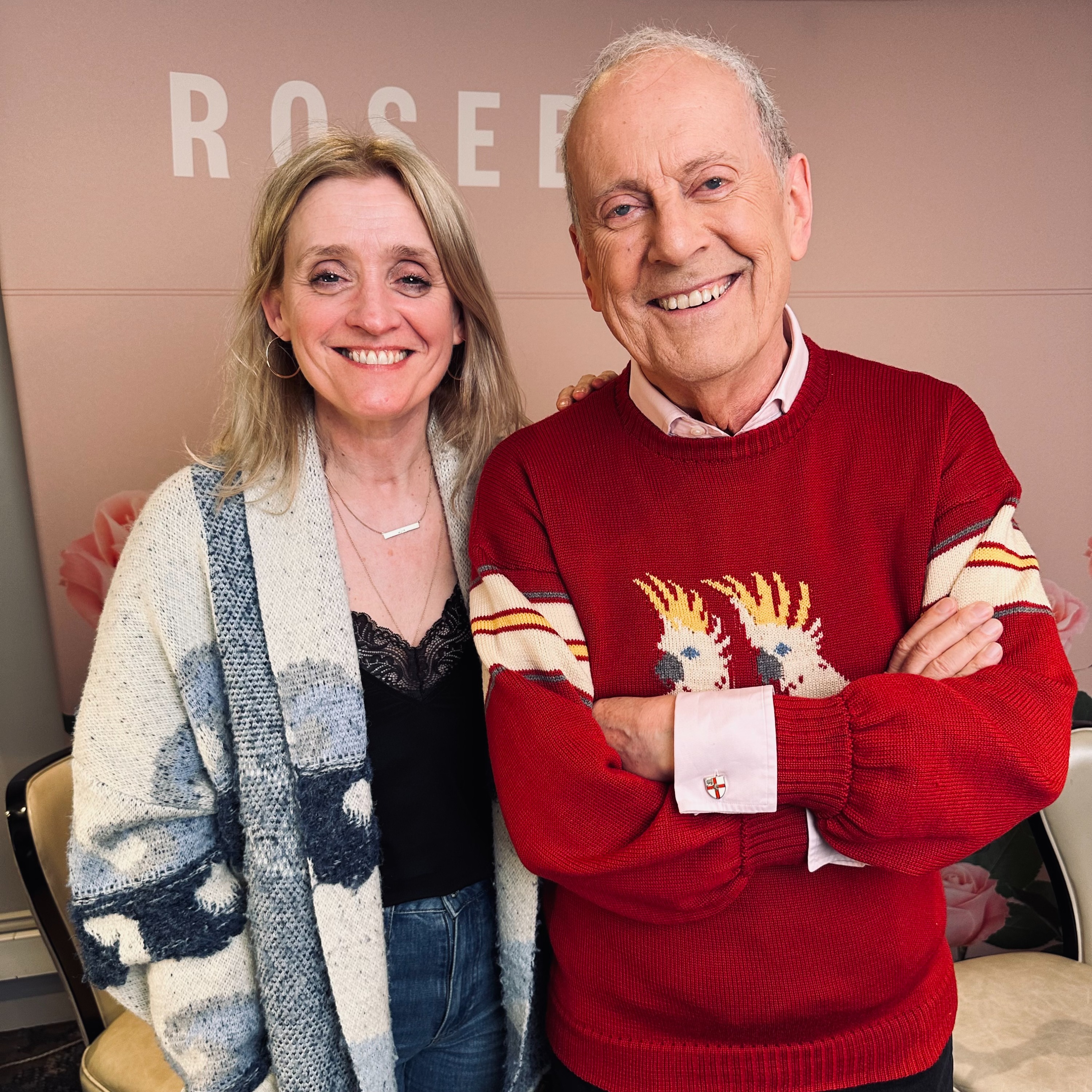
We're lucky to have the talented actress Anne-Marie Duff (St.Joan, The Magdalene Sisters, Shameless, Bad Sisters, The Virgin Queen) as our guest today, taking Gyles back to her happy childhood in a tight-knit community in West London, where she lay in bed hearing the sounds of piano from the local pub wafting in through the windows, and heard her father singing love songs to her mother. She talks about being a shy and bookish child, sometimes feeling as if she was "on the wrong planet" and finding confidence at a drama group. She talks about her early fascination with theatre, training at the Drama Centre London, her experience playing St Joan at the National Theatre and stage fright. She talks about love, grief, and caring for her brother, Eddie, who had early onset Alzheimer's and sadly died earlier this year.
This is a fascinating, heartfelt and moving interview, full of wisdom and insight. Enjoy this - we know you will. Our thanks to Anne-Marie Duff for her time, energy and for telling her story so beautifully.
Don't forget to subscribe to our YouTube here. Join The Rosebud Family here. And visit our website here.
Hosted on Acast. See acast.com/privacy for more information.


