
 Ask ChatGPT



Host: Gyles Brandreth
Gyles Brandreth, a renowned British writer and broadcaster, engages fascinating guests in conversations that explore their first memories and experiences, leading to laughter, nostalgia, and revelations.
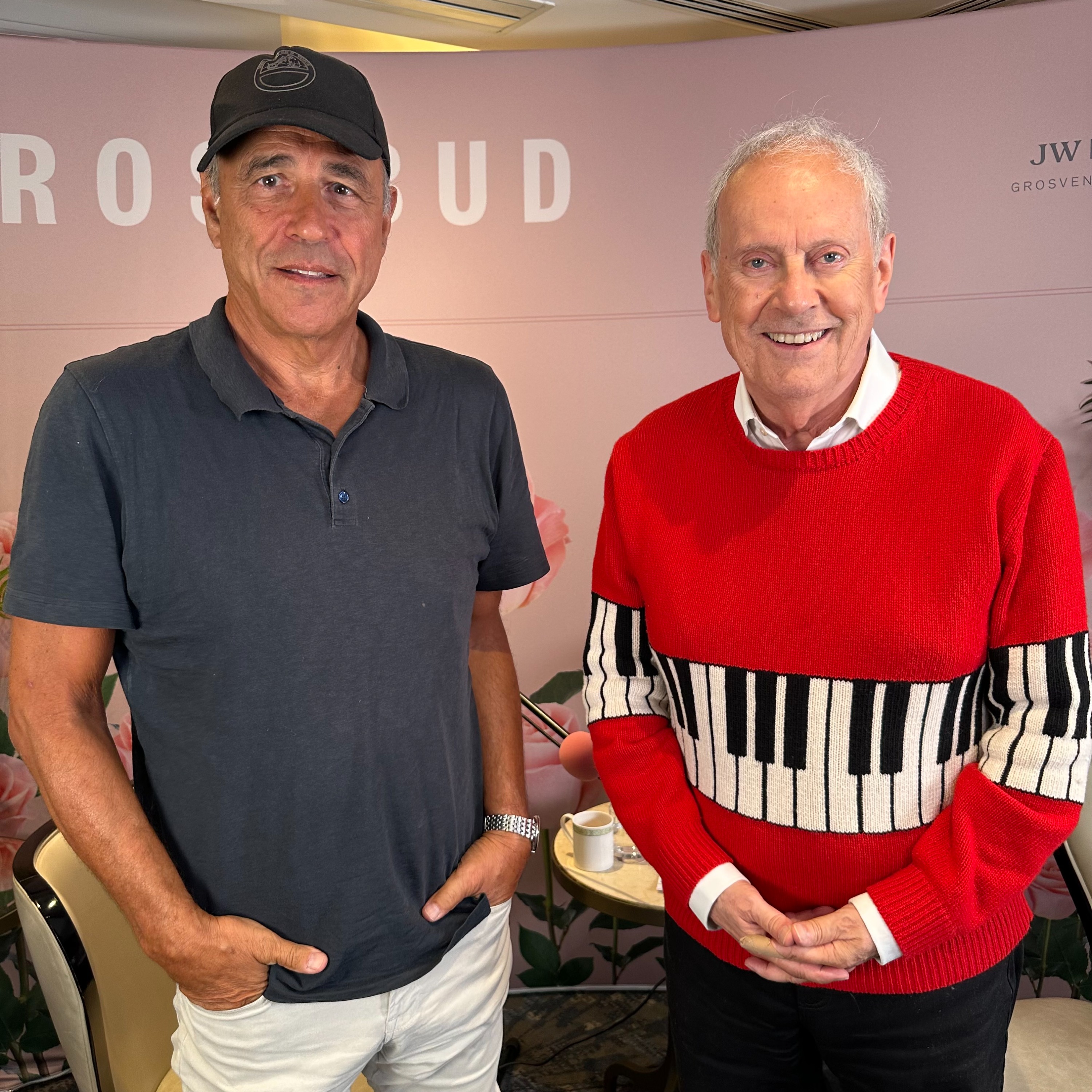
In this episode, Gyles Brandreth interviews best-selling novelist and screenwriter Anthony Horowitz, who reflects on his privileged yet troubled childhood, his journey to becoming a writer, and his personal relationships, particularly with his wife, Jill Green.
Written by AI. May contain mistakes.

Get the gist, explore an idea or ask about something said.
 Claude
On Rosebud with Gyles Brandreth, what are the key points of this episode?
Searching your listeningAutomatic transcript. May contain errors.
0:00This is Rosebud. My producer Harriet Jane said, for goodness sake, can we have a succinct introduction, please? You can, Harriet. Cue the music.
0:29Our Rosebud guest today is Anthony Horowitz, novelist, screenwriter, master of mystery and suspense, famous for, well, the multi-million selling Alex Ryder series, books for young people, murder mysteries galore, the Magpie Murders, Moonflower Murders, Marble Hall Murders, the Daniel Hawthorne series, hugely popular as well, screenwriter, writing episodes of Poirot, Midsummer Murders, and creating and writing one of my all-time favourite television series Foil's War. His own story is, well, it reads like a novel. You don't need me rabbiting on about it, because here is the man himself. Please welcome to this episode of Rosebud with Anthony Horowitz.
1:15Cue the music.
1:29before we start Anthony I noticed that you were waiting for us in the foyer of the Grosvenor House Hotel and this is a habit you make of being on time yes I don't quite know where it came from but I do hate being late I think one of the great inventions of our time as well as being one of the most destructive is the mobile phone simply because if you are delayed without any possibility of getting there on time at least you can let other people know that you know the bus has broken down or train hasn't arrived or whatever but ever since i've been a boy going to interviews or whatever for jobs or or even for university interviews before that i would always make sure i was there 20 minutes earlier with a book which i can then read outside and make sure that i really can just walk in on the dot to arrive when you're meant to be there well you're meant to be here And I meant to begin like this by saying, Anthony Horowitz, am I pronouncing it correctly?
2:19You are. Born on the 5th of April, 1955? Yes. What is your very first memory? I want this to be a cheerful conversation. And if you go back into my childhood, into my earlier days, a lot of it is not very happy. And a lot of it is, I'm not sure quite what the word for it is. It's sort of misguided. It's sort of just, you know, a wealthy, happy upbringing I should have had. And I shouldn't complain because I had so much privilege at the beginning. But somehow it all went wrong. And so to answer your question of sort of the earliest memory, I'm going to go to my sister Caroline and myself playing as children.
3:00She is three years younger than me. And we often played together before private education sort of took us apart. and so I suppose my happiest earliest memories are of her and me first of all pretending to be spies she was Mamsel X I was Roger and uh we would um chase each other over the sand dunes at Instow where our nanny used to take us for summer holidays or we would tunnel underneath a fence that separated our property in Stanmore from an industrial estate next door which we were in our imagination became a sort of a secret criminal organization trying to take over the world and we would sneak around for hours spying on people simply going about their work or we would chase each other in the garden of the house where we lived in stanmore north london and um and we were very close as we still are today okay tell me a little unpack that stanmore what is what is the house well stanmore the house was called white friars it no longer exists if you go along the uxbridge road which is where i was born um you will see a an estate where i think about 12 or 13 quite large houses so each of those has a quite large garden and such uh but as i drive past which i do very seldom i can look at trees that were actually our garden so house number one house number five and house number seven i remember climbing those trees as a child or or camping underneath them oh yes it was an enormous house i mean you know that is why i began by saying a little clumsily actually that that i shouldn't complain you know when people listen to podcasts like this and they get somebody like me talking about how ghastly it was and how awful it was they They say, well, for goodness sake, you know, get a life.
4:32You had money, you had all this space, you had a huge house with servants and gardeners and cooks and all the rest of it. And what are you complaining about? But that's the strange thing about the life that I have led, is that it was all pretty bad, really. A sort of strange parents, strange relations. I'm sure we'll get to that. I'm sure we will. First, though, describe this stately house. Well, it wasn't exactly stately. It was a very large house. I would imagine it was probably built turn of the century, that is the beginning of the 20th century, sort of around then. And it was white, Whitefriars was its name, and it had a driveway, I remember, that went up to it, and a front door with pillars, and later on it had extensions where the gardener and his wife lived, and it had, I think, four or five different gardens.
5:16The Rose Garden was one of them. I can see it as I speak to you. I mean, there was sort of the bottom end of the garden, the vegetable garden, of course, and the main lawns and the back garden, with, as I've said, a fence and this estate next door. And it was enormous. I mean, you know, for children especially, it was a world unto itself. I soon learned a sort of a prison too, because in those days, many children could go out and play in the street and everything, but somehow I was always stuck, stuck, confined to this area. Did you go through the front door? Oh, yes. I mean, there was, I think, a tradesman's entrance.
5:49In fact, I can remember it now as I speak. It was to the side where Phyllis and May, who incidentally turn up in my most recent novel, are the one before actually close to death which is one of the hawthorne novels there are two characters called phyllis and may based on the sisters who cooked and sort of served at dinner you know i i can tell you that i was brought up in a household where at seven o 'clock a gong was struck to bring everybody to the dining room and my father had created this sort of miniature versailles in north london because i think and it's difficult to know and it's difficult talking to you because my father died very young and I don't know the answers to a lot of the questions I would like to ask myself but he I think had this idea as a sort of a Jewish middle-class man of pretending that he was almost posher if you like with more of the establishment than he really was he had a marvelous library by the way that's one of the rooms I do remember in the house a fantastic library much of which I've inherited and um for a child it was it was a very strange and even a unique upbringing, another thing.
6:50And I know I worry now, but I'm rambling all over the place, Giles. You are bringing out the worst in me in terms of my focus and concentration. But one of the things I remember is that at the dinner table, when I was allowed to join my parents for dinner, if the conversation was not good enough, if the children were not joining in the conversation and were not wise or intelligent enough in what they were saying, you would hear the dread words up to the nursery and you would be expelled. So there was a lot of expectations. And I look up pictures of myself at a young age, often in suits and ties even on holiday looking a bit sort of prim and proper and posh and that's not the person I am certainly but it is unfortunately the person that I most certainly was.
7:27We go through the front door is there a parquet flooring or is it carpet? My memory is of carpets I don't think my parents would have had parquet actually I think that that would have been although maybe there was parquet upstairs now you mentioned it I'm not sure I was smart enough to remember because we are going to come to the complete bankruptcy and loss of this house So, I mean, it doesn't exist. But yes, indeed. But there's a drawing room? No, you came into a hallway, and I remember there was a staircase leading up in the front, and to the left there was a piano room. I still have that piano, a wonderful piano, although I say that it's a Beckstein, but it's not a very good Beckstein.
8:00It's a sort of what a Jewish family would have thought was a Beckstein, was worth having, was a great Beckstein, back in the 50s. But I still, and I say it's wonderful because my mother played it, and I've lost my mother many, many years ago, and when I play it I feel a sort of a communication with her, a sort of contact with her which makes me very happy. Indeed when I think about my own demise the only thing that makes me sad about thinking about death is that the piano will be silent and I'll never play it again. It'll sit there without me. Not that I'm a very good pianist so perhaps it'll be relieved.
8:30I don't know but it's the piano is made very meaningful to me. I can still remember hearing my mother's piano teacher a man called Bernard Vitebsky, ex-concert pianist who had I think one day woken up unable able to play in front of large audiences but he used to play um Chopin's revolutionary study on this piano and I can remember being about eight or nine years old and absolutely marvelling that a man's hands could make move so fast and make this extraordinary incredible sound so that was the piano room then the next room was a sort of a small sitting room and against from that was my father's study so on the very edge and at the back of the house I can see my father's desk antique probably from Harrods.
9:09I have a feeling he would have bought a lot of furniture from Harrods. And I can see the black chair he sat in. And that's that side of the house. And if you go to the other side of the house, back to the staircase on the right is the door leading into the kitchen and the staff quarters. Second staircase going up to rooms where my governess, she would never call herself a nanny, lived. And that was Fitzy, whom I did love very much and based a character on her. Again, we might come to that later. and Phyllis and May had their quarters there. My bedroom was also up those stairs and then along that corridor, my brother's room, my sister's room, the far end, my parents' suite with a bathroom attached and there were other rooms that I haven't mentioned.
9:53There were a lot of rooms in this house. Obviously, there would have been a dining room on the ground floor as well. I haven't talked about a dining room because I went upstairs. Forgive me, let's go back downstairs, turn right next door to the kitchen area because, of course, there is a service entrance into the dining room. And I remember that room as well, very well, with a big round mahogany table and lots of chairs. Did you have breakfast in the dining room or up in the nursery? No, there was a first floor breakfast-cum-nursery room, which had a table there as well. Sunday nights was puffles, which were a type of frozen potatoes with Vienna sausages, which are Jewish sausages.
10:29So Vienna's and puffles is sort of a phrase in my head which would mean nothing to anybody else in the world, but takes me right back to this thing. And episodes of The Saint on television with Roger Moore, who also instead he lived in Stanmore. I occasionally saw him, much to my excitement, in Gordon Avenue, where he had a house. And so that was the room, I think, where I had breakfast, though I can't be sure that that's accurate. Before we come to your parents, tell us about the staff, the nanny and the governess. Well, Felicity and May have already mentioned two sisters, elderly. I would have said they must be well into their 60s when they were there.
11:05Although one of the things about getting older is you discover that everybody who thought old then was actually much younger than they really were. And there was Mr and Mrs Smith. And he was sort of the handyman. And she was quite sort of severe and difficult. And I avoided her as a child. And then there was Mr Lampy, who has appeared in at least one of my books, Mr Lampy the Gardener. All these things instead you can find if you read my early kids books. because so many of them, Thaddleby Hall, for example, one of the mansions I invented in one of my early children's books is Whitefriars and there are others as well based on that house.
11:37And then there was Mr. Sperling, that was his name. He's the chauffeur in my book The Switch and he was the chauffeur. Was there a nanny as well as a governess? No, there was no nanny. There was Fitzy. Now Fitzy, Nora Fitzgerald, she looked after my sister and myself in particular but also to a certain extent my older brother and took with dogs for walks we had dogs in this house we've i've grown up all my life with dogs and um there was major and perseus and sooty sooty the labrador major and perseus alsatians and she would take them out for walks and i was always walking with her uh it was sort of in the in the school holidays whenever i was at home much against my will of course i was dragged out for walks in the rehabilitation center which was i'm not even sure why it was called that it had nothing to do with prisons or anything, but it was an area of woodland in Stanmore where we often walked, and a Bentley Common down near the house and such.
12:32But in a rather indolent child, I was rather overweight and I ate too much and was not what I would call a particularly good-looking child, I don't think. But that exercise was good for me, and now, of course, walking is one of the great loves of my life. You said you love Fitzy. Why did you love her, and what do you think she gave you that you have to this day? Well, my parents were often away. So she was the one who gave me lunch and dinner and affection and looked after me if I'd screep my knee and that sort of stuff. And she was in so many ways a tragic figure, being alone and being reliant upon us and being a servant, if you like, in this household.
13:13But nonetheless, she gave me a sort of an ordinariness, a human contact. My father was a very distant and a very difficult man. And although I adored my mother and got very close to her in later life, particularly through teens and onwards, I think I felt quite unloved in this household. And I think it was an emotionless household in many ways. I think that emotion of any sort was sort of slightly frowned upon. You know, I remember my mother, a very early childish memory is that my mother brought me some soup when I was in bed and spilled it on me. And it burnt me horrendously. but it was all sort of you know what are you making a fuss about it's only third degree burns now you have to tell us about the parents who were they what were they like how was there all this money and what happened to it my father was called Mark Horowitz and anything I tell you about you him is likely to be untrue because I I don't really know how bad a man he was but I don't think he was a good one entirely although that said there were people who came to his funeral who said how kind he had been to them and how he had helped them and and i know he gave money to charity and things like that as a father to me he was not a kind man he was somebody who decided quite early on that i was not very clever and that he didn't find me very interesting and when i told him i wanted to be a writer and this i cannot forgive him for being a father myself instead of giving me any support or that's interesting He was ferocious in the way he ridiculed me and how impossible he made it sound and how stupid he made it sound.
14:54I remember, you know, gosh, I didn't know how far I want to go back into my own memories and sort of unlock this very non-treasure chest. But I do have a strong memory of the fact that he had gone into my bedroom and had gone into my cupboard and pulled out a novel I was writing. I'm about 11. And he began to tell the family on a car journey all the contents of this novel and i got very upset in the back seat i can again you know funny giles how it is you can i can see where this is happening it's stanmore i can see the garage on the left just before marsh lane the station is a little way ahead of us and i can see him and hear him doing this and i remember saying to him how could you go into my room and do this and him saying to me it's not your room it's my house and um and if he were alive now I might be able to have a fonder and kinder picture of him.
15:47He died very quickly at the end of his 50s and that was when all the money disappeared too. So I've never been able to ask him why he was the way he was and I've never either been able to prove to him that I wasn't what he thought I was. Did you know his parents, your grandparents? Yes, it's one of the reasons why I hate the word grandfather and will never have it used about me. is that his parents were very sort of Jewish immigrant type. Although the family had come over, I think, quite a long time before the 20th century, they were nonetheless still quite foreign in their habits and their manner.
16:27Very Victorian even, sort of always in suits and very distant, and sort of the grandchildren scrubbed by Fitzy and then brought in for five minutes with the grandparents before being led out again. It's a very different sort of world. My mother's parents, I can't really remember her father, He died quite early. Her mother was a monster. And if you have ever read a book of mine called Granny, that was my revenge on her. How did your father make this money? Well, you know, first of all, I'm not entirely sure if there was this money. I mean, it might have all been a fantasy. We never found out because when he died, we just got letter after letter after letter from the banks or whatever my mother did.
17:10And each letter was the same. dear mrs horowitz you know our condolences on the death if your husband oh would you owe us 10 000 pounds or 20 000 pounds or 50 000 pounds put an extra zero on that to bring it up to today's figures i mean at least and all the money disappeared but your question was where did it come from he was the solicitor he was worked in a firm in lincoln's inn and he was um as far as i can tell a go-between between businessmen who were probably up to no good one of them was called judah binstock you can your producer will doubtless check i'm pretty sure he's dead uh i also think he was about number one on the fbi white collar criminal list and that was his closest associate so goodness knows what the others were doing uh at one stage he was involved with investment banks uh investment trusts actually and uh triumph investment trust was the name of his company i'll tell you another story which is that i was left to sum of five thousand pounds by somebody when I was about 18 or 17 or 16.
18:09I can't remember what year. And I'll never forget this, that I asked my father what to do with it because it was a considerable sum of money. And he said, oh, you must put it into Triumph Investment Trust, my company, which I did three days before it went bust. And that went. And I thought, why would he do that? Why would you, why would, if he must have known that this company was on its last gasps, why would you get your son to lose the first money he's ever had that way? It's made me, the whole business of my father has made me very, very uninterested in money. And certainly in the trading of money, in making money out of money or in pursuing money.
18:45Obviously, I'm not going to say I don't like money. Everybody likes money. But I've never found it a motivating factor in my life. And I've never, you know, I won't invest in something because that's making money out of nothing. But is it possible that he, in fact, has spent his whole life in a state of anxiety, shuffling funds from one place to another in order to keep the whole show on the road. I'm pretty sure that is true. I think he was probably, you know, in extremists all the time about sort of, you know, where's the next? Because he had a very, very expensive lifestyle to support. There were two bankruptcies.
19:16The first one was this Triumph Investment Trust, at which point Whitefriars was sold. We then moved up the hill to a house with the horrible name of Tall Chires. Do you know what a chires? No. It's a chimney. It's a poetic name for a chimney. So this is a really beastly house, and I apologise to the owners of it if they're listening to this, to me it was, because it wasn't what I liked, and it was on a private drive on Stanmore Hill. And it did have quite large chimneys, as I recall, but it was a big step down, sort of socially, from where he had been, and all the servants disappeared, and other things too.
19:55How conscious were you of being Jewish? At school I went to Jewish classes. is my parents sent me to the liberal synagogue in St. John's Wood for a Jewish education which I hated with a passion and again thinking about childhood as a series of black and white images which haven't quite left my memory I can still see myself standing outside white friars two planters with fuchsias in them on each side of the front door waiting for Mr. Popper to turn up in his blue citron a car which rose up and down on its wheels when it stopped on hydraulics to take me to this thing and this sense of absolute horror and misery having to go i could never handle the hebrew language i wasn't interested in the bible i'm age 10 i don't believe in god and i and i was a plump and i'm going to be teased by all the girls in the class i hated the whole thing to this day i will have nothing to do with religion i i find religion one of the one of the sort of mysteries of the world for me as to as to i had no that's not true but culturally Jewish?
20:57I mean, did you do Friday night suppers? No, we didn't do any of that stuff. Not really. We had Jewish food. I liked Jewish food. Still give me lukkas any day of the week. Did your parents have lots of Jewish friends? Yes, a lot of Jewish friends, but I never went to the synagogue, ever. Ever. I think the first time I went to the synagogue was when my father died, actually. And how were your parents together? What were they like as a couple? Do you know how they met? Were they in love? You know, it's funny you should ask me that, because I've talked about that with my sister. And the answer is, I don't know.
21:29Did they sleep together? Did they have separate rooms?
21:35Later, they did. My father became ill. I think it was his second illness. He had two in his life. Cancer, which then came back a second time. He had a colonoscopy. And after that, they had separate bedrooms. But until then, they did sleep together. But I'm not sure that they were happy together. My father, I remember, used to call my mother the village idiot. That was his name for her. It still sounds cruel, doesn't it, now? But I just can't tell you if it was a joke or whether it was some kind of just horrible, sexist unpleasantness. I just don't know. And after... Oh, God, I'm jumping about so much, Charles.
22:12I should have... Hopefully you can edit this into some kind of shade. But after he died, my mother changed. First of all, she lost everything. all the money and I haven't even really answered your question as to where it had come from apart from as I say A meets B and my dad takes a cut I guess that was what was happening largely um the money vanished everything was taken her fur coats the silver the jewelry the house went as well tall chives disappeared and we moved down to old cottage and my mother was happier I think when she had ever been in her life she went back to work she became a company secretary for a company called tollies which was a building company and so she had to drive tost albans every day and what she had taken for granted sort of you know luxury became very very special suddenly i remember that if we had smoked salmon she always got terribly excited about you know we're going to have smoked salmon today and it's you know sandwiches and that marvelous i don't think we were as poor as church mice but nonetheless she she was now forced to own her own living and i went out and earned my living so how old were you when your father died i was 21 when he died and by then what was your relationship with him nil i remember one final walk i had with him in bentley common outside bentley priory where he told me he was going to die and i remember thinking to myself god that's the first confidence you've ever made for me and i also remember about six weeks later in my bedroom in tall chai's he was now in hospital with the cancer raging and his time was very limited we all knew that and i remember the phone ringing at three o 'clock in the morning and it woke me up and I knew that was the hospital telling us that my father had died and I can remember thinking why aren't you crying why aren't you sad why aren't you feeling anything at all what is wrong with you and another thought came or what was wrong with him and there was nothing there you see there was no great love for him at all a sort of a sort of a grudging respect, I guess.
24:34The funny thing is, is that that moment, the moment I've just described to you, is the one that made my fortune, because cut forward 20 years, and I'm thinking about the very first Alex Ryder novel, Stormbreaker, and I sit down at my desk in Crouch End, where I'm now living with my wife, Jill Green, and I write, when the doorbell rings at three in the morning, it's never good news. and that was the phone call turned now into a doorbell and it's about a death it's Alex's uncle and I'm reliving that moment and that kick-started the Alex Ryder series that would change my life I want to say one thing about my father on in his defense apart from I have mentioned the fact that there are many many people you could interview would say he was a wonderful man and he helped us and did this and that he had a great library and the library and his knowledge of culture and poetry, particularly 19th century novels, is the one thing I inherited from him which makes me glad to have been, to have had part of my life with him.
25:37Would your brother, who's how many years older than you? My brother is now dead, he died two years ago, and, but do I ask your question even so? He was four years older than me. Would he four years older, or your sister three years younger, give a different answer? Did they have a different relationship with your father? My brother was very, very strange. I think Caroline would say, and she's asked me to forward a link to her, which I will do, I think she would say that we were survivors of our childhood, survivors of Stanmore, that it was all horrible and that we were sort of psychologically screwed before we really started.
26:12And that she, through being a successful theatrical agent and having met a great man to whom she is now married, you know, one way or another, has managed to sort of salvage something from the wreckage. and I, of course, had my stories, and it's interesting that I began this conversation by the two of us together in this fantasy land that I was always inventing for the two of us to inhabit. I think he will not get a letter from her saying, how could you let him talk in this ridiculous way? It's all untrue. And so your affection for your mother, which clearly grew as the years went by, she was released by your father's head.
26:43Yes, very much so. I think that, first of all, I think that she did have a relationship after he died, and I remember that we had to leave the house at certain times, when somebody was calling. And I think she had a sort of a more normal life. I think she was just able to sort of enjoy going to the cinema and going out to... She played bridge a lot and buying things for herself. You know, this is a woman who had signed a document without knowing it that gave him her life insurance. It just went away. Another document gave away her house. The house actually belonged to her, not to him. And it was gone because she was a sort of woman, oh, sign here, dear, yes, dear.
27:19And she did. No sensible person, married or otherwise, would now sign such a document without looking at it. So it was a huge betrayal that she felt. Instead, the house was only saved because of a sort of a legal blip on the document that made it not legal. You know, I think that she found herself, really. And also, because the two of us had been together during this awful three weeks or four weeks of these letters from banks and the bankruptcy, and because at this time my writing career sort of started, I got published for the first time and she got enormous pleasure from that, we did become very, very close.
27:55We went on canal boat holidays together and with my sister too and I think even my brother. So we had always been close but we became very close in her last years. Your father then never knew that you became the published author. She was alive when my first book was published and she was very excited. She used to say that all the wicked women in the books were based on her which wasn't entirely true. But my father never saw anything, no. Tintin is your first hero? Yes. I discovered Tintin at school. I was sent to a school in North London, and of course it goes with the sort of childhood I've described, but it was an absolutely appalling, horrible school.
28:32This is the school that has the same title as a novel by Anthony Trollope? Yes, Orley Farm. Orley Farm. In North London. Was it named after the novel, or was it just a concept? Yes, it is. No, the novel is named after the building. It's the other way around. Oh, and it's named after this very building. It is the same building, yes. Oh, how interesting. But this is very intriguing, that there are books and stories. But it's not a school in the book, it is just a house. It is, but it's an extraordinary coincidence, I think, that you went to a school that has the name of a famous novel. Well, it is interesting, I suppose, yes.
29:05And I mean, it was at O 'Reilly Farm when I realised I was going to be a writer. So one thing about the place that did me any good at all, Otherwise, I think my entire life has been a struggle to escape from its evil influence. It was a prep school, a traditional English prep school. But you've read other biographies of people. Like, oh, Spencer has written, I think, an extremely good book about his prep school. And he instantly had the same locker number as me, 64. You know, you had your identification number. So I was quite sort of traumatized to find out that we shared that. But it was a horrible, horrible, evil place.
29:37There's no joking about it. It's been in several of my books. I've written about the teachers. It's only in recent years that I've come to realise how much damage it's done, and how I still haven't quite escaped it. And had it not been for Jill Green, who married me, I wouldn't be a functional human being. Give us a specific example of this, because it's easy to generalise and say it was a horror house. But what sort of thing was horrific that you experienced? Just brutality by the teachers, the floggings that had blood going down your legs, that sort of stuff. Literally, physical... Oh, God, yes.
30:09I mean, beatings night after night and for any reason, the amount of bullying by the boys, the sort of the, you know, I was a bully myself. I'm still ashamed to say it because, you know, that's the only way to survive in a pack is to become part of the pack. So if you're being bullied, become a bully and they'll turn their attention to somebody else. I still regret that. It's one of the reasons why for many years I worked for an anti-bullying charity and tried to help a little bit to sort of pay back from that. but also teachers who were who were you know who could pull your hair slam you around the face whack your head into the desk mock you a french teacher noel harveyst john robinson he's a villain in public enemy number two one of my early children's books and although we can snigger but he was a brute look at him and you look like you're looking at somebody straight out of a concentration camp by which i mean one of the guards and and you know the fact that he would make me every holiday buy him a present somewhere and then when i gave it to him i was terrified he would always tell me it's not good enough get something better next time and but and he he was he had physical violence but you see then there were other teachers there and this i avoided i have met boys from orley farm who were sexually abused as well and when they told me the names of the teachers who had taken them into their room and done unspeakable things to them i just new.
31:30I didn't doubt them because I'd always known. And it was that atmosphere of sexual deviance and of violence and of belittling and of making you feel you know, it was a psychological torment that I came out of that school but for the fact that you began this with Tintin, but for the fact that I liked Tintin and had found Tintin is a writer. He's not a detective. He's not a spy. He is actually a journalist. Never really seen writing in any of the books. I think in one book he scribbles down something. but by and large he never writes but he does have a wonderful life and i began my writing by telling stories at the school in the dormitory eight boys ten boys to a room and everybody is scared everybody is lonely everybody is you know just in just in a state of semi-trauma and these stories were liked and as a result so was i this example of school i mean there are many schools that were a little bit like this but yours seems to be the extreme version a did your parents not know about this didn't you report it to your parents again it's a good question i used to scream and cry i would be in hysterics every time the term was coming up i would go on diets because i knew i was going to get teased for being fat so suddenly i'm not having lunch or not having a sweet or whatever it might be it's sort of pathetic and i still can't understand how they could look at this kid and not say you know i have a feeling this might not be the right school for him and incidentally I have to quickly add a thing here which is that some years ago I received a cease and desist letter from Wally Farm because I had been talking about it and they said I was doing it harm so I must quickly say here that the school is now you know a very very different place I recently had a correspondence with another boy who had been at the school and who had had exactly the same experiences as me one of the things I've learned about talking about this place is is that yes age gets you to exaggerate your childhood experiences and you think that it was worse than it was but other kids have come to me and have said exactly the same and have come to me because they have read what I have written or heard what I have said and have had the same experiences but that said I have to be careful because you know it is a school now trying to do business and although I've only ever been there once and nearly fainted when I walked in I was my heart was palpitating my I couldn't I couldn't breathe I did that was when I realized the psychological damage this place had done to me um and uh i have nonetheless to confess the children they're now seem to be very very happy and of course education has changed a thousandfold and the things that were done to us now are illegal so do you remember a friend from the school though did you have any who was your best friend in those early years there were a couple but but i haven't seen anybody from aldi farm for 50 years so the next school you went to was what rugby and your father been at rugby why were you sent to rugby again i don't quite know i think it's down to one of his partners in the law firm where he worked whose sons had gone there and again i have a feeling that this was the same thing as a sort of the versailles in Stamble, sending your child to this school was putting a little bit like Pip in Great Expectations into society.
34:43And suddenly I was there. I mean, no one ever discussed you with me. I was taking up the M1, turned right, and here you are. But rugby was an interesting place, rugby school. I mean, you know, I turned up there as a not a very nice child. I think I was, at 13, not an attractive kid. Sort of a chubby? yep but that's not you know i didn't i i didn't think that i didn't put that on the scale of of you know of judging a child i think you want one can't really do you feel self-conscious yes i did i did feel very self-conscious about my looks and i've always believed that i was ugly and um and i was very fortunate there were through you know this is the thing big thing about my you know when i when i try and talk positively about my life and about the and about children about education teachers are incredible people they can make a fantastic difference i had three teachers at rugby school mr alden taught us robin alden taught us um english language and construction and grammar mr jeffrey heliwell was was literature and nigel brown known convivially as the third goody after a rumor that he had been turned down by the goodies to be an actor um it should have been the fourth goodie actually was drama and these three people found the writer in me and fed that writer and inspired that writer and improved the writer and to this day I'm grateful one of the happiest experience I ever had funnily enough was at Althrox I was just mentioning Earl Spencer and I gave a talk there in the literary festival and a hand came to my shoulder and it was Geoffrey Halliwell who said that he had been watching my progress and by now it's quite a woman writer and how happy he was.
36:25And again, as I said earlier, he was much younger than he should have been. I could have sworn he was 40 years older than me. He was actually only about 15 or 20 years older than me. But nonetheless, that to me was a very happy moment. And in those teenage years, you still knew you wanted to be a writer from writing that novel when you were 11, the one that your father discovered. I wrote that, yeah. I wrote at Orley Farm the whole time. I was writing, the first thing I ever wrote was A Thing That Never Happened, it was called. And it was written in a ledger which I had stolen from my mother or from my father, a big sort of exercise book.
36:53and it was a play about Guy Fawkes, the thing that never happened. And did that school ever encourage my writing or my desire to sort of read and to learn? No, of course not. But there was no other idea in your mind? You didn't want to be a sportsman? No. You didn't want to be a pop singer? Any of the other things that people want to be? An actor, maybe? I flirted with the idea of being an actor when I was at university, but no, I knew I was going to be a writer. I wanted to write for theatre. that was my original impulse uh and it was only because when i was 21 22 actually it's an interesting question that i asked myself why did i write a children's book i was barely more than a child myself there was no market in children's books outside roald dahl at that time why would i have sat down and written the enter frederick k boa about a very rich unhappy boy living in a huge house uh with snatchby hall in that one i think it's called snatchmore snatchmore hall stanmore Or become snatchable.
37:52You know, obviously I was working something out, but I was also making up for such an unsatisfactory childhood. When was your first girlfriend? That was at synagogue. I went out with a Jewish girl, and it was a complete disaster. And I have had very few girlfriends in my life, really. Partly because Orly Farm and my upbringing had led me to believe that I was really not an attractive person, physically or in any other way. But just because. And as I say, I was extremely lucky to meet Jill at the end of my mid-twenties. And we've been together ever since. So that was your first proper relationship with Jill?
38:38No, there were one or two others. I don't want to talk about them because I've lost touch with them and I don't know what became of them. There was one girl in particular whom I adored and we used to go to Suffolk together. She introduced me to the Oyster House in Orford where I still go with Jill and she knows who I'm talking about and such. And, you know, you think, what if, what if? But I was sad that she disappeared from my life.
39:16You did A-levels successfully, clearly, because you got to university. Yes, not that successfully, actually. I sort of got okay. I mean, at 18, I had one friend from rugby who I still see regularly, a guy called Dennis Blakeway. And he and I were 13-year-olds together. We went to Cambridge for our interviews together. We were told on the same day that we had not got in together. We went to York together. I was the best man at his wedding, and I see him still to this day. I looked up to him because he was so much cleverer than me. And it wasn't until I got well into my 20s that something sparked, something happened, and I began to succeed.
39:58Do you know why you didn't get into Cambridge? Can you now write the scene? Yes, I did a rotten interview. I was talking about metaphysical poetry, and I didn't even like metaphysical poetry. God knows why I was doing a conversation about John Donne, when if I talked about Stoppard or Pinter or, you know, drama or Shakespeare even, I would, I might have had a better showing. But also, you know, this is the other thing about my life, which is that I've never really been very well prepared for anything. You know, I'm self-made, in a sense, not that I was, you know, poor and then, although actually all the money I have made, pretty much I have made on my own two feet, but confidence and knowledge and literacy and reading and the love of writing and the ability to talk fluently has been taught to me by myself.
40:39I've never had a writing lesson in my whole life and i'm not boasting here how brilliant i am but at least i have managed to to create a career to forge a career but it only began late and it's only got successful you know i was 40 when i wrote alex what is the change must have happened in your 20s because on paper you know obviously the works of frederick rafael yes it was wonderful frederick rafael was it was it would have been a hero of course and i see you now as if i didn't know the story you've just shared with me, making you younger, I'd have made you a Frederick Raphael character who would go and collect the glittering prizes at Oxford or Cambridge.
41:16But clearly you weren't that. That misfired. But later you become something special. What is the transition that happened and how did it happen between being 20 and being... Okay, it happened late. It happened very late. I was still determined to be a writer and in my 20s I was writing children's books, which I'm very proud of but the first ones didn't sell very well at all it's a testament to Walker Books who were my publishers then that they didn't fire me but they stuck with me and I kept writing and writing and writing I got into television Robin of Sherwood was my first TV show that I wrote and I suddenly I was How did that happen?
41:49It was a fluke The writer and producer Richard Carpenter my first great mentor in my life he had a problem he had to produce 13 scripts and there was no one else to write them and he put out a call for help and my agent heard it so she said why don't you have a crack at it and i remember going out and buying a book in a shop called how to write television because i had no idea and put something together and suddenly i was in and i was writing from nowhere from nothing suddenly i'm writing for an audience of 15 million people 12 million people mustn't exaggerate uh but um but but that was wonderful to get that that opportunity which led to more television and other shows but your question is what is the breakthrough from sort of useless kid to sort of successful writer and it's the character breakthrough what I mean when you were at is it York University yes what are you there are you in the drama I've been a lot of drama I'm directing and I'm performing in the review um uh and we go to Edinburgh doesn't go anywhere uh that particularly but it was marvelous and it was fun and I enjoyed it but you know as I was saying to you the books don't succeed for a long time then when I'm around about you get an agent oh I've had an agent for yeah I have an agent all along I mean I'm quite savvy.
42:59You write to an agent. No, no, I'm not savvy at all. I've always been. I've never looked at contracts. I know nothing about the business of writing. But do you know enough to find an agent? The agent found me, I think. Ah. I was lucky that later down the line I got better agents including an agent who represents both of us. Who is... I'm going to pursue this only because I know for me how it happened. Okay. I was at Oxford and an agent wrote to me, having seen me as an undergraduate. No, not me. Saying on television, I've seen you. I would like to represent you. I already represent these distinguished people so that's how i got my agent now how did your agent discover you in your the first agent wasn't really an agent at all it was just somebody who wanted to be an agent and they represented me not terribly well that led me after a short while to find a real agent who then i'm afraid to say did not treat me at all well and made some extremely um i won't call her a fraud because again i don't wish to um upset her relatives but nonetheless there was a disagreement that she was taking 25 % of what I was earning which as I'm sure you are aware is not normal from her I then had the now to write to my currently who's just retired at last Anthony Jones a famous agent took me on and I still have a letter where he agreed to I was so shocked that he would agree to it I would say in answer to your question and to try to get to the point of it it was the success of Alex Ryder that reinvented me what age are you when this happens but I was by then 40 yeah you know this is a long way down the line and it was 10 years before I realized just how successful those books were so you could say the person you're talking to is only 20 years old in terms of experience and of knowing how to handle myself so that even as I talk to you now there is a slightly more sensible person whispering in my oh for god's sake don't tell him that you know are you mad don't say this and you know promote that or whatever it might be but it's taken me a very very long time to arrive at a place where i feel secure and it was a gradual journey is what you're telling me because you are clearly people meeting you now see this incredibly smooth in the best sense sophisticated on top of it all person who's one of the most successful writers writing the initial language today globally i shall quote you thank you well with sales of millions to prove it okay we share an agent so i know quite a bit about your finances so well done you but you you seem a very confident easy person and yet when you last leave us you're not you're somebody who is uncertain who's had this traumatizing childhood who feels physically awkward who admits that he hasn't really got very good relationships yet until the one secure one you feel ready to talk about jill comes along i'm just trying to see where the gear changed and if you can remember how it changed.
45:53I guess it was good. Pretend you're writing about it. I can tell you. I would tell you where it changed. It changed all at the same time because as the Alex Riders are coming together, my sons, Nicholas and Cassian, are growing up and they are everything I'm not. They're so, you know, they're so confident and they're so happy and they're so, they've got a great dad, of course, which helps. And, you know, they're just doing well. and Jill is moving into the world of film and television and she's starting her own company and now she's suddenly hiring me. So I've got that sort of sense of having this brilliant, I mean, really brilliant person to work with me and to make, you know, all the best shows I've done.
46:32Foil's War, 16 years working together. It was the two of us, you know, that pulled that out of the bag and then, you know, Magpie Murders and that trilogy with Leslie Manville and yes, always working together and she has been, as it were, my Svengali. so there's a part of your answer. Success is also a fantastic drug. You know, once you do start selling more copies and once people are interested enough to talk to you and invite you onto their podcasts or all their TV shows or their newspaper interviews, you know, suddenly what happens is if you're up for it, you can create a sort of a you that you wish you had always been and that person takes over and that's the one you're talking to now.
47:15Brilliant. the moment you met Jill can you remember being in the room what it was absolutely we were both at an agency called McCann Erickson an advertising agency yes I was the world's worst copywriter I won several prizes she was the account director and I vividly remember the first time she came into my office I had a bit of a cachet because by this time I was a published author and so in advertising that meant something and she walked into my office and introduced herself and I said you know this and me and she looked and she saw a book of mine on a shelf and picked it up and looked at it and I said yes I wrote that and she said well you obviously haven't sold it and put it down again and um at that moment I knew I was going to marry her she hated me she really disliked me she hated me so much that she went to her boss two weeks later and begged to be moved to a different department to work with any other writer in the building threatened to resign but what then happened was there was that one day we had at Alton Towers was a client and she came into the office and said does anyone want to go to Alton Towers because I have to go and do a visit and to her horror I with a love which I still have to this day of these amusement parks said I'll come and it was on that journey uh that we began our long life-term relationship so how long have you been together well it married about 36 years but getting on for 40 getting on for 40 in terms of being together oh and what is the secret of that work working together working together or working at the relationship people used to joke that we had a post-it note relationship because when they came to the house always always always notes we'd leave on stuck on walls to each other about what we had to do what work was happening what meetings and all the rest of it but but we asked she's the only person i know who works harder than i do you know even today when we're doing a series you know 11 o 'clock 12 o 'clock at night we'll still be you know hammering away together used to have a very long office that she had one end of it and I had the other.
49:10Now we have separate rooms because we've moved but even so you know she is incredibly committed and clever. And the children? Did they come along quickly and were you conscious from day one I've got to do this differently? Oh you know everything my parents did to me I tried not to do. I have this ghastly feeling that in about 20 years time they'll be on some radio show saying how awful I was for completely different reasons that I can't understand but that's life isn't it uh we are a very very close family it's the one thing I've always insisted that unlike the family that I grew up in where we were not close we were kept apart where we you know I don't want my children ever to say to an interviewer I don't know what he was saying I don't know why he did this or they know because I told them everything about my work and about who I am pretty much they know when I say to you a moment of joy from your life?
49:59I don't know. To be honest with you, Giles, my life has been full of joy. I mean, you know, my family and my dogs and walking and Suffolk and my friends and, you know, I'm surrounded by joy and I'm very, very fortunate, which is why, you know, again, I have this nervousness about being so sort of, and I hope that anybody listening to this won't think, God, that was a depressing, well you'll probably cut it back to about 15 minutes but what a depressing quarter of an hour that was because I'm because you know I am very very well aware of and I've come through and when you're when are you at your happiest writing of course yeah well you do a lot of it I finished my novel last night I'm so glad we got you today because you're on a natural high this is fantastic to get to the end of it's a sixth Hawthorne and to come up with You know, I don't want to tell you of a last sentence of the book.
50:56I'm so pleased with it. But you know, the thing about it is this, and you're a writer, so you may recognise this. I sometimes wonder, you know, where has it come from? I've written over 60 books now. And this line, this last line of Hawthorne Six, I didn't write it. I didn't sort of sit down and say, well, he's on a train and he's going to this place and so this is what he says. But that is what happens. he's on a train and he's going somewhere and and this is what he says but i have absolutely no idea where that line and maybe i'm being a bit over over pleased with myself and actually it's only a very mediocre line but no i think it's a really good line and i don't know where it came from and that to me is joy that's the sense that i am not anything more than a receiver but there's something else out there it's not god it's not anything religious but there is something that that uses me to tell stories and and as and being a conduit for that is is the greatest joy anyone can have i understand that moment completely i finished a book a couple of weeks ago um are you is you are you disciplined do you do i have to do a thousand words a day or do you have to no i'm the opposite of that i hate that sort of discipline of start at this time and do that number of words and sit in that chair and use that notepad i try to make every day as different because if i have one discipline it's stopping it's remembering that i have a life i have friends i have family and actually saying to myself, I am not going to do any more work today.
52:23I'm going to go to the cinema and have fun. Gosh. And I love that. Well, I think you've done some wonderful things. You've created some wonderful worlds. I've shared with people before that I have various fantasies about the end of my life. When you get to my age, you'll think more about the end of your life. And I've got a series of books prepared for when I know I'm really ill. Well, not short books, you mean? No, they're picture books. Oh, I see. picture books that I'm planning to look at right towards the end of my life. What, children's picture books, you mean? No, they are photographic books.
52:56Oh, I see. Illustrated books. Illustrated books, but I've got them in a certain place. And I've not shared this with anyone, and I know I must eventually, because if I'm not able to move from the bed, how will I indicate they've got to be brought to me? But the other thing is I'm keeping Foyle's War. I no longer watch it. Because I'm going to watch it from the beginning. I want to do that as well. I want to do that. Well, maybe we can die together. it's the last thing I'm going to be watching on television oh really, you're going to watch Foyle's War and expire I'm going to watch the whole of it when I know I'm going it's my treat, it's my waiting room treat you're the first person I've ever met who I don't want to watch all my Foyle's War series, Charles oh lord what a sweet thing to say I hope it will be some years from now so when it comes on and we think we'd like some intelligent comfort viewing my wife might say oh let's go to foils war it's up there i say no no you know i've got to keep that so i'm keeping i've seen them all but i've not necessarily seen them in chronological order i don't think that's what i want to i want to what i want to watch them from the beginning to the end because i've forgotten them i haven't seen them for 10 or 20 years and uh and i want to see if they hold up in my in my imagination do you read your work out loud to yourself no oh i don't read my work at all really i do do you do the audiobooks yourself no no i'm i can't do it i'm no good i'm very I could have Rory Kinnear, who does a brilliant job with the Hawthorne books.
54:19Derek Jacoby did The House of Silk, and that was amazing. That's the only one I listened to cover to cover. I've listened to all the others, sort of most of them, but that one I sat down in one sitting. A couple of things before we go. I mentioned a moment of joy. Can you remember being frightened?
54:36Have I ever been frightened? What a very interesting question. I think I have been frightened, yes. um once on a horse that was crossing a river and the river the water was too high and flowing too fast i was thrown off and the horse drowned in front of me as near to me as you are now and i looked into its eyes i saw it drown and i thought crikey i'm next and i was genuinely frightened then i was very scared i was that was when i was 18 on my gap year and uh and there have been moments of physical fears and one one a man once pointed a gun at me and that was quite frightening why was that that was in pakistan i i forget quite what he wanted but um um but it was it was it was quite unpleasant to look down the barrel of a gun um i think he'd been taking drugs and uh and didn't quite know who i was um and do you do things in your life to make you now no this was that was to go that was to go and be scared i think being scared oh yeah i traveled abroad and I think it's really important to try and get out of your comfort zone if you can.
55:43And although I've done it less and less, I went potholing for one of my novels. And that was quite frightening because I am claustrophobic. But I wasn't really frightened because I was with an expert. And you knew you'd be pulled out. So I was afraid. I was fearful. And when you did the James Bond sequels, have you done two of those? Three. Three James Bond sequels. Did you live the James Bond life in your head or even the Ian Fleming life? I did go to the Nürburgring with a racing driver who took me around, not in a racing car, but at very, very high speed, to give me a sense of the fear of what it's like to be a racing driver.
56:16And that was really exciting. And for all the books, I've always gone to where they're set, or I've tried as best I can to get into the mind of the character and to experience fear. And so, you know, for one of them, point blank, I was taken to, I went up the top of a crane, which doesn't sound that frightening. but actually afterwards they said they were amazed I was able to get down. They'd actually had a safety harness ready. You know, if you let go, that's it. I couldn't do it. Well, there you go. I could not begin to do it. And I'm afraid of heights too. So, you know, that was quite a fun experience.
56:48And have you liked the, I mean, I imagine you liked, you've done a Conan Doyle sequel, haven't you? I did too. I did The House of Silk, which I've mentioned, and I did Moriarty, which is a sort of a... And I'm sure you liked Conan Doyle. I love Conan Doyle. Conan Doyle as a writer. As an individual. Oh, yeah. As a writer and as an individual, I think he's a marvellous character. He's an interesting... Are you talking about Holmes or Doyle? I'm talking about Arthur Conan Doyle, the man. Yeah, Arthur Conan Doyle was extraordinary. I mean, I think that his later sort of spiritualism and his belief in the afterlife does some damage to his writing.
57:18But he's fascinating. What about Ian Fleming? Well, as you saw when I came in here, I'm reading the brilliant biography by Nicholas Shakespeare at the moment and enjoying it and learning a lot about Fleming I didn't know. I think I'm rather glad I never met him actually I don't think I'd have liked him no exactly ok a couple more things we've had fear we've had joy and I want you to give me the answer that comes straight into your head because I know as a writer you're self editing all the time and you tell a good story and if there isn't a good story you may not give an answer because you think this is only a brief answer but I want when I say this to you a significant moment of sadness
58:00the death of my mother of course cancer so dreadful so drawn out so painful when i look at the arguments about assisted dying i just want to scream i mean i suppose i should respect people who think it's bad for the world and and they have religious or they have moral views and i should respect them and i it's somewhere i do but the to see this woman turn into this shriveled ball of pain. How old was she by then? She was 66. Not old at all. No, she died very young. You were still quite young. She met my first child, Nick, but not my second. What has she given you? What do you have now in you that you have to be grateful for that she gave you, your mother?
58:48A recipe for chicken soup. Well, she was a good Jewish mother then. Absolutely. Have you been a good Jewish father? Are you bringing your children up with some of the, obviously you're not a religious person, but some of the cultural elements of being Jewish?
59:05Not really. No. I don't like religion, so the Jewish religion side of me is not something I wanted to share. And as for the sort of the Jewish nationalist side, particularly now, that's a very vexed and difficult subject. so I have let them decide for themselves and I think that what I've tried to instill in them is a sense of goodness and kindness and humanity these are what really matter much much more than what you believe and and and what and how the world is going it is the way we interact with each other and I I think you know an interview like this normally ends with the sort of question is there one lesson you have learned in life?
59:50And that is it. It is simply that. But if you believe the best of people, and if you treat people kindly and decently, you will be happier. Well, I'm much happier for the time we've spent together. Thank you very much indeed, Anthony Horowitz. Thank you. Wow. I really feel privileged spending time with these remarkable people. Anthony Horowitz, one of the most fascinating writers I know. And if you didn't know much about him, You certainly know a great deal about him now. And you also know, well, the roots of some of the stories that he has turned into books. Anyway, that was fantastic. So next week, who will we have next week?
1:00:29Every week, it's a rollercoaster of excitement for me and for Harriet Jane, my producer, who also reads all the emails that come in. She doesn't share them all with me, but she certainly digs out ones that she thinks will be of interest to everybody. So what have we got to share with you now? Now here's an email from Pat Bittlestone. Dear Giles and Elliot, My very first memory is sitting in my pram, a black and cream silver cross. Suddenly, a ball came flying towards the pram from the garden of the Seaside Hotel next door. The ball narrowly missed my pram, and I remember my mother rushing out and calling to the little boy who'd kicked it over the wall.
1:01:08The boy was subsequently marched round to our garden and made to apologise by his embarrassed nanny for nearly hurting the little girl in her pram It transpired that the culprit was Prince William of Gloucester who was holidaying with his nanny next door The hotel was frequently used as a holiday destination for the children of the aristocracy together with their nannies Presumably the parents were sunning themselves in more exotic locations The hotel in question was in Westgate-on-Sea The town where I lived for the first 21 years of my life And also the town that you might be familiar with, Charles As it's very close to Broadstairs Sadly, Prince William was killed in a plane crash In August 1972, aged only 30 And I remember my mother being very upset She definitely had a soft spot for the little boy she'd torn a strip off Since I've been listening to Rosebud whenever I get with friends, we play the very first memory game.
1:02:09It's so interesting to discover things about each other that we never knew before. I'd like to thank you both for such a wonderful podcast, which makes me laugh, cry, reminisce, and is a short escape from day-to-day life. Pat Bittleston. What a lovely email. Well, and how fantastic. Some name-dropping, and not from me for a change. If you enjoy Rosebud, do give us a mention, give us a review on wherever you find it, because that's a possibility and that spreads the word and encourages other people to listen, which is great. That's it. That's Rosebud. Hundreds of episodes of Rosebud and more Rosebud available in our archive.
1:02:48And we hope hundreds more episodes of Rosebud and more Rosebud to come. But for today, for now, thank you very much indeed for being with us. Cue the music and see you next time.
1:03:07Thank you.
1:03:44Rosebud is a Plain Jane production produced by Harriet Jane, hosted by me, Giles Brandreth, with music by Phil Leppard, and recorded this week at the JW Marriott Grosvenor House in London's Park Lane. Room service.
A best-selling novellist with a life story that reads like a best-selling novel... our guest this week is Anthony Horowitz. In this absorbing and - at times - moving and shocking conversation, Anthony tells Gyles about his young life and upbringing, which is extraordinary. Born to wealthy parents into a very large home of extreme privilege, Horowitz's childhood was cold, lonely and lacking in love and affection. His father was critical and prone to cruelty, his mother was stifled. The teachers at his prep school were brutal and abusive. So it's not surprising that Anthony looks back at this childhood with ambivalence, anger and regret, and that it's found its way into many of his books.
Anthony also tells Gyles about how he found his voice as a writer, about meeting his wife, Jill Green, and their brilliant partnership, and about his hatred of writers' routines.
Enjoy this.
Hosted on Acast. See acast.com/privacy for more information.


