
 Ask ChatGPT



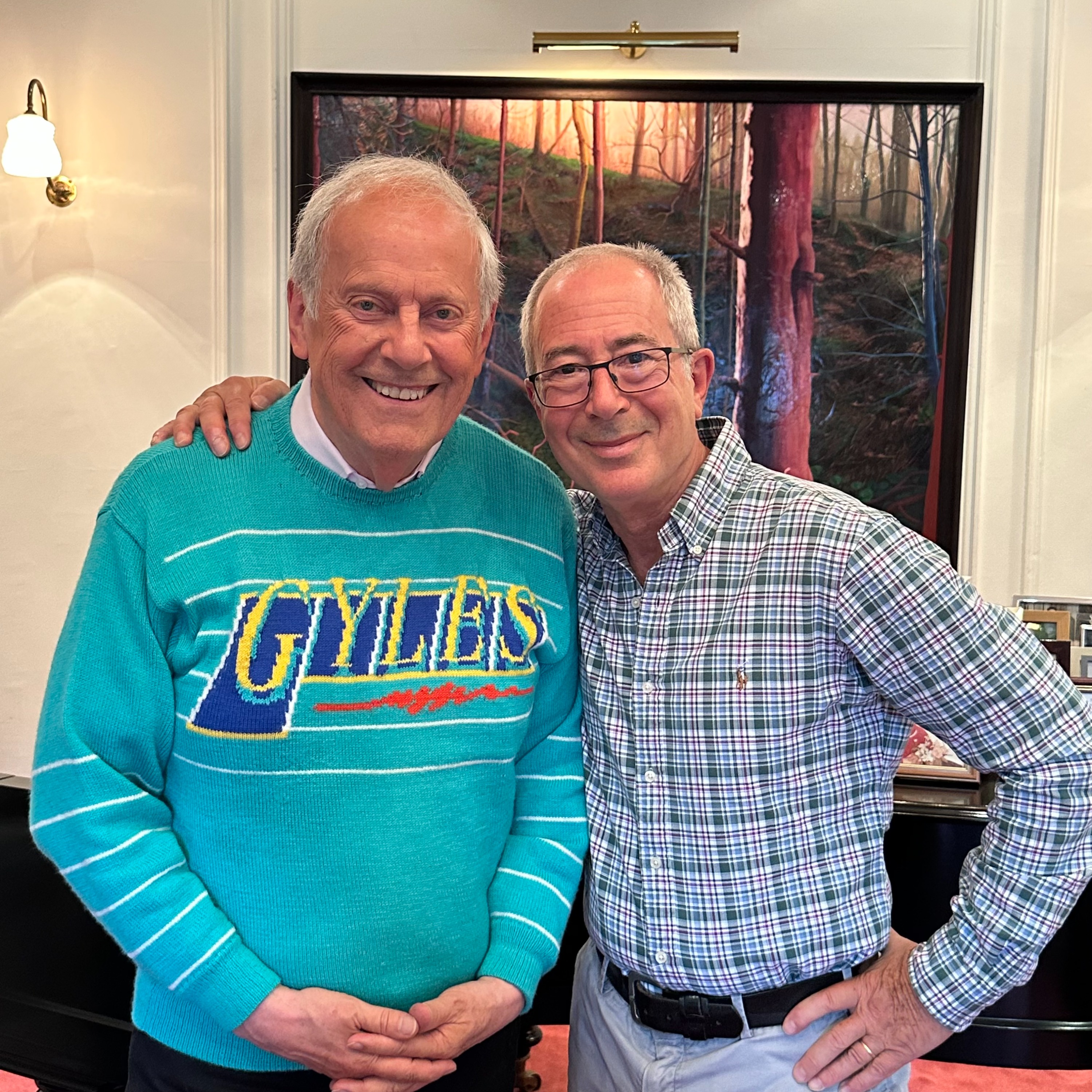
Host: Gyles Brandreth
Gyles Brandreth invites various notable guests to discuss their first memories and experiences, weaving in humor, nostalgia, and engaging storytelling.
Ben Elton
Ben Elton, a pivotal figure in the evolution of British comedy during the 1980s, discusses his family background, the genesis of his interest in comedy, his writing journey, and reflections on life and career.
Written by AI. May contain mistakes.

Get the gist, explore an idea or ask about something said.
 Claude
On Rosebud with Gyles Brandreth, what are the key points of this episode?
Searching your listeningAutomatic transcript. May contain errors.
0:00Out for a walk, under the duvet, in the kitchen, welcome. It's time for Rosebud.
0:26A special guest on Rosebud today. Well, I think they're all special. But this one is particularly special because he's a bit of a revolutionary. he was there at the beginning of alternative comedy in the 1980s people like ben elton and others changed the face of british comedy some say for the worse many say for the better he certainly did remarkable things i mean he was a great stand-up comedian a bit anarchic a bit rude some people didn't like him at all but most people like him as a writer he's one of the authors of great comedy in our time. You remember Blackadder. Well, he came on board with Blackadder and he, with Richard Curtis, created that series that is, well, it's a seminal series.
1:13If you're interested in British situation comedy, up there with Fawlty Towers is going to be Blackadder, in my view. So you can regard him, with Richard Curtis, as the person responsible for that. I think his writing all began when he worked and created The Young Ones with Rick Mayle, Edmundson, Nigel Planer and others. And he himself, of course, was a performer and is a performer, is on tour and is hilarious. But it's really as a writer that I think of him. I've loved, I've loved more recently Upstart Crow with David Mitchell, another Rosebud guest, all about William Shakespeare. And that was done on stage as well.
1:54Oh, before that, I loved The Thin Blue Line. Only did a couple of series. I thought it was brilliant. David Haig was in that. I'd love to have David Haig as a guest. Well, I'd love to have all the guests we've got. And today we've got the great Ben Elton. I think you'll be interested and surprised and at times rather moved. Cue the music.
2:25Ben Elton, before we begin, I do want you to tell me about that famous telephone call from Elton John. Only famous to me, although it'll perhaps be slightly better known now it's in my book. Yeah, I was in my study one day, 30 years ago, and the phone rang, and I picked it up, and I didn't even say hello. I said, Elton, it's Elton. I've always wanted to say that. And those were the first words I ever heard from Elton John. And it was a wonderful thing because, I mean, obviously people like Elton John can get phone numbers, and he'd got mine. I didn't bother to ask him where, but, you know. Well, I was very happy to let him have it.
3:07it's the least i felt i could do um you certainly have my number now i'm not sure you had it then um anyway yeah the the purpose of the call was he and uh his partner now husband david were looking for film writers for their rockets pictures and they were interested in in suggesting an idea to me and i did what i always do which is wrote too much too quickly tried to present them with my own idea rather than focusing on their own and and it withered very much on the vine they were immensely charming but entirely my own fault nothing came of it but it was a lovely call and he is as you would imagine well i'm sure you know he is of course as lovely as you would think i know how lovely he is because once by mistake i gate crashed his christmas party by mistake totally by mistake i was having there's going to be name dropping now i was having i was due to have lunch with Tony Snowden.
4:04All right. Remember him? Photographer, married to Princess Margaret. Of course, yes, married to Princess Margaret. We were due to have lunch, and we were going to go to a restaurant a few doors down from Tony Snowden's house in Lordston Place. And we arrived at the restaurant, and there was a man outside saying, I'm so sorry, Lord Snowden. The restaurant's closed today for a private function. And Snowden said, I come here every day. I'm coming in. And he pushed his way past. And at that stage, Lord Snowden had his polio, childhood polio, had returned to him. so he was on sort of calipers on sticks he pushed his way past with those and of course you can't really you can't really stop somebody who yes exactly you know that and we went in and he saw in the middle of the room elton john so he managed on these crutches to sweep himself across the room in two large movements rather like if you saw anthony show's richard i did he jumped across and we found ourselves at the feet of elton john my goodness and um which is where one should be in the presence of elton john and he said what is this and he said where's my christmas party turned out to be his staff christmas party he was entertaining his gardener and his butler and his chauffeur and his accountant and everybody and so snowden demanded to stay so we were given two extra places at the end of the table well and then believe it or not lord snowden complained about the meal he said well i don't want you know this turkey this christmas dinner that you've And the wine, it was a lovely wine we offered.
5:31So I said, no, no, I want the Laffitte. And he wanted a grand... And then... Was he a pompous old arse or was he just a bit mad? He was a little bit mad. And I think maybe he was a bit spoiled. Yeah. But Elton was so sweet. And he took it in turns to go around and sit with all the members of staff. And he came and sat with us. We were two members of staff. And he chatted to us. And he then gave us presents at the end. Christmas presents. This is a considerably better Elton John story than mine. And I strongly suspect, Giles, that you only ask me about my rather minor Elton John story in order to be able to tell this absolute sizzler of an anecdote.
6:13I ask the question about you because of your name, Elton, which we will come to in a moment. Because we have to begin properly now, and I can anticipate quite a number of your answers because I admire you a lot. and I've read your book so I know quite a bit about you but I don't really know this because I didn't find it in the book you Ben Elton born 3rd of May 1959 I've got that right yes I want to ask you what you believe is your very first memory I think I was two and I I know this I know this is true I was in hospital and I was in hospital for a night because I'd had some alarming symptoms I don't know maybe they thought I had meningitis or something but whatever anyway my mum and dad had taken me to the hospital and it had become pretty clear that the symptoms were already clearing up and that it was fine but that the the doctors insisted on keeping me in I can remember my dad's anger because they wouldn't let either my mum or dad stay I mean this is 1961 I guess and you know hospitals were the people's rights were less you know institutions ran things the way they wanted to run things the main very clear memory is the loneliness in the night and a west indian nurse a black nurse um saying don't worry your mum coming in and saying your mum mummy will be here in the morning and she was uh lovely so yeah that's that's what i remember staying in hospital and away from my mum and dad and being comforted by that nurse that's totally credible because a lot of early memories are to do with loss or fear of loss particularly of the parent figures so that makes total sense okay you mentioned your dad this is where the name comes in who was your dad what was his original name my dad was born ludwig erenberg in castle in germany in 1923 and he was a member of a jewish family pretty secular but racially whatever that means I have no time nor respect for racial definitions, but obviously we're aware they play a big role in the world.
8:28And so he was part of a Jewish family. So a very long story and quite exciting and horrible story. They got out. They became refugees. They got into Britain through various extraordinary coincidences and above all the kindness of strangers. They weren't interned because they'd come from Czechoslovakia. They'd been Czech citizens when Hitler was in power in the 30s in Germany. And when my uncle joined the British Army in 1943, the British Army were very clear that he should change his name. In fact, he was ordered to. It basically said, come back tomorrow with a new name. Don't have a German name, a Jewish name, a German accent, fluent German.
9:08If you're captured, you know, they're looking for Jews. so my uncle who was godfrey edinburgh went home decided to keep his initials and became jeffrey elton as in the jeffrey as in the jeffrey elton famous historian famous tudor historian book was england under a tudor ruined apparently many an a-level student's life although i believe it's generally considered very good i think um the late and very great um hillary mantel is it has referenced it because he was Sir Geoffrey Thatch knighted him. Sir Geoffrey was a great Cromwell scholar. So he became Geoffrey Elton and my dad became Lewis Elton.
9:50Why did they think of Elton? Because it was me. Because they were called Ehrenberg. Ehrenberg. They decided to keep their initials. I don't really know why, but Geoffrey Elton and my grandparents remained Victor and Ava Ehrenberg until they died in the 70s in London. Grateful as they had been for 40 years for the sanctuary that Britain had provided for them and the wonderful opportunities that my father and uncle were given because they both thrived in Britain. Describe your father as you remember him when you were young. What did he look like? Like you? I don't really think about how people look.
10:27I have a problem with faces. It's been a social curse to me all my life. You know, I can get up at a dinner party and forget who I was talking to when I get back. It's a really weird thing. Very hard when you're directing large companies in musical theatre, let me tell you now. My dad had quite a high forehead. He was small and wiry and quite athletic. We're quite small in our family. I remember when, you know, what motley collection of German Jews that survived. Obviously a lot of my family didn't survive. But when my dad married my mum in 1951, a voice was heard from the Cheshire side of the church, the bride's side and the voice said oh there's none of them very big is there so yeah my dad was I think only five foot four or five yeah um but he was highly energetic and I think quite handsome uh and present as a dad but always working I mean very very busy I mean you know we had tea I said we saw our dad at tea time I mean if we needed him at other times but you'd knock on the door of his study he'd work in the evenings I think my mum sometimes found that quite lonely dad worked a lot and worked through his retirement really he worked till he succumbed to Alzheimer's so that I think was a great what was his work what he started off they were both academics they came from an academic family my grandfather was a professor of ancient history uh first in Prague and then um they they got out of Germany because he couldn't get a chair in Germany we still have one of the letters of rejection which actually said we have enough Jews and this was this was this was before Hitler so you know I mean anti-semitism was not invented by Hitler although he sure took it to some some new levels so they were academics dad first went into physics well first he went into maths and I thought think he thought he was sort of obliged to because the family had great very sort of strong academic traditions dad always used to say there's a decision of three boys one goes into the church and they were they had a cousin who became a rabbi one one and one into the liberal arts and then the one of them has to make money and he goes into the sciences or whatever I can't quite remember it all seemed a bit nonsense to me um anyway he became he did maths and he did a foreshortened wartime math degree at Cambridge like a year and he I remember him telling me it was quite interesting because I was terrible at maths I got on O level but only because of what was called new maths which basically was just a joke you didn't have to do any of the hard bits like you know algorithms and geometry um which I couldn't do I never knew really I never knew how to work a slide rule um but my dad sure did and he was top of class at maths all through school and when he went to Cambridge he said he said you you everyone has a maths ceiling and and I hit mine at Cambridge I I suddenly realized that I was nothing compared to some of the mathematicians that I was with.
13:17And he switched. He switched to physics, which was right, because physics is a much more creative, well, it's a funny word to use, but it has an element of philosophy to it. It allows for sort of more out of the box thinking. But anyway, dad switched to physics, became a professor of physics, got the chair of physics at the new Surrey University. And then midlife, he did something very brave and very splendid. he realised all his life he hadn't really wanted to do maths or physics really he was much more and I knew that he was into arts he opened the Surrey University Art Gallery he was you know because there wasn't one he was dad was into art and books and literature and so he decided to form the discipline of education I remember him saying to me you know you have to train for three years to teach a toddler but to teach an undergraduate you only have to be a graduate and he managed to establish a department of education at surrey university and became one of the first professors of i think educational science in the world and it's really quite a big thing now and he's sort of occasionally as i've been about the place and about the world occasionally i've had somebody sort of come up to me and say goodness gracious i'm so happy to meet you because you've no idea what your father meant to me your father's research yeah so he was an education that's a very proud moment yes it is an educational technologist that was his department was the ed the department of educational technology and we're very proud of the time he was never you know given any honors like like jeffrey his brother was but he did get the chart the times educational supplement lifetime achievement award and he was very proud of that you mentioned that he worked all the time his life was his work did that mean that you didn't have much of a intimate relationship with him do you think yes i mean i don't think i would have had it anyway dad was quite a closed in personality very kind very loving witty fun patient to a certain extent pretty patient and we all felt extremely comfortable in his presence always i mean we were never hit they were spock parents you know they were they were as in dr spock as opposed to pointy as opposed to star trek yeah they they were very much 60s you know you definitely don't don't hit a child ever that sort of you know that like into sort of modern liberal parenting i was never put on an academic pressure by him i mean he came from an immensely academic family he was an academic but you know my very average school marks didn't didn't seem to bother them in the slightest the 60s wasn't like that you're conscious now that maybe he didn't neglect of obviously didn't neglect your mother but because he was so wrapped up in his work you mentioned that she may have felt lonely were you conscious of it at all then yeah no no definitely not but we saw a lot more of my mum was a housewife she'd been a teacher what was her name uh mary mary foster oh very old english name yeah she came from cheshire she my dad met her at um university college london and dad was there too and and that was where they met um dad i think dad was quite quite internalized sophie my wife thinks it might be part to do with his experiences as a refugee you know he arrived here yes he was with his family but he was 15 he didn't speak English his brother didn't speak English they were both immediately sent to this boarding school in Wales for which they were deeply grateful that's the only reason they're alive today that this wonderful Methodist minister who was headmaster of a boarding school in Wales offered these places to these teenage Jewish boys but it was pretty hard school I mean dad had to get up on the table in his first first evening because you know it's tough love you know what we do with new boys is you're supposed to get up and sing a song so he had to do that he was a German Jew you know not not every boy was particularly thrilled so yeah I think I think dad you know he was torn away he was 15 he had a girlfriend in Prague he when we went back to Prague he and I with my with my mother and my parents-in-law and Sophie um we went to the jewish memorial and dad was able to see the names of his classmates people he'd last seen when he left at the age of 15 uh all dead all murdered they'd all that none of them had seen none of them had seen 20 um and uh that obviously was emotional for him did he show that emotion a little not very dad didn't show emotion much and i and as i say my so my My wife sort of puts, thinks, wonders whether he became sort of unemotional in a way.
17:43He didn't show emotion at any great amount. And I think that may have been something in their marriage. Obviously, I don't want to speak about them. Tell me about your mother then. What was she like? Incredibly wonderful mum. Again, not, not, they were 50s parents. It's funny. My mum was quite proper. I mean, I would hug my mum, but it wasn't, you know, they were both very, you know, they were both, mum was a teacher. Yeah, so it was a very warm household, but definitely not a gushing household. And we tended to go to our rooms and amuse ourselves. The time we were together was at tea time. Six o 'clock, the whole family, six of us gathered around.
18:22Six? So who were the other three? I've got two brothers and a sister. I'm the youngest. I've never really spoken about my siblings. I'm very fond of them all. We're still all fond of each other. We're very lucky to be in our 60s. In fact, my sister just turned 70. And for us all still to be fond of each other. And we sometimes, we still meet at least once a year. I'll see any of them. And often at Christmas, we might gather together. In fact, until quite recently, we all gathered at Christmas. So where is this room that you're meeting at at six o 'clock? Where are you having some? Tea time, the kitchen in our house in Capford.
18:57And what sort of house is it? well I mean as we were not by any means wealthy we weren't poor I never wore but I mean but we had one income and it was a college lecturer he wasn't a professor at that point and I always had a sitting room it's funny we don't really do that in our lives we our kitchen dining room sitting area is all one but mum and dad there was a kitchen and we ate in that there was a dining room where we would occasionally have a mum and dad would give dinner parties. And there was a sitting room where the television and the record player were. And that was a pretty formal space.
19:32All those were formal. Our rooms were where we could make a mess and do what we wanted. So, yeah, it was kind of 50s. But, as I say, very loving. I won't go as far as to say formal. But having now experienced many, many family households which were much looser, much more sort of on the front foot emotionally, etc. I would say we were quite a buttoned up household in a way. Did you have TV programmes that were family favourites that you all watched together? No, I don't think I scarcely ever watched with my mum. I loved telly. They watched very little. They were, again, of that generation that only took the radio times.
20:11They didn't take the TV times. They only watched the BBC. I mean, that was a very common thing. I'm sure you remember. I do remember. My parents the same. Yeah, which to me was madness. I mean, obviously, ITV did lots of rubbish. I did the BBC, but actually in the 60s, ITV was doing some fantastic work, particularly in comedy. Not as much as the BBC, but plenty. So where did you watch your television? In that room, but not with them? Downstairs. It was in the dining. The telly was in the corner of the dining room. So I would watch that, and then one day we got a new telly, and I got the old one in my room, and it was taken away after about three months because I never stopped watching it.
20:52And my mum and dad were always saying I was goggle eyes and trying to stop me watching as much telly as I did. And I always used to say, this is my research. I want to go into entertainment. And they laughed at the time, but they're, well, they're not laughing now because they're dead. But they acknowledged later that it turned out I'd been right. And what sort of shows were you watching with such a delight? I watched comedy. Morecambe and Wise were my absolute favourites. I liked the generation game. I loved Dad's Army above all, but I loved all sitcoms. On the buses, I mean, of course, you know, if you were to look at it now, there is some very questionable sexual politics, but it was broad, robust, and at times brilliantly observed comedy.
21:33But how did this come into your head? How on earth is this little boy in Catford suddenly thinking, I'm going to be in entertainment, I must watch comedy on TV? Oh, no, no, no. I started watching comedy before I realised I was going to be in entertainment. It was a bit later, when I was watching telly in my room, that I claimed my brother still sort of laughs at the thought that I was sort of claiming that me watching the generation game was somehow relevant but I like telly and I like comedy I had an instinct from the beginning and I as I think I even understood at the time that these were really this wasn't a dismissible art I mean I can remember watching Steptoe and Son and being aware of the immense sadness of the situation which which fueled the strength of the comedy I think i i was instinctively aware that comedy was a serious business i thought then and i think now that trying to divide comedy from tragedy when when it is self-evident that the two are in inextricably entwined you've only got to look at a frame of a chaplain film uh to understand that i read and loved your book but i read a proof and there were no photographs so describe to me what you if you what age were you when you first went to school i would have been we went to nursery school stillness had so probably about four i would have thought four or five yeah what sort of little boy describe what you would have looked like going to school i had glasses very early i remember a very that was a terrible evening one dad would always take us swimming at lewisham municipal baths on christmas eve to give mum a couple of hours to try and get christmas together and and dad asked me trying to see how i could tell the time i'd have been about five or six have a little clock and tell me what what's the time and i said where's the clock and when we got home dad and we were getting ready for bed on christmas eve dad said to mum i think benji might need glasses and of course i heard this and burst into tears and was inconsolable because in those days you know there was this thing specky people you know people had those little nhs glasses which i used to have all around yeah i had those you know you look like piggy in um exactly john lennon didn't save people in NHS classes for another couple of decades.
23:44So I was a very small little boy. When I went to big school at 11, I was only four foot six. I was the smallest person in my school, including the girls. A very small little boy. I grew up a bit. I'm five foot eight and a half now. So I'm not, you know, I'm not sort of obviously tiny anymore, but I was then. But I was talkative. I was confident. And were you talkative and confident because you were small? don't know about that no i think it's because why were you talking different i think because of our tea tables i mean all that all of us i think were none of them were as talkative as me but i think we all had a wasn't a bumptious confidence i never i was never you know i was never a pain in the at school or at home but i was i could be amusing and i like to chatter my mum had a rule that um when I was the only one left at home all the other three were at school and I was like three or four and still at home and mum had a rule that I wasn't allowed to start chattering at her until she'd her lips had touched her second cup of tea and I'd wait and she'd tease me because I you know she could obviously you know what it's like in the morning if you're a grown-up and if you've got a little boy who literally starts talking the second he sees you and doesn't stop until he goes to sleep that night you know you've got to have a rule and that was her rule i had to give a sort of 20 minutes to have a cup of tea before i could really get going but um i as i say i think i'm no new how to temper it because i never got punched by anyone and i and i don't remember anyone apart from mum ever trying to sort of censor my talking so obviously i had the sense not to talk too much but at school you survived or thrived because you were talkative and amusing rather than because you were tall, dark and handsome or an athlete.
25:30I certainly wasn't strong or an athlete. I mean, I certainly wouldn't have won any fights. I was never in a fight, I'm very proud to say. I think my vocabulary has been an immensely useful tool in my life. My parents were very articulate. They quoted a lot of literature. Shakespeare was quoted a lot in our house. They loved words. My mum and dad were, yes, they were 50s people, but arty 50s people. They loved the Festival of Britain. They bought interesting furniture and their art was abstract. They were interesting people. And I think I got my love of art and words and vocabulary at the tea table.
26:06Can I ask you something quite seriously? I wonder if you're fooling yourself about how you were as a teenager. Because I talked all the time. All the time. And I thought I was amusing and delightful and indeed survived the gosset. but I now realise thinking back that not everybody, not everybody liked this endless banter and chatter. Well, I don't think I did endless banter and chatter but actually Charles, I talk about, I unpack as we say. Yeah, unpack it a bit for me now. Well, I talk about it quite a bit throughout the book although I'm aware that I have wound up a lot of people. Well, it's pretty easy to be aware of that because a lot of them have written about it in newspapers and magazines.
26:45means I was being trolled a long time before the internet um and I definitely I think I've irritated more than some and I think it is because of my sort of verbosity um I'm always you know I talk the English don't like um a kind of happy self-confidence there is this idea that you're supposed to be self-effacing and you know if you ask Stephen what his new novels about on a chat show Stephen Fry I'm talking about my dear friend but he'll say oh it's awful I don't I'm just don't read it don't buy it it's a nonsense I wish I hadn't written it whereas I'll go it's great it's brilliant you know I'm thrilled with it it's the best thing I've ever done and people find that it's certainly well certainly people in the media find that a bit irritating and some people probably found it irritating when I was younger tell tell me who your best friend was at school and what they saw in you and what you saw in them?
27:40I had some good friends, but I was, I was never one of the cool boys and I was definitely more nerdy and I had nerdy friends, but I also had cool friends. I got on with people. People have sometimes been put off at first by me. So I don't know whether, you know, I mean, I have a lot of friends and always have had. I was very happy at school. Did you have a girlfriend at school? Was your first girlfriend a schoolgirl? My first love was a schoolgirl. I mean, I can't tell you how exciting it is to fall in love for the first time and how awful it is for it to be unrequited. I've had some experience of unrequited love in my life.
28:16Why was it unrequited? Much more serious later when I was 16, and I really did have a very unhappy time with being in love with someone who wasn't in love with me. The first time it was a more puppyish thing, in as much as I fell in love when I was 12 for the first time. And I owe it, as I owe so much in my life, to musical theatre. I was playing the Artful Dodger in the school production of Oliver. You were born for this role. I was. I played the Artful Dodger twice. And Oliver's a work of greatness. I love musical theatre in general. And, of course, the Dodger is a fabulous role for a bumptious kid with a sense of humour.
28:55And I love playing her anyway. I fell in love with Oliver. who was played by a girl, because in those days, musical theatre really wasn't cool, theatre wasn't cool, and an awful lot more girls, as I think is still the case, auditioned for the school musical than boys did, and they couldn't get a boy to do it, so they cast a girl to play Oliver, and she was a very pretty and very mischievous 11-year-old called Gabrielle Glayster, who many years later, I was so thrilled to be able to recommend to John Lloyd for the part of bob in the black adder gabby and i were friends immediately i was 12 she was 11 i fell in love with her she didn't fall in love with me but she liked me a lot uh and we have been friends ever since she's probably now my oldest friend i think i don't i don't think so uh uh and you think the unrequited when you were 16 was the most painful experience of your younger years oh unquestionably I think I might go further well I would say that the unrequited love when I was 16 and 17 and 18 it went on for a long time was certainly if not certainly one of the unhappiest emotional time I think adolescence is a very hard time and you I was very happy for but there was this separate side of me which was you know eaten up with a pain of loving this girl I made her my we became close friends which of course just exacerbated the problem basically unrequited love is you know you you are the agent of your own destruction you make your own you break your own heart it's not the fault of the recipient it's all in your mind it's quite exhausting for the recipient yeah I mean we were good friends and she she had her own issues so I think we both look back on it as I think she definitely looks back on it as and I saw her recently we didn't see each other for quite a few years but we she she i think looks back on it with great affection i don't see doesn't see any downside i look back on it with great affection the downside for me was i was very unhappy for sometimes but i'm a very resilient person and i even when i'm very unhappy i can be be not unhappy i mean i've never suffered from depression i've never felt the need to seek therapy i certainly don't experience extreme sadness and the closest i got was being in love at 16 and 17 with a beautiful girl who wasn't in love with me when were you first successful in love my first big relationship was at university uh again through theater i was massively in the the manchester university this was where i was by this time drama thing and we were getting edinburgh shows together and an artistically inclined law student was the clarinetist in the band and the uh and the administrator and um and we copped off one day and six years passed so so yeah we that was my first serious relationship um we're still friends in fact i we exchanged emails only yesterday so yeah we the first my early adult years i spent with kate we was it at manchester that you first met the the double acted you became famous was it was it a manchester university when you were doing a show yeah manchester was a very um tremendous um bit of luck for me in that i met two people who would become lifelong friends sadly one of them is no longer with us uh and deep collaborators i met rick male and aid edmondson when i was at university and of course the three of us would be deeply involved in the young ones which was our sitcom of 1982 which was an immense hit and an extraordinarily fortunate start for a young comedy writer.
32:33You are very young then, aren't you? I was 21 when I wrote the pilot of that. I wrote that on my own. Well done. And it got commissioned. Very exciting. Thank you. I was a, yeah, I was, Rick and Ade were third years when I was a first year but I was instantly, I didn't know Ade very well. He seemed a more distant figure. Rick was very, very sort of loud and present to everybody and he and I became very good friends even in that year as after that Aidan and I formed a stronger friendship but it started with Rick um and I was completely besotted with his performance genius I spot I saw immediately as as many people did I wasn't the only one uh that that this was an this was an extraordinary performance talent You know, this was somebody who was in the league of a Cleese or an Arthur Lowe or whatever, you know, this, or a Warren Mitchell.
33:27This was a big performance everyone could see was special. And what makes it special? Because you've now cast so many shows, you've seen so many people. Do you know it instantly when they walk onto the stage or into the room for the audition? Not always, but with Rick, yes. I mean, sometimes... And what was it, his physical appearance, the way he used his body? I write at some length the first time I laid eyes on Rick in my book because I remember it absolutely, and it was cathartic. His charisma in that cult, we had this old church hall that we were allowed to use as a sort of improvisation studio, and rather wonderfully, each week there was a studio night, and students of all three years were encouraged to just do anything, put something on, put on a snippet of a play or put on your own play.
34:14I of course immediately started putting on my own plays and Rick and I did a freshers welcome comedy concert and and that was the first time I saw either of them and Rick opened it by walking on stage and his people laughed just to look at him and his immense comical arrogance and self-regard which was comical but also had strong roots in truth he had a high opinion of his abilities and a lot of self-regard but in a lovely way there was a wonderful innocence to Rick uh it's true I mean I it take too long to go through the whole business of what he said and how much he made me laugh and how we got talking the next day but it was a very special meeting and it was a sort of love at first sight I I loved him um we had a over the years our relationship went through a lot of different phases and they weren't always happy by any means but I always loved him and I really loved him when I first met him I was sort of besotted in a in an entirely non-sexual sense I don't I don't I'm a I've never been interested in men romantically but I I I loved him and wanted to make him laugh and immediately started we we hung out together and he read a couple of my plays and they made them laugh and and I I knew that we had a special creative relationship and so did he which is why when he had the idea for the young ones shortly after he'd been out of university for two years but I'd only just left when he it was his idea but he came to me um he and his girlfriend Lisa came to me with the idea for this this sitcom you know filled with these strange characters that they were doing on stage um because he knew I I'd write it for I'd find a lot more in it and I did relationship was mutually dependent for a while and it was strange i mean basically i thought he was extraordinary and charismatic and brilliant and that i could write exactly what he needed and he felt the same way he thought he was extraordinary charismatic and brilliant and that i could write exactly what he needed and that was the basis of our relationship when the tensions came it was because he also had his own ideas i mean one of the interesting things of if you are a gifted writer as you are working with other gifted people and i've done it myself can be I know that wasn't really the tensions well I know from others and maybe I've got this wrong I know from others that when you were doing Blackadder and you didn't do all the series did you?
36:49I did 2, 3 and 4 which effectively are Blackadder because the first one is so different but there were tensions I've been told because some of the actors also thought they were very funny and had their own ideas I go into this a lot in the book and I think it's a good fun read. Yeah, I mean, that's a very different thing to what happened with me and Rick. Our relationship was a two-way improvisation, but I did the writing. Blackadder, look, there weren't many tensions for me because I just stopped going to rehearsals. Richard and I wrote the scripts. Richard Curtis. They went through a pretty rigorous process with John Lloyd and sometimes John was right and sometimes he wasn't, but, you know, John is a powerful personality, so he often got his way.
37:34uh and then they went through another process with Stephen and Hugh particularly Stephen Stephen and John I think were the real unpickers and unpackers um I think it's the Cambridge thing you know they were all Cambridge Ryan of course was Oxford's Richard was Oxford I was the one the only one who wasn't um and it was a bit like more first morning was a bit like a tutorial meeting whereby John was the the the tutor and Richard and I were the sort of first year supplicants sort of you know nervously presenting our essay to be discussed by the group now neither Richard or I thought that this was a good way to treat our scripts because we thought our scripts were very very good which they were and we thought this immediate sort of you know cigarettes would be lit coffee cups would would be raised and everyone would sigh sort of emptily and and wonder what to say and and then they would would launch into some endless discussion about you know whether you know what what what what small creature is funniest to put up baldrick's bottom is it a vole or a guinea pig or you know is the word wibble in scent in uh you know as funny as the word wobble or whatever now sometimes there were some good additions steven for instance brilliantly suggested calling darling darling in black out of fall which he should get great credit he gets it in his biography uh and but not every claim is true and what is not remembered is that sometimes those endless discussions were destructive uh often they'd end up back where we started very little had been changed but everybody was just a bit tired and depressed and richard would always say can we not just get it on its feet and have a go which is what you would normally do with the script but as I say that wasn't the Cambridge model of how to look at a bunch of words and it was all it always started with a tutorial so I just stopped going because I had lots to do and I couldn't be bothered with a sort of really sort of depressing reaction to what I knew were really good scripts um and they were good and of course they knew it too but they there was just this thing I hasten to add it's fine we are all we were close friends then and we're close friends now I have I had dinner with Richard only a couple of nights ago I literally got a text from Stephen as I entered here because you know obviously he's in rehearsal in London at the moment I was saying should we have dinner we Stephen Hugh are two of my closest friends and have always been but I did find the blackout a process of pain and i think that there is a slight myth that uh you know the actors did an awful i think they did didn't i think they made their contribution i don't think it was quite as crucial as perhaps well actors always like to think you know i mean there's there's a it's not just right actors who are writers you know there's a wonderful episode of friends where writers get their writer's joke and it's absolutely lethal joey who you may remember is an actor in the in the in this that brilliant show gets a job in a soap and no one can believe it and he's on top of the world suddenly he's doing well he's got a lead in a soap and uh he does a bit of press and in the press he says yeah you know the scripts are great but you know i play with it it's kind of all mine there's a cough i do which i think is really that's really mine and basically he does that thing which i understand actors always wanting to do of not wanting to sound like puppets of a writer you know wanting to say of course you know yes there are words but the real performance comes from me and uh anyway by the end of the episode the writers have killed his character off uh it's just a lovely so there's there's always that tension with actors and writers of all the things that you've done in terms of writing what is your happiest experience i've got a novel of yours but there are many more i've only got one there are 16 16 novels and the television that i've most recently loved because i think it's just been repeated is the upstart crow which i love the shakespeare that's right but of all the things you've done which has been your happiest personal experience upstart crow oh yeah that was that's i mean i've i've liked i've liked everything i've done even when it's difficult because was I like working and I like my friends and I've worked with my friends all my life and sometimes they've only become my friends while I'm working with them but I've never fallen out with a colleague and and many you know I met Emma one day in 1981 we're close friends you know we've worked together then but never say I I like working but the happiest experience in terms of collaborative efforts yeah it was it was upstart crow David and I instantly understood each other that I'd written the role for him although I only wrote it for his voice we thought we'd need to find what we were looking for was a younger David Mitchell of course we very quickly found there is no younger David Mitchell he's entirely unique uh and and anyway you know everybody looked older in the old days because they all you know because of the diet so of course we cast David and we immediately hit it off as I did with his wonderful wife Victoria and And we became very good friends.
42:45And he never tried to change a syllable. He loved, maybe that's why it was so happy for me, because he loved those scripts. Well done him. You know, as I say, most actors do most of what you write, but he really admired the scripts. He loved them. And that was fun, because what he brought to them, in terms of, you know, the character, the passion, the sadness, like the episode where Hamnet, he discovers that Hamnet's dead. And, you know, the producer, Gareth Edwards, and the director, Richard Byrne. It was a lovely, all of, you know, Lisa Tarback, the whole team, Paula Wilcox. It was a very, very happy team, perhaps because we were all older.
43:27I mean, most of my sitcom experience was when, you know, they took that old phrase, young man in a hurry. We were all young men in a hurry and young women in a hurry. You know, Jenny and Dawn and Emma, you know, there were plenty of women in our world. um how's you performing changed over the years speaking of now being older because you've gone back to doing stand-up having been almost a notorious stand-up in the back in the day when you when people thought you were older people thought you were angry and strange ranting and ranting and how how is it how is it different now i always used to say i you know i'm not angry i'm passionate and i and i i think that's true i wasn't angry but i might have come across as angry because I learnt my stand-up in a school of very hard knocks, which was the Comedy Store in 1981.
44:14That was a nasty, that was a bear pit. It was a gong show, drunken oafish lads. I mean, there were lots of nice people, but you only need one table of drunken oafish lads and that's your evening. You're dealing with that for the entire evening. And I very quickly became aggressive and sweary and shouty to deal with what was a gladiatorial environment, environment which is no good for the comedy of ideas at all and I do comedy of ideas Jenny and Dawn played it once and never went again why would they those were the days when a man could actually still shout show us your tits and not look like a nianderthal idiot in an audience so yeah I didn't even want to be a comedian I became a comedian purely in order to put my wares about I I I I promise you Giles that the the a week before I became a professional stand-up I'd never it had never crossed my mind and I just needed to earn a living I needed to get my work around and Rick and Ade were playing these clubs and I thought well I I can do that I've got I've got words I didn't think I was a great comic but I knew I had good material how is it though and you changed since you went back to it I think I'm a lot but I've learned slightly to trust an audience more I I lived in the shadow of the gong for 30 years I wouldn't leave a gap for somebody to get involved because if I did that in 1981 or 1982 I wouldn't get back in I just kept going I know if anybody tried to save any heckler tried to stop me I would literally I would I would hit them with everything I had and then just carry on and I think the pace and the apparent aggression of my act was born entirely in those clubs and then I did live television which is really brutal I didn't have an autocue.
45:55I was running a 90-minute live cabaret show on Friday Live doing topical material I'd written that day, and I was trying to remember. So basically, I'd spoke too quickly. Look, I wasn't terrible. I made a great reputation for myself and sold out seven Hammersmith Odeans on the trot in 1987. That was pretty big then. I mean, a lot more has been done since, but live wasn't such a big part of people's lives then. i was i did i i am not aggressive i am not shouty and i do know how to listen i know i talk a lot but i do know how to listen none of learning how to listen didn't help you in 1981 in a comedy store so now i'm back yeah i'm a little bit slower a little bit mellower i'm always asked have you mellowed well i think i have probably have mellowed a little bit but only in style not in my personality or my opinions i feel i'm exactly the same as i always was i think most people feel that
46:56How good are you at criticism? We will rock you. You get the last laugh because it's a huge... You've made a fortune out of it, I hope. I've done very, very well. Over 15 years. Not quite what the Sunday Times would have you think, but yes. But, with that, Queen, you and Queen. Yeah, me and Queen. Why did you choose to... And how was working with Queen? Oh, my God. What did I choose? Obviously, I didn't choose. I was approached and and how many lucky stars I could spend the rest of my life thanking them I mean I love rock and pop I've never really understood you know I've never really known classical and opera I love rock and pop I know a lot about it and I listen to it all the time and to be approached by uh queen management you know would you be interested in in in talking about you maybe maybe using a theater finding a theatrical context for some of their music was obviously one of the great days of my life.
47:48But when it was poorly received by many critics... All of them. And poorly is a very kind way of putting what was a brutal and a personal assault. Now, how did you... I mean, as we know, you triumphed because the public loved it. So putting that aside, it was a triumph. How did you personally... How do you take criticism like that? Well, just first and foremost, I didn't get the last laugh. There's no laugh in a brutalisation like that. It was horrible at the time. The 100 people being employed in the Dominion were totally devastated. Nobody saw it coming. It was a clear effort to get it to close, put everyone out of work, and it was horrible.
48:30And ever since, I've been having to answer for it. Despite the fact that it was a big hit, it ran 12 years at the Dominion. I have never done an interview on We Will Rock You where it hasn't started with. Now, the critics didn't like it, And so all those years later, those dozen voices in the millions who have cheered and loved it are still the sort of loudest voices. So to be honest, I find that a bit boring. In terms of how I take criticism, how I take criticism when it's public and personal, and it often has been, is it makes me sad and it depresses me a bit and it takes me a day or two to get over it.
49:05But I am actually pretty thick skinned because I've had a lot of it. and it is a bit annoying and it does bring you down when you know that 2 000 people laughed and cheered but literally millions of people because in those days the newspapers really mattered are reading that it's not just bad it's actually reprehensible it's actually a disgrace that these rich people should be trying to make money on a bike by this tawdry pantomime or whatever it was horrible the mirror said i should be shot uh and it was a good it was a prescient piece of satire and and queen loved it and the audience have loved it um so that kind of criticism i i think i take it pretty well because i i move on pretty i have a day of feeling very sorry for myself and i've had quite a few of those days in terms of a real brutal set of reviews and then i really am over it and i move on and i am resilient and thick-skinned in terms of proper criticism the criticism of my colleagues my friends my wife I'm really good and I welcome it I love a note session I never had a note that I didn't like I don't always agree but it always tells you something you know if somebody reads your script and gives you a set of notes every one of them will be illuminating it takes a minute you know first of all you go he didn't like that he's not even got and then then you calm down and then you go through them again I love I'm good at collaborating and i'm good at taking notes ask richard your collaboration with your wife began when how long have you been together we met in 1986 can you picture the moment oh i'm questionably i can i can picture the moment exactly rick male and i my dear dear long lost friend we're on a plane to australia to start our first and only australian tour together and we were approached in midair by our promoter northern man paul roberts come up and said i've got some good news and bad news and he'd kept it to the plane because he knew we wouldn't like it he said you've got four australian artists on the bill with you i said what do you mean it's the unions if you're gonna every every brit employed you've got to employ two aussies and rick and i were furious we had a stand-up show i did the first hour he had the second i said we can't have four comics on our show and he said no no the good news you didn't listen to the good news we booked an all-girl rock band and i ended up marrying the bass player and I remember to this day how we arrived in Melbourne and the following morning we went to the theatre I think it was the Regal and we're introduced to our support act these four lovely girls in their late teens and I immediately was besotted by the bass player Sophie we toured together we got to be very good friends all of us but nothing nothing happened no no such thing as a kiss or anything because even though I was secretly besotted she was only 18 I was 26 that's a big thing i was about to head back to england so there was i had nothing to offer her and i had a girlfriend uh and so nothing came of it i just had a secret and very desperate crush and within the following year me and my girlfriend finally split up as i say very amicably and we've been friends ever since and then fate took a hand sophie's band did an edinburgh season and uh and and that's when we got together and we've been together ever since bass but girl bass players still very cool extremely cool in those days there weren't so many there was suzy quattro of course there was tina from talking heads but not many girl bass players and sophie was a very cool one and what does sophie give you well she's um she's a very different person to me interesting kate and i my previous girlfriend the one i mentioned we were very similar very hard working very driven as i say she became a high court judge you know um sophie much more laid back much less ambition I always say the fairies at her christening brought so many talents.
52:50I mean, she can play any instrument. She's a pretty good actress and mimic. But the one fairy that didn't turn up was the fairy of ambition. She's not like me. She's not driven in any sense. She doesn't feel that competitiveness or whatever. So that's great. She's very creative musically. Hearing her play music with the kids, I don't play anything, but the kids can do a bit of guitar and things. It's beautiful. She's very different. I used to call her the old laconic because she's more reserved, doesn't necessarily immediately tell you what she's thinking or feeling. When I first met her, she reminded me of Jennifer Saunders because you'd talk to Jennifer Saunders and you'd think that she's taking every word in and thinking about how clever you are, and it turns out she'd been thinking about something completely different.
53:37Oh, who are you talking, Ben? I was thinking about whether I should get the windows cleaned. But she's observed you for a long time, Sophie. If she was sitting here now, what notes would she be giving you? Not about your work, not about your performances, but about you as a husband and life mate. If she was sitting here right now, she'd give me the same note she always gives me, which is try and talk a bit less and try and stick to the question. Oh, because she related to my own wife. Well, that's what... But what would she give you, apart from that's in a sense about your performance, as you as a person, I mean, I only see your strengths because we only meet now and again.
54:21And I love, as you know, I love your work. And that's why you're here. And I love it when we meet. I mean, we have fun. We do seem to get each other. I get you and I get all the strengths. And I see the strengths of the strengths. I love the continued ambition. I love the way you're so vocal and so confident and fearless in your views. and I've been thinking I was lying in bed this morning thinking what are my weaknesses and I know what they are I thought but this isn't about me I wonder what his weaknesses are Benji I'm calling you Benji because that's what your dad did my dad and mum called me Benji I mean mum gave me the you know I think I think I've mentioned before to you that the wonderful piece of advice when she only time she saw my act twice she didn't like it she thought it was too rude she found it you know she was a 50s woman she said the things you talk about are not subjects that I would talk about loudly even in public let alone on stage and she i remember having seen my act she said you know benji the f word is all very well as an exclamation mark but very little use as a comma and uh and such a good line yeah it's a really good line she was she was she was clever and witty sophie would tell me um i i don't know i mean the the the the i think she'd I think she'd say don't be so on the front foot you know to make your opinion you know just hold back a bit you know maybe think about it I don't know she doesn't go around giving me advice I mean she as I say she always says try and listen more and try and talk a bit less let them do some talk I mean not in an interview like this because this is we want me to I do want you to be articulate in a you know and journalists have often accused me of being defensive because you know they throw your reviews at you and then and then are surprised when you go you you're a bit defensive about it um oh you're awfully sensitive to criticism well you just wrote out read out someone saying i'm a hypocritical shit you know um she she's sympathetic with me she doesn't think it's fair she thinks i've got a thick skin and i've done quite well because she's had to suffer it as well are you good at him in terms in terms of your children are you more accessible to them than perhaps your father was to you oh infinitely we have a we have a completely different family life our family life was absolutely tumbled down together we we were always in the big room i mean i do have a study the family have a joke about the gnomes come out of his forest because i i'm this sort of gnome chipping away at the rock face of my computer and they'll all be chattering away hunched over guitar or whatever I mean Sophie has a very very good social relationship with all three of our children and they talk together a lot and laugh together a lot and I'll hear a big laugh and I'll wonder what's going on and I'll come out and it's all the no the gnomes come out of his woods you know and because I'm like this little working gnome and so I used to have this joke with the kids I said I always hoped that you would say of me when when you grew up and were asked what was your dad like our father was a distant figure we knew he loved us but we saw little of him i said i had this idea that which was kind of like my dad but it just hasn't worked nobody knocks on the door of my study they just walk straight in um and i walk out quite a lot i do a lot of the family cooking i am quite a family man i do i do of the five of us i am the least connected but i'm still very very connected we're almost at the end a moment just say whatever comes into your head from your early years a moment of joy picture it describe it a moment of joy um gosh there's a lot so we're going camping and and we always used to we just camped in the new forest dad would take us for three days a year to give mum a break so that's swimming on christmas eve and three days camping that's that's what we had with our dad and mum did everything else um And he'd take us camping.
58:20And in those days, you could just pull off the road in the new forest and wild camp. And we'd swim in the streams in the new forest. Can you imagine it? And we always found the same place under this wonderful boingy tree. And I lost a beloved penknife one year. And the following year, I got out of our VW camping van and stepped on it. And there it was. Rusty, but still an absolute treasured find. I can never. A year later. A year later. I'd searched for it forever the previous year. and not found it and when i got out of the vac literally i stepped out on the first moment of our holiday that year and i stepped onto the pen knife and there there it was rusted no wonder it had a tool for taking stones out of horses hooves which which actually i think is only recently slowly departed from from pen knives do you remember that they were always on a pen knife for horses why you are the way you are you've had a lucky life uh yeah i think i have been very very very lucky so we're almost there a moment now of sadness
59:22up until recently i would have said probably i mean apart from you know private like you know you know not being loved by girls you love but but but real so well that's real sadness but uh up until recently i would have said rick's death i mean clearly the death of someone far far far before their time i don't consider the death of old people a tragedy i always think it's weird your father i i was looking forward to his death i couldn't wait for his death he he had alzheimer's it was the worst death he could possibly have wanted i as i've said on stage you know the lesson i learned from my father's death was don't get up your heart fixed in your 80s he had a he had a pink valve put in it gave him two reasonably good years and then 10 years of utter misery and decline and his brain departed at pace now if he hadn't had that heart valve put in his brain and his his heart would have died at about the same time but of course his heart kept beating long after it really he should have gone and my mother also had all her marbles but she was fairly infirm by the end very she was sad she couldn't read anymore her eyes had gone reading was her greatest companion and her greatest pleasure and she'd say benji i'm ready to go she was always cheerful and fun but she she was in no bones about it that she would she'd she was waiting for death um so neither of their deaths i considered sadness or tragic i mean obviously i miss them and i celebrate their lives but i i don't mourn people who die in their time but the death of i i miss the death of rick was a was a tragedy and at the time it was the by far the biggest death that i'd experienced and it still is but now a very very dear relative a very close um relative in my in my wife's family who i love dearly has succumbed to premature alzheimer's in her 50s and that's that's um that's something that sophie and i are navigating uh you know um so you know as you get older you get you get i think i've been very lucky in terms of both my parents lived to ripe old age not neither of their endings were happy they both lived too long and they'd have told you that themselves but medical science is prolonging the the parameters of our longevity without any thought to the quality of life without any thought to how we will live these extra lives we're getting i love a drink as you know and you know the government ran this scare campaign saying if you drink even moderately you will reduce your life by two years why would anybody want to reduce their life by two whole years we have such a short span upon this earth and as i said on stage they don't tell you which two years well i'll tell you which two years you lose the last two and i'd be very happy to lose them and i continue now my parents would have been extremely happy to lose the last two years of their life i think i'm gonna have a break in a moment for a drink anything we've missed out ladies and gentlemen listeners it's all in the book but finally you're what are you now 60 66 66 clickety click absolutely wow bingo yeah what What have you learned, Benji?
1:02:25I love it. I love I'm Benji to you. You can be my mother any time. You are the mother figure. Have you ever given your dame? Have you ever done a dame? Well, I've done dame. Better than that, we were talking about Stephen Fry. He was emailing me because, of course, I have done Lady Bracknell as well. In fact, in the corner of this room is a bust of me as Lady Bracknell. Over on the back. Oh, my God, I can see it. That is me as Lady Bracknell. Oh, splendid. I wondered what that was. I don't quite see the likeness, but it's a beautiful bust. It really is. Yes, I had a beautiful bust. I modelled it on Queen Mary.
1:03:00It was a very happy experience, actually. I'll bet it was. So I'd be proud. If I were your mother, if I may say so, I'd be proud. Were your parents, did they see much of your success? They saw all of it. I mean, they didn't see the mellowing, maybe. They weren't really aware of that. My mum hated the show. I remember her saying, oh, Benji, when are they going to start to like you? It did. It upset her to see so many times just sort of casually me being dismissed as a hypocrite and as a sort of generally awful figure. It was a bit of a shame. I said when I'm 40, mum. I mean, but I was out by about 20 years.
1:03:38But now things are so much people don't even remember anymore. We're in a period that Sophie calls the benaissance, my benaissance, when I seem to be being generally considered to have thought to have been a good thing, as opposed to an irritant, which is what I think I was viewed as for many years. But would my parents be proud of me? Well, I was once asked that by Lynn Barber. And I answered that my mum is often asked by her friends, oh, are you proud of Benji? And she said, well, I say, you know, no more than of the other three. I mean, they're all, you know, leading useful lives and they're all happy and doing things that they want to do.
1:04:15And I don't, you know, and the fact that Ben happens to be famous for doing it doesn't, And Lynn Barber said this is clearly where he gets his awful piety from. But I thought Mum was absolutely right. I mean, why would she be more proud of me because I'd do something in the public eye than she would have my, you know, one of my siblings was a teacher. The other two were in, you know, jobs, but they raised families. Yeah, anyway. I'm with you all the way. I was interviewed by Lynn Barber never again. She took me to some bar where it was very, very noisy. She made me sit close to her. And to be heard, she kept saying, speak up.
1:04:47I spoke loudly. Then the whole piece appeared. He sat with his face in mine, shouting at me. Well, she's a bit naughty. Oh, she's a little bit. Yes, well, okay, I'm with you on that. Let's enjoy our benign years now with one last question. 66, what have you learnt?
1:05:07Well, sadly, I'm not sure I've learnt anything, and I'm not sure the world has, because I definitely am deeply conscious of the fact that I think we're living in a more dangerous and a more worrying time than I've ever known. I consider myself one of the most fortunate generations that ever lived. I lived through the best years of the welfare state, student grants, a country relatively at ease with itself, in a world, post-war world, which saw communities as important and individuals as worrying, you know, powerful individuals. Now we're back to that old idea that strong men are what we need. And, you know, the idea that it takes a village is seen as woke nonsense.
1:05:48So I think we live in worrying times. I don't dwell on it because it's depressing. I've got children and they say, oh, dad, you know, we have to live, you know, as my daughter famously said, you know, it's all right for you. You'll be dead soon. So I don't know if I've learned anything. If I have, I've done better than humanity because I'm not sure humanity's learned anything.
1:06:11Perhaps, I don't feel very different to when I was young. And I feel as excited about the next day and what it'll bring as I ever did.
1:06:24Maybe I've learnt not to shout so much on stage. Honestly, I can't. I feel dreadful. I ought to be able to say what I've learnt. Have you had good answers on this? What do people learn in life? I'm liking your answer. It's totally satisfactory. you will be dead soon as your daughter says but i hope not too soon ben elton thank you so much thank you josh i've been i've really enjoyed chatting but i always do and and let's do it again we won't we won't need microphones
1:06:56oh i enjoyed that i hope you did too that's what i love actually about rosebud it's a bit of a roller coaster some weeks it's quite dark some weeks it's touching well it's usually touching. Some weeks it's moving. But upbeat Ben Elton. I really enjoyed him. I've seen him on tour recently. If he's coming to anywhere near you, do catch him. And I am reading and really enjoying his memoir, his autobiography, What Have I Done? Well, you've got a flavour of what he's done so far. And I'm very grateful that what he's done has included Rosebud. Who will we have next week, I wonder? What we will have every week are emails.
1:07:37Thank you so much for being in touch. Let's see what we've got here. I love the fact that the Rosebud audience is so international. We've just heard from Anna Westin from Basel in Switzerland. Dear Giles and Harriet, I recently moved to Switzerland with my husband. I have way too much time on my hands and know very few people, so I want to thank you, Rosebud, for keeping me happy and giving me much to think about. Your last diaries programme reminded me of a hilarious evening when I was in my early 20s, in around 1995. Charles' story about having to stand up at his anniversary dinner with Michel because of his bad back brought back this forgotten memory and made me giggle.
1:08:20My parents lived in Wiltshire in the 90s, in a wonderful village where they made many great and generous friends. At this time, I was at university in Uppsala in Sweden, where we're originally from. My parents were invited to a dinner party one evening while I was visiting from uni, and the lovely hosts insisted they bring me along too. However, they then called back to ask, did we know it was a murder mystery role-playing evening? They then handed out the roles. My father would play the vicar, my mother, I don't remember, but I was asked to play the village tart. I wasn't amused. My parents were mortified, but it was too late to back out.
1:09:01I made an effort not to look too cheap, and off we went. We arrived, and the whole murder mystery game started. It was not my thing at all, especially among total strangers. All a bit silly. I've never been a games person. The dinner gong sounded, and the hostess introduced me to a very good-looking chap called Alistair, who'd been invited as my companion. We were roughly the same age, and he was a bachelor. Unfortunately, Alistair had put his back out badly, so much so that he had to lie on the floor next to the table the whole evening. Being a total gentleman, it had never crossed his mind not to come.
1:09:39It was very sweet but odd to make conversation with him lying on the floor. He had to politely avert his eyes from my short skirt and fishnet stockings. I was dressed as the village tart, you see. Never have I felt so self-conscious. The evening ended with a cheese course, and I was offered what was left of the Christmas Stilton. At that point in January, the once huge cheese had been reduced to a slim disc. I didn't know how to cut it, like a cake, which is what I did, only to realise that I was being stared at by the whole table. They had never done it that way, apparently. Oh, what a faux pas.
1:10:20Under the table, Alistair muddled something supportive. I felt as if they dragged me in from the street like my fair lady. My parents, who were obsessed with good manners, were horrified and glared at me across the table. The village tart indeed. An evening I wouldn't want to repeat, nor would Alistair, I'm sure. Best wishes, Anna Weston. What a wonderful recollection. It's a great, great story. Maybe we should have some rosebud murder mystery evenings. We're thinking of having some events. That might be a fun idea. I do recall years ago, Michelle and I, my wife and I, we had friends older than us, and we'd invited them to dinner.
1:11:04They were a well-to-do family. They lived in Chelsea, in Flood Street, in fact, near where Mrs. Thatcher at the time was living before she became Prime Minister. That's by the by. Anyway, this couple were due to come for dinner. and just as the dinner party was due to begin, I got a phone call on the landline, we didn't have mobiles in those days, from the man, Francis was his name, apologising for the fact they were going to be a bit late. They did arrive and they were a bit late, but they were delightful. The life and soul of the party was very amusing. She was very delightful. And they went when everybody else went.
1:11:39And that was that. The next day, I got a call from my friend Francis, apologising profusely for arriving late. and they were about half an hour late and they were very well brought up. Manners meant everything to them and I said it didn't matter at all. He said the reason we were late I must explain to you is that as we were about to leave the house and I was finding the car keys my wife Mary she told me in the hallway that she was leaving me for the au pair and the au pair was upstairs. I hadn't realized that my wife was gay. I hadn't realized that she fancied the au pair. I hadn't realized that she was leaving me so we had to discuss this a little bit because of the boys before we left to come and have dinner with you so i do apologize for us being so late that's the reason what's the relevance of this simply that you never know what's going to happen when you invite people to a dinner party it may be a delightful person like anna who's surprised to find herself as the village tart um forming an interesting relationship with alistair another young person who's got a bad back and is lying under the table, or it may be like me and Michelle inviting an older couple to dinner and they arrive late simply because it coincides with the breakup of their 40-year marriage.
1:12:54Only on Rosebud. And believe it or not, we don't make up any of this. It's all real life, Rosebud style. Thanks for listening. Cue the off switch.
1:13:14Thank you.
1:13:44Rosebud is produced by Harriet Jane, artwork by Freya Betts, and music by Phil Leppard.
Ben Elton was instrumental in the transformation of British comedy that took place in the 1980s. His scripts for The Young Ones and Blackadder were fresh, anarchic, rude, clever and hilarious. The people that worked alongside Ben - Richard Curtis, Stephen Fry, Hugh Laurie, Rik Mayall, Ade Edmondson, Dawn French, Jennifer Saunders - to name but a few - are legendary. In this episode of Rosebud, Ben talks to Gyles about his parents, his father's family story - they had escaped persecution in Germany at the start of the war - and how he became interested in comedy as a young boy. He talks about the process of writing Blackadder, which was sometimes tortuous, and what it felt like to be slated by the critics when We Will Rock You first opened in the West End.
Ben's autobiography, "What Have I Done?" is out now and available here.
Rosebud has a new website www.rosebudpodcast.co.uk and a new Facebook group - just search "Rosebud Reflections".
Enjoy this!
Hosted on Acast. See acast.com/privacy for more information.


