
 Ask ChatGPT



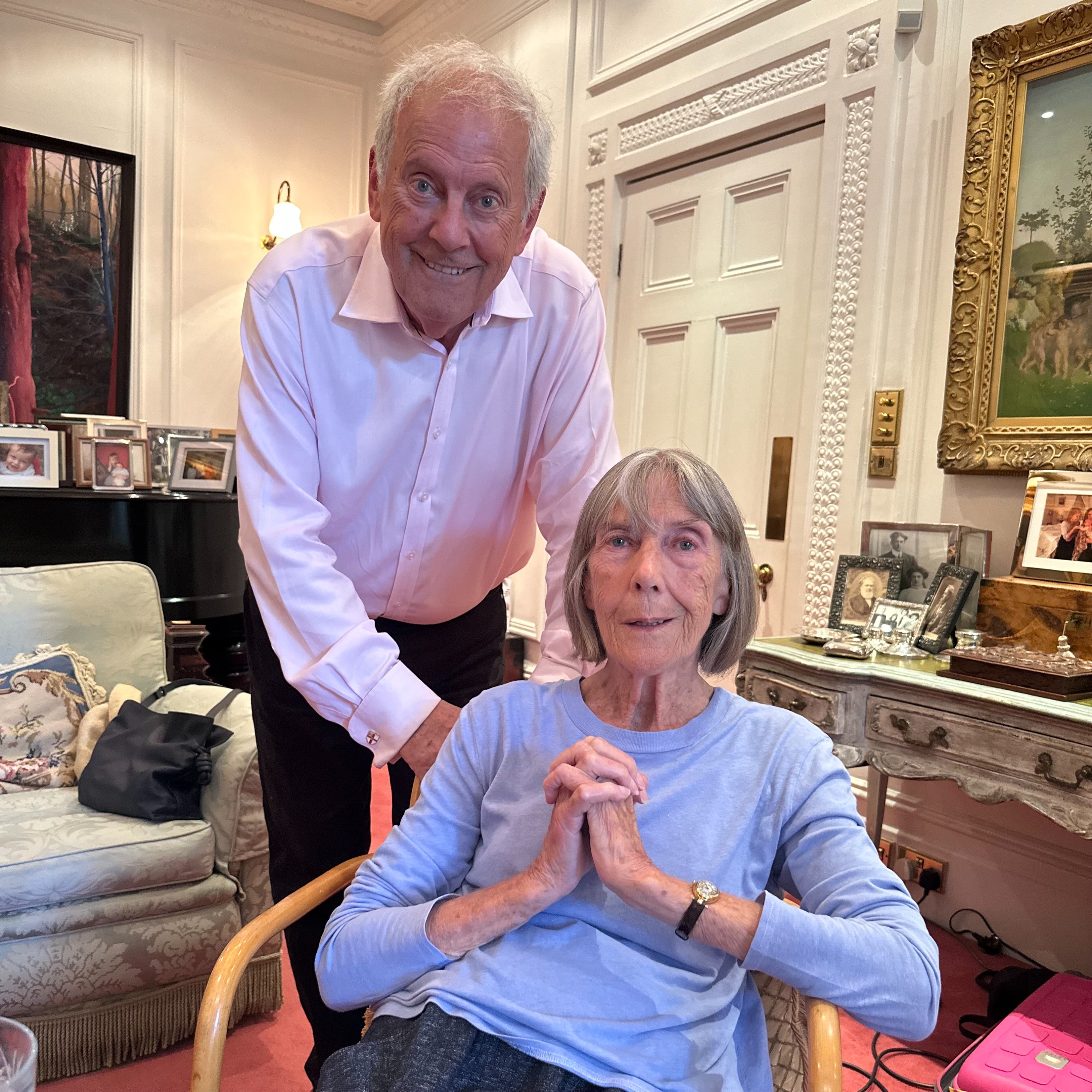
In this special episode of Rosebud, Gyles Brandreth concludes the second year of the podcast with a delightful conversation featuring Dame Eileen Atkins, a notable figure in British theatre. The episode encapsulates her life journey, sharing poignant memories, career highlights, and amusing anecdotes that shape her narrative.
Written by AI. May contain mistakes.

Get the gist, explore an idea or ask about something said.
 Claude
On Rosebud with Gyles Brandreth, what are the key points of this episode?
Searching your listeningAutomatic transcript. May contain errors.
0:20On Rosebud, I think we've become known for the distinguished theatrical dames who have been our guests. we were privileged to be able to broadcast I think the last interview with Dame Maggie Smith we began a couple of years ago with Dame Judi Dench as a guest all sorts of great dames from literally Dame Penelope Keith through to Dame Penelope Wilton Dame Joanna Lumley Dame Maureen Lippman Dame Sheila Hancock if you're a distinguished actress and you're a dame it seems you're on Rosebartum one who has slipped through the net so far is one who is really an old friend of mine I love her I admire her hugely she is a hugely admired actress often she is called the greatest actress of her generation she was born in 1934 in Tottenham in London she was made a dame back in 1991.
1:24She's perhaps not as famous in terms of being a household name as some of those other dames I just mentioned. She is Dame Eileen Atkins. And what's interesting about her is that she has been an American and British stage and screen star since 1957. And I emphasize the American, both because happily we're now a global podcast but also because some of her greatest successes have been in america and when i'm in america i find she's better known there almost than she is here she of course has won an emmy a bafta she's a three times olivier award winner her theater performances include the height of the storm oh and a show that i really loved a one woman show where she basically she was the great victorian actress ellen terry and of course she's appeared in television and films ranging from doc martin to cranford and the crown she's a great actress a great human being a great laugh but she's also got a great story to tell so this is rosebud with dame eileen atkins it's good i think to end our first two years with another theatrical dame who are gonna have next tuesday could you top judy dench i suppose you could if you had judy dench back again but that would be too big an ask wouldn't it anyway that's for next week this week we're concluding two years of rosebud with one of the greatest of the theatrical dames it's Dame Eileen Atkins.
3:06Cue the music, you're in for a treat.
3:22Eileen Atkins, born on the 16th of June, 1934. What is your very first memory? Oh, goodness. I don't know.
3:45I don't know.
3:51I don't think I can remember much to the war. That sounds bizarre.
4:03yes I remember I remember the gypsy coming to our house and telling my mother when I was three and telling my mother that I was going to be a dancer another pavlova she said which I wasn't well it was explained where the house was who your mother was and how this gypsy knew to come to the house where are we oh well they came to every house and they did a number down the street and told palms and things everybody got very excited my my mother was 46 when she had me so at the scribe unusual in those days yes was very were you the first uh no no i was the third gosh your mother is 46 when you're born so she's about 49 at the time of this story what is her name annie annie atkins and her husband is arthur atkins good solid names yes arthur and annie atkins and your mother was a housewife and yeah yes but she did a million jobs before she met my father because she didn't marry until she was 39 she only married because he was a widow and left with a a three-year-old girl living in her house and he said to her would you mind looking after this girl for me when i'm not there i'll pay you i should know i'll marry you but i don't i won't otherwise well how interesting she was lodging no he was lodging in her house her mother ran a boarding house and and her mother was terribly lazy i knew her mother well that's your grandmother i knew her mother that is your She was terribly late.
6:07At that time, my mother was doing a job at a factory sewing all day, drawing pints in the evening at the Elephant Castle and having to look after most of the house because my grandmother just didn't do enough. So she was doing three jobs. And I think she wanted children more than anything. and my father said oh all right so he was a bit older than her i assume no younger he was younger so he was three years younger so it was a bit so he was 36 yes unusual to be widowed at 36 to become a widower at 36 oh yes he was a died in childbirth oh no yes and the baby died oh Oh, but he'd already got one three-year-old.
7:00Yes, Peggy. Peggy, who was your half-sister. Yes. So Peggy and your dad are lodgers in your grandmother's house. Yes. But she's basically run by your mother, who's a very hard-working lady, who's sewing all day in the sewing factory. Then she comes home and has to do the tidying up, the cleaning of the sink. How many people, how many lodgers did you have in the house? Oh, I don't know. Not many. I think I've only ever heard of him as a lodger. She's never told me. And your grandmother had this house because she was a widow, I assume. Yes, my grandmother was widowed three times. Oh, oh. And the first time at 17.
7:47And I've always wanted to know who my grandfather is on that side. and of the three husbands who your grandmother managed to see into the grave which one of those was your grandfather the first one no when she was 17 yes how intriguing so she was 17 she just married because girls then could marry at 16 or 17 yes and she did yeah and it was they were Yeah. Do you know anything about their relationship? Nothing at all. I long to know about him. There's just a photograph of him. And he looks rather Italian. But I don't know anything about him at all. He's the only one of my family I want to know about.
8:35And was he killed in the First World War? I mean, why did he die? Oh, no, I think he was ill. He was ill. And he would not have been much older than her, so he'd have been perhaps 20 or something like that. Yes, 21, I think he was. He was 21. And so she, age 17, became a widow. She was a widow and had two more marriages before she was 30. She had a lot of bad luck. We shouldn't laugh. Because it's heartbreaking for her. Yes, no.
9:10Well, fourth potential husband came along. She said, no, I don't think I dare risk it. Oh, mum. We put ourselves together. But how did she lose these two other husbands? I don't know. I don't know. Oh, dear. What was her name? Ah, I don't know. I only knew her as Cranny, and I only heard my mother refer to her as Mother. So I don't know what her name was. But your mother is the one who was born to her when she was 17 in her first marriage. Yes. So what kind of person was your mother? Clearly she was somebody with a lot of energy. Yes, organised and drive. Well, I disliked her a lot of the time, and now I admire her tremendously.
10:08because she was very forceful. I mean, my father just did what she wanted. I just married her. And she was dead keen on my career, so she was always taking off dancing, to dancing. Even before the gypsy turned up. So in this house, where is the house where the gypsy comes? I was the one who got them the council house. Because of having a child, you were eligible. She'd had two boys when she was 39. One died of meningitis when she was 42, I think. And two boys very close to each other. And it was terrible. There was a huge picture of he was known as Bubby because people called him that, I don't know why.
11:07And a great big depressing photograph of this child in our living room, and that was the only thing on the wall. Wherever you look, there was this baby who died. Bobby. And he was, Bobby. And apparently he was, what do they call it? He won baby competitions. Oh. And my brother's had a wretched life because he felt that she adored him and he was the one who died. My brother felt that she'd rather he died. And is this your only surviving brother? Yes. And what was he called? Ron. So Ron survives, Bubby dies. your mother is obviously understandably so distressed by this your father what did he do he was a few years younger than your mother what was how did he earn a living he worked for the the electricity board he was a electric meter reader yes he went around to people's houses and read their meters yeah to such effect when in the war he looks exactly like hitler which was a little disturbing for me.
12:34And I thought there was a possibility he might be Hitler. And he looked so like Hitler that a huge Jewish woman in the East End pushed him in the cupboard, locked the door, called the police to tell him that she'd got Hitler disguised as a meter reader. and he was very proud of this story very very proud indeed extraordinary it's amazing so he had a little hitler mustache essentially yes but he cultivated the mustache when the war started but he wasn't at all in sympathy with hitler i assume no and i and he was too old by then to serve. He'd been in the first world war. So he'd done his bit, the King and Country.
13:30Yes, he was. And how were they together, your mother and father? What do you mean, how were they together? As a couple. Do you remember them as a couple? Did they get on well? Yes, I do remember. They got on very well, but mainly because my father was so good tempered. He was an absolute darling. I'm just laughing at the idea of this good tempered Hitler. And she could organise everything at home. She did everything. So he only had to read the meters. And he was, I would say, a song and dance man, but I never saw him dance. Did they not dance together? didn't hear them no I didn't see them do anything together I saw no love between them but they got on and I never I never saw love but I very rarely saw that they didn't you know that there was any trouble between them so it was quite a placid house everything was quite settled at home Yes, unless my mother was upset by something, and then she had a temper.
14:51And that's why you didn't like her at times? You said you didn't like her. No. Be specific about why you didn't like her.
15:01I don't know. I felt... When people talk about how the affectionate times they have with their mother... I did have some. She was wonderful to me. She was, but there was something I felt detached from her. When I got older, I became detached from my father too. So when I was about 12, I didn't know either of them. That's wrong. when I was about 12 I knew I was going to get out of the family I can't explain no you do explain I understand completely and you're not alone I've just been writing a biography of A.A. Milne yeah and he was came and he wrote this several times that's either at 12 or 13 you begin the long process of saying goodbye and he does a portrait of his father and and he's 12 when he's thinking about this about the beginning of the beginning of the end he says comes when you're 12 which is interesting yes i think it's a terribly interesting age it's suddenly when you blossom i think but you blossomed earlier so let's go back to this gypsy they come down the road they maybe sell you a bit of heather they offer to read your palm that sort of thing goes on and the gypsy can you picture the gypsy was she looked like a gypsy oh she was beautiful i thought because she was a fully dressed in gypsy but that thing two skirts coloured sash.
16:52She was done up to tell the fortunes and everything. But she looked at me at the end of the thing and said, that one there, she's going to be a great dancer. Wow. Another pavlova, as I said. Wonderful. And your mother believed this? Totally. Totally. So when I was three, I was taken for dancing lessons and I wouldn't go I wouldn't stay I screamed I have to say I was a strong favourite with my mother she didn't she did what I told her to I was taken for lessons in dancing about four times until I got to five and each time I screamed the place down until they took me home when I was five and the war had started I was taken again and I why did I stay at that one I tried to get her out of it I said to my mother I can't go back there again that girl Doris put my head down the lavatory and pulled the chain well of course somebody called Doris was somebody I just heard the name and didn't like the look of and so I said Doris she hadn't done it at all um the teacher wanted to keep me I was very much uh when I was a child I was very much a p a child that people stopped and said oh isn't she pretty I was only pretty in a very working class way in the fact that I had blonde curly hair and big blue eyes that's all that's charming this was the era also of Shirley Temple yes oh I was globally famous for having big blue eyes and lovely blonde curly hair I was called Tottenham's own Shirley Temple Tottenham's own Shirley Temple how wonderful that was how I was advertised goodness
19:16So this is in Tottenham in London. Yes. You're still in the same... We're now in the council house. Yes. War has... What are your memories of war, the arrival of war? You were five in 1939. I remember it very clearly. I remember the morning they announced that we were at war and everybody was in their back gardens. Everyone was saying how awful it was. And I knew something dreadful had happened. but I didn't quite know what and the next thing I knew I was taken to the station given a box with a gas mask in and a piece of chocolate and put on a train I got on the train thinking my mother was coming on too and the next thing I knew she was waving goodbye and I was evacuated so you were one of the evacuees yeah a vacu age five yeah getting onto a train with a lot of other strange children yes you don't know and where were you sent uh little baddow in essex my brother had already gone which i hadn't noticed i don't think and we got to the place where we were going to go and then the person who'd said they'd take one would come down to the gate and choose one of us.
20:43Well, I was chosen first. The woman said, oh, I think my little girl, she's perfect for her. She said, go in the house and you'll find her child. I went into the house and the child came at me, full tilt, and took the gas mask and took the chocolate from me. and then I screamed. I screamed the place down so the woman said, oh, I couldn't stay there. It was then discovered that my brother was in the same village. He was with a lovely family with three girls and he was so happy and I was put next door with the woman next door who had no children and she didn't know how to behave with a child at all.
21:41These were middle-class families, were they, who had agreed to take in evacuees? Yes. And so they meant well. Yes, they did mean well. And you did at least have your brother and the three girls in the house next door. Yeah. And how long did you stay there? I guess three or four months. I didn't cry so much. I just remember it was a very unhappy time. I got nits, that's what saved me. And they said, we must get her mother. My mother was always coming down anyway, anyway to see if, not always, but when she could. At weekends you tried to get down. I remember the first day I saw the country, because that was the first time I'd ever seen the country.
22:29And my mother came down, and we went out and sat in a poppy field. I also remember that. I said to my mother, why can't we live in a lovely place like this? And she said, well, because we have to work, both of us. You can't get work in places like this. Then after three or four months, you return to London. The sort of feeling of crisis is over in the country. And when I got nits, my mother thought, that's disgusting. And she said, I'm taking her home. So I was taken home and I was mainly with my mother. And, oh, when I was five, I went to school for two weeks. And that's why I was evacuated with the school.
23:19So all the children at the school were evacuated together. When I went back home, for some reason, I didn't go back to school. and it was two years before anybody remembered that there was a child there and that I walked to be at school. So some inspector came round and said, Mrs Atkins, why is your daughter not at school? Yeah, an inspector came round because we were bombed. Ah, this is the blitz has now arrived. Yes, yes. My mother said, we're not spending another night in that damned Anderson shelter. Oh, these are the famous Anderson shelters named after some minister who they had in the garden and it was like a bomb shelter.
24:06Yeah. And she said, we'll die of pneumonia. It's so cold and damp in there. She'll be going inside. On the third day, we were out of the shelter. the third night rather we we didn't go in the shelter it got a direct hit by a high explosive the Anderson shelter was bombed literally it was literally and we would have all been killed without doubt my my nitrous was dug up a mile away goodness well well done your mother she well done yes she must have been a bit psychic well she she liked a good gypsy so she probably had those special powers herself. And so when the back of the house fell out too, and the man came round and said, there appears to be on my list another child in the house, and she doesn't go to school.
25:07And by this time I was seven. Had your mother been teaching you? I mean, had she taught you? Oh, no, no, no. But did you learn to read and write for yourself? Oh, I'd learned to read it by myself. So I had to go to school. And I went to the school and it looked horrible and it was. And I said to my mother after Thursday, I'm not going there again. I'm not going to school. But by this time she'd become very pally with the teacher of the dancing school. So she told her that I wouldn't go to school. this teacher paid for me to go two guinners a term six guinners a year she spent for me to go to a little private school oh so this is the lady who ran the dance school yes put her own money because she believed in you yeah and helped your mother out by sending you to this small private school and for some reason I don't like her.
26:11I never liked this woman. She was so good to me and I don't like her. But where she sent me to I thought was heaven. Parkside it was called and we're next to the park. Oh, I thought it was wonderful. I liked all the girls. everything. So suddenly you were happy. Yeah, very happy. Weren't you also happy by then because you were dancing? When you were five, the dance school you settled in, the one that was run Yes, I had to settle and I realised I had to dance. And what sort of dancing were you doing? Oh, awful. Something terrible called toe tapping that they must have stopped because you can't get shoes for it now and ruins your feet.
27:05You dance on the Oh, on your toes. Your toes. Yeah. And ballet. What about the stories of you dancing in was it a pub or was it outside the railway station? Outside the railway. Have I imagined this? Outside the railway station? Didn't you perform when you were a very little girl? No, you've imagined that. Are you sure? Outside a railway station. Well, I can picture you telling me a story about, well, maybe this is like Doris and the head going down the lavatory and putting the train. Maybe this didn't happen. Maybe you thought, Charles needs a lift. I'll tell him the story about the time when I was a little girl that I danced on the counter.
27:49You're either in a pub on the bar doing a dance. Oh, yes. Or you're outside an underground station. Am I imagining this? No, I think you've just squeezed two things up together a bit. I was a lot on the underground, stepping amongst sleeping people. This was for safety? People used to sleep on the underground stations for...? Yes. Getting to my date. I used to be taken out at about seven o 'clock at night, and we'd have to go by bus or underground and go to these working men's clubs. And how old are you when you're doing this? Well, five. So at five years of age, you're being taken from the safety of Under the Underground at seven o 'clock to be an entertainer at a working men's club.
28:42Yes. And this is your mother taking you. Yes. With her great work ethic. Yes. We can earn a few bob. Yes. And when you say a working men's club, what sort of establishment would this be? um well working men's club like a club where there are working men i remember i terminating morcom and wise yes eric morcom i remember telling him in a lift once bbc we exchanged memories of working men's clubs we got the same i got this paid the same he said 15 bob ago and I said yes he said yes that's what we used to get how extraordinary well you were the same sort of generation yeah because he was a began as a sort of child performer didn't he yeah so for 15 bob that's quite a lot of money really it was so it was useful to your and what what was what was the entertainment you offered age five it was pretty awful I think it was um my what was my first song Oh, I can't think of that.
29:48It wasn't Animal Crackers. I often sang Animal Crackers. Because that was the big hit for Shirley Temple. I can't remember. I know. Yes. I think it was Mersey Doats. Mersey Doats and Dozy Doats and Little Lamsy Divey. But there was also, what was that funny song you used to sing? I sang lots of outrageous songs. There was one, yes. But clearly none of them knew what they meant. No, and you didn't. Just give me the one that's in your head. I know there's one where you do a bit of pointing in it. Do you mean the French one? Yes, maybe I do. I got the eye, I got the wink, the wink that makes the fellows think.
30:32I got the mouth to go like this. Oh la la, I am French and the Frenchie girl can kiss. I got this smile, I got a style that make the old men young, la, la. They hug and squeeze me like a chic, then they kiss me on the cheek, o la, come see, come saw. You were a sensation. You didn't need any music, you could just do it. Were you accompanied? Was there somebody playing something? Oh yes, oh yes. There was a fellow on the piano who was doing the honky-tonk in the back. That's the way he went. And you were singing songs, well, of course you were a sensation. No wonder they were picking you up at 7pm to take you to the working men's club, 15 bob.
31:19I'd pay a lot more than 15 bob to hear you doing that song. It was pornographic, really. I mean, I was clearly, I can't think of a word now. Well, do you feel now you were exploited? I don't, I mean. Yes, but I don't blame them. No. And there was an element of enjoying it. And they thought I enjoyed it. Afterwards, I thought about it. I thought, you didn't enjoy it.
31:57You rather just got used to it. I started asking them if I could stop at about ten. but they said no and then I got pretty stroppy about saying I wanted to stop when I was 12 but you weren't treated badly no no my mother used to protect me very hard because the other artists hated me because they were adults they were you'd hear them I'd hear them say through the curtain I do hate it when I get a child in Yeah. Because the audience loved the children. Yeah. Yeah. For the wrong reasons, I'm afraid. Oh, do you think so? Oh, yes. I think it was all men. Is that, do you think, why you ended up being, your life being a performer?
32:49Because of that experience? No. No. Because I see acting as something totally different. And I didn't particularly... I did like dancing. oh it's no completely different completely different well we're going to have to come on to that you do have to go to school now because the inspector's seen that you haven't been to school yes you'll get sent to this really nice school for six kidneys a year you're happy there and are the rest of your school days happy how long do you stay oh i love the whole time i i oh i love the whole time i was there who was your best friend at that school Angela Davis but I was mostly mad about the headmistress what was her name?
33:38Margaret Hall she looked like Charlton Heston only as a woman which is pretty impressive in us to be and I wanted to be her I wanted her to like me more than anything. And she never showed. I felt I was never a favourite and I was going to make myself one. And I spent my whole time there trying to please her. And did you succeed? Did she notice you in the end? Yes. I remember the day I succeeded. What happened? It was Princess something or other day. Do you remember? Well, it was Princess Elizabeth and Princess Margaret Rose. No. But from an earlier era, there might have been Princess Alexandra for collection money.
34:36There was a collection day. Yeah. And she'd asked her favourite, Geraldine, to come and hold the tin for her while she sold them. And Geraldine was full of herself. And then she said to me, oh, would you like to come as well? Yes, yes, yes. well you've got to be here at six o 'clock in the morning before school and stand in the street now the morning it was pelting with rain and my mother said there's no way you're going out on i said there's no way i'm missing it i got to the school and jeraldine's mother wouldn't let her come Well done. So I was in, and I thought, I'm going to be so good today.
35:27And I was good. I didn't talk too much. I talked just the right amount. I sold the flags, and we walked back up the street to have breakfast. She said, well, I think you deserve a breakfast for that. because, and I can't remember exactly what she said now. It was something like, you can be proud of yourself. I'm going to be proud. And I was at the table eating a proper breakfast, which I never had before. And in came Geraldine.
36:20and again Miss Hall said to her well it didn't matter because I was a and I can't remember again what she said but she meant that I would be in a little trooper all day and from then on oh she did rather like me well done you did it I did it yes it's very touching isn't it So 80 years later, here we are remembering it. Amazing. And she was the first, I'd just realised, she was the first woman I admired.
36:58She came to see me years later when I was playing St Jerome and came into the room and said, you naughty girl, it made me cry. It was, you see, it was lovely. Unravel if you can I can see why you would have admired this very special head teacher Your mother, who you now do respect and admire because of the hard work she put in all those years you said there were times you didn't like her Was that because of her temper? Or because she was your mother? Or because she made you go to the dancing classes? What was it that you didn't like about her? No, I'm afraid to say I'm very afraid to say that I was born a snob.
37:49And my mother, I'm the dancing teacher, I knew I weren't good enough. It was education and intelligence that Margaret Hall had. and it's awful to say that but I knew very quickly you know I was reading don't forget before I went to school I knew that the family none of the others in the family read much I don't remember anybody else who had books I saved up all my pocket money and spent it on books finding the library was heaven and I found the first person in Tottenham who was educated and different. And you thought, I'm going to be like that. I am like that. She's my kind of woman. I didn't think I could be like that.
38:49But she moulded me terrifically. I suppose I wanted to be an intellectual. Yeah. And how did that materialise? You obviously flourish at this school under Miss Hall's guidance. You're, as it were, moving into her axis and away from your humbler parents and that way of life. You're moving towards something else. How does that translate into the career you then eventually have? What happens at school? I was extraordinarily lucky in my second school. I went to Latimer's Edmonton. Oh. And was it then an independent school like Parkside or was it a council school? No, when I went there, it's become very posh now.
39:37But it was for eight poor boys of Edmonton. Excellent. So you could just get in. If you passed the exam, you could get in. The scholarship was a big thing. And my mother sent me with a note one day because she thought it would be handy for me to speak properly. She must have heard somewhere that we didn't speak properly. By properly, I mean without an accent. Yeah, you had a Tottenham accent. Yes, I had a Tottenham accent. So I went to the school with a note, and one teacher said yes, she would do it for seven, six, half an hour every week. My mother said, no, I can't afford that. And then one day our religious instructor swooped down on me.
40:27He wore a gown and swooped down on me in the corridor and said, I hear you want to learn to speak properly. And I said, well, I don't, it's my mum. and so he said if you come to me whenever I say so whenever I feel like it I'll do it for no money well I'd known him from the divinity classes but that was all and he he'd become interested in me it couldn't happen now we ended up I almost every night I'd go in there and through learning to speak properly, we had to do pieces. And my first piece was Prince Arthur. Prince Arthur was a child in which play? King John. Fine. Must you with hot irons burn out both my knives?
41:24Have you the heart? And he took me to my first theatre. What was he called? Mr. Burton. Mr. Burton. And you say it wouldn't happen nowadays because, of course, everyone nowadays would be suspicious of him. Oh, absolutely. And this older man with his child would be thought, oh, no, he can't be alone with her. What's the guardianship situation? What's the safety and all that? But I take it that he behaved perfectly... Impeccably. He was jealous. He was jealous if I went out with one of the boys. He was jealous of the boys. but he never touched me never put a hand and it never entered my head and if he had done I'm sure I would have shouted yes indeed I think you would we've established you quite we were screaming when things don't suit you so this man was the great influence on your life well he was 32 at the time oh quite young he was young and I was 12 so I was only 20 years younger and we used to meet on the bus, we arranged to meet.
42:38I did all this without thinking I was being secretive, but I must have been very secretive because my mother knew nothing. She knew I was having lessons, that was the only thing.
42:54And I got the same bus every morning so I could sit on the bus near him, next to him. And when we got out the other end, there was a whole bit we could walk together and then we'd automatically part so that nobody would see us arriving. But he didn't have to say that was the reason. You just, both of you, instinctively knew that was the right thing to do because you did have this secret. And you also were moving into a new world. This was, you're age 12. You're really leaving home now. And it was a mixed school too, which was unusual. Yeah. I mean, can you remember the first boyfriend you had?
43:37The first... Oh, yes. Ray Lambert. Ray Lambert. I was mad about him. Oh. He was a year older than me. Very good looking. And I met him at a party and he kissed me. And I was crazy about him. and I found out he was already attached to a girl because they had the same mothers, the girl and him. The same mothers. They were friends. They were friends. The mothers, the two mothers, yes. And at the same time, practically, they'd had their children, a girl and a boy, and they were determined that they would marry. And the children had been brought up together, had holidays together, everything together.
44:25But he was also taken with me. And it's a long story now, but I was mad about him for four years. Oh, so you were devoted. And did he treat you badly in the end? Oh, no, he didn't treat me badly. It wasn't, no, he was a dear. And I don't know, I do know why I had to end. because he'd been told it must end by Mr. Burton. So Mr. Burton was jealous. He needed you. Mr. Burton probably covered it up by saying she must focus on her work now. You're a bit of a distraction. Was that, I imagine, how you sugared the bill? Mr. Burton said to him, she's not made for the likes of you. He didn't say the likes of you.
45:18He said, she's made to be an actress. And if we are going to start seeing her, it's all going to come to pieces now. And he was quite right, because I was crazy about him. So you were crazy about Ray, but you're also in the thrall of Mr. Burton, and Mr. Burton ultimately wins, because you do abandon Ray, or you and Ray part, Anyway, Ray has got the other... In the end, just to finish on Ray, does he marry the girl that is... Yes, he does. Oh. And he got in touch with me when he was 60-something. On a radio show. I was doing a radio show. And he called in. Oh, you were being interviewed? A phone-in?
46:15Yes. He actually phoned in and said, I'm Ray. It wasn't him who phoned, it was his niece. And so we then started writing to each other. Gosh. And Pat had died at about 60-something. That was his wife. Yeah. And he was newly on the market and thought maybe he could turn the clock back half a century. And now that Mr Burton was also gone, he might be in with a chance. And you'd become an actress. So how did it, so Mr Burton is influencing you, he sees the genius that you have and he's encouraging you. Does he say go to drama school? What happens? Well, it was very much that I was going to be an actress, but he was wonderfully careful because he had to persuade my parents.
47:05My parents didn't want me to do this at all. My parents thought she leaves at 16 and she's out at work. she's out of work being a hoover and and that that's what it is so they had to be dealt with and he told them we'll put her in for rada and if she gets a scholarship there i'll know i'm right and she's special if she doesn't get the scholarship she'll put in for the guild hall and do a teacher's course and be a teacher. And they got us down to the last three for the scholarship.
47:47And on my sister's birthday, I was handed a telegram at the wedding breakfast to say I hadn't got the scholarship. Oh, no. They were very sorry that I hadn't got it. and I cried in and out of the room and as I ran I heard my sister say oh that's her all over the, all over she gets the attention she'll do anything to get attention but also it's a terrible moment for you and for Mr Burton because you've been turned down by RADA can you remember who did get the scholarship that year? no, I've never found out
48:38so where do you go what happens so to the guild hall it was all my parents were rather relieved I remember and they were all right if I was going to be a teacher that was quite good locally you It was pretty respectable. And I very quickly saw that nobody took any notice of the drama students at all. They just didn't bother to check you out or care who went what. So I simply did all the things that the drama students did. Oh, so you went to be a teacher, but you actually joined in the classes for being an actor. Yes. and I wasn't found out until my third year. Oh, how wonderful. And my third year I had to go and do one day a week teaching and then I was cast as Eliza Doolittle in the last term and I was called in by the principal.
49:40He said, you know, I've just noticed after three years that you should have done the teaching course. and I said well I've been into some classes and he said but you're playing Eliza do little and I says yes he said well you won't be anymore oh so he but he didn't stop everything until the last year last term of the last year and then I failed all exams but you were born to play Eliza Dredd and Big Merian because it was in some ways your story. I never played it. Oh, you didn't play it in the end. You stopped playing it. I stopped playing it. Because you were natural with your Tottenham accent.
50:26Yeah, I would have been perfect. It would have been. Adrian.
50:33So you qualified eventually as a teacher. I did qualify as a teacher. Not the first time I failed. I somehow or other passed the second time. So you are a qualified drama teacher, but you're totally untrained as an actress, it seems. I don't know how you survived all these years. And I'd won the Shakespeare Prize. Where? At Guildhall? At Guildhall. And Robert Atkins. Oh, the great Robert Atkins, the man who founded the Regent's Park Urban Air Theatre. No doubt, because we have the same name. Yes, of course. He asked me if I'd like to go to Regent's Park. so I was straight away had a job oh tremendous and what was your first job in Shakespeare?
51:19Jack Winnetta in Love, Saber's Lost Jack Winnetta, it's a lovely play too oh divine yes and you haven't looked back since oh yes the dips have been awful I was such a high that and then going straight to the job it was wonderful and um just explain if you can in a nutshell the difference between being a performer which you clearly were instinctively and naturally when you were entertaining in the working men's club and being an actress because clearly in your head there's quite a difference what is the difference? we know what being a performer is it's putting over that number but what does an actress do that's different?
52:04and why do you prefer it? I don't know I'm thinking before I say something stupid. It's...
52:22It's being my real self when I'm acting.
52:34And it's just a lot of show when I'm dancing.
52:41that's the nearest I can come with anything because of course you're not supposed to be your real self you're supposed to be someone else but you slowly become the part it creeps into you one's acting your socks off or dancing,
53:12acting isn't acting your socks off. It is being. Being. I feel totally an actress in every way. So you are not performing, you are being. No, you're being. You're also somebody, having known you for a long time now, who is interested in the life of the mind. You actually, that interests you. Yes. The words interest you. Yes. What's going on there. Intellectually, you like to be challenged, don't you? Yes. We are coming to the end of our conversation, and we've been concentrating on your childhood, but I do want to ask about two different actors that you worked with when you were very young. The first time I saw you was in a play early 1960s, so you'd have been coming up for 30, with Laurence Olivier.
54:00It's a play called Semi-Detached. Oh, yes. By David Turner. I think it was originally done with Leonard Rossiter, am I right? Yes. somewhere in the provinces. He came into town. And it was before Olivier started the National Theatre. He was ready to do a commercial job. And he was the great actor of his day. He was the most famous and celebrated. And you found yourself in this play. Oh, yes. I'd worked with Alec Guinness before Sir Lawrence. Oh, he was the other person I was going to ask about because they're such different personalities. Yes. Well, tell me then about Alec Guinness. I worked with Alec on a UNESCO play, Exit the King.
54:40And he stopped me being sacked. That was working for George Ravine. It was a maid in a play. There's a working maid. And he wanted me to play it old. And I said, there's nothing worse than young people trying to look old. You must have an old person. I said, this part would be brilliant if it was played by a young person. So in the end, he said, oh, all right, then you're playing it. And for a week, I played it. And he got very cross with me. And he said at the end of the, on the Friday, I'm going to let you go. This is George Devine, the director. He's sure to be the wonderful man most people think he is.
55:33And he said, you'll have to go. I'll get somebody else. But can you play this afternoon? Because I can't get in there. It's still Monday. So will you mind coming back? I went off and had a very sad sausage and chips somewhere. I always remember the sausages. and I came back and there was Alec Guinness waiting for me and he said, I hear George wants to let you go and he said, but I don't and I've talked to George and from now on I'm going to direct you because George said that I wouldn't take his direction Well, he was directing me as an old person. And it went on. Of course, when we got up to Edinburgh, where we were opening, they put a grey wig in my room.
56:36I was so angry. I was so angry that I went out to a hairdresser's and said, will you dye this red? Oh, my. And they did. And I went on the bright red wig that evening. and then they gave me a turban so I thought all right we'll settle on a turban and I did I did I just had a direction from Alec. Just explain to me your special relationship with him don't know why but whenever you talk about him he clearly was very special to you and I somehow feel he's a key one of the keys to you why was he special to you what was the quality he had and what did he give you, Eric Guinness?
57:25Well, I felt very close to him immediately and I said a silly thing during rehearsals. I said, oh well I hate my mother anyway or something like that and his ears pricked up and he said, I was most interested that you said you you hate your mother. I said, oh, well, I don't understand. I mean it really. And he said, well, I do. I hate mine. Then we just became friends. She was wonderful to me in Edinburgh. I was in lousy digs. He took me out of my digs and said, there's a room for you at the big Caledonian hotel or something. And picks up the bill and everything. But the interesting thing about the play was I read all the reviews and they were only picked out Alec, terrifically, and me.
58:24Because we were playing UNESCO and he knew, like I knew, that she shouldn't be old and it was much more effective with her young. And you stayed close to him throughout his life, didn't you? Yes, yes, yes. I knew him right up to. Really, in a nutshell, what I'm after is what do you think was the special affinity that you had for each other?
58:51We're both ditches. That's about it. No, not about it. I think it sounds terribly grand for me to say, but I think we admired each other. I admired his acting and he admired mine. But then I also admired Laurence Olivier, who got on very well with him. Well, it was a very different kettle of fish. Yes. I mean, he could combine, Olivier, the performing and the acting, couldn't he? Don't you think? Yes. Yes. I mean, he was. He was. He could do both. That was terrific. We've almost run out of time, which is sad, because I wanted to ask you a little bit about all the men in your life, but I've not allowed myself.
59:41you may be relieved by that um but i do want you to tell because it makes me smile so much the story you told me the other day about when you were because you've done so much shakespeare and we were with david suchay who was with you and as you like it you and as you like it in stratford in the 1970s giving rosalind and he came in to play orlando he wasn't cast as orlando So we don't need to talk about that, though wonderful as it was. But on the back of that, you tell me a story about when you later played Rosalind in America. Oh, yes. Can you tell me that story? And I promise then I will release you.
1:00:20What story? About the night of the storm and the electricity. Oh!
1:00:30Hurricane Bell, you mean? I do mean Hurricane Bell. What happened? um well i was in america playing rosalons as you say in a very nice house and one morning everybody out please it's going to be a hurricane and two gay boys who were living called me up said don't worry we'll come down and get you um they drove me to their place and another part of Connecticut. And so we're quite happy there. And it suddenly says, the radio says, the hurricane will now be centred in Bethany, which was where we were. But they said, we're a bit scared, aren't you? And I said, well, yes, I suppose. I've never been in a hurricane before.
1:01:27I started taping the windows. that they told us to like the war, started singing war songs and everything. And they said, well, listen, we're so nervous that we're going to take some coke. Oh, again, yeah. And I said, I've never had any. I don't know what it's like. I don't know it at all. So they said, I'd never taken any drugs. So they said, you sniffle up your nose. and they handed me some glass with six lines on it. So I sniffed up all six. And they turned round and said, oh, those were ours too. You've taken our Coke. And you've had six lines. So they were very cross. But they had some dope, so they smoked.
1:02:33So we came to night time. They were in one bed and I was in another. I was beginning to be high as a kite, and I thought, I don't like this storm. I don't like being in this bed by myself. I'm going to get up and go into bed with them. So I got up and went into bed with them. They were pretty dopey with her. And the next morning, I was still high as a kite. And it was a pretty dreadful storm. A tree had been blown down in the garden right across my bed where I was sleeping. Something told me to get out of bed and get in with them. And so they said, we're performing. And they said, you're going to have to play tonight.
1:03:22and oh I was I was full of it so we went down and I was so crazy that when I was on stage I wouldn't come off and if anyone came on I thought go away go away it's only me they wanted to see I was absolutely disgraceful luckily there were only about 11 people there but I started as you're taken on nearly always Rosalind and Celia are taken on in some kind of cart at the end and as it came on stage I went into the depression and I thought oh Oh, God, here we are. If I say to you, and this is the home stretch now, if I say to you, a moment of joy in your whole life, what suddenly springs to mind?
1:04:30A moment of joy, suddenly, what do you see? Oh, I'm hundreds, I mean thousands. I can't imagine playing Rossin. That was such fun. joy almost well very often i've got lots of moments of joy i imagine was it russell crow knocking on your door saying have i imagined russell crow it's got somebody i've got the wrong person in south africa saying are you up for it that might have been that used to be your moment of joy but i've got the wrong actor haven't i who was it who knocked on your door in south not ross of crow so i'm out for it yeah again this could be like doris one of those fantasy stories i seem to remember you were filming in south africa no i've not never been to africa well who was this actor who was got the wrong actress i may have got the wrong actress i'm so sorry i'll call felicity kendall later um no there's somebody knocked on your door and said are you up for it?
1:05:33Hunk of an actor. Quite recently this was. Oh no, because it was Tom Conti. No, it wasn't Tom Conti. It's always Tom Conti. We know that story. We don't need to hear that story. No, no, no. It's a well-known international film star.
1:05:52But it'll come to you in a minute. I can't remember. But he was a gorgeous physical specimen who came to your door and you let him in and then when he made his intentions clear you said no no i'm shut up shop i'm closed for business oh yes yes um darling colin farrell colin farrell yes exactly yes yes because what um yes i i yes i had to say i had to say no because i was too old i at least i i thought i was too old people are crazy now they go on doing this. It's, I was 70 that week. I was going to be 70 at the end of the week. And he was 27 or something. Yeah, exactly. It was ridiculous. He didn't think so.
1:06:48He was disappointed. Well, why not? No, he was disappointed. Yeah, exactly. He was very disappointed. what makes me laugh about you and I heard you doing it again that wonderful uh film where you and three other dames are reminiscing oh yeah and you're saying you never felt you were attractive and then you actually saw some photographs of you when young I thought well actually I wasn't that bad um because you've always been attractive but you've always felt you weren't attractive I think I didn't feel, I didn't think I was unattractive because I was always quite happy with the way I looked. But I mean, I wasn't a clear partry type.
1:07:32I wasn't obviously attractive. I like being unobviously attractive. I liked being, I knew I was off centre. You know that they're much more interesting than the very beautiful girls. Always there's something just wrong somewhere. And that's much more interesting than being beautiful. I wouldn't have liked being beautiful. I think it's a burden to be beautiful. Were you consciously sexy? Consciously, yes, I was consciously. I liked it. And I could always get anyone I wanted, so there was nothing boring about life at all. There certainly wasn't. A moment of sadness that comes to you.
1:08:30How did you feel when your parents eventually died? Were they a good age?
1:08:38Yes, they were both. My father, 86, and my mother, 94.
1:08:50No, I thought they both had lives that they enjoyed. Did they enjoy your success? No. Oh. They didn't understand it at all. I think I've told the story many times about the time I went home and I'd just done the cocktail party. T.S. Eliot. Which I'd been with Alec and I had the most wonderful reviews and so had he.
1:09:24I didn't show off. I went to my parents' house and I didn't say a word and I heard about the allotment and at dinner my mother was a dreadful cook but we were having Sunday lunch and I heard about all the neighbours and what they're doing and finally I did that stupid thing after about two hours and I said, have you read any notices for the play I'm in at the moment? And my mother says, yes, you weren't the Daily Mirror's idea of a martyr.
1:10:07It was the only bad review I'd had. And it was the only paper they read. And it was the only paper that mattered in our street. I hardly ever made it to the Daily Mirror. I do remember you telling me that your brother began to rate you when you appeared in a play by Geoffrey Archer. Oh, yes. I practically did it for him. Okay, what have you learnt in this long and remarkable life of yours? What have you learnt? That I chose the right thing to do and very few people are lucky enough to hit what they want. Oh, I'm going to cry.
1:10:56To do just what they want to do. we better say thank you Heidi Nackens
1:11:12brilliant she is just brilliant she won't want me to tell you this but I will this year I think she's 91 this year she was offered I know this is for real a part on Broadway the lead part on Broadway in a Broadway show and she said no because she wants to do other things and she's doing other things i think she's about to be in a radio play anyway and she's doing rosebud but she said no um i mean she is a phenomenon and a fabulous human being and i hope we can get her back because um she's got quite a few more stories to tell oh my never mind cod and farrell there are more waiting in the wings and if you knew her as I knew her, you wouldn't be surprised.
1:11:59Okay, Joss, calm down. Cue the music as we say. Oh, well, that's it. I think there's any more now to say cue the music at the end of this. So thank you Dame Irene Atkins for being our special guest at the end of our first two years. You were our great theatrical dame to end our first two years. Let's see if I can find a great theatrical dame to start with next week. Who knows? Join us on Tuesday. Thank you for being with us this Friday. And if you listen on another day of the week, It really doesn't matter. We're just grateful that you're here with us on Rosebud. Produced instantly by Harriet Jane.
1:12:53So have a you
To end our second year of Rosebud, we have one of our most charming, talented and brilliant theatrical dames: Dame Eileen Atkins. Dame Eileen is a uniquely talented writer and actor, both on stage and screen - from Cranford, to the RSC, to The Killing of Sister George on Broadway, to Upstairs, Downstairs and The House of Eliot (which she co-created), to Mrs Dalloway (for which she wrote the screenplay). And this is one of our most entertaining interviews yet, with stories from Dame Eileen's long life and career . From her early years in Tottenham, when a gypsy going door-to-door prophesied that the three year-old Eileen would be a world-famous dancer, to her career as a child performer playing the working men's clubs, to her school days in Edmonton - the anecdotes from Eileen's life are brilliantly told. We then hear about her days at drama school, her friendship with Sir Alec Guinness and a couple of very funny stories from her working life.
This is a fitting end to a fabulous two years for our podcast. We're very proud of the show we've created, and of our community of listeners - we're grateful to each and every one of you for your emails, your ears, your reviews, and your time. Thank you so much for being here with us! And thank you to Dame Eileen for this special conversation. Here's to many more years of Rosebud to come. Enjoy this.
Hosted on Acast. See acast.com/privacy for more information.


