
 Ask ChatGPT



Rosebud episode featuring Dame Elaine Paige, “Miscellaneous Page” (a musical memoir). It covers her early life in High Barnet/East Barnet, training and first performances, major stage and screen roles (Hair, Oliver!, Grease, Evita), and the audition process that led to her starring breakthrough.
Dame Elaine Paige is an English entertainer—actress and singer—often called the “first lady of musical theatre.” Giles Brandreth hosts; he’s a long-time friend and fellow performer/radio listener.
Her childhood music environment (father’s drumming band; mother Irene “Dukka” Johnson, a milliner) shaped her singing. A music teacher, Anne Hill, gave her classical training and her first public solo. She describes perseverance as crucial to landing Evita after a decade of near-misses and setbacks. She recounts Hair’s late-1960s nudity scene becoming possible only after legal changes the day before opening.
Modeling for Marks & Spencer at Olympia; touring as an “urchin” in Raw/Grease-related work; film work in Oliver! (Consider Yourself; Who Will Buy); Evita auditions with Andrew Lloyd Webber, Tim Rice, and Hal Prince, including singing “Rainbow High” repeatedly and “Yesterday” as a three-part lost-love interpretation.
Written by AI. May contain mistakes.
Elaine shares her emotional experience meeting the king during her investiture.
“And when I walked towards him and looked him in the eye, I thought, you know, I became overwhelmed and sort of emotional.”
Elaine reflects on her childhood memories and her family's influence on her career.
“There were about four or five of them and she always sang them in the same order.”
Elaine discusses her father's musical career and her mother's profession as a milliner.
“And, well, I used to think he was tall, dark and handsome, which he was.”
Elaine talks about her relationship with her sister and her early school experiences.
“There wasn't a lot of money around or anything.”
Elaine recalls her early childhood experiences and emotions.
“I think I've always been more outgoing, although I was also terribly shy.”
Discussion about the family move to East Barnet and its impact.
“I think they were getting older and the idea was that they would come and live with us.”
Elaine shares her routine after school and time spent at her mother's hat shop.
“I would come home from school and Nana would be upstairs and a cup of tea and a piece of cake.”
Elaine discusses her past hobbies including ice skating and horse riding.
“What were your enthusiasms as a little girl?”
Elaine reflects on her academic performance and social life in school.
“Were you conscious that it was a failure?”
Elaine talks about her music teacher who introduced her to classical music.
“And I knew that I, you know, I treated school as a social activity.”
Elaine recalls her first public singing performance and the emotions involved.
“And do you remember the sensation of it in your head?”
Discussion on how Elaine's father encouraged her to pursue drama school.
“And my father said, oh, sorry, sorry, make your pardon.”
Elaine shares her initial struggles and eventual adaptation to drama school.
“Well, yes, it was a children's school as well as a student's.”
Elaine describes her early work experiences and modelling opportunities.
“they're always so sensible and fair-minded and thoughtful you know and wonderful guidance and he said you know give it give it a chance and uh just give it another term see how you go perseverance, persevere.”
Elaine Paige shares her memories of awkward moments modeling during school events.
“And the thing I remember quite clearly with Wendy Padmary, my dear friend, who I've just reconnected with recently, we would have to, the Boys and Girls exhibition.”
Elaine Paige shares her memories of awkward moments modeling during school events.
“Losing weight can feel like a roller coaster, full of ups, downs, and being thrown for loops, like when someone brings donuts into the office, or your kids' dino nuggets start giving you that look again.”
Elaine recalls her initial experiences in theater and touring with friends.
“And have you decided in your head, this is going to be my life?”
Elaine discusses her role in the film 'Oliver!' and the behind-the-scenes experience.
“If you're at a party, you can be smoking.”
Elaine reflects on her dedication to theater and the importance of work in her life.
“But nevertheless, I remained on the film for a further three months.”
Elaine shares her experiences with the musical Hair and the unique challenges it presented.
“Most of the people I know who are of our age were in hair.”
Explore the vibrant cultural changes of the late 60s and personal experiences.
“This was, you know, before the pill got going.”
Dame Elaine Paige shares her decade-long journey in acting before fame.
“When did you graduate from that university into becoming a star?”
Follow the rigorous audition process and challenges faced before landing a major role.
“I didn't really want to go for it because I did have a new agent by this time Libby Glenn, dear Libby and my agent rings me and says, I've got the perfect part for you.”
Dame Elaine Paige discusses her research on Edith Piaf and a memorable encounter.
“And he granted me an interview, much to my surprise.”
Elaine shares insights about Edith Piaf from her conversations with Charles Aznavour.
“What did you learn about Edith Piaf from him?”
Elaine opens up about her breakdown and the pivotal support from her parents.
“whenever they parted company at all, He said they would always part on a laugh, a joke and a laugh, and a laugh was what he remembered most about her.”
Elaine reflects on the loss of her parents and the profound bond they shared.
“Did they go simultaneously or close to each other?”
Elaine reminisces about her joyful experiences taking dance lessons as a child.
Learn about the host's exploration of dance influenced by a family member.
“But of course when I'd done it all I didn't know what to do with myself because I'd done it, I'd achieved it and so I did it all again as a man.”
Discover valuable life lessons about happiness and living in the moment.
Enjoy heartfelt reflections on shared moments and the impact of relationships.
“And I'm so sorry that I wasn't, because we are the same age.”
Find out about the upcoming live performances and ways to engage with the show.
“But a special thanks to today to Alec Cadell, who is actually the son of my oldest friend, Simon Cadell.”

Get the gist, explore an idea or ask about something said.
 Claude
On Rosebud with Gyles Brandreth, what are the key points of this episode?
Searching your listeningAutomatic transcript. May contain errors.
0:00Losing weight can feel like a roller coaster, full of ups, downs, and being thrown for loops, like when someone brings donuts into the office, or your kids' dino nuggets start giving you that look again. That's why there's Noom. They combine GLP-1s to quiet the food noise with healthy habits that help you keep it quiet, even if you get off the meds. Their program is designed to make weight loss a smooth ride, helping you understand what drives you, so you can build better habits to not just lose weight, but keep it off. Noom. Lose for keeps. Get started at Noom.com. Not all customers will clinically qualify for medications.
0:37Individual results may vary. Everyone treats summer like it owes you happiness. Long days, pool parties, your best life on a loop. So what does it mean when you feel worse? The summer blues are real. It's why summer is one of the busiest stretches of the year for people starting therapy. Grow Therapy is here for all the moments when you decide you want more. More support, more clarity, more tools. Grow connects you with thousands of high-quality licensed therapists across the U.S., offering both virtual and in-person sessions, nights and weekends. The therapist you want takes your insurance on Grow.
1:13Grow accepts over 125 insurance plans. Sessions average$21 with insurance, and some pay as little as$0, depending on their plan. Visit growtherapy.com slash ACAST today to get started. That's growtherapy.com slash ACAST. growtherapy.com slash ACAST. Availability and coverage vary by state and insurance plan. Welcome to Rosebud, presented by Giles Brandreth, produced by Harriet Jane, and listened to by you. Yes, you. Cue the music. It's just for you.
2:14Hello, I'm Giles Branroth, and this is another episode of Rosebud. It's an episode I've been looking forward to for quite a while, because I'm going to be talking to somebody who is a proper friend of mine. I've known her for many years. I could have known her almost since we were born because we were actually born within three days of one another. And I've known her over the years and I've admired her over the years. She is an extraordinary phenomenon. She's an entertainer. She's an actress. She's a singer. I'm actually just listening to her new album. It's called Miscellaneous Page and that gives you the clue.
2:50Yes, it's a musical memoir from Dame Elaine Page They call her the first lady of musical theatre for a reason She first appeared in the West End, I think, in Hair in 1968 Since then, she's been in Grease, in Billy, in The Boyfriend In Evita, of course In Cats In Chess In Anything Goes In Piaf I think it was a one-woman show In Sunset Boulevard In, well, The King and I So many shows Sweeney Todd, the Demon Barber of Fleet Street. You name it, and Elaine Page has been doing it. Follies. She's there. She is one of the greatest. And I've been listening to her on the radio, on Radio 2, on Sunday afternoons, I think for about 20 years, maybe more than that.
3:36Anyway, I think she's fascinating, and you will know her. You'll know her voice. You'll know some of the shows she's been in. You probably have seen some of them. But you may not know her story, and it may surprise you. I think this is rather a special episode of Rosebud. At last, it is indeed the first lady of musical theatre, Dame Elaine Page. Enjoy and cue the music.
4:16Dame Elaine Page Dame Elaine Page that's nice too isn't it that's very nice it's amazing who would have thought it who would have yes exactly who would have thought it it is fantabulous you know when did that come when did you get that last year yes the investiture was in November and who did you have doing the investiture the king You got the king. I got the king. Oh, because they do choose. I know. Do they? Yes. Oh, I didn't know that. So you're a real king. I got the king. Wow. And when I walked towards him and looked him in the eye, I thought, you know, I became overwhelmed and sort of emotional.
4:48And like it sort of welled up in me. Like, oh, it's the most odd feeling. And then I walked towards him and he said, haven't seen much of you these days or something. and then he said, still keeping your hand in, are you? And I was so sort of, couldn't believe that I was standing there and this was happening. I blurted out, oh, yes, yes, I said, in fact, I'm just recording a new album. I said, I'll send you a signed copy if you like when it's finished and he threw his head back and roared with laughter and thought it was very funny. Probably because I can't imagine my music he'd be interested in at all.
5:26Oh. You don't know, though, but so I shall, when it's finished, I shall definitely send him a copy signed whether he likes it. It's called Miscellaneous Page. And it's called Miscellaneous Page. He would love to receive that, I'm sure. Well, A, but he loves theatre. He loves musical theatre. He really admires Andrew Lloyd Webber, for example. Yes, so they're quite good friends, I think. They are proper friends. He made him a Knight of the Garter. Well, you're quite good friends with him as well, aren't you? I am privileged to know him. but I do know that he would be I'm sure thrilled to receive your album.
6:00Well if you'd like one as well I'll send one to you as well Charles. You won't be grateful. It's all happening. All my Christmas is coming at once. Yeah all at once. I must take you back to the beginning. Okay. Elaine Page born the 5th of March 1948. What Elaine is your very first memory? I think my very I don't know how old I was but I think my very first memory would be of my mum my mother rocking me in her arms in her lap and she would sing these little ditties to me it was like she cuddled and rocking me so I guess I was very young a baby probably I don't know and And she would sing me these ditties.
6:48There were about four or five of them and she always sang them in the same order. And I can, as I'm telling you now, I can hear her singing them. She went, La-dee-doo-dee, diddly-diddly-dum. Who's the luckiest baby underneath the sun? Singing every morning before the day's begun. La-dee-doo-dee, diddly-diddly-dum. Ha, she comes the dream. And off she'd go. and there'd be like sort of five, four or five of these ditties always. And you know the interesting thing, I was thinking about it, was that I can not only hear her voice when I think of it, but I can sort of say to myself, well, I could now sing them all to you straight off like that without thought.
7:38So I must have learned those lyrics through osmosis. So who was your mother? What was her name? My mother's name was Irene Edith Johnson. Irene Edith Johnson. But nobody called her Irene. I don't ever remember anybody calling her Irene. She was known as Dukka. Dukka? Dukka or Duk. And when I asked her how this came about, she said it was when she was a child in a pram or a pushchair or whatever it was and people go, oh, duke, duke, duke, duke, duke, chicken. You know how people go like, well, they don't do that anymore, I expect, but, you know, chucking a child under the chin. And it became a nickname for her, duke, duke, duke, duke, duke.
8:21But my dad always called her duke. And everybody called her duke. Nobody ever called her. She was never referred to as Irene. And what was he called, her dad? Eric Edgar Bickerstaff. Oh, Eric Edgar Bickerstaff. Yes, that's my real name, Bickerstaff. So he was E.E. Bickerstaff. He was. And what was he like? A dad was, he was about five foot ten. And, well, I used to think he was tall, dark and handsome, which he was. What did he do for a living? He was, well, when the war came along, part of the war, when he came out of the war, my mum and dad got married. They knew each other from childhood because they were both born and brought up in High Barnet.
9:08literally practically one street away from each other. So they knew each other as children. Were they the same sort of age? Yes, exactly the same age. I mean, a matter of months between them. And so they knew each other through their childhood. And Dad was, he was an estate agent. But really, his love was music. And he was a drummer, an amateur drummer. And he had his own band called the Arcadians. And he and his friend from the war days, from the army days, Joe Passy was the bass player. And I think there were about five of them in this band. And every Friday and Saturday night, he would be out gigging.
9:53And you were the only child? No, I have an elder sister, Marianne. She's three years older than me. After the war, we know war, he wanted to become a professional musician. And obviously mum said, I don't think so, darling. You know, that's too precarious. with a family and you know we're gonna have a family blah-de-blah so so that was that out the way but but he he always and so all my childhood um there was music there was music in the house and he was never there on a friday night or a saturday night because he was always out gigging come what may no matter what the weather when we used to have those pea supers you remember those fog where you literally couldn't see your hand in front of your face dad would still go out to drive with Joe Passy.
10:38One of them would drive and the other one would walk with a great big fog lamp in front of the car. And they would pootle along, I mean, yeah, to get to the gig. With the drum kit and everything in the back of the car. Drum kit and the bass in the back, yes, yes, madness. And your mother, did she have a job when she wasn't looking after the children? My mother was a milliner. Oh, does that mean a hat maker? Yes, that's what a milliner is, Charles. oh yes she made hats yes oh what sort of hats all kinds of hats depending on the season i can remember i mean she used to she was always used to say um that she trained in the west end she was very proud that she had to go to the west end to dover street i think it was to that's very fashionable yes very she was very proud of that and she would tell me that you know We led a sort of pretty modest life.
11:31There wasn't a lot of money around or anything. And she told me once that sometimes she would get the train back from, I suppose, Bond Street or wherever it was to Finchley and then would walk from Finchley, which is some miles, all the way along Finchley, North Finchley, past Totteridge, all up there, along, down, up Barnet Hill to Barnet. I mean, it was a lot of miles of walking, but she would do that to save the money on the bus fare. So she was a milliner and she was the most creative woman and always beautifully dressed, very stylish. Never left the house without a hat ever. And she used to say to me, you're not properly dressed without a hat.
12:16And did she and your father get on quite well? Oh, it was a wonderful marriage. Oh, lovely. They were married over 60 years. And I don't ever remember them having an argument. I don't think I ever heard them row or have an argument ever. They were happy and it was a wonderful childhood. It was a happy household. Describe the building that you're in. Is it a house or is it a flat? No, we lived in a masonette on Barnet High Street over a rubber shop. It sold everything from beach balls to raincoats to umbrellas, everything to do with rubber. I wonder if it was actually a sort of a front for some kind of gambling thing going on in the back.
13:03But people used to go in and out. Going through the rubber shop, possibly. How interesting. And you were upstairs. We were upstairs. We lived in a masonette upstairs. It's still there today. And two-bedroom masonette. and um you shared with your sister no central heating i shared a bedroom with my sister what was she called all my life for 18 years until she left to marry her still husband richard and she's now replicating my parents happy marriage oh how wonderful isn't that great and did you live in bunks or side by side or no side by side single beds and did you get on well to live with one person three years older than you for 18 years yeah it's funny because I was thinking about it you know and um you know I I kind of feel in a way that I I felt like a an only child because Marion and I are very different in nature entirely different um she's more like my dad and uh in in that she looked more like my father I look more like my mum but um Marion is a very um she's quite shy and kind of very singular and doesn't get excited about anything particularly, doesn't show a great deal of emotion.
14:21She's rather contained. Were you outgoing from the beginning? I think I've always been more outgoing, although I was also terribly shy. I mean, I can remember the first day at school, you know, infant school, my mother taking me to infant school and, oh, I mean, the trauma and anxiety of being pulled apart from my mother. I hung on to her skirts because I wept. You know, it was traumatic, most traumatic experience. I didn't want to leave my mother. I was pretty much a mummy's girl and didn't want to go and be in this strange environment with people I didn't know. It frightened the life out of me.
15:01That was awful. I can remember that as clearly as I can remember being rocked with her in her lap. but a man and I we didn't go to the same school either because we didn't we when I was about 10 we left or 11 10 we left uh high barnet and went to east barnet and we moved out of this this uh masonette to a house in east barnet something happened financially to make this possible Yes, I think my father's parents who lived in Sussex, West Sussex, in Haywards Heath near Burgess Hill where we would be sent on holidays, summer holidays sometimes. I think they were getting older and the idea was that they would come and live with us.
15:48and so they sold their property and with that I think that's how we, mum and dad, managed to buy this house in East Barnet with a garden, something we'd never had before and they converted the upstairs to an apartment for my grandparents and my parents, we lived downstairs and so we shared this house. And was that happy? Was it your grandparents there? Yeah, perfectly fine, it was lovely. I would come home from school and Nana would be upstairs and a cup of tea and a piece of cake. Marvellous. And, you know, and I would, and Grandad, and we'd sit and chatter, you know. And in a way, they were, because both my parents were working still then.
16:32And my mother, well, before we left Bonnet, she worked part time in a hat shop across the road from where we lived. And so, again, when I left school, you know, when I was leaving school at the end of the day, I wouldn't go home to the masonette to the flat. I would go straight to the hat shop and there was a storage unit upstairs, storage room upstairs, all the boxes, these great big sort of cardboard boxes with all these different hats. And I would spend hours messing around with these hats, trying various hats on. Do you have hobbies? What were your enthusiasms as a little girl? Oh, well...
17:07Dolls? Yes, I had a doll called Pamela. It was quite a tall doll. We had a front room which we never used. It was again kept for best. I used to go in there and fantasise and make up these stories and pretend I was the mother of this child. and, I don't know, be standing at a bus stop talking to other parents or something or waiting for the school to finish. And, you know, I fantasised a lot. I was a daydreamer at school. I didn't, I floundered a bit academically at school, to be honest. And because I was always daydreaming and making up these fantasies and stories in my head, and I would do that.
17:51And I also was, we went ice skating. I learned to ice skate. Mum made me a beautiful royal blue ice skating frot with white fur around the bottom of the cuffs. The whole thing on white boots. But we would do that. I did horse riding until I got thrown rather badly. What happened? Well, that was dodgy. I could have. Well, I was out hacking one day. And as we were coming back to the stables, we're just all walking along together. and a flock of birds flew out of a cornfield or something and my horse reared and bolted and I came off the horse but my left leg got caught in the stirrup. So I was doing a very good impression of John Wayne being dragged at great speed along this field and I can remember now laying on my back and seeing this hedge getting nearer and higher and nearer and higher and I kept thinking if this creature jumps that hedge I'm dead luckily I'm here to tell the tale that the horse was pulled up and but they made me get back on it and that and I can remember quite clearly being so out of breath I couldn't breathe I just couldn't breathe and I thought I was going to die because I couldn't breathe I went I was winded badly winded that was the end of me and horses I never got on a horse again they wanted to give you a good childhood didn't they the ice skating the writing yes they were terribly supportive i mean you know anything with marion took piano lessons and ballet and tap classes i didn't do any of that surprisingly i don't know why but but they were yes we were always had um things to do you know after school there were there were projects when you were 11 did you take the 11 plus i did that's my worst memory of failure i know you're going to ask me about I'm afraid so.
19:49Yes, and that was it. Of course I failed. Did you disappoint yourself? Did you disappoint them? Were you conscious that it was a failure? No, I don't think I was even disappointed. I probably knew I wouldn't pass. I mean, I knew who I was and I knew my ability. And I knew that I, you know, I treated school as a social activity. It was a means to meet my friends and have some fun during the day. But, you know, not everybody can be academic, can they? And thank heavens, secondary modern school, I had a wonderful music teacher. And that really, I mean, music was the thing that gave me a reason to be good at something.
20:33Tell me about this music teacher, because this is the lady who changes your life. What is she called? Anne Hill, who's still alive. And she introduced me to music that I wouldn't have heard at home. And I'm talking about the classics, really. So Mozart was her. She loved Mozart, so do I. And we'd sing end-of-term concerts, Handel's Messiah. I mean, she used to, we were only little. We were only like 14, 13 or 14 years old. But she would, you know, get these big serious projects and get us all singing three-part harmonies and so on and so forth. and I was always in the middle and love singing with a choir and that was my first experience and then she did The Boy Mozart and it was like Mamma Mia Mozart really, it was all his hits and she gave me a solo to sing and that was my first ever performance in public at school, a solo performance.
21:35And do you remember the sensation of it in your head? I do. I mean, I do clearly. I can remember thinking, oh, I know who this character is. I know what it is I'm singing. I know the scenario surrounding it. I know what I've got to do next. I felt, it felt a wonderful place, a safe place to be in that I felt safe because I knew what was going on. And I like the idea of hiding, in a way, behind this character. And I sang the aria, not really knowing what it was about because it was in Italian. But I thought, well, I'll zip it up a bit and make it emotional. And I sort of, you know, emoted towards the end of this aria.
22:28And I always remember that all the parents sort of went, gasped. And I think, well, I know, because my parents afterwards said to me, oh, darling, are you all right? You forgot what you were doing. You forgot the words. And I said, no. I got very indignant. I said, no, no, I was acting. And my father said, oh, sorry, sorry, make your pardon. But it wasn't long after that that he suggested to me, I guess I must have been about 14 or 15 by now, I expect, It wasn't long after that, he suggested to me, would I like to go to drama school? And it was Dad who suggested it. I would never have thought of this in a million years.
23:13Because he was a performer. He loved to have been a professional performer. I think he really did. In his heart of hearts, he was a true musician and would love to have been, yes, on the stage in some way or other, either as a musician. He was a bit of a comedian as well. When we went on holidays, sometimes to holiday camp down in Middleton-on-Sea or somewhere, And, you know, they always get people up to do things, don't they? My mother was furious. He put on a pair of, he had very slim legs, my dad, like bird's legs. And she never allowed him to wear shorts. And he always had to wear trousers.
23:53But he put on a pair of shorts to the knees, you know, khaki. I can picture them. Yes. And a silly hat. and he sang a song called I'm Not All There, which was a comic song. And I think this all came from his parents. I mean, my grandparents on Dad's side used to write monologues and so on and so forth for the Royal British Legion, you know, for the concert party during the war, I suppose. And so that was very much, so I think I've got this from him. If I'm creative in any way, it's probably come from that side of the family. Although, as I said, my mum did have a lovely singing voice. But you may have fulfilled his ambition, which is lovely for him.
24:38Yes, and do you know what was wonderful, though, is that they lived to see it all. And I was able to share it all with them. And, of course, they were so proud. So what drama school did you go to? I went to Ada Foster. Now, that was a school specialising in young performers and children. No? Well, yes, it was a children's school as well as a student's. I went on a student's drama course of three years, but there was a school, an actual school attached to it. And it was a bit of a shock when I got there because, you know, at regular state school, I was always the joker and, you know, out there doing it and having fun, socialising at school.
25:23When I went to Ada Foster, they were all you know one would be actors and rather confident young people which i wasn't at all so it sort of had a boys as well as girls yes it was mixed but it was kind of a bit of a shock because suddenly i thought oh my gosh i can't you know and it made me um it was the reverse of being confident i kind of went into my shell and thought oh i can't handle this i don't these but it out did you well that's where my father again comes in and says to me oh well darling you know you've only been there a term you know give it a give it a chance you know anything new they're always so sensible and fair-minded and thoughtful you know and wonderful guidance and he said you know give it give it a chance and uh just give it another term see how you go perseverance, persevere.
26:24And so I thought, well, you know. And of course they would have had to have given up a great deal financially to send me there because you had to pay to go. It wasn't free. So I stuck it up for another term. Well, of course, by the end of the second term, I was in there, I'd made friends, and it was all right. I loved it. Did you have a crush there? Did you have a boyfriend there? Oh, there were lots of boys there. Oh, good. Well done you. Anyone serious? Can you remember the first? No, no, no, no, no, because I was, you know, not having any brothers in the family, men have always been a bit of a mystery to me, really.
27:00And even though there were, you know, nice boys there, I, you know, the thing was, I always looked so much younger than I was. Even though I was sort of, what, 16, 17, I looked 10. You know, I was flat chested, plain, frizzy hair, and boys ignored me. So that was how it was. But, of course, I would major in playing urchins and things and doing modelling Marks and Spencer's children's wear. Oh, you were beginning to get work. So when you were in Ada Foster, you were already available for work. Yes, they liked you to go for auditions to get you used to. And were they your agent? Yeah, they were agents.
27:46They were all part of the school. Was to supply you as a young talent. Yeah. So that's how you started to learn about the business, really. While you were studying. So you and Roger Moore were, as it were, models before you became famous. Yes. You for M &S. M &S. And the thing I remember quite clearly with Wendy Padmary, my dear friend, who I've just reconnected with recently, we would have to, the Boys and Girls exhibition. Do you remember that? I do. They used to have those every year at Olympia. Yes. and Marks and Sparks would have a long runway, you know, a proper runway, modelling runway.
28:26And Wendy and I would have to model gym slips and pee wear, you know, shorts and T-shirts and things. But right at the end, and it was always at sort of like four or five o 'clock in the afternoon, which was really unfortunate because by that time all the boys would be out of school and would come along with their pee shooters. and Wendy and I would have the last thing that we had to do, which was so awful, we'd have to wear those awful black regulation swimming costumes and walk up and down this... Oh, it was awful. It was just awful. It was so humiliating. Aiming them at... Oh, it was awful, just awful.
29:06But we were sort of laughing about it only the other week. Yeah. So that I remember quite clearly. Can I apologise to you on behalf of all the boys and men in the world? I mean, I'm afraid we haven't approved. How mean of them, don't you think? I mean, honestly, we are an absolute disgrace. Awful disgraceful.
29:33Losing weight can feel like a roller coaster, full of ups, downs, and being thrown for loops, like when someone brings donuts into the office, or your kids' dino nuggets start giving you that look again. That's why there's Noom. They combine GLP-1s to quiet the food noise with healthy habits that help you keep it quiet, even if you get off the meds. Their program is designed to make weight loss a smooth ride, helping you understand what drives you, so you can build better habits to not just lose weight, but keep it off. Noom. Lose for keeps. Get started at Noom.com. Not all customers will clinically qualify for medications.
30:10Individual results may vary. Everyone treats summer like it owes you happiness. Long days, pool parties, your best life on a loop. So what does it mean when you feel worse? The summer blues are real. It's why summer is one of the busiest stretches of the year for people starting therapy. Grow Therapy is here for all the moments when you decide you want more. More support, more clarity, more tools. Grow connects you with thousands of high-quality licensed therapists across the U.S., offering both virtual and in-person sessions nights and weekends. The therapist you want takes your insurance on Grow.
30:47Grow accepts over 125 insurance plans. Sessions average$21 with insurance and some pay as little as$0, depending on their plan. Visit growtherapy.com slash ACAST today to get started. That's growtherapy.com slash ACAST. growtherapy.com slash ACAST. Availability and coverage vary by state and insurance plan. There's never been a better time to get outside and experience the benefits of nature. Discover nearby trails and explore the outdoors with all trails. Download the free app today and find your outside.
31:29In your head, though, you're enjoying the performing. And have you decided in your head, this is going to be my life? Well, yeah, I guess. Yes, I mean, I started to get, you know, as I said, I majored in urchins. So the first show I ever did, I was an urchin in the chorus of Raw, The Grease, Paint, Smell of the Crowd. The Anthony Newley show. Anthony Newley, Leslie Bricus. Yes. So that was my first experience with Norman Wisdom, Willoughby Goddard, Dillis Watling and Cy Grant. Somewhere like the Piccadilly Theatre? No, we were on tour. And Wendy and I made it as urchins because we were already 16 or 17 years old.
32:11But because we were both short and looked very young for our age, they didn't need to pay...
32:21They didn't have to have a chaperone. Oh, because you were 16, though you looked much younger. Yes, but that was the... But you're still very young to be touring, two 16-year-old girls. Did you share dicks together? Yes, oh yes. And did you feel, were you secure, were you safe? Oh no, absolutely, no, we had a mormous time. I mean, it was our first taste of independence. 16 years old, I had my hair straightened. You know, and Wendy, we stayed once in a nunnery, that was interesting. And in this tiny little narrow bed with, you know, cross and everything over your head and very sparse, no furniture.
33:05And we'd sneak out at night, open the garden gate and sneak out and hope that nobody would lock the gate before we got back. All that kind of thing. We were quite naughty. But it was fun. Did you go into a pub? Did you get a drink? Do you remember your first drink? No, I don't think we ever tried that because they wouldn't have let us in. What about, do you ever smoke? I did eventually take up smoking terrible. Yeah, when I was a little bit older and I smoked for about 30, 40 years. No, I didn't know that. I don't now. Oh, my God, I can't think of anything worse. What a horrible habit. Don't know why.
33:40Well, you do know why you did it because it was fashionable, wasn't it? You know, in the movies, everybody had a cigarette. You had to have a drink. You had to have a cigarette with it. It was sort of, it was. Because you are in some ways quite a shy person, though you're gregarious now. Well, I am. And it gives you something to do. You know, you look all right. If you're at a party, you can be smoking. And other people can be, well, as if you're sitting around. You feel awkward. Exactly. So that's how that came about. But I'm glad to say I've now given it up. So you then become, you're suddenly, you're a performer.
34:10You're travelling the country with Wendy. You're in a tour. Yes. And it goes from there. Goes from there. Then Helen Worth and I were in the film of Oliver as Urchins. Oh, yes. I was really good at it. You were Miss Urchin. I played Urchins, yes. So, yeah, that was amazing. That was a huge film. Huge film. So, Carol Reed directed it. Ron Moody, sorry. Ron Moody played Fagin. Was he okay? Well, we never saw the stars because we were urchins. You were just the urchins. We were urchins on the side of the street. Nobody cared about us. But it was fascinating to be on a major film set like that and watch what happened and how it worked.
34:53And I was on that for, well, Oliver, the Consider Yourself, which was the sequence that I was involved in. I was there for about two months. And then I managed to cajole... Two months to make that one sequence. One sequence, yep. Consider Yourself Part of the Family. It's a great sequence. So Jack Wilde played, I think, the Artful Dodger. Mark Lester was Oliver. That's right, yes. Did you like him? Oh, they were lovely boys. And I felt I kind of made it because at the end of Consider Yourself, I stood right next to Jack Wilde going, Consider Yourself, you know, with your arms. You always had to do that, didn't you?
35:36And, yes, so I thought, oh, I'm going to be in the front row standing next to the star, you know, Jack Wilde. but I managed to cajole Anna White who was the choreographer she knew I loved to dance and they had a skeleton crew of dancers on the entire movie and they were all Royal Ballet dancers I mean proper professionals and I said to her please let me be in Who Will Buy that was going to be the next sequence you see I'd love to be in Who Will Buy can I please be a dancing housemaid and she sort of looked down and said but Elaine I said oh please I'd love to be a dancer with my husband I said and there was a sequence where you had to do a round kick over a broomstick well a broomstick is quite tall it's taller than me probably and she said well if you can do the kick over the broomstick yes so I practiced and practiced and rehearsed and rehearsed to be able to do a round kick over the broomstick and catch it you see and I got in I was in for another three months thank you very much of Who Will Buy and I was so when you see the film which I'm sure you're going to rush to see I am again it's one of my favourite films anyway but I shall see it now with renewed interest there I am as a dancing housemaid with a mop cap and a pinny and everything and my broomsticks but the frame ends there so I'm doing Harry Worth acting there's only half of me And I don't think you see me put my leg over the broomstick, unfortunately.
37:15But nevertheless, I remained on the film for a further three months. It was a fantastic experience. But I think you illuminated something that has been the hallmark of you, which is being focused, determined and doing it properly. Yeah, I guess. I mean, I wasn't aware that that's what I was doing. It's just that I loved it. I just have you know I love this I always say work not love is the great affair and being in this wonderful profession and the theatre particularly because I've done more of that than anything that for me has been the great affair for me that has been my love affair it's a lovely line that work not love is the great affair well that's what it's been for me that's fantastic and it's a romance that doesn't let you down keeps coming and coming you know where you are And also you can hide in there.
38:08You know, you can hide. Well, I could until Evita came along, of course. So, but before we get to Evita, are you one of the people who's in hair? I was, yes. Most of the people I know who are of our age were in hair. And all of them deny taking their clothes off. Do they? They all say they weren't in the nude sequence. Really? But I think everybody had to be naked, didn't you? Well, you didn't have to. It wasn't obligatory, but you were encouraged. Maybe I'm just thinking of Fluella Benjamin. Anyway. I was the last, I think, of all of us to do it. To take your underwear off. It's frightening. So Hair was an enormous musical.
38:43Yeah, it was 1968. And what was the big number in that? Let the Sun Shine In, Aquarius. And you're 20 years of age. About, yes, 18, 20, about 20, I suppose. Yeah, you're 1968, you're 20. Yeah, oh, am I right? I told you, math, I'm no good at math. Really? No, no, there are three people in the world that are good at math, right? there's those that can and those that can't.
39:13So, you are in hair. Yes. And that's a big thing to me because it's a big show. Oh, it was enormous because it was innovative. I mean, it was brand new. But also... Nobody had seen anything like it before. We hadn't because I went to see it. And everyone, the boys and the girls, there's a sequence at the end of Act One, as I remember, where you all disappear. You are naked. Yes. And we had never seen anything quite like it. So we spent money on getting tickets in the stalls, which they wouldn't normally do. With binoculars. Some people did, honestly. Of course they did. So there's dreadful men sitting there in the raincoats and binoculars.
39:45No, no, no. Was that, in fact, was that? Because that was people now taking for granted. But nudity on stage in those days was extraordinary. Well, it didn't happen. I mean, you couldn't. I mean, they changed the law. You know that, you know, in Parliament. They changed the law the night before we opened. There was censorship on them then. There was a Lord Chamberlain. That's right. And the Lord Chamberlain was abolished. And you were then able to open in here and get your kit off. That's absolutely right. And it was the day before the show opened. I mean, I think they, you know, they must have Stigward, Robert Stigward, who put the show on and everything, they must have had some in with somebody in Parliament.
40:28It literally was the day before we opened. otherwise we wouldn't have been able to do that scene. And was it liberating or was it embarrassing? Oh, horrendously embarrassing. And I didn't do it initially. I mean, it took me several weeks to get round to doing it. And Gary Hamilton, who, God bless him, tall, dark and handsome Gary, and he said to me, look, I'll hold your hand. You know, we'll stand at the back. I don't know why we thought that was going to make any difference because it was all especially lit, you know, there were pools of light. It was very tastefully done. And it was meant to represent rebirth.
41:07I mean, there was a reason for it. It wasn't just gratuitous. But nevertheless, we all had to be under this. And Paul Nicholas never had to do it because he was the leading player. He played Claude. And then at a given moment, we all had to pull over this Velcro, which was very new at the time and made a lot of noise. and stand up through this, with all your bundle of clothes underneath and stand up naked. And it was just horrendous. And there was Gary. And I'm standing next to Gary. And I, so the moment comes and, oh, I can't tell you how awful it is. And you stood up like that and it was so awful and I was so in shock.
41:47I put my hand up to grab hold of his hand. Marrowly. Yes, yes. It wasn't his hand I was holding. I know don't how awful he just went oh
42:05so funny it's funny now but I felt terrible but no he never complained bless him so he stood next to you every night for the rest of the run pretty much yeah pretty much oh bless him but once you'd done it it was like nothing in the end you know I mean just oh here we go again and you did it if you could be bothered to take your kit off. But it was a different age, wasn't it? This was, you know, before the pill got going. People weren't necessarily, or maybe it was later 60s. No, you're right. It was the late 60s. And life did change, didn't it, then? I mean, in every way, really. It was like the breaking down of barriers, all of these clichés, of course, come to mind.
42:47And, you know, being in London and being young, you know, being that age, there was fashion. and Mary Quant and all these, King's Road and all of that. You know, those wonderful little boutiques and there was music and fashion and art. Andy Warhol, smoking dope and, you know, all. I mean, it was just... And did you do a bit of that then? In hair, yeah. Yeah, yeah, we did. I mean, not a lot, but we thought we were hippies. We weren't really. because we were actually all going from very different walks of life. Did you go home in the evening back to your parents? Yes, oh yes, initially. And then eventually some of the other gang of friends in Hare, we wanted to get an apartment, we wanted a commune.
43:41And so about three or four of us, boys and girls, said, okay, well, we'll take this flat and each have a bedroom and live in this commune. And I can remember going home to my dear parents and just announcing that I was going to leave home. And they were pretty shocked and said, oh, oh, right, right. And my dad said, and my mum said, oh, when are you thinking of doing this, darling? and I said, tomorrow. And clearly they were shocked. And my mother told me years later that it's the only time she'd ever seen my dad cry. Isn't that awful? I felt, oh, aren't I awful? I was just young and thinking, oh, yeah, I want to do it.
44:32You know when you're young, you just want it now, don't you? You want to do it immediately. And also there was a group of you doing it. Yeah. And they didn't like the idea either that it was going to be mixed, not just girls, it was boys as well. Well, this was the age of free love and all that. That's it. It was very much so. It was like be-ins, wasn't it? And love-ins. And was there a bit of that for you as well? Oh, yeah. You did it all. I did. You did it your way. And non, je ne regrette rien. Right, right. You've got the song to go with it. So this is all quite exciting for you. Oh, it was a wonderful time of my life.
45:05I mean, this was my university, really, being in this show. That's what it felt like. It was like I was with my contemporaries. I was in this marvellous hit of a West End show that was nothing like it had been seen before. Everybody flocked to see it. Princess Anne and other royals came and danced on the stage at the end. I mean, it was a huge novelty at the time. And to be part of that was very, very exciting indeed. It was fantastic. Really, you went to the University of Life. I did. When did you graduate from that university into becoming a star? What was that transition? How did that actually happen?
45:46Oh, my gosh. Well, that was 1968 and Evita was 1978. So it was ten years of you being... Being a struggling actress, yes, and taking bit parts and chorus lines and, you know, waiting for the phone to ring. What was the worst moment in that ten years? I think the worst moment in that 10 years was when I my boyfriend left me my car broke down and the curtains fell down in my flat and my agent dumped me all on the same day that was pretty hard to take yeah i know i'm laughing now but it was awful at the time i just thought oh crikey it can't get any worse so 10 years you have of this this life with that one bad day and then you find yourself in evita how does it just is it an audition how does that happen oh yes just yes yes i auditioned for everything and anything i mean i was not selective because um you know when you're um a struggling actor you have to live you've got to put food on the table and um you know and I I got I started to get some small parts um I took over in Greece I did I did did Jesus Christ Superstar which is where I first met Andrew and Tim I was in the chorus of that and then I did Greece I took over playing Sandy Dombrowski um in Greece and then I did Billy with Michael Crawford at the um Drury Lane and that was a small part that I originated so and Don Black wrote those wonderfully comic lyrics and um and then uh you know and then then it all sort of fell a bit flat and um but I kept going but I was nearly 30 by the time I got Evita I was 29 and uh I kept thinking to myself oh you know I kept getting down to the last two or three of everything and then you know getting the old elbow and I said to my dad I don't think this is going to work because you know everybody else in my life my girlfriends and people were moving on and getting married having children or their careers were taking off and they would lead a full life go out for dinner go to the cinema go to the theatre and I couldn't do any of that because I just didn't have any money so I was beginning to it was sort of beginning to wear a bit thin to be honest and on the brink of kind of thinking I think I've had enough I'm going to, obviously you know, I can't get the parts I want to play thinking of giving up when Evita came along so, and again I didn't really want to go for it because I did have a new agent by this time Libby Glenn, dear Libby and my agent rings me and says, I've got the perfect part for you.
48:52I said, oh yes, what's that? She said, and I'd already told her that I didn't want to do any more musicals because I felt that I was, you know, kept going for them, getting close and not getting them. I said, look, I'm just going to become an actor now. I'm just going to be, I'm going to be Judi Dench. And so she said, well, I've got this marvellous musical that you must listen to. It's out on an album and I want you to go and buy the album and listen to it. You're perfect for the role. I said, I don't want to do any more musicals. And she said, no, no, this one you do. You want to listen. Just go and do what I say.
49:20So I did. And, of course, there on that album with all the sleeve notes, the life and times of Ava Perron, the wonderful lyrics, the story, the music, I mean, everything about it. It was like, oh, my gosh, the whole package, everything I would want to do was on this album. And I became slightly obsessed about the idea of playing this wonderful part. and so I rang her back and said immediately yes yes I set me up for an audition I'll I want to go for it and that was the start of a very long process of about I don't know how many months of auditioning and every time I went I would wear the same little blue dress that I bought at Kensington Market it was a an original 40s blueprint frock I wore the same heel shoes with a ankle strap and I pinned my hair up in a in the combs to look like a 40s kind of thing and to to create the image of a 40s person and I sang yesterday on a clear day and on a wonderful day like today why they all seem to have day in the title is a mystery to me now but they did and those were my three audition songs and um and I sang the same thing every time I went week after week after week.
50:41And in the end, it was whittled down to three of us again. But my dad had always said to me, you know, perseverance furthers. You must have something. Keep going. Stick with it. And it became a bit of a family joke. He said, well, there's always Evita. And anyway, and then I think it was the sort of Easter weekend. I did a final, what I thought was a final audition. and the three of us went on one after the other at the Palace Theatre and we had to sing whatever our audition song was and do a dance routine. We were taught a dance routine, had to do that and meet Harold Prince to speak to. He was the director.
51:24He was the director. And I was the last to go on and I can remember when they went, I checked what time it was they went on just to see how long they were given. And they both had, I don't know, about 20 minutes, something like that, 25 minutes. And then it was my turn and I went on. And I sang Yesterday this time. They didn't want all the others, Yesterday. And I did it as a three-act play about lost love. Yesterday it was this and now it's that. And then I did the dance routine and then Hal Prince came down to speak to me. And that was that. And we left. And I went home with my mother for Easter weekend.
52:18And then on the Tuesday after Easter Monday, bank holiday Monday, the phone rang just as I was leaving to drive back to London. And it was my agent. And she said, oh, they want to see you one more time. And I said, oh, for goodness sake, they've seen me. and I started to get a bit uppity and she said well they you know you you've got to get back here they want to see you this afternoon and I said I can't I can't possibly I can't come this afternoon I'm out of town I'm in south coast I can't possibly and she said well you're very foolish girl you're going to lose this everybody wants this part I mean you're going to lose it if you don't accommodate them they they won't you know so I said no no I'm sorry I can't I've got to be prepared.
53:01I said, I'll tell them I'll go tomorrow at two o 'clock in the afternoon. Just tell them you can't get hold of me or that I'm out of town. And I'll go tomorrow at 2pm. And I went back at two o 'clock in the afternoon. This time though, to Andrew Lloyd Webber's apartment in Eton Place or Eton Square there. And I was in a tiny little office, lots of books and a piano, a baby grand piano and I was waiting in the library staring at the books and then in comes Andrew, Tim Rice and Hal Prince and Andrew sits at the piano and they put me through my paces all over again and I sang practically the entire score which I didn't really know and that was the other thing I never once sang Argentina at the audition not once and Tim told me later he said it was such a relief to find somebody that would turn up and not sing Don't Cry For Me Argentina.
53:58So I think that went in my favour as well. But anyway, and they put me through my paces and Andrew said, he must have got me to sing Rainbow High about three times back to back. And when I said to him, am I doing something wrong? Why are you asking me to sing it again? And he said, no, no. He said, it's just that this one, this is the one in the score that sifts the men from the boys, because it has a huge three and a half octave range to it. And he wanted to, I suppose, make sure that I had the pipes to be able to do it more than once. And I remember as I was leaving, they sort of, Andrew and Hal were sort of leaving and then Tim Rice said to me, oh, that's right, Hal Prince said to me, what have you been up to?
54:46And of course I hadn't been up to anything other than singing doo-wops on other people's albums. That's how I made a bit of a living to, you know, keep the wolf from the door, singing backing vocals. And I told him that's what I'd been doing. And anyway, so at the end of the audition, they left, and Tim Rice says to me, I don't think you have to worry about backing vocals much longer. And I said, oh, really? And I was so, I thought, I don't know, what's he saying? Does he mean I've got it? I haven't got it. So it was all sort of, you know.
55:28Losing weight can feel like a roller coaster, full of ups, downs, and being thrown for loops, like when someone brings donuts into the office, or your kids' dino nuggets start giving you that look again. That's why there's Noom. They combine GLP-1s to quiet the food noise with healthy habits that help you keep it quiet, even if you get off the meds. Their program is designed to make weight loss a smooth ride, helping you understand what drives you, so you can build better habits to not just lose weight, but keep it off. Noom. Lose for keeps. Get started at Noom.com. Not all customers will clinically qualify for medications.
56:06Individual results may vary. Everyone treats summer like it owes you happiness. Long days, pool parties, your best life on a loop. So what does it mean when you feel worse? The summer blues are real. It's why summer is one of the busiest stretches of the year for people starting therapy. Grow Therapy is here for all the moments when you decide you want more. More support, more clarity, more tools. Grow connects you with thousands of high-quality licensed therapists across the U.S., offering both virtual and in-person sessions, nights and weekends. The therapist you want takes your insurance on Grow.
56:42Grow accepts over 125 insurance plans. Sessions average$21 with insurance and some pay as little as$0, depending on their plan. Visit growtherapy.com slash ACAST today to get started. That's growtherapy.com slash ACAST. growtherapy.com slash ACAST. Availability and coverage vary by state and insurance plan. Monday.com AI agents took over my work. And I absolutely love it. Chasing deadlines, writing status reports, updating stakeholders. Agents handle the daily grind now. I stay in the loop only when it matters. Create your own AI agent in minutes on monday.com. so we know that evita comes along you are extraordinary it's breakout it's amazing you then go on you give us cats you give us chess you give us piaf the greatest probably french star of ever at all yeah of all she was very petite wasn't she tiny she i when i was playing pf i um i went to france to paris armed with a um you know a camera and a video camera and a map and i walked all the way around paris and to all the different places that corners of the street where she would have stood and sung and this was all part of the research that i did And I also went to see Charles Dumont, who wrote Je Ne Regrette Rien.
58:17And he granted me an interview, much to my surprise. A living person? Yes, yes, he was then. He's recently passed, unfortunately. But yes, he was very much alive then. And he invited me to his apartment because I wanted to ask, you know, about... I read a great deal about her and I watched lots of footage and so on and so forth as part of the research, but speaking to people that actually knew her, you always find out and glean more things than you would ever find out reading about somebody. And, of course, he imparted lots of marvellous snippets to me. And then he said, and he knew that I was about to play her, and obviously I'm blonde and I don't look anything like her other than my height.
59:00And I think he found that quite, you know, he could... Disconcerting. Yes, well, I think he sort of thought, how are you ever going to play this woman, you know, that I knew so well? And anyway, so he said to me, would I sing? Oh, crikey, O 'Reilly. Well, I hadn't really started to learn the music at that point. I was just doing preliminary research. But I said, yes. He said, I said, shall we sing Je Noura Greta Rianne since he wrote it? Good grief. Yes, yes. And so he took me to his beautiful grand piano in his apartment and he sat down and he started to play. And I was kind of thought, I can't quite believe this is happening.
59:46I'm standing in the apartment of Charles Dumont who wrote Je ne regrette rien. And he is not only that, he's now accompanying me singing Je ne regrette rien. And I was so nervous. I can remember now, I've got, I think it's a photograph of me hanging on to the side of the piano. My knuckles are white with fear. and I started to sing and I'm kind of cajoling him along. He started to sing along with me, which made it sort of much more kind of like just a piece of fun. But as I kind of got into it, he's playing away and he's looking up at me and he's smiling and nodding and by the end he said to me, oh, and he gave me a big hug and gave me a rose, funnily enough.
1:00:27Isn't that divine? And sort of gave me his blessing along with all of that. Isn't that marvellous? And it was so exciting and frightening and all of that overwhelming all at once to have experienced that. What did you learn about Edith Piaf from him? What is the essence of what he told you about her? Well, from him and from, who's the other little chap? Charles Aznavour. Charles Aznavour, that's right. Charles Aznavour. I also spoke to him. He was over here to do a concert, I believe, at the Albert Hall and staying at the Savoy. and he said well I can only give you an interview at breakfast well I just thought oh god breakfast I'm not a morning person Giles anyway I got myself organised I got about six just to get myself brain in order and off I go with all my questions to ask him about her and you know when he first came in I could see that he was I wouldn't say grumpy but he probably thought I need this like a hole in the head kind of thing and uh sort of implied that he could only give me half an hour or something like that well one o 'clock lunchtime we were still sitting there wow and i had interviewed him rather like you're doing with me now and of course while he spoke of her and reminisced about her and their life together um his face lit up and his eyes sparkled and um and so he and between he and Charles Dumont told me things like, for example, that, well, Charles Asnevore, he said that he would drive her from concert to concert when she was already famous.
1:02:13And he was her driver and sort of her confidant, I suppose. And she would get him to drive with his feet on the steering wheel. She was crazy. She was full of fun. and lived at night, really, slept during the day and lived at night. And in fact, they had a rather serious car accident by mucking around doing this. He would drive with his feet on the steering wheel, with his legs up on the steering wheel, singing the Marseillais very loudly. And he said that whenever they went for dinner, she and the band, whatever she ordered, the band would have to eat the same thing. They all had to eat whatever it was.
1:02:58But I got to the essence of who she was. And I wanted to ask him if they'd been lovers. And I didn't know whether to dare to ask. Anyway, I thought, oh, I'm only going to be here once. I've got to ask him this. But he categorically said they were not. And that she had given him his break. It was because of her that he became who he became. And when she passed. Is this Aznaval? Aznaval. When she died, all her fans went to him so that they could still sort of conjure her and have her in their life through him. And it was interesting because in the play that Pam James wrote, there was a whole scene about Edith having this car accident, which is what really unfortunately got her into taking drugs, morphine and such like, because she was in such pain she broke her jaw when they had this car accident with him on the wheel.
1:04:03She broke her jaw and her teeth and had to have a plate and everything put in her jaw and she was in terrible, terrible pain in hospital and I think that's where taking the drugs stemmed from. and of course then she got terrible arthritis and it was awfully sad. But he said everybody thought she was a sad person and had this terrible life. And of course she did start from very lowly beginnings and it was difficult. But through her fame and everything and her success, he said she was one of the happiest people. And the thing he remembered most about her, whenever they parted company at all, He said they would always part on a laugh, a joke and a laugh, and a laugh was what he remembered most about her.
1:04:54Oh. I do want to touch on that briefly again, and then we get to the last three important questions. Because I think at the time of Piaf, you have a kind of breakdown. Is that right? Yeah. What is the nature of the breakdown? Why do you have it, and what does that mean, having a breakdown? It was everything coming at me from all angles, and eventually I just couldn't take it anymore and I couldn't speak or think straight, let alone play the role. And I had other actors coming in, sitting at my desk when I'm putting my make-up on, telling me their family problems and expecting me to be a psychotherapist.
1:05:35I mean, it was madness. So what happened? so what happened was I went one that one Sunday after another eight shows of the week I went got down to my parents home in Felpham where they lived on the south coast and clearly my parents noticed I was not myself and I explained what was happening and I was in tears I kept crying all the time and that's one of the symptoms of a breakdown and I explained to my mother and father what what had been going on and the stresses and the pressure I was under and my father said that's it you're not you're not he said you're not you're not going into the album you're not going into the studio next week to finish this album and furthermore you're not going back to do this show you are going to see a doctor and they carted me off to the doctor and the doctor diagnosed emotional and physical exhaustion and he wanted to put me into hospital and put me into a coma for a week to sleep to which I said absolutely not because I thought I might not wake up so I said no way but I but I did I I was so relieved that somebody was taking charge and said to me stop just stop so essentially you went home to your parents I did and blessed them and they looked after me and and um and got me back to full health and um thank the lord my dear father because he was a mild-mannered man really he was neither of them were demonstrative in any way but when the when the when the hit the fan he he he took charge and the same when i was diagnosed with breast cancer the same thing he said okay i want to know the doctor's name and number i'm going to ring him up and so he was he was a very fair-minded man and and uh but sensible you know and when when it needed he he stepped up to the plate and said okay this is what we're going to do and took charge and it was such a relief well we began with your dad we're ending with your dad my last two questions always the saddest moment of your life and a moment of joy so i imagine the saddest moment of your that comes to mind will be the death of your parents yes absolutely the worst time they were together for 60 years over 60 years they lived a long life A long life.
1:07:59Yes, a long, happy life. Did they go simultaneously or close to each other? No, my father was four years after my mother. My mother went first. We all thought it would be the other way around. But dear mum, left first and then dad. But the interesting thing was I got to know my father, really got to know the man after the passing of my mother because he always allowed her to shine. and she was very vivacious and full of fun and great sense of humour and he always allowed her to shine and he was quite mild-mannered and held back. And when she passed, he reinvented himself. He absolutely, because he didn't do anything for himself, she looked after him lock, stock and barrel in every way.
1:08:45So when she'd gone, he, and I said, OK, we'll get a housekeeper in and we'll, you know, no, no, no, no, I'm going to do it all myself. and he absolutely reinvented himself and I got to know the real man and it was wonderful because I had four years so I'm going to go now. I had four years of knowing this wonderful man and he had everything that he instilled in me really which was resilience and perseverance and determination and all the things that they instilled in me. It came from them and yeah so losing them was very very difficult because they really were my best friends really A moment of joy that comes to your head maybe from your younger years A moment of joy That comes swinging into your head Oh my gosh Well oh a moment of joy would be um oh I think you know when I was about nine or ten um my cousin Carolyn um was part of the Stanley Jackson North 20 Dance Academy and she was in the formation team and I wanted to emulate her and so I took um ballroom dancing lessons and latin lessons and I learned the foxtrot the waltz the quick step and um all the ballroom things and all the latin things the cha-cha-cha the rumba the whatever and I did them all as a woman I took private lessons and I did them all as a woman and passed my ISTD they were called exams with flying colours and I was so proud of myself having done that.
1:10:43But of course when I'd done it all I didn't know what to do with myself because I'd done it, I'd achieved it and so I did it all again as a man. Because it's different, leading a woman. And so I did it all again as a man and so I always go around now saying yes, yes, I can dance both ways. so that was a moment of joy because it was um something that i'd seen my cousin do very well and i wanted to be like her i wanted to be able to dance like that and so that was a great moment of joy for me that's good yeah also it illustrates you doing it so thoroughly you can do it both ways we won't go into that no i don't think we don't need to go there final final question what an extraordinary life you've led you've had such huge success what has life taught you what have you learned that you'd share with others i suppose i've learned that you know if you work hard and apply yourself um you know you can achieve things i think um i think you've got to be responsible for your own happiness live laugh and and enjoy life because if you're not doing that then you know you're not living and I think you know the best thing is not to um think about the past too much because that's gone and you can't change anything and tomorrow hasn't arrived yet so it's best to live in the moment I think that's what I've learned most and I learned that in hair really because we were always taught then live in the moment and and I've carried that with me always this is what I want live in the moment live in the moment I am so happy that you've shared these moments with us.
1:12:29And I'm so sorry that I wasn't, because we are the same age. I could have been in hair, standing next to you, when quite innocently your hand went out. That would have been my moment of joy. I've loved living in these moments with you. Elaine Page, thank you so much. Thank you, Jars. What fun. We can now both burst into tears.
1:12:53Well, as you could tell there, I'm rather in love with Elaine Page and have been for years She's a lovely person, fascinating too and funny and brilliant I mean brilliant on stage, brilliant on the radio brilliant too on her new album I've only just begun listening to it Tonight I shall be getting all of it I'm going to binge on Page It's called Miscellaneous Page It's a musical memoir I hope you've enjoyed listening to her oral memoir here on Rosebud If you want to watch her, it's quite interesting. I think I both listen to Rosebud and I watch it now because our recent interviews have all been on YouTube.
1:13:33So go to YouTube, find the Rosebud podcast, and there we are with other theatrical dames, Dame Aline Atkins, Dame Sian Phillips, quite a few of them, and the odd theatrical night as well. I think Sir Derek Jacoby is there. Oh, if you want to write to us, people do. our address is quite simply hello at rosebudpodcast.com and who has been writing this week? Oh, Denise White has sent us an email it simply says it's from Denise White nay, Hans that may be relevant to the email, let's see hello, Giles and Harriet so it's addressed to me, the presenter and Harriet, the producer I just wanted to drop you a line to say how much I'm enjoying Rosebud oh, thank you what comes through so many of the interviews is how much a happy and loving childhood contributes to a secure life.
1:14:24Yeah, as we often say, don't we? A childhood lasts a lifetime. I had a wonderful best friend at secondary school, Wainfleet School in Isha. Her name was Lucy Hancock, and her father was the actor Christopher Hancock. Many people will remember him in later years playing Dot Cotton's husband, Charlie, in EastEnders. I loved her family and the atmosphere around them. I remember going to see him playing The Undertaker, Mr Shadrack, in Billy Lyre with Michael Crawford as Billy. Wonderful. Well, I think that's a show that Elaine Page was in. Amazing. I loved those days. Sadly, I lost touch with Lucy when we went in different directions, and I've never managed to track her down.
1:15:11I hope she's well and happy. I do hope your podcast goes on for many years to come, Giles. Lots of love, Denise White. Well, Denise, I hope it goes on for many years to come too. And more important than that, I hope that Lucy Hancock gets in touch with us at Rosebud. It's simply hello at rosebudpodcast.com. And if you remember, Lucy, you remember Denise White, she was Denise Hance, H-A-N-C-E, and want to get in touch, well, we can put the two of you together again, which will be fun. The phrase, if I may say so, that I loved most in your letter was this. I loved her family and the atmosphere around them.
1:15:55That makes all the difference. You know, you can go into some houses and there is either no atmosphere or an atmosphere that's cold or odd or unwelcoming. The individuals may be fine, but... And then you go to another house and there's an atmosphere that's welcoming, that's warm, that's a shared atmosphere. Anyway, I think I know what you mean by the atmosphere around them. I love a family that has that kind of atmosphere around it. If you want to share any of your recollections of your childhood, happy or unhappy, your first memories, you know where to get in touch with us. It's hello at rosebudpodcast.com.
1:16:39I am Giles Brandreth our producer is Harriet Jane if you want to see us in person we're going to be in the capital city of Scotland, that's Edinburgh from the 5th of August till the end of August with a show on the Edinburgh Fringe it's called Up Memory Lane we have fun, we do a bit of singing a bit of dancing, a lot of talking quite a bit of name dropping from me I hope you will come and see us, if you want to simply go to our website that'll direct you to where you need to buy tickets. Our website is simply www.rosebudpodcast.co.uk and you'll find the way to get tickets for us. We're at the Assembly, George Square at the Gordon Aikman Theatre from the 5th of August till the end of the month every day at four o 'clock.
1:17:28And we're saying hello to Rosebud friends and family immediately after every show, sort of five o 'clock-ish, every day throughout August. So that's all there is to say from me, except thank you very much, Elaine, for being with us. And my thanks, as always, to my friend and producer, Harriet Jane. But a special thanks to today to Alec Cadell, who is actually the son of my oldest friend, Simon Cadell. And his mother, Becky, is a friend and a colleague. She actually works for the team as well. and he, Alec, is my wife Michelle's godson. So we really do keep it in the family here. And he is the person who edits the shows for YouTube.
1:18:12So do catch us on YouTube as well. I think it's a slightly different experience watching the podcast as well as listening to it. So see if you see the subtle differences between the two. It's actually exactly the same material but somehow seeing a person changes the dynamic a little bit. And if you enjoyed the show, do leave a comment. okay? Only leave a comment if you enjoyed it we don't believe in negativity around our place we just want posi vibes. Anyway I feel very positive after spending an hour with Dame Elaine Page it's nice when somebody gets a DBE and really deserves it because she's brilliant okay and you've been brilliant listening until you're with us next time this is me saying goodbye and thank you for being part of Rosebud because without you we're nothing cue the music
1:19:05Thank you.
1:19:53We'll see you next time.
1:20:01Your own AI agent in minutes on Monday.com. Quick question. When was the last time a display ad changed your mind? Now think about the last time a friend told you about something they loved. Different feeling, right? That's how podcast advertising works. A host who's built real trust with their audience talks about your brand in their own words, in their own voice. It doesn't interrupt the experience. It's part of it. With Acast, you can access the world's largest podcast marketplace. Choose the right shows, the right audiences, the right format. Then watch the data tell you it worked. You're not buying impressions.
1:20:36You're buying influence. Learn more by visiting acast.com slash advertise.
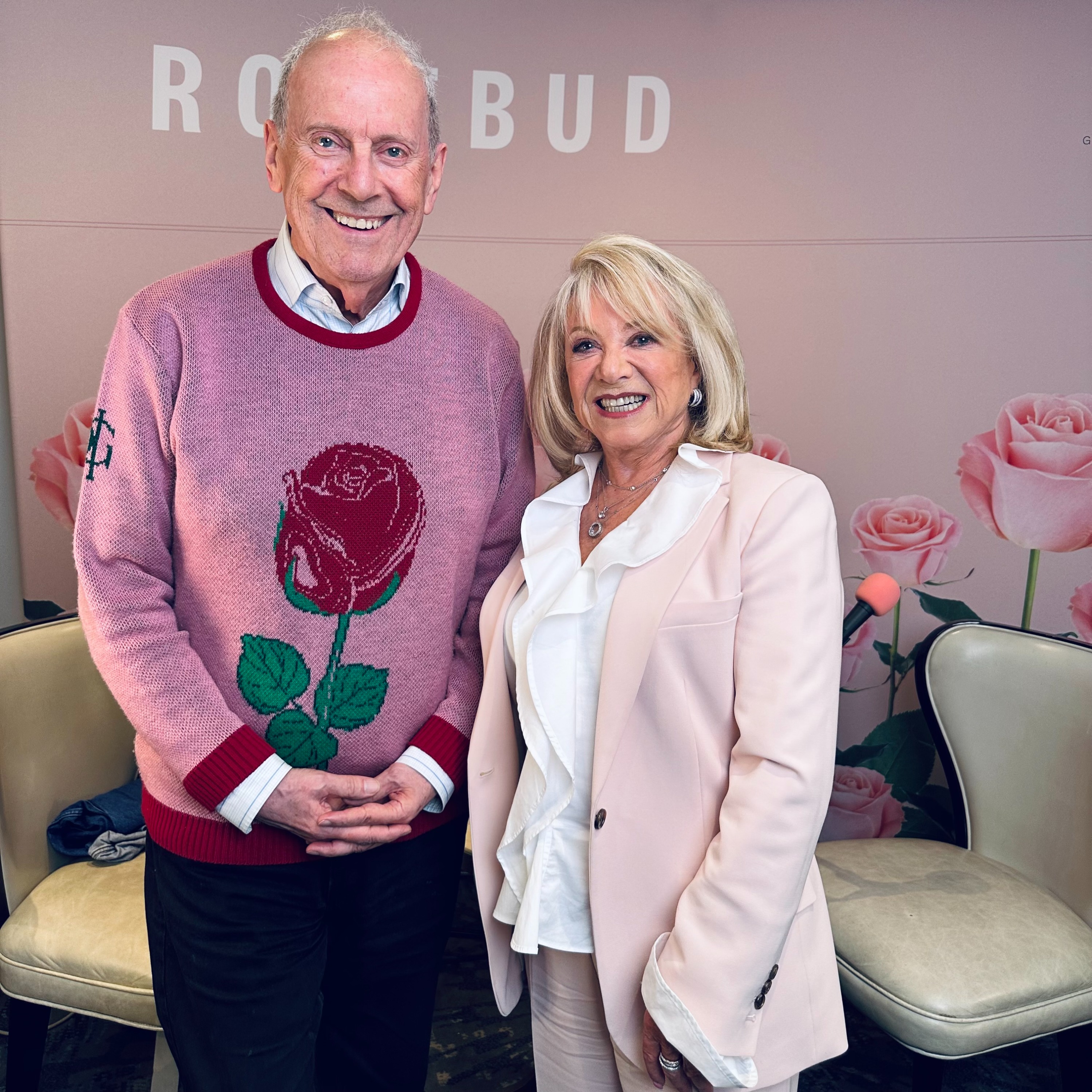
We're thrilled to announce that our guest today is Dame Elaine Paige! So many of you have told us you'd love hear Elaine's Rosebud, and this conversation will not disappoint. In it, Elaine tells Gyles about her childhood, growing up in a maisonette on Barnet High Street with loving, talented parents who always gave her the right advice. She talks about her schooldays, and how she went to school for the social life... and she talks about being sent to theatre school and modelling gym slips and swimming costumes for M&S as a teenager. Dame Elaine tells Gyles about being in the film Oliver!, about getting naked in Hair and about being auditioned for Evita. She talks about Edith Piaf and the breakdown she had and how her mother and father helped her to recover.
This is a wonderful edition of Rosebud, our thanks to Elaine Paige for her time, energy and infectious laughter.
Elaine's album, "Miscellaneous Paige", is out now, and available here.
Hosted on Acast. See acast.com/privacy for more information.


