
 Ask ChatGPT



Jacqueline Wilson discusses her childhood, family dynamics, and how difficult issues (divorce, adoption, death, etc.) shaped her children’s writing; she also talks about her career origins (creating the magazine Jackie), later adult novels, her relationship history, and being made a Dame.
Dame Jacqueline Wilson (born 17 Dec 1945) is a leading British children’s author of the Tracey Beaker series, with 100+ books. She grew up in rented rooms and later a council flat, with parents who argued intensely; she was a shy, bookish child who loved libraries and magazines.
Her alter ego “Gwenny” helped her cope with trouble. She became a people-pleaser due to needing to keep parents calm. She says her work is rooted in childhood experiences and observation of others. She describes her relationship shift from an early marriage to later partnership with Trish, framing it as about personality/connection rather than labels.
“Gwenny” wallpaper incident; turkey thrown during a Christmas argument; library in Kingston; “Jackie” magazine naming interview at DC Thomson; Tracy Beaker letters from two boys in care wanting to “marry” Tracy; her Dame/CB honor and her mother’s refusal to read her books.
Written by AI. May contain mistakes.
Explore Jacqueline Wilson's childhood memories and the impact of her family on her writing.
“Jacqueline Wilson takes the page and the stage.”
Explore the childhood experiences and memories of Dame Jacqueline Wilson as she reflects on her family dynamics.
“sort of trying to sort of harass people into going much lower in their price when she was going around huge places like Ardingly or whatever.”
Jacqueline Wilson shares her childhood experiences and early lessons on life and relationships.
Jackie discusses her early writing experiences and how she started creating stories.
“How old were you when you began to create stories?”
Exploring Jackie’s aspirations of being a writer and her journey toward that goal.
“Branson, the teacher in the last year at school, who really was terrifying.”
Learn about Jacqueline Wilson's early career and the origins of her writing journey.
“And how does the transition come from being someone who now can type, someone whose daydream is to be a writer, and making the leap?”
Jacqueline discusses societal norms around relationships during the 1960s.
“I mean, I'm assuming you meet your husband, because you're only 21, that you meet him as a virgin.”
Explore Jacqueline's transition to independence after her marriage ended.
“You could say Miller had his own sideshows at the same time.”
Discover how Jacqueline found love again later in life and the importance of companionship.
“I saw Emma sometimes too, which was great.”
Explore how perceptions of relationships change with age and experience.
Jacqueline Wilson discusses her relationships and the complexity of love.
“She's much more of an extrovert than I am.”
Jacqueline reflects on her relationship with her parents and coping with loss.
“she she just she would just have said something like why on earth are they giving that to you I mean, she never really, she never read a single one of my books because somebody asked her why.”
Dame Jacqueline Wilson shares her thoughts on loss and life lessons learned.
“And she has promised me that that would be true.”
The host expresses gratitude towards Jacqueline Wilson and reflects on past guests.
“And I'm not a little girl anymore, although I can be childish at times.”
The host discusses upcoming guests and the Rosebud family Christmas party.
“I love the range of authors we've had on Rosebud, from Jacqueline Wilson through to Will Self.”
The importance of reading for well-being based on research by Queen Camilla's charity.
“And remember the research done by the Queen's Reading Room, Queen Camilla's charity for encouraging the joy of reading.”

Get the gist, explore an idea or ask about something said.
 Claude
On Rosebud with Gyles Brandreth, what are the key points of this episode?
Searching your listeningAutomatic transcript. May contain errors.
0:00If you felt stuck trying to lose weight, you're not alone. Enter Weight Loss by HERS. It's designed to support you in reaching your goals. And HERS now offers access to an affordable range of FDA-approved GLP-1 medications, including the WeGovi pill and the WeGovi pen. Even better, with a range of affordable GLP-1 options, HERS makes it simple to find an approach that fits your needs and your budget, if eligible. You'll get a treatment plan personalized to you and unlimited dosage changes as needed. It's weight loss designed to work with your life. Ready to reach your goals? Visit 4hers.com slash eligible to get personalized, affordable care that gets you.
0:37That's F-O-R-H-E-R-S dot com slash eligible. 4hers.com slash eligible. Weight loss by HERS is not available in all 50 states. Wegovi is the registered trademark of Novo Nordisk AS. To get started and learn more, including important safety information, Wegovi clinical study information and restrictions. Visit ForHers.com. Everything's coming up. Rosebud, I'm Giles Brandreth. You're here. What more could you ask for?
1:27Hello again, this is Giles Brownrath, and this is another episode of Rosebud, but it's a bit different because it's the first ever episode of Rosebud introduced to you from a car park. I'm in London at Paddington Station. I'm here in the car park waiting to catch a train to Cheltenham. I'm going to the Cheltenham Literary Festival. I've been going to this festival, I think it's the oldest British literary festival for many, many years. I think I first came to Cheltenham about 50 years ago. And we've featured quite a few noted authors on Rosebud over the last few years, but not as many children's writers as I would like.
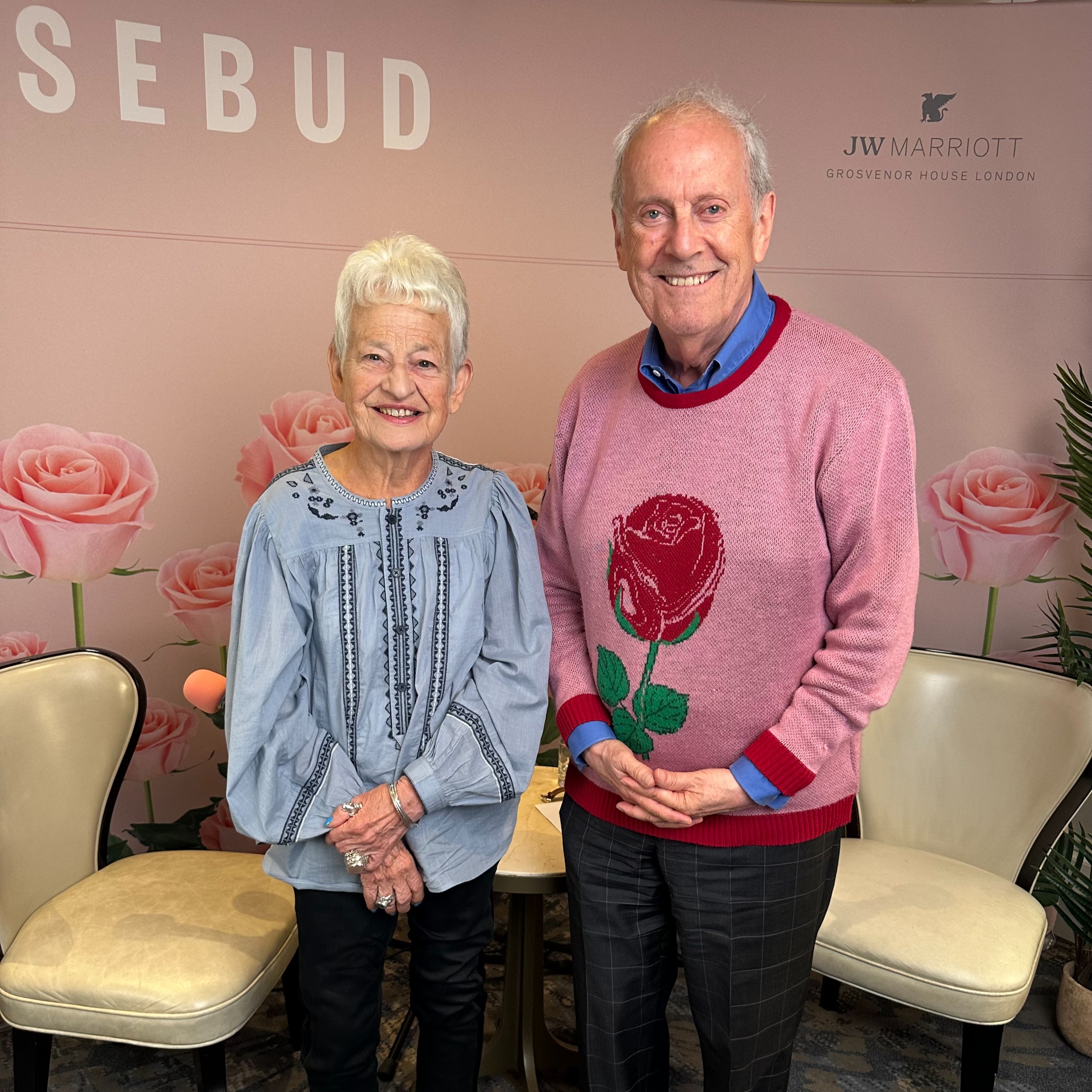
2:06And I do think, since we are so much about childhood, we often say a childhood lasts a lifetime. The significance of children's writers in the life of children should not be underestimated. So today, we have a very special children's author on Rosebud. It's Dame Jacqueline Wilson. I say she's important for a number of reasons. One, she's one of our most distinguished children's authors. The Tracey Beaker novels have sold literally in their millions. She's written more than a hundred books. But she's important because her books, her adult life, was so influenced by her childhood, by her life with her parents, with whom she didn't feel able to communicate and share some of the problems that she actually was a pioneer author in raising in her children's books, talking about things like divorce, adoption, death, difficult issues that she actually introduced young people to.
3:09I've discovered in these Rosebud conversations that are many children who find it difficult to relate to their families, to their parents, to their siblings, but somehow they come alive through children's books, even through children's comics. Actually, children's magazines are relevant to our guest today, Jacqueline Wilson, because she gave her own name, Jackie, to the magazine Jackie. Yeah, which is pretty remarkable. You're going to find out some remarkable stuff about her and about what it's like growing up and why people become authors. I think you'll enjoy this one. Welcome to Rosebud. Cue the music.
3:46Jacqueline Wilson takes the page and the stage.
4:02Well, here we are. I'm with Jacqueline Wilson, born on the 17th of December 1945, 45 and I have to ask you is it always Jacqueline do some people call you Jackie or it's Jacqueline on the books so professionally I'm Jacqueline Wilson to you know close friends I'm Jackie that's that can I occasionally lapse into Jackie please do Jackie I'm liking this already Jackie Jacqueline Wilson what is your very first memory I think it's probably being in my grandma's lavatory because we we shuttled from rented room to rented room just after the war and then we lived with my grandparents for about three years so I must have been three or four and she had in there wonderful wallpaper that had lots of bubbles in it a bit like ancient bubble wrap or something and I'd sit there and go pop pop pop and because I was quite small she didn't notice at first and then she did and she cornered me when I came out and said did you do all that damage to my wallpaper and I really hated being in trouble and getting told off.
5:29And so I don't know why I said this, how I came up with the name. I said, no, Gwenny did it, which startled my grandmother. And suddenly, Gwenny became my auto ego. If anybody had done anything naughty or silly or couldn't sleep, it was Gwenny. Otherwise, if I behaved myself and didn't get my frock dirty or whatever, I was me, Jacqueline. So how long did Gwenny stay with you as your alter ego and companion? She stopped being real to me, but I was a bit artful and carried on with it, even when I'd gone to school, because they still thought it quite cute, but a bit devious. And so if it was a really troubling thing, I was probably more likely not to be told off too much if it was all down to Gwenny.
6:25But they knew immediately, your grandmother knew immediately that Gwenny was an invention of yours. I would think so, yes. Tell me, who were these grandparents that you were living with? They were my mother's parents, and my mother and father and my grandparents, I think they really didn't like each other very much, but it was sort of, we had nowhere else to go. They did have, it was just a semi. But we had the top bit and we stayed there. Then we went to Lewisham for further rented rooms where I started school. And then when I was six, my parents got allocated a council flat. Go back to your grandparents.
7:15Yes. Who were they? My grandmother was Hilda Ellen Clibbons and my grandfather was George Alfred Clibbons. they met when my grandfather was invalid out of the first world war and he used to sit at this convalescent home for wounded soldiers and my grandmother walked past and these two soldiers always whistled at my grandma apparently and she was the little fair one and he liked the look of her and so they got together and got married and were they obviously they were important to you were they happy as a couple do you think they were cozy as a couple I never ever saw them kiss um they didn't use endearments the worst thing they ever said to each other was calling each other fathead but they were soothing because my parents who had got together after the second world war I think it was still going on when they liaised in Bath because they were both sort of sent there and as my mother charmlessly said when I was a child too there weren't many decent men at home then so your father was the best of the punch Take us through each of them.
8:45Tell me about your mother, first of all. My mother was probably a difficult child. She had a mind of her own. She was certainly a very, very difficult woman. That's not just my opinion. That's every single person. What makes a difficult woman? I think probably she was a narcissist. She couldn't understand anybody else's point of view. She thought everybody should be there to please her and do what she wanted because she was certain it was right. So she had made up her mind that when I came along, I was a mistake though they were again as my mother insisted respectably married when I was conceived but it sounds pathetic she refused to see me for 48 hours as a little newborn baby because she said she hurt me so much and so right from the start everything I did if I behaved myself and was sweet and spoke up a bit she liked me loved me but if I didn't and I was a very introverted shy child who just liked reading and sitting in a corner sucking my thumb um then she thought I was playing up so childbirth was so painful to her that she thought you had caused it I mean she was in labor 48 hours but um for the next 48 hours once you'd arrived I don't want to see her exactly the pain she's called me yes so what was her name Biddy.
10:28I mean, she was Margaret Clivens and then Margaret Aitken. But for some reason, I don't know why, she started being nicknamed Biddy as a little girl. How does Biddy meet your father? How did they meet? They met at the pump rooms in Bath and got married three months later, I think. And who was he? What sort of person was he? His name was Harry Aitken. He was a draftsman. He was helping to design submarines at that stage. He was shy. He was an introvert. He could be very moody. They were so unlike each other in personality. My mother would want to go out dancing and have fun. It was my father's idea of hell.
11:18In today's times, they would have had a quick fling, realized they had nothing in common, didn't even like each other and gone their separate ways. But no, they got married. And then I came along a year later. And then I think my mum would have left him. But in those days, she didn't have the earning power. And then she would be lumbered with me, presumably. And so it was not a harmonious childhood. Were there brothers and sisters for you? No brothers and sisters. And my mother was an only child too. and sadly, although nothing could be better than my own daughter, I set out thinking I want at least six children.
12:02I don't think I could have coped. So I'd had just the one daughter. And you were the one unwanted child. I mean, you now say that. I mean, I wasn't one of these poor neglected little mites. I know I was always carefully dressed and kept very clean and tidy And then my mum always thought Shirley Temple was the ideal small girl. And so she subjected me to terrible curlers at night so that my hair, which is still a bit wispy and odd, was sort of sticking out all over the place. And so I looked like a much cherished child. And in some ways I was. and she was very good at giving presents at Christmas.
12:51We didn't have much money, but I remember thinking Christmas is quite wonderful. And when I later developed a passion for the child film star Mandy Miller, my mum would take me up to London to where a lot of the film... They weren't exactly studios, but in Wardour Street, various places were at film companies. and they had those outside cinemas there used to be those photographs, stills from the film and she would march in completely unannounced and say, hi, my daughter absolutely loves Mandy Miller what could I buy from you? And generally, because she had cheeks she possibly had a bit of charm too otherwise I just told her to get lost and so she helped me build my collection Mandy Miller photographs.
13:42That's a kind thing that your mother did for you? It was, you see. With enthusiasm. Yes, yes, because this was the sort of thing she loved. She loved to get something that nobody else could get. She loved to bargain. Much later in life, she became a minor antique dealer and she was in her element, sort of trying to sort of harass people into going much lower in their price when she was going around huge places like Ardingly or whatever. I said before that I was going to be writing a memoir because the publishers asked for it. And annoyingly, I think my mother is the person everyone will fall in love with and find hilarious.
14:29And I would too. But it wasn't all joy living with her. When did you first become aware as a little girl that things weren't quite right between your parents? From very early on. There were terrible arguments, great shoutings and screamings. Where did you hear these from? I think possibly they weren't so bad when we lived with my grandparents. But when we moved to the council flat, there were huge rows. And my mother, who goaded and goaded and goaded my father until he started really screaming. and then she'd always say that very classic British phrase, what will the neighbours think? And good God, what did they think?
15:16You were in your bedroom hearing this? Or you were actually in the room? Sometimes it was over my head. One memorable Christmas, my father was cutting the turkey, carving the turkey, and my mother was criticising him about his technique. And he suddenly lost it altogether. and threw it at her. The turkey or the knife? The turkey, not the knife. That's a relief. You see, mine's a very small suburban domestic horror. In a real book, it would be a knife. No, it was a turkey. Well, it's funny, isn't it? You picked up the turkey, but it was the Christmas turkey. And the thing is that, and then, my mother never wasted anything.
16:02So after he'd stomped off, I don't know where, into the bedroom, into the bathroom, You know, she mopped the turkey with the dish towel, shoved it back on the plate. And then after quite a long time, when more or less everything had gone cold, we had our Christmas dinner. Did you ever talk to her or him about it?
16:25They sided with me. in that if there was a huge argument, my mother would say, I am right, aren't I, Jack? Yes, come on, say so. And your father's being terrible, isn't he? And then my father would say, no, no, et cetera. And so I always said, I'm not taking sides, which I think was a very wise thing to say, but that infuriated both of them. Did you feel unhappy about this when you were lying in bed at night? Yeah, I did feel unhappy. but having said that, I had a lot of fun too, and my father had such a temper, I was nearly always frightened of him, because you just never knew when he was going to be on the turn, and yet, every summer holiday, he would take a day off work, and take me out into the Surrey Hills, and then we'd go for long walks, and if we'd set off at Guildford, there was a wonderful secondhand bookshop there which had its own children's room and I was allowed a book which was fantastic and and much later on I'd said that I wanted to go to a ballet and he did take me I think it was the Nutcracker generally the first choice and and I mean he he actually fell fast asleep because so he did lovely things but also you know I was always on edge with him.
17:55Have you subsequently thought why she was as she was and why your father was this he sounds like a figure who is angry at times um but he clearly is and frightening and she obviously is aspirational so is she disappointed in what has happened to her life have you thought i think she was disappointed and i think she would have loved to be something like a journalist she was nosy she was cheeky she would have loved to have been in the thick of things and everybody roaring with laughter at her jokes or the things she did and she wasn't she was she had a variety of jobs her first job was in a cake shop which I appreciated enormously because she brought home I mean I often had for lunch a sort of bath bun and a cream donut which I still have yearnings for that sort of things at lunchtime um and oh she did a newspaper round in the big hospital near us so she enjoyed that sort of flirting with all the men and um yeah she was a terrible flirt and in fact at my mother's funeral actually she'd run out of men then but um so she just had ex-carers come along but right up until her 80s truly she was um getting together with various different gentlemen oh did she have dalliances i mean actually affairs oh definitely yes and then with my father at his funeral not only my mum was still technically married to him because she always had her eye on the civil service pension but um not one but two lady friends turned up as well congratulations to him so they stayed together though did they they stayed together uh probably for financial reasons until um my mother inherited some money from my grandparents and then she could set off in her own establishment.
20:05What I really want to know is we often say here on Rosebud, a childhood lasts a lifetime. What from this experience as a child and having these warring parents, essentially, though in an overall loving and responsible, they were loving and responsible parents, but they were at war, they weren't happy. What of that is in you still? What have you taken from that into your life? I get worried when people are shouting and very angry still and although I'm very good at pretending and masking but the heart goes boom boom boom like that and I don't think well I think the real and actual beneficial effect it's had on me is I'm quite good at working people out psychologically and it's made me a bit too much of a people pleaser I think because I do I'm needy still and worry if somebody I feel doesn't like me very much even if I don't like them very much it's just because the way for my mother to make a fuss of me was to please her in every way the way to keep my father calm was to keep out of his way but always to be compliant and not a nuisance so it's a way of life that is very difficult i think once that pattern's established you carry on yes obviously you're a bookish girl right from the beginning was there a local library you went to I loved the library and my mother again at that time you were because they didn't really go in for picture books so that the age to join the local library in Kingston used to be eight and my mum took me along when I was six and said look we can't afford all these books and she's read all her books humpteen times can she join the library and they did allow it which was very nice of them and I adored that library.
22:16And what are the books that are immediately in your head as the big ones from your childhood? Well libraries if you discover you love a book like I read a later Mary Poppins and then I wanted them all and you have to be so patient to make sure that at last you've read from Mary Poppins and then Mary Poppins come back and all the others. I love those books I loved North Stretfield's books. I did with my first book that I ever bought myself with my pocket money was a puffin paper book back of ballet shoes. And, oh, it's cringe making. I asked for pink bedroom slippers and danced around. I even had a book about how to do ballet and tried to do all the different positions and a pirouette and God knows what I would have looked like.
23:10It's not cringe-making, it's charming, it's lovely. Well, no, probably not. But I didn't do ballet because my mother had done ballet and she hadn't liked it. And so she said, no, you're not doing it, you won't like it. You see, she thought my personality was a watered-down version of hers so that we were very, very different. But this is the thing. is if somebody is born that way, can they change? Therefore, is it their fault? I don't know. I mean, as a child, I thought she was always right. As a teenager, I rebelled fiercely. How did the rebellion manifest itself? I thought she was a terrible hypocrite because she was seeing boyfriends.
24:07And you knew about this, did you? Yes, yes. She brought them home? Well, there was one that she was really keen on and bizarrely, they used to go out with my father on a Saturday night. I mean, what he thought of it, I have no idea. But when I started to have boyfriends, my mum got very angry with me if I stayed out even till 10 o 'clock at night, say. And this was, I thought, very annoying. And there were just rows, but she wanted to choose my clothes. And I always remember she loved a bargain and she bought me once a bright turquoise fake fur cape, which was not remotely fashionable. and I was terribly teased outside school.
25:08I mean, I wore school uniform in school. And, you know, she bought things that she said were knobby. Now, I wasn't a knobby child. And she also... Knobby meaning like a grand? Well, she sort of meant it, I think, as unusual, quirky, perhaps. That's a knobby little thing. Oh. Yes, wear that, Jack. They're rather fun. You look rather stylish. Yeah, and no, I didn't. I just, I mean, when I was about 15, I longed to be a beatnik, grow my hair, and wear all black with a sort of long, sloppy jumper, and have Winkle Picker shoes. Well, this was 1960, you were 15. And no, I had to wear sort of pastel-coloured things.
25:58At the secondary school, were you successful? Was it a big school with their boys and girls? No, it was a girls' school. I had been quite popular at my primary school, but it wasn't... I had a good friend, Chris, who I'm still friends with all these many years later, and it was... I didn't really like the regime in that the head teacher was trying very hard because it was one of the first comprehensives, but a bilateral one just for girls. And she was stricter with us than, you know, I can believe now. And one time, I think I committed a terrible offence of not wearing my school berry out of school.
26:50and I was forced to stand for hours outside her study, which seemed to me silly. You know, if I'd done something really wrong, I could understand, but just getting fed up with the berry and shoving it in my satchel just didn't seem a heinous offence. But we had a wonderful art teacher who came along to have a word with the head teacher, And then when he came out, he felt in his pocket and put some chocolate on the windowsill beside me. And I've never forgotten that sweetness. He was a lovely man.
27:45access to an affordable range of FDA-approved GLP-1 medications, including the WeGovi pill and the WeGovi pen. Even better, with a range of affordable GLP-1 options, HERS makes it simple to find an approach that fits your needs and your budget, if eligible. You'll get a treatment plan personalized to you and unlimited dosage changes as needed. It's weight loss designed to work with your life. Ready to reach your goals? Visit forhers.com slash eligible to get personalized affordable care that gets you. That's F-O-R-H-E-R-S dot com slash eligible. ForHERS dot com slash eligible. Weight loss by HERS is not available in all 50 states.
28:24WeGovi is the registered trademark of Novo Nordisk AS. To get started and learn more, including important safety information, WeGovi clinical study information, and restrictions, visit ForHERS dot com. Rubric is the security and AI operations company built for what happens after an attack hits, not just the moments before. AI has turned the threat landscape into quicksand, moving too fast for any human to fully predict. That's why an agentic cyber resilience platform matters. Automated recovery, clean data, a business that keeps moving no matter what hits. One platform, not a patchwork of stitched together tools and gaps.
29:00Don't wait for the next attack. Secure and accelerate your business at rubric.com. Again, rubric.com.
29:09can you remember how old you were and who taught you the facts of life um yes i was nine and um i was addicted to a bizarre women's magazine called women's companion which was fourpence hapenny and it had all sorts of stories and there was one i particularly loved a serial called The Latchkey Child and I like these stories because they were all about quite poor people and with different problems and I mean I suppose I often write the same sorts of things now and I adored this magazine and I was given a subscription to this magazine and but there were the problem pages which I adored and then my mother had taken me to a little cafe for a treat where we often went called Winifred's which was full of elderly spinster ladies and gentlemen who had retired and couldn't be bothered to make their own thing and it was always very quiet and genteel just clinking of cutlery and I suddenly said mummy what are periods my mother with reasonable panache said I think we'll talk about that at home and then she did talk about it at home and I was quite astonished and then she she bought me a book called a small book called how a baby is born and it showed how chickens came out of eggs and there were all sorts of fudging matters nothing at all about how human being babies were born but then by the time I was 11 I mean somebody had been told reasonably truthful facts of life although being kids we sometimes got it wrong and were you comfortable with it when it all happened I was quite curious actually it just seems such a bizarre thing to do and then when I had a discussion with my mother and I said well where do people do it and she said in bed and and I said when they're asleep and my mother oddly said yes it may tell you something about your conception who knows this could be why she resented it so much she didn't know she's gonna have a baby oh lord i woke up so so i did have the wrong idea about it somehow but then then i discovered we we just had one bookcase and as i was looking through for desperate for something else to read i saw there was a really big fat book at the back of the books and i got this out and it was a sex instruction book a really quite detailed one and that was alarming because it described various different sex acts that had never occurred to me and I had a vivid imagination but I shut up about finding it and always felt a little odd if I ever if I was on my own in the flat took it out and had a little peep again but certainly for a youngish girl 12 maybe it was a lot of facts when did boys come into your life i did have a proper boyfriend that i went out with for about 18 months when i was about 15 through to 16 who actually lived in the same flats and um and that was quite an intense relationship he was training to be a hairdresser and he used to do my hair and um one terrible time he had tried out i had dark brown hair then and he tried out doing a slightly auburn rinse on it and it looked quite the thing it didn't look too obvious at all but it was a bit the color of Judy Garland's hair in Wizard of Oz that just slight chestnutty sort of thing so I thought that was lovely and then he said well come along to the salon after hours because he had the key to it and he said and I'll do you a sort of permanent dye like that and madly I went along and I think this was the first time he'd ever tried to dye anybody's hair and first of all he peroxided it so it went sort of bright yellow straw and then he put the dye on and dear god it was marmalade colored absolutely orange and I said I can't bear it then wash it out he said it won't wash out and I think I broke up with him several months later I was so shocked I didn't know what to do I had to go home and my parents were amazed but worst of all I had to go to school and again I was up to their head teacher and how dare you what do you look like and I agreed with her what did I look like and I mean I had dark eyebrows and so I had to try and pluck them not not completely away but in a reasonably neat arch because you know they my eyebrows rather wanted to be like Frida Carlos and if you have orange hair and his rather stern black eyebrows that that just looked awful.
34:44How old were you when you began to create stories? Quite young weren't you? Before I could read in that I used to I had one or two books when I was really little and my parents thought that once you'd read a book aloud to a child that was it and of course you wanted again and again and again and so I tried to I got the books and tried to reconstruct the stories but often I preferred to make up my own stories to the illustrations and then I got to be making them up inside my head and then I I always could make it up much more quickly than when I started to write very laboriously in in pencil the words wouldn't on page wouldn't keep up with the ones in my head so I sort of acted it out in my head and then it was my absolute delight when I really did become a latchkey child myself in the summer holidays my mum went out to work She came home at lunchtime to feed me.
35:58But then I loved being by myself. And I would generally stay in bed and I would just, I would cut out sort of pictures of children in magazines or try to draw them myself from the book and make up stories about them and just imagine what they were doing or I played with my dolls, say. and those games and that sort of imaginary life were more real to me than my actual friends. Is this when you did your first book that you made, Meet the Maggots, you put together a book? That was a school project. We had a heavenly teacher, Mr Townsend. We all adored him and he was, I think it was his mission to make every child feel special in whatever way.
36:45and he'd given us all a special notebook probably the school notebook but we weren't used to having a brand new one and he said I want you to do a project whatever you like in it you can do it about football birds ballet whatever and he was so sweet I said to him please Mr Townsend may I write a novel and instead of bursting out laughing he said yes of course and took it as yes that's perfectly normal well it probably went to 12 14 pages maybe but I loved doing it and it was not a work of infant genius I still have have it pretty tattered my mum threw most of my stuff away when I left home at 17 not in a sort of vindictive how dare you leave home but more she wanted that she collected dolls then my bedroom as a place to keep all her dolls so she chucked out all the notebooks and everything but anything in a school notebook she thought no better keep that so this this survived and it's about a family with problems and there was a shy girl who wore glasses and read a lot and there were identical twins and there was a bossy little girl with curly hair that really could have been an infant Tracy Beaker.
38:14I mean, the germs of all the stories that I've written were there. That was the way I wanted to write. And who gave you the nickname Jackie Daydreamer? That was Mr. Branson, the teacher in the last year at school, who really was terrifying. He would lose his temper at the slightest thing. You still could cane children in those days. actually he was quite sexist in that he only came the boys not the girls but it was startling having to watch that he could be a charismatic teacher though and he he played a vocabulary game where um we would we had to i think there was a vocabulary book and we had quite hard words and he'd explained what they meant and so he got through 10 or even 20 words with all their meanings and then he made up a story he must have done this year after year so he was all prepared using all of the words that he told us and i mean that was a very clever way of teaching but um he also if you were sitting at your desk and we had dip in pens then and he came up and if you inadvertently made a blot or he saw a spelling mistake out would come the ruler and go whack on your knuckles like that i mean it was it's a wonder we all didn't develop nervous twitches or something i think i think nowadays he would be diagnosed as completely mad but uh we survived him and your ambition as a girl as a teenager now what was it in your head still to be a writer that's what you wanted very very much and i told my english teacher at the secondary school um because she'd been I knew nothing about the actual classics and the sort of how English literature is is taught and what's considered good and what's not actually it was quite good for me because then I discovered these things I made up my own mind about things and yet I was painfully eager to learn about this and to know what books to take out the library and she was very helpful and then I confided her in her one day and said actually I'd like to be a writer myself and write books and she looked at me and I have no idea to this day what her motive was but she said well maybe you could be a typist and work in a publisher's office and I don't know if she meant it to be a snub or whether she was just being realistic but um i did i actually wrote about it in my diary and i did say i am going to buy to book one day and hopefully it will get published but that's why you went to secretarial college because that was well no it it wasn't i wanted to do a levels because chris my friend her older sister jan was doing a levels at that time and i used to go to tea with them and I used to look at her A-level English essays and the different things she was writing about I longed to do it I didn't really want to stay at school and sadly I had no idea that you could go to a sixth form college and then anyway my parents wouldn't let me do A-levels because my mother said no it's just a way of your head teacher getting extra money for the more girls that can stay on and do A-levels.
41:50So she insisted I did a secretarial course. And she did have a way of persuading me because she said, look, you want to be a writer? OK, learn to type. You emerged from secretarial college. And how does the transition come from being someone who now can type, someone whose daydream is to be a writer, and making the leap? Because I saw an advert in the Evening Standard looking for a secretarial job and I saw wanted teenage writers sort of in a little box and it was DC Thompson's who did the Beano and the Dundee Company up in Dundee Yes, up in Dundee And the famous girls' magazine, Jackie Jackie, which there was Mr Cuthbert and Mr Tate who were in charge of women's and girls' fiction and they told me they were going to be naming because it hadn't come out yet.
42:45They just wanted to collect material for it. They wanted to name it after me because I was their youngest journalist. So you are the reason how this is fantastic. It's disputed because somebody else working on Jackie much later on told me, no, no, it was a communal decision. I don't know, but Mr. Cuthbert, Mr. Tate, I stick with them. I stick with them as well because it was, I knew it not long after that period. and it was almost like a secret society. I'm not right. D.C. Thompson was very private. He was run very old school lines. Totally. You weren't, once you'd left, you could never go back and say hi to your colleagues and the very first question they asked me when they were interviewing me, the two gentlemen came down from Dundee to the Waldorf Hotel, which is the first time I'd been in a posh hotel and my mother was thinking, you mustn't go up to their bedrooms.
43:43How right she was. She was. I'm liking her more and more. You're right, when I read the memoir, she'll come out as the heroine. She will, isn't she annoying?
43:54But the very first question they asked was, what religion are you? And I thought, I'm not really any religion as such, thinking in my head. Why on earth does this matter? so I actually said well I suppose I was christened in Church of England they said that's fine and I did say well why did you ask and they said we can't employ Catholics goodness well I suppose it was a bit like Northern Ireland then and it was also a closed world the world of DC Thompson extraordinary it was it was very odd and um when Jackie came out um And it was an astonishing hit because it was the first full-colour magazine and also it was the first one that had full-page photographs of pop stars of their day.
44:48And yet they were incredibly moral. There was a very interesting, ultra-cool photographer who often went to London and knew people like the Beatles who were just becoming extraordinary and various other Liverpool groups, London groups. And so we got all these fantastic photographs. And then somebody on the firm discovered that he was living with his girlfriend in a flat in sin. And would you believe they sacked him? I would believe. And how stupid is that? Because it was the making of the magazine. I know, but that is the world that then existed. I mean, I'm assuming you meet your husband, because you're only 21, that you meet him as a virgin.
45:35That's the way it was. You can assume that. Oh, I'm wrong, am I? I'm pretty certain, yes. Oh, well, now this is a surprise to me, because we're talking now about 1966. So you discovered a bit of swinging... We got married at 1965. Oh, well, that explains it all. I was actually the one that thought it would be much more sensible, perhaps having the experience of my parents if we lived together first. But he said he couldn't do that because his parents would be too shocked. And I think, oh, dear goodness. But anyway. That was a period of transition. I mean, I'm not going to let you knock him too much because knowing that era, it really would have been considered.
46:19In Scotland, possibly, yes. I think actually in England up until the 1960s. You know, the pill had only just come along. Yes, and actually it wasn't available if you weren't married then. Anyway, you boldly tell your story. Yes, but he didn't want to do that. But then I started off at a Church of Scotland girls' hostel, which obviously any liaison wasn't possible. This is when you were working in Dundee. In Dundee, when I was 17. And then I went to live in Diggs with another girl from the hostel and that was fine. But then she went off to live with her boyfriend's parents, possibly in single bedrooms, who knows.
47:11And I couldn't afford the rent by myself and didn't know what to do. because I didn't want to go back and live with my parents who were on the verge of splitting up anyway. And then my ex came along and he was quite good fun. What was his name? Miller. What was his first name? Well, Miller was the name everybody called him by, but his first name was actually William. But you called him Miller. Miller, yes. and we like going dancing and everything and he seemed quite keen to marry me so I thought okay and we were married a long long time because I was determined to make my marriage work simply because my parents hadn't and the wonderful thing about it was I have my glorious daughter Emma who I've always been very close to and I had a wonderful time I was really quite young at 21 to have a baby and yet I like playing with her dolls and dolls houses as much as she did and then when she got a little bit older it was quite wonderful because we were on the same wavelength and I hadn't ever found that before I mean I could take her when she was quite little to art galleries and as long as you know we we looked at different paintings and i would make something up about it but emma by the time she was 10 or so it's the little academic in her coming out she wanted to go and listen to the lectures that explained you know more about things than the different movements in art and so i got her interested but she was the one going with her that educated me And did you spend so much time with her that Miller became a little bit of a sideshow?
49:16You could say that. You could say Miller had his own sideshows at the same time. Men, I'm so sorry. Week in, week out, I have to apologise for them on Rosebud. How quickly did you realise this isn't going to work?
49:35Well, I vaguely thought about it. but I was so determined that I didn't really see what was happening. And he did eventually have an affair that he decided, right, he kept quiet about it at first, but then I found out and then he left. And there was a bit of to and froing for a bit, but that was it. and it's quite worrying because I realised I'd never actually lived on my own before because, you know, I was with my parents and then I was at the hostel, the flat, different flats with Miller and then suddenly there I was in charge of my own life. How old were you then? It was just you and Emma. It was the year, no, Emma had left home and was at university then.
50:38It was the year Princess Diana died. Yes, 1997. Right, so it's a difficult time, but I was determined to get on with life. And so I already did a lot of day classes in literature because I enjoyed it. and I had a good circle of friends around me but I wanted to do new things so I did a sort of London architecture course I went on London walks course I I longed to go dancing but you'd have to be mad or incredibly courageous to go actual clubbing or whatever at that age but line dancing had happened and I knew it was considered naff but I thought it's the one place you can go you dance we don't dance on your own but you dance with a whole crowd of people and so I thought I'll try that I was a bit nervous going and they were such a wonderful crowd there I think it was only one man but lots of lovely down-to-earth women many of whom were then on their own and they made me so welcome didn't have a clue that I was you know a writer or anything I was just Jackie when did Trish come along she didn't come along I had six years by myself but then were you lonely or sometimes I was lonely weekends could be lonely sometimes although a lovely woman in the road I lived in often asked me for Sunday lunch which was so thoughtful of her because most people are doing their own family things.
52:25But I was certainly very busy. I saw Emma sometimes too, which was great. So it was okay. I went to the quiz every week. Almost had too much to do. But you do feel weirdly on your own sometimes. And I went to places, I went on holiday to America on my own and thoroughly enjoyed it. But it sometimes is hard. Were you looking for love in your head? Not really, no. I was wary. Had you dismissed the idea of men totally from your... Not really either. I've never really... I don't have a type. You know most people have a type, whether they want men or women. I didn't have that. What I was interested in is somebody's personality.
53:16if if they like reading uh if they're um just fun to be with but um we were at this book event and um and several authors were invited along and then you sort of broke up into little clumps when you're having your meal and everything and i i am hopeless with any kind of machinery i badly wanted a coffee and you know those coffee machines you press all these buttons and then suddenly all spurts out up your sleeve so this was happening and this woman came over and said oh goodness let me help you and she did and then she said um is anyone meeting you she knew who i was i mean she'd been there for my little talk and i said no i don't think so she said well come over at our table and was just lovely and then we got talking I really sort of it was so exciting to have somebody that seemed to be exactly on the same wavelength and I really really liked her and then then she had to go off to her conference and I was waiting for a taxi to the railway station where I was going to go home and and then she came past after the first session and then she gave me a hug and said oh I really like meeting you now I wasn't used to being hugged I had no idea that Trish is such a hugger you know she sits next to somebody on the train and when she gets up to go she gives them a hug but anyway I thought oh she's nice and so I got in touch with the shop that I knew she worked at and took a risk on saying I hear you do really good events you didn't ask me for one would you like me to come which is the most forward thing I think I've ever done in my life and she being slightly slow on the uptake wrote back very excitedly yes yes thinking oh this is a well-known author and she'll draw in the crowds and everything yes please not thinking that i might have had tiny ulterior motive here but anyway there were complications there always are and um we didn't get together for quite a while but then we did and um and i think we met 24 years ago oh my goodness and i mean we can still have her house but you know I do think that she's the person I was always meant to meet and so that if there are any women in their 50s out there suddenly left on their own take heart you never know what's going to happen next and I think when you meet when you're older you have you know what will work and you know it won't and you don't have you don't want a 10 out of 10 person because that so rarely happens, but you can have a nine and a half out a person.
56:50GovyPill and the WeGovyPen. Even better, with a range of affordable GLP-1 options, HERS makes it simple to find an approach that fits your needs and your budget. If eligible, you'll get a treatment plan personalized to you and unlimited dosage changes as needed. It's weight loss designed to work with your life. Ready to reach your goals? Visit forhers.com slash eligible to get personalized affordable care that gets you. That's F-O-R-H-E-R-S dot com slash eligible for hers dot com slash eligible weight loss by hers is not available in all 50 states we go v is the registered trademark of novo nordisk as to get started and learn more including important safety information we go v clinical study information and restrictions visit for hers dot com
57:39and what's interesting about talking to you is that it's not a matter of you're bisexual you had a husband and you liked that for a while you fancied him didn't you in the early days yeah you you were the one who was keener to move in together than he was and you love your daughter and all that must have happened and now you fancy a girl it's not really about that with you i suspect it isn't it's it's the person really interests me and intrigues me and And, you know, on the same wavelength, there were very different sorts of women too. She's much more of an extrovert than I am. I've met her. She's huge fun.
58:20Oh, thank you. She is. I met her first in a cathedral and she hugged me. Well, there we go. Yeah, exactly. No, she's great fun. And so, you know, she makes life great fun. And she's introduced me to the joys of having animals. I mean Molly my cavapoo Emma says she's like your second daughter and then she jokes and she's obviously the favorite I mean I adore Molly um because you're so because you are an author and I love your books and my children and now grandchildren love your books you're a brilliant observer of other people so can I ask you when you got together with Trish was it strange being with a girl you having was it easy and natural because I was a boy uh let's say I was having a midlife crisis or suddenly was free I wouldn't know where to begin well a male I I was a little shy at first but easy and natural is exactly the way it was i many people seem to think now that i must have been repressed or something i don't think i was if she'd come along if i hadn't been married much much earlier i mean who knows yes people would assume that you were a closet lesbian no you actually always were you got married because that was the period but you're actually convincing me that it was real with miller when it happened then there was a change in your life yeah you met somebody actually this is working and it's been easy a friend of mine said i think you're a trishian which trish rather likes but um i i i do embrace the whole gay thing but I mean I don't think it really matters Do you write about that?
1:00:27You write a lot in your books the ones I've read about the kind of experience you had as a child. Do you write about gay characters, this sort of thing in your stories? I have started to I've had this idea and then waited for somebody to like it and they didn't for a while and then an editor actually suggested it and of course I practically bit a hand off to have some of the little girl characters that I'd written about in the 1980s 1990s and the beginning of the 200s 2000s um realizing that some of them would be in their late 30s or even early 40s and I thought why not write adult novels about one or two of my favorite characters and then hopefully they would work if you'd never ever read a Jacqueline Wilson book but if you had read one or two of these books and you really remembered it from your childhood and then to find out about them many years later and what was happening and so So I've had two of the books now, adult books, which both were nicely successful.
1:01:44I'm working on a third. And it's a joy. So I can play around. I'm going to start on these later books now because I know your children's children's work, which I know has touched the lives of children. And that must be, for you, hugely satisfying. Have you got a story or a moment where you feel one of your books has touched a child's life in a meaningful way that you know about? I've had lovely, lovely feedback. Even funny ones too, in the story of Tracy Beaker, which that, well, not necessarily the book, the very, very popular and ongoing television series really made people know my name and then carry on and be popular.
1:02:32I had a letter, half and half of it, written by two little boys in care and they say we both love Tracy Beaker and they'd been watching the the television series I think and they clearly thought Tracy a real person and they said we want to marry her which one are you going to choose and then they both drawn portraits of themselves and I just thought that was so funny and so lovely and also many children really thought oh it must be such fun being in a children's home because the telly version obviously you can't show some of the really sad and tragic things that happen and even in the books you can touch vaguely on things but you can't really be too traumatic for children and so it was lovely to feel that I'd raised the status of children who haven't got conventional family backgrounds.
1:03:40When you were made a dame, what year was that? The real question is, was your mother still alive? Oh, no, she wasn't. I had, when I got the first, would it be a CB? A CB, yes. she was still alive then but she was really she was in a wheelchair then and I knew it would be very difficult if I took her she would think it complete nonsense and she she was never proud of me unfortunately even when you became a commander of the order of the British Empire invited to buckingham palace to be honored no she would she would but she would have she got to that stage when she said out loud everything that she thought um and um it would have been incredibly difficult she knew i was going she never really said anything about it um and so i didn't either she she just she would just have said something like why on earth are they giving that to you I mean, she never really, she never read a single one of my books because somebody asked her why.
1:04:58And she said, well, why would I want to read a children's book? I mean, she's a strange woman. Because it's because of her that you were able to write the books in part. It's because of that childhood of yours. Well, this is where I'm lucky in that if I'd had a very loving, encouraging mother and father, I would think I would still want to be a writer because I think that's in me but a very different sort of writer and writing much more cosy, reassuring books but they wouldn't have had that slight edge to them and then I was lucky with my timing too because if I was writing say in the 1950s my sort of book would never have been published.
1:05:45Three more questions. I want you to give me, Jackie, a moment of joy, particularly for earlier years. Just a real incident, a moment of joy. I think the moment of joy was when I'd been quite anxious about Trish meeting Emma, Emma meeting Trish, and they liked each other immediately and got on together. and I was really joyful then because it meant a great deal to me. A moment of sadness. A moment of sadness. I mean, when your mother went, when your father, did you know when your father died? Did you go to his funeral? Oh yes, I went to the funeral, which was bizarre because of the two girlfriends there.
1:06:35But I have no idea whether this was true or not, but both of them took me to one side and said, or your father was so proud of you and often talked about you. Well, I didn't think that at all, and I have no idea to this day whether this was really true, in which case that is very sad, or whether they were just being kind. My mother's funeral... Were you sad at your father's funeral? I was... I think total honesty makes me say relieved. My mother's funeral, this is sad. She didn't really have any friends then, but I invited all the people that had cared for her because I only went there once a week, twice a week, and organised things and did things.
1:07:33And the nitty-gritty of it all and the personal care was done by other lovely people and right up until almost the end. she was taken out to different antique fairs and everything as well, though she'd long since lost it and knowing what she was doing. But they all came to the funeral and then they all came back and we all sat round eating dainty sandwiches and they all told their stories about Biddy and what she was like. And for her eulogy at the funeral, I had asked the lovely woman vicar if she would mind if I was a tiny bit frivolous and she said don't worry I've I've had punch-ups at funerals I've had goodness as what and so I imagined Biddy's idea of heaven which would be the huge huge huge huge antique market and that she would sort of hop from cloud to cloud getting bargains and enjoying herself also can I just say Charles she was very very ill dying in hospital for a whole fortnight and I went every day and helping feed her a little she suddenly became not this enormous personality she was this shrunken little lady in discomfort and it did make me feel tender towards her and she did now this is not a lie this is absolutely true although it doesn't sound like it but Emma was there as my witness she looked up at both of us in a moment of coherence and said I love you and I mean you know brilliant timing she had and maybe it was true I don't know but uh it was it was she ended her life in a good way and we sent her off hopefully in a good way and Emma has her ashes and after I'm dyed and if I'm cremated and then Trish will pass the ashes on to Emma when she's ill and Emma keeps her grandma in a special cupboard and I said, please could I have a different special cupboard?
1:10:03And she has promised me that that would be true. My mum could be at one end of Emma's house and I could be at another. Or she could be at us wherever. No, I think you want to be in separate cupboards. Separate cupboards. But I do think she did mean it at the end because she loved you in the way that she was. She was saying it from her perspective. You didn't give me, and make it concise, a moment of sadness. Sadness. We talked about those because those are obvious sad things, but a little moment, a little moment of sadness. It might be to do with a pet, I suspect. I could say that the death of our beloved Jackson, who died, I think, four months ago, who was a rescue dog from Battersea.
1:10:45We had him from a puppy that could be on our hand. And he was, as everybody said in their lovely, kind letters, he was a real character, which means he wasn't well behaved at all. But he was delightful and just so much part of our family. And we were distraught when he died. But he managed right up until the end to keep going, although his heart was failing and he had a horrible cough. and we hadn't yet had to make that awful appointment with the vet but this particular morning he just took himself under the kitchen table which is where he'd often gone if he wasn't feeling well or whatever curled up and died and you think yeah well I don't think I'll go as far as going under my kitchen table but it would be nice to die at home I think and you know in my own time and in my own environment and finally dame jacqueline wilson what has life taught you it's taught me that well i hope it soon will have taught me that catastrophizing and getting very anxious about things is a waste of time because the very few really frightening things that have happened to me I never dreamt would happen but all the many many things that I thought what if this happens what if that happens haven't so I think it's taught me that if you do something enough times like speaking to to big audiences or managing even if you've got a very tiny humiliatingly small audience still to be able to carry it off when this would have terrified me at one time I'm doing something again and again and getting used to it.
1:12:42And I'm not a little girl anymore, although I can be childish at times. Teaching me, you know, come on, stand on your own feet. You're certainly at my age. You're grown up. Get on with it. Well, I'm very pleased. One of my favourite children's authors has come to me and been so grown up. Jackie, thanks for your company. It's been a real pleasure, Joss.
1:13:10Well, that was Dame Jacqueline Wilson. My real thanks to her. I love the range of authors we've had on Rosebud, from Jacqueline Wilson through to Will Self. Do scroll back through our back catalogue, because we really have spoken to some remarkable people over the last few years. And the current episodes are also being shown on YouTube. And in a curious way, it's slightly different watching somebody speaking than just listening to them, just listening to their voices. So give YouTube a go sometime and stay with us. We are staying creative. The last few weeks we've had some remarkable creatives on Rosebud.
1:13:48The iconic designer, Zandra Rhodes. The lyricist, Don Black. The crime writer, Ian Rankin last week. Jacqueline Wilson, great children's writer today. Oh, a magazine editor on Tuesday, the great Dylan Jones. Has he got a childhood story to share with us? And then next Friday, well, next Friday is going to be the 90th birthday of the oldest rock star in the world. Who's still working? Yeah. Bill Wyman of the Rolling Stones is going to be with us next Friday on his 90th birthday, telling tales of his life and his life with the Stones. Some stories that I think you'll find you have never heard before.
1:14:30That's next Friday, Bill Wyman on his 90th birthday. But that's it for me for today. I really loved meeting Jacqueline Wilson. Maybe she'll be in Cheltenham. I've got to catch my train now. I really am doing this in the car park at Paddington Station. That's what I love about Rosebud. We're always on the go. Where are you listening to it? If you're, you may be in the car too. Who knows? Or you may be jogging or maybe falling asleep, whatever it is. Or if you've got a good car park story to tell. Oh, yes. Oh, yes. Let's do write to us. Because normally I do an email, but I can't find the emails on my phone here.
1:15:01or rather I can't do the recording and read the emails at the same time. So if you've got an entertaining story to tell, your first memory of something remarkable that happened in a car. I've got such a story to tell. The night I thought I was going to meet Jean-Paul Sartre, he didn't turn up and we had to sleep outside a place called Dina in northern France in the car. And the car was so small, I couldn't stretch out my legs. So I rolled down the window and my feet were sticking out of the car window all night. If you've got a car park or in your car story, share it with us. The address is quite simply hello at rosebudpodcast.com.
1:15:40Next Tuesday as well, we've got an exciting announcement for you. We're going to be having a Christmas party and it's for members of the Rosebud family. If you want to join the Rosebud family, all you have to do is get in touch with us. care of patreon.com forward slash rosebud, patreon.com forward slash rosebud. You'll find out all about that there. For today, thank you for being with us. And remember the research done by the Queen's Reading Room, Queen Camilla's charity for encouraging the joy of reading. Even five minutes of fiction read every day can increase your sense of well-being, lower your stress, make you feel more relaxed and at ease with the world.
1:16:27So thank you for being part of Rosebud just now, but find five minutes today to read a good book. Cue the music.
1:16:54Thank you.
1:17:22Thank you.
One of our best-loved children's authors, Dame Jacqueline Wilson, is our guest today. Jacqueline has changed the lives of many young readers by introducing them to characters and subjects which reflect the complicated lives of real children. And in this conversation with Gyles, Jacqueline talks about her own childhood, which has informed a lot of her later writing. She grew up with two parents who didn't really get along - a mother who was a narcissist, and a father who was often angry and distant - and who had violent rows with each other, but gave Jacqueline rich material for her books. Jacqueline tells Gyles about being a bookish schoolgirl who liked to daydream, about a disastrous encounter with some orange hair dye, and about writing her first novel for a school teacher. Gyles and Jacqueline talk about her first job, at DC Thompson, and about her marriage and the birth of her daughter when she was only 21. They talk about writing, and about Jacqueline's relationship now, and new-found status as a gay icon.
Our heartfelt thanks to Jacqueline Wilson for her delightful company, wonderful stories and wisdom.
Hosted on Acast. See acast.com/privacy for more information.


