
 Ask ChatGPT



Written by AI. May contain mistakes.

Get the gist, explore an idea or ask about something said.
 Claude
On Rosebud with Gyles Brandreth, what are the key points of this episode?
Searching your listeningAutomatic transcript. May contain errors.
0:00Hello, my name is Giles Brandreth and I'm delighted to be introducing another edition of what some people are calling the best podcast in the world. Well, two of those people are Harriet, my producer, and me. It's Rosebud. I hope you enjoyed it. Cue the music.
0:40Hello again, or indeed hello for the first time, if this is your first time listening to Rosebud. A special guest today, I think one of the most talented British actresses of our time. It's Dame Kristen Scott Thomas. You'll know her from her long and distinguished Korean movies, on stage, on TV, from the witty, chain-smoking Fiona in Four Weddings and a Funeral back in the day, to Catherine Clifton in the Oscar-winning The English Patient, for which I think Christine was also Oscar-nominated herself, and much more recently for her star turn as Diana Tavener, the MI5 boss in the brilliant Slow Horses.
1:24She brings, I think, a coolness, a complexity, a sense of unspoken emotion, depth to her acting. Anyway, today I'm going to talk to her about how it all began. about the loss of her father when she was only five, and then, tragically, of her stepfather when she was, I think, only 11, about her move to France and how she ended up being cast by Prince. This, I promise you, is a fascinating story. Please welcome to Rosebud, Kristen Scott Thomas.
2:09Christine, before we begin, explain your first name to us. Ah, my name is because my mother, when she first came to England to go to drama school, had a Norwegian friend called Kristen with this spelling. And she thought it was very nice. And so, yeah. In fact, I was christened Christina because the priest doing my christening would have none of this foreign stuff. So I was Christina, yes. Christina. Yes. Very good. but Kristin is how he said. Kristin, yes. Kristin. We begin always with the same question, which is simply, what, Kristin, is your very first memory? It's very difficult to actually identify the first because I have lots and lots and lots of memories of when I was really quite small, sort of before, definitely before four, I think maybe three-ish.
3:03I have a memory of going along in a pushchair making a sort of humming sound going ah and going along the gravel in the road and making the bumpy noises and I so I remember that I remember being in Hong Kong for my fourth birthday clear as a bell all sorts of things happened I I remember one fantastic moment when I went out onto the balcony they lived on my grandparents lived on the peak and went out onto the balcony and I stood as far up as I could without feeling unsafe and yelled at the top of my voice, Daddy! Because he'd stayed in Yorkshire and we were in Hong Kong. Wow. I wanted him to hear me.
3:48Well, explain all this. We all know where the bumpy road was, who your parents were, who your grandparents were. Tell us about your father first, since he's the one you're calling out to. So my father was the youngest of three boys. His father had done all sorts of quite brave things during the war and they were a family of Catholics and he went to Dartmouth as a very young boy, I think, and then went into the Navy as his brother did and as his father was and, you know, that was what they did. It was a sort of distinguished naval family, wasn't it? I don't know, distinguished. And your forebears include admirals and things.
4:29Yes, you've got some of those. They take that. In naval terms, that's distinguished. If you've got an admiral in the family, you're quite proud of that. But he was very into going very, very fast and loved flying airplanes. So he was a pilot and he was very sadly killed at a very young age. I think he was 33. I was five. And so he was killed very, you know, way too young, leaving my mother with three little girls and waiting for a baby. And who was your mother? My mother was the most extraordinary person. My mother was a girl who'd grown up in Africa and then Hong Kong, had been sent to school in England when she was 14, and was incredibly talented at all sorts of funny things like long jumping and fencing.
5:31and she was a very good actress and she had a radio show on Hong Kong radio and she was just sort of really good at everything, annoyingly. And what was her name? Deborah. And how did she and your father meet? And how old were they? They met, the legend goes that they met at a party in Yorkshire but they spotted each other on the train station. I suppose it was King's Cross or something. She was in London at Lambda, the drama school in London, where her housemate was Donald Sutherland. Gosh. Yes, very proud. This is quite glamorous. It does sound incredibly glamorous. I'm sure it wasn't. She's a very assured person.
6:10She comes from a well-to-do family. She goes to a nice school, ends up at Lambda. And then the Yorkshire connection. Her family's from Yorkshire, your father's family. Why are they going up to Yorkshire? We go up to Yorkshire because Daddy was posted up there. There was an RAF base up there. And the Fleet Air Arm used to train RAF pilots. So he is in the Fleet Air Arm when they meet. Yeah. So this is quite, we're making a movie out of this because we've got them at King's Cross Station now. Yes, yes. And they're seeing each other across the crowd. Both astonishingly beautiful people. Ah. Astonishingly beautiful.
6:43When you see a photograph of them, I wish I had one to show you, they look both like film stars. Oh, well, there you are. So I don't know how the rest of us turned out. So they see each other across the crowded platform. Yes, yes. And he says, are you going to York as well? Something like that. By chance. As it happens, I am. I think he was rather rowdy. Oh, are you going to York as well? I think he was rather badly behaved. And I think her heart was already taken by someone else. And I think she had to make a terrible decision over which way to go. And she chose my father. You think she chose the right way?
7:19I mean, you obviously remember her well. How much of your father can you remember? I can remember very little. I mean, I can remember things that we did together. I can remember dancing around the kitchen. I can remember climbing on his shoulders. I can remember picking mushrooms with him. There are lots of things that I can remember and are sort of fleeting images, but I can't remember the sound of his voice. And I can't... But I do remember the feel of him. I remember climbing. Little children, they climb, don't they? They sort of get on top of you and they climb all over you. And I can remember that.
7:58I can remember the feel of his cheek, the bristly cheek. And I can remember the smell of the uniform. So, yes. And why were you in Hong Kong when he was in Yorkshire? Because, gosh, it sounds like a detective. I'm writing the movie as I sit here. So we went to Hong Kong because my grandparents were still there. In what capacity? I think my grandfather worked for the Hong Kong Shanghai Bank or something like that. This is your mother's parents. Yeah, they'd moved from Africa. They'd been in Africa before in what was then Rhodesia and South Africa. And they'd come across. That's another whole other very interesting story.
8:46but they had gone to he'd taken a job in hong kong my mother was furious age 15 because she he had to choose between fiji and hong kong and he'd chosen hong kong and she wanted fiji but anyway um they ended up in hong kong and so we went back to see them to visit them yeah and you were there and what are your memories of them the grandparents they were great yes they were very very very important because i imagine after your father died yeah they became family Yes, yes. Well, they were they were due to come back to the come back. I mean, neither of their families had been in England for sort of 100 years.
9:22But they came to England and they they had a little cottage, a proper little sort of proper granny and grandpa cottage with a thatched roof and a huge chimney and properly like that. and my grandmother was particularly good at all things sort of creative sewing and baking and and she'd been a primary school teacher in Hong Kong and and my grandpa was very um you know he's an accountant and he was very good at sort of numbers and problem solving and sorting things out so they were they were very very very reassuring grandparents which we needed obviously at the time. Can you remember how your mother reacted well you were only five how could you remember uh the time of your father's death how many children did she have then she had three little girls and how old was she poor girl she was 28 oh my goodness yeah i know it just doesn't really bear thinking about it doesn't so she had a tight she had me and then she had my little sister serena who was about a year younger than me and then she had samantha who was a little baby crawling because i remember when we were told the news sammy was sort of crawling all over the bed and then she was carrying my brother.
10:37When you were told the news by your mother, your mother had to say, Daddy's been killed. Yeah. Dary me. Yeah. And I suppose the value of having the children was she had to go on and she had to be strong. Yes. And she did at least have her own parents who supported you all. Yes, yes, yes. I think the sort of tragedy... She married another one. She married another pilot. Soon after? Yeah, about 18 months after. Gosh, it's quite soon. Quite soon. You know, I mean, she was absolutely, I cannot stress how sort of beautiful and extraordinary she was. And she had these sort of little three quite decorative children.
11:21And, you know, there she was, you know, sort of needing help. And of course, any man would swoop down. Exactly. Anyway, she was ripe for saving. and she was saved by a really lovely man who became my stepfather and he was called Simon Idians and they had a child and then he was killed in exactly the same way on a training exercise flying an aeroplane and so he was killed in 1970 in January 1972 but this is so hard for anyone to believe I know it is isn't it cope with I know well obviously that you do remember much yeah well I do I think the second time was really, really, really hard. Because you'd become close to him.
12:04He was like a father to you, wasn't he? Yes, he was. He was the father figure, yes. And they were happy together, were they? Very happy together. And they sort of, you know, he flew aeroplanes, but he also had a ship. I don't know what he was, captain of a ship. And so they had to go off to Gibraltar. So they all left our family home and moved to other places. And we were put into, my sister and I were put into boarding school, which was quite tough. aged eight, and Serena was seven. And because, you know, you couldn't move children around, and it was much better that they stay with nuns. Oh, dear.
12:40Actually, I have to say the nuns were absolutely sweet. Good, you had good nuns in your life. Yeah, I had great nuns. We had really great nuns. And my grandparents, as you remember, were literally around the corner. But it was quite difficult there. What did you say to your... I mean, if you had nuns, and you also were brought up as a Catholic, you had faith what did you say in your prayers when you were 11 and your second father was also taken hmm gosh i can't remember those things i think those things you sort of close them off um that was really hard but i wasn't i wasn't with the nuns then i was i'd moved on to a different school but that was really really that was that was sort of difficult and were you old enough to be good to your mother and with your mother do you think you know because we didn't see her because But when the news broke, she must have come to tell you, you won't believe this.
13:31No. I think she had a complete meltdown. Oh, poor darling. So she was in shock and awful. So it was my housemistress who told me. Gosh. And that was not... Well, not easy for anybody. Not easy for anyone. I feel so sorry for that poor woman, Mrs Kelly. And where were you at school by then? In Cheltenham. Cheltenham Ladies College? Mm. My sisters all went to Cheltenham Ladies College. My mum went there too. Col.
14:02Before you got to school, when you were a little girl, who was your best friend? My best friend was a girl called Lucinda, who lived in the village. And we would, I mean, I've got scars on my body from accidents that we've had together, you know, falling out of trees, under bridges. We would build fairy houses at the bottom of trees. And we had an absolutely idyllic countryside childhood. You'd be sort of let out in the morning. And where is this now? This is down in Dorset. Gosh, we're moving about a bit. So you settled... No, actually, we've been in Dorset for a... I was born in Cornwall. Yeah.
14:41And then with my father, we had to go up to Yorkshire. And then he was posted down in... There's an airbase called Yeovilton, which is quite famous near Sherban. near Yeovil, rather, in Somerset. And so we just lived across the border in North Dorset. And so I've lived there, really, or I had lived there since I was five, really. Yeah, and only sent away to school. So you and Lucinda, you have a happy childhood. Very. So apart from these sort of dark, terribly dark shadows that fall with the death of your two fathers, it's actually almost a golden Enid Blyton childhood. Yes, because people have often said to me, Oh God, what an awful child.
15:24No, it wasn't. It was great. I loved being a child. I loved it. I would still quite like to be one. How did you cope with the extra child that was born to yours? Oh, my brother. Yes. Was he, I mean, technically your half-brother. He's technically my half-brother, but I mean, pronouncing that word, half-brother, it just sort of feels wrong to me. It grates. He is definitely my little brother, and I saw him this weekend. And how, were you good at age 11 at supporting your mother? She came through her meltdown? I don't think I was. Well, we weren't there, you see. We were away and we were parked up in another part of the world, yeah.
16:02And then holidays came and where did you go? You went back home? Back home. Back home. And that was always, it was quite fun. And there were so many of us and we lived in this tiny house. And it was like a little sort of rabbit warren full of these children. And someone was always having to rescue one of the boys from the roof or drive somebody at breakneck speed to the emergency ward in Sherbourne Hospital, because there was a hospital in Sherbourne in those days. There was always some sort of adventure going on. And were there money worries? Yeah, that wasn't. Actually, the fees, school fees, my mother was incredibly brave and got out there and sort of campaigned to get people to help us go through that.
16:46because to begin with, I think, I'm not quite sure of these details, but my stepfather and my mother had put me and my sister into Cheltenham while he was still alive. And then when he died, the Navy stops paying, obviously. Oh, really? Well, yeah. It's not part of the pension because he died on active service. Yes, I know, but I think there was some rather awful thing about him not adopting us. Oh, God, there was some technicality. It was a technicality. He was not obliged. They were not obliged to pay. And they weren't obliged, so therefore did not. But the school were really, really helpful, and we had massive subsidies.
17:21And some of these schools, you know, they had this sort of reputation of being only for sort of... But people would get together and help, and there would be grants and things like that you could get. And, yeah, that's how we did it. So what were your subjects that you were good at at school? I wasn't good at anything. Oh, come on. I was absolutely disastrous at most things. No, I do. I remember objects flying past my head. You're so stupid. Blackboard rubbers, books, because I just could not get mathematics. It was just like, it's just, it made my brain freeze, you know, that awful sort of flat lying thing.
18:00Oh, I'm very sympathetic there. It was terrible. I did enjoy English and I did enjoy French and I really loved scripture. So there were some sort of you. Yeah, there were some sort of you. Were there teachers? Is there one teacher that sticks out in your mind as the teacher for you? Not particularly. We had a wonderful art teacher when I was doing A-level. But that was down in Dorset again, Mrs. Maltby. And we all loved Mrs. Maltby. She was great. You eventually left Cheltenham? I eventually left Cheltenham, yes, because we couldn't keep going like that. So we went down back home. I became a day girl at a local convent, the sort of big girls version of the one I'd been at when I was little.
18:48And I was so happy there. It was just great. Why were you happy? What made you happy there? I don't know. It was just, well, for a start, I wasn't the thickest of them all, which I was at Cheltenham. I was always in the sea stream. I was, you know, I suddenly found that actually I wasn't that thick. It was just that, you know, it was different. I just loved that. And I loved going home every night. And I loved the sort of freedom of it all. And it was nice to be with my mother. And it was nice to, it was just great. I loved it. Today, everyone would assume that you had terrible trauma, post-death trauma, which would be understandable.
19:23I mean, do you think you did? Definitely. You did, ah. And how did it manifest itself?
19:31Depression. And how can you judge depression as a teenage girl? Well, because you, well, you can't. somebody has to sort of be on the lookout. And I'm afraid no one really was on the lookout. So it sort of, I didn't really get to come to terms with it until I was married, really. And how did it manifest itself? Did you become anorexic or just? No, no, no, no. I just sort of shut down, really. Kept the outside world out and? And just sort of, just gloomy.
20:08and unable to kind of invest in that. I don't know how to explain it. You are explaining it. Well, I'm trying to. But anyway, I licked that one, so I'm very happy for that. And how did you lick it? Psychoanalysis. Oh, actually, professional help. Yeah. Oh, yeah, yeah, yeah. At a later stage. Yeah. One day you woke up and thought, this is ridiculous. I've got to do something about this. Yes, with quite a lot of prodding from my new family that I'd married into, who were a family of psychiatrists and psychoanalysts. We had an interest in this. They had an interest in it. And said, Christian, I think maybe we could help.
20:43Yes. Or you go and see Mrs. Thingy. She will help you. And they did. And they did. They really did, yeah. In a nutshell, for people who might be listening, who also feel that they've had this sort of experience, what happens? How are you helped by this? Is it talking or is it, what is the nature of the help you're giving? It's a sort of magical thing. I think it really depends on the practitioner, on the person who is the other side of the room. You sort of unravel the knot. Because I think part of the problem with things like depression is that you build up such a kind of resistance to everything that your brain becomes just sort of knotted.
21:27I hope I'm expressing it in a way that some people might be able to understand. And the good thing about being able to talk to a professional about it is being able to unravel that knot. And it can be by ways that you hadn't even thought of. And then something will trigger a sort of reaction that you had not expected. and they will say, well, why do you think that? And do their magic and refer to their books and their other things and do their thing. And it sort of works. So it's untying the knots that are in your head. I think it is. And being able to look at, really examine things. And a lot of people at the time said to me, don't do that because, you know, you'll ruin your vocabulary as an actress.
22:22and I thought, well, that's nonsense. I just want to... What did they mean by that? I find now that having had that experience and being able to examine certain aspects of my emotional sort of landscape, if you like, I've got a kind of... I'm mixing my images, but it's as if I have a library of feelings that I can quite easily access because of not being totally unafraid of those feelings because I've had some quite intense experiences over my life and I've examined those experiences and the effect that it's had on me. I've examined those with somebody who is a safe person and who is able to draw them out and look at them and sort of de-dramatize everything um and that has helped enormously did it take years yes did a very long time gosh yeah but then it came to an end and then yeah yeah now much you now walk on to have as it were a library of past experience you can draw down a particular book yeah yeah and doesn't mean to say that you have to base everything on yourself but you can you can use oh that must be quite like when you have this feeling and how does that feel oh yes i remember Yes.
23:44So you're more empathetic. Yeah, I think so. And did you ever talk about these things with your mother? Was she... I mean, when did she die? She died two years ago. Not long ago. No, not long ago. No, I don't think I did, really. I imagine she didn't remarry a third time. She did. My goodness. She married the most fantastic man. Oh, good. That's lovely. Who wasn't flying around in aeroplanes. I'm so relieved of all counts. No, no, no. He died actually only a year ago. And he was very, very dear. And so she was lucky in the end. Yes, very, very lucky. And he was a good friend to you. Oh, he was wonderful.
24:25Wonderful. Wonderful to all of us and a wonderful grandfather to my children who hadn't ever known one. And no, he was great. Before we leave school, what's your recollection from your early years of joy when I say to you, Whoa, joy! A joyous moment comes into your head instantly. Oh, I think in the playground at Trent School, playing cops and robbers, and the inventing of the stories and that sort of thing, that was really, I loved all of that. Where the imagination used to just go and you'd just sort of be someone else, and it was all really exciting. So imagination, being someone else, and stories, Bible stories and others.
25:09Sounds a bit like she's going to become an actress. Well, and when did that idea cross your mind first? I was about four, I think. Really? Yeah. I remember exactly where. We were in Yorkshire, and I had a next-door neighbour called Susan Gould. And Susan Gould was playing, and we were playing Cowboys and Indians. And I got shot. And the only thing I knew about dying was that Jesus did it. And he had his arms out like this, and his feet neatly placed one over the other on his cross. And for me, that represented death. Anyway, I was shot. with an arrow. Ah! And I fell to the floor. And as I fell, I thought, God, it's really hard.
25:46How am I going to get into the death position? Oh, that's quite dramatic. And I remember thinking, no, you don't fall like that. You collapse. And then I got really into sort of copying people. But how interesting. I must have been an impossible child. But you did have one. Which of your forebears had become an actress? No, Mummy had wanted to. Wanted to be. But then she met the man in the station. and that was that. So she played a different part. Yes. So that was it because your family were all naval. Am I right? You're some relative of the great Scot of the Antarctic. Well, I think it's pretty.
26:20It is. It's tenuous, that is. Incredibly, yes. I don't know why that happened. Well, I think it comes in because of... I think he was a cousin of my... I think he was a cousin of my grandfather's. Well, it's somewhere in the part. Yeah, somewhere in the part. And also the naval connection. I can see how that is built up as part of the story. Yeah, yeah. So you know you want to be an actress. Do you at school take part in the school plays? Yes, I think I did. Apparently my first role was, in the nativity play, was a very, very, very old shepherd. Because I liked, you see, there again, I liked pretending I was the old ladies in the village all bent over double with a thing.
26:57We used to have fantastic fun going down to the village shop convinced that they would not recognise us. I mean, there were 350 people in that village. They all knew exactly. And I'd get dressed up as a little old woman and I'd put on a sort of tweed coat and a headscarf and walk with a limp and try and persuade Mrs. Vendiback, who ran the shop, that I was not who she thought I might be. So you knew you were going to go to drama school, or at least try to get to one. Yeah, I really, really wanted to do that. And I was told by most people, it's impossible, you'll never get a job. including the people who taught me actually um at drama school um because the compromise was that i would go to drama school but take a teaching degree and at central school they had the most fantastic teaching class and yes school i had a brother-in-law called alan alkins who eventually ended up i think as the head of the right teaching part of the central they took that very seriously It was very, very well.
28:01And you had extraordinary people like Jennifer Saunders and Dawn French. They were in that group. To be teachers, yeah. To be teachers. Julian Sands was in that group. But after about a year, I thought, oh God, I really don't want to do this. I really want to be an actress. And so I went along to the people in charge of my department and said, what do I do? And they said, well, you'll have to leave because you put one foot inside that man who ran the acting school. If you put one foot inside his office, you will be out. If you want to play Lady M, you will have to join your amateur dramatic society.
28:34You have no talent. What? You have no talent? Yeah. Genuinely said in words to you? Yeah, yeah, no talent. That's appalling. Were you appalled? Did you burst into tears? I was very shocked. I was very shocked at the violence of it, I think. I was really, really, really upset. Of course, that didn't do me much good because of the state I was in anyway. and um yeah it was hard that was really hard so you were low but then you know you take knocks i mean you've got to learn how to take knocks you've got to learn how to recover from them so how did you recover from that one well i i went to france slammed the door you ran away ran away ran away i ran away why did you go to france what was what was because my french pen friend who then became a sort of normal friend who I saw in real, we would spend all our holidays.
29:26You know, I'd go in the Easter. She'd come in the summer. What was her name? She's called Barbara Serbours Goguel. Barbara? Barbara Serbours Goguel. Beautiful accent. Well done. Anyway. So that's where your speaking French began. Yes. But I was really young. I was 13. Yeah. No, in fact, my first French lessons were with the Belgian nuns at the first convent. And Sister Norbertine taught me how to speak French. But, of course, she had a Flemish accent. So when I first went to France and started speaking French, they all thought I was Belgian, but I wasn't at all. But it's authentic in its own way.
30:02Yes, anyway. So I went there, and I thought I'd go for two weeks just to sort of change my mind about life. And you went to stay with her, did you? I went to stay with her, and her mother was a very formidable character and told me that I shouldn't go back and I should get a job here. so I got a job as an au pair girl and the woman who hired me to look after her children was delightful really nice woman who'd been a concert pianist and had an accident and could no longer play so the house was always full of performers of some kind and she said well what are you going to do you can't stay an au pair girl all your life and I said well actually I really want to be an actress and she said and she was the first person ever including my mother to say well go on then do it not oh you know it'll never work you know all this sort of doom and gloom and she was incredibly instrumental I mean she was the person who I sort of owe everything to because I I'd gone to um some sort of evening classes and heard about this school a national school so with no fees.
31:09But there was a very stiff audition. So 2 ,000 for the first round and then, you know, 500 for the next round. So I went, trotted along with this sort of set piece that I'd learned. And how old were you when I was? I was 18. Gosh. And this is a bit of Racine or Corneille or something. Yeah, it was Molière, L 'École des Femmes. And I'd gone to this evening class to try and learn how to say the verse. And I'd found it really good fun. and at that artsy class it was a rather handsome young man anyway more about him later anyway i got in i did the first round and then i had to do the second round but by then all confidence had drained from me and i was back at home looking after the children ironing the shirts or whatever and um she said she came to the kitchen said what are you doing shouldn't you be at your audition i said no there's no point i'm never going to get in she grabbed me by the wrist dragged me downstairs, hailed a cab, gave the cab driver 50 francs and said, take her to Roublance.
32:10And that was that. Oh, wonderful. And I got in. I did the second round. I got in. Well, she is the great enabler in your life. She is my enabler. Exactly. It's interesting, isn't it, that you didn't, when you ran away, run to your mother. Was that because you felt she had enough problems or because you knew she wasn't going to be able to give you what you needed and you had to escape? I think it's a bit of both I mean you know I think all children have to escape their parents at some point and it's quite difficult to escape your parents when you've only got one and that she is so sort of all-powerful because you have to really look after that one parent make sure that everything's okay that they're not going to crumble on you you have to put all your faith into that one parent and so they they get this sort of importance that that need that takes a lot to break away from and you know she still had young children at home so so there you are in france you get into this school which is a national school how long does it last the course a year two years no it was four years four years yeah it was proper proper school but that's that's maybe three maybe three years three years and boys have now entered the scene oh well the that That particular, I thought you might want to know more about that.
33:29So this is the man who I met in my evening classes. He was a young man. He was a medical student. And he wasn't enjoying medicine. He'd failed his first year and thought he might want to become an actor. And then he met me. And in meeting me, he decided that, no, he wasn't going to become an actor. He was going to stay a doctor and that he would marry me. and that this was all within hours almost of meeting. And so he was my first boyfriend, really. And did he marry you? Yes, I did. Oh, my gosh. And he was absolutely so different from my upbringing. He came from this family of very clever sort of psychoanalysts and teachers and professors of this and professors of that.
34:27And they were Jewish from Eastern Europe and they had this fantastically, it was just, it was so interesting and fascinating. And I wanted to be part of that. And it's a world of itself, isn't it? A world of itself. there was something incredibly invigorating and and interesting and welcoming and all enveloping really about that whole family and i'm still very close to them all and was he handsome very so he had that he had the allure he had everything he looked the business and so by the time we were 30 because he was the same age as me although everyone thought he was 10 years older because he's the sort of man who carries the world on his shoulders and even he was the he was the eldest like me and he had a great sense of responsibility and was very he was a fixer you know he would sort everybody's problems out and um I need somebody to help me and he needed somebody to help so we were a perfect match really and then by the time we were 30 we had two children very good yeah well that was good yeah and then your career began to take off did it my career really but you were based in France at that stage and so you finished your your four years you're now a married woman beginning to have children with this good-looking intellectual husband who's got this enriching family around him that provides its whole world that has a touch of Chekhov and Ibsen and all about that going on and it's French yes it's fantastic yes you emerge and you think how am I going to become an actress I'm going to be a French actress just want to get agents does it work the same way in France yes well I got an agent immediately it did it does I mean I got an agent while I was still at drama school.
36:04Good. I had the most fantastic teacher at that drama school who sort of invented a theatre festival down in Burgundy. We did a Marguerite Duras play in this little town in Burgundy and I got my first review in the press and it was the best review I have ever had for this thing, for this little play that barely anyone saw. I mean, never since have I had such a great review. And have you always since then felt at home on a stage, in performance? I do love it. I feel very, I don't know what the word is. Is it the place where you think you're most at home? Is it the place where you are? I don't know whether at home is the right expression.
36:49I think I just sort of feel I do belong there, but I don't feel, it's not exactly comfortable. it's this sort of it feels like the right place but i'm just part of a much bigger thing but it's it doesn't have that sort of comfortable relaxing feeling it feels very i suppose the the dreadful word is empowering i mean obviously it is a it is a place where you can do anything really i feel so completely alive yes yes very good i do love that
37:29And when did the breakout moment come for you? I don't know. I've had sort of one or two false starts because when I was very young, 23, I think, I did a film where I was the love interest female star made by Prince. Do you remember him? Do I remember Prince? What are you all about, Prince? So I got this part in this film. I mean, that is another story. So straight after the Great Review and the Marguerite Duras in Burgundy, I went up to Paris to audition for the role of girlfriend number one in an American screenplay, which was going to take place in the south of France about a couple of American singers in the south of France who fall in love with some heiress.
38:19And the heiress needed girlfriends. So they were hiring local actresses who spoke English. Of course, here I am. perfect wonderful I'm going to play girlfriend number one oh I'm number two and I'm number one anyway during this audition there was very little to say so they gave you as words to say one of the big speeches from the heroine the the lead and suddenly there was sort of a bit of a sort of huddle around the camera and then this man came out and said would you like to audition for the lead I said well I thought you had the lead he said we might do but would you like to audition I said, well, yes.
38:57Next thing I knew, literally next thing I knew, I am having dinner in this incredibly opulent restaurant at the Hotel de Crayon in Paris, which is one of the most beautiful places ever, with Prince, who was dressed from head to toe in sort of green brocade. And his managers, who were these three men. They always have managers, these people, don't they? They never appear alone. What did he look like? But hold on a minute. He was, when you think about why he wouldn't appear alone, he was 24. Oh, my. A huge power in the pop world. Global. Global. And he was incredibly shy. And, you know, he needed a lot of bolstering.
39:44What did he look like close up? Vulnerable, did he look? Oh, yes, he was really shy. And he had these enormous eyes. And he'd sort of look at you from underneath his eyelashes. And you'd think, what's going on? I don't know. It was all a bit, it was sort of, it was completely surreal. It was just the weirdest experience. And was he immediately sweet? Did you think this is a nice guy? No, I didn't think it was a nice guy. I thought he is from another planet. It was a totally different world from mine. The world of showbiz, of huge bucks, of fans screaming. I mean, it was outer space. And, you know, I knew nothing, nothing of all this.
40:31I'd park my car around the corner in case someone saw me getting in and out of it because it was so scruffy. And I remember what I was wearing. I was wearing a suit that I'd sewn myself to go to a wedding that summer. Anyway. Did you talk a lot? Did you talk too much, too little? Do you think you handled it well? Well, I think I must have done because I got the job. Yeah. And then how many weeks were you working with him? I think it was about 12 weeks. Gosh, so you got to know him. Yes, and we became friends. Proper friends, I mean, quite relaxed and easy friends. Yes, yes. And did he seem, as you got to know him, less vulnerable, less shy?
41:05Yes, much, much more. Once he got confidence, I mean, he was just a shy man, you know, and his expression is through music. So, you know, and that's where he becomes this sort of extraordinary powerhouse of immense immense talent and and really sort of almost frighteningly brilliant and I I find those people really interesting you know people who are very kind of gauche in normal what we call everyday interactions and yet the moment they get their instrument or they get there in their element or their the painters or their writers or something you see that's completely different people. I mean, how many writers do you know who write the most incredible things and when you meet them, they're sort of tiny and you wouldn't say boo to a goose.
41:53And how on earth does all this come out of that? Well, I once met Michael Jackson. Oh, did you? And there was a touch of this about him. I'm sure, I'm sure. He was sort of, and yet on the stage, electric. Electric. Now, this film was called something, it had a funny title, didn't it? Under the Cherry Moon. It was called Under the Cherry Moon, yeah. And what happened when it burst upon the world? Well, it sank horribly. It was terribly, terribly, terribly disappointing. Talk about baptism of fire. Have you seen it since? Oh, yes. The trouble is it's on television all the time. It's on cable. It won't go away.
42:26And I'm so bad in it. It looks beautiful, though. Why are you bad in it? What are you doing? Are you overdoing it? Oh, God, yes. I'm acting for ten. I just, well. And you're terrible at this time. I think we should let other people be the judge of that. Well, I have not seen it. I'm going to deny it's going to be my weekend treat. Please don't. No, no. I shall look at it and enjoy it. But you know, people do love it. Often they become cults, these films. Exactly. This is what it is. So it's got a cult following. But anyway. So then after that, that was a false start, if ever I heard of one. Then I did a film called A Halfle of Dust.
43:04And that was incredibly successful. Yes. and that was a real, that felt like I'd really, I was now going to be counted as a proper actress rather than somebody who appears in pop videos. Some people were very damning about the under the cherry moon. And then we had Four Weddings. Yeah. That was a huge breakthrough, that one. Wonderful. And did you think at the time, did you take it for granted, this is my due or? No, God, no. Because being in France. You never think that. Do you never think that? No. Even now? Oh, no, no, no, no, no. I mean, the mere thought of being able to think like that, I'd love to be able to think like that.
43:46No. So every time you thought, oh, this is nice. Yeah, every time. It's like, every time, are they sure they want me? Every time it's, really, do they think I can do this? You know, yes, it's always like that. So there is, it's really, it's what they call imposter syndrome. You feel, should it be me? Can it be me? Except you don't feel that because you know you're good. Yes. No, you do. It's important to know that. No, I mean, I know there are some things I can do. The thing that I find difficult about being good at some things is that people always want you to do those things you're good at. And that gets really dull.
44:26Yeah. You're just playing the same. Yeah. It's not so much typecasting as being just required to kind of drum up the same sentiment and the same emotions or have the same effect. So you can be doing that in any kind of role, but they want you to be bitter and twisted or they want you to be mean and hard or they want you to be... And that is a quite sort of tiring. It's understandable because you're solving their problem. They've got a problem. They need this. They know you can do it. So please come do it that way. Yeah, yeah. Which is why I love going and doing the theatre because I've got more scope there.
45:02and why I love doing French films as well because they, I don't know why, it's just different. They don't have the same sort of ideas. So during these years you're based in France and you're bilingual. Do you sometimes dream in French? Yes. Well, it depends what I'm dreaming about. My French got quite rusty because I don't speak very much of it at the moment. I live in England. and I don't have that much opportunity of speaking French. And so when I go back to Paris, it takes me... The first couple of days I feel I've got sort of marbles in my mouth. But if I'm dreaming of a French subject, it will probably be in French, yeah.
45:45What is the difference between being a French person and an English person? That's a huge question. I think... I don't really know what the difference is, But I can give you a very good example that I clocked in lockdown. I spent lockdown, the pandemic lockdown, I spent that here in England. And I was amazed at the difference in our behaviour and the behaviour of my French family. So the English would try very, very, very hard to adjust their lives to fit into the new rules. And the French would do the absolute opposite. So you would do everything you could to make the rules fit your life. so you would have the piece of paper but that would be made by a child and their computer and you would get the authorization for this and you'd get that and you would just bend every single rule that was there because they're meant to be bent and that is the fundamental difference between the British and the French is that the French see um see requirements as something that I'm not going to do that I've got to I have a special dispensation not to do that and the English will say, oh no, we must stick to the rules.
46:57In your soul and head and heart, you're English rather than French. Well, I don't, I just, I really don't know. You don't need to be either, you can be both, can't you? I think I really am both, because when you think, most of my life I've spent in France, when you ask that question, I feel a sort of stab. It's like having to choose between your parents. No, my French life is incredibly important to me and incredibly, it's sort of ingrained, super ingrained. And after 20 years, you and your husband, the French husband, you split up. Yes. Because you've reached the end of the road or is it traumatic?
47:33Yes, I suppose that, I think they're always traumatic. The children are grown up by then. It's always traumatic, I think. And do you feel guilty about the children? I mean, I ask that only because of your own loss of your father twice. Yeah, yeah. Did you think, or were your children grown up enough, you felt we could risk it now? Well, I mean, I think anyone who's gone through the experience of a marriage breaking down feels agonizing things for their children. And I think that is the most difficult thing. So, yes, of course, I felt terrible. I still do feel terrible about that. But both of us, well, I'm still very close to him and we're very good friends, but both of us are so much happier now and so much nicer to be around.
48:18And, you know, our children are therefore much happier for it. So, you know, it's worked really, really well. Are they French people, your children? Ah, there's another question. I've got one very French son, one completely, I don't know what she's, well, she's about to become Swiss. She's actually a Swiss civil servant, would you believe it? And then I've got one English son who has just moved back to France, but he's very English. And you cannot, when he speaks English, you can't, you'd never imagine he was French, except sometimes, sometimes the words, his vocabulary is a bit odd. And I've been a good one who speaks like this.
48:56And then I've got my daughter who speaks perfect sort of, you know, West London English, and she's really good. And you got married again last year? I got married again last year. And what's that like? It's lovely. Yes. It's lovely. Do you think it explains, if I may say so, you look and seem extremely youthful to me. Oh, that is kind. But no, but your whole man are. Your whole, you know. Well, I've got another shot at it all, haven't I? Well, exactly. The only thing I want to do is have more children. Thank goodness. Well, I think you could. As an Italian lady, I think you had children at 67.
49:25Oh, that's awful, isn't it? And as you start again with this new life, new marriage, what are you going to do differently? What have you learnt that I actually, this time around? Gosh, now that's a bit of a difficult question. Because you want this one to work. Of course it will. In the long term. Well, the other one worked for a long time. Yes, it did. I think that, I have no idea. I don't know. But do you think you're a different person now? Do I think, yes, I'm a very different person. I'm much calmer, more confident. And I trust myself more. I trust my own judgment more. I'm just more balanced, I suppose.
50:03You seem very balanced. Who have you enjoyed working with professionally? Oh. Just a few. So many people. Because the list is so long. Well, I love working with Gary Oldman. Indeed. I've worked with him twice now, and I worked with him yesterday, and I was reminded about how great it is to work with him. What's great about him? Some actors, you can just get in the room with them, and you'll never, it's like being on a tightrope. You don't quite know which way they're going to go. They will always be surprising, yet they will always act with you instead of against you. Some people you're acting against all the time, like playing tennis, you're acting against them, each of you trying to sort of score a shot.
50:48But there are some actors, and Gary is one of them, where you feel that there's an exchange that happens. where you're both moving towards the same thing, which is getting the scene right. And so there's a great sort of feeling of trust and amusement. And it's just, it's, it's, that's really fun. And directors? Well, I've got a favourite theatre director, who's Ian Rickson. I love working with him. And I had a great time with Stephen Daldry when we did The Audience, which is the play about the Queen. and you played the Queen I did, I played the Queen in the audience Oh, interesting, what was it like playing the Queen?
51:30It was terrifying When you became a dame, who was it by then who was giving out the Yes, she was, she gave it to me Were you a dame by then? Yes, of course you were, because she gave it to you She gave it to me But did you look at her and think, did you say No, it was awful I was sort of completely speechless and sort of starstruck But no, it was quite a daunting experience that because first of all Helen Mirren had done it before me and you know and she was really sweet she sent me sort of lots of tips and don't do this and do this and here's some flowers and cheer up and here's some chocolates and playing somebody real is quite challenging did you think actually I'm playing a part this is a character called the queen I don't know what she's like you do yeah yeah yeah you do you do because it was the public think that um you you're playing this sort of yes the woman on the stamp um that it's quite fun to be able to mimic her physically um that was quite fun um but i mean i'm sure we got nowhere near who who she really was as a person um but the the sort of idea of who she is we we had great fun doing that what's the favorite part of all the ones you've done the one you think oh yes that That was good.
52:49Oh, I think, well, I loved playing Arcadena in The Seagull. And I think that is an absolute gift to any actress. It is the best part. But then, you know, I also really enjoyed, and it sounds mad to enjoy a tragedy, but I did love doing Elektra. But I think I loved doing Elektra for such personal reasons, because it was all to do with mourning the father. And it was all to do with that. And I was very interested to see how Sophocles had written this piece that described the feelings of a teenage girl so brilliantly. Of course, clearly mourning your father has had to colour your whole life. Yes.
53:41What do you think you have, as we come to the end, learnt from your parents? What do you think, first of all, your father, even though you were five when he died, what do you think you've got from your father that is in you now? I think a sense of playfulness, a sense of the thrill of something dangerous. I think I've got that from him. And that, in my case, it's not particularly dangerous. I go out in front of, you know, a thousand people or something and and try and remember what I've got to say so that's about as dangerous as I'll get but it's still scary and I love that that thrill I love the sort of yeah that's I really love that and your mother and my mother I I think I've got some sort of her creative she was the most extraordinary person I mean there were there were so many I think poor the the sadness that I do have about my mother is that there were so many things were so unfulfilled she was a brilliant silversmith and a brilliant jeweler she made the most gorgeous things some of them for the queen she'd read sort of so many things and she had this phenomenal memory where she could suddenly quote these things from i don't know who um and impress us all and but she'd never gone to university she'd never had the opportunity to expand all that so she was sort of self self-taught and self...
55:04I remember one day we were sitting in someone's sitting room and there was a piano there and she said oh my god I haven't played the piano for ages what? didn't know you could sits down and there she is off playing something really quite complicated it seemed to me, certainly wasn't chopsticks and I said well you said mummy we didn't know you played, oh yes when did you last play the piano? not since I was a child, things like this she'd sort of come out with these things. She was the sort of person who she would constantly be approached by, you can call them nutters if you like, but people who have visions and she would be the person who the seer would recognize in a room and they'd make a beeline to my mother and tell them things about their past, their future.
55:50So she had this sort of magical, you could say, off with the fairies type personality, but also grounded in a really wonderful sense of sort of the practical. I mean, she brought us all up, you know, five kids, we're all sane-ish. And we were, you know. Well, I think you're very sane now. There's no question of it. I'm working on what I'm going to watch of your films over the weekend. I would have gone to The English Patient again. Isn't it wonderful? It is a wonderful film. With something like that, I mean, you usually say yes if you're offering a film on that scale with that kind of team. That's not how that worked at all.
56:29I picked up that book in a bookshop and the cover was a really good edition with a beautiful black and white photograph on it. I thought, oh, this looks interesting. Michael Ondaatje. I read it in one fell swoop, got to the end, couldn't bear the fact that I got to the end. So I went back to the beginning and read it twice in a row. and then I heard that someone was making a film based on it and I found out who that was and I wrote a letter because I want to be part of making this, turning the story into a film and eventually I went up for an audition and I thought I was going out for an audition to play the nurse but I wasn't.
57:08I went to play Catherine Clifton but then of course they lost the money because the people financing the film didn't want me. Because you weren't then a big enough name? I wasn't a big enough name and they wanted some huge movie star and so they walked away and saw Zantz insisted and eventually Miramax stepped in and the rest is the rest really is history well I think I'll have to watch that again go and watch that and then for laughs I'll go under the cherry moon no that really is cruel I shall find it I want a combination okay we come to the end now so it's your final thought which is in this extraordinary interesting life you're such a sane person but you've been through so much a roller coaster life but you emerge sane and it's wonderful to see you in this new blossoming shape that you're in looking good feeling good about to do excited you're in the middle of something well you are slow horses i'm doing slow horses and then you've got something coming up yes well i'm going to do a french film um which i'm very excited about because i haven't done one of those in a few years and then I really don't know.
58:13What a French film, that sounds so good. I know. I'm very lucky to be able to have that possibility. Very lucky. I do love French cinema. And do you know what's really encouraging is that the French cinema audience is still there and people are going to see films in cinemas more than they were before the pandemic. Great. Isn't it great? That is great. What have you learnt? What has life taught you? I suppose it's taught me to trust myself, my own, I suppose. I'll probably prove ridiculously wrong when I try and cross Park Lane, thinking I've got enough time to get there before the bus. But no, I suppose I have learned that.
59:01It's quite difficult to say what I've learned, isn't it? A difficult question, I think it's quite a difficult question. Some people feel quite certain about the answer. But you're still going. Oh, yes, I've still got an awful lot of... Well, don't forget I've had a sort of reboot. You've started all over again. You've had a complete, what can I say, reboot. New man. Absolutely. New life. Yeah. And all this lovely work coming your way. Yeah. So thank you very much indeed for being with us. Well, that was fun. A good one, I think. I hope you enjoyed it as much as I did. Before I go, let's see who's emailed us this week.
59:33Oh, we've heard from David Macklin in Queensland, Australia. He writes,
1:00:06in a pram with a wonky wheel, I remember my mother being overwrought when I calmly pointed out that my brother Don had boarded a bus that was by this time trundling off down the street. Luckily, Donald had the presence of mind to hop off at the next stop, and I was led off by the ear as if it had all been my fault. Your podcast has brightened my days and given me something to look forward to. I can't wait to hear more from you both. Oh, that's me and Harriet. And Harriet is the first port of call. She reads the emails first. Many thanks, David. That's David Macklin, Queensland, Australia. We need to have more Australian guests, I think.
1:00:50That's it for this week. I understand there are some people who just love the music so much they only listen to the beginning of the podcast and the end. if you're one of those well enjoy this moment because it's specially for you cue the music
1:01:43Rosebud is produced by Harriet Jane, artwork by Freya Betts, and music by Phil Leppard.
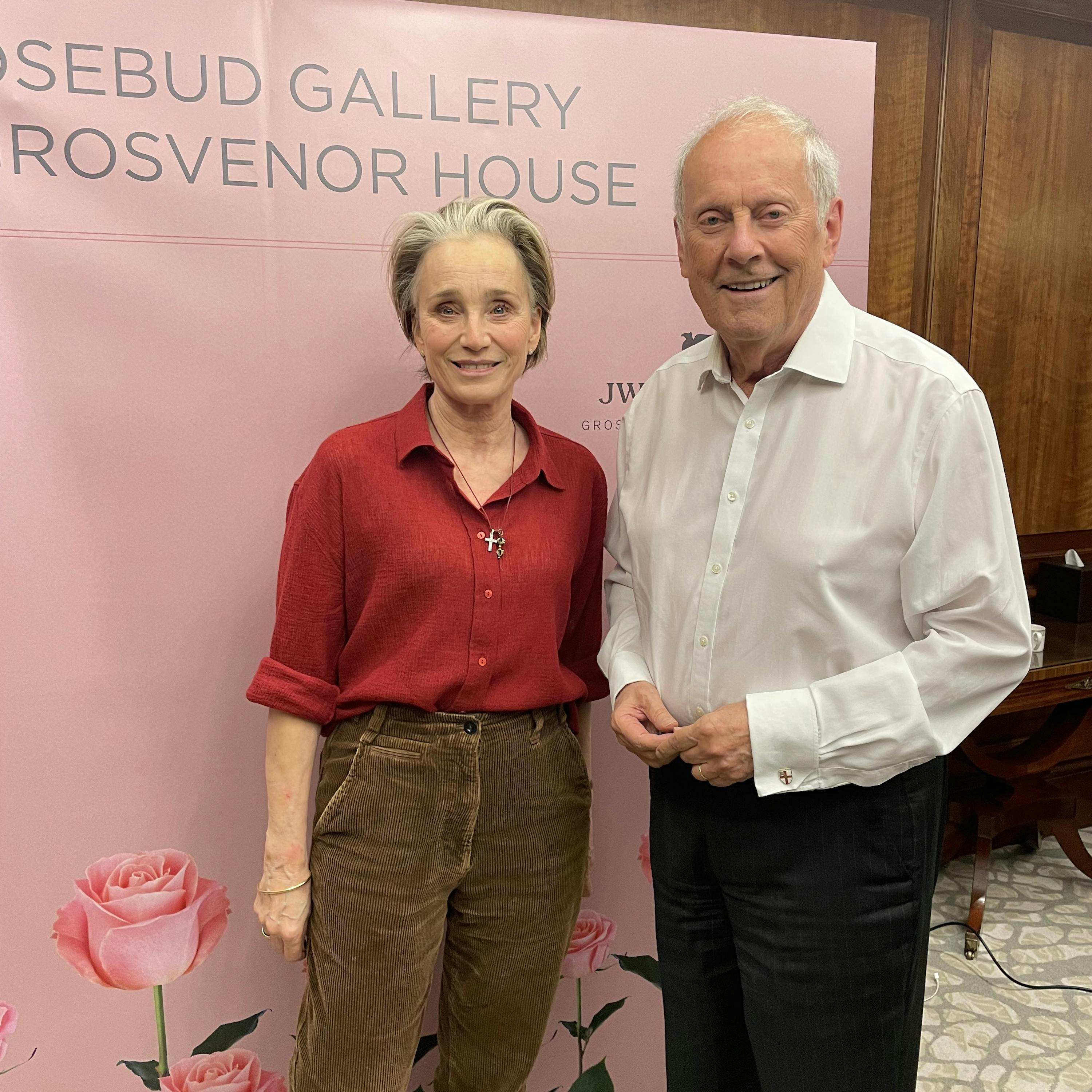
Dame Kristin Scott Thomas is one of our best, most distinctive, and most watchable actresses, and we're delighted that she's our guest on Rosebud today. Dame Kristin tells Gyles about her childhood, which was at times idyllic but was coloured by the tragic deaths of both her father and step-father. She talks about her impressive and highly talented mother, who brought up five children in the midst of loss. She talks about her move to Paris as a teenager, how she met and married her first husband, and how important her new French family became to her. She talks about her career, working with Prince, how she was cast in The English Patient and her work on stage in The Audience and Elektra. Kristin's life is fascinating, and this is a fascinating, and moving, episode.
Learn more about your ad choices. Visit podcastchoices.com/adchoices
Hosted on Acast. See acast.com/privacy for more information.


