
 Ask ChatGPT



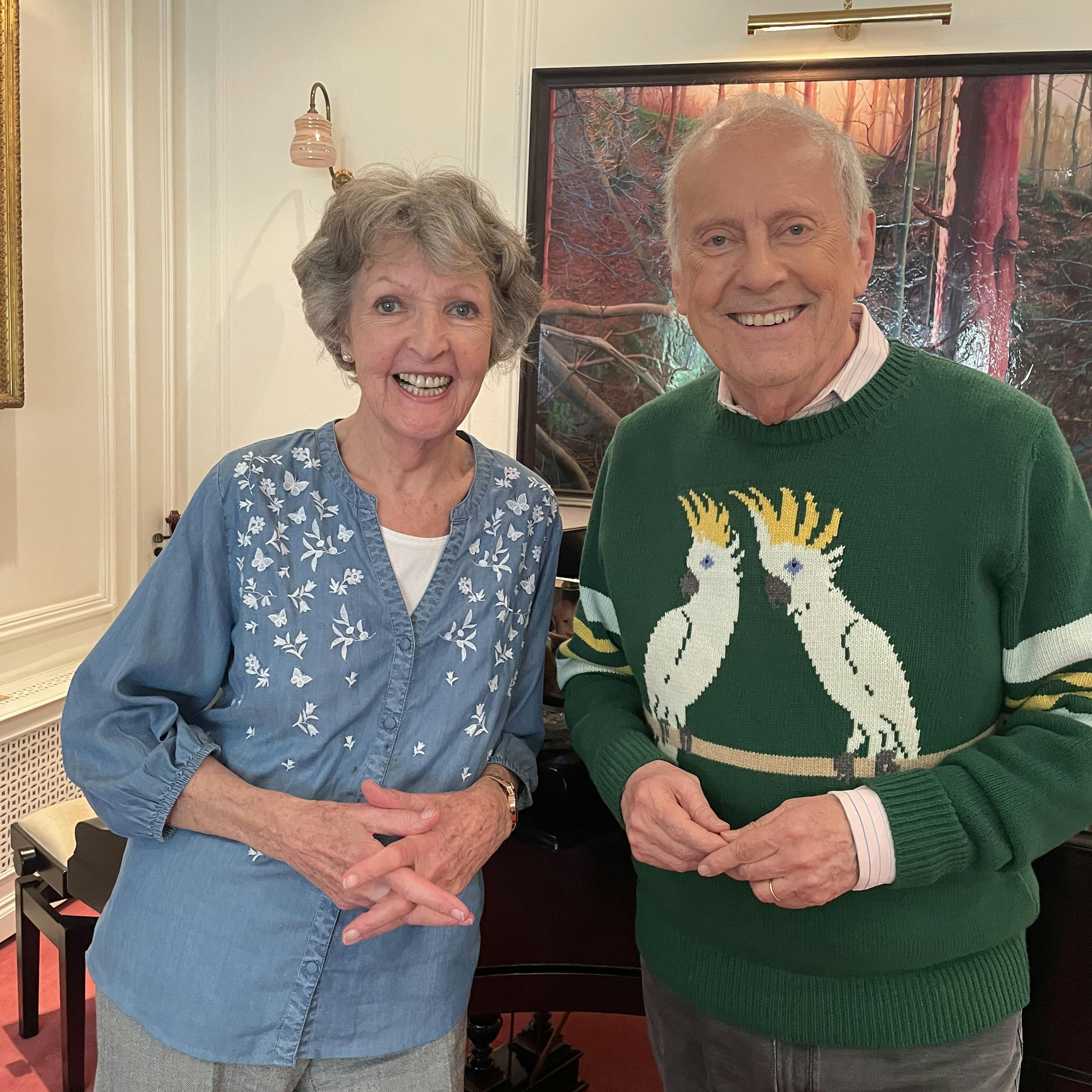
In this episode of Rosebud, host Gyles Brandreth interviews the renowned British actress Dame Penelope Keith. Known for her iconic roles in British sitcoms such as The Good Life and To the Manor Born, Keith shares her first memories and experiences, offering a glimpse into her childhood, family background, and early career in theater.
Written by AI. May contain mistakes.

Get the gist, explore an idea or ask about something said.
 Claude
On Rosebud with Gyles Brandreth, what are the key points of this episode?
Searching your listeningAutomatic transcript. May contain errors.
0:00Summer and sunshine and falling in love. I haven't thought about that in years that's the beginning of a song from a show called Salad Days and in the 1950s it was the longest running show in the history of the West End to that date and I had an EP record of it and I played it again and again and again I love the show I love the song I love summer let's hope the sun is shining because have we got a special Rosebud guest for you today. Cue that music.
0:58I'm in a state of high excitement. This, for me, is a very special episode of Rosebud. We've been very lucky. We began Rosebud a couple of years ago with a great theatrical dame, Dame Judi Dench. And since then, well, almost every dame that there is has appeared on Rosebud. But there's one that's been a little bit elusive. She doesn't give very many interviews. But she's been part and parcel of my life and, if you're my generation, of your life since the 1970s. because she was at the heart of The Good Life. Yes, today we've got somebody who created one of the most memorable characters in the history of situation comedy.
1:42In The Good Life, who was the neighbour next door, it was Margot Ledbetter. Frightfully stylish, frightfully posh. She was extraordinary and funny and brilliant. And the actress who played her is Dame Penelope Keith. Though having known her now for many years, she's not like Margot Ledbetter at all, nor is she like the character that she played into the manner Bourne. She is a remarkable actress, a very interesting human being, and I'm pleased, in fact, proud to say, a friend of mine. And she's very kindly come to my house from her house to talk to us about her very first memories, her childhood, her unusual childhood, very unusual childhood, her school days and then of course her career in the theatre.
2:33So today you're in for a treat. Yes, please welcome to Rosebud the iconic Penelope
2:51keith penny our first question is always the same one what is your very first memory i think probably being wheeled in my perambulate, well, not the full closed one, more like a buggy, through Ashdown Forest by my mother and running my hands through the dead leaves. Isn't that interesting? Ashdown Forest, of course, the famous Winnie the Pooh forest, near where A.M.I.L. and his family lived. That's right. And why were you there? Well, I was there because I was born in the war and my mother needed a job. And we knew someone who had a hotel called the Bramble Tye Hotel in Forest Row. And so I spent a bit of time there during the war in my pram.
3:45My mother always said she was a chambermaid in the morning and then a barmaid in the afternoon and evening. And apparently, I don't remember this at all. She used to put me, because the dooglebikers were around a bit then, I was put in my pram outside the pub, outside the bar of the hotel, in case the dooglebikers came over. And if you're feeling the leaves, you must be out of the pram to actually feel the leaves. Yes, isn't it funny? But I had this vague idea that I was being pushed in a kind of buggy. Oh, so it could have been like a little pushchair, and your fingers could have reached down.
4:24Yes, exactly. And you can feel the sensation of the leaves through your fingers. So you're born in about 1940. 40, exactly. And who were your parents and how did they meet? Oh, gosh. My mother was called Constance Nutting. Constance Mary Nutting. So my grandmother was Ethel, Ethel Nutting. Great. And she was called Nutty. Always wonderful. I have a most wonderful grandfather too. He was the Nutting. He was one of nine. And it is extraordinary, isn't it, that none of, there is not a single nutting from that part of the family left. I think there were four daughters and five sons. My grandfather had two daughters, so therefore the nutting died out.
5:14Auntie Edie married someone. Auntie Joyce got polio and died. And then there was another one where they had a son with Down syndrome. Extraordinary. So this is your mother's heritage. She is a nutting of which there are no more nuttings. So your mother, what was she like as a girl? The time you were born, what would she have been like? How would you describe her? Oh, she was so pretty, so attractive. She was lovely, terribly clever. If she'd been sort of been educated, she'd have been a very, very bright bunny. By that, I mean, well, girls didn't go to universities anyhow in the 30s. But she was terribly clever.
5:59She trained as a secretary. And she, I think, had tons of boyfriends. Was absolutely lovely. and then married and met my father, who was called Frederick Arthur William Hatfield. So I was born at Hatfield. Oh. And he went off to fight the war. And I was born, I mean, when he was away, I never met him because... At all? No, not at all. So you never knew your father? No, I never knew my father at all. Gosh, you've seen photographs of him, obviously. Oh, yes, very attractive man. And do you keep photographs of him? I have a photograph of him, but I mean, I... But, yes. You know, you only relate...
6:45I can't relate to him. No. I had a stepfather. But before you get to the stepfather, he and your mother were good at first? I mean, do you know much about that? Oh, yes, but I mean, my father adored the ladies and Mummy couldn't bear that, apparently. And then, of course, the war happened. And he sounds a bit of a tyke, actually, my father. he got bored with sitting at the top of scotland apparently my mother took me up scotland to inverness and you know on a sensible to escape the bombs that by 1940 were happening well no he was up there in some artillery section waiting for whoever to come up there and he got very bored so he signed up to be an australia pilot oh uh which he did apparently he was an australia pilot so in actual fact the photo i've got of him in his army gear with his cap terribly attractive with his wings up well that's an achievement well done him for doing that yeah yeah and then he just disappeared yes i mean my mother divorced him i think during the war fine and i never ever saw him no and really no nothing of what happened to him no not really and did you take and i mean i'm going to ask this because i have an adopted brother and adoption is very big in my family and you have adopted sons, don't you?
8:02Did you ever, because I know adopted children, or my brother did, they get to a stage where they want to discover about their birth parents. No. But my brother did. Did you ever think, actually, I want to find out more about this man? I did and I didn't. I was great friends at the time with darling Jeremy Brett and he was more interested in my father than I was. We must go and find him, darling. We must go and find him and we never did. And he did die. He died untimely. I believe he died when he was only 61. So, no, I never knew him. Jeremy Brett probably wanted to play him. Yes. Because I saw a slightly strange, interesting, terribly attractive man who was in the army but flew aeroplanes and then disappeared and, you know, complicated things were going along.
8:46He was an extraordinary Jeremy Brett, wasn't he? Oh, dear, wonderful man. Very, very. I mean, I was such an exciting actor too. Oh, wonderful. We did on approval together on the television. Yes. I think the definitive in my book, the definitive Sherlock Holmes. Oh, absolutely. He was wonderful. Absolutely wonderful. So your mother is there in the war. She's got to earn her living. This is why she ends up working in the morning. As a chambermaid in the morning. And a barmaid. And a barmaid in the evening, yes. And did she enjoy doing that? Did you get the impression she was a gregarious person?
9:20Yes. Yes, she loved people and people loved her. She was so attractive and warm and, you know, just absolutely super and would talk to people. And also, don't forget, it was a totally different atmosphere. I can't remember much about it. I was in my pram. But everyone talked to everybody. Yes. You know. Well, I had a conversation years ago with Anthony Clare, this psychologist, and he was explaining to me. because I said my parents sometimes talked about the wars being the happiest time of their lives. And my father was at, you know, like your father, he was in the army risking his life for six years.
9:58And my mother, she was in London, bombs were falling. And I said, how can they be? He said, well, two reasons. One, yes, bombs were falling in London, but there was a sense of community, a sense of common purpose and shared values. And that makes people happy. Exactly. And though people were risking their lives, those soldiers at the front, they were being tested on a daily basis and being tested is part of finding happiness. You don't find people sitting around not doing very much who are happy. An engagement with life and a sense of community make people happy, which maybe explains that wartime atmosphere in which you were brought up.
10:30So did your mother find a new husband quite quickly? No, she didn't quite quickly. My main base, well, and mummy's base, mummy and I, were based with my grandmother and grandfather. So I had a lot of, my grandmother would look after me an awful lot. I remember I went to school when I was six, to a convent school in Seaford. I'm not a Roman Catholic, but off I went. Seaford is where? Seaford Sussex, in between Eastbourne and Brighton. Fine. Near New Haven. I remember when the train, I always remember the train from Victoria. And you get and you hear this one from New Haven Arbor. so whenever I hear of New Avon I always think of New Avon Arbor so I went there and my grandmother would if my mother was working and she got a job in the summer which is where she met my stepfather for a year or two in a hotel in Clapton where they had and this was in the 40s they used to have hostesses now not what we think of hostesses now Mummy was there to, when they had dancing, if someone was on their own, she would go and dance with them and she would arrange games for kids and this, that and the other.
11:46And the good thing about it was the fact that I could go and stay with her. Remember this little room? It was a minute room in this hotel in Clacton. I had the bunk bed. I mean, it was really small, but I adored it because I was on the beach all day and there were so many friends, being an only one and not having any, you know, siblings or anything like that around. And so it was a wonderful summer holiday for me. But I can remember my grandmother would pick me up from school. We'd come up on the train past New Ivan Arbor and get out at Victoria where there were those enormous enameled signs of the Bistow kids.
12:26I can still remember that very well. And my grandmother would meet me and she would take me to Liverpool Street Station and put me on a train, aged about seven or eight, in care of the guard, to go to Clapton. Wonderful. Extraordinary, isn't it? Were you conscious of money worries? Because your mother was clearly having to work to earn money. Oh, yes, work. Oh, no, I mean, there was no money around. No, I don't think I was, but there again, it was such a different atmosphere. My grandmother made my clothes, and money was not part of it. It's interesting, because people are telling them, they were going to come on Rosebud, they've all assumed, because of the parts you've played and the timbre of your voice, that you were born with a silver spoon in your mouth and lived rather a grand childhood.
13:12But clearly not the case at all. No, not at all. Absolutely not at all. But you were happy. Oh, yes. Apparently. I went to boarding school at six, so that must have been in September. It was a boarding school, this college? Yes. And why were you sent to boarding school? Because the war just ended then. Yes, but mummy was working. She had to work. Okay, our base was with grandma and grandpa, but she worked. I mean, she'd worked all her life. So she did find a second husband? Yes, yes. And when did they get married? When I was 10, 1950. And was he okay, as far as you're concerned? He didn't like children.
13:56You're putting a bit of a face, yes. Yeah. But was he called Keith? That was his surname. Yes. That's why you're... So did he have to adopt you? No, no, absolutely not. So you just assumed the name. I just changed my name. Yeah. Which is an absolute killer now, because my birth certificate still says Hadfield. I'm known as Keith, and of course, legally, I'm Timpson, because I'm married. Yeah, yeah. So, what was his job? He was... I think he was a commercial traveller. Oh. Was he... I fear he could have been a bit of a ladies' man too. No, no, he wasn't. Oh, good. I'm glad for him. And so were they actually, never mind how you felt, were they happy-ish together?
14:37Ish, ish. Not delirious. No, no. Did they have children? No. No, I'm the only one. But that went on until the end of their lives. Yes, yes. When I, I forget when he died. I know Mummy died 37 years ago. She outlived him. But, no, it was all right. Mummy could have done so much better for herself. Did you call him Daddy? Were you expected to? I did, first of all, yes. Because I long for Daddy, because that's what all my friends had. They had a Mummy and Daddy, and I never did.
15:14But... What's your best memory of him? To give him the benefit of the doubt. Is there a good memory? I didn't really have a lot. When you say he didn't like children, he just wasn't interested. No, no, no. He wasn't hostile. He wasn't unpleasant. Not at all. Not at all. But he, you know, the moment I left school, I, you must go out and get a job, which of course one did. Then how much are you going to pay for your upkeep? The fact that the house belonged to my mother and all that was by the byes. Oh, that's a bit harsh. Who was your best friend outside of home when you were a little girl? Either the convent or your next school?
15:52Well, yes, my dear friend Jane, she died last year, yeah, before last. She was a day girl, but I got on so well with her, and I used to go to her family. And you played together? You had fun together? Oh, yes. I used to go. Well, you see, being a boarder, she used to ask me to her home for tea, which was fun. Jane Simmons was her name. Did you read books at that stage? Oh, yes. Can you remember any of your childhood pleasures from reading? No. It wasn't an academically brilliant school. I mean, you didn't go on to secondary education at all. But they loved putting on plays, the nuns. A lovely nun called Sister Celestine, who was a bright, bright lady.
16:35She was wonderful. She used to love doing plays. We used to always do plays. And Jane and I would be the leads. I was playing the man, of course, because I was tall. And we were entered for the Brighton Festival. And we did the Shakespeare sonnet, Crabbit Age and Youth. which I didn't know what crabbed age meant at that time. Can you remember the opening line? Crabbed age and youth cannot live together. Youth is full of pleasure. Age is full of care. Ooh. Yeah. Anyhow, I won my class. Do you know it's not a sonnet that people now read? No, they don't. Oh, I think it sounds wonderful. Oh, it's wonderful.
17:15So I won my class. And so they asked me what I wanted. And this was aged 13, 14, I think. I said, oh, the complete works of Shakespeare. And I still have them. Yes, it's lovely. So I did. I read a lot. And I used to, because I didn't, because I was a boarding school. When I was home, I had no real friends around. Mummy asked me to, or persuaded me to go to a tennis club once. We lived for a while in Wilsdon, where my stepfather's family were. But I never had any chums during the holidays. So I read a hell of a lot. So I think I started reading Jane Austen and the Brontes, of course. Well, you can't have a better friend than a good book.
18:02No, absolutely not. At school, did you have schoolgirl crushes on some of the other girls or on the nuns? No, I can't remember. No, I don't think I did. No, everyone had a crush on Father David. And there was a magical moment when even the non-Catholics went to the chapel. I was eventually relieved of that duty because incense always makes me pass out and I used to pass out So the school ran from 3 and 4 year olds to 15 and 16 year olds So 16 was basically when the girls left Yes But they wanted me to take my O levels when I was 14 but that wasn't allowed That's bright Congratulations Well I always say passing exams is a facility and it means you can pass an exam that's what I feel and so I took them when I was just 15.
18:51It was a French convent so I heard French from the age of six onwards. Hence Celestine. Exactly. Sir Celestine, in fact she was Irish and our Reverend Mother was Jeanne d 'Arc. No, Jeanne d 'Arc. Mère Jeanne d 'Arc. Because you were named after a saint so she was named after literally Jeanne d 'Arc. Well because the Sisters of Providence which was their order came from Rouen which is where Jeanne d 'Arc was burnt. What was fascinating, all the older nuns in their, I mean, really old, in their 60s and 70s, were called mères, ma mère, or madame. Yes, we call them madame. And it was because during the First World War, the religious weren't allowed to be, so they all wore ordinary clothes and lived amongst the communities.
19:43And so there was Madame Dupuis, Madame, I can't, Madame Dupuis, I remember, she was about four foot nothing, round as a barrel, enchanting with a wonderful laugh. It was fun. I can see that as a television drama, you know. Fascinating. The nuns who turn, wear mufti and go out into the community during the war. That's right. So go back now. So you're at this school. Can you remember the moment you first appeared on a stage as a schoolgirl and the sensation you got from the audience? well no but before then um before i went to boarding school when i was i suppose primary whatever it was called i was at a french convent in balham which was called la retrait and my grandfather would take me and various people and he had this great big i remember that great big rover or something always loved his cars i can remember the smell of the leather and he would take me plus about three or four small children of about five or six to the convent and there of course we had ballet classes and I remember I did a ballet and I played a fairy of course and my mother said that when I came on all I was doing was looking out to make sure she was there and I saw her and waved and the next time she came to see me she wore a hat so I would know she was there so I'd always know and do you know when she came to Stratford in 63 when I was in I don't know if it was the Julius Caesar I think it was the Roses I can't remember which one she came to see but she went to the Royal Shakespeare Company wearing a hat so you could recognise her out front that's wonderful
21:36So, this idea of becoming an actress, when did that enter your head? Well, apparently when I was, you know, at primary school, nursery, whatever it was called. At La Retrette. Yeah, at La Retrette. Apparently in the bath one night, I said to my mother, when I grow up, I mean, what people forget now, and I explain this, is that when I was young, adults didn't speak to children very much. and what they would say was well to me hello haven't you grown because I always had and eventually and what are you going to do when you grow up and it behoved you to have an answer so most people knew what they wanted to do it's only now when I hand out degrees at university and I was a pro-chancellor and I would say you know and what are you going to do now well I think I'm going for my master's and when you hand out a master's they say oh I think I'll I'll give it a year and I'll do my PhD.
22:32Then what? You long to say. But my generation were always asked. Little boys wanted to be train drivers or policemen or something. My husband wanted to be a hedge cutter, apparently, in Dorset. But I went home and I said to my mother in the bath, when I grow up, I'm going to be either an actress or a nun. Bear in mind, Laura Trae was a compliment or nun and apparently my mother said oh darling lovely nuns can't wear pretty clothes I said well I'll be an actress then and that was it I mean I never ever wavered from that that should be the title of your next volume of memoirs nuns can't wear pretty clothes did you have a faith at any stage and do you now yes Christian yeah and that is still it sustains you yes absolutely part and of your life.
23:23It's there. Yeah, yeah. And that you just got from being a girl, from your mother and from being around the nuns. My mother used to say her prayers on her knees every night. Yes, as did my father. Isn't that interesting? That generation did. They did, yeah, yeah. So, you get to 16. You've taken these A-levels at 15. You've scored O-levels. I mean, took the O-levels at 15. You did well. Yeah. Yeah, congratulations. And then what? Well, Sister Celestine, I think, said to my mother that it was, I said, a French convent, so we heard French all the time. And Sister Celestine said to mummy, it's a shame, her French is virtually fluent.
24:06She's got all the grammar. She ought to go to school in France. So they suggested I go to a convent in a place called Bayeux. Where the termistry comes from? Oh, yes. So I went there. You shudder. Northern France, this is the famous Bayeux Tapestry. Yes. Which is historic. Tells the story of 1066 and all that. Yes, yes. Why do you shudder at the mention of it? Well, because this was 1950, what was it, 1955. And Normandy was flattened. Oh. I mean, there were still the wrecks in the sea. Oh, my goodness. There were the remains of the Mullbury Hall. and of course there were three other English girls there.
24:54I mean, the French didn't like the English at all, not in Normandy. And we were taken out and of course the only thing to see were the graveyards. And of course I remember them, I remember them. These fields, what seemed like fields just brown and bare with these serried rows of those marble headstones. I mean it was just shocking now when you see the graveyards and all the memorials they're green and beautiful but when I saw them they were stark the earth was brown, it was earth and there were the white marbles and I remember going to Omaha Beach which was like a little sort of cove because the sea was in and there was the end of the German emplacement, the guns in a little sort of dugout on top of the hill and ruins in the sea.
25:55Caen, we went to Caen, flattened. And Bayeux wasn't touched, hardly at all. I mean, it was still cobbled streets and really ancient France. And for the tapestry, we were one day taken out and we said there's the Bayeux tapestry, which I had never heard. I can remember it was like a little town hall and there was this sort of tapestry stuck to the wall with what looked like drawing pins and of course it wasn't lit at all so it was an old tapestry no lighting well now it's a full exhibition so I've seen it I mean it is extraordinary it is extraordinary but you can imagine there we were in Normandy which was so depressing god it was depressing and the French nuns were not the jolliest.
26:43They weren't like the ones we had in England. Was that a distraction of local boys? Oh, no. None of that was going on. Oh, no, none of that was going on. When did you have a first boyfriend? When did you first notice a boy? I think once I went to the Hyde Park Hotel because when I came back from France, I was applying to various drama schools after that. I had to get a job and my darling mum came with me to an employment sort of agency who's very famous for employing people in what we now call the hotel industry. Why is everything an industry? It's not an industry, it's a job. I think it's called hospitality, in fact.
27:23Yes, it is called hospitality industry. You don't want to be part of that, do you? I wouldn't. Anyhow, so I went there and there was a job at the Hyde Park Hotel. Was I still 15? No, I must have been just 16. And I was interviewed to be in the reception, not as a receptionist, because you only had men as receptionists who wore striped trousers and black jackets, of course. Because the Hyde Park Hotel is quite a grand hotel. Oh, it was wonderful. It was where all... I remember seeing Vivian Leigh's daughter's wedding there. I mean, it was where people who had big country houses but hadn't got a London house would stay.
28:04and the King of Queen of Sweden stayed. I was never allowed to take up anyone, of course, because I was a woman, but I did take up the Queen of Sweden's maid. So you worked behind reception. Yeah, but not on the desk. I would do the filing and try and type a bit, not the really important letters. Forgive me, did you enjoy that? Oh, yes. And all those guys were wonderful. They were good. Well, what was fascinating, it was run by a man called Tom Sawyer. I think his name was Derek, really. And, of course, there was a steward's room because people brought their butlers and maids, you see. So there were smaller single rooms without bathrooms where the butlers and maids used to stay.
28:51And were you living in when you worked there? Oh, no, no, no, I was living in Putney. We'd moved to Putney by that time. You came to work every day? On the 14 bus for eightpence. And, of course, your mother having been a chambermaid and a barmaid, This was her world. She understood. Exactly. And they immediately, they saw her. They thought, this girl's going to speak the same language. I remember the guy who interviewed me, Mr. Favreau, who was the reception manager, I think thought my mother was divine. And so I got the job of four pounds, ten shillings a week. And they were friendly to you. It was a nice atmosphere.
29:19Oh, lovely. I adore the boys. I learned to tie bow ties for them. We had fascinating people there. There was one French boy. He was lovely, Jean-Pierre Duton. and he used to play rugby for wasps and he came in one morning with a black eye. Oh dear, it was such fun. It was a lovely man called Chris who was just so kind and I just thought they were all lovely. And was that the first time you had either a crush on a boy or an actual boyfriend? Yes, crush on a boy. You held hands? No, no, no, not in reception. He never knew about it. No, no, not in reception. He did buy me some cent once. Je reviens.
30:02And I thought it was just one. Je reviens. Yes. But he never did.
30:11So who was your first proper boyfriend? I suppose when I was in rep. Well, let's get you to drama school first then. So do you get into drama school? Well, yes. I applied and I was turned down rather a lot. Well, I was turned down by Central because I was too tall. And how tall were you by then? I was about 5 '8", 5 '9". Which... No, maybe verging on 5 '10". I've lied so much about it. Was it tall for a girl in those days? Oh, terribly. Yes, yes, terribly tall. And were you self-conscious about it? Yes, I think I was, but I didn't... Not until... I did a television for a ghastly television director.
30:48I won't even name him. And I remember... John Gregson was in it. and it was all about police, I suppose. And we came to the camera rehearsal and he did that awful thing of holding his fingers together as though he was looking through a camera lens and he kept doing this. And he said, you know, I'm not going to get you in this shot. And I said, oh. He said, yes, you're too bloody tall. Oh. Well, I was turned down for a job in rep because the woman running it said, yes, well, I don't think we can really employ you because you really are too tall for our proscenium arch. it's quite low. Oh, how ridiculous.
31:27I could hear him possibly saying too tall for our leading man. No, no, no. Because that could be the problem. Yes. I'm trying to remember who it was. Was it Lawrence Harvey that Judi Dench worked with? I must get the name right. Who wouldn't look her in the eye when they were playing romantic scenes? And she said, will you please look me in the eye? And she said, no, they should have got a taller actress. Men were like that. I mean, I knew, but I was suddenly getting somewhere. I did a series called Kate with Phyllis Calvert and Jack Hedley for Yorkshire Television. I did it for three years running.
32:02I played the editor of a newspaper and I remember, was it Tony Anholt, was cast to play my love interest and at the camera rehearsal, I saw Peter Rogers who was a producer, dear man, and he took Tony aside and whispered in his ear and I said to him afterwards, what was all that about? Don't like people whispering in rehearsal. And they said, oh, he asked me if I'd wear lifts. And I thought, oh, good. I'm not being asked to bend my knees anymore. Lovely. Excellent. Someone's got to come up to your height. Brilliant. Yes. So you apply to drama schools, you get turned down because you're too tall or you don't fit what they're looking for.
32:47At that stage, how do you sound? How would your voice have sounded then? Because you have a very distinctive voice as part of your calling card. I don't know, Giles. Before you were trained. I have no idea. Because obviously, I imagine you speak like you do, because wherever you did go, received pronunciation was what people in the 1950s would have been taught at Giles School. So where did you end up? I ended up at Weber Douglas. Weber Douglas. Was that a good school in those days? Oh, I enjoyed it hugely. Yes, I lived at home. Where was it? It was in Kensington, near South Kensington. So you were still living at home in Putney?
33:19going every day. Yes. People often said it was a finishing school for would-be actors and actresses. But I enjoyed it. I had a good time. And I carried on working at the Hyde Park because they said to me, would you like to do a few hours a week because of the filing system? I remember one day there was a phone call. Now, people didn't used to have phone calls at all. And I was called out of a dancing class, I remember, in my leotard and tights. And I went to the phone and it was my boss from the Hyde Park Hotel and Mr. Favreau, lovely man, Italian. And he said, Penny, now look, we've been looking for a letter.
33:59Where do you file them? Where do you find double barrel names? And I said, well, it depends. He said, on what? I said, oh, I don't know. I don't know. Well, we've got, it's not a double barrel. It's a triple name, Clive Punson-Biffaine. I remember it vividly where will it be I said oh I don't I'll be in later on so I was the only person who understood my filing system so I was invaluable to the hotel. Brilliant scheme I imagine I'm not brooding about this it would have been if there'd been a hyphen it would have been under Ponsonby but if there'd be no hyphen it might have been under Fane. Yeah I think so but I mean I I can't remember how I did but I understood my files.
34:45They wanted you and needed you. Yes but of course all my contemporaries worked so you're at drama school before we leave you at drama school what did you learn at drama school well I learned voice had a wonderful voice teacher called Frank Drew he was wonderful he didn't muck about at all and he was quite strict so I learned voice I went to him once for singing I sang a note or two he said you have come for voice haven't you not singing and that was the end of my singing career did they discuss your prospects with you did they give you an idea of how you'd be doing where you'd be going no no they just no trained you and then you got a certificate at the end yes and a cup or two uh oh and congratulations yes what cups did you win well done you well the Weber Douglas was for actors and the Douglas Cup actresses I got that and I got the Shakespeare Cup there was also a Shakespeare Cup and the principal's cup oh i think you got the triple whammy congratulations and you were calling yourself then penelope keith and that was going to be yours well i changed my i call myself penelope keith from 1950 at school because um it was easier also i think it sounds better it sounds better but also i think you probably did it for your mother she'd married mr keith yes and that's yeah you showed solidarity there that's right it's a good name too it is once the name works keep with it Absolutely.
36:11And that was at a time when people were changing their names. So you emerged from the drama school and you looked for work. You've still got income because of the hotel. I still got income. And then I wrote letters. That's what you did when you left drama school. And I wrote to rep companies. I wrote to the BBC. I wrote to everywhere. And I eventually was asked to go for an audition to a lovely man called Richard Scott, who was running Chesterfield. a weekly rep, and I was going to be playing ASM. In other words... That's what everybody started as, an ASM assistant stage manager and... And playing parts, yes.
36:53Junior character. And you saw yourself as junior character? Is this because you didn't feel... Because you were tall? Were you pretty? No, no, no, no. I mean, I played all the young people. The leading man was George Cooper, not that one, another one. Claire Kelly was the leading lady I've seen these people on Heartbeat recently
37:18so that was Weekly Rep Weekly? oh yes, Weekly and people really I mean people talk about it as a bygone age you really played in the evenings while during the day rehearsing next week's play and you had to keep tuning and people managed it oh yes and were the productions good enough? what? well the sets used to shake a bit people came in their droves of course they really did and see their favorites in a new part yes and did you get good parts quite quickly yes yes well there was only me and how we were the only girl and claire kelly there were three i mean it was a company of about seven or eight and used to of course have to meet the audience and i remember this young chap coming up to me and saying, well done, Miss Keith.
38:07I think it's very good for a woman of your age to play a 19 year old, which of course I was. You were 19. Oh, dear. Oh, did you mind that? No. You were quite, I was as happy as Larry. It was wonderful. It was what I'd always wanted to do. And this is where you found your first boyfriend, proper boyfriend. Yeah. Yeah, I think so. And do you remember him at all? No, not really. Well, we clearly don't want to. No. He He came and he went. When was your first proper boyfriend, your first serious relationship? I don't think I really had a very serious relationship till I married. Good. Quite late. And that didn't worry you?
38:46You weren't sort of thinking, oh. No, no, I wasn't really. I need a man. No. You were self-sufficient. No, yes. Well, I had been all my life. When I look back, it was quite a lonely childhood. you know not having any siblings but then I didn't you know I remember it came home to me when we had a cottage in Lancashire we're skipping and on and we used to walk over the moors and we ended up at the Bronte Parsonage one day and one thought of these three girls and the boy and how extraordinary it was and I remember thinking experience is relative and they wouldn't have known anything else and I didn't know anything else.
39:35It made me terribly self-sufficient which helped me a lot in the theatre and indeed in life you know that one isn't thrown by anything. I mean I used to travel, when I went abroad I quite often went on my own you know maybe to see people and this, that and the other. So I was always used to being on my own until I married quite late on. And obviously, Chesterfield, you had a flat or digs or you shared with someone? Oh, digs, digs, four guineas. But that included breakfast and evening meal. A guinea is a pound and a shilling. Yes. So four guineas and, well, of course, you were working all the time.
40:10I was working all the time. Because you were rehearsing all day, playing in the evening, you just got home, fell into bed, exhausted. Absolutely, that's right. Was there a landlady who gave you a nice supper waiting for you? Well, the thing was, yes, I used to have a supper. It wasn't supper, it was tea before the show. and I'd never been much for gravy and they liked gravy in Chesterfield but I remember I used to walk to work and there would be the miners coming back with black faces and their lamps extraordinary it is extraordinary isn't it
40:51and were you an easy person You think you were, I mean, in fact you stayed with these companies and got work, suggesting to me that you were easy, that you weren't somebody, or they think, oh God. Oh no, never like that, because I wanted to please people. And what's the use of, I've always said it's a very silly job, and if you don't enjoy it, why do it? I mean, the only reason, I think, to be an actor or an actress is to enjoy it, no matter what you're playing. And did you sense you were good? no i sensed quite early on that i knew about laughter i think i sensed that quite early on not consciously it's only in retrospect that i realized that i think one of the reasons you've worked always and been very busy is also you're different you're distinctive and that's interesting to watch you want to watch something that's interesting So when did you break out?
41:49When did you first appear in the West End? Well, I first appeared in the West End. Well, the first big thing, I suppose, that happened to me was when I was asked to play in this series called Kate with Phyllis Calvert about a newspaper. Phyllis Calvert was the agony aunt, and I was the rich bitch editor. How would you say Phyllis Calvert? Well, I don't know. Another dear friend of mine, she's dead now. We always used to call her Phyllis. She's splendid. I did a play with her in the days when, on the first day of rehearsals, the leading lady arrived last and wearing a hat. You know, things were done properly in those days.
42:26Yes. And she had to have things done quite properly. Yes, quite right. Absolutely. So you're cast in that. Yes. And you're noticed. Yes, well, it was a series that went on for three years. Oh. So it was six months' work because they were hour-long programmes. So we'd rehearse for ten days and then go up to Leeds or go up to Leeds. And people used to stay, was it the Queen's Hotel in Leeds? By the station. And the very, very famous story of the old actor, because it was literally on the station. I stayed there once. Who phoned down to the reception in the middle of the night and said, can you tell me when this hotel reaches King's Cross?
43:10Because you could hear the steam engines. It's definitely the Queen's Hotel. It was, isn't it? Literally above the station. Yes, it really was. So I did that and then... And that's the first time you were recognised in the street, I imagine. Yes, yes. Did you quite like that? Do you think this is a bit odd or you took it in your stride? I took it in my stride, really, yes. And then I was asked to do a play with Gerry Harper. Yes. And I played his wife, who he murdered, in the first act. Oh. and the fortune is a very small theatre and I was wearing slacks and Emily's shirt which I mean he had to murder me with the pillow he smothered me and I had to turn my head quickly and I Emily did it once a bit too clever and my shirt opened out and you could see my diaphragm and from the very front row I had to lie there quite a long time a woman's voice came she's breathing
44:15so that was fun and that's where I met another good friend Rula Lenska who I've worked with since she's a darling so that was the first time I did the West End oh I think meanwhile I'd done a Brecht goodness yes called St. Jonah the Stockyards which is a bad old Brecht play it's a crasher is it it's a real crasher on the first I was playing And my first line was, we are 20 ,000 workers in the Lennox meat plant. And that's all I can remember. Anyhow, my mother, I was dressing at the very top of the Queen's, which is quite high, with the other ladies, the Salvation Army and the Lennox meat plant workers.
45:05and my mother came up and she she said darling you were wonderful oh bless her and then she said she said Uncle Charles liked it that should be the name of a book Uncle Charles liked it oh bless her and she said to me and I was sitting next to this Yes, little man. I think he had something wrong with his leg. He went to sleep. It was Harold Hobbs. Oh, the famous theatre critic of the Sunday Times. Yes. Went to sleep. Oh, dear, this must have been the opening night or the press night or something. 1966, I think it was. Oh, I'm first conscious of seeing you, I suppose, in the Alan Akebourne plays.
45:56And when was that? Norman Conquest. Oh, God. It's got to be late 60s, hasn't it? I haven't looked up. Because that was a bit of a breakthrough for you, because the part was noticeable. Oh, yes, yes. And that's being seen in that that led to probably why we're here today. Yes, yes, because the good life came immediately. As a result of that. Yes, it was. How did you get the Akebourne? Well, I got the Akebourne. No, no, no. I got the Akebourne play. I knew Eric Thompson. Ah. I don't know how I knew Eric Thompson, but I did know Eric Thompson. Married to Phyllida Law. Yes. And the father of... Yes.
46:36I think we played bridge. There was a kind of bridge set of us. There was Johnny Saunders, Jeremy Brett, Charlie Kay, me, Janet Sussman, Eric. Oh, I can't remember. Well, this is a spin-off TV series itself. The bridge players, we didn't know. And then I was cast. That was wonderful. We did it at Greenwich, first of all. and apparently Dickie Bryers had been sent the script of The Good Life and, you know, he said he'd like to do it. Who would be in it? And apparently he came to see the Akebourne play and phoned up John Howard Davis, our producer, director, afterwards and said, John, go and see The Norman Conquests at the Globe.
47:25He said, I think we can get two for one there because Felicity was in the play as well. so Felicity and I were both cast and did you already know well you knew her through and did you like her? yes we got on fire and so you were both cast in The Good Life and as you were doing the rehearsals and the first recordings did you have any idea that half a century and more later it would be this phenomenon still people were unborn at the time I know bizarre when did you realise something special seems to be happening here? well I know John Howard Davis This wonderful man. Did you ever work for him? No.
48:00Wonderful man. He wouldn't let us read any notices because they weren't very good. Oh. And the character that you created for The Good Life, did you just come and do that? Or did John Howard Davis discuss it with you? I mean, how did you... Because it was such a clear, strong, hilarious character, you just came and did that. You just all were yourselves, were you? No, we weren't ourselves. You're never yourself. As someone said to me, I once did a play with a young actress who's now a big star. And I just said to her, I was on one side of the stage and she was on the other. I illustrate this as what goes on in an actress's mind.
48:45And she said something. I said something. And she answered me from the other side of the stage. And the audience never heard it. They never heard it enough to get the reaction, in other words, laugh, that there should have been that. And I remember saying to her, look, we're not well placed. I'm on one side of the stage and you're on the other. You're at the desk. Why don't you just pick up your pen and the eye will go and they'll hear what you're saying, the audience. And she said, no, I don't do that. I'm for reality. and I my greatest regret I never said to her what is real about standing on the platform in clothes that aren't yours eight times a week saying exactly the same thing because darling if that's your reality I'm sorry for you and there is nothing real about acting I can see the glory of having been in The Good Life and then subsequently into The Man of Born, which my notes tell me is the most viewed situation comedy in the history of television in this country.
50:00When the last one was 27 million or something, that was literally half the country. And of all the sitcoms, if you add them all together, the only rival in terms of viewing figures is Only Fools and Horses, that you are the most watched person in two. It's extraordinary. That's the upside. Is the downside that people perceive you as either of those two characters always? Yes, I suppose they have done. Did that affect the work that you had subsequently got when you were doing other television or on stage? No, no. Certainly, after Good Life, I was sent quite a few scripts by the BBC, see which were sort of pale imitations I mean first of all they want wanted Paul and me to do a lead better you know what happens to the lead betters and happily both he and I wouldn't have gone anywhere near it because I believe situation comedy is that like most comedy good comedy it's about the situation and once you divorce the lead betters from the goods what have you got what you got um so happily both of us felt exactly the same way which was why when i did the man are born i it was a pilot for radio gosh and percy edwards played the dog dear percy i love percy edwards he was he was the piglets in in the good life he was an animal impersonator yes and he used to lie under the table making piggy noises it was one i once telephoned to an interview with him for Woman magazine, told his wife that it was me for the interview, and she turned away from the phone and went, and he came.
51:45Yeah, anyway, by the by. So we've got to cut to the chase because we will run out of time. I have to ask you about meeting Rodney. That was at Chichester, I think. You've done a lot of Chichester over the years. Yes, I have. And what were you appearing in then? It was Jubilee Year. Anyhow, they asked if I would do something in the gala at Chichester. And it was Jubilee Year, but there were still troubles lurking. And at every royal presence, they had to have the local coppers. This is 1977. 1977. So there would have been Irish issues, all of that was going on. There'd been bombs in London, etc.
52:32Security important. And so apparently the story goes that in the CID department, they were asked if they would, some of the coppers, would they do extra duties? Would they, you know, volunteer to go and do a Sunday at the theatre? And they all think actors, you know. And so apparently my husband said, well, who's on the cast? And he looked down the cast list and he saw Angela Rippon was going to be there. and he said, oh, I quite fancy her. Yes, I'll be there. And so he was one of the people. And, of course, the thing about policemen, which I learnt, is that, especially when they're detectives, they can go anywhere.
53:17You know, I mean, you can go absolutely anywhere because you might be on duty and you might be not. And he was. And so they were sort of scattered walking around and I came down one of the VOMs, I remember. You know, you go down. They're called vomitoriums. to the way you exit at the Trichester Festival Theatre. Under the theatre, under the stage. And there was this rather attractive guy standing there and I smiled and he smiled back. And then he came to talk to me in my dressing room. What I did tell him subsequently is I'm one of those people who actually smiles at everybody. And then that's it.
53:50But how marvellous. So he came for Andrew Rippon, went away with Penelope Geith. Well, he didn't that night. No, of course not, of course not. And was that exciting? Well, obviously it was exciting for you because you married him. Dear Rita. Yes, but quite strange in a sense that you hadn't had a proper long-term boyfriend before. I was terribly busy. You were terribly busy, but this must have been a coup de foudre. Oh, yes, certainly. Suddenly you thought, wow. Yes, wow, exactly. This is something, because you were 37. Yes, I was, yeah. And here was this man who was either your age or a bit younger.
54:23Younger. Who's clearly tall, handsome. Absolutely. a policeman, a detective, exciting. And you thought, all right, I'll go for this. Why do you think you let go in that instance? What was it? I don't know. I've always thought there's only room in a family for one actor or actress. And most of the people I knew were actors or actresses. I don't know. It was just one of those things. You could have had Sherlock Holmes and Jeremy Brett, but you chose instead to have the real thing in Rodney. And clearly it's worked out. Here we are all these years later. Before we leave you, and I just love talking to you, I just love the litany of names and the stories, just glorious.
55:09Looking back on your younger years, what's your first recollection of joy, of sudden happiness? Gosh. Oh, yes. Just what comes into your head when I say joy from these early times? I can't think of joy in early times. Not that I wasn't joyful. I can't think of things. I mean, I'll tell you what gave me joy today. Driving up the A3 and seeing the trees. This is the best time because all the greens are different. And it was just stunning. I get more joy out of, I hate people say nature, but what is around me in the country than anything else. That's what gives me joy. I suppose, I mean, I must have got enormous joy from when I first got my first job.
56:02I mean, you know. That would have been good. That was really good. Because your career has been everything. And certainly in the early years. Yes, oh totally. Before you met Rodney, it was 100 % everything. Yes, absolutely. What about sadness? Can you recollect, if I say sadness, from those earlier years?
56:20No, not really. when your grandmother died you took that on board oh yes yes i took that on board i remember when my auntie died she died of cancer that was terribly sad and i used to go and read her and she was that was my mother's elder sister auntie rosa and she's very elegant very attractive woman businesswoman and um i can remember she was in the south london hospital for woman which used to be at the end of nightingale lane near the clappin south tube station and i went and she was always perfectly dressed perfectly made up and she was in absolute agony and so much so that the bones were coming through her bottom she was just dreadful and she suddenly burst into tears and i went to the nurse i can remember saying why are you keeping her alive because she was pumped through everything and I remember this nurse much older than me she said well Miss Keith you must remember we are making new discoveries every single day and I said that woman is dead really and she's in such distress and I can remember that was deeply shocking to me not that I believe in assisted dying but seeing someone in that much pain.
57:48I can remember deep sadness at that. Now, you've had an extraordinary life, because as you've told us, your mother had quite a challenging time in the early years, was happy being a chambermaid and a barmaid, but it's still tough, the long hours, hard work, not great money. You yourself started working there in the reservations at the Hyde Park Hotel and worked your way up. And now you've become, you are, this extraordinary establishment figure. You've been in these huge successes. You've played these classical parts in beautiful theatres like the Theatre Royal Haymarket. I remember seeing you in, was it The Rivals?
58:27Yeah, with Peter. With Peter Bowles. Wonderful. What have you learnt?
58:34I think I've learnt to always consider other people, but not to worry what they think.
58:49Well, thank you for the consideration you've given us. And I know what I think about you. I think you're wonderful. Penny Keith, thank you. Thank you, Charles.
59:12Thank you.
59:39Thank you.
If you love British comedy, you'll know and admire our guest this week: Dame Penelope Keith. The characters she played - Margo Leadbetter and Audrey Fforbes-Hamilton - are two of the best-known and most distinctive characters in sit-com. And this is a rare chance to hear an interview with Dame Penelope. Gyles talks to her about her childhood, growing up without a father, the daughter of a hard-working and talented mother who worked in hotels and took the young Penelope along with her. Penelope talks about her school days - when she was taught by Frence nuns - and how she got into drama school and got her first job in weekly rep. This is fun and unusual conversation with a much-loved actress. Enjoy this.
Learn more about your ad choices. Visit podcastchoices.com/adchoices
Hosted on Acast. See acast.com/privacy for more information.


