
 Ask ChatGPT



In this episode of the Rosebud podcast, host Gyles Brandreth interviews comedian, author, and screenwriter David Baddiel. Their conversation focuses on Baddiel's unconventional family story, delving into his childhood memories and the dynamics within his family, particularly his parents. The discussion touches on themes of nostalgia, sexuality, and the complexities of family relationships, interspersed with humor and personal reflections.
Written by AI. May contain mistakes.
Gyles introduces David Baddiel and hints at the topics of family and childhood.
“He is David Baddiel, comedian, author, screenwriter, television presenter, currently in the news because at the moment he's got rather a marvellous series on Channel 4 all about cats.”
David shares his first memory and reflects on family dynamics.
“David Lionel Baddiel, born 28th May 1964 in Troy, New York, USA.”
David describes his childhood home environment and family dynamics.
“And the key element is this, is I have talked in my memoir about how my parents were very maverick, very strange in many ways.”
David discusses his family's background, including his parents' history and Jewish identity.
“I go in through the frosted sort of fire glass front door.”
David explores the complexities of his identity and upbringing in a mixed household.
“and makes us, well, he doesn't really make it, but he sort of buys it, and maybe my mum makes it, or maybe Ivor makes it for me, bacon, sandwiches, and eggs, and all the rest of it.”
Discussing the quirky decor and layout of childhood home.
“I've been going for honesty and truth, and it's a bit uncomfortable.”
Exploring family structure and relationships during childhood.
“threadbare blue one in the telly room, and then I think it's the green swirly carpet up the stairs.”
David shares humorous and uncomfortable experiences from adolescence.
“The noises that were emanating from my parents' room, perhaps every night.”
Insights into the complexities of David's parents' relationship.
“And Ivor had a room slightly further on.”
A humorous story about childhood misunderstandings regarding his parents.
“That's a lovely way of thinking about it.”
David discusses the influence of his mother's affair on family life.
“Well, she was clearly a highly sexed woman.”
David narrates how his parents' lives intersected with his mother's affair.
Exploring his mother's success in the golfing memorabilia world.
“But apart from that, they stayed together and were still together.”
David discusses the lack of shame surrounding his mother's affair.
“She changed it to Sarah Fabian Baddiel, which is an interesting thing.”
David Baddiel reflects on his childhood and the impact of his parents' actions.
“because I think I knew enough about this bloke that was coming around all the time to know that it wasn't me.”
Discussion on the impact of David's mother's affair on his life and outlook.
“And sex for her was, to some extent, one way of chasing, I think, the lost life.”
David talks about using humor to cope with a troubled childhood.
“You can be very grim about it, and you can write misery memoirs about it, or you can find the comedy in it and the joy in it.”
David reflects on the nature of his childhood: neglect versus abuse.
“And that's what makes my memoir different from, say, Spare by Prince Harry.”
Exploring the pressure from parents on career choices and its effects.
David discusses his father's career disappointments and their impact.
David shares insights on the love for cats in his family.
Exploration of the dynamics of love and anger in David's family.
“So the question was, what have you got from him now?”
David recounts the emotional challenge of losing his mother and its aftermath.
“And this is a bleak moment that I'm going to tell you now.”
David examines the complexities of his parents' relationship and its impact.
“Was anger then very much the leitmotif of your childhood, your father's anger?”
Explore the complicated relationship and dynamics in David Baddiel's family.
“So when they're making love, actually, they're making anger.”
Learn about the influence of David's mother on his creativity and childhood memories.
“I was terrified of Strupp and Bill Peter because if you actually read it, also, not only is he terrifying, people get their fingers cut off.”
Discover how David's friendships and sense of humor developed in school.
“So when I was at primary school, my best friend was a man who was Jewish.”
Hear about the pivotal moment when David decided to pursue comedy seriously.
“No, it's important to me in terms of truth, because I am lumped together with like, oh, he went to private school and blah, blah, blah.”
Learn about the challenges David faced after leaving Cambridge and starting in comedy.
David reflects on the unusual nature of secrets in his family.
“i love cats as does my wife as do all sane people but i want a couple more questions can Can you remember the first secret that you shared with someone and who it was that you shared it with?”
David shares a memorable moment from his professional life related to football.
“So I will definitely have told Janine and Dave Gavarin and my mum's having an affair with a golfing memorabilia salesman.”
Find out about the importance of cats in David's life and his new show.
“That is an incredible incredible thing to happen.”
Cats provide unique companionship and empathy compared to dogs.
“I also think nothing is more beautiful than a cat.”
David Baddiel shares profound insights on grief and loss through the lens of his pets.
The truth of life is complex, and Baddiel shares his mantra on this.
“That is never true about life and humanity.”

Get the gist, explore an idea or ask about something said.
 Claude
On Rosebud with Gyles Brandreth, what are the key points of this episode?
Searching your listeningAutomatic transcript. May contain errors.
0:00I can't stand the rain against my window, said Tina Turner, bringing back sweet memories. but here at Rosebud we can stand the rain and we love the sweet memories so whichever way your windscreen wipers are flicking cue the music
0:39Our guest today is another of my favourite people. I've known him for a while. I expect you have too because he's been on television for, well, many years now. He is David Baddiel, comedian, author, screenwriter, television presenter, currently in the news because at the moment he's got rather a marvellous series on Channel 4 all about cats. It's called David Baddiel Catman. It's great fun because it's witty and warm and it's all about cats and I am a feline freak as you probably know But the reason i'm talking to him is I want to chat about cats But I really want to chat to him about his family life and his childhood He's given me a book called my family.
1:24It's a memoir And he kindly gave me a copy and i've just begun it and it is an extraordinary story and I'm hoping he's going to share some of that story with us today. Obviously, it's about his family, about him and his two brothers and about his remarkable and I think unusual parents. His father, who was both brilliant and disappointed and ultimately ended up as a dinky car enthusiast and running a stall from which he sold dinky cars, not altogether successfully. and his mother who was a woman of aspiration with a huge sex drive there's quite a lot about sex in this episode i should warn you and some of the language occasionally is a bit fruity um we may have to put up trigger warnings if you don't like bad language i apologize but i think it's justified in the way David tells a story.
2:24Anyway, his mother's story is fascinating. Her affair with a man called David White. That's a remarkable strand in the David Baddiel story, his mother's affair with a man who was into golf memorabilia, and his mother became into golf memorabilia. This is a very unusual, complex, multi-layered story full of fun and heartache. I know you are going to find it fascinating. David Baddiel, to me, is fascinating. He calls himself a storyteller. As far as Rosebud's concerned, I believe he's one of the best. Cue the music.
3:20David Lionel Baddiel, born 28th May 1964 in Troy, New York, USA. That's correct. Correct so far. Yeah. Now comes the challenging bit. What, David, is your very first memory? Okay, so I don't know whether people just come out with this when they do your lovely podcast. and if they do they have greater clarity of mine than i do because i think your first memory is almost impossible to actually locate now because in the modern age and by that i mean from when color photographs existed so modern for a long time is smeared and changed by your own sense of the past which is created for you by photographs and images and stories or whatever.
4:13So if you actually, my first thought is, oh, I remember that thing. Oh, no, maybe it wasn't. Maybe that was a photo and that's in that book and blah, blah, blah. And then what you do is you also have your own personality that you construct a story for yourself in which your origin story is important. So as I was coming into this room, I thought, I'll say this. And then I thought, is it true or is that a story and then i thought bugger all that my first memory is seeing chelsea win the fa cup final in 1970 which is quite a long time after i was born i was born in 1964 but i have very little memory of anything that happened nothing in america i was only in america a few months then we moved to london we were living in a flat in maida vale i have no memory of that at all i've seen photos of that but they don't create any memories in my head and then we moved to dollishill in 1969 uh 70 and i do remember seeing on our black and white telly the replay of the fa cup final in 1970 chelsea won that 2-1 a replay what was that why was it a replay because the first match was a draw so there was a draw at wembley i think the next match wasn't at wembley the replay wasn't aware the replay was somewhere else david webbs scored the winning goal.
5:32And the key element is this, is I have talked in my memoir about how my parents were very maverick, very strange in many ways. I celebrate them utterly in all the work I've done about them, but they are not responsible or good parents. And so my parent, I think, when I grew up was my older brother, Ivor. And Ivor, who would have been eight at that point in time when I was six or seven, five, whatever, he was very excited. And I just did what my older brother did when I was that age, because I looked to him really as my dad, as my role model. And I don't really think I knew what was happening, but he was excited.
6:15He was happy. Can you remember the room in which we're watching this? Yes, that would have been what we called our telly room. So in class terms, which is always an issue with anything you do in Britain, we were lower middle class I would say my father was a working class man from Swansea my mum was a refugee from Nazism and they lived in at this point a house in Dollis Hill a house not a flat it was a semi-detached house in Dollis Hill yeah it was by the standards of sort of like because I think people think that I because I'm Jewish and from northwest London that it would have been kind of a high-gatey house with lots of books and sort of elegant.
6:54It wasn't at all like that. It was not grim exactly, but it was not beautiful and lovely and carpeted and like that. As you go through the front door, what do you see? As you go through the front door, there's a porch. So there's frosted glass. There's a sort of cracked pavement thing, cracked little path up to the front door. There's a car on the left-hand side. My mum had a Citroen when I was young. my dad had a spitfire, a Triumph spitfire, but they're never in the garage, because in the garage is all my mum and dad's golf memorabilia and my dad's dinky toys, right? Because they were both hoarders and collectors.
7:33I mean, there's a lot to unpack there. We'll come back to the golf memorabilia and dinky toys. Yeah. I go in through the frosted sort of fire glass front door. There's a porch. The porch is always a bit hideous. There's always like a rusty deck chair, maybe seven of them in there and some boxes that you don't want to go into. And then there's another door. You go through that. There's the hallway. I actually did this with an old friend of mine. Exactly what I'm doing now. So stop if it gets too long. I did his house. He did my house. And then on the right hand side, there's the front room, which no one goes in much.
8:07It's sort of the room for best. Yeah. Right. And in that, it's not really for best, although there are a lot of dinky toys in there and they're the good ones. what the reason it's not for best is we don't have a proper sofa in there there's just the only thing that's like a sofa is about this big and it's got a cushion that's like a piece of parma ham and not comfy but so we spend little time in there in the next room there's a piano there's about five chairs one of which is comfortable piano yeah i play the piano that's interesting that's not quite lower middle classes well when i say lower middle class we're lower middle class jewish right and my mom is an immigrant my mom is from what would have been an incredibly wealthy background not incredibly wealthy pretty wealthy her parents were my grandparents were industrialists in koenigsberg lost everything lost most their family this is 1939 this is my mom my mom was still locked and all that my mom was born in 1939 my grandfather had been in dachau after christel nach my grandfather was sent to dachau he lost his factory at a brick factory in Konigsberg.
9:09He lost that. And they lose everything, and they just get out literally in August 1939. I mean, it's, like, terrifying to read their letters, which I have done, at the sort of tightrope they were walking to actually get a visa to this country. So there are some elements of the bourgeois of that era that have come with her. So this piano is an upright piano? Yes, it's an upright piano. Well, actually, there are definitely some elements of the bourgeois that come with my mum, of high bourgeois, or at least of a version of a world that she knew she'd lost that she's endlessly trying to recreate that she can't get to in Cricklewood in Donnish Hill and with my dad so it's the room with the piano the upright piano is a sitting room really is it a sitting room it's but we call it the telly room because the telly's in there so that's the telly room yeah and give us the other going upstairs then there's a kitchen also that's when we're watching Chelsea Leeds me and Ivor probably my dad as well I don't remember him so clearly uh then next to that is a kitchen which is a kitchen it's got a breakfast room but but the kitchen is so small and so filthy most of the time so liable to catch fire because it was so covered in kind of grease we didn't have any cleaning ladies and neither guys cleaning ladies that right cleaning we had to cut that we don't have any cleaners that's an assumption that they would be women of this period they would have been i think you're allowed to say mrs miles was in fact the one we did eventually have uh later she was a lady she was a lady but She doesn't exist then.
10:37And so the kitchen is a bit of a, I mean, people go in there, but you've got to be careful in case it just catches fire. You say grease, but no bacon grease. Yes, no, no, there was. Are you kosher? Are you probably Jewish at this stage? Again, part of the complication of my early life is we're always properly Jewish. But by properly Jewish, I don't mean we're religiously Jewish. What I mean is Judaism is in our bones, or Judaism, Jewishness. You know, my mum is a refugee from Nazi Germany, and my dad's grandfather is Barnett Baddiel who created the first yeshiva in Britain or whose sons created the first yeshiva in Britain and he was escaped from pogroms in the 19th century it's complicated though because my dad I would say is a scientist and he got out of his own poverty he did a PhD at Imperial and ended up working for Unilever and so that was how he sort His ladder started, but he's an atheist.
11:32He's an atheist who joins in with, we do do Pesach, we do do Hanukkah, but my dad joins in, ironically, and calls all prayers olly, olly, bolly, and makes us, well, he doesn't really make it, but he sort of buys it, and maybe my mum makes it, or maybe Ivor makes it for me, bacon, sandwiches, and eggs, and all the rest of it. But meanwhile, I go, my primary school is the Northwest London Jewish Day School, which is ultra-religious. so I go there wearing tzitzit and a yarmulke I learn Hebrew I say blessings while I'm there I come back and I eat bacon sandwiches or I go before I go for breakfast I have bacon sandwiches but at home you have Friday night no supper no no we do Pesach and Hanukkah we don't really do Friday night dinner Friday night candles or anything like that my my mom her parents were who make it out of Germany by the way Otte and Ernst Fabian make it out of Germany everyone else doesn't so it's a very big extended family most of whom i have no idea what happened to and find it still quite difficult to think about because i've seen photographs and it's it's hundreds of people at that sort of at their wedding for example and they're all gone apart from otty and ernst and my mum and they were big i think in the 20s and 30s in reform reform synagogue in konigsberg so they bring a kind of reform modern-ish kind of judaism and they run our judaism in the sense that they do pesach and whatever until they fall out with my dad my dad is a very truculent man and he bans them from the house in the early 80s we'll come back at the end please to what is what you've got from your jewishness and from judaism in your life I'm already worried, Josh.
13:16Do you still have a new heart? I'm worried, right, that the trouble with interviewing me about my childhood, particularly because I have written a whole book, is if you read that book, which I have given you, you'll see there's a lot of footnotes because I'm so obsessed with the truth. Well, I'm loving the truth. But I can't just say, well, this happened and this happened. Don't worry, I'm loving the house. Okay. So we've been to the kitchen. I've got a full flavour of the kitchen. Your mother is not a detailed and conscientious housewife. No. Is there anything else on that kitchen floor? Is there a downstairs loo?
13:43Yes, a downstairs loo. I wouldn't go in the downstairs loo. I tend to always use the upstairs loo if I can, because the downstairs loo is very depressing. It's not filthy, but it's just very cold. There's a door that doesn't really shut. It's a sliding door that doesn't really shut. With glass on the sliding door? No, it's a toilet. Good, I'm pleased. I'm pleased. I've been going for honesty and truth, and it's a bit uncomfortable. One of the reasons I wouldn't use it, not like me, I mean, the frosted glass. No, no, no, no. I think it has wallpaper on it of some sort, but it sticks and it's often doesn't shut properly uh and it's as i said a latch on the inside you could lock it if you need to i don't think it ever did exactly no upstairs is a slightly nicer toilet on the stairs going up is there carpet linoleum uh what is that so there's different types of carpet in every room this is kind of a key thing i think that for some reason in the 70s if you weren't people who really knew anything about decor which most people weren't you just had a different carpet in every room and they were all swirly, apart from the breakfast room, which is lino, and it's a different type of lino to the kitchen.
14:48It's a kind of yellow lino in the breakfast room. It's Czech, black and white lino in the kitchen. I can picture this very clearly. And then we've got a sort of green swirly thing in the front room, and then a threadbare blue one in the telly room, and then I think it's the green swirly carpet up the stairs. And then when you get upstairs... There might be wood on either side. There are three boys. That's quite modern to me. It does, it feels quite swish. Yeah, maybe I'm just reimagining that. That seems unlikely. Upstairs, there are three boys, aren't there? Yeah. You're the middle one. There's Ivo...
15:23Ivor. Ivor. Welsh. Or Ivor because... I'm David because of Welsh. Because of the Swansea. Because my dad's from Swansea. My dad's very Welsh. Again, something people have trouble with, because I think people think, if you're Jewish, you're either American or German, basically. Or Polish, or whatever. Do you know what I mean? Or Israeli. But no, he was Welsh three generations back. Yes, they were escaping from Russian pogroms. OK, so upstairs, what have we got? Upstairs, so there's a landing. Straight ahead is my parents' room, which has got many things in it that are a bit off limits. But I don't decide they are off limits.
16:01There's a shower in there, which I always think is slightly odd. And the shower has gone very green. Double bed, single bed? Double bed. A double bed. They had a lot of sex, despite the fact that their relationship was incredibly wrong in lots of ways. My mum had an affair with a golfing memorabilia salesman. That's the defining fact, I think, of my childhood, really. They still managed to have a lot of sex. And you know this because your room was adjacent to the noise. Well, it was adjacent to it. And as I have said before, but I'm going to say it again. Sorry if anyone's heard me say this before.
16:29Because I didn't know what that was. The noises that were emanating from my parents' room, perhaps every night. uh for years i thought there was a wounded walrus in my bedroom i mean it was just so we all want to hear that again and again because it's a wounded walrus in the room next door for years i thought that so when a friend of mine also called david he's actually the same person that i was doing the uh checking on like whose house is what he's my oldest friend he's called dave gaffer and he's in a band called the sundays he stayed at my house because i just had friends over when i was 16 and I, for some reason, put me in my room, which, as you've said, was next to my parents' bedroom.
17:07By the way, I had a bunk bed until much too late. I still had a bunk bed when I was 16. They never got me a normal adult's bed. Was one of your brothers on the other bunk? Only as a special treat when I was younger. And the younger brother was called what? Dan. So, Ivor and Dan and David. Yeah. So, there's the banging away in the bedroom night after night. So, Dan's bedroom is on one side of my parents' room. Dan, who I think was my mum's favourite child, had the biggest room. I had a smaller room on the other side of my parents' bedroom with a bunk bed in it. And as I say, even when I'm 16, it's a bunk bed.
17:43And Ivor had a room slightly further on. And when my friend Dave comes to stay, for reasons that are now... Oh, no, I know why they were. I was already sleeping with my girlfriend, Janine. My parents thought they were very liberal about all that and said, no, it's fine for you to bring people back, David, Ivor, that's fine. In fact, my mum in particular really found it difficult, and they did get on, and it was kind of weird. How old was Janine when she was coming out? Well, she was older than me. She was 17, I was 16. I was still quite young to her parents. Yeah. In Dollis Hill. There's not a lot of that going on.
18:14This isn't what happened with Joanna Lumley, is it? Any of this stuff? No, it isn't. No, but I have a truth thing. That's right. Anyway, and Janine, if she's watching, I think we'll be fine with this. I don't know that Joanna knows where Dollis Hill is. I think she thinks that Dollis Hill is a character. From a rather amusing Victoria Wood sketch. A cartoon, perhaps. Anyway, I was sleeping with my girlfriend in Dan's. Dan wasn't there, I don't know where he was, because it was a bigger room with a slightly bigger bed. I can't sleep with my girlfriend in a bunk bed. Well, you could, of course, be quite cosy.
18:47It'd be like doing it on a couchette. You know, you could have pretended you were on your way to Vienna or something. That's true. That's a lovely way of thinking about it. I was more practical. so i so my parents were okay with this so i'm in dan's room with jillian and i put dave who's staying the night it seems a bit weird that he's staying that as well but he is it's not a threesome i should uh he stays in my room in the bunk bed i say today before i go to join my girlfriend listen my parents never mind me my parents might have sex and they make a lot of weird noises to just be aware of that and and he does a really kind of 16 year old thing or 17 year old however we were says yeah i know what sex is like thanks very much don't worry about i'll be fine like he's a bit annoyed that i'm so and i sort of like okay fine i go into my room or dance room let's forget about anything that happens with me three o 'clock in the morning there's a knock on the door of dance room dave comes into the room and he's white with fear and he says it's all absolutely true he says dave that's me i think your mum's died i said what and he said i know it sounds weird but your dad is making noises like the only time i've heard noises like it is when my uncle his wife's funeral right and i said yeah they're having sex and he went no no no these are not like those noises and i said really they are uh and he said no and i had to go into my room and stand there in my boxer shorts with him and it was cold i remember a dog and it was three o 'clock in the morning wait about four seconds and then we heard and i said they're having sex and went back to bed but what an extraordinary couple what an enviable life they led it's kind of enviable what you have to remember is my mum was having an affair with a golfing memorabilia salesman.
20:39Well, she was clearly a highly sexed woman. Yeah, yeah. This is fantastic. That's unquestionably the case. Just since you brought it up, and we're not going to get this from Joanna about her family, how long did the act of darkness take place between them? Was this a long... Me and my dad? Yeah, when they were having sex. Oh, well... Was it brief? And why was it so joyous? Why did they make so much noise? Joyous is an odd word to use. I mean, it says something about you. a good thing that you interpreted that noise as joysome as i say it felt to me terrifying my dad was a man who all the noises he made like when he sneezed you could hear it like in a different county yeah right um and you know if he was angry i mean he never hit us or anything like that but we were all terrified of him because his anger and irritation at his funeral i said my dad like three things cats football and saying who the fucking hell is this now every time the phone rang he was like constantly angry and irritated and his sex expressions felt like part of that really even though i would like to stress you know i'm sure what went on in their bedroom was entirely consensual i never got any sense of anything else and indeed i have incredible access because of my mother's erotic poetry that she wrote about the golfing memorabilia salesman that she was a woman who very much enjoyed sex in general so that's something but it didn't feel like hippie joyous sex it felt like working glass swansea sex yeah but there was angry about everything but there was action and there was drama oh no yes there's all that and the the so when i first heard about the walrus i maybe the talk about cliches i assume maybe your mother was making more noise than your father no she didn't make much noise ah
22:31well there is a story that i have also told but uh which is very strong but i can tell you the story you can decide whether to put it or not i've talked about it and it's in my book we'd like to i think it's i think it's right at the edge of funny and very extreme so my um my mother's remember golf memorabilia guy was a guy called david white uh and he appeared in our lives in sort of the early 70s and suddenly out of nowhere my mother's main interest is golf and golfing memorabilia and my mum was a woman of incredible extremes and the only way she could connect with people i think was by thinking this is what they like so i must go on and on about that thing and like it as well like i remember once when i was young seeing marilyn monroe on the telly and saying oh i like her because she was beautiful for years my mum would carry on buying me like when i'm 50 she's still buying me first day covers of marilyn monroe stuff whatever yeah it's very sweet but it's a sort of dysfunction because she can't just relate to someone in a flexible way and had she had an affair before the golf that i'm not absolutely sure i mean possibly and how did you discover about this or was it she would tell everyone about it all the time the only person she didn't tell about it was my dad who managed unbelievably to somehow stay ignorant of it or put out of his mind it's an it's an it's an incredible awesome feat of self-denial they stayed together all their lives stayed together all their lives well they actually split up very briefly in the 90s and my dad i think then had an affair with someone at gray's antique market where he worked at that point in time because he'd been made redundant by Unilever and started selling dinky toys in Grey's Antique Market with someone who he just called the Macedonian.
24:18And the Macedonian apparently was just aggravation. So I don't know about that too much. But apart from that, they stayed together and were still together. Did he have a sense of humour? My dad was unbelievably funny. So he was able to say to the Macedonian, I've got a dinky toy for you. I don't know if he was that kind of funny. Puns weren't really his thing. But he was He was very funny, very goonish, my dad. He's from a generation of men who the goons were kind of seminal. And so he was a man of catchphrases, really. So going back to the 70s... Hang on, I haven't told you the dark story. You are a little boy.
24:52I'm trying to picture you at this time. You're in the 70s. The 70s, I'm quite a young boy. When this thing happens, I'm about to tell you I'm about 30. OK, and David White has come into your mother's life and is central to it. It's endlessly there. If you look at photographs of our house at the time, it's not like this is a guy who she's secretly going to meet. He's at my fucking ber mitzvah. I'm sorry to swear. I don't know how many people swear on you. He's always around. He's a kind of, for me, I think the key thing about David White is he represents the best that my mum could, the life that she had lost.
25:28Because he seems, he's very smooth. He smokes a pipe. he's into golf which jews were barred from still it was still very difficult for a jew to be a man's golf club in 1974 so he represents this kind of safe upper middle class ideal that my mum hasn't got to with my dad right and he is a very smooth guy he's actually something of a con man it turns out that's a whole other story uh but he comes in house all the time at one point He tries to teach me how to play golf. And in our garden, which we haven't mentioned, is mainly mud, but also a very rusty football goal. Because my dad loves football.
26:12We love football. And one of the great sacrilegious things about my mum's whole obsession is golf. We don't like golf. We like football. Stop filling the house. I mean, everything in the house suddenly becomes about golf. Everything my mother wears is suddenly about golf. She wears golf earring, golf brooches. Every frame has golf on it. Every that that you're wearing, that jumper, that would be a golf scene. It would be, you know, a cartoon of someone with a club or whatever. She becomes, she starts a business called Golfiana, the title of which was stolen from David White's business, which was also called Golfiana.
26:47My mum used to do that as well, just used to steal ideas that weren't hers. And is she happy as a result of this? Do you know she's happy? She becomes a very big figure in the golfing memorabilia world. Huge. And there are articles about her in Golfing Illustrated. She wrote five books about golfing. What was her name? Sarah Baddiel. She changed it to Sarah Fabian Baddiel, which is an interesting thing. She changed it later in life to Sarah Fabian Baddiel because she was always, I think, wanted to have a sense of the life that she had lost, which was Fabian. But by then, I was famous. And I think she didn't want to lose that element.
27:21I think she wanted people to know that she was my mum. Otherwise, why not change her name just back to Sarah Fabian? Now, tell us the On the Edge story. Okay, so I've talked about the noises that my dad made. You asked the question about my mum and that they were quite damaging. Well, not damaging, they were certainly traumatising when I didn't know what they were. I think not as traumatising as a particular sound that my mum made once when my dad wasn't there, when she was having sex on her own, which was the sound she made at the end of this particular activity, which was her screaming three times the word David.
27:59And that was quite complicated because I think I knew enough about this bloke that was coming around all the time to know that it wasn't me. But there's still a tiny part of me, a tiny part of me wanted to go next door and say, can I help? Is something wrong? What's going on? Had you discovered Freud by then? Well, Freud is important, I think. I hadn't, but I think... We'll come back to that in a second. But I spent a long time in therapy. So she is in there yelping, David, David, David. Yes. You're thinking, it can't be me. It isn't me. It's the other David. It took a second, and then I thought, then I realized, yeah, I think she means white, not the deal.
28:36I mean, I know she means white, not the deal. Did you and she ever talk about it? Yeah, well, she used to talk about it all the time. She was, I mean, okay. Not in front of your dad. Not in front of my dad, but she was very proud. My mom, for my mom, in a very 70s way, but there's a more complicated thing to do with her, felt that having an affair was not a mark of shame. In fact, one of the brilliant things about my mom is that she didn't have the gene for shame. It's a mark of sophistication. It's a mark that she is not a silly housewife, but a liberal woman, you know, a woman with 1960s. Validation as well as sophistication.
29:12She's Simone de Beauvoir. She's, you know, she has all that, even though she didn't read any of those people. But that thing is part of her. And sex for her was, to some extent, one way of chasing, I think, the lost life. And she was very proud of it. My brother tells a story about how he had a new girlfriend once called Tracy, and he went to Grey's Antique Market where my dad had a stall, which I've mentioned already. My mum also had a stall called Golfiana, opposite my dad's stall. That, I would say, is a red flag or a white flag, however you want to put it. But Tracy came to Grey's Antique Market with my brother Ivor, and he introduces Tracy.
29:49She's never met Tracy before, but she starts talking about golf and golfiana, and she mentions David White as part of it. And she turns to Tracy, and she says, I've been his mistress for 30 years, and then carries on talking to Ivor as if nothing's happened. She was very proud of telling people that and wanted to tell people all the time. and how has that affected you has your sex life been wonderful and noisy um i don't think nothing like as noisy as my parents no actually um and i'm much less bothered about broadcasting it but as you know as you know from what i'm doing now and as you know from my life and my career i talk about my life and make stories out of my life and monetize my life all the time there is nothing that i feel is off limits about my life so the boundaryless nature of my mother is definitely replicated in me i'm just more able to create i'm going to use the word art out of it what do you think you've learned from your mother and father and their sex life what did it well here's the key thing and i hope this is coming across from this in that I think that if you have a fractured, damaged, traumatized childhood, which possibly mine is, and my younger brother certainly, I think, suffered from it more than I did, could be described as that with infidelity and refugees and all that going on, and my dad being so angry or whatever.
31:18You could do two things. You can be very grim about it, and you can write misery memoirs about it, or you can find the comedy in it and the joy in it. And you can realise, which I think about myself, because I'm very, very comfortable in my own skin. I've got all sorts of issues, but I am incredibly, stupidly, wearily comfortable in my own skin. That whatever fractures happen when you were young, it's sort of accidental damage that has created you to be the person you are, and you're happy with that. And that's what makes my memoir different from, say, Spare by Prince Harry. Prince Harry reveals to us how he lost his virginity with an older woman in a field.
31:57How did you lose the opportunity? With Janine, who was an older woman, not much older. She was only about a year older, really.
32:06And, God, I should remember whether it was at her house. I think it was at my house. I think it might have been in Dan's bedroom. Now I think about it, it couldn't have been in my bedroom because I would not have lost my virginity in a bunk bed. But it would make a better story. I think when I next hear you telling this, I hope it will be in a bunk bed. No, it was a very narrow bunk bed. I mean, it was so much part of my parents' rubbishness as parents. Like, I know this now that I'm a parent, right, is that, I mean, I'm much wealthier than my parents. So that's one thing. But even if I wasn't, I would have bought my son, by the time he was 14, a bed that wasn't a kid's bed.
32:46right because you just for his own self-esteem let alone comfort but they just couldn't be bothered it would have been aggravation for my dad to get another bed and whatever i've heard you talk about your childhood as one being of casual neglect rather than one of active abuse oh no this no i don't think that well some people would say that my mum's over information about her sex life was a type of abuse and i think i start my memoir by talking about that being taught golf by david white as a type of abuse but that's really a joke uh but i think yeah jerry seinfeld says this thing which is that in the 60s uh for parents children were more like raccoons in the sense of like there's one around here somewhere but i don't know where it is that's very much like my parents we were just allowed to do what we wanted go wherever we wanted i was endlessly having to call my parents because i'd gotten a bus to a party that i thought was in southgate wasn't invited to it came home too late would phone them up would say i think i'm in wembley somewhere and sometimes they would come and get me to be fair sometimes they would just say get on this bus you'll get home you know we were i was in this i mean i think we over um parent and children now my generation and there's too much focus on them it's something you know i think separation and independence is difficult for kids now because of that but i think that in itself is a response to a generation who were incredibly unparented what have they given you each of them that you have now well my dad uh so i loved my my parents i think a lot even though i think they loved me but i think a lot of the time they didn't really they were so solipsic both only children both had troubled lives my dad by the way i should have mentioned this you know in swansea his twin brother died when he was young when he was two and i think he had another brother who died in childbirth you know he was doted on by his mother because of that but reacted against it and became because he's very male and didn't like her doing that and whatever so he's angry she's screwed up blah blah blah but before your father was he also disappointed his business life had gone wrong yes the phd ends up actually selling dinky toys yes well yes unquestionably the air that he breathed was disappointment to some extent because my dad was really clever in science not very i mean actually read a lot of history but not very interested in the humanities an example of his bad parenting is my brother who also wasn't suited for it chose to do science subjects for a level uh because of my dad not because he really wanted to do it but because the intellectual texture of our house was science nothing else really counts cerebrally for my dad so my brother does that gets dde which is a shame because he's a very bright bloke he's fine now he's a comedy writer obviously uh my for me i at school a teacher whose name i don't remember which is bad for the biopic does say to me why are you choosing it looks like you're going to choose science subjects like you're rubbish at science subjects but you're very good at writing very good at english good at history why aren't you doing that and i realized at that moment because of my dad and I with terror went up to him I remember this it was the breakfast room the yellow line of breakfast room he I waited till he'd finished his dinner because my dad when he finished his dinner would sometimes be easier to deal with and he would say I feel almost human now when he'd eaten and we would sometimes say because the amount of catchphrases why don't you feel completely human he would always say because then you buggers would be asking me for money right anyway I went up to him after he'd eaten dinner and I told him I'm going to do English history and I think economics I did for a level as a sop to sort of pseudoscience and he said it's a waste of a brain not you do what you want my son you fly my pretty fly you'll choose whatever talents you want like I would do so no it's a waste of a brain right which is not true because I'm good at that stuff and I was not good at anything he but yeah so he was disappointed with that but i think it was because he wanted me to be a scientist because he'd got out of poverty he'd done a phd in inorganic chemistry he was dr colin brymedeal he'd done some quite eminent peer-reviewed papers about weird subjects he was actually being funded by the ministry of defense at one stage i've never quite understood uh and then once he got a job at unilever it kind of became a middle manager and then he was made redundant and because he was so angry he couldn't get another job like in any interview he would just start swearing and that would be that and so he ended up doing his hobby for his career which was selling um dinky toys at grey's antique market but he was shit at that as well because he was the worst salesman in the world but he loved a dinky toy he did love dinky toy he loved two things well football as well but one thing we haven't talked about and this was the other option for my first memory dinky toys football cats and And you had cats at home?
37:47So cats are, for my dad and for our house, the one point, I would say, of pure softness, affection, sweetness, not moved about in your mind by something a bit weird to do with a golfing man or to do with shouting or to do with whatever. There's a sheer love of cats. So the question was, what have you got from him now? One of those elements is a love of cats. Definitely without any question. We all love cats. all three sons love cats. And unquestionably, we all located very early on that our dad's affection that we were all keen to have. And by the way, in his own way, my dad did was affectionate towards us.
38:29But by his own way, what I mean is it was sweary. It was generally negative. He most showed his affection through making fun of us. It's a very ultra male thing. And you said earlier that you were quite frightened of him at times. Oh, yes. Frightened him all the time and still frightened of him when he had dementia when he was 87. i'll tell let me tell this story very quickly so we made a film me and my brother about my dad about the type of dementia that he had which was called pig's disease frontal lobe dementia which is brilliantly in the case of my dad uh just meant well this is so the symptoms of pig's disease include uh obscenity a tendency to irritation laziness disinhibition uh and when the neurologist told me that list of symptoms, I said, sorry, does he have a disease or have you just met him?
39:17Because he just felt like, well, that's who he is. But in fact, he had a disorder, which meant he became like 20 times more Colin Baddiel than ever before. And we did a film for Channel 4 about Pick's disease and him called The Trouble with Dad. And in the last minutes of that film, the director is saying to me, did your dad ever say, I love you? Did he ever tell you that I love you which is such a big deal for men of our generation and i said no of course not and he went why not and i said i don't think he does and that was kind of a joke although to be honest i'm not absolutely sure but he would never have said it and the director puts the camera on my dad who's got dementia so hasn't really been in the room and says colin your son is saying you never loved him and my dad says that's absolute bollocks and that is the closest i will ever get to my dad telling me he loves me and you know what it's much more real than my dad saying i love you because he wouldn't have been able to say that what he is able to say is something male and sweary and negative and taking the piss but actually still means the same thing so i find that more moving and it's all you need it is all i need i mean i'm a generation older than you and my father certainly never said that to me but it never occurred to me to doubt it well for a moment Well, I've seen you ever hug my father in the way that modern people do.
40:39No. Well, I hugged my father once. And this is a bleak moment that I'm going to tell you now. So when my dad and my mum died, my mum died very suddenly in a very grim way and Northwick Park Hospital having, I think, overdosed on painkillers. She just died. And my dad was already too bad, too far gone with dementia to come with. So he wasn't there. He was at home and care workers were coming in to check on him every so often. but he's just at home and me and my brother are there with our families and all the rest of it it's hideous she dies then me and my brother go back and tell my dad that our mother has died now they had as as you have found out not a great marriage they were often at odds with each other my dad was often shouting at her he carried on being angry with her whatever still when we told him she had died he looked like the most broken and most vulnerable i've ever seen my dad and so me and my brother started hugging him and telling him things would be okay, which we didn't believe, but we said it anyway.
41:40And it was so awful. And 30 minutes later, we had to do it again. And again. And again, for about a year.
41:51Was anger then very much the leitmotif of your childhood, your father's anger? And was your mother's affair with David White, partly her anger with the life she was leading. Yeah, all that is true. So when they're making love, actually, they're making anger. I think so. I think there's an element of that. I mean, I think my mom's currency was very sexual. And my dad was angry. I think they, one thing that I think, one thing I love about my parents, I am obsessed with fighting against cliche and they don't fit into an easy box and one easy or uneasy box they don't fit into whatever is normally when there's an affair happening the sex life in the marriage is dead surely why would you have an affair but it wasn't it was very active it may not have been particularly loving but it wasn't dead and i think that's because my mom was just very sexual in general who knows how much she was thinking of david white and they got out something out of each other anyway because after their brief separation they did come back together i think that's more to do with the fact that they were so singular and so particular about who they were that it would have been difficult for them to find anyone else i think although my mom held out a candle for david white to the very end
43:17so we've established i think what you got from your father what did you get from your mother in the long run well my mother has provided me with an incredible amount of material i mean an incredible amount of material and as you know everything is copy um so there's that i also think if my mom had been around i would have been a very mediocre scientist because i would probably have just gone along with my dad's stuff and my mum for all her my mum was not an intellectual my dad was a kind of intellectual but my mum for all her not an intellectualness was the one who read me when i was young and this is possibly an even earlier memory but it's in dolly's hill so it can't be ladybird books and uh you know often rather weird german children's books that she'd got strunbel peter you know that she was terrified terrified now i was terrified quite a bit.
44:10A drawing. I was terrified of Strupp and Bill Peter because if you actually read it, also, not only is he terrifying, people get their fingers cut off. They do. Those great secateurs that come along and cut off to cut your nails. They actually cut off and there's blood spurting across the page. It's awful. And it's a children's book. Exactly. So she would read me things like that, which is possibly where I get the warped sense of humour from. But I think the boundarylessness comes from my mother and the reaction against science, even though I'm now obsessed with science, by the way, and for it to play about science and all the rest of it, but the reaction against just the idea that art could be a way of talking about who you are and about understanding your life in a weird way comes from my mum how did all this make you as a child at school when your friendships I mean um well I so a good example of how much my mum is someone who it's like she doesn't have a flexible approach to life she fixates on something on the Marilyn Monroe things, whatever it might be.
45:06So when I was at primary school, my best friend was a man who was Jewish. And you might know this from the fact that his name was Saul Jacob Rosenberg. And Saul Jacob Rosenberg was my best friend. And my mom became obsessed with the idea that we were best friends and that we were two peas in a pod. And she would go on and on about that. And that was one of her things, like David and Saul, David and Saul. We both went to the same secondary school and then just grew apart and my mum could not handle this i was endlessly calling marion rosenberg and saying oh you know let's get david and saw together and you know what it's like when you're like 12 or 13 and you're not friends with the people you were when you were kids it was just really awkward and didn't wasn't helpful um i the key thing for me is comedy i choose friends who make me laugh ah you weren't making them laugh well i know i am also making them laugh i hope It's a dynamic.
45:58I will only really be friends with somebody who can make me laugh. And that happened from even when you were at the Jewish primary school? No, I don't think I really knew. Because you then went to quite a middle class English school. Direct grand, though. Yes, but nonetheless. No, but it's important. I mean, this is me worried about... Is it important to you psychologically? No, it's important to me in terms of truth, because I am lumped together with like, oh, he went to private school and blah, blah, blah. I did go to private school, but we didn't pay any. The state paid for my education because my dad didn't have any money.
46:28We had no money. He'd been just made redundant when I went to that school. So he literally had no money. You're right to underline this because the ethos is a kind of middle class independent school. I mean, I visited him. And you did well there because you were humorous and liked other humorous people. Yeah. So my school had a review, i.e. a show, the sixth form. actually the 6S used to do, which the people who were taking the Oxbridge exam, which I don't think exists anymore, but would say on an extra term to do the Oxbridge exam. That's seventh term. Yeah, and I did that. And the kids doing that, who were not kids, they were young men, would do a show, a lunchtime show.
47:07It was always terrible. It was always just boring, bland songs and sketches about school life. The year I did it with a man called Nick Golson, who's quite important in my life, we wrote sketches. and this is quite important to me comically that absolutely spoke to the kids we didn't do just we said let's do a sketch about how the overly christian library teacher is an absolute wanker and let's have him having sex with his library assistant which we can use as a blow-up doll on the photocopier and while he's having sex let's have him shouting if you want to talk in the library you can't which was his catchphrase and all the sketches were like that this is at school At school.
47:47Put the sketch on at school. Yes, all of them. What was the head teacher doing? Well, nothing when the show was on. So what happens is, we do the show at lunchtime in front of a packed audience who are all expecting something boring. It storms it. I mean, it's my first ever experience of comedy. It's unbelievable. The laughter is unbelievable. The kids can't believe it. And still now, and I am 61, occasionally a 58-year-old man comes up to me and says, I was there when your success review it's one of the funniest things I've ever seen in my life and that's always quite gratifying that's when I decided to become a comedian meanwhile the show which was meant to be on all week it was normally on for a week is immediately taken off I am nearly expelled but not expelled because as Bruce McGowan the head teacher said to me when I get shipped immediately to the head teacher's office he says yeah you're going to Cambridge aren't you otherwise I would expel you he just tells me that meaning you're in the league tables aren't you yeah so i don't yeah statistics yeah we need you in our statistics so he didn't expel me so kind of a result um and it's never happened again the success review there is no review still 40 years later at haberdasher's i'm not surprised it's still bad i'm pleased to hear it's a well-run school i'm shocked yeah so at this age you've decided i'm going to be in the business of making people laugh i i decided to be a comedian then yes about 18 yeah about 18 but i but because i don't really know how to do that I think I'll go to Cambridge because I was going to go to like York or somewhere just because I was interested in their English course but then suddenly I thought that's where Monty Python and I'd heard about them and I did become Vice President of Footlights.
49:31There's a caveat to that which is by the time I come out of Footlights in 1986 having done the May Week show and all that kind of stuff and thinking still there might be a route into telly no that door is so firmly shut it's like suddenly no no what you need to have done is gone to manchester university and be mates with rick mayer and ben elton and alexis said that's what you need to have done and we really don't want you if you've gone to cambridge footlight so i just started again and then you worked your you worked your way up yeah five years on the london cavalry circuit we're coming towards the end and i want to talk about cats in a moment i love cats as does my wife as do all sane people but i want a couple more questions can Can you remember the first secret that you shared with someone and who it was that you shared it with?
50:17Was it the other David or was it Janine? Or was it one of your brothers? That's quite a tough one because secrets are something that don't quite exist in our family. Yeah. Because you would have thought my mum's affair should be a secret, right? But she's telling everyone about it. So I will definitely have told Janine and Dave Gavarin and my mum's having an affair with a golfing memorabilia salesman. but it wouldn't have felt like a secret. In any other world, that would feel like a secret, right? I can't think of when I was entrusted with a secret because nothing was secret. I don't think. And are you open with your, I mean, obviously, your wife now has been your girlfriend since the 1990s.
51:00Since 1998. And she's a comedian too. And a writer mainly now. She is the showrunner of Down Cemetery Road, the Emma Thompson album show. Indeed. Great. Congratulations. Yeah. Well done, Anna. Yeah, brilliant. Did you ever in the early days have secrets? She is also, of course, mummy pig. I know that. Which is complicated for a Jewish bloke. Did you ever with her not be open? When? Yeah. No, I'm very, I'm always open. You've always been open with everyone? I think so. I mean, it would be, I mean, I don't think. Is there a downside to being open? Yeah, yeah, no, there's numerous downsides to it.
51:36I mean, it's sort of incontinent. And I tell you what I don't like about it is the implication that saying, well, I just tell people what I think, blah, blah, blah, is some kind of Alan Partridge sort of way of saying I'm just too honest. It's not that. It's more it does have something of incontinence about it, I think. It's just I'm lucky that I'm able to shape that incontinence into story. And that gives it a sort of framework whereby it's not just me rabbiting on, I think. But I have, yeah, I have occasionally said things that are clearly unacceptable because they're just in my mind is like a squash wall.
52:12I think it sees something incoming and it just returns it in your professional life. Just give me one highlight of your professional life that gives you pride and pleasure. So in 1996, we released a song, me and Frank Skinner and the Lightning Seeds. There's a specific moment called Three Lions. Football's coming home. and we kind of knew it was okay even when we'd written it because we thought well this is the first song that really speaks to england football fans about the reality of like losing and hoping we're going to win in a kind of magical thinking way but who knows and then it comes out and it actually goes to number one that's not the highlight uh i get to hear about that i'm on holiday i'm pleased about that but i'm not that fast then it gets knocked off by the fujis uh and i think that's that then the tournament starts england aren't playing very well at that point in time we draw with Switzerland I go to another game where Scotland where we're not playing very well at the start and I think well the song prophesies that we're not very good and in a way it's turned out to be true and so what that's that then in the second half uh Gaza scores one of the greatest goals that's ever scored we win that game and then the um teams come off and the DJ against the wishes of the FA and I don't know this man's name either and I should because they said don't play this against scotland it's two parts and puts on three lines at the old wembley where there are no screens and every single person well not the scotland fans but every single person joins in and at that point in time me and frank skinner and ian brodie had no idea that that song had already within two weeks been taken to the very hearts of the england football fans the whole of wembley joins in yes and we join in and people say that the best moment of your life is when your children are born.
53:57Fuck that. That was the best moment of my life. That is an incredible incredible thing to happen. We're almost at the end, so two things. Cats. You've told us that your family had cats and it was, as it were, that was where your father was soft. That was the warmth of your childhood. Yeah, Fomfer was particularly that. Fomfer was our first cat that I remember. Say the name again. So Fomfer was, well, my dad made up lots of words. He had his own sort of language. He would say things like hobbledy-hide-hummedy-grum a lot, just out of nothing. And Fomfer was his name for our cat. It was his name for purring, really.
54:33It was his Fomfer, would be his version of the noise that she would make. And we loved Fomfer. So she was the main one, but there were many others over the years. So you managed to do a three-part series about cats. Yeah, so all my professional life, I've had meetings with gatekeepers of television. And always at the end of those meetings, they'll say so do you have any other ideas we're always open to other ideas whatever and i've probably always said yeah there should be a tv show about cats and most of the time most of it's men not always but most of it's men opposite me they're like aha like that's a joke obviously and like no no you know there's always tv about dogs always since television started there's tvs about dog barbara woodhouse whoever it is you know there should be one about cats because cats are nearly as popular as dogs why there's nothing about and they haven't taken it seriously and then suddenly a brilliant woman at channel four called jane stanger who loves cats and who i did another show i did a show about cycling with you dennis across france with her she said is there anything else you want to do and i said yeah a show about cats i keep saying it but jane was so passionate about it and whatever that it's happening it's called david baddell cat man is a three-part show and in a phrase what does a cat give you i am not very content anywhere unless there is a cat i am very happy in my own skin but i don't feel i'm at home without a cat a cat says home for me there's a kind of reassurance of peace like i love it when they come to you on your bed or whatever in the morning and they start making biscuits on your chest the weight of a cat the perfect four kilogram weight as they settle on your chest it's so deeply reassuring, especially if you've got a brain that's a bit overfast.
56:17I also think nothing is more beautiful than a cat. Like, we are programmed, weirdly, and this sounds weird because it's a cross-species attraction, to find beauty in big eyes, small noses, you know, and symmetrical faces, and they have all that. They are the most beautiful creatures. And the other key thing, and this is partly what the show tries to demonstrate, is they are not just ornamental. they have immense empathy what you need to discover in cats is because they are not dogs and by the way i like dogs not just not as much as cats but dogs are programmed to be nice cats are not programmed to be anything so they're more like people and some of them are incredibly empathetic and friendly and lovely and helpful and some of them are really difficult odd and strange and angry like my dad but still but but still really really interesting i want to ask you about sadness the saddest moment that comes into your mind would it be the loss of a cat or would it be the loss of your mother or your father so i funnily enough in all the cats that i have gone through which is a lot of cats i even had a cat at university a street cat that i took in i only quite recently about four years ago had to put a cat down i had to take that to the vet it was monkey he was a cat that i gave more winner very in our relationship in a slightly mad way she said but we're not even together and i said well it's a kind of gesture of how we might be and she was like very nice you look after him right and then he was our cat we did get together we had children and monkey we had lots of other cats as well but monkey was one of our main cats lovely bloke incredibly nice bloke monkey and during covid actually i we had to put him down he was really he was 20 and dolly my daughter came with me and she says and it is correct she has never seen a human being cry as much as i cried when monkey was being put there what actually happened was which i wasn't expecting was the vet a lovely woman said i'll just let you be alone with him for a bit which i really wasn't expecting at which point he started purring he started fompering oh my and i couldn't handle it so much the idea that he thought this was nice it was so heartbreaking and it was actually beautiful in so many ways not least because dolly said to me afterwards i then understood that you were like a person who has weaknesses and vulnerabilities and she said i never really understood that completely she was about 19 at the time that like yo you're you know what your things are broken within you and that's a good for her to realize yeah um but i've said since and i'm going to say again i think i cried more at monkey dying than either of my parents dying that does not prove i loved monkey more than my parents what it proves is i loved monkey in a much more simple way yeah you know his love the love i had for monkey was very very straightforward the love i had for my parents incredibly complicated incredibly nuanced it's utterly there but it's full of as we've said from this conversation strange digressions things that don't represent simple love you can't just cry in a straightforward way for it i am definitely sadder deeply deeply deeply sad and my mum's death not so much my dad's death because he had dementia for 11 years and he needed to go but my mum's sudden death had an ultra bleak sadness to it but i tried more when monkey died well i've loved our conversation i always ask people at the end but life is so complicated you may not want to answer this what they think they've learned from life from life i thought you meant from this oh well yes both either you can say whatever you like because well there's two things i've learned from this i've learned from this is something i read you which is you are a very very nice person and incredibly good to talk to but the thing that i have learned through life i have only one mantra in my life and it is always this and it is the truth is always complex we live in a time which is very, very unfortunately listing towards binary black and white notions of the truth and of good and bad and of scolding and of this person is evil and this person is the best person in the world.
1:00:32That is never true about life and humanity. The truth is always complex. Thank you for sharing your complexity, David Baddiel. Thank you, Giles.
1:00:43Well, my thanks there to David Baddiel. I love the honesty, I love the complexity, I loved the noisy sex. And I'm going to love the Cat series, which is on Channel 4 at the moment. Anyway, that looks fun. And I'm already enjoying and finding fascinating his memoir, My Family. Of course, he described, didn't he, David, in great detail, his childhood home in Dollis Hill so graphically. and I particularly loved the way he described the porch and all of that. And it's taken me straight to the email I want to share with you, which has come to us from Sweden, from a listener whose name I think, well, I know it's Paulina Johnson, but would it be pronounced Paulina Jonsson?
1:01:31Anyway, she sent this delightful email saying, among other things, the episode with Thelma Ruby, our centenarian, was amazing. I was listening to it while painting my kitchen entrance marigold yellow. And I think David Verdil had yellow linoleum in one of the rooms in his home. Anyway, and on the wall there is now a painting of the actor Thelma Lee, painted by someone in Stockholm in 1946. I bought my Thelma in a thrift shop just before Christmas, just because she is so vibrant. Anyway, one of my early memories, writes my new friend Paulina, is looking at the beautiful, fluffy and sweet-scented flowering acacia tree at the playground of my primary school in Masaru, Lesotho.
1:02:20I must have been eight years old, and I was struggling a bit as I was thrust into the school without knowing a word of English. My father worked for the UN in Lesotho for a year in 1978. But seeing this gorgeous tree with its yellow flowers made me feel lighter. And I thought that all will be fine. It's a nice memory. Colour is important in memory. It's important too in life. I do remember 30, 40 years ago when I worked for the television company TVAM that was the first commercial television company to produce breakfast programs in the UK, our controller, the man who was in charge, the editor, the producer, the head honcho, he had the set redone in bright yellow.
1:03:09He didn't like the beige set that he found when he came over and took over the program. He was an Australian called Bruce Gingell. He said, it's got to be yellow. It's got to be yellow, a bright color. People will feel brighter with a bright color. And I think it's true. so I hope you have a very bright day it's been lovely having your company today, do please get in touch with us tell us about, maybe if you can describe your childhood home as vividly as David Baddiel described his and if you have amusing tales to tell of listening to your parents making, well having sex or making love, whichever it happened to be in the room next door to yours as long as it's not too graphic send it to us.
1:03:52In fact, you can send us the graphic once. It'll be censored by Harriet. What can you do? I may still be able to get a sneak peek. Who knows? The address is simply hello at rosebudpodcast.com That's it for this week. I'm going to go lie down now on my bunk bed.
1:04:22Thank you.
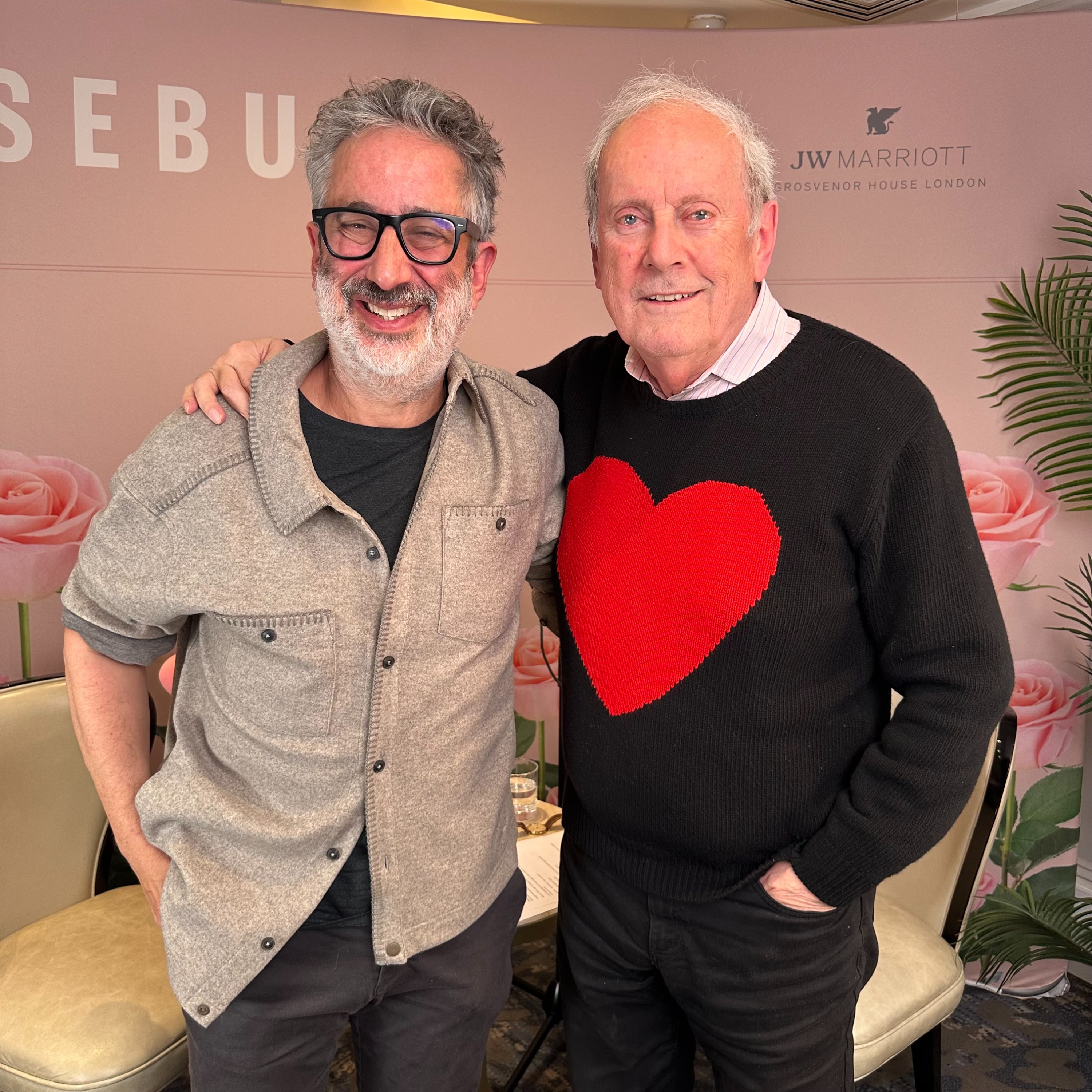
1:04:55Rosebud is a Plain Jane production produced by Harriet Jane, hosted by me, Giles Brandreth, with music by Phil Leppard, and recorded this week at the JW Marriott Grosvenor House in London's Park Lane. Room service.
David Baddiel joins Gyles this week to tell his unconventional family story. David paints a vivid picture of his childhood home in Dollis Hill, north-west London, and of the unusual people in it: his parents, and two brothers. His father, a frustrated scientist who ended up selling Dinky cars in an antiques market, was angry, disappointed, and hilarious. His mother was aspirational, cultured, with an extremely high sex drive. (This episode contains discussions of sex and relationships, and swear words, and is for 18+ listeners only). Their story is remarkable, sometimes funny, sometimes shocking, and, in the end, very moving.
David's Channel 4 series, David Baddiel: Cat Man starts on Friday 16 January at 8pm. It's about David's love of cats, which started in childhood. His book, My Family is well worth reading, and is available here.
Enjoy this!
Hosted on Acast. See acast.com/privacy for more information.


