
 Ask ChatGPT



Gyles Brandreth, a legendary British writer, broadcaster, ex-MP, and TV star, hosts “Rosebud,” inviting famous and fascinating individuals to share their first memories and experiences. The show promises laughter, nostalgia, memorable stories, and revelations.
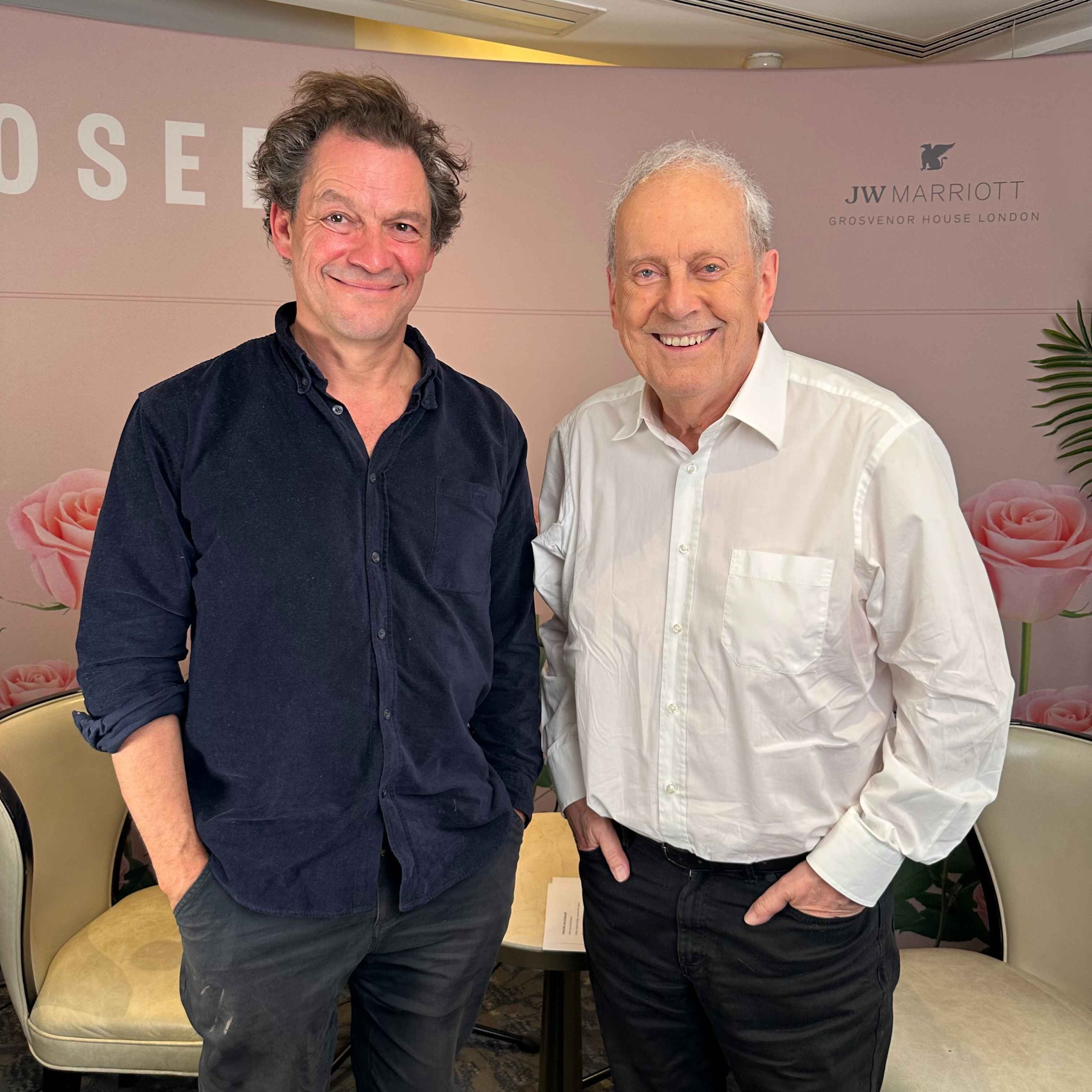
In this episode, Gyles Brandreth speaks with Dominic West, a successful British actor known for his role as detective Jimmy McNulty in the acclaimed crime drama "The Wire." Dominic shares stories about his childhood in Yorkshire, his family dynamics, his schooling experiences, and his journey into acting.
Written by AI. May contain mistakes.
Dominic shares his first memory and experience with a rare illness as a child.
“so this is rosebud with dominic west enjoy cue the music i love your names dominic dominic tell me if i got this right dominic gerard francis eagleton west That's right.”
Discussing Dominic's family background, including his father's career and his grandparents.
“Hinox Scherlein-Purpera, which I always loved the title of.”
Dominic talks about his mother's artistic background and its impact on his career.
“He was a great man and something of a war hero.”
Dominic reflects on growing up in a large family and the dynamics among siblings.
“So what was her name and what were her grandmames?”
Dominic discusses his childhood activities, schooling, and early friendships.
“When you were small, though, what do you remember of them as a couple?”
He shares anecdotes about his childhood adventures and mischievous behavior with friends.
“So she was ordered to do law by her mum.”
Dominic shares fond memories from his school days, highlighting friendships and experiences.
“So I loved going to his house because it was all very masculine.”
He discusses his first crush and the joy of performing in school plays, including a notable role as Joseph.
“And so the great thing about that was I got to spend so much time with Dorothy Davis learning the songs.”
Dominic describes the emotional challenges of moving to Eton and the impact it had on him.
“There's a common entrance to be taken at the end of the day.”
Discussion about life at Eton, academic pressures, and social dynamics.
“Dol Common in the Alchemist Ben Johnson play, and achieved a certain success in that.”
He reflects on his journey in acting versus sports during his school years.
Dominic reveals his thoughts on pursuing acting as a career and familial expectations.
“Yeah, nothing gay about the Gay Gordons.”
He discusses his academic interests and a memorable trip to Italy with friends.
“I think that, yeah, I think there was an element of not ever taking anything too seriously, which was...”
Dominic shares a humorous and challenging experience from a school trip to Venice.
“Yeah, and it was all, we got applied for a travel grant, because one of the great things about Eton is it has all these grants and stuff, so we got one of those, and it paid for our trip.”
Dominic discusses his A-level results and memorable experiences at the Edinburgh Festival.
“And then we did the orchestra, Jean-Henri.”
Exploration of Dominic's family background and how it shaped his confidence.
“You've got to be a fool to get a place there.”
Dominic reflects on his time at Trinity College and his romantic experiences.
“And that gives you a kind of confidence.”
Dominic recounts his year studying in Paris and the adventures he had.
“I met my wife there who we went out briefly and then she dumped me.”
Dominic shares a humorous story about how he managed his academic records while studying abroad.
“Oh, I lived initially in one room with these three Irish girls who'd come out with me from Trinity.”
Discussion on the motivations and experiences leading to Dominic's drama school journey.
“the play in which you played the lead part, told me, always pursue the lie.”
Dominic reflects on the lessons learned and skills acquired during drama school.
Dominic West discusses his early ambitions and the support he received for acting.
“Oh, it doesn't sound like I was, does it?”
A conversation about the challenges and absurdities of being an actor.
“That night, it was the last night, he never appeared again on stage.”
Dominic reflects on the diverse roles he has played and their complexities.
“But how do you counter that when you're feeling that way?”
Dominic shares his experiences following the success of 'The Wire'.
Discussion on Dominic's family relationships and their influence on his career.
Dominic talks about his experiences and challenges as a father.
“And everyone has grown up and gone away.”
Dominic shares humorous family dynamics and pride in his acting career.
“No, you've got totally the wrong idea about my sisters.”
Dominic reflects on joyful childhood memories and balancing work with family.
Discussion on how Dominic's family perceives his fame and fan interactions.
“But I was somewhere the other day, I will tell you where it was.”
Dominic discusses his relationship with alcohol and how it impacts acting.
“Well, I understand she's been fed up with it for half a century.”
A conversation about the grief from losing parents and life teachings.
“And so I do have a very, and I was a very, that also with my faith was what kept me going in the dark days of being away at school.”
Dominic talks about his Catholic upbringing and current views on faith.
“I like to go on retreats and I like to go places you can be silent.”
The hosts share final thoughts and recommend Dominic's projects.
“I wonder who we're going to have in store next week.”

Get the gist, explore an idea or ask about something said.
 Claude
On Rosebud with Gyles Brandreth, what are the key points of this episode?
Searching your listeningAutomatic transcript. May contain errors.
0:00Welcome to Rosebud and who have we got this week? Oh my
0:25Welcome once again to Rosebud. It's wonderful to have you here. We began our year last week with a remarkable centenarian, Thelma Ruby, actress, optimist, who felt she'd led a lucky life. Well, this week's guest has led a lucky life too. He's about half Thelma's age. He's an actor as well. He is Dominic West. Dominic West. No relation of Sam West, who was one of our guests last year, and absolutely no relation of Fred West, the serial murderer who he played on television to critical acclaim. He's portrayed a wide variety of real people on stage and screen over the years. Oliver Cromwell, the actor Richard Burton, Prince Charles, now King Charles, in The Crown.
1:10He became internationally famous, of course, when he starred as Jimmy McNulty in The Wire. He's charming, and as you'll discover, he's led almost a charmed life. so this is rosebud with dominic west enjoy cue the music
1:41i love your names dominic dominic tell me if i got this right dominic gerard francis eagleton west That's right. That's the full set. Yeah. Born, if you don't mind me sharing this, people will hardly believe it, on the 15th of October, 1969. Mm-hmm. My first question is, what, do I call you Dom or Dominic? Either. Dom is fine. It's Dom fine? I don't want to be too intimate too soon. Dominic, what is your very first memory? I've been trying to work this one out. I think it must have been around three or four, isn't it? Is that when you first... And when I was three, I was very ill with a thing called Hinox Scherlein-Purpera.
2:29Who, what? Hinox Scherlein-Purpera, which I always loved the title of. I'm never quite sure what it is, some sort of blood disorder or something. And Gavin Maxwell had it, actually. But other than that, it's quite rare. And I remember coming downstairs at home in near Sheffield and going into our drawing room. And there was the whole, all my brothers, I got five sisters and a brother and my mum and dad in the room. And this wonderful doctor called Dr. Jackson, who had an incredibly throaty voice like this. And I remember walking in the room and it being awkward. And I don't know whether I remember this or it was because my sister was telling me about it.
3:11But they had just been told that I might not live. Oh, my. And so it was, I do remember coming in and the weird atmosphere. I remember the dressing gown I was wearing. And I remember my mum sort of gently taking me back up to my bedroom. And anyway, I did live and it was all fine. But I think that must be probably one of my earliest memories. So they were standing around as a group, having possibly had the news broken to them by this distinguished doctor. that Dominic may not be true. Yeah, I think that's what my sister said, yes. I wasn't aware at the time, but when she said that, I did remember coming in the room and remembered an awkward atmosphere, and I must have been four, I suppose.
3:54And a wine-coloured dressing gown with a cord? No, it was actually sort of chocolate brown and woolly and polyester-y and bumpy and rather moth-eaten. Well, tell me about this family and why you're in Sheffield. Who are your parents? Why are you in Sheffield? Who are all these siblings? Well, my father was George West, and he was born in Chapel Town in Yorkshire and was a proud Yorkshireman all his life. And his dad was quite a distinguished Master Cutler, which is a position that Sheffield businessmen still hold to this day. He was knighted, and he was quite a big public figure. Tremendous. What was his full name?
4:37His name was Harold West. Sir Harold West. Sir Harold Ernest George West, yes. Good man. Yeah, he was. He was a great man and something of a war hero. But my dad didn't get on all that well with him. My mum got on very well with him. Why did they not get on, the father and grandfather? I think I didn't really know. I didn't know my grandfather, unfortunately, because he died before I was born. But I think he was, my dad always complained that he was a very public man and his life was for his public roles. He didn't have so much time at home. I think because his wife was quite difficult. She was American.
5:10My granny, I think she was quite a difficult woman. Did you know her at all? I knew her a tiny bit. I think she died when I was two or three. So your dad decided to start his own business. He started his own business, which was in plastic, which was the great sort of thing. Well, we all remember that moment in The Graduate. Yes. What is the future? The future in plastics. Plastics, exactly. He saw the future in plastics. So yes, he saw The Graduate and did that. Well, quite possibly. And what kind of plastics was he into? He was into glass fibre and he made bath panels and bus shelters and things like that in a factory in Wakefield in Yorkshire.
5:42Gosh. So, in fact, did what his father had done, but with a different medium. Yeah. And almost competitively. I mean, he wanted his own way to build his success. Yes, that was it. And it was more modest success than his dad. And it was quite a modest factory. But it was a thing he started and did himself. And did he have a public life as well? No. No. So he was a family man. Well, did he? Very much, yeah. All these children. Yes, he had five daughters and two sons, so he sort of had to be a family man. And was it like my father kept on having children until a son came along? And if I'd been a girl, I was going to be called a Mercedes, because that's what my father really wanted.
6:19If he couldn't have a son, he'd have a Mercedes. Right. No, no, I have a brother, an older brother, who came along number four. So he had three girls, then my brother, then another girl, then me, then another girl. So it was really that my one of the reasons is they were very Catholic. And I don't think, you know, weren't allowed birth control. And the other reason is my mom just loved being pregnant. Oh, really? Yeah. And was she a motherly mother? She was incredibly motherly mother. Very, very maternal. Brilliant with children. Sort of preferred children to adults. So what was her name and what were her grandmames?
6:51She was called Moya, Moya West, Moya Cleary. And she was her father was born in Tipperary. And he was a doctor trained in Dublin. And he came over to Sheffield and married an Irish woman called Kathleen Gleeson in Sheffield. And they lived in a place called Attercliffe, which is right in the sort of downtown Sheffield, which was bombed very heavily during the war. And that's where they lived. And my grandfather was a doctor during the Sheffield Blitz. And Sheffield got very badly bombed during the war. And my mum, who was born just before the war. so she was then sent back to ireland to be with relatives and uh she was a um what do you call it evacuee and that sort of defined a lot of her life in fact she was extremely homesick she was sent there with her two brothers but i don't think she was allowed to stay with the brothers because the auntie didn't want the little girl something like that anyway she she loved going to ireland it was rural island it was galway but she missed her parents terribly who stayed behind in sheffield to, you know, be part of the Blitz.
7:50And for the rest of her life, she was very, very, very keen on the idea of home. And at first they were happy when you were a small boy. Yeah, yeah, yeah, they were happy, yeah. I mean, they had, they married for 25 years, I think. They got divorced eventually. But, and the marriage, you know, it had a few knocks because my father was invalided after a car accident. And I think that had a big effect on the marriage when he was in his 50s. And I'm not sure it quite recovered from that because she had to nurse him and my brother and sister for a year. And I think that rather exhausted her. So, yeah.
8:32When you were small, though, what do you remember of them as a couple? I remember just this amazing logistical operation because we used to go every year to Mallorca in the summer. And seven kids, we had nine suitcases, I remember, and my dad would also bring cereal, milk, all this stuff. And we'd get on those awful 70s package flights, Danair, and we should always be delayed five hours in Luton Airport, somewhere awful. And it was a massive deal. And it was just incredible what a team they were and how they managed to marshal all of us. My mum always said, oh, you only ever have two children because they start looking after each other after that.
9:18And I thought, when I had kids, I thought, how did they do it? They did do it, though. They did do it extremely successfully and raised seven pretty decent people. And how did you get on in the pecking order? Where did you feel you were? Do you resent where you were? And how did you get on with all the others? I was very much in the third division. We were the three little ones, me and my two sisters, Natasha and Edwina. So it was divided, really, the older four and then the younger three. Did you share a room? We shared a room, yeah. And who was in your room with you? Well, initially I was with my brother in the green bedroom.
9:55Then I think when he went away to school, I was in the blue room with my two sisters. And my sister used to make me, who was older than me, a very powerful woman, actually, Edwina. And she used to make me, because I wanted to read her Aesop's Fables book, she would allow me to do it, but only if I faced her with my eyes open until she fell asleep every night. So I was sort of tortured, staring at her. So you had beds opposite of her. Yeah, we were all next to each other, yeah. So it was like a little dormitory. Yeah, yeah. And was it a house full of books, in fact? Were there lots of books for you to read?
10:29There was, yeah. Yeah, lots of books, yeah. It was a sort of idyllic childhood. And did you have people to help in the house? We had Mrs. Turner, who used to come in, I think, two or three times a week. But other than that, no. And, you know, with seven kids. And your mother did the cooking? She did the cooking. My dad cooked as well. He used to cook the weekends. And my mum, who hated cooking, would sort of do it midweek. But my dad did sort of, you know, quite a fair share of it. Did you have a proper evening meal, all the family together? Yeah, yeah. And cook breakfasts. And, yeah. Yeah, they were astonishing.
11:02They were absolutely astonishing in the amount of... And she also, my mum, you know, while raising us all, she also played most of Shakespeare's heroines in an amateur dramatic company in Sheffield. Because did she come from a family that had theatrical? Not at all, no. Very much sort of Irish professional. So she was ordered to do law by her mum. And she went to Trinity, Dublin to study law and didn't like it. She was very artistic and very, she loved painting and drawing and she loved music, art and literature was her thing. and she loved acting. And she formed, I think it was, helped form a company in Sheffield called Theatre Focus, which is where I was introduced to theatre.
11:44So it's because of her that you ended up, you think, doing that? Absolutely. Rather than going into business as your father and grandfather on that side. Right, yeah. Yeah, I mean, it is entirely, yeah, entirely because of her. She cast me in The Winslow Boy when I was nine. Playing that part. Playing the part. Is it called Taplow? Playing the boy. No, the boy. Taplow is in the Browning version. the boy who's accused of stealing the post-law and the brilliant lawyers part gets him off yeah you can now play the brilliant lawyer but actually i'd love to you should yeah but i remember it really well and it was a man called henry ibsen played the lawyer he was brilliant and it was it was a really high standard of amateur theatrics and my dad from whom i get my voice he had a very good booming voice and his actually his sister gloria was it was went to rada and was into acting so i get a bit i get a bit from him as well oh well so yes so in fact he came from a family that did have a proper actor in it in the shape of your aunt yes yes yes and he used to yeah recite crispin's day and things like that oh well done him in the stentorian voice yes oh but this is almost a caricature of an idyllic middle class solid yeah successful prosperous family in Yorkshire.
12:56That's it. Doing all the right things. That's it. Actually, well done, Amy. Goes to work, he earns a good money. Yeah. And your mother is a great homemaker with a life of the mind. Yeah. And leading by example, doing all these interesting things and you followed. Absolutely, yeah. Fantastic. What was the, did you do naughty things when a little boy was, what's the naughtiest thing you think you did at home as a child? Um, well, I suppose it was in my, I suppose in my teenage, we used to, we used to, I remember we, we crashed my friend's car. I had a friend's dad's car. We were about 14 or something.
13:27So I suppose that got us into quite a lot of trouble. You were 14? I was about 14, probably. 13, 14. In somebody else's car? And Tom was driving, and he wrote off his dad's car. We laugh about it now. So this is a nice childhood. Who was your first friend when you were still at home, outside of the family? The aforementioned Tom Grayson, who we wrote the car off with. So he lived across the valley in a sort of quite remote farmhouse on the moors. And so I and he had two brothers and I always longed for more boys in the house. So I loved going to his house because it was all very masculine. And then I'd come back to Mars and it was very feminine.
14:10All the five girls. So so it was Tom. Yeah, who I'm still good friends with. Go to school. What's the first school? First school is a place called Westbourne in Sheffield and still going. strong and i go there at four until 13. and what's your most vivid recollection of westbourne yeah terrible food uh coming home on the bus 2p on the bus the 240 with tom buying sweets and uh i i know i i really enjoy my time any special teachers various but yeah yeah there was one well there was one who i who was i might be your next question my first crush who was mrs dorothy davis and it was my next question right well this is my first crush she must have been about 24 or 25 when she was teaching us and and we were about i don't know 11 or 12 and i was hopeless and me and tom were both hopelessly in love actually everyone was in love with her she taught music and uh we were obsessed with her and um she uh you know i used to swoon over just seeing her orange mini driving around and we did this production of joseph's an amazing technical dream coat in when And I was in my final year there.
15:20And I was cast as Joseph. And so the great thing about that was I got to spend so much time with Dorothy Davis learning the songs. How come you were cast as Joseph? What did you have in you that gave you the lead part at this prep school in Sheffield? I don't know. I mean, the part I wanted was Tom got, was the pharaoh, you know, the Elvis part. But I don't know. I do remember feeling very comfortable on stage and thinking I could get to like this. And Mrs. Davis? Did you call her Mrs. Davis? Of course, Mrs. Davis, yeah. Doz. Doz? Doz to us, yeah. Oh, that was her nickname. Yeah. And were you allowed to use that?
16:03No, God, no, no. No. I had a crush, unfortunately, the same age, on the matron. The disadvantage or the advantage of that is she could and did say, take your clothes off and get in the bath. And she did actually help wash you. No. Yes, yes. He's 14. No, no, no, no. Much younger. 11. Even so. 11, 10, no. Right. Yeah, I mean, but the point is, it was a more awkward, it was a more, yours is a nuanced crush. Mine was a more challenging crush. Right, I bet. Because it's one thing to have a crush on somebody on the staff, but then to find your, you know... Yeah. Was it humiliating or...? No, well, look, I'm still living it.
16:50I can actually... Because, funnily enough, the bathrooms at this prep school, they had the names of Great Rivers. Right. And we always were in Ganges. Right. I have not thought about this, I have to say. Washing in the Ganges. In 70 years, but being with her in... Anyway, that's by the by... I can see you going misty-eyed at the memory. I'm actually blushing, which I don't often do. Anyway, so this is happy times. Yeah. And it's all good. Reasonably academic? Reasonably, yeah. There's a common entrance to be taken at the end of the day. Yes, yes. And my dad decided I should go to Eton, which he had gone to, and my brother had both gone to Alperforth, which is where I wanted to go, because it was in Yorkshire.
17:34And it's a Catholic school, isn't it? And it's a Catholic school, obviously. But he definitely had sort of ambitions for me and said, you know, his best friend at Oxford had gone to Eton and he really admired him. And so we were both put down for Eton, my brother and me, and I got in and so I had to trot down south. And what was it like? This is the first time you'd left home to go down to Eton. Going away? Yeah. It was utterly traumatic and awful. I was deeply homesick. I felt very dislocated. I didn't know anyone had ever gone there. I felt like I was in the south and I wanted to be in the north.
18:10Did you have a slight Yorkshire accent? Probably, yes. Yes, probably. I just was very homesick and missed my sisters and my family. And did you express that to anyone? No, no. I mean, this is one of the joys now of seeing, you know, the support that children are now given in schools. and I, no, I kept it probably quite much to myself. What was the best of it? Because you had five, six years of Eton. Yeah. Well, after I sort of got used to being away, I had a wonderful time, and I sort of, in a way, acting sort of saved me there, in that I was cast in my first play as a woman, Dol Common in the Alchemist Ben Johnson play, and achieved a certain success in that.
19:01Through getting laughs. through getting laughs yeah yeah and what was the worst of it once you got over the homesickness oh well that was the worst i mean that's the worst i've ever felt in my whole life i've been i've had a wonderful life since and i've never felt that deep grief of homesickness um i will i said when my parents died um but other than that it was it was i had a wonderful time which is an amazing school is there a social blight now to saying that one was at Eden yes i there probably is yeah and does that does that bother you or that's just the way the world is uh i mean it used to but it's you know you sort of go away to america and and you know i'm still very much defined as an old etonian and that that that i think you are defined well i'm i something that it's it seems to come up a lot in in or it certainly did until quite recently that you know you are you are slightly branded um and but that that doesn't really bother me no what is the advantage though of the brand in the sense does it do things to you interestingly i was not conscious of you being an old eutonian until i read the notes oh great for this so i was quite intrigued great um but so what what does the brand given you though i mean people will do it your father obviously thought this is going to be good for the boy i don't know why i didn't think alberforth would be it's going to be good for the boy was that social aspiration on his part was it because it had worked for him and his father was it because it he felt it would give you a certain polish it wouldn't help you meet other people who are also going to be achievers in that i mean what what was well he see he stated quite quite quite uh simply you know he said i just etonians have this confidence that i that he really admired and he that he found people he'd met at Oxford as being, you know, you could, they had a confidence and an ease about them, which he, I suppose, wanted for me.
21:01And how do you counter the danger of it being the confidence moving into entitlement and into arrogance? Well, it's a terrible danger, and it's a danger that most of us fall into, I think. And you have children now. I do. Do any of them go to Eden? They do. Yes, I have children. I have two boys. Well, that's a good reason for modifying your view about the school uh yes yeah and when you were there that did they have fagging that sort of thing they did it was i think the one of the last years that they had it's been abandoned now that's where a junior boy is like a servant to an older boy yeah yeah and it was i i i met my uh so i was a fag to two guys and um met him again the other day actually he's uh anyway and it was great actually it was a really good way of the younger boys to hang out with the older boys and get to know them and you and you know you had to clean his room or make toast or something it was not it wasn't too arduous and you got paid and you got to use his stereo and uh and you we we you know we became good friends actually and and um so i it was a positive experience for me but they banned it very shortly after so it's a good time at once you've settled in yeah are you at all academic well it's interesting at that school it's very difficult to feel academic because there's so many boys who are much more intelligent and and you know some incredibly bright boys um who i didn't really know so i was in all the bottom sets so uh so i i wasn't very academic no but i i suppose that doesn't mean i'm not academic it's just i wasn't academic there sport sport yeah i played rugby that was my thing that's that's a good thing to do and of course the acting and of course the acting so you you emerge quite soon as a bit of a star well uh well you know possibly yes i remember well the two clashed when i when i was 16 and i was cast as hamlet oh by a wonderful inspirational teacher called rave payne and he um and he insisted i couldn't play rugby anymore but this is wonderful i mean no one i mean you don't seem to have a sense of entitlement but we would allow it because at your prep school your cast was joseph the title role we get to eat no it's hamlet we need a hamlet oh here we are young west you'll do uh yeah that's fantastic well it was amazing because i aged 16 or 17 16 17 i learned the whole of hamlet and it was um i think it was an a-level set tech so i was quite i was in the money there were you any good no no i wasn't have you done it again since no i haven't i wish i had i've all i've one great regret oh it's not too late the lighting's done well well ian mcgillan did it at 80 i think um i don't think i was there was a boy who played ophelia who was called saw link later who was amazing and um uh i i struggled to i was i think the review said i was engaging and funny but there wasn't much sort of psychological depth but I was quite young you were very young so that was exciting and were you well obviously you were good looking because I've seen the photographs um were there crushes there at school when you were older um was that part and parcel of your of your life for some people it is yes um yes I was always having a crush on yeah and we had um limited access to to girls but there was a Scottish dancing society oh yeah So I used to go religiously to that to meet the girls.
24:29Yeah, nothing gay about the Gay Gordons. Yes, exactly. They ate some real in the restaurant. Exactly, yeah. Yes, some beautiful girls there I must have fallen in love with, yeah. Oh, why not? So it's happy days. Yeah, it was. What are you thinking in your head you're going to be doing in your life?
24:48Well, I think Rave Payne, who directed me in Hamlet, He said to me, you must, I assume you're considering doing this professionally. And I remember him saying that because I remember thinking, God, no, it hadn't even occurred to me. And in fact, I think it did take me quite a long time to realize that you or not to feel weird about being paid to do something I love doing so much. And so I don't know what I thought I was going to do. My dad wanted me to be a barrister because his dad wanted him to be a barrister. I want my daughter to be a barrister. Anyway, none of us is a barrister. and um so i maybe i thought i was going to do that i don't know but um well there are ties aren't there i have a son as a barrister right and my father was a barrister right when my son became a kc i was so happy not just for me but for my dead father right the only moment in my life that i wish there would definitely was a heaven right so that my father could know right that it happened to my son yeah because barristers can be defensive of course what law they do but I mean, I love all those plays, like the Ratican play, where there are wonderful scenes for Barristers.
25:51So did you even think about that? Yeah, I must have done, because he was so keen for me to do it. But when they said, you're the best actor in the school, and they did. I don't think they did. Well, according to the notes, they did. Really? Oh, yes. According to the notes, this teacher of whom you spoke said he was undoubtedly the best actor in the school. Oh, well, Damon Lewis was there at the time. Are you suggesting I'm a better actor than Damien Lewis? This is not the line I took with him when he came in to do this conversation. I referred to him, but I thought he was in a different year. He was, yeah.
26:23Of your year, you were the best actor in school. Of my year, possibly, yes. Good. And that didn't turn your head. Were you a nice boy, do you think? Were you a pleasant? Yeah, I mean, I was a clown. I was a class clown. Yeah, I was the clown. I was a show-off and a clown. And did that annoy some people? I'm sure it did, yeah. I think that, yeah, I think there was an element of not ever taking anything too seriously, which was... When you were this age, were you an honest person? Can you remember telling any lies or exaggerations at school? No, I can't really. I think I was pretty honest. Yeah, I think so.
27:03I mean, I think I was always... I always felt slightly apart or separate at school, because everyone else seemed to live in the home counties and go home every weekend, and no one lived up in Sheffield. What was the food like at Eton, better than at the prep school? Yeah, it was good. Yeah, it was good.
27:30And when you were there, holidays, did they mean a lot to you, going away? Were you still going there with the family to Mallorca? Yeah, until I was about 16, I think I did, yeah. And what was your first holiday on your own? How old were you? That would have been, I think I was about 15, probably, 16. And we got, with two friends, we went, we got a grant from the school to go on a history of art trip to Rome, Florence and Venice on the train. Fantastic. Yeah. And we took ourselves off and had an amazing two weeks going around Italy. Oh, that's glorious. Yeah, and it was all, we got applied for a travel grant, because one of the great things about Eton is it has all these grants and stuff, so we got one of those, and it paid for our trip.
28:14And what's the most magical moment you can remember of that trip? Did you go on a gondola? We swam in the canal, which is not a good idea, and I got very ill the next day as a result. I've never seen anybody's, I don't think it's allowed. Actually, I think I must have drunk the water, because it was absolutely vile, and then I'd spent the next two days on the train unable to move. but it was yeah high spirits i think we uh we had a good time in venice and what a levels did you take i did history of art divinity and english oh and i did i think this tells us quite a bit about you and your approach to things academic history of art divinity divinity i took because no one had ever got less than a b and then in our year everyone got everyone failed because they got the wrong i can't remember what happened the board something happened and everyone failed so i even i failed that oh i'm sorry to hear that but you got a levels sufficiently but i got a levels and i retook them i got ncb n which i'd never heard of before or since as a grade and um i think it's not worth having yeah the n stands for um not classified i'm not classified so so i had terrible a levels but i was by that point i was at edinburgh festival with friends and and um anyway I retook them the following term at home in Sheffield and got but this is the confidence that Eden gave you age 16 you were able 17 you were going up to the Edinburgh Festival great absolutely nuts and a group of you got together and so we put on a audition girls it was amazing oh and they all came and auditioned what did you put on we put on uh I went three times we put on we put on the the dresser Ronald Harwood so I was playing a 70 year old man at whatever I was Of course, we were playing the game of the age.
29:56And then we did the orchestra, Jean-Henri. It was great. And you was in a production company that you created. Yeah. What was it called? Rumors. Say it again. Rumors. Rumors. Oh, I love it. Rumors. Rumors. Rumors, the Rumors Theatre Company. How wonderful. And three of you lads. And you said, girls, we just need a few girls to play the orchestra. There were probably quite a few girls in that. Yeah, I think there was, yeah. Yeah. And they came and they auditioned? And they auditioned and we all went up to Edinburgh and stayed in the flat together and had a great time. Hey, what an enchanted life you have led.
30:33It was, yes, it really was. And did anything go disastrously wrong up there? Well, no one came to see it, but that's pretty standard. But you were now set. Theatre was the thing. Yeah, I think so. Well, I think so. Well, I then went to Dublin University for four years. There's Trinity College Dublin. Yeah. Well, that's pretty pucker. You've got to be a fool to get a place there. So you did sufficiently well. And why did you choose that? It's a great choice. My mum had gone there. My sister lived there in Dublin because she was studying to be a doctor there, not at Trinity, but at the College of Surgeons.
31:08So I did come back from Edinburgh with these terrible grades and there was a sort of moment, sort of, what the hell are we going to do with him? And my sister said, oh, come to Dublin. Did you, because I'm looking for the flaw in this, because there doesn't seem to be one in this charmed life of yours. Did you feel when the A-level results came through the first time and they weren't what you wanted, that you'd let your parents down? Did you feel awkward or embarrassed? I must have done, yeah. I must have done. But I don't recall it, I have to say. I mean, my brother had got even worse A-level results, so we weren't a very academic family.
31:46so i don't think um it wasn't too unusual uh to not do not shine in our a levels but i i must have felt some some guilt about it but i think i was just having too much fun but also you were blessed with something a phrase that i was introduced to uh by a freudian analyst who explained to me that people like you have got many sisters particularly older sisters and a loving mother surrounded by adoring women from an early age I didn't say adoring women. They weren't adoring at all. Well, that's what you think. But they adored you. You came along, this golden boy. And your mother did love you, didn't she?
32:24She did, yes. And though the sisters may have teased you, they were pretty nice to you on the whole one day. Oh. Yeah, yeah, no. Well, this is, again, another theory of mind. No, they are completely nice. But you're very much in the pecking order. We still are. You know, I'm number six of seven. I'm second. I'm the second least important person in the family still. Well, what I was leading up to is that according to the Freudians, you have surrounding you ingredients that would give you phallic swagger. Thanks. Yeah. Which means that you go through life very confidently because from an early age, you have been surrounded by women who treat you well, make you feel loved and wanted.
33:07And that gives you a kind of confidence. So add the natural phallic swagger that you were born with. Right. To this time at Eden. Yes. and you've got somebody who's intolerable god and who they say oh we're doing joseph would you play joseph we're doing hamlet well you're the best actor in the school damien lewis to the back of the class please we've got dominic west here would you please give us your hamlet then you're going up to edinburgh 17 18 yes we need some girls come girls rumors join us and we've got a flat where you could all stay i mean really yeah it's i should yes maybe i am still intolerable maybe i've always been intolerable but i ought to be i'd like to feel we're making all this up and it It was a fantasy life, actually.
33:46So you go to Trinity College Dublin. Yeah. And it's a fabulous place, isn't it? Yeah. So I was sort of obsessed with Ireland, and I'd read a book called Trinity by Leon Eurus, which was a sort of romance of the Irish independence war. And so I'd become very enamoured of Ireland, and I wanted to live there. So it was, you know, that was where I was. And what were you studying? English and drama. Oh. So I had a wonderful time. I met my wife there who we went out briefly and then she dumped me. And then for about 10 years and then, and, um, and I lived in a beautiful rundown part of the city center called Mount Joyce square, which is this old Georgian house at the top with no heating.
34:28And it was wildly romantic and I loved it. Did you keep a diary? I did. Yeah. I must've done. I kept a diary for all my school days, every day. I was still keeping a diary then. Yeah. Oh God. I'm glad. Yeah, I must look back on it. Do look back on it. Feel free to come in and read some extracts. I think it would bore you to death. No, it wouldn't. I love young people's diaries. That's lovely. Did you write poetry? I did, yes. Yes, sort of. I was, you know, slightly infected by Irish-y, Gerald Manley Hopkins type stuff, and Yates adored. And so I was, yes, sort of imitating them and trying to anyway.
35:08Love poems? Did you have? Lots of love poems. Did you have a big affair there? I did, I did. Yes, I had several. One in particular, a wonderful girl called Juliet, who was a little older than me and much more sophisticated and lots of poetry expended on there, yeah. I mean, I'm almost speechless because you've had the life. I've dreamt of having... Oh, I then got a year in Paris as well. I know what to hear. On the Rasmus Exchange. I'm still savoring. You can't have any more. But they came in one day and they said, does anyone want to go and study in Paris for the year? And I said, what, study English?
35:42And they went, yeah. So off I trotted. That was all paid for as well. Unbelievable. By the EU that we used to belong to. You weren't able to take the slightly older, more sophisticated girl with you, were you? Yes, I was. Oh, no. I'm sorry. Yes, we lived together in Paris. Oh, for God's sake. And we hitchhiked all across Eastern Europe because the wall had just come down and we hitchhiked across to Romania. And yes. What part of Paris did you live in? I lived in the 14th. Oh, I lived initially in one room with these three Irish girls who'd come out with me from Trinity. None of us were lovers or anything, but we lived in one room.
36:17No, we had two rooms. And whoever had the boyfriend or girlfriend to stay could get the bedroom, and the rest of us had to sleep outside. So I lived in there for a bit, and then I met a friend who lived in the Marais, and so I went to move in with him. And then Juliet came out, and that's where she and I lived. Oh, my God. Did you go to the theatre? What do you remember best about that time in Paris? About Paris? In that time. Food? Could you afford food? Yeah, you could eat. In those days in Paris, you could eat really well. Yes. With a jug of wine. A frita, a steak. Yeah, for very little money.
36:53A chee of wine. Yes, yes, for sort of 10 francs. A little cheese. Yeah. You could eat really well for nothing. And yeah, there was plenty of that. What else did we do? I think I had hitchhike a lot as well. Of course. We hitchhike down to the Loire Valley. camping of course to pick the wine you own grapes having crushed by the local girls for you it's too good for words and you're still doing your work so you're passing what exams there are well no because there was no communication between dublin and paris because no one had ever this exchange this it was the first year and so there was absolutely no communication so i marked to myself pretty much sent these marks back and my flatmate it was a guy called rlando and he could perfected this sort of irish the french professors have a certain type of handwriting with lots of curls and things and he perfected that and he wrote me this glowing report and so i i yes that that was a big so this is the lie this was the lie the big lie was that i got a low first from my paris year the reason i pursued the lie is that ronald harwood who wrote the dresser the play in which you played the lead part, told me, always pursue the lie.
38:07Everyone in their life has one lie. Really? You only need the one, but find it. Interesting. So we found your lie. Oh, God, no, there must be more than that. Good. But that was certainly, that was a big fraud. So literally, you got this friend to give you... A glowing report in French. He sent the report off back to Dublin, said this is from my lecturer, And I've got a low first. I hope that's all right. But I love the detail. A full first would have been too much. No, yeah. It would have gone, yeah. And come on. How come the rest of you is a low third? So you then go back to Dublin and finish off.
38:45Finished off, met my wife, and had a lovely time in the final year. Yeah, lovely. But she then dumps you. She then dumps me. I go to drama school, straight to Guildhall. And why did you do that? Because a lot of people who go to a university where there's a lot of drama like Trinity Dublin or indeed Oxford or Cambridge or one of these universities, Bristol, with a big theatre life, don't then go to drama school. Why did you go to drama school? I suppose I didn't know how good I was. I didn't know, I wanted to gauge myself against whatever else was out there. And we'd had some success in Dublin and we'd made a film there with Lenny Abrahamson, who's a very successful filmmaker now.
39:24And so I'd done quite a bit, and I'd done a bit of professional theatre in Dublin, or semi-professional and but i still didn't quite know and so i auditioned for all the drama schools and but what do you think you learned in three years of drama school what can it teach you over three years i think it teaches you how to work with people you don't want to work with i think that's quite an important thing um i i i i i really enjoyed it and i love my colleagues there and we met up again recently and we're all still good friends but but i think it you know it it does teach you how to be patient how to be how to deal with people who you strongly disagree with or are having created differences with and i think that that above all that's what it taught me and prior to that had you been a bit of a know-all in the sense of expecting what your view to carry of the day i was possibly possibly a bit difficult in that way i don't know i i um i certainly had strong views about things and and um how things should be done and and um perhaps drama school sort of calmed me down of those three years was there a particular skill you learned i mean in terms of voice projection or using your face or um well yeah i mean we had a lot of training in voice and and a voice was always okay for me it was always quite easy it was movement though i wasn't so good at and um so but but i then became obsessed with physical theater and wanted to be a physical theater actor so i joined the circus when i left and uh i did i did sort of i did a course in clowning and you really joined the circus you went to a circus school well i went no i went to a clown school this was separately i think this was this was several years later but it was philippe goliere he was a famous french clown and and he told us a very brilliant thing which was that he'd say he'd said to us i want you to get up and one after another i want you to stand up in front of us and make us laugh and you go oh god you know and everyone would stand up and trying to make you laugh and the more they tried the less funny it was and then the moment they died and and surrendered to the awfulness of the moment and of their of their death of their dying on their feet that moment when people acknowledged it was when you laughed because you felt you felt a sort of a sympathy and an empathy with that person you felt sorry for them in a way and it would make you laugh and that's sort of anatomized what a laugh is and what a what a clown is it's someone who when it's done right is is in a place of absolute surrender to the humiliation of life and the ridiculousness of life and you were going on learning were you hungry to actually get work Oh, it doesn't sound like I was, does it?
42:13Were your parents giving you an allowance at the stage? Of sorts. I think they must have been, yes. And I was getting a grant from Derbyshire County Council, actually, as well, who was very kind to them. They said, it's like this, Dominic, we can either give you a grant to go to acting school in London, or we can buy a new fire engine. So I said, well, you'd better buy a new fire engine then. But then it became compulsory because it became a degree course. Anyway. Is that true, the story about the clergy? Absolutely, yeah. Good grief. Yeah. Well, I'm glad in the end they were able to do both. In the end they had to do both.
42:56Quite right. So here you are, almost postponing life with going to more courses, university, France, Italy. We're now at the Guildhall. let's do a little bit of clowning on the side yeah though that came i know a bit later yeah and have you ever thought during your career as an actor i wish i'd become a barrister um no no it's it still suits you yeah i couldn't couldn't think of it you don't ever get onto the stage because i know you do theater work as well as film and tv and think actually this is ludicrous of course oh you do oh of course of course yeah yeah oh yeah and i think the older you get the more ludicrous it it seems um uh melda saunton always said to me that the gays the gay actors age much better than the straight ones and it's something possibly to do with the straight ones see it as more and more ridiculous and then and the gays don't they they there's you know much happier and jollier about it and i think she might be right though i knew a lovely gay actor called noel davis who became a casting director did you ever know no no he did all the casting for john schlesinger's films right and he was appearing in my fat friend at windsor and halfway through the show he's on stage alone he broke the fourth wall said to the audience i'm so sorry ladies and gentlemen i realized i've been in the wrong business for 40 years i'll see you through to the interval but after the interval it'll be the understudy i'm leaving the stage for good now I just finished the scene.
44:27And he did. And he did. That night, it was the last night, he never appeared again on stage. He just thought, this is absurd. Wow. A late middle-aged man. How exciting. Yeah. What a great way to go. And he was a great casting director. Right. So he had something to go on to. Yeah. But how do you counter that when you're feeling that way? Well, I think in any long run, I mean, I try not to do anything beyond three months now, But in any sort of, you know, after two or three months, you are, it becomes, you know, even with a great part, like I just played Eddie Carbone, you know, it gets tiring and exhausting.
45:04You just think, what am I doing? Why am I? I'm too old for this. And I suppose what counters it is a, the problem that I can't do anything else is the main thing. Have you suffered from stage fright ever? Not yet. Touch wood, no. No, people can get it in late life. I know, yeah. I know they can. And you've been very blessed in that you've played, and I think it's partly your appearance, but also maybe it's your attitude, you've played a lot of leading men. In a sense, I don't just mean the leading man like Hamlet, but men who are big characters, who are commanding the situation. Why do you get cast as those?
45:48I don't know. I mean, I don't know. I suppose in some ways, you know, when I think with regret that I haven't played Hamlet again, and I think, well, why did no one ever want me to? And I think in some ways there is a vulnerability to Hamlet that perhaps I lack, or I don't know, or an intellectual aspect to Hamlet and may be a vulnerability that is perhaps not how people perceive me. But you have, of course, you have played Honorable People. You've played the present king, haven't you? Yeah. In the last series of The Crown. And there's a vulnerability there. Yeah. Which you showed. Oh, good. And funnily enough, you played Fred West.
46:35Right. I suppose they looked at any other West that would have been able to. Oh, no, this is the one we need. Was that, what was that like? that was um that was rather amazing because it's an amazing film an amazing director um and uh and and the rest of the cast um but this is a very strange person but we did it shot it really quickly we shot it in three weeks and in manchester which is i've always got on really well with people from manchester and they have the funniest crews and so we laughed a lot um A lot of gallows humor and a lot of deliberate laughter because anyone who wrote a book about that man or his career had a breakdown.
47:24Literally. Yeah. Fred West, Rose West. Who played Rose West in your show? Monica Dolan. It was amazing. And Emily Watson. We all won BAFTAs. So it was an amazing experience. experience and and quite apart from its subject matter which we were all i certainly was very very conscious about not letting that into and i started dreaming about him towards the end and that got me very worried but i i had young children so i'd rush home and just hang out with the kids and that would that would easily wash that man right out of my head but but also i suppose i've always had a detachment i'm not really an actor who who identifies or needs to identify with the part i've always had a certain detachment to anything i play um and i think that's really important and it's essential if you're playing someone like that
48:19your breakout moment i suppose well when i mentioned your name to other people and for breakout moment they all say the wire is that is that fair yes yes yeah and did that change you in the sense that there was an international success with a big international audience no because it wasn't you know it wasn't it wasn't for ages uh and it wasn't really until it was over um certainly not in this country no one had ever seen it until our final year i sort of we'd done we'd been we'd done five years and i mean no one knew this show at all uh and it was um i was in a road raid incident and and i was shouting at the cell i was saying what are you doing get out of the way or whatever and he wound down his window and he went you're mcnulty and i thought oh god wow someone's seen the wire so and and that was the the first time i i noticed that that people were noticing it and where you have you been are you good at that sort of thing are you good at letting people take selfies and doing autographs and being friendly well yeah annoying yes yes yeah yeah i mean that's it's funny that that that has been my that's the thing i get stopped for usually the why yeah and um people still you know coming up and saying i've just come into it and you know 20 20 something years later it's uh it's the gift that keeps giving and the thing that you have done that gives you most satisfaction we've done so many you've been up for awards for so many it's it's look at yourself on wikipedia it scrolls down filmography page after page then stage work page after page you have been busy i've been quite busy it's good i know it's great i've been quite nothing compared when i played richard burton and that and you realize just how hard those guys work and reading about um gambon there's a wonderful new book about michael gambon that's came out it's a most eccentric book too yeah written by the lady who really yeah was his earwig a phrase i'm not familiar with but i am now yeah which is where you have an earpiece yeah to help you in later life if you're coming a little bit uncertain in your lines it then tells you what to say yeah um he got it from um he he did i worked with him a couple of times and i loved him and uh he i remember he worked with uh marlon brando in on dry white season in south africa he said there i took the job to meet brando because he was loved brando and and brando had an earwig and and gambon said you know why have you got that and brando well i can't do a brando accent but he said oh i i just had this in my ear there's so that when you're doing all your talking, I don't have to listen to anything you say.
50:51And Gammon loved that so much. I think he got his own earwig in later life. What then in your head comes to you as, I'm so glad I did that, of parts either on stage or screen?
51:07It's odd. I think the thing I did, I did an Argentinian circus called De La Guardia at the Roundhouse in 1999. and and it i was my agent begged me not to everyone told me not to and it was it was the one it was one thing that i really did do because i for myself or because i really wanted to do it and and it was not a career move it was not in any way a financial thing and and i i never regretted that i i loved doing that and it was clowning or was it part of a troupe it was being part of a flying around on ropes and breaking through paper and grabbing members of the audience and it was a sort of carnival argentinian latin carnival and and or rave more like a sort of rave and uh it came out of the sort of end of the junta era in argentina in in the clubs in the rave clubs so it was it was it was a brilliant it really and i was 29 and it was really everything that was great about being in your 20s and i i so i'm glad i did it then 29 that's about the time when your parents divorce uh is it yeah uh possibly no i think it was a bit i think they divorced a bit early in there i yeah i can't quite remember how did that affect you well in some ways it had been a long time coming so we were all i suppose there was some relief uh i'd been away from home for many years.
52:32So I think... It felt, it was going to happen. It felt, thank God, you know. They're going to be happier. Yeah, much happier apart. And everyone has grown up and gone away. So there was going to be no damage. No. And was there damage for either of them? Did your mother find a new partner? Did she really? No, she didn't. No, my dad did. He found a friend and he moved to Ireland. He moved to Ireland because he thought, because she loved Ireland, he thought she might follow him, but she couldn't think, she certainly didn't. And so he, yeah, he started a new life in Ireland, and they were better off not together.
53:11And were you as close to them as a grown-up as you had been as a boy? Closer, certainly to my dad. So in his last 10 years when he was in Ireland, I became very close with him and saw him a lot, and he used to come out to America when I was there, and he loved America. His mother was American. And so he'd come out there as often as he could. And what did you learn from him? What did he give you? What have you got that you got from your dad? Well, I think the thing that people noticed most about him was he was quite down to earth. There was no frills about him. He was very Yorkshire and he was blunt and often offended people for his bluntness.
53:48But there was an honesty to him, which I hope I've got some of. And also his, his very much his feeling that, um, you know, as a father, you have to be around and doing, you know, looking after kids and cooking and stuff. And your mother, what do you got from her? Did you see much less of her than when she was? No, no, I saw quite a lot of her. She was, she was probably more affected by the divorce in that she, um, well, she, she was, I don't know. It wasn't very easy for her. But what I got from her, I mean, my acting, definitely, my love of music. She adored music. She was a very artistic person.
54:34Now, you have five children, is that right? Yeah. One by a girlfriend that didn't lead anywhere. Yeah. But that's your first child. Yeah, Martha. Martha. And then four by Catherine, who you eventually marry. Yeah. and is the the girlfriend who's the mother of the first child is that breakdown as the end of that one of the big sadnesses shames or is it just one of those things that happened you were too young and on we go i think i think it yeah i was too young i was you know i was 28 but um it's not that young it was not that young no but i wasn't really and i was sort of just leaving drama school and looking towards America.
55:17So it came at the wrong time, really. And so I very much, yeah, it was very difficult, that ending. But I think we've been, you know, we're great friends now and sort of have been civil. Is that your one regret in life? I suppose so, yes. I suppose I wish my eldest daughter had had some of the advantages or some of the security that my others have had. But she feels, does she integrate it into the family? Oh, totally, yeah. You feel you've got five children and they treat her as a brother or sister. Yeah, yeah. Were any of your brothers and sisters jealous of you? Are they jealous of you? Do you think, do you suspect that they might be, even though they're always lovely and warm about what you do?
56:03Oh, they're not lovely and warm. No, you've got totally the wrong idea about my sisters. and they're always telling me i'm a blithering idiot and that is my sort of and that's maybe that's family game we play it's family banter and and i think they are very proud they particularly love me doing the crown and i used to get them into all the the parties for the crown and um so i think they they do in they do enjoy my success um i don't not one of them well maybe Even my eldest sister, Georgiana, used to do some amateur acting, but none of the others are at all into acting. In fact, they couldn't think of anything worse.
56:41So I think they're all doctors and teachers and things like that. We're coming towards the end. I ask you, and you must give an instant answer. You're not allowed to think about this. A moment of joy in your life.
56:58um well in my childhood i just remember extreme joy when when at the end of the summer when we broke up for summer holidays and and we would be heading off to majorca and i thought this was my earliest memory when i was thinking about this but being outside in the sunshine when we're loading up this white vw van to go to mallorca was that was just exquisite joy and you tried to recreate a bit of that with your children totally yeah i even have the vw van and how do you balance getting big international work being in movies and indeed being in long runs with being a father so i suppose i always first of all i always would never be away for more than three weeks even when you know when i wasn't married when it was when martha was born i would come home every at least three weeks um when we were shooting the wire and stuff to to be with her and it was always i had i have to be my kids i can't i can't be away from them very long and does katherine dislike the way fans treat you no i think she's a bit sort of curious as to why they do yeah well Well, I'm glad she doesn't disparage them, because I know exactly my position in the pecking order of things.
58:17But I was somewhere the other day, I will tell you where it was. I was in the Irish Embassy in Paris. Oh, yes. And there were some very nice people who were Rosebud fans, Irish Rosebud fans. And they were saying lovely things about Rosebud. And I overheard my wife saying to the person she was standing with, Oh, they'll be licking him next. It's nauseating. He laps it up, laps it up. I've had to put up with this for more than 50 years, lapping it out. Oh, look at him. Oh, dear. She's got fed up with it. Well, I understand she's been fed up with it for half a century. But I only overheard it. She doesn't say that in my hearing.
58:54So you may not realize how Catherine feels. Well, yeah, I think she thinks it's ridiculous. But my sisters, too, they're absolutely nonplussed when people come up and say nice things to me because they just think, why? Why? How can they possibly be interested in you or think you're any good at anything? But you haven't gone off the rails. You played Richard Burton, who did go off the rails mainly through drink, though he was a very heavy smoker as well. You've not gone off the rails. Has drink ever been a problem? Drink? Drugs? I do. I do drink quite a lot, yes. Oh. Do you smoke as well? Is this the explanation for the rich voice?
59:35No, no, I don't smoke. But, no, I just adore wine. And so, yeah, I have to be a bit careful with that. But it's never been, no, it's never gone off the rails, no. God, well done. And because the trouble with Burton is he, like a lot of alcoholic actors, they, you know, if you drink and it's good for your performance, then it's very difficult to do it sober. And that's, I think, when you're in real trouble. You've never performed drunk at all? Well, not really, no. oh god what you've got away with it a moment of sadness um
1:00:15moment of sadness i mean my whole early teenage was just a complete cloud of sadness and feeling of grief of having i realized it was grief when my parents died but it's the same feeling yes exactly how interesting yeah it's a feeling of deep grief and and and because they died relative 20 15 years ago yeah yeah so they were pretty young they're only in their 70s and and um and were you with either of them when they died i was with yeah both of them actually yeah yeah and um yeah my mom's death was my dad's was not good it was in hospital in ireland and and um i became very i was amazed at how little sort of codification there is to how people die in hospital you know it seemed to be very slapdash and haphazard and and i think he probably suffered and you know and i feel bad about that but my mum and we sort of made sure then that my mum could die at home and she did and what have you learned this extraordinary life you have led which has been so blessed so successful so many awards it's just fantastic a few dark moments i'm so grateful for those but mostly an amazing story what has life taught you that you would share with your four children um well i suppose it's such a charmed life i i you know you you have an obligation to to count your blessings and to and i try to you know start the day by counting my blessings you don't have a faith though you were brought up as a character I was brought up very strongly Catholic and, you know, just go to church every Sunday and, you know, three times on Easter weekend.
1:02:03And so I do have a very, and I was a very, that also with my faith was what kept me going in the dark days of being away at school. And also felt like something, I felt I was losing my identity, I think. And my faith, rather like it must have been for my grandparents coming over from Ireland to England, it was very much part of my identity. So it was extremely important to me as a child and as a young adult, as a teenager. And then I lost it. But it's still all there. There's still a sort of, I don't know, maybe a child's understanding of God. Do you ever go to church? I do, yeah. I mean, I go mainly now for music.
1:02:44I love choral music. So I'll go for that. I struggle a bit. And I like to go to monasteries. I like to go on retreats and I like to go places you can be silent. So I do have that dimension in my life, which it was very much a gift from my parents. So your message is count your blessings. Absolutely. Well, I'm counting mine because I've had the pleasure of your company. And I have to say, listeners, I don't think we've had a more charmed life. Oh, no. Just no. So boring. No, a brilliant and beautiful life. And he's maddeningly handsome, too. i mean good grief how annoying is that you're brilliant can you in your head do you have a line of yates do you have a favorite line of yates to share with us um yes of course yeah the song of wandering angus yeah give me a line of it if you would uh well it ends um it ends uh well it starts i went out to a hazel wood for a fire was in my head and pluck and stripped a hazel wand and dropped a berry and hooked a berry to a thread and when white moths were on the wing and moth-like stars were flickering out.
1:03:52I dropped the berry in a stream and caught a little silver trout, and when I laid it on the floor and went to blow the fire aflame, something rustled on the floor and someone called me by my name. It had become a glimmering girl with apple blossom in her hair who called me by my name and then ran and faded through the brightening air. Though I am old with wandering through hollow lands and hilly lands, I'll find out where she went to and kiss her lips and take her hands and walk among long dappled grass and pluck till time and times are done the silver apples of the moon the golden apples of the sun tom request thank you so much thank you now i burst into tears
1:04:38dominic west not just a charmer but as harriet observed jas he is actually tall dark and handsome as well. And he is. Well, there you go. I wonder who we're going to have in store next week. Somebody interesting, I guarantee. And thank you again, as ever, for listening. I hope you'll watch Dominic's TV series. His current one is called Brassic. I've only just started on it, and it is classic. And I'm going to see the final Downton film. I think he's in that as well. I do want to get, if we can, Julian Fellows, who created Downton. I think he'd be a very good guest. And if we do get him, he'll be the person I've known longest in my life as a Rosebud guest, because we first met when I think we were two and three years of age.
1:05:26That's by the by. Before we say goodbye, I've got an email to share with you. Thank you for keeping in touch with us. Do keep in touch with us, please. And if you want to join the Rosebud family, you can do that. As you know, you simply go to patreon.com forward slash rosebud and join the rosebud family but more rosebud every tuesday rosebud every friday as ever and if you want to email us as ever the address is simply hello at rosebudpodcast.com teddy mc has been in touch it's actually teddy marshall clark i don't think he'll mind us uh revealing that he writes quite formally dear giles brandreth and harriet Jane, correctly spelt.
1:06:07That's J-A-I-N-E. I am a young aspiring author and I love tuning in to Rosebud whenever I'm on a long journey, especially some of my favourites like Dame Judi Dench and Harry Hill, which made me and my family laugh lots. Anyway, one of my earliest memories, and it's hard to tell when growing up in a digitalised age, but it must have been on my parents' wedding day, and I remember walking into an empty room, cold stone and a large cake on a tall wooden table. I remember staring at it, obviously wanting to eat the cake, but being only a metre tall, I could not reach it until eventually my aunt came in and led me back to the celebrations.
1:06:54Sincerous regards, Teddy MC. Now what's interesting and why I think Rosebud is a kind of time capsule you reveal that you're younger than i thought you were at first because in my day and certainly my parents day it would have been impossible for a child to be at their own parents wedding but now the vicar at our local church tells me regularly the bridesmaids and the boys at the wedding are the children of the couple getting married so a lot of people get married after they've had children three generations ago that was unheard of so he's a younger listener anyway if you've got an email you'd like to send us we love hearing from you thank you so much for listening to rosebud that's it for this episode my thanks to dominic west and to harriet jane my producer and to all the rosebud team saying that it's just harriet and me in the main a little help from becky and from alec from one or two others but essentially it's just us and you yeah we are the rosebud family Bye-bye until next time.
1:08:31Thank you.
Dominic West, one of the talented British actors who has had success both at home and in Hollywood, is our guest today. His breakout role was in the cult U.S. gritty crime drama The Wire, in which he played the detective, Jimmy McNulty, so convincingly that many American viewers were shocked to find out he was a Brit.
In this conversation, Dominic tells Gyles about his Yorkshire childhood: he is one of seven children and grew up on the moors just outside Sheffield. He reminisces about his parents, the brilliant way they coped with the logistics of having such a big family, and their talents outside the home. He talks about his schooldays; the intense homesickness he felt when he went to Eton, and his feelings of alienation and "grief" at finding himself down south and far from home. He talks about finding his feet at that school, through drama. He talks about going to Italy, Edinburgh and Paris. He tells Gyles about going to university in Dublin and about what he learnt at clown school. He talks about playing Fred West and how he approaches his work.
Thank you Dominic for this warm and wise conversation.
If you love Rosebud, you can join the Rosebud Family by visiting www.patreon.com/rosebud. It's £4.99 + VAT a month and you'll get ad-free episodes and bonus shows with Gyles and Harriet.
Enjoy this.
Hosted on Acast. See acast.com/privacy for more information.


