
 Ask ChatGPT



Host: Gyles Brandreth
Conversations with notable individuals about their first memories and experiences, filled with humor and nostalgia.
Ed Balls
Political insights, personal history, and reflections on life after losing a political seat.
Written by AI. May contain mistakes.

Get the gist, explore an idea or ask about something said.
 Claude
On Rosebud with Gyles Brandreth, what are the key points of this episode?
Searching your listeningAutomatic transcript. May contain errors.
0:00Hello again, I'm Giles Brandreth. The month is March, the daffodils are in bloom, and this is rosebud.
0:28My guest today is the broadcaster, podcaster, former politician and strictly sensation Ed Balls. What a man. What a name. I was fascinated to meet Ed because we do have something in common. Politics. I know how tough it can be to leave Westminster behind because I lost my seat in 1992, just as Ed did a few years later in 2015. And I wanted to find out from Ed whether he had any regret about never becoming Chancellor of the Excheca. Some people think he was. Maybe in his fantasy world he was. And whether he's at all wistful about no longer being in government. His wife is the Home Secretary. Anyway, let's see.
1:15But in this chat, actually, we find out so much more about Ed because it's his working-class roots in Norfolk, his interest in food, which started when he was only three weeks old, and what really went down at that famous granita dinner with Tony Blair and Gordon Brown in 1997. If you don't remember Tony Blair and Gordon Brown, don't worry, we are going to have special episodes of Rosebud devoted to them when they're available, if their carers will allow them to take part. This, though, is Rosebud Today with Ed Balls. Cue the music.
2:04Ed, we always begin with the same question and it's simply, what is your very first memory? I think my very first memory is being in my grandmother's house in Norwich. It was a two up, two down house, Hill Street, right at the centre of the city. There was a front room which nobody ever went in. We only sat in the back room. It was the house in which my dad had also grown up. My mum would take us there when we were very little and drop us off. And my grandma, she was the only grandparent I ever knew, would look after us. I'm not sure how hands-on she was while my mum would go shopping in the town.
2:44And there was a Rupert annual and a train which you could sort of build into a little circle. And I think that is my absolute earliest memory because that is well before school. And who was she, your grandmother? What was her name? She was called Nellie, born just at the turn of the 19th into the 20th century, and married my grandfather, who I never met. My granddad died when my father was 10. I don't think my grandma really ever worked. I think she survived on a very small pension. My grandfather had driven a lorry for the gas board in Norwich. And my oldest uncle, my dad's oldest brother, Uncle Frank, left school at 16 and went to work for Barclays Bank, became a bank manager.
3:29But then his middle brother, John, and my dad went to the City of Norwich School, and then to Cambridge and to Oxford. And they were the first kids to go to university from their family. So if it hadn't been for those sort of post-1944 reforms, that would never have been possible. So, you know, it's probably where my politics began. What's your best memory of Nelly? We used to play cribbage. She taught me to play crib. And I made a little crib board by drilling holes into a little plank, and then with matches. And she taught me to play the game. She would sing songs which were kind of slightly inappropriate.
4:07They were in a sort of George Formby-esque, kind of inappropriate. Can you remember any of them? Well, the first one starts with Chinky Chinky Chinaman, Off It Goes, which of course one would never say or sing anymore. If I was to say that to our kids, they would be absolutely horrified. But she would sing these sort of on your knees bouncing songs. Sometimes we would go and we'd have fish and chips. And sometimes she would buy a pie from a baker's around the corner called Sewell's. But she would also, she would cook shepherd's pie. And it was, I mean, I still cook her recipe. as with most people from those kind of communities, it was made with beef, not lamb because lamb was much too expensive.
4:47And so this absurd debate that cottage pie is beef and shepherd's pie is lamb, that's not how it is in the real world. But she would have, I mean, I think she might have put a bit of onion in, no garlic. I mean, it would have been incredibly plain. And yeah, it was really gorgeous. There was an outside toilet. And in my dad's growing up, there was no inside bathroom or toilet at all, just the outside toilet. that they would wash in the back kitchen. And then they built a little bathroom above the kitchen. If you've ever been to, you know, a really old-fashioned boarding house, when I used to go to party conferences in Brighton or particularly Blackpool, sometimes you'd stay in that kind of old boarding house.
5:26And a bathroom, which was clearly of the mid-century period, it always felt incredibly old-fashioned. Did you ever go to one of those boarding houses where they had chamber pots still? No, although I think that my dad and his brothers would have had chamber pots. I don't think they went outside, so I think they would have done. I never have. When I began touring, there was always, I mean, this is 50 years ago, there was always chamber pots. And I remember going to one place where they said, with the chamber pot, please, once you've used it, don't put it under the bed because the steam will rust the springs.
5:59When we were growing up, my dad always liked everybody to be in the living room, unless you were doing your homework. He would have the television on. He always worked in the evening. He was an academic. He was always working. If we were having tea or dinner, sometimes we'd have it in front of the television. And of course, that was how they grew up. They never went in the front room. Upstairs was freezing. There was one room. Everybody spent all of their time in this one room together. So he was very, I mean, he did all his homework as a schoolboy while other people were in the same room doing other stuff.
6:29So who was this father of yours? He's called Michael. And he's now 86. Very shaped by that kind of rationing era. And I think for him, his dad dying when he was 10 was like a big, big blow. As I said, of course I never met him because, you know, he died so much earlier than I was born. But he, on a Saturday morning, would work on Gas Hill in Norwich and then come down and work on the turnstiles at the football ground, Carrow Road. And I think my dad would go down with his brother and meet their dad. And it's sort of, those memories are very deep for him because that all ended when he was 10 years old.
7:07And we now regularly will go and have lunch with my dad in Norwich on a Saturday. And then me and my brother, or sometimes my sister, our kids, we go to the football. And it's sort of, you feel as though, you know, we carry on a deep tradition, which we are connected to and yet never saw firsthand. What will be your deep memory of your father when in the fullness of time he goes? What's he given you? What's the thing that, you know, 20, 30 years from now and you think back on him will be the moment of your childhood where your dad meant most to you? there was a part of him which was uh slightly grumpily not wanting there too much noise while he was trying to work in front of the television um and um telling us to you know to quiet down so there's a little bit of me which remembers that sort of you know slight grumpy intolerance of kids and noise but then when i was 11 my first term at secondary school i didn't get a good report of my maths.
8:09And my dad sort of said, you know, this is what you can do. And he sort of wrote down on a little piece of paper, you know, doing well at 11 and then doing well at 12 and then doing well in your O levels and then going to university. And he wrote down Keeble College Oxford where he'd been. Gosh, when you were 11? When I was 11. And so there was a sense of purpose in a quite a driven way. And he was never about financial benefit. He won a couple of awards for science and gave the money away to the charity he worked with because he didn't think that's what it was about. So he was a scientist. He was an academic, went to Keeble, was brilliant and successful.
8:50And what was the science he specialised in? He specialised in cell biology. And then he became the world's expert on how you could test toxic reactions without needing to use whole animals. So rather than putting substances into the eyes of a rabbit, you could model the same toxic response in a cell or tissue culture. And he became a passionate campaigner for refining and reducing and then replacing animals and experiments with those techniques he had learned in the early part of his career. And so the last 10 years of his life, he became the head of the European Centre for the Validation of Alternative Methods, which was an EU research centre in Italy.
9:30and he was the expert. Oh, wow. A great man. He was a great man. Actually, a great achievement. He is a great man. And how did he meet your mother? They lived in Hill Street and my mum's dad ran the butcher shop and they met, I think, at the church which I went to when I was little, Holy Trinity Church in the centre of Norwich and they sang in the choir together from the age of 12, 13. It's a much better way than a dating app, in my view. And then he went to university and she had left school at 16 to look after her mother and worked. And then when he finished his undergraduate, they went together to Geneva for his postdoc, then to America.
10:09And is she still alive? She is still alive. She's had dementia for 20 years. Gosh. A long time. She lives in a care home in the centre of Norwich. How tough is that on him and on the children? I think we've been through such a long process of dealing with it that it's not tough now we've in a way mourned the loss of our mum but if you visit her it means nothing to her? no it does mean something it's just it's just a long way away from my mum it means something different but does she recognise him and she's pleased to see him and does he manage to go quite often? She comes from the home with a car in a cab once or twice a week.
10:56And he cooks lunch and she'll come for lunch and they'll have a glass of sherry. At an earlier stage, if I would start singing hymns, she would join in and know all the words. So music for a long time was a very big part of our interaction. I was there with her in her care home a couple of weeks ago and I played the piano a bit. And she's definitely engaging and joining in. And if my dad, my dad wouldn't do this, but if one of the carers put, you know, my Strictly Dance on the TV, which they often do, she will, she'll still roll her eyes. So there is still, there is still, you know, the essence of her is still there.
11:42And when you were young, what are your happy recollections of her when you were a little boy? Well, she didn't work until I was 11. She was always there when we went to school. And she was there when we came home. She was always baking. What was your favourite tea? When you came in, what did she give you? Well, it was very, very predictable through the week. So always a roast dinner on Sunday. Beef, pork, lamb. Chicken at that time was a bit more fancy. You didn't have chicken so often. And then Sunday evening, we always had a tea. She had a trolley which she would wheel in. She would make a sponge cake and we might have sardines on toast or cheese on toast.
12:20And always tinned fruit. We would have like a piece of fruit for school during the week. But as a special treat, you had it out of a tin with evaporated milk. Then on Monday, you'd have cold roast meat from the day before with some kind of pickle. She was a bit innovative for the 70s because they'd spent this time in America. So she'd make spaghetti bolognese or lasagna. Although lasagna was a bit fancy. She would make like a meat pie, which is basically kind of mince and pastry. But it was good. Sometimes you'd have sausage, egg and chips. Saturday, we would have steak. Oh, my. Yeah, I mean, it wasn't a big steak, but it was a special thing.
13:02Your father was an academic. He was earning a reasonable amount. He was earning enough to be able to buy rump steak. We would never have so long. Rump steak. And food has always been central to your life. Because when you were born, you were born hungry, weren't you? I was. My mum was always a bit offended by this because they'd come back from America and they were staying with... He'd been teaching in America. He taught at Berkeley. He was kind of learning his research skills after he'd got his doctorate. And I think I was supposed to be born in America, but I was late and didn't work out. Oh, because you would have been president now.
13:30Unfortunately, I was, you know, they've ended up with Donald Trump. I mean, they were denied me. But we'd come back and we were living with my grandma in Hill Street in the centre of Norwich House. Because this was kind of like quite a deprived part of the city. so they had like more regular visits from the health visitors than you would otherwise have which my mum and dad would have been sort of slightly offended by but the health visitor came just after I was born it came two weeks later so I was I think 14 days old or 21 days old and said I don't think milk's enough for him at 14 days? 14 days yeah and she was feeding you herself at that time yeah yeah and had you been a big baby when you were born?
14:14Yeah, 10 pounds. So pretty big. Yeah. Proper. But it was a different time. So she said, I don't think milk's enough. You know, don't stop the milk, but I think you should put them onto solids. And my mum said, well, what would you recommend? She said, just, you know, pulp up what you're having. So I had roast beef and Yorkshire puddings pulped in a Moulin X at 14 days. So the blender is blending your weekend roast. Yeah. My dad actually went out to buy a Mooli, a Mooli Nex little blender, which was the big culinary, liberating, women's live innovation of the late 1960s. And he bought it and my mum pulped it up.
14:57But has this created problems for you over the years? Well, I think compared to my brother and sister, I've always been... Were you a chubby schoolboy, is really what I'm asking? My mum would say heavy boned. and um you know so i was i was the bulkiest and have continued through all of my life and um but possibly it was raised beef in new yorkshire pudding at 14 days extraordinary when did you first become aware of the challenge of your surname not until we um moved to nottingham in 1975 i was um seven about to become eight my dad was moving from the university of east anglia to Nottingham University.
15:39And we joined a primary school in a village called Keyworth halfway through the year, moved in January. And until then, I don't think I had any idea that our name was unusual, because the truth was it wasn't. And I have to tell you, I was at school with a girl, this is for real, who was called Ophelia Balls. She was not called Ophelia Balls. She was, and nobody thought about it at the time at all. It's only in retrospect that people would make a joke about it. Well, I actually have a version of that story when I did a Q &A for The Independent. And I had one of the questions, the last one was, did you find it tough growing up with your surname?
16:14And I said, if you think it was bad for me, think how much worse it was for my sister Ophelia. And then the editor on the Monday, I saw them. He said, did your parents really? I said, no, it was a joke. I mean, surely nobody would ever do that. But she's called Joanna. My mum wanted to call my younger brother, William. But I think the conclusion was that Billy Balls was just a little bit too much. So he's called Andrew. We were growing up in this very small, beautiful little village called Borbara outside. Borbara? Borbara. Borbara. Borbara. Borbara, outside Norwich. And in the Norfolk phone book, there was two or three pages of Ballsers.
16:53It's a very Norfolk name. We then moved to Keyworth and to Nottinghamshire. And there was only two Ballsers in the whole phone book. None in my school. and suddenly I learned that people thought it was funny and it was quite a shock actually. Were you teased? Do you feel you were teased about it? Oh yeah, definitely. Although the problem was, you know, I was really into football. We'd go to football training. The coach would call out the names and it was when the parents laugh, you know, you've got a problem and that used to happen quite a lot. This is a bit of a burden. Although, you know, never spoke to my dad about it.
17:34and that we never spoke about it. I'm now remembering Michael Heseltine made quite a good joke. He did. At a Conservative Party conference. I think I was there. The speech highlight of his career. Probably was. Very happy to have given it to you. And what was the line? It was very cleverly, it was very cleverly written, it was very cleverly written because it was... You were an economic advisor to Gordon Brown. I had just moved from the Financial Times to work for Gordon and I'd kind of done all my economics at Harvard and there was a particular phrase which I put into a Gordon Brown speech in 1994 all about our new economic policy, post-neoclassical endogenous growth theory.
18:16And what it meant was that you can drive growth in the economy by doing the right things around investment and skills, that the growth comes from within the economy. It's not kind of divine intervention. What the current government would like to be doing. Yeah, and actually, to be honest, the previous government too. So it wasn't. But I'd put this flowery phrase in, and then I then cut it from the speech. Ed Miliband and I cut it the day before. And Gordon, I've actually got the piece of paper. Gordon Brown wrote on the margin, put back the theory. So it went back in. Totally Gordon's fault. Then it got slightly lampooned by the media on the day of the speech.
18:52And then, a week or so later, Michael Hesseltine, in his speech, talks about, you know, this new theory. And he says, and now we discover it wasn't even written by Gordon Brown. It was written by a young choral singing researcher named Ed Ball. And he's very careful to be singular. And he says, and so now we know Labour's new economic policy. It's not Brown's, it's Ball's. Which was the line. We were, it was a great line. We were out in the United States, Gordon and I, going to see Alan Greenspan, the head of the Federal Reserve. And as we were driving over, the phone rang to say that Michael Heseltine had delivered this.
19:42It's actually quite a good joke. Gordon was a little bit grumpy about it. We then arrived. And as we were walking in, the press guy then rang to say, look, it's slightly worse than I feared. John Sargent has just led the BBC six o 'clock news with this Hesseltine line so I have to say to Gordon you know really sorry but you know the line about me and post-Nicolas Formatology is actually leading the six o 'clock news and he's kind of rolls his eyes and we then go in to see Alan Greenspan and we start this conversation about the economy and and I'm just sitting there thinking you know I'm like 27 you know my entry into politics has just been destroyed by Michael Heselstein in this joke.
20:22And then Gordon, who's locked in conversation with Alan Greenspan, suddenly turns and says, Ed, he says, tell Alan about the important work you're doing. And I wasn't listening at all. And so I said, I'm really sorry. I wasn't listening. I was thinking about the Six of Scott news. And Gordon looked at me with this kind of withering look like, you know, I didn't think you could make it worse and you just have. But of course, you know, it was my first break, is the truth. I mean, I've met Michael Huston loads of times afterwards. We've always laughed about it, partly because he loves the joke. But actually, for me, it was my first moment of, as you know, in politics, the worst thing is not to be noticed.
21:09Well, let's go back to you being at school, because politics is a long way ahead. As a schoolboy, your passions are football, music? so I started playing the violin when I was seven I played football my big claim to fame is that age 11 I had a trial for wolves for one yeah well that's very good I played in a Nottingham Wolverhampton Wanderers yeah but I didn't get through so it went nowhere but I actually played rugby all the way through school and probably my most innovative sporting achievement was at under 15, I pole vaulted for Nottinghamshire, which is, I mean, it's kind of astonishing, really.
21:49The head of PE said, he said, you're quite good at everything and not really good at anything, but I don't want to sacrifice anybody else from thinking they're really good at, but nobody can do the pole vault. Do you want to go in? So I said, fine. So he gave me like two weeks worth of lessons and I turned up for the county trials and there were four of us who turned up for the county trials and only two of us got over the qualifying height so we went straight into the team and so I I did one match Nottinghamshire versus Derbyshire and Leicestershire in the evening in this big stadium where it was it was a stiff pole it wasn't a bendy pole so if you don't run fast enough and the pole doesn't go up fast enough there's a danger you go end up going backwards so it was a touch and go but we got over and you know had some recorded heights it turned out that the under 18s were doing the same height at high jump as we were doing on the pole vault so I don't think this was I don't think this was if people have this idea if you imagine kids standing on the edge of a of a river with a rope swing jumping in on a rope it was that kind of movement you know it wasn't very um it wasn't very athletic what we were doing but we sort of got over in that sort of rope swing kind of way.
22:58But you did it. I did. Clearly you were busy and you were happy. Yeah I was busy and happy. Can you remember the saddest moment of those years or the most difficult the most awkward the most embarrassing? Oh well easily my mum and dad who have had you know 60 years of marriage had a really rough patch when I was in my mid-teens and my dad ended up moving out for a while and my mum found that very upsetting and you were left with her yes and took her side I imagine um it wasn't it wasn't it was I mean so it was my dad who um who left because my mum said you're gonna have to go so you can imagine what happened um I we were deeply loyal to my mum of course but I was the oldest one and I was kind of the one who was sort of in charge of that so it was my I don't think my little brother can really remember and my sister doesn't hugely remember but I remember it kind of intensely and you know at that age it's your job to make sure you know what's going on and um wanted to make sure my mum was okay so you know I would would listen and try and read the room and you know and sometimes she was very upset and it was my job to be to be there and that was a tough time and it was it went on for three years so it was it was formative.
24:30Did you try to broker a reconciliation? Did you go to see him at weekends? Was that the plan? He came he came he came back to see us and he kind of came and went and came and went you didn't talk to him about it how old were you at the time 15 i did no i did i did i talked to my mom and my dad about it but it wasn't it wasn't my job to um i didn't think to to solve it you know it was obvious where my loyalty was and and i and actually more than that my responsibility my responsibility was to make sure my mum was okay and protected and supported. And so I would have had conversations with my dad about that.
25:13But there was never a row. I just kind of decided that to judge would be too damaging. I did judge, but I didn't want to. That wasn't my manifestation. Did it teach you anything that has helped you in your marriage? Because how long have you been married now? I've been married for 27 years. So you've been through the midlife crisis. You're on the brink. I'm right in the middle of it. I've been absolutely loving it. Oh, you're loving it. Oh, yeah. But the key thing is, if you can have your midlife crisis, don't have a midlife crisis by going off and having some extramarital affair, which destabilises your family.
25:53There's so many other ways to have a midlife crisis. Well, we'll talk about straight to come Lansing later. Well, exactly. But I mean, you know, that is just one element. I mean, my middle-life crisis, I think one of the most important things I've learned is kind of embrace it. But being serious for a moment in relation to… Yeah, but I'm being totally serious. My middle-life crisis, I've loved it. From what you've seen of your parents in those difficult years, which it must be for a teenager, what have you brought seriously to your own marriage from that experience? So look, I think both Yvette and I, it turns out, went through a similar experience around the same time.
26:31Not obviously, we didn't know each other. But it was happening in different ways around the same time. And I think that that has shaped the way in which we've thought about our relationship together, definitely. But I think in both cases, we've also seen that both of our parents made a decision that this was not going to destroy what they had. And both of our parents have gone on after a tough period to have very long and deeply supportive relationships together. it would have been so easy for both of my parents and Yvette's mum and dad to have destroyed what they had and as a consequence take something away from what has for both of them been decades of very very kind of close family and with all of us and that is something which um you know I'm sort of I'm really grateful to my mum and my mother-in-law for their willingness to do that and to my dad and my father-in-law for their maturity to be able to do that.
27:44Back at school, where you're pole vaulting, playing games, enjoying your music, doing well academically, are you beginning to think what your career is going to be? Are you going to be an academic like your father? Are you going to be a scientist? What are you thinking about it? I was never going to be a scientist. I think I was always interested in politics in a kind of unfocused way, career-wise. and then everything took off for me going into the sixth form and studying economics and actually that was a it was a complete revelation was there a particular teacher or was it just the teacher um it was it was it was all of the teachers it was a subject most of all there was a particular teacher called peter baker who um i ran the politics society with at school um but the other two teachers mr wood mr coulomb were both brilliant as well it was more that i think i was interested in politics there was always politics was talked about at home and of course we're talking here about 1982 1983 monetarism high unemployment you know the minor strike was all happening when i was a level doing a levels and suddenly all these things which i had read about and exceed and thought were about politics i actually realized you know were about economics and peter baker in 1983 taught me to think about political economy to think about ideas and economics and the individuals and to try and understand, you know, how they were kind of, and that was my passion.
29:15So as a consequence, it was much later that I ever thought about being a member of parliament. What I wanted to do was go and work at the treasury. What I wanted to do is go and work at a Labour treasury. So I went to work for the Financial Times, but I was always in my mind. That was what I really wanted to do. Before you get to Oxford, do you have your first girlfriend? What do you remember? your first kiss? My first girlfriend was was actually a very we were together for six, seven years. Oh, so it was a proper relationship. From the age of, in my case, 14, 15. She was 13, 14 all the way through to the end of my university where in the end it fell apart.
29:58I was in Oxford and she was at UCL and in the end, you know, we were It was challenging. Did you stay loyal through your gap year and through university? Didn't do gap years, but absolutely we did through going to university, both of us. And it was at a time when things were under pressure in our family. Yeah. It was the most important. She was also your best friend. She was the most important relationship. She was a rock. Until the age of 21, you know, obviously your mum and dad and your brothers and sisters are really important. Laura was the most important relationship of my life. Lovely. Well done her.
30:32What's she doing now? Is she okay? she's doing fine she's an artist and we um i went to i mean i was as a consequence also very close to her mum and dad and so i went to her dad's um kind of funeral um not so long ago and we we i've not seen her for other than the funeral for we didn't stay in touch but kind of we don't need to be in touch because it's, it was, it was too big a deal for it ever to, it could never be expunged. And so at that time we were, I, although I ended up doing economics, I think I probably thought I was going to do English literature. And we were just, you know, we were both a bit sort of quite romantic about, you know, I'd read, I went to the school which D.H.
31:20Lawrence went to. Nottingham. Nottingham High School. And our head of English had come to the school because he was a Lawrence fan. And he became head of English at Lawrence's school. So I did Sons and Lovers for O-Level, The Rainbow for A-Level. I'd read every Jane Austen novel, Fielding, all those sort of, you know, F.R. Leavis, 19th century novels, later George Eliot. And that's what we would read things together. We would talk about them. We went to plays. We went to music. It was a very, you know, it was a really, really important relationship for me. It's called Laura. Sounds exactly my sort of person.
32:01I love all those books. I mean, look, it was not my choice that ended. I'm sure it was the right thing. Well, we're not to know. It came to an end. But I think in life you should always be grateful for what you've had and not think too much about what you ended up not having. And so that was a very, very important time for me. You had a successful time at Oxford because you got a first at Keeble. And you joined a variety of the political clubs. I did. Well, I... So in that era, we saw the world through what we read. You know, there was no internet. I didn't go abroad at all until I was 18. Never went on an aeroplane until I was 21.
32:38But there was these novels, the Bannermere novels by Geoffrey Treese. Geoffrey Treese had also been to Nottingham High School. and he wrote these children's novels about a family growing up in the Lake District. The best novel is called The Gates of Bannermere, when he gets a scholarship to go to Oxford. So I read this novel when I was 16, 17, and that was the path I was choosing, and in kind of following the path my dad had chosen, that's how I would have seen it. and when he goes to um oxford he joins all the political societies because he wants to go and hear all the speeches because he's interested and that's what i did so i joined the labor club the conservative club and the the the would be what would be called the liberals the liberal democrats they were probably called at the time it was sort of it was the sdp was just just breaking down it was just sort of coming to, starting to come to its end, talking about 1985, 86.
33:41And so yeah, so it caused me a bit of grief later on, you know, was I a member of the Conservatives? Well, I was actually also a member of the, you know, of the Labour Club as well. But that all came from this, when I think back on myself at that time now, I think I would have been quite kind of, quite romantic in my sort of, you know, in my aspirations. I wanted to be like him and and follow that path. So you emerge with your first and the world is there waiting for you. And I remember being at the same age. There are some similarities between us, except I'm a little bit older. And I remember meeting Ian McLeod.
34:17I've heard of Ian McLeod, who was a Conservative Chancellor of the Exchequer briefly, but he died in office. And I remember him telling me when I was 21, you want to go into politics, boy. I'm not going to help you now. Go out and do something. Make something. Build something. Start a family. achieve something and then 15 years from now come back but you worked at the ft but almost immediately you got into being in politics well the thing which had happened before that was at the end of my undergraduate the most important academic for me was a guy called james griffin who was a moral philosopher and he had come over as an american on a road scholarship in the 1950s and he said to me that's what you should do and then I got the scholarship to go to Harvard in Boston I mean I had no idea where this was I actually I remember going to the library in the college to get a map to find out where Boston was I mean I flew to America that autumn that was the first time I ever went on an airplane and went to the States for two years and then when I was there, I was debating whether to go down the academic route.
35:25At the time, our lifeline back into British politics was the Financial Times, because that was the only newspaper which you could get on the day, which was British. Everything else you had to read a day late. So I had a subscription to the Financial Times, which I loved. So I wrote a cold call letter to the editor saying, I'm at Harvard, and could I come and meet your economics writers just to find out whether this might be something for me. And I had a phone call. They didn't understand the time zones. They rang me at four in the morning, his secretary. The editor says, if you're back in Britain, would you like to come and meet him?
36:01And I went back and having no idea what was going on, arrived at 10 in the morning, saw him, Richard Lambert, Martin Wolfe. Goodness. And at three in the afternoon, they said, would you like to be a leader writer? Good grief. That was a, I'd never ever. Yes, Richard Lambert, a future editor, Martin Wolfe, a great economist. That's right. And I became the, I essentially became Martin Wolf's deputy. Wow. He interviewed me for three hours about economics. We just talked about stuff. I had no idea what was going on. Richard Lambert then said, have you ever written anything for any newspaper? I said, never in my life.
36:31He said, I wonder whether we should check if you can. I said, well, it's your choice. I don't mind. Martin Wolf liked to think of himself as the cleverest person in the country. Certainly the cleverest person in a room at any one time. That is absolutely true. Were you conscious that you were a clever person yourself with clever people? and did that make you different with people who are not so clever? Look, I was 23 at the beginning of the first Gulf War. I arrived the week after Saddam Hussein invaded Kuwait and was suddenly in a daily hour-long news conference with all these people who were 20 to 40 years older than me talking about the future of Britain, in which it was my job to say something.
37:14And they would ask me to say something. I think probably for a period it made me insufferable. I'm sure that was the case. I had to hold my own with smart people. So how do you get into the actual day-to-day world of politics? Is it Gordon Brown you get to work with quite soon? I did. I met, I think the first politician I ever spoke to was Tony Blair when he was the employment spokesperson, so pre the 92 election. And then the editor of the paper, Richard Lambert, came to me one day and said, I think you're going to be approached by Gordon Brown, who's going to ask whether you're going to talk to him more about economics.
37:47And so I, for a year, would go down, not every day, but quite often, and meet Gordon Brown in his parliamentary office and talk to him about the economy for a couple of hours and then go to work. And I did that for a year. And when eventually he became Chancellor in 1997, what was your role then? So what then happened was Gordon spent a long time, as that year went on, saying, you should leave the Financial Times and come and work for me. And I was not sure if I really, I mean, I was traveling around the world having a great time. Actually, what happened was I had done, I did a lot of international travel for the FT, sort of writing economics.
38:23And in particular, I went to Africa, went to Nigeria a couple of times, to Ghana, to Kenya. And then the job of the FT Africa correspondent came up and I applied for it and said, will you let me go and write the economic story of Africa? And Richard Lambert said to me, he said, you can go to Berlin or Washington or Tokyo, but it's not enough of a priority for us. And so I thought, this is a moment to make a choice. And so the next day I rang Gordon Brown and said, I'll come.
38:55And working for Gordon, when it came to the choice of which of them was going to be leader after John Smith's death, you must have been torn, weren't you? Because you wanted Gordon, I would assume, just simply out of loyalty, one supports the person. Because you were at the famous Granita dinner, weren't you? I was at the famous Granita dinner. To remind people what that was, they got together to work out which of them should, how the future should be. So I had only left the Financial Times a month or so before John Smith died. And so it was very early on in my engagement where we suddenly plunged into this leadership election.
39:28I was sharing an office with this young researcher for Harriet Harman called Yvette Cooper. And of course, Harriet says she's supporting Tony Blair, not Gordon Brown, even though Gordon Brown was her boss. So that was all kind of quite controversial. I mean I think I was supporting Gordon because I was working for Gordon but it was almost immediately obvious that Gordon wasn't going to run and of course for Gordon this was a huge period of tumult but I think he knew in his heart of hearts from within five days he wasn't going to run there's a lot of conversations go on but in a very sort of mafia as politics kind of way Tony wants there to be a meal.
40:06And so often in life, a meal sort of seals the moment. Because Tony lives in Islington, he decides the meal will be held at Granita, which is a Mediterranean restaurant on Upper Street in Islington. Now, I think that the deal had sort of been done before this. And by the way, I don't think the deal was about the succession 10 years later. The deal was much more about the nature of the relationship they were going to have, that it would be a partnership, that Gordon would be in charge of economic and social policy. That was what was briefed to the newspapers the next day. But Gordon's never been to Granita.
40:40Gordon's never knowingly ever chosen to go to a Mediterranean restaurant. And nor does Gordon actually know what one is. And he says to me, you're going to have to come. And I said, well, I'm not totally sure whether that's the right decision. He said, well, you know, just come anyway. We basically get him in. So we arrived. Tony was a bit shocked to see me arrive. because I think it was supposed to be just the two of them. But they rustle around and bring another chair. I said, I'm not staying, I'm staying. The thing I remember is Gordon looking at the menu and saying, what exactly is polenta?
41:16And Tony ordered chiperones, which was baby octopus. Gordon did not eat baby octopus. I don't know what he had. But he actually, I said, look, you know, Tony says to me, would you like to order? I said, no, no, no, I need to get back. And then Gordon turns to me and says, I'll see you at 9.15. Well done, stick and chips. So I then went in a cab back to Fort Milbank to meet, you know, Sue Nye and Charlie Will and others to wait. And Gordon arrived at 9.15 having, he, at the time in 1994, he had one of those like massive brick style mobile phones which he carried. And so the call came through, you know, to check we'd made his order.
41:58So I don't think he ate anything in Granita. He came and had his well-done steak and chips with us an hour and a half later. But I was there at the meal. Gordon Brown became a formidable Chancellor of the Exchequer, which you did not. No, I didn't. Do you now, obviously you're happy, I imagine, doing what you do now. You've had some huge fun in recent years. We loved you on Strictly Jump Dancing. We love you on GMB. We love you. But do you think, actually I should have, when you lost your seat, you lost it in 2015, you were defeated, weren't you? Yeah. I know what it's like. It's not nice. No.
42:36You shouldn't take it personally. They always say you shouldn't take it personally, but you do take it personally, particularly when you've given your everything. You've really been good in the constituency. You can't believe it. Anyway, do you feel a sense inside you of disappointment, failure, regret, that you have not been Chancellor of the Extreca? I mean I will never entirely lose that feeling but I think I am kind of a long long way beyond feeling that in a painful or acute way and so I've spent the last year and a half doing a podcast with George Osborne so George Osborne and I political currency talking about the economics and politics of the day and he will kind of regularly say well of course when I was the Chancellor.
43:24And I would say, yep. And, you know, and I wasn't. And I see the humour in that now. In 2015, I didn't think I was going to be Chancellor. I didn't think we were going to win that election. In 2007, the day he became leader of the Labour Party, Gordon told me he was going to make me Chancellor. He was going to make me Chancellor and David Miliband Foreign Secretary. And he said, and you need to start thinking now about who's your Chief Secretary, and you've got to be ready to go. And I said to him, you know, I'd been Chief Executive Advisor for eight years, we'd worked so closely together. I said to him, Gordon, I said, are you sure?
44:00Because, you know, I've only been an MP for a year and a half and I've never been a minister. And, you know, I had done interviews to say that I wouldn't be Chancellor because I didn't think it was going to happen. And he said, no, no, it's what I want. And then he changed his mind the next day. So that was the first time. And then 2009, in that summer reshuffle, he said, now I want to make this change and to move Alistair Darling out. And I said to him at the time, you know, it's too late. You know, that ship has sailed. But he was absolutely determined. And that reshuffle started that evening, on the evening of the local election results on the Thursday night.
44:41I didn't find out that I wasn't Chancellor until it was announced on the Today programme that Alistair Darling had been reappointed. but I mean it became so so those were the moments where I became very close and so of course there's a part of me which will always feel that I didn't quite get there and you know when George Osborne did his first budget in 2015 you know our daughter had just done a GCSEs oldest daughter and with all our three kids when they finished the GCSEs me and um and you know each of the kids would go off for like three days on a trip. And so me and Ellie were sitting on a beach in a Greek island, looking at the sea, having had some kind of moussaka.
45:22And I consciously sat there thinking, I am not listening to George Osborne Deliveries Budget. I can remember that moment. And so I'm definitely feeling kind of loss in that moment, but, you know. Are you jealous of your wife? Because she is the Home Secretary, as we sit here. Because the government is the thing. Of course I am. I mean, I remember being a member of Parliament. Government is the thing. Of course. And unless you are in government, nobody else really understands it. Really, nobody else quite knows. Nobody else knows the churning in our stomachs on those reshuffle days. Only we know this.
45:56That's right. So I'm asking you, are there times when you are envious of your wife? No, of course. Of course I am. Because the best thing I've ever done is be in government. and the hardest thing I've ever done is being a cabinet minister in government and it's a huge responsibility and it's a great burden and sometimes it's very tough and nasty and yet you know that it's such a privilege and the the toughest time of my life the time when I felt most kind of sense of loss where you almost felt like really down was when we came out of government in 2010 and after 13 years we were suddenly out and we were no longer able to do it but that of course is now um 15 years ago and I've been out for 10 years this May and so it's there's a lot of distance and there's a lot of things have happened and you know I have absolutely no regrets I don't look back and think I wish that had happened differently or I made different choices so I'm not in the government which is right because I'm doing other stuff I'm loving and Yvette's in there having you know a challenging but incredibly fulfilling time but I mean if I said to you no I wouldn't want to be the Home Secretary I wouldn't be in the government it wouldn't be true well I know that that's why I'm asking you of course you know that never leaves you we're coming to the end never tell me about you and Yvette right what does she give you and What do you give her?
47:26I think that we have,
47:31we can both be each other's greatest supporter, but also a critic. I think it's very hard when you have a government minister with a partner who hasn't been in politics, doesn't quite understand it, and they want to be supportive, but there's always a danger that you feel, you know, are you properly involved? Are you being listened to? Whereas I totally understand when Yvette's working really hard and when she's not around. But I can with great confidence say if she's doing some meetings she really doesn't need to do. I can say, honestly, do you really need to do that? Aren't the kids more important?
48:11And we've challenged each other like that for 30 years now. And we can do that on the level. and if I thought that she was making a wrong call I could say that and she's definitely said that to me before or she said listen to your gut listen to your instinct are you sure and so we are we're each other's biggest supporter but also we we don't ever feel the need to defer what's the moment that you remember where she's helped you most is there a specific moment where she actually came and either rescued you or consoled you or helped you? I think that, I mean, there's, there's, of course, when I lost my seat, it was a, it was a big surprise to, to everybody.
49:03I'd made no plans for it.
49:09And I kind of worked out from about midnight, the way the numbers were going, that actually you know Yvette came over we we met um we actually met in the house of my agent and there was about 30 people there we knew we didn't have very long because I didn't want to do interviews so we needed to go quite quickly but that'd be a moment when we were together and um and everybody was talking to me other than Yvette um like I just died the thing about politics is it's a profession in which the obituaries are written while you're still alive because politically i had but all my team were saying you know well you've made a really important contribution you'll look back you'll look back on some very good times and i said you know honestly i am still here and then my agent's wife jane came through from the kitchen says 9 a.m with a silver plate in which she had 25 little glasses and a bottle of harvey's crystal cream and they all poured um a glass of sherry and they toasted my political demise and so i was kind of at my own funeral you really were because it's champagne for a celebration sherry for a funeral sherry for a funeral but then from that moment you know and i think it was tough for yvette as well because she went into a very difficult leadership election but all the way through that sort of i needed somebody to be reinforcing me in you know looking forward the next thing and I wouldn't have done strictly if I hadn't been a fit of it she said do it I said really she said it's the best show show on television why would you say no and so in those moments when the closest person to your life not only backs you but backs you to do something you wouldn't be able to do if they didn't give you that that confidence and that optimism.
51:00How many children do you have together? Three. Three? And what age are they now? They are now 25, 23 and 20. Gosh, you could have grandchildren quite soon. Well, that would be great. That would be great. That would be great. So you've got children. So what, this is the final question. What have you learned? An interesting, varied life. Three grown-up children now. A long and happy and successful marriage. Fascinating parents. What have you What's all this torture? I think for me, and this is partly from my experience, partly actually a conversation I had with Michael Petillo. Because, of course, he famously lost his seat in 1997.
51:37Went back in 98. Fought the Kensington-Chelsea by-election. Became shadow chancellor. Almost became conservative leader. And he said to me, it was the worst thing I ever did. To go back and try and remake the past. To prove them they were wrong. They should never have got rid of me. he said and it was only when I looked forward that I felt I had a new purpose again and I decided in 2015 when I came out what's next what am I going to do which is new and different and you know can I find a new challenge a new way of contributing to public service but in a very different way if you had said to me you know somebody a lad who grew up with a stammer that I could read autocue and present breakfast television it would have been totally impossible but I that's what I do four days a week.
52:24I know you've been good on the stammer issue, but why did you have a stammer, incidentally? My dad had a stammer. It's an inherited characteristic, is it? A inherited thing. He didn't find out he had a stammer until I did my first public interview in The Telegraph in 2009. He was 70, and he read me describing my stammer for the first time, having been persuaded I should go public. And he rang me and said, 70 years I've been dealing with this, and I never even knew that's what it was. So it's a physical characteristic. for everybody or for some people it's psychological it can be i think in the undoubtedly its manifestation comes out at times of pressure and stress yeah but in general um i think that it's it's physical inherited therefore genetic um many people who stammer will leave it behind by the time they get to 10 or 11.
53:18But people who are stammering when they are into their teens will manage it throughout their lives. I stammer all the time. I stammer in this interview. I stammer on the television. But I've learned to manage it and to deal with it. I mean, for me, the achievement of reading an autocue on television is, if you'd said to me when I was in the cabinet, I would have said that would be impossible. So I think one lesson for Michael Portillo and for my political career is not to go back. I think that that is not going to be my most important lesson. The most important lesson I've learned is that I worry through my time in politics and when the kids are growing up, I think I thought about tomorrow too much.
53:59Did I value being in the moment enough when I was in my 20s and 30s and 40s? There's always a danger that you think, you know, well, we can take a video. But that isn't the same thing. But I think what I've got better at through my life is being sufficiently in the moment that my memories have a specialness and a vividness which then come with me. And I wish I'd been better at doing that when I was younger. And I think I didn't prioritise the feeling of now enough. The feeling of now. Value the moment. I have valued our moment together. Thank you very much, Ed Balls. Thank you. That's it. That was special for me.
54:48I hope you were intrigued. We've heard from Ian Dawling in Wiltshire. Ian writes, Hi, Giles and Mistress Harriet. The power behind the throne. This isn't an episode of Wolf Hall. This is Rosebud. Anyway, here, says Ian, is my first memory. Early June 1969. in line, and I can remember vividly standing between the two front seats of my father's Woolsey saloon car, with its deep red leatherette seats. Dad was driving. We were going to pick up my mother and newborn sister from what was then the I Maternity Hospital in Suffolk. I can remember being dressed in a sky blue AirTex t-shirt and fawn shorts, and we were driving through the Avenue of Trees near Stoke Ash on the A140.
55:35It still exists today. When I recounted this to my mum, she was hugely sceptical and suggested that I was far too young to recall such things. Indeed, she rather poo-pooed the recollection. Undeterred, I then added that I remembered that before going to the hospital that day, my dad had taken me to a steam engine rally because I'd been good. Again, this elicited more scoffs from my mother, but my father immediately jumped in, went and rummaged in a box in the spare room and came back with a photo I'd never seen before. Me? At a steam rally, sitting behind a tractor steering wheel, wearing a blue AirTex T-shirt and fawn shorts.
56:18Sadly, we lost Dad some 16 years ago, far too early. But Mum continues to thrive, now in her 80s. She has now just about accepted my first memory as true. Keep up the good work. Kind regards, best wishes, Ian Dawling from Wiltshire. Thank you, Ian. And if you want to send us an email, the address is quite simply hello at rosebudpodcast.com. That's it. That's Rosebud. That's a wrap. Cue the outro music. They call it outro. Aren't they funny, these people in broadcasting? Intro, you see, is for the introduction, and then outro for the end. Oh, well, that's the way it goes.
57:03Thank you.
57:37Rosebud is produced by Harriet Jane, artwork by Freya Betts, and music by Phil Leppard.
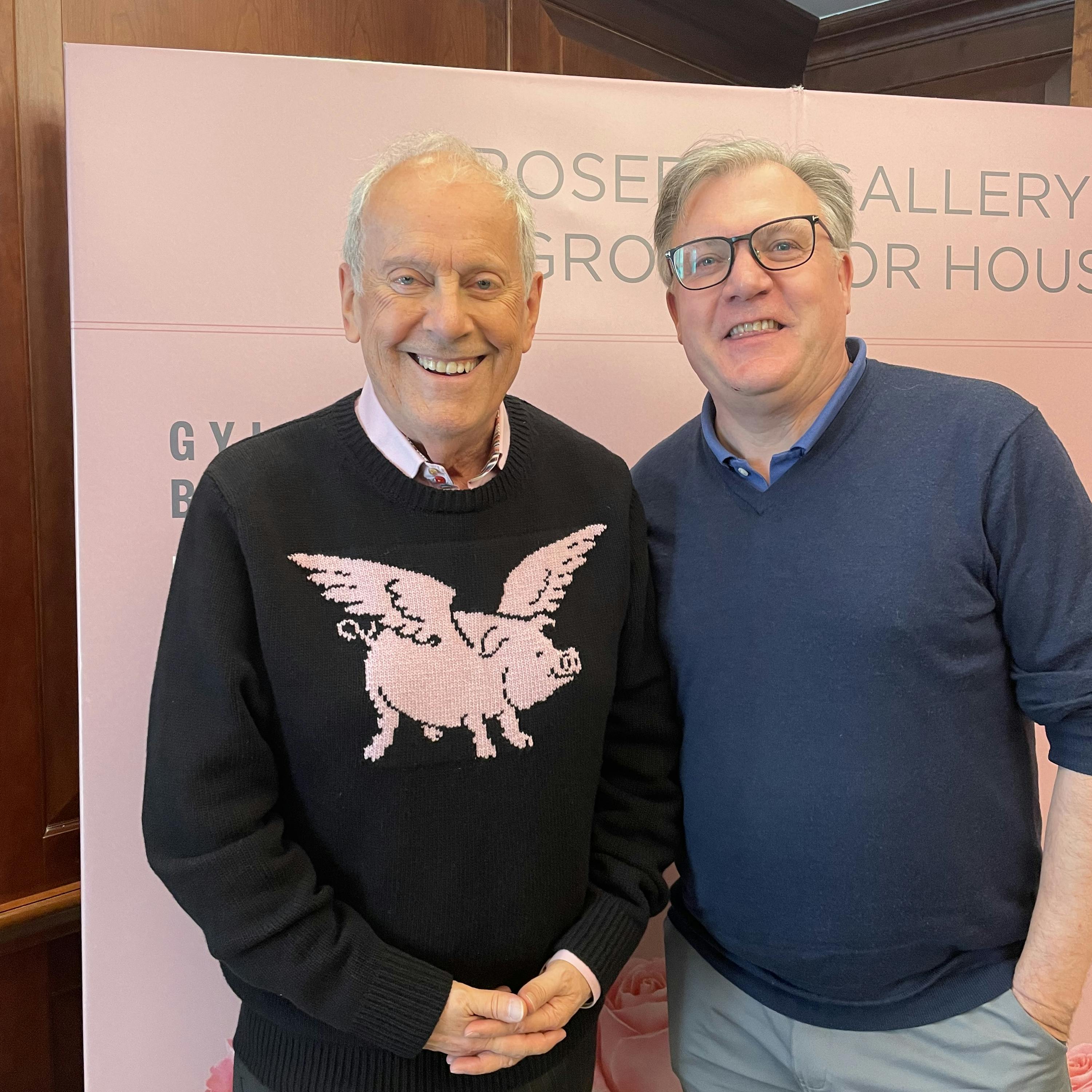
Gyles really enjoyed meeting this week's guest, Ed Balls, because he enjoyed bonding over their shared experience of Westminster. And the political gossip and insight in this chat is fascinating - from a very funny behind-the-scenes account of the famous dinner at Granita in Islington at which Tony Blair and Gordon Brown thrashed out their leadership in 1997; to a description of what it's like to lose a seat as an MP (like being at your own funeral, apparently). But there's much more than politics, here. This is also the fascinating story of Ed himself, his humble Norfolk beginnings, his academic success, his early journalistic career, his marriage to fellow Labour Party high-flier, Yvette Cooper, and why it's best to lean in to a mid-life crisis. We hope you enjoy this week's brilliant edition, and thank you very much to Ed for your time, warmth and fabulous company.
Learn more about your ad choices. Visit podcastchoices.com/adchoices
Hosted on Acast. See acast.com/privacy for more information.


