
 Ask ChatGPT


 Rosebud with Gyles Brandreth
5 Apr 2025 · 45m
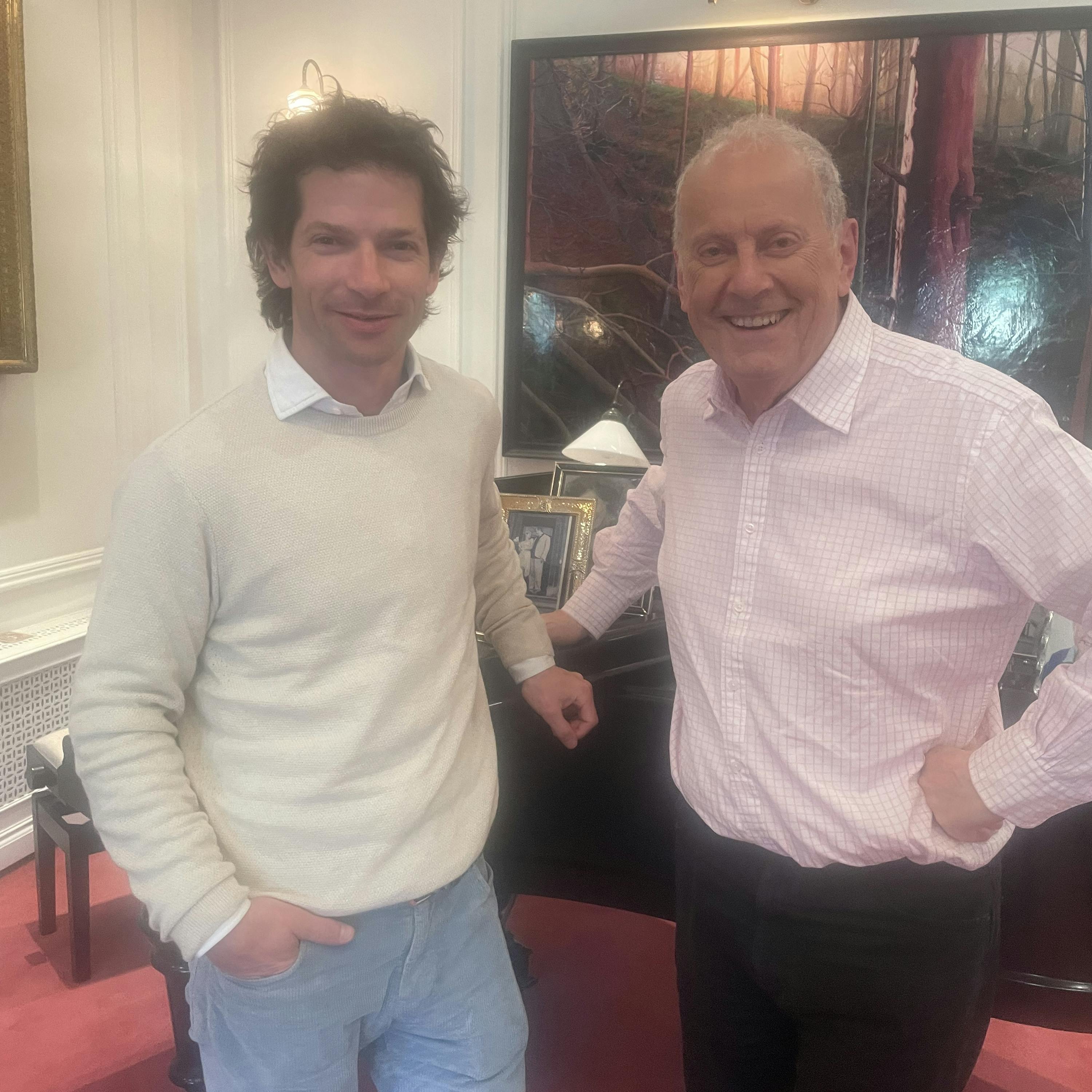
In this special episode of the "Rosebud" podcast, host Gyles Brandreth interviews Sam Waley-Cohen, a prominent amateur jockey and the 2022 Grand National winner. The episode celebrates the Grand National, discussing its significance in horse racing, the challenges faced by jockeys, and personal anecdotes from Waley-Cohen's life, including the impact of his younger brother's death.
Written by AI. May contain mistakes.

Get the gist, explore an idea or ask about something said.
 Claude
On Rosebud with Gyles Brandreth, what are the key points of this episode?
Searching your listeningAutomatic transcript. May contain errors.
0:00Today, in London, in England, it's a beautiful spring day. and it's a little bit unusual because we're releasing an episode of Rosebud on a Saturday. Yes, we at Rosebud even work at weekends. That's because this is a special weekend. This is the weekend of the Grand National, which is, I think, the race that in the world has more bets placed on it than any other race on Earth. It takes place at Aimtree, up in the northwest of England. by Liverpool. And it's been going for hundreds of years. It's a remarkable race. You may not be into racing, in which case this may not be an episode for you. But I was lucky enough recently to bump into somebody who, when I said to him, what's your claim to fame?
0:50His father chipped in and said, well, he won't tell you what it is, but I can tell you what it is. He actually once won the Grand National. I thought, this fellow I'm talking to is a jockey who won the Grand National. I find this hard to believe. I want him on Rosebud. Because we've had all sorts of people. We've had Oscar winners. We've had, well, we've had winners of every kind. But we haven't actually had anyone before who's won the Grand National. So I thought, let's get him in. And that's what we have. We've got him in. He's called Sam Whaley Cohen. And he's an amateur jockey. He has a day job as well as a super successful businessman.
1:27But he raced in the Grand National ten times. and won once in his last ever race on Noble Yeats in 2022. Of course, he's also won the Cheltenham Gold Cup twice. Yes, he is quite something. Today you're going to meet, and I hope be wowed by, I certainly am, this remarkable young man. Jockey, mountaineer, pilot, skier, entrepreneur, winner of prizes. there's seemingly nothing Sam Whaley-Cohen can't do and he's also charming very charming as you'll find out plus if you're planning to place a bet on the national today stay tuned for Sam's tips later in the episode so look this is the day when you could win a fortune and discover somebody new who is a winner in their own right so I think I can hear the thundering of the hooves Do enjoy this Rosebud Grand National Special.
2:28Cue the music.
2:50Sam, today, this afternoon, it's the Grand National. and the reason you're here today is you are the only jockey that I know who has actually won the Grand National, which is an amazing thing to have done. Before we talk about you and you winning the Grand National, for those who don't know, I think it is the most bet-upon race in the world. Why is it so famous? What's special about the Grand National? The Grand National captures the imagination. for people growing up. Their grandparents gave them a few pennies, a few pounds to bet. And for me, it was the magic of it. Everyone has a chance. Where does it take place?
3:31What is the race? What happens at the race? 40 horses in Liverpool. Actually, not 40 horses anymore because they've reduced the numbers very recently to make it safer. But a huge sort of cavalry of horses. This is at Aintree Racecourse. It's at Aintree. Is this a famous, ancient, interesting racecourse? Aintree is one of the places that you describe as a pretty tough area of Liverpool. So for a few days of the year it comes alive with all the sort of outfits and pageantry of the National. And how long has the Grand National been going for, do you know? A few hundred years. I think it was first started in the 18th century, so yeah.
4:06Oh, so it's an ancient race. And when you say it's open to all comers, why is it open to all comers? How does it work? How do you take part in the Grand National? you need a great horse and and like everything you need you need a great partner and and if you get a great partner and a great horse you can you can enter and and go for it because you're an amateur jockey exactly yeah but most of the people who take part will be professional jockeys so i did it really for the love of it and ended up there uh half by design but but mostly by accident whereas most people are professionals and and that's been you know their their driving destiny and it's a race how long how many do you talk in terms of furlongs miles how does it work well it's long so so that's part of the jeopardy is it's it's over four miles long and and it's the biggest fences in racing uh and they're formidable you mean high high and wide high wide it's a it's a feat that the horses don't undertake almost except for for the grand national and that's of course why it's controversial because it's full of risk and danger to the riders and the horses yeah it's it's surrounded with with success and joy and and challenge and despair for sure and that i mean how do you cope with the controversies because there have been because occasionally or sometimes not occasionally more than once the horses either damage themselves or die in the course of the race is that true it's true and it is a race of of uh challenge for horse and jockey but one of the surreal things when you're in the wearing room is sort of 40 of you sitting there and and you know that somebody's going to fulfill their their dream and their lifetime ambition and almost certain someone's going to end up the night in hospital so for the jockeys it has an element of jeopardy and for the horses it has an element of jeopardy does that worry you the jeopardy not for the humans because it's like climbing mount everest or taking part in the crest to run you know you're a grown-up person i'm ready to take this risk for the excitement of the challenge but the horses may not have that choice does that do you brood about that I think everyone does and I think no one would ever want to see a horse hurt or put them in a place where they knew it was going to get hurt I've had the misfortune of riding around there on a horse that didn't want to be there and frankly just wouldn't go so one was actually owned by my wife called Lust for Glory of all names and she just point blank refused to start and let everybody gallop off so I sat there disappointed nervous about the wrath of my wife when I got got home uh and I rode a horse for glory lust for glory didn't leave the line um literally just refused to run yeah yeah just let them gallop off and there's nothing you can do with the horse like that they just don't want it it's not their day no just just not not her day she left me humiliated and puffing at the start uh and then she waited till the horses gallop past her uh for the for the sort of first time they'd done a full circuit and then trotted happily back to the paddock dismounted and went home goodness and you go around when you start there are now 38 you say not 40 people taking part and that's to reduce the risk of horses bumping into one another is it exactly create more space more more space and who chooses where you are in the lineup i mean you choose yourself you can you can opt you you say i want to be you try and select you try and select and actually the greatest compliment i was ever paid in my racing career was by AP McCoy who was the greatest champion and down at the start sort of circulating uh trying to find his posse and I said to AP his posse that's what you've been listening to this carefully listeners yeah this is jockey talk gotta find your posse yeah find the posse and I turned to AP and said AP where are you going in this race he said Sam I'm going wherever you're going so I said well thank you AP that's very uh that's very kind and I think I went on to win that race so he wasn't quite in the right spot but nearly so what is the sweet spot where do you want to be or does it depend on the day the weather the horse where i mean is this revealing i could tell you but i'd have to kill you no it's uh the best posi is the one that works for you on the day and so sometimes you you end up on the inside and everyone else is on the inside and you you don't get the luck and sometimes you go on the outside and everyone ends up on the outside and you don't get luck so one of the things that's great about the races is you need some luck and And you need to not be disrupted by bad luck.
8:25So that first thing is to find that posse. And for me, it was always finding, trying to find a horse that I thought could jump around. One either side that I thought had a good chance of getting around. One either side, what does that mean? Well, you're sort of lined up in a straight line. Yes. So one horse to the right, one horse to the left. Hopefully horses that had been around there before and you said, okay, I think these two will probably jump well. I'll be surrounded by them. Oh, so you want to be alongside great horses who are going to make the running with you. So do you win the race in the last few moments?
8:56No, I think you win the race. I mean, this is a terrible answer, but you almost win the race or lose the race everywhere. And that's what's so remarkable about the race is that every fence is a challenge. And you try and get into this rhythm and this sort of partnership with the horse. And if that's going well, you almost can win the race without winning the race. It just happens. The others are struggling. but equally if you're if you're not in this partnership the race falls apart for you so um i think tactically it is it is about getting into this partnership getting into this rhythm and letting the horse uh find its own way and how many jumps are there it's a very good question i think there are about 40 jumps oh a lot a lot and each one is its own and i'll be the same because it's a circuit you're going around you go around twice and do you get a chance to practice those on those jumps beforehand?
9:47You do at home, but not on the course. Not on the real ones. Yeah. But you know exactly what the design and the breadth and the height will be. You do. And that's not the challenge. The challenge is the pace of the race and the atmosphere of the race course and all the other horses. Gosh. You've taken part in the Grand National 10 times? Yeah, 10 times. You've only won once? Sadly. Well, that's enough. Look, I'm not likely to win the Grand National. This is what is the difference between us. I think we've got a lot else in common, but this is the one difference between us. So, ten times. Ten times.
10:20And tell me about your winning time and then your most memorable after that. Well, the winning time was on this wonderful horse called Noble Yates. And it was my last ever ride. So, on the Thursday of the meeting, there's a race on the Thursday, Friday and Saturday. And on the Thursday, there is the amateur version of the Grand National. and uh there's a trophy there which we donated in memory of my younger brother and i said to my father look aintree's where we've had lots of success and we've done lots of this together let's try and win thomas's trophy and if that happens i'm going to announce my retirement and have a race on the saturday and that that'll be the end lined up on on the hot favorite for this race the fox hunters uh and the horse didn't take to it wasn't his day so we jumped three or four fences he was more and more and more reluctant and I pulled up said that's not our day so this big dream of winning Thomas's trophy and announcing my retirement went went down in in flames anyway I thought well I'm going to announce my retirement anyway because this is the moment so I said look on Saturday for the Grand National that will be my last ever ride and so it all sort of lots of emotion building up I've been racing for 20 years my children came my wife was there my parents there my brother and sister and their families all came up and so it's this sort of big occasion on this on this outsider called noble yates uh 50 to 1 shot and and one of the papers wrote you know in the commentary noble yates too young too little experience no hope uh think no more about him and and so i went out there and sort of lined up at the beginning thinking this is not a very good idea i'm 40 years old uh in a couple of days uh i hope i don't break my neck on this outsider but let's go get a go and found some a good posse uh tried to jump off and actually noble yates got into a very slow rhythm and didn't want to go at all and so it took him a long long time to warm up into this partnership um and so for the first third of the race sitting there going well this is a rotten last race the horse isn't going for me how far do i have to go before we pull up and I'll go home.
12:29And slowly, slowly, his confidence started building. And I could feel him growing underneath me and jumping with fluency and attacking. And he tagged onto the back of the sort of main pack with about half the race to go. And I think, oh, we're now in a good position. He's traveling for me. He's traveling. Traveling is the idea of sort of inner rhythm and galloping and going fence to fence. And as described earlier, the race just started to happen other horses start to get tired and make mistakes and sort of here have a fall to the left and have a fall to the right and with about three fences to go I was like I'm I'm in the perfect position this is this is how I'd have dreamt it this is and and for me I visualized races so I must have ridden the Grand National 10 ,000 times in my mind I was like I think this is exactly where I want to be um and on we went on we went second fence jumped it upside one of the other horses got to the last fence jumped into the lead in partnership with one other horse and and i'd only ridden this horse noble yates a couple of times but what i'd learned about him is when you ask him he has lots which which i mean is he keeps a lot of his speed and ability to himself but when you say this is it he he's got great turn of pace and so the last sort of 150 yards and I say this this this is it he went and he he sort of accelerated away um and how do you say that to him how does he hear it well sweet nothings in his ear and so he can feel the energy that you're showing and you're saying come on come on come on and he he hears this very much so I I wish I was saying it so politely but but you essentially not using bad language for a horse you know he's he's he's irish so he was used to it but actually what what's amazing at the moment is you have become this partnership and what's one of the things i loved so much about uh that race is is you sort of do become sort of two become one you know the horse and the jockey melt into each other and so it wasn't that i needed to communicate he knew that he he already was was giving me what he had uh and so it was really about galvanizing him to the end and then when they win they know and they walk around sort of like the kings of the world.
14:45This was your last day as a jockey and your last race and you won the Grand National. Fulfilled my real boyhood dream. Wow.
15:00Well I think I want to hear about the most memorable unsuccessful attempt at the Grand National, but I think we should go back to the beginning so you can discover who the different people are. You mentioned your parents and you mentioned your late brother. We must discover all about them. So let's begin as we normally do begin, Rosebud, by asking you, Sam, what is your very first memory? Well, it's a terrible thing to say because, you know, we've been talking about the Grand National, so it seems far too set up. But my first memory is on a rocking horse in my parents' house imagining riding the Grand National.
15:36You're joking. It does seem too obvious to be true, but it is genuinely my first memory. So where is this rocking horse? This is in London, my parents' house. And who are your parents? So my father's Robert, who is one of the kindest, most wonderful people. Robert Whaley-Cohen. Robert Whaley-Cohen. A very, very special person, incredibly successful in all he's done, whether that's racing or business or all the other things that he's turned his hand to. Now, I know the name Whaley Cohen because when I was growing up, there was a Lord Mayor of London who was called Whaley Cohen, who I imagine is a grandfather or a great uncle of yours.
16:14He's a grandfather, exactly. A grandfather. Is he your father's father, yes? Exactly, yeah. And so what is your father's background? Well, they grew up between London, where his father was Lord Mayor of London, and the West Country in Somerset, but from an incredibly formidable family. So his brother was a sort of great theatre producer. This is your father's brother. This is my father's brother. And his sister is a great academic provost of New York University. Oh, my goodness. So a formidable family. So it's a high-powered family. On my father's side, a very high-powered family. And what is the source of that?
16:50Why are they so high-powered? That's a good question. I mean, I guess they start with a good brain, But most of all, they're great enthusiasts for everything. Very energetic and very good people. And I think inquisitive. And what's special about your father? You say what a marvellous man he is. But what makes him uniquely special for you? He's one of the world's great optimists. And so he's always up for it, whatever it might be. And ultimately is incredibly generous in how he approaches life. and very kind-spirited. So a good combination, a great father. And he introduced you to horses because he owned horses, did he?
17:29Well, he was passionate about horses. And I think by his own admission, a very poor jockey, but a very enthusiastic one. Oh, so as a young man, he was a jockey too. Yeah, he rode as an amateur. In fact, he rode not in the Grand National, but in the amateur Grand National, the Fox Hunters. And as a child, therefore, they owned horses, your family? Yeah, we grew up sort of on ponies, really. Yeah, it was life sort of outdoors. And do people, obviously, you come from a wealthy family by the sound of it. Do people who don't come from wealthy families also get to be jockeys? Is that a possibility? I mean, you were an amateur jockey.
18:02Explain the difference between an amateur and a professional jockey and how people who weren't brought up with houses in London and homes in Wiltshire get to ride horses and ponies and become jockeys. That's a very good question. I think what sort of unifies everyone who rides, whether they're a jockey, an amateur professional, whatever discipline, is just a love of horses. And it's just a very innate thing for the people that love horses. So I was incredibly lucky, grew up with ponies. But actually almost everybody who ends up in horses grows up with ponies in some shape or form. It's only as you want to get more competitive that you either make it your career and do it professionally and hope that you get the opportunity to ride great horses or, as in my case, do it as an amateur and in fact get incredibly lucky to find a horse that's that's good and what do the professional jockeys make of you well i think it's a really really good question i think one thing that's amazing about racing sports generally is that it doesn't really matter what your background is the the risk and the reward and the challenge is exactly the same um and so you know when you are sweating to lose weight or not eating or come back because you're hurt everybody sympathizes and when you win and it's successful everybody um knows that feeling as well and so i think that's a huge leveler in in all senses what was a bit unusual i would say about me and i think it's probably true of a few people in the wearing room is there's a contingent of people who are jockeys and love riding horses great at riding horses and then there's a group of people that are that are sports people um and and the reason they're sports people is because they the sort of ask of them is to do more than ride the horse they're dealing with the media they're dealing with uh social pressures uh they are scrutinized in a way that the most of the wearing room isn't and because i got to ride in a few high profile races like the the gold cup you sort of become a a sports person where you're on the front page of the newspaper and the back page of the newspaper and people are interviewing you and and all those such things and so i had a very strange profile where i was riding in these big races competitive races and and being held to account like any professional sports person but actually as an amateur and doing a job on the side so it was not easy for people to understand um exactly who i was and how to uh understand me in the wearing room but the jockeys have come up the hard way are they were they irritated by you were they jealous of you were they resentful of you look i never experienced that i think there's a great camaraderie amongst the jockeys and so maybe privately and and frankly i think that the ultimate currency in in racing is having a good horse uh and so everybody's envious of somebody with a great horse and everybody's sympathetic for someone who who's having a bad time um and so i never never experienced it at all sort of any sense of animosity uh despite the obvious which is you know you're doing it as an amateur they're doing it as a as a professional career and and you're mixing it up so you have this marvelous father and who is your mother my mother is felicity whaley cohen and is an amazing woman.
21:11So I'm very lucky with my parents. A formidable powerhouse, a great adventurer, a great character. Explain, how does she manifest these things? Well, as an adventurer, she loves traveling. So, in fact, recently she went to Pakistan to the Swat Valley. I said, well, isn't that where the Taliban are? She said, yeah, well, I think it is. I said, well, don't worry, they won't take you. They'll hand you back quickly if they make that mistake. So she's a great adventurer and she's somebody who squeezes the most out of life and likes nothing more than poking you if you're getting too big for your boots.
21:48And what have you got from her, your sense of liking danger and adventure? What has she given you? I think a drive to look around the corner and not being afraid to possibly take a step that looks imprudent. And at home, brothers and sisters? Brothers and sisters. So I was the third. Older brother, Marcus, who's five years older, my sister, Jessica, and a younger brother called Thomas. And Thomas is the one you mentioned earlier who died? Died. Died of cancer. Oh, my gosh. At what age? So he died when he was just short of his 21st birthday. But he had it for a long time, sort of a decade of...
22:24Gosh. And were you as a family all aware, with the children, obviously the parents were, were you all aware that he was so ill for so long? I mean, absolutely. And he had times when it was in remission. but I was at school with him and didn't have his hair and ultimately had his leg amputated and so it had a huge impact on us as a family. What have you personally learned? He was younger than you. He was younger. So how many years younger? Two. So he was actually almost the same age but two years at the same time. What are your memories of him and what have you learned from that experience? I mean he was incredibly courageous and never once bemoaned it, begrudged it.
23:08He sort of, I mean, he got sick when he was 10, I guess. And so that was his life and he never was resentful of that. And he mostly made what he could of it. So after he had his leg amputated, he loved to use it to tease people. So we'd go skiing and he'd fall over and sort of push his leg out so it looked like it was sort of halfway out of his trousers. and then call over someone to come and help him and then laugh hilariously as they sort of looked horrified at the leg, sort of with a ski boot disappearing down the run. So an irreverence and a joy for life despite his sort of hard... And it brought the family together rather than the reverse.
23:51Well, I think it was tough and I wouldn't say it differently. I mean, it creates incredible tension on everybody. really it diverts people's attention. And so we'd say we got through it as a happy, loving family, but not easy. And most not easy for your parents, I imagine. Absolutely. Horrendous. After your brother died, was there a moment when the family thought, we must rebuild our lives, we all have to go on? Well, of course, you know, after those tragedies, life does go on, and you just keep going. but but deep down you know everybody is is is deeply sad the the thing that really brought us together was this uh wonderful horse called called libertine she was going to run at cheltenham that's it all you know you've been riding enthusiastically and doing well you should you should ride her uh she had a very low weight i had to starve myself to to get into this race and went out on her as an outsider 25 to 1 uh in a professional race and and she won and this moment where my brother and my my sister and my parents were there and and libertine against all the odds won this this great race at the chaltern festival and i think that was the first time it sort of brought us all back together again as a family this sort of great moment of of of joy of sort of unbridled joy really and your mother well mum i would say enjoys watching me race doesn't love her racing and you know it it's it's nerve-wracking and so there are pictures of both my mum and Annabelle, my wife, furiously smoking while watching me sharing a fag.
25:28And actually recently my mum said the first time I was going to ride in the Grand National on Libertine, she woke up in the morning and there was a whole lot of her hair on the pillow and somehow the nerves had sort of overwhelmed her and left it mock on the pillow. You made your mother's hair fall out. I know, it's a terrible thing to admit and she'll be furious about that. I don't know why you're smiling about it. Clearly, you really are fearless, sacrificing your mother's hair. She didn't tell me for a long time. So that's, yeah. Well, it was a reminder, though, of actually what you were doing.
25:58Exactly. And it is dangerous.
26:06So go back to the beginning. Here you are, this little boy on the rocking horse. Who is your first friend outside the family? Oh, that's a very good question. I had a friend at school called Max, Weatherby, where I was at school, and we were great mates, then completely lost touch for probably 15 years and by complete chance met on our first day at university at the bar and became great, great friends again, and he ended up as one of my two best men. So a weird, circular story. So your first friend turned out to be your best friend. That's nice. Indeed, I did. And as a little boy, Weatherby was your prep school, was it?
26:47And what were you like? Were you an eager little fellow? I think I was probably quite cheeky. Well, not totally surprising. I was rather small for my age, which I think I probably played. You don't seem that small for a jockey. What is your height? Thank you. About five foot eight. That's quite a normal height. Stand on my tiptoes, call it five nine. Relatively, but I think, you know, I was actually quite a late mature, so my younger brother was probably the same height as me. as a child I sort of loved everything whatever it came so I had a life of great contrast on the one hand I'd love going out and chasing the chickens and and there was a shepherd at the farm I used to have a little crook that go out with the shepherd and on the other hand had this sort of exposure to this rather sophisticated life so on my mother's side my step-grandfather was a man called Sir Ronald Grierson, and he was the director at the South Bank.
27:38And so we'd get exposed to these incredible concerts and events in London. And so this life of quite extreme... Your step-grandfather, did you say? Yeah, my mother's... Your mother's second husband. Exactly. And so you would go to these concerts and meet the great and the good. The great and the good, including once giving flowers to Princess Diana. So there's a sort of one of my memories is getting up in this sailor suit to give her flowers. And you now know her son, Prince William. Well, we were also at school together at Weatherby. Oh, so you're the same sort of age? We are, exact contemporaries.
28:15Very good. Excellent. Well, so in some ways a gilded life. Many ways. Are you conscious of that? Does it worry you? How do you keep real if you have such a gilded life? well look i think life throws things at you whatever that might be and and maybe that's one of the the things that thomas's life and and death teach you is is the fragility of life and to make the most of it um very aware of of the opportunities that that life's afforded me and and in some ways when thomas died but maybe even before that said look you have these chances you have a chance at life make the most of it and so do whatever you can whatever comes your way whatever opportunities come grab hold of it and run with it and at school you were good at sport it's good at sport and uh so i loved hockey loved rugby loved loved sort of everything um and my i wasn't a very good student i was a very bad student and and i think my mother would tell a story of despairing of my uh of my abilities to the extent that she took me to a a sort of educational person to say, look, I sort of say to him, what's five times five?
29:22And he gives me a number 128. And what am I going to do with him? He's hopeless. And she took me to this wonderful woman called Mrs. Lobasher. He said, look, don't fret. He's not, in fact, as sort of thick as a plank. He's dyspraxic. He's got a form of dyslexia. And it will take a long time for his brain to sort of connect with everything. But eventually it will. So sort of relax and it'll be okay and slowly became a bit more academic ended up you know doing doing perfectly all right uh at school and and you got a levels got my a levels went on to university university went to edinburgh edinburgh edinburgh was amazing i loved edinburgh and uh and it was quite a journey so i'd gone from this sort of weird experience or not weird experience like my experience of of of not being at all good at school to to sort of flourish in getting the the history prize at school and the politics prize at edinburgh um and so that was my sort of full circle of my my academic she was then blossoming finally did being five foot eight affect you in terms of how you viewed yourself when did girls first come on the scene can you remember your foot the first girl you held hands with the first girl you kissed well pony club camp was uh the opening of the universe to me and uh that for sure was where i first held hands and almost undoubtedly first uh first found someone took his pony club camp there's a tv series in this i mean jilly cooper jilly cooper couldn't write it no i don't think she could i don't think she'd dare pony club camp i'm so sad i missed out on that it's not too late i can i can i can arrange i think i'd be arrested as i approached the gates they don't want me at pony club camp but what fun what was pony club camp pony club camp was exactly as it described uh which is people on all manner of different shapes and sizes of ponies and children of all different ages and shapes and sizes taking their ponies off and and essentially spending the day uh normally split into classes of sort of five or six other people and and and sort of basically messing around and did it matter to you that you were five foot eight when other boys were becoming five foot ten eleven twelve even six foot three no i don't think i even really recognized it to be honest no i don't think so so you were given great confidence by your parents.
31:41I think that's absolutely true and I actually think if you were to ask my parents what they think the most important thing you can bestow on your children is confidence and self-belief. And I suppose if I ask, as I always do ask people about a moment of sadness from their youth, it will be the moment your brother died because you would have been, I suppose 23 when he was 21 but before that if I say to you sadness your first recollection of sadness well I think I think the first recollection of sadness was was knowing that he was going to die um and and that was when I was much younger so when he first had it I think we were all full of hope that it would go into remission uh this he had it three times the second time he had it you think this is this is this is not great they thought they got rid of it's come bag and you know at that point that if it comes back a third time the game is really up um and so you you sort of live a little bit on on borrowed time with the expectation that you know it's probably probably going to reappear how did he manage to be so philosophic about it well i think again great guidance from my parents um but also it's partly his own mindset which was look tomorrow is tomorrow I'm going to enjoy today going to get on with it enthusiastically chase girls enthusiastically not to do too much work and and make the most of it and I don't think he was particularly philosophical I think it was just a disposition and outlook so you leave Edinburgh and set out on the world what are you planning to do well business inverted commas whatever that because you came from a family where business was was what everybody did was our nature yeah i mean my my father was an entrepreneur and healthcare entrepreneur and so set out in the great world and didn't know what that meant at all and ended up in a sort of rather unlikely place uh which was sugar and coffee trading for a company called louis drafus uh in london uh they used to bring the coffee in in bags and and they'd brew it up there and someone would test it sounds very sort of dickensian the whole thing but you're also an adventurer as well because you've got you've been climbing mountains or what are the other adventure things that you've done do you know i've i've done lots really so we we climb mont blanc in memory of my brother and skied back down and we to raise money and uh climbed mont blanc is that difficult it's quite difficult it's quite difficult climbing up a hill is tiring to me yeah well yeah it's the tallest mountain in europe is it it is and you climbed Just you and...
34:19Me and my brother, my uncle and some mates. We walked up there. Your uncle, well done him. Exactly. Because he must have been an older person. He knew his way up. So that was good fun. And then we skied down, which was terrifying, but good fun. So we made that harder. I've sort of always been up for those adventures. What was the other one you mentioned? The Matterhorn. Klein the Matterhorn. That was quite tough, I have to say. What do you need to be a successful mountaineer? What do you need? To be tied to somebody who knows what they're doing. it's uh the secret to life um you need to be able to you know deal with the deal with the hype deal with the the sort of uh altitude and and ultimately not be scared um and so i did i've done lots of lots of things whether it's you know mountaineering and skiing and jumping out of things and what have you jumped out of well actually thomas for his 18th birthday wanted to uh parachute so we went and me and him parachuted for his 18th birthday um so did that and the stupidest thing i've ever done uh was with my older brother marcus we were in peru and decided to bungee jump they said oh you can bungee jump out of this hot air balloon so he went off to say okay well we'll bungee jump out of the hot air balloon turned up in the morning genuinely the scariest thing of everything they sort of strapped the bungee to wicker baskets and this moment where you're leaning out over the over the sort of hot air balloon thinking I wish they just let me down I can't go down out and the second I released I was like you idiot why did you do that and so one one one time only experience wow but to be fearless is a fantastic thing you don't have fear it's a very it's a very attractive thing to be as I don't think I'm fearless but well you are clearly fearless but up for it you are up for it when did you first see your wife can you picture the moment you saw her across a crowded room?
36:14I mean this is another story that hardly bears believing but on Valentine's Day her father who's big into racing had organized a charity race at Newbury races and had asked me to to ride in it amongst a load of other amateurs so I turned up at this charity race rode in it can't remember how I did uh there was his daughter at the sort of post-race uh drinks or whatever it was and I thought well, that's the girl for me. Anyway, it took a lot of persuading her and a lot of pursuing her to finally get her. You say you thought that's the girl for me. What about her made you think that? I mean, she's strikingly beautiful.
36:56Yes. And I was shallow enough to start with that. And then we had a nice conversation. So that's actually how we met. I met her and she was strikingly beautiful and I was chatting with her very happily about Rosebud. And then you turned up. I know, and I said to you, I feel like I sleep with you every other night because she listens to Rosebud on her phone in my ear and I have to go to sleep with your soft tones. Well, I'm very pleased to be with sweet nothings into her ear at night. And mine. So how long have we been together? We've been together a long time. That's a trick question, sort of 17, 18 years, I guess.
37:32And what do you give her, do you think? Oof, that's a very good question. I hope a bit of adventure. and I'm kind of a yes person. The default is yes and occasionally her default will be is that really how we want to spend our time? So I think she probably gets the drag to places she wouldn't otherwise have been and mostly has a good time. What's the most outrageous place you've dragged to or most unlikely thing you've taken her to and made her feel, oh God, I've got to go along with this one? She's not a big flyer So probably every time I try and get her in an aeroplane to go anywhere. Do you fly an aeroplane?
38:11I do. You're able to fly an aeroplane? I can. I just love it. I can. Of course you do. And she's nervous about that. She's nervous mostly about my flying, so it won't get in with me. She won't fly with you? No, she won't. Do you have helicopters? They're even more dangerous, I think, aren't they, than aeroplanes? They're dangerous if you don't know what you're doing. Absolutely. But maybe if you do. So, poor girl. But you have children now? We've got three children. Cheltenham Gold Cup. You've won that as well. Indeed. It's not bad going. What does it take beyond the horse? We know you've got to have the right ride.
38:48Yeah. What is it that makes a champion jockey? What are the characteristics? I mean, to turn up on the day, you need to be able to cope with the pressure. And there is pressure. You know, if you're riding the favourite for the Cheltenham Gold Cup, There are weeks and weeks and weeks of racing previews, of people betting, of everybody opining. And so you have to be able to deal with the expectation. You have to be able to believe in yourself. And so it's different to dealing with the pressure. But say, I know what I'm doing. I can visualize this race. I can form this partnership. We can do it. So we're not going to be intimidated by the environment.
39:30and ultimately you have to be prepared to to take the shots that are brave and so in a race like the the Cheltenham Gold Cup you're not in a comfort zone in fact you're not in a a sort of slightly dangerous zone you're in the outrageous zone of asking the horse to to do things that that it doesn't know it can do itself both in terms of its endurance of its athleticism of its desire to win and you have to ask and then you have to ask again and then you have to ask again. And you have to both lift each other to something that neither of you know quite if you can deliver. And now you've given up racing.
40:08You don't race professionally. I mean, as an amateur, you're not racing in big races anymore. What are you going to do? What's going to give you this buzz? Are you going to settle down and be a sad old man because all these fun things are behind you? There are no more mountains to climb. Yeah, well, you know, there are always more mountains. But yeah, all the time that I was racing, I was also running my own company. So that sort of kept me busy and it's grown and expanded. And that sort of gives me not the same fulfillment, but a different sense of fulfillment, a real sense of purpose and drive.
40:43Because I think I'm right in saying you've been nominated, you've won the award as Entrepreneur of the Year? Well, yeah, the company I run, Portman Healthcare, give it a brag, has turned out to be a success and built itself into a decent sized business. And Ernst & Young came along and said, oh, well, we want you to enter this competition. And so I thought, well, all right, stick the name in the hat. And yeah. You've won. Do you have any further adventures planned? There's always more adventures. I'd love to walk across the Alps do the Alps route which is one of the sort of great Alpine routes so that's on the list I'd love to do ski touring in Norway and there's an amazing horse race across Argentina which I have firmly in my crosshairs so many adventures to come very good I think it's terribly exciting what have you learnt from all this what's the lesson you'd like to share well two things really you've got to give us some tips for later always ready oh good well maybe this is the bit Get your pencils out.
41:46Get near the phone. How do people make bets nowadays? You know, internet, telephone, local bookmaker. Can you believe this? The late Queen Mother, Queen Elizabeth, Queen Mother, who you're probably too young to have met. I think I did meet her. When you were a little boy, did you? She told me that everyone thinks I bet, I don't bet at all. Do you think that's possibly true? She said she didn't bet. Sounds very unlikely. Does sound a bit unlikely, because I thought she'd have enjoyed a flutter. but apparently she should never place a bet. Oh, there you are. Well, you can't even trust the Queen Mother.
42:18Things are coming to a pretty pass. So who are you backing in the Grand National this year? Well, there's an obvious horse, which is called a Roco, who I think will have a great chance and will be no secret. And it's been targeted by one of J.P. McManus, the great horse owner's horses. And it's trained by someone who I used to ride with as an amateur. Who's that? Oliver Greenall. And his father was very involved with Aintree, was one of the great champions of entry so i hope that goes uh really well for him it's a world that everybody everybody in it knows everybody else in it that's all absolutely family linked and it is i know people listening to this some people because they sometimes accuse me on rose but i was just two uh posh boys talking i sound like this i'm actually straightforward middle class um but i know that can irritate people but the truth is and it's one of the reasons the lake queen loved racing and we'll often say this everybody is here everybody is here all classes all types from the most ridiculous toffee nose toff in the world to regular guys who really work in the stables i mean every all human life is here and we treat each other this is the late queen speaking absolutely as equals i think it's true i think it's the the greatest leveler and and the person with a great horse is the person at the moment.
43:37So what have you learned from life? What has life taught you so far? I mean, life's taught me lots, but I think the most of all is to grab life. It's not hanging around for you. So go around the next corner and see what's there. Yeah. And when your head hits the pillow at night and you reflect on your golden life, what's the thing that comes into your head most often? Annabelle, could you turn Giles off?
44:08You can't top that.
44:45Rosebud is produced by Harriet Jane, artwork by Freya Betts, and music by Phil Leppard.
In a complete one-off, Rosebud is releasing an episode on a Saturday, because our guest is the 2022 Grand National winner, and two-times winner of the Cheltenham Gold Cup, Sam Waley-Cohen. Sam is an amateur jockey, but is one of the most successful Grand National riders of all time, and finally won the race in his last ever race with the 50 to one shot horse Noble Yeats in 2022. Sam talks to Gyles about what it takes to make a great partnership with a horse, how to find the best starting position, the challenges of the Grand National, and also about his life, which has been full of daring and adventure. There's also been great sadness, as Sam tells Gyles about the death of his younger brother Thomas.
Sam also gives his tip for the race today. Our thanks to him for this great conversation.
Learn more about your ad choices. Visit podcastchoices.com/adchoices
Hosted on Acast. See acast.com/privacy for more information.


