
 Ask ChatGPT


 Rosebud with Gyles Brandreth
6 May 2025 · 1h 2m
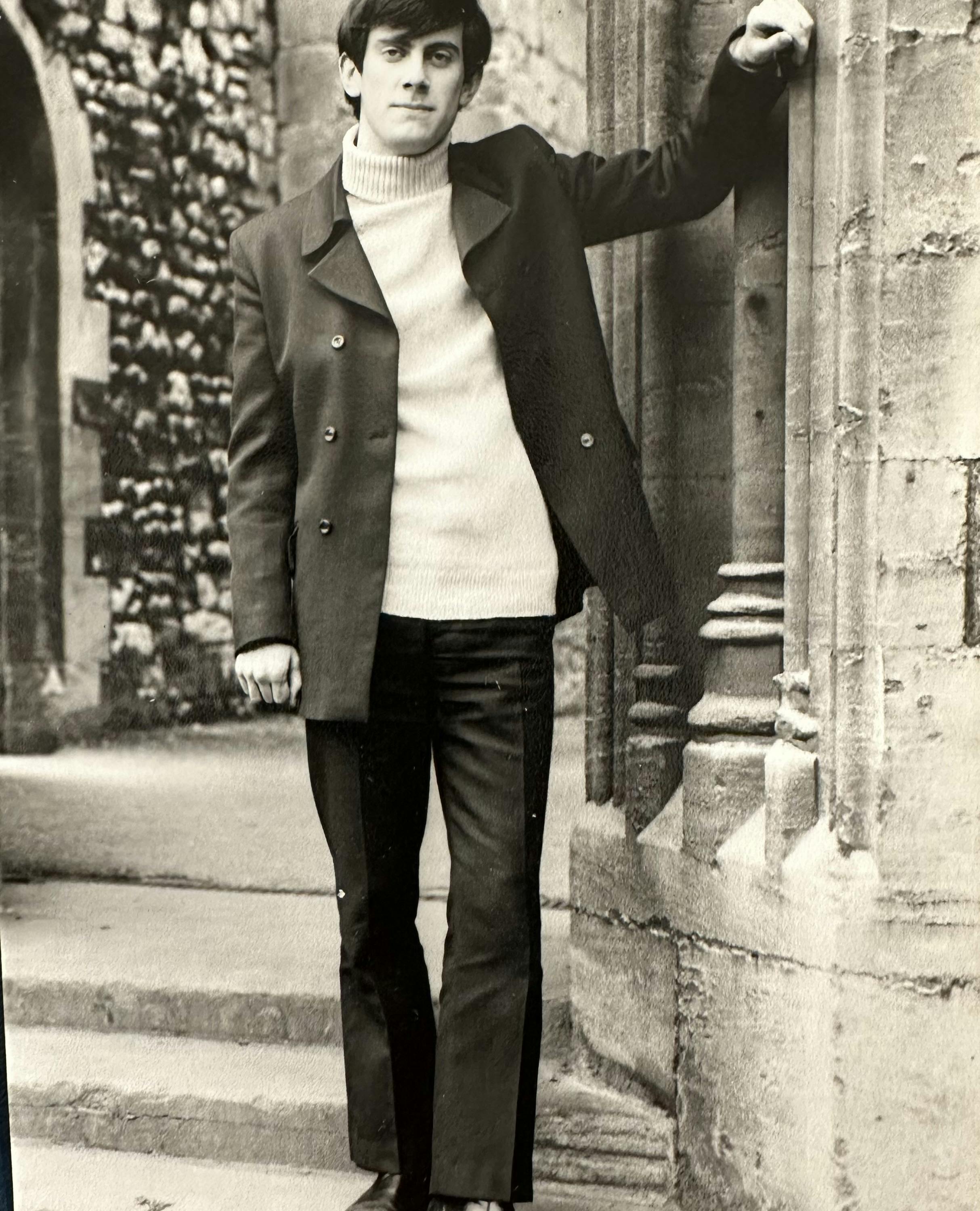
Gyles's diary, episode 14: the first half of 1966 - A-levels, a trip to Paris, and the end of an era
In this episode of Gyles Brandreth's diary, Gyles reflects on significant moments from his final year at Bedales School, culminating in the summer of 1966. He shares the emotional farewell to the school's founder, Mr. Badley, and discusses his transition to university life while juggling A-level revisions, school plays, and a trip to Paris. The discussion also includes themes of nostalgia, personal growth, and Gyles's thoughts on various topics like relics, cloning, and piano playing.
Written by AI. May contain mistakes.

Get the gist, explore an idea or ask about something said.
 Claude
On Rosebud with Gyles Brandreth, what are the key points of this episode?
Searching your listeningAutomatic transcript. May contain errors.
0:00We're bringing you something that's just a little bit alternative. So, Phil Leppard, well, we told him to leave the orchestra behind and just play the theme tune simply himself on the piano. He's done just that. Phil, cue the music.
0:34It's more Rosebud. I'm Charles Brandreth. And because it's a Tuesday, well, it's a Tuesday when we are putting this out for the first time, it could be any day of the week when you're listening to it, or indeed any night of the week, because we do know that a lot of people take Rosebud to bed. But it is, as we speak, a Tuesday. And I'm joined by my producer and friend, Harriet Jane. Now, Harriet, last time we met, we talked about my diaries and all the letters I've kept, everything I've got from my teenage years. You've got some stuff from your teenage years at home, haven't you? Yeah, I've got a few diaries, maybe three or four.
1:12What about letters, correspondence? No, I had this whole bag of letters, including a lot of love letters from someone that I went out with in the lower six. And I don't know where it went. Really annoying, because it was a nice little bag that my mum had made. And, you know, for various reasons, I wanted that. Don't know what happened to it. Can't find it. Well, and have you got other bits and pieces? Have you got your first tooth?
1:40I don't know if I have. Again, I did have those, and I don't know what happened to those. It's house moves, and I'm sure other people will sympathise. Things get lost that you at one point thought were precious. And, yeah, the teeth, I don't know what happened to those because I did have them for a long time in a little box with little red velvet, and I used to look at them. I mean who wants to look at your teeth but I did and tresses of your hair when you had your hair cut for the first time no but I have got my mum's hair oh yeah in an envelope and I do look at that sometimes yeah good you know we interviewed Merlin Holland the grandson of Oscar Wilde and I remember him telling us that Oscar Wilde kept in a small envelope a little sort of loop of the hair of his younger sister who had died aged 10 that he wrote a lovely poem about and he kept this for the rest of his life yeah it's quite nice these keepsakes yeah do you have anything like that oh i have everything body body parts relics well they're relics aren't they to be honest i did keep some of the body parts for reasons of potential cloning years ago i read about this being a possibility down the road which is why i haven't thrown out any of the teeth and there is hair because I think they may be able to recreate me.
3:04Oh, your body parts? My body parts. To clone you? Yes. Oh, I think it would be a little bit... No, I haven't kept other people... I thought you were going to say you had Oscar Wilde's toenails or something and you were thinking of trying to bring him back. I mean, I wouldn't put it past you, Giles. No, but there was a phase in my life when I was visiting a lot of prisons and very interested in... Where is this story going? Well, it's going to the fact that I owned a lot of paintings, other bits of works of art by murderers. And Michelle, my wife, made me get rid of them with one of our moves. We first lived in Muswell Hill in North London.
3:42Then we moved to Baker Street. And then we moved to Camden Hill near Notting Hill Gate. And we moved there. Michelle said, I don't want these pictures coming with us. And there was one painting by a man called Donald Hume who was notorious as a murderer. Whoever he murdered, he cut them up and hired a plane, an aeroplane, and he dropped bits of the body. He thought over the channel that the wind was blowing the wrong way and a hand or a finger or something landed in somebody's deck chair as they were sitting having their afternoon tea. Oops, from the sky came this limb. and that's how I think he was arrested and he ended his days imagine if he was sunbathing it's a complicated story did he get away with the first murder I don't know anyway he committed a second murder his name was Donald Hume I do remember that and he ended up in a prison in Switzerland and don't ask me how I came by this did I go to visit him anyway I had a painting that he had painted in prison quite interesting it was a chessboard with a vase that had fallen over.
4:54There was a flower in the vase and I think the water was actually the colour of blood going over the chessboard. And Michelle said, I don't want that. I don't want that in this house. I'm not surprised. So we just got rid of it. So I don't have, I don't think, any macabre items. But I do promise to bring you off. I've shown it to you already. We were talking, was it last time or the time before, about the holiday job I had in Switzerland when I ended up meeting the president of Switzerland. and working for the man who was the head of the Swiss Army, he gave me his little hat, the Kepi, the little brigadier's hat, a little miniature version of it he was given when he became the head of the Swiss Army.
5:35Oh, and that's what you were going to show me the other day. I was. And I was also going to show you the book that his wife, the actress Gabrielle de la Tourbillon, gave me when I was 16 or 17. And it was rather special because it had been given to her by Jean-Louis Barrault, who was the most famous actor of his day. Oh, yes, yes, yes, you mentioned that. So I just want to just wrap something up from that conversation. The cloning idea. Yeah. You were hoping to be cloned, just thinking it might happen one day and you'd be a good person. I think my vanity was such that I thought I could join the ranks of the great immortals.
6:12Yeah. And there must have been something in the papers about cryogenic people being frozen in places like Switzerland and being kept. And there was sort of speculation, science fiction. And I thought, well, I've got these little baby teeth and maybe the essence of you is in your teeth. Maybe they can read. Oh, maybe it was because, now this is ringing a bell, Brontosaurus, Tyrannosaurus rexies and all that. There was talk that from their fossilized remains, if you found the actual thing, not the fossil, but if you could find the original bit of bone or tooth, From that, you might be able to recreate a prehistoric animal.
6:50Yeah. So I thought, well, I've got hair. Yeah. And I've got bones from my teeth. You could have me here forever. You could recreate a prehistoric animal. No. You could have Giles with you forever. Oh, that's lovely, Giles. Well, we're going to have Giles with me for what is it we're going to do today? Do you want to do a letter first? Should we do a quick email? Yes. This is from Angela Horner. Oh, it's from a girl. You should read the letter, please, Harriet. Okay. Dear Giles and Harriet, your More Rosebud episodes have the stripped back piano only theme tune, which I love. It reminds me of the theme tune to All Creatures Great and Small, which I grew up watching with my parents.
7:28It was a favourite in our house as we lived in Thirsk, which is where the real James Harriet, Alf White, had his vet surgery. My dad knew him well as he had a business in the town and we used them for our own pets. We always felt a connection. My parents died in recent years and when we were clearing out their house we found various first edition hardback books all signed by James himself. My mum who died last year suffered from dementia for over 10 years. My father cared for her at home until he passed away the year before she did aged 92. My mum's dementia robbed her of her recent memory however but like so many she could still recollect her early years with great clarity.
8:11She was a great piano player playing by ear with one of her many favourites being the theme tune for All Creatures Great and Small. Up until the time of her passing she was still able to play a small selection of songs on the nursing home keyboard Amazing Grace, Daisy Daisy, Oh When the Saints and others. We have some tapes of mums playing and lots of videos which are lovely to watch. We played her playing Amazing Grace at dad's funeral as she wasn't able to be there, a fitting contribution after to almost 65 years of marriage. Carry on being fabulous. Angela Horner. That is a beautiful letter, Angela.
8:49And I wonder, Harriet, I know you keep the email addresses of these people just while we're corresponding, not for all time. Maybe you could send Angela an email and she could send you a recording of her mother playing something on the keyboard. And we could play it at the end of an episode. I love that idea. Is that a nice idea? Yes. Yeah, Amazing Grace or All Creatures Great and Small Indeed, or even Daisy Daisy, give me your answer do. Harriet did you play the piano? Do you play the piano? Do you play an instrument? Because you're musical, you sing in the choir I can play the piano, yeah, but I'm not very good Do you still play, do you?
9:31A little bit, yeah I want to know about your piano playing days because you were having lessons do you remember? I had lessons from very good teachers. Have we got to this bit in school when I gave up the piano? Yeah. We passed that by. I played the cello for a while. Oh, yes, we did talk about Mr. Reid, whose wig obsessed me. The toupee. The toupee went up and down as we played. And I... What went wrong? I'll tell you what went wrong. I was impatient. I wanted to be able to play brilliantly. And the truth is, you need to practice. That's why I can't tap dance. I can jerk around the stage. amusingly when I was doing my acrobatic dancing but could I tap dance you can only be Fred Astaire if you are determined to work 12 hours a day 12 months of the year year after year that's 10 ,000 hours you know they've worked that out what to become genius level at something 10 ,000 hours 10 ,000 hours you have to do so it's a lot so there's certain things I'm ready to do for 10 ,000 hours try and stop me talking yeah I'm ready to do 10 ,000 hours of talking but 10 ,000 hours of practice of hard practice i just i rebelled against it and i regret that now my instrument now as you know is the triangle also much easier to pack yes and you're very good at that well funnily enough i'm not because that's about the timing i can do i can do the bing it's very nice yeah play it nicely but do i come in on time no oh no sense of rhythm no sense of rhythm Oh dear Giles.
11:05Yeah, I know. I know. It is a bit disappointing in every department. No sense of rhythm. But maybe we're going to get on to that. I'll let the listeners use their imagination. Yeah, because I'm now coming up to 18, aren't I? 17 turned 18. You're going to be 18 in March. In March. 1966. So we've got to January 1966. So this is the next episode of Giles Brownworth's Diaries. And I'm at school. My parents are in London. Well, and we'll discover. If people want to go back to the beginning, they can. It began a few weeks ago, and we do the diaries every other week. Here goes. Monday the 10th of January, 1966.
11:48I feel that I'm living several lives. One, I'm Sally's boyfriend. We're so close. We have no secrets. But when we're together, and I've seen her almost every day this holiday, I'm quite different from when I'm being, too, a Deb's Delight. I've seen Penny several times. We went to the organ grinder's ball at Chelsea Town Hall. What larks! Actually, rather ghastly. And I've been to Trinky Poos with Caroline Gill and Cordelia Fraser and been charming, I hope, to their mummies and their papas. But when I'm with them, and I do like them, you'd never know that my real love is, three, the theatre. I've seen John Gielgud's Ivanov and Michael Redgrave's A Month in the Country this week and playing those parts, producing those plays, that's what I really want to do.
12:47Or do I want to change the world? Who am I? Answers on a postcard, please. Family news. On Saturday night at midnight, Pa and I were sitting in the kitchen having cocoa. when we got a call from St James' Hospital, Wandsworth. Hess, that was my sister Hester, and her friend Figgy were there. One of them had taken an overdose. High drama. Pa and I raced over to Wandsworth in the car, rain pouring, windscreen wipers swishing. Before we got to the hospital, we went to their flat. Pa, at speed but very calmly, went through all the cupboards and drawers and flushed all the pills and drugs, etc., down the WC.
13:28in case the police come looking. Pa, being a lawyer, knows about these things. At the hospital, all was fine. We brought Hess home. She's fine. Saturday, 22nd January 1966. The Vietnam War is worsening. The Americans have launched their biggest offensive. 8 ,000 troops have attacked a single Viet Cong stronghold with mass casualties. I went to a meeting addressed by Connie Ziliakis, Labour MP at Petersfield Town Hall. He was convincing. I am pro-American, but what can the war hope to achieve? Civics last night. Joe Hyman, chairman of Viola, talked to us about business and enterprise. Be clear about your product.
14:17Identify your market. Is it big enough? Will it last? Deliver ideas, energy, quality, consistency and follow through. He was inspirational. I gave the vote of thanks and had coffee with him afterwards at Mr Slack's. He has olive skin, tight curly hair and gleams. He crackles like electricity. Yeah, I was hugely impressed by him. I think he was the father, the parent of one of the children at the school. Mr Slack, of course, was the headmaster. And Viola was a clothing. It was a clothing. Forgive me. Yes, of course, everyone knew what it was. It was, I think, a kind of material Viola. Like a brushed cotton.
14:59And you had Viola shirts, Viola skirts, Viola clothes. It was huge. Yeah. But, you know, think how much we were taught being clear about your product. I mean, Harriet, we have a product here. No, I was thinking about Rosebud when I read that. Exactly. Because it was like an episode of The Apprentice. Absolutely. Identify your market. Yeah. And deliver ideas, energy, quality and follow through. I think we're doing all that, Giles. I hope we are. Absolutely. I've cast the junior play I'm producing, Terence Rattigan's Harlequin Aid. As last year, I'm finding a part for everyone who has asked to take part.
15:3543 in the company to date, with 10 backstage. I have strong leads, Simon Cadell, excellent. And Katie Chapman, pretty and charming. Saturday, 5th February 1966. From today's library calendar, this motto. But now let it pass. Tis nothing strange. It hath hapt before, and if thou live longer, it will happen again. Thomas Akempis. Work. A-levels. I have re-read Le Rouge et le Noir, making notes. I have re-read Entre-Marques, making rather good notes. English. I got a pleasant B++ for a not-to-my-mind outstanding essay on John Whiting, and I'm enjoying the Henry Fielding, Joseph Andrews, greatly. Hegg, those are the initials of my English teacher, H-E-G, Hegg.
16:28Hegg is a wonderful teacher. Play. I have replaced Katie Chapman with my Sally. Simon isn't well and has gone home and isn't going to be available for rehearsals before Sunday the 13th. Damn and blast. But we have time on our side at the moment. Tuesday, the 22nd of February, 1966. From today's library calendar. No one ever did anything worth doing unless he was prepared to go on with it long after it became something of a bore. Bishop Steer. That's interesting. It is interesting, isn't it? Interesting thought. You've got to keep going. Persist, persist. I have replaced Simon, who is covered in boils, and still at home sick with Mervyn Riches, student teacher and both jolly and willing.
17:20I thought of playing the part myself, but Rachel, she was the teacher who was in charge of drama, vetoed that. She was right. Mervyn is excellent and it's going to work out fine, I think. Everyone is working incredibly hard. Martialing a cast of 40 plus is no picnic, but we're getting there. Saturday, 12th March, 1966. Harlequinade, a triumph. It really was. My youthful band of players delivered the goods in full measure and to see their delight and the delight of their families watching was wonderful. National speech comp. A triumph. Well, almost. I came first in drama and second overall. Well done.
18:04Thank you. Eighteenth birthday. A bit of a non-event. Birthdays don't feel exciting anymore. I got some excellent books from Marne Parr, especially a biographical dictionary of English and American poets, and shortbread, and chocks, and ten shillings each from aunts Edith and Helen. But I did not mark the day. It did not feel special. General election. A bit of a non-event also. The local candidates are unremarkable. Miss Quinell is a dry old stick. We had her going through her paces at Steep Hall last night. She was as inspiring as a damp flannel. At least the Labour candidate has a name that looks familiar on the posters.
18:45She's called Lady Wilson. Nationally, Mr Wilson is making all the running. Wily words and gimmicks galore. He's promising a new Britain, and folk seem to like the sound of that. Our programme is more straightforward. Get the economy straight, check rising prices, restore expansion, reform the trade unions, remodel the welfare state, restore respect for Britain and lead her into Europe. Mr Heath is sound and our slogan is strong, action not words. But if they're not interested, they're not interested. I'm beating the drum here but to no avail and we're not having a mock election this time because the poll is during the holidays on the 31st of March, the day I'm off to Paris.
19:32I'm writing a letter to The Spectator about prison reform. I've been reading Tony Parker's account of the man who had been convicted eight times for thefts, totaling£178 and had spent 26 years of his life behind bars with an average period of 11 weeks between sentences. Within a few hours of his release from seven years preventive detention, he was arrested for attempting to steal from some mailbags at King's Cross Station and sentenced to ten years further imprisonment. Clearly, the previous seven years had taught him nothing. Currently, our prisons are places where we hide our criminals. We do not really attempt to cure them or prepare them properly for the world they must face on release.
20:20We must change all that.
20:27Thursday, 7th April 1966. 14th Avenue Carnot, Cachon, Seine. Distressing financial news I'm very happy in my suburban student boarding house but this morning I made a discreet inquiry into the cost of board and lodging. 30 francs per day, rather more than I'd bargained for. I arrived on the night of the 31st and at present I plan to leave on the evening of Wednesday 20th April. This will mean a 20-day stay costing 600 francs or£43.17 shillings. I have£30 uncashed traveller's cheques. I also have a£5 note and£1 in French currency. But next Wednesday, I go by train to Caen to visit the prison there, which will eat further into my petty cash.
21:17I have no choice but to write home for more funds. £10 or£12 if Pa wants me to get duty-free cigarettes. First of all, how much would that be today? It sounds like quite a lot of money. Well, I think it was quite expensive to me. You know? £43, yeah. £43. How long was I going to be there for? Two, three weeks? Anyway, it was too much. And I knew that my parents were strapped for cash. That was my worry. So I didn't really like to ask for more. But I had to ask for more. My father, of course, always liked me to buy the duty-free cigarettes. Yeah, so you could do that for him. And then second of all, just to clarify, you're on the Easter holidays here.
22:02That's clearly why you're off in France. Yes, I would go to France whenever I could. But you're meant to be revising for your A-levels. I'm a bit worried. No, I took work. I think you'll find I am revising for my A-levels, I hope. I did that. Don't ask me why. Did my parents not want me at home? I spent all my holidays away, didn't I? Yeah. But you learned French as a result. I learned French and I loved being in Paris, going to the theatre, buying the books, walking the streets of France. I enjoyed it. Friday the 1st. This is a quick summary of the past seven days. Full journal, à la Gide, to follow.
22:38Friday the 1st. I watched the evening news, Télé Soir, and it began with this. There has been a surprise change of affairs in the British elections today. They said the Tories had just scraped in and showed pictures of Ted Heath arriving at Downing Street, cheered by the crowds. For a moment, my heart thumped until I realised it was an elaborate April Fool. Poisson d 'Avril on French television. But they thought it was amusing enough to say that Mr Heath, Edward Heath, had won the election instead of Harold Wilson. Because it was that unlikely? Yes, because it was that unlikely. But the French should even know what was happening in the French elections.
23:15I know, amazing, isn't it? It's quite extraordinary, isn't it? But look at this. Saturday the 2nd, walk to Paris from here, because I was in a suburb, after lunch. 2.30pm to 6pm non-stop. That was my walk. By paper, Monsieur Wilson va remanier son cabinet. Mr. Wilson will reshape his cabinet. Buy theatre tickets, look about. Return exhausted to excellent supper. Can't remember now what it was. This is why it's essential to write the diary on the day. I know it was good because we've only had one unpleasant meal. betterave, salad, frankfurter sausages and potatoes. Betterave, I think, is beetroot.
23:56Sunday the 3rd of April. Day of study. That's why I'm here. Tempest in the morning, Camus' La Peste in the afternoon, the funny French film on TV this evening. Monday the 4th, to Paris after lunch. Visit Administration Penitentiaire in the Place Vendôme. Long discussion with gentleman who agrees to fix prison visits for me next week On Tuesday at Frennes, Paris outskirts I shall go to a centre where prisoners are sorted before being allocated a prison On Wednesday out to Caen to a prison Longue-Pen He also gave me a fat book of statistics And told me to come back in the summer to see their marvellous new prison in Corsica Tuesday the 5th Day of study Touch of Chaucer, then Camus In the evening, chat en poche, an hilarious Fédo farce taken at great pace and at quite a volume at the Édouard Set, a gem of a theatre named in honour of our King Edward VII.
24:58I sat in cheap seats, five francs, seven and six, but saw most excellently. So that was nice of this person to show you around all these French prisons, Giles. How did that come about? Well, I'd become really interested in prisons and the problem of prisons and the idea of prison reform. And I simply, I got the address. I don't know where it must have, I spent a lot of time in the library. I found the address of this place, the Administration Penitentiaire. And I simply wrote to them from England. And they wrote back saying, when you're in Paris, come and see us. I had an appointment and I went to Place Vendôme.
25:35I found the office. and though I was obviously 18, schoolboy, I must have looked 18, they didn't ask for a letter of introduction or anything from my school. They just saw me and they told me they'd arranged these visits to different prisons. And were you actually going into where the prisoners were? Of course, I met the prisoners. Wow, wow. And in fact, maybe later in the diary, there's a description of one of the prisons that I visited. They were pretty rough. the prisons and as they were in england at that time what were those big open big victorian prisons and like you see on the tv yeah like you still see on the tv so many of our prisons still are those victorian prisons but it wasn't just the conditions in the prisons that are that concerned me it was the lunacy of shutting people away for so many years and getting no benefit from it.
26:32They emerged, as in the case of that book that I mentioned by Tony Parker. It's a very influential book. It was called The Unknown Citizen. And I'd ordered it for the school paperback bookshop that I was running. And he basically had interviewed all these prisoners and found they'd been in prison, they'd come out, they'd re-offended and gone back. Well, you know, and I read somewhere that keeping a person in prison was as expensive as sending someone to Eton, the school. I thought, my gosh, that's ridiculous. But sending people to prison, it costs as much as sending them to Eton. Why aren't we sending them to Eton?
27:06And so that's where it all began. And I'm very grateful to the French authorities for letting me go to these prisons. But then it happened, as you'll discover as the data goes on, I visit prisons in America, and eventually I visit prisons in, of all places, Russia. Wow, that is amazing. and obviously nowadays I think it'd be very difficult for an 18 year old to get that sort of access were you I mean it's such a shame isn't it things have become much more managed but you know were they doing any security checks none whatsoever in you go Mr Brandreth because they were sensible the guy who saw me must have assessed here is obviously a reasonably seriously interested young man an earnest person exactly I turned up I'm sure I wore a jacket and tie.
27:52It was respectable. I'd written in advance. You spoke good French. I spoke French. In the conversation, he could tell that I was serious about it. Yeah. And they made it possible. But it was extraordinary what was possible. I know. And I had been from an early age, as we've seen, travelling around Europe on my own, managing my own money. I now realise I was very lucky. I'm very blessed. I think we do now. The world sort of closed down a bit for young people and we treat them like babies for too long, don't we? Or you don't let people grow up. Because I think I might have mentioned before, I remember my dad told me he cycled to the south of France alone with a friend when he was 12.
28:3412. And I said, where did you stay? Oh, we just stopped on the way and knocked on people's doors. That's fantastic. 12. Can you imagine now letting a 12-year-old cycle, cycle on roads? to the south of France and just waving them off from your front door. Brilliant. But it really builds character. Of course it does. You know, and it builds your calf muscles, but it builds character. And that's, you know, now people talk about 22-year-olds who don't know how to get a job, survive in the outside. And you've got to give people a little bit of freedom. Well, I remember that the late Duke of Edinburgh, Prince Philip, he, I think it was 60 years ago this happened, he issued a challenge to young people to go around the world, leaving this country with just a fiver in their pockets.
29:18Yes. He said, travel around the world, just circumnavigate the world anywhere you like, but only leave with five pounds. Yeah. When you get back, let me know. And several people did this. Wow. Actually just, you know, got up, left the country with a fiver, worked their way, found their way, made their way around the world. Yeah. Brilliant. Well, that's what you should have done this holiday where you were ten pounds short. Yes. Why didn't you? Yes. You could have got a job, Giles. Well, I should have got a job. In fact, what did I think? Well, I thought I was there revising for my... Yes, you needed to do your revision.
29:50That's my excuse. Anyway. Let's get back onto it. Today. So here we are. We're in April 1966. I'm still in Paris. Today, I plan to go to Paris this afternoon to sort out my return flight. I came on Skyway's Coach Air. Bus from Victoria, then a short hop from Lim to Bouvet. Not bad. A£9 H-lings return. Then I'm off to the Louvre. incredibly full of foreigners when I went on Monday and might run to one more theatre ticket. Curious how all the theatres in this good Catholic country give extra performances on Sunday, matinee and evening and performances tomorrow, which is Good Friday. Madame, she was the person who looked after this boarding house while I was staying, Madame, who is the housekeeper here by day, by night works as an ouvreuse at the opera.
30:42One of the fierce little bodies who unlock the door to your box and show you to your seat with a grasping hand ever open. It's the one aspect of French theatre I really hate. Do you remember this? No. You had to give a tip to the ouvreuse who showed you to your seat. And in some theatres, I think in France, this still goes on. But that's just if you're in a box, not... No, the rose had little gates at either end of them. and wherever you sat in the theatre, even in the stalls, the person who walked you to where your seat was, you had to give them a tip. There was a little gate. Ah, I see. And you had to give them this little tip, whether or not there was a gate, but the name was Ouvres because they were the person who opened the gate to show you to your seat.
31:21And you obviously had no money on this tip. I had no money. It was a real... Also, I felt the whole thing was embarrassing and awkward. I hated it. I have been getting the airmail edition of the Times most days and Le Monde. The French view is that Britain won't enter the common market under Wilson. Heath is liked because he's a European. André Fontaine in Le Monde quotes the remark General de Gaulle made just before the 64 elections. The socialists will get in for a short and unhappy spell before the Tory party under Ted Heath wins. It will be Heath who brings Britain into Europe. He was right about that.
31:58Yeah. I reckon, I said back then, the election result in the UK can be explained very simply. During the first 18 months of Wilsonism, production up 2%, prices up 5%, wages up 9%. So people only doing 2 % more work are getting 9 % more money, while prices have increased only by 5%, so people feel better off. If prices had gone up 9 % and incomes only 5%, then Heath would be PM. Elections are governed by what people have in their pockets. The present ratio is good for the individual, but bad for the country as a whole. An oversimplification, I know, but there's something in it. It'd be interesting to hear your little breakdown of the current situation, Giles.
32:45Price is up a thousand percent, wages up one percent. Bless me, I did think I knew it all. I write about the election. I'm sorry Humphrey Barclay lost his seat. He was good on homosexual law reform. I'm amused that one of the few Tory members to increase their majority was Miss Joan Cornell of Petersfield Wednesday the 4th of May 1966 One of the advantages of being a senior librarian is that you get first pick of the quotations on the library calendar I was able to go through all the ones from the holiday period and I've chosen two for my collection Is this true or only clever? Augustine Burrell Read and mark, Brandreth.
33:29My observation is that whenever one person is found adequate to the discharge of a duty by close application thereto, it is worse executed by two persons, and scarcely done at all if three or more are employed therein. George Washington. Friendly letter from Nigel Lawson, editor of The Spectator, saying that an article on the French prison service would probably be too specialised for him, but suggesting I try Timothy Raisin of New Society. I'm liking the new look to the Times. On May 3rd that year, 1966, the Times started printing news in place of personal ads on the front page. Until then, the Times newspaper only had personal ads on its front page.
34:16No news at all. The news was inside the newspaper. Until then. That is interesting. Isn't that interesting? Yeah. What, people asking for jobs or looking for love? Exactly, all those things. Yeah, that was on the front page. Friday the 20th of May, 1966. I've just had a half-hour session with TWS, beloved headmaster. Well, I like him, even if others don't. Most people think he's too bouncy and keen. Bouncy and keen are not Bedellian virtues. Anyway, the point is, over coffee and biscuits, we have planned my university career. This is the outcome. Oxford. Definitely not Cambridge for me, for some reason.
34:59And New College. Reading PPE. Philosophy, Politics, Economics. The reasons? He sees me going a long way in the Union, the debating society, rather than the OUDs, the University Dramatic Society. The social life is good at New College, but not too evil in war. PPE is not a limiting course, will be suitable for more things, civil service, politics, journalism, etc. afterwards, than, say, English, which is heavy, or law, which is hard. I think I'm to take it as a compliment that TWS himself read, yes, PPE at, right again, New College. He feels the college knows and likes bedalians, and that with good A-levels and the right write-ups from him and others, I should make it.
35:46It's comforting he's so hopeful. Pa will be disappointed that dear old Exeter College, his alma mater, is not in the running. But I know that from his point of view, making it to Oxford, tout court, will be enough. According to Gin, my sister, Pa needs his morale boosted at the moment. She's written to report that Ma gave him a clip over the ear as a consequence of one of his witty asides at her expense. Ma has now gone off to what Pa calls one of her fat farms, a two-week slimming holiday involving high colonic irrigation and a diet of carrot juice. The diet is unlikely to work because, as usual, Pa will be visiting at weekends with chocolate eclairs and cold lamb chops secreted about his person.
36:34You paint a really fun picture of your parents' relationship there. Well, I mean, I think now, in retrospect, that my mother maybe wasn't very happy at this time because she was clearly worried about her weight. Maybe my father was trying to be amusing and that was irritating her. Teasing her. Teasing her, teasing her. But he loved her. And I do remember she would go regularly to different health farms. And there was one in Stratford-upon-Avon she used to go to. and I remember he would have to go several nights and he would sneak into the place after dark, sort of climbing through the window to get food.
37:14With cream buns? Yes. What's the point of going to the health farm? And he couldn't really afford to have her at the health farm anyway. So they were spending money on the health farm and then they were sabotaging it. So did she struggle with her weight? She did. Yes, she did, really, all her life. until when she was much older, she met a doctor who said to her, never eat anything that you can't fit into the palm of your hand. That's interesting. That cuts out melons. Well, no, no. Oh, you cut it out. The size. The size of the palm of your hand. Oh, the portion. The portion. Yeah. And she sort of lived by that.
37:49That's a good bit of advice there. Okay, on we go. Gin, this is my sister. Gin in high spirits because Princess Anne has been a patient in a hospital. and while Gin didn't get her own horny hands on the royal personage, Princess Anne, who was on the floor above, she did get sightings of brothers Andrew and Edward with paternal granny Alice of Greece. For the six days of the royal hospitalisation, the press maintained a 24-hour vigil, but H.R. Ritchie's departure was discreetly managed. The hospital announced she would be leaving by the front door at 5pm. She slipped out of a side door at 4pm. Saturday, 28th May, 1966 Predictably enthusiastic reactions to the prospect of new college from the home front.
38:36Parr has written from the kitchen table at 5H I notice how poor old Exeter College is brushed aside but I don't care at all about that nor over the possible expense. I think you ought to feel flattered that TWS regards you so highly. You owe so much to B-Dells though I know B-Dells owes a lot to you but I think you'd agree that no other school could have allowed you to develop as you have. You owe them the sequel, which is a dazzling Oxford career. All you must do is safeguard your health. I am a little concerned about that, though I believe you inherit a strong constitution. Please avoid emotional tangles.
39:17It was funny how Peter Pace, this is a boy who was a few years older than me, who'd gone on from Gordonstone School to St Peter's College, Oxford, who was a family friend. It was funny how Peter Pace, whom we saw at Oxford, was so concerned over possible liaisons you might get involved in. I told him that your economical turn of mind was alone enough to deter you. But this isn't a Lord Chesterfield effusion. After all, you haven't got anywhere yet. And unless you do justice to yourself in examinations, you won't get anywhere at all. I know you realise this, and the old Dauberny charm is just not enough.
39:57From the little I saw of your Paris work, I don't think you need any advice there. My trouble over you is that I just think you're doing marvellously. You need only our appreciation, which you have. Dear old Pa, he's on his lonesome at the flat, tuckered out by problems at work and money worries. Ma has written from a bench in the Shakespeare Memorial Garden in Stratford-upon-Avon. Pa says she sneaks into Stratford from the fat farm to find sustenance at the cobweb tea rooms. She writes, Knowing your temperament, I know just how pleased you must be to have the year ahead mapped out for you. Now, all you have to do is get down to the work.
40:39Whatever it is to be, a place, an exhibition, or even a scholarship, you know how happy we shall be for you. No matter what ups and downs we have had with the girls, we are indeed grateful for the 18 years of pleasure and satisfaction you have brought us. Bar especially needs a measure of sheer joy in your progress, for it is but a lull before I have to start dragging forward my anxieties as regards Ben. Ben was my younger brother. He was adopted, he was then about eight, and he'd been diagnosed as suffering from dyslexia. And my mother felt he was going to have to go to a new school, which would involve further extra expense.
41:28This is going back to the diary of my mother. She has lost eight pounds so far, and lucky thing, has a 30 shilling stall ticket for David Warner's Hamlet.
41:42Sunday, 5th June, 1966 I will be brief because my A and S levels begin this week and a touch of last-minute revision is required. Oddly, I'm quite looking forward to the exams both to doing them and to having got them done. We do them in the old music school where it is very calm and very quiet and the sun filters in through the windows and across the wooden floor and makes it all feel rather Edwardian and very safe. All will be well if I pace myself. If the ink flows, I've broken in a new pen but will have the old one on hand just in case and I'm not sitting between a girl who sniffs and a boy who scratches as I have been in the past.
42:26Update. One, Sal. First anniversary today. to an interesting new addition for my autograph collection. Colin Jordan, leader of the British section of the World Union of National Socialists. A nasty piece of work, but we interviewed him for the Chronicle and he sent a letter asking for a second copy. On his notepaper is a large swastika printed in bright red. It is chilling just to see it. I feel almost uncomfortable keeping it in my archive. Gosh. Three, Anne Cook, that was Mr Badley's housekeeper, tells me that the chief did not really enjoy the scene from the dream that we performed for his 100th, all a bit coarse and obvious.
43:16I will not report this to Kate Slack, who produced it. Anne wonders if we could do another Shakespeare as the post-A-level play and perform it for the chief. He is nearing his end. You may remember he was over 100. It would be the final thrill of his life. He saw Irving in his prime. Four, library calendar quotation from the 1st of June. Censure is the tax a man pays to the public for being eminent. Jonathan Swift. Friday, 17th June, 1966. Well, if the exams turn out to have been disasters, it won't be for lack of sustaining goodies in between them. Marr sent a huge parcel of Stratford-upon-Avon humbugs, Vienna biscuits and homemade fudge, meteors amid the empty heavens of exam existence.
44:10I have appeased my dorm mates with a few humbugs, but guarded the Viennas and the fudge to myself, some of the very best I can remember, and nibbled noiselessly at them under my pillow while listening to the latest every night from ten o 'clock on the home service. And I can't blame outside distractions either. Sal has been away all week in Wales with the Block 4 camp. The essence of what I have to report is that I think, hopefully, the worst is over. The horror of the week was the first French paper on Tuesday. Reasonable essays, but a nasty dictation, everyone agreed, and a horrid bit of Graham Greene to translate into French.
44:50I got stuck on the street lamp, the vacuum cleaners and to hum, all of which I should have got. I don't think I've failed, but I think we're looking at a D or an E. The marks run from A to E, F being for near miss, H being hard cheese, try again next year, and O being an O-level pass. If I do really good answers in the literature paper next Tuesday and two nigh-perfect French to English translations Wednesday, I'm still in with the chance of a B not with the English I fear we had Shakespeare on Tuesday afternoon the paraphrases were reasonably easy and I wrote one good essay on forgiveness in The Tempest but the weakest essay should have been the strongest my beloved Othello and today I felt I did a fair essay on Samson Agonistes but on reflection I'm not sure I answered the question sufficiently we could be in C stroke D territory How I sympathise with Ma's observation that beautiful notes do not necessarily lead to the best result.
45:55My notes are acknowledged as the finest and clearest, but sadly, they never reach the eyes of the examiner. They may reach your eyes one day, though, Harriet, because I've still got them all in the basement. Oh, I mean, I can't wait to read your A-level revision notes, child. I must take those home with me tonight. Right. I mean, I'd love to see how clear they are and beautiful. I don't think I've looked at them, I'm afraid, since 1966. Can I tell you something? I was once writing revision notes on a train from Devon to London and someone stopped me. They were walking past the buffet car and they stopped to congratulate me on my handwriting and how beautiful the notes were.
46:34So stick that in your pipe and speak it. Well, I love your handwriting. You do send me notes. I mean, my work is 80 % handwriting and 20 % content. It's great. It's lovely. Anyway, the diary for that day ends. Ah, well, if the worst comes to the worst, there's always a short stint on the Northern Echo before a couple of years at drama school and a century at Sunnypool Rep. Saturday, the 2nd of July, 1966. The exams are done. The die is cast. I've been riding high, literally. This morning at 11am, I bounced on the school trampoline. A surprisingly pleasant sensation. At 1pm, I joined the Cattle family for an excellent lunch at the East Mian Hut.
47:21Wonderful Ralph Richardson stories. Mrs. C was in his company when Simon was born, and he is Selina's godfather. I said I'd loved You Never Can Tell, which was a play that Ralph Richardson had starred in, and asked if he was as eccentric as he seemed. More so, is the answer. Mrs. C told me a lovely story of finding him on all fours in a stage box after a poor performance. The great actor was scrambling about on the floor, apparently looking for something. Has anyone seen my talent? he wailed. It's very small, but it used to be quite shiny. According to Mr. C, it was King George VI who said of Ralph Richardson, I don't know his name, but he's got a face like half a teapot.
48:10Simon and I spent lunch trying out our Richardson impressions. And as you can tell, Harriet, I'm still doing them. Anyway, this afternoon in the speech and music programme in the Lupton Hall, I gave my non-Richardson reading of Pierre Gint. We know it's a bit fae, but this is B-Dales. And now I'm off to open the paperback bookshop, five to six. Bye now, while stocks last. Tuesday, the 19th of July, 1966. The last day of the last summer term in my last year at B-Dales. I'll be here next week, of course, for the International Arts Festival. But I've packed my trunk, and this sunny day marks the official end of an era.
48:50This evening, I'm off to Chichester for the first night of the Cherry Orchard. This morning, I went to Petersfield with Hegg, the teacher, Harold Gardner, for a farewell coffee at the donkey cart. Last Tuesday, we had our Henry Fielding dinner. Sherry at Hague's house, followed by a dinner for five of us at the Wyndham Arms. Good fare, chops, etc., fine ale, and fruity 18th-century chatter in honour of the great man. This tells you how marvellous this teacher was. He organised this little club for us, and we were studying Henry Fielding, the 18th-century novelist, and he would take us to this public house.
49:29We were 18-year-old schoolboys, and we'd have an evening celebrating Henry Fielding. Brilliant. Marvellous. What else has my last week had to offer? On Monday, my 40-minute lecture on crime and punishment, well-prepared, well-delivered, well-received, they were all said by myself. On Wednesday, my second lecture on crime and cure, less well-prepared and rather more diffuse. I'd been distracted trying to learn my lines for the A-level play, Ring Round the Moon. I do play the lead, and it is two parts. On Thursday, Sir Lawrence Bragg, FRS, came and gave a lecture on science. He is the youngest man ever to receive a Nobel Prize, and he ran the laboratory where Crick and Watson determined the structure of DNA.
50:17I shook his hand. On Friday, there was frantic line learning before tea and scrabble with Mr. Batley. Good tea, but unsuccessful scrabble. The 101-year-old won both games. At 7.30pm, ring round the moon in the Lupton Hall. Beautiful set, attractive costumes, uninspired production, but irony of ironies, Charles Bradreth does not fall to once, while those word-perfect for weeks dry up. Less triumphant, let's face it, was my contribution to the end-of-term dance. A cabaret was called for and over supper, seeing the shaving cream that served on the fruit salad, I decided to use two large bowls of it in an improvised slapstick sequence that involved me and the head girl performing a doctor's sketch that culminated in my stripping down to Long John's and running riot with the shaving cream.
51:14All this to the accompaniment of live drum rolls and a record of Frank Sinatra singing Strangers in the Night. Not everyone was equally amused. The day has flown and is still flying. I must go, but before I do, I need to record this. I asked the chief, it's Mr Baddeley, the 101-year-old, for the three quotations that he had found most valuable during his long and remarkable life. He gave me these. labour, art, worship, love these make men's lives I am come that they might have life and that they might have it more abundantly Jesus Oh let me learn to do what is possible Goethe Giles you've finished B Diles What is interesting is that I've found today very affecting and obviously I found quite a lot of the diary very affecting, some of it very embarrassing, particularly the stuff about the girlfriends.
52:15But this entry wasn't about the girlfriends and I found it very affecting remembering this old gentleman. Yes. Well, he was important to the school, obviously, because he founded the school. Yes. And became very important to you, didn't he? Isn't it interesting to have been befriended by a 101-year-old who knew Oscar Wilde, who'd seen the great Sir Henry Irving appear on stage I had this sort of contact with somebody who really had been, in his own way, an eminent Victorian. And was full of all these words of wisdom and these fascinating quotations. And kindness. So did you have an especially close relationship with him compared to other children at the school?
52:56Well, it was because I played Scrabble with him. On alternate Wednesdays, I went there for tea. And Anne Cook made the tea. lovely tea cakes scones everything and she was amusing we got on well and I think every other Wednesday a boy called Adam Reeves went to play chess with him so I saw him every other Wednesday afternoon and I think because I knew that he had known all these people I felt through him I could make these connections and it was fun curiously I think I have a project now called poetry together where the idea is that young people, people at school, learn a poem by heart, and then they meet up with old people in their 80s, 90s, even as old as 100, and they perform the poem, the same poem, with the old people who've learned the same poem.
53:48And they have tea and cake. And maybe the origins of it date back to this experience with Mr. Baddeley. So I was very lucky in him, and I was lucky in my English... Well, I was lucky in all the teachers there. And you've got to remember, we were at a boarding school. And at a boarding school, you're there 24-7. and you came home maybe once a term. I'm not sure you came home every term. There weren't exeats every other weekend. And you saw the teachers in the evenings as well. We were 18, so we were out with the teacher. We could go to the pub. We'd have an ale, but I'm sure we made sure we didn't drink too much.
54:23All that was allowed. And it was quite interesting. The teachers were friends with boundaries. And did you stay in touch with any of these teachers after school? not really. No, when it was over, it was over. But the real, the next episode will be the second half of the year, and you'll find I haven't actually left the school because I come back for the autumn term, because in those days there was a seventh term if you wanted to go to Cambridge or Oxford, and you took extra exams to get your place. Oh, so this isn't a true bell leaving. This isn't the moment of leaving. It's the end of the era.
55:01a lot of the people who weren't going on to try for Oxford or Cambridge will have left. So it was my end of official school time. But I came back for the seventh term to take these exams to see if you could get in. Anyway, so that's what comes next time. There we go. If people have got things that they want to share with us, bits from their school reports, recollections of teachers, funny ones, unfortunate ones, feel free to share. This is the place where we share these things. You don't need to send us your A-level notes. I love the way you laugh at them. Should I throw them away? I suppose I should throw them away.
55:40I can't believe you kept those. Well, I think I have. You'll see. That's good. Would they be of any use to anybody now? Which museum are you going to donate all this stuff to, Giles? This, you laugh. I'm not laughing, I'm asking. This is an issue. I must have told you about this before. I got Merlin Holland, grandson of Oscar Wilde, as a friend of mine. And because he's the grandson of Oscar Wilde and has a lot of wild material, it is of great interest to universities, museums, collectors around the world. So he knows quite a few people in this business. And he introduced me to a man who he said is very good at placing material with universities.
56:17And this man came around, an American, and he looked around my library, and he said, well, these books are not, you know, T.S. Eliot. You know, a lot of people have got signed first editions of The Wasteland. You know, it's not really interesting. But he came down into the basement and saw all those boxes that you have seen. And there are a hundred more boxes of my memorabilia from 1959 onwards. And he said, well, you know, I could possibly do something with this. there's quite a bit of interest nowadays in minor figures from popular culture. You're in with a chance, Giles. So that's put me in my place, minor figures in popular culture.
57:00And then he explained why. He said, because, he said, you've written about Oscar Wilde. I said, yes. He said, well, therefore you're interested in people in Oscar Wilde's circle. And so he said, you know, you may not be an interesting figure, but somebody writing about the second half of the 20th century actually to find an archive that is a record like this of what it was like to be at a boarding school, what it's like to be a middle-class child. Oh, absolutely. This gives you that. It doesn't actually have to need to be me, but that it's all there. It's an amazing time capsule or snapshot, isn't it, of that period.
57:41And a hundred years from now, people will go back and they'll look in this folder and they'll think, Who's Giles Brand? And why are these charming girls writing all these wonderful letters to him? Because love letters won't exist a hundred years from now. They'll read these letters and think, this guy must have been something else. James Dean. And then they'll see the picture of you. What? No. Oh, you're right. Well, I look forward. I have not looked at those letters since they were written. So they are literally untouched. This, of course, I have read now, some of it quite emotionally. But I've not looked at the letters.
58:23So you will be the first person to see them, apart from me, since they were written. And you can decide whether we share any of them with listeners to Rosebud. But if you've got a contribution to make of your recollections, please feel free to share them with us. Our email address is simply... Hello at rosebudpodcast.com. Hello at rosebudpodcast.com. And I have to tell you, Harriet reads every email and she responds to as many as she can. But now that we're a top 10 multi-million download podcast, it's quite a job. I just thought we should change the name of the podcast to the Rosebud Pubscast.
59:00Ooh. Get it? I do get it. You're my podpanion. Thank you. that's it for this week's episode of more rosebud our diary episode and reading the diaries i must say takes me back well reminds me of course of my family the diary episodes come from 60 years or so ago this week we're thinking about things that were happening 80 years ago ve day oh my father of course was in the army ve day i think he was actually in germany he'd been in north africa then in Italy, then through France, up into Germany. My mother and my three older sisters, they were all in London and celebrating on VE Day. More, perhaps we should talk about it a little bit more next time we talk about the diaries about my sister, because we touched on some quite serious issues in today's diaries, didn't we?
59:53Anyway, that's for another day. Harriet and I can talk about that next time. I'm having a fascinating week remembering VE Day, because I'm privileged to meet through broadcasting quite a number of people who were there then 80 years ago. I met a wonderful woman this morning, in fact, who was entertaining the troops 80 years ago on VE Day. Oh, and also this week I bumped into William Roach, Bill Roach, the actor who's been appearing in Coronation Street since it began. I think he's 92 years of age now. Well, he remembers VE Day. I think he'd be a good guest for Rosebud, wouldn't he? Well, there'll be a proper interview on Rosebud this Friday, and another surprise, more Rosebud next Tuesday, and then in a fortnight's time, more diaries from me, Charles Brandreth.
1:00:43Thanks so much for your company. My thanks to my colleague and friend, Harriet Jane, for editing it all, producing it. Not that we have to edit very much, I have to say, our guests are so fluent, we don't really edit very much at all. But she's going to edit me now. Yes, she's going to press the stop button. She's going to play the music, whether I say cue the music or not. Look, listen. There she goes, pressing a button now.
1:01:50That was more Rosebud with music by Phil Leppard, production by Harriet Jane, and in the chair, me, Charles Brandreth. Thank you for listening.
This edition of Gyles's diary takes us up to the end of Gyles's final year at Bedales in the summer of 1966; so this really is the end of an era. And Gyles finds it very moving to look back at these closing moments of his schooldays. He says farewell to the 101 year-old founder of the school, Mr Badley, and makes plans for his university years and the future with his headmaster, Mr Slack. There is the usual whirlwind of activity - somehow, while revising for his A-levels, Gyles manages to fit in two school plays, some research on the French prison system, and a trip to Paris. Plus Gyles and Harriet discuss relics, cloning and piano playing.
Learn more about your ad choices. Visit podcastchoices.com/adchoices
Hosted on Acast. See acast.com/privacy for more information.


