
 Ask ChatGPT


 Rosebud with Gyles Brandreth
25 Jul 2025 · 55m
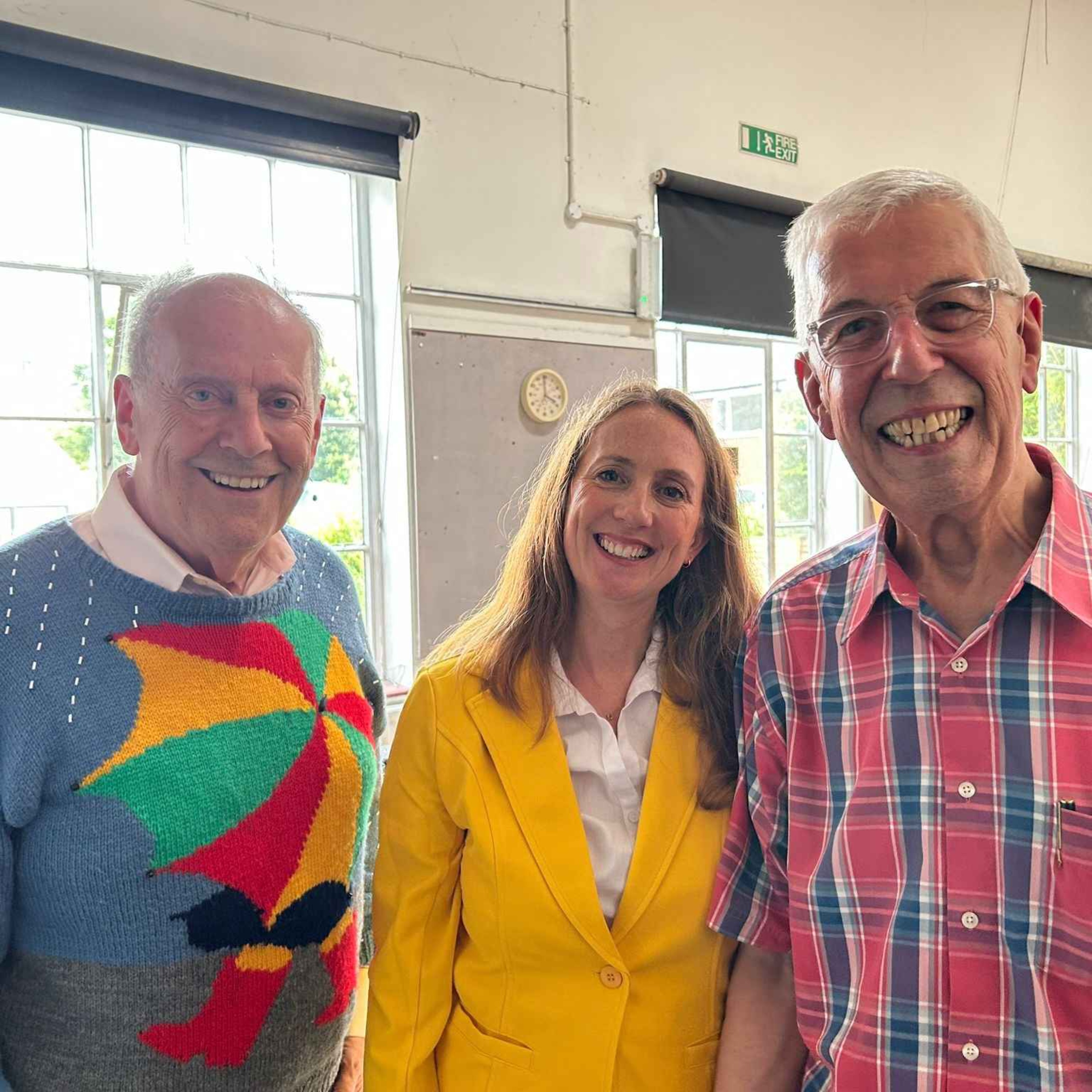
Host: Gyles Brandreth
In this seaside special, Gyles Brandreth engages with Jeffrey Holland, a beloved star known for his roles in Hi-de-Hi and You Rang, M'Lord. The episode features reminiscence about Holland's early life, acting career, and includes interactions with Rosebud listeners and performances.
Written by AI. May contain mistakes.

Get the gist, explore an idea or ask about something said.
 Claude
On Rosebud with Gyles Brandreth, what are the key points of this episode?
Searching your listeningAutomatic transcript. May contain errors.
0:00Harriet, where are we? We're outside St Pancras Station next to the main road. We are certainly next to the main road. St Pancras Station is in London, England. And we're going to Broadstairs. Yes, yippee! Which is on the seaside. Yeah. We thought, it's the end of July, August is coming, let's get our bucket and spade. We didn't expect it to be bucketing down. There's a bit of rain above us. I hope it's not raining in Broadstairs. It's always sunny in Broadstairs. It's always sunny in Broadstairs. It's my fantasy ideal seaside resort, the Isle of Thanet. wonderful we're going to meet some exciting holiday type people there this is going to be a holiday special yeah i hope you've come with the right kind of costume i certainly have it's in my bag hey surprises galore with the rosebud holiday seaside special boop boop train's leaving oh oh look the train arriving at platform six seven eight nine ten it's coming in sideways that's why we're leaving from platform one cue the music
1:24Hello and welcome to a very special Rosebud on the Road. In fact, this is Rosebud by the seaside because we are in Broadstairs. For international listeners, where is Broadstairs? Well, it's on the southeast coast, the Isle of Thanet in the country of England, and it's charming. And we're here for a reason in a theatre. The theatre is called the Sarah Thorne Theatre. And Sarah Thorne is one of the most remarkable women in world theatre history. The reason she is significant in world theatre is that she was the pioneer in theatre education. She was essentially an actress. She came from a theatre family, born around 1836, died 1899, a distinguished actress, but she was also a theatre manager.
2:12She managed theatres in London, as her parents had done before her. She managed a theatre in Margate, near where we are here in Broadstairs, which is the reason why this theatre is named after her but I think the most significant part of her story is that she really began training actors and theatre people there was a wonderful actor called William McCready who was the first person really to ensure that productions were actually produced directed because previously people just got together learnt their lines got onto the stage and said them and if you were a star you would go if you were McCready you turn up somewhere you knew King Lear the local actors would play all the other parts and you would come in and you would do your King Lear.
2:57But Macreedy thought, no, actually, I would like to have people doing it in response to my performance. And he began actually directing his casts. What Sarah Thorne did was train people for the theatre. She began the first theatre school in this country and she pioneered that. So she is a remarkable person and they did a wonderful thing naming this beautiful theatre here in Broadstairs after her. We are here also raising some funds for the Edward Heath Charitable Foundation. Because Rosebud's getting nothing out of this, it's all going to the Edward Heath Charitable Foundation. Why are we in Broadstairs?
3:32Because Edward Heath, a former Prime Minister, became Prime Minister in 1970, was born and brought up here in Broadstairs. And he loved Broadstairs all his life. He was not only a Prime Minister, but he was an enthusiast for life. He was very keen on sailing. He was very keen on singing, on orchestral work. And the Edward Heath Charitable Fund supports charitable endeavours to encourage education, particularly for young people involved in sailing and in music. So that's a great and good cause. But this is Rosebud. This is Rosebud on the road. Rosebud at the seaside. It wouldn't be Rosebud if we didn't have an amazing producer, director, editor, my colleague, my friend, my companion on the Rosebud Adventure, would you please welcome, yes, as we cue the music, it's Harriet Jane.
4:34Now, Harriet, one of the reasons we are in Broadstairs is that when I was a little boy, I used to come regularly to Broadstairs because my father used to come to Broadstairs 100 years ago. And his father used to come to Broadstairs in Victorian times. Broadstairs was a place where Victorians, in this part of the world, would go on holiday. It was made particularly famous because Charles Dickens came to Broadstairs so often. On every other building in Broadstairs, you will see a plaque saying, Charles Dickens wrote a bit of Nicholas Nickleby here. This is the house on which Charles Dickens based a scene from David Copperfield.
5:13This is Bleak House. everywhere you go there is even a building outside which there is a plaque that says Charles Dickens never lived here. So I loved the different bays that are broad stairs. That was my childhood. Where as a girl did you go on holiday? Well I actually grew up in a seaside town so I never went on seaside holidays. Where did you grow up? In Dartmouth in Devon. It's very pretty but and it's a the mouth of a river my dad owned a restaurant which looked over this estuary so every now and then we go out on a little boat to the castle there's a famous castle there it's where um Agatha Christie she lived up the river in Greenways that's where anyway it's very it's very beautiful but as a result we never went anywhere good on holiday because I think my parents thought well we already live in a holiday place and they were running restaurants they were always busy in the summer so we used to go on holiday to Lewisham in South East London.
6:10Well, there you go. Yeah. Lewisham Shopping Centre, I thought, was the most glamour. I thought this was the height of glamour. I used to look forward to it every Christmas. That's where we'd go, to stay with my aunt. And I thought the speed bump, they had speed bumps. I thought that was amazing. And then I grew up and realised Lewisham is a bit of a... No. It's not the most glamorous. You were doing so well until you said that last bit. It's not the most glamorous bit of London, Giles. No. I thought it was. But it was for you. It was, because it was different. You didn't have bucket and spade holidays.
6:42Well, I had a bucket and spade, but that was just my everyday life. I mean, sometimes we'd just go to the beach. You know, mum would just take us to the beach on a Wednesday, you know, in April. I'm just loving you with the speed bumps. Yes, the sleeping policemen. That's what they were called. And did she drive over them, saying, oh, look, we're driving over the sleeping police? Yes, and I'd imagine this copper lying down there. And in the shopping centre, did you play games? I don't remember what we did in there. Do you think there would be a grabber machine? Did you have that? Oh, I loved those grabber.
7:13Certainly there were those in Broadstairs. There was a sort of area where you could go for doing fun games like that. I love the grabber machine. Have you ever won? I know nobody who has ever won anything. You grasp it and then it just slips your grasp and disappears, doesn't it? Yeah, you have to actually grab the machine and you have to shake it. You'd never have done anything like that, Charles, would you? No. No. Actually, no. My memories of Broadstairs are charming and they're idyllic and they're not like, I love the idea of you, your Lewis from childhood. Me in Broadstairs, it was. Bucket and Spade, on the beach.
7:48There were donkey rides in those days. And any local people of a certain vintage will remember Cecil Barker in the Pavilion on the Sands. Any local people remembering Cecil Barker? Thank you, madam, for turning up. We're so grateful you came. We can meet afterwards, have a cup of tea. He had a little orchestra. and he played the violin himself and he did evening entertainment at the building on the stands and in the afternoon there was a tea. People came and had tea. And my mother, though, would sit on the beach in her deck chair and tea brought to her on a tray and I would be there with my bucket and spade.
8:21And those were happy days. Oh, that's lovely. Broadstairs is a very happy place. Let's discover who we've got in our audience before we introduce you to our special Rosebud guest. Are there people here who are listeners to Rosebud? Yeah! Oh my gosh! Wow! We've never been around so many Rosebud listeners. This is pretty exciting. Normally we meet them outside railway stations. They come up and say, Oh, I'm a Rosebud listener. And are there people here from the Edward Heath Charitable Foundation? Yes, they sound like Edward Heath. Oh, when you join the foundation, you've got to get in. You pass a subscription, but you've also got to go, You've got to do an impression.
8:59If your impression isn't good enough, you're not allowed to join. and when we meet we all sit around the table and we'll go that's all that happens I love it that's it and women can do it as well do you want to have a go and do it again no no oh no you're not being Father Christmas you're going that's it you've got to go so it's just one thing of the shoulders just do one small very good I think you've mastered so yes a round of applause for Harriet yay
9:35So, Harriet, we've got a wonderful Rosebud audience, and thank you very much indeed for coming along today. We've got a very special guest, and I think we need to cue some very special music for this guest. I'm going to go off and cue the music. Go off and cue the music. I won't say another word until we meet our guest. If you're ready, Harriet, cue the music. Heidi, hi. Howdy ho!
10:28Geoffrey Holland, ladies and gentlemen. Heidi High! Heidi High! Oh, Geoffrey, thank you so much for joining us in Broadstairs. A little bit. Let's begin, before I ask you my first question, let's begin a little bit talking about Heidi High. When was it? How did you get into it? And for those who don't know, because we have an international audience, what was Heidi High? Heidi High, well of course most of you know, was a sitcom, BBC television sitcom, which started in 1980, ran through to the mid-80s, 87, 88. Written by Jimmy Perry and David Croft, of course, more famous for writing Dad's Army, Adolf Hot Mom and all the other stuff that they produced.
11:11And I was understudying Private Pike and Private Walker. And I actually went on as Private Pike once. i did a matinee performance of the dad's army stage show was private pike and i put the hat on with the little pointy bits i put i'm the only other actor in the world to ever wear that aston villa scarf apart from me and lavender it's true i put it on i put all the gear on i went out and i did the show i all the cues all the lines were there all the cues came out in the right order everyone got their cues from me but i didn't get a single laugh all afternoon from that audience because I was not Ian Lavender and they were deeply unforgiving.
11:54Oh! It was annoying. But isn't that interesting in a way? Yes. And you realise quite quickly there's nothing I can do. No. I'm the wrong... Because sometimes when it's the understudy people think, oh, give them a chance. They're sympathetic. But they'd come to see Ian Lavender. They had. And they saw me. And they'd say, who's that idiot wearing that hat? He was not... There's a comparable story. Camelot, on Broadway with Richard Harris and the matinee, I'm there in the audience come to see Richard Harris and we all seated, 2.30 arrives and house lights down and then a voice says we're very sorry to tell you we're very sorry to tell you this afternoon's performance of Camelot due to the indisposition of Mr.
12:43Richard Harris from the audience all begin to get up and walk out. They're literally leaving as the announcement is being played. Due to the indisposition, crowds are leaving. Due to the indisposition of Mr. Richard Harris, the part of the king in Camelot this afternoon will be played by Mr. Richard Burton. They all came back. Ah, lovely. Ah, lovely. So I think now that you've announced that you were playing Pike, it would fill the theatre. But I went on from Pike to Spike. You went on from Pike to Spike. Don't tell him, Spike. And just remind us, what was the context of Heidi High? Was it a holiday camp?
13:24Yes, Heidi High was set in a holiday camp in the 1950s when Jimmy Perry had been a redcoat himself at Butlins. When he was at drama school, he went to RADA to train as an actor. And during the summer holidays, he used to go to Butlins to be a redcoat to gain experience as a comedian. He wanted to be a comedian, Jimmy. He always wanted to be a famous comedian. All those characters were based on people they knew. You know, there was a drunken, punching Judy man who hated children. There was a boring, snotty-nosed, ballroom-dancing couple who hadn't won a cup since 1943. You know. And all those people were based on characters that they'd met and worked with.
14:06But they wanted Butlins to help them. And Robert Butlin, who was then in charge of Butlins, said, no way because we've spent 20 odd years and millions and millions of pounds promoting our image from what it used to be but he missed the point completely it was set in the 50s made in the 80s but set in the 50s as it used to be he missed the point completely but this could have been the bbc's best friend but they missed the chance so they refused to allow all their red coats as did pontins refused to allow all the blue coats to say hi de hi to their campers you know which was so silly really but it was such a massive success you know instant success it was one of the crofton perry's best ever and you were part of a double act in a way yes you and paul shane played the parts of the camp entertainers that's right and what was your relationship like with Paul and who was Paul?
15:07Paul Shane was a comedian from the north of England he played the northern clubs for 23 years when Heidi High came along so you know Paul's ball was a standard comic and he got into television as an extra and was starting to play tiny parts and Jimmy Perry saw him on Coronation Street one night playing Alf Roberts boss and they couldn't find they cast me a spike already by then but they couldn't find anyone suitable to play ted bovis and jimmy saw this guy this this little short fat fellow with curly permed hair playing alf roberts boss and he got quickly onto the phone during the commercial break he rang david croft and said david are you watching corrie david said no he said well put it on immediately now because i think we've found our ted bovis and we brought paul down to london and we put him in a rehearsal room they asked me to come along.
16:01I walked into this huge room, this rehearsal room at North Acton and there he was standing in the middle of the floor looking terribly forlorn and very lonely and scared to death and I put my hand out and I said hello Paul my name's Jeff I'm very pleased to meet you and we shook hands and he said the same thing back to me but then he looked at me he looked at me a bit sideways and he said have we worked together before? I said no no no but he said I'm sure we know we haven't but what he sensed then at that moment was what I felt the same the chemistry between us just went ping straight away we hit it off at that very moment on the stage you know and I think that showed for the next 18 years in all the work we did together you know we just hit it off instantly became very very close friends you were good friends we were and can you can you analyze that chemistry at all no it just happened it just it was just a natural blending of character you know we were so different as people you know and so exactly was super hard of course that's why they kept the three of us together for those three series we did in conjunction with each other because we were talking about other series because you went on from Heidi high eight years of Heidi high yes you rang my lord which was a kind of comic upstairs downstairs that's how it started yes and i remember because i was lucky enough to know david croft too yes he was very proud of it and because it was different it was comedy drama indeed he let it run longer it was 40 or 50 minutes 50 minutes as opposed to the 30 minutes and he loved it it wasn't quite as successful but for me it was equally satisfying it's been rerun now the feedback i'm getting every day i'm getting emails from people who just say i'm loving watching the reruns of you rag my lord what a fabulous show that was you know what a pity the bbc neglected it because they did they suddenly they never repeated it you and i first met because of hardy high because my best friend from school was the actor simon caddell indeed yes and simon i met when he was about 11 or 12 and i was a couple of years older and i thought oh this an interesting young actor.
18:15I thought he was 11 or 12. And I'd written a version of a Sherlock Holmes story called A Study in Sherlock, rather good title, and I thought this boy, this 11-year-old here would be ideal, perfect casting for Holmes, an 11-year-old. Anyway, he played the part and he was brilliant. I mean, he could smoke a pipe like a veteran. He could blow smoke rings through a pipe. I mean, he really was superb, aged 11. And when he was cast in Heidi I, he had some reservations about it because he saw himself, and indeed he was, a great classical actor. And he took himself seriously as an actor and wasn't sure that the world of the sitcom was for him.
18:57But he quickly realized that the world of the sitcom is quite as difficult and as challenging, at times even more so, whether you're doing Alan Akebourne, William Shakespeare, or Crofton Perry, In their own ways, they all have their challenges. And it changed his life because it made him a household name. Yes. As it changed your life, I imagine. Indeed, it did. It put me on the map. What did you make of Simon as a person? He was a wonderful man. But as you say, he was always a bit like a fish out of water because he never really settled. I think when he joined the cast of Heidi High, he was determined he wouldn't stay the course.
19:32He would do as long as it suited him to do and then he'd move on to other stuff. that's what he did he asked he did four years with us then moved on and we replaced him but he couldn't escape it he went on and appeared in hamlet which i went to see i think the birmingham and literally on the third night somebody did come on and go heidi hamlet he was dreading it but it happened it happened you can't get away from it it was wonderful he but he brought such talent to Jeffrey Fairbrother in Heidi High. It was a straight role for him and he bounced off Ruth Maddox's vamp of the valleys quite beautifully.
20:12Wonderful, wonderful double act together. And I remember one day we were at the holiday camp filming and it was one of those scenes where Jeffrey Fairbrother has to come onto the stage around the pool with a custard pie. And Ted Bovis had said to him, you can just go out there and say, pie, pie, who wants a custard pie? You know, you see me do it. You go out and do it. So he walked out of the microphone. He said, you need pies pies who wants a customer? You know, very quietly. And I was I was watching this being filmed from the back of the camp. I could see from the fencing on the street. And there were some ladies who were going shopping who'd stopped to watch what was going on.
20:53and this woman stood next to me and she was watching this scene, Heidi, hi, Jeffrey can't hear you, Heidi, Heidi, hi. And it was Simon's character and this woman just stood there next to me and she looked at me and she said, he's terrible. And she just swanned off back to do her shopping. She was convinced it was real. For real. Because he was so good, he was so perfect, this Jeffrey, out of fish, out of water. We shall be recreating the custard pie scene at the end of the afternoon. There's going to be no, I'm not joking, We're going to have some camp entertainment. Probably the emphasis on the camp rather than the entertainment.
21:27Lock the doors. Lock the doors. And at the very end, a special treat, because we have a lovely recording of Simon Cadell and Ruth Maddock, who are going to sing us out at the end of today's show. And today, incidentally, would have been Simon Cadell's 75th birthday. Would it? And you've had a birthday this week. Two days ago was my birthday. Thank you. Thank you, Tom. Now, Geoffrey Holland. we go back to the beginning of your story what is your very first memory my very first memory I can tell you I know I remember it so well because there is a photograph of the event in my family album taken by my grandmother I was a three-year-old boy standing on the beach with my mother looming over me I was sobbing my eyes out because I was looking at the sea and when you're three years old and about two feet six that ocean at Skegness was terrifying to me and mummy said I've got to go and paddle my feet in the water and I thought I was going to be washed away I was frightened out of my mind and I remember it so well there is a photograph in the family album of my mother leaning down over me and looking straight into the camera lens going, shh, shh, shh, shh.
22:46But it was too late. I was already sobbing. Oh, terrible time. So the family album, who was the family? Who was your mother to start with? My mum, Doris Dot. My dad called her Dot all her life. She was a lovely lady. My father, you know, he was wounded on the beaches at D-Day Plus One. He was, he was, he was a F for dead and the stretcher bearers missed him several times. until I think he moved and someone heard him groan. And he was picked up and taken away and invalided out into hospital. He copped some shrapnel in his side and his ribs and his lung. What was his name? Sam. Sam. Sam. And he had a big scar on his side all his life.
23:29When we went on holiday as children to the beach, he used to be ashamed of it, embarrassed by it. And my mother used to say to him, you should be proud of that. That's a war wound. You've got that fight if a king and country you know and all the rest of it But it could he it was different when you're a serving soldier and you're in a battlefield situation To when you're retired from the army and you got a family man on the beach with your big scars She was right. She was right. I agree. She was right. So what did he do for anything before he joined the army? He before he was out of work. He joined the army in 1929 when he was 19.
24:03Oh, he was a victim of the depression and there was no work I come from a family of colliers miners so your father comes from a mining family yes no work in the 20s no he joined the army joins the army as a profession and it was stationed in India for about 12 years in the 30s where did you meet your mother he met my mother when they were kids because they lived next door to each other and he went to my my grandmother my mother's mother when he was about 12 and she was four I think and he said you know Mrs Harrison I'm gonna marry your daughter Doris one day how interesting yes he he fancied her at that age even then I don't know what was going on in his hormones I'm sure but he was 12 but he did marry her eventually he came back after the war and you know he kept in touch with mom all the time he was away in India and were they happy together was it a very good marriage very happy but sadly died when I was very young.
25:00He died of a massive coronary because he was overweight. He wasn't very active. He smoked plain cigarettes all his life, which of course they all did then. This was 1961 when he died. I was 14. And of course, they hadn't invented bypass surgery then. And the results of the post-mortem were awful. His heart was actually plugged up with fat and his arteries were totally blocked like those awful pictures they show for the anti-cigarette adverts you know that you've seen on tv that's what his heart looked like when they opened him up and you know he hadn't got a chance so the doctors knew he was poorly they knew what was wrong with him but they couldn't do a damn thing for him did did you i mean do you have brothers and sisters i have a brother and did you and your brother know that he was this ill when he died no we didn't we didn't know at all we didn't know at all he just went into hospital and died no he no he was taken ill at home and he was lying in bed for a few days and he decided he'd get up and go to work but he never made it to the car he was found dead on the floor by a man who was one of the shopkeepers where he's garage was behind the shops he was found dead on the floor and the police came to the school to so the headmaster had to break the news to me when I was at school so well that's the sad story no no but it's it's an interesting but if sad story did the headmaster break the news to you well i was called uh from the classroom i was sitting in the classroom uh that morning and a boy knocked the door and came in to speak to the teacher in charge and he said jeffrey parks because my name is really parks he said could jeffrey parks report to the headmaster's study please well you could imagine the noise that my my fellows made you know oh parks are you in trouble so off i marched to the headmaster's study knocked the door he said come in and I could see there was something wrong because he was trying to smile, you know.
27:00And then he broke the news to me about my father's death and what you could imagine the rest, you know. But I was taken home in a police car by two very nice policemen who had actually come to the school to break the news to the head who had to break it to me. And I went home and my mum was there with her neighbour and of course she was a mess. Well, there we are. That's one of those things you never forget. Of course you never forget. And did you then try to, were you the good son? Because if you were 14 by then, did you try to help your mother? I did. Well, I did my bit as much as when I took my O-levels.
27:36I didn't stay on for sixth form and do A-levels. I left school at 16 in order to get a job and to help really bring a bit of money into the house to help mum support my brother and me. she was trying to bring us up on her own with a part-time job so that's what I did I get some work and did she remarried as you did she remarried twice more oh no she did she did she married the man that we called our stepfather he lasted until the mid-80s she was left widowed again for a second time and she was nearly 80 herself at the time and she married another man she was a go-up she was a bit but she she was an old-fashioned soul you know she would she wanted the company of a man in her life but she wouldn't what she called live in sin because she was basically a very religious person and she wouldn't live in sin so she married this third man and none of us liked him oh none of us liked him at all we could see wasn't he wasn't the right sort for her but he reminded her somehow of my father i think he had the same shaped face i think it was probably about the same that was about it we all called him the old git because we didn't like him at all and we will prove right because the minute he married her got his feet under a table he started treating her a bit like a doormat oh i'm sorry so that didn't last long she walked out on her third marriage at the age of 80 that was my mom oh well done yeah we love her well done god
29:18what do you think you got from your father you only knew him until you were 14 but what do you think you have in you now or you've had in your life that your father gave you um brown eyes probably probably i didn't know him you see and at the time he died i was 14 i was a a sweaty adolescent and you know 14 year old boys that are notorious for not behaving themselves and and i didn't hit it off with my father in fact when he died i didn't like him very much you know i have to look back on that in part of my life and admit that to myself you know although i loved him he was my father you know and i was heartbroken when he died i didn't like him very much because we were always fighting he was always telling me off because i should i was always doing something he didn't want me to do he was of the old school you see he'd be brought up when you you would not speak unless you were spoken to and because we were living in the early 60s and life was changing the world was changing and he couldn't cope with it he couldn't cope with a lack of discipline of any kind because he was a bit a soldier all his life you know and I didn't get on with him terribly well at all but that's that's that's really what I regret so what sort of a little boy were you here you are Skegness is where the story began but that's not where you lived that's where you went along we were in the Midlands you were in the Midlands I was born and bred in a town called Walsall which is ten miles from Birmingham and I grew up there and spent the first 20 years of my life there and your first school was what St.
30:51Mary's the Mount it was called it was a Catholic Church with its own little Julius school attached so I went there my first school then at the age of 11 we did the 11 plus and I passed my exam and went to the grammar school which I was happy at until that awful time and then I left but it was a lovely school to be at. And can you remember your first friend outside your family? Oh yes yes my first friend is still my best friend to this day his name is Peter Smith and there are several Peter Smith's around I've found since but he is my Peter Smith and he and I met at the age of four when we went to the the junior school the infant school and because we were the two tallest boys in the class we were put together in a double desk at the back of the room so that we could see over the heads of everyone else you know that's that's how we became close and we just hit it off and we've been the closest of friends for over 70 years ever since yeah yeah he's still my best friend to this day.
32:03So as a little boy what were your hobbies? I used to love reading comics and go to the pictures we went to the Saturday morning pictures of course is where my love of Laurel and Hardy started and the first time I remember Saturday I used to take myself to the pictures on a Saturday afternoon as well if there was something worth seeing. On your own? Usually on my own yeah and at the age of 11 I looked through the local paper one day to see what was on oh what's this there was a play on a play it was in a theater it wasn't in a cinema it was in a play in a theater it was in Wolverhampton the Grand Theater at Wolverhampton and Wolverhampton was only six miles away and I knew where the bus stop was for the Wolverhampton bus but I'd never been there so I got on the bus I went over to Wolverhampton I found the theatre which wasn't far from the bus stop I paid my money I bought a rear stall seat I can't remember how much it cost me probably about one or six or something like that and I sat there and I watched this creaky old farce this terrible terrible old comedy I don't know if anybody knows a play called love on ice now it I don't know anything about it apart from nobody knows about it I think it was written by Ben Cree, one of the old farce writers before Ben Travis.
33:25It was like a Romeo and Juliet modern-day take on two Italian ice cream firms that were rivals. And the son of one was in love with the daughter of the other. And that's where the comedy was in this. And I saw this play and I thought, this is lovely. I loved watching live actors on the stage. and later on of course I was Peter Smith my best friend induced me into the Amdrams by telling me that he'd found this group for under 21s which of course we were 16 at the time and he told me the girls were very pretty so I said what time do you want me it was as simple as that really and along I went and that was when I discovered I got an aptitude for performing and I was reading this peace with with all the boys and girls and I heard laughter and I read another line and now I had some more laughter and something went ping inside me and I thought I'm having some of this I like this and that's really how it all started I'm sitting here today because I'm a victim of my raging hormones and did people respond to your raging hormones did you can you remember the first girl you held hands with I did I saw I did do as well just held her hand I was too frightened and scared to kiss her no self-confidence whatsoever and that's where the comedy set came in to improve my own self-confidence you said and can you remember i was this tall when i was 16 with with buddy holly bottle end lenses you know terrible thick i've always worn glasses all my life and big spotty face big teeth no no self-confidence at all but when the laughter started that's when my self-confidence started and you think she held hands with you because of the spotty face or the laughter?
35:10I don't know I think I made a laugh. Exactly. I made a laugh about five minutes and then that was it. And then she let go. Then she let go. Who was your first proper girlfriend? Oh Peter's wife. I didn't expect to get quite into that so soon. Before she married Peter Smith of course she was my girlfriend for a good year and a half. My name is Marilyn she's lovely and we're still best friends to this day but it was lovely because i i split up with her when i went off to drama school to train to be an actor and it was lovely because peter always he had an eye for her he always had i knew that but he he bless his heart when he when he knew she was free he actually asked me for permission to take her out would i mind no wonder he's your best friend what a gentleman i No, he's a sweetie.
36:03But he asked my permission if he could take my mother out, and he did take her out, and he carried on taking her out, and they got married. I hope you were the best man. No, I wasn't. I was working. Oh, of course you were. I was in rep at the time. So tell me, you say you're going to drama school. So at 16, you're doing the Amdram. You're finding I'm quite good at this. I'm getting the laughs. And you think, I could do this professionally. I do. I always wanted to. How does a boy in Walsall discover where a drama school is? That's a very good question, because when I was 17, 18, my mum had remarried, and I'd already said to her that I wanted to do it professionally.
36:40I'd love to go into the professional theatre. She went mental. She went ballistic, because she had no idea about it, really. All she knew was that most actors are out of work for most of their lives, which, of course, is true, and is still true to this day. So she was frightened for me. She was scared to death for me. She said, absolutely no way. And I sat them down one evening and I said, I told them what I wanted to do. And I was quite prepared, if they said no, to do it anyway. Because, you know, I'd made my mind up. But they looked at each other and they looked at me and mum said, well, if you don't try, you'll never know.
37:24So that was yes, basically. so I'd already started writing off to various drama schools in London and there was one in fact there were two in Birmingham not far from where I lived which was lovely it was a lovely old house and it was a quite a tidy little cozy little unit of people and they liked me I got on well and I was accepted and because I'd been out to work when I left school after my father died I I told you I went and got a job. I worked for a local wine merchant. I got a grant, a full grant, from the Education Authority in Walsall because I'd been at work for three years. I qualified as a mature student, although I was only 19.
38:08I was a mature student. And as a result, I think I got my£360 a term, which in 1965 was quite a tidy sum. And what was your most glorious moment at the drama school? oh playing peer gint wow ibsen's peer gint difficult part difficult play six weeks to learn it at those in those days three ages of man he is a young man he's a middle-aged man and he's an old man and so when you finish this time at drama school is there any prospect of work that was the problem no there wasn't i'd written hundreds of letters to various repertory companies which of course there were several around then in the 60s and there was nothing i'd have photographs taken i'd sent photographs off uh with my resume which was weeny you know tiny nothing really and i got no response whatever and then there was a phone call from roger redfarn who was at the time was assistant director at the belgrade theater in coventry and he he rang the college to ask if there were any big strong chaps who just left who could come along to commentary to do this production could you believe it of war and peace oh my goodness yes your professional debut was war and peace so i i i said yeah it was wonderful then i went on to coventry and i got some digs and and uh stayed stayed there for nearly five years i obviously proved to be very useful to them uh but the whole story of my coventry days is is in the book so if you want to read it is there does your wife get a mention your first wife get a mention in the book my first wife yes does get a mention because she was a part of my life for quite some time and she's the mother of my children well of course she didn't want to mention but she's got it because she was no there's no going back absolutely had the children no it happened you can't avoid it and when did you meet her was that at the Coventry at the in the rep she joined the rep company and we we got together there and we were together for 20 something years for a long time yeah yeah with my my children which you but she was there they were born in Coventry both my kids but you know the marriage ended and I met Judy Judy who is here Judy who we love Judy who is also an actress she was indeed and I met her while we were working together we worked together at a play with Marty Kane and there was nothing at all between us we were just colleagues at a play and Judy was involved with someone else and my marriage was still there and still hanging by a thread basically and you know we just spent the time we did in this play together and said goodbye and that was the end of that and a couple of years later judy had lost her sadly he died and and my marriage was virtually over by the by the final threads and then derrick nimmo oh oh oh i knew he loved derrick nimmo it was wonderful he was wonderful he used to send productions out to the middle and the far east mostly raccoon faces because they were the most popular to these hotels were in these wonderful places like abu dhabi and dubai and you know bangkok and all over the middle as i say you dine and you then watch the play you go over an airplane with british airways the rest of the cast were in steerage while Derek was up at the front in first class that's the way he organized it he was marvelous but of course the place didn't start till 9 30 so you were there till midnight every night so you know you couldn't have a drink till you finished and uh but there Judy and I met quite by accident he cast me uh and it was wonderful because we ended up on this wonderful tour and you know halfway through Cupid fired a little arrow and there we are and that was the fait accompli what What people who don't know the world of theatre don't realise is that every theatre production is a bit like a love affair.
42:10Even if you don't have a love affair, there's a small group of people intensely working together for a period of time in their own world. And it's like the beginning of a love affair where you look into the other person's eyes and you see yourself reflected and you think, I am you, you are me, we are as one. And a good company, it becomes like that. and so I always forgive anybody who has an affair within a theatre company because I'm just sharing this I think it is people who are civilians don't understand this but I'm just sharing since we're in a theatre I think this can be said would you endorse what I'm saying overall I'm saying nothing
42:50but there is an adage an old adage in the theatre which says what happens on tour stays on tour Oh, absolutely right. I'll go no further.
43:07I want you to do two things. I'm going to ask you for a moment of joy in your life, in your early life. When I say the word to you, joy, what springs into your head? Seeing the first Superman movie I ever saw. Superman was my childhood hero. because you see I always looked like Clark Kent and I you know secretly my little fantasies was you know running into a telephone box and tearing my shirt open and there was a big S on my chest you know that was one of my little fantasies happiness to me was a Superman film and a Superman comic I've still got loads of them at home that is joy suddenly becoming Superman yeah I think that's absolutely brilliant silly old bugger i think it's lovely uh you began mentioned peer gint then war and peace initially you were a jobbing actor ready to do any kind of part that's right but now if i mention you to people they think of you as a comic actor comedy actor jeffrey holman is what i'm known as and uh but you see i have to take you back to you rang my lord yeah because the part of james 12 trees in you rang my lord for me was basically a straight role you know and i was able to exercise some straight acting muscles in that but i was the but mostly the he was the butt of the comedy in it because they all used to take the mickey out of him because he was the biggest snob in the house but you know that was for me that was a straight role and of course i've seen you much more recently in a straight role because you do a one-person show as stan laurel which though part of a globally famous comedy double act you are playing the real Stan Laurel and it's a very touching and affecting part it is a straight part why thank you yes it is it was a lovely role why did you tell me did you write that show I didn't write it no not not not fully I co-wrote it with a wonderful writer called Gail Lowe and we could decided to collaborate I wanted to do this one person show about Stan Laurel because I decided way way back in the 70s what a wonderful idea it would be to do a one-man show about Stan because I knew all about him way back then and but of course I knew I had to wait I was only in my 20s you know and you had to wait till I was the right age you can't tell a life story till you've had a life you know basically and I waited and I waited and I waited and by the time we got it on its feet i'd waited over 40 years to get that show on and i did and what is the essence of stan laurel why is he special he was a creative genius but a troubled man at the same time you know he was he was a man who was running at the risk of his raging hormones because there were there were there were many women in his life can you believe that when you see that gorgeous little twit on the screen you know that he was the brains behind the entire act you know when they were filming together during the day he worked with the script writers first of all all the storylines and screenplays such as they were because they had lived most of it he directed most of in fact nearly all of the films himself and at the end of the day when the filming was over Oliver Hardy went off to the golf course to play golf which he loved and Stan went back in the cutting room with the editors and put it all together as he wanted it to be and that is why I am sitting here now over a hundred years later still talking about that man because he was a genius you know and he was a fascinating story to tell did you like him yes I did I don't think I could have done the show if I hadn't liked him and what did you like most about him his determination to get the kind of comedy he wanted onto the screen which he achieved because he used to stand at the back they used to preview most of the films and they made little shorts and he used to stand at the back of the cinema with a notebook and a pen making notes about where the laughs came and where there were too many laughs to close together if the audience were going to missed the next gag he had to edit in another shot which gave them time to laugh before the next comedy line so they could laugh again because he hated the thought of a gag being missed you know that's the kind of creative genius he was and you say he was troubled he obviously had a complicated private life are you an untroubled person you seem to me to be but then i don't maybe know i think i am i think i am i'm very happily married you know i've got some lovely grandchildren you know and you don't have demons you don't have nightmares no no no no I've been I've been very lucky very very lucky all my life I mean I've been so lucky to get the television work I've had you know and I'm sitting here today because you all wanted to come to this and that's lovely thank you ever so much for that no that's it's wonderful I'm very very happy so my last question is I asked you for a moment of joy and I love you being a Superman a moment of sadness from the early years bit personal because we lost a baby oh I didn't know that we lost a bit not Judy and I my first wife and I we had a stillborn and that was that wasn't funny it's in the book but it's it's not it's not for laughing but it's just part of my part of my life and it's interesting how these things live with one always always it is curious I was I went to see an eminent clairvoyant a lady called Lee Van Zyl and she said she saw this little spirit next to me about that big she said she had to go she decided she had to go to come back as a guardian angel and she's been with me bless you
49:17one last question from me and then we're going to have a little bit of camp entertainment the question from me really is what an extraordinary life you have had so far do you feel broad this is not the question was a before it do you feel broadly fulfilled professionally oh totally totally I've done what I wanted to do I've left some memories behind you know so when I go you ain't gonna forget me good what have you learnt though all these years you're reaching your 80th year what have you learned Jeffrey Holland I'll tell you exactly what I've learned I've have learned that life will take you round a corner where you didn't even know there was a corner and that's what's happened to me all my life so i'm looking forward to the next corner now jeffrey holland wonderful
50:23well jeffrey here we are at the sarah thorne theater in broadstairs where by the seaside you are the ultimate camp entertainer we must have some camp entertainment but I think you need a proper assistant
50:44we want to sing oh I do like to be beside the seaside okay and you can teach us something let's all do it together con brio and you can conduct us okay okay and you're sure of all the words that I was getting in the mood. Hidey-hi! Hidey-hi! If we can't hear you, hidey-hi! Hidey-hi! That's okay. Oh, I do like to be beside the seaside. Oh, I do like to be beside the sea. Oh, I do like to stroll along the prom prom prom where the brass band play till the prom prom prom. Let me be beside the seaside. I'll be beside myself with glee There are lots of girls beside I would like to be beside Beside the seaside Beside the seaside Oh,
51:41I do like to be beside the seaside That was a special episode, wasn't it? It was, Giles, yes I never thought I'd end up on stage wearing a yellow coat You look the part, I have to say You know, there may be a future for you Heidi High. Ho de ho. Oh, my goodness. But actually, we're going to end, as I promised when we were up on the stage there, with a little bit of saying, because, as you know, Simon Goodell, who starred in Heidi High, was my best friend from my school days, and he died in 1997. And Ruth Maddock, who I got to know through Heidi High, lovely lady, great actress, died only three years ago in 2022.
52:21but they sang a number together so delightfully I thought it would be a good way to end this very special episode. So we're going to end with Simon Goodell and Ruth Maddock singing. We've heard a little bit of Harriet Jane and Geoffrey Holland singing. This, well, does it rival it? You can be the judges of that. But thank you for joining us everybody on our trip to the seaside. We'll be back in London next time. But anyway, it's been fun today. It's been a good day out, hasn't it? Loved it, Giles. Lovely day at the seaside with you. Good. Well, cue the music. And it's not our usual music. This is rather special music.
52:55Hope you enjoy it. Bye for now. Let's try out the duet we're going to do for the Yellow Coat Review, Jeff. The words are very intimate, Janice. I don't want the campers to get the wrong impression about our relationship. Don't be silly. Sonny Acton.
53:14Like a fish needs the sea and a flower needs a bee. Like a rosy apple needs a healthy tree. It's true. I do need to be needed by you. Like the moon needs the stars. Like the Spanish need guitars. Like the wheeler dealers need their long low cars. It's true. I do need to be needed by you. Since the days of Noah and Noah's ark, A lover has sold his wares But if the sun always shone And it never got dark It wouldn't stop lovers loving love affairs Like a room needs a view And the Irish need stew Like the house detective needs a cast iron clue It's true I do Need to be needed by you I wish it was true, Geoffrey Glad is Like a phone needs a mare Like a swing needs a fare Like a ready teddy needs a big brown bear It's true Turn the light on again Oh, I do, no, I won't I need to be needed by you Like a green needs a juice Like a ham needs a mousse Like a wayward husband needs a no excuse It's true Oh, I do I need to be needed by you Since the days of Adam and the apple trees The madams have got their way But instead of going down on bended knees Today they run along to Cartier Like a word needs a tale Like the night needs the moon Like the old songwriters need the month of June It's true I do I need to be needed by Constantly heeded by Need to be needed by You Ooh!
Hosted on Acast. See acast.com/privacy for more information.


