
 Ask ChatGPT



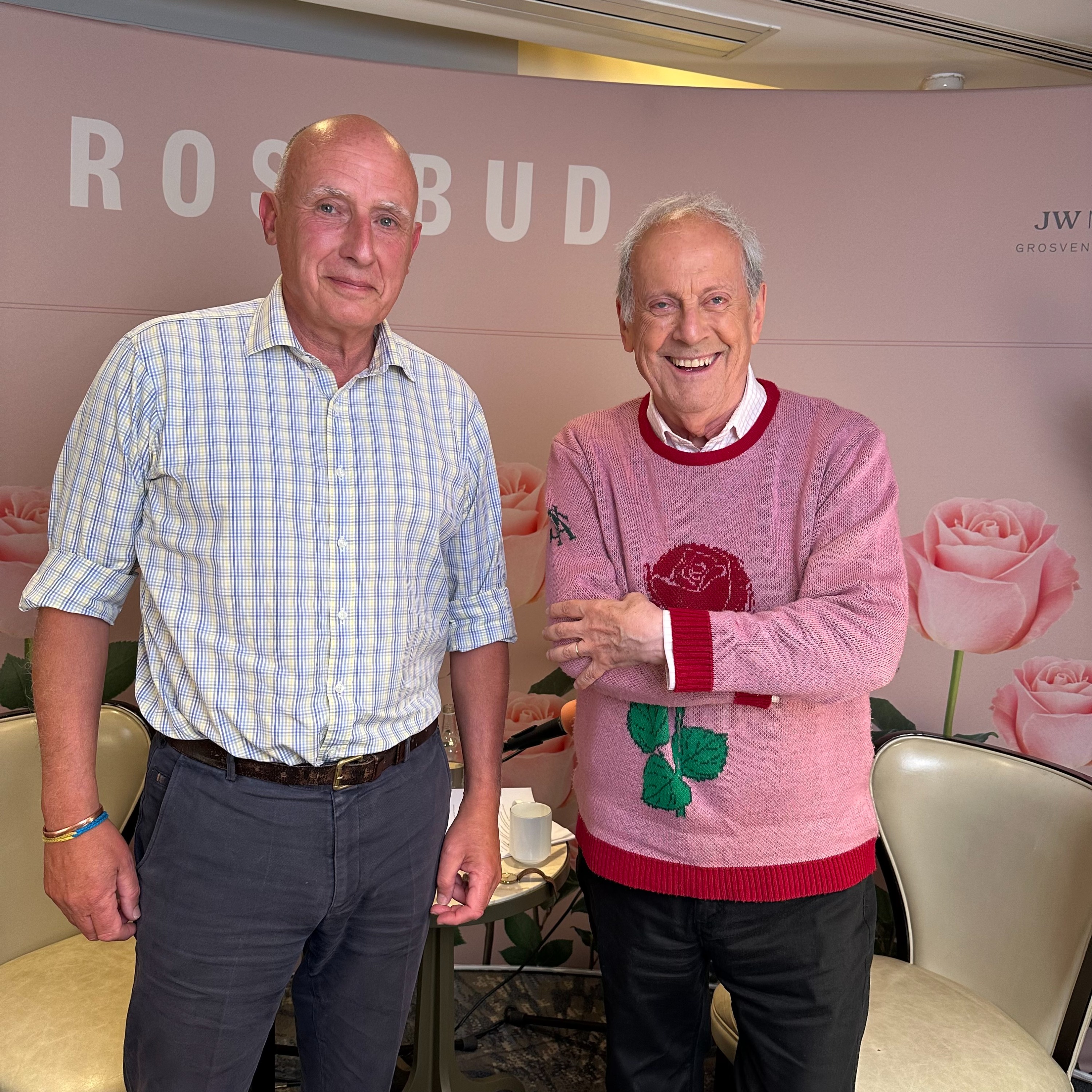
Rosebud interview with Jamie Lowther-Pinkerton, covering his family history, upbringing, military career (Irish Guards and SAS), work for the Queen Mother, and later becoming private secretary to Prince William and Prince Harry; he also discusses themes of duty, leadership, and personal growth.
Jamie Lowther-Pinkerton (Anthony James Moxon Lowther-Pinkerton), novelist and former royal aide; Giles Brandreth is the host (not a guest).
Anglo-Irish family; born 28 Sept 1960; educated at Eton and Sandhurst; served in the Irish Guards, then the SAS for about 8–8.5 years; worked as an “aquirier” (junior officer in the royal household) for Queen Elizabeth the Queen Mother in the 1980s; later became William and Harry’s first principal private secretary until 2013.
Eton taught him about failure and public service; the Queen Mother combined charm with a strict moral compass; SAS work was idealistic and strategically directed, often aiming to achieve outcomes without firing shots; he left the SAS because “you run out of road” around age 38.
“pea test” at lunch with the Queen Mother (flicking peas into a chandelier); a Trooping the Colour eve party that led to a reprimand; SAS being used at strategic level with minimal layers of command; his novel Beyond the Edge of Light inspired by his mother.
Written by AI. May contain mistakes.
Insights into Jamie's life, family history, and royal connections.
“Yet your doctor says everything looks fine.”
Insights into Jamie's life, family history, and royal connections.
“much of it triggered by the publication of a book by Earl Spencer, Charles Spencer, about his sister Diana, the late princess of Wales.”
Discussion about Jamie's family, upbringing, and his mother's influence.
“I think you'll find this quite fascinating.”
Discover the antics of a girl who faced expulsion for her playful mischief.
“for basically the Daughters of Empire and Trade and that sort of thing, all where their parents were around the world.”
Learn about the intriguing double life of the guest's mother as an MI5 operative.
“They met in about 1950, and I'm not 100 % sure, actually, but my father at that stage was in the special branch and my mother was in MI5 at that point, so it might have been some sort of link-up with that.”
Explore the dynamics of the guest's family through humorous anecdotes and fond memories.
“is you had a mother who was a secret MI5 operative but seemed to you to be your cosy mother.”
Experience a nostalgic look at the guest's carefree childhood spent in nature.
“I mean, I have, you know, there's no dusty corners there.”
Discuss the impact of family mental health on childhood experiences and relationships.
“You mention his black dogs, his depressions.”
Reflect on the expectations and lessons learned during the guest's time at Eton.
“Anyway, so you are this little boy leading this idyllic childhood, happy with your sister.”
Understand the motivations behind the guest's desire to join the military.
“So, you know, at the end of every half or term, we call terms halves at Eton, you know, you would have sort of full exams and it was published, you know, who had come first, who had come 264th.”
Follow the journey of becoming a soldier and the responsibilities that come with it.
“Why did you know that you were going into the army?”
Explore the journey of realizing one's identity as a soldier in the Irish Guards.
“the colour sergeants and that sort of thing.”
Learn about the transition from the Irish Guards to the SAS and the motivations behind it.
“When I was in the SAS, it was a completely different thing.”
Delve into the story of a transformative first love and its implications on life choices.
“I want to hear about the SAS, but just explain this transition.”
Hear about a memorable encounter with the Queen Mother during a significant moment.
“has been moving towards this one wonderful moment.”
Explore the lessons learned from working closely with the Queen Mother and her influence.
“we used to have this thing in the nursery that we would have a competition who could flick peas into the bowl.”
Hear about funny and charming moments with the Queen Mother, including her unique drinking habits.
“And I thought, oh, God, well, that's it, you know.”
Reflect on the Queen Mother's character and her influence on those around her, including a touching funeral memory.
“And Martin said, well, to be honest, Kate, if you've seen one church, you've seen a lot.”
Explore Jamie's journey from private secretary to the SAS, including the motivations behind his decision.
“For the modern age, it had to be different, but there were lots of little elements within that, which I drew on from those days, 30 years before.”
Gain insight into the operational side of the SAS and the motivations of its soldiers.
“I was there for about eight years eight and a half years I I suppose.”
Jamie discusses why he left the SAS and his experiences in the Ministry of Defence.
“But I think the point about it was that they were, you know, these people were really, really good, decent people.”
Learn about Jamie's role in establishing the household for William and Harry, and the unique aspects of his position.
“please tick what you think you're still capable of, you know, serving in the front line unit, you know, backroom boy, all the rest of it.”
Learn how early experiences shape one's ability to reflect on life.
“So for me, it was as much about trying to protect them so that they could hit their own goals.”
Discover how the speaker aimed to prepare princes for serious responsibilities.
“So Harry could fly his Apache helicopter on operations.”
Understand William's acceptance of his future as king and its implications.
“I think that was the thing I enabled them to learn, probably.”
Explore the complexities of preparing William for kingship amidst modern challenges.
“But he accepted, and has always accepted, to my knowledge, the fact that what's coming is coming.”
Learn about a pivotal moment showing William's sense of accountability.
“Sometimes we had a sort of moment where the adjutant had to take over and say, why are you 10 minutes late for something?”
Discover how William and Catherine embody qualities of their ancestors.
“but they are not to suffer because of this because it was my thing.”
Reflect on the significance of being a godfather in royal circles.
“That sounds sort of sycophantic stuff, but it's not.”
Reflect on the significance of being a godfather in royal circles.
“menopause and menopause with clinicians who specialize in women's health.”
Enjoy a light-hearted recollection of a memorable moment with Harry.
“Two of combat sports' most dangerous strikers collide.”
Understand the challenges faced by Harry as the second son in a royal family.
“So at that stage, Prince Harry had just created Invictus.”
Explore the deep admiration and emotional bond the guest has with his mother.
“but they had the potential to be very, very powerful, actually, the two of them.”
Reflect on personal moments of joy and significant life achievements.
“And the first is for you to give me a moment of joy.”
Learn about embracing challenges and the importance of daring to try.
“So you could go down the trodden route, But if you go down the trodden route, you're going to get ambushed left and right and all the rest of it, and it's not going to be anything that gives you that rush.”
Wrap up the conversation with reflections on life's journey and gratitude.
“You know, and if you go for it, who knows?”
Listeners are encouraged to remember their mothers, particularly those who have passed, as the host shares personal reflections.
“Those of you who are regular listeners will know we talk a lot about Harriet's mother, Patience, and who took her own life on the 29th of September.”
The host shares a recommendation for a new podcast, promoting its themes of family and memory.
“On the eve of your 30s, you will look for a man you've never known.”

Get the gist, explore an idea or ask about something said.
 Claude
On Rosebud with Gyles Brandreth, what are the key points of this episode?
Searching your listeningAutomatic transcript. May contain errors.
0:00Most women have been there. Something feels off. You don't feel like yourself. Yet your doctor says everything looks fine. Spoiler, it's your hormones. Midi is a virtual care platform built for women by women and offers specialized hormone care from trained clinicians. Plus, it's covered by most major insurances. Getting started is easy. You can book your first visit with a clinician right away. It's not you. It's your hormones. Visit joinmidi.com to book your first visit. That's joinmidi.com. Insurance coverage varies. Check with your plan for coverage. You need something from Lowe's, but your day is already jam-packed.
0:36Since MyLowe's Rewards and MyLowe's Pro Rewards members get free same-day delivery, we'll make the run for you. Seriously, just lock in your order and we'll do the rest. See you soon. Members get more at Lowe's. $25 minimum and loyalty membership required. Order eligible items by 2 p.m. Subject to weight and size restrictions and availability. The terms at lowes.com slash shipping terms.
1:02Hello again. I'm so glad you found us because we think of this as our own enchanted place, somewhere very special. It's the world of Rosebud, and it's wonderful that you're here. Welcome. Let's cue the music.
1:37Hello, I'm Giles Brandreth and this is another episode of Rosebud. If you're listening to this on the day that we drop it onto the world, it's the 25th of September, 2026. And this week, I'm sure you've noticed, there's been a lot of royal coverage in the news, much of it triggered by the publication of a book by Earl Spencer, Charles Spencer, about his sister Diana, the late princess of Wales. Actually, if you're intrigued by Earl Spencer, you can see and hear him in the round on an earlier episode of Rosebud, one we recorded earlier this year. They're easy to find, the old episodes. You can go to our archive via our website, that's rosebudpodcast.co.uk, or you can check it out on YouTube.
2:21We have a lot of our interviews now on YouTube. You simply go to YouTube, look for the Rosebud channel, and there we are. It's fascinating, actually, in many ways, the Earl Spencer conversation, not least because in it he talks about the challenges and traumas of his own childhood and how they've affected the rest of his life, including his quite complicated love life. Prince Harry has been in the news this week, now back living in England, and Prince William and Catherine. Of course, they've also been out and about and getting coverage on their, doing their royal duty. William and Harry, they crop up in today's episode of Rosebud because my guest is a man called Jamie Lowther Pinkerton, sometimes soldier, now a novelist, who until 2013 was William and Harry's first principal private secretary.
3:13I asked him in for this week really quite by coincidence because I've been reading a novel that he's written called Beyond the Edge of Light. And it's beautifully written. It's a Second World War novel. It's about Forbidden Love, Bleschery Park. But what intrigued me is that it was inspired by his own mother. And I wanted to discover more about her and about him. In some ways, you might think his story is predictable. You know, he was educated at Eton and Sandhurst and he became a soldier. Irish Guards, then he joined the SAS. but he's not quite as predictable as the biography might suggest. He spent a fascinating couple of years as a query to Queen Elizabeth, the Queen Mother, in the 1980s, and our conversation has lots of fun stories about her.
3:59And I think it was when he was working with her that he will first have met Prince Charles, as he then was, the Prince of Wales, because he was very close to his grandmother, Queen Elizabeth. And I think that encounter with Prince Charles now, King Charles III is what led to him becoming the first principal private secretary to William and Harry, helping them prepare for their role as royals, helping them set up their offices for the first time. And he was with them, I think, until 2013. I know he also helped with the arrangements surrounding William and Catherine's wedding, and then he became one of Prince George's godfathers, you know, the future King George VII.
4:38So actually, the conversation you're about to hear includes some fascinating advice, wise advice, I think, that Jamie gave to the young princes, which you might find useful for your own life. Anyway, he doesn't normally talk about his time in the SAS or about William and Harry, but he does here. So this is an exceptional episode of Rosebud with an unusual man, with an unusual story to tell. I think you'll find this quite fascinating. This is Rosebud with Jamie Lowther-Pinkerton. Cue the music.
5:26Now my guest today has got quite a name, Anthony James Moxon Lowther-Pinkerton. well some would say this is ridiculous where all these names come from well moxon is my maternal great-grandmother who was still alive when i was a little boy so i think it was because of that and then the lowther and the pinkerton bits joined up about sort of three generations ago both are anglo-irish families um so i was i was lumped with this thing from the word go and anthony because My father, who I'll talk about in a minute, but he was very keen on tradition, and tradition extended to having two previous Antonys, and so I got lumped with that, and they called me Jamie since birth, so it's called untold carnage.
6:16We are thinking of you as Jamie Lowther Pinkerton. Forgot this right? Born on the 28th September 1960. That's it. Good. Right man, right date of birth. Jamie, what is your very first memory? My first memory is judging the Nobbly Knees competition at Bognor Regis Butlins when I was about five or six. And I'd been taken there by the wonderful Suffolk lady called Sibby who used to look after my mother. And my parents went to Ireland and that was the first holiday I'd ever been on. and it remains one of the best because I was allowed to stay up until 10 o 'clock at night judging Lobbellini's competitions.
7:02Well, we've got to hear about Sibby and your parents. Who are your parents and what is the Irish connection? My father was an Anglo-Irishman. He was called Rumpty, now the Pinkerton, actually because christened Rumpty by Sir Henry Irving's widow, actually, who came to tea with my great-great-grandmother. This is a great Victorian actor. Yes. Who didn't like his wife. No, and I heard your episode on that, and I did wonder where she fitted in. But she said he looked like the Bishop of Rumpty Foo, and Rumpty stuck. And Rumpty Foo is a character in some... In Gilbert and Sullivan, yeah. Ah. So it's good sort of Victorian stuff, or Edwardian stuff, and it just stuck, and he was Rumpty all his life.
7:46So your dad was known as Rumpty. Yeah. What did you call him? I called him Dad. Fine. But everyone else called him Rumpty. Everybody else called him Rumpty, including all my friends, yeah. And what was he? He was an interesting man because he was one of those sort of people whose family had frankly been probably quite rightly dispossessed about six generations ago. But they could never let go of the sort of the Irish connection. And so he was a great sort of wanderer, like a lot of Anglo-Irish people. When you say dispossessed, his lands were confiscated? Well, the family, I mean, you know, they had absolutely been part of the ascendancy in Ireland, which was not a great thing perhaps to have been all the time.
8:32But they were burnt out in 1798. So this is an English family. An English family in Ireland. In Ireland. Yeah. And part of the ascendancy, meaning we are the ascendant people. Absolutely, yeah. You are the Irish peasants. Yeah. And the Irish peasants said, we've had enough. They said we've had enough. And this, what particular year was this? 1798. 1798 they torch your forebear's home they do and so they are then dispossessed and in some ways who can blame them frankly but uh that's when it all started and it sort of kind of went downhill from there but the thing i'm i admire about him and and his mother and father and was that they never sort of let go and they never allowed themselves to sort of plunge off a cliff they maintained the most ridiculous sort of standards over these generations, really when it wasn't warranted.
9:25But as a result, he was quite a sort of, he was quite a wanderer, my father. He was a sort of, he was an adventurous Anglo-Irish exile, basically. And when you were born that year, 1960, what was he doing? How was the only thing he was living? Where was he living? I was born in London, but we moved to East Suffolk within about six months but my father had been in the the southern Rhodesian police after the war he was mad about horses and that was one of the places you could still ride horses so he went off there and I think you know that was one of that was one of the great moments of his life but he then came unstuck on a horse and transferred into the Met and he was in the Metropolitan Police Special Branch.
10:08You clearly speak a language that is particular when somebody His house is burnt down. You call it being dispossessed. And he has a little trouble with a horse. Meaning what? Meaning he fell off and the thing rolled on top of him. Wow. And he was wonderful on a horse, but he wasn't that day, obviously. And the horse rolled over on top of him. And he was never really able to sit on a horse for more than about 15 minutes after that in his life. But he was not the sort of person to be defeated by that sort of thing. And he sort of ploughed on. But he was in the Met Police special branch for a while.
10:42and that sort of ended about the time when I was born. So he was a senior police officer? Not very, no. He was only in his sort of, I suppose, what was he then? He was about 30, so he did his time. And when I used to go backwards and forwards to school when I was in my teens, he used to take me to his patch in the east end of London, off the Mile End Road, and show me where he had all these contacts and the sort of communist versus fascist, all that sort of stuff, side of the house. and we'd have our lunch in the Blind Beggar on the way back and he would sort of tell me the stories of what happened in the East End.
11:16The Blind Beggar is where the Cray twins are. Absolutely, yeah. That was their manner. Yeah. But explain to me about the communists and what's going on there. Well, because that was his job was sort of counter-extremism or at least intelligence on extremism in the East End. So it was an overhang of, do you remember those times in the 1930s when the fascists and the communists were having a go at each other? and I suppose that was his manner. So here is an adventurer who has travelled the world, who is nomadic, who loved horses, damaged, comes back. This is Rumpty. He's now working in the police, but some of it's a little bit we don't quite know what's going on.
11:56Your recollections of him when you were small, what are they in the 1960s? Picture dad to us. Great big fella. He was either through the ceiling in a sort of joyous way and absolutely the life and soul of the party, which was actually his external projection. So all of my friends used to come back, even when I wasn't there, and stay with him and spin the bar with him. But he could go through the floor. He was one of these up-and-down people. He was totally gentle and sweet to Sarah, my sister, and I. But he used to go into, I suppose, what Churchill would have called the black dog. What we might call bipolar.
12:37He had highs and lows. Possibly, actually. He was that sort of extreme. We knew when not to poke the bear. But my mother was the great sort of leveller and kept him. And who was she? She was the daughter of an Indian Army general in the 1930s. She grew up in what's now the northwest frontier of Pakistan. So in Peshawar and actually Peshawar during the winter. And then when the planes got too hot in the summer, she would be up in Kashmir. And so she had this very sort of free life with my grandfather and grandmother living in a bungalow in a cantonment in the northwest frontier of India. So that was her sort of her young life.
13:24And then she inevitably, like a lot of them were, she was sent back to school in England, not least to get her out of the sort of, you know, the very, very high casualty rates for European children in that part of the world. Because of health? Yeah. Yeah. So to get her back. And she went to, I think she went to four boarding schools in about three years where this sort of wild, lovely upbringing she had had just didn't pay off when you had to come home. She couldn't be contained? Couldn't be contained. So she moved from Cheltenham Ladies College to Rodine to... Well, they used to go to Bexhill-on-Sea.
13:58That was the place. And there were these girls' boarding schools all lined up for basically the Daughters of Empire and Trade and that sort of thing, all where their parents were around the world. And she got chucked out of four of them, I think. And, you know, I mean, wonderful sort of stuff with sort of her jumping down when they had that traversing camera for the school photograph. Oh, yes. And you could appear twice in the picture. And she was twice in the picture and, you know, got to the stage where all the names were printed, everything, and somebody spotted it. And so my poor grandfather, the general, had to sign his check in the northwest frontier.
14:32And then I think the last time was when she got into the staff accommodation and borrowed all her friends' dressing gown cords and tied the dressing gown cords around the doorknob so nobody could get out. And so chapel didn't happen. The first lessons of the day didn't happen. and her future education didn't happen. As a result, she was sent home at 15, I think. Gosh, we're going to come back to her because she has inspired you with the novel you've written, hasn't she? She has. She's the main character, basically. How did your parents meet? They met in about 1950, and I'm not 100 % sure, actually, but my father at that stage was in the special branch and my mother was in MI5 at that point, so it might have been some sort of link-up with that.
15:20something around that time. And when you were a little boy you had no idea about her MI5 life? No, no, we didn't know until I was in my late 20s actually and she had this sort of double life where the first half of it was a life of adventure, northwest frontier, ATS during the war, dispatch rider on a motorcycle dispatch rider during the war, military intelligence after the war and then MI5 sort of during the cold war or at least six or seven years of the cold war and then the second half was Miss Marple and she was making jam in Suffolk and knitting cardigans for godchildren and she she was sort of kind of mother to everybody everybody but was she also being Miss Marple in the sense of doing undercover work no no I think it was it was sort of it was a distinctly you know it was half and half so she came when we went to Suffolk she became Miss Marple she was the cozy lady and then we didn't realize that she had done the first bit until my sister and I were home for Christmas and my father wanted to watch a programme about the fifth man.
16:21And the chap doing the documentary said, and of course the other person it could have been was Sir Roger Hollis, the Director General of MI5, at which my mother, without even missing a stitch, said, absolute nonsense, he was a great man and a total patriot. And we both looked at her as if she'd gone completely mad. But that was the first we ever knew about it. And the last, practically. How extraordinary. is you had a mother who was a secret MI5 operative but seemed to you to be your cosy mother. Absolutely. Married to Rumpty. Married to Rumpty. Rumpty, did he know what was going on? Yeah, he did.
16:53He burst in the fits of laughter when we sort of looked all slack-jawed about it. And were they good together? They were very good together. I mean, she managed to sort of guide him through these ups and downs. And my classic sort of story of that was when we were having Sunday lunch and he was in a real mood down the other end of the dining room table. Sarah and I were opposite each other. And my mum is the only time I ever really saw her snap. But she used to make these very, very sharp roast potatoes. And because she had grown up in the North West Frontier with an older brother, she knew how to bowl a cricket ball and to throw a cricket ball and things.
17:31And she picked up one of these roast potatoes and she flew it flat arm, like you would trying to hit the top of the stumps. and it hit my father clean between the eyes and just went crack and spread out across his forehead. Sarah and I just looked at our plates and didn't dare look down the other. And when we did look, he was crying with laughter. Oh, great. And so she just knew and she had got on with her lunch. So, you know, she was a pretty cool woman, actually. What did you think of your parents when you were a small boy, before you were a teenager? What did you make of them? I adored them.
18:07It was an idyllic childhood. I mean, I have, you know, there's no dusty corners there. Describe a day in your idyllic childhood. Well, we lived just on the edge of the marshes, which go across to the North Sea. So the last bit of sort of dry land in the middle of nowhere, in a tiny little village on a peninsula that sticks out into the North Sea. So my day, you know, lovely breakfast, which Mum would cook, and it would be anything from kidneys and bacon to scrambled eggs and bacon and whatever. And then we would head out. And when I was a boy, before I went away to school, my mates were all the other guys in the village and we would just head out onto the marshes.
18:51And they were incredibly, it's quite a dodgy place. There are these very deep dikes and things all over the place but it never seemed to bother them. And off we would go and we were given a time when we had to come back for not even lunch necessarily, but sort of supper or whatever it was. And if we didn't come back in time, my mother would give us a roasting. My father was always too gentle, actually, to be the one administering the discipline. It was mum. So it was a life of complete freedom. And, you know, I went to day school in Suffolk. So, you know, it was an uninterrupted heavenly period, actually.
19:29You mention his black dogs, his depressions. where you were aware of them, he mustn't touch, leave dad alone, did it worry you or just take it for granted? No, I took it for granted. And to a degree, I've got the same thing. I go very, very sort of up and down, actually. Not I hasten to add, I'm not claiming that I have any mental health issues, but I have that same sort of character. And luckily, I've got the same sort of wife who knows how to sort of pull me out of it, actually. And how does she pull you out? How do you pull yourself out of it? I think you have to be, you have to have your space actually, I think you have to go off and I remember my mother used to do the same thing as Susie you know, just go off and do whatever you're going to do, go for a walk, take the dogs for a walk and you come back and you're alright as rain but it's a funny sort of up and down and we both, my father and I had the unbelievable good fortune of marrying these amazing women who knew how to deal with this.
20:25And did their marriage last and be happy? Absolutely, yeah, he died very young I mean she was 30 years a widow and he died when he was 64 yeah just of a heart attack went straight away which my sister who's ever the pragmatist said I mean the only thing we need to be really thankful for is he didn't get to the stage where he's burning his trousers you know he just went like that and you know bon viveur full of fun I love your terms of phrase you start burning your trousers yes No, well, I mean, you know what I mean. I know exactly what you mean. It's a very evocative phrase. I'm dreading it happening to me.
21:05Anyway, so you are this little boy leading this idyllic childhood, happy with your sister. You and she are best friends. Best friends. And why did your parents aspire to send you to Eton? This was my father, and it's all part and parcel of that sort of not lowering the... The standards. Not lowering the expectation, the standards, even though, to be brutally honest with you, Giles, it was long, long ago that it would have warranted that. But they never let go, and I rather admire them for that. Had he been to Eton himself? He went to Bradfield. And is Eton what makes you the person you are? What makes you the person you are?
21:42I think it does in a way. I mean, I was pretty overawed by it, actually, because coming from a tiny little school in East Suffolk. But the great thing about Eton is that the boys, when they're there, they're not conscious of how privileged they are, actually. But at the same time, they're not conscious of being any different. And so there's no sort of one-upmanship based on sort of wealth or anything like that. You're just all in it together. I wasn't at all a successful Etonian. I was quite shy. And I think that initial period sort of set me in that mode. But I did love it. I mean, I played rugby there, and I got lots of friends, and we meet up, you know.
22:25Where are you on the signal it sends out? I know, because we're going to touch on this later, that you're godfather to the future King George VII, who has just started at Eton. But it definitely sends out a signal to the world, doesn't it, Eton? Where are you on that? Does it worry you? When you were a boy, were you conscious? We were very conscious, and I sent my son to Eton. So we had a lot of conversations about exactly this point. And I suppose I came around to the point, if you're privileged enough to go to Eton, and it is a real privilege, then you've got at some point to pay back. And there's a sort of public service thing, which I think goes with it.
23:11It's a very competitive place. So, you know, at the end of every half or term, we call terms halves at Eton, you know, you would have sort of full exams and it was published, you know, who had come first, who had come 264th. No prizes for guessing which I was closest to. But what Eton did for me is it taught me about failure because I longed, like everybody else did, to be in pop, which is this prefix thing. And I longed to do this and that and the other thing, but I didn't manage it. and when I left Eton I thought actually one of the really sort of burning things was I'm not going to let that happen again I'm going to get stuck in It's quite a tough school that in the sense learning that way It is, I mean it's a great place and actually it provides a lot to the country, I think it always has done We're very very lucky to go there And did you perform reasonably academically?
24:03Okay, I was sort of halfway up the school but the problem was, and I feel huge guilt about it now is that I didn't work for my A-levels because in those days you could get into the army with five O-levels, one of which needed to be maths C-grade and one of which needed to be English C-grade. So my last two years were shockingly idle, particularly if I think about what my parents were going through to get me there. Why did you know that you were going into the army? Because I always wanted to be a soldier. From what age? From north. This goes actually to a little thing my father did. I've still got him on my desk, but there's a little knight which he plonked down beside my bed, I mean, before I can, my earliest memory, I think.
24:50And it was a, he had painted it in the colours, the surcoat of my family because one of these characters in the dim and distant past had fought at the Battle of Agincourt. And so he told me the story of the Battle of Agincourt and putting this thing in front of me and said, that's kind of what we've always done. And I thought, well, that's absolutely great. And I repainted it all through my life. I can picture these little toy models. It's a lead soldier about that big. And he's there and he's got his shield slung over his back and he's got his surcoat on and this sort of thing. And it's got the coat of arms or the armorial, whatever it is.
25:32Of either Lowthers or Picagons. Of a Lowther. Of a Lowther. so you had as your role model there your destiny was for you you had to be as good as the Lowther who'd been at the Battle of Agincourt well it was that wonderful do you remember that Lady Bird book about Henry V I can picture it that was another part of it so a very very sort of rather innocent and basic reason for being a soldier but it was so strong and you never thought no this is it this is going to be it and there was no distraction that was it In your teenage years, did the boys at Eton get to meet girls? No, not at all. I was completely, utterly hopeless with girls.
26:12And really, you know, I'd been at a boys' prep school. I'd lived this life in East Suffolk, virtually on my own with the lads in the village, and then on to Eton, and then into the army. So I was, you know, very, very, very slow developing in that way. and lived really a life of sort of fly-by-night sort of idiocy, frankly, in lots of ways. I mean, a lot of the people who I probably behaved very badly with are still my friends, so I don't think I was too awful. You mean girls? Yeah. When at last it happened, you know, and I started to sort of have girlfriends. But then I had a very sort of absolute one of those ones which tears your heart in half when I was about 25.
26:59and from that moment onwards I actually can definitively say I'd treated people better and differently. You grew up. I grew up. Well, come back to that. Let's get you into the Army. What did you do? Did you go to Sandhurst? Went to Sandhurst. Is that automatic? I mean, you know, with your family, you just apply and they take you? Well, you have to go through the... Officer training. Yeah, all that sort of rigmarole. And then it was very short. It was about six months. So it wasn't a hugely impactful thing. The first thing that I had to do was go to the Guards Depot because I was joining the Irish Guards, again, for the sort of historical reasons.
27:33And that was much tougher. I mean, that was far tougher than Sandhurst. So they treated you like a sort of, you know, a recruit guardsman and you were put through your paces for three or four months or whatever it was. And actually, it made Sandhurst really almost irrelevant because it was a sort of six-month course. And they didn't teach leadership in a sort of formal way at all. I don't think I ever sort of had a lesson on leadership. but you were given these fantastic role models at Santos, the colour sergeants and that sort of thing. And that's how they did it, and then I was commissioned into the Irish Guards.
28:05And as an Irish Guardsman, when did you realise, I'm now a soldier? Was there a day or a moment you thought, yes, I've now become a soldier? No, I think because actually the Irish Guards were on sort of ceremonial duties when I joined, if I thought I was anything, I was a sort of chocolate soldier marching up and down in a red coat and a bear skin for the first year or so. When we went to Germany, it became quite serious because at that stage, it was a very, very serious set up in Germany with the height of the Cold War. Four British armoured divisions over there, 55 ,000 men permanently there, highly trained.
28:46And that was a moment to, thank God we didn't have to do anything. but we were prepared to do it and it was quite interesting to get that feeling of we're up for this you know we know we're properly trained we've got all the ammunition we want unlike today I'm afraid all the ammunition we want we've got all the right kit and you know we will face down whatever comes at us that that was the feeling now thank god we were never tested on what is the essence of being a soldier we'll come to leadership in a moment but actually being ready to be a fighting man what is the what you are indeed now a woman what do you need to have i think it i think it depends it depends very much on on on your age actually and and your and the your where you are in your development as a sort of man and as and as a soldier in the irish guards yes we were very professional in those days but i was 21 22 23 and i wasn't there for sort of great king and queen and country stuff necessarily.
29:47I mean, it was there and you thought about it once in a blue moon. You were there to have fun with your mates and to be as proficient a soldier as you possibly could. So the motivation behind it then was competition. When I was in the SAS, it was a completely different thing. And actually, that's part of the growing up thing because in a very sort of bizarre way, that love affair I had, it was a bit Beaugest-like. it sent me off into wanting to get away from everything and joining the SAS is what I did but actually once getting there you suddenly realized you were surrounded by the most charming people I have to say but incredibly proficient soldiers highly highly intelligent people and people who were really idealistic and I mean that in I think I mean that in two ways.
30:39One is that, you know, we were there to do the, we really, really believed in the democracy of our country, to the degree that we didn't necessarily vote. I mean, myself and a number of other officers, we didn't vote intentionally in elections, because to have done so would have compromised what we were there for, which was to serve whichever government was in power because we believed in the parliamentary democracy. And we did sort of think like that.
31:19Most women have been there. Something feels off. You don't feel like yourself. Yet your doctor says everything looks fine. Spoiler, it's your hormones. MIDI is a virtual care platform built for women by women and offers specialized hormone care from trained clinicians. Plus, it's covered by most major insurances. Getting started is easy. You can book your first visit with a clinician right away. It's not you. It's your hormones. Visit joinmidi.com to book your first visit. That's joinmidi.com. Insurance coverage varies. Check with your plan for coverage. You need something from Lowe's, but your day is already jam-packed.
31:55Since Milo's Rewards and Milo's Pro Rewards members get free same-day delivery, We'll make the run for you. Seriously, just lock in your order and we'll do the rest. See you soon. Members get more at Lowe's. $25 minimum and loyalty membership required. Order eligible items by 2 p.m. Subject to weight and size restrictions and availability. Terms at lowes.com slash shipping terms. At QVC, fall shopping is more than just checking out. It's discovering the brands you love across beauty, fashion, home, and culinary. all in one place. Whether you're getting ready for crisp mornings, cozy nights, or everyday moments, QVC has what you need for the season ahead with brands like Laura Geller, Philosophy, Ninja, and so many more.
32:46Shop now at qvc.com.
32:53I want to hear about the SAS, but just explain this transition. You clearly have an affair with someone when you're 25 that is the growing up moment. It is. It makes you realise the Irish Guards has been fun and interesting. I've enjoyed that. But actually, I want to do real soldiering, in quotes. And that changes you. Tell us about the relationship and how it affected you, how it changed you, how you grew up. Well, I think it's that classic first love, actually. and I sort of fell very, very, very deeply for the person who I ended up going out with only for about a year. But it ended very abruptly in an almost entirely unpredictable way.
33:39It should be very indiscreet of me to say how, but it was a sudden off the edge of a cliff. But give us a flavour, just really give us the details. How dramatic, obviously it was dramatic. Yeah, I mean it got to the stage where we had been talking about about sort of our future life together, marriage and this sort of thing. And then, you know, I rang up. I was away with the Queen Mother, actually, which was one of my jobs I did in the Irish Guards. And I rang her up from Scotland, and there was just a change in the voice. And they said, we must talk, you know, this sort of thing. And that was it.
34:15So I sort of suddenly thought, well, everything up until now has been moving towards this one wonderful moment. And I must go off and find another thing to do. Something to take my mind off it. So before we have this gear change, initiated clearly by this phone call, you mentioned that you were working for the Queen Mother. This is because when you were in the Irish Guards, you're in Germany, and somebody taps you on the shoulder and says, oh boy, have you ever thought of being in a query? We like a Guards officer, and Queen Elizabeth, as they used to call the Queen Mother, well, a quinn is about this need of somebody new.
34:50We think you might be right for it. What do you think? Is that basically what happened? That's exactly what happened. I think I was actually on an exercise in the bottom of a trench, pouring rain coming through my sort of little gap I had to look out of at the front of the trench. And I got a tap on the shoulder from my company commander who said, right, you get back, get back, get yourself scrubbed up, get on the aeroplane, you're having lunch at Clarence's house, two days' time. And I didn't know where Clarence House was. Why did they pick you? I don't know. I don't know. I literally don't know.
35:24But Irish Guards is not a very big organisation. The Queen Mother had a thing for the Irish. Was she the moderate in chief? No, she was nothing to do with us, but she had a soft spot for the Irish and felt that the Irish Guards in particular had been sort of slightly left out by never having a royal colonel and all this sort of thing. So she was our fairy godmother. Explain to people who don't know what an Aquarii is or does why there is a military Aquarii attached to senior royalty. I mean, it's a very junior officer, or usually a pretty junior officer, and I was very junior. Queen Mothers was always a very junior officer.
35:58And I think it stems, I mean, the clues and the word Aquarii is to do with sort of, you know, holding the Queen's bridle, et cetera, on the battlefield, or whatever it might have been originally. But you were a sort of junior staff officer, and you worked for, within the royal household, and you worked for the private secretary of the Queen Mother, who was this amazing man called Sir Martin Gilead, who had been the adjutant of cold, it's this guy. So he was no sludge and he was completely delightful and became one of the great sort of influences on my life. But I ended up back there and the Queen Mother, of course, wouldn't let you do a stroke of work.
36:35Well, describe the lunch, first of all, where you go for a kind of audition. She's got to approve you. And what did you wear, a suit or uniform? And I wore a suit and I went there and there was Martin, I think, and the Queen Mother and one of her lovely ladies in waiting. We're all like the Queen Mother. And she challenged me halfway through lunch. She said, when I was a little girl looking up at this sort of bowl chandelier, we used to have this thing in the nursery that we would have a competition who could flick peas into the bowl. And I said, well, that sounds quite challenging. ma 'am and all of a sudden, she said, well, have a go.
37:12So I ended up on my sort of interview lunch flicking peas into the Queen Mother's chandelier. I don't think I got one in, but the fact that I probably tried was enough for her. That's the ultimate test. I'm sure she did it every time. Oh, he passed the pea test. He sounds rather fun, actually. He looks very nice as well. She was amazing. She was an extraordinary woman. Why do you say that? I mean, because it's a nice thing to say. Give me an example of why she was an extraordinary woman. Shall I tell you a story about when I got married to Susie, I'd left the SAS. This was many, many years later, and she never let go of her aquiries.
37:49So she would always, if she heard you were in London, she would ask you for lunch or she would ask you to go and stay. Because it's a two-year tour of duty. It's a two-year tour of duty. So ever after, she would be sort of asking you to go and stay for four or five days in the Castle of May. And because I was wearing the SAS, I couldn't do it, really. But I used to have the odd lunch. and I then went off to staff college and decided I was going to ask Susie I left the SES so that was fine and I would ask Susie to marry me and that that's what happened and she got me in and said um um you know would you like to come and spend your honeymoon because I think you've got a bit of leave at staff college at the castle of May and I thought well this is an incredible offer but you know I have actually organized Susie's 20 10 years younger than me so she was been 24 and I'd got this lovely sort of Spanish honeymoon all jacked up.
38:39I said, well, ma 'am, that's very, very kind of you. But I have got this, you know, and she said, oh, just come for a few days at the end. So I said, well, that's very kind, ma 'am. So anyway, cut a long story short, we land at Wick Airport, which you probably know, right up on the top of Scotland. And we got there very early because there's only one flight a day. And we had fish and chips sitting on the harbour wall waiting. because, as you know, you get invited for tea time this day and leave after breakfast this day. And sooner or later, this highly polished Land Rover turned up with a bloke and a cap and drove us across the moonscape of Caithnest down in front of the castle.
39:16And there on the grass in front was this little figure surrounded by corgis wearing that sort of blue raincoat she used to have. And as we got out, Susie's tummy ache, which had been building all through the afternoon, got sort of to a point where she was literally groaning things toward me. And the Queen Mother came up and said, you know, she always used to raise her finger and say, hello, everybody, like this. She said, I'd like a quick word with Susie. And Susie sort of peed green. And the Queen Mother put her arm through her and led her off into the middle of this grass. And anyway, we all got put in our room, classic Edwardian stuff.
39:55You know, Susie in a four-poster bed, me in a little connecting passage down to where my pajamas have been laid out and uh and I said to Susie what did she what did she say and what did she had said was I know how you're feeling just imagine what it was like for me and as far as I'm concerned you don't have to see me for the rest of the week you can get up whatever time you like and um this is your honeymoon so over to you and of course Susie adored her from that moment on and we spent the whole week with her. I mean, that's an illustration of how she was. I mean, the other side of her was that she was very, very strong.
40:37She knew what was right and that was her moral compass was set in stone and if you transgressed on that, she would let you know. What was your worst moment with her? When did you get it wrong? My worst moment with her was my predecessor. We decided to go out and give him a sort of party, and it was the night before the Trooping the Colour, which is the one day of the year as an aquarer. You have to wear that very high-collared sort of red coat. And we went out on the Friday night, and it started getting later and later and later. We went to these clubs, and in the end they all shut. There was a bar in my office in Clarence House where you used to give people a drink before they went through for lunch with her.
41:19And I said, come back to my place. I've got this bar there. So we went past the policeman. And things started getting way out of hand, you know, and things crashing. And Queen Elizabeth was in London because she was going to Troop in the Colour rather than being at Windsor. And in the end, I sort of suddenly saw sense and shot everybody out and had to sort of throw somebody else, throw somebody else, so they all disappeared. And then I disappeared. And the next morning I turned up, Martin Gilead, you know, wasn't fooled by anything. and I came in and he gave me a huge rocket. And as I got through to put her in her carriage and I was going to get on a horse, if you can believe it, she said, Jamie, did you have a party last night?
42:01And I thought, oh, God, well, that's it, you know. So I came clean. I said, I did, and I'm really, really sorry. I hope we didn't keep you awake. And she said, it was a bit like the war, but this place should have more parties. Lovely. It was a bit like the war, but this place should have more parties. My brief encounters included quite a lot of drinking. I do remember. I can't remember who it was who used to serve the wine, but literally up to the top of the glass, and if you put your hand over, you'd be pouring it through the fingers. I mean, because one of the jobs, which I should have mentioned, probably the job, was to mix the martini as the aquari.
42:38But she was very, very clever about this. There's a sort of slight myth about Queen Mother and drink, because what she used to do, and the martini was seven to one, so it was a proper quick kick between the eyes. But actually what she would do, she would have one, lots of eyes, and everybody would have eyes, and I'd go round with the jug, and she would just say, could I have a little bit more eyes? And so she'd have one martini, everybody else would have about seven and be rolling into dinner. But the Queen Mother would have created a wonderful atmosphere but had kept totally in control. Your funniest moment with her?
43:15my funniest moment was um was probably in venice we went we went on the royal yacht to venice um a sort of gang of people hugh casson and and hugh grafton and various other people who and it was in aid of venice in peril and john julius norwich and we we went to all these churches and kate ady i think was on a on a bit of a break from being a war correspondent she was the BBC person and Martin Gilead who was this fantastic chap wasn't hugely sort of steeped in culture and we were going into the church of the Jesuiti or whatever and Queen Mother was saying hello in the receiving line to all the sort of priests etc and Martin sort of got hold of Kate Aidy's cameraman's camera and was going around filming, you know he's the private secretary filming people and looking through the lens and things and Kate Aidy said Sir Martin aren't these aren't these churches absolutely wonderful?
44:12And Martin said, well, to be honest, Kate, if you've seen one church, you've seen a lot. And the Queen Mother turned around and went, because he said it intentionally just loud enough for her to hear because that was their relationship. And the Queen Mother turned around and looked at him and went, Martin, like this, raised her finger, and that was with a sort of slight smile. I mean, she died at a great age. How old was she? She died, over 100? I think she was 101, perhaps just shy of 101. And I assume you went to the funeral. I did, which was very, very moving, actually. The bit where they read out her titles and her decorations, it was like listening to something out of Henry V.
44:55It was absolutely fantastic. I like that sort of thing, so it was lovely to hear. And do you miss her still? I do. I mean, people like that, people like my father, and these sort of formative people, I do still miss them. I think about her quite a lot. Later I became the private secretary to William and Harry and when we had to set their household up. I mean, with the exception of the SAS, I've never been part of something which was slicker and better run than that little household which she had. I mean, she spent lots of money doing it, but the people who worked for her had done so much else in life, like Martin, you know, who'd been escaped seven times during the war and this sort of thing.
45:37They knew how to run things. And I think the sort of, the whole bit about the Queen Mother, you know, I thought about it a lot when I was asked to set up the household of William and Harry. For the modern age, it had to be different, but there were lots of little elements within that, which I drew on from those days, 30 years before. And from her personally, what did you learn? what is it in you now that you learned from queen elizabeth the queen mother i think i think what she what she was able to do in in terms of of mixing complete charm with with having to having to really show your teeth on occasion and by that i mean i'll leave it up to adolf hitler you know he called her the most dangerous woman in europe and you can't do better than that.
46:28Why did you call her that? Because she kept things going, you know, during 1940. She was his absolute bait noir, one of them. Yes, as someone said, was it meringue with a touch of acid, or was that somebody else? Yeah, I wouldn't say acid. I'd say good, healthy British steel, you know. So, you have your two years working for the Queen Mother as an aquari, where clearly you do rather well, and then you go back into the Irish Guards, but you realise this moment happens you when you're about 25 you get the call from Scotland that is not going to end as you thought it might so my life you actually makes you reassess you think actually what am I going to do now and the SAS beckons what is the SAS when you joined it what was it why what drew you to it um what drew me to it was I tell you I tell you I was sort of investigating it a bit and there was when I was in Germany there was a there was a an officer actually he was a military policeman who had served in the SAS as a troop commander and I thought well I'll go and talk to him he was I didn't know him from Adam but I knew of his name and I rang him up and he said come around and talk to me and you know I was 23 at this time or whatever I was and he said and I said to him you know what what's it like being in the SAS and he said he was a sort of Welshman so I'm not even try his accent but it was one of those ones which gave gravitas you know and he said well Jamie what you've got to understand is as a 24 year old you can be sent on something that if you get it wrong will bring the government down and you know it's down to you as a sort of officer whether that happens or not.
48:05How long were you with the SAS and what was your most significant operation that you were involved in? I was there for about eight years eight and a half years I I suppose. And I think the operational side, I've got to keep quiet about, actually. But give us a flavour of the kind of thing that you were doing. Well, you could be, I mean, the great thing about it in those days was that you weren't really part of, I think nowadays it's different after Iraq and Afghanistan. You weren't really part of the sort of, in fact, the order of battle of the British Army. So you did stuff really where you were the only British soldiers, probably quite often in civilian clothes or whatever, could be in that region on that continent or whatever.
48:53And the tasks varied hugely, but they were always directed at the strategic level. What does that mean? That means with as few layers of command between you and pretty much politically directed tasks. So you were commanded at the strategic level, so political direction promulgated as rapidly straight to the headquarters of the regiment as possible. And how many were in the regiment in those days? About 250, I think. So 250 people, and you are a contained unit. You're not working within the usual British army. You were on occasion when things like the first Gulf War happened and the Bosnia operations and those sort of things.
49:39But still, even within that context, you were operating to the highest level. And that's one of David Sterling's original. He was the founder of it. Yeah, his original criteria was that, you know, you need to be used properly at the strategic level. And are you doing this because of the adrenaline rush? what is it that's that's motivating these 250 people well i think it's i think that i've already mentioned the fact that they were they were idealists in in in many ways they were they were charming they realized that you know contrary to sort of popular opinion i mean some of these we haven't done had any favors done to us by things like the rogue heroes of the sas or or um the television program on bbc one or or the iranian embassy for instance because it's sort of typecasters and actually did you were you the people who broke the iranian the siege with the sas were you were sent in yeah no i wasn't but it was an sas operation but the but the fact is that that um you know if you could achieve things without firing a shot um then that was much much better because you were operating at the strategic level and you didn't want to um you know there were very few of you apart from anything else so you know you wouldn't be able to fight a sort of battle, if you like.
50:57But I think the point about it was that they were, you know, these people were really, really good, decent people. And the other element to their motivation was that I think universally, SAS soldiers abhor bullies. So they're there to stop bullies doing whatever they do to innocent people. And that is the bottom line. You know, You're there to do the country's bidding and to fight for the country as best you possibly can in whatever way they ask you to do it. But the bottom line is you go out into the night and you confront violent people who are trying to kill innocent people. And that appeals, I think, to every S.A.S.
51:42man. And why did you leave? Because you run out of road, frankly. You get to 40 or something. What age were you when you left? I was 38, I think. And it's physically run out of road, mentally? Yeah, I mean, it's quite funny because, you know, all this sort of reserve stuff going on at the moment, they've put this form, I hope I'm not saying anything out of court, but they sent a form saying, all reservists below the age of 66, please tick what you think you're still capable of, you know, serving in the front line unit, you know, backroom boy, all the rest of it. and everybody ticks the whole bloody lot.
52:22So, no, you never think... So you're always a reservist, are you? You are an SAS, you are available. It's the first I'd heard of it, actually. Well, they're so desperate now for anybody. They're sending forms for old men saying, are you capable still of killing someone? I think it's still happening across the army, but it was quite amusing that all my friends who I rang up, have you seen this form? And they would all put... We're not going to say, we can't go in the sort of, you know... It was quite interesting to see us all on our crutches. Still attempting to climb the white cliffs of Dover overnight.
52:52Well done. So what did you do next? This extraordinary life you've been leading. I then had a two or three year period where I worked in the Ministry of Defence, which sort of cured me of the idea of wanting to stay as a soldier, actually, because that would become more the norm. But I worked for some amazing officers there, actually. I worked for Charles Guthrie, who was the Chief of the Defence Staff at the time. but at the end of that we had our first child I left the army and we went back to where we now live in Suffolk all in the same month so it was one of those moments it was a bit like the love affair it was another great end of a chapter and off I went and then you got a tap on the shoulder saying we have got the young royal household need somebody to look after them and you used to work for Elizabeth and maybe you're the right chap and how did that come about?
53:47Well, I had a sort of period of about three or four years where I was just, I had a lovely time, actually. I was going off to Afghanistan, Iraq, and places like that for a girls' education charity, but very infrequently, to see whether they could set up their operations there. And I'd write a report, and I'd come back, and of course I had two children and three children. So I was able to sort of see them in their early years. Well done trying to set up girls' education in Afghanistan. I mean, my God. Anyway. Yeah, well, that's another whole other story. We won't go there. we won't go there yeah so um and then and then i i got a tap on the shoulder actually um i think probably based on the on the fact that i'd known the then prince of wales a bit when he because he was so close to his grandmother when i was a quarry 20 years before absolutely and the fact that the princes both wanted to be soldiers and i was quite a recent sort of soldier and a lot of the senior guys in the army by that stage were my contemporaries so it sort of made made sense Actually, initially I said, no, no, I've done that, you know, did that with the Queen Mother.
54:48And Charlie McGrath, who's my sort of greatest, greatest mate, really, he, he's Brian McGrath's son. Ah, because I knew Brian, as you know. I think we may have talked about this. Yeah, he said, come on, just hang fire. This would be good fun. And it was. And I, you know, I love those two boys. I really, really... Explain why it was good fun. Because you were your own boss again. It was a bit like being back in the regiment because Michael Peete, who was Prince of Wales' private secretary, literally just said, take them away. And he was incredibly supportive, I isn't aware, but he said, take them away, go and set up their household.
55:29And so between the three of us... And how old were they at the time? 19 and 21, I think. So I had sort of 10 years. I had the 10 years of their 20s. and I'd have been crap as a private secretary with red boxes and this sort of thing but I always used to say the criteria for me being their private secretary was I could ride a trial bike across the hills after them. They're very good motorcyclists by the way but it was that sort of thing and gently introducing them to some of the stuff that they would need to do but my dear old father used to have that lovely Irish expression which was in your 20s and when you were young, you need to get it right and have done things so that later on you can say, what he used to say was, we have known the days.
56:21So we've got it right in here. So for me, it was as much about trying to protect them so that they could hit their own goals. So Harry could fly his Apache helicopter on operations. William flew his, you can look anybody in the eye if you've been out in a seeking out into the Irish Sea or Snodonia or whatever in a Force 9. So they could do those things so that actually when life became more serious, they could look back and say, you know, I've known the days. That's the most significant thing you feel you taught them? Or they learned from you? I think that was the thing I enabled them to learn, probably.
57:02There were some amazing people who I worked with doing that. We had overseas tours and patronages and the princes and a little bit of help from me created the Royal Foundation and that sort of thing. So it was a good sort of... How did you make them feel? Take William, for example. This is worth doing. As you may know, I worked for the late Duke of Edinburgh and he wrote his biography. And he was very clear about that, how it should be done. But he came from a different generation. and he accepted from the moment he married Princess Elizabeth who became the Queen, he accepted his destiny and simply got on with it, though there were frustrations.
57:50How did you ensure that, I mean, because if you're William, you think, God Almighty, I've got to be king. I mean, how do you prepare someone for that? It's a very, very good question. I think that he was there already. I think one of the great things about William is that he hasn't been a reluctant prince, like a lot of people talk about it, but you know he would have been hugely happy and probably very successful in any walk of life that he had felt passionate about. But he accepted, and has always accepted, to my knowledge, the fact that what's coming is coming. and when it comes to how he did it, whether he sort of signed up to the sort of traditional way of doing it, absolutely not.
58:37And that was probably one of the conversations that we may have had over the years, which is, you know, how do you want to do it? Because there's no point in trying to fit a round peg into a square hole, and he knows better than me, who was a 44-year-old at the time, you know, what the modern world holds, frankly. You know, I've been away in jungles and deserts and God knows what else, so I was completely out of touch with what reality was here. He wasn't, you know, and nor was his brother. So, you know, they knew what they were after. What was the worst row you had where you disagreed? I don't think, this sounds really odd, I don't think I ever disagreed with them.
59:17Sometimes we had a sort of moment where the adjutant had to take over and say, why are you 10 minutes late for something? But that was pretty infrequent. I'll give you an example of why I think he's got the potential to be a great king is that when he, at one point we did a sort of tour of all the helicopter forces and he was at Odeon which is where the Chinooks, those huge ones with the two rotors and one of the things they had to practice was landing in people's fields so they're practicing if you like offloading troops and then taking off quickly and an unscheduled one he did because farmers used to get 50 quid a time so they were quite pleased about it but an unscheduled one was actually in the Middletons paddock and everybody waved with their hankies and things it was all great fun but somebody got hold of it and the press then said Prince William wasting taxpayers money and thinks actually it was another land on as part of it and I went into overdrive with the communications secretary back here and said right right, come on, we've got to give me some options.
1:00:20You know, how are we going to deal with this? I went down to see him and I said, right, first option. And he just went, whoa, whoa, whoa, Jamie, Jamie, Jamie, Jamie. The most important thing here is that the air crew do not get it in the neck. It was my idea and I don't care what else you say or what else you achieve, but they are not to suffer because of this because it was my thing. And I went, you know, 44-year-old learns from a 23-year-old how these things should be done. and I sort of tore everything else up. And, you know, he was, because he's lived it all his life, and he did it from total moral reasons, but, you know, three days down the line, you'll know Giles this far better than I do, but the sort of, the newsroom mailbag suddenly switched into, you know, good old bloke for owning up and this sort of thing.
1:01:07And, of course, then all the sort of editorials say what a good chap he is for sort of wanting to, so, but that to me is William all over. I remember doing a thing with them years ago with William and Catherine and putting in my diary how they reminded me of the best of their grandparents, that they had the calm of the Queen combined with the gung-ho of the Duke of Edinburgh, but it was gentler, it was slightly more, it was more modern, and they could do both. But you've likened Catherine, I think, to Queen Elizabeth. The Green Mother. Well, I think she's amazing. That sounds sort of sycophantic stuff, but it's not.
1:01:53I think she's, you know, if you'd look north, south, east, west, he would have been hard pushed to find somebody who gets it like she does. I think she's fantastic. And then you become godfather to their firstborn, who's going to be George VII, God willing, in the years to come. Do you think about that? No, I'm not very... I really enjoy, and I'm saying this as much for the benefit as mine, I really enjoy being godfather to people, but I like it when you can have fun with them, which is about 18, 19 as far as I'm concerned. So you're pacing yourself. I'm pacing myself. But you do send birthday cards and Christmas presents.
1:02:39I do all that sort of stuff because Susie's brilliant at prodding me. But maybe choosing what's to be given because that may not be your forte. Yeah, exactly. But, you know, the time will come where I have a lot of fun, I think.
1:03:13menopause and menopause with clinicians who specialize in women's health. Plus, it's covered by most major insurances. Getting started is easy. You can book your first visit with a clinician right away. Midlife needs MIDI. Visit joinmidi.com to book your first visit today. That's joinmidi.com. Insurance coverage varies. Check with your plan for coverage. You need something from Lowe's, but your day is already jam-packed since Milo's Rewards and When My Lowe's Pro Rewards members get free same-day delivery, we'll make the run for you. Seriously, just lock in your order and we'll do the rest. See you soon.
1:03:50Members get more at Lowe's. $25 minimum and loyalty membership required. Order eligible items by 2 p.m. Subject to weight and size restrictions and availability. Terms at Lowe's.com slash shipping terms. Saturday, September 26th. Two of combat sports' most dangerous strikers collide. Bare Knuckle. Liverpool's own Darren the Gorilla Till goes to war with Cuban powerhouse Yoel Soldier of God Romero Plus the bare-knuckle middleweight championship of the world is on the line when the reigning champ Dave the Redneck Mundell defends against undefeated British challenger Jack the Meat Cleaver Cullen BKFC 94 Till vs.
1:04:27Romero Watch it live only on DAZN Sign up now at DAZN.com
1:04:36What's your funniest recollection of your years working for William & Harry? My funniest was actually about three days into the job, and it was with Prince Harry, and we were having a meeting in St James' Palace in one of those amazing sort of Georgian rooms where they had sort of very, very grand doors, about three of them, four of them, and we were meeting with the boss of the Red Cross and very high, slightly terrifying people at that stage. And I was chairing it, but I had to go early. And I got up and I said, right, let's go. Having thought, I've done that rather well, you know. And I set off and I opened the door, which I thought was the way out, and it was a stationary cupboard.
1:05:17And I actually, idiotically, I went kind of further than, you know, and suddenly you're confronted with this thing of being in the dark and thinking, do I stay in this cupboard and then risk the fact that everybody will have seen me leave and then come and join me in the cupboard at the end of the meeting? Or do I come out? And in the end, I said, well, I've got to. So I came out and I sort of looked at them. I said, stationary cupboard, and walked behind Harry. And Harry just looked at them and said, he's new. But that was a terrible moment in that cupboard, thinking, you know, should I do a run or should I just stay here in the dark?
1:05:53I recall the Duke of Edinburgh, the late Duke of Edinburgh, grandfather to these two saying to me that when the Queen became Queen in 1952 he didn't know what to do and people were saying to him keep up, we don't want you and the problem for Harry, I mean it's clear if you are going to be looking after a future King, there is a kind of role set up by destiny and you can do your best to set up an office for it and help them establish their style and do their thing and for each generation it is different the way that the present king is so different from his mother, and yet people accept it because it seems authentic.
1:06:31And that will be true of William. What I felt talking to Duke Vandenberg was that he was left on his own to make up a role for himself. That, in a sense, is if you are the second son. Were you aware of that when you were working for them, and what did you do to help? Yeah, I was aware of it. I mean, I left their service in 2014. So at that stage, Prince Harry had just created Invictus. He'd been on two tours of Afghanistan. And he was one of the most popular young men of his age in the world. And stuff subsequent to that, I've always kept very quiet about because there's nothing worse than people who weren't there opining, particularly has-beens like me opining on it.
1:07:25So forgive me, but I won't go any further than that. But what I would say is that they were a fearsomely powerful pairing during my years. You didn't do it all the time, but if you put them together on a project or something, rather like Help for Heroes, for instance, then the sort of chemistry between them in those years was pretty irresistible, actually. So that, you don't need to say anything at all, but that is the frustration. that chemistry is no longer working. What I was really asking you, though, was how you help and train someone whose role is not so distinctive. I'm saying that what I understood from the Duke of Edinburgh was that if you're going to be the sovereign, it's actually clear.
1:08:09He said that for the Queen, she knew what she had to do and she did it. And there was a pathway for her to follow. And if you're not that person, everybody else, it takes you time to find your pathway. And I think the Duke of Edinburgh felt that, for example, Princess Anne, now the Princess Royal, quite quickly found her pathway and followed it, which is why he admired her, and they almost competed as people who were not the sovereign but actually felt we can serve and we're doing it in this way and this is how we're doing it. What I'm really asking you is how did you advise Harry on that? What ideas did you have and share?
1:08:45Well, I mean, I'll use an analogy. I mean, I thought that they were, you know, this is during my time when I worked for them. I thought they were both, they both had great talents in different, very different ways. I mean, one was instinctive, one was very considered. I mean, I always used to say, look at the helicopters they fly in order to get a feel for their character. You know, Harry would be clipping the trees at 130 knots or whatever it was with 35 things to do in an attack helicopter. You know, Prince William was in a great big yellow helicopter and he had to go out into the storm, literally, for 300 miles in a straight line, make sure fuel loads were precise, etc., etc., being buffeted left and right to pick up somebody out of the organ who was in trouble.
1:09:32And I think that those two helicopters slightly, you know, describe them. But having said that, because of the difference, the way I looked at it in a historical sense was one was John of Gaunt and one was the Black Prince. They were both equally powerful and I think had the potential to be... When I say equally powerful, I don't mean in terms of the roles they were going to have to fill, but they had the potential to be very, very powerful, actually, the two of them. And as you say, it didn't turn out like that. So now you've just published a novel, and it's about, in a sense, it's inspired by your mother.
1:10:17Before we get on to it, is she the person you admire most? Who's the person who is your personal hero? I think it's her, actually. Yeah. I think, yeah. I don't think it, I know it, actually. Why is that? Because she was, she never, because she was everything, you know, a boy needs. I mean, when I had my sort of moment of sort of heart-rending moment, you know, she was there. She listened to everything I had to say. I could tell her anything. She came back with the most wonderful advice, sensible stuff, not trying to sort of create false hope, but just being wonderful. Can I just throw in something there?
1:11:05How lucky you were, because I don't think many 25-year-olds would have felt able to talk about emotional things of the heart with their mother. Well, I think we'd always done it. And my father, who, you know, was gorgeous, but, you know, his thing then was slap me on the knee once, you know, when we were driving to the pub and said, don't worry, oh boy, there are plenty more fish in the sea. And, you know, it was lovely, but it was not really what you wanted to hear. You wanted to sort of, and so, but she could do that with anyone. She was a mother to everybody. I mean, literally, it wasn't just Sarah and I, but so many people used to come and see her and have tea had special relationships with her.
1:11:45And my children, Granny Sue, as they called her, she was just remarkable. And I know boys say that about their mothers, but she was stunningly beautiful, but never knew it. She was, as was her mother, actually, she was highly intelligent. She had this ability to unlock people, hence the reason I think she was probably a very good intelligence officer. and she just had a way about her which I've never seen in anybody else. I'm picturing the knight painted by your father who was at the Battle of Agincourt. Do you feel you've delivered for him in that respect? You did your best? I did my best to do that.
1:12:34The man from Agincourt still holds the flame, let's face it. Yes, you can't quite be. But still, it's pretty impressive. No, well, thank you. We get to three final questions. And the first is for you to give me a moment of joy. When I say moment of joy, whatever comes into your head.
1:12:56Well, the truth is I have things, and I have had things through my life where I have a frisson, and it's completely unexpected, and I'm walking down the street, and I suddenly feel this is great and I get a sort of rush in the book and this is all exciting and there's more chapters to come and boy am I enjoying myself and then it goes. So I've had those all through my life and I've talked to other people and I haven't yet come across anybody who has it. It's a physical thing. When did you have the last one? About a year ago I suppose. Oh good. But you just feel, you know, it's almost a chemical reaction happening inside me where I feel I feel sort of overjoyed with the opportunities and it takes you to the next stage so which is the best which of those is the one that you're going to say yes I suppose to be honest passing SS selection was my when they get you in the theatre at the end of it and you still don't know whether you've passed or not and the commanding officer comes in with a big typical SAS with a black bin liner, puts his hand in, puts the fag in his mouth and just flings the SAS berry at you and you catch it like this and you look at the wing dagger on the front and you think, my goodness, you know.
1:14:21I'm in. And, you know, the fact is that this thing about imposter syndrome, which is one of the great things in life, as long as you keep it under control, there was never a morning. I didn't wake up pinching myself thinking, is this really me? You know, but that was a great moment. And they were the best days, the SAS days. Yeah, they were the best days of my life. Because you, we can cut this out if you don't want it, you named one of your children Dare. Well, Dare, absolutely. Which is quite a bold name because it echoes the motto. And she was going to be Dare whether she was a boy or a girl.
1:14:57Well, I mean, Dare is actually, within Susie's family sort of story, there are dares. Oh, so it wasn't just who dares wins. No, in fact, it definitively wasn't, because it would have been terribly cheesy to have done that. Well, I'm glad you've told me, because I assumed it was. Well, everybody does. The SAS is so much to this man that he's actually called his daughter Dare. Yeah, no, and that is the flip side of the coin, which is one I didn't want, actually. But it suits her. She's a daring girl. Very good. Is being daring important in life? I think so. I think it's that thing, you know, King George VI, great address to the nation in 1940, where he's safer than a known way.
1:15:39You know, you choose a path which is safer than a known way. I try it if something is a challenge. Say that again? Choose a path that is... Which is safer than a known way. So you could go down the trodden route, But if you go down the trodden route, you're going to get ambushed left and right and all the rest of it, and it's not going to be anything that gives you that rush. Whereas actually if you go off route and you cut through the undergrowth and you go around the side, you're going to discover all sorts of things that you wouldn't otherwise. So now the saddest memory that comes into your head, a moment of sadness.
1:16:23saddest memory is is the was the death of of um of my sort of great mate growing up when i was about 10 in suffolk he was the son of the village butcher and he was a guy called clinton and i don't want to upset his parents if they're listening if they're still alive i don't know they moved away after his death but he was everything to everybody he was a talented young guy of 10 years old gorgeous looking, good fun, great sense of humour, great sportsman. And my parents came into my bedroom one morning early and said, listen, we've got very bad news. Clinton died of a, he had asthma. He had an asthma attack, which killed him.
1:17:06And I think about, over the years, I think about him probably more than I do about others in the sense of, you know, where would he have got to. I mean, he was just the best of us, you know, of our little gang in Alderton growing up. And I think that was the saddest moment of my life, actually. Ten years old? Yeah. Oh. What has life taught you, Jamie? This is the end of the road. Your extraordinary life. What has it taught you? Well, I've been very, very lucky. I think the thing is to have a go at things. And I know this is what other people have said but you know there were the there were queues of people who would have been a much better SAS officer than me there would have been queues of people who would have been much better at being private secretary than me but they didn't go for it and so old muggins Mr mediocre got through and enjoyed it and and really really benefited from but I think it's down to that.
1:18:10I think you just, you know, you know that X over here is fitter than you, tougher than you, all the rest of it or somebody would have been much more considered and better at being the prince's private secretary but they didn't go for it. You know, and if you go for it, who knows? Aim at the stars, you hit the bloody moon, you know. Go for it. That's a great message. I think you're a great man. You clearly are. Jamie Lowther Pinkerton, thank you very much for joining us on Rosebud. Thank you so much. I've enjoyed it very much.
1:18:44Well, I found that conversation with Jamie Lowther Pinkerton completely fascinating. I hope you enjoyed it too. And I felt I learned quite a bit from it. It's funny the way guests end up on Rosebud. I mean, he was here because I am reading and loving his novel, Beyond the Edge of Light, I should say, published by Bantam, price$16.99. It really is worth reading. But he's also, he kindly agreed to come because I know him for family reasons. His daughter, Dare, and my granddaughter, Isolde, happened to be at school together and happened to be friends. So that helped persuade him to come in, which is marvellous.
1:19:25Speaking of books, I've had a week really involved in the world of books because last weekend I was at Chatsworth House in Derbyshire taking part in the Queen's Reading Room Festival. The Queen's Reading Room is the project launched by Queen Camilla where basically she shares her joy of books and her particular favourite books with people who follow her website online, Queen's Reading Room. and there's now a charity of which I'm one of the trustees and basically our work is to encourage the joy of reading for everyone and we organized, well I say we, it was actually the team, Vicky Perrin and her team, the people who actually run the Queen's Reading Room, they organized the most wonderful festival last weekend at Chatsworth.
1:20:14I mean more than 10 ,000 people turned up, more than 10 ,000 tickets sold. It really was amazing. Queen Camino was there, which was fantastic, But I was there in a more minor capacity to have a conversation with Larry Lamb, which you can hear on Rosebud. And he read some of his poetry. He's writing this actor, Larry Lamb, now writes poetry. And it's amazing. But at this festival, there were a number of graduates from Rosebud, including Larry Lamb. Harlan Coburn was there. Geoffrey Archer was there. His new novel, Adam and Eve, is just out. He claims it's his 50th novel and his last. Anyway, it's a blockbuster, and I think it's already, if not yet at the top of the bestseller list, it's well on its way there.
1:20:58Speaking of books, actually, and poetry, Larry Lamb's poetry isn't yet published. But we have a listener whose poetry collection is just published, and he's a member of the Rosebud family. People who belong to the Rosebud family, they've joined us on a Sunday afternoon when we have an extra episode, and ad-free listening and all the other things that go with belonging to the family. If you're interested in joining the family, just go to patreon.com forward slash rosebud, p-a-t-r-e-o-n dot com forward slash rosebud, and you can find out how to join. Well, Matt Jarvis is a member of the Rosebud family, and he has just published a collection of poetry called Compass of the Soul, Poems of Healing and Connection.
1:21:48And I've not read them all, but I've dipped into the book, and it delivers on the title. They are Poems of Healing and Connection, Compass of the Soul. It's available on Amazon and on Kindle. And I wish, we all wish, Matt all the best with his exciting publication. So well done him. And speaking of shout-outs for listeners, here's a shout-out for a birthday. Lovely letter to me and to Harriet Jane, our producer. Dear Giles and Harriet, I'm sitting at my desk on Monday morning. listening to your wonderful podcast. My oldest friend, Joanna Sahl, S-A-A-L, Joanna Sahl introduced me to Rosebud back in May, and I've been a firm fan ever since.
1:22:29She told me, Sarah, you'll love this podcast because Giles has such wonderful conversations about people's lives, funny, sad, and so informative. She knows me well. Anyway, on the 28th of September, that's this weekend, Joanna and I are setting off on a road trip to Enfleur to celebrate her 50th birthday. Wow, it's a historic trip to an historic place in France. We made a similar trip to France over 30 years ago, so doing it again feels very special. Joanna is part of the Rosebud family, and I know a special happy birthday message from you would make her day. Oh, well, we want to make your day, Joanna, so we wish you a very happy birthday.
1:23:11We wish a happy birthday to all Rosebud listeners whenever your birthday is. And she ends up, please keep doing what you're doing, Giles. Rosebud brings so much joy and pleasure to the listeners. With best wishes, Sarah Day. And speaking of upcoming birthdays, the 29th of September, that's next Tuesday, if you're listening in real time, will be the 80th birthday, it's incredible, of Patricia Hodge, the actress. and I really recommend her episode of Rosebud, which we aired only a few weeks ago. If you've not heard it yet, you must, and you can catch that on our YouTube channel as well. Next Tuesday, 29th September, is also actually the anniversary of the death of Harriet's mother, Harriet, our producer's mother.
1:24:01Those of you who are regular listeners will know we talk a lot about Harriet's mother, Patience, and who took her own life on the 29th of September. And we'll be thinking of her then. We're thinking, actually, I'll be thinking of my mother. And so really what I'm suggesting is maybe this is a week not only for wishing happy birthday to friends who are having a birthday, but also remembering our mothers, particularly if they're no longer with us. So think about your mother as Harriet is thinking of hers next Tuesday and as I'm thinking of mine. Mothers are so key to us. As we discovered, well, you know, here's Jamie Lowther Pinkerton.
1:24:40His novel has been inspired by the story of his remarkable mother. Mothers are everything. A childhood lasts a lifetime. That's what Rosebud is about. Thank you very much for listening to what I hope you found was another intriguing episode of Rosebud. We will be back, if you're a family member, on Sunday. We'll be back next Tuesday, possibly with a guest, possibly with all my diaries. I can't remember what Tuesday we're on. And the next Friday, we have got, well, a very special guest indeed. Oh, I'm not supposed to say they're very special. I've been reprimanded for saying they're very special.
1:25:16People say, oh, can't all be special? But funnily enough, they are all special to me. Anyway, that's it from me. Thanks for being with us. This has been Rosebud, produced by Harriet Jane, edited by Alec Cadell, and presented by me, Giles Brandreth. Until next time, goodbye. Cue the music.
1:26:20That was another episode of Rosebud, produced by Harriet Jane for Plain Jane Media, presented by me, Giles Brandreth, edited by Alec Cadell, and recorded at Grosvenor House in Mayfair. London. United Kingdom. Western Europe. The world. When I was a little boy, I loved saying all of that.
1:26:48You need something from Lowe's, but your day is already jam-packed. Since Milo's Rewards and Milo's Pro Rewards members get free same-day delivery, we'll make the run for you. Seriously, just lock in your order and we'll do the rest. See you soon. Members get more at Lowe's. $25 minimum and loyalty membership required. Order eligible items by 2 p.m. Subject to weight and size restrictions and availability. Terms at lowes.com slash shipping terms. Acast powers the world's best podcasts. Here's a show we recommend. On the eve of your 30s, you will look for a man you've never known. We think that you might be our biological father.
1:27:29The search will take you across coasts and into the veiled landscapes of love, family and memory just because you're happy doesn't mean you get to erase your whole past i'm ser quevedo and this is reaching out literally what when should i apologize in the past before i said it an audio memoir from futudo and kcrw out now wherever you listen a cast helps creators launch grow and monetize their podcasts everywhere a cast.com
Jamie Lowther-Pinkerton is a writer, former soldier and SAS man, erstwhile equerry to Queen Elizabeth the Queen Mother, and former Personal Private Secretary to Princes William and Harry when they were young men in their twenties. In this wide-ranging conversation, Jamie tells Gyles about his childhood, spent in the marshes of East Suffolk, playing out until late with friends and dreaming of being a soldier when he grew up. He talks about his parents - his inspirational mother and depressive father. He talks about being plucked from the Irish Guards to work as equerry to the Queen Mother, and gives Gyles some touching and amusing stories about her and his time with her. He talks about the SAS and what defines them, and then he talks what he tried to do for Prince Wililam and Prince Harry to prepare them for public life.
This is a fascinating conversation, full of insight, humanity and wisdom. Our heartfelt thanks to Jamie for sharing his energy and history with us.
Jamie's novel, set in WWII, and called 'Beyond the Edge of Light', is available here and is highly recommended.
Hosted on Acast. See acast.com/privacy for more information.


