
 Ask ChatGPT



May Day and political solidarity, with Jeremy Corbyn discussing activism, public protest, music in politics, and his life history leading to socialism and peace/disarmament.
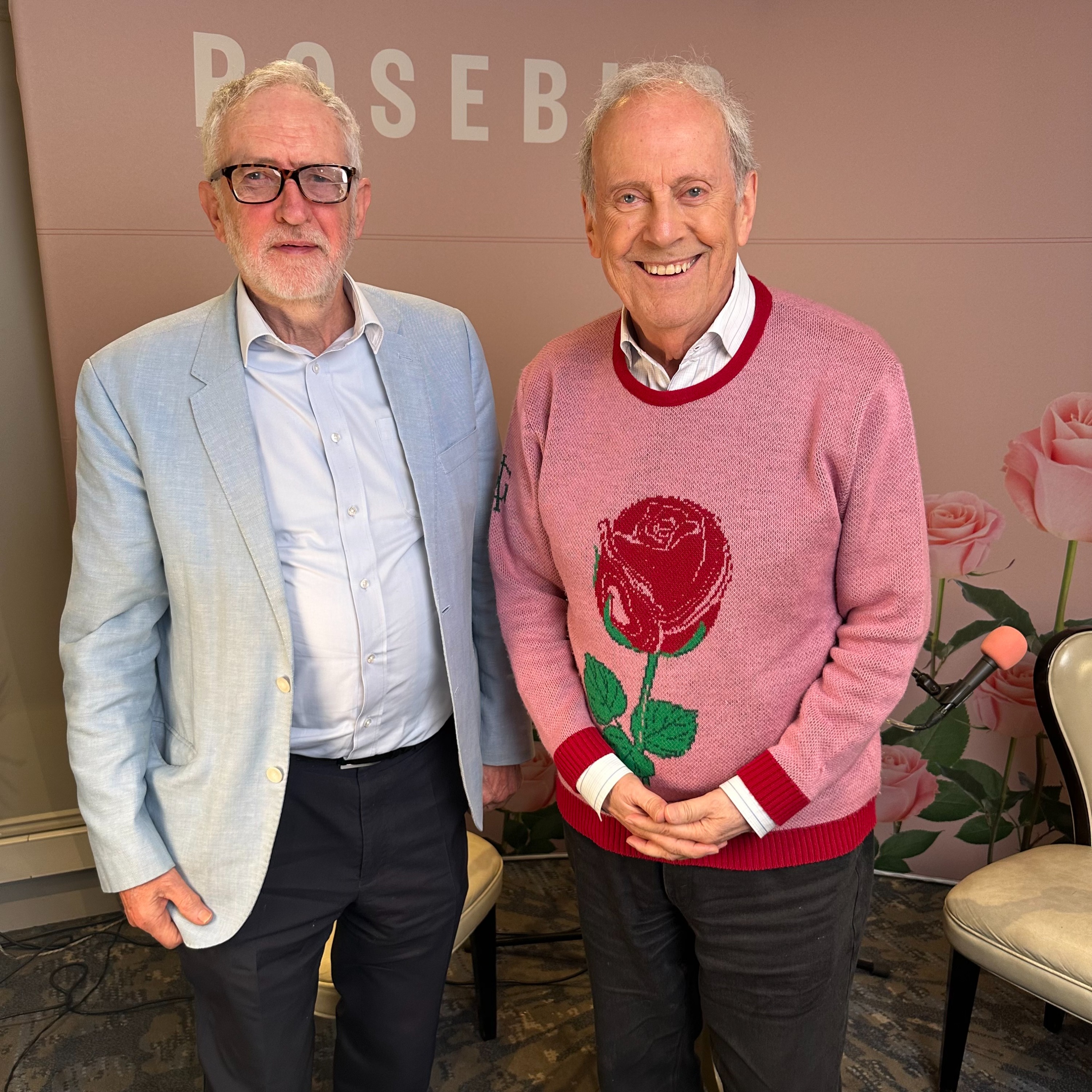
Jeremy Corbyn is a UK MP for Islington North since 1983; he is now an independent and parliamentary leader of the newly formed Your Party. Formerly he led the Labour Party and served as leader of the opposition. Giles Brandreth hosts.
May Day marches matter because they build unity and solidarity; political expression and singing during marches are powerful. Protest should be respectful—he condemns offensive slogans, but argues people must be prepared to assert themselves. Major political change comes from popular movements, not just economic theory. Corbyn says he remains committed to social justice, socialism, peace, and disarmament, criticizing massive spending on weapons. He attributes electoral losses partly to media hostility toward the movement’s direction rather than the policies themselves.
1969 May Day march in Santiago, Chile; anti–Vietnam War march; Palestine marches; 2017 Prenton Park/Wirral rally and music-festival moment with chants; hunger marches of the 1930s; CND activism after the Cuban Missile Crisis; One Show film where Maidenhead agreed with his “10 key policies” but still didn’t vote for him.
Written by AI. May contain mistakes.
Discussion on the historical significance of May Day and personal experiences on marches.
“And then we always celebrated May Day with May Day marches and so on.”
Exploration of the connection between music, inspiration, and political movements.
“And so they say, the fact you're doing something gives us some degree of hope.”
Jeremy Corbyn shares his first memory from childhood and family background.
“The most successful political changes have never come about just by economical social theory.”
Learn about a childhood encounter with an adder and its significance.
Discover the familial influences and early experiences that shaped the guest.
“They were both political in different areas, and they met at a meeting in Conway Hall in Red Lion Square.”
Explore how the guest's parents influenced their education and hobbies.
“I don't remember them ever sort of didactically talking political opinions or views to any of us at all.”
Reflect on the sense of freedom and security experienced during childhood.
“I read a lot, particularly history books and novels and so on.”
Learn about the guest's complex religious upbringing and educational journey.
“But she herself was an atheist, but had an unbelievable knowledge of the Bible.”
Understand the struggles faced in academics amidst a high-achieving family.
“I went to grammar school in Shropshire, which was well into league tables and achievement and so on.”
Discover the guest's engagement in practical activities and personal interests.
“And then you pour nitric acid on it and that burns through sufficiently to create the etching effect.”
Explore Jeremy Corbyn's thoughts and experiences during his teenage years.
“What are you, Jeremy, age 15, thinking about?”
Delve into Corbyn's school experiences and early political thoughts.
“So what was making you happy at the time?”
Discover Corbyn's transformative experience in Jamaica and its impact.
“special which was after the music program at the time that was quite witty and then i was uh told I could do two A-levels.”
Follow Corbyn's travels in Latin America and his reflections on society.
Discussion on Jeremy Corbyn's early life, activism, and vegetarianism.
“You spent a lifetime brooding about the world, worrying about the world and wanting to change it.”
Corbyn reflects on his activism and the current state of the world.
“I mean, are you disappointed in yourself?”
Exploration of how public approval of policies contrasts with voting behavior.
Corbyn discusses personal flaws and how they impact relationships.
“that's in you let's not look at what other people are bothering that is is the reason that you haven't succeeded.”
Insights into the challenges and dynamics of being an independent MP.
Corbyn recounts his meeting with the Queen and thoughts on election outcomes.
“With a great deal on your favorite Honda vehicles.”
Jeremy Corbyn shares his experiences as the leader of the opposition and reflects on his election campaign losses.
“I imagine you met the queen during that time.”
Corbyn discusses impactful moments in his life, including meeting Nelson Mandela and the significance of solidarity.
“Yeah, there's a book coming out next year.”
Corbyn recounts memorable meetings with influential figures such as Hugo Chavez and the lessons learned from those interactions.
“South Africa, South Africa, having been through apartheid is now repaying the world for its solidarity.”
Corbyn opens up about the losses of his parents and brother, sharing the emotional impact of these events.
“a few days later and we have a an event in the churchill room for him to speak to mps and so i'm hosting this event so he said and so what's going on here i said well it's an all-party group of MPs.”
Corbyn shares valuable life lessons about respect, learning, and the importance of questioning the status quo.
“Because I know sometimes what's happening in mine.”
Jeremy Corbyn shares valuable life lessons about respect, skepticism, and learning.
“What's life taught you that you'd share with your children, grandchildren?”
Gyles reads and responds to a heartfelt email and poem from a listener.
“People do write to Rosebud and we love it when they do.”

Get the gist, explore an idea or ask about something said.
 Claude
On Rosebud with Gyles Brandreth, what are the key points of this episode?
Searching your listeningAutomatic transcript. May contain errors.
0:01Welcome to Get Real, the show for the reality TV obsessed and stands of the Hulu-verse. Find it wherever you get your podcasts and stream new episodes Thursdays on Hulu and Hulu on Disney+. Quick question, when was the last time a display ad changed your mind? Now think about the last time a friend told you about something they loved. Different feeling, right? That's how podcast advertising works. A host who's built real trust with their audience talks about your brand in their own words, in their own voice. It doesn't interrupt the experience. It's part of it. With Acast, you can access the world's largest podcast marketplace.
0:39Choose the right shows, the right audiences, the right format. Then watch the data tell you it worked. You're not buying impressions. You're buying influence. Learn more by visiting acast.com slash advertise.
0:56Gather ye rosebuds while ye may. There's a new guest waiting with quite a lot to say. So I'm going to shut up and say welcome to another episode of Rosebud. We do indeed have a very special guest for you. Cue the music. They're ready.
1:31Welcome to another episode of Rosebud. Thank you so much for being there. I'm here. I'm Giles Brandreuth. And today, if you're listening to this in real time, is the 1st of May, 2026. It's May Day. May Day. That is the international distress signal, but it's also a day of festival, a celebratory day, a political day. It is May Day. May Day for many people is a celebration of spring, but it's also an important day among socialists because it is a celebration of workers' rights and has been for many years. And I thought this May Day, I'd like on Rosebud to have a true socialist to be our special guest.
2:14And I found one, somebody I know. I was a Member of Parliament once upon a time. I was a Conservative Member of Parliament. He was then a Labour Member of Parliament. His name is Jeremy Corbyn. He's been the MP in the United Kingdom for the constituency of Islington North since 1983. He's still an MP, but currently he's an independent. He's the parliamentary leader of a new party that he has jointly formed called Your Party. But in this country, he's best known for having been the leader of the Labour Party, for having been the leader of the opposition, for having fought two general elections, neither of which he won but certainly one of them he came not well not far off winning he's a very interesting person and i think this is a very interesting conversation we are about to have so our mayday guest today is jeremy corbyn mp cue the music
3:23this is mayday i'm giles brandreth and with me is jeremy corbyn and i wanted jeremy to have you as a guest today because mayday well mayday probably is an important day to you and i feel when i was being brought up mayday was a major international day it was there everywhere except Britain because it was always a workers day holiday in most parts of the world, not everywhere. And then we always celebrated May Day with May Day marches and so on. There used to be the most severe arguments within the London Labour movement about whether the march should be on May the 1st or the first convenient weekend after May the 1st.
4:10Big debate. And does it get, but what is the origin of mayday is i think like most of our national holidays and national events it's uh it's a mixture of things in history i think at one level it's a a celebration of spring a celebration of rebirth of coming of things as in dancing around the maple that's right the maple dancing and the health and floral dance and all those sort of things it's partly that and it was also first celebrated I think I'm right in saying in Chicago in the late 19th century or later about the 19th century as a workers day and it then developed as a global workers day but I find May Day marches at one level you say well what's it for the other level is a way of people coming together and celebrating a sense of unity and a sense of solidarity and I've been on a lot of May Day marches the most poignant one I went on which I didn't realize it at the time was 1969 I was in Chile it was a very young man traveling around Latin America observing what was going on the popular unity force led by Salvador Allende had just been formed and they were ready to fight the elections the year later 1970 and so I was in Santiago on May Day and I came across this massive march assembly so I joined in and we marched and all the songs were in Spanish and it was a fantastic sense of hope and determination it was wonderful at the time I didn't realize the significance of it but much later I did have you ever been on a march that you really felt in retrospect was worthwhile when i in the 60s during my gap year i was in america and i went on an anti-vietnam war march yeah and there were millions of us and i and i felt i was a teenager i felt maybe we are making a difference because we people can see there are millions of us here i've been on a lot of marches and you sometimes think i've come here it's got cold got wet done lots of marching i go on the palestine marches all of them and um sometimes i think well what have we done we marched around london and then i get home and i start looking at messages and calls and so on, then people in Gaza and the West Bank say thank you.
6:46And so they say, the fact you're doing something gives us some degree of hope. And so I think public political expression is very important. And when you've been on obviously some marches, that wonderful sense of solidarity you get particularly if there's song and music involved now i don't know what it is about this country there's many things good but there's some things that are bad one of them is we don't sing enough there's nothing more powerful than a group of people marching down the road together singing it's very powerful we should do more of it do you sometimes worry though that you might be upsetting, offending other people.
7:31Obviously, some of the Palestine marches have distressed, upset people. I think you have to have respect for other people, and you have to make sure you don't go out to be offensive to people on the basis of their religion or their faith or ethnicity or whatever. But I do think you have to be prepared to go out and assert yourself. There's a difference there, and I would absolutely condemn people shouting offensive slogans on the march. I mean, it's a different issue, but I remember 1980, 81 period when the Labour Party organised quite a lot of marches for jobs around the country. And I remember at a march in Liverpool, a group of people started shouting, actually, basically, a lot of horrible, sexist stuff against Margaret Thatcher.
8:25a number of us intervened said no we shouldn't be doing that why not and it became a quite a big heated argument why can't we say what we like about thatcher and we said well look i disagree profoundly and totally with margaret thatcher's economic vision but it's not because she's a woman let's this is the first of may 2026 let's go back to may 1949 you're born on the 26th of may So May Day's already passed. May Day has passed. I've missed the march. Well, but maybe we should have a special Jeremy Corbyn march. Who knows? That would be nice. You know, do you remember? Oh, Jeremy Corbyn. That must be one of the great moments of your life, wasn't it?
9:05Oh, embarrassing. What did it actually feel like at the time? Well... The moment of people saying, this was a lovely, lovely... It was Glastonbury, wasn't it? Ten years ago. Well, it happened at other places. It started at Printon Park on the Wirral. It was in the election campaign, 2017. I had a very complicated day. We'd done a rally in Birmingham in the morning, and then we were supposed to go to the Wirral to do a rally on the Wirral, and the trains were off, and the M6 was closed. Great. And we got to get from Birmingham to the Wirral. So we went in a police car, six of us, all crammed up like this.
9:46You couldn't move for hours. So we eventually arrived in the Wirral and we had this rally on the beach. It was amazing, an enormous event. And then afterwards there was an invitation I had to go and speak to Wirral Live Music Festival. And there was a kind of debate in my team about this. And I sort of said to them, are you sure you got this right? Because I'm not sure. a politician in an election campaign turning up at a music festival is going to get a good reception people go to that place for music they say no it's going to be fine you'll be fine you'll be okay i said look just go on and introduce reverend the makers to sing after you so i go out on the stage and start my speech about working class music about the history of music of merseyside and and how it's an expression of community and solidarity and hope and so on it's going okay and i'm looking at the audience and it's definitely not hostile definitely not it's okay and then there's a lot of noise starts coming back from the audience i thought oh god there's a chant because on the stage you'll know this you can't always hear what the audience is saying you know there's noise but you can't always identify exactly what's been said So I kind of try to carry on against this wall of sound.
11:15I start looking more closely, and I realise they're all smiling and shouting. So I stopped, and that's where it started. Prenton Park on the Whirl. But it's exciting. Does it echo in your head still? Well, it was amazing. It's become an earworm for you. It was amazing because it just came from that, yeah. Well done. It's nice to have those moments in one's life. Thank you. Congratulations on that. I realised then that the power of bringing together music, inspiration and ideas into politics as well is very powerful. The most successful political changes have never come about just by economical social theory.
11:56They've come about from a popular feeling and a popular movement. and the hunger strike the hunger marches of the 1930s were accompanied by those desperate people marching from jarrow and other places singing all the way but you're right too that people can't always recognize what the noise is i remember being with tony blair when he addressed the wi do you remember this and i told him oh they'll love you they'll love you too they'll love you Yeah, totally, yeah. And I'd even given him a couple of jokes. Why did you tell him that? Well, because I thought they would. Somehow I thought they would.
12:33They'd see him as their potential son-in-law. They'd like him. This was reasonably early days. Yeah, smartly dressed, nice young man. Not like that horrible Corbyn. Yeah, exactly. But somehow it didn't work. But he didn't realise it because it was at Wembley. There was a big gap. The lights were on him. He couldn't see them. And he heard this noise, turned out to be hostile. So you can't quite tell. Oh, Jeremy Corbyn. So, born 26th of May 1949, my first question is always the same. What, Jeremy, is your very first memory? My first memory was I grew up in Wiltshire in a small village near Chippenham, and I was the youngest of four boys.
13:16I remember sort of a great sense of freedom as a very small child, because it was a very small village, there was no traffic. even as a five-year-old walk around on your own sort of thing but at that age I just remember being fascinated by insects and animals in in the garden so I'd sort of stand for ages looking at a concrete path to wait for an insect to go across it like this and so my first memory was of bright sunny days on a garden path and looking at an old wall made of limestone and an animal appeared in this i'm looking at it fascinating and then it went away so i rush in the house and say um there's an animal in the wall so my brother said oh god you know older brothers oh god what i said well it was like a snake so a long thing like this so they then said what did it look like did they have any markings on it they said i said yeah yeah they said what were they and i said well so they drew one which was a v marking and they discovered it was an adder that's good it's a good first memory great first memory and it never stung me never bit me well there you are blessed from the beginning so you run into the house who's in the house who are your who are your parents mum and dad um dad was a electrical engineer worked at that time for westinghouse in chiplum and later left there to go and work for english electric in stafford which is why we moved to the midlands mum had done various jobs and eventually after i got a bit older went back into teaching and became it was a teacher secondary school how did they meet They met in the 1930s.
15:04They were both political in different areas, and they met at a meeting in Conway Hall in Red Lion Square. They were both there supporting the Spanish Republic against the fascist invasion. And often when I go to meetings at Conway Hall, I say, I'm looking at you lot in the middle now, and I'm looking over there. and they said why say that i said my mum sat there and my dad sat there and their eyes met literally they saw each other and that was it well they got together and then that was it and what was it the romance of the spanish um solidarity spanish civil war so that was a huge motivating motivating force for both of them in their lives which was um opposition to the fascists in Spain.
15:54Well, fascists everywhere, obviously. What were they like together? Were they always talking political things? What do you remember of them as a couple? They were both fascinated by history and by literature and by reading. And they were also keen on archaeological digs in Wiltshire and then later on in the Midlands. And And I remember sort of being dragged on sort of freezing wet Sunday afternoons to something that was apparently the site of a Roman villa somewhere. You're sort of paddling around all this mud and these archaeologists getting incredibly excited about something. All a bit weird.
16:35But they did love history. And when they, my dad never retired. He worked till he died because that was him. That was what he was like. They wrote a history of their village where they ended up living. and this village is right on the edge of the tan hill where there's the white horse so when you're traveling on the train london when you pass pusey look to your right if you're heading westwards and you'll see the white horse on the hill that's where their ashes are and were they happy together do you think oh they probably had lots of arguments but uh together they muddled along quite well yeah I mean, people do.
17:16I don't remember them ever sort of didactically talking political opinions or views to any of us at all. As far as they were concerned, what they wanted was us always to be practical, active, and creative. So there was a lot of encouragement about making things, doing things, hobbies, and all that sort of thing. So what happened of an evening? You weren't sitting watching television as a family. What were you doing? My mother hated ITV with a passion. We were not allowed to have ITV on the television. She wouldn't have it. We didn't get ITV. It didn't come till a bit later, but she wouldn't have it.
17:54Even when it was available, you could have pressed the third button. She wouldn't have it. No, we're not having that thing on. And she wouldn't want the television on late in the evening. Her version of late in the evening was 8 o 'clock. So we could watch television. We didn't get a television until, like everybody else, I guess, that's about the 50s. So we were allowed to watch things like Quatermass, which was a great program. I think that was on at 8 o 'clock, so maybe we got a special pass that day. Did you read books? Can you remember some of the only books you read? What were they? I read a lot, particularly history books and novels and so on.
18:39I was academically very unsuccessful in school, probably because I was too interested in a very small number of subjects. And I used to read a lot of Russian and American novels. I had a very good teacher, Mr. Birch, who was in CND and stuff like that. He was the man with the green corduroy trousers and the CND badge. There's always one, isn't there? There's always one, yeah. A lovely man. Ours was a maths teacher called Mr. Gillingham. Yeah. and the Corduroy and everything and the badges and he organized a bus from the school to go to Audemarson and all of that that's right yeah there's always there's always one good so he was a lovely man and he encouraged me to read a lot so I ended up reading a whole lot of Russian novels like Sholokov and so on and then American novels as well Hemingway particularly and Upton Sinclair and so on because I do think you can get novelists a bit like artists and musicians can take the wide view and you can actually understand quite a lot about a society by a good novelist's observations of the world and society and so i think they're sometimes more powerful than the history itself were you a serious child this is like a serious picture or were you quite lucky when you were smaller did you play all your friends outside of home oh your best friend outside of the family?
20:02Well, we lived in a very small area outside a small town, so there weren't too many people to be friendly with. I had my mate Kelvin Brown, who lived up the road, and we used to go out mucking around in the woods and cycling and stuff together, making trolleys and stuff to go down the hill on, that kind of thing. And when I was a bit later, a group of us, this is a sign of the times, I would have been about 14, went off on a three four five day maybe five day cycle to around north wales just on your own yeah and nobody thought there was anything odd about it these days any parent would be absolutely paranoid god they wouldn't you know they'd be watching the kid to the end of the road and so it was a looking back on it a time of unbelievable sense of security and freedom which I find sad that these days children don't get that chance don't get that sense of freedom of opportunity I wish they did was it I mean I suppose it was because your father's an engineer and your mother's a teacher it's a middle class household really yeah you went away to an independent did you go away to prep school no no I didn't um I went to a Catholic primary school in in Chippenham Wiltshire and were your parents Catholic well that's the that's the claim to be You see, my mum was brought up very happily within the Church of England.
21:30Indeed, her brother was a vicar. But she herself was an atheist, but had an unbelievable knowledge of the Bible. She was a Bible-reading atheist, and she said it's the greatest work of literature, King James Bible. So she said it's the greatest work of literature, the most wonderful stories, and so on. Okay. My dad was an active person within the Church of England. but his knowledge of the bible was not as good as hers so she would frequently correct him which was quite funny actually how i ended up in a catholic primary school i've no idea it must have been a sort of a witty compromise and where do you go next and then we moved to shropshire and i went to another school there for three years a private primary school the best thing there was a teacher who loved poetry and she gave me a love of poetry what was that name Mrs.
22:22Brock. Very nice lady. And then I went to secondary school. I eventually, on the second attempt, passed it, 11 plus. Horrible exam. Terrible idea. I went to grammar school in Shropshire, which was well into league tables and achievement and so on. So there were two streams, A and B. I was in the B stream. And then you were graded numbers one to whatever the last number in the class was when i started it was 31 and then a boy left so we moved up to 30 and for most of my time i was in the lower 20s or 30 on the grading of the class now why is this and why am i right that you only got two e's for a level is this possible yes it's hard to bring it up because this is supposed to be a happy conversation we're celebrating mayday but why why were you like this given you had achieving parents, a thoughtful household, you read, you were comfortable with your brothers, I get it.
23:24It was a contented family and an interested family. They were all academically very good and very successful. Two of them got first class degrees from Imperial College. That's Andrew, the later Andrew died some years ago and Piers is still around. He's quite famous. Piers is... Almost notorious. I'm not quite sure why. oh no don't call him notorious he has an independent thought good well he has a different point of view to me on most things no not most things global warming particularly we debate it sometimes oh he's a denier that's him is he also the person who regrets the fact i took my got my covid jab yesterday he doesn't believe in that sort of thing he probably does but he is certainly of the view that um climate change is a product of solar activity and inevitable movement of the sun in relation to the earth rather than man-made or human-made activity and my view is yes there is a natural phenomena as part of it but we've poured so much carbon dioxide in the atmosphere in the past 250 years that that has had an effect and we've also had an effect on the biodiversity of our planet so we debate these issues whenever we meet so you have this thoughtful family this debating family there's in clearly intelligent family achieving and i was the one in school who's not achieving yeah but why why what's the source of this there was some of it was quite funny because i remember going to the first day of the music class the teacher stands us all around the classroom around the walls in alphabetical order or he says put yourselves in alphabetical order and then you've got to say who you are as he goes around the class so it gets down to me and he's i give my name and he said um do you have any brothers uh so i said yes sir i've got three brothers he said yes and they were all useless and tone deaf get out no and he dismissed you he said get out didn't mean get out of the car i came back later came back later on but his view was that this is the most non-musical family the world's ever seen i'm not wasting my time with him He was quite funny about it, actually.
25:41But why weren't you engaged? I don't know. I was engaged in making things. I was engaged in doing things. What were you making? Oh, I made lots of things. Woodwork, a bit of stone carving. I made things with fixing up old cars. All sorts of things, practical stuff. Stone work? What's the stone work that you did? Making a sundial. Oh, that's rather good. Cutting a hole in the stone. putting in a brass plate to make the sundial and then working out how to um etch the brass so i checked out how to do it and apparently what you have to do is nitric acid is the thing so you then cover the brass with wax melt the wax onto it and then write into the wax what you want which obviously makes a hole in the wax where the numbers have got to go and the lines have got to go.
26:39And then you pour nitric acid on it and that burns through sufficiently to create the etching effect. And so I did this. But this was sort of 1960s, I guess. Imagine if a 14-year-old, 13-year-old boy turns up in a pharmacy and says, I want a bottle of nitric acid. I think questions would be asked. And so I said I wanted to get some nitric acid. He said, OK. He says, be careful how you carry it. Oh, wonderful. So I took the nitric acid home and made this thing. Have you still got the sundial? Yeah. Yeah. Well, you obviously are proud of it. Very satisfying. I'm still trying to work out. And so I was practical in doing things.
27:28Yeah. The school played rugby, which I didn't like at all. I preferred soccer and football. So we played football a bit amongst other kids around the place. But I was not very good at either. But I enjoyed it. We had cricket at school, which I didn't mind that so much. But the thing I did enjoy was cross-country running. Did a lot of that. That's quite nice. Also, it's a solo activity. You could be busy in your head. Yeah, you sort of go running off. So you go running off in the country and ploughed fields and all these sort of things. So age 15, you're running in shorts in the country in a ploughed field.
28:00What's happening in your head? What are you, Jeremy, age 15, thinking about? Feeling frustrated about lots of things in the world, getting worried about nuclear weapons and war. Are you hearing about this in newspapers or radio? Radio and newspapers, yeah. Did you take a newspaper at home, the family do? They had The Guardian and my brother bought The Daily Worker, Morningstar, as it then became. yeah so i was becoming i was also very interested in environmental things um from quite a young age and and doing all of that so i wasn't really very interested in exams and um doing progress in school so i i kind of um when we did o levels i i really wasn't very interested in it i failed most of them the only one i did the three i did good at were english literature which i really enjoyed and history and geography.
29:08Welcome to Get Real, the show for the reality TV obsessed and stands of the Hulu-verse. Find it wherever you get your podcasts and stream new episodes Thursdays on Hulu and Hulu on Disney+. Quick question. When was the last time a display ad changed your mind? Now think about the last time a friend told you about something they loved. Different feeling, right? That's how podcast advertising works. A host who's built real trust with their audience talks about your brand in their own words, in their own voice. It doesn't interrupt the experience. It's part of it. With Acast, you can access the world's largest podcast marketplace.
29:47Choose the right shows, the right audiences, the right format. Then watch the data tell you it worked. You're not buying impressions. You're buying influence. Learn more by visiting acast.com slash advertise.
30:25had some dreadful school dance thing and um everybody else was good at dancing except me so it goes up to the school i have one dance and she says that's it that was it repulsed immediately repelled gone and did you feel bad about this i thought i did i never wanted to come to this stupid event anyway So I got my bike and went home. So what was making you happy at the time? Happy? Did you get into music? This is the 60s? Yes. Pop music? Again, this was the 60s growth of music and so on. Beatles and Stones and Dylan. And first, the one voice that really moved me as a child was Joan Byers. That wonderful voice she has.
31:21And she still has. She's amazing. People that you knew, your friends, would they characterise you then as being fun, funny, interesting, quirky, or earnest? Weird. Weird? Yeah, politically weird. You see, remember, this is small-town Shropshire, so it was quite a conservative atmosphere. And I was thought to be just weird, politically weird. I remember someone saying, you know, you and your family really ought to be locked up. You're not safe. It was half a joke. Only half a joke. There's a lot of people who'd go along with that. And did that please you, rather make you feel a bit better about it, or did it worry you?
32:03Didn't care. Didn't care. No, because the issues at the time were the Cuban Missile Crisis had a big effect on me. and it had a big effect on everybody actually because they everybody can of this particular age can remember that we certainly can we thought the world might end i think we were at my school we were talked talked about sitting under the desks if something went wrong if there was a nuclear bomb not sure it was saved you but no but but i think that's what we thought might have saved us yeah you thought you get under a big table it was an enormous thing with the we the The world held its breath.
32:37So I was involved as a campaigner against nuclear weapons in CND and so on, which was then seen to be very extreme. Yeah, and I was in quite a small minority, a very small minority in school, who wanted to rid the world of nuclear weapons. And so the interaction in school was often about those kind of issues and that sort of thing. What age did you leave school? um i end a sixth form so it'd be 17 18 but with two e's you're not going to get into any well no what happened was um you had to have a certain number of o levels to go into the sixth form but if you were near it like one off you could go into something they called the six five special which was after the music program at the time that was quite witty and then i was uh told I could do two A-levels.
33:35So I did Geography and History, which actually was all right because the history choice was you could do either European history or History of Russia in the era of revolution. So I chose the Russian one. Of course you did. And I thought it was interesting. So I then wrote off to the Soviet embassy to ask for some books. They sent volumes of books. I wish I'd ever asked, actually. Is this big parcel? I said, well, how's that? you know, all these books, history of Russia. And so I read an awful lot of, got into Russian novels and history and so on. And also read Lenin, Satan Revolution and Communist Manifesto and things like this.
34:19And then the other example I did was geography. But I got a great E in both, which was... Which is an achievement, you know. It's quite, I think it's probably quite difficult not to get any in both given that you were passionate for example about the russian revolution my mother was very sweet about it she said well they probably couldn't read your writing oh bless her bless her so um that was that but they must have been anxious because what were you going to do aged 18 17 18 the twoies in shropshire yeah what what were you what were you going to do poor man well i went off to jamaica ah oh was this yes it was a big thing does this still exist it's huge then they allowed you to go as a school leaver which i don't really think should have been allowed because i'm not sure what a british school leaver can really offer to the rest of the world at the age of 18 but the rest of the world can offer a great deal to you i bet it was the formative years exactly exactly so you went on your own to jamaica yeah age 18 vso you applied you got it and you were working in a school helping build a school in Kingston College.
35:27Yeah. And I worked in a voluntary theatre in Kingston. Were you lonely? No, because I made a lot of friends very quickly in Jamaica of people who were fellow teachers and all sorts of people. And if I had time, I went to evening events at University of the West Indies just to catch up what's going on there. So, yeah, no, I was not lonely at all. And were you political there? Yeah. I was learning a lot about Caribbean history and black history and the history of the Caribbean and the independence movements. Absolutely, it was my education. Did you have your first proper romance in Jamaica? No. Oh, I'm disappointed.
36:09Well, look, you're 18, you're in Jamaica. I know, I know. You can't just be reading. And they all want to know why I didn't take drugs. Oh, this is getting more disappointing by the minute. I'm sorry to be there. You wasted an opportunity. You go there, no doubt, with your life of marks in one hand. I'm working really hard. I'm reading history books. I'm working really, really hard. And I'm not taking drugs and not getting involved with people. What seriously did Jamaica teach you that you've got in your head now that has made you the person you are today? A respect and understanding for the way in which people living in desperate poverty do their best to achieve improvements in the lives of others and do their best to try and educate themselves in order to get out of that poverty.
36:56And the sense of injustice that's been done to the people of Jamaica, the original inhabitants of Jamaica were all wiped out in the first genocide, which was the arrival of the Europeans. Then the slaves were brought in. And trying to understand something of the history of the slave trade and the uprisings, Morant Bay and all the others. that wasn't mainstream in the education in jamaica because remember we'd only been independent a few years when i got there that developed much more and i then spent a lot of time trying to understand something about the the history of jamaica and this wonderful society it is and the origins of it largely through the slave trade but also through indentured laborers and others that came and so it was my education more than anything else and it still is and you're coming up to 20 now and what are you thinking how are you going to earn your living because your parents aren't going to support you what are you going to do vso gives you a little bit of a kind of pocket money while you're doing the good work it gives you a roof over your head what's your plan well i um saved a little bit of money and traveled around in latin america then came back to britain why latin america because i was fascinated by it but were your parents what what nobody in the family never been there because you know is you're not your current wife from latin america in some way shape or form yeah yeah so go on um so we just thought i went to south america because i was fascinated by it the ideas of it and uh traveled all around and on your own hitchhiking completely on my own and content in your head yeah so i asked earlier if you were lonely no you weren't lonely you were quite mellow in your head are you reading all the time you've got i took lots of books i I bought books wherever I could get them and read them and then either gave them away or if I really liked the book, I would then post it back to myself in Britain so I could keep the book, which is probably a bit of a waste of money really because I could have bought them here.
39:00But anyway, so I was reading a lot, observing a lot and trying to understand a lot and reading quite a lot of history of the Inca civilisation because I was in Peru and Bolivia and trying to understand the way in which the European empires had destroyed the or tried to destroy the cultures there but that culture lives on particularly in Bolivia and Peru so to me it was a massive education opportunity so come back to Britain and as you do I got a job on a farm before we go to the farm I just want to picture you in Bolivia and we're meeting you and I are meeting with a similar vintage we meet in a bar or a coffee shop or somewhere I sit down on the bench next to you because we're the same sort of age how do you strike me what sort of person what sort of how would we have opened our conversation what would you have talked about I would have probably said someone like you're right mate or something like that you know just to sort of friendly greeting I met quite a lot of young Americans who were mostly draft dodgers.
40:06Of course. Because there was Vietnam time. It's Vietnam war time. Yeah. So they were there avoiding the draft. So they were absolutely fascinating from all over the USA. And I said, when are you going back? They said, when the war's over, when Johnson's gone, when Nixon's gone, or whatever it was. So they were very interesting talking to them. And were you already thinking, I want to change the world? Yes, I'm always thinking that. I was thinking that. Was there small talk from you? Would we have gossiped? About what? Exactly. We wouldn't. No, we would have gossiped. We would have talked. No, I would have been, I would have asked people.
40:44I would have asked them about places they'd been and what they made of it. I remember in Paraguay trying to find out where the Nazis had gone. Because a lot of Nazis went to Paraguay. and the western parts of Brazil. Remember, Stroessner was then the dictator of Paraguay who had given space to the Nazis to come there. This is after the Second World War, a huge number of Spostrovers. And there were people who were Nazi hunters who went in pursuit of them. Correct. And so it was kind of like a spectre over the society. and so you'd meet somebody who was clearly German or German speaking. Who are they?
41:32When did you come? And if they'd come there in the 1920s or 30s, it's quite possible there were people getting away from the Nazis. They came in 1945. They were pretty likely to be Nazis trying to change their identity and move on somewhere else. So here you are. It was interesting. I can see it was very interesting. and you were creating the building blocks of what actually becomes the rest of your life because you then eventually do want to change the world. You spent a lifetime brooding about the world, worrying about the world and wanting to change it. How first, though, did you actually end up living back in Britain?
42:08On the farm? Well, I got a job for a while on a farm. As a labourer? No, I was looking after pigs and doing a bit of tractor driving and things like that. I enjoyed that. Pigs are very intelligent. And how quickly did you realise, You may be a vegetarian, actually. Because I thought these pigs are far too intelligent. Are you a lifelong vegetarian? Yeah, yeah. Well done. From then on. Yeah, so then I briefly went to college, but decided that wasn't for me, so left. And then went back to Shropshire and did various jobs and got very involved in the local Labour Party and unions and so on. It's been a life of activism.
42:45Always. Do you feel, now you are the age you are, which is in your mid-70s Did you have to say that? No, I don't, but as I am as well I'm establishing we are contemporaries of a sort only a few months between us but you're looking very good, if I may say so you've kept yourself fit I run I thought you bicycled, you run and I run a cyclist You're looking good on it Do you feel disappointed that a lifetime of activism and the world is I mean, look at the world, Jeremy. I mean, not being facetious. Am I disappointed? Of course. Who isn't? Am I disappointed that we... In yourself? I mean, are you disappointed in yourself?
43:31You've given your life to this. I am determined to carry on doing what I've always done, which is trying to make the arguments for what I would call social justice and peace and socialism, but also for a world of peace and disarmament. What we now have is a horrific situation with the world presiding over environmental disaster, presiding over growing human inequality and now spending$3 trillion a year on weapons of destruction armaments. And I raised this in Parliament last Monday. the answer from the um defense minister was that um this would enable peace to come about eventually well interesting argument um of course i feel very depressed and very saddened by all does that mean i think everything that we've all done has ever been wrong no i don't i just believe that we have been inadequate in making that case so I carry on and I do.
44:42Did your team at the time of the general election when you fought the general election that you lost show you a film that I made for the one show I made a film for the one show and I took to somewhere like Maidenhead your policies without saying who they came from yes I did see that and I middle class me with my accent my voice having been a conservative MP said to people oh would you tell me whether you agree or disagree with these policies and i read out your 10 key policies and the people of maidenhead to a man or woman agreed with every one of them it's extraordinary and we did this apolitical on the one show on the bbc and i then said the these are the policies of and i turned over the piece of paper and there was a picture of you and they went oh no they wouldn't believe it so the frustration for you yeah is that middling that was middlington actually was agreeing with you and yet they didn't vote for you we got the most unbelievable levels of attack and abuse against me as an individual and still do at one level i don't care because i i believe in what i believe in and i'm not going to change and change that but the other level it obviously is very damaging to a cause altogether and i remember that very well i remember in my office they were saying they're saying this and um somebody seamus milnick was sort of said something he said you know what jeremy you're basically very english you're a member of the national trust you have an allotment you cycle you bicycle you read you write poetry you read poetry why doesn't why don't people recognize that and so i yes the policies we put forward would have made i believe fundamental and effective difference to ordinary people's lives and made it a better country do you know i still believe that and i'm not changing on that do you know what it might be that's in you let's not look at what other people are bothering that is is the reason that you haven't succeeded.
46:52Is there something not quite right, I mean, with you? I was under pressure to try and compromise on a lot of policies, and I refused to. I said, no, these are the policies we're going to put forward, the ones that you enunciated to the good people of Maidenhead. And so I think that what was really at stake here was that the predominantly right-wing media of this country didn't really totally disagree with some of the policies. Some they did, but not all of them. What they didn't like was the idea that there was a big political movement growing around social change, and they didn't know where that was heading.
47:36so I think it was the direction of travel that they were walking I see that but I'm asking you to be self-reflective for a moment and tell me if there's something about you that you think if I've done it differently or I've got this flaw or I can't express I'm just asking you to we've all got flaws and I've got plenty I'm sure one of which is I'm very awkward and I carry on being awkward. Is that why you're on to your third wife? I hope you're very happy with and I think you're unfriendly with your earlier wives as well. Yeah, sure. Yeah, that's just life. You can't go through life making enemies of every personal friendship you've ever had and I don't do that.
48:22I try to keep on terms with people. Are you awkward? I mean, you are awkward. Are you awkward in relationships? Probably. be yes i should imagine i am but um because i like to in the life of being an elected mp politician or anything else an awful lot of time you're basically at somebody else's beck and call the pressure is on be here be there go there do this do that be you know you know that and um if you just do that you then end up um seven days a week 24 hours a day running from issue to issue place to place i do a lot of that but i also um utterly determined that i will do other things in life as well and so i do make time which annoys people sometimes that i'm i'm going to be reading something now or i'm going to be working on my allotment or i'm going to be making some of it and so on so you have to bring that variety and also i try to read things that are nothing to do with day-to-day politics and so i'm just at the moment reading um john lewis stemple's book about um natural history of england have you read it it's worth a read it's beautifully written um i think if he and i sat down together we'd probably have quite a few political differences but his ability to describe the natural world and the effects of the rest of the world on the natural world in the natural history of this country are fascinating he said it must have been terrible when they cut down all the trees which created the north yorkshire moors but in return we got the buzzards and we got the wildlife we've got and he just explains how everything is a product of something else i've just just about finished reading it now it's a fascinating book and i bought that on an impulse because i was i was in bristol i was going from one place to another and people said come and have a quick dinner with us in this restaurant across the road and i was a bit fed up we've been rushing around all day and i said oh i'll catch you up and i just went into this bookshop are you easy with your children how many do you have my kids i've got three kids i'm very close to all three of them one's a football coach one used to work with john mcdonnell on economic stuff and he's a good economist and the youngest one runs a shop called the national hemp service where he sells cbd products and he they all so i'm very close to all three and you're not awkward with them no i love them dearly and yet you wear they come they're in touch with me all the time you're you're such an interesting phenomenon because you've ended up having been a labor party member all your life you're now you're an independent member of parliament you have your own new party your party yeah your party yeah it's your party it's your party it's your party it's your party you'll cry if you want to yeah i get it great well i've brought my grandson to hear you today and he may well be joining your party if it isn't too expensive no it's very cheap very cheap we'll give him a good rate how's that going are you enjoying it it's been very complicated certainly very complicated getting it going but yes i am because we're bringing in a lot of people who are not all x labor some are x nothing some are x lots of things and so there's there isn't a political cultural tradition because in political parties you know this from your time as a conservative and in the labor party there's all those kind of traditions so they're probably disappearing there now um we don't have any of that so it's all finding things out that can lead to great relationship it can lead to terrible arguments but that's life is it difficult then being in parliament and having and now being the outsider i remember this when i was conservative and we had people who defected either to labor or the lib dems in those days uh and we felt that they were betraying the family betraying the tribe betraying that and we we felt awkward about being with them and treated them as outsiders you spent was it 40 or more years as an mp so you will have built up real friendships across those years with people who feel you've left the real friendships carry on ah the real ones carry on others don't the first day in after the 24 election was quite funny actually.
52:50I walked in the tea room. It's heaving with newly elected Labour MPs and they're all very pleased themselves. And I walk in but there's a deathly silence. It'll look. And they're all staring at their shoes and they just don't quite know what to do. So I just walk through the crowd. Well done. And yeah, I mean it's changed a bit. We're now a year and a half into it and the government is under the cosh the whole time from usually problems of its own making. And I talk to quite a lot of Labour MPs and others. You know, the interesting thing I notice is when I go and vote in division lobbies, I mean, it's much harder when you haven't got a party machine because you have to actually...
53:40Know what you're voting about. You have to read every piece of legislation. So I'm sitting there in the library going through the bill and the amendments, and we've got our group of five independents, the Independent Alliance. So I'm trying to work out what each amendment means and then text them and say what I think we should do. Sometimes we agree, sometimes we don't. I go and vote. But as I'm going in to vote, you know how it works. There's a whip for the party that's called the vote on the door. So I go in, and if it's a voting with the Labour Party, which sometimes I do, I go there and I say, just out of interest, what's this vote about?
54:25Don't know. What are you asking for? I say, well, I just wondered what it is we're actually voting on at the moment. The Tory always knows. Maybe they've got used to it, and so it is different. and interesting. But it is, you have to be on your toes the whole time.
54:58Welcome to Get Real, the show for the reality TV obsessed and stands of the Hulu-verse. Find it wherever you get your podcasts and stream new episodes Thursdays on Hulu and Hulu on Disney+.
55:13Bring on the off-road. Bring home a new Honda. With a great deal on your favorite Honda vehicles. Conquer trails and back roads in cars built for exploring. With the rugged Honda Pilot, Ridgeline, CRV, and Passport, the road might stop, but you're not done. All from the 2025 Kelley Blue Book Best Value brand. For great deals, visit your local Chicagoland and Northwest Indiana Honda dealer today. Based on 2025 Consumer Choice Awards from Kelley Blue Book, visit kbp.com for more information. Do you keep hearing podcast ads like this one, for example, but always wonder how you actually get involved with them for your own brand or organization?
55:51Well, it's easier than you think. We're Acast, and we give you the platform to do it all yourself. Browse thousands of popular podcasts, choose the shows that match your perfect audience, set your budget, and launch. And if you want a hand, our podcast specialists are there to help you launch with confidence. This is podcast advertising without barriers. Get started at acast.com slash advertise.
56:19You were leader of the opposition for five years. That's an official appointment. Yeah. A proper salary. I imagine you met the queen during that time. What did you make of her? What did she make of you? Oh, we had a good chat about jam making, good chat about gardens. And I tried to convince her that she should think about no dig. Oh. No digging gardens. She was not convinced, but she was interested. Good. And so we had a good chat about all that kind of thing, yeah. And the morning after you lost, was there a moment during the election when you thought, maybe we could win? I mean, the old Jeremy Corbyn and one or two polls?
56:58The 17 election had us coming up on the rails. Yeah, yeah. And I figured that without the horror of Manchester, which lost us some day, the Manchester bomb, which lost us several days of campaigning, I think we could have done it. And I didn't realise that there were people in the Labour Party that were doing their level best to make sure we didn't win. Really? Yes. It's a bit depressing, isn't it? Yeah, there's a book coming out next year. You'll enjoy it. Oh, good. I think I will enjoy it. The day after the last general election, when you knew it was... 19 that was um obviously incredibly um sad um i'd put everything i could into the campaign the winter election and so on and so on and i went um walking around my constituency the next day and um people were very friendly very supportive and said you know it's not you you did your best and you're still our MP.
58:02Do you? Yes, of course, but then the Labour Party, the meetings afterwards in the Parliamentary Labour Party were horrendous. The levels of abuse were unbelievable. Your wife's supportive. Do you cry? Are you somebody who cries? No, I don't cry. That's interesting, isn't it? No, she was very, very supportive, incredibly hardworking and very committed. And distressed for you. Yeah, I mean, And basically an election campaign at that level, you're doing 16 to 18 hours a day and you get then outside your house. You can't go out of your house because you've got all these freelance photographers kicking each other to get a picture and stuff like that.
58:46So it's not an easy time. Okay, we're almost at the end. I want you in your head suddenly to say to me, if I say a moment of joy in your life, Jeremy, what comes into your head, particularly from your younger days, a moment of joy? Oh my goodness. To me, one of the most joyous moments was watching on television Nelson Mandela coming out of Victor Verster prison, striding out, proud, undefeated, after years and years and years imprisonment and then I was invited by the South African government to go and observe their application to the International Court of Justice at the Hague last year. South Africa, South Africa, having been through apartheid is now repaying the world for its solidarity.
59:40It was amazing. Now things can change and do change. Things can change and they do change. Who, of all the people you've met, who, I mean, you once, you won't remember this, but I remember seeing you in the Palace of Westminster with Gerry Adams, and I wanted to meet him, and you kindly introduced me. And you met a range of people, from people, some people were regarded as villains, through to people were regarded as heroes. What's the most memorable encounter for you of an individual?
1:00:09The best meeting was, again, probably with Mandela, because when he came out of prison, he then went on a sort of tour around the world and he went to Cuba and he went to, you know, a lot of places. And then eventually he came to Britain. He didn't choose Britain as the first port of call by any manner of means. So he comes into Parliament and does a meeting and then he carries on answering questions and the meeting sort of melts away because, you know, MPs have a very short attention span. and sort of melt, they started to melt away. So there was hardly anybody left. And his aides are saying, well, Nelson, you can stop now.
1:00:51There's nobody left. And he'll say, well, there's still people here who want to ask questions. There was two left, me and Tony Benn. So we sat around a table talking. And then Tony is, with his usual way, with his stubby pencil, writing everything down. So Mandela sort of looks at me like this. What's he doing? Sort of mouths at me. What's he doing? I said, it's for his diaries. So Tony just carried on. Kept keeping those diaries. And those diaries were invaluable because they were his immediate image of everything that he saw. And the other one that was Hugo Chavez. Hugo Chavez, he came to Britain, invited by Ken Livingstone when he was mayor of London.
1:01:41And so Chavez does a meeting in Camden in the town hall. And we were warned he makes a long speech. So we're all sitting there on this stage behind him. And he's spoken for about two hours in Spanish. Now, I can understand quite a lot of it, but not everybody. so after two hours he stops and says to ken who's chairing it um ken i thought meetings in england were usually quite short do you want me to stop now and ken uses very ironic london humor well it's all right ugo i thought you were only about halfway through so ugo chavez carries on for exactly two hours no so we had four hours of it great so i'm not sure whether ken realized he was going to go on i just thought this was sort of here we go so anyway then he comes to parliament a few days later and we have a an event in the churchill room for him to speak to mps and so i'm hosting this event so he said and so what's going on here i said well it's an all-party group of MPs.
1:02:55They're MPs. But the speeches have all got to be very short. And I'm sorry to say, can you restrict your remarks to 10 minutes? And he stared at me.
1:03:09What did you say? I said, look, I'm really sorry. Can you do it in 10 minutes? Because at that point, the MPs have got to go because of vote or something coming on in the House. and he said i don't normally do 10 minute speeches i said we'd heard that yeah and then he got up and spoke without any notes and if you're chairing an event a speaker without notes always makes you nervous because you have no idea where it's going you know if they've got notes you can sort of work out how many sheets are left so he got up spoke brilliantly for exactly 10 minutes and the timing was perfect. Well, he knew what he was doing.
1:03:51He absolutely knew what he was doing. So I met a lot of, and still meet, lots of absolutely fascinating people. But you know what? It's often the people you meet in the poorest and most difficult circumstances that are the most inspiring. You meet around the place, people that have been through hell in their lives and are still doing their best to give it back for other people. Be inspired by others. What's the saddest moment? A sad moment, not the saddest. A sad moment that comes into your head, just as I said, a moment of joy, a moment of sadness. Your parents dying? Well, the death of both parents was...
1:04:26What age were they when they went? Quite young, 70, 71. My dad died of cancer. And obviously that was devastating. My mum died very suddenly, and I was in Parliament at the time, and the police came and asked me to come. They told me about it. They'd found her home. She'd had a brain hemorrhage, and that was terrible. You're also brother as well, didn't you? My brother, that was absolutely shocking. He lived in Papua New Guinea. He was a mining surveyor. He was a wonderful sort of humanitarian and narco-syndicalist sort of person. Wonderful. I was very close to him. I went to see him in Papua New Guinea after I'd been to the referendum, them in East Timor and we went around the mountains and things in New Guinea wonderful time and I've always treasured that last time then a year later I get a call at home from somebody to say that Andrew had died and he was fit only four years older than me and turned out he'd had a brain hemorrhage and died and so that was the most to me utterly devastating you'd never expect it to a sibling and um then i went to new guinea for the funeral and then brought the body back to australia for his family because his family lived in australia so it was the most sad and traumatic experience in personal life yeah just one last question but before i get to it i'm picturing you at the end of the day getting into bed and beginning to go to sleep and i'm wondering what's happening in your head.
1:06:10Because I know sometimes what's happening in mine. I have fantasies. Sometimes. Fantasies? Yes. I have daydreams. I have daydreams. Sometimes they're to do with the world of entertainment because I'm in the world of entertainment. Sometimes they're extraordinary people I've met. But that's what's going on in my head. After our really fascinating conversation, I do feel I know you better. And I like you even. I've always liked you. But I like you even more. but I'm intrigued to know what the fantasies are if you have any as you're beginning to go to sleep I always read before I go to sleep at night so I was in the library the other day in the Commons and I love the House of Commons library it's phenomenal it's my favourite room in the whole building and the silent room right there the last room at the end it's the best and it's got the novels and things don't go talking about it so much otherwise it'll get filled up you're right just keep the best room just keep that bit quiet yeah it's a beautiful room anyway so in there the other night there was and what i do when there's a lot of votes on i select a book and read it at 15 minute intervals because if there's one division after another they take 15 minutes each so if you vote quickly in the first division and vote late in the second one that means you've got like 20 minutes and so during uh the rwanda votes of which there were seemingly hundreds i read the whole of a book called kennedy's wars i read the whole book wow i read very quickly so read the whole book anyway so i'm in there the other night and i noticed i thought it was a new book it's actually been out a couple of years and it's a new book about cromwell now i mean cromwell interesting hugely interesting historical figure so i um i decided to take the book out this is 10 o 'clock at night i took it out and the staff still there take the book out and i've been so i then took that home and started reading that and so um it's it's quite ridiculous so you go to bed like midnight 12 seconds i end up reading sometimes hang on it's two o 'clock i should be asleep now because I get fascinated by so I'm always reading something I was talking about John Lewis Stemple earlier but I'm reading this and so reading is the thing I love doing and it's obviously nothing to do with what's happening the rest of my life that day and then it's understanding history and concepts of things so you go to bed and you're thinking of whatever quamera well I'm busy I'm busy with Lady Godiva it's making me really i mean i'm reading the stuff about cromwell and ireland oh it's i mean my gosh talk about controversial yeah and talk about complicated leadership also the the question of the debate with the levellers the stuff at putney putney church debates but also burford and then the force march and then what they did in ireland with the and the way he falsified the figures of the number of people that have been killed and wrote these insane letters which was presumably taken by a special messenger back to be read out in parliament it was actually just whole scale murder against the irish people by cromwell and his forces i know and we have that statue of him at the palace of west which is that huge statue i've raised it often we have cromwell road cromwell green cromwell this cromwell that hang on a minute now yes he was the lucky leader of the parliamentary forces.
1:09:45He was not the founder of it. The one we should be venerating is John Lilburn. Who? John Lilburn. Exactly. The fellow we haven't heard of. The leader of the levelers. OK. This has been levelling up for me. Leveling, levelling, a level with you, John Lilburn of the levelers. Great. Last question. What have you learnt in life? What's life taught you that you'd share with your children, grandchildren? Do you have any grandchildren yet? Yes. What's life taught you, Jeremy? you're always learning and always have respect for other people and always carry on learning nobody knows everything nobody is a total expert on everything and also be skeptical and ask awkward questions don't accept the status quo things can and they will change well done i'm very glad that i've learned so much from you today jeremy corbin thank you for being with us on Rosebud and happy May Day.
1:10:40My pleasure. Viva May Day. Viva May Day. Yay. Viva Primera de Mayo. Oh, that as well. Oh, that's the same thing in Spanish. Viva Primera de Mayo. Very good. Very good. The revolution begins here. Thank you. My thanks there to Jeremy Corbyn. I enjoy that conversation. Sometimes people say to me when we have politicians on Rosebud, oh, you didn't challenge him about this. You didn't challenge him about that. You know, you talked to Wes Streeting. didn't talk about all the problems in the NHS. You talked to Ed Davian. You didn't talk about, you know, what the Lib Dems are suggesting. I said, stop, stop, stop.
1:11:15These are conversations with people about their lives as people. We are unpacking the person from the first question is, what is your very first memory? And trying to discover what made them the person they are. I don't see my role to sit in judgment. So if you're thinking of sending me an email saying, oh you talked to jeremy corbyn for an hour and you didn't talk to him you didn't challenge him when he said about leading those marches about palestine about the effect on other people i said well i i raised it but he it was i was his opportunity to tell his story you're not tuning in to hear me telling mine political discussion there are other podcasts for that and there's programs like news night where they can challenge politicians i'm here hoping to talk to people as people.
1:12:05And I have to tell you, though I'm not a socialist, I found Jeremy Corbyn both likable and interesting, as I did Ed Davey, who was treating John Major. It's quite interesting. Across the political spectrum, you meet interesting people who have interesting ideas that may not be ours, but it's fascinating finding where they came from. And when you heard Jeremy there talking about his parents, the newspapers they read, the sort of people they were, the atmosphere in that house. Everything began to explain itself, didn't it? Anyway, that's why I love Rosebud. And thank you all of you for listening to it and also for writing to us.
1:12:44People do write to Rosebud and we love it when they do. If you want to be in touch with us, it's simply, if you're sending us an email, hello at rosebudpodcast.com. Now, who has written us an email this week? We're a small team. It's really just me and Harriet, and you seem to know that because here is somebody who's written, Dear Giles and Harriet, my name is Phoebe Verity. Oh, I love that name. And I am a jeweller based in Oxfordshire. I wanted to write in to express my love and appreciation for your wonderful podcast. I am 22 and have spent my first six months living completely on my own since getting my first proper job, and it has certainly been a difficult transition.
1:13:25but listening to your podcast and hearing about the various ups and downs of your lovely guests has helped me immensely. I have to say Phoebe this is a lovely email to get particularly from somebody who is as you are 22 because many of our guests well we've had guests who've been 101 years old so but we had young guests as well so it's lovely that you are listening to the podcast and all the variety and ages of people that we have. Anyway Phoebe goes on I particularly enjoyed your recent episode with Monty Don and it inspired me to write a poem that I think you might like. It's called Potted Pink Geraniums.
1:14:05Pots of pink geraniums pepper my windowsill. I gaze upon their proud peach petals pondering in the quiet and still. I wonder how they grow so strong despite the hardships and cold. Still they bloom, stalks tall and long, tough but beautiful and bold. Oh, to be a pink geranium housed in a cosy pot, turning my rosy cheeks towards the sun, basking peacefully in the hot. But as I watch them slowly wafting in the breeze, I think how sad to only watch the day, look on but never seize. So I thank my potted pink geraniums for their beauty, poise and strength for they remind me each day is a gift that I must get out and enjoy at length.
1:14:57Thank you, Giles and Harriet, for sharing your joyous stories and your wisdom. Yours sincerely, Phoebe. Phoebe, we think you're fabulous. Thank you for your poetry. If you've got a poem or a thought you want to share with us, it's simply hello at rosebudpodcast.com. This is me, Charles Brandreth, and my producer, Harriet Jane, saying thank you so much for listening to Rosebud. We love having you there, particularly when you're young and poetic like Phoebe. Phoebe, you're fabulous. Cue the music. I'm dedicating it to you. Harriet, can we get some geraniums, please, for the studio?
1:15:46Thank you.
1:16:23Rosebud is a Plain Jane production produced by Harriet Jane, hosted by me, Giles Brandreth, with music by Phil Leppard, and recorded this week at the JW Marriott Grosvenor House in London's Park Lane. Room service.
1:16:40Welcome to Get Real, the show for the reality TV obsessed and stands of the Hulu-verse. Find it wherever you get your podcasts and stream new episodes Thursdays on Hulu and Hulu on Disney+. While every other channel is fighting for your customers' attention, podcasts are where they've already given it. No one accidentally listens to a podcast for 45 minutes. They choose to be here. They trust the voice in their ears and when that voice talks about your brand, it doesn't sound like advertising. It sounds like a recommendation from a friend. Acast gives you that trust at scale, digital precision, post-read authenticity, and performance data that proves it worked.
1:17:20Don't fight for attention. Buy it with Acast. Learn more by visiting acast.com slash advertise.
Jeremy Corbyn MP is our guest on this May Day morning. Now an independent MP and the leader of Your Party, Jeremy has been in Westminster for 43 years - for 41 of those as a Labour MP. He was leader of Labour Party from 2015 to 2020, and fought two general elections in 2017 and 2019. He talks about this to Gyles in this episode, and about the bitter divisions and recriminations that followed the final defeat. He also talks about his childhood, growing up in Wiltshire and Shropshire, with free-thinking parents who encouraged him to make things and gave him a lot of freedom. He talks about being an academic under-achiever, his formative experiences with VSO in Jamaica as a teenager, and travelling in revolutionary South America. He talks about being awkward, his love of reading, and his continuing commitment to making the world a better place. Whatever your politics, we hope you find this an inspiring, interesting and illuminating listen with one of the longest-standing and most committed of our politicians.
With our thanks to Jeremy Corbyn for his time, energy and conversation.
Hosted on Acast. See acast.com/privacy for more information.


