
 Ask ChatGPT



Written by AI. May contain mistakes.

Get the gist, explore an idea or ask about something said.
 Claude
On Rosebud with Gyles Brandreth, what are the key points of this episode?
Searching your listeningAutomatic transcript. May contain errors.
0:00This is Rosebud and people kindly say it gets better and better week by week like wine or brie or Strictly or series 217 of Bargain Hunt. Cue the music.
0:35Welcome to this week's episode of Rosebud. How do we get our guests? We've been so lucky to have so many very distinguished and varied guests on the podcast. Well, some of it comes about because I know the people. And, well, last week I popped up on a Channel 4 show called The Last Leg. And one of the people who's been part of it since it began is Josh Whittacombe. I've met him before. I like him very much. I find him very funny. I'm not alone. Most people discovered him through something like The Last Leg or Mock of the Week. Or you may have seen him doing his stand-up. He's one of the biggest stand-ups in the land.
1:15Or you may have heard his brilliant and hugely popular podcast, Parenting Hell. Well, I thought, I want to know more about Josh Whittacombe. He's so likeable. What's his background? Who actually is he? so I want to hear about his hippie parents, his upbringing, his obsession with television. I want to hear, well, really, his story. Oh, and before we start, I should say, if you're a fan of Josh's, and you will be within the hour, he's embarking on a huge nationwide tour this year. It's called Not My Cup of Tea, and there are dates all over the country from, I think it's September. He starts off in Canterbury, then goes all over the Bridge Isles, ending up with two dates in Hackney in May next year.
2:04I think this is going to be rather a special one. Cue the music. It's Rosebud with Josh Whittacombe.
2:23Josh, what is your real name? Josh Michael Whittacombe. That's your real name? Yeah. Oh my goodness, I'm quite surprised by that. Why are you surprised? It's such a great name. It was a stage name. I thought it was a stage name, I'm assuming. Oh no, no. Were you baptised? No, I wasn't. My parents are old hippies, so that didn't happen. But they called you Josh... Michael. Michael Whittacombe. Michael's my grandfather. That's... He passed away. So then Josh... They didn't call me Whittacombe. That's my dad's surname. and it wouldn't be a good stage name because it constantly, I'm sure you know Anne Whittacombe.
2:59I do. Yeah, it constantly means that there's confusion. Not in a bad way, but in, you're constantly having to establish that you're not related to Anne Whittacombe. You don't need to establish that. No, no, no, I'm not bringing it up. I mean, people are asking. Are you? Is she a mum or something? There's a constant question. Well, no one thinks that, because she's famously not got children. But she is constantly asked to this day. It's spelt differently since you asked. You know, she and I were asked to take part in a series for Channel 5 called The Real Marigold B &B in Prestatin. Right. I didn't know that, obviously.
3:36The idea was there was a busload of old codgers who were going to be taken up into Snowdonia. And then as we left the bus, we'd be paired off. And I said, I insist on knowing who I'm being paired off with. Yeah, rightly so. And they offered me Anne. I said, how marvellous. I would love that. But can you imagine? And the idea was that we were going to go off, zipping up our tent together. And what happened? It didn't happen. It didn't happen. I'm not sure that Anne wanted to be zipped up in a tent with me. And we've known each other since we were teenagers. Of course. She's moved to the village that I grew up in.
4:12She's moved to Whittacombe. No, she moved to Haight or Vale. But that's near Whittacombe, isn't it? Near Whittacombe. That's why I wondered if that was your real name. So, but I was born in London. It's all quite confusing. I was born in London, and then my parents moved to Devon when I was three and a half, just six miles or so from a place called Whittacombe, which is spelt differently again. And then, once I'd left, Anne Whittacombe moved into the same village that my parents lived in, and she called her house something like Whittacombe's Retreat or Whittacombe's Rest or something like that, to add to the confusion.
4:44I don't know if she's still there. Have you met her? Yes. the day I met Anne Whittacombe, I walked in and she said, I knew this day would come. She's fun, isn't she? She was a really good laugh, actually. I really, she was good fun. She taught me a lesson when I was MP. I mean, I've known her since she was a teenager, known her more recently because, of course, when she did Strictly, she actually fell in love with Anton Dubeck. We've all fallen in love with Anton Dubeck. Yeah, yeah. But she taught me a lesson when I was an MP and she was the prisons minister. Yeah. And we were going off somewhere on a train.
5:12We happened to be going on the same train somewhere in the north. And we got onto the train, and I turned right to go towards the first class compartment. She said, where are you going? She said, I'm going to sit in here. She said, you are not. Are you not a member of parliament? Who is paying for your ticket? I said, well, I got it from the fees office. She said, you will come and sit in here with me in normal class, standard class, because this is paid for by the taxpayer. You will never do that again. Oh, wow. That's. Yes. So I learned a lesson from her. You did one term as an MP and then got straight back in the first class compartment.
5:48Yes, I did. Absolutely right. May 1992. He sat back down. Absolutely. And I thought, no more. Thank you. Yes. And there's Anne now living somewhere in the country, a place we've never heard of, Whittacombe Fair and having to work on GB News. Yes. There we are. Revenge is sweet. Well, let's begin where we should begin. having established what your name is, that it's really your name, Josh Michael Whittacombe. What, Josh, is your very first memory? So my very first memory, and I'm sure a lot of people have this debate as to whether it's a put memory from years of family talking or whether it exists.
6:31So that memory is we lived in Bristol from six months to three and a half. we had a sand pit out the back and I put my hand in the sand pit and there was a wasp underneath the sand and it stung me and I vividly remember that but I also think I'm probably too young to remember that it's a family created story not created it's a family told story of that thing that happened to me and I so I wonder if that's created because the only other memory I have of living in Bristol is that we had a grey carpet in the sitting room and I can and I've checked that since and that is true I can picture playing with like matchbox cars on the carpet so I think probably my first memory is a grey carpet which says so much about my personality but it my creative memory is the sandpit.
7:29The sandpit is quite possible because one of the memory experts we've spoken to has talked about things being embedded in your memory because of a trauma. Yes Yeah, like a core memory. So I think we'll take the sandpit and the sting. You don't think the grey carpet was a trauma? No, I think the grey carpet is a great line. The grey carpet has been a career. You're aspiring to the red carpet, but you've had a lifetime getting there by the grey carpet. What a way to start. Very good. But you weren't born in Bristol. I was born in Hammersmith in London. The reason I was born in Hammersmith was my gran lived in Ealing.
8:05and my parents were living with her at the time. My dad was born in 1950, so he hit the 60s at exactly the right age. So he'd have been 13 when Please Please Me came out, 17 for the sum of love, all that kind of stuff. So he was a huge hippie and he still is a hippie. And my mum, she's five years younger. And actually those five years between 1950 and 1955 feel quite generational, even though that's not much of a difference in time. to have missed the 60s in that way does make her feel that she's slightly from a different she's probably a child of the 70s my mum would have been 28 when she had me so I think my mum would have been quite young which I didn't really realize when she had me she's not a hippie per se like my dad but she's like they were vegetarian I was eating tofu in the 90s I know incredible kind of we were eating all the things that people eat now whole foods brown rice tofu vegetables they were kind of what i was brought up in that and that and the beetles and give me a physical description of your father then when you were born huge beard oh huge kind of dark beard to look at me probably the palest man in comedy my dad's got very dark skin i don't know if when I was born he had a ponytail but he had a ponytail throughout my childhood which I found um embarrassing as anyone would and you were right can I say I remember his 40th birthday my sister saying to my mum my dad and all his friends were there and my sister said look at all these aging hippies and that became a do you have family catchphrases you know like when people have said stuff that then sticks so that was one of them you know when just a quote stays in the family how did he earn his living at this time so my dad's moved from various jobs throughout my childhood so my mum was an editor of you know those like dawlin kindersley books like um of gardens yeah or horses or beautiful picture books beautiful that introduce you to a subject.
10:21Yeah, like herbaceous borders throughout the ages or whatever, you know, that kind of thing. She was a sub-editor of those. My dad was a builder when I was a kid. He was a driving instructor at one point before I was kind of conscious of maybe that was when I was born. He's kind of always been trying to find a way to make a quick buck. But in doing so, it's probably more work to make less money because he's always looking for that idea. He's a bit like a kind of hippie Del Boy. Certainly is. Yeah. Your mother is his second wife. Yes. Because your sister you referred to is part of his first family, is that right?
11:03Yes, so I had four older half-sisters and half-two of each half-sisters. No, not one, you were living with the grandparents. Exactly, yeah, yeah. So no, but they weren't with us. They were living with the mum. So they lived in Cornwall. And the reason we moved down to Devon was we wanted to live nearer to Cornwall so that my dad was close to his kids. So you're in Hammersmith, though, because you're staying with... My gran. Your gran, who is your mother's mum. Mum's mum. Who is keeping an eye on the situation. Slightly disappointed that her clever daughter has ended up with this hippie, five years older, with a number of children down in the West Country.
11:40That is the situation, I think, isn't it? Well, no, because my gran, my gran was an old thesp of the highest order. You and my gran would have absolutely... She had the stories, did she? She had the stories, yeah. So you'd watch TV with my gran. All her stories were about the people you'd see on TV or being drunk or various... She'd been an actress. She'd been an actress. She was... Of no term in anything we'd remember. No, I suppose the term would be jobbing actress. Yeah. Yeah, yeah. So you'd watch TV and she'd be like, oh, he's awful. You know, I did this with him and he's terrible. She had a story about Ian McShane being rude to her at garden party, this kind of stuff.
12:22Do you know what? So she was born in South Africa and she came across, went to a school, Summerhill School. Oh, my gosh. So she was brought up with hippie standards too. Summerhill, founded by A.S. Neal. A.S. Neal. So she was taught by A.S. Neal. Oh, my goodness. Yes, she was taught by A.S. Neal. Well, this was, for people who don't know, this was an early liberated school. Yeah. The kids came up with all the rules. Yeah, absolutely. What rules there were, and there weren't very many. Yeah. They'd ring a bell, and then they'd have a general meeting where they'd decide on all the rules. So she'd had all these stories about going to this school.
12:55The villagers referred to it as the do-as-you-like school. There was a guy at this school, one of her classmates, called Tony Voss. It was obviously the ultimate prankster and bad boy, and he'd do all these things, and she had all these stories about him. there was one where he'd like maybe they didn't have a fridge or something because it was so long ago and he stole the milk from the pantry by putting a long straw through the pantry and stealing milk through the window and it's all these kind of great story kind of boy's own story do you know what i mean like kind of um but i remember what's her name this lady uh so my grandma's called gin and i called her gin short for virginia yeah so she was a well of anecdotes she was constantly smoking a silk cut and drinking a black coffee and when we moved to Devon our house was split in she sold her house in Ealing to move down to Devon because my granddad had died and she wanted to be my mum was her only daughter so I was her only grandchild so she had half the house and we had half the house and you kind of go in there and so in talks of memory one of my favorite smells to just take you back you know how sun cream is like the classic one but is um If ever I smell a bin with cigarettes in it, I'm taken back to my gran's bin that was full of cigarettes.
14:10You know that awful kind of smell of a smoker's bin? That is, for me, the most transporting smell memory sense that you could ever have, is a smoker's bin. It's affection you feel. Total. So you had a gin-soaked early childhood because of her stories and her being there. She was a loving presence, this grandmother. Totally. And you'd go through there and you'd chat to her like she was a... We had a sibling relationship, essentially, because she was a very childish old person in the sense... Childlike. Childlike, yeah. Is what would older people who have this tendency like to be... You're kind of, if you draw a parallel with someone in the public eye, you'd say like a Miriam Margulies style.
14:51Do you know what I mean? That kind of childlike, yeah. Great fun. Totally brilliant fun. So how does she bring... No respect for authority in a really good way. What is your mum like as a consequence of having Gin as her mother? So I think she probably went straighter because of that. She went to Bristol Uni and did a degree and got a first and all that kind of thing. But she, there was a very healthy disrespect for authority within my house from all three people, if you know what I mean. Not in a angry way, but in a way that said, everything is available to take the piss out of. Don't take these things too seriously.
15:33Don't take all these structures or all these people in power or all these kind of people that take themselves seriously laugh at those situations. And how did this young woman in her 20s... My mum. Your mum, who is, what's her name? Sarah. How did Sarah, in her 20s, who's now become a kind of middle class figure because she's working in publishing, went to Bristol University. I don't know if she was working in publishing at that point. She was working in publishing when I... Came along. Came along. But how does she meet your father and what happened there? She met my father. I think she was a lodger in his house or something like that.
16:09Yeah, I know. Oh, dear. It had been a sitcom. It's now moving into rather more dangerous. Armchair theatre territory. So she is the unfortunate lodger. No, or was he a lodger? I don't know is the answer to that. I think that, but he wouldn't have, what was Armchair Theatre? I don't know what Armchair Theatre is. Well, it was in an earlier era, but it would have been a sort of midweek drama. Oh, okay, yeah. We would have had people in a lodging house and your father, not quite Leonard Rossiter, coming along and knocking on the door. Oh, Rising Damp. Yes, I love that. Did you like Rising Damp? So I've seen it and I've enjoyed it, but I didn't watch it at the time.
16:52Can I say, YouTube is available. Watch it from episode one to episode X. It's fantastic. What I wanted to get is, there's this guy who is five years older, who is a builder, come do what comes along, and who has got the big beard and the hippie vibe and the ponytail. How does a guy with a ponytail get an attractive woman like your mother? That's what I want to know, because I've seen photographs all the time. Because my dad is incredibly charismatic. Ah. Yeah. He is charismatic, and he's funny, and he's got that thing. I suppose you know I was talking about the kind of disrespect. There's a feeling that there's an edge, an exciting edge to him, which I haven't inherited.
17:38So they get together. Yeah. She, your mother, copes the fact that he's got a family. I thought you were going to say ponytail again. I know. And then we've moved on. He's got a family not much older than you when you come home. So my brother is three and a half years older than me. He doesn't hang around. He doesn't hang around. When you've got charisma. Exactly. You know that all too well, Charles. You're a man with much charisma. Yeah, well, I do. We've been reading my teenage diaries. And it appears I was rather playing the field in the same sort of way as your dad. He and I are almost exactly the same age.
18:12Exactly. Are you? What do you think they have given you as individuals? What have you got from them? I think I had a, I still have a, disinterest in doing a normal job. I think that really came from that. None of these things are passed on as diktats. My parents were incredibly careful not to tell me anything or steer me. But I suppose there's a feeling in the air, if you know what I mean. and so I've definitely got that I always really struggled with working for other people so not in a sense if I struggle with if I'm doing a tv show I'm totally fine in that situation because I'm like everyone here needs to do their job to make that's fine I'm not struggling in that situation but I struggled with nine to five really badly I could never square the circle that what I put in wasn't usually what you'd get out that you could get away with it so why wouldn't you get away why would I put in more effort I'd have been awful in the Soviet Union I also think the thing that really came from my upbringing is because they'd let me do really whatever I wanted but because I wasn't much for a rebel what that was was watching an incredible amount of television all of my knowledge of doing television has become because from the age of seven to 18 I was learning subconsciously about how television worked what I liked what's good television, what's bad television, what's good comedy, what's bad comedy.
19:43Not because I wanted to do it consciously, but just because I was obsessed with it and I was allowed to consume it. So your childhood was not playing cricket, playing rugby, doing overseas? Rugby was awful. Did you go abroad? I only went abroad once because we didn't have much money. I only went abroad once as a child. I went to South Africa for a month with my gran, with gin. With gin. Because she was originally from South Africa. when I was 10. Were you aware of the money worries, the tensions about money? No. I knew we didn't have much money. Like we went on a family holiday every year to Pembrokeshire, which is beautiful.
20:18I don't know if you've been to Pembrokeshire. It's amazing. I never wanted to go abroad. I never wanted to go to Disneyland. I'd get to do all the things I wanted to do, which was go and watch Plymouth Argyle or have a Nintendo. So it wasn't like tight in that way or it was kept away from me. So I haven't grown up with a particularly troubled relationship with money at all. I was talking to someone the other day about, if you look at my generation of comedians that I started with, Romesh, Rob, me, James Acaster, Sarah Pascoe, etc., etc., all of them have come from a not-much-money-comprehensive background.
20:59You can't believe that you've worked out that you can make really good money from doing this thing you want to do, and so you really push it and you're much more ambitious, I think, if you come from that background. But not from a, what's it called, that thing where you're constantly worried about money. I've got friends who've got that, who've got loads of money. But there's an anxiety there. There's an anxiety there. I have that anxiety still. Do you? I think. Well, because my parents had money worries, or rather my father had money worries. My mother must have been aware of them, but he was the breadwinner.
21:30And yeah, they were, Even though we were a middle-class, prosperous family, if you spend a little bit more than you should, you'll then have money worries. Totally.
21:47So, born in Hammersmith, you go to Bristol, which you don't much remember. What you do remember first, your first home is in the West Country. Whereabouts? So, in a village called Haytor Vale, where now Anne Whiddicombe lives. And what sort of a home was it? Was it a house, a flat? So it's a house split in two, my gran on one side, us on the other. Which she had been able to buy. She'd been able to buy because she sold a house in Ealing. And it was a big house because in those days, you know, houses weren't as expensive as they are these days. So you move from London to Devon, you can buy a big house, split it in two.
22:30So, I don't know. It's like two, three bed houses, I suppose, or whatever, stuck together. But like with a big garden. Absolutely gorgeous in the way that you don't understand when you're seven. And I can't be clear enough about how I'm not a country child. I did not take to horses. My parents were into horses. I did not have any interest in horses. I didn't have any interest in going camping up at Snowdon or whatever. You know, I didn't have any interest in... I just was interested in television and computer games and music and books. And your friends? Did you have friends at school? Who was your first friend that you remember?
23:12Thomas Bosons was my best friend. But we went to school, primary school. Well, there was four kids in my year. So... This is a rural country school. Rural country school. Four children in the whole year. So my year... So my village was Haight-O'-Vail. That had a post office since closed down, obviously. and a pub that didn't really like locals. It was like a kind of gastropub before gastropubs for tourists. So no amenities really, apart from the post office. And then you drive three miles to Ilzington. The school was split into two. Four in my year, six in the year below. So seven to 11 are all in the same class.
23:49Thomas was the other boy from my year. And so he was my best friend at primary school. And is he still your best friend? No, he went to Talkie Boys Grammar and I went to South Darnold. And you've not spoken since. Never the twain shall meet. No, and so we drifted apart. I'm in a WhatsApp group that is the four kids from my year. Because when I did Would I Lie to You, I'm sure you've done Would I Lie to You, they brought out the three other kids from my year as the kind of... Oh, what a fun thing. And so we've got a WhatsApp group that occasionally fires into life when someone finds something out about someone we went to primary school with.
24:30Oh, wonderful. When I did it, they brought out Cheryl Baker, who I'd had a kiss with on television 40 years before, and all she could do was complain about the quality of the kiss. Well. It was not my warmest, most generous moment. I'm sorry. And I think we were making it when there were still COVID screens up between. Oh, no. So we weren't able to relive the kiss. I think she was relieved. Why? Well, we don't need to go into that. We don't need to go. Sorry, I'll find the episode on YouTube. Cheryl and I were kissing all those years ago. And I'd so enjoyed, I remembered it so affectionately. Anyway, there we are.
25:03That's the way, two sides to every story. So at the next school, what do you do? South Dalmore, I disappear. Completely, really. I suppose I was a big cheese at primary school because it was difficult not to be. I was the lead in the school play in the last year, which is obviously a one in two. What was the play? Robin Hood. You played Robin Hood? I played Robin Hood, yeah. Lovely. Yeah. in the it was a panto so i was quite kind of outgoing and a big personality and i we me and thomas used to run this club after school at my parents house oh this is where you charge people i think yeah a pound to come to my parents house we'd do marble mania was the club and then we'd have a disco what'd you call the club so marbles were very big at our school because the house of marbles had just opened in buvy tracy mad to think this is the 90s and not the 50s but But do you know what?
25:56If you buy any marbles now in a major toy shop, their brand will be the House of Marbles. They've taken over the marble world. But at that point, it was just a small shop and cafe and opportunity to watch marble blowing, like the marbles being made. And they're beautiful. And marble is a beautiful thing. It's great. Yeah. So we got into collecting marbles, and then we started this club, Marble Mania, where we charged people to come. And we had a disco, which was my brother had recorded the dance hits of the day onto a cassette and sent it to me from Cornwall, and I'd play that, and we had disco lights.
26:29And how old were you at this time? Ten or eleven. And was there a Maid Marian to your Robin Hood? When did girls enter the scene? No, there was a bit, but no, there wasn't a Maid Marian to my Robin Hood. What was your first crush, first girl you looked at, liked, fancied, wanted to hold her hand? Oh, there'd be a girl at primary school. Yeah, definitely. But I just would never have acted upon that. But I can remember that feeling of desperate wanting to be around someone. Yeah, that yearning. Yearning, that's the word. What age were you when you responded to the sense of yearning? Oh, I didn't respond to the sense of yearning throughout secondary school because I was such a non-event.
27:18But why were you a non-event? Because you're giving me a mixed picture. Exactly. Well, that's a primary school. And then a secondary school, it's a thousand kids, 200 a year. I realized, I think subconsciously, I don't consciously remember doing this, but the way to cope with that move was to disappear, to be as uneventful as possible, to keep your head down, to do well. But I wasn't one of the cleverest kids. I was like in the top groups but not like the boffins that would get wedgied i was okay at sport but i wasn't in the sport teams i was on the periphery of the one of the popular groups of kids but i wasn't the popular groups of kids when did you first have to wear glasses oh five years ago oh yeah yeah so So it wasn't.
28:11It wasn't that. No, so it was a total lack of wanting to be seen. It was a wanting to disappear. Because secondary school is brutal, right? Or it wasn't a brutal school. It was what you would describe as a good comp. Do you know what I mean? You were having lessons in port cabins, but it didn't feel like there wasn't much money. Do you know what I mean? It felt like a good comprehensive school in the late 90s. Who was your best teacher? Who was the teacher you remember? Miss Blackwell was the best teacher we had. And what did she teach? She taught English and media studies. Now I look back, she was probably 25, but she was cool and she was young and you couldn't believe that she knew what Oasis were or she knew who Chris Evans was.
28:55I found that incredibly exciting because I was obsessed with popular culture. I did almost all of my living through television and through magazines and through football and through books and through stuff like that. And did you have any intimate relationships at all? Friends or close friends? So I had friends. Yeah. But not not as close as I did with Thomas at primary school. You'd see friends all the weekend. You'd be playing football at the bus stop after school for two hours you'd go you'd be constantly going around to kids houses but I wouldn't ever have a beyond surface conversation with any of them in a classic male teenager way I suppose yeah and you were leading a straightforward life you weren't tempted by drugs behind the bike sheds and that sort of thing no I was too much of a goody two-shoes in that sense I wouldn't want it to get into trouble and I discovered alcohol really discovered alcohol I always I always knew alcohol existed and I loved the idea of alcohol because as I say I was obsessed with popular culture I was obsessed with Britpop with the Chris Evans radio show with all of the comedy on television and there was a real celebration of going out and drinking and lad culture and lad culture and so I always knew that was what I wanted to be doing but you weren't I never I never took part in it so what in your head were you thinking your world was going to be I was thinking as soon as I get to university, that being Chris Evans or Liam Gallagher is going to be me.
30:32Unusual ambition. I know. Weird, eh? Before we get there, because obviously you took GCSEs. Yeah. Did okay? I did fine. I didn't really, I got better at academia as I went on. And A-levels? Yeah, then I went to Exeter College, so I went to the city to the bigger sick form. And as a result of that, you got good A-levels. Yeah. And then went to which university? Manchester. Manchester, which was a good university. But I went to Manchester because I am a huge fan of the Smiths and Oasis. Genuinely, I was like, I just want to live in Manchester. I wanted to live in a big city. And from what I could tell from music and sports and television and radio, Manchester was the coolest city to live in.
31:18So I just found a course that I'd be fine at, linguistics, and I just went to Manchester. I was something to do, really. Before we get on to you in Manchester, what is the moment of greatest joy from the first 18 years of your life? The moment of greatest joy from the... We don't know yet what age you lost your virginity. 18. But that doesn't qualify, presumably. Well, it could, and depends how I went. But that wouldn't be the moment of greatest joy. no I hope she's not listening no I tell come on no but emotionally well interesting I mean I only say that because I think it was Charles Dance who when I asked him that question not just came up with the moment of losing his virginity but the full works of I mean you could see from the way his eyes listened I mean he sat up straight he he was back to being 18 or whatever I think that's an interest i i would say and i think a lot of people would feel like this but they might be wrong i think losing your virginity is just a relief thank god that that monkey's off my back so to speak do you know what i mean i don't think there's i would say that is the the joy of relief rather than the joy of glory so relief rather than ecstasy relief rather than ecstasy So what is the moment of joy from the first 18 years of your life?
32:44I think going to Glastonbury with my friends when I was 16 or 17, both, really. And just the first times I went out and got drunk as well. Oh. Yeah. Properly drunk? Properly drunk. No hangovers. and just the feeling of closeness and friendship and warmth and all of those things that that brought up were definitely, they were like, oh, this is great. One of the few things that I was promised as a teenager that lived up to its billing was the effects of alcohol. That is interesting. Yeah. But now you've given up drink. Yeah. Did you drink too much for a while? I just couldn't control it if I did drink.
33:35Oh, yeah. You're either an all or nothing person. Totally, yeah. And do you feel better as a result? Yes, completely. But I said, because I gave up drinking about 25 years ago. Yeah, no, I did feel much better as a result, yeah. But those first times were... Heaven on earth, was it? Utterly, oh my God, believe the hype. This is the best. Oh. Yeah. Do you miss that in your life? no because I haven't had that in you know I wasn't no do you miss that idea of a moment like that this is this is perfect um I think you get it through other things I think you still but yes I do in the sense of I have an incredible affection for the 90s I have an incredible the culture of the 90s because I immersed myself and I felt so close to it there's a reason obviously that everyone's favorite music is the stuff that they experienced at that age or the comedy or the books or the films that you feel like that towards that's the thing I'd miss and you can't get back I don't miss the drinking or the nights out or any of that but I do miss the thought of what it would be like to be 18 and go and see a band that you love again because it's different now and you arrive at Manchester is that when you begin to make an audience laugh or have you done that earlier no so what what happens at manchester what you're obviously you're studying your linguistics linguistics what does linguistics mean it's like the study of language it's like english language so kind of you know um how languages evolve how children acquire language oh interesting yeah it's really interesting yeah So I turn up at Manchester.
35:20I remember walking out of my halls on the first night and opposite is like the kebab houses with their knee on and the bars with their knee on. And it just felt like, I can't believe I'm here. This is my doorstep now. This is it. And I just remember loving it. Again, you go, oh, this is everything I imagined. And can you remember the moment when you saw across a crowded room or an empty street your first proper girlfriend? I met her at a party. I don't remember seeing her, but I remember talking to her. I think she had a boyfriend at the time. So she was within our friendship group, if you know what I mean.
36:04So it wasn't like a... It was a slow burn, do they say. And how long were you and she an item? Six years. Oh, it's a long time. To the day. Oh, my... Six years. Well, this is, I mean, if you're going to break up, choose a day. Exactly. Well, nothing highlights the death of a relationship like a day of celebrating it, I suppose. You've been thinking about it for a year, had you, since the fifth anniversary? The pair of you are both thinking the same thing. We've done five years. Can we manage it? Six years, that's a long time. What happened to her boyfriend at the time? Well, you thought... Oh, no, no, they split up by the time I got together with her, which was six months after.
36:41I think that's what your dad said to your mum, I believe. Anyway. Yeah, the apple doesn't fall far from the tree. No, so six years, yeah. It's a long time. From 19 to 25. So you moved in together. I mean, it was in the Second World War. Yeah. From 19 to 25, yeah, we moved to London together. Oh, well. And things just kind of, you just grow apart, don't you? Basically, what happened to that relationship, I'd say, is she had a good job. She wanted a kind of normal life. and I started doing comedy and I became totally obsessed with it and totally went all in. So comedy killed your relationship. I don't think it was going to survive anyway, but it certainly helped bring it down.
37:34So what was your plan? You leave Manchester? None. I didn't leave Manchester. I stayed for an extra year to work at Waterstones. because I just didn't want to leave. Because that felt like a kind of job. Continuation of uni. Yeah, yeah, exactly. Felt like a continuation of uni. Because during idle hours, you'd wandered around Waterstones anyway as a student. Exactly. Looking at the books. And of course, when you're working at Waterstones, people go, I bet you just read all the time. Of course you don't read all the time. You might as well be working in Sainsbury's or Shoe or Miss Selfridge. It doesn't make any difference.
38:09you're not Ernest Hemingway having deep thoughts you're someone pricing up Jamie Oliver books at the end of the day so when does this change so I do Waterstones for a year and then you can feel people leaving Manchester and you don't want to be the last at the party so we moved to London I want to be a writer but I don't really know what that means that was the year Gin died and she left me some money and I used it to a post-grad degree in journalism at City University. Once again, it was a kind of, I'm a bit lost. Is this a way to be a writer? It's going back to uni too, to that safe place for you.
38:57Exactly, yeah. I'm my own boss. I get a year, I can do what I want. And your parents are still just letting you do what you like. Yeah. They're maintaining their own hippie style loving interest, but right on with the Josh. Exactly, yeah. You do it, Josh. Yeah, just there's no kind of pressure. From the postgrad, I then get a job uploading at The Guardian. Uploading was basically in the old days when the website and the paper was separate. Someone would have to rip the copy so they could go on the website. It was like the lowest rung thing. So I got that job and then I kind of wormed my way into the website sport desk and did a bit of writing, realised while I thought I loved sport, actually when you're surrounded by people that love sport, you don't love sport.
39:47You're interested in it, but you don't take it seriously. You don't think it matters, but these people, they are serious about sport. I think there was always that thing with, I never wanted to do serious stuff. I saw myself writing flippant stuff. I've always, I've never been able to do yes serious yes i mean you don't do gaza you don't do ukraine you do domestic life yeah do cleaning your teeth exactly and i think that's more interesting it's i mean no what i mean is let's rephrase that because that sounds awful yes cleaning your teeth more interesting than ukraine and gaza well we always like a headline in the daily mail.
40:32Let's keep that bit in. You can keep it in with the caveat that I'm wrong. What I mean is, I think people are so much, and this is what I have with comedy or general everything I talk about, people are much more interested in detail or flippant stuff. If you ask me what I thought about today, I didn't think about Keir Starmer. I did think about how good the Elizabeth line is. Do you know what I mean? Yes, you're wrong to call it flippant. It's every day. Yes. That's what you like. Yeah. And that's why people relate to what you've got to do. Because it is relatable because it's their lives too.
41:11So here you are, beginning this writing, knowing you've got a sort of ambition inside you. When does this translate into what we now know? So when we're at postgrad, we have to do a project, set up a magazine or set up a website, and we set up like a dummy website about comedy. and we get an interview with Rod Gilbert. And he says, since I started stand-up, it's just opened loads of doors for things. And it's like, oh, right. Maybe this is the thing you've got to do. Maybe I've got to have a go at this. And when was the first time you did this? What was the first moment you stood up in front of people to try to be amusing?
41:54So my first gig was in Angel above a pub called the Camden Head and it was an open mic gig because they all were, you know, 13 people, 50 chairs, empty, deadening room, December 2007. And you'd practice it at home? You'd rehearsed it? I'd walked around Clapham Common saying it. Out loud, so you knew every word. Knew every word. Had you looked at yourself in the mirror to see what you were like? I probably had with the hand in the microphone position. Good man. And I'd walked around Clapham Common and I'd recorded it on a dictaphone and played it back to myself and I'd done all those things you do.
42:29And then you get in the room and you realise that those jokes you'd convinced yourself were funny are no longer funny now that you sit here and you wait to do it and you're terrified but you're locked in. And then the compere was doing really badly. He started turning on the audience. They didn't laugh at a joke. He got the mic and he went whack on his own forehead. And he did it about three or four times. and then he just continued to silence and there was blood pouring down his head and you're thinking, what the fuck have I signed up to here? And then it carries on, I'm still sat there, when am I going to be on?
43:15And it gets to the last, he's like, now the last act, I'm like, what is going on here? And he goes, Luke Tolson. And Luke Tolson comes up, I'm like, what? and they'd forgotten me. And he was like, do you want to go on? And I was like, no. So I didn't. So that was another month. No. Yeah, because I was like... The moment had passed. The moment had passed. Your first gig was a non-event. Was a non-event. Yes, rather like losing your virginity. Yeah, exactly. We move on. So a month later, there's another open mic night. Same material, you turn up. No, different material. oh that was a mistake well no because the first stuff was awful so I went through with that it went well it got some laughs and I think if it hadn't I may never have done it again but that then moment you've done that it holds you through all the bad gigs and then you're then I remember the next day having a dental appointment and sitting there and thinking oh I'll probably be probably be world famous within about six months and of course it's not like that at all but quite quickly you became famous three or four years before i got into and you were doing the circuit during the three or four years you were holding down a day job i was the guardian and i was freelance so i was kind of bringing my shifts down as i yeah so you were able the the stand-up took over from me yeah and by then had you found your wife yet no no when do you find her much more recently uh 2012 i found my wife that's not the words i'd ever use no but yeah i met my wife and and you have children yeah we've got two children that's good and that all's gone well that's gone well yeah so why do i do i i feel like in the public domain is you saying maybe it's on parenting hell your brilliant podcast that you had some sort of a breakdown after 10 years of of being become becoming famous through things like the last leg and you were this lovely likable boy next door etc yeah meanwhile you're doing well you found the girl of your dreams you're you're breeding breeding all's well you have a bit of a crisis because of the glasses coming on i was delighted when i got glasses oh i thought i've always wanted glasses but what's interesting is i've always thought you wore glasses well exactly because it works for me it works very It absolutely makes total sense.
45:43It actually adds a thread of colour to the grey carpet. This is the basis of your career. But that is what I thought. Not in such a beautifully vivose way, but I always thought I could do with glasses. It would add something. It does. And I love it. Yeah, we love it. We love it. We like the likeable persona that is you. We like the fact that obviously you need to be liked. We perhaps can come back to that just before we end. why you think you need to be liked, but most entertainers do. You want to be liked. So why would this lovable, likeable person who's got a good relationship, children, have any sort of a breakdown?
46:23Because I was totally obsessive about everything I did. So I was obsessive about work. And I was obsessed with the fact that that is what got me where I was. So if I ever took my foot off the gas, it would all disappear instantly. It's true. I know it is true. Frankly. Yeah, I know. One season away and they've forgotten you. Exactly. I'm afraid. So you're reconciled now to sort of fading slightly. I had to make my peace with being yesterday's man, but being happier. So seriously, when you say I had a breakdown, what does that mean? I started having panic attacks. I was having panic attacks for years.
46:57What is a panic attack? Sweating or what happens? The first one I had was on the toilet floor of the first-class lounge. You'd have liked it, but Anne Whittakin wouldn't at Kings Cross Station. I know it well yeah so the cubicle floor just totally panting total overdose of adrenaline on the floor kind of silently screaming because you're in a public place not knowing why it's going on but feeling much better afterwards for it having happened that was five or six years of those how often would that happen? it happened quite a few times backstage age and then it would happen or we'd have this thing where I just burst into tears and not be able to stop crying just uncontrollably crying for half an hour out of nowhere me and Rose used to call it my trademark freak outs they were so regular that we just kind of labeled it as a normal thing almost and didn't think she was obviously anxious did was yeah but I was so self-obsessed with it all I probably didn't notice that do you know what I mean and you have this thing that I've got to work I've got to work I've got to provide and then when you have kids it becomes I've got to provide I've got to provide I've got to provide and so then I just it it turned into insomnia where I couldn't close my eyes getting into bed without having having to shout and open my eyes and feeling like the I just couldn't I was panicking every time I got into bed and I was spending the whole day terrified of the darkness and going to bed.
48:38And so that was kind of what it was like. So what did you do about it? You've given a very good picture of it. You asked what it was like. That's what it was like. No, that's a good everyday account of it. Because people talk about having panic attacks. Yeah, yeah, so that's what it was like. So that clearly is a breakdown of some sort. Yeah. And it was happening in an increasing way. Well, the insomnia was the end. So then I was having to drink to get to sleep. and then I was and then I Was the work suffering or do you felt the work was pretty competent and pretty much the same through it? Pretty much the same because I was able to do these things You were internalising it Yeah, it was all it was fine I was never and so then I tried various things I thought it was just insomnia but of course it wasn't just insomnia so you know I went to a hypnotherapist Oh, we've had him on the programme Who was that?
49:29Who did we have? Paul McKenna. Oh, no, it wasn't Paul McKenna, sadly. Because he does celebrities. Yeah, no, it was just this guy. For free. For free, I wish I'd been told. No, I went to Paul McKenna. No, I didn't go to Paul McKenna. I went to this guy. And we kind of sat there for two hours, and he was quite odd. And he stopped halfway through the meeting. He was concluding an eBay auction on a flyer for a rave in the late 80s that he was trying to buy. and he was like I'm just gonna stop because there's like minutes left on this auction didn't solve it um all these things and I thought it was just insomnia and at the moment I have a few good night's sleep everything will be okay and then we can go back and then I went to doctor and I'd been offered antidepressants before for it or anti-anxiety and eventually I was like I need to do this just taking the medication allowed me to just relax for the first time in a decade and I'd previously been going at 100 miles an hour and trying to fix it at 100 miles an hour it's like trying to fix a car on the motorway do you know what I mean you can't do that and so that allowed me so it was the medication that yeah it was a and i i feel like a lot of people you then get not i'll just go on medication it'll be fine because then i went on the medication i was like i can just carry on like i did no it all goes wrong again but it allowed me to then change my lifestyle it gives you a break gives you a break to then work on all these things that are really good for your lifestyle the meditation the the relaxing the time off the having a different relationship with your work the therapy all of those things you want to do I couldn't have done that because I was too far gone I was in a total panic about sleep 24 7 so I couldn't I couldn't relax enough well done breaking it so you you broke this pattern yeah and as a result of that you gave up drinking completely so no alcohol that wasn't as a result of that that was kind of at the same time I realised my relationship with alcohol was very bad.
51:46Yeah, but that may have helped. Yeah, yeah, yeah. That helped. So that helped you calm down. Yeah. Rose clearly was supportive throughout, and you were getting on reasonably well anyway. Yes. She was still being a good friend, but you gave her a bit more time. Well, we haven't got any time really, because we're three and seven-year-olds. So, you know, you're basically... But you do ask her occasionally about her day, do you? I do ask her all the time about her day. That's a very good idea. She'd never ask me about my day, because she couldn't have less interest in comedy. which is fine, because I think if she was impressed by me doing the last leg, then I think the relationship would be over.
52:21Do you know, my wife, I think, has never watched me on television. Yeah. And the other day on YouTube, we found something called the Railway Carriage Game from 1982. And I made her watch it. And about halfway through, she said, the guy presenting this looks very like you. I said, it is me. She said, I don't believe it. She said, you're on with Ken Dodd. You've got really good people on this show. I said, yes. She said, oh, my God, and you had hair. And you're looking at your skin. It was so lovely. So, Rose does well not to follow your career. Yeah. Because it's pretty samey, isn't it? Week in, week out.
52:59Exactly. Whereas her days vary. Does she basically look after the children? No, she's got an interior design business now. Oh, well done. So, she's doing that. And because she's just kind of come out the other side of, You know, three and seven-year-old, you just get your life back. So you give her more time, you give the children more time. Mindfulness, what do you do? I try and meditate, but I never get around to it every morning. Do you know what the best thing I've done for turning my mind off in the last month is? I bought a thing for my phone that locks out all the apps. And I just lock my phone apps for hours on end.
53:34And then you come back to it and you go, I didn't miss anything. That's very good. And you feel, I know this sounds mad, You feel tension return the moment you reopen your phone and you feel it drain in the periods when it's closed. And you go, this isn't good for me. Well, this has been very good for me. We've got to the end and we need to have your life lesson. What have you learnt? I mean, I'm assuming you're now on an even keel. I'm on a pretty, I mean, no one's on an even keel, but... Even-ish keel. As even as a human being. When was your last panic attack? We're meeting again on Friday. we're doing the last leg.
54:12It may be. Look who we booked. When was your last Bannock-O-Docker? Ages ago. Oh, fine. Yeah, yeah. So you're okay. Yeah, you're okay in the same way that everyone's okay. And are you content now? Have you, you're at peace with yourself? Yes, much more so. Definitely. Are you comfortable? I mean, obviously you wanted to be loved all your life. And I think you probably are loved. You have been loved. I'm very comfortable with my career and stuff in the way that I wasn't before. So what have you learned in life, Josh? What's the lesson you want to share with people?
54:46don't take it as seriously as I did. Actually, it's really don't focus on the things that, don't focus on the things you can't control, because that's where the madness lies. Because that's where I was by the end. You're worrying about ratings, or you're worrying about your money in 20 years, or you're worrying about other people's shows doing better than your show, or you're worrying about all those things that actually you can't control. The best advice ever is, you know, the serenity prayer? Grant me the serenity to accept the things I cannot change and the courage to change the things I can and the wisdom to know the difference.
55:26And that's impossible to enact minute by minute on your life, but the more you enact that, the better your life will be. Great. Give our best to Rose and to your parents. I will. Has your dad still got the ponytail? No. I'm so sorry to hear that. Josh Whittigam, you're brilliant. Thanks so much. Thank you for having me. Thank you. It was a joy. Wasn't Josh a delight? He kindly did my show because I did his show, The Last Leg. And actually, I'm going to see his stage show, his stand-up show, Not My Cup of Tea, when it goes on tour, which I think starts this September. So look out for that. And now it is time for one of your emails.
56:09We've heard from Janet Ferguson in Hayden Bridge, Northumberland. Dear Giles and Harriet, I was born at the end of June 1952, and I think my first memory is probably of my father with a bandage around his head. He spent several days in hospital in April 1955, being treated for dermatitis. The word dermatitis has always been in my vocabulary, even when I didn't understand it. However, although it isn't my first memory Perhaps this one is more interesting In 1956, when I was four years old My dad went to the United States for twelve weeks for work I can remember him going I have a memory of walking back across the bridge in Newcastle Central Station Between my mother and my aunt Having waved him off on the train bound for London The evening he returned I can picture his trunk with the lid propped open against the sitting room wall.
57:07He brought me a maroon pencil case from Niagara Falls, a little Native American doll with the sweetest face and a tiny set of deep pinky red baby doll pyjamas. Being very small, I wore them until I was ten years old. As phone calls to America were so expensive back then, my parents wrote to each other while he was away. I've transcribed the 25 letters my father wrote. Here's one of them. Wednesday, 12th September, 1956. Went out to Mandeville's for dinner last night and it was a wonderful meal. We sat outside all evening. He made a wood fire and cooked two of the most enormous steaks I've ever seen.
57:53This, I believe, is a barbecue. It was very warm sitting outside. and no rain. For me personally, Janet goes on, transcribing letters was an emotional experience. I was seven years old when my father died suddenly at the age of 41 on the 15th of September 1959 and it's sometimes difficult to separate genuine memories from what I've been told. Through his letters I was able to get to know him a little better and I also realised that my life would have been so very different had he achieved his three-score year and ten. So, you've learned my first moment of sadness too, though I can't actually say it was a moment, only being seven, I don't think I fully understood when I was told of his death in the breakfast room of the family home that it was forever.
58:44It's well known that bereaved children fantasise long after the event that it's all been a mistake and the person they've lost will magically reappear. I was no different. Realisation is best described as a dampness that gradually seeps through the clothes, through the skin, into the bones and permeates the soul. It is with you forever. I listened to Sir James Dyson describing what it was like to be a bereaved child in the fifties. Nobody has ever described it so well or so accurately, and for once listening to him, I didn't feel quite so much of a square peg. After the death of my father, my mother too trained as a teacher.
59:28Losing a parent is a dreadful thing to happen to a child. I myself have four wonderful children and ten brilliant grandchildren who bring me much joy, but behind the smile, deep down and well-buried, is always the sadness of a very small girl. Even now, watching the final scenes of The Railway Children upsets me. So, keep cheering me up with Vanessa the Undressa, Sandy Toksvik, Joanna Lumley, and all your other wonderful guests. I can't list all my favourites, as this email is too long already. Yes, it is a long email, but it's a very special email, and thank you for sharing your recollections and indeed your feelings with us.
1:00:10I'm really glad that James Dyson, who was so open with us, helped you. And I'm glad you find the podcast valuable as well as entertaining. I know a lot of people do. So please keep listening, keep writing to us, and we will try to keep bringing you interesting people with stories to tell of their early and first memories. That's Rosebud. I'm Giles Brandreth. In the background today was Harriet Jane. But if you want to hear her special voice, you've got to wait till next Tuesday.
1:01:30Rosebud is produced by Harriet Jane, artwork by Freya Betts, and music by Phil Leppard.
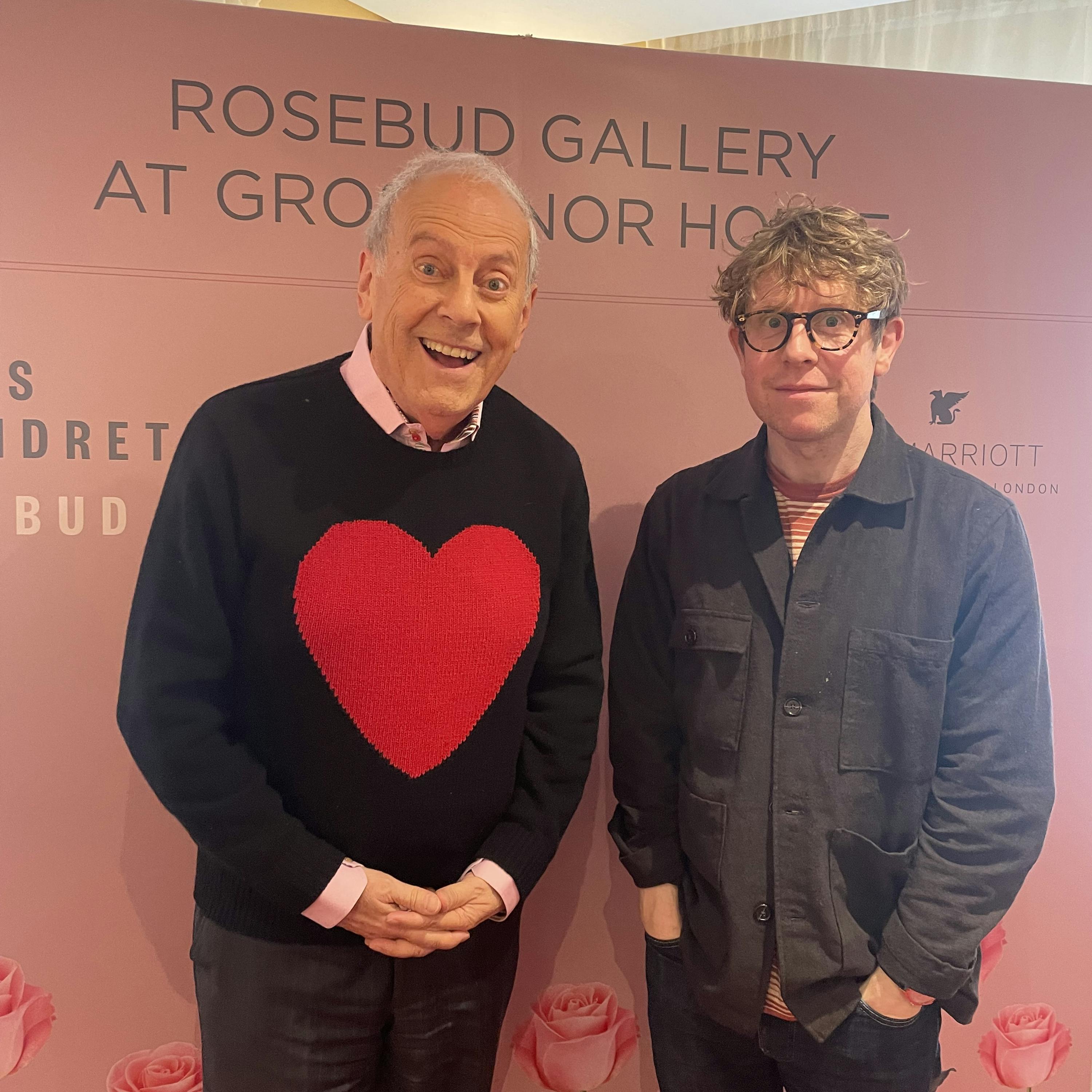
Gyles is talking to one of his favourite comedians in today's Rosebud - Josh Widdicombe. Josh tells Gyles about his early days growing up in Devon; about his charismatic father, his clever mum, and his chain-smoking grandmother who lived next-door and delighted him with tales of her acting days. Gyles hears about Josh's youthful obsessions: pop culture, TV, Plymouth Argyle and marbles, and about how they inspired Josh's later career as a comedian and writer. He hears about Josh's university days and how he started to do stand-up. Finally, Josh opens up about his struggles with anxiety and panic attacks, and talks about the things that helped him to feel better.
Josh is on tour from September 2025, and tickets are available now at www.joshwiddicombe.com.
Thank you to Josh for such a warm, open and funny conversation. Enjoy this!
Learn more about your ad choices. Visit podcastchoices.com/adchoices
Hosted on Acast. See acast.com/privacy for more information.


