
 Ask ChatGPT



Host: Gyles Brandreth
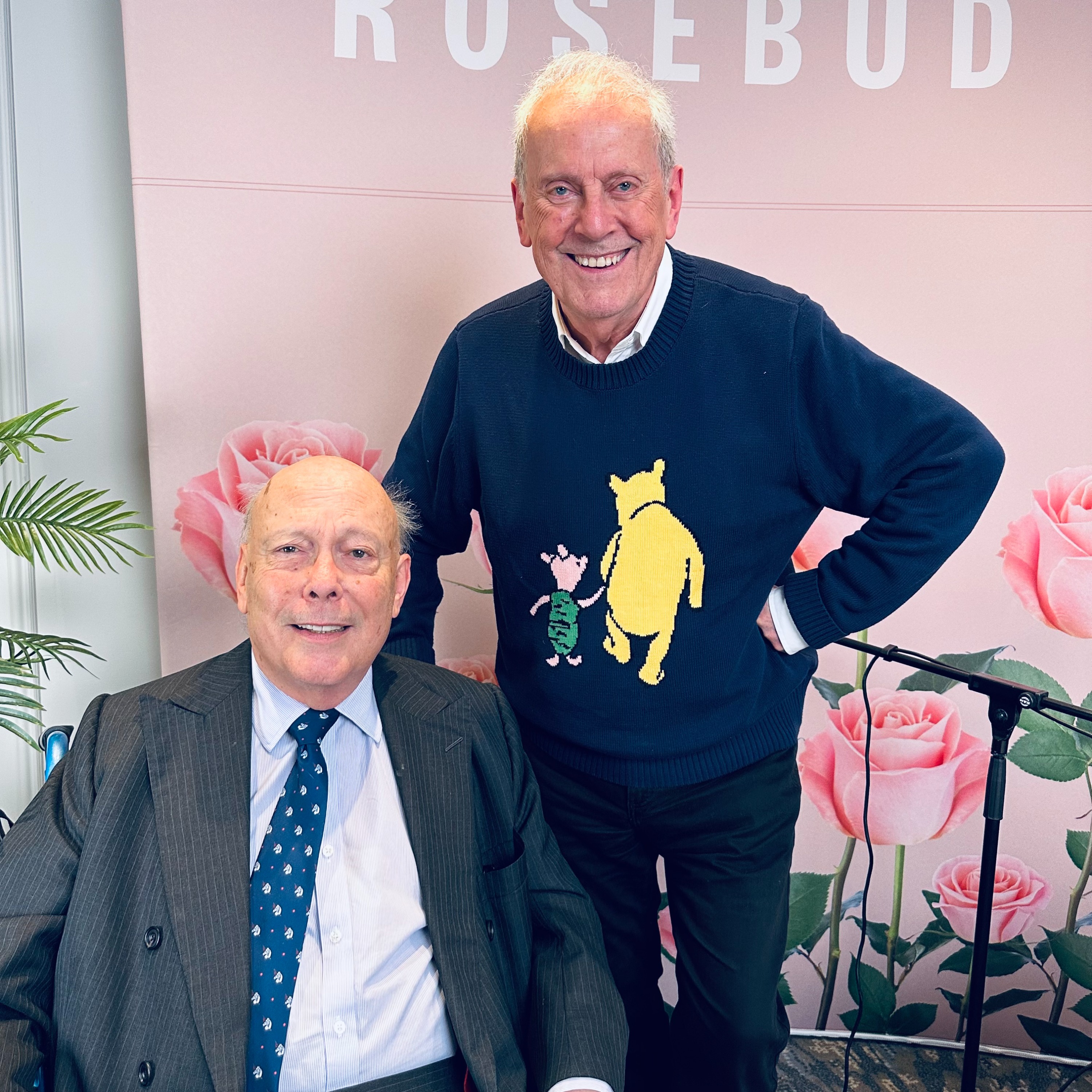
The episode features Julian Fellowes, the creator of popular shows like Downton Abbey, sharing memories and experiences from his life. Gyles and Julian share a nostalgic and humorous conversation, highlighting their childhood connection.
Written by AI. May contain mistakes.
Discussion of upcoming Rosebud specials and their significance.
“his arrest yesterday, which was his 66th birthday, and the effect of all this on the royal family.”
Gyles introduces Julian Fellowes and reflects on their shared history.
“Well, we've got actually several specials coming up because on Sunday, it's going to be the 100th birthday, the centenary of one of the great entertainers of the 20th century, Kenneth Williams.”
Julian shares his earliest reliable memory from childhood.
Julian discusses his family background and experiences growing up.
Julian reflects on his relationships with siblings and memories with his mother.
“And he was very good looking, but I rather paid for that because I was not.”
Discover Julian Fellowes' fondest memories with his mother and family dynamics.
Explore Julian's complex relationship with his father and family heritage.
“Did you belong to a generation that still called your father sir?”
Learn about the lessons Julian took from his father's temperament and intellect.
Understand Julian's connection to Africa through his father's career and family history.
“Initially the flat you rented, and then later we bought another flat.”
Learn about the speaker's family history and experiences in Africa and England.
“In a colonial way, or was actually loving generally?”
Discover the challenges and memories of the speaker's time at boarding school.
“Can you remember your first night away at boarding school?”
Hear about the transition to Ampleforth and the speaker's academic achievements.
“Were you conscious of observing this at the time?”
Julian discusses his dismissal of poetry and its impact on his life.
“He always preferred to think of himself as a poet, but for me he's a novelist and it's as a novelist that he does things that, unlike most Victorian novelists, make you uncomfortable.”
Exploration of Julian's school life, crushes and relationships.
“It doesn't have to be sexual or even romantic, but there's something about them that you're rather obsessed by.”
Julian shares how he discovered his independence during his time at Cambridge.
“Well, in my second year, I was picked up by an old boy called Peter Townend, who in those days used to run the London Seas.”
Julian reflects on the camaraderie and intimacy found in theatre.
“At Cambridge, is theatre then your main recreation?”
Julian discusses his decision to pursue acting against his father's wishes.
“When you leave Cambridge, your father still hopes you might join the Foreign Office or do something like that, but you're determined to go to drama school.”
Julian shares insights on the importance of typecasting for aspiring actors.
“And I don't see that as unreasonable now.”
Learn why being typecast can benefit an actor's early career.
“and after two years, I've got to leave, don't want to be typecast.”
Julian Fellowes shares his most enjoyable and disappointing roles.
“Were you living alone or did you have a companion or partner?”
Discover the romantic story of how Julian met his wife Emma.
Julian discusses how his marriage changed his outlook and career.
“Of course, she thought I was mad, you know, and wrote in her diary, a funny little man asked me to marry him.”
Julian reflects on significant moments of joy and sadness in his life.
“about your early years so all your triumphs from gosford park through to downton abbey the third film through to the gilded age through to things that i particularly liked your adaptation of Trollops, Dr.”
Hear Julian's insights on ambition and enjoying life.
“I thought, and I think that in those days, often I sort of missed how enjoyable various things were because I was always on to the next thing and I was looking for the next thing.”
Gyles expresses appreciation for Julian Fellowes and mentions an upcoming special episode.
“Well, I've enjoyed the part of your life that you've shared with us hugely.”
Gyles shares listener emails reflecting on memories sparked by past episodes.
“That's this coming Sunday, his 100th birthday.”
Gyles reads touching stories from listeners about their experiences with Leslie Caron.
“Gemma Allett writes, I met Leslie Caron in a shop I was working in, in the Portobello Road, selling knobs and knockers.”
Gyles highlights upcoming episodes and expresses gratitude for listener support.
“Thank you again for being the highlight of my week.”

Get the gist, explore an idea or ask about something said.
 Claude
On Rosebud with Gyles Brandreth, what are the key points of this episode?
Searching your listeningAutomatic transcript. May contain errors.
0:00It's February. It's almost March. That means, oh yes, the day is getting longer. More time to enjoy Rosebud. Cue that spring music.
0:30If you're listening to this for the first time, it's Friday the 20th of February, 2026. I'm Giles Brandreth, and this is Rosebud. A lot of people come to Rosebud to get away from the news. So this episode is not going to be about Andrew Mountbatten-Windsor, his arrest yesterday, which was his 66th birthday, and the effect of all this on the royal family. Next Tuesday, this coming Tuesday, for more Rosebud, well, then we might dip into my diaries and share some of my royal encounters over the years. In fact, I was aware of Prince Andrew from the day he was born. Well, actually, from the day after he was born.
1:17Here's my entry for Saturday, the 20th of February, 1960. This is my diary, written when I was 11 years of age. We had a free morning after break in honour of the Queen's child. There was no games. Hurrah! Those were the days when one day the Queen has a baby, the next day, you get a half day off school. Fantastic. So, in my diary over the years, I've written a lot of entries about different members of the royal family. Some about Prince Andrew that may interest you, may even amuse you. Some about his wife, Sarah Ferguson, that will intrigue you. Lots about his mother, the late Queen Elizabeth II, and particularly his father, Prince Philip, who I was lucky enough to know.
2:02I wrote biographies of both the Queen and Prince Philip. Of course, Andrew is named after Prince Philip's father, Prince Andrew of Greece. So, we've got a Rosebud Royal Diary special for you this coming Tuesday. Well, we've got actually several specials coming up because on Sunday, it's going to be the 100th birthday, the centenary of one of the great entertainers of the 20th century, Kenneth Williams. Those of you who are old enough will remember listening to programs on the radio like Beyond Our Ken, Round the Horn. Many people will remember seeing him in carry-on films or being hugely entertaining on a variety of chat shows.
2:45I was lucky enough to know him and on Sunday on his actual 100th birthday, what would have been his 100th birthday, we're going to celebrate this unique figure from the world of entertainment. His story, quite complicated, funny at times, sad at times, always interesting. So that's a Rosebud special this coming Sunday, the 22nd of February, the centenary of Kenneth Williams. And my special guest will be David Benson, who didn't know Kenneth Williams, as I did, but evokes him quite incredibly. So that's a treat for Sunday. And we've got a treat for you right now with this Friday's Rosebud. It is a real treat actually because we've got for you a writer he's a novelist and a screenwriter he was once an actor but he's now best known as the oscar-winning double emmy award-winning creator of downton abbey it's julian fellows now i've known julian we've known each other since we were toddlers because when i was a very little boy aged two or three and he was the same sort of age um my parents lived in a flat basement, the lower ground floor flat, of the house in which Julian and his family lived.
4:01You'll be hearing more about that in the episode. On screen, Julian Fellows has given us dramas, of course, involving scandal and royalty, but that's not what we're talking about today. So, if you want to get away from the news, you're in the right place. We're going to be talking to Julian, Lord Fellows of West Stafford, as he now is, about his unusual life and what it has taught him. So, welcome to another special episode of Rosebud. Cue the music.
4:41Julian Fellowes, born 17th August 1949. That's it. Have I got that right? I want to ask you, Julian what is your very first memory well my very first sort of reliable memory you know as opposed to just sort of flashes of this or that was when I I had flu or something like that when I was about two and a half and the doctor came as they did in those days and he said to my mother well I think you can take him for a ride in the pram just you know getting a bit of air she said oh well we'd rather thought we come to the end of the pram and uh we put it away we thought he could just walk for a night he said well one more won't hurt and she said to me well this is going to be a pram ride but enjoy it because it's your last and I I and I remember thinking god i must take this in and so we were going down one side of hereford square towards a shop it's now i think an estate issue but in those days it was a green grossest and i remember thinking i must look at everything i must look at the cauliflower i must look at the apples i'm looking at everything and and we went up gloster road and i suppose to the park because that was our usual walk but i think that is my first memory and who were your parents why were you in Hereford Square?
6:10My parents were, well my father was Peregrine Fellows and he was, in those days he was in the Foreign Office and my mother was called Olwen and she didn't work in the way that one's mother didn't work in those days and why we were in Hereford Square was that he had, he'd been in the North African campaign, in fact he had a very interesting war because he was one of three men whose job was to get the throne back for Haile Selassie in Ethiopia and they put a sort of the Italians had put a sort of puppet king on the throne and they wanted to get rid of the puppet king and get Haile Selassie back at the end of the war he caught tuberculosis and it was just before penicillin so he went down to the edward the seventh in midhurst and my mother having rescued him in africa and brought him back and god knows what she had to get the family settled really and it was her job to find somewhere they could afford and tart it up and generally move us all in and she found a house at the end of where there'd be a place on the very corner of Hereford Square and she herself had to paint it and get people to mend the windows and of course it had all been bombed all around there and you know at the beginning she kept saying oh who will I get to do that and they said look I'm sorry there but there's no one it's you and so she would get into her painting clothes and then every day with whichever child she was in charge of at that moment she used to go up to the odian and kensington and wash and generally restore order and come back for a normal evening because there was no proper bathroom there was no bathroom there was no loo there was nothing oh after the war there is nobody there is the house none of the taps worked none of the lights worked nothing worked and there was no workmen to help and there were no workmen to help so this excellent able woman your mother who has how many children in all four which you are the youngest and i was the fourth yes and of course my elder brother who was 12 years older than me was a degree of help as far as we can say but the other three were pretty useless but you know they were a tough generation that they they they if they have to get on with it they got on with it so this is the house is it where eventually my parents and i came to live in the basement yes exactly that house and um you know by then it had been restored and of course uh as the war ended and by this time we were about five years uh beyond uh you could get people to do things but you couldn't when they first went there so you're born in 1949 yeah your first memories of the early 1950s is this a nanny pushing you in the I have nannies but my my mother um had been one of those children she she had three sisters and they all preferred their nanny to their mother my grandmother whom I was extremely fond actually but I think as a mother was rather unsentimental and rather detached.
9:39And they had a nurse who made a nanny who was almost the same age as my oldest aunt. I mean, she was only about 15 or 16 or something. And they adored her. And my mother didn't want that with her own children. She didn't want us preferring the nanny. And so the moment we affected any sort of affection for our nanny the moment we praised she was gone and so we learned this and we learned never to praise the nice ones so they would stay in position but by the time it got to me um a little bit later on than the than the last pram ride but uh you know when my next brother up Rory went to boarding school at the age of eight or whatever uh and and i was five then the nannies were rather finished and in those days london had a system called proxy parents and you could hire a nanny for sort of two days a week you would have her every tuesday and thursday and you would share her with one or two other families and so on quite sensible actually uh and so you the mother you knew you had these two days free when you could do other stuff uh and that was really what we went to and then at eight or whenever i also went off to boarding school and that was the end of that as a little boy uh you and i knew each other because my parents i imagine to supplement a bit the income of your parents were lodgers in a way in the basement flat on the ground floor yes we we had the basement as a separate flat and I think it was you know certainly to make a bit of extra money and we regarded you as this rather grander family upstairs I do remember my sister virginia who is still with us she is now in her mid-80s she had quite a thing for your brother rory but this is in the 1950s they were both quite small people she was not alone in this i may say and and he he grew up to be very good looking he looked very like um if you will remember although most of your listeners won't terence stamp do you remember him i do remember terence stamp and And people would ask Rory for Terrence Stamp's autograph, you know, and all that sort of thing.
12:13And he was very good looking, but I rather paid for that because I was not. And to be the younger brother of a very good looking chap and to be rather plain yourself is not a recipe for emotional fulfillment, I can tell you. So how did you relate to your older brother? One sister and two brothers, is it? no no sisters three just four boys um my eldest brother it was 12 years older than me but so we weren't really very involved because i was six he was 18 you know and he was uh off being a debsolite and so on and um we got on perfectly well i wouldn't i wouldn't put it higher than that we were perfectly polite to each other the next brother down david was only six years older than me uh and i would say i probably got on best with him of my brothers uh but rory who was the handsome one uh we didn't get on at all and uh we fought throughout my childhood physically or with words i mean how physically and words and anything else you can suggest uh and it was um fairly awful i mean i i now you know we're older and we all reasonably get on enough to at any rate to get through weddings and funerals and things and we can do all that but at the time uh no it made me very unhappy it made my when i was using my parents very unhappy It made my mother very unhappy that she had these two children who didn't get on.
13:59But, you know, there wasn't really very much she could do about it. What's your sweetest memory of your mother and you together? I was very, very fond of my mother. And because I was the fourth of four, you know, parents, when they have a fleet of children like that, they get a bit bored at the end with the bedtimes and pocket money and all that sort of thing and so i didn't really have any of that i when i wanted some money i got it when i wanted to stay up late and watch a hammer horror film i did and of course it was very annoying to my brothers who'd dutifully gone off to bed at half past seven or whatever and there they saw their younger brother some years later sitting there at midnight watching you know uh whoever um dracula tearing the throat out of someone i think that that was a bit annoying but my mother and i uh had a very similar sense of humor and uh we were both very social and i would say that both she and i lived in the same world we we like the same sort of people and uh later on when i was a rather old-fashioned social body and i and i became what used to be called rather disparagingly at hebster light uh and i did the season and i you know all of that uh she enjoyed all that and she enjoyed those girls and then uh after i left cambridge i went to drama school and she loved that and that was all great uh because she was a sort of anarchist really i mean my father wanted me to go into the foreign office and do these various uh respectable things but she didn't really care much about that she wanted me to have fun can you remember and evoke for us a particularly magical moment with her a meal or an afternoon an evening just you and your mother together i remember one time we were in yorkshire because i was at school there i was and she came up on her own normally they came up once a year the pair of them but again you know getting to the end she would come up on the road every now and i remember she we went to lunch with some friends who had a wonderful house up there and we drove there together and talked about the war i suppose and what it was like they got married in 35 so they'd sort of seen the end of the old world well i suppose i did too really um and i remember that as a very happy day but on the whole when we were all together as a family it was usually marred with the quarrels so so in a way my happy memories of my parents are when i was alone with them really and and of course there was more of that as I got older and the the others peeled away and got on with their lives.
17:26Did you belong to a generation that still called your father sir? No we didn't call him sir we we called him daddy but of course we called him daddy to the end you know Every now and then we'd call him Pa, but mainly we called him Daddy. And it was becoming funny by the end, I think. But we were too old to change. But was he affectionate towards you? What did you feel? Well, my father was quite a complicated man. His own father had died in the Great War when he was three. and so he was left alone with my grandmother his mother and she was not maternal at all and she was a pianist actually quite a quite a good one and um they you know flapper really we would say now and didn't have much time for him and very early on he'd gone to boarding school and he'd said to her can you look after my rats and there were these two rats he had in a cage and he came back uh when it was the holiday and they were gone and he said but where are my rats and she said oh that's so silly i got rid of them and years later when he was you know about 80 I said you never got on with your mother much did you he said she got rid of my rats and I it was such a lesson that with children you don't know what they will remember and you don't know what they will hold in their hearts both for good and and ill uh right to the end but he was a quite in a way a solitary man he got on very well with my mother he he came from a grander family than my mother but he was a sort of poor relation he was always staying with aunts and uncles and his cousins all had better guns and better clothes and a car you know and he with a dead father didn't didn't have much of any of it whereas my mother who came from a more ordinary family her father was a civil servant but she was very good looking she'd always very confident people were pleased when she turned up and in a way she sort of solved him that she allowed him to have a social life which she'd hardly had before and and she persuaded people that they were a fun couple but they weren't really she was the fun one and and she was the good looker and and he went along with it but but you know they were happy i mean every people say uh what is it they're all happy families are the same they're everyone unhappy is unhappy in their own way i think it's true with happy and unhappy and they in a sense they they made a deal with themselves that um worked and it the the change for him came when uh he because he'd had this lung in the war and he'd you know blah blah the assumption was that he would die about 130 years ahead of my mother and so all of their provisions and all of their financial arrangement that were all based on the fact that she would be this widow of course in the event she died of cancer and he outlived it by 20 years you know yet another lesson if lesson were needed that you just don't know what's around the corner and and for him then it was quite testing because suddenly all the kind of birthday card side of life fell to him eventually after a couple of years he married again my stepmother who was great actually i don't have any bad stepmother stories you know she was she was interested in us but not too interested you know she was always pleased if we came for the weekend she was always happy to see us but she didn't tell us we'd put our children in the wrong schools you know and all that stuff she she was very happy to let us get on with our she's ideal and she took some of the burden off your shoulders she was great i don't have a bad word to say about that with your father you said a moment ago about the rat story that we don't know what the good and the bad is that people stay with people all their lives and we know childhood does last a lifetime what is the good in you and the bad in you that you got from your father he was very clever he was a very clever man and he was um an intellectual and he was determined to have opinions that were based on something and he encouraged all of us to do the same and to do our own research and all the rest of it and not limit ourselves to what we were taught but to find subjects that interested us generally and with me it was history uh i i would say i mean i'll pay but i i would say two of us were cleverer than the other two but nevertheless i i think pretty well all of us could put up a reasonable conversation we're very political as a family but quite varied so one of my brothers very left-wing i was fairly right-wing you know and so we had political arguments a lot at home very much including my mother so i grew up thinking that well one of the few things i i have agreed with vanessa redgrave uh is when she said everything is political and I rather I rather think that too that almost everything we do and certainly the choices we make on how we live our lives and everything have a kind of political basis but a lot of that came from my father was there something bad that came from him something in you that's bad or a moment that you recall that is painful to you that you thought actually well of course a moment that was very actively painful to me uh in the more traditional sense was when i was very angry with them as with almost all of one's memories of anger i can't really remember why now but we were having dinner at the supper in the in the breakfast room at the We'd moved to, my parents bought a house in Sussex, and after a bit we lived between Sussex and a flat in London.
24:45Initially the flat you rented, and then later we bought another flat. And anyway, we were in Sussex, and I was furious with them, and I picked up a vegetable dish full of baked beans, and I threw it at the wall, and it shattered. And the beans went everywhere. and I've never forgotten it was about six of us eight of us having dinner it's complete silence and then I looked towards my father and I could hear him starting together with a kind of growl and I thought so I ran off and he ran after me chasing me and he caught me in the hall and on the wall in the hall, like a lot of people then, there were writhing crops under a sort of looking glass and he pulled one off the wall and freaked me.
25:45And I suppose it should have damaged me for life and I should have been full of a sense of grievance. But to be honest, when I reviewed the situation, I didn't really feel it was an unreasonable result. so i don't remember particularly holding it against him but what i did have from him which i think was not helpful uh certainly uh to my wife emma and indeed i could name a couple of my brother's wives too was a very quick temper that he would explode i mean in his defense it was over very quickly it wasn't a sulker at all and those people who were in the mood you know for three days and won't talk to you we didn't have any of that but what we did have is boom and and i think i do it too now usually when i lose my temper there is a reason for it i don't suddenly wake up in a bad mood in that way but i'm too angry you know what i mean for the for the thing that's provoked it i would have been justified in being cross but not this sort of something out of a film beyond you know and i think that came from my father my mother didn't have a bad temper she was very tall did he introduce you to the world beyond england you're seen now as very much a british really an english writer but africa was part of your heritage africa was part of my heritage and i spent uh a couple of years in nigeria and later why was this he was head of shell in nigeria for a bit so he having left the foreign office he joined the foreign office he joined shell he left the foreign office actually it's a rather sad story because he had got tuberculosis he'd had tuberculosis and uh they sent him to an expert which of course is the first mistake and the experts said oh yes he'll be dead before 1960 so they wouldn't train him anymore to be an ambassador which had been his original career path and they offered him a consular career and he was so furious that he left completely and he joined shell and he was an arabist his great interest was the arab nations i'm very sorry he's dead now actually because everything that's going on at the moment he would have been able to shed some light on uh and he spoke arabic and he knew a lot of arabic history and all of that stuff um and uh africa as well and my mother adored africa she absolutely loved it there were aspects of english life and things that she had little patience for she was irritated by some English stuff.
28:47But in Africa, she felt free. She absolutely loved it. In a colonial way, or was actually loving generally? Yes, I don't think in a colonial way. Apart from anything else, when we were in Nigeria, it was free. It was independent. It was just after independence. And of course, in those days, it was a tremendous success. So all of that was very positive. happy but also she didn't have um a race thing at all and she had lots of black friends and she had which of course in sussex in the 50s you can imagine was a little bit wild you know and her friends would come and stay and that other people asked for a drink and they do you know but i think all of that was great for us and we did have a sense that the world is a big place and in the end for me America became an important part because in England the thinking was very much against people like me when I was first writing and and there was a sort of assumption that if you were perceived as posh which of course is not the same as being posh but if you were perceived as posh then obviously you were untalented because it was impossible with anyone posh could have any gift at all and that was very annoying but the americans didn't they didn't care about all that stuff it was do your programs make money do do your films make money are you selling a skill that you are possessed of and they couldn't care less if your grandfather was william the first you know and and that's really suited me but i think i was prepared for all that by the fact that i did grow up in a world of many peoples and uh both for both my parents they had a sense that the world didn't stop at dover you know uh at one point all three of my brothers were living abroad and one of them still lives in france one still lives in ireland yes because this is interesting because you would outsiders you'd be defined by going to a prep school by then going to ampleforth and then you go to cambridge so you would be a certain type of person but what you're telling me is that in fact your experience took you beyond those boundaries yes i think that's right and that's why i do think that it's a very good idea for everyone if they can manage it in what is now called the gap year and used to just be the time before you went to university but if they can get away and do something it doesn't matter what do something in some other country because it gives you the opportunity to look back at the people you've come from and see that what in a way you thought were facts were only your parents opinions and and you need to get out of it and although uh you know i'm not a revolutionary i don't want to go and throw jam at the mona lisa and all the rest of it uh i think that i saw that i was a certain type and i i saw the type for what it was and I think that in so doing, I sort of wasn't quite that type.
32:26And that was very helpful to me later.
32:36Can you remember your first night away at boarding school? How old were you? Can you remember the dormitory, the bed? I can't now remember if I was eight or nine because it was September and my birthday is in August. so I was one or the other and my prep school was a rather grand house called Gilling Castle which has now been sold by Amperford but a very beautiful house actually that had been done up it was originally Elizabethan then the Georgians had had their go and so on and our dormitories were the old bedrooms so they were all these rather grand sort of panel rather charming rooms but my brothers had to a certain extent i think without malice actually uh not really told me how awful boarding school was and when i finally was there and i'd had this great train ride and then a great bus ride and finally i was there and i suddenly thought my god i'm not going to see home or my parents for 12 weeks or whatever it was and that was a very bleak moment which actually I can remember quite well and I did cry on my first night away and um I I didn't like it I mean I never liked school much was there a consolation was there a matron or a teacher or one of the other boys who became a friend that you well i had i had my friends i don't actually have very many school friends left i do have one or two but my real consolation was a bit later on when i got very friendly with the matron and she used to let me come into her room and drink hot chocolate and watch television till about half past 10 or 11 at night and um i think uh you know i suppose uh one would now examine her motives and this but i think her motives were very uncomplicated i think she was a very nice woman we got on very well uh and she could see that i wasn't enjoying it and i would enjoy it more if i watched that television bless her and were you wearing a wine colored dressing gown with a cord what were the pajamas like i think we had fairly standard pajamas I remember towards the end of prep school I decided to have a completely different kind of dressing gown and I had a more narrow what we call a smoking jacket now and of course I thought it was absolutely great until I got to school and then I realized I didn't want to have one that was different from everyone else's and so that was rather a terrible thing as my mother had said to me you won't want to be wearing a different thing when you get there and of course i brushed her off but you know i couldn't then say to her you were dead right so i had to live with this uh sort of smoking jacket for about i forget now about two or three terms before i was allowed to have an ordinary dressing gown again did matron have a tin of biscuits as well as the hot oh she certainly did she was really an absolute brick all the way through and um and she made a difference for me i mean now it meant for me that every evening wasn't a trial and a torment you know i would sneak down after lights out and there i would beat her to an hour fast oh bless her well i love her i know i loved her she did nothing good for me and when you parted when you went to up to ampleforth when you went to the senior school did you feel an emotional tug saying goodbye to her i did a bit because i knew that she wasn't coming with me you know and i was going into one of the houses it was an out i was in a house called and beads and it was outside the main body of the school initially i had a very very nice house master which was father basil you know the famous one basil hume basil hume who became and he was a very very nice chap it was actually very interesting watching him in position because we stayed quite friendly he married my father and stepmother he confirmed my nieces that i gradually saw him in a position of authority and he started to not change in a nasty way but he started to lose his naivety of the monastery and to understand the political world and he became much more politically savvy because he was a brilliant man.
37:43He was very, very clever. Were you conscious of observing this at the time? Yes. How interesting. Yes, and I would have conversations because he lived just behind, you know, in that, whatever that close is called, behind the Catholic Cathedral. In Westminster. And I used to go and have tea with him every now and then, that kind of thing. and I just noticed that the way he dealt with different supplicants and things and I think by the end you know when he was Archbishop and all the rest of it he was by then a brilliant man. How did you change at Ampleforth? What sort of a boy were you? Give us a picture of the teenage Julian Fellows at Ampleforth.
38:29um i think i realized early on i didn't want to be one of those boys who was trouble i i thought no i i would see that there's examples of it going on around me and i thought no this isn't the way to do it the way to do it is to find out how you can get what you want without making too much of a stir and actually as a philosophy it hasn't served me badly in show business but um on the other hand uh i didn't want to be goody two shoes i hated sport really from the beginning uh a hatred that has stayed with me uh and uh you know playing rugger and all this was an absolute torment uh in those days everything was compulsory you know but uh i was quite friendly with some of the monks i i made i remember all the teachers monks in those days not all but but the vast majority and all the house masters were monks that's all gone now but uh i remember there was one called father edmund who ran the bookshop and and i eventually became his assistant and i would run this bookshop with him uh he was a very nice man and indeed several of them i mean dominic milroy who ran the theater he was the one who said to me i should think about show business as a career option gosh when you were still 15 or 16 i was about 15 16 of course i never told my father i don't think he quite thought that was why he was shelling out all this money to have his son told to go on the stage so were you already getting in well obviously you were well I was in the plays what was your first and best part what do you remember my my I think first and best part in the upper school I mean I'd done the usual Alice from Wonderland I mean but uh I think we did a man for all seasons and I was Thomas Cromwell and uh I remember my parents came to see it and there was a bit where i'm dealing with richard rich you know in the play and i hold his hand in the flame of a candle and he screams and pulls back and and um the couple in front of my parents the father said this chap phillips is rather good and the boy their son said yes you know he's just like that in real life but uh i i think that was my main interest you know outside academically were you okay yes i was quite i got the trick of exams quite early so i got all my o levels when i was 13 and i and my a levels when i was 15 and i did my first interview for cambridge at 16 and and And looking back, I don't know if it was because I was particularly academically clever, but I understood what they wanted from me.
41:42And that's part of it, isn't it, really? Well, it's certainly been part of your success later, understanding what the public are wanting. To understand what they want and then not make a point of disappointing them. and so I did sail through all my exams that wasn't a problem for me Were you writing? Did you write, keep a diary? Did you write poetry? No, I didn't keep a diary and I've always hated poetry it's never played any part in my life at all and people, you know, nice people have sent me poems over the years you know, this poem means a great deal to me and honestly for me it's like reading graffiti on a wall I just don't get it president of the Thomas Hardy Society.
42:27I know, I know. He always preferred to think of himself as a poet, but for me he's a novelist and it's as a novelist that he does things that, unlike most Victorian novelists, make you uncomfortable. I mean, you know, in some of those books you really can hardly bear. What about thinking of Thomas Hardy and how poetry and passion went together with him. Was there passion in your life at school? Were there other boys or an older matron who... I don't really... You had a crush on? ...remember many crushes. I had a crush on a girl in the holidays, but really it was an excuse to write those letters, you know, that said so much more than you were capable of saying when you actually met them in person.
43:22I don't really remember much before Cambridge. Then I would say crashes and sort of, it's difficult to describe. There are people you get fascinated by. It doesn't have to be sexual or even romantic, but there's something about them that you're rather obsessed by. and I did have a few of those. I sort of felt there was a life out there for me if I could just find it. Before we leave Ampleforth and all those monks who were teaching you, were there any bad monks at the school? Was it? Yes, I mean, there were nasty monks and I don't necessarily mean bad in any sinister sense of interfering with the boys but there were nasty mugs uh certainly the headmaster of my prep school there was one of the nastiest men i've ever known in my life how did that manifest itself and he just was a horrible person and he couldn't say or do anything that wouldn't make you unhappy the worst thing that could happen to him was to say something that had a good effect he was a horrible and actually i worked quite a long time in show business before i met someone who i would say was as horrible even then i wouldn't make you say it was any worse but uh you know show business is full of god knows egos and you spend a lot of time dealing with egos but for most people if they make people unhappy as a as a sort of byproduct of what they want of getting what they want that's one thing but for most of them it's not the purpose and for one guy i worked with and made a film with who shall be named us it was the purpose he came in to make everyone feel unhappy and that was rather fascinating he succeeded clearly we go to cambridge now and is is cambridge where you come alive yes when when i arrived in cambridge i was quite youngster i was just 18 maudlin college maudlin college peeps's old college samuel peeps's college and of course his library is there which is lovely.
46:00Cambridge really was when I started to be myself. Bedtimes and thing. I mean, that was all gone. And suddenly, as long as I got the work done, I could do what I liked, really. And what did you like? What did you want to do? Well, in my second year, I was picked up by an old boy called Peter Townend, who in those days used to run the London Seas. Of course. He ran the Debs circuit. Yes. And he had a book and he would get into, all the mothers would have these events and he would put the right young men together with the girls' parties. Is that the essence of it? And I was one of those young men.
46:41And I loved it. I was always supposed to say how ghastly it was, you know, and everyone, oh, it was a terrible waste of money. But for me, it was the first time I got away from my brother because it wasn't his bag at all. He was very much a hippie and long hair and Maharishi's and all of this stuff. I was in white tie at Grove House. Of course you were. And I was not being compared with him. We were not a pair. It was me. And I loved that. And what were you offering people? You were amusing. Is that the main thing you think you had to offer? I think I talked to everyone. I ate the food, and I was usually in a good mood.
47:26And for a hostess, that was quite useful. She doesn't mind if you're wonderfully attractive or anyone wants to go to bed. She couldn't care less about that. She wants her table buzzing, and that was what I could help with. Indeed, she'd be slightly nervous if you were too good-looking, and the possibility of going to bed with one of their daughters was on the cards. Well, also, of course, the Catholic thing came in in those days. They didn't mind if you shot their birds or danced with their daughters. That was all fine. But they couldn't marry them. They didn't want you to marry them. Unless it was the Duke of Norfolk, you had no hope.
48:06It really was quite prominent then. but it was quite interesting to be not disliked exactly but shunned because of what you are not because of who you are and as it happened of course the catholics formed a kind of group we all knew each other because we were the ones nobody else wanted to end up with of course in the event uh you know most of us married agricans and that was that including me but uh it it's quite interesting to have been part of a minority i'm not in any sense putting myself on a par with a really persecuted minority but i think i perhaps have a greater understanding of it than some landowner in norfolk who's you know always been welcome At Cambridge, is theatre then your main recreation?
49:07Well, I think my main recreation was driving up to London and going to parties. Going to parties. Coming out dances and the like. I loved it. And the cocktail parties and the this and the that. And, you know, all the girls were pretty and all their clothes were lovely. And it was a very nice time in my life. I feel now you always have to have been having a horrible time in some way or you lose the moral high ground. But I think the moral high ground just slipped away from me long ago. Have you ever had any lows? I mean, apart from when you first went to prep school. I mean, has therapy been part of your story?
49:48No, I've never... Mental anguish? I've never really done therapy. It didn't seem to suit me. I wouldn't say I've never had any low patches, but I've always been pretty lucky in having friends I could really talk to. Now, some of the English don't have that. And they can talk as long as the subject is safe, but they can't really give away much of themselves. I haven't had that. Gosh, you do give away some of yourself, do you? I do. And I think that for that reason, therapy was not as important to me as it might be. And what sort of friends would you be sharing this with when you were a young person in your 20s?
50:31Well, of course, the real time of those friends, in a way, was when I went into the theatre. At the end of Cambridge, I went to drama school, and almost everyone in the theatre, not everyone if they're a red grey, but I mean almost everyone, is breaking away from what their family did and what they thought they were. and that's as true if your father is a bricklayer in Northumberland or in the House of Lords in London, you're still starting again. And that produces a kind of confidality and a kind of sense of being part of a group. And what struck me quite early on, actually, was that because acting is all about revealing, Inevitably, it means that when you're on location making a film, getting drunk in the evening with the rest of the cast, some of the conversations become extremely detailed and intimate and revealing.
51:42When you leave Cambridge, your father still hopes you might join the Foreign Office or do something like that, but you're determined to go to drama school. Which drama school do you go to? I went to Webber Douglas, which has ceased to exist. But I remember I was driving home from Cambridge with my mother. And she said, now, have you given any thought to what you're going to do now? And I said, I have. And I said, I've decided I'm going to be an actor. I've done three auditions for drama schools. And I've got a part in Webber Douglas. Wow. and i didn't want to tell you before because if i couldn't get into a drama school then probably the conversation would never come up so she drove along in silence for a bit and then she said don't tell your father so i said well i think i have to tell him at some stage he's got to pay the fees three years fees she said i will tell your father and it so happened that that summer after i'd left university i was going with a group of friends and we were going to stay at someone's flat in paris i can't remember who and then we were going to drive across spain and then we were going to join a house party in portugal and then we were going to fly to ireland and where my parents had a house and um it meant that i wasn't going to see them for about six weeks eight weeks well of course no one can be angry for eight weeks it's impossible so my mother waited for the car to drive out of the gates and then said julian's going to be an actor he's going to drama school he's got the place at web and doug and of course my father hit the roof but by the time I saw him he was just sort of you know he'd calm down but he did say to me and the way I think they were I don't I'm not saying this critically I think they were tougher than we have been and he said I'll do this and I'll pay the fees and I'll do everything but when you leave drama school you're on your own he said you can come home and you can stay there for nothing and we won't charge you rent and you eat but no allowance will happen of course I used to cheat a bit you know so my mother would say are you coming home this weekend you know and I'd say well yes I think so as long as the brakes are all right I think I can manage with the handbrake she said oh darling why what's the matter with the brake well they're a bit dicky at the moment I haven't got enough money to have the fix but don't tell your father but I don't think those games are very different from what everyone plays but he wanted to find out if I could earn a living at this.
54:44And if I couldn't, he wanted me still to be young enough to train for something else. And I don't see that as unreasonable now. And were you good enough? Because you didn't become a writer for a long time. Oh, I was an actor for 20 years. And it worked? I worked. It worked. I think because everyone thought I was mad. I worked at getting work. And I worked like a dog to get work because I was so determined that they were not going to be proved right. I was going to end up in some merchant bank, you know. And so I wrote to people. And I would do things like writing to the man running the repertory companies, because there were reps everywhere in those days, and the repertory company in York.
55:37And I'd say, oh, I'm going to be in York on Thursday. and I wondered if I could look in. And of course, he'd write back, well, of course, come and have a cup of coffee. Then I would drive to York. Yes. And I did manage to get... I remember you once telling me something, advice I've shared with other young people wanting to be actors, who always think, I don't want to be typecast. I've had lots of friends who've been in a successful series, and after two years, I've got to leave, don't want to be typecast. I remember you saying to me once, actually, be grateful if you can be typecast, because it means they're looking for your type.
56:08the one thing you need to be at the beginning is typecast and i over the years it saddens me how many potential star careers i've seen go because the americans are much better at this and they understand show business and much more clearly and if they have a big hit they will do a similar part i'm not identical but they will do a similar part in two three four films and then if the public by then has taken their shine to them then a little more latitude is allowed and of course when you become a big star then you're allowed to do anything you like at the beginning you need to be typecast because if they're casting a part and they write five names on a pad of paper your name's got to be one of them and uh it i i was lucky i realized that early on and I really was I was given two kinds of parts I was either horrible vicious uh conservative ministers in a camel hair coat or I was a silly ass who fell down a staircase and every part was one of those two of all your parts that you've played what's the one that's given you most satisfaction and what was the disaster the one I probably enjoyed most was um I was in a series schooled aristocrats and even then i was the duke of richmond you know but uh i was allowed to have a normal family life i had a wife i had children i got cross with them i don't and given the fact that was an 18th century duke i was nevertheless a reasonably normal person which i wasn't usually uh the desire my main disaster i think is when i was cast in um an inspector calls in rep and i just didn't have whatever that part requires i was playing the inspector and uh you know you need to be much more charismatic than i was uh certainly then and and uh i remember on the first night and i knew i was terrible and i i could hear the audience all talking to each other and i wanted to say to them i'm sorry you've come to see a terrible performance but anyway i was getting ready to go on and the directors i've had this really good idea when you come on the lights will drop to a dull gray so not only was i bad in the path but every time i appeared the whole theater became incredibly depressing but i mean i've had my moments since but on the whole i I enjoy that thing.
58:53And were you a loner then? This is before you met Emma. Were you living alone or did you have a companion or partner? No, I never really had a partner. I had, in those days, I don't think I should really say this, but anyway, in those days it was quite common to have two girlfriends, one of whom was your dream girl. And you went to wonderful dances with her and everything was fantastic. but of course you never got any of the other at all and the other one was the one you slept with and uh and i was the same as this but there's nothing original in it uh but the dream girl i would have married i think and she wanted to settle down straight away but i knew that I was coming into a business I was the wrong type I wasn't good looking I didn't have a record my father wasn't a director I just didn't have anything going for me and I knew it was going to take some time to have a realistic career I knew that if I married and then had a child or two children i wouldn't have been able to stay aboard however supportive she was and i think she would have been supportive but i wouldn't have been able to do that and i needed to be single until i was in i would say i started looking for my life's partner in my middle 30s and you know I found her when I was 39 and got married when I was 40 so I was neither very old nor young and you knew immediately that this was the one describe for us the moment you set eyes on Emma well I was at a drinks party in Harley Street and I looked across the room and I saw an actor it wasn't an acting party actually at all but doctors i imagine in harley's what doctor's party maybe no no you think that but it was a funny old girl called lady calaire and i knew her because she'd been the sort of popsy of a cousin of my father's and and so she'd come into my life as this rather glamorous figure really i was rather fond of her but anyway i'd gone to and she always had a party on her birthday which was the 13th of january and I'd gone there and I saw an actor called John Mulder Brown who I'd made famously the most beautiful man in Europe at one stage very beautiful but also very nice and uh and I'd made a tv show with him and I went across the room cello and he turns and he said have you met Emma Kitchener and I I said no and I looked at her and I knew I was going to marry her i thought blimey all these years looking and here you are and um i then took 20 minutes to get my nerve up uh and proposed there and then there and then on the night you met her on the night within 20 minutes of this first encounter i know that 20 minutes somebody who is beautiful tall more beautiful let's face it than you taller she was a lot more beautiful than me and also she was a bit taller she was taller which of course worried my my future mother-in-law terribly and made her get married in flat shoes something that i never had the power to do and she was younger too and she was a lot younger she was 14 years younger but nevertheless i knew i was going to marry her and And I then proposed.
1:02:53Of course, she thought I was mad, you know, and wrote in her diary, a funny little man asked me to marry him. Although, as I pointed out, that gave me the last laugh. Then we went through a calendar year, because that was the 13th of January. And we went through to December. And I proposed on something like the 15th of December in a more traditional way. and then I, you know, have aptly done out lots and so on and so forth. And she, it didn't accept me at once, but she did accept me in the sort of week that followed. And then we got married in April 1990 and that was that. And you're clearly devoted, you've changed the family name, other like Mountbatten, Windsor.
1:03:44She was the last of her branch of the kitchen. I know, and you were concerned about that, I remember that. And we were both concerned about it. That she couldn't inherit the title. And there are plenty of fellows that are coming out of our ears. So you are Kitchener Fellows. Kitchener Fellows. What has Emma given you? I can see what you've given her. What's she given you? Well, the main thing that Emma gave me that really introduced a new note into my life is that I used to live permanently either dreading the future or regretting the past she lives entirely in the present and that was a whole new experience for me and so she is very energetic she's very positive she's very optimistic and she just put a kind of positive spin on our life together which you know was welcome and luckily she got interested in scripts and making films and making television and doing this and doing that and doing the other and so became part of all that also you know i was much happier after i was married and i think that that's something you give off you don't have to run around singing you just you'll you smell different and I think that people like having happy people in their shows and in their thing and that I think came entirely from Emma she always thought I'd end up as a writer I didn't and indeed someone said to her when we were first together what does she do she said no he's a writer oh well he's not a writer yet and and uh she believed in my career as a writer much more than i did initially well we all believe in your career as a writer because we love what you've done on rosebud we're talking about your early years so all your triumphs from gosford park through to downton abbey the third film through to the gilded age through to things that i particularly liked your adaptation of Trollops, Dr.
1:06:04Thorne, all that we're not going to talk about because there isn't time and that's not what Rosebud is about. Well it isn't, I think, I think what you are talking about is why or how Emma made me ready for all that and that was true. You've had a brilliant life and you've won all these prizes. As I often say, you are the only Oscar winner with whom I've shared a bath. There may be others that I've shared a shower with, but you're the only one. Don't tell me anything you'll regret. Three more questions before we go. One is, looking back on your life, I'm just going to say this, you've got to say what comes straight into your head.
1:06:46A moment of joy. Oh, I think when Peregrine was born, I was a moment of joy. Well done. Your son, how old is he now? 34, I think. Well done. I was going to say, that's what wives are for, to remember these things. You had to pause for a moment, but he's 34 and he is a joy and he's a joy but i think that the there's something very magic about having a baby because it seems impossible it seems unbelievable that the two of you have made this third person it is extraordinary isn't it yes and i i was very aware of that although i then i stayed the night he was born in the portland i stayed the night with emma after he was born and the doctor came in and said how are you feeling and I of course thought you were talking to me so I said I'm very cold now that's another blanket the doctor rather severely said I was talking to Emma so that was that and now immediately what comes into your head when I a moment of sadness?
1:07:55I think I was, well, I was very sad when both my parents died. But my, the death of my mother was much too young. She died in her middle 60s of cancer. And my father died when I had been asked to write Gosford Park, well, became Gosford Park. But not when it's been written. and I always wished that at least he had lived two years longer and seen all that because the one thing my father did have was a real belief that there was something of which I was going to be very successful although he didn't know particularly what it was and I remember very early on when I was writing those children's series for the BBC and I'd written you know little old four or something and a friend of his said to him oh julian's doing so well you must be so pleased he said this is nothing and he expected great things and it always saddened me that he didn't quite live long enough what have you learned this is our last question julian what have you learned this long interesting life where you achieve so much well i did the other day someone said what advice would you give to your own 18 year old self and i said calm down because i was so determined i was so anxious I was so ambitious.
1:09:38I thought, and I think that in those days, often I sort of missed how enjoyable various things were because I was always on to the next thing and I was looking for the next thing. And I feel now I enjoy the parts of my life that are enjoyable much more. Well, I've enjoyed the part of your life that you've shared with us hugely. Julian Fellows, thank you. Oh, well, thank you. Well, there you are, my friend, Julian Fellows. I think he's quite brilliant, actually. So, Julian Fellows, thank you so much for being our special guest on Rosebud today. This is a special week for Rosebud because we've got a special special coming out this Sunday.
1:10:27It's the 100th birthday of the actor, entertainer, raconteur, author Kenneth Williams. and we've recorded a special episode that celebrates him and also explores his unusual personality. My guest will be David Benson, a devotee of Kenneth Williams, who can evoke him like nobody else I know. So that's this coming Sunday. Yeah, unusual. You don't always, unless you belong to the Rosebud family, which you can do if you'd like to, because there's always an episode every Sunday for Rosebud family members. They get an extra episode. Yeah, as part of the package. If you want to join the family, you go simply to patreon.com, www.patreon.com forward slash Rosebud, and you can join up there.
1:11:13So then you'll get an extra episode every Sunday. But free for everyone this Sunday to celebrate the man who was a self-proclaimed cult, Kenneth Williams. That's this coming Sunday, his 100th birthday. You can't get enough of us, and we can't get enough of you, which is why I'm so grateful for all the emails. Two here with memories sparked by our last episode with Leslie Caron, the great and beautiful Leslie Caron. My valentine when I was a boy back in the 1950s. My valentine now. Oh, we loved, I loved meeting her and you seem to have enjoyed that special episode with her. So we do love it when you get in touch.
1:11:54You can do that simply by emailing us at hello at rosebudpodcast.com. Hello at rosebudpodcast.com. So this is from Gemma Allett. Gemma Allett writes, I met Leslie Caron in a shop I was working in, in the Portobello Road, selling knobs and knockers. I recognized her straight away as I'm a movie buff. She was interested in a brass knocker and asked the price. I said 80 pounds. And she said, oh, that's far too much. so I said well since you look like a movie star you can have it for 50 pounds and she said well I am a movie star and we had a lovely conversation about Carrie Grant and I got my photo taken with her to show my mum it was a wonderful experience for me and I'll never forget it and Gemma has sent this absolutely charming picture of indeed Miss Caron looking very beautiful, as she does, with Gemma, who's looking delightful too.
1:12:57So, if you are a movie star, this is a lesson. Be nice to the shop staff and you may get a handsome discount. Here we are, she got an 80 quid knocker, knocked down to 50 quid. And this is from André Askin. André, spelt A-N-D-R, double e with an acute over the first e which makes me think it must be a female andre i love the podcast writes andre and i can honestly say every show is something to look forward to but this week just seeing leslie carroll's name took me straight back into my mother's arms as she sang hi lily hi lo this was the first film to make me cry i must have been three or four and the film was on one Christmas.
1:13:43I remember the fire being on and cuddling into my mum. No central heating back then. We used to get hot aches and chill blames from being out in the cold. I just loved how my mum sang along to this song and she taught me the words and it became our song. As I said, just seeing Leslie's name took me right back there and it was a mixed feeling of happiness and sadness. I lost my mum when I was 28 and she was 59, so the warm feeling of being back there just for a moment was bittersweet. Thank you again for being the highlight of my week. And I have to say to you, Andre, the highlight of the week for Harriet and me is getting all the lovely emails we do.
1:14:29We do our best to give you good rosebud experiences and we're so grateful to our amazing guests who enable us to do that. If you enjoyed Leslie Caron, great. If you didn't, catch her on YouTube. She's just magical. So, Rosebud now as a podcast and on YouTube and a couple of specials coming up. On Sunday, we're celebrating Kenneth Williams and then next Tuesday, it's the Rosebud Royal Diary special. But that's it for now. That's it from this Friday's Rosebud. thank you for being with us and until next time well don't watch too much news could get you down there's a whole back catalogue of Rosebud's about 150 35 episodes of my diary yeah that's who can fill your weekend cue the music
1:15:33Thank you.
1:16:04Rosebud is a Plain Jane production produced by Harriet Jane hosted by me, Giles Brandreth with music by Phil Leppard and recorded this week at the JW Marriott Grosvenor House in London's Park Lane Room service
Julian Fellowes, the creator and writer of Downton Abbey, Gosford Park, The Gilded Age - among other brilliant television series and movies - is our guest today. You'll know Julian's work - because he is one of the most popular, and prolific, screenwriters of our times. What you may not know is that he and Gyles lived under the same roof as toddlers, and shared a bath on a number of occasions; Gyles's family rented the basement flat from the Fellowes family in the early 50s, and the boys played together and have known each other ever since. So this is a friendly conversation filled with warmth, intelligence, humour and great stories. Julian tells Gyles about his family, his first night at boarding school, and his days as a Debs' Delight at Cambridge. He talks about his somewhat unpopular decision to become an actor, and meeting and marrying his wife, Emma. This is a brilliant edition of Rosebud, thank you so much to Julian Fellowes for his time, energy and fabulous conversation.
We're back this Sunday, with a special edition to celebrate the late, great Kenneth Williams. And we're releasing a special royal edition of More Rosebud on Tuesday next week, with Gyles reading from his diaries.
Don't forget to subscribe to our YouTube here. Join The Rosebud Family here. And visit our website here.
Hosted on Acast. See acast.com/privacy for more information.


