
 Ask ChatGPT



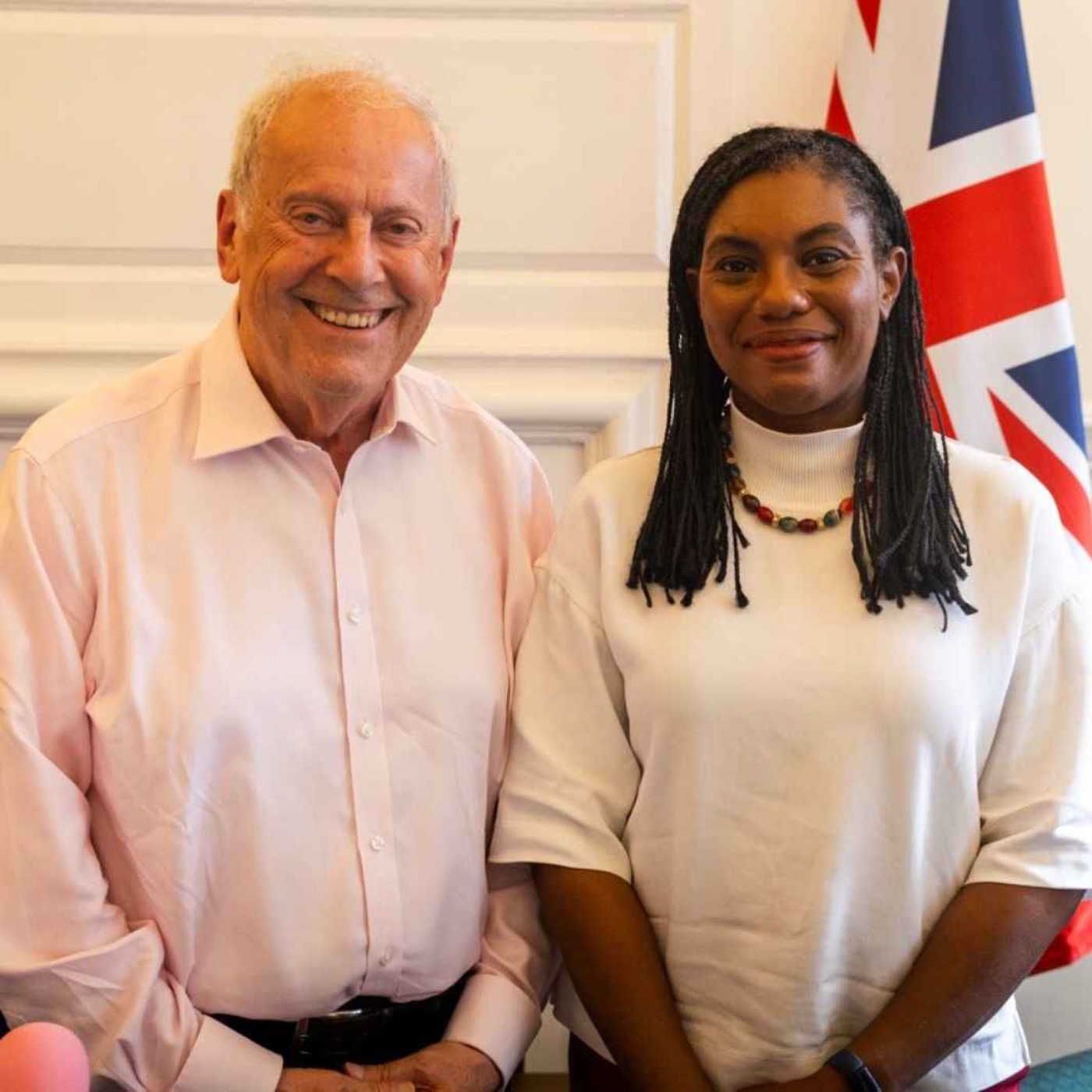
Host: Gyles Brandreth
Kemi Badenoch, Leader of the Conservative Party and current Leader of the Opposition
Exploring early memories and significant experiences that shaped Kemi Badenoch's life and political career.
Written by AI. May contain mistakes.

Get the gist, explore an idea or ask about something said.
 Claude
On Rosebud with Gyles Brandreth, what are the key points of this episode?
Searching your listeningAutomatic transcript. May contain errors.
0:00This is Rosebud. I'm speaking to you from Westminster with insight of Big Ben. When I arrived in the room, Big Ben was striking. I thought, oh, let's record that. and then I thought well let's wait till it rings again and then my producer said you've got to wait an hour we haven't got an hour to wait because our guest is about to come into the room well this is going to be an exceptional rosebud yeah I'm feeling quite excited because we've been the number one podcast this week on a bit of a high, a bit of a roll okay enough of that nonsense, cue the music
0:51And welcome to another episode of Rosebud. We've got a politician as a guest this week. No, don't be put off by that. Politicians are humans too. I know they may not seem it to you, but they are. They really are. Yes, my guest today is Kemi Betanog, the leader of the opposition, a Conservative member of Parliament for Saffron Walden, elected in 2017. Now the leader of the Conservative Party. Before that, she was in the cabinets of, well, Liz Truss, Rishi Sunak. We're not going to talk about that. We're going to talk about her early years, her first memories. that's what Rosebud is all about this is coming to you from Westminster I'm at Westminster in the office of the leader of the opposition there are union flags behind me there are glasses of water on the table in front of me and coming into the room now is indeed the leader of the opposition Kemi Bettenhock MP cue the music
2:05Kemi, the first question is always the same question, and that is, what is your very first memory? So, my very first memory, and I actually had to sit down and think about this, because I couldn't remember what my first memory was, but thinking and thinking, my earliest memory was actually my fourth birthday, which was January 1984, and I remember it because I always wanted to know when my birthday was. So my dad says, and he came up to me that morning and he said, today is your birthday. Because I've been asking, when is my birthday? When is my birthday? When is my birthday? Is it my birthday?
2:41I was obsessed with birthdays. And I remember my fourth birthday because I had a Barbie cake. So I had, uniquely in those days, in the early 80s, I had a brown Barbie and she had this big dress, which was the cake, the skirt was the cake. and I thought it was the most beautiful thing I'd ever seen. So where is this happening, this birthday party? So this is happening in Lagos. It's 1984. Lagos being the capital of Nigeria. Then it was, yes, that's right. And it was in our flat above my dad's clinic. My dad was a doctor. And I woke up, as I had done every day, saying, is it my birthday today? And he said, today's your birthday.
3:21And who was your mum? Who is your mum? Well, my mum is still alive. My dad sadly passed away three years ago. My mum is Professor Faye Adegoke. And she is still, despite being 75, a lecturer of physiology at university. So she teaches medical students. How did they meet as a couple? They met at university. My dad was in a year of university where you've graduated, but you're still training to be a doctor. And she had started her first year sort of teaching at the medical school. And that's how they met. And this is in Lagos. Yes. And what were they like together as a couple? How do you picture them?
4:00Well, I've seen lots of pictures and they were very cool. I've seen their graduation pictures. And it was, you know, 70s and it was all the cool 70s culture. Very, very Western. Remember, this is in the days of sort of the ending of the British Empire. They've all had, you know, teachers from England and Scotland and so much of the culture of the UK is is there. So it's all very sort of cool, funky jazz and everyone, you know, driving around in cars, smoking, drinking, listening to disco. So they're very into disco. They were into what I call old school R &B. so a lot of Motown, a lot of Stevie Wonder and the Four Tops.
4:49And I remember at my dad's memorial service that we had a few days after he died, he had asked specifically that we play all the music that he loved. And that's what he wanted for us to celebrate. He didn't want anything sad. It was, you know, tell me why you love me and play all the music that I like listening to. So we played quite a lot of Motown that day. And were there brothers and sisters? So I've got a younger brother and a younger sister, and we're all born within, certainly within four years. We're very close in age and we're very close. And why were you born in Wimbledon when you clearly were brought up in Lagos?
5:21How did that come about? Well, the doctor who helped my mother conceive me was in Wimbledon. So my parents got married in 1977 and I'm born January 1980. And you can imagine in an African society, why haven't you had any children yet? and the doctors in the country were just stumped. And someone... Hold on, they were just stumped? Stumped. Stumped, yes. They didn't know what to do. Because I know there'd be problems. They said, well, we don't know why. We don't know why you haven't had any children yet. And remember, this was in the days when Nigeria was a very wealthy country. There's an oil boom.
6:02There's lots of money sloshing around. So we were very comfortable because my dad was a doctor to the oil companies. And so they were traveling, you know, every year they'd stay in Knightsbridge and they only shopped at Harrods. It was such a different life from what they ended up having 20 years later when all the socialist policies have come in and everything's terrible. So my mother and her friends were all, you know, they had private doctors and one of them had recommended a man called Mr. Roberts. because he was a surgeon, so he was Mr. Roberts. And Mr. Roberts made me. And he also made my brother as well.
6:45So that's why we were born. You say he made you. He made it possible. Something like that. Yes, yes, yes. Well, my parents made me. Yes, your parents made me. Without getting too much into the detail. He facilitated it. Yes, yes. He helped it along the way. He facilitated it. And I will always be grateful, because without him, I wouldn't have been born. And it later, well, it transpired that what my mother had was endometriosis, which she told me at the time people said, oh, it doesn't, it's not an African thing. It's something that happens to Europeans. And her doctor said that this is something that is unique to Europeans.
7:17We don't see this in the African population. But actually that was, well, it was very simple treatment now. And we probably think that quite a lot of our relatives had this condition. And it's something that I've been interested in. I'm very interested in a lot of areas around women's health. There's so many things that happen to women. We've got so much stuff going on biologically. And it's also one of the reasons why I think being a woman is so biological. It's not about wearing skirts and lipstick. It's about your body more than anything else. And so that's why Wimbledon was where the private clinic was called St.
7:54Teresa's Hospital. That's where it was. I was born in Wimbledon. So it was my brother. You know, I had lots of family living here. My uncle lived here somewhere in East London. And it was in those days when Nigeria was sort of an extension of Britain. People came and went as they pleased. But so many people in my family had studied in the UK. My granddad, my dad's dad, went to what is now the University of Strathclyde. Not for a degree, but he trained as a draftsman and he trained there. So it was just a thing. my thinking about Nigeria at the time, because I was at university in the 60s, and there would be the Biafran War, and there was tribal warfare in Nigeria.
8:37So my perception of Nigeria then, not that I had been, was that it would be a war-torn country. But you're painting a picture of rather a prosperous, at least Lagos, when you're being brought up in this middle-class, educated family of medical people. Did any of that touch you and your family? So it is a very huge country, lots of people, you know, now hundreds of millions and very complex. And you're right, there was a civil war, but it was in a different part of the country. It was as far away as the troubles in Northern Ireland would have bothered someone living in Sussex. Yes, it's the same country, but it's different parts.
9:15And I remember asking my mother about it. And she said that they just didn't notice that all those things were happening. And that is what is quite extraordinary, that you can have a civil war, but if it is concentrated in one part of the country, then other places don't feel it. And it was like loads of other parts of Nigeria ganging up on the area that was trying to secede, what's called itself Biafra, the southeastern or eastern part of the country. And it was devastating. You know, about a million people died. There was a famine. But that wasn't that wasn't the part of the country that my parents lived in.
9:49Nigeria is, I often tell people, is a creation of Britain. It was created, you know, formally in 1914. And there's so much of the world that the UK created, for good or for ill. There are some very sad stories. There's some amazing stories. And one of the things that worries me is that we now live in an age where all of the history is taught as if the British Empire was a uniquely evil thing. And we have a legacy in our country that we should be ashamed of. and actually I still think that the British Empire was a force for good in the world and yes of course there were bad things that happened but the good things that happened the stories are being lost and they're being lost to the extent that many people in our country now look around and think well where did all these non-white British people come from they don't know the story of empire and how once upon a time we were all you know and I say we as those people who came from ancestry that this is not british we were all still britain you know nigeria was a part of britain it's the british empire you didn't need a passport or a visa you were you were seen as british my parents were told they were british when they were at school that this is british and there were pictures photographs of the queen i imagine yes lots of pictures of the queen and um you know everywhere the queen the royal family prince philip it was and it's interesting seeing how so much has changed but the memories are still there and quite often the people who find my backstory the most interesting are people who were born sort of between 1930 1960 who talk about having studied in nigeria having worked there they were the the officer class of people who were sent to govern and they still remember a lot of it and the same goes for countries like india and pakistan and so many So many places that were a former British empire, now the British Commonwealth.
11:47So when you were growing up, you felt that you were both British and Nigerian. Yes, very much so. And finding out that I did have that British citizenship was a marvel to so many of my contemporaries, so many of my peers. And I think the reason that I came back here was actually a very sad one. And it was that my parents thought there's no future for you in this country. My mother, you know, as I said, is a lecturer. Universities have been on strike and she's thinking, well, I'm not going to work. I'm not getting paid. I think they originally thought I would go to the US to stay with my father's siblings.
12:23In the end, go to Britain. And I think that this is one of the things that a lot of people forget. When I talk about strikes, I've been talking about strikes today and doctor strikes. It's often because I've seen militancy go wrong. It's often from a place of personal experience. It's not just random ideology. It's why I don't like socialism, because I've seen what socialist policies, even if a government doesn't call them, look like when they are enacted. and I remember never quite feeling that I belonged there and I've told lots of stories a cousin of mine wrote this really interesting article about the story of me pointing out someone cheating in an exam and people people like why would you do that and someone I remember very vividly someone saying you don't belong here and coming back to the UK in 1996 thinking this is home before we get you to the UK.
13:19Give me a picture of you as a little girl in Lagos in Nigeria. What, what, do you remember food? Did your mother cook at home? Or did you have someone to help with the cooking? Well, we, we, no, my mother cooked. We did have, we did have help. But because remember, I also lived in the, in, in the US for a brief period. So I actually quite liked a lot of, so I loved my, my love of pasta came from the US and pizza and burgers and so on. So we couldn't cook any of that. When did you go to the US then? 85, 86. So age five. So some of my earliest memories are actually not of Nigeria. My fourth birthday, yes, was there.
13:55But actually a lot of it was Omaha, Nebraska, where my mother was teaching at the University of Omaha. Vivid memories of first grade. I went to a school called Boyd Elementary and, you know, parades and so much of sort of American culture I imbibed at that age. And we had all these recordings. So my mother was obsessed with sitcoms. And we had all these video cassettes of the Cosby show, and Golden Girls, and you know, those classic sitcoms of the 80s. So quite a lot of culturally what came to me was very Western. And you know, people used to call our family the Cosbys, because they were, My parents were, and my mom still is, relatively progressive for, you know, for an African country.
14:41And I remember this really interesting story that my dad told me once. It was a conversation he had with my granddad. And my granddad was saying, she's so amazing. I mean, like, she's so clever. I'm so proud of her. Imagine if she'd been a boy. And basically what he was saying was she would have been even more amazing and even smarter if she'd been a boy. And my dad said he was so upset by that comment, which actually was unusual. My granddad didn't think that he was saying anything wrong. And I think what my granddad was saying was actually quite typical at the time. That's what a patriarchal society looks like.
15:20And I remember my dad who, the way he brought me up actually made me a much stronger person. It made me always seek out opportunity. And I'll always be grateful to both him and my mother for the way I was raised, which was there is no obstacle in life. But he always told me 80 % of what happens to you is down to you. Only 20 % is down to other people. So focus on that 80%. And I've always carried that with me. Given your middle class Nigerian upbringing, were you aware of the poverty that also was side by side? You can't escape it. You cannot escape it. It's everywhere. And it's almost because of the poverty that you end up creating this very, very competitive spirit, which you see in, actually, I would say in many people from immigrant backgrounds.
16:10There's no safety net. You see every day in front of you what happens if things go wrong. So getting bad grades at school is not an option. And I found coming back to the UK for A-levels and being told, oh, an E is a pass, 40 % is okay, you still pass, versus a culture where if you don't get A's, you might get, you know, actually corporal punishment and, you know, physically beaten, which did happen in one school that I went to. It's just competition. You know what the results would be. And so I got to school. I was driven to school in a car. Which school is this, your primary school or secondary school?
16:48Yes, one of my many primary schools. I think one of the reasons why I ended up just being probably more extrovert than I would say is normal. It's just helpful with the politics, as you will know. I went to five primary schools, three secondary schools. I went to college twice, my FE college where I did my A-levels, and then I went to Perthorough College in Worcester for an NVQ in business management. And I went to university twice as well. I did my engineering degree, and then I did a law degree. Why were you being shifted about so much? Clearly, I'm somebody who can't sit still, but also primary school it was just moving you know my mother going to the states meant that I left one school went to it she put me in a private school in Omaha and she pulled me out because she thought that I was quite I was not treated well she thought there was a lot of prejudice actually in that school and I think she was right and then I went to a state school which is a lot better it's just a lot more a lot easier and then I went to the school that I spent most of my time I'm in, which was a Church of England school called St.
17:49Saviour's in a place called Ebutemeta, which is a railway. It was a railway compound. And that's where a primary school was. So I was moving around quite a bit. I went to a secondary school. It was called a federal government girls school in a place called Shagamu. And that was like being in prison. When I tell the stories about using a machete and having, because I know lawnmowers, that's the place that I'm talking about having to fetch buckets of water. And that was the first time that I was away from home, away from my family. And I wasn't just looking. This is a boarding school. Yes, yes. It's a federal boarding school.
18:25And it was very... You shared a dormitory with other girls? There were 300 of us in my dormitory, 20 to 30 in a room. And the machete is for cutting the grass. Yes, cutting the grass. Explain, why were you cutting the grass? Well, because, well, who else is going to cut the grass? It's just, you know, it's... Grass grows and you have machetes to cut it. Exactly. They're not, you know, this is a federal school where this is the old grammar school system sort of fading out. And everyone who passed an exam and got a certain school got to go to a federal school. And this was this was more socialism.
18:58So they sprinkled people around. They didn't want one school getting all the best results. They would mix people about. So you could end up getting sent thousands of miles away to a boarding school, you know, at the extreme end of the country. so I was lucky I didn't get sent too far away but I was very far from home I'd never been away from home before and it was it was like lord of the flies you know the the students were in control we needed to look after this the school ground so using a machete uh having to clean toilets with no running water I'm not going to go into the description of that but it is very very um very grotty and so that was when I talk about the hardship it's often uh being in that school but I still always carry with me that understanding that you never know where you're going to end up and that meant that when I came to the UK after the economy in Nigeria had gone sour I also ended up just being very resilient because I dealt with much tougher situations than that I thought right I've got to get a job first job was at McDonald's I've got to look after myself no one's going to do this for me i'm 16 and i it's extraordinary because there's no way i would let my children out of my um sight age 16 not like that going to another country but it's because of just how bad things um things have got before we get to being 16 and coming to britain thinking back on the first 16 years of your life what's the worst experience that comes immediately to mind the worst experience in your first 16 years right i mean you mentioned racial discrimination in a america were you conscious of that not really i mean i think my mother yeah yeah she was conscious of it she was very concerned because she thought i'm paying all this money and when she complained to the school they said would you like your money back and she said okay which most schools would say we're really sorry and and so on uh i don't know what that private school was called um so your worst so my worst i think my worst experience would have been being sent away from home having to live in what is quite a brutal boarding school there's a lot of bullying the teachers aren't really in control there's no running water I have to fetch you know water from a borehole my soft you know baby hands are being um you know you know being yeah yeah yes yes callous I think they are still calloused actually 35 years later from from doing that you know falling ill and also yes I um I fell I think it was just probably um I wasn't eating the same sort of food I actually didn't eat a lot because I didn't like the food and I remember I used to exchange my food for books so I would offer because I just didn't like I didn't eat fish for example I didn't like um I still don't like uh eating most fish I might eat sushi because it's very clean but a lot of the the fish that was eaten that I didn't like the taste of and there was a lot of fish in the diet So I was exchanging my meals.
21:53Like if someone had a good book, I would read. And I just not have lunch or I just not have dinner. So I came back very, very thin. I was 11 when I went to that boarding school. And I think missing home, I missed home a lot. So when I think about my own personal experiences rather than other things that I witnessed, that was quite sad. What were the books you were wanting to read? Anything. I just wanted to read. I was a big reader. I still am. But time as leader of the opposition does not allow you to read much beyond policy papers and WhatsApp. Do you remember your first book of pleasure? Yes, I do.
22:26Very much so. And it was a book by Diane Wynne-Jones called Charmed Life. And I remember, it's extraordinary because the book, I read this book. This is the first book I remember reading properly. This is 1987. My parents have gone away. My parents were always going on holiday. They went to Germany for a holiday and they left with my aunt. And this book had no cover and no back. So I didn't know what it was called, but I remembered the story vividly. And it was about a boy called Christopher Chant and his sister Gwendolyn and all of this magic. And in 1998, this is, I'm 18 and I'm still a big reader.
23:07I'm reading the Sunday Times. I never knew what this book was called, but I just remember the story. It was great. And the Sunday Times had a crossword with the characters in the book and said, you know, this story about which book called Christopher and Gwen Laird. I remember this book. This is the first book I ever read. And then the answers were upside down. And then so I turned it upside down. I thought Charmed Life, Diane Wynne-Jones. And I remember ordering it from Amazon. This is when Amazon was a new thing. And I reread the book, 18. And I found out there was a whole series of these books, The Chronicles of Crestomancy.
23:40And I've always loved fantasy. I've always loved, you know, books that had a little bit of magic, a little bit of sci-fi in them. Still, you before 16, a moment of sadness that springs into your mind, as I say that. A moment of sadness. Why do you ask about these sad moments? Because they make me feel sad even thinking about them.
24:09I'll ask for a moment of joy in a second.
24:16A moment of sadness, I think. I remember, I haven't thought about this in a very long time. So we lived on top of my dad's clinic. And I remember him looking after, I must have been about 12 or so. He was looking after a boy, a 15-year-old boy, who was clearly being sectioned in some way. and I don't know why he was in my dad's clinic because he didn't take a lot of mental health cases but I think for there was some specific reason which I'll now never know because my dad's passed away that he had him there and I didn't know that he was ill and so I would come down I'd come downstairs uh after school and I would just talk to him and I just thought here maybe he had like some stomach problems or or something and I remember um listening to him screaming one night and shouting and it was quite late and you know the nurses sort of looked after you know they did something but he was taken away and I never saw him again and I was very sad actually when I think about it because you know he'd become my friend and I asked my dad what had happened and he didn't want to talk about it and he said you shouldn't have been talking to him anyway why why were you doing that you know he wasn't well you should you should have known that you're not supposed to talk to patients so yeah actually now that I think about it that was a moment of sadness that this was someone who I didn't know there was anything wrong with but he clearly had had some issues and he probably I imagine now was probably you know seriously sectioned in an in an institution and whatever treatment my dad was giving him clearly wasn't wasn't working and they thought they couldn't cope.
25:54Were you close to your grandparents? My grandparents on my dad's side I was close to my father's mother couldn't read or write but she was an entrepreneur so she made a lot of money and that's actually right couldn't read or write um i remember her you know needing my dad to help her open a bank account so she kept a lot of her money in gold which was very smart because it meant that you know it appreciated well she was very entrepreneurial she could do all the all of her mental maths couldn't write it down but she could calculate within seconds and And she fled a polygamous marriage, probably in her late teens or early 20s.
26:37She was Muslim, and she was in a polygamous marriage. And this was culturally acceptable. It was the norm. And then she met my granddad, who was an Anglican. And they had a sort of a mixed religious marriage. And my grandmother converted to Christianity when my father was, he tells me this, or he told me the story. he said he was very ill and um a preacher man said i will heal your child for you and he had bells and they called them aladuras and they my grandmother thought my dad was going to die and after this man laid his hands on my father and uh prayed for him he got better and my father tells me that my grandmother said this is the one true god and she she converted to christianity and she became a lifelong Anglican, zealots, almost, you know, very zealous in her belief in Christianity.
27:30So I do have sort of distant cousins who are Muslim. I don't know them very well, but it's, you know, I grew up in a society that was sort of part Muslim, part Christian, but my upbringing was very Christian. My paternal grandfather was a Methodist reverend, but I was closest to my granddad, even though, you know, he probably secretly wished I was a boy. He never said that, but he used to write me letters and we used to talk all the time. He was very proud of me. And what's the best thing you got from him? What have you got now? It was easier speaking to him than my grandmother, because my grandmother didn't speak English.
28:03Whereas my grandfather, you know, could, you know, he was literate. He did all sorts of things, but he was also a farmer. I think his dad was a farmer. So my ancestry is all sorts of things. But farming, maybe that's where my obsession with the farming community right now also comes from. Farmers are my favorite constituents in northwest Essex, which is my constituency. I just get them. And people often think, it's very interesting, people often think of black people in Europe as always being urban. This is, of course, a very weird sort of Western thing. Most black people come from rural backgrounds, whether it's the Caribbean or Africa, because that's just most of what is there.
28:41So he often talked about how difficult the farm was. It was so hard. And it's just so much work and it's impossible to grow anything and how hard life was like being a farmer. And I think that's always stayed with me. He was trying to, he had a career as a draftsman, but he retired and went back to do what his father had done, which was farming. And it was just blood, sweat and tears all the time.
29:17you mentioned faith in your family do you have faith yourself not anymore not anymore but I used to I grew up you know singing hymns you know being in church there's just that communion and that connection and fellowship that you have with people and it's it's muscle memory it's hearing a tune and it taking you back to a place that that uh that you know it's uh it's listening to sermons and you know growing up in a relatively religious society remembering lots of bible passages and you know in all the bible stories and i do believe there is a thing the protestant work ethic whether people like it or not i do think that there is something there my catholic husband will probably you know be rolling his eyes listening to to me saying that um and he is you know he is still very much uh someone who has faith he goes to church every sunday i don't but i believe that christianity has been a force for good in the world i think it is an amazing um religion that has lasted so long because it has values which if followed properly actually can make society work really well that doesn't mean that everything that has happened within the religion is is perfect but I do defend Christianity more so than I do other religions because I know it more I understand it it is my background I think that's what my reverend father and my Muslim convert grandmother would want me to do.
30:40My Reverend Grandfather. I promised you a recollection of a moment of joy. And now you've made me think of the... Joy, this has got to be the first 16 years of your life. When I say joy, what suddenly comes into your head, it could be the Barbie doll. Well, yes, that was, yes, but age four, everything's great when you're four. I mean, it's hard to think of a particular moment. Outside the year where I was away from my family, I had a very happy life. I was very lucky. I'm a happy person because I think it's some of it is my nature. Some of it is the upbringing. I was very lucky to have been born into a very close family and a big family.
31:18I mean, I have one brother and one sister, but both my parents had, you know, seven, eight siblings. I've got loads of cousins. And certainly in my early life, we're all scattered all around the world now because of circumstances. I'm looking for a specific. I only say that because it's easy to say, oh, a general move. I'm positive. I'm a positive person. When I asked that question of Sir Martin Rees, astronomer royal, I was told the most brilliant person in the country. I was looking for the most intelligent person. I was told it should be him. So we went to see him. And I said, for you, a moment of joy.
31:49And he immediately was rowing a boat across a lake alone and listening to birdsong. I asked the same question of Charles Dance, the actor. Do you know him? Of course I do. Of course I do. Well, there we are. Charles Dance famously of Game of Thrones. Yeah, exactly, Charles Dance. Charles, what is your... Give me a moment of joy. Oh, when I lost my virginity. She was a little bit older than me. And he then went into graphic detail. I'm not asking you to give me either of those. That did not happen before 16, I can assure you. I'm asking for... That gives you a flavour of them. Right. Because they give you a specific example.
32:27So a moment of joy during your young years. A moment of joy.
32:36I'm trying to narrow it down. I'm thinking I want to go away from birthdays because birthdays were always very joyous. I had a great 10th birthday party. Good. Fancy dress? No, no. But it was just really fun. It was really fun. We had a TV entertainer. So it was the equivalent of Blue Peter. It was something called Animal Games. And he did my birthday party. And everyone had loads of fun. There were dancing competitions. You were quite a well-to-do family. My gosh. Which is why the stark difference between what I had in the 80s versus what I had in the 90s was pretty significant. And I'll come to the moment of joy at the moment.
33:21But it's just reminded me of something that my dad said. I asked him, why did you never buy a home in the UK? You know, you were always here visiting. And he said, well, in the 70s, no one wanted to buy a home here. You know, it was rubbish piled up in the streets. Britain was not a country that was doing well. At a time when the former colonies were doing very well, there was an oil boom. Why would you buy a house in a place that looked like it was going into decline? And of course, 20 years later, the opposite of how has happened. You had the 80s, you had Margaret Thatcher. I think a lot of people appreciate just how much she did to turn things around.
34:0090s Britain is booming. Nigeria is kicked out of the Commonwealth. And that's something that really makes me hold on to two moments that you never know how things are going to change. You want to make sure that you have prosperity. You have to work at it. It doesn't just stay where it is. This is what drives me. It's why I'm very focused on the economy now, because I'm worried about us losing what makes the UK great. But if I'm thinking about a moment of joy, I don't think this is the most joyous moment. But I do remember having there was this is the equivalent of a village fates or a carnival of some sort.
34:35And there was a game being played where you had to pile the highest tower. I was very young at this time. So this is this is an odd moment to remember. and there was a boy who was much bigger than me. He must've been about six years older and he built this very, very high tower. And I had built one that was, it was with cups and plates. And my dad was looking at me and smiling and he said, don't worry, you'll be fine. And then they did the timer. And of course this boy had this really high tower. And as soon as the timer went, his tower collapsed and my little one was still standing. And I saw him looking very proud of me because he could see what was going to happen.
35:13and I looked up and I just felt this that was joy because I didn't think I was going to win I was feeling quite sad that the big boy was going to get the prize um you know at this um at this fate it was uh it was it was quite nice and I saw him looking at me thinking you know and I've always had either my mum or my dad sort of often giving me that signal that don't worry you're going to be fine and um it's given me the confidence to do quite a lot of things that's a nice moment of joy you come to england age 16 and basically you stay here ever since yes and you then become are you still nigerian embridge you have passports for both countries i have not renewed my nigerian passport i think not since the early 2000s it's just yeah i don't i don't identify uh with it anymore most of my life uh has been in the uk and i just never felt a need to so so when i go there When my dad died, I had to get a visa to go to Nigeria, which is all a big fandango.
36:15And because I am Nigerian through ancestry, but despite not being born there because of my parents. Yes, I am. But by identity, I'm not really. I know the country very well. I have a lot of family there and I'm very interested in what happens there. But home is where my now family is. And my now family is my children. It's my husband, my brother and his children and, you know, in-laws. And the Conservative Party is very much part of my family, my extended family, I call it. But I do see the Conservative Party as family. So much of what we do goes beyond party policy. It's instinct. We recognize each other.
36:57We have the same sort of squabbles. And it's why whenever people ask me about plots and this and the other, I think, yeah, this is extended family stuff. Anybody who's got an extended family with lots of drama will recognise this. I'm intrigued that you mentioned earlier about the European farmers thinking that black people would automatically be urban rather than agrarian. Most black people live in rural societies. Were you conscious of your blackness when you came permanently to live in the UK? Never. And I think that this is one of the things that probably made me an outlier. I wasn't expecting, I knew I was going to a place where I would look different from everybody.
37:38And I didn't think that that was odd. What I found actually quite interesting was that people didn't treat me differently. And it's why I am so quick to defend the UK whenever there are accusations of racism. I did not experience prejudice in any meaningful form. That doesn't mean that prejudice doesn't exist, that it doesn't happen. Many people do, but I didn't, not seriously. I had a couple of instances at school, which now I look back and I think, oh, well, that might have been prejudice. But even then, you know, when I talk about the soft bigotry of low expectations, teachers saying, well, you don't need to go to, you know, all these fancy universities.
38:15Just go to this poly or this former poly. Some of it was just coming from what they thought was a good place. They thought they were being helpful. They were well-meaning. I don't think they were trying to disadvantage me. So, no, I didn't. I didn't feel that way. but I also probably was very anglicized before um coming back in 1996. Where did you first live when you turned up here? Wimbledon. You went back to where you were born? Well you know my my mother's friend who uh took me in lived in Wimbledon so Wimbledon is where I was born it was where I moved back to I'm the MP for Northwest Essex and you know when I was selected there you know I said I do live in Wimbledon but I hope that you will adopt me so I'm now you know I'm now an Essex girl but when I'm not in Essex I am still in in southwest London in Wimbledon it's just been it has often been home and it's very helpful now having the contrast between London life and you know countryside life because we do spend quite a lot of our time in uh in Essex the children love it but it helps me understand why so many politicians get things wrong if you live in London all the time and you don't experience anything else, you will come up with bad policies.
39:27That is why the Labour government, in my view, have got it so wrong with farmers because they just don't understand how farming is. It's a special thing. It's very different. It's very different from other businesses. It goes down from generation to generation. Farmers can't say, well, I'm taking this weekend off. Cows still need to be fed at the weekend. Plants need to be watered at the weekend. They work, you know, sometimes well past midnight. They have to get up 5, 6 a.m. I think a lot of people just don't get that. What's the toughest thing you've had to do in your working life, in your whole life?
40:00The toughest thing. The toughest thing I had to do was just fend for myself from age 16. And it's very funny when I hear Labour people mock me because I said this is when I became working class. Yeah, I'm not working class now. But there was a period in my life when I was working at McDonald's. I wasn't doing it as a weekend job i did it because i needed to eat and it had free food so i got a free burger every day that i was this is when you spent 18 months having a whatever it was a big mac every day for lunch no no it was a quarter pound with cheese thank you no i've never liked big mac because it has too much bread in it um but a quarter pound of cheese which i now cannot eat uh because i had too much of it when i was a teenager uh that was my sustenance you know the pickles of my vegetables I got my protein from the burger and my carbs from the burger bun.
40:47But I say this in jest. It was very, very tough. It meant that I didn't do as well at college. I was at college two and a half days a week. And I thought that was great. Yeah, I'm doing my A-levels part-time. I'm working. I have all this money, which I spent on junk. I think age 16, you don't know what you're doing. And it's why when I see Labour talking about, you know, votes at 16, I think, what did I know when I was age 16? And I had to do a lot of jobs. I worked at McDonald's. I worked in a clothing store. I did an apprenticeship for a year before I went to university. So I was an apprentice engineer, which is one of the best years of my life.
41:20That was age 18, 18, 19. It was fantastic. I was working with grownups and I learned. It's funny. I feel like I learned more during the year of my apprenticeship than I did in either of my two degrees. Not because I learned more, but because I remember more. So I can still take a computer apart and put it back together. And I'm still good at fixing things because it was a job I did with my hands. When did you learn about love? Can you remember your first kiss, the first holding of hands? Is that a vivid memory for you? It's not vivid, but it is a memory, yes. A good memory? Was it fun or was it ghastly and embarrassing?
42:01I don't know. I don't know whether I would call all of those first kisses age 15, 16 love. when I look at my husband that is love and when did you meet him how do you want I met him when I was 29 we met in the concerted party quite old yeah yeah you remember seeing him the first time across the crowd yeah and I was like what is this guy doing here so it was not love at first sight it was he's trying to take over and you have to there was a lot of it's very funny looking back at it now because it's completely ridiculous there was a lot of suspicion of Hamish because you had this very public school, Cambridge educated sort of management consultant as he was there.
42:40People thought, oh, he wants to be a Tory MP. He was almost more the stereotype of what you expected a Conservative MP to be. And I thought, oh, he probably doesn't want to do the stuff we're doing here in Brixton, delivering leaflets and knocking on doors, people who are going to slam, slam the doors in your face. And he ended up being my biggest supporter. He was always there. So it was something that grew and then i remember the first time we had a proper conversation we found out that we were both born at saint theresa's hospital in wimbledon a year apart and then it was oh yeah when you find something in common with somebody you suddenly start looking at them in a different way so this was about four or five months after we first met and honestly i don't know what my life would be without him he is my greatest supporter he's my greatest backer my greatest defender and that that is love because you know without getting overly biblical love is lots of people talk about love as if it's a feeling but for me love is it's a verb it's how you treat people it's what you do it's not just you know the butterflies in your stomach or feeling oh yeah that you really fancy someone and you know it's what you feel for your children even when they're driving you crazy and giving you sleepless lights.
43:55Love is something despite rather than... Are you also a romantic person? Do you have romantic movies that you love? Do you have... So I have two favourite movies. Yes. One is Back to the Future, which is the sci-fi side of me, and the other is Shakespeare in Love, which I think is an absolutely brilliant movie. And I've watched it about 20 times. And it's just so cleverly done. It's Gwyneth Paltrow in her heyday. And I think that there is a side of me that gets very passionate about things, which the politics helps to channel. Otherwise, you end up just being one of those people who's ranting at the TV or you become a just-stop oil activist.
44:33But just being very, very passionate about getting stuff done and making sure that things work. Yes, that is me.
44:48We're coming to the end. normally I ask people about traumatic experiences in their lives and I read a story and you may not know much about you might want to talk about it about a cousin of yours being involved in something online oh yes no that was that was very sad I wouldn't call it traumatic traumatic because I wasn't close he was much younger than me what what is the essence of the story he he killed himself. And I, it was really sad for me because I knew him as a one year old. So I remember him as a baby and he ended up going to university in Canada. He'd grown up in Nigeria. He'd gone to university in Canada and I think became quite isolated in some way and went down an online rabbit hole of pro-mortalism and anti-natalism.
45:34And it was all linked to, you know, just sort of extreme environmentalism that too many people on the planet you shouldn't have children and if you can you should kill yourself and he started reading about all these things and he wrote the most lucid suicide note that I'd ever seen his brother showed it to me and it was just a side of the internet which I may sort of come across in you know reading but never thought it would impact the lives of people in my family. So it's not traumatic for me personally. Of course, it was serious trauma for very close family members of mine, who I'm quite close to.
46:15And it just made me think that we do need to look at the information age or the misinformation age, as I prefer to call it, not with sort of draconian regulations, which I don't think work. You know, we've been talking about the Online Safety Act recently. And I said, this isn't going to work because I know enough about computing to know how it can be circumvented. But there needs to be something else, something that's more along the lines of societal pressure around stopping these sorts of things from blooming in the way that they do because they destroy lives. Whether it's promoting suicide, it's happened to my poor young cousin who was 27, 28, to, you know, the extreme gender ideology that creates this gender dysphoria of young people hating their bodies to the point where they effectively sterilize themselves forever.
47:06It's why I was so vocal around the trans activism, which was moving away from the medical definitions of gender dysphoria to making it like a social thing. I think that's quite wrong. And I know so many parents who wrote to me to say thank you for sticking your head above the parapet and taking all that abuse. I think things are moving into a better place. The problem is not solved. But I do think the internet has a lot to answer for. You've gone into politics. I went to politics once, hoping to change the world. If you could leave, if there's one thing you could do in your time, what would it be to change, to make the world an even better place?
47:46Because it's a good place, really. To make it an even better place for your children. How many do you have now? Three. I have a 12-year-old girl, an 8-year-old boy and a 5-year-old girl. Well done. Nicely organised. Very, very organised. That's exactly what I have. Two girls and a boy. That's the way to do it. And now we've discovered... I'm not sure my son agrees. So what's the one thing you would love to see happen to make the world better for them? If you could do one thing. See, it is, and it is very much about them. I think that I was so lucky and it would be a dereliction of duty to leave a worse world to them.
48:23And I'm constantly thinking, what's the world going to be like? Making sure that, you know, I have mixed race children, making sure that we keep a socially cohesive society, one where the colour of your skin doesn't matter any more than the colour of your eyes or your hair is quite important. And I think we've done such a brilliant job in the UK. and that's in danger of turning because people on both extremes, those who want to pretend that this is the most awful place in the world to live if you're an ethnic minority, they've created a lot of damage, especially since 2020. But now we're also seeing a rise in ethno-nationalism of people who are trying to pretend that those of us of different skin colours are not meant to be here.
49:06They're two sides of the same coin. Both need to be dealt with. I don't want them to grow up in a society that is like how South Africa was, where people were segregated or where the color of their skin is something to be noted. But even more than that, I want them to grow up in an economically successful country. It's all about making sure that people can have a good quality of life. And that means understanding where money comes from, how we stay prosperous. and my biggest worry right now is that we're making the UK a lot poorer by carrying out very silly policies which sound good they're the worst ones the ones that sound great but actually costs not just a lot of taxpayers money but a lot of the social fabric I worry about the way we've taken our environmental agenda away from a better environment just to carbon emissions and net zero it's costing a lot of money the environment is not improving and we are de-industrializing china and india who are not uh they're opening coal-fired power stations uh every other week they're not following a net zero agenda they're becoming wealthier we're becoming poorer and i keep thinking what are we leaving for our children so i do worry about that three quick ones before we end your comfort food spaghetti bolognese spaghetti bolognese does hamish do it for you Would you do it for yourself or do you go to the shop?
50:26Well, I gave him the best bolognese recipe ever. He does, he loves cooking, whereas I see cooking as a chore. I can cook, but if I can get away with not cooking, I will try not to. So I eat quite a lot of that. He will make it for me when he can. If not, I'll make it myself. How many hours sleep do you get? Not enough. Between five to seven, never more than seven. Yes. Do you remember the last bad dream you had? the last bad dream i had yes um the bad dreams i have are almost always about something bad happening to the kids or hamish almost always i dream about my dad quite a lot which is upsetting because i wake up like he's not here and so the dream is not bad when i'm having it but i always feel bad afterwards and i think quite a few people who've lost um a parent or a close person a spouse they don't like those dreams either because you have a moment when i remember having this dream about my dad and i was thinking where have you been you know we've been looking for you and that makes me sad but the worst dreams the worst dreams to actually experience or the children have gone missing something's happened to to him it's my family or my life was your father your role model would you say rather than your mother no no no my mother was my role model.
51:46My mother was my role model very much. But my father was the one who was more encouraging of risk taking, which has been helpful. So my mother's the lecturer, she's the speaker. I mean, I watched her sort of her final lecture. I thought, my God, this is where I get it from. She was funny. She was making jokes. She was supposed to be giving a lecture on physiology, but it was actually a whistle stop tour through her career retiring at one university. she retired age 70 she's gone back to work she said it was very boring and when my dad died two years later she said there's absolutely nothing to do except work so i'm going back to work she's my role model is she okay now is she remarried no i don't think she's thinking about getting remarried although you never know my mom is 75 and uh she's visiting me now actually wanting to to see you know she loves to see her grandchildren uh but she doesn't live here nigeria is her home she taught me to stand up for myself and to never back down and you know hold your head up high you speak up and you speak properly you dress properly as well which just stood me in good stead but my dad was the one who said go for it he was the risk taker it didn't always work out for him to be fair but um he was the risk taker did it end badly for him in the end no well yes yes um it did because he took risks uh moving out of medicine never working uh in a team wanting to strike out on his own it's one of the reasons why i believe very much in being part of a team because my dad tried to do it on his own and it didn't it didn't work out and he had lots of uh other business ventures when when the oil companies stopped retaining him because he i didn't actually say this but one of the reasons why things weren't so good for us in the 90s was that he had lots of patients who asked if they if he would sign them off sick and they would give him some money and he said no he wouldn't take the bribes and then they complained that he wasn't a good doctor they wanted a different doctor i don't think they said he wasn't a good doctor but they they said they had a preference when the retainer came up for someone else who was happy to to take the bribes and he was quite upset when he heard what had happened and he decided to do more on his own it didn't quite work out for him so but he still believed in taking risks and i think that's one thing that's good about the UK, that you can take risks and there's a safety net.
54:08Finally, what have you learned that you want to share with your children? This extraordinary story of yours, most unusual life you have led, most unusual life you're leading, really bizarre. What do you think you've learned over the years? Well, I mean, I would never have guessed that I would become leader of the opposition going into politics was not where I thought my life would would end up it was not part of the plan what was what was the plan then well initially it was supposed to be be a doctor like my dad that was what was expected and then that didn't work out and then I became an engineer and I thought I'd do that and then I went into banking but the politics was always there under under the surface but I wouldn't be where I am without many other people.
54:55And actually, the biggest lesson, because I was talking about it with someone today, was about the importance of being part of a team and building something that's beyond yourself. It is why it's really important to me to make sure that the Conservative Party continues to be a force for good in the UK. We are not a one-man band. You know, we are, those of us here today, we are custodians of something very special. And yes, I know that we disappointed people from time to time over the last 14 years, especially in the latter half of those 14 years. But we are still a force for good. We've got to stick together.
55:28We're a family. We're a team. And making sure that we build a strong team with cognitive diversity, lots of different types of people with different views, but same values, same principles. I see all your strengths. Do you have a weakness that you're aware of? Yes, many. Well, pick one. We've run out of time. We've run out of time, Charles. Now you've got to pick one. Saying so much, there's no time to reveal what your weakness is. is the right answer. But in your head, it's like that spontaneous thing. Joy, you know, you can't self-censor. What's your weakness? Do you, Kimmy, have a weakness?
56:01I remember once being asked this question and I said that it was a tendency to often be flippant, which I think a lot of people took as either not being serious or worse, hurting other people's feelings or not caring. but actually the flippancy is it's a manifestation of my sense of humor uh but i could see especially more recently when i've you know under the public eye they're saying a lot of things assuming that people just understand where you're coming from doesn't actually help get the message across and quite a lot of what is conservative is counterintuitive if you tax too much you get less money and making sure that we explain the foundations of our philosophy is actually very important and being flippant doesn't always sell when i became a member of parliament an mp called norman st.
56:53John steves left a note in my little cubicle little you know where he put notes saying dear giles do not be too amusing they won't understand that's all it said yes I'm afraid I did try to be too amusing and they didn't understand it is a brilliant summation of what it is that I'm trying to say humour I think is amazing I think too many politicians do take themselves too seriously I think you should take the job seriously I don't think you should take yourself too seriously because you end up just becoming pompous and arrogant and I think there are many Labour politicians who I see as quite priggish because of that but humour doesn't always travel so be careful thank you very much Kemi leader of the opposition for sharing your Rosebud memories with us you're brilliant thank you Joss
57:47well for me that was a memorable conversation I hope you enjoyed it too thank you so much for listening to Rosebud this week we love knowing you're there and we love hearing from you so do keep in touch keep listening and keep recommending us please to friends and family before I go it's time for some of your first memories Oh, we had an email here from Rosemary Saunders. Dear Harriet and Giles, I just listened to Giles' memories of spending time with Sal on his return from the USA. It brought memories of my first love in 1971. You may remember that in 1970, the age of becoming an adult was lowered to 18.
58:28I do remember that. I was at that time the only sixth form boarder at a convent school in Somerset. Later on in life, I realised that this had posed something of a problem for the nuns. I did history A-level, and one day all the A-level students from the local schools in the area spent a day together going to lectures and discussion groups. To my surprise and pleasure, shortly afterwards I received a letter from someone called Richard, asking me out on a date. I couldn't actually remember who he was, but I was curious to find out. However, my cloistered existence made this difficult. Imagine my surprise when one day one of the nuns called me from my study bedroom to take a phone call in the nuns' quarters.
59:13It was Richard. For the next three days, we spoke every evening. After the third night, I was called to the headmistress's study. This had never happened before. Boys had never contacted girls in the school. I expected to be told that it had to stop. However, the wonderful sisters were very enlightened. I was allowed half an hour a night in the phone room to talk to Richard at an agreed time. I was even allowed out on dates. The first one was to see Monty Python, which I didn't enjoy, but we held hands and kissed in the convent porch. Richard even came to tea with the boarders. It ended when we both headed off to university.
1:00:02Many years later, when Friends Reunited was launched, Richard emailed me. We both had two children, and both of us were teachers. Sadly, he was ill, and I never heard from him again.
1:00:19Richard will always have a special place in my heart, and I often share my story of how kind the nuns were to me and my first love. Bless you and Harriet. Rosemary Saunders. nay teague t-a-g-u-e well rosemary we do feel blessed to have listeners like you sharing stories like that very touching very special that's in a way is what rosebud is all about our diary episodes and our proper episodes when we talk to real people about their early memories. I hope it's about reconnecting. It's about finding a way to open that door that can take you back to another time, sometimes a better time, sometimes a sad time, a difficult time, but a time you don't want entirely to lose.
1:01:12And I hope Rosebud helps with that. Keep in touch. Till next time, cue the music.
1:01:26Thank you.
1:01:55Rosebud is produced by Harriet Jane, artwork by Freya Betts, and music by Phil Leppard.
Hosted on Acast. See acast.com/privacy for more information.


