
 Ask ChatGPT



Written by AI. May contain mistakes.

Get the gist, explore an idea or ask about something said.
 Claude
On Rosebud with Gyles Brandreth, what are the key points of this episode?
Searching your listeningAutomatic transcript. May contain errors.
0:00Do you know, we've been very lucky. We've recently had some amazing reviews. Somebody described Rosebud as remarkable. Somebody else said it was original. Somebody even said it was sexy. Don't know what episode they were thinking about. Oh, maybe that was Diana Riggs' daughter, or even Charles Dance. Several people have said it was excellent. Somebody said it was brilliant. Even better, somebody said it was unique. I like the person who said it was occasionally devilish, but always delightful. So, remarkable, original, sexy, extraordinary, brilliant, unique, devilish and delightful. R-O-S-E-B-U-D.
0:39That's Rosebud. Cue the music.
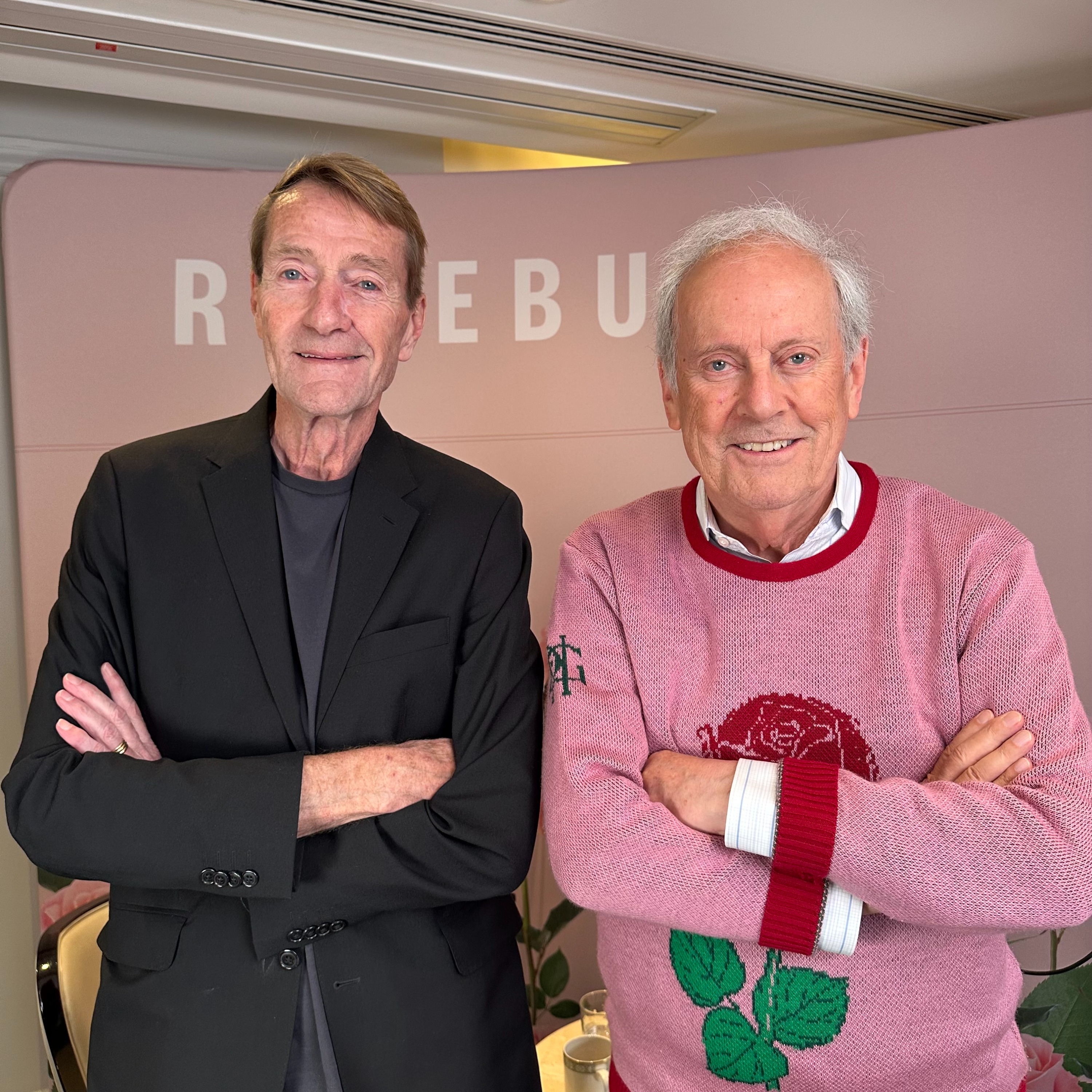
1:03My guest today is the novelist Lee Child. Lee Child, that isn't his real name, of course. We may discover what his real name is in a moment. Lee Child, novelist, writer of extraordinary talent and success. His Jack Reacher books have sold, wait for it, more than 200 million copies and counting. I know I own a couple. You may own one or two yourself. Anyway, now that I've interviewed him, it's clear to me why his books are so incredibly popular. This man is a natural storyteller. This episode is full of stories, all beautifully told. I think it's quite brilliant, and it's interesting. It's different.
1:49I start, in fact, not with our usual question, but by asking Lee about how he writes his books, which is in itself fascinating. I think you will enjoy this. Welcome to Rosebud with Lee Child. Ah yes, cue the music.
2:18Lee, I'm going to call you Lee. You're comfortable with that? Yes, totally. At home you call something else? It depends who. My daughter calls me Doof. My wife calls me A.U. And a couple of people still call me Jim, which is my real name. But so many more people know me as a writer than an ordinary person. Yeah, Lee is what I get called. Well, I'll call you Lee, but occasionally I may let a little Jim slip in. Yeah, why not? To add intimacy to our conversation. It's no secret. It's no secret. But I hope we're going to get a few secrets. I want to begin, if I may, with the secret of your writing habit in the old days.
2:58Because I have got a thing in my head, I may have got this wrong, that when you are producing your books, the books that have made you not just one of the best-selling authors in the world, but one of the best-selling authors of all time, which is pretty nice, isn't it? That your writing routine used to begin on the 1st of September. Is that correct? That's absolutely true, yeah. It so happened that that's when I started my first book. I was working in television for Granada up in Manchester. And in about 1993, they announced they were going to get rid of us all because it was the typical thing in the 1990s where I was 39 years old, an expensive veteran.
3:47I was a union member, great salary, life insurance, pension, all of those things. And they wanted to reduce costs in that 1990s way. So they just basically looked at the pay scale and drew a red line. And the people above the line were all sacked. And I was one of them. So it was a question of what to do next. And I had no idea, to be honest. because I was hyper-trained and hyper-skilled at the one job I had just lost. And I really didn't have any other transferable skills, so I thought. But I did that thing where you say, hang on a moment, step back a pace. What is it that you're good at, really?
4:32And it was knowing what the audience wanted. That's what I felt I knew after nearly 20 years in TV. You develop a sixth sense. what is the audience going to find attractive? What are they going to find boring? So I thought, I'll try writing a book. I've read so many in my life. I was a huge reader from the age of three. Weirdly, I had loved books, enjoyed books, consumed them like mad, but never thought where they came from. I had no conception of an author sitting there. I had no conception of publishers beavering away. They were just there, books on the shelf in the library or the bookstore.
5:14But not many years before this emergency, I had started reading John D. MacDonald, who was a very famous American thriller writer. He was one of that old pulp generation that probably did 200 novels. But the ones that I loved were the Travis McGee series, which was 21 books. one of the greatest series ever fabulous entertainment which I loved reading but at the same time I began to see what he was doing and why and when and how it became almost like a blueprint and I filed that away I thought yeah I'd love to try this now that I sort of see how you do it but of course I was still busy and I didn't do anything for five years but then when I lost my job, I thought, all right, now's the time to put up or shut up, try it.
6:08And so that happened to be the 1st of September. And you sat down. And the reason that excites me is that you probably don't know this, but the 1st of September is the Feast of St. Giles. It's always a special day in my life. And this podcast, we launched it on the 1st of September a couple of years ago, because it was the 1st of September. So I believe that the 1st of September is a magic day. And so it proved, And I'm thinking that you sort of believe that because every year when you were producing your Jack Reacher novels on an annual basis, you would sit down on the 1st of September to start.
6:42Is that correct? That is absolutely right. Partly it was a sentimental thing because it was the anniversary of starting the first one. But also it was a pragmatic decision. If you're going to publish a book a year, you have to write a book a year. And you can't just keep putting it off until you feel like it. You can't wait till the muse strikes. It's a job. You have to do it. So by starting on the 1st of September of every year, it gave my year a structure and a sort of target. And you sat at a word processor, a typewriter, a computer? The first one I did in pencil. Oh. Because I'm a terrible hobbyist in the sense that, you know, when my daughter was born, I bought a camera and got into photography and so on.
7:28And I did not want to do that. I didn't want to do it as a hobby or a game or a pastime. I wanted to make myself understand this was real. This was a job. And so I said, I won't buy a computer until I've earned some money. And so I did the first one in pencil and the second draft in pen. And then I borrowed my daughter's, she had a little laptop, and I borrowed that and typed out the final draft on that and took a day and a half to print. It was so slow in those days. and sent it off. And how long does it take you to write a book? I mean, how long is each novel on the whole? Word count is somewhere over 100 ,000 words, between maybe 100 ,000, 110.
8:17And it takes me between 80 and 90 working days to do that. Fine. Which spreads out. Obviously, you can't work every day because of other commitments and family. But it's between 1 ,000 to 2 ,000 words a day. Yeah, I always aim at 1 ,500 and early on I'm usually slow and then later on I have to pick it up a bit. But yeah, averaging out around about 1 ,500 a day. And fueled by coffee and cigarettes? Coffee, cigarettes, yes. An enormous number of cups of coffee? Enormous, yeah. Tell me how many. Well, one time my mother-in-law used to be a nurse and she got all this medical news. and about, I don't know, 30, 40 years ago, it came out coffee was very bad for you.
9:01And so she said, how many do you drink a day? And I say, I don't know. And so the next day, I counted them, 36 mugs of coffee in a day, which is about typical for me. Are you still on that regime? Yeah, I had six cups before I left home and I had two more on the train and now I'm having one with you. Do not try to give it up because 25 years ago, because of acid reflux, possibly too much inflammation, but because of acid reflux, I decided to give up coffee. The withdrawal symptoms were terrifying. I understand that. I mean, pains in the legs and worse, migraines. I mean, really, it went on for about a week.
9:43So please stick with it. And cigarettes at the same time as the coffee? Yeah, cigarettes too. A lot of those? Yeah, pack a day. you know sort of normal sort of rate but that's something I also I will never give up it's I completely understand it's a foolish thing to do and but I love it I started when I was 11 and I loved it then and I still love it now and people say to me you have such a great life why don't you prolong it and I say well that wouldn't be my life I would be living somebody else's life I'd be living a non-smoker's life, a sensible, cautious person's life, and I don't want to do that.
10:23And I wish you well. Michelle, my wife and I, we were good friends with the great actor Sir Donald Syndon, who went on smoking into his mid-90s. There you go. And so you may have the constitution that can take it. We do not recommend it to listeners, but it's worked for some people. So congratulations on that. So I've got your working routine now. We share significance of the 1st of September. I now want to go right back to the beginning. You were born on the 29th of October, 1954. James Dover Grant. What is your very first memory, though? It can't be that far back. What do you first remember?
11:04What's in your head as your first memory? The first memory that I can reliably state when it happened. I've got a bunch of sort of impressions floating about, but I can't pin those down as to exactly when. But the first one that I can reliably date, it was the day before my third birthday. My dad was from Belfast. We were living in Coventry at the time. He was a civil servant on that kind of white-collar track that they moved them around a lot. So I was conceived in Leicester, born in Coventry, and as I say he was from Belfast and so to go and see his parents we would have to get to Northern Ireland which typically you would do by train to Liverpool then the taxi to the docks and then the ferry but being a cautious Ulsterman not keen on spending unnecessary money he found that he could get a deal where him and my mother and my elder brother and I could go on the plane.
12:16Because at that time, the airline was offering free seats to the under three year olds. And we were going at half term because my elder brother had already started school. And so because I was one day short of three, I got the return fare for free that made it overall more economical. So that's my first memory, the unbelievable glamour of going on a plane that at the age of three I called a jet. But of course it wasn't. It was an old war surplus DC-3 reconfigured for civilian use. And I remember every detail about it. Back then, this was October of 1957, Elmden Airport in Birmingham you would walk across the grass to the plane and although what happened was because of this being under three thing the rule was the stewardess had to carry you so the stewardess carried me out to the plane and my dad tells me that I mean I was a big kid I was big and solid and she was unbelieving she didn't think I was she thought I must be about five or something but I remember getting on the plane and it was one of those planes where the tail wheel is much lower than the front wheel so the fuselage was sloping up and I can remember climbing up this slope to our seat.
13:42I can remember the upholstery on the seat but most of all I remember arriving in Belfast where when it started to descend because it was not a pressurized airplane it was a crude old thing there was a steward in a very formal white bum freezer jacket who came around with a silver tray with boiled sweets on it the idea being that you would suck the sweets and it would help your ears and i remember just being paralyzed with joy all this and free sweets too oh wonderful who were your grandparents then you went to see your father's parents my father's parents, yeah. He was a civil servant too. He worked for the Ministry of Pensions in Northern Ireland.
14:30And they would have been an Anglican family, I assume. They were, yeah, Protestants. But Protestants deep into that kind of Ulster, doer, Protestant, very odd people. He was a World War I veteran, had lost his leg in World War I. She was quite an educated woman, had been to Queen's University but not allowed to graduate at that time. Women couldn't. His father had been a farm worker, a miller, and was completely illiterate, which I find fascinating. I mean, I'm three generations away from illiteracy, I think, like most of us are. But he was a miller, and the chaff, the stuff that's left over, his wife would feed to the hens and they would sell the eggs and she would save that money so that my grandfather being the youngest child was finally able to go to school so he was the first one within education there was no conscription in northern ireland for world war one or world war two actually but being a protestant unionist type he had volunteered for the british army and been sent to Gallipoli and grievously wounded literally a second after stepping out of the landing craft.
15:53And, I mean, horrible story. He was immediately machine gunned and medics then come out under fire and triage the wounded and he was assumed to be fatal. That was a fatal wound. They just left him there. And then 48 hours later, the burial party comes and he's still alive. And so he was sent to Manchester, to a hospital in Manchester, the first time he'd ever been to England, and then invalided out and no antibiotics back then. This was 1915, the Gallipoli thing, and it was literally 20 years, 1935, his wound finally healed without antibiotics. So, you know, a tough, difficult life. But they were...
16:42Did he share that story with you or did your father tell you that? It came out in dribs and drabs over the years, which I find fascinating, actually. My father was the same. He talked very little about his Second World War service, almost nothing. What would he do in the Second World War? He was... He commanded a little company that would go and... Tank skirmishes, you know, in the West, they would go in and assess the damage. If there was a repairable tank, they towed it to the workshop to be repaired. If it was destroyed, they would order a replacement. And that's something that he was always fascinated about.
17:18He would call it in and say, we need a new Sherman. And at best, 45 minutes later, they would have one. He was an instinctive conservative, very sort of low-church Tory type, but he really, truly believed in the efficiency of government because it was efficient back then. Did he believe in the efficiency of family? What was he like as a father? He was very distant and cold. I mean, my parents gave me an upbringing that was actually boring and pretty awful, but I don't blame them in particular. They tried their best. They were just not the right personalities to have children. My father was correct in every way.
18:05But, I mean, sadly, I remember years ago there was some Facebook meme as it approached Father's Day. It was just think back, you know, to a great afternoon with your father. And there were none for me. I mean, I just couldn't think of anything. he was 30 when I was born 92 when when he died so that's 62 years and in all that time he never said I love you or never put his arm around me or anything like that just a cold distant figure very stern very correct but he did love you that's a generational thing isn't it not saying I would say so yeah I mean he was just hopelessly trapped in that old-fashioned image of masculinity where you couldn't admit to a feeling or anything like that.
18:53What did you feel about him when you were a boy, when you were young? I just thought he was this irrelevant character hanging around, you know, that I sometimes saw. You called him dad, did you? Yeah, I guess I called him dad. But the social contact between us was all about, you know, was I doing the right thing? Was I working hard at school? They wanted us to have a great education. And that was all that mattered to them, that we were paying attention, doing our work. and we're going to succeed. How did he meet your mother? He met my mother in... Because at the end of World War II in 1945, he took stock and he thought, wait a minute, I'm an Irish person with only a grammar school education because he joined the army rather than go to university.
19:43And I'm being demobilized with millions and millions of other people who are all going to be competing for the same jobs. So he stayed in the army, and they were deployed to a camp up in Yorkshire. And that winter of 1947... Oh, the famous cold, cold winter. Yeah, dreadful winter. And one day they were told they had to go and help dig out Eam Railway Station up in Yorkshire. And first of all, they couldn't find it. He tells a story. They go to where they think the railway station is. There's just this gigantic snow drift. and they have no idea where the station is. And then they noticed these little round things in the snow that were the chimney pots.
20:26So they had a massive task, which they did. And then he went to a social evening somewhere intending just to play cards with his fellow officers in the back. But my mother was there. And my mother was a very basically sensible, practical woman. but she had an element in her mind. She was slightly fae. She believed she could predict things. And my father was very tall for the time. And she walked in and saw all these army greatcoats hanging up, and one of them was longer than the others. And she said it popped into her mind, this is the man I'm going to marry. And they did. They met. They married two years later up in Otley, Yorkshire, and that was the beginning of it all.
21:18It's a great opening for a story, though, isn't it? Yes, yeah, yeah. Those coats hanging on the hooks. I'm going to marry the one. Were they happy together? I don't know. I mean, I think they were certainly satisfied in that sense. They stayed together. Yeah, they stayed together all their lives. Your father didn't have an erring eye. No, no. They were loyal to each other. Far too correct for that. and yeah they stayed together 60 odd years I think I can't remember exactly how long it will have been but a good long marriage they had their frustrations and arguments and bitterness here and there but I don't suppose worse than anybody else Was she a warmer figure than your father to you?
22:01No she was if anything colder She was bizarre I mean here's the fundamental thing She had had an awful life. She was born in 1926, and therefore her first memories are going to be the Depression, which was tough in Yorkshire. And then, of course, her actual literal teenage years from 13 to 19, which are once teenage years, that was World War II for her. so she never had literally never had a new pair of shoes or a new garment throughout her entire teenage years so i absolutely understand she had a hard hard life growing up and then of course post-war austerity was really no better um but of course the world and that generation created a much better life for us, you know, the next generation.
23:04We had a charmed life. I seriously believe that me specifically, my little generation, English born in that little window at the beginning of the 1950s, we were probably the luckiest generation in all of recorded history. All the bad stuff was gone, and all the new stuff was there. Except you were in a cold home. Cold, not physically cold, I imagine. Was it quite nice? Was it a house or a flat that you lived in from the early years you remember, your first home? Yeah, my dad was the sort of... He had rules for himself that he would always buy, not rent. And because he thought rent was throwing money away, etc., etc.
23:51And bizarrely, he always bought a house that was higher than the pavement so that there couldn't be any flooding. We thought it through. Oh, totally. This is who it was. And so, yeah, it was a pretty nice house we had in Coventry, a little semi. Then very quickly, when I was four, we moved to Birmingham. And again, very solid, semi-detached, leaded windows, you know, that sort of 1930s. What was your bedroom like? Did you shed? You had a brother, sister? Yeah, we moved about. I had, at that point, three brothers, two brothers at that point. There were three of us. first of all I had the bed over the garage which was freezing and they put in a little sort of cylindrical electrical heater which helped a little bit except one day I was making something out of plasticine and I was aware that to make things out of clay you had to fire it so I made this little plasticine thing and put it on top of the heater hoping that it would become solid and you know, like an ornament.
24:57But of course it melted all down the inside of the heater and ruined it. Then I shared a bedroom, the front bedroom, the one over the dining room, shared that with my elder brother. Did you like him? What was he called? He was called Richard and didn't like him especially. He was our older brother in that sort of traditional niggly, teasing sort of way. Very smart kid he was. but yeah we didn't get along we have nothing in common really didn't get on did you become friends later no not really is he alive still he's alive lives in gloucester i saw him not long ago very sort of outdoorsy person and he was up in the lake district walking so he stopped by to say hello and same old character although he is doing one good thing that surprised me he has taken in a Ukrainian family.
25:51He's had a Ukrainian family living in his house for three years, I think. Well done him. Yeah. I was surprised and impressed. And another brother? Yeah. I was the middle of three, essentially. So my younger brother, David, lives in South Wales. And then, of course, there was the late mistake, the fourth brother, Andrew, the sort of menopausal mistake. They thought they could get away with it, but didn't. and they claim, of course, he was wanted. And my mother was 41 when he was born, which in 1968 was considered grotesquely old. I mean, almost weird. And the doctors treated her with like kid gloves.
26:39You know, she would go to bed every afternoon and eat steak and so on in order to keep up her eye on and so on. so it was that was quite an adventure having a I was 14 when Andrew was born did you resent him no not at all I found him fascinating like you know like a puppy or something it was great and it was turned out excellent education I sort of learned on him so that when I had my own kid I felt somewhat familiar with it but it's interesting because you're saying your mother was quite cold colder even than your father and yet she was maternal she had four sons and did Did she cook well? Did she look after your clothes well?
27:19Charles, this is every answer I'm going to let you down here. She was a terrible cook and also somewhat sort of spiteful in as much as if you ever said. I mean, I learned not to say that I enjoyed anything because if you said you enjoyed it, she would never make it again. Oh. Yeah, I mean, fundamentally, like I said, she had had this awful life and we were having a better life. And if that had been me, I sincerely hope I would be glad. I would be satisfied, happy that the next generation is doing better. She wasn't. She was jealous, jealous of our freedoms and what we had. Not that we had much, but we had more than they'd had.
28:08She was just fed up about it and was a martyr to everything. Beyond Plastocene, what were the things you enjoyed playing with as a boy? Well, I had a teddy bear, I suppose. Did he have a name? Did he have a name? No, I just called him Teddy in a rather unimaginative way. The naming actually went with each other. My father was an only child for five years. And then in one of those very old-fashioned ways, his mother disappeared for a couple of weeks and came back with a baby. They hadn't prepared him in any way at all, and it really upset him. My mother was an only child, and so they hadn't gone through anything like that.
29:00But they took that lesson that the existing children must be involved ahead of time. They would explain, you know, that there was going to be another child in the family. And in order to make us invested, they would in turn ask us to name the next one. And it was bizarre. But you're right. They did mean well. They meant well, absolutely. They were ordered, organized. Yes. They'd thought this through. They meant well. They just didn't execute very well.
29:40Did they have faith? Was that part and parcel of your childhood, going to church? No. I have, I mean, personally, I'm certain, not that we ever talked about it, that my mother was an atheist and thought it was all nonsense. And I have never, ever been in a church other than for somebody else's wedding or funeral. It just was not a factor. even though my father was a very religious man in a crazy sect called Christian Science. Oh, yes. And that has certain... You're supposed to not evangelize. You're supposed to keep it to yourself. Do they not believe in doctors? That's the one, yeah. So when you had your appendicitis, you just had to suffer in silence, did you?
30:34I mean, what... Do you ever go to a doctor? Well, that was a huge bone of contention because my mother was the complete opposite. She was an absolute medical groupie. She loved doctors. She loved the whole thing. I mean, seriously, to the point of Munchausen's, really, and almost, almost Munchausen's by proxy. I mean, she never poisoned us, but she was delighted if we were ill because then she could call the doctor. and the doctor would come. And to her, that was like Clark Gable showing up at the house. She was starstruck by anything medical. And so that was a huge bone of contention between them.
31:17And I can reconstruct afterward that she must have totally laid down the law and said, you do what you want about Christian science, but the boys are going to see doctors. And that appears to have been the agreement, because that's what happened. Did she watch Dr. Kildare on television? Well, we didn't have a television for quite a while, and she wouldn't have. You know, they were very, very... I mean, snobby is the wrong word, but very... They might have watched Dr. Finley's casebook. That might have been more... They might have... Yeah, exactly, because that was sort of very British, very homely, very much to their taste.
31:58And why didn't they have a television? Was that money, or they didn't believe in... It was pretty much a bit of both. You know, they were watching their pennies. You know, in Birmingham, generally speaking, people were paid in cash, and they were paid on Friday. And so where other people would say as rare as hen's teeth, Brummies would say as rare as a pound note on Thursday. And that's exactly our life. I mean, we would have, if we had three, if my parents had two pence left over on Thursday night before payday, that would be regarded as success, you know, in the McCorber sort of a way. At least the library was free.
32:41Absolutely. Was the library one of your places? It was totally my place. And it saved my life and created my life, enabled my life, all that stuff. So what is the library you first remember going to? The first one was called Elmwood, which was behind a dusty old congregational church not very far from where we lived. And it was very small. I remember it as being about the size of a Nissan hut. And it had more books than I'd ever seen, but actually objectively not very many. And I had read them all by the time I was maybe seven. You've got to unpack that a bit. You read them all. What sort of books are you talking about?
33:24Conan Doyle, Sherlock Holmes, Agatha Christie. What were you reading? Neville Shute. At that age, I was, you know, I'm not pretentious about it. I don't claim I started with Dostoevsky or anything. I started with Edmund Blyton, like virtually everybody. And again, reconstructing it in retrospect, I loved The Famous Five because it's basically an orphan fantasy. The parents are not there. The kids do whatever they want. I loved that, I loved the Secret Seven and so on then I did, I moved on to Alistair McLean and Neville Shute and so on but the greatest thing my mother ever did for me when she realised I'd exhausted the local library she then signed us up for a much bigger library in the next municipality and to get there, it was quite a long walk and a very scary high bridge over a canal and then you got to this library which I remember as this huge edifice with plate glass front you know like a skyscraper and actually it's under threat right now and because I've told this story before people are people recruited me to help try and save save it and I saw pictures of it it's perfectly normal size building really but you know childhood imagination is such that you always dramatize these things but that had an infinite number of books it seemed to me and did you stay in the library to read or you borrow the books and borrow the books and but the problem for us was that Birmingham you got a library ticket that allowed you two books and that was just not enough so we operated a kind of Chicago voter style system any visitor ever that came to the house had to sign up for a library ticket our dog had a library ticket seriously yeah what was the Timmy, straight out of the famous five.
35:16And so I could get five or six books a week, which I then devoured. And your life then was inside your head and in these books. Did you have a good friend outside the family? Who was your best friend? I had a friend up the street called David Harris. Didn't go to the same primary school as me. It was just the sort of same street friend. and he was good fun. And his mother, bless her, got us two tickets to the Beatles in November 1963 at the Birmingham Hippodrome, which was just fabulous. But that is extraordinary. I mean, you're only about nine years old. Yeah, just turned nine. In fact, today, after we do this, I'm heading to the BBC to do Desert Island Discs.
36:03and my first pick is She Loves You by the Beatles because I can remember that coming out, August the 23rd, 1963. I can remember the first time I heard it and my life just changed in an instant. It's about 11 seconds long, that little drum fill at the beginning and the first chorus, 11 seconds, changed my life. After this dure, grey, boring upbringing, suddenly it was like the sun coming out. An electric shock of excitement. Absolute excitement, joy, energy, and a sense that there was something for us. Because everything was World War II. Every book, every movie. The first movie I ever saw was a double bill at Villa Cross Cinema in Birmingham.
36:49First was The Dambusters, and second was Reach for the Sky. Everything was World War II. And we made airfix models of World War II airplanes. Spitfires and all that, yeah. And I was aware of this magnificent history. You can't dispute it. Britain's behavior and victory in World War II was epic. But it left us with the feeling that all of history is in the past. The finest hour literally has happened. There's nothing ahead. And suddenly the Beatles finally felt there is something for us. This is ours. There's something to look forward to now. And how did that change you? Is this when you began to smoke?
37:30I mean, not about that age. Yeah, a couple of years passed before I started smoking. But it just gave me a sense there was something for me, something I would enjoy, something that would give me happiness, energy, color. And how did that change your behavior at home? I mean, how did you become different? I don't think I behaved any differently at home because I was a sort of, it felt like being a secret agent deep undercover at home. You know, you behave in a certain way to fit in and your life is actually outside of the home. And so the life outside the home at school, how were you doing? I was doing great.
38:07I loved reading, which was the key to everything, really. And my elder brother, who, as I said, was a smart kid, he was doing fine too. But my mother was very aspirational, believed in education, and thought this was the one chance. And so she would sit Richard down at the end of the day when he got home from school and go over his lessons to make sure he was understanding them. And I would sort of eavesdrop from a distance. I was three at the time. And I learned to read by basically eavesdropping on his reading practice. I didn't really understand the fuss about, you know, got to work hard, got to do well, because it came to me very easily at that stage.
38:52Education was completely different then. It was, we had a headmistress called Maisie Lister. Maisie Lister. Yeah, who was a fabulous educator, fierce, disciplined. But she had a total, utter weakness for American musical theatre. So every twice a year, she would put on a show, which was all her favourite songs from different musicals, just sort of randomly connected with a rather thin plot. And she had a niece, actually, called Carolyn Lister, who was one of the first cast of Crossroads in the Midlands. And so, yeah, it was a sort of weird mixture of a showbiz family with this fierce, stern educator.
39:39But the standard was super high, and I literally believe that I need not have learned anything after the age of 10. I would have got through life fine on what I learned at that primary school. But you went on, I imagine, to the grammar school. You took the 11 plus and being bright, you passed? I sat the exam for King Edward's School. Which is an independent school. It is now. It was what they call a direct grant school back then. So it was funded by the government, but also an incredibly wealthy school in that it had five gymnasiums, a cinema, immense science labs, all that kind of thing. Very highfalutin school.
40:22Academically excellent. You thrived there, did you? Actually, I felt a little bait and switch about it because quite correctly. What's that phrase you used? Bait and switch. What is a bait and switch? Well, they promise you one thing and it turns out to be a different thing. Because the exam to get in, and I understand now that, of course, this was the correct thing to do because for kids like me who had not been to prep school, We didn't know Latin. We didn't know Greek yet or anything like that. So it was fundamentally a general knowledge test and an IQ test to get in. And in a very Birmingham pragmatic way, that's what I'm good at, solving a problem, fixing something.
41:08I can do it. But then I get there. I pass it with Flying Colors, got a scholarship. You get there, and it's suddenly all Latin and Greek. And anything after the year 1485 was regarded as kind of dangerously modern. That's suspect, yeah. Yeah, you know, practically journalism rather than history. And so that, I mean, I did fine there, but it was... Was it just boys? Pardon? Just boys? Just boys, yeah. A boys' school in that traditional, old-fashioned way. Did you notice girls? Yeah, because on the same campus was King Edward's High School for girls. that we sort of shared a driveway. So, yeah, we were, and we went on the bus, obviously, together and so on.
41:50Can you remember the first girl you fancied? Oh, absolutely, yeah. I mean, I remember the first girl I kissed. Well, what was that like? How did you manage that? I just, you know, I'd seen it on television. I'd seen it on the movies. I figured I knew what to do. Did you know what to do? Yeah, it worked pretty good. But congratulations. It's quite a moment. I mean, I'm asking you because your recall is so precise. And you were quite tall by then. I was, yeah. I've always been tall. And she was, I imagine, shorter than you. Yeah. And we went to the cinema. It was that period where you'd go to the cinema.
42:29You've got no clue what the movie was. You never saw any of it because you were in the back row. It was the perfect time. That golden era between the pill and AIDS. It was just nonstop. it was oh so you had lots of girlfriends oh lots and action not just kissing yeah lots and lots and lots i remember well i'm not sure that i don't want to shock you in any way at all but i was i remember going to a party i was 14 and a half um i went to a party on a friday night that actually lasted until the sunday night and you do shock me i was certainly have shocked your parents It's how they're known. Yeah, but they were so naive in their own way that I said, oh, I'm going camping with some friends.
43:14And they thought, oh, good, good, sturdy outdoor activity. That's fine. But so I went to this party, and I smoked my first joint and lost my virginity. And then again to two sisters. It doesn't get better. I shouldn't say that. It does not get better. So that was literally the greatest weekend ever. Well, the rest of your life has been something of an anticlimactic, I imagine. It's been a gentle downhill slope ever since. How wonderful. And you felt it was wonderful at the time. Or were you at ease with all this? Did you fall into all this comfortably? Or were you troubled in your head? What was going on?
43:57No, I was totally happy with it. I mean, I somehow internalized the fact that, as I said, this generation had no problems. It was automatic. You know, you'd go to school, you'd go to university, you'd get a job. Everything was automatic and easy. And did you go to university easily? Yeah. I mean, I went sort of accidentally in the end. I'd done pretty good at O-level. Well, I actually did very well at O-level. But by that point, the age of Aquarius was just all over me. And so I didn't do so well at A-level, but not terrible. But I hadn't applied to university because I just thought, oh, I'll do that later.
44:38And that summer after my A-levels, I went traveling in Europe with a friend. And just one of those great sagas, endless trips, months really. I remember being in Corsica. I remember being in Switzerland. I rolled home, I suppose, late September, and there was a small pile of mail for me, one of which was my A-level results. So I looked at them. They were okay. And I thought, oh, I could go to university. So I went down to the Central Library in Birmingham and went to the reference section to look at the prospectuses. And, of course, all the diligent kids have been doing this for months, and so that all the prospectuses were beat up and the covers had fallen off and all this kind of thing.
45:28And I found one that I thought looked great visually. There was a picture of a tall skyscraper-like building against a beautiful blue sky, and the caption was, we have the tallest academic building in Europe. And then there was a picture of a theater, the student theater that had been converted out of an old church that just looked magnificent. and I was so into the theater at this point. I said, yes, this is where I want to go. But I didn't know where it was because the cover had fallen off. And all three of the perspectives, we do this, we do that. And I'm thinking, great, but who are you? And then right at the small print at the back, Sheffield University.
46:09So I went out of the library to the phone box outside and phoned them up and said, I've got these A-levels. I didn't apply, but I'm wondering if you have any vacancies. and they said, well, what do you want to study? Which I hadn't really thought about. I said, well, I don't know. What have you got? And they said, we have a vacancy in the law department. And I thought, oh, I can do that. Yes, sign me up. So I immediately went up to Sheffield to start and didn't have accommodation or anything. I ended up in dreadful digs near Hillsborough, you know Sheffield Wednesday football ground and in the end I was thrilled to do law because I did not want to be a lawyer and if you don't want to be a lawyer then doing law is a great great thing because it's so interesting and really the law is a snapshot of everything.
47:07A law passed in let's say 1933 is a snapshot of the economy, the politics, the sociology, everything, even the writing of that period. So it was an introduction to everything I was interested in. I loved history. I loved politics. I loved society. And the law was a distillation of all of that. And when you were there, did you get involved in theatre, having become interested younger? Yeah, I mean, as you know, the undergraduate degree in Britain is three years, but it took me four because I spent so much time in the theatre, I failed one year. and that's where I met an American girl who was over studying at Sheffield.
47:50I met her in the theatre and we started going out and she was just unbelievably beautiful and smart and I thought, you know what? This is going to be a great couple of weeks because a couple of weeks was the typical length of a relationship back then. I thought this is going to be great. You probably thought, I wonder if she's got a sister. Well, she did actually but those two weeks we just last month celebrated our 50th wedding anniversary no yeah oh that's a beautiful story yeah it was it turned out great how extraordinary what did she have what why has it lasted so long what does she have what did she have then she had a sort of spirit and i well remember we went came home together after a party one night and i said am i staying and she said sure and so you know i stayed night and then in the morning i remember waking up and stretching luxuriantly and i said to her would you get me a coffee and she said well can i say what she said she said fuck you get your own coffee and i thought yes finally you know a sort of independent, spirited, self-directed person.
49:12And that's really what attracted me. She, you know, she didn't defer in any way whatsoever. And what have you given her? What attracted her then? I imagine you were tall, slim, handsome, interesting, funny. Yeah, I was, I was tall, you know, I had blue eyes. She, she tells the story that, you know, we were kind of circling each other a little bit we were both dating other people but it we were pretty sure that you know this was the next thing and i'm sitting in the green room of the theater and i winked at her and uh she says that's what that's what made the difference that from that point on she was helpless and uh so yeah we had a uh you know tempestuous relationship really constant we argue all the time oh do you still Yeah, yeah, absolutely.
50:06Proper arguments or just banterish arguments? Well, we argue about serious subjects like any pair of friends would, but, you know, the usual marital arguments, and they're epic. You know, we can argue for five hours nonstop, and yet it works. You know, we don't harbor resentments. Nothing builds up. Nothing's inside. It's all dealt with. So you never have no speaking times? No. Never fall silent? No, we've never had any serious problems. I mean, it's a bore at the time, five hours of screaming, but it solves the problem. It gets it out of the way. And you had children? We had, yeah, after five years, we had one daughter who, I mean, she's just fabulous.
50:50She always was. I mean, this is the thing. That's why we only had one. She was just the easiest baby. She slept through the night from five weeks old and was never a moment's trouble. and so we thought we cannot possibly risk having another one because it has to be worse and so we stuck with one and she went through a phase I guess when she was around nine or ten of wishing she had a sibling but very quickly got over that and is very happy to be an only child and how have you managed to not be like your parents but also not be particularly an only child not smother her, over love her? I think, I don't know that we succeeded in that.
51:35I mean, we deliberately tried not to be our parents. We deliberately tried to do the absolute unconditional love thing. And also we tried, I think it's inevitable, you know, you see your kid unhappy or in trouble and you try and fix it for them. And we probably overdid all of that, to be honest. we probably should have let her stand on her own two feet and fight her battles herself a little bit more but it was an overreaction to what we had sort of both experienced ourselves and you know ideally if I had my time over again I'd dial it back a little bit but not too much and is she going to get a vast amount of money when eventually you go?
52:25she is although you know she's not she doesn't ask for much. She's not really spoiled in any way. But she, I mean, she does love the concept that copyright lasts for 70 years after the author's death. And you're going to live a long time anyway because of your father's example. Yeah, I mean, all my relatives. Because you've kippered yourself with the smoking. Well, we'll see. I mean, bizarrely, all my relatives, one of them died before the age of 40. But if you make it past 40, you make it past 90. That's how it's worked out, all the relatives I know. So I'll see if I break that trend.
53:08In a nutshell, tell me about your 18 years at Granada. Because when you left university, you didn't become a lawyer. You joined Granada almost immediately, didn't you? I did. It was, again, that magic period, 1977 this was. I graduated university and didn't do much for a couple of weeks. And then I remember my wife saying, are you going to get a job? And I said, no, I'm going to watch the tennis, because Wimbledon was on, and it was the year that Virginia Wade won. And I watched her semifinal, which was on a Wednesday afternoon, I think. And then I watched that, and I thought, oh, I better get a job.
53:51and there was an old guardian lying around from the previous Monday and media guardian. Those are the days everyone got their jobs in media by looking at the media garden on Monday. That's right. And there was this vacancy at Granada and a couple of other jobs elsewhere and I applied for three and I was offered all three. That's how easy it was back then. I feel terrible saying this to the current generation but it was absolutely automatic. Night follows day. If you had a degree, you would get a job. and so I was offered all three, and I picked Granada as the most fun, and it was a great, great job.
54:28It was a lovely company back then. Did you begin as a runner, as people would nowadays, just sort of running around helping on shows? I began as, I worked in what they call presentation, which is I started as a trainee assistant, and the presentation department is a bit like the air traffic controller of a very complex network. Incoming programs, outgoing programs, local commercials, local trailers, all this kind of stuff, local news, incoming ITN news, all had to be integrated in our control room. We were the final fingers before it appeared in somebody's living room. Passed my training, so I was an assistant for a couple of years, and then I was promoted to what they call transmission controller.
55:15there was one of there were five of us on constant rotation and it was a very busy stressful job especially in the early days I loved it it got easier as time went on because equipment got better protocols for news and so on got better by the end it was fairly pedestrian as a job but by that point I'd become shop steward as well for the union and you were quite vociferous as a shop I was. I was, because we were going through some bad period. You know, Rupert Murdoch was circling around wanting the satellite operation. And that meant effectively damaging the terrestrial broadcasters, BBC and ITV.
55:59And so there were a lot of pressures going on. And, you know, Grenada was a fine cultural institution. And people remember the drama very well. Right, they'd revisit it. Exactly. David Plowright, all of that. Jewel in the Crown, that whole thing. But it was also very good on documentary, World in Action, very brave. Before I got there, World in Action had done an expose about some scandal at British Steel. And the government was really hostile about it and were threatening to slap D notices on it and all kinds of things. And the Bernstein brothers who owned Granada at that time, they could have been bankrupted.
56:37They could have gone to jail. But they stuck to their guns and it was a brave, great company to work for. And when you were made redundant after 18 years, you were initially angry, but in fact that anger and being made redundant has been the making of you. Yeah, it is absolutely. It has been... I was angry. I mean, not so much, not 100 % for myself because I figured I'd be all right. It was, I was just angry to see this fine cultural institution trashed for no reason other than extra profit, I still feel angry about it. Four quick questions before we go. Jack Reacher, where did the name come from and where did the name Lee Child come from?
57:21Well, those are both... I mean, Lee Child, people say, why did you take a pseudonym, a nom de plume? And because I've been working for Granada as a staff person, if I wanted to do anything else, moonlighting, They were perfectly happy about that. It was just like, don't rub bad noses in it. Use a different name. So I used four or five different names by that point. So to me, it was natural. A new project, a new name. And so the name actually came from years before. In 1976, I'd been in New York visiting my in-laws. And we were there all summer, and we'd seen a show on Broadway, and we were taking the late train back to the suburbs where they lived.
58:09And because it was the last train, there was very little seating and we ended up sitting separately. And I sat next to this guy who turned out to be from Texas and he started talking to me and I answered him and he, from my accent, understood I was from Britain. And apropos of nothing, he said, I've got a European car. And I said, really? what what car have you got and back then in the 70s renault of france sold cars in the u.s and what we called the renault 5 they called le car to give it a sort of parisian chic and but this guy mispronounced it he said i've got lee car so i told my wife about it afterwards and everything after that was lee this and lee that and then the kid was born and she was lee baby and then she grew up a little bit lee child and so it was a very sentimental uh throwback to that plus i had you know i was broke i was out of work i had to do this very seriously and so i'd i'd done my research and a vastly disproportionate number of bestsellers in the 90s when i was starting were by authors beginning with the letter c because think about it you know it was all physical back then we browsed in physical bookstores and we started on the left and we got bored very quickly and so a was often badly shelved knee high at the end of some other section b c d were the prominent ones and c for some reason uh there were so many writers selling well with the initial C.
59:54So that confirmed my choice. And then, you know, at that same time, we had a mortgage, we had credit cards, we had all this sort of stuff, and being out of work was a serious problem. So my wife said, you know, what are you going to do? And I said, I'm going to write a book. She bit her lip and was very brave about it. But the problem with being unemployed is that you're at home. and you're deemed available for errands. And so she said one day, we've got to go shopping, and you've got to help me carry this stuff home, because she's tiny. So we go to the supermarket, and literally every time I'm in a supermarket, because I'm tall and I look sort of approachable, there is always a little old lady who says, you're a nice tall gentleman, would you reach me that box?
1:00:51So my wife said, you know what, if the writing gig doesn't work out, you could be a reacher in a supermarket. Very good. Instead, you've been a global reacher creating all those books. Is it right? 150 million sales is fantastic. It is. I think it's 200 million now. Thank you. I mean, it's very hard to, it sounds horrible to say, but it's almost too big to count. It's a moving target because by the time you've counted, you've sold some more. and is it true that when you sit down to begin you don't know what the end is never never I don't know what the next sentence is I need I need to do it spontaneously improvised made up as I go along because in general everything I do as a writer is based on how I feel as a reader and I love that sensation where you know you've been at work or something you've or you've had to do something else and then you get back to your book and you just can't wait to find out what's going to happen I want that same feeling as a writer I don't want to pre-plan it because I live for the story if I told myself the story in the form of an outline then I'm done with it I want the next one and to sit there and type it out would be boring and I think that would show through and you are done with it now are you as a writer I mean well never say never again to quote another writer but But I think that, yeah, I'm not writing one a year anymore.
1:02:17I might conceivably write another one at some point. I'm writing short stories now and then. I might write a non-fiction thing at some point. What do you do then? What is your life? Reading. You know, that's the only thing I've resented as a writer is how much time it takes away from reading. Before we go, you're clearly in a good place. You're looking very relaxed, very at ease, as well you might, which I'm pleased about. Just look back, though, and tell me, when I say to you a moment of joy, particularly from your early years, a moment of joy in your life, what comes instantly into your head?
1:02:52I think in terms of pure, unalloyed joy, I mean, obviously the kid being born and all of this kind of thing, but I find football is something that I love, and I've thought about it extensively, and there's two factors to that. One is, it is not your fault if your team loses. Everything else in your life is up to you. You're responsible for it. If it goes well, it's to your credit. If you screw it up, it's to your discredit. But football is not your fault. You can be intensely invested in something, and you have no control over it. And I like that sensation. A moment of shame, regret. Oh. that comes instantly into your head.
1:03:42The worst shame and regret I have is, as I said, I ended at one of five transmission controllers and we rotated the responsibility to hire people for our department. And we needed an InVision announcer. So I had the job of auditioning and looking at the audition tapes, which were big clunky VHS at that time. and I shamefully did not hire the person I should have hired. I just felt what happened was the audition tape started tight on a woman's face, very attractive, very warm looking, lovely voice and then it pulled back and she was sitting talking out of a car window and I thought okay fine. Then it pulled back some more and revealed that she was a thalidomide victim.
1:04:37And I thought, I mean, there would have been operational difficulties. She wouldn't have been able to operate the equipment that she needed to. And I just thought, it is too difficult to have an in-vision person under those circumstances. And so I went to the second choice. and I'm ashamed that I didn't do better for her. And the second choice was a woman from Trinidad. She had been an air stewardess and now wanted to get into voice work. Again, very beautiful looking. And she worked as an InVision continuity announcer for a year or two and then she moved on to a local program called This Is Your Right.
1:05:25It was basically a consumer program with Lord Winstanley. She was the second presenter. And then she went home to Trinidad to visit her mom and her sister. And somehow on the island, the rumor got around that a big British TV star was coming. And burglars broke into the house and killed all three. and so that was just the worst possible episode in my life well no wonder you've had such success with your novels because my gosh are you a storyteller literally we're on the last two questions now a moment of sadness particularly from your early life uh that comes into your head I was never sad early I was I mean I look back I was full of happiness, energy, optimism you know after the Beatles that was fine I mean the first true moment of sadness in my life was when my, as an adult when my first dog died a springer spaniel called Stanley he lasted 16 years and eventually died and I have never felt the same There was something warm about his presence in the house.
1:06:49Quite a deep-chested, there was a sort of vibration in the house that is not there anymore. And I was really sad about that, still am. Finally, no more Jack Reacher from you, though possibly from your brother. Have I got that right? Yeah, he's writing them now and doing very well at it, which is partly encouraging. Which of your brothers is it? This is the baby, Andrew, who is the one, the menopausal mistake. And we get along for that reason, because we never lived together as siblings under the same roof. We have none of that history. I never broke his toys. He never broke my toys. We never squabbled.
1:07:30We just met sort of later in his life as friends. And because we are related, we share similar upbringing, we have the same DNA. He can do the Reacher thing instinctively just the same way that I can. What have you learned from life? What's life taught you? Life has taught me that really you always know the secret thing that you want to be doing or should be doing, and you should always do it, even if there are a hundred good reasons why you shouldn't. You've got to do what you were born to do. Well, I think you were born to talk to me because you've done it quite brilliantly. Lee Child, Jim Dover-Grant.
1:08:15Thank you so much for being with me on Rosebud. Thanks, Child. It's been a privilege and a pleasure.
1:08:23Wasn't that brilliant? Lee Child is brilliant. So many surprising, funny, unputdownable moments. If you haven't read one of Lee's gripping novels, I suspect you may want to after listening to that. OK, now, oh, yes, I think we have just got time for one of your emails. Let's find out who's been in touch this week. This week's email comes from Kevin Cooper, who writes, Dear Harriet and Giles, I've been thinking about the way in which music can trigger memories. I recently attended a conference in Edinburgh on the enigmatic subject of beauty. One of the speakers was Michael Timmons, director of the charity Playlist for Life, which was founded by Sally Magnusson in 2013 after the death of her mother from dementia.
1:09:12Michael explained how music can be a key to unlock latent memories inside people who are imprisoned in the silence of dementia. One very moving example he gave was the story of a woman clearing out her mother's home after she'd moved into residential care. Her mother had been a musician, so her daughter made sure her upright piano was moved into the care home with the rest of her possessions. As soon as her mother saw the instrument again, she recognised it. After many months of impenetrable silence, she immediately sat down and started playing Happy Days Are Here Again. Michael asked the audience to think of a song that had strong memories for them.
1:09:56Mine reminded me of my late brother Leslie, who died in a motorcycle accident in July 1978, when he was only 20 years old. Every time I tiptoed past his room that summer before his death, I heard him playing the songs from the album and then there were three by Genesis, and particularly the single from it, Follow You, Follow Me. I was 13 at the time, with only a cursory awareness of music, yet now suddenly found myself in possession of, amongst other things, my brother's room, his denim jacket, his posh watch, a 21st birthday present, and his eclectic record collection, including Follow You, Follow Me.
1:10:36I love that song. It genuinely never sounds dated to me, but is a deeply moving time machine which transports me effortlessly to 1978 and to the precious memory of my big brother. Thanks for reading this far. And thank you again for a very enjoyable podcast. It really is marvellous. With warm regards and my very best wishes, Kevin Cooper. Well, our warm regards and best wishes to you, Kevin. And thank you for writing such a marvellous, actually inspiring email. Music. That's one of the ways you can unlock the safe to the past. I definitely unlock my teenage years every night. As some of you may know, as I'm certainly always telling Harriet, I always listen to every episode once it's put out, as well as obviously being there when it's happening.
1:11:28I listen to it to see, because it sounds somewhat different often when I hear it. And I listen to it in the bathroom when I'm cleaning my teeth, having a shower. And after it, usually, when I finish listening, I don't start on another episode. I just try and do one episode at a time. I always say, Alexa, play Charles Trenet, French singer, famous big in the 40s, 50s, 60s lived well on into the 80s or 90s even but famous for singing for songs like La Mer and Boom but his whole repertoire is wonderful wonderfully evocative of the France I remember from the 1950s and 60s when I was a teenager so I would say the music the songs of Charles Trenet which take me somewhere So, I hope you go somewhere nice soon.
1:12:23Oh, maybe we should have a rosebud playlist. Maybe we could do another episode. Okay. Cue the music. Drown me out, Harriet. Drown me out.
1:13:18Rosebud is a place to go Plain Jane production, produced by Harriet Jane, hosted by me, Giles Brandreth, with music by Phil Leppard, and recorded this week at the JW Marriott Grosvenor House in London's Park Lane. Room service.
We're excited to present the multi-million selling author and creator of Jack Reacher, Lee Child, as our guest today. And this is a brilliant episode. Lee is a master storyteller - painting a vivid picture of his childhood in Birmingham, his well-meaning but cold parents, his early forays into relationships with girls, and his days working at Granada Television. He also tells Gyles about his writing routine. This is a funny, fascinating and evocative episode with one of the best selling writers of all time.
If you're a Rosebud fan, you can join our new Facebook community: just search Rosebud Reflections on Facebook: https://www.facebook.com/groups/782397874458836.
You can also follow us on Instagram at https://www.instagram.com/therosebudpodcast/.
Hosted on Acast. See acast.com/privacy for more information.


