
 Ask ChatGPT



Martin Clunes discusses his life story, from childhood memories in Mallorca to his father’s theatrical legacy and death when Martin was eight, his boarding-school distress, and how animals became his emotional anchor. He also covers his acting/directing career (Men Behaving Badly, Doc Martin, and later projects), his long marriage and collaboration with Philippa Braithwaite, and his animal-focused books (Meetings with Remarkable Animals, Training John and Murray).
Martin Clunes (born 28 Nov 1961) is an English actor known for Men Behaving Badly and Doc Martin. His father, Alexander Sheriff de Morrow Clunes (“Alec Clunes”), was a classical theatre actor/director and appeared in films including Richard III. His mother, Daphne Gillian Aycott, worked as a secretary for Orson Welles before becoming his father’s secretary.
His first memory is Mallorca’s wind through pine trees. His father was a conscientious objector (served by driving an ambulance in the Blitz) and an atheist. A medium later relayed messages from his father that comforted him. He frames his life as “bimbling” and credits his wife and daughter.
Bedwetting at boarding school (Barfield) and the school menagerie run by his biology teacher; his proposal in a Maui bathroom; Doc Martin’s origin from Saving Grace and Sky Pictures; training Jack Russell terriers John and Murray after two dogs were put down.
Written by AI. May contain mistakes.
Gyles discusses Martin Clunes' background and early memories.
“My name is Giles Brandreth, and you're listening to the Rosebud Podcast, where we meet remarkable people and ask each one of them the same first question.”
Martin shares his first memories and the significance of family experiences.
“Yeah I was never going to be called Alexander.”
Martin discusses his father's career and the family history in theatre.
“The thing that's in your head as your first memory?”
Martin gives insights into his father's life and the complexities of their relationship.
“I mean, I was given for a birthday a biography of him by J.C.”
Martin reflects on his mother's career and her relationship with his father.
“you know sort of worrying about your body so who was your mother and how did they meet my mother Daphne Gillian Aycott they met when she was his secretary when he ran the Arts Theatre.”
Martin recounts the devastating experience of losing his father and its effects.
“So I was sent off as a massive bedwetter and not really cherished in the dormitory, so I was put in a room on my own.”
The conversation delves into the complexities of family relationships and the impact of a father's death on childhood perception.
“Kind of, but you know I'm not that bright now so I was even less at eight and you just get pushed life's just a series of experiences in a way isn't it at eight And how were he and your mother getting on at the time?”
Discussion about growing up in a theatrical family and the influence of relatives like Jeremy Brett.
“place for a while because you'd lost your father and then when you heard from your doctor friend that your parents' marriage hadn't been what it was, you also felt in a bad place.”
Reflecting on childhood experiences, boarding school challenges, and the role of animals in providing companionship.
“and I don't think the antique shop made much money, but it gave mum something to do.”
Exploring the influence of animals during childhood and their ongoing significance in life.
“It was just writing that book sort of, oh, oh, oh, and sort of spotting those stepping stones back through my life.”
Explore Martin Clunes' childhood experiences, including the absence of his father and his school life.
“were they the comfort you found after the death of your father?”
Learn about Martin's journey into acting, including his early plays and experiences in theatre.
“Well, there was, you know, I mean, nothing special, just, you know, fumblings.”
Martin discusses touring a play in Nigeria and the social significance of theatre in different cultures.
“So we went to Nigeria and toured around Nigeria, going to universities and theatre troops, and that was amazing because the next day we'd do workshops with them.”
Martin shares the transition from theatre to television and details about his personal life and marriage.
“That's when people learnt my name, if you know what I mean.”
A discussion on Martin's long-lasting marriage, parenting, and the balance between work and home life.
“it's a journey can you remember the sort of click moment because it's such...”
Martin discusses his life on a farm, his love for animals, and their role in his life.
“but I don't know that's how we've done it what do you like most about her what does she like most about you I don't know what she likes about me I like her she makes me laugh she's really witty and elegant That's nice.”
Learn how the TV series 'Doc Martin' evolved from a film and its early challenges.
“And not that I want to retire, but I couldn't anyway.”
Explore Martin Clunes' experience portraying real-life characters and his thoughts on acting.
“Josh Charles plays the Doctor, and he's really good.”
Understand Martin's relationships with family and the influence of his pets on his life.
“No, I was really pleased with it, but I think anybody had a problem with it, don't watch it.”
Delve into Martin's views on life, nature, and the concept of the 'life lie.'
“You know that feeling when too many things fall through the cracks?”
Discover the challenges and experiences of training new Jack Russell puppies.
“meetings with remarkable animals and your third one that was about heroic animals wasn't it because you did a TV series Or a one-off.”
Gain insight into the wisdom and life lessons that animals impart on their owners.
“kinds of people then found a woman called ingrid grayling in devon who um we had one day with and she gave us homework, six weeks of homework, four 20-minute sessions with each dog every day separately.”
Reflect on Martin's encounters with notable individuals and his family dynamics.
“Who is the most remarkable person that you think you've encountered outside of Philippa?”
Explore the emotions tied to loss, grief, and how it manifests through personal stories.
“It was really sad when my father-in-law died in COVID.”
Learn about the unique tradition of making personalized coffins for beloved pets.
“It's a bit embarrassing and secretive, isn't it?”
Understand how success has shaped the guest's perspective on kindness and humility.
“Well, it sort of happened, coincided with it kind of getting better.”
Hear a touching listener story and poem that reflect the show's impact and connection.
“Oh, I loved that conversation with Martin Clunes.”

Get the gist, explore an idea or ask about something said.
 Claude
On Rosebud with Gyles Brandreth, what are the key points of this episode?
Searching your listeningAutomatic transcript. May contain errors.
0:00You know that feeling when too many things fall through the cracks? Monday.com was built for that gap. The AI work platform where people and agents work side by side to deliver more together. Create your first Monday agent today at Monday.com. Welcome to Rosebud. This is my podcast with me, Gyles Brandreth, produced by my friend Harriet Jane. and we're very lucky. We have literally millions of downloads. We've become a huge podcast worldwide. There are millions of you out there. So I'd like you all to join with me now as I say what I say every week as we begin another episode. Are you ready? On the count of three.
0:41Three, two, one. Cue the music.
1:07Hello, it's very good to be with you. My name is Giles Brandreth, and you're listening to the Rosebud Podcast, where we meet remarkable people and ask each one of them the same first question. What is your very first memory? And then, well, they unpack their lives. And today we have an actor as a guest. It's an actor whose name has always been familiar to me because in the 1950s, when I was a little boy, I was given for Christmas a biography of his father, who was a very famous actor, director and producer in his day, called Alec Clunes. Our guest is Martin Clunes. You'll know him, I'm sure, from Men Behaving Badly or from Doc Martin.
1:54such a variety of work he's done over the years. He has a particular love of animals and has written several books about his love of animals. But I think you'll discover there's much more to his story than you might expect. It's a story, inevitably with some dark moments, some very dark moments, but with so much sunshine, the kind of sunshine that he brings to a lot of his work, and I think he brings to this episode of Rosebud. If you want to feel good, I think you're going to feel good when you've spent an hour in the company of this delightful actor, Martin Clunes. Cue the music.
2:44Well, I'm excited, Martin. I think if it was Martin Clunes, but having done my research, I see you are Alexander Martin Clunes born, have I got this right, 28th of November 1961 You betcha Tell me, I'm not going to call you Alexander Were you ever called Alexander? Never Do you want to know why? I do want to know why My mother was a, I think fair to say a snob in some respects She didn't like abbreviations she thought my name was to include my father's name because his father had been in alexander and his father had been in alexander uh but she felt if my initials were mac people would call me mac and she simply couldn't bear it she didn't want a mac in the family no max here please gosh well so i had this this stone around my neck i mean my that's my in my passport and but from being a boy you were called Martin.
3:45Yeah I was never going to be called Alexander. It was literally for the for the initials. Ridiculous but bless her we'll find out more about her in a minute. So that's when you were born. What I want to ask you Martin is what is your very first memory? The thing that's in your head as your first memory?
4:04I think I have images of baths. I think I have a memory of being in a pram being put in the garden in a pram but I had a recent thing in my garden one bit of my garden I was lying in on a sunny day and I was having these when when we were little my dad bought a uh a pig shed in Mallorca and every summer holidays we'd go we'd go out there but not every summer holidays but a pig shed a pig shed and a bit of land and he sort of converted the shed put another floor in it and we it was quite basic but it was it was quite fun for holidays and I was lying there and nobody was beeping and i was having these sort of it was i was being triggered and i realized what it was where i was lying the nearest trees were scott's pines not leafed trees or leafed trees and that was it was the noise of the wind through the pine leaves that when i was put out in my pram in the garden in my yorker the wind there's only pines there and that sound it's very very different and it had a massive, massive, joyous, triggering memory of Mallorca.
5:15That's fantastic. And then you can sort of imagine that you can smell the pine needles. I can smell the pine needles. And Dad made, he liked to repair dry stone walls out there. Now tell us, who was your dad? My dad was Alexander de Sherif, no, Alexander de Morrow Sheriff Clunes. Alexander de Morrow Sheriff Clunes. This is a magnificent name. Not bad, is it? Why did he have this grand name? Well, you see, I only know my dad's history through my mum's gritted teeth, because I don't think she cared for his family much. But his parents were musical entertainers. And the story my mum told was that somewhere my grandfather, who I never met, met the Duke de Morrow and sort of buttonholed him in a hotel in Austria or something.
6:05and sort of pretended that he was my father's godfather, which he wasn't, but he gave him the name anyway. And so he was, yeah, Sheriff de Morrow. The sheriff thing, there was a few of them were sheriffs. But they were literally sheriffs, as in the high sheriff of a county. No, it was in their name. Just a family name, yeah. So say the name again, Alexander... Alexander Sheriff de Morrow Clunes. Very good. He became known, though, and I knew of him. In fact, I knew of him before you were born because I got interested in the theatre in the 1950s. And I have a feeling I may have seen him in a play at the Arts Theatre in Great Newport Street in London.
6:42Well, he ran that after the war. Oh, well, there we are. Then I did see him there. He was an actor and a director. And when I was a child, a big name. I mean, I was given for a birthday a biography of him by J.C. Truin, which I've still got on my shelves to this day. So I was a fan of your father's before you were born. Do you know it's one of the books that Joe Orton defaced that he got sent to prison for? Oh my goodness. He took it out of the local library and wrote his bit of obscene drawings in it. You know this dad's head in that... One of those famous photographers of the day. Angus... Angus...
7:21Angus McBain. Angus McBain. With your head floating in a black bag. And he took my dad's face off and put a monkey skull on there because I think my dad passed on one of his plays when he was running the Arts Theatre. Well, tell me a little bit about your dad. For those who don't know, who was he? Who was Alec Coons? Why was he well-known? He was well-known because he was an actor, a successful actor in the classical sense, mainly theatre. He was nervous of cameras, I think, or he just didn't get enough exposure or practice. He appeared in one of the Olivier films, didn't he? Yes, he's in Henry V, Last Man to the Wig Basket.
8:01That's a good line. His terrible wig. Oh, dear. But yes, he was. He was Hastings. Met a bloody end, yeah. No, it was Henry V. No, was it Richard III? It's Richard III. It's Richard III, so it's the 1950s. Sorry, yes. Okay, I get that right. Yes. And he did a few other films. and the BFI sent me it was so sweet during the war some propaganda you know loose lips sink ships type films dad was in in his 20s and I could see all and I sort of related to when I was first working in front of cameras that kind of like oh is it seeing all of me you know sort of worrying about your body so who was your mother and how did they meet my mother Daphne Gillian Aycott they met when she was his secretary when he ran the Arts Theatre.
8:51She had been Orson Welles' secretary for a grim year. Oh, a grim year? She found him difficult, did she? Of course, yes. Yeah, it's terrifying. He was a monster, was he? She was... I don't think he was aggressive or anything like that, but he could loom and move silently, apparently. And he'd suddenly be, Daphne. And you'd look around, and it's Orson Welles. But he was complete, like needed a nanny, that sort of... He would check out of hotels without telling her, So she'd have to pack his stuff and go through. And in those days, you could resell unused plane tickets to pay the hotel and sort things out.
9:27And yeah, I think she'd just come out of art school when that happened. Well, what an experience. Yes, it was an experience. They gave her some stories. And he was post-sinking Othello at the time when she first started. Very good. Wow. So your mother, Daphne, worked for Orson Welles, then came to, just applied to work for your father as his secretary. worked at the independent television when it first started and then she got the job. She was really stage struck. She worked at the Opera House as well, very creative. She could paint and do things, but so stage struck. And I think, I don't know, I don't know how she felt going forwards into that if it was like, well, I must go and work for that Alec Clunes.
10:08I don't know. He is this leading man. He's also, well, he's a producer as well as a director, as well as an actor. They meet because she's working for him. they fall for each other had he been married before? yes he was you don't have any half it didn't last no no no children no no and so can you remember your parents together at all? yes and most of those memories in Mallorca I guess that sticks out because when you're at home you're at school or you're something else ghastly is going on but I do remember that thing of evening drinks and still the smell of Martini Rosso can send me back there.
10:48Or Campari. This smells like a holiday to me. And Dad would have a Perno and do that slow to me. Oh, I love it, where it changes colour. Yes. And I can smell that. And he's always smoked a pipe and wore a short-sleeved safari shirt. And we'd go down and they'd give us a Coke with a paper straw, you know, in a green glassy bottle and some olives that my sister and I had to divide up. And is she the only sibling? She's the only sibling. And younger than you, older than you? I couldn't tell you that. No. I'm sure she always has looked a lot younger than you. Much, yes. But were you the firstborn?
11:22Uh, no. Damn you. Well, I learnt these tricks from Jenny Paxman a few years ago. Ruthless investigative journalism here. Anyway, is she still with us? She's still with us. She lives on the Isle of Wight. Good. Well, now she's certainly a lot younger than you. But were you good together as brother and sister? So we were, and then Dad died and everything went a bit. Everything changed. It sort of did. My grandparents said that Dad wanted us to go to state schools. And my grandparents said, this is a sign of the times, isn't it? Well, we'll pay for Martin to go to. Because the thinking was that she should learn to type and then meet a good husband.
12:04Yeah. Well, it didn't work for your mother. Yes. She learned to type and met your father. I know. No, but it wasn't a great idea to say, I was a massive bedwetter when my dad died. And my mother's family felt that I should go to a boarding school because I'd be gay if I stayed at home with my mother and my sister, because that's how it happens apparently. So I was sent off as a massive bedwetter and not really cherished in the dormitory, so I was put in a room on my own. How come your father died when you were only eight? Because how would he be? He was 57. 57. Lung cancer. Had he been a heavy smoker?
12:45Pipe smoker. Pipe smoker. Out of his face, yeah. And he found that very difficult to face, didn't he? The fact of dying. I mean, he didn't get long. But did he go to Mallorca on his own? He fell ill in Mallorca. Oh. And the doctor there said, you've got weeks to live. So he came home and he lived for about three months. Oh. And do you remember that time at all? Or not really? I remember I'd made something out of balsa wood at school that I took him in hospital. And then I remember, yeah. Actually, I remember it very vividly. It had obviously been announced on the radio. So the school secretary, we were both at the same primary school, had got us out and we were sitting on chairs in the entrance hall because they just assumed Mum would come and get us.
13:32And Mum's thinking was, they'll have a normal day and then we'll. then we'll share this news so we'd been sat for hours on the chairs and then mum came to get us and we went to the sweet shop which was only ever happened on a friday usually on the way home and then we went home and then she told us what happened so you knew something strange the teacher the teachers didn't tell you they just said your mum's coming to get you yes yeah um and had you been conscious that he was ill beforehand i mean something was wrong you knew that? Kind of, but you know I'm not that bright now so I was even less at eight and you just get pushed life's just a series of experiences in a way isn't it at eight And how were he and your mother getting on at the time?
14:15Not so well Gosh, so it was complicated for her. I only found all this out later Oh, you just thought Dad has died, that's the way life is. Kind of, yeah I'd never pushed my mother on what was going on and she never really felt like telling us and it sort of didn't seem like my business in a way. I found this out from my father's doctor who, Dr Russell Rees, who was a great guy, a Welsh GP and antique dealer, who I sort of hung out with later on when I was in my early 20s. Gosh, and then you discovered it hadn't been so good, the marriage and... Yeah, yeah. And did that change things in your head?
14:57Not really. Not really. You're on the tip of a massive story that you probably don't want to hear. No, I don't want to hear. I sort of think I had a dissatisfaction with my lot vis-a-vis my father after that, but not in a damaging way. Just, and, oh, I mean, this is a crazy story. Tell it. a girl who worked for us died tragically in a car crash and her mother couldn't couldn't cope with it and was going to see mediums and we were thinking on it and then she said went to see this one woman who said i keep seeing the actor who plays doc martin and and anyway these stories circulated amongst my family my sister-in-law's brother had killed himself very tragically after an mnd diagnosis and left a lot of unfinished business and this talk of a medium who could who worked in a way it seemed when so philipa was telling my sister-in-law about this she said well i'll i'll go with you and this this lady who who hold the sessions doesn't take payment uh only asks for christian names and the christian name of my sister-in-law was the name she had for the appointment and she invited them to record it with their phones um and whatever and she said and she just um she said i've got and my philipa was sitting in the background and she said i've got there's someone is there an alexander and it was my dad beetle through good grief to say i'm really proud of you and i really wish i'd been a grandfather to amelie and all this wonderful stuff and i was in uh australia on the west coast of australia when philippa said i haven't slept all night she'd sent me the transcript of the of the thing like that and I remember getting this news and thinking I'll have that I'll have that thank you that's fine because it's better than my unformed version so you're now in a good place with your father and as a little boy you were in a good place up until the age of 8 and then when you lost him because he died it became more complicated and you were in a bad place for a while because you'd lost your father and then when you heard from your doctor friend that your parents' marriage hadn't been what it was, you also felt in a bad place.
17:22Kind of, yeah. And then now... Although I never felt in a place that I would identify as bad at the time. But you felt a bit uncomfortable about him. Whereas now, you feel good about him. I mean, he's proud of you. Yeah. And you can be proud of his achievements. And I found myself bragging about, you know, oh, my dad did this, yeah. Yes, and he really did. I mean, it's interesting. He was a conscientious objector at a time when it was hard to be a conscientious objector. Because he made war films, didn't he? No, he turned down the part that Michael Redgrave took of the guy who did the bouncing bomb.
17:59Because Dad said, I can't do that. Well done him. Yeah, yeah. And he stood, you know, a couple of court-martials. Oh, you mean he was a proper conscientious objector? Yeah, you bet. They didn't just say, I don't want to do it, and you do something else. They said, you will serve in the army. And they took people to court today and tried them. Yeah, and he was an atheist as well, so he couldn't claim a faith, thou shall not kill thing. So he had to do it strictly on beliefs. And as a result of that, what happened to him? He drove an ambulance in the Blitz. So he did war service, but he didn't actually have to fight to the front lines.
18:35And he did these little films. Gosh. Oh, well. Well, it's an interesting character to have been as a dad. So we have you, aged eight. Who is your, do you remember your first friend outside the family? Jason Foster. And how old are you? How old was he? He's maybe a year younger than me. He's Barry Foster's son. Barry Foster lived at the end of our road. And Joanna and Miranda, Jason's sisters. We were cycling on Wimbledon Common. Barry Foster, actor. Van der Waal. Of course. Of course. And Frenzy, the Hitchcock film, the necktime murderer. Because you come from a theatrical heritage. I mean, your grandparents, who said, were they musical entertainers?
19:15Would you describe them as? Yes, somewhere I've got a postcard of them in a troupe called The Brownies. Oh, lovely. Like a Piero troupe, like a folderols, that sort of thing. And they are your father's parents. Yes. And where does the Jeremy Brett connection come in? That's my mum's family. So on both sides there's theatre. Kind of, yeah. And Jeremy was your mother's brother? No. Cousin. Cousin. Second cousin. Yes. Although, you see, because Dad died when I was eight, and then I was packed off to boarding school. I wasn't living in a theatrical family now. Mum started an antique shop in the house to fill their time.
19:55Yeah. So it wasn't like that. But then Jeremy came back from America just before he started doing Sherlock Holmes, which coincided with me graduating from drama school. And he was fantastic. He sort of, did you know him? I did know him. Well, you know what his company was like. Sensation. A million dollars. Absolutely. And it was kind of great timing for me because I don't think he ever, he might have come to a play I did at drama school or something like that, but was just supportive and loving and yeah, became the father in the business that I'd been missing, I guess, in a way. In a way. So much style.
20:34Yeah, so much style. And his son, David, now lives down the road from us, and we hang out all the time. So you are brought up, up to the age of eight, where are you living? On the edge of Wimbledon Common. Oh. Leafy. And how did your mother afford to go on living in Wimbledon? So Dad's life insurance paid off the mortgage. Oh, brilliant. £3 ,500 mortgage. Wow. So that was okay. Family allowance and the widow's pension. Gosh. and I don't think the antique shop made much money, but it gave mum something to do. She loved it. And every Monday and Wednesday, she'd shut the shop and go off buying, or the fairs, the antique fairs, where people wear glasses around their neck like that.
21:23It gave her purpose and pleasure. She loved it, and the community. What's your best recollection of your mum from when you were a child? Your happiest, sweetest recollection of being with your mum? I remember, and this would have been before Dad died maybe, us having a picnic in the grounds of Cannizzaro Park, which was just up, I don't know why we went to a park when we lived on the edge of the common, but the park was just on the edge of the common. It's a hotel now. And I could take you to the spot, the slope, with Tupperware of things to eat. A picnic. Yeah, just me and Mum, yeah. Fantastic.
21:58So, Dad dies, and who decides you've got to go to boarding school as a consequence? I don't know, but it was decided. My mother's family, obviously. Your grandparents came to help, I imagine. Yes, they said they'd pay for my education. Were they good grandparents? Yes, they were. Nothing straightforward here, is it? My mum's relationship with my grandmother was complicated because she wasn't her mother. She was her aunt. And grandpa was a civil servant in India. And mum was born in Pakistan. and then her mother, her and her sister, my aunt their mother died very suddenly and unexpectedly and grandpa married his, had the sister sent out Why not?
22:47But weirdly in those days the thing to do was when a child reached a certain age you'd send it back to England with the ire which they did but to England in the middle of the Second World War so the school in Essex was immediately evacuated to the Lake District on the edge of Lake Windermere. And Mum loved it there. Because the roads were empty. You could toboggan down the lanes in the snow. And her and her sister went up there. So here she is, your mother, left alone, but financially things have been sorted out, with these two children. And it's decided you should go to boarding school. The grandparents help with the school fees.
23:25You are already bed-wetting almost immediately. That's how it manifests itself, the distress you must be feeling until father's death. And what is the school like? It's a prep school. Very small, about 120 pupils. All boys? All boys. It's still there, it's called Barfield. And there were only about 20 or so boarders. So obviously I wasn't cherished in the documentary. I was a smelly lad. Oh my gosh, you weren't cherished because you were a smelly lad because of the bedwetting. Yes, who wants a piddler in the room? Wow, wouldn't even have thought of that So you felt You felt subconscious? Barbaric devices There was one thing that was like lying on metal Under your sheet But that would sound off a hooter When liquids You know, made the contact But it took quite a lot So it was kind of like you have just wet the bed Not you're about to And obviously that wasn't popular But this is a well-intentioned device designed to sort of alert you to wake you up and make you go to the loo.
24:34Yes. That was the idea, I suppose. No, it didn't work. Oh, dear. But do you know what? When I was writing the book Meetings with Remarkable Animals, I touched on this because the biology teacher, Mr. Huggett, put me in charge of the quite considerable school menagerie. And I would go down and I would let out the donkey, the sheep, the turkey, the hens, and the guinea fowl, and give them their food. And at the end of the day, I'd shut them away again. And I think it was a very good use of me, a good thing to do with me. And I still, I'll go off with the dogs to fix a fence somewhere and have that me and the animals time.
25:20And I love it. And when I just had one gym, my old Jack Russell, I'd just say come on Jim and Emily my daughter would say go on Jim you're off on a mission and off we'd go and do something and I love that time What was the first animal in your life? Your memory of your first animal The first animal was Timmy the cat who was dad's cat and dad liked cats and so after he died he was a sort of legacy cherished cat and a special thing he got epilepsy A cat with epilepsy is that a common phenomenon? Yeah we'd just put down a dog with epilepsy who'd had up at LFC yes but he'd sit on top of the piano and then have a fit and it would shake all the strings you could hear it all around the house and we had another cat called Tommy and then they went the way of cats but my daughter long lobbied for a dog and so we got Jemima from a rescue center what did I say?
26:18you said your daughter sorry my sister yeah had wanted a dog so we got Jemima a little white terrier from a rescue place. And she was, I think my sister was, you know, lost interest. And then it just sort of became this dog. And my mum never wanted a pet, but she did, you know, bless her, she did it for us. And so she was sort of left with it. And then later on, I got really close to Jemima. And I know most, any child will tell you the thrill of a dog's weight on your bed especially to a child is something special
27:06This Monday.com ad was created by a team of people and AI agents Rhys, our content agent, wrote the copy based on our best practices like mentioning Monday.com three times That was the second Johnny, our coordination agent, built the timeline and kept everyone aligned And Olivia, our human creative director, stayed in the loop. Because agents are great, but they don't always know when a joke lands. She had one note. Tell listeners it only takes minutes to build an agent. So, minutes. Create your own AI agent today on monday.com. But the animals have been important to you from that time on. Well, it's funny.
27:43It was just writing that book sort of, oh, oh, oh, and sort of spotting those stepping stones back through my life. Yeah, they have. and obviously it's got a bit out of hand lately but yeah, they've been good to me. But when you were a little boy, were the animals, I mean, look at it back now, were they the comfort you found after the death of your father? No. Did you feel the loss of... Other boys at school, I suppose, had dads. Did you feel, oh, I haven't got a dad? Were you aware of that? I was aware. You could be teased for that. Oh, really? Or you could boast about that. It was a difference.
28:19it sort of set you apart. But I didn't feel I was a figure of tragedy in any way. I never have. And also, Mr. Huggett, the biology teacher, was a good man, actually, and he understood you. He got that right. And he got it right. He gave you the animals. It was lovely. And then where did you go to school next? After that, I stopped. They realised that boarding wasn't for me. So I went to a school called Royal Russell on Shirley Hills outside Croydon. And was that good? That school good for you? Did you enjoy that? Yeah, it was good. It was mixed. You know, I got perfected smoking, chasing girls and that sort of thing.
28:59I was rubbish and annoying, all caned daily. Caned? Oh, yeah. Did caning? Oh, boy, yeah. Oh, well, the prep school did a bit of that as well, yeah. Were you caned at prep school? Yeah. Can you remember what it was like? Yeah, sure. I mean, they caned you on the bottom? Yeah, yeah. What were the misdemeanours? What were you doing? I don't know. Smoking. Peeing behind a tree once in the forest. Oh, wow. Maybe it's better than peeing on the metal sheet in your bed. Maybe. You could have said, sir, sir. There's a theme emerging. Yes, exactly. Deary me. Yeah. And are you conscious of being happy or unhappy or just muddling along?
29:37At school, yeah, I was happy. I had lots of good friends, a lot of laughing. Yeah. I've always had a lot of laughing. I like laughing. And girls? Do you remember being taught the facts of life? No. You weren't ever? No. I tried to teach myself in several practical experiments. Mr. Huggett on the hand to point you in the right direction. Oh, boy. Oh, dear. Were you quite young at the school? At the school. I was an early teen, and then I was there when I got my moped. When I was 16, I left when I was 16 and went to drama school. I mean, is there a funny story you can tell us about the first of these embarrassing moments?
30:11Certainly not. So was that funny? Well, there was, you know, I mean, nothing special, just, you know, fumblings. But you were content at school. And were you clever enough? Did you do O-levels or GCSEs? I wasn't enthused. Ah.
30:29No, I wasn't. One, Mr. Foote, the deputy head, called my bluff. Because when people say, well, what are you going to be when you grow up? I just sort of said an actor without... Oh, you automatically said? Yeah, I guess so. Because your dad had been an actor, and you had a sort of uncle figure who was an actor. I guess so, yeah. Yeah. Without knowing anything about it. Were you in the school plays? Well, then Mr. Foot put me in the school plays, yes. I was a triumph. Was it? What was the first one? Can you remember your first appearance on stage? Yes, I played Costard in Love's Labour's Lost. Oh.
31:02To great acclaim. But it's an amusing part. Well, I got a lot of laughs, yes. Yeah. He's the clown, the fool. Yes. Yes. Yeah. and I realised that I could do that make people laugh and that's when the rot set in yeah ever since sometimes unintentionally who knows no no but you do serious work as well as do anything yeah you do the charming work and the serious work and did your parent your then mother think well because you went to Arts Educational didn't you yes the London Drama School and from that moment onwards did you feel at home you thought this is actually is my destiny I'm going to do this no I didn't but it became what I was doing and then of course you get into this sort of looking for a funnel don't you then you've got to get your equity card you've got to go into repertory and stuff like that and off I went I went to the Mercury Theatre in Colchester and worked for a long time in the theatre and not failing or anything like that, not being unhappy, but not...
32:13I don't know. Then I got the opportunity. I directed a play with two friends in a pub, a two-handed version of Alan Sillito's The Loneliness of the Long Distance Runner, and it was really good and a really simple set and setting. And so we managed to flog it around a few... We toured it around England. And how old were you at this time? Mid-20s, I suppose. And then the British Council saw it, and they said, oh, this would be great for us. So we went to Nigeria and toured around Nigeria, going to universities and theatre troops, and that was amazing because the next day we'd do workshops with them.
32:52And they loved the play because it was very rhythmic because you couldn't really run around on stage. And so they'd want to work with that the next day, and it was absolutely fantastic. and I saw what theatre meant for them as a sort of political, social discussion forum that a lot of their theatre groups are very political and it's a way of airing things. And I thought, wow, I see the value of this and I started to see what it offered me and what I offered it. And then I sort of reconciled and, yeah. But that's the kind of thing that your father would have thought through as well. Possibly, yeah, maybe.
33:34Because I just bimbled. Because you just bimbled. I just bimbled through life. I kind of still have. But I was bimbling through the first part of my career without that clarity. I was getting away with it. But I didn't have that. You were just doing it. And then suddenly you think, actually, this is worthwhile. Actually, this is okay. I'm going to concentrate on that. Yeah, yeah. And even if now I'm doing something really silly. Because when I finished at Arts Ed, I really wanted to go into theatre and education because I thought that's worthwhile. I thought that's a good thing to do. and then I didn't get a job there, so I didn't do that.
34:06Still bimbling. Bimbling is a nice word. I'm not familiar with it. So you were a natural bimbler, but you eventually, well, when do you take off? When does your life change?
34:19I did a play at the Hampstead Theatre. That was very good. I had a really good part that wasn't on much. That's why it was a bit like Mercutio. You know, it didn't get worn out. and it went very well and Harry Enfield came to see it and then asked me to do some sketches on his sketch show and things and then we did a TV series together called Gone to the Dogs with Warren Clark and Alison Stedman and lots of lovely people and then Harry was going out with Sue Virtue who was Beryl Vuktu's daughter at the time and then the idea for Men Behaving Badly came along and And then Harry suggested me to Beryl for that.
35:03Oh, so that's... That's when people learnt my name, if you know what I mean. I was doing an Inspector Morse or a Lovejoy here or there before that. Oh, no, I'd been in a sitcom. What am I talking about? I'd been in a sitcom called No Place Like Home before that. And I did one called All at Number 20 with Maureen Lipman. The two series of that. But that's when life took off. But then, I suppose so. Of course, it did take off. But I wasn't starving. I think I wasn't working in restaurants. I was earning a living. And rather like your father, you had one brief, short first marriage. Yes. So you've done a bit.
35:35So like your father, you end up as an actor, director and producer. I suppose so, yes. You have one short marriage. You're smoking for a while, but you give it up because you don't want to die of cancer like he did. That's very good. Did you feel a sense of failure when your marriage ended? Or were you so young you thought these things happened? No, it was horrid, really. Yeah, yeah, it's not a nice thing to do. And you didn't have any children? We didn't. So in a sense, you moved on. Yeah. And how did you meet Philippa? She called my agent and booked me for a lunch. They had a film called... Because she was a producer.
36:10She'd been a commercials and promos producer and documentaries producer. And there was a scheme, the same scheme that Kenneth Branagh and co. got together for Henry V that the government introduced. And she thought, I'm going to make a film. and her brother Simon wrote it and they asked me in Simon Braithwaite he no longer writes and then slowly through the pre-production it was my god Miss Jones but you're lovely I fell in love with Philippa Can you remember the moment of it happening? I can remember a few moments I give us one only because I'm intrigued by people saying I met and we got married it's a journey can you remember the sort of click moment because it's such...
36:56Because how long have you been together now? Nearly 30 years. And you work together all the time. Yeah. I mean, Doc Martin is your co-production. We don't do the same job. I'm not a producer. No, but you create it together. Yes, definitely. It is, in a sense, your baby. Definitely. As well as having a baby. And all the factuals we've done. So the point is, this is somebody who you've actually spent your life the last 30 and more years collaborating with this person. Yeah. So when you tip over from, actually it's just fun having lunch and flirtation into this is for real, it's a big thing. It's a huge thing.
37:32Your life has been defined by the moment you and she fell for each other. Well, I guess it has, yeah. So what I'm trying to get you to remember is to pinpoint the moment at which you thought this is irreversible. We're going through with this, each of you. what it was like. I'll tell you when I proposed, shall I? Please. We'd been, were we living together? Yes, we were living together, I think. And do you remember the holiday programme? They were at great gigs. I'd done it. It was doing San Francisco and Hawaii, and then on to Hawaii. And because it's that industry, you could get all the tickets you wanted because you're basically promoting things.
38:19and so they said they'd fly Philippa out to Hawaii at the end and I guess I was away for about two or three weeks and it was the longest I'd been apart from her and I thought I can't I really really miss her I have to marry her so she got off a 16 hour flight and I popped the question in a bathroom in Maui Wow and did she want to think about it or did she say yes immediately she said yes immediately She was confused, the jet lag. And then you had... Well, then, because we had our return tickets, we just mucked around. We went to Kauai and Big Island and just had this joyous, I think, three-week holiday.
38:59This helps. The setting helps for this beginning of a relationship or the beginning of a deep relationship. And then how quickly did you have your... Is it just one daughter? Emily, just one daughter. Maybe two, three years. Philippa then got really busy because she produced Sliding Doors. Yeah. And that took a lot of time and attention. But, yeah, we did. Yeah, we had Emily. Yeah. And are you a good dad? You'd have to ask her. I think so, yeah. I'm doting, adoring. Yeah, I miss her. She left home. And how do you make a marriage work? I don't know. We just do. It's a tricky thing, you know. We spend a lot of time together but separate or at home together.
39:44but she's in her office or she's with her horse or I'm fixing a fence or with the dogs or with my horse or something and then there's obvious meetings meal times and things like that and the debate about what to eat and the evenings but I don't know that's how we've done it what do you like most about her what does she like most about you I don't know what she likes about me I like her she makes me laugh she's really witty and elegant That's nice. Hot. Well done. If you can't tell me what she likes about you, you certainly can tell me what she doesn't like about you. What irritates her about Martin Clunes?
40:26I'm repeating myself. Do you do a lot of that? An awful lot, yeah. Really, doing the same story again and again. Oh, dear. It's the walkway. You said, you said, you said. Because there's a part of you that initially fights on, doesn't it? And animals are now very much part of your life. So tell us, where do you live? Why are animals as part of your story? I live in West Dorset on a small farm with horses and cattle. We did have sheep, but they're annoying. And lots of dogs. They're annoying? Sheep. Yeah. Very tasty. Delicious. Why are they annoying? Because they're... Ah, they just want to die for a pastime, really.
41:06It's cruel. You're supposed to be an animal lover. I am. I am. And lambing is the best bit of sheep farming. Anyone will tell you that. That's nice. Although it's the hardest work, but it's nice. And then they just become, and they're gorgeous when they're bouncing and gambling around. But then they're just charmless sheep. Oh, really? I mean, do you like animals? Are they better than human beings? Do you feel easier with animals than with humans? Never put them in a race. Oh, fine. They are what they are? We're all different infestations of the planet, aren't we? Yeah, that's good. That was always with Emily.
41:42You know, don't squash a spider. It's his planet too. And we'll take care of these things. I mean, do you have things that are more important than others? Maybe it isn't a race. Is work more important? The countryside more important? The animals more important? Well, it's all part of the melee of my life, really. But, I mean, the work, I have to work to support. You know, it's not, we're quite expensive to run. And not that I want to retire, but I couldn't anyway. And you do like working, don't you? I love it. Doc Martin, how did that idea came about? That came out of a film called Saving Grace that was shot in Port Isaac, where we shot Doc Martin, that was made by Sky Pictures, which Elizabeth Murdoch...
42:27No, it was made by Sky. Elizabeth Murdoch started a thing called Sky Pictures, which was terrific. She gave lots of people in television a chance to make films, 90-minute films for Sky. And they approached us because Saving Grace was more successful in the States than it was over here. But Sky said, look, let's follow this. The character I played in it, there's a sort of dope-smoking GP. They said that tested well. Could we do prequels, sequels or something with that character? Would you like to do three a year for two years? And we said, yes, we would. And whilst we were making the first three, Sky Pictures folded.
43:08so I met Nick Elliott the then drama commissioner with a brown envelope with a VHS in it in a pub in Putney and I said what do you think about picking this up and he watched it and said tonally the dope smoking thing didn't really work for the ITV audience he said but we no objection to you being a doctor down there if you can sort that out so then we took dispensed with that character and invented the monster that he was and 18 years of it was it? 18 years yeah and we and you've abandoned it now it's all over it's or there may be the odd Christmas special like Men Behaving Badly maybe we may we may ah good well there's also the American version now best medicine with different people with Americans in but I guess you get a little tickle I guessed as his father oh my god it's come to this you're now playing your own character's dad yes oh But he's great.
44:06Josh Charles plays the Doctor, and he's really good. And it's all in Upstate New York. That's quite strange. Yeah, it's weird as hell. Dear me. Of your work, though, what is it in your head? And your head hits the pillow. What do you want us to put in the time capsule of your work that you hope? Well, Doug Martin's not bad, isn't it? It's very good. But I'm not choosing, you're choosing. I'm choosing. Well, I've done very few feature films in my life. and then Emerald Fennell decided to kick an old rock over and give me a fantastic part in Wuthering Heights which was very exciting at 64 to be exposed to that sort of world and who have you just been playing, controversially?
44:51oh, I did Hugh Edwards yeah, what was that like? weird very weird I put it to watch and I decided not to watch it in the end, I'm afraid because I knew Hugh Edwards and I thought this is going to be too uncomfortable. I'm sure, yeah. I think you did the right thing. Oh, dear. Were you not pleased with it? No, I was really pleased with it, but I think anybody had a problem with it, don't watch it. Yeah, fine. Because people say to me, what do you say to people who say it's too soon? I said, don't watch it. Yeah, fair enough. Don't play your part in it. Yeah, very good. But is it difficult to play a real person, maybe somebody you've met?
45:26You're the same. You're the right height. I can see why you were chosen. Was it very difficult to do? Um, no, it was just another job. Well, yeah, kind of, yeah, with its own set of challenges. A very good make-up artist who helped. But also, how much familiarity did we have with that man? Yes, so you'd seen him endlessly. Seen him endlessly on parade. Yeah. Not, you know, that was a harder find looking through the archive. Yeah, uncomfortable. Yeah, not pretty at all. But, yeah. But it worked. I think it's a story worth telling. Yeah. And you will play anything. I mean, what is the range? No, because I mentioned your name to people saying you were coming on, and they all say the same things.
46:13They say Dot Martin. They say Men Behave of Baddy. They see you as this warm character. I don't know if he's done the whole gamut. And you have, haven't you? I guess, yeah. And you're ready to. Yeah. We'll be seeing your Lear eventually. Who knows? Do you do stage work now? How long do you do stage work? I haven't for ages because I don't live near one. Oh. The commitment would be very great too. Well, I commit to a TV series for three months, but I work more than three hours a day, and it's not having something to do is my enemy. Yeah.
46:55You know that feeling when too many things fall through the cracks? Monday.com was built for that gap. The AI work platform where people and agents work side by side to deliver more together. Create your first Monday agent today at Monday.com.
47:14Who has made you the person you are? My wife and daughter, I guess, I think. Not your mother and father?
47:25Probably not my father, due to absenteeism. But is he in you? I mean, I notice things. I notice my hands. I've got arthritic hands now, which my mother had. I'm aware of that. But my set of sensibilities, I don't know. I'm not sure it's just this bimbling thing, you know. Some stuff sticks, doesn't it? It's also good what Ibsen used to call the life lie. Life lie? Life lie, this bimbling thing. I often find it hugely successful. What does he mean by the life lie? It means you've convinced yourself in your head you have a lie that carries you through life. and your lie is that you are this amiable, bumbling person who shifts along and has got you through things when you...
48:18But I do. I've never striven. I've never pushed. Literally everything has come to me. Well done. That's fantastic. How are you at home with rows and things? Do you go quiet or do you go noisy? A bit quiet and surly. Yeah. So you do. you just retreat I'm not I tend to avoid any kind of conflict I don't do well in it I'm getting a bit bimbling now your lovely books the one I've got the first one I got it's a dog's life yes was huge fun and I gave it to different people then there was the second one you mentioned a moment ago meetings with remarkable animals and your third one that was about heroic animals wasn't it because you did a TV series Or a one-off.
49:09About? Did you? I did about dogs. That was the first book came out of the TV series. And the third one, the new one, is what? The new one is Training John and Murray. And what's that about? So that's about, my Jack Russell gym died last, oh no, not last year, two years ago now. And we knew he was going to because he had liver cancer and we weren't going to let him suffer. And so when he started to look uncomfortable, we, you know, did the right thing. And then two weeks later, our jackowawa, Penny, it turned out she had a tumour behind her eye that nobody knew about. So she was put down. So we just had two blind cocker spaniels and a retired guide dog in the house.
49:51And so the entire animal kingdom took liberties. Badgers came in the garden, crapping everywhere. Deer came in, ate all the roses. The fox took the hens. and we were definitely missing, I was missing having a terrier. And Philippa was on the train coming up to London reading Horse and Hound and she sent me this photo of an ad in the back saying Jack Russell puppies for sale, Dorset. That was on a Monday. On the Wednesday, I brought John and Murray home and they are Fox, Warren, Parsons, Jack Russells. They're long-legged, very affectionate, ruthless killers. And the first line of the book used to be, after they killed the deer, we knew it was time to take John and Murray more seriously.
50:43Very good opening line. I know, the publishers didn't like it. It's too harsh. They thought it was a bit off-putting. No, I think it gets us straight into the drama. They were only six months old. Wow. And then, because of the way we roll with our dogs, we just go, we don't use leads, we just walk around the farm. um you know for for their exercise and pretty soon they were off they were off and away we put gps trackers on them but there's no help you could just see how far they were how far away they were uh and we were we were really despairing um really despairing and then we found uh reached out to all kinds of people then found a woman called ingrid grayling in devon who um we had one day with and she gave us homework, six weeks of homework, four 20-minute sessions with each dog every day separately.
51:31It was a nightmare. And then I was doing Wuthering Heights, so I kept going away. So poor Philippa had eight 20 minutes with these dogs who looked like they weren't paying attention. Anyway, we got there. We got there in the end. But that's what the book is about. But it's more involved than my telling of it there. And they're amazing animals. Have animals taught you something that you carry through in life? I think, yes, their presence has taught me what I think about the world, which isn't that it's ours to administer. I think it's ours to share. And that does involve some animals getting killed by other animals.
52:10You know, stick your head in the ocean, the big fish eat the little fish, don't they? And that's kind of how everything's evolved. So I'm a carnivore. I don't have a problem with that. but I'm also interested in animal welfare even the welfare of the animals that get eaten but I see it more as sharing because when you live in the country well you're in leafy barns you're exposed to the seasons you see the changes in time and I feel that if you live in a city you are still part of nature you're just not witness to it are you but I love that witness to it and I just sort of feel that going out in it with the animals.
52:49I love walking the dogs. I love it beyond anything. You've written a book about remarkable animals. Who is the most remarkable person that you think you've encountered outside of Philippa? Do you know, funnily enough, one of the nicest people I ever worked with was Sam Neill. Sam Neill? Who we lost, yeah. The other day, yeah. Yeah, he was a really nice guy. What did you do with him? I did a terrible film with him. it was so bad it never got released i don't think he was in it helena bottom carter was in it christian scott thomas played my wife steve coogan gosh um it was an alan eightborn play called revenge's tragedies i don't know why miramax took it and shelved it but he was this was before mobile phones and he was out there one day he was quite a good artist and he was sketching what was beyond the trailers when we were in the countryside and he then faxed that to his family to show what was going on and then he was he would ask questions you know when you're all together there's so much waiting when you film something so much waiting he'd go what's your favorite restaurant you know and you'd start these wonderful conversations and then intermittently he'd reach out every now and again and send an email or something oh i saw you in this and i did that and he loved his vineyard and all of that.
54:11That's a good memory to have. He's just a really really nice guy. I hoped that I'd bump into him once again. Your father being a conscientious objector was also an atheist. Do you have faith in your life? No. Not that one. No I don't have an other being. But you sort of believe in the beyond because your father has curiously sent you this message which does seem credible. Yeah, doesn't it? Yeah, credible and welcome. Credible and welcome. It's lovely. Yeah. Okay, we're getting to the end now and we have three quick questions. You've got to really give the answer that comes straight into your head, Martin.
54:50Right-o. A moment of joy, particularly from your early life, a moment of joy. Okay, when we were doing the very first the Doc Martin Sky films that weren't the TV Doc Martin, our friend Sue Godfrey came down to stay with us Emily was a baby at the time and we were staying in Rock and it was a beautiful sunny evening and we'd booked a table at Rick Stein's seafood restaurant and we took the ferry across lovely and we ate and it was the first time I'd been in that room and he's got fun do you know it? I do those paintings I know them quite well now it's my favourite restaurant in the whole world and I think it's because of that one night.
55:36It was the first time we had a night off. We got a babysitter for Emily and Sue was with us and we went there and the food is off the scale, isn't it? And the service is out of this world and it never fails for me. I got slightly worried when they rearranged the room and moved the bar, but I'm okay with it now because the paintings are still there and the food is still fantastic and just the spot. We did a day cookery course in the school there once as well. I just love that spot. And what about a moment of sadness?
56:12Well, there was a lot. It was really sad when my father-in-law died in COVID. Not of COVID, but in COVID. It was a sort of catalogue of disasters. I was really sad because he was fabulous. Is your mother slow alive? No. Did she remarry? No. But was she okay? Were you a good friend to her, do you think, as the years went by? Yes, I think so, yes. I wish she had maybe remarried because... She was a long-time widow, wasn't she? Yes, she was. But I think because it had sort of slightly sourced, I think she was enough of that. So she was on her own anyway. Yeah, and she had a great circle of friends and her antiques and stuff.
56:50But, yeah. Yeah, well, obviously that was sad. It was more shocking than sad when she died. I thought it might have been one of your animals. well you know when except you accept it what's interesting no here's a funny thing i have a theory and i i've got better at it now um with with jim i felt really good i'd made him a coffin it had 33 tiny tennis balls in it for his journey forgive me you made him a coffin yeah i make coffins for the dogs for each of your dogs when they die you make because you do a lot of not the labradors but yes i do i love woodwork but yeah yeah so you make them a proper with proper mortise and tenant thing and you do it nicely.
57:34Yes, I do it nicely. You make a nice coffin. Yes. It's a lovely thing to do. Yes. And then you put the balls that you would throw and they'd catch and bring back. Yeah, he loved them. So you put tennis balls in the coffin. 33. 33. Tiny ones. Why did you choose 33? I kept buying them on Amazon and they never looked enough. And where do you bury them? In the garden. And do you have a little ceremony? Yeah, I'd say a few words. Yeah. Well, why not? It's lovely. But I have a theory. I'm better at it now, but personally, when Dad died, it was, well, you've got to be grown up now. You're the man of the house.
58:12I was eight. You've got to be grown up. This was the feeling. You can't be sad. You must be grown up. And so the grief was sort of not allowed. And we are funny about death in this country. It's a bit embarrassing and secretive, isn't it? but we don't have those hard and fast guidelines when our animals die and in the past when Mary went, that was terrible our first Spaniel I think that your grief for the dog unlocks all these latent locked up griefs in reserve and they can come flooding out I've felt it in the past yeah well then you get better at it put one of my horses down last year. That was sad.
59:00Gosh. I didn't make him a coffin. I imagine not. You're good, but not necessarily that good, honestly. Any regrets? Regrets? No. No, there's no point, is there? No. No, swiftly on. None of it was my fault. I bimbled into it. Yeah, you did. The great bimbler. Have you ever done Chekhov and Ibsen? Yes, I played Solioni in The Three Sisters at the Bristol Old Vic once. Yeah. I did lots at the Bristol. I loved it at the Bristol Old Vic. That was the best of my theatre experiences. You'd be good at all that. You want to go back and do a bit of that, in my view. I love filming there, Giles. I really love it.
59:35I love it puts you back in the same working day as the rest of the world. It's weird when you work in the theatre, isn't it? You go home, everyone's asleep. All you do is hang out with other actors, which is fine, but I like all the guys, the other trades. Yeah, you do, clearly. You're an interesting phenomenon. So, what, Martin Clunes, of this lifetime of bimbling, what has life taught you? Very little. With a perfect bimbler's answer. I want now to dig deeper than that. What has life taught you? You can't fall back in your life, Limey. Just to be nice to everyone. You do that. It's a good practice, isn't it?
1:00:14I know I didn't always. I've grown into it. tell me just for a moment why you didn't always and when was it that you didn't I think when the sort of success things sort of happened it can get a bit frenzied I mean successy were you a man behaving badly yeah I was a bit yeah yeah it was sort of I can't blame it on that but yes but you were a bit cocky and a bit cocky yeah maybe yeah and rude to people maybe I was oh not not not habitually but just I remember once being sarcastic to someone say i hope you're not behaving badly and and and i saw it impact on them and i thought why did you do that because it's the first time it's happened to him you know and now and i'm sure you were aware of it you generally by and large with the selfie thing but you have to take care of these people because it's the first you know they can be quite uh excitable the selfies is a is a different thing but best not to mind them isn't it did you ever do therapy therapy when i was a bed wetter.
1:01:17Oh, when you were a little boy? Yes. They felt it would help you. Child psychiatrist. Well, it sort of happened, coincided with it kind of getting better. I want to get one of these metal plates. It makes a terrible noise. You really don't. What an idea. I mean, this is the 1960s. You can still feel it scratching us through the nasty school nylon sheets. They gave me nylon sheets because they were easier to hold. Do you know, I think you needed therapy not to cope with the bed wetting, but to cope with the treatments for the bed wetting. Did it solve it? I mean, are you... What, the hunger? A huge little bedwetting?
1:01:50No, I haven't for weeks now. Look, I'm so glad you decided to be nice and come along to Rosebud. I think you're the best. Martin Clunes, thank you so much. Thank you very much, Charles.
1:02:08Oh, I loved that conversation with Martin Clunes. I really did. And, you know, he's my kind of bimbler. It's not a word I knew before. Anyway, now I'm very glad to have had that chat with him and I'm going to get his latest book. As I mentioned, I've already got It's a Dog's Life, but the book he was talking about, the new book, is called Training John and Murray. It's puppy chaos for Britain's best known dog lover. And I imagine it's pretty hilarious and it'll be heartwarming too. I think I've got a heartwarming email to share with you. It comes from Heather Boyd, who writes, Hi, Giles and Harriet.
1:02:46We absolutely love Rosebud, and Mum and I have a very soft spot for Giles. Mum is 96, just in case you get any ideas, Giles. I am 60, so you can get any ideas you like with me. Oh, that's quite exciting. We have just listened to the latest episode with Anthony Scaramucci. I always ask Mum at the end of each episode what she thought of the guest. and being bedbound and rather sleepy, she can hardly remember what anyone says. But she's nevertheless fascinated and can always pick up the essence of the person, thanks to your amazing interviewing. Tonight, after the episode, I suggested that she might like to answer a couple of Giles's questions and she jumped to the chance.
1:03:30So, she's attached to a recording. Let's see if this works. What's your most joyous moment? Getting married. Gosh. And why would you say that was so joyous? Because I think all my life, what I really wanted was to get married and have a family. And that was it. That was the goal? That was my goal. Wow. And the actual wedding day was succeeding, getting my goal. you never had second thoughts no that's good well we love your program giles absolutely love it and my mother listens to a rosebud every single night so she's at least gone through them twice but we're always very very impressed with your questions thank you bye-bye oh I think it's lovely Thank you, Heather And thank you, Heather's mum Marvellous And finally, says Heather Here's a little poem I made up Some may swoon for Harry Styles But I have lost my heart to Giles Older And not such a go-getter But dressed to kill In a woolly sweater A listening man A woman's dream Focuses in like a laser beam Suave and smooth With lots of money Very posh yet very funny, likes to meet his clientele at the Grosvenor Hotel.
1:05:05Maybe I could meet him there for tea and scones and chocolate eclair. Then we'll run away for our sordid affair. That's hilarious. P.S. If Harriet ever needs a helper on Rosebud, that would be my dream job. The P.S. is serious, and I promise I'd behave. Well, you've got the job, but we don't want you behaving, Heather. Wow. I've got to go and lie down. I wonder if they do cold showers at Grovenhouse. I'm sure they do. Cue the music.
1:06:24Rosebud is a Plain Jane production produced by Harriet Jane, hosted by me, Giles Brandreth, with music by Phil Leppard, and recorded this week at the JW Marriott Grosvenor House in London's Park Lane. Room service. You know that feeling when too many things fall through the cracks? Monday.com was built for that gap. The AI work platform where people and agents work side by side to deliver more together. Create your first Monday agent today at Monday.com.
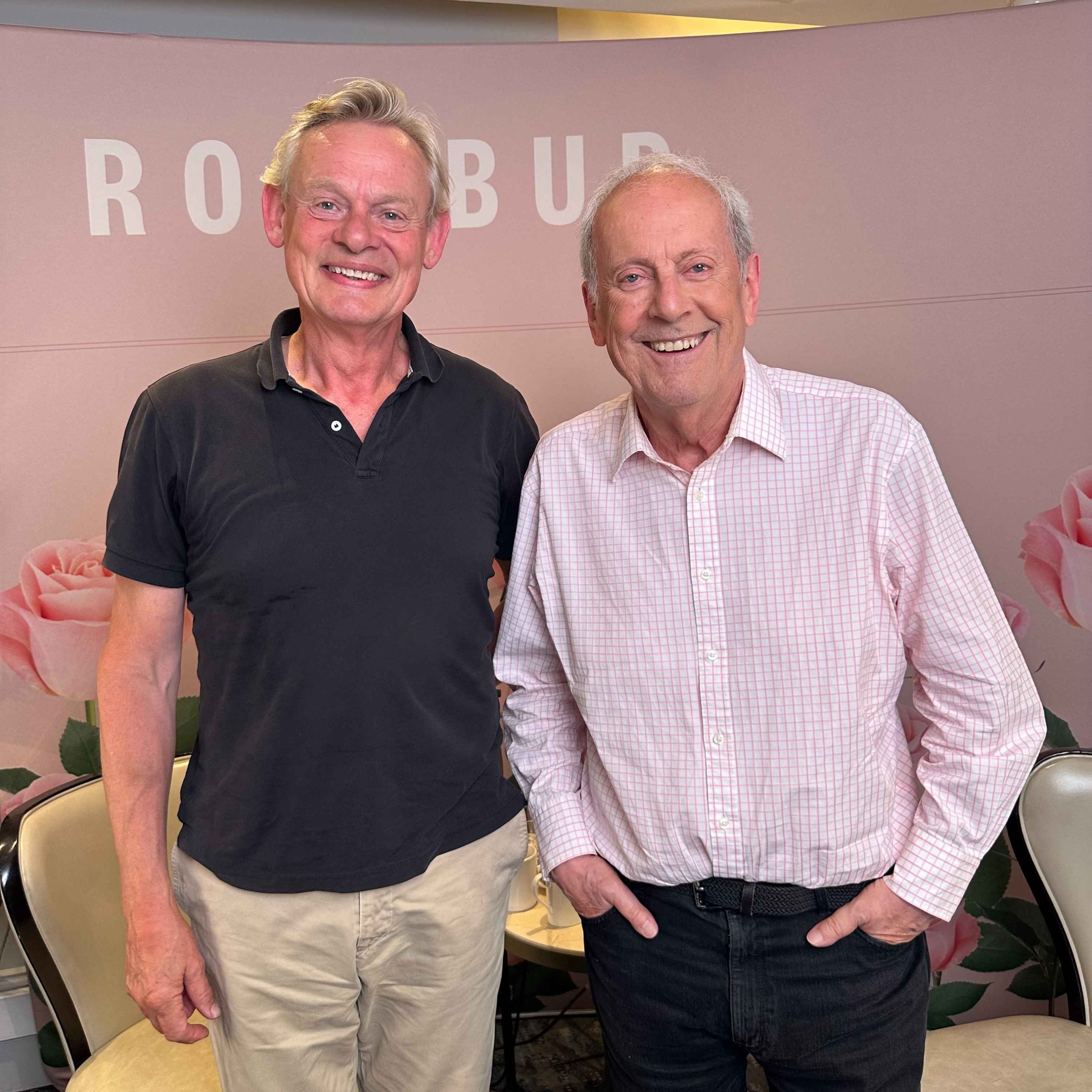
This is a treat: our guest today is the much-loved actor and star of Doc Martin, Martin Clunes. In this gorgeous conversation, Gyles and Martin discuss Martin's childhood - and Gyles's admiration for Martin's actor father, Alec Clunes, who died when Martin was only 8 years old. They talk about Martin's unhappy time at boarding school in the years after his father's death. They talk about a visit to a psychic, and about the importance of animals in Martin's life. And finally, Gyles and Martin talk about Martin's latest book, his life on his westcountry farm, and burials for dogs.
Martin's book Training John and Murray, about training two terriers, is out now and available here.
Our heartfelt thanks to Martin Clunes for this fascinating conversation.
Hosted on Acast. See acast.com/privacy for more information.


