
 Ask ChatGPT



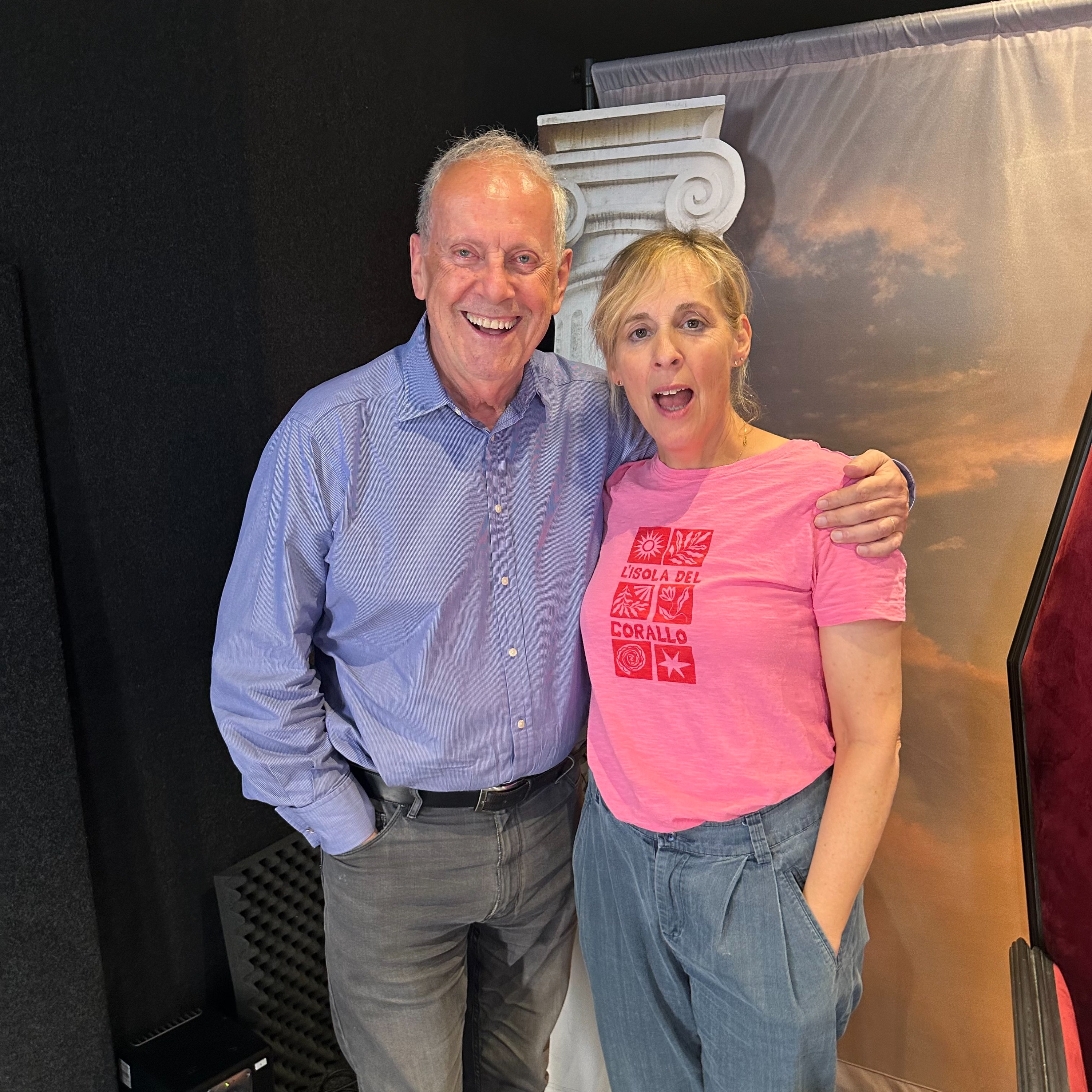
In this episode of "Rosebud," Gyles Brandreth hosts comedian and presenter Mel Giedroyc. The conversation delves deep into Mel's family history—particularly her father's remarkable story of survival during World War II—and her personal memories, providing a rich mix of humor, nostalgia, and poignant moments.
Written by AI. May contain mistakes.

Get the gist, explore an idea or ask about something said.
 Claude
On Rosebud with Gyles Brandreth, what are the key points of this episode?
Searching your listeningAutomatic transcript. May contain errors.
0:04I'm gargling for two reasons. One, I want to clear my throat so that I can be clear as well as concise when talking to my guest today, but also because my physiotherapist, Finola, is encouraging me to drink more water because it's good for me. The problem is, these rosebud conversations, they tend to last an hour. And if I've drunk too much water, I don't want to break the flow, if I'm pardoning the expression, by having to leave the room to go to the loo. So I'm gargling.
0:38Cue the music. Music.
1:02My guest today is Mel Gidroich. I think I've got the pronunciation right. Mel Gidroich. And indeed, we're going to discuss the pronunciation of Mel's surname and her father's proud Polish heritage in the episode. For the story of Mel's family is totally fascinating. It's a tale of exile, of courage and of triumph over adversity. You may think you know Mel by virtue of the warmth and wit she brings to everything she does on television. from the many shows she's hosted with her long-standing comedy partner Sue Perkins, including, of course, the great British Bake Off. But once you listen to this episode of Rosebud, I think you will know her and her family very much better, and you will be fascinated, moved at times.
1:51Actually, really moved. This is Rosebud with Melanie Gedroich, after our, well, I like to think, increasingly famous music. Enjoy.
2:14Mel, before we begin, tell me exactly how correctly to pronounce your surname. Oh, you're very kind. My dad would be so pleased because, my goodness, that was one thing that really bugged him. wrong ways are Giedroyce, Giedroyc Gladrags, Gledroy Giedroyc, Goodrich Giedroyer which I quite like, a sort of French version but the correct way is Giedroych Simple as that, Giedroych So once you've got it you should be able to master it Mel Giedroych Can I just say I love the way that you say Giedroych because that is absolutely perfect because English people say Giedroych you know which is totally fine completely acceptable but you said gedroich and for that i bow to you well i bow to you because i've come to your shrine this is not our normal rosebud studio where have i come to you've come to my coffin thank you so much giles and can i also in this moment of slight gush say that thank you so much for doing my podcast which is where there's a will is awake and you are absolutely brilliant well it was great fun to do because Because we were going to the next world.
3:27And I'm fascinated by all things to do with death and by the year after. And that's good. And you have this studio here in the basement. We're in the city of, is it the city of London we're in? We kind of are, aren't we? Old Street. That's the city of London, isn't it? I do like the walk. I come on the Lizzie Line every... The Lizzie Line, honestly. This is the Elizabeth Line, opened and named, opened by Her Majesty, the late Majesty the Queen. Named in an honour. she saw it and you love it because it gets me to work so quickly Giles and it's air conditioned it's big when it runs sometimes it doesn't but when it runs it is absolutely magnificent have you not been on it yet?
4:08of course I have I was there on the first day were you there with her? I love the London Underground I was virtually brought up on it in the 1950s as a school boy I used to go round and round on the circle line when it was a proper circle and I would get out at Paddington I did my O-level revision on the Circle Line. And it woke me up every time I got to Paddington. I woke up again and I would go out onto the station and I'd give myself a cup of tea as a reward. Oh, I love that. And I'd go back. Do you know what my plan is? And in fact, I want to do it fairly soon, probably in the next three months, is to do the entirety of the Lizzie Line from Reading to Shenfield and read a book.
4:49Just read and maybe go back and forth and possibly even do it a couple of times. Well, there's a book in that. Books to read on the Lizzo line. Come on. Yeah. Why not? It's so good. It feels like you're part of the future sitting on that train. And maybe just books either featuring novels where the star is called Elizabeth or the author is called Elizabeth. Do you know the novels of Elizabeth Gaskell? I was going to say Elizabeth Gaskell, the Cranford. Yeah, that would be good. Elizabeth Bennet, of course. Elizabeth Bennet. So you can have all your favourite books that have an Elizabeth feature.
5:21I like that. All right. Enough of this badinage, Mel. We're going to begin now. And my first question always on Rosebud is this. What is your very first memory? It's a tactile memory. And I remember very, very clearly resting my cheek, my upper right cheek, onto my mum's tummy. and it being the 70s she had a sort of it was a bit of knitwear actually um but it was very very man-made knitwear it was a sort of polyester viscose mix I'm imagining quite trendy and it had bobbles on it but I remember just the absolute comfort she was sitting in a deck chair in the garden in the cul-de-sac outside Leatherhead because we grew up in the burbs and we had these old green shield stamps, flowery deck chairs.
6:18And mum, fag in hand, always committed smoker till she had her first stroke when she was 54. Fag in hand, and I had my cheek resting on that bobbly top. That's my first memory. So let's unpack that. Who exactly was your mother? My mum was an absolute diamond of a woman called Rosemary. Rosemary Gedroych. And her maiden name was what? She was called Rosemary Compton. Oh, how do you spell that? C-U-M-P-S-T-O-N. They're not easy, these family names of yours. Compton. Compton, yeah. Very good. And did she come from a large family? Were there lots of... Yeah, lots of Comstans. They were from the Lake District.
7:06and her great-grandfather had married quite well into mill money in Yorkshire and built a beautiful house on the shores of Ullswater, which is now a hotel. And she didn't like it because it was damp. She thought it was damp because of the lake being so near. Not the famous hotel on Ullswater that has famously had the most wonderful food and was top of the pops in the Good Food Guide. Oh, no, no, not that one. That's Sharrow Bay. That's it. Sharrow Bay. I've never been into Sharrow Bay. I go up to Ullswater every single year because it is part of my DNA because of my mum and because of my grandmother.
7:55But no, the Sharrow Bay was very much out of bounds. I mean, it was so eye-wateringly expensive, Giles, that we would never have gone there. Mum and dad kept things quite tight, kept quite a sort of tight rein on the purse strings. Steak with your mother for the moment. Yeah. What sort of a person was she? Was she pretty? Very. She was a nurse in the 50s. Oh, with a proper sister's belt and all that starched apron. I can picture her. Wonderful. You've suddenly animated, literally. No. You think it's because I'm excited by the idea of a nurse? No, it isn't. It's because one of my sisters was a nurse in the 1950s.
8:36Trained in the Middlesex Hospital. Had two sisters who were nurses. And I can picture the, well, the real commitment that they had. Yeah, amazing. It was old school nursing, wasn't it? Old school. She trained at St. Mary's Paddington in London. And she was 17. She didn't do that well at school. School was not her strong suit, although she was the most intelligent person probably that I ever knew. One of those, just life experience and the most well-read person. But school, maths, not so much. I'm not surprised to hear that she smoked because I remember the nurses that I knew all smoked. They all smoked.
9:14And not the sister I'm thinking about now, but another of my sisters. I remember she used to smoke, she was at a hospital in Tooting. St George's. Yes, and with her girlfriend, the pair of them were smoking in the laundry cupboard. And not my sister, but the other girl. I'm afraid her cigarette lit some of the linen, which lit a fire, which burnt down a whole wing of the hospital. No. It's a long time ago, so I just hope I'm not going to get people into trouble by revealing this after all these years. That's how the fire started. Oh, my. But your mother was, you always remember, with a fag in her hand.
9:52Yeah. The weird thing is, though, Giles, I never remember her smelling of cigarettes. I suppose maybe all the little hairs in my nose were destroyed, probably, as a child by the fact that she did smoke. Or maybe the house reeked, but we didn't know it because we were just in it. She was a very elegant smoker, mum. She regretted greatly that she had to give up. She had four strokes on the trot when she was 54, when I was 22. and the consultant said, Mrs. Gedroych, I will not treat you if you start smoking again. I will no longer have anything to do with you if you continue to smoke. So she had to give up smoking.
10:32And it was her great, great loss and sadness. And how did the strokes affect her? It was pretty bad, not going to lie. We were living very much by the hour. She was in the John Radcliffe Hospital in Oxford. Thank goodness. When you say five in a row, how does that manifest itself? What happened? She, that's a, you know, I've really blocked so much of that time because it was just so dreadful. The first one, I think she, I mean, classic mum, I think pretty much sort of was on the floor saying, nope, I'm absolutely fine. Nope, all good. Is your father all right? You know, one of those incredible, indomitable women.
11:20But it became clear that she really, really wasn't well. They took her into the John Radcliffe immediately. Yes. And then she had another. Were these mini strokes that she had? I think the first two were quite big. And she had one in the hospital. At least she was in the hospital. Yeah. And then she had three more. She had four in total, I think. And how debilitated was she by them? The eyesight was never great thereafter. after it took her about five years to get back to some i remember at her 60th birthday party she she was on sticks and stuff and she really wasn't feeling very well she was never massively well after those strokes if the truth be told but she was such a life force you know i think we got 32 stolen years.
12:09So she died when she was 86 last year. And I think we got... I know. And she didn't lift a cigarette again after the strokes? No. Unless she did in secret, I wouldn't put it past her. I don't think she did. Well, my sister, the nursing sister, she, I remember, her husband didn't want her to smoke. She used to think, she lived in St Albans, she used to think that standing in the downstairs individual loo by the front door, there was a little, you know, a loo by the front door, She would stand on the loose seat, open the little window, and she'd smoke out of the window, thinking her husband. And he was often standing in the garden and she was sort of smoke blowing.
12:44Billowing. Yes. Extraordinary. Yeah. So, oh, well. How interesting. She lived 32 more years. Yeah, she did really well. But was she a different person? She was less feisty. Yeah. She was quieter. And I probably got to know her for that reason. Because before the stroke, she was all action. this was a dynamo of a woman you know she was having three dinner parties a week the house was like piccadilly circus friends coming through all the time everything in motion and did the doctor say what the cause was of the strokes i mean does it run in the family yeah this lifestyle of hers the tension in her yeah she'd had migraines forever i mean they really laid her out probably once every couple of weeks so obviously something wasn't quite right yeah and these 32 extra years were they happy for her was she she always made them happy because she was an absolute believer in life and whatever whatever was going down you know and we all have adversity don't we and she had a lot of adversity I'll never forget the amount of pills she had to take every day it It was just, it was gobsmacking.
13:59And she'd kind of, you know, gulp them down three times a day. Horse pills, tiny pills, pink pills, orange pills. The woman was a sort of walking pharmacy. She really was. But she didn't let it stop her, actually. She was incredible. The first thing I did when she died, and God, it felt good. I went into her flat and I got rid of every single pill. Oh, you began by doing that? Every single piece of medicine, every inhaler, every single thing to do with her being ill. And I filled a massive rucksack on my back and two enormous bulging carrier bags. And I walked into Oxford and I walked into Boots and I just said, my mum died yesterday.
14:44I'm sorry. Can I give you these? And it felt so good. Gosh. Yeah. Go back to the beginning now. She's a young girl. Yes. living in London as a nurse because she's training at St Mary's Paddington. How does she meet your father and who is he? So her mum, Astrid, my mum's mum. Oh, Astrid, that's a Nordic name, isn't it? Yeah, yeah. She was rather an amazing woman. She was an illustrator and did very well at it. I'm very lucky. I've actually inherited quite a lot of her beautiful drawings and stuff. but an artist she was to her very very core she smoked 80 a day and had her first heart attack when she was 32 but she knew lots of artists in London she was part of that whole scene and one of her best friends was a Polish emigre artist called Elena Zelenska who'd come over during the war and sorry this is getting a little bit convoluted and complicated but it isn't I'm quite clear on this okay so this Polish artist her best friend from the old days was my grandmother who had made it over to London in 1947 so this lady is your father's mother Anna Anna Gedroy and just for people who don't know about this why were so many Polish people coming to London at this time, during and after the war and right through the 1950s.
16:16Yeah, it's extraordinary and it fascinates me still. And I want to read much, much more about it. I've ended up living in West London, very close to Northolt Airport. It's a place that I've always felt very at home. And I think it's because there is and always has been historically a large Polish community in Greenford, in Ealing, in Perryvale, all those parts of West London. And the reason being that that very airport from where those incredible pilots flew during the Battle of Britain, a lot of whom were Poles. So I think London has always been a place of sanctuary and safety because we were allies, first and foremost.
17:00and I think the Poles felt that England was a place to look up to and it was a place that had welcomed those pilots. For me, it's about those pilots. I'm fascinated by them. Oh, it's amazing. I mean, the heroism of the Polish pilots of the war, I think, is what made Polish people welcome in London in the 1950s. Totally. I remember when there was a Polish shop that opened near us. They were considered, oh, we must support the Polish shop because of the contribution during the Second World War. So tell me exactly then how your father and your mother physically meet. So Astrid, my mum's mum, was a great party giver.
17:47And she invited my dad's mum, Anna Gedroich, to come and did say, look, do bring anyone you want. Open house. So my mum was 16 and this party was in full swing and the doorbell rang and she opened the door. And there was this rather dashing 23 year old with a girl on each arm. Oh. At the door. She was very, she was very full of spark, my mum. She was always dancing. She was always hopping around. and even though he had a woman on each arm he was slightly thinking well who's this amazing amazing girl who's opened the door so in he came and I think you know there was a substantial age gap but he just thought oh she's really great she's really lovely and I think my dad was he'd been through a lot to get to London when you say been through a lot what had he been through He'd been sent to Siberia aged 11 with his mum and his two sisters.
18:52This is Soviet Russia sending Polish people. To die, yeah. Literally to die. To die. On trains. Why were they doing this? So my dad's father, Tadeusz, who I have to be slightly careful, I'm not into psychics at all. my beloved comedy wife Sue Perkins she digs all that I don't dig that I once met a psychic and she said sorry can I just can I just have a word with you and I said yeah sure we went into another room and she said I've got to tell you your grandfather is right there with you the whole time and he doesn't like the way you're dyeing your hair he's really pissed off and ever since then I've got this feeling that he is he's around.
19:43Anyway that's beside the bye because the weird thing is and it's really sad actually the last time he would have seen his then 17 year old daughter he was really pissed off
19:59it's just so sad because she was wearing lipstick and he got really cross well you would if you were of that generation and he was angry with her was he and then what happened to him he was taken away by the Russians oh my goodness yeah he was taken away by, sorry Giles no not at all, I mean this is horrific isn't it there's no denying it yeah this is why to this day if you meet young Polish people they are fearful of both Russians and indeed Germans as well my experience of Polish people but so there was a Soviet Union policy was to move Polish people from occupied Poland? Well he was then it was eastern Poland right on the far east so it would now be Belarus not a great place to be at that time.
20:58And they simply put Polish people on trains and sent them to Siberia normally they in theory they were repatriating them they were saying sending you to the could live a better life but in fact they were being sent to die in camps well tadeusz was an enemy he was considered an enemy of the people for what reason was he because he was a landowner and he was a judge and he was a senator so he was a figure of note that's why he was noticed exactly as a landowner as an elected person as a judge so he was rounded up with other leading figures. Yeah, and he would not have wanted to bow down in any way.
21:45He'd have said I'll stay with the people and I'm not going to run away. Gosh, so what year are we talking about? 39. So the Germans are coming from one side, the Russians are coming from the other. They're appallingly placed right there in the middle and they came to they came to the house and picked him up and took him away. And that was the last time my dad ever saw him. And who told you this story, your father? Dad wrote a really good book, actually. He only started it when he was 80. Mum had been nagging him all his life, saying, Michael, you've got to write this story. You've got to write this story.
22:23And we knew bits and bobs, of course. You know, we knew the kind of broad brushstrokes, but we never knew the detail. So he wrote it. it's called Crater's Edge. It's a fantastic read. And it's seen through his 11 year old eyes, really. 11 to 16, I suppose, or 17, which is when he landed in Britain. So how does he manage to escape to Britain as a young person? Oh my God, my grandmother. The networker, the absolute grit of the woman and the faith of the woman. So they end up in Siberia where they're dealing with, they haven't got any proper clothes. My dad grabbed a pair of boots, which actually belonged to his dad and they were too big for him.
23:11So he was slopping around in a pair of his dad's boots. Can you imagine? Temperatures got down to minus 40 and they were there. They did two winters in Siberia and they were not sent to a gulag. But often I think what Stalin would do was just get, as you said deport people and then he he knew that the cold would just finish them off so get rid of them and whatever and yeah the train took them to a place called Nikolaevka where they literally which was just tipped out and their first night in Siberia they were lying on the ground in this god-awful middle of nowhere station with nothing and it's extraordinary isn't it Your father at this age is 11.
23:56And then what happens to his parents? And so how does he eventually come to England, your father? So Tadeusz, they heard nothing of. There were gobbets of little information saying, oh, I think we saw him in a prison, blah, blah, blah, but we're not sure. Oh, I think I heard his name, blah, blah, blah. And my grandmother prayed and hoped against hope, obviously, that he would survive whatever the hell was going on. but they found out i don't think it was till the late 40s that he'd been tortured and held in a prison and then they were marching all the prisoners east and um he had asthma and he couldn't keep up so they shot him on the side of the road the russians shot him so this is your grandfather yeah he's shot by russians and where is his son at that point your dad he is in in the depths of siberia i think it was 1941 that tadoosh was shot gosh yeah so dad's already in siberia um still with your grandmother yeah and his two sisters two older sisters yeah so my grandmother had managed to get them all into a room with two other families.
25:17And God knows how, Giles, but they survived for two years on very, very, very little. And eventually they escaped to England. So they did an amazing journey via the Middle East. So General Anders, who's this kind of Polish hero, I'm sure you know about him, He's just an absolute god. I mean, somebody needs to make a biopic about him because he's a hunk for a start and also did some incredible things. General Anders' mission, once the Russians had allied themselves with the Brits, was to try and get together a Polish army. so he made a bit of a deal with Stalin that he would try and comb through the wastelands of Siberia and other parts to find men to create a new Polish army but very cleverly on the way he would try and get civilians out as well extraordinary and did it all under the nose pretty much.
26:30So Anna, the networker, obviously knows that this is going on. And she just, God knows how, there are six, I think, bits of good luck that happened to them. She managed to get them out under the auspices of following General Anders's army to Iran. This is an epic movie in the tradition of Dr Zhivago, isn't it? I know, I know. So your dad joins this Polish army. So Anders, as well as trying to collect this army together, had also set up military schools. So dad aged 13. But before that, they're in Pahlavi over the Black Sea in Iran. And there's a huge camp, a refugee camp that the Allies have set up.
27:18and Anna looked around and she saw people dying and she didn't like what she saw and she said we're not going to stay here so my dad and his sisters were probably sort of thinking but hang on we're with the allies this is all good can't we just stop here she said no we're not going to stop here so they marched into Tehran the four of them and she found a little room above a cinema and they made that their next base. Gosh. And Dad watched all the films. He made friends with the projectionist. All those brilliant films coming out in the 40s. But yes, so they had this little room and Anna got hold of a little stove.
28:07She set herself up as a seamstress, I think, and they just made it happen. they made a life. And actually, Dad loved Iran. He adored Iran. How does he get from military school to England? Well, because of the links, the strong links between Poland and England. I think they did a deal with the English government where lots of them could go and make a life in England. And their first port of call would be a sort of encampment. I think Dad's was in Bedfordshire. so he arrived in Southampton and then would have gone to Bedfordshire and then I think a year later his mum and his sisters were allowed to go and join him and then they moved to West London West West West London What an extraordinary childhood that he led I know I mean amazing and what mark did that leave on him?
29:01Everything absolutely everything good and bad I would say he was a very very strong guy my dad so principled so quite scary in some ways you had to really get to know him although with my mum he was just a complete softy an absolute daughter so she is 16 he is 23 at that first encounter yeah how quickly does it blossom into a relationship that leads to a marriage. So they married when mum was 21. I think her mum rather had another of her daughters lined up for him. So they did go on a couple of dates, I believe. But dad always had a night for mum. And does the story end happily? Do they live happily ever after, at least until she's 54?
29:55Yeah, they do. They really do. It was incredible. They had an extraordinary friendship. And was he good? I say after the strokes, was he good with her? He was extraordinary. Yeah, he was extraordinary. And why did you, what's the first home you remember? And why did you settle there? Leatherhead, the Burbs. So dad in the 60s, so he was an aeronautical engineer at that time and got this amazing opportunity when mum was 22 and he was 29 to go to Hong Kong to become part of the team running Kai Tak Airport. And how many children did they have in all? Four. Four. And where are you in that begging order?
30:35The youngest. You're the youngest, the last. So where were you actually born? I was born in Epsom District Hospital near Leatherhead. Yeah, the others were born in Hong Kong. Well, my sisters were born in Hong Kong and my brother had been born in Southampton before they left. What's the gap between you and the nearest? Six. Six years. So you were literally, Well, at least they were still at it. That's something. I know. Isn't that great? They weren't expecting anything and this little surprise came along. I know. I know. Mum very much smoking on her way into the delivery ward. I mean, literally, fag in hand.
31:07Fag in hand. 1968 Epsom. Literally, put out the fag, stub it out, go in, deliver the baby. I mean, so cool.
31:21and did you do you speak english at home that was all you spoke at home annoyingly yes i've got such beef with my dad about this because a lot of my friends who are half polish half english speak both beautifully and we were we were just dad why did you never why because your mother didn't speak polish she spoke bits and bobs because babu nya my grandmother anna lived with us she came to live with us in the 70s so mum actually did and she cooked beautiful Polish food and she learnt a bit of Polish with my grandmother but dad sort of felt he had oh he loved the queen so much you would get this he adored the queen he pledged allegiance to the queen when he renounced his Polish citizenship and that was a big deal for dad big deal I mean his sensitivity about the pronunciation of Gedroich reminds us that his Polishness was the essence of him.
32:16And it is clearly the essence of you in many ways still. We're about to get Polish passports, Giles. Oh. With your father and mother, what is your... Give me an example of them at their best with you. Ah, the 80s. Ah. The 80s was so much fun. We're living in Oxford. You've moved. We've moved out of the Burbs into Oxford. so they'd been through Oxford on their honeymoon they borrowed 50 quid from a friend one of dad's uni mates I think had lent them 50 quid to buy a car they went to Cornwall for their honeymoon and they stopped in Oxford and mum there's a picture of her standing outside the Sheldonian Theatre in Oxford and she's got this kind of face of pure glee sort of putting her hands up like that and she said one day we're going to live here so that's why they moved to Oxford.
33:12Your mother lived in the end to a good age. Yeah, 86. And what about your father? Dad lived to 88. Oh, wow. I know, so good. Amazing that he did. He never did a stroke of exercise in his whole life. This is encouraging news for smokers out there because your mother lived to, what was it again? 86. And he lived to 88. 88. Smoking and no exercise, surviving four strokes. What a family. I know, I know. But mum used to get very cross with him and say, Michael, you've got to do your exercises. But he just, after Siberia, he didn't want to move anywhere. He didn't want to walk anywhere, really. He just wanted to be at home with mum, with his books, and with convivial chat.
34:00And, you know, that for him was his absolute happy place. And what have you got from these two people? I imagine from your mother, good heartedness, good sense of humor, your energy. That would be right. But what did you get from your father? Dad had a cracking sense of humor. And dad actually gave me a joy for TV. Dad loved the telly. And he loved Les Dawson, Morecambe and Wise, all the old greats. We watched carry on films together. We watched a lot of telly together. And he loved British humour. He loved old school sitcoms. Dad's Army. Oh, my God. It tamed our fault. How wonderful, this Polish boy.
34:48I know. All that experience. I know. Having these archetypal British forms of entertainment. Yeah, he really did. As a little girl, what sort of little girl were you? What was your first friend outside of the family? Mr. Miles, the builder. Oh. who came to build an extension on our house so that my grandmother could come and live with us. And apparently I had this book that I was obsessed with called Lives of the Saints. I would sit on, we're a very Catholic family, and I've still got that book actually. It's really scary. It's all about the martyrs. But I would sit on an upturned crate and read the book out to Mr.
35:29Miles, the builder, and very sweetly he would sort of nod and listen. Carry on building. As I told him the story of how St. Lucy was kind of, you know, a sword was plunged into her heart or something. Awful, yes. Oh, yeah. Poor St. Catherine on that Catherine Wheel. Wheel. I know. It's too grim for words. It's horrid, isn't it? It's horrid. Clearly money was not all over the place, but the heritage was a kind of, in Poland anyway, a rather well-to-do heritage. Yeah. and clearly your father was highly intelligent your mother was a nurse there was a reasonable income coming in him working in aeronautics he gave that up when they came back from Hong Kong he took on another job he worked for an engineering firm and that's the reason that we moved to Leatherhead and they bought a little plot of land on an estate that was built in 1967 and then I was born in 1968 so it was pure late 60s into 70s Burbs Burbs childhood which my dad must have found quite odd because he was an intellectual really my dad he'd be sitting on a Saturday researching his family tree and doing all that sort of stuff, that was where he was most happy.
36:51But he felt safe and secure in the Burbs And in his head, he was able to do all this delving into where he came from and his Polish origins and the family story. Extraordinary. So, you go to a primary school? Yeah, St. Peter's Ashton. I blooming loved school. Not at the beginning. First two years was horrific because I was bullied. But when that stopped... Why were you bullied? I was too keen, I think. Do you know that thing? I do, I do, having been too keen all my life. I feel that with you, Giles. There's a kinship. There is a kinship. We were sitting in the front row at school. I was eager with my hand up all the time.
37:32I was too keen. Yeah. They don't like it. They don't like it. They don't. They really don't. I'm interested you didn't go to a local Catholic school. Oh, St. Peter's Catholic. Oh, what? Fine, fine. St. Peter's Catholic. So I did my communion and all that stuff via school. And did that mean something to you then? And does it mean something to you now? Yeah, it did. It really did. my Polish grandmother who was then living with us made my communion dress and she didn't speak very good English at all but we were best of pals even though there was a language divide and I remember it being very very important for the church was at the centre of her life, her faith was absolutely the centre of her life so I think that sort of trickled down Do you still go to church?
38:21Me, now, I'm not very good, Giles. The truth is, there's a lot of stuff about the Catholic Church that I can't square. I just can't square. So go back to your being at school. Your secondary school? Secondary school. Is again a Catholic school? No. So, my sisters have gone through the Catholic school. We then moved to Oxford. Not Oxford High School for girls. Yeah. You lucky girl. I know. Well done. I love that school. Well, you were blessed. I know. It's a passport to success in life. Do you think? I am. Well, no. Listen, I was at St. Peter's and God bless St. Peter's. It taught me so many important things about life, St.
39:05Peter's. Give me one. How to, well, getting through the bullying, that was a massive lesson. But it was also, I met so many extraordinary and different characters at that school. leon lloyd gallagher let's talk about them just for a second twins skinheads i was going out with both of them simultaneously age 10 yes and um what does going out age 10 involve it meant going round to their house and oh their mother was marvelous she was an ex-model had an enormous bleach blonde plait roped around her head and they had leopard skin in their sitting room and sort of onyx ashtrays I'd never seen anything like it and they had a swimming pool Leon Lloyd and hilariously in the 90s it was so sweet mum phoned me up and said Melly darling those Gallagher boys have done rather well have you seen their number one?
40:14And I said, Mum. Oh, bless her. She thought it was Lee and Lloyd. I said, Mum, it was Liam and Noel. Not quite Lee and Lloyd. Yeah, they were rather extraordinary. Can you remember the first boy you held hands with? Graham Francis. Ah. Youth Club Disco. Excellent. Yeah. So how old are you then? I was, I think I was 11 probably. It must have been just... Oh my gosh, this is very young. You held hands? Held hands. Did you kiss? I think he did go in for a bit of a peck. Oh, bless him. Yeah, smelt of bolognese, not good. Oh, no, not good. 70s bolognese, do you know what I mean? Well, you were learning about life, weren't you?
40:51And boys, any 11-year-olds listening, hold back the bolognese before you go in for the initial snog. I had that tangy, sort of slightly sweet, tangy 70s over-sugared bolognese. Can you remember the first boy you saw naked? oh my gosh first boy i saw naked i never saw my brother naked that's a relief i know you don't want to see a brother you certainly don't certainly never saw dad naked no please this wasn't that this is not where i was hoping this question was going yeah yeah do you know i know exactly when it was and this is awful i was living in rome so i went off to live in rome when i was 18 I got flashed at oh that's the first time I've ever seen oh my gosh that was the first time this is not where we expected this story to go I got flashed at in a park it was at the Aventine that beautiful church where you look through the keyhole and you can see across to the to the Vatican I mean this this is extraordinary we've got Catholicism we've got the Vatican we've got this awful moment of being flashed at.
42:05How bizarre. It's such a funny thing to do. It's such an awful thing to do. I mean, funny, peculiar. Yeah. And I remember as a young gal being sent off to Rome, I remember actually somebody had given me a very good piece of advice because flashing was quite, it happened quite a lot in the 80s. The thing you had to do was laugh. If somebody did it, you laughed. Brilliant. And blow me down. I laughed and he ran away. very good boom the power of laughter the power of laughter yeah mocking laughter mocking laughter that's the first time I had seen some male bits and bobs so let's finish you at school yeah at school what sort of a girl this is your secondary school tomboy tomboy high school for girls tomboy all about the friends friends friends friends was there a special teacher er yes several er the PE department I mean absolutely key in fact Sue and I wrote pretty much our first sketches around PE teachers we were obsessed with PE teachers did you fall for any of them?
43:14the sketches that we wrote were about the simmering unfulfilled passions which happened within the PE department which was great fun and I think I probably did fall for a couple of them who didn't one of our teachers, PE teachers, had played for the England hockey team and she had a starched pleated skirt that would sort of crack against her concrete thighs as she held it up and down the hockey pitch. So you couldn't help but... It's a powerful picture you paint for me. It has no erotic charge as far as I'm concerned, but I'm pleased it worked for you. For a young girl in Oxford, it was, yeah, it was everything.
43:59And was your ambition then to go to Oxford? No. So mum, really clever, she knew me really well. She got me and my sister tickets to see the Cambridge Footlights, who were appearing in the Oxford Playhouse. I think I must have been 14. I was obsessed with comedy already. And she said, I think you might quite like this. I'd never heard of them. And blow me down. It was like I was sitting on the edge of my seat watching these great students do their thing. And it was like a shaft of light just appeared and angelic voices, you know, sang. And I thought, this is for me. This is what I want to be. This is actually exactly what I want to be doing.
44:48Was it a generation of Cambridge Footlights of which we've heard of any of the people that you saw? Well, here's a strange thing. yes um yeah hugh dennis was was one of their number but this is the mad thing and i love this so much and i never found out about this till later little did i know my future husband's brother was playing bass guitar in the pit well there you go i just that makes me feel so oh i can't tell you how that makes me feel i do i can see how it makes you feel because you love all these connections. I love it. I love it. Like it all coming around full circle. Exactly. So Cambridge Footlights, age 14, you think this is for me.
45:31So you're going to go to Cambridge in your head. You're going to go to Cambridge and you're at a girls school where going to Oxford or Cambridge is part and parcel of what they do. So it's not a struggle for you as it would be for many children. No, no, that's that's I mean, a lot of people did then go to Oxford or Cambridge from that school. I'm not sure what it's like now, but I, this is going to sound terrible, but I didn't necessarily think I was going to get in, but I thought I'm going to give it a whirl because of Footlights. I wouldn't get in now, for sure, because I'm a bullshitter. And I just wouldn't.
46:13You've got to really work solidly and very, very hard, I think, now to get into that kind of university. I definitely wouldn't get in now, but I was good at languages and I could talk the talk. It's interesting. We're going to explore before we leave this sort of self-deprecating line that you adopt about yourself academically, which I want to know why you do that, but we'll come to that in a moment. You take A-levels and you get good A-levels. Yes. Exactly. And you get a place at Trinity College, Cambridge. Cambridge, yeah. Which is the largest college at Cambridge. I mean, almost anybody you care to mention has been there.
46:52And what are you going to read? French and Italian. French and Italian? Fantastic. I know. Isn't that lucky? Aren't you lucky? I felt so lucky. And this is the three years that defines your life. Yeah, four, because I was a modern linguist. Oh, they do four years because you have a year out to put it around in Ravenna or somewhere. Yeah, Bologna. Yeah, of course. You arrive at Cambridge, relatively innocent as a person in some ways, from this very secure family. And first year, are you in college? Yeah. Which is nice. It was so much fun. My room, my first year room, was right on the main street.
47:35It was on Trinity Street. and so it was windows open and it was just basically all the mates coming in, seeing pals out of the window. It was so much fun. And did your parents give you any advice when you set off for this four years away from home? Mum and Dad were so chilled with regard to everything to do with me because I was number four and they were tired and I was under the radar. Had you been abroad before on your own? You'd been to Rome, hadn't you? doing your Italian A-level, where you met... What is flasher in Italian? Oh, do you know? You should work that out when you're doing... Because people have asked to franchise Rosebud, and there may soon be an Italian version.
48:21We can propose you as one of the original guests. Il flasho. Il flasho di gusto. Il flasciatore. Il flasciatore di gusto. Ma guarda. I need to know, actually. I need to know that. Can I find out? Yeah, we'll let you know. Are you going to look it up now? I'm going to look it up now. I'll keep talking. Keep flashing Italian. But I worked in a hotel in Rome, which was just... Oh, yes. Fascinating. I've always wanted... In my mind's eye, I have occasionally worked in hotels. It's fascinating. And that's how I learned the language. I was on reception and I was working in the garden. I was waitressing.
48:56I was in all parts of this small hotel. It was a bit like Forty Towers. But, my God, it was such a great way to learn the language. I love speaking Italian actually I really do so you're now going to give us you've checked it out yes right I want to make sure it gives me the right flasher not as in the right no I know what you mean but you don't want somebody at the lights who is flashing at me exactly you want actually you see no they've given me lampe ecco they've given me lampeggiatore which is obviously something to do with a light lamp a lamp but in Italian flasher can be translated as exhibitionista.
49:38Oh, an exhibitionist. A person who exposes themselves or lampeggiatore, a flashing light. Yeah, the specific translation depends on the context. It's exhibitionista, which is quite a nice word. Actually, that's a good way of putting it. Somebody who is an exhibitionist. I'm not finding anything more rootsy. I wonder if there's a bit more of a kind of... Well, if our listeners find something, they can send us a little message. and we will share that and make sure it gets back to you
50:12So you arrive at Cambridge and you feel you are in heaven I couldn't believe it Do you get involved in the Footlights quite early on? No I was scared The first term I was just absolutely no, couldn't go there I didn't even go and see the Footlights Panto I was so in awe. Is that mad? It's mad that. But then I think it was a pal who said, look, I've seen a thing. There's a notice up saying they're doing auditions for the Footlights tour ending at the Edinburgh Festival. I mean, can you imagine anything better? And they'd seen this notice up and they said, you should audition for that. Just go on.
50:52Nothing to lose. And I thought, OK, well, I need some material. So I worked up some pretty abysmal monologue and went along and blow me down, Giles Brandreth. I got on the tour. It was, oh, it was unbelievable. It was unbelievable. And we did the Oxford Playhouse. And I remember being on stage thinking, oh my goodness, six years ago, I was in... Looking up. Yeah, I was in looking up. It was a moment. It was a real moment. And was it at Cambridge that you met Sue Perkins? Yes. At the Footlights? So she was the year below me and we met. When she looks older, it's hard. Yeah, child. Those cornflower blue eyes, Giles, you know how to work them.
51:40Go on. You've got good eyelashes as well. So the tryout nights that Footlights used to organise in the basement, sticky floor, smoky, classic, real sort of atmospheric and it was my second year and I was attending one of these tryout nights. they're called smokers and there was bloke bloke bloke bloke bloke yeah whatever yadda yadda yeah some quite good some quite funny and then this one girl appears at the end and she's got dark black spiky hair she's got a fag on the go dm boots black jeans jumper susan perkins brought the house down what was the material well this is how she rolls she'd sort of made it up on the spot she did about five minutes about being at an all-girl college which she was and it was about being in the bar at an all-girl college and it was hilarious perfect observational comedy and what were you giving what was the kind of thing you were doing i was standing at the back also smoking of course bit of a svengali figure now because i was a second year and i'd done the footlights tour um i was in some awful rave gear giles because it was the summer of love 1988 And so I was in a smiley T-shirt, bandana and some acid house shorts, let's say.
53:04And I went up to her after her gig and I said, Susan, my name is Melanie. I'd just like to say I thought that was very good. I thought you did very well. Really patronizing. From a great height you said this. Well done. Absolutely ridiculous. And we became friends. That's what happened. We became pals. And we didn't actually work together really until after university. We were friends. That was the most important thing. And we say this to this day. That's the most important thing about our double act is our friendship. Yes, because you've done so much together over the years and a variety of things.
53:41Obviously, funny things and some presenting things. Yes. What was the worst experience from your point of view? Never mind the audiences. Leighton Buzzard. Oh. I'd say it must have been 1994.
54:00The Buzzard. It went so badly, Giles, that they wouldn't let us leave the theatre via the route that the audience were taking. It was one of those. It was open up the back door. There's the route to the station. Good luck, girls. Off you go. But they still paid you? I believe we did get paid. but we performed an hour's material in 35. Yes, that's always the mistake though. Well, we felt the audience and we thought, we better just speed this up because this isn't going to well. I started out with Bernard Manning. Have you heard of Bernard Manning? Oh, yeah. Who was appalling but... They talk like that, didn't they?
54:38But he was very funny. He was completely unacceptable material. Terrible, terrible. And I was at his club and I was a kind of warm-up act for him and he said to me, the worse it gets, the slower you must get. You will want to go faster. Slow down. The louder they are, the quieter you are. And I found over the years it works. Really? You've got to have nuts of steel to do that. And he did. And literally, I think. Yes, yes. Manning. How extraordinary, John. What a curious double act. So you and Mel, Mel and Sue became a kind of double act. what in a nutshell does she give you and you give her still i mean obviously the friendship goes on has it changed in nature no i can honestly say we sit down together and we all we do is talk about the past and laugh we never do any work that's that's an that's an intrinsic problem and of course you sound very alike oh do we yes and the rhythm of course the pitch is different but you sound sitting here with you if I close my eyes but I was very interested at some other time we were talking about her and I was telling you about her episode of Rosebud and how raw and vulnerable she was and I got the impression that you thought I must protect her are you the more protective of the two do you think I think no we protect each other absolutely and she would I say this I mean I hope she would if you're listening mate I hope you would I think we would we take a bullet for each other.
56:09I think in the double act, I probably come across as the slightly, you know, the ditsier end of things. But in real life, as you know, I mean, she's an absolute softie. And I think I'm the gritty. She is. She's so sweet. And as a result, I think she's had some challenging times in her love life. Yeah. Whereas have you had a more straightforward love life? I would say so. Yeah. I mean, did you have before your husband, did you have a serious boyfriend at any stage? I played around quite a lot. Oh, you played around? The 20s. I was a bit giddy. I was a bit giddy. Do you regret that now? Or at least you've done it.
56:45You did it. I mean, I wasn't like I wasn't exhibitionista. Exhibitionista. Exhibitionista. Exhibitionista. My God. What's happened to my exhibitionista? Exhibitionista. I wasn't doing that sort of thing to that degree. But I had a good time in my twenties and I didn't really hurt yourself did you were people do you were you somebody who I think I hurt other people I was one of those I was a bit I just didn't want to commit I was a bit like yeah whatever awful so you you had a bit of a relationship then when it was boring you moved on and they were still keen and some of them were some of them weren't and did people in those days ghost people this has become a new phenomenon I have children and grandchildren so I know about these things and I work on this morning so I'm surrounded by young people and people seem to end relationships now by non-communication isn't working out you quote is you ghost them how did you drop your friends I think I probably did ghost a couple of people actually which is and in those days there actually was an excuse for it because there was no way of communicating but you could send a goodbye note was there a messenger service in Cambridge at that time because when I was a doctor there was a messenger service so that you could write a note and it would be delivered to other colleges several times a day.
58:03Oh my gosh, I'd forgotten about that. Do you remember a messenger service? I don't think we had. I used to send telegrams to my girlfriends. Oh, that's romantic. But there was this internal messaging system. So you could have sent notes to them saying, nice notes saying, you know, dear Joe, it's been such fun. But for me, it's not working. I know you'll understand. I don't think I... Love. I think I left of the... Do you know what it was? And I probably got too big for my boots. It was the Footlights Tour. So that was coming up at the end of my first year. And I felt quite good. I felt quite confident.
58:39And I was having a good time. And there was. There were a couple of not great bits of behavior. How were two-timing? There was a little bit. I'm not going to say two-timing. I'm going to say conscious overlapping. Conscious overlapping. That's what it's called now, is it? I don't know. Conscious overlapping. He hasn't quite left the room, but oh, here's the other one. Oh, that's awful. No. Well, it's not awful. It's your story. Yeah. And so... It's not great. Well, but it was fun. It was worthwhile. It was... It made for some good adrenaline and drama, which I think I probably enjoyed. Does it then make settling down difficult?
59:19I think it makes it a relief, actually. I had no intention of committing to anybody until I met Ben, my husband And when you met Ben, your husband, was there a moment like your parents had felt when the 23 year old and the 17 year old There was There was a little Yeah, there was I looked at his shoes and I thought, I've come home Oh Battered blue deck shoes There was something about them I just thought, oh, that's so great. And then how quickly after that first boat shoe encounter? I was a bit proud because we were at a dinner party where we'd been sort of set up. I think they thought, Ben, you're getting on a bit.
1:00:08Mel, you're getting on a bit. Let's see if this works. And I walked in and I smelt it. I thought, hang on, there's a set up here. and I am extremely proud about stuff like that. So I didn't talk to him. I clocked the shoes but I didn't talk to him. Well, I did. We shared a cab after the dinner party and he left the cab first and I just thought, I'm an idiot. That guy is great. Why didn't I speak to him? And did you share numbers? No. Gosh. I went off on a tour with Perkins and so it was months before I was back in the mix. And then you chanced to meet him again. Chanced to meet him again. Had a communal friend who was a journalist who was going off to South America to live in Colombia for a bit.
1:00:55And he said, look, I'm going down to the pub to say goodbye to a few people. Do you want to come? And I was sort of like, yeah, who's coming? He told me the list of people. And I said, hang on, Ben? And he said, yeah, Ben. So I went. And that was when. And then you got married, formally married, proper Catholic. A specific marriage? Proper, good old, Catholic shotgun wedding. Ah, oh, shotgun. Yeah. I'm four months. No. A bump in evidence. Bump in evidence. Oh, my God. Didn't go down well with mum and dad, I can tell you. Indeed. Nor indeed with Father Joseph, who was conducting the... Oh, you didn't mind.
1:01:36He was great. Well, he must be used to it because now people bring their children to be, you know, page boys at the wedding. He was so cool. You know, the first thing he said to us when we went to our, you know, you go for a few sessions. Went to our instruction. Father Sean, he's absolutely brilliant. I adore the guy. He's a really good egg. So we went along and we said, Father Sean, we want to get married. And he said, well, why the blazes do you want to do that? Oh. That was pretty cool. Pretty cool. Because then you had to think through, why are we doing this? Yeah. Why are we? It's not necessarily.
1:02:08We were doing it because my dad would have got the shotgun out. That's why we did it. Is that really why you did it? Or do you now think actually it's a good thing to be married? It's a really good thing to be married. I love being married. That's all I can say. I can't quite put my finger on it, but I love being married. Do you think Ben does too? I think he does, yeah. I think we love being each other's wife slash husband. We're almost at the end of our journey together. So I have a couple of questions to ask you. When I say the word to you, joy, joy. Joy. What's the first thing that comes into your head?
1:02:42Joy, a moment of ecstasy. Oh, man. It's Ullswater. Ah? It's Cagoule. Oh. It's Light Mizzle. Oh. It's the family. We're walking, and we've got a really dang good picnic in our bags. And this is your current family or your old family. Again, you're going full circle. You're going back to your mother's roots in Ullswater. Yeah. with your modern family your children there are two of them now in their 20s what gender were they? they are girls and I'm so delighted the one thing I've been able to pass on to them, the love of walking and since the girls have left home we have started doing walking holidays oh my god Giles heaven Heaven.
1:03:38We've done Crete, South West Crete. We've done... It was the right month because it got me too hot there. We went in April. Thank goodness. We did the rugged mountains of Alicante, life changer, in October, again the right month. We did Bologna to Florence, a pilgrimage. Incredible. And the penultimate night, so you're in Fiesole, outside Florence, we stayed in this place I swear down it was the most beautiful place I've ever been to called the Benchista it's just like a family run hotel and it is the most and you get this view over Florence, unbelievable walking holidays Giles, are you interested?
1:04:22I'm going to be no I love a walk I love a walk but I like a pilgrimage moment of sadness, what comes into your head when I say a moment of sadness the parentals dying yeah yeah it's got to be it's got to be and with your podcast where there's a will there's a wake which people love and which i've now done and love um do you think i mean it's it's fun but it's also actually occasionally quite deep it's an interesting roller coaster for a podcast do you think about your parents when you come to do it a lot yeah and actually it's really interesting with guests that come on you being one of the shining lights and thank you so much you were absolutely brilliant we have a lot of guests who come on who are really good at chatting like your good self have tons of stories like your good self and then you get to the nub it's really interesting because you know death is the only thing we have in common isn't it on this planet really well I like to think we have love in common we have love in common you're absolutely right On a good day.
1:05:26Yeah. We end with me asking you, you've lived this very interesting life, full of success and joy, this fascinating family, your marvelous mother and your father with that extraordinary suffering childhood and then his strength after it. What have you learned? What's the lesson you pass on to your two girls and to us? What has life taught you, Mel?
1:06:02enjoy every second enjoy every second actually that sounds very pressurizing maybe not every second you say to flow and is it vita yeah and it means life obviously in Italian and floss Florence floss and viet That's what you call them, Floss & Wiet. Floss & Wiet, yeah. I'd say to them, it's really hard when you're young, though, when you're 23 and 21, the last thing you want is your mum saying, oh, enjoy every minute. Because when you're 23 and 21, you kind of think that you're immortal, don't you? I definitely did. But now... I still do. Bless me. But that's brilliant, though, Giles. And that's why you are Giles Brandreth.
1:06:43What is the worst experience of your life? Because your attitude is very positive, is there? Yeah. When I say suddenly, obviously, sadness, it would be the death of your parents. They were so key to you. But if I say pain, anguish, pain, we haven't solved why you're self-deprecating. Fortunately, you didn't say I got a lousy degree because you do say it in all the interviews and we don't need to hear it anymore. The truth is, if you felt you got a lousy degree from either Oxford or Cambridge, you say, what sort of degree do you get? You say, I got a Cambridge degree. That's all you need to say.
1:07:18and the rest of the world knows where you're coming from. So I never want to hear you say that you got a poor degree. I got a Desmond Joss. I know. That means a tutu. A low Desmond. No. It was a low Desmond. No. I didn't do a stitch of work. I already deserved it. I did nothing. In a nutshell, why do you think you say that? Why do you think there are these moments of self-deprecation, that you held yourself back from joining the footlights at first, that you are still apologizing to people about your degree when nobody was interested in what degree you had in the first place, but they know he's listening to you that you are clearly well brought up, well educated and intelligent.
1:07:57I don't want to be a smuggins. Ah. I don't like smugginses. I don't want to be a smuggins. Ah, very good. That's a good answer. Plain and simple. Yeah. And relish every moment. Yeah. I certainly, Mel, have enjoyed every moment with you. I relish my time with you. I relish my time with you, Giles. You're an absolute ledge. Yeah. And by the way... Love that. Yep. Yeah. Moving on. I'm not having any of this self-indulgent mugginses. Smuggins. It's smuggins. Thank you. Muggins. You see, you could be a smuggins and you are so not a smuggins. No. You see, that's the thing. Kinship. Kinship. And the last word has to be, everybody, in tribute to her father, it's gedroich.
1:08:41Gedroich just get it right Gedroich thank you Mel my thanks there to Mel Gedroich with a family story I hadn't expected at all and in fact we get unexpected stories here every week not just from the famous people that I interview but also from you our listeners and we're very grateful to you for sharing your stories and your observations with us Harriet and I look forward very much to reading your emails she sees them first she then passes them on to me and she's the one who chooses the emails that we're going to read and share with you and Harriet, pass over please the one we want to read this week maybe there's more than one, who knows anyway, thank you very much for listening to Mel thank you for joining us every week well, twice a week on Rosebud it's fun, isn't it?
1:09:37and fascinating too I think we've just got time for an email. This one is from Colleen Gardner in Herefordshire in England. I love to listen to Rosebud while I'm out walking in the Herefordshire countryside, and your references to Broadstairs always make me smile. In the late 1960s, our grandparents used to take us to a small boarding house in Rectory Road, Broadstairs, Kent, every summer. I've attached a photograph of me taken at the Pavilion on the Sands with Cecil Barker. In the photo, I'm just nine years old and I'm reciting a poem, Extremely Naughty Children, by Elizabeth Godley, which I can still recite if required, much to my family's dismay.
1:10:15I've told my husband so many times about my childhood holidays that last year he took me back, but this time we stayed in luxury at the Albion Hotel. As a child, I would stand outside the Albion and dream that one day I might be able to stay in a real hotel like that. One of the strangest parts of our break was when we walked down to the jetty And I exclaimed to my husband, it still smells the same I'd completely forgotten the unmistakable smell of the seaweed And it immediately transported me back to my childhood I also remember as a child my grandma pointing out Edward Heath on the jetty About to take out his yacht, Morning Cloud Also, regarding my rosebud item my first doll was called, yes, Rosebud.
1:11:04She was made by Rosebud Toys, and the word Rosebud was stamped on her back. Keep up the good work, Colleen Gardner. Well, that's a fascinating letter, and I'm hoping, Colleen, that you might be able to join us in Broadstairs again. Bring your husband with you, 19th of July, it's a Saturday, 2.30 in the afternoon at the Sarah Sarah Thorne Theatre in Broadstairs. It's up the hill nearer the station, not down by the jetty, but it's a lovely theatre. Just get onto their website. And if there are still some seats available, just look up Sarah Thorne Theatre in Broadstairs. Do come and join us. It'll be me.
1:11:42Harriet will be there. You can meet Harriet. She's going to be part of the podcast that day. And Geoffrey Holland from Heidi High will be sharing his first memories with us. And it happens to be the birthday of my late friend Simon Cadell, who was one of the stars of Howdy High. So that's on the 19th of July this year at the Sarah Thorne Theatre in Broadstairs. You mention the Albion Hotel, which they now, I think, call the Royal Albion. They probably always did. The Royal Albion Hotel. Charles Dickens stayed there. Anyway, I am staying there with Michelle, my wife. Harriet, of course, is at a B &B nearby.
1:12:21But you are so right. The thing that I think is most evocative about your email there is how smells just take you back and that mentioning the smell of seaweed oh it has taken me right back to the jetty at broadstairs because actually attached to the jetty i don't know must be the way the tide came in was loads of seaweed the smell of seaweed ah deary me there was a joke wasn't there about the queen mary's bottom i can't remember it when I was a child, there was a joke about, there was a ship called the Queen Mary, about who'd seen, why did the lobster blush? Yes, because it saw the... Why did the lobster blush?
1:13:01Because it saw Queen Mary's bottom. Or was it because it saw the seaweed? Oh, do you know what Harriet's doing? She's pulling out the...
1:13:48Rosebud is produced by Harriet Jane. Artwork by Freya Betts And music by Phil Leppard
Mel Giedroyc is Gyles's special guest on this episode; and she talks about her amazing family story. Her father and his family were taken from Eastern Poland to Siberia by the Russians in 1939 - Mel's grandfather was shot, but her grandmother, dad and aunts made an extraordinary journey and eventually reached London, where Mel's father settled and met her mother. It's a fascinating, moving and sometimes shocking tale, and a very special edition of Rosebud. Mel also talks about meeting Sue Perkins at Cambridge, about being flashed at in Italy, and about her love of walking holidays.
Mel Giedroyc is the host of the brilliant Where There's a Will There's a Wake podcast, in which guests plan their perfect funeral and talk about the manner in which they're going to meet their maker. It's a surprisingly uplifting podcast about death and is highly recommended.
Enjoy this.
Hosted on Acast. See acast.com/privacy for more information.


