
 Ask ChatGPT



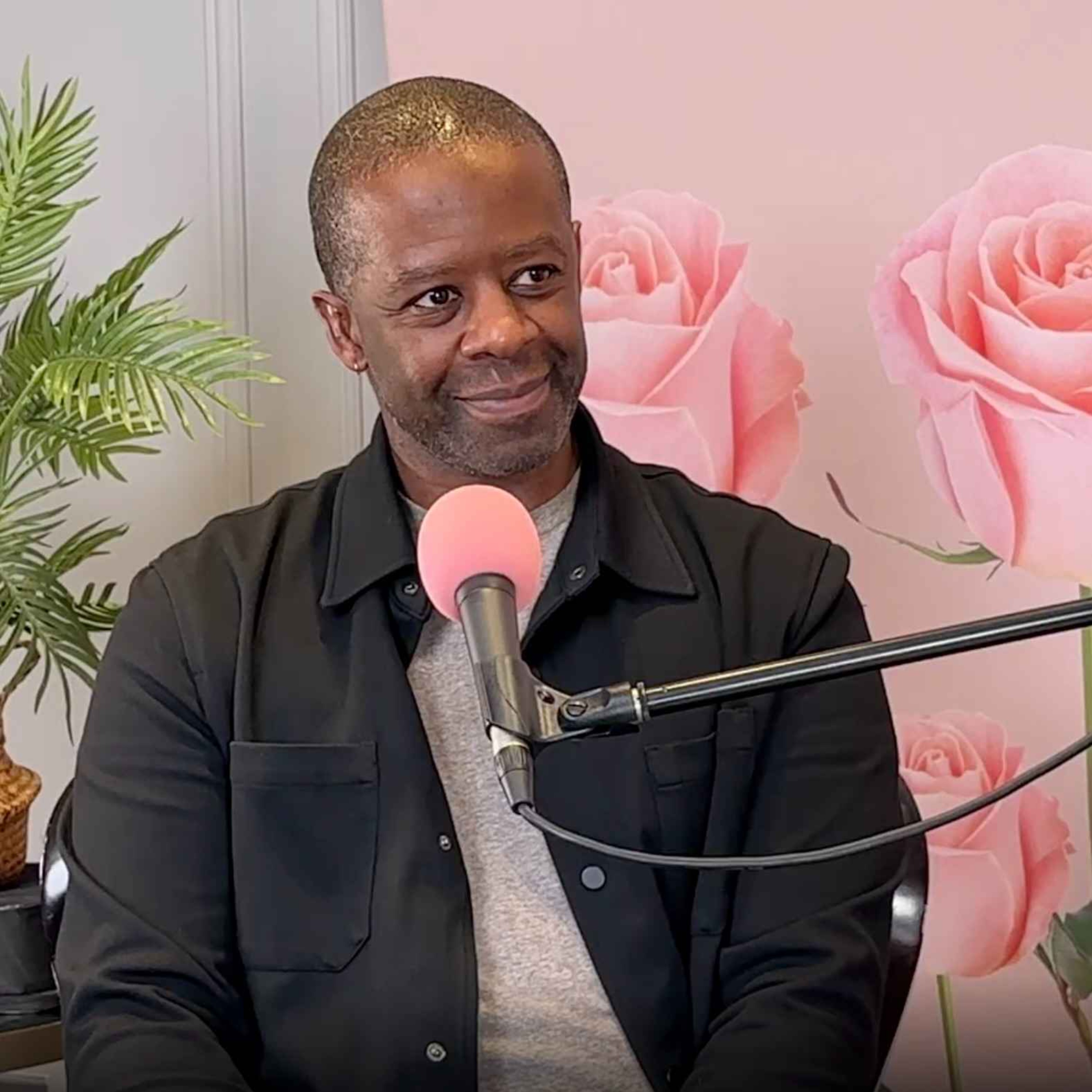
Giles Brandreth hosts actor Adrian Lester for “More Rosebud,” discussing nature/outdoors as a theme opener, but mainly focusing on Lester’s life story and acting craft—especially love, vulnerability, and communication—through his current West End run in Cyrano de Bergerac.
Adrian Lester (born 14 Aug 1968) is a British actor. He grew up in Birmingham in a Windrush-era family: his Jamaican grandfather (a trained tailor) arrived in 1954 and worked various jobs before buying a house with friends. Lester later moved to London, trained at RADA, and developed his performance path through cathedral choir, children’s opera, and youth theatre.
Lester says his acting is driven by understanding vulnerability—characters “trying to say can you see me, can you hear me.” He links relationship breakdown to “dissonance” and feeling “no longer being seen or heard,” and connects that emotional learning back to stage work.
his chorister “alchemy” moment watching congregants cry; his first serious relationship with dancer Faye; writing a youth-theatre play “And Three’s a Crowd”; roles in Love’s Labour’s Lost (Branagh), Hamlet, and Cyrano de Bergerac; workshops/a near-miss for Peter Brook’s Hamlet casting.
Written by AI. May contain mistakes.
Explore the importance of nature in our lives and its accessibility.
“Whether it's the recorded sounds of the ocean we doze off to, or the succulents that adorn our homes, nature makes all of our lives, well, better.”
Introduction to the TED Talks Daily podcast with a focus on health and technology.
“Download the free app today and make the most of your summer with AllTrails.”
Discussion about Adrian Lester's work and current theatre production.
“I love his work Yeah I first fell seriously in love with his work when I saw a film version of Love's Labour's Lost, the Shakespeare play.”
Gyles and his producer discuss the significance of the play Cyrano de Bergerac.
“Adrian Lester is appearing at the Noel Card Theatre in a production of one of my favourite plays, outside the works of William Shakespeare, Anton Chekhov, Heinrich Ibsen.”
Adrian shares memories of his childhood and family background.
“Adrian Lester, born the 14th of August, 1968.”
Adrian discusses his grandfather's immigration story and its impact.
“And then his kids had me, my generation.”
Adrian shares his childhood experiences living in Birmingham with his family.
“We slept head to toe with cousins in those very early years.”
Adrian discusses his dual life in choir and youth theatre, exploring creativity and connection.
“By this time when you're 13 or 14, do you feel more of an outsider at home or in the choir?”
Adrian Lester recalls his first hand-holding experience and its emotional impact.
“Can you remember the first hand-holding moment?”
Adrian discusses his passion for music and theatre and its origins in his youth.
“But in the theatre group, I imagine there were...”
Adrian shares his first serious relationship and its significance in his life.
“Did you find fellow students at home with this because you're Obviously, you're a real craftsperson thinking about the detail of this.”
Adrian reflects on his journey to attending RADA and his early experiences in drama.
“It is the big one because it was there at the beginning.”
Adrian discusses his experience writing a play and the themes it explored.
“the reason I'm asking about your romantic life is this.”
Adrian and Gyles explore the evolution of love in Adrian's life and its complexities.
“I would like you to tell me something about the evolution of love in your life.”
Adrian shares insights on the challenges and dissonance in relationships over time.
“how vulnerable characters have to be and you as a person have to be in the middle of loving someone.”
Explore the emotional struggles actors face in maintaining confidence on stage.
“because you're a bravure actor on stage.”
Delve into the challenges and insights of playing the role of Rosalind in 'As You Like It'.
“One of the few things we have in common, I wish we had more in common, I want to be like you.”
Unravel the experience of auditioning and working with renowned director Peter Brook on 'Hamlet'.
“And on our first day of rehearsals, we were directed by Simon Evans, who directed your Serrano.”
Contemplate life's poignant moments and their impact on artistic expression.
“If there's any difficulty, get in touch with me.”
Discover the primal instincts that drive effective acting.
“it's just this empty shape and it's a hole, was it Paul Simon said, like a window in your heart, but it is, it's that feeling and you want to replace it, you want it to stop.”
Hear Adrian Lester's insights on hard work and artistry.
“But we like a little bit of rhetoric, so whichever way you speak, we like it.”
Listen to Adrian Lester recite a poignant line from Shakespeare.

Get the gist, explore an idea or ask about something said.
 Claude
On Rosebud with Gyles Brandreth, what are the key points of this episode?
Searching your listeningAutomatic transcript. May contain errors.
0:00We all belong outside. We're drawn to nature. Whether it's the recorded sounds of the ocean we doze off to, or the succulents that adorn our homes, nature makes all of our lives, well, better. Despite all this, we often go about our busy lives removed from it. But the outdoors is closer than we realize. With AllTrails, you can discover trails nearby and explore confidently with offline maps and on-trail navigation. Download the free app today and make the most of your summer with AllTrails. ACAST powers the world's best podcasts. Here's a show that we recommend. Go touch grass. You have probably heard this phrase.
0:43Maybe you have even said it. But beneath the sort of lighthearted nature of this meme is something very real and important. A growing sense that staying in touch with our humanity and being present in our bodies matters more than ever in today's digital world. My name is Manoush Zamorodi, and I am taking over as host of TED Talks Daily this week to explore what technology is actually doing to your body and mind. In special interviews with scientists, doctors, parents, artists, and more, we're going to dig into your physical and mental health on tech. How we think about our bodies differently now.
1:26How we relate to new innovations that are amazing but also a little scary. And how we can live a healthier life in this high-tech era. Tune in on TED Talks Daily wherever you listen to podcasts.
1:42Acast helps creators launch, grow, and monetize their podcasts everywhere. Acast.com Can you have too much of a good thing? Can you? That's the question. Well, if it's only a good thing, you can. But if it's rosebud, sure you can't. Of course you can't. That's why this Tuesday, we're bringing you every Tuesday, more rosebud. Stay tuned. Cue the music.
2:27Hello, this is Giles Brandreth with another episode of More Rosebud. This is Rosebud launched on a Tuesday. Every other Tuesday we dip into my diaries from half a century ago But then every other Tuesday we have a guest And this week it's a very special guest One of my favourite actors And I'm here with my producer and friend Harriet Jane Tell everybody who our guest is going to be in just a moment It's Adrian Lester Yeah Do you know his work? Do you admire his work? I love his work Yeah I first fell seriously in love with his work when I saw a film version of Love's Labour's Lost, the Shakespeare play.
3:13Yeah, you talk about that. Yeah, directed by Kenneth Branagh, musical version. And I just thought, I'd already seen him, I think, at the RSC, and I thought, yeah, he's great. But in this, he had such swagger and style, and he's just fantastic. And the reason I'm excited that we've got him as a guest this week is that he's appearing in the West End of London, I think at the Noel Coward Theatre. They now love to name theatres after playwrights. It was quite satisfactory to me when it was called the New Theatre. But anyway, they want to call it that. There's going to be a Judi Dench Theatre now. The Duke of York's is going to be called the Judi Dench.
3:50Or is that? No. That's the Shaftesbury. The Shaftesbury, yeah. The Duke of York's is going to be called the Tom Stoppard. Well, I'm not surprised they're changing the name of that child. But the grand old Duke of York it was named after. He never did anybody any harm, so far as we know. When's the Giles Brandreth Theatre opening? It's going to be a puppet show theatre on the beach at Broadstairs. Oh, that's a good idea, Giles. A couple of summers from now. Come on, guys, let's do it. Yeah, I don't think it's fun. Adrian Lester is appearing at the Noel Card Theatre in a production of one of my favourite plays, outside the works of William Shakespeare, Anton Chekhov, Heinrich Ibsen.
4:36My favourite playwright overall probably could be Georges Fedot, who wrote those wonderful French farces. But this is my fourth favourite playwright. And I've read several of his plays. There's only one that works. What is the play? Cyrano de Bergeret. And do you know the name of the author? Possibly not, in your head. Is it Rostand? Well done. Edmond Rostand, who, when I first saw this play as a child, it's a great romantic comedy tragedy. It's the story of the guy with the huge nose. If you don't know, I don't want to tell you the story because you must go and see the play. If you haven't seen the play, there are various movie versions of it.
5:20One very brilliant contemporary movie version with Steve Martin. but the classic one is with Gérard Depardieu. It's a most wonderful play. I would say after, well, arguably, could you almost say the best play written in the 19th century? Well, apart from The Importance of Being Earnest. That's, exactly. It possibly rivals that. Yeah. Because there's emotion in this. There's a romance. Yeah. The importance of being honest is an outstanding comedy, but this is a play about life and about love. Well, it's perfect for you, Giles, because it's about love letters. And you're a big love letter writer, aren't you?
6:05I am. Yeah. I still believe in the love letter. Loving that play, I read the rest of Austan's work, starting with L 'Eglon, which is the most famous play. That looks good. Yeah, it isn't. Oh, dear. It's about Napoleon's son, Napoleon II. Oh. And Legland, he aspires to be the eagle. He isn't the eagle. And it didn't work for me when I read it. And I don't think it's been successfully produced. That way. All I'm saying is I have a lot of emotional investment in the play Serrano de Bergerac. We've had a couple of brilliant Serrano's as guests already, you know, on Rosebud, in the shape of? Derek Jacobi.
6:49Sir Derek Jacoby. And Robert Lindsay. Of course. Oh, he would be good. Yeah. Because you do need a great swashbuckling, stylish, incredible actor. He would have played it with a bit of humour. Humour. Yeah. Amazing sword fighting. We like a huge nose. It's a heartbreaking love story. It's completely fantastic. And I have to say, I was very pleased to see when Adrian Lester opened the other day. I only saw one review, but it was a five-star review. I bet all of them have been five star reviews yeah I can't wait to see it yeah you must see it I saw it in Strapadorn Haven it's directed by a friend of ours Simon Evans I say a friend of ours when Bennett Karsha and I my son daughter-in-law and I took part in a production of Hamlet it was directed by Simon Evans and David Paola so we know Simon's work well we love this and I think people are going to enjoy this conversation which is very frank it's not really about Serrano at all but it's about acting, it's about life, it's about, well...
7:51Love. It is about love. There's a lot about love in it. It's a worthwhile listen. So welcome to Rosebud with Adrian Lester. Cue the music.
8:12Adrian Lester, born the 14th of August, 1968. Got that bit right? Yes, yeah. So far, so good. Cast your mind back, Adrian. What is your very, very first memory? My very first memory is standing in front of my grandfather's house, the family home in Birmingham. the house he managed to buy with friends when he came over in 54 there's two things this it's a photograph that's being taken so i remember standing and feeling really big and i was in a a new um tank top you know um and i was standing there and i'd and i'd been like putting these trousers and they were pressed and I'd I remember thinking I can't get this dirty and I was standing there and being really kind of and that is my first memory and it was quite weird because I remember I remember the moment walking out holding my mom's hand and she said stand right there and turn this way and there was so much to see and so I must have been quite one of those three-year-olds that was looking around and she was saying stand still but yeah I was I was about three years old So tell us, first of all, about your grandfather, who came over from where in 1954?
9:35And why was he buying it with friends, and who were the friends? He came over in 54. The family's probably listening to this and will be shouting, No, it wasn't! But I think it was 54. And part of the Windrush generation. In many cases, the men came first and they found work. And this was, he came from Jamaica? Yeah, he came from Jamaica. What parish? Oh, I just sent Mary. Lovely. I sent Mary. I've been back. There's a place called 42 in St. Mary. I don't know why it's called 42, but it's like a little area around a river with a shop and facilities and things. And so the guys came over. He got to know France.
10:13And so they did the thing of they would work, they would share a room, pool their money together, and they would actually all save their money as a group until they could make a cash deposit on a house. Brilliant. What work was he doing? He's a trained tailor. But of course, in those days, coming over as an immigrant, you couldn't get the job that you were trained to do. So I think he worked cabling in a television company and he worked on the buses as well. And he did a number of jobs before he managed to settle down and do the job that brought his kids over and his wife over. And then his kids had me, my generation.
10:57and it's a typical Windrush immigrant story of the country inviting people in and saying we need your help to rebuild and we need your help and then people came and then the reception they got on the ground was completely different it was you know this area is failing because of you lot and you can't do this and you can't do that and so that you couldn't do the jobs that you were trained to do there was even a there was a bus boycott because there was a rule um the color bar where um no black person could be employed um in a position that was over a white worker really in england in the 1950s so there was there was like an unwritten rule but it was an unwritten rule just nobody was promoted exactly if they were going to be promoted above a yes that's it yes Yes, it had to be that you had to be beneath the white people around you so that you could, there was a feeling of they're coming here and taking stuff from us.
11:59So this rhetoric has been used for decades and it's very, very boring. But that generation had to deal with that. And so the methodology of buying houses, you couldn't go to a bank, you couldn't do the building society thing. It wasn't a trustworthy space. And so the men got together and they did it for themselves. So this was your grandfather's house? Grandfather's house, yeah. And he is the father of your mother? Yeah, he's my mum's dad. And what is your mum's name? My mum's name is Monica. Monica. Yeah. What's her surname? Harvey. Harvey. Monica Harvey. Yeah. Daughter of your grandfather. Who called him granddad or grandpa?
12:37Grandpa. Grandpa. Yeah. So he's Grandpa Harvey? He's Grandpa Lester. My mum's married name is Harvey. Oh, very good. so you've reverted to the family so you were named after your grandfather I'm named after some cousins and my grandfather's surname so what is she like what was she like in those we're talking now about the early 1970s when you're two or three years of age this photograph's being taken what was she like then what was she doing I remember her she was a secretary um is she still alive she is yes she is thankfully she's still alive um and um i remember her i remember color and music i remember that a lot um there was a lot of fun i remember the outside world being quite quiet and restrained um school and and the way kids spoke to their parents and all of those things and then i remember being at home and being in that house my granddad had three kids.
13:43My mom, my auntie Shirley and my uncle Jude. And I remember that the kids of those kids in the house we were all cousins. It was a noisy, vibrant place to be. And we all got on like a house on fire. Did you share a room with others? I shared rooms, yeah. We slept head to toe with cousins in those very early years. And we took turns to do chores. And we had our arguments. and we had all boys and we had our arguments. We had our, and we all, we lived, you know, together in that house before we moved out. I was nine years old when we moved out. And even when we moved out, it's a traditional thing.
14:21Every Sunday, my grandma would cook the Sunday dinner and wherever we'd moved out to, the families would come back together and eat together on a Sunday. This is grandpa Lester's wife. Yes, yes. And she cooked a really good Sunday dinner. Yes, and it was - What kind of thing? It was all, you know, grand provision, which is what's provided to you from the ground, root vegetables and so on, the sweet potato yams and so on. And then you had plantain and, you know, it was basically what you could find from home, from Jamaica, brought to a table in Birmingham. And I remember being in the kitchen, being very, very young and watching my mum get told what to do in the kitchen.
15:03And I remember thinking, this is the dynamic. and even now I think about it, I think it's a really good dynamic to see. It's to see your mum being a daughter, to see your dad being a son and to see them respectfully nod and say yes, yes, papa and yes, mummy to someone who's older than them because you then say yes, mummy to her and so she's saying yes, mummy to someone older. And did you speak with a Jamaican patois? I didn't, no. But they did between themselves? Yeah, my grandparents definitely did. They spoke patois in their house. Um, and then my parents' age, there was a, there was a hybrid mix.
15:42They would, you know, the accent would, like almost code switching, the accent would shift depending on who you, who you spoke to or how late it was in the evening and how loud you were being with friends, as we all do, you know. Was your father on the scene at the time? My dad was, but he wasn't really part of that household. he would come in and out of it and he would be away for work he was a lorry driver at the time so he would be away for work and driving everywhere and then when we moved out he was with us for a bit and then my mum and dad separated and he went his own way What have you got from each of them?
16:18I mean he disappeared but do you have things in you do you think that you owe to him?
16:27Yeah I think the thing that we grow up with is is we learn more from it's strange i think that the stuff that's positive about us is just in our blood but we we learn more consciously from loss than we do from things we've had and wish to share i feel like the kind of person i am is based on the kind of things i didn't have and the things i want to secure for my children and so I always choose the path of what should be because I've had a sense of what could be and it didn't feel pleasant. Who was your first friend outside of the home outside of your cousins? I don't remember any from my first school but I don't really remember that school I was there in infants things like years ago.
17:19I had a couple of friends from my primary school which was St. Catherine's, which was just off the Bristol Road. But then when I came to London, the whole thing shifted and I went to drama school and I kind of, there was a fissure in my upbringing and that world and then the world I moved into to become an actor. Oh, so there are two worlds you've lived in. The Birmingham childhood world and then the world that you now inhabit where the shoulders go back and the head comes a bit higher. There's all that going on. The verbato happens in the voice. There's that world. But stick with you as a child for a moment.
17:51My secondary school, I had a friend called Wazi Mumtaz. And he, very studious kid, very nice kid, got great grades. And then friends from youth theatre that I had when I was there, who, a couple of people I still see, who've known me since I was 14 years old. But the performing bug began before that, because at your primary school, you were in performance, weren't you? At my primary school, I was singing. And then I joined a cathedral choir. I joined St. Chad's Cathedral Choir when I was nine. Who encouraged that? Who discovered that you had a voice that was worth thinking about and developing?
18:28It was one of the teachers at my primary school. Do you remember their name? Anna McAllister. I remember she really encouraged me, and I think it was through her, a suggestion through her, when the cathedral was looking for trebles, she put my name forward and I went for an audition. was that you think a moment that changed and defined your life it was it was definitely a moment that did that i stood up in front of them and i sang and they said please come and join us lovely and you like being a chorister i i did really enjoy it i really enjoyed you have a surplus and a rough i had a surplus i had a rough i even got my choristers medal oh yeah good good good just before my voice broke um yes, my voice has broken.
19:14I know you can't tell. But just before my voice broke, and I was there from the age of nine till about 14, 15. Oh, it was a huge part of your life. Yeah. It was your life in many ways. I mean, did you feel in some ways that school was what you did during the week, but then Wednesday evening, choir practice, Saturdays, Sundays? That's definitely it. My life became, I did school because I was supposed to. and weekends, every Thursday night, Saturday morning, and then Sunday for Mass. That was the sort of timetable. And like clockwork, every week I did that, week in, week out. In your four years as a chorister, give me the best moment and the worst.
19:57What was the sweetest moment for you? The sweetest moment first. I remember, and I think this is a trigger for later performing and taking this path that I have taken, um the sweetest moment was we were um on the steps uh at the front of the altar the cathedral is lovely and you know gilt and big and echoey and it's it's a beautiful place to sing um and we were on the steps the choir the whole full choir was on the steps of the altar there's a name for that i don't know what it is we're on these these steps going up to the altar to where the choir normally sit but we were on the steps this time we had the sheet music in front of us And we were doing Lottie's Cruci Fixus, which breaks the four-part harmony of the choir into eight parts.
20:48And so I remember holding a line with two, maybe three other young boys against the whole choir. And I remember looking up at one point from the sheet music and looking at the congregation. and people in the first few pews had tears in their eyes. And I remember thinking, I wondered what was making them cry because we weren't moved as the choir. We were simply doing something very technical, but they were crying. So something was happening between us and them. There was some alchemy taking place. and that made me very very interested in the power of being able to tell stories and share music and it was a little seed that was planted at that moment that's grown ever since that was I remember that moment clearly that was a good moment completely fascinating well no from your point of view because you were discovering that emotional engagement with an audience yeah and then thinking how is this being achieved yes and I didn't know what that was.
22:04Now the worst thing that happened, your naughtiest moment or the most disobliging other choristers, were they all friendly, the choristers? They were all very friendly. All boys, was it? Yeah, male voice choir. They were all very friendly and it was the first time I got to work closely with people who had lives very different to mine in Birmingham. You know, very different. And did you go to their homes ever? No, no, not really, no. we would gather and I remember we had a party there was going to be a party after we gave a performance a recital there was going to be a party in we had this sort of anti-room and it was next to the cathedral and we had a party in there and we all met in there and I remember going to this party and thinking it's going to be a party and I remember walking in and everyone was standing around there was a polite hubbub of chatter everyone was standing around having drinks and I walked in thinking where's where's the party because because every party I'd been since I was growing up but it was absolutely Jamaican themed um it was a party so I walked in thinking oh and there was some like you know food laid out and everyone was standing just and just chatting and I thought oh right okay and you know we kids we occupied ourselves for a bit and then parents came and picked us up and we went we went home
23:36we all belong outside we're drawn to nature whether it's the recorded sounds of the ocean we doze off to or the succulents that adorn our homes nature makes all of our lives well better despite all this we often go about our busy lives removed from it but the outdoors is closer than we realize. With AllTrails, you can discover trails nearby and explore confidently with offline maps and on-trail navigation. Download the free app today and make the most of your summer with AllTrails. By this time when you're 13 or 14, do you feel more of an outsider at home or in the choir?
24:18I mean, yes? I felt very at home, a bit of a chameleon really. I felt very at home in the choir and very at home at home. And by then we'd moved and were living in a council flat just off the Bristol Road, very close to St. Catherine's School where I'd gone. And I felt very at home in both places. But I also spent, it was either choir or I spent my time at the Midlands Arts Centre. And what happened there? What was your life there? Well, I joined, a friend at choir said, you should join the children's opera company at the Midlands Art Centre. So I went along and I sang for them and I got in. It's great these opportunities were available, wasn't it?
24:57Well, this is my whole, this is my whole thing. I'm a kid and I can't afford to pay for all of this stuff. I'm not from the nominal culture where this stuff is appreciated. and I've luckily found that people have come, opened the doors and said, come in. So there I am in Birmingham and I'm going to the Midlands Arts Centre and I joined the opera company and I remember doing, it was a new piece written by Richard Blackford called Dragon Tales of Granny Chang. And the idea being that we were a group of kids that were in a village and when the adults went out to work, we entertained ourselves with stories and those were the pieces of the opera.
25:45I had a solo, but this is the point, the members of the youth theatre, because the kids, we were young, we stood and we sang, but the members of the youth theatre would do a dumb show and mime what the stories were. And I was watching them. I kept trying to watch the conductor because it was in such a complicated time signature. But my eyes kept drifting over to what the youth theatre were doing, members of the youth who were all older than me and they were doing incredible things there was like five or six of them but at one moment one of them would become old and then being assisted by the others and then they would turn and suddenly become something else then they would suddenly become a dragon trailing each other across the stage then one of them would get on the back and use a whip like a lash and then they would get down again and become flowers and I was watching this very good movement.
26:38And I was fascinated. Because I was thinking, how are you doing that? Again, more than some of their parts. And I thought, what are they? And then I learned that that was the youth theatre. And so I wanted to join the youth theatre. That was it. I wanted to. And you did. And I did. Yeah. I auditioned and I thought, I have to be a part of this youth theatre. So this is where your life is blossoming. Yes. In a sense, you're leading two lives. At home, you're totally happy. You're quite content. You love your mum. Your dad has disappeared by now, but you still have your brothers and sisters and cousins.
27:12My mum, my brother, cousins. We always go to the same house and we share. So that you almost take for granted. That's my life. That's good. You go to school because people go to school. Family is very strong. But it's the cathedral and it's the youth and it's the opera. This is where you flower. This is where I am, Adrian. Yes. This, I imagine, is where you first discover girls. yes uh yes i suppose i suppose my first sort of ever ever girlfriend was a family friend um a woman the daughter of my mom's friend um whom my mom is still in touch with now but it was very much um hand-holding and i like you i like you too type very early teenage if i may say so i should hope so yes absolutely it's absolutely kids i mean it was sort of um very very was it quite exciting Can you remember the first hand-holding moment?
28:05Yes, yeah, absolutely. And I remember the... If you remember it clearly, where was it? It was in... My mum had gone round to visit her friend, and I liked that idea because I got to see this, her daughter. And we just sort of chatted and were very smiley with each other. But I remember the moment where it was reciprocated, where the interest and feeling that you had of, I really like being with you, I really like talking to you, I really like, that was reciprocated with the holding of a hand and the reach for the other hand back. and that feeling of, oh, you like me too type thing, that feeling is, you know, I remember that very clearly and going, oh, oh, I know what this is.
28:56I feel, you know, all those things. It was very, very, I was, yeah, I was young. It didn't last very long. No, not too long, no. But in the theatre group, I imagine there were... There was, I didn't actually... There were lots of girls and there was a group of us that hung out together, quite specifically, like four or five of us hung out together all the time, but not really in a romantic way. We were just really good friends. So you'd become totally passionate, engrossed with music and theatre. Yeah. And what's the source of this? What's within your... Why is this happening to you? I don't know.
29:34I'm the only one in my family who's gone down this route. The appreciation of the arts is always very strong in the family, but no one's gone into practising it. and um i think as we've been talking about i think you know the steps the seeds have been planted along the way with the choir and the and then the performance and observing an audience in performance and wondering what that is and you know gently becoming a part of it and seeing things and make and then making me laugh and be upset and be excited and i always wondered how that was achieved and so you know i just followed that path and it was it's a rubik's cube it's a puzzle and as soon as I'd taken care of one side movement I wanted to tackle another side which was voice and then I wanted to tackle another side which was text but once you turn your attention to one side of the Rubik's Cube the other colours disappear so you have to go back and work on them again and keep reworking them and if you put it down thinking it's done and you put that cube down with its various facades you come back to it three days later and the colours have changed and you have to work on it again.
30:33Did you find fellow students at home with this because you're Obviously, you're a real craftsperson thinking about the detail of this. Were there friends and fellows who were with you on the same journey? In the youth theatre, yeah. And then you find romance. I'm asking for a reason, which I'll explain in a moment. You find romance at the college? Yes, at the Sixth Form College, yes. This is a proper romance. Proper romance, yes. Faye was a dancer, and she was my first serious relationship. I was 17 16, 17 and we just blossomed under each other's attention and she danced and I would watch her dance and thought it was amazing what she could do and I was into my acting and I loved dancing too but I couldn't dance like that so she wanted to go and study dance and I wanted to go and study and be an actor but I'm just remembering her now and remembering that period and just smiling and beaming across my face.
31:39But we, the thing started to separate, of course, when I left Birmingham and went to drama school. And so when I went to drama school and I was in my first year. And which drama school was this? I went to RADA. RADA, the big one, the famous one. It's the Royal Academy. The Royal Academy. And did you get it? One of the famous ones. One of the big ones. No, it is the big one. It is the big one because it was there at the beginning. and did you get in easily? Did you just, what were your audition pieces? I auditioned with a new piece which was, again this was something that Youth Theatre was involved in Derek Nichols also ran the Birmingham Rep and he had a thing called the Young Company going so he'd audition actors that had just left drama school he'd have them in the Young Company for a year so as a young actor you were watching people who just left drama school play at the Birmingham Rep in a rep company and they would, you'd watch how well they were able to change their physicality and their voices and connect with the roles and it was fascinating.
32:45So... He encouraged you to apply for RADA? He encouraged me to apply for drama school and apply for RADA and I'd also, by then I'd written a play and taken it on a very, very small tour of youth centres. You'd written a play? Yeah, yeah. At the youth theatre. My gosh, you were really committed. You've written the play. What was the theme of this play? The theme of the play, it was one of my cousins had unfortunately, he'd slipped through a couple of cracks in care and ended up having to sleep rough for a few nights. So I wrote a play. I started to look at it and I wrote a play about a woman who fostered three kids in the transition for them being sort of 15, 16, 17 until they were adults.
33:30And you managed to get this put on, a new tour? The youth theatre did it. It was one set, you know, three locations. It was just in her house. And it was just about the kids talking to each other. And the youth theatre helped me develop it. I improvised a lot with my fellow actors and I noted down the good moments, the good moments of tension and so on and added a bit of a Michael E on it. And then I went away and wrote the play and it was called And Three's a Crowd. And we did it in the Hexagon Theatre then at the Midlands Arts Centre. And then the Youth Theatre and the Arts Centre helped contact other venues that could take the play.
34:13And yeah, we did it at two or three other venues in Birmingham. Before we get to your time at RADA, the reason I'm asking about your romantic life is this. I regard you as a bit of a connoisseur of love. This is because I have watched your work develop over the years. I remember you as Henry V. Right, yes. And the little scene you described there of you and your mother's friend's daughter, your first girlfriend, reminded me of that wonderful scene you have with the Princess of France. Yes, yes. It's a very delicate, flirtatious scene. Yes, yes. So I think about that. I mean, I've followed you, and I see you as somebody who understands the nature of love.
35:01Right. You were in one of my favorite films, Love, Slave, Is Lost. Ah, yes. A film directed by Kenneth Branagh. Yes. A musical version of a wonderful play about the nature of love and relationships. Not given the reception it deserved, in my view. Ah, thank you. You were sensational in it. Thank you. so whenever I see you I'm interested in you in relation to the girls and Love's Name Is Lots for people who don't know it is actually a story about four young men who think they can do without women and say we'll we're nothing to do with the women and then the women come along and of course they can't even begin to do without them and it's quite funny because it it it's a it's a play about strong women and foolish men so it's the story of the world and it was written 400 years ago yeah And most recently, I've seen you in Serrano de Bergerac, which arguably is one of the best plays written in French in the 19th century.
35:57In fact, it could be considered the best. Georges Fedot would argue about that. But 1897, it's an extraordinary romantic story. So I've seen you evolving. And I imagine, because of the way you've been talking, that you are a thoughtful person. I would like you to tell me something about the evolution of love in your life. Well, so I sit in front of you as a divorced man of 57 who has grown children.
36:35And as I said, palm to sky. I have to say that I'm still learning. But you're clearly observing as you learn. Because what's interesting to me is seeing the evolution of all this, is how when you're doing these things, it seems totally real. So there's that playful innocence in Henry V. When I saw your Hamlet, it's much more complicated. We'll come back to that. what his relationship is with Ophelia. But to come forward to Serrano, I hope people know the story. It's the story about a man who is flamboyant, who is a soldier, who is brilliant, who is strong, who has a way with words and is just a human genius, but unfortunately is not necessarily good-looking by normal standards because he has this huge conch, big nose, and he falls for this girl who obviously fancies, not entirely dopey, for a younger man who is more obviously attractive, who is not articulate, can't do what Serrano can do, and Serrano plays the part, is the surrogate lover.
37:47And then eventually we get the payoff at the end. But since you, as part and parcel of what you do, put these characters onto the stage, and they are emotionally affecting, as you can see, I'm intrigued by the journey you have gone on, and whether during any of your romances or during your marriage you're aware that you've learned anything from the parts you play, whether it feeds into the work you do. Because you must have thought a lot about this, because the way you talk about your craft. Yes, yes, and thank you for what you said. For me, the journey is about acknowledging how vulnerable characters have to be and you as a person have to be in the middle of loving someone.
38:38And I think that what I've seen in the work that I've done is I've seen parts, great writers pick apart that feeling of vulnerability and risk and all the emotions that rise from it. Are these characters that are desperately trying to speak to another person in the same language? they are desperately trying to say can you see me can you hear me and what you see and what you hear do you accept it and when it works that's what's happening that when it works that's that's so that's what the good times when you at rada meet the person who becomes for a while your wife yes that's working between you.
39:23The voices are, well, in harmony. Yes. Using your musical background. We're in harmony. And that is magical because you're making sweet music together. Yes. Have you done much Ibsen or Chekhov? I've never done Ibsen or Chekhov. You need to do these. I know. I think there is a big gap. We will work on this now. This will be the mission from today onwards because they so brilliantly explore that sweet music is in the past in their place and we're meeting the characters when somehow there's a dissonance yes there's a an unfortunate twang something is going wrong and obviously that has happened to you in your time yes uh is that why has it happened to you that's what what i'm really exploring is since you've observed this so brilliantly on stage
40:17can you see why it has gone wrong for you
40:23yes I can see why it ended it was very much a decision that I made very much a decision that I made and very much a few mistakes as well that in in in relating that I fell into based on insecurity and and um based on this dissonance that that lay between us and also an ability to um because you're trying to prop up and hold on to something that that was is very very good but no longer feels good for you you keep and all of us do this we we keep um going through the motions of making it work until the feeling returns. Ups and downs that you will have over a number of years in a relationship. You keep propping and supporting and so on, waiting for that feeling to come back.
41:22At the same time as you're trying to talk about why the feeling has gone and trying to prop things up. And it's just that dissonance, the miscommunication, the understanding, the true understanding that no, actually, I am no longer being seen. And having to accept that truly, I'm no longer being seen, and I'm no longer being heard. And that's gone. And whatever I thought I was doing, whatever I thought I was trying to achieve, these two things now are no longer true. And the deep, deep sadness that comes from that is...
42:08it's profoundly upsetting. You know, I was going into places and the lack of confidence, the unhappiness, the thread, that kind of fire had sort of left me and I was still trying to pedal the wheels of a stationary bike and say, no, I'm okay, I'm okay, I'm okay, I'm okay, until I suddenly went, I'm not, and I can't. in the world of trying to make things work, you can lose your centre, stop protecting your own boundaries, and just give yourself over to what you're supposed to do and keep doing that and thinking, in thinking that that will return the heat and flavour of your relationships. I hope so.
43:01because you're a bravure actor on stage. I can't believe there's ever been a lack of confidence there, even if there has been when things have been rough at home. There has been moments where I, in my work, I've not been able to remember lines. I've been completely under confidence in my decisions and I've had to almost take myself to one side and really work on maintaining what I had done before in a new role. I remember doing that for various performances until now. It's almost like I've come full circle with Cyrano, or I've come back to who I am and what I do and what I know. And in Cyrano, I've found again, I've hit my touchstone of being able to express myself fully with all that confidence there.
43:57It's such an extraordinary story, too. It's so brilliant. It's a great play to do it with. It's a great play to do it with. Well, I wish you good luck in the future because there's, I mean, is there anybody possibly on the scene? We don't need any details. Yes. They're good. I'm pleased. Yes.
44:21There's never been a better time to get outside and experience the benefits of nature. Discover nearby trails and explore the outdoors with all trails. Download the free app today and find your outside.
44:39One of the few things we have in common, I wish we had more in common, I want to be like you. One of the few things we have in common is I think we have both played Rosalind in As You Like It. What was your dress like? I've still got pictures. the dress is the best bit I mean when she dresses up as a boy well that's quite interesting because that's quite interesting to play that's really interesting a boy being a girl being a boy is quite intriguing I really felt like I was a girl I mean of course it's impertinent to say that when there are real women in the world but I felt I convinced myself did you convince yourself?
45:15I kind of I had this period in rehearsal where it was just terrible I was doing the most oh god the terrible overacting because I was trying to be sort of every woman because women are like this women are like that women walk like this women sound like this that's what I was trying to do and it was just wrong and then I realized that I had to play her and if I was her my sensations my feelings I thought okay they're the same let's say they're the same but what does society say I should be if I was a woman and I realized that for her for my Rosalind I realized that society would be telling her that she should be smaller that she's too tall.
45:56Society would be telling her that her voice is too low. And so I put upon myself the rules that society says this is what womanhood is. And then the part began to flourish because then the constraint that she releases herself from by putting on the boys' clothes becomes really evident. As soon as she lets go of those rules and says, now I can speak as I think and I can be as I am, And then she flies. Nothing we have in common, I'm now thinking, I mean, I'm wanting to be more and more like you as this proceeds, is that we both appeared in Hamlet. Ah, yes. I, unfortunately, wasn't playing the part of Hamlet.
46:38No! Oh, no! But I've given a good Polonius. Great. And Claudius, which I think is one of the most wonderful parts. Yes, both brothers, both brothers. Exactly. Really intriguing, yes. And I played old Hamlet. Old Hamlet. So I love that. And on our first day of rehearsals, we were directed by Simon Evans, who directed your Serrano. And this is about 10 years ago or more. And we're sitting in the rehearsal rooms. And guess who is sitting at the next door table? Peter Brook. By then a very, very old man. Can you imagine? So I thought this bodes well. Tell people who Peter Brook was and what it was like being directed by him in Hamlet.
47:19What do you learn from that? Peter Brook, very, very famous and world-renowned theatre director. He did a production at the RSC of Midsummer Night's Dream. The famous one. The famous one, which broke all the rules at the time for what people thought theatre should be. Everybody on swings and trapezes. A white box and trapezes and so on. And the critics and the audiences just thought, what is this? The clarity of the text. Wonderful. And then he went to the Boutes d 'Or, his theatre in Paris, and established his company and explored all sorts of plays from all over the world, all sorts of texts.
48:00And he's a theatre director's director. So how come this man, who had directed everybody, from Laurence Olivier, famously Paul Schofield's King Lear, ends up directing you in Hamlet? How did this happen? I did Rosalind in As You Like It and then it was so successful we brought it back to do the play again. Then Peter wanted the production at the Boutes d 'Or. So we played at the Boutes d 'Or and Peter and I met, we spoke, chatted. And then about, I don't know, how many years later I get a phone call, Peter Brook would like to speak to you about a Shakespeare project. To which of course you say, yes!
48:44And I said, yes. And I spoke to Peter about it and I realized it was Hamlet. And I didn't know, I thought, is it the Ertes? Is it Peter Brook? And he said it was to play the part of Hamlet. But he just didn't know what version he was going to do and whether it was this or that. And he didn't know and he was just exploring and he wanted to do some workshops. He wanted to do some, and I thought, yes, I'll do some workshops. And I realized while doing the workshops that he was actually interested in two other actors, which quickly narrowed down to me and another actor. And then eventually he chose that other actor to play the part.
49:25Oh, no. By which time I was so done with the whole auditioning and I'm not sure and we're exploring. And can you be more this? But can you be more that? But can you be more this? and I just, after a while I thought pausing and waiting for the thing that you really, really, really, really want just leaves you pausing and waiting and things are passing you by while you're just waiting and I thought I can't do this anymore and I was glad when he called up and said and he did it personally I'm sorry but we're going to go with another actor we're going to and my wife is sat beside me Lolita is sat beside me while I'm on the phone with Peter and I reassure him I said if I can't be on stage I'll be in the audience And I just said, it just came to me.
50:08I said, look, you are arguably the most famous, you know, in the English language, the most famous theatre director there is. You are about to direct the most famous play that there is. The scrutiny that you're going to be under is palpable. And I think no one really thinks about that. They're going to be looking at you going, right, how are you going to tackle this beast of a play? So you have to get the right person. you have to be comfortable with the right actor. And I said, look, if I can't be on stage, I'll be in the audience because whatever you do, it's going to be wonderful. And he thanked me and we spoke and thanked and so on and said goodbye and hung up.
50:42And I remember my wife said, he's going to call back. Immediately she just went, he's going to call back. He's going to give you that part. And then he called back and offered me the part. Wow. Yeah, two days later, he called back and said, right, no more mucking around. I want you to do it. But what an extraordinary story. it's it was yeah how did she recognize that and what do you think she you were doing that persuaded him this is she heard what she heard my response to him and it was the right response talking about it from his point of view yeah and now is it going to be i have you because you haven't done macbeth yet have you i haven't done maccas no um and you could that would be a good one for you because you've got the strength it was on the cards to do it but that the pandemic um put paid to that and things shifted and I had to do something else.
51:35But Maccas is on the cards as is... On everything. Prospero. Oh, Prospero. And Lear later on. Of course. Those three, I would... But you will do all those. I'd feel bad if I hadn't... You will do them. You'll feel fulfilled. If there's any difficulty, get in touch with me. I will raise the money. Thank you. It will happen. It will happen. Actually, what about doing Lear with an even older fool? I could be the fool. I'm offering my services. I want to be on stage to see all this happen. Yes. Okay. We're reaching the end now. You've had this extraordinary career. Are you the same person who was the boy standing in 19...
52:20The house that was bought in 1954 by your grandfather in Birmingham, in that photograph? Yes, I am. Yeah, I am. and what's been amazing and why I think all the art works when done correctly is that the people that I've encountered who I've thought were very powerful very famous very what have you they're all little boys and girls standing in front of their parents house having their photo taken being observed being stared at and hoping I hope I get this right all of them no matter how powerful they are. From royalty the way down. Three quick final questions and then we release you into air, to thin air.
53:06Into thin air. And you've got to give them the immediate answer. You're not allowed to think this through. A moment of joy in your life. A moment of joy in my life. You've got to picture it and describe it. I remember my kids being born. and there were very different circumstances for the two of them and I remember my youngest being born is this Jasmine? Jasmine and I remember catching her literally as she came out I remember being there and catching her holding her and I remember that feeling that was amazing yeah Say something beautiful about the older one in case we don't want to create a sibling rivalry.
53:59My, my, oh my goodness, my eldest. And she's called? She's called Lai. And Lai, she, oh my God, she, she learned to speak learning the names of dinosaurs. Oh. She took a very good friend of ours. my wife and this friend went round the natural history museum and they went with my eldest with lie and lie took them around like a tour guide such was her interest and this was all all off the curriculum this is just her reading books at home for interest and she took them she spoke about the plants and the animals and the development of the skeletal structure and so on and so forth and i i just remember thinking yeah that that's that's her the they these things fill my chest up to bursting.
54:49And a moment of sadness? A moment of sadness, watching my mum's reaction when my grandmother was being buried. At that moment, I was young, but I remember being too small to help. But at that moment, my mom didn't want the soil put on the coffin. I remember her saying, if you do that, she won't be able to get out. If you can't stop, stop. She can't breathe. If you do that, she won't be able to breathe. And she just, she tried to get at her and stop it happening and she had to be held back. Did you think of that every night in the scene in Hamlet where they're burying Ophelia? No, maybe you didn't.
55:43No, but I didn't. But I think, you know, these things enter your DNA and you understand what that means. It's not a case of... It's the gap that's left. The shape of a person that's left in your world after they've gone and the shape of Ophelia and what that meant to Hamlet. it's just this empty shape and it's a hole, was it Paul Simon said, like a window in your heart, but it is, it's that feeling and you want to replace it, you want it to stop. And it's that, it has to be that animal a reaction to which you then give thought and that thought creates the need for change which then creates the words.
56:28because if it's an intellectual reaction, you're thinking about the words only. And many actors will do that. They'll think about the words. But at the base of that is an animal, hot, cold, comfort, discomfort, need to make yourself and your psyche feel safe. And it's from that guttural animal need that is the center of all movement that comes the expression of those words. Now we understand why you're so good. This has turned out to be a masterclass in the art and craft of acting. Thank you. We end with one final thing. It's the quickfire one. Well, no, we've done the quickfire. We've done the quickfire, okay.
57:11But we like a little bit of rhetoric, so whichever way you speak, we like it. What do you think you've learnt in life? You've had highs, you've had lows. What's life taught you?
57:30hard work, attention to detail, is the distance between a piece of work and a piece of art. And, you know, hard work creates opportunities and if you attack those opportunities with hard work, people will say you're lucky. So, yeah. You've worked hard, you've worked well. I love the detail you've shared with us. one more treat in your head I asked you to give me a line of Shakespeare or a line of poetry okay what is the line that comes up
58:12it's because we've been talking about Brooke and I remember the beginning when I stepped on stage and spoke and I remember the choice between solid and solid and to me it was a purification process a distillation process oh that this too too sullied flesh would melt thaw and resolve itself into a dew
58:41that's the thing that comes to mind I wanted to say and I must before I burst into tears the rest is silence Adrian Lester thank you so much thank you so much This has been wonderful. Thank you.
59:33Thank you.
59:56ACAST powers the world's best podcasts. Here's a show that we recommend.
1:00:26You can listen to The Guardian Football Weekly wherever you get your podcasts. Hopefully see you soon.
We are delighted to have the actor Adrian Lester, currently in the West End as Cyrano de Bergerac, in the Rosebud chair today. Adrian talks to Gyles about his childhood in Birmingham, growing up in an effusive and loving family of Jamaican heritage, surrounded by aunties, cousins and grandparents. He talks about the formative experience of being a chorister in the cathedral choir, and of doing drama at the Midlands Arts Centre. He talks about going to RADA, doing Shakespeare with Cheek by Jowl and Peter Brook, and playing Cyrano. Finally, he talks about relationships and fatherhood.
Our thanks to Adrian Lester for this fascinating conversation.
Cyrano de Bergerac is at the Noel Coward Theatre in London. Tickets are available here.
Hosted on Acast. See acast.com/privacy for more information.


