
 Ask ChatGPT


 Rosebud with Gyles Brandreth
3 Feb 2026 · 1h 5m · 26 chapters
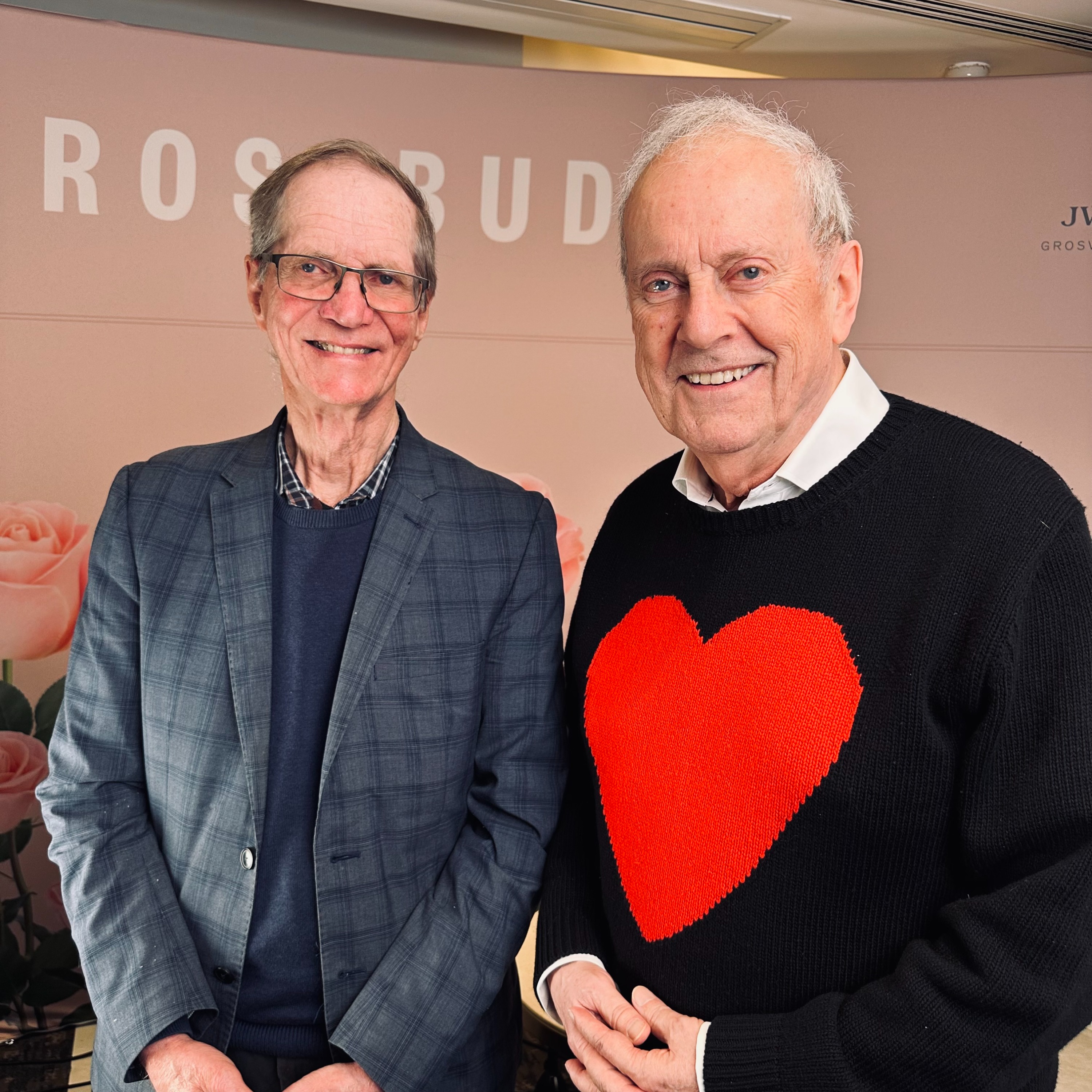
Description: Gyles Brandreth hosts “Rosebud”, inviting notable figures to discuss their first memories and experiences, leading to lively conversations filled with nostalgia and intriguing stories.
This episode features Antony Penrose, son of renowned photographer Lee Miller and surrealist artist Sir Roland Penrose. Through their conversation, they explore Lee Miller's remarkable life, her career, and the intricacies of her relationship with Antony.
Written by AI. May contain mistakes.
Gyles shares his thoughts on artists and his personal weight loss journey.
“I was thinking who would I like to have paint me and I decided it would be Sargent.”
Gyles discusses visiting an exhibition of Lee Miller's photography with his nephew.
“who i love very much and we have a great friendship and i went to see this because he was up staying with me for Christmas from Devon.”
Gyles introduces Anthony Penrose and recounts his connection to Lee Miller.
“There are just amazing stories in this about incredible people, incredibly, you know, world famous people.”
Anthony shares a vivid childhood memory of meeting Pablo Picasso.
“And it was indeed the start point for a great many important young British artists in that moment.”
Learn about Lee Miller's controversial modeling career and her passionate yet tumultuous relationship with Man Ray.
“And it actually gave rise to some of his most inspired works of art, which he made because he was angry with her and wanted to find a way of controlling her.”
Discover how Lee Miller asserted her independence as a photographer and the challenges she faced running her own studio.
“The women were not treated equally at all, which was a big blind spot among them.”
Explore Lee Miller's marriage to Aziz Elouibe and the cultural contrasts she experienced in Cairo.
“like John Houseman who became a significant actor.”
Unpack the dynamics of Lee Miller's relationship with Roland Penrose and how it differed from her past loves.
“But it was a very restrictive and somewhat repressive society, particularly the expatriate community.”
Learn how Lee supported Roland Penrose's artistic endeavors while maintaining a unique bond throughout their marriage.
“They married properly in 1947, a few months before I was born.”
Explore how Lee Miller documented and supported Roland Penrose's artistic endeavors.
“it was a very very deep understanding that was never self-evident to everyone else and at times they worked incredibly well together.”
Discuss how World War II influenced Lee and Roland's relationship and choices.
“And she did the same thing when he was writing about Miro.”
Learn about Lee Miller's experiences and role as a war correspondent during WWII.
“war is going to be incredibly harsh, if not fatal, for her French friends.”
Discover the significance of Lee's war photographs and the stories behind them.
“And of those wartime pictures, which are the most memorable to you?”
Examine Lee Miller's struggles with PTSD and her transition to motherhood.
“And it's those photographs of suffering, of man's inhumanity to man and that continued because in Vienna she found children dying in a hospital because the black marketeers had stolen all the drugs.”
Uncover the complexities of Lee Miller's relationship with her son amid her struggles.
“finds your father loyal loving yeah not quite knowing how to handle this because he's slightly Exactly old school English.”
Learn about Picasso's connection with Lee Miller and their family during a historical visit.
“She talked about going on, doing more photojournalism, but then I came along and then all various things happened.”
Discover the humorous and surreal interactions between Picasso and a young Antony Penrose.
“How was Picasso at Farlays, your family home?”
Antony shares insights on his upbringing with an alcoholic mother and a distant father.
“Your father wrote this famous multi-volume biography of Picasso.”
Explore Antony's academic struggles, including dyslexia, and his initial career ambitions.
“I just used to sit in the back row and stare out the window.”
Antony discusses his journey from engineering ambitions to farming and traveling the world.
“When did you go on your trip around the world?”
Learn how Kate Winslet became involved in the film about Lee Miller.
“I mean, she is now world famous as a result of your interviews.”
Discover Antony Penrose's powerful feelings when seeing the portrayal of his mother.
“Liz Hanna and it was a fantastic screenplay and when you sat and watched the finished film of your mother with whom you'd had a complicated life.”
Antony shares his experiences of love, loss, and finding happiness again.
“This has been about your childhood, but an extraordinary life you have led.”
Explore Antony's reflections on significant moments of joy and sadness in his life.
“And I must say, she's very, very much part of everything that I do.”
Learn about current exhibitions showcasing the works of Lee Miller and Roland Penrose.
Antony shares insights on achieving inner calm and the lessons life has taught him.
“But the other things that give me calm is I spend a long time walking in the woods at home.”

Get the gist, explore an idea or ask about something said.
 Claude
On Rosebud with Gyles Brandreth, what are the key points of this episode?
Searching your listeningAutomatic transcript. May contain errors.
0:00This is Giles Brandreth and Harriet Jane. We're together with you again for another episode of More Rosebud. Cue the music. We're ready and we're quite keen.
0:31Welcome to another episode of More Rosebud. I'm Giles Brandreth and as ever I'm with my producer and friend Harriet Jane. Hello Giles. It's good to be with you. I was looking this morning at a painting by John Singer Sargent. Ah yes, a great painter. A great painter. I was thinking who would I like to have paint me and I decided it would be Sargent. he would do a wonderful job of that Giles if you don't mind my saying yes I think he'd make me look taller slimmer and rather elegant and elegant which I would like I'm trying to get slimmer you know I'm on this aim between now in fact between last week and my birthday they're going to be seven weeks I decided I'd try to lose seven kilograms or stone actually I was 13 stone nine and I want to be 12 stone 9.
1:23And so I'm trying to lose a couple of pounds a week and I think a couple of pounds is about a kilo. Yeah, 2.2 pounds. So I'm getting myself ready to be painted by somebody interesting. Yeah, I mean, I think that's doable, Giles. I think you can do it. I'm going to do that. I've got faith in you. And I'm going to be asking Maggie Hamling to come and be a guest on Rosebud in case at the end of the conversation she says, oh, Giles, I don't think I've painted you yet. And then I can go around and be painted by her. Does she do nude? Do you have to be nude for that? Not necessarily. I wasn't actually thinking of a nude study.
1:54No, I mean, I just thought that was what Maggie Hamelin liked doing. Oh, no, she has people clothed. A famous statue or tribute to Oscar Wilde, opposite Charing Cross Station. He's clothed, I'm sure. Yes, I'm sure he is. No, no, no, no. The last time I saw Paintings by Sargent was a wonderful exhibition at Tate Britain, which may be my favourite gallery in London. I saw that exhibition. People love Tate Modern. I love Tate Britain. I love Tate Britain. What's the most recent thing you've seen at Tate Britain? It is actually the exhibition of Lee Miller's photography. I thought it was and I led you into that.
2:33Why did you go? What did you make of it? I went in that bit between Christmas and New Year. You know that bit. I think people call it Twixmas, do they? it's a wonderful time because you suddenly seem to have all this time on your hands and you don't really know what day of the week it is and you have family around and you're eating chocolates at telecock in the morning and things and my that's why i'm going on the diet because of exactly there were too many twigs at twigs too many twigs um my nephew who's called marley who's 13 who i love very much and we have a great friendship and i went to see this because he was up staying with me for Christmas from Devon.
3:12He lives in Devon. So he doesn't get to things like this often. And I like to try to get him off his phone and expand his mind a little. Because at that age, you're so open to things. And I saw that was on, I thought, Oh, let's take Marley to something, looked around and as you do and thought, Oh, Lee Miller, I wonder if he'll enjoy that, not really knowing much about her myself. And so for both of us, it was a really inspiring... I mean, I didn't really know the breadth of stuff she'd done. She's now one of the most famous photographers in the world. Lee Miller, born 1907, dies 1977. She does photography from the 30s really through to the 1940s.
3:57Fashion photography, then war photography, extraordinary. extraordinary and now she's this global figure yeah i mean the war photographs are absolutely amazing you have to go it's a world war pictures yeah well and how long is it on till it's on until i think the 15th of feb so just a couple more weeks couple more weeks yeah well the reason you told me about this at christmas and i told you i said well i happen to know her son Anthony Penrose, Tony Penrose and I first met him 26 years ago we were doing a film together it was really more about his father it was about his father's friendship with Pablo Picasso Tony Penrose's father, Sir Roland Penrose had been an artist a surrealist painter himself but then became a kind of art historian and a friend of Picasso and wrote this big biography of Picasso he was the famous one And he set up the ICA, didn't he?
4:56He set up the ICA, as you say, the Institute of Contemporary Arts. And interesting figure, and a famous figure, knighted, etc. And when I met Tony 26 years ago, he told me about his mother. I'd vaguely heard of her. And he told me that he'd discovered this sort of stash of prints of hers, of, you know, 60 ,000 or so pictures that she had done. Negatives, I think. Negatives. In the attic. Wow. And I suddenly thought, well, I know him. I've got his number. I know his address. Fardest Farm. It was the family house. I think it's open for some of the year. People can go and see his father's work, Lee Miller's work, from April till the autumn.
5:34I thought, see if we can get him on Rosebud. Because his story will be extraordinary. Because he had extraordinary parents. And I remember, I only met him a few times, but I remember liking him very much. So that's what we're going to do today. One more Rosebud. Yeah. Yeah. I mean, I was just thinking, I don't think there's another podcast, not to blow our own trumpet, Giles, but I don't think there's another podcast that brings you. This is amazing, this interview that listeners are about to hear. It starts with a memory. Well, we shouldn't say. We won't say. We don't give it away. We mustn't give it away.
6:09There are just amazing stories in this about incredible people, incredibly, you know, world famous people. You'll feel it's surreal, but it isn't surreal. It's for real. We've given you on Rosebud the grandchildren of remarkable people, Oscar Wilde's grandson, Winston Churchill's grandson. We've given you the children of remarkable people before, Lucian Freud's daughter, Rose Boyd. That's a fascinating episode to listen to. But here is somebody both of whose parents were indeed remarkable. He, I think, is remarkable. This is Rosebud with Anthony Penrose. This you will find fascinating. money back if not fully satisfied it's free
7:06anthony william roland penrose born 9th september 1947 have i got all that right so far you have good i want to ask you anthony what is your very first memory well it's difficult because i've revisited this so many times but it comes back as a vestigial memory of smell and touch and it was a moment when i was three and a half years old and i remember playing with picasso and he smelt good because he had a kind of a cologne on or and he also had the odor of goloir some french cigarette and he was very tactile and i think this is what i remember most is that the hugs and the cuddles were really extraordinary and they were against the texture of his tweed jacket which was a little bit scratchy and this was in 1950 when he visited us at farley farm we've had extraordinary first recollections from many people over the past few years but I think this has to be perhaps the most extraordinary a recollection of the touch feel and smell of Pablo Picasso how remarkable explain where this is what Farley's is why Picasso was there why you were touching him well at the end of the war, my mum came back from Europe, suffering from what we would today understand as post-traumatic stress disorder.
8:43And my dad, who was very sympathetic and very caring, hadn't a clue what to do. So he thought, ha ha, life in the country, that would be good for her. And they went off and they bought this slightly run down old farm with quite a run down old farmhouse on it in a place called Chitting Lye which is in East Sussex and it was called Farley Farm and that became our home from 1949 onwards. And in 1949 what and who are your parents? We know they're Roland Penrose and Lee Miller but what stage in their lives are they? Give your father first. Well my dad was very much on the upswing of his career because he had stopped being a surrealist artist and a painter as such, and really diverted his attention to creating an environment for the furtherance of modern art in Britain.
9:42He created an organisation which is still going today called the Institute of Contemporary Arts. Oh, famous. But, well, he kind of wanted to bring Parisian Café Society to London, and this was what he created as a meeting place for artists and a place where people could hang out and have exhibitions. And it was indeed the start point for a great many important young British artists in that moment. And what year had he been born? He was born 1900. 1900, so he's 47 himself by then. And in the 20s, 30s and early 40s, he's basically an artist. Yes, he was living in France. During that time, he became a young surrealist artist.
10:25and he met all kinds of really exciting people, people like Max Ernst and Juan Miro and Man Ray and Picasso and he knew them all intimately. And they treated him as their equal colleague friend because he was an artist of some note. Does his work still stand up? Yes, his work is still standing. It's still good. He's got plenty of work in the Tate itself today. He became a really important figure. He created the 1936 Surrealist exhibition in London, which was the first time Britain had been confronted with the Surrealist movement in a big way. So this is a major figure in a sense in world art, because he brings the Surrealists to London.
11:07Absolutely. And the big names, again, of that exhibition in 1936 would have been? Well, the big name, of course, was one of the most frontrunners was Dali. Salvador Dali. But then there was work by all of the above, Man Ray, Max Ernst and Picasso at that time was close to the surrealists. But there was work from people all over the world because surrealism was an international movement. So when you're born, he's on this upswing. It's all quite exciting for him. Very much an upswing. He's found a new role for himself, which is satisfying. But your mother, Leigh Miller, and does she call herself Leigh Miller or does she call herself Leigh Penrose at that time?
11:44She really calls herself Lee Penrose, but if she's writing anything or anywhere, you know, in a public persona, she's Lee Miller. And what year is she born? She was born 1907 in Poughkeepsie, which is a small town in upstate New York. So she's American? She is. And in 1947, the year you're born, what has her story been up until then? Well, she first of all became an art student in New York at the Art Students League. and by this time she'd made a visit to Paris, she'd studied theatre design. She was, you know, as a teenager she was well on the road to an arts career. And then in 1927 she was crossing the road in New York and she stepped out in front of a truck and in that moment she should have been killed but a man who had been watching her, unsurprisingly because she was very beautiful, he'd been watching her, he grabbed her, he hauled her back onto the pavement and she did the girly thing she fainted in his arms and that was a very good move because the guy's name was conde nast he was the owner of vogue magazine and vanity fair grief and within a few months she was front cover of vogue you couldn't make this up by george la pap well it's all there is the documentary evidence of it my goodness she's rescued yeah in a manhattan street by conde Nast himself?
13:08Yes. I mean, I just thought it was the name of the company. I didn't realize it was a guy called Condé. Did people call him Condé? Hi there, Condé. His first name was Condé, and he was Mr. Nast to most people. She fell into his arms, and the next thing you know, she's on the front cover of Vogue magazine. Yeah, she made it into the pages as a drawing, then she made it on the front cover, and then she became Edward Steichen's favourite model at the time. And who is he? He was the kind of the chief photographer for Vogue. He was an incredible person, brilliant photographer. And he did very classical pictures of her looking absolutely gorgeous in the wonderful robes of the time and also sportswear and casual wear and everything.
13:48And he made her into what we would today call a supermodel. And she was coast to coast in Vogue and Vanity Fair. And that came to a crash stop because one of the images of her by Steichen was sold to an agency. And the next time she saw it it was advertising Kotex women's sanitary products it was the first time the image of a real woman had been used in this context and it was a scandal because you know society was so uptight about that sort of thing at the time and her modeling career came to a crash stop nobody wanted the Kotex girl modeling their frocks but what happened then was she simply said poo to you and clutching an introduction from steikin she set off for paris looking for man ray whose work she'd known because he had been published in american photographic magazines and she went and found him and she became his pupil his assistant his lover and his favorite model for the next three years in that order probably uh well whichever order anyway that's what happened and how long did they they were they together they were there for three years and was it a good relationship were they happy it was tempestuous because he adored her he loved her with such passion but he was also very controlling and he wanted to kind of dominate this woman and make her into his wife and so on and she wasn't going to have any of that She was totally uncontrollable, and this frustrated Man Ray beyond measure.
15:25And it actually gave rise to some of his most inspired works of art, which he made because he was angry with her and wanted to find a way of controlling her. But eventually, having had these three wonderfully productive years in which she started and ran successfully her own studio in Paris, she then went back... You say she ran her own studio? Yeah. What was she doing in her own studio? She was doing a lot of the stuff that Man Ray didn't want to do. He passed her a lot of his assignments, fashion, pack shots. You know, a lot of the kind of boring stuff you get when you're a photographer that if you're the top guy, you don't particularly want to have to do.
16:05And who taught her her skills as a photographer? She began learning from her dad, who was an amateur photographer and had his own darkroom in the house. But she had this incredibly inquisitive mind. so whatever she was doing she would be chatting to the person who was doing it finding out how it was done it was a kind of like a tutorial and she would be as much behind the camera as in front of it working out how it was done what the best angles were what the best processes were what the best technology was and so she learned on the job and it was same with man ray she learned very quickly and they really made a fantastic duo together but it came to an end as these things do yeah well she was unprepared for man raised jealousy and his controlling nature and so and he was jealous because she had other boyfriends she refused to be controlled by anybody and the idea in surrealism was that the only true relationship was free love so sex and love were decoupled and if you were in love with somebody you could go to bed with whoever else you liked and the men thought this was a very good idea but they didn't see why the women should have the same freedom so lee said well if it's good enough for you damn well good enough for me and she went off and had all the lovers she wanted so surrealism for the boys absolutely it was a bit unreconstructed in that way well i'd been quite keen on surrealism until now well it wasn't equal It certainly wasn't.
17:39The women were not treated equally at all, which was a big blind spot among them. And so she had a variety of boyfriends, lovers. Yes, and it nearly drove Man Ray nuts. I can understand that. Well, yes, he wanted her all to himself. Yeah, well, I've seen the pictures, I'm not surprised. So eventually it just breaks up, he can't cope, and she says if he can't cope, well, that's fine. and also i think she wanted to assert herself as a photographer independently in her own right so she packed up everything arrived in new york burst of publicity in the local papers set up a studio and began photographing wow and what year is this this was 1932 so she's 25 yes gosh very young yes and did she have money from her parents to enable this to happen no they were not wealthy she raised money from other backers people who wanted financial involvement with her and they put the money up so she got the studio going it was tough because you can imagine the recession was still very prominent and people didn't have money to spend on frivolous this famous 1930s depression exactly but they managed and they came through and it was a success it became the kind of studio that was the place to go if you wanted your portrait done.
19:04And who were some of the names that she photographed in those days? Well there was quite a lot of people who were totally unknown at the time like Joseph Cornell who is very well known now but he was considered to be a lunatic from flushing at that time. But then there were people like Lillian Harvey an actress on Broadway and she wanted Hollywood to know about her so she wanted arresting images to send to the casting directors. That sort of person. And did she find a new boyfriend, partner? Oh, several. Why not? Why not indeed. Indeed. Yes. And some of them were illustrious and important people like John Houseman who became a significant actor.
19:48Great actor. Yes. And so he was madly in love with her. It was very funny talking to him about her. What gave me his recollection of her? Oh, just how totally unpredictable she was and that she would, you know, stay up all night, drinking like crazy, playing poker for negligible stakes, having a fantastically funny... He said there was always laughter around her. And then she would go, you know, when everybody else was going to bed, she would go to her studio and do a full day shoot. Wow. That was the sort of crazy thing. So she was wild, full of energy. Full of energy, full of ideas. Full of life.
20:29Yeah, and she would never accept that there was something that she couldn't do if she wanted to do it. And that, for a woman, was a really significant thing. Before your father comes along, during his earlier period, does she ever fall in love in the sense of having... I think she was in love in her own way with many people, including Man Ray, including the man she married, Aziz Elouibe. I think she was in love with him. But for some reason it didn't last because either they were too prescriptive about her behavior or it burned out and it never lasted. The fact that it lasted with my dad was a miracle.
21:17we'll come on to the middle in a moment tell us about this first husband and when did she marry him and who was he actually well the studio in new york was going really well and she had this fantastic a-list of of clients and suddenly this egyptian guy shows up and um everybody was a bit puzzled by why she should be so excited about his appearance and his name is aziz eloui bay and Lee had met him when she had photographed his wife, Nimette, in Paris. Nimette was incredibly beautiful. She was Circassian and she was really, really lovely. Lee photographed her in Paris and in that moment met Aziz.
22:00By now Aziz had divorced Nimette. To everyone's surprise, this guy shows up in New York, asks Lee to marry him. And to everybody's shock and horror, she agreed and why did she say yes to this man because being married to someone is a commitment she had a fairly open arrangement with Aziz why did she marry him and I think one of the reasons was that the dream of owning and running her own studio in New York turned out to be a lot tougher in reality than she had ever imagined and she wrote someplace about how she found she didn't like it. There's always financial worries. There was always problems.
22:44There was always things that were very unromantic and unartistic that needed to be fixed. So suddenly when Aziz shows up, I think it was a way out, a way out of something that she thought was going to be fantastic, but wasn't. So she went to live in Cairo with Aziz. Oh, God. Which was total contrast to everything that she'd ever done before. And the culture of Cairo, I imagine. Well, there weren't that many surrealist artists hanging around, that's for sure. But it was a very restrictive and somewhat repressive society, particularly the expatriate community. And she called the women the black satin and pearls set.
23:28And their kind of most scintillating conversation was about the cucumber sandwiches at the bridge party last week. You know, that sort of thing. So boredom set in big time. and she solved this by grabbing her camera taking a car and making long-range expeditions into the desert with few chosen friends it was tough the cars were only two-wheel drive they kept on getting bogged in there were sandstorms they hadn't got adequate navigation they used sun compasses and things to steer by it was really quite quite you know enterprising tough stuff and she brought back fabulous surrealistically inspired photographs and of course the nature of these pictures are totally different from what the portraits that she'd be doing in new york absolutely because she didn't have a commercial interest in the photograph she was just making images that pleased her and aziz was able to support her financially oh yes she didn't have to lift a finger he was very very wealthy so she lived in this huge house that had lots of servants and so yeah i think that contributed to the boredom actually she didn't have to do anything to survive but by 1939 it's not working for them well by 1937 Aziz had recognized that she was unhappy and being incredibly indulgent so kind so loving he gave her an airline ticket to Marseille and so she flew to Marseille took the train to Paris and when she got there first of day of her arrival she was invited to this fabulous surrealist party at a great big house just near the etoile all of her friends were there including man ray and people like that maxi and this quiet shy slightly reserved englishman called roland penrose and he met her there and he said it was like being struck by lightning.
25:31He was never the same again. Seven years older than her, he'd never done anything like this phenomenon. Exactly, exactly. And I think one of the things that fascinated him was her spontaneity and the fact that nobody could control her. Gosh. And did he try to control her? Unwrap, if you can, the miracle of their marriage, because from when they do get married, how long are they together? Until she dies. Wow. They married properly in 1947, a few months before I was born. And, you know, my dad said, we're married to give you a name. And I said, well, that was very kind of you. Thanks, but wasn't that a bit un-surrealist?
26:18Well, it was more important to give you a name. Well done. You had the right priorities. Proper father. Well, I think so.
26:30so from 1937 when they meet they are together they are on an item yes well they does he have a wife already himself he had just divorced his french wife who was called valentine bouet she was a poet and they're just divorced she had gone off to live in india and he and lee had this incredibly open arrangement. They never stood in the way of other lovers. You know, basically, yes, it was the old surrealist idea, you go off and have sex with whoever you want, but you don't stop loving that person. That's the key. And so they were always really dedicated to each other in this strange kind of way.
27:11Later on in life, when she became so very difficult. He kind of just buckled down and kept on with it. There was a point when he came very, very close to leaving her. But eventually he realised, no, that's not what I'm going to do. And he stayed. And did she want to stay? He loved her and accepted the rules or the lack of rules. What was the nature of her love for him? Was it different, the quality of her love for him than for the love she'd had for any other person you talk about the miracle they did have something that was unique between them and nobody else understood it because they didn't always appear to treat each other well but they just kept coming back i think it was a very very deep understanding that was never self-evident to everyone else and at times they worked incredibly well together.
28:11Like, you know, when Roland was researching his book on Picasso, Lee was at his elbow taking hundreds of photographs of Picasso's birthplace, the places where Picasso lived, and people who were related to him, and the art school in Barcelona and Malaga, and that sort of place. You know, she photographed everything. You've got this amazing documentary of Picasso's life as a young person. And she did the same thing when he was writing about Miro. And so, yes, she was very supportive in that sort of way, in a quiet kind of way. Going back to the war years, what happens when the war comes to each of them?
28:54Well, by this time, they have travelled in Romania and done an amazing road trip in rural Romania in 1938. 39, Roland goes to Egypt because he can't live any longer without Lee. He takes her a book of poetry that he's written as a result of the Romanian trip. It's called The Road is Wider Than Long. He takes her the first printed copy and he takes her a pair of gold handcuffs and he tracks her down to a farm in southern Egypt and there she is staying with some friends and he has a terrible trouble getting there and finally he turns up and she said she found both the handcuffs and the book of poetry thoroughly captivating and that was it Aziz had said to her that he wasn't going to let her go until she found somebody who loved her as much as he did and could look after her as well as he did and when he met Roland on that occasion he realized the time had come and he gave lee money he gave her his blessing and he gave her a boat ticket to london and he continued to love her incredibly and deeply right up until he died a year before she did goodness yeah that was the effect that she had on people this is the most fascinating story it's making me think what mundane lives most of us lead there's there's an unspoken thing about both Lee and Roland which was loyalty and it was part of their integrity was to be loyal in ways that mattered and that's how it worked for them.
30:36So 1939 with the golden handcuffs which is interesting and she moves away from Aziz and into Roland's. She goes and lives with Roland. They do a brief road trip around Europe. And then 3rd of September 1939, she's back in London on the first day of the Second World War. And she moves in with Roland. And the American embassy keep telling her to go home, but she won't, because she knows that the war is going to be incredibly harsh, if not fatal, for her French friends. You know, people that she'd known and loved in Paris and she knew the Nazis were probably going to try and murder them all and she wasn't going to quit nobody was going to give her a gun or an airplane so she eventually picked up her camera and used that as her weapon of choice for the war and where did she travel during the war and how did she manage it well she stayed in London with Roland for most at a time and then in 1944 about a month after the Normandy landings by this time she was a war correspondent for the U.S.
31:46Army and that allowed her to go and cover a U.S. Army forward evacuation hospital at Breckfield which was just back of Omaha Beach and she did her big first photo assignment for Vogue from there and that was such a success it gave her the domination of Vogue features for the next 18 months. And of those wartime pictures, which are the most memorable to you? Many, many of them are memorable for different reasons. Yes, of course, the high action stuff of the Siege of San Marlo, where she photographed one of the first uses of napalm and things like Of course, they're amazing. But I find the kind of stuff that she photographed because she was so compassionate are the most important.
32:41And for that, I mean the women who have had their heads shaved because they've been accused of collaboration as they've had German boyfriends during the occupation. That sort of thing is very profoundly moving to see how she's looking at these women and thinking, this is so wrong. She described it as being shaming and shameful. It went both ways, that behaviour. Is she there for the liberation of Paris? Yes, she just made it to Paris in time for the Lib. And, of course, she went to find old friends like Picasso, but there were so many gaps in the ranks. So many people she'd known were missing and nobody knew what had happened.
33:26Working with Parisian fashion, as she had done, brought her in contact with a lot of Jewish women because they were the semstresses. They were called les petits mains. They used to do the stitching. The little hands. Yeah, the little hands, exactly. And they were gone. Where were they gone? Nobody could say. They'd just been loaded onto trains and they'd never come back. And the more she found out about this, the more concerned she became. And so eventually when the Allies punched into Germany, she was right there she was right on their heels and that was when they began discovering the liberated concentration camps i mean the really serious death camp places and she was there for the liberation of four of them and it's the photographs from that sequence which i find totally compelling absolutely ineradicable in my own mind it's 48 years since i saw them and I know each one in great detail because they've just burned their way into my memory.
34:28What they did for her I cannot imagine. And it's those photographs of suffering, of man's inhumanity to man and that continued because in Vienna she found children dying in a hospital because the black marketeers had stolen all the drugs. Now this was not the brave new world that she was hoping for. This was still a world that was governed by crooks and people exploiting poor people and big corporations ripping everybody off. You know, it was not what she wanted for the next stage of humanity. Did she go to Hitler's bunker? Have I imagined that? No, you didn't imagine that. After she had photographed Dachau, she and her wartime buddy David Sherman found their way that night into Munich.
35:18and they knew already where Hitler's house was and they pitched up there and they found it occupied by the signal corps now they're always friendly with the signal corps because if you're a journalist those are the guys you hang out with because they've got all the news and the signal corps recognized and let them in made them welcome and that was the moment that Lee was able to have a bath in Hitler's tub because being as it was Hitler's house it was the only building in the whole of Munich that had coal so it had hot water and so in she hops and I said to David Sherman because he hopped in after her I said you know how could you bear to get naked into Hitler's tub he said my boy it was just pure instinct we hadn't had our clothes off in six weeks we stank worse than a bunch of polecats and there was hot water and soap and towels and we just couldn't resist and he said then we realized we had a scoop who took the photograph of her in the bath sherman and she took a photograph of him extraordinary and while they were doing that actually at 4 45 that afternoon way across germany and berlin hitler and eva braun had killed themselves so that image is kind of like uh you know it's an amazing icon of a sort of end of the war the end of lee's career as a photojournalist and all of that it's not surprising that she comes back with post-traumatic stress disorder as we would now call it exactly and she finds your father loyal loving yeah not quite knowing how to handle this because he's slightly Exactly old school English.
37:05Yes. But he has a bit of private money. Yes, he fortunately had a private income, which allowed him to... He's able to buy this property called Farley's. That's right, yeah. But before they bought Farley's, Farley's Farm, your mother discovered that she was pregnant. But how does she become pregnant? Well, she became pregnant in the usual way. Yes, but what amazes me is she'd not become pregnant previously because... Because it was told to her frequently that she could never have babies. And the reason for this is at the age of seven, when she was a little girl, she was raped. And in that moment, she was infected with gonorrhea.
37:48Oh, this is too awful. At the age of seven? Yes, at the age of seven. This was 1914. And it was about another 14 or 15 years before the antibiotics needed to cure her were invented. And so she had to carry that disease at a clinical level. And was this some awful family member? It was. She was, her mum was ill. She was sent to stay with friends. They went out and they left her in the care of another adult. And that was him. Oh, God. So, she had no expectation of having children. And suddenly found she's pregnant. Yeah, well, they said that she could never have a baby, but I proved them all wrong.
38:25You did? Yeah. And was she happy to be pregnant? To begin with, yes. She was very happy. it was a new adventure it was something she'd never done before and then a couple of things happened i think post-traumatic stress began to kick in in a big way her own health was very shaky after all she'd been through and also as i understand it she had a really savage dose of postnatal depression because she's about 40 at the time she's having you is 40 yes yeah gosh so that's an added well it was you know it was particularly at that time in medical history it was very unusual to have your first child at that age yes yeah so you come along and say who's going to look after you well she was smart enough to realize that she did not have the normal maternal instincts so she engaged a series of nannies and to begin with they were lovely cozy people and then they sort of changed every so often and it went on like that until I was about four and a half and then she took on this youngish woman in her mid-twenties called Patsy, Patsy Murray.
39:41She was of Irish descent and she had that wonderful, calm, beautiful, compassionate nature. She just was so naturally kind to all small creatures, including me. And she became my de facto mum. And she just was there always. She was this person that I felt the closest to in the whole world. She lived in? Yes, she lived in the house. Just her and me and a great big dog. Picture, give us a flavour of some of the rooms. Where was her room? Oh, next to mine. Next to yours. Did you call her Nanny or Patsy? I just called her Pats. Yeah. Yeah. And she was in my life for 57 years. Oh, my. Yeah, she became the grandmother to my children and the great-grandmother to theirs.
40:29And all the time, she had her own daughter called Georgina, who was a truly wonderful person, and I grew up knowing well. And I'm still in touch with today. What had happened to Patsy's husband then, the father of her daughter? We never know. Nobody knows. And nobody asked her. Lots of people asked her, but they all got the same answer, which was they won't tell anything. But you can see the resolve, the kind of mental strength. So, well done, Lee, your mother, fighting her. Yeah. And was it easy for Lee to let go and say, Pat's just looking after you? What was your relationship with Lee as you grew up?
41:09Deteriorated and got worse and worse. It's very difficult having a parent that's an alcoholic. which is what Lee became. She became an alcoholic and a depressive. And how quickly did that happen after 1947? I think fairly soon. Like by the 50s, she was well on the downslope. Because she had no work, so the purpose she used to have was no longer there. Well, partly she had no work because she became so unreliable. You know, Vogue wouldn't give her any more commissions. She talked about going on, doing more photojournalism, but then I came along and then all various things happened. But really, she struggled.
41:48And I struggled because as a kid, you want constancy. And with an alcoholic, you don't get it because you never meet the same person twice. Going back to the first memory of yours, when you're three and a half, Picasso, the intimacy with Picasso. How did that come about? How was Picasso at Farlays, your family home? Well, of course, he had known both my parents since the 30s. and he came over to England for a peace conference that was to be held in Sheffield and there were various other people including members from the Soviet Union and important prominent international people but the British government thought it was some kind of communist plot so they sabotaged it and it closed after one day and Picasso returned to London and the press hounded him.
42:41So my parents sprung him and whisked him away down to Sussex. I mean, literally. Literally. In the car, they got him in the back of the car. Stuck him in the car. I wouldn't say it was a blanket over his head, but they got him out of there pretty fast. And, you know, in those days, the press weren't expecting that. They weren't particularly savvy about how to follow. they certainly didn't have a clue that they might have gone to Sussex. And so that's where they went. And it was, yeah, it was a lovely visit. He came and had probably about 48 hours on our farm. Did he renew his intimate, amorous relationship with Lee at the time?
43:22I wouldn't know. Ah, but he might have done. They just got up to just about anything you can think of. The only reason I ask is I seem to remember you telling me, once upon a time, maybe I shouldn't be repeating this, that either he bit your bottom or you bit his. I bit him. I bit him on the wrist. Oh, fine. That wasn't a sexual relationship. Oh, no, no. I wasn't implying anything between you and me. Maybe I mentioned this. I somehow thought that you'd caught the pair of them. Oh, no, no. Nothing like that, no. Oh, tell me what happened then. How did the biting happen? Oh, well, we'd been to see our big old airshear bull on the farm.
44:03And when we came back, Picasso, it reminded Picasso about bullfighting. And it was way before I understood how really obnoxious bullfighting is. And I was then delegated as being the bull. So I would put my horns on and thunder across the room. And Picasso was, of course, the matador, and he would be shaking his coat. And I would be supposed to knock him over and gore him or something friendly like that. but I never got anywhere near that because he would wait until the last split second and then leap to one side and I would go splat into the wall or the furniture or something and after a few times I thought I need a different strategy so I stopped and I watched and I waited and when he wasn't looking I crept up and I bit him and he turned around and he bit me straight back well done.
44:55And my mum recorded that before I started to yell, Picasso said, tiens, that's the first Englishman I've ever bitten. Well, that was a sort of surrealist moment in its own way. Yes, it was a distinction, really. What did you make of Picasso? Your father wrote this famous multi-volume biography of Picasso. Did you have any further, I mean, can you give us your view of Picasso as a human being from your perspective? well what i remember is that he was funny and kind and i loved going to his homes because they were always full of pets and animals and so he had a pet goat called esmeralda who slept in an old packing case outside his bedroom door and people would say why do you have that smelly old goat outside your bedroom and he would say well she's a little afraid of the dark and when she wakes up in the night if she's upset I can call out to her and she goes back to sleep I thought that was just so sweet and there was cats and dogs and pigeons and parrots and just about everything that you can think of and I loved it because it was very free and very funny and light-hearted there was always fooling around putting on masks or drawing silly doodles and stuff like that you know So Patsy was bringing you up.
46:20How was your father during these years, your childhood? He was a very good man, but he hadn't got a clue how to be a father because he had been brought up in a Victorian family where children were seen and not heard and there was very little affection or contact given. But he got over a lot of that and I wouldn't say he was close with me as a young person but he was very compassionate not particularly understanding but very kind and very sort of caring in his in his own distant way and he had a challenge because he was coping with lee he certainly had a challenge with her and i mean the difficult thing about alcoholics is you never know what's coming because she could be so perfectly on the on point and you know absolutely everybody would adore her and she'd be so sharp and sparkly but you couldn't rely on that happening and you and she did you did you fight we fought like two cats in a bag we've we've elevated just family feuds into an art form and um what sort of things sparked the rouse anything didn't need anything to spark the rouse there was just a row off and we would deliberately find ways of annoying each other you know it was just horrible it really was did you go away to school where were you oh yeah i was packed off to boarding school at the age of eight and hated it absolutely hated it and where were the boarding you went to a prep school and then yeah i went to a prep school port regis which is quite a posh school now but then it was pretty grim.
47:55It was post-war. Things were a bit Spartan anyway. Looking back on it, the teachers I think were trying to do their best but I recognize among many of them now the signs that they were suffering badly with their own post-traumatic stress syndrome probably as a result of their war experiences. So it was confusing. It was harsh. It was, yeah, not a good experience at all. And then you go to a public school? Yeah, well, I was so thick that I had to take a year out and go to a crammer in London. What nobody realised, and I didn't know myself until about 20 years ago, is that I was heavily dyslexic.
48:44And so they just said, oh, he's thick. Stick him in the back row. And that was fine by me. I just used to sit in the back row and stare out the window. And then they stuck me through a cram school and I got to Bryanston. Oh, excellent. Well, Bryanston was a very good school. I mean, by that time I was too angry and too confused to really get the best out of it. And angry, were you conscious of what you were angry about? No, not at all. No, but I was just like a rebel without cause, you know. But it was because you had an alcoholic mother. Mainly, yes. And a loving but distant father. That's right, yeah.
49:22And Patsy was there, but she is really a nanny. I adored her, but I always knew that she wasn't mine. And so there was always that possibility that I might come home and she'd gone. Oh, so you were fearful every holiday. Oh, yeah. Would you still be there? I knew she, I was pretty confident that she was always there, but I always knew there was a possibility that she had every reason, if she wanted to, to disappear. dear. And when you're a teenager at Bramston, what were your ambitions in your head? What do you think I'm going to do with my life? I wanted to get as far away from the art world as possible, so I wanted to be a mechanical engineer.
49:59And did you get anywhere with that? Well, up to a point. I left with 10 O levels. That's good. Before I did any A levels. And I went to work in a factory, and I worked for a company in Bath called Rotork that was founded by Jeremy Fry. But I really rapidly understood that my mathematics was so bad, my understanding of maths was just terrible. And to be an engineer without maths is just not possible. And so I was kind of wondering what on earth I should do. And then I was invited by my cousin onto a big farm up in Norfolk, which he owned and ran at the time. and suddenly they were short for a combine driver.
50:42So I became, for the next couple of weeks, a combine driver and this was wildly exciting. I was never allowed to do anything like that at home on our own farm and that was the moment I decided to go to the Royal Agricultural College, Siren Sester, and I did. And that was a whole different, wonderful way of life. So different. You're not a surrealist now. I'm not a surrealist. I'm not an engineer I'm a farmer
51:17When did you go on your trip around the world? Well when I got back from Sirencester with my degree and everything my father took one look at me all bright eyed and bushy tailed and he thought this is the last thing we want around here and he said Because our farm was being run by a very, very diligent and productive manager. And he knew that I would only come along and upset everybody. So he said, you've always wanted to travel. This would be a good moment to do so. And so I had a Land Rover, which I then made suitable for what we were doing with a big roof rack and a little kitchen in the back.
51:57And we were going to camp. And off we went. And spent the next three and a quarter years driving around the world. in this Land Rover. I've written a biography of A.A. Milne. Yes. And Christopher Robin had problems with his parents. Yeah. And he told me that his life changed and he was ultimately rescued by marriage. And that freed him from his family and created what became his life. And actually, as a result of that, he eventually was able to understand and forgive his parents. But it was the marriage that did that. How did you meet Susanna? And are there any echoes in what I'm saying in your story?
52:46There's very strong echoes. I met Susanna just before I was going to leave with the Land Rover. She joined us in Perth, Western Australia. We married in Auckland. And she came with us the rest of the way through South and Central and North America. And we arrived home. and there was a lovely house on the farm that my father allocated to us, and we moved in, and my parents were away when we got back, but when they arrived, the first thing that Susanna did was invite Lee to dinner. By now, Lee was well known as a celebrated gourmet cook written up in vogue in House and Garden, and the idea of young bride inviting celebrated gourmet cook to dinner was completely lost on me because all I could think of was, hey, don't you realize that's the enemy?
53:39And Susanna said, she's not my enemy. And if you shut up long enough, you'll find she wants to be your friend. And so I did what I was told. And Lee and I made friends. Oh, it was really wonderfully special. We were able to talk and have conversations without assassinating each other we i wouldn't say it was a tremendously affectionate or close relationship it wasn't a mother and son thing but it was like i would say it was like two battle-scarred warriors who realized they should have been fighting on the same side and it was great only just in time because two years later she died of pancreatic cancer and how old was she by then she was 70 Yeah, so 1977.
54:2777, yes. Gosh. When we first met, which was about 26 years ago now, I remember you telling me about Lee, who I'd sort of heard of. But I knew your father, who was Sir Roland Penrose. When was he knighted? Oh, crikey, it was in the 60s. I forget exactly when, 66, 67, something like that. So he was a great man. He was a famous man. Yeah. And you told me about your mother. and you also told me that you had plans to make her work better known. Yes. This was because, I think, you discovered material. Well, Susanna discovered the material after Leah died and we found that we had this incredible stash of something like 60 ,000 negatives and it was all stuff that everybody had forgotten about.
55:14I certainly had not any idea at all about her accomplishments as a photographer and this was a whole new body of work but it was also a whole new person because I had to get away from the idea that she was a useless drunk and that she had actually been this tremendously talented daring incredible photographer and writer and so with my father's encouragement Susanna and I started to build the archive and it took a long time and the turning point came when Thames and Hudson invited me to write the biography, Lives of Lee Miller. And that was when we began to rehabilitate Lee's public life. Can I say, you are brilliant, because you have turned her into the Frida Kahle of photography.
56:01I mean, she is now world famous as a result of your interviews. She did that herself. All I had to do was let her out of the box. You let her out of the box, but it's been extraordinary. You would be able to share her gift with the world and the variety of her gift as well. and now a movie was made i mean yeah kate winslet saw read your book is that how it happened i mean how did that film come about kate bought the bought the book many years ago in in america and she read it and she kind of like put it to one side saying gosh i'd really i'd really like to do lee miller one day and then in oh crikey it was about 10 years ago so i guess it was about 20 yes it was 2015 she was in Toronto and she met the guy who was who had the movie rights at that time and decided that she wanted in as Lee Miller and as a producer and that was when it all started because she was the most incredible producer she commissioned the screenplay from Marion Hume and Liz Hanna and it was a fantastic screenplay and when you sat and watched the finished film of your mother with whom you'd had a complicated life.
57:11Yeah. What did you make of the movie? What did you make of the portrayal? Well, the movie starts with this violent scene in San Marlow and then we cut to Lee as the old woman in our home at Farley Farm in Sussex. And for me, that was devastating because I hadn't been... I'd seen a production still of Kate with the makeup on and I thought gosh that looks likely there she was on screen and it was this moment of total cognitive dissonance because there was my mum for real on the screen I thought how did they do that she's been dead for years now it's a movie it's Kate dressed up no it's her for real things like the hand gestures the voice tone the way she poured a drink the way she smoked a cigarette it how Kate got that it was just intuitive with her she got it so precisely that I thought it was Lee come back to life for real.
58:09And it was a most overwhelmingly emotional moment. And yeah, that was the first time I saw the movie completed. We're coming to the end now. This has been about your childhood, but an extraordinary life you have led. Did things work out with Susanna? Susanna and I were very happy together. We had three children, and then she died of ovarian cancer in 1992. And that was a really terrible moment for me. But kind of what saved my life was I met my present wife, Roz, and fell in love and started again. And we've been together ever since. And she is a truly wonderful person, incredibly supportive of what I'm doing.
59:08And I'm very happy with her. And I must say, she's very, very much part of everything that I do. Well, I have to say, I think I too would rather marry a farmer than a surrealist, given the story you've told me. But you've been so much more than a farmer, I know. Three quick questions before we end. I'm going to ask you to conjure up and it's got to come immediately into your head you can't think about it a moment of joy from your life I think one of the moments of joy was actually in the desert of northern Australia and I stood there and as far as I could see it was flat it was spinifex there was no trees there was just this red earth and the spinifex grass, there was nothing except coming from the distance, thump, thump, thump.
1:00:08That was a kangaroo passing. And for me, just to be in this solitude with this beautiful animal who came quite close to me, that was a moment that was very rare and it's still really important in my life. That's beautiful. and now again what comes immediately into your head a moment of sadness oh of course i think my moment of greatest sadness was losing susanna she died in my arms and she fought like crazy because we had our little boy four and a half years old and she was like a tiger she was doing everything she possibly could to beat the cancer but it got her and yes when when she died it it was like part of me died with her when did your father die he he died in 1984 and i was with him when he went and so he was 84 by then yes he was 84 and ready to die he was tired and old and he was tired he was old his health was failing he was very interested in his grandchildren our two little girls were source of fascination for him he was very interested to see lee's work being rehabilitated and thinking it was going to become widely known lives of lee miller hadn't been published when he died but he could see that something interesting was happening and he was happy about that where can i see your mother's work currently in britain i know it's all over the world and where can i go to see some of your father's paintings well at the moment we have a fantastic exhibition at the tate gallery tate britain until 15th of february and that is one of the well certainly the biggest lee miller exhibition anywhere in the world ever beautifully done we nearly always we always have lee miller's work in our own galleries in at farley's which is open beginning of april till the end of october and so lee is going to pop up all over the place there's other exhibitions planned globally and so yes there's always be opportunities to see her work roland the tate has some significant works by him in their collection and there's always works by him on display at Farley Farmhouse good I'm coming I'm looking forward to it thank you as we finish extraordinary life you've led remarkable parents I'm so pleased that you're sane as you are notwithstanding how do you know that for sure I think you're sane um so the old surrealist parents who were both well they were extraordinary uh gave you that or maybe patsy gave you that why do you think you are so you are saying i mean i've now met you several times and there is there's an inner calm roland had an inner calm he was a quaker i didn't become a quaker until i was in my 40s but that's good for inner calm we were both what you call non-theistic quakers we don't believe in god but we like the ideas that go with being a Quaker.
1:03:31And that's very important. But the other things that give me calm is I spend a long time walking in the woods at home. I really love that. And I love being close to nature, whatever the weather. What has life taught you, finally?
1:03:54That there is way more good than there is bad. in people and things. So just keep pressing on and try and make that good shareable, as I find it. Thank you for sharing your story with us, Anthony Penrose. Thank you.
1:04:29Thank you.
1:05:03That was more Rosebud with me, Giles Brandreth, and my friend and producer, Harriet Jane. The show is produced by Harriet Jane for Plain Jane Productions.
This is an extraordinary edition of Rosebud - from the first memory to the last, it is peppered with legendary names, great artists and wild stories. Which isn't surprising, as our guest is Antony Penrose, the son of the celebrated photographer and model Lee Miller and the Surrealist artist, writer and historian Sir Roland Penrose.
Antony tells Gyles about his mother, Lee Miller: how she was discovered on the streets of Manhattan and became one of the supermodels of the 1930s, trained as a photographer, and then moved to Paris to become a student and muse of the photographer Man Ray. He describes her independent spirit, her adventurous love life, and her first marriage to the Egyptian businessman Aziz Eloui Bey. He talks about Lee's life in Cairo, her second marriage to Roland Penrose, and her extraordinary war years, when she used her camera to take fearless and unforgettable pictures of the aftermath of WW2. Antony talks about his mother's descent into alcoholism and his own chequered relationship with her, and their eventual reconciliation. This really is one of the most brilliant interviews we've ever recorded for Rosebud and is well worth your time.
A brilliant exhibition of Lee Miller's work is currently showing at Tate Britain in London until February 15. Kate Winslet's film Lee, which is discussed by Antony and Gyles, is also well worth watching. Antony Penrose's book The Lives of Lee Miller is fascinating and is available here. Farleys House, Miller and Penrose's house in West Sussex, is open to the public - tickets are available here.
Don't forget to subscribe to our YouTube here. Join The Rosebud Family here. And visit our website here.
Hosted on Acast. See acast.com/privacy for more information.


