
 Ask ChatGPT



Description: Gyles Brandreth interviews Chris Patten, a political heavyweight and former cabinet minister. The conversation covers Patten's childhood, political career, and reflections on contemporary politics.
Written by AI. May contain mistakes.

Get the gist, explore an idea or ask about something said.
 Claude
On Rosebud with Gyles Brandreth, what are the key points of this episode?
Searching your listeningAutomatic transcript. May contain errors.
0:00This drops on a Tuesday, but you can listen to it anytime you like. It's more Rosebud, less of me, more Harriet and lots of surprises. Thanks for being with us.
0:28hello and welcome to more rosebud it's a tuesday which means there's more of me and much more of harriet jane my producer and friend how are you harriet yes fine thanks Charles. Where are we meeting today? We're at this morning because you're on this morning this morning. I'm on this morning this morning. This morning if you're one of our international listeners is a television program that goes out every day on ITV which is the main commercial channel in the UK and it goes out from 10 a.m to 12 30 sometimes till one o 'clock and I pop up on the show a couple of times a week and I love it. I've been doing it for several years now And we do it in a building called Television Center, which was a BBC building and which I first came to in the late 1960s.
1:17And I met the controller of television then, who was a man called Paul Fox. So this is literally before you were born, Harriet. and I'd done a TV show for ITV on Christmas Eve, no, New Year's Eve, 1969. So perhaps the year I came here was 1970, which would be 55 years ago. And I was seen by the top man, the controller. Maybe it's the controller of BBC One. Straight to the top, Giles. Straight to the top. Of course. I've never been able to go to the top. I'd expect nothing less. But it was because I was young and they thought maybe I was interesting. Yeah. But I learned a lesson from this man. I sat with him.
1:59I probably talked too much. And he was the head honcho at the BBC. And I was with him. And he said to me, you're quite a strong taste, you know. Oh. You won't be to everybody's taste. Yes. I think we can use you. But not necessarily for everybody. Interesting. You are a strong taste. and as the years went by i've discovered how right he was this maybe was why he was the controller the top man so that's the building we're in so the bbc had this building for many years then for some reason they got rid of it itv came in and they do hear programs like good morning britain uh lorraine we've had lorraine we have had lorraine brilliant and also we've had from this building uh allison hammond host of uh this morning and we've dermot dermot o 'leary yeah who that floats around this building would you like to have on more rosebud today i tell you the person i'd most like to have almost out of everyone in the uk because he's a complete childhood hero of mine is this for real i've seen him here before and i'm too shy to speak to him andy peters andy peters andy peters he used to be in the broom cupboard when i was a child which was the the links they used to do between all the children's programs were presented from this tiny cupboard that was probably in this building it was called the broom cupboard and there was a person in there that would say coming up next it's grange hill whatever andy peters used to do it he was so fun lively happy and i thought funny have we got the right andy peters you are young but he looks even younger than you and he never ages how extraordinary he looks about 20 He does look about 20.
3:47He must be about 55 or 60 years old. I think he may be. I think he may be. We'll look him up. He looks so young. So you'd like to have Andy Peters. I love Andy Peters. Seriously. He's great. On Rosebud. He's a ray of sunshine. The man from the broom cupboard. Yeah. Because we've tried to get another man from a broom cupboard, Boris Becker. We're still working on him, aren't we? Is he still in that broom cupboard? No. And he did tell me it wasn't actually in a broom cupboard. Oh, good. The story was that it was in a broom cupboard. It was actually on stairs, on a stairwell. Oh, dear. in a stairwell.
4:17I prefer the broom cupboard story. At least there's a door. We are going to get Boris Becker eventually on Rosebud. We do try to get lots of interesting people. And now you want Andy Peters. Andy Peters. Okay, I'll do my best. Cue the music.
4:45we have a very special guest this week it's none other than my friend one of the most familiar faces on british television for so many years it's andy peters andy i always begin with the same initial question and that is what is your very first memory my first memory is when my baby brother was born in 1977 and i remember we were at my sister's birthday party and she's born on the same day january the 18th and i remember my mum going into labor and leaving the house and us being at home with daddy and trying to scramble to get everyone's parents to come and collect them and have you got anything more to say no and that's it it's been a pleasure to be on the podcast thanks so much and i look forward to returning when i've got more to talk about hope you enjoyed it thank you
5:46that was very short but very sweet maybe we'll get him back one day he certainly that was our our briefest conversation uh the shortest yeah our tallest guest was definitely richard osmond last week, wouldn't you say? Yes. Would you say after him, John Cleese was our tallest guest? Probably, yeah. And our tallest female guest, Sigourney Weaver, would you say? Mm-hmm. Not that we judge people. Well, no. I always think it's interesting that tallness is one of those things that people always comment on when they probably wouldn't comment on a lot of other things. If you're tall, I think you constantly get people saying to you, you're so tall.
6:28Whereas if you're fat, thin, short or spotty, you don't get people saying, aren't you fat, short, thin or spotty? Because people know, oh, I probably shouldn't go there. But tallness, I think you always say. And I think too, I know I say this to my grandchildren who are now taller than me. Yes, well people are tall now. You've got to tell the difference between height and stature. But do you know that tall people, I don't know the stats, but they are more likely to be successful. You say that, but I think of great world leaders, or the word great is one to be used, but from Napoleon to Putin to Hitler, these are not necessarily tall people, nor indeed we've interviewed the Prime Minister Keir Starmer, not particularly tall, Rishi Sunak.
7:15But do they have small man syndrome? I mean, that's another thing, isn't it? The drive that the smaller man has. Who knows, Giles? Who knows? I mean, you're in the middle, so you're balanced. I'm in the middle. And our special guest today is also in the middle. I think he's sort of average height. It is good to stand out from the crowd, isn't it? Barack Obama, I think, is tall. Is he tall? I think he is tall. I mean, he's terribly elegant. That's all I've always thought about him. That makes a difference, doesn't it? I met George Bush and he was quite short. I was quite surprised by that. Film stars are often short.
7:51Tom Cruise. Oh, tiny. Yes, tiny. I guess it's all up close, isn't it? Yeah. So it doesn't much matter one way or the other. Anyway, our guest today is somebody who I know, not know well. I know him better because of our conversation. It's a former politician. It's Chris Patton, Lord Patton of Barnes. Are you too young to even have heard of him? No, I remember the handover of Hong Kong to the Chinese because it happened when I was in India on Magapia, which we heard about in the diary. And I remember watching it on the TV in the ambassador's residence in New Delhi or something. He was the last governor of Hong Kong, the last governor of Hong Kong, Chris Padden.
8:35But before that, he was a member of parliament. He was born in 1944. he was the member of parliament for bath he was in the governments of margaret thatcher and john major in fact when i first became a member of parliament i think he was the chairman of the conservative party uh he then after he lost his seat in 1992 he then did a variety of things i think he worked in europe um the european commission and of course he was the chancellor of Oxford University for many years until 2024. So he's had a varied and interesting life. He's known everybody. And we went to see him. And we recorded a conversation with him.
9:23And well, this gives you a flavor of what does it give you a flavor of, do you think? Well, I loved all his stuff about his childhood in Greenford, because he's not from a background, you know he's not from a particularly well-to-do family and that was interesting and then all the stuff about politics is interesting for those listeners who are interested in politics you're you're are you still interested in politics well i have to be well i am because i'm interested in the world around me yeah and i have a daughter who is a member of parliament up in the northwest she's the member of parliament for uh chester south and edgesbury and i was a member of parliament for the city of Chester.
10:02She has some of my old patch and I was there the other day. What I, I love various things about being an MP. I did love being in the constituency. That's what is special about our system. You have 670 members of parliament and they are not remote people. You may think, oh, they know nothing about the real world, but actually they do know something about the real world because almost all of them are quite conscientious when it comes to their constituency. And I was conscientious. I was a full-time MP. And I found it fascinating meeting people of all kinds and seeing their problems and trying to understand their problems.
10:41Anyway, I love being an MP. I tell you what I also liked. I liked Westminster. I liked the Chamber of the House of Commons. I'm shocked now when I watch my daughter and others, not that she does this, but I see members in Parliament on their screens, on their phones. they say they're sort of looking up material relevant to whatever they're debating. I'm not so sure. Well, we know that one of them wasn't. You know what they're doing? They're doing this thing which people do now when they watch TV. It's called double screening. It's where you're watching the telly and looking at the phone. And they're probably looking at the debate and reading the news, whatever.
11:20Can't concentrate though, can you? We hope it is the news. Not tractors. Yeah, exactly. Tractor material. Farming equipment. Anyway. So I love that. And I love being in the whip's office. I was a government whip. And we may in my diaries get that far. But there is a Politico's republished recently, a book of mine called Breaking the Code, which is really an account of what it's like to try to become an MP, becoming an MP, then getting into the government and joining the whip's office. I eventually ended up as the whip in the Treasury and in the Cabinet Office. And that was all completely fascinating, seeing how the machinery of government works.
11:57But I was very intrigued the other day when we had Richard Osman on, and he talked about different types of thinking. Quick thinking, deep thinking, and original thinking. And one of the problems with politics now is that it requires quick thinking. You've got to have a ready answer. You know, if somebody puts a microphone in front of you, what are you going to say? And long-term thinking, deep thinking, it's difficult to do. Very difficult. One of the contemporaries of Chris Patton was a man called Peter Walker. And I do remember, he was also in Margaret Thatcher's government, But I do remember he insisted on having an hour in his diary cleared by his secretaries just for thinking every day.
12:33Oh, that's brilliant. Just an hour to do some thinking. Yes. And that doesn't feel like it's happening quite enough now, does it? Do you take an interest in politics? Yes. I think I was more interested in it than I am now. I've got a bit tired of it now. It all just feels a bit chaotic, doesn't it? And it doesn't feel like anyone's really got the answers at the moment. So I'm waiting for that person to come along. Well, maybe your daughter. It could well be my daughter. She's quite young. So what I like, I hope people like about Rosebud is we sometimes take people who are, you know, world famous international movie stars, Oscar winners.
13:09But also we sometimes take people, maybe like Chris Patton, who were once very much in the news, now older, less in the news, but maybe we can learn something from them and their life story. so we're going to leave this morning which is where we are now and you're going to press the button that plays us our conversation with Lord Patton of Barnes companion of honour he's had every gong going we recorded it in his sitting room it was lovely wasn't it did he have a lovely dog maybe yes and he had a beautiful wife he had a lovely wisteria I remember admiring the wisteria and you liked his wife lavender oh lavender what a wonderful name oh she's a wonderful lady anyway this is more rosebud with chris patten cue the music
14:08chris the very first question is always the same question what is your very first memory well interestingly it's not before i went to school and my first memory is being taken to school in greenford my sister who was about four or five years older than me used to take me to school and i can remember walking down a lane next to the local grammar school playing fields and there were deadly nightshades growing there. And my sister, every morning, used to pretend to touch the deadly nightshade and then put her finger in her mouth and die. And she used to do this sort of Sarah Bernhardt death scene every morning.
14:54And I was only four and a half and it used to scare me quite a bit. I'm not surprised. Does deadly nightshade actually kill you if she really touched it? I'm not really. The idea of deadly nightshade, she was touching it and then giving it to herself Yes, and the other thing she used to do, she's an absolute sweetheart, she's a wonderful woman. And the other thing she used to do, we used to share a double bed at Christmas when my auntie and uncle came. And she used to dare me to go down to touch the bottom of the bed. And while I was down under the sheets, she used to tuck them in at the top so it would end completely dark.
15:32fuck anyway those are my first i don't have any memories before that um well they're quite traumatizing both of those being locked in the bed but i don't i don't i don't think ill of my sister she's a wonderful woman and great friend i still see her a lot good i'm glad she's she's still with us so how many brothers and sisters are there who are you one i have one sister greenford why are you in greenford who are your parents okay let me start a bit bit further back my great-grandfather was born in roscommon in ireland during the potato famine it was the heart of the famine and left for lancashire and then went to the textile industry he had two girls and a boy and the boy became a school teacher in the center of manchester and his wife was the headmistress of a primary school and my dad and his two sisters were brought up in a very cheerful Catholic Irish family his two sisters were both very musical and went and became music teachers my dad didn't go to university but became the drummer in a very well-known dance band at the time called the phil richardson band and he used to do really romantic things like gigs on the isle of man this is your father this is my father so he was he was a dance band drummer and he married my mum he met my mum rather playing at a gig in the rougemont hotel exeter she was very beautiful and she fell in love with my dad which um greatly disturbed her parents because she fell in love with somebody who was not only catholic not only irish but a drummer in a band and those were not thought to be very good things to do then my dad went off to the middle east during the war and became surprisingly head of gas warfare for the the raf in the middle east and then after the war and became a music publisher in tin pan alley we lived in greenford which was then a a new suburb what what year were you born i was born in 1944 so you were in the late 40s uh greenford can you describe the house was it a house yes it was it was a it was a modern um or at the time modern terrace house with the requisite privet hedge but it was i was i had a blissfully happy childhood i went to the local primary school our lady of the visitation and then i went from there on an 11 plus and had got a scholarship to the local direct grant um catholic school and were your parents happy together Yeah, deliriously, except in this sense that my dad, who was a wonderful, funny, nice, kind man, always thought he was about to hit the cash in a big way.
18:39So as a businessman, he wasn't hugely successful. And my mum was constantly, I think, disappointed by the fact that this or that deal didn't completely fall through. Did that mean that he overspent sometimes? A bit, yes. I mean, his business, because he went from being a music publisher to running a business which made the commercials for television. And he over-expanded, and the business was going bust. He was driving up north for an interview for another job, with my mother really upset at home, thinking they were about to face financial ruin, which wasn't quite true. and he had an accident on the way and partly brought on by a heart problem and then died of a heart attack in hospital and I had I had the job I suppose I was then early 20s I was just after I'd left university and I had the job of going up um to the to Manchester on just outside Manchester where he died.
19:47And he had all his papers in the car. And I remember sitting up one night in bed where I was staying with the papers all out on the bed sheet around me, crying, sobbing as I went through all these papers with bills that hadn't been paid and and stories about business deals which had gone wrong and it was just a really heartbreaking experience but he was a really lovely kind man and one of the wittiest people um i think i've we've ever known very popular with everybody can you give me an example of his wit kind of jokes he would make or yeah i remember at breakfast one day my sister saying oh did you see that yellow bird just fly past the window and he said that's not a yellow bed you've got egg on your glasses he was he was a very funny man everybody loved frank they were just a lovely loving couple and we were brought up as catholics my dad used to visit people in the local mental hospital this is a true story one of his regular customers as it were thought he was napoleon my dad used to sort of swat up on on on various of napoleon's enterprises i remember he claimed once had a discussion about how unwise it was ever to ever to march on moscow with this this fellow but he was he was a really really kind and lovable man and i couldn't have had a happier childhood i mean when i've read some other people's memoirs occasionally i've thought that I should be able to sue for deprivation of royalties because I had such a happy time.
21:42We were never actually short of money, but there was never a huge amount of money about. And I remember, for example, going for a holiday in Brittany and staying at a very simple Breton hotel, and there was a bigger hotel in the resort. And my mum always thought we'd obviously been booked into the wrong world. Oh, bless her. But they both died lamentably young. oh she was young too and how long did she live after he died seven or eight years i mean they both smoked like my dad smoked like a trooper but he smoked in an extraordinary way um he smoked senior service or players medium untipped and he would smoke from the moment he went to the office in the morning to the moment he came home and he wouldn't smoke at home or hardly unless he was having a glass of whiskey and when he went on holiday he wouldn't smoke from the time he left to the office until the time he went back into the office it was extraordinary anyway it killed him when he was uh 59 i suppose um and my mother died a few years later and my mother married very happily our doctor our gp oh she had a second marriage we had a big genial irish doctor who was a very old-fashioned gp who used to do things like visit all his pensioners once every two weeks during the winter.
23:05He was a big, kind Irishman from County Mayo. And did you get on with him? Was he okay as a stepfather? He was a lovely, kind man. So that was me until... But what now do you think those two parents have given you? What from your father do you have now? I would hope that I had a passable sense of humour. I would hope that I have from my mum a bit of charm or more than a bit of charm but I don't know but I see I see bits of my um parents and my grandchildren which is but also you as as you probably know if you know if you've got grandchildren you also see yourself a bit I said I said to one of my daughters the other day about one of my grandsons god does I keep on looking at him thinking he reminds me of somebody and she said you're a silly idiot she said he reminds me just like you and what sort of little boy were you um i suspect a bit of a smart aleck um because i was always good at school you were they were monks nuns who were teaching you monks benedictives and they were good they were good guys you're not you don't have a sad story to tell there no i mean And although, I mean, they were big beaters.
24:29But, you know, it was rather normal in those days. And I was very well... But you weren't often beaten because you were a good boy. I wasn't, but it's perfectly true. I was sort of goody two-shoes and head boy and captain of the cricket team. Oh, so you were good at sport, cricket and anything else? And rugby. I was a fly half, fast runner. and when i was 10 i won the westminster diocese catholic primary schools under 11 sprint congratulations belated but yes now with these early glittering prizes they still here we are quite a few years later and you haven't forgotten as it should be so where do you go next where's your next school your big school when you pass the 11 plus after 11 plus Well, that was St.
25:19Benedict's, which is a Benedictine school. It was a direct grant school, which was, I think, a very good amalgam between state and independent. And was there girls as well as boys there? Just boys. Just boys. The only thing I would, criticism I would make, is that in those days, if you were a clever boy, you tended to be put into the classical stream. and if you weren't so clever you'd do the science stream so i never really had any science teaching at all well this was the era before the two cultures before cp snow discovered all that and you were one or the other weren't you and we did o levels at 15 and then a levels at 16 oh my and um my history master and we thought it'd be a good idea to put me in for a history scholarship at Balliol, his old college.
26:13And to everybody's amazement, I got a junior scholarship, I got an exhibition. And when you were at school, what was your expectation of life? Because you come from this lovely Anglo-Irish family, you have this father who's trying so hard to achieve, this lovely mother, it's happy at home. But what are you thinking, you clearly are a clever boy, doing well, in fact the golden boy at the school. What is your thought in your head of where you're going, the journey you're taking? Well, it changed a bit, because when I was 11 or 12, my hope and expectation is that I would open the bowling for Lancashire.
26:46Brian Statham was my great hero, whose motto was, if they miss, I hit. That's in the stumps. I don't think they had an expectation. I think that people never really believe it, but I think I've stumbled into careers or into job options. I mean, even when I was leaving university, I had a scholarship in America which really shaped me in many respects but even when I left university and what I thought I would do I got a place at the BBC as a graduate trainee and I assumed my career would be in that and then when I was in America got involved in an election campaign to choose the mayor of New York.
27:34I was doing research on the conservative candidate who was a wonderful sort of cynical funny man called Bill Buckley. William Buckley Jr. Yes. He had the most wonderful response um new york was a terrible state and rubbish in the streets and very lot of violence when he was asked what would be the first thing you would do if you won this election he said demand a recount
28:12it's very funny but you you've got to explain this to us one moment you're this brilliant schoolboy you get into baliol but the next thing you're applying for the bbc and then suddenly you're in america what is the evolution or you're telling us there isn't one you just sort of move the evolution is just that the graduate traineeship for the bbc would have started the year after i came down from oxford and so i had a i had the best part of a year to fill and having just enjoyed being in a political campaign in in america i thought maybe i could do something for six or nine months in politics in britain and you were a conservative but why were you a conservative i think because i'm skeptical and i've always found it difficult to believe in political certainties i didn't think politics was really about believing I thought it was more an attitude to life and more a question of helping people deal with the predicaments of being a human being in as sensible and decent and amiable a way as possible.
29:23So I applied to join the Conservative Research Department. Within two or three months, I found myself helping to prepare Ted Heath for Prime Minister's questions. but this is suddenly in your 20s you're dealing with the potential prime minister in fact became the prime minister 22 23 yeah so before we get into this extraordinary sudden chance political life had you met any girls along the way yes well i i'd met quite a few girls i remember my my very first girlfriend um it all came to pieces because i i used to play tennis with her she asked me one day do you like the color of my eyes and i said uh i'm sure i do so she said do you know what they are and i said no i can't tell over the no the tennis net you're at the other end of the court and that finished that um but i had um this girlfriend at oxford who became my wife um who'd i'd met at one of christopher hill's parties and uh got married when we were i suppose 26.
30:31And here we still are. And here we still are. You know, 75 years later or whatever. 50 odd years. And we've had three wonderful daughters. And we've now, in the strange position, having at least one of our daughters who's over 50 herself. I mean, it's a bit alarming. It is alarming. There's a wonderful t-shirt, which I tried to buy. It was in a window of a shop in barns i tried to buy but they didn't know my size which annoyed me um when i said they didn't know my size of course i'm too i was too fat for it but it had it has written on the front don't think you can frighten me i've got three daughters it's nice no i was i was i was incredibly lucky to have loving parents to have a dad who even though he wasn't as successful as he would like to have been and i suppose my one biggest family regret is that i don't think i ever got to know my dad really well i think i think the smart alec meant that i probably patronized him a bit after university we went i remember on one long drive down to rome to see my sister who was then working there and i'd have been probably just finished at university I can remember wishing we were staying at Grander Hotels and being a bit of a pill and when he died very suddenly I felt consumed with guilt that I hadn't been able to get to know him better and had been a little bit sort of patronising
32:18Politics I want your favourite or best Ted Heath anecdote, since you wrote speeches for him, and your best Margaret Thatcher, because you not only wrote speeches for her, but you were a minister in her government, yes? Yes, I was. So give me a favourite Ted Heath story. I wrote speeches for both Ted Heath and Margaret Thatcher with a wonderful playwright called Ronnie Miller. Indeed. and he was a wonderfully funny man he was terribly terribly funny and both my my best ted and margaret stories involve him first of all ted we were summoned to the albany one morning to help on saturday morning this is where he lived he lived he lived in the albany so we're summoned for nine o 'clock or something and we arrive and we sit down and wait and wait and wait and about That's 10.30.
33:18Ted comes in as though he was in a musical, in a kimono. Oh, it's the Mikado. It's the Mikado. And Gumsden sits down, and we were panting for a cup of coffee or something. And he says, I think it's care and compassion this morning, isn't it? Well, it was apart from him. so we write away we write away and absolutely starving and wouldn't have minded a drink and about 11 one o 'clock his housekeeper comes in with a silver tray with a with a bottle of of shabli um on it and a place of lobster salad and some brie and camembert on the side for afterwards and and our eyes are out on stilts because we're absolutely starving and he starts tucking in and he says to us um have you wanted to eat boys and we said um no ted we haven't actually so he said he said oh you must be very hungry then and that was it my favorite margaret story is she would never have behaved like that she was incredibly kind to people she really wasn't particularly kind to people who were dormant lift people on doing the lift and anybody in that sort of job she was, they worshipped her, she was so kind.
34:44So, you know, you had to fight off being stuffed full of sandwiches if you were ever doing anything with her. But we used to have to write the party conference speech every year, which was a nightmare. But there was one joke that year we were completely keen on. Jim Callaghan had said some very favourable things about monetarism. He'd also been described by his son-in-law as like Moses leading his tribe into the promised land and he was prime minister at the time he was prime minister at the time so we'd written this line so my message to Moses is this keep taking the tablets which that got your approval we thought was terribly funny I can see it works yes very good and every night at least three nights Margaret would get to this line and say is this supposed to be funny?
35:44This isn't very funny, is it? So we said, honestly Margaret people will think it's very funny. So every night we kept it in. And the last night we'd almost finished and we were sitting back and Margaret used to sit on the sofa with her legs tucked under her and we were all having a glass of whiskey and she said just one thing she said that line oh christ so he said so i couldn't i say it slightly differently so my message to moses is this keep taking the pill
36:29she'd never got it oh and she delivered the she delivered the joke keep taking the tablet She delivered the, and it brought the house down, and she had no idea what they were talking about, what they were laughing about. How funny. So that's my favourite story of writing a speech for anybody. It is her centenary. It's 100 years since she was born. You were in her government in several capacities, the most senior of which was what? Secretary of State for the Environment. And what is your verdict now, now that she, as it were, 100 years of Margaret Thatcher? Looking back. I think she was a necessary...
37:14Let me put it differently. I think what she managed to do in her own way was to make Britain governable again. We were in a stage where what was relative economic decline, i.e. in comparison with others, was threatening to become absolute and economic decline, which isn't far from where we are now. And I think that she managed to turn that round. By and large, I think we'd have been a lot worse off without her. And what was your worst moment with her? Obviously, you liked her as a person. She was agreeable company. She was. I think that one or two of her instincts on immigration weren't very good and I think also she was too driven by the sense that she needed to have a sort of dogmatic ideological framework for everything.
38:17Did she become impossible then towards the end? I think curiously she became more ideological when she was out of office she was actually much more cautious in practice than some of her acolytes assumed there was something she'd never have taken on she was much more cautious and which is why she was so good at winning elections and at the end when she went were you one of the people did were you seen by her did she ask you going to support me and yes and did you say no i can't this time and why yes i did i think she was actually upended above all probably by the poll tax although people assume it was because of europe and that there she was the princess in the tower with all these treacherous barons trying to get rid of her i think there was a lot of bilge but certainly by the end it was it was just unsustainable now it might well be that it would have been better for the conservative party if we'd allowed her to be ditched by the public rather than by the party and it didn't seem so like like that at the time but when i went in to see her i said look i don't think you're going to win and i think it's doing the party a disservice and i think it's doing you a disservice to carry on and were you emotionally engaged with that did you feel or were you quite dispassionate when saying that no i was a bit i was a bit emotional about it because it had been 10 years your rise to being a senior person in the cabinet was entirely in her gift yes absolutely and the fact that she knew my views she knew where i was on the left of the party and so on it didn't stop her for promoting me.
40:09And when I was Secretary of State for the Environment, I was one of the few people in the Cabinet who agreed with her about climate change. I mean, she was way ahead of her time on climate change.
40:27Now, interestingly, you're now viewed as the former Governor of Hong Kong, which is interesting. When I mentioned that I'm coming to see you today, people don't talk about you as a politician, or even about Europe. they talk about hong kong on the last day that we see photographs of you at the end of our time in hong kong you obviously are emotionally engaged on the day which you were yeah you look it yeah with nibrod and pipe bands and so highland cathedral and you are thinking this is end of empire and i am here a quarter of a century on what do you now think well it was it wasn't just the end of of the british empire it was it was remarkable to me afterwards that um it was sort of recognized across europe as the end of a european experience and because of that ceremony we were named all over the world and people recognized me in in taxes in new york what happens now of course is i'm recognized by huge numbers of hong kongers there are now about 150 ,000 who've got taken advantage of the BLA passport scheme.
41:38I'm living here the other day, I had difficulty getting off a bus because the conductor and conductor driver was from Hong Kong. And that's all very sad. I mean, did you get it wrong, or has the world moved on, and the war is just inevitable? No, I think what we got wrong wasn't necessarily us, was thinking that the Chinese would keep their word and they completely walked away from the joint declaration which was a statement about the future of Hong Kong and was an attempt to leave Hong Kong behind with the same rights and with the same high degree of autonomy the same rule of law and with the beginnings of a process of democratization.
42:28so the Chinese walk away from that you made a remark earlier about the British economy are you feeling a bit low about the world yeah I am really and it's not just that the last 15 years or so from for the British economy and being such a bloody disaster and that matters and above all what makes me depressed is we're seeing an American president who's taking a wrecking ball to this system of international governance which America more than anybody else set up after the second world war a system which depended on international agreements on notions of how we should behave on defense partnerships on free trade all those things which helped to put together a way of governing the planet which actually worked extraordinarily well from for everybody including americans we all got better off most of us lived in in peace and trump has set about wrecking that there is another president um in my lifetime who would have done any of that the value system which underpinned all that which is now being trashed by by trump free speech poof university autonomy woof independent judiciary and legal system roof i mean it's all it's so depressing so it'll end my mum used to say mark my words it'll end in tears and it will and what would you do here's somebody you you advised ted heath prime minister yonks ago margaret thatcher worked with john major if you were now advising the opposition as a conservative what would you what would you be doing what would your advice be well that's slightly different from advising the government.
44:16If I was advising the government, I would say that we should try to work with Canada, Australia, and sensible Europeans to have a group of countries which are determined to restore the agreements accepted under the WTO, free trading, working together. As for advising the opposition... Well, you were chairman of the Conservative Party. Yeah, and I was chairman of the Conservative Party when there was one. And now it's a sort of matter of despair. I tell you what I wouldn't do. I wouldn't spend my time trying to play footsie with Nigel Farage and reform. I think the best thing the Conservative Party can do is to prove to be the most waspish and effective opponent of reform.
45:09the future of the conservative party should be built on the destruction of reform as a political force just three more things and then we release you the first is you we have a new pope why are you still a catholic i mean is it the thread the golden thread through your life yes it is really i mean i'm very critical when people are described as i think vance was as devout catholics who am I to say whether or not I'm devout or however other people but I begin by being interested in that remark of Julian Barnes who said I don't believe in God but I do miss him well I think if I didn't believe in God I'd miss him to an unendurable extent and I think that may become more and more the case as one gets older because I don't believe that one goes on to a sort of bottle in the holiday camp after this life but I do think it has to be about more than just being here.
46:21Two final questions. It's bewildering the range of things you have done and therefore I assume the variety of people you have met. So to ask you to pick one, is there though one outstanding figure you talked about leadership and i imagine what you like in leadership is somebody who can envision that shining castle on the hill but also has the competence to deliver the troops to march towards it but maybe you can say something more about leadership but who is the figure you would choose the most charismatic people i've met and by charismatic I mean combining grace and authority which is what the word actually means the most charismatic people I've met are all black um Nelson Mandela Kofi Annan and Colin Powell I had to I worked with Colin Powell when I was European Commissioner for External Affairs and I thought he was just wonderful and unfortunately he was wrecked by Iraq and some of the other policies.
47:32Because he might have become a presidential candidate otherwise. Yeah, but he was a soldier and he thought he had to be loyal and went down to the United Nations to try to verify that Saddam Hussein had the ability to make chemical weapons and so on. and in fact the evidence wasn't there but he was a wonderful wonderful man and uh his views on security issues not least are um is today i mean is there a special relationship now yes there's a special relationship between trump and putin i don't know what it's based on they have my horrible doubts or suspicions a long life fascinating clearly we could do a whole series on each one of your many lives but what do you think you've learned what's the lesson oh i know what i've learned and it may seem a truism that if in doubt do what you think's right it sounds like an obvious thing to say but there comes a point where you can't square circles and it's always a mistake to try to do so and I felt that very strongly when I was working in Northern Ireland because I think I'm proudest of and one shouldn't be so conceited I suppose I think I'm proudest of is the reorganization of the police service in Northern Ireland and that was a job you took on after the Good Friday Agreement and everything yeah yeah yeah that's a post piece in Northern Ireland yeah and you took that on who asked you to do that and I was asked to do it by Mo Bolum or before that by Tony Blair.
49:13For me it was absolutely straightforward that if the Good Friday Agreement meant anything that it had to mean that the police service in Northern Ireland should not still be regarded as the police force of the unionist tradition. It had to be the police service for the whole community and i was in the position of hearing people like jerry adams as the thing was going through parliament saying we want pattern and nothing but pattern this was from somebody who's some of whose friends had spent time trying to murder me so so it was quite it was quite a it was quite a turnaround and the fact that it's lasted and the fact that the death of police officers has has been still some have been killed but it's negligible in comparison with the number who were killed in the past that's the thing i'm proudest of and it was all because um i took the advice of uh my best ever boss lord carrington that if you're ever in doubt to what you think's right marvelous that was chris patten at home this is giles and harriet at the this morning studios or not actually in the studio we're in the sort of i'm not sure what i think this is called red assembly I don't know why it's called Red Assembly.
50:32It's not very... But it's near the canteen, which is good, and near the studio. It's not a very atmospheric name, is it? I've been popping in and out to do my thing on the television. And where do you listen? When you listen to a podcast, Harriet, where do you listen to it? On my journey in, on the train or the bus, and sometimes if I'm in the garden or doing housework. Yeah, or walking the dog, maybe. Although the dog doesn't really like it if I'm listening to a podcast. The dog knows. And he thinks I'm not concentrating 100 % on the dog, throwing the ball, getting the ball. I can't do two things at once.
51:12I mean, I know there are people, for example, there are people who can do, who can actually, you know, listen to podcasts and do the housework. Well, I can either do the housework or I can listen to podcasts. Oh, right. When I'm, as you know, I listen when I'm cleaning my teeth. but actually when I'm cleaning my teeth I'm not listening. I listen when I'm preparing to clean my teeth and when I'm cleaning my teeth I turn it off. Oh, yes. Well, it's loud cleaning your teeth as well, isn't it? And also when I'm driving, if I'm going around a corner I would turn down the radio or the podcast. Oh, that feels like it could distract you from going around the corner turning down the radio.
51:48No, I know I'm going to do an interesting manoeuvre so I then turn down the radio to focus on the interesting manoeuvre. No, I turn it down to do a parallel park. Oh. Always. to do a parallel. That is impressive. When we had our Tesla, which we got rid of, it could do the parallel park for you. But it was a terrifying experience. Oh, I bet. The juddering forward and back. Oh, no. With the camera. Oh, dearie me. I like an old-fashioned one. We have people listening from all over the world. And we get a lot of international emails. Who have we had an email from this week you want to share? Well, this is not international.
52:25It's from the UK. And it's from someone called George who wishes to remain anonymous. George, he wants to be known only as George. And you'll find out why when you hear this email. Hi, Giles. I recently read your book, Odd Boy Out, which led me to Rosebud, and it has been a joy listening to the interviews over the past few months. I thought I'd share this first memory, which I've never shared with anyone because of the shame it brings me. Oh, dear. I was born in 1994 and in 1999 McDonald's released a collection of Womble's collectibles. It was my aim to have them all. So he's five years old at this point.
53:10My memory is that I was playing with my friend Sophie at my Auntie Anne and Uncle John's house. They're my godparents, not real Auntie and Uncle. And I took a shine to the Madame Chalet Womble toy, which I could see on the shelf in their lounge. I didn't have this one in my collection. And so when Sophie nipped to the loo, I took my chance and I popped Madame Chalet down my underpants. There it stayed until I got home and added it to my collection. I have lived ever since with the guilt as nobody ever asked me about it. To this day, I sometimes worry that my Auntie Anne and Uncle John will bring it up with me in conversation.
53:54All the best and keep the great podcast coming, George. There you go, Giles. Gosh, Confession Corner. This is a new aspect to Rosebud. If you want to unburden yourselves, do get in touch. What's the address? Hello at rosebudpodcast.com. So feel free to share past shame. Gosh. So Madame Chalet was stolen. Gosh. Yeah. Do you remember stealing anything when you were a child? Yes, I stole some bubble gum from the news agent around the corner from my dad used to own a restaurant and I used to go there on Saturday mornings. And he would let me go around the corner to the news agent to get stuff with my pocket money, which I think was only 10 pence.
54:42And for some reason, I stole a bubble gum because I wasn't allowed bubble gum. I don't know. So I must have thought, oh, I'll just take it. anyway my dad found out I think because I crumbled as soon as I got back and admitted it and he made me take it back and it was really humiliating I had to take it back to the shop and tell them what I'd done and give it to them and then I never had bubble gum again for years so yeah I never stole again after that it was awful goodness I don't think I've ever stolen from a shop I have over the years taken stationery. Oh yeah, everyone's done that I know, but it's still stealing isn't it?
55:23But I know, you're right, everyone has done that. Well if you work somewhere and it is sort of provided. Now it's more acceptable in a way because you can take it and say I'm working from home, but I think when I took it, probably it wasn't it didn't work from home in that way. I steal stationery from the Rosebud head office. Do you? Yeah. I mean, I'm not stealing. It's my own stationery. Well, I don't know. Half of it's mine. Okay. That's it for more Rosebud for today. As you know, every Friday, we hope to have an interesting guest for you. Every Tuesday, it's something a little bit different.
56:01Today, Andy Peters and Chris Patton, certainly a little bit different. Join us next time. And thanks for your company, wherever you are in the world. And do feel free to keep in touch. We love having you. Okay. That's it from more Rosebud. for this week. Bye for now. Oh, do we cue farewell music? And is the end music different from the beginning music, Harriet? No, I just play the whole theme tune. It's the piano one this week, because it's Tuesday. Ah, they get a piano version. It's Phil, Phil on the piano. Can we get maybe, after we've had two years, to celebrate the xylophone versions, or maybe a bagpipes Oh, I tell you who we haven't had.
56:35We did have Rory Stewart on, because he has a very famous podcast all about politics, which he does with Alastair Campbell Alastair Campbell who plays the bagpipes let's get Alastair Campbell on the podcast on condition that he plays the Rosebud theme tune on the bagpipes oh brilliant that's something to look forward to isn't it yeah okay for today thanks for your company
57:14Thank you.
57:46That was more Rosebud with music by Phil Leppard, production by Harriet Jane, and in the chair, me, Charles Brandreth. Thank you for listening.
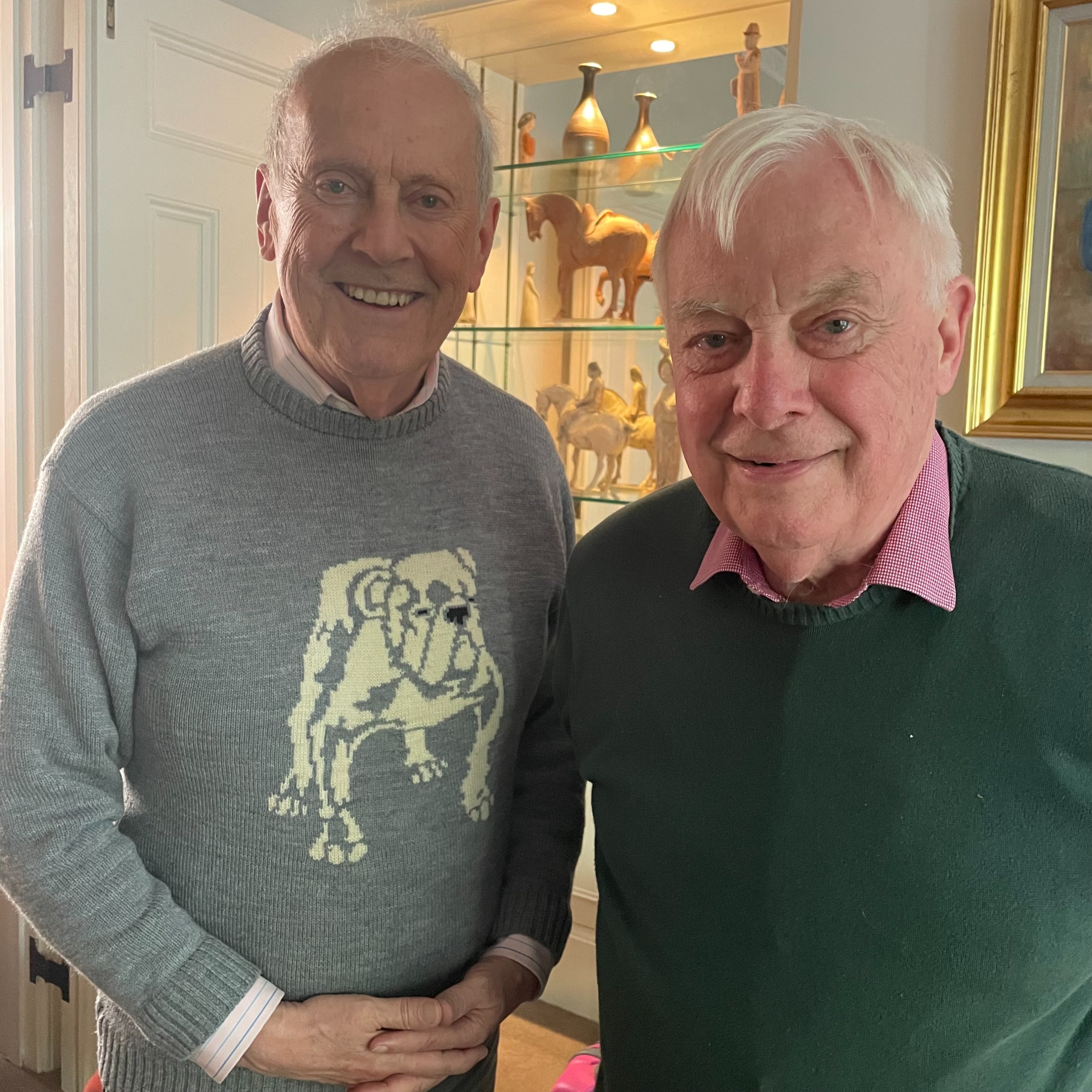
It's More Rosebud, and our guest today is a political heavyweight. He was a member of parliament and cabinet minister under Margaret Thatcher and John Major, was the UK's last governor in Hong Kong, and then Chancellor of Oxford University. It's Chris Patten, Lord Patten of Barnes. In this episode, Chris tells Gyles about his childhood, growing up in the west of London in a happy and loving Irish family with a jazz-musician father. He tells Gyles about working for Ted Heath and Margaret Thatcher, about Hong Kong and about his pride at having been involved in the Irish peace process. He talks about Trump and his fears for the future.
At the start of this episode, we also have a surprise: Rosebud's shortest ever interview! Plus a listener email and more chat from Gyles and Harriet.
Enjoy this.
Hosted on Acast. See acast.com/privacy for more information.


